Acoustic-Emission-Based Multiscale Tensile Constitutive Model for Ultra-High-Performance Concrete Considering Steel-Fiber Parameters and Beam-Scale Validation

Abstract
1. Introduction
2. Experiments
2.1. Test Scheme
2.1.1. Materials and Mixture Proportion
2.1.2. Experimental Design
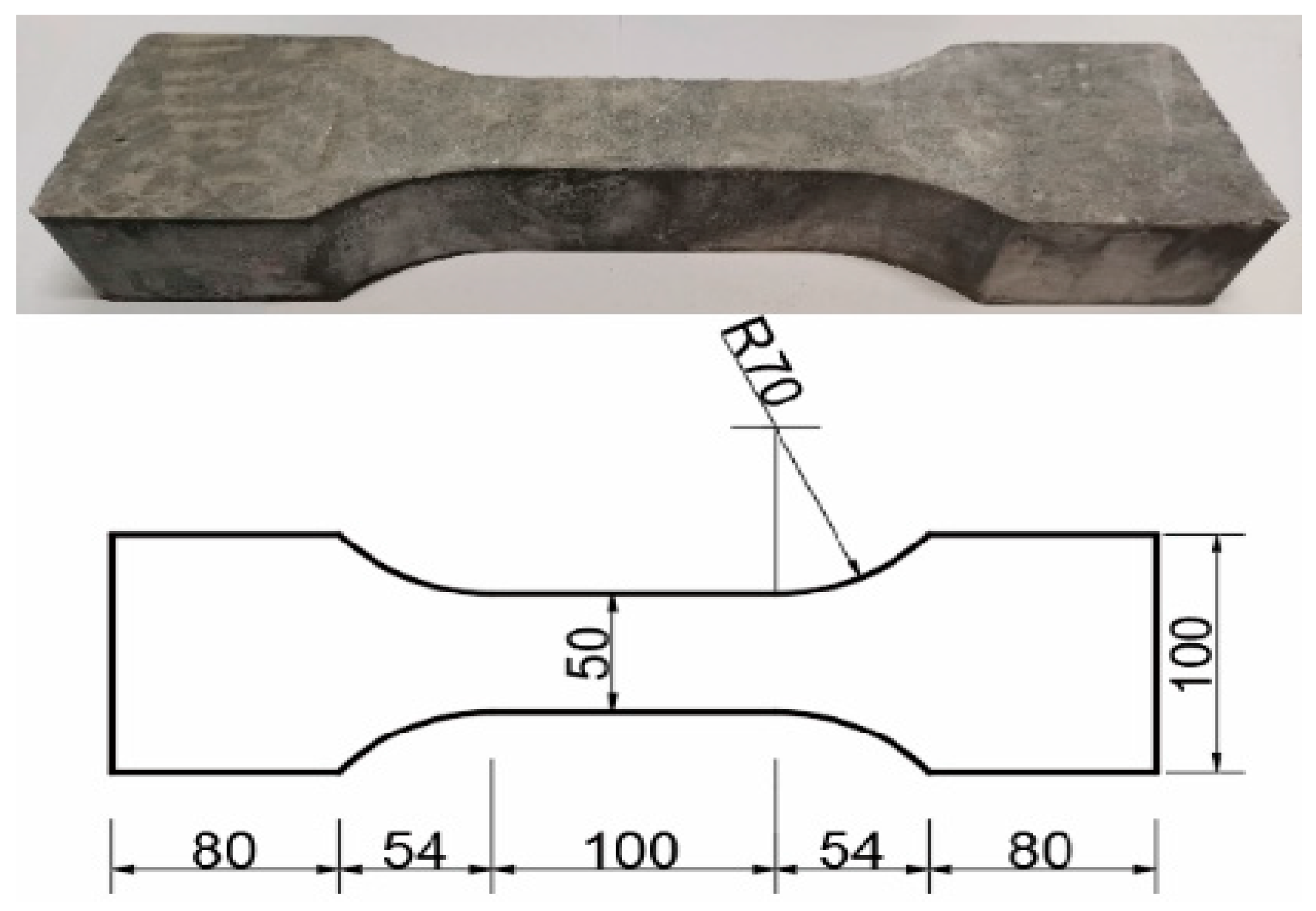
2.1.3. Preparation of Specimens and Components
2.2. Test Method
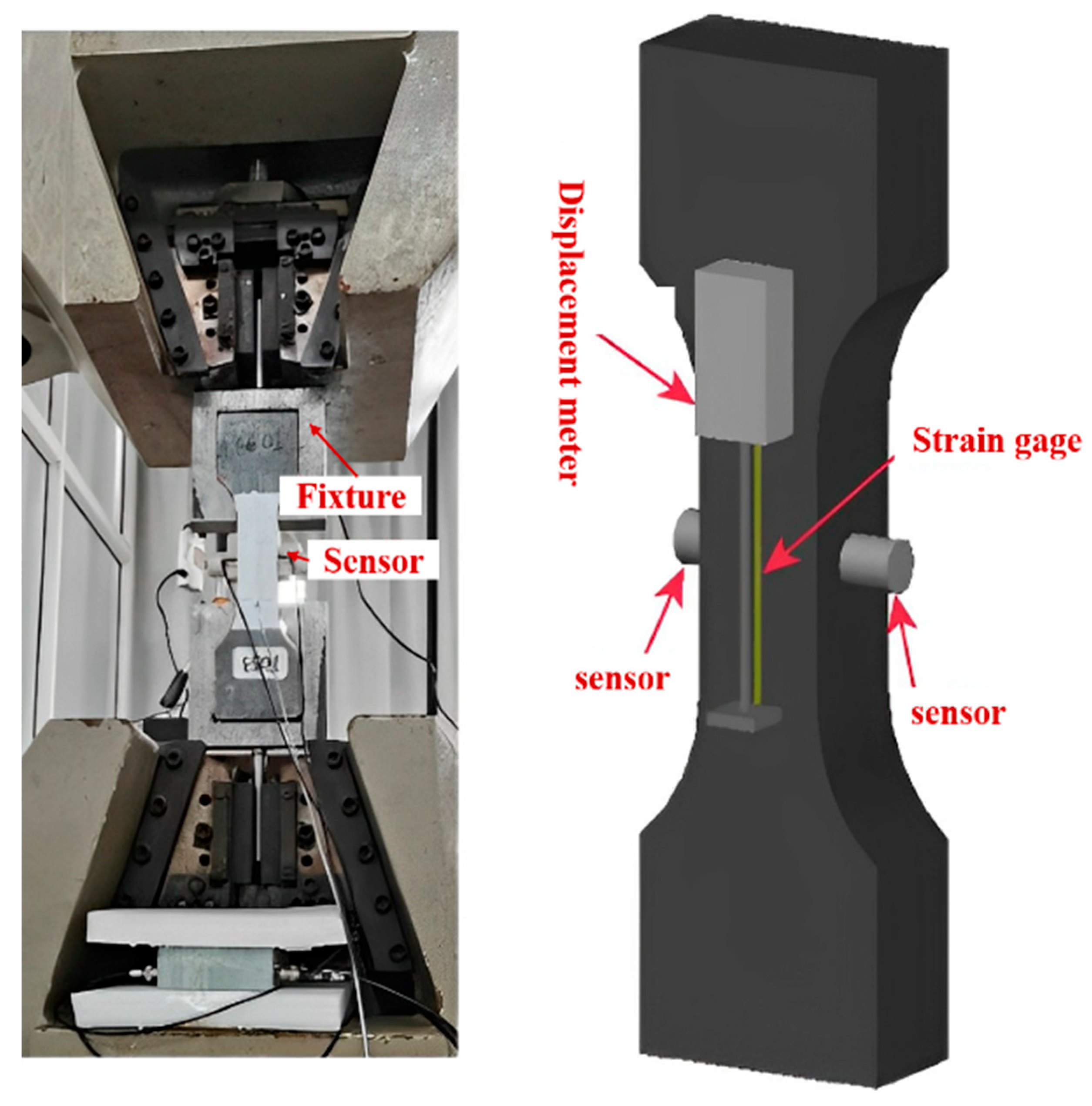
2.2.1. Uniaxial Tensile Test
2.2.2. AE Monitoring Test
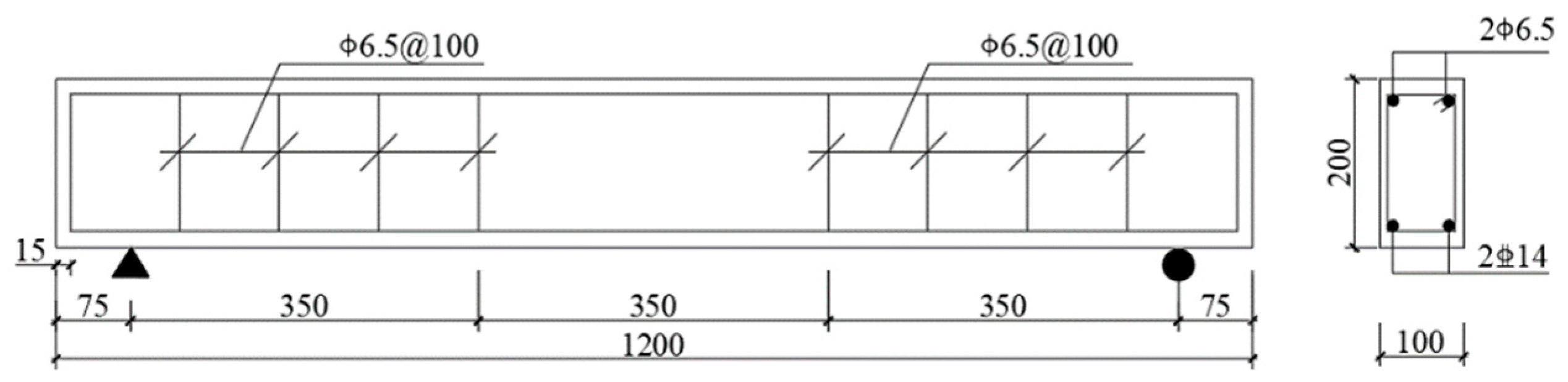
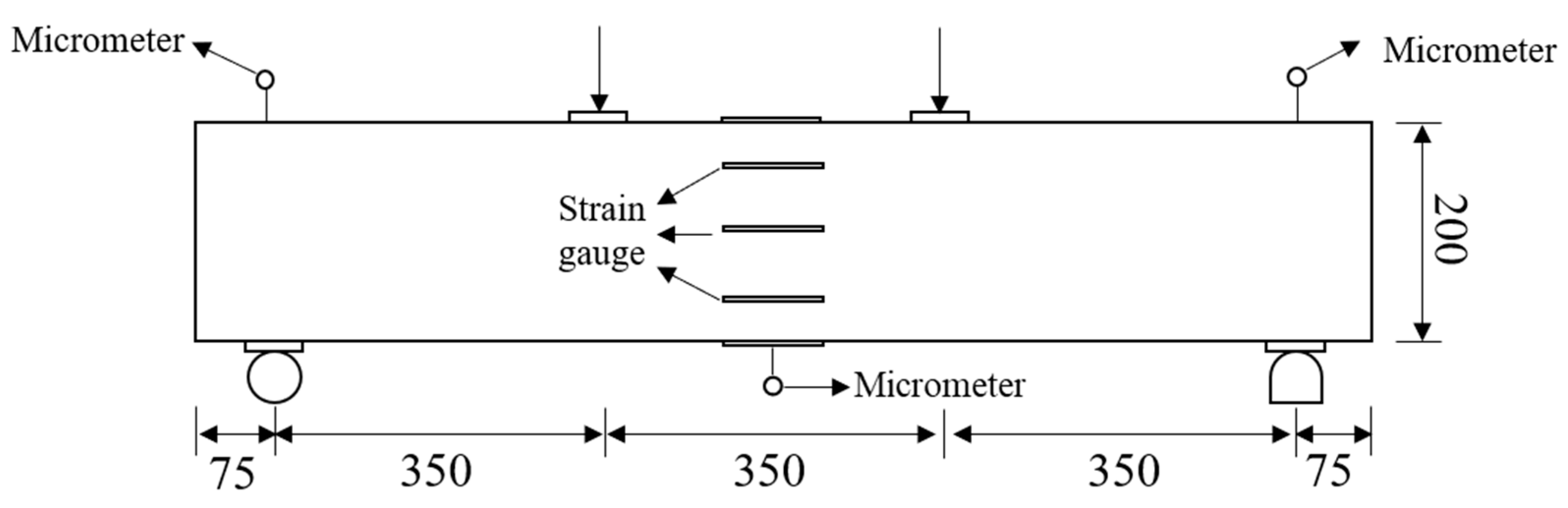
2.2.3. R-UHPC Beam Bending Test
2.3. Theoretical Framework and Model Derivation
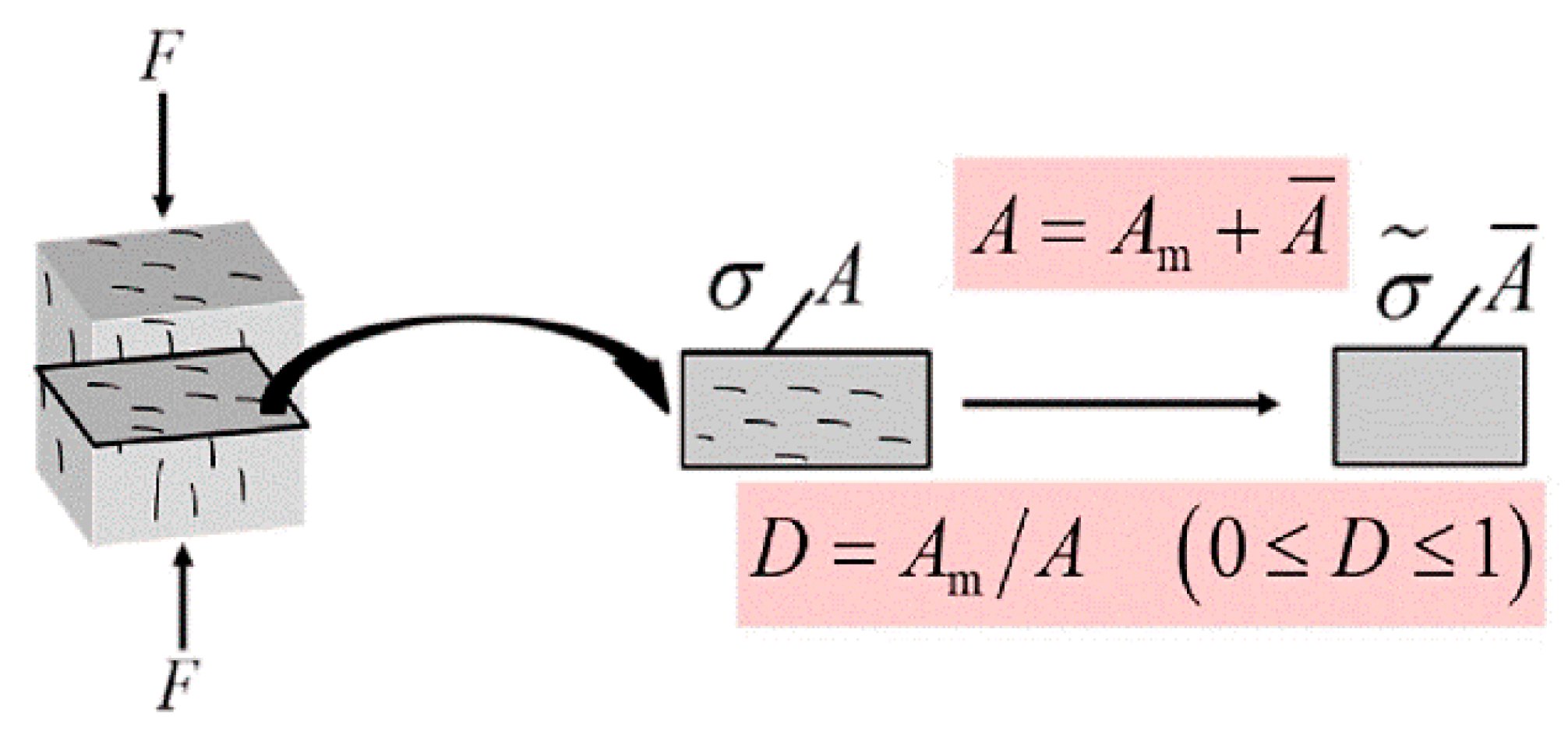
2.3.1. Acoustic-Emission-Based Damage Variable
2.3.2. Weibull Damage Evolution Function
2.3.3. Tensile Damage Constitutive Model
2.3.4. Incorporation of Steel-Fiber Factor
3. Analysis of Damage Evolution Law of UHPC Under Uniaxial Tension at the Microscale
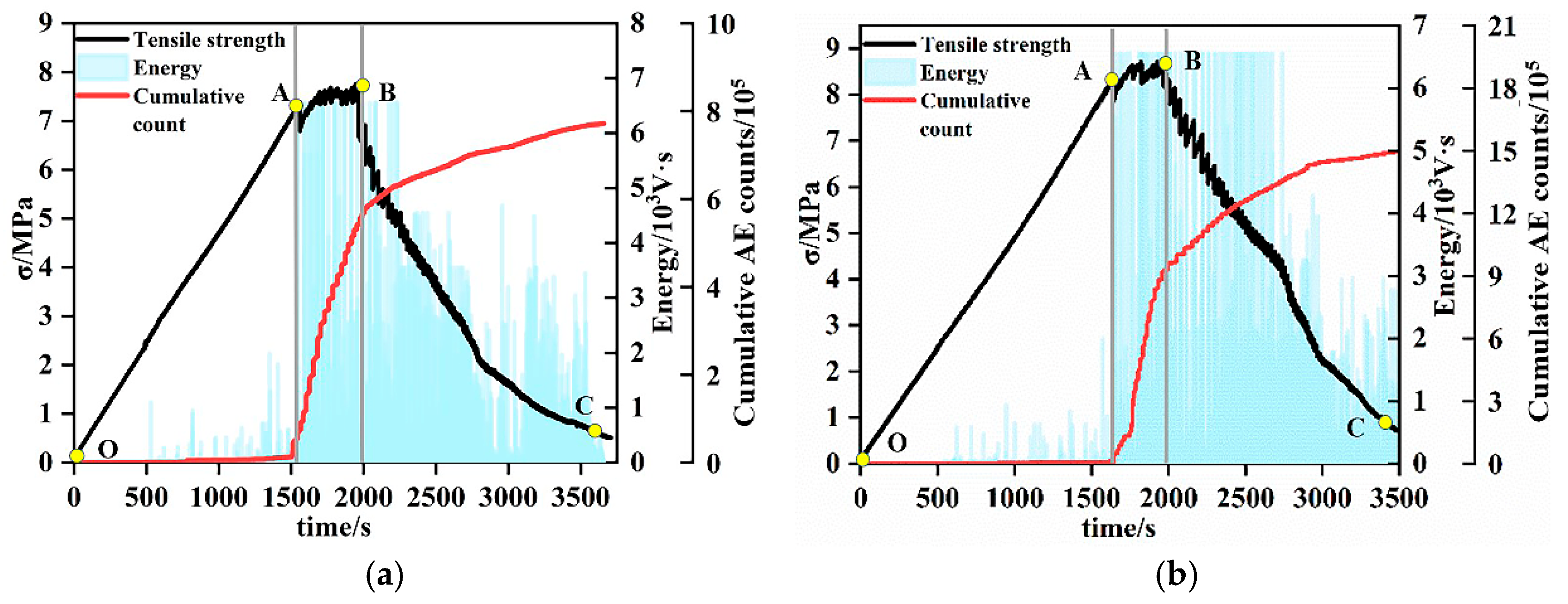
3.1. Characteristics of the AE Signal
- (a)
- Elastic stage (path OA). In this stage, the tensile stress increases almost linearly, and the specimen mainly remains in the elastic deformation stage. Only a small number of AE events are detected, and the cumulative AE count remains at a low level. This indicates that limited microcracking occurs before the formation of the initial crack.
- (b)
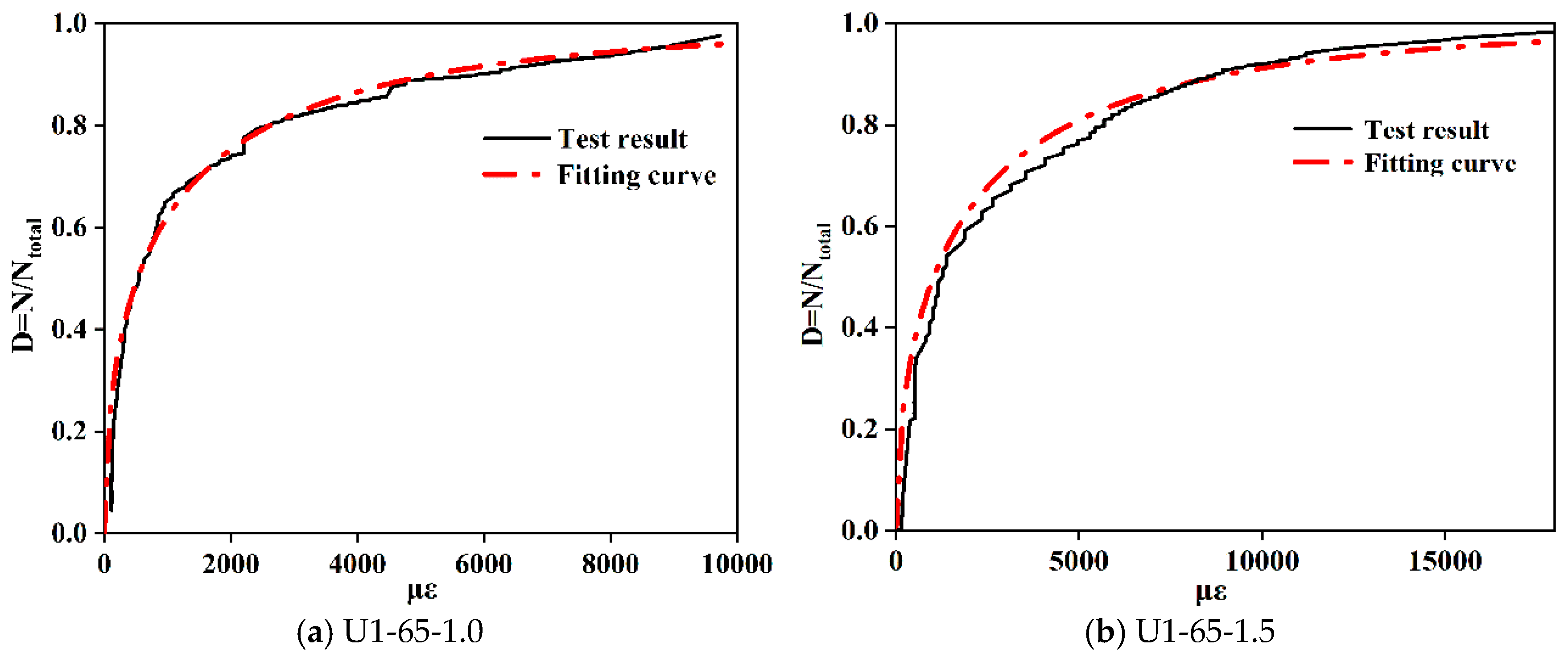
- Stable crack-propagation stage (path AB). After point A, matrix cracking begins and microcracks are progressively generated. This process is accompanied by a rapid increase in cumulative AE count and a relatively high level of AE energy. The damage in this stage is mainly associated with matrix cracking and the continuous formation of new microcracks.
- (c)
- Unstable crack-propagation stage (path BC). In this stage, the growth rate of the cumulative AE count gradually decreases and tends to stabilize. Few new microcracks are formed, and damage development is mainly governed by the widening and propagation of dominant macroscopic cracks. The AE response in this stage is primarily related to fiber pullout and fiber–matrix interaction [39].
3.2. AE-Based Damage Evolution Analysis
4. Analysis of the Influence of Mesoscale Steel Fiber Parameters on the Constitutive Relation of UHPC Under Uniaxial Tension
4.1. Effect of Steel Fiber on Crack Initiation and Failure Mode
4.2. Effect of Steel Fiber on a Stress–Strain Curve Under Uniaxial Tension
5. Model Calibration, Validation, and Beam-Scale Application
5.1. Calibration of the Fiber-Dependent Constitutive Parameter
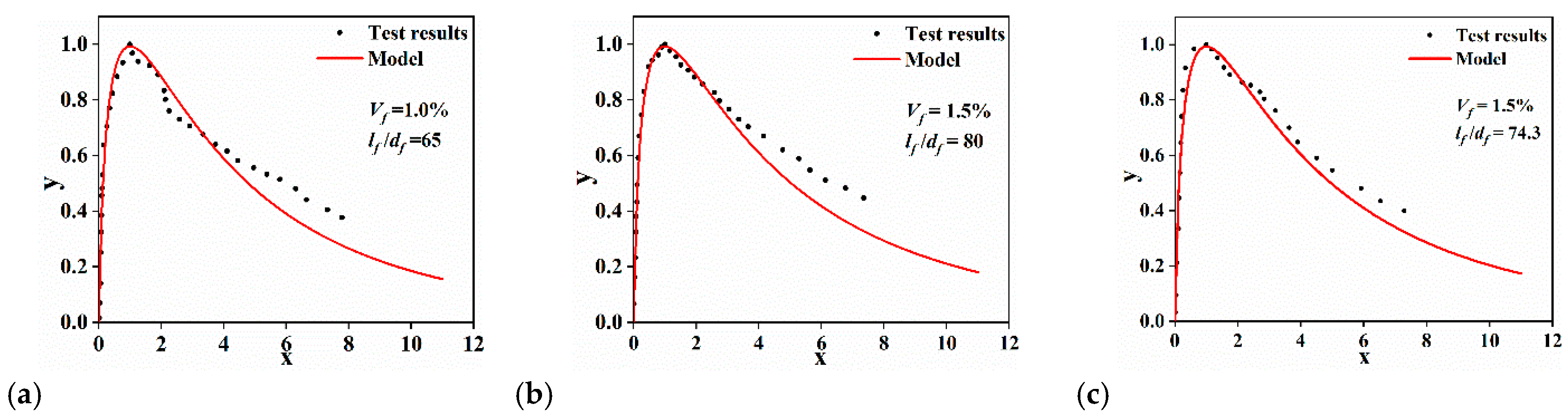
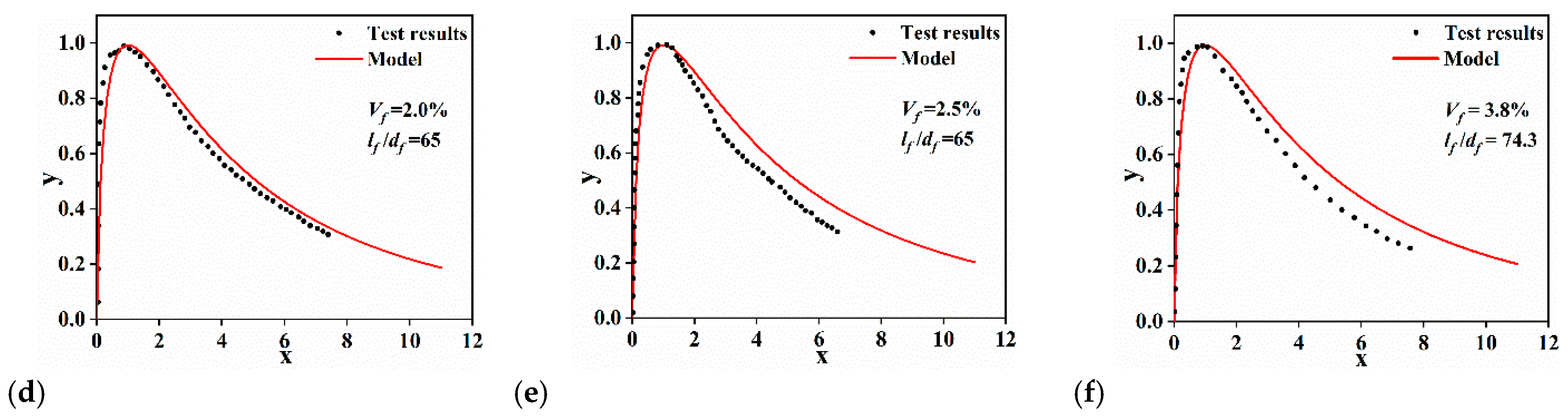
5.2. Verification and Correction of Multiscale Constitutive Equations
5.3. Comparison with Existing Tensile Constitutive Models
5.4. Beam-Scale Finite Element Validation
6. Conclusions
- (1)
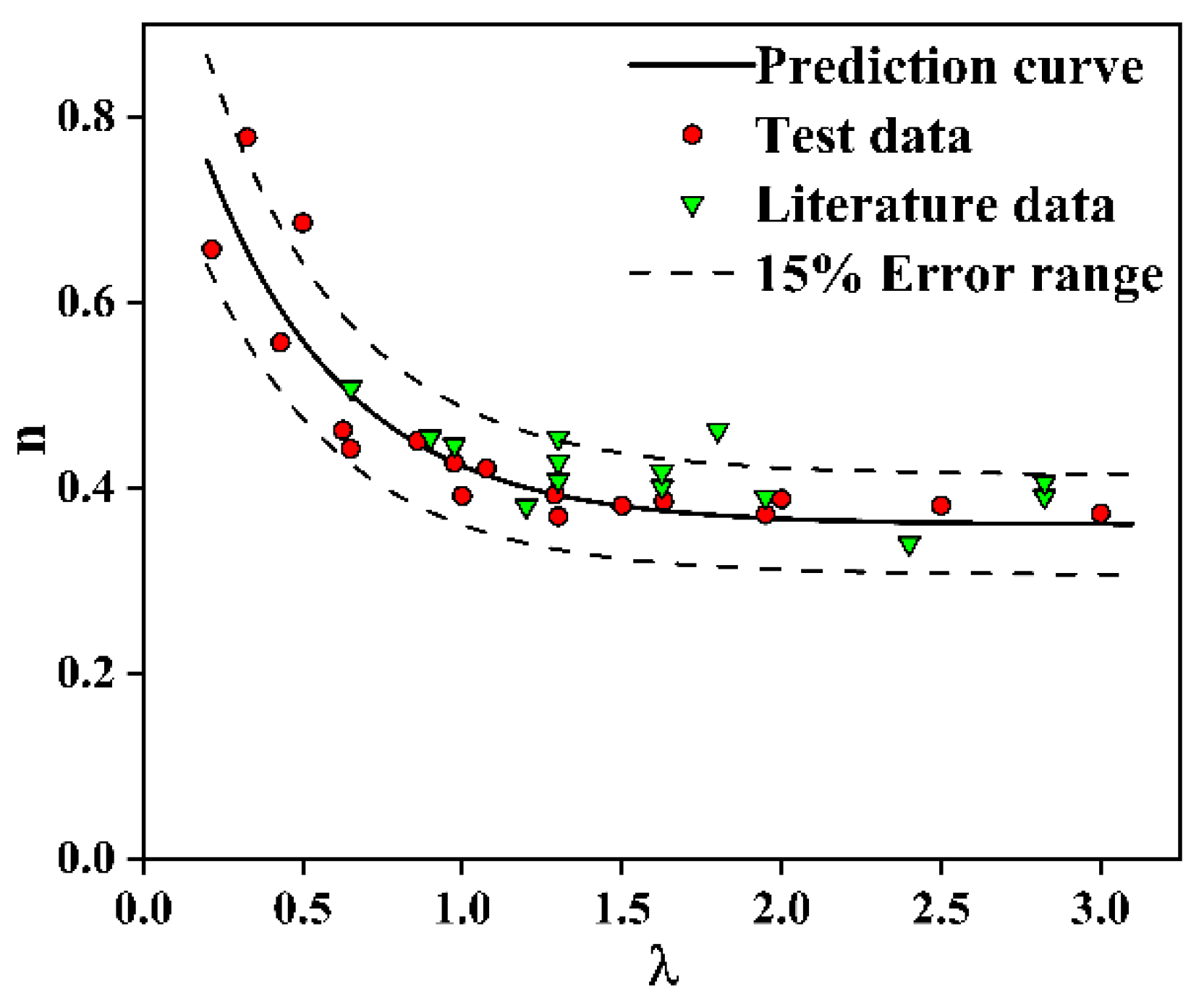
- The AE cumulative count ratio can be used as a damage variable to characterize the tensile damage evolution of UHPC under uniaxial tension. The damage–strain relationship obtained from AE monitoring was well described by a Weibull cumulative distribution. The proposed model quantified the influence of steel-fiber volume fraction and aspect ratio through a fiber factor, allowing the tensile constitutive parameter to be predicted without relying solely on curve-by-curve empirical fitting. After correction using both the present experimental data and literature data, the model achieved a mean relative error of 2.6% and a standard deviation of 4.1% for the predicted model parameter.
- (2)
- The proposed model quantified the effects of steel-fiber volume fraction and aspect ratio through a fiber factor, enabling the tensile constitutive parameter to be predicted without relying solely on curve-by-curve empirical fitting. After correction using both the present experimental data and literature data, the model achieved a mean relative error of 2.6% and a standard deviation of 4.1% for the predicted model parameter.
- (3)
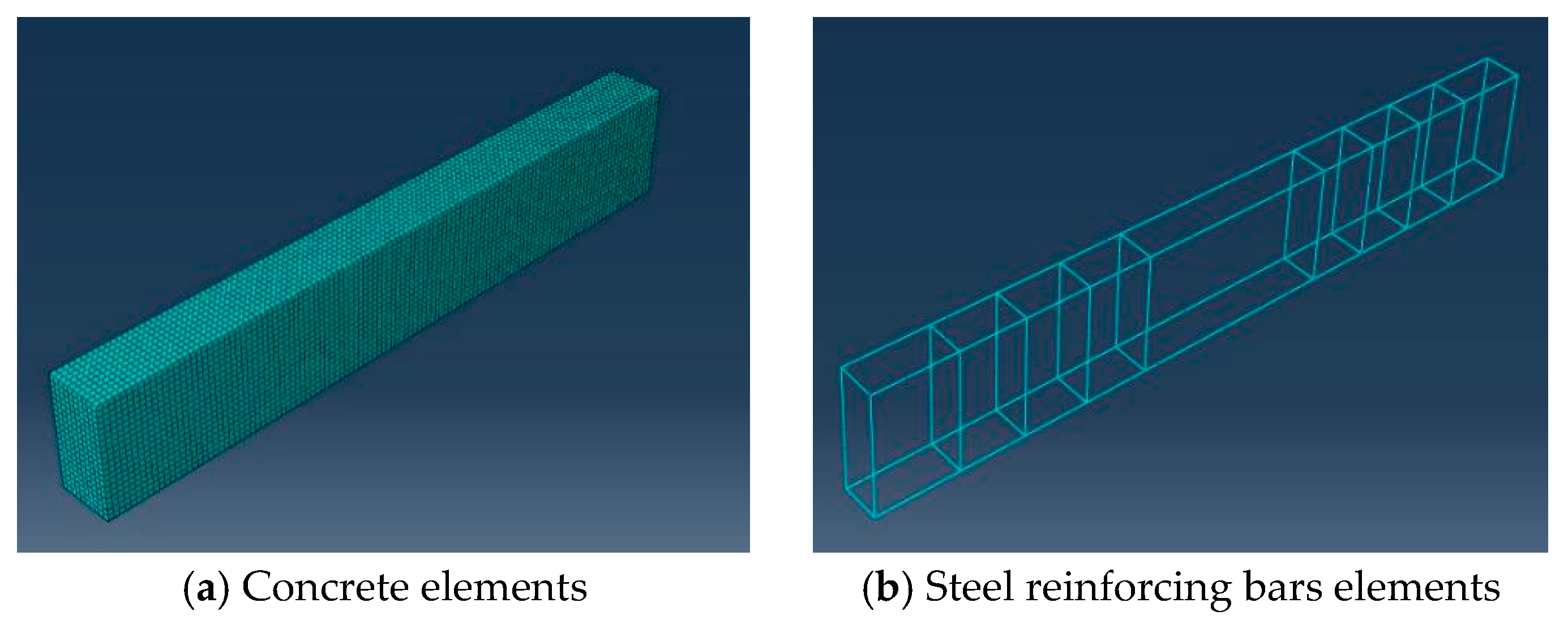
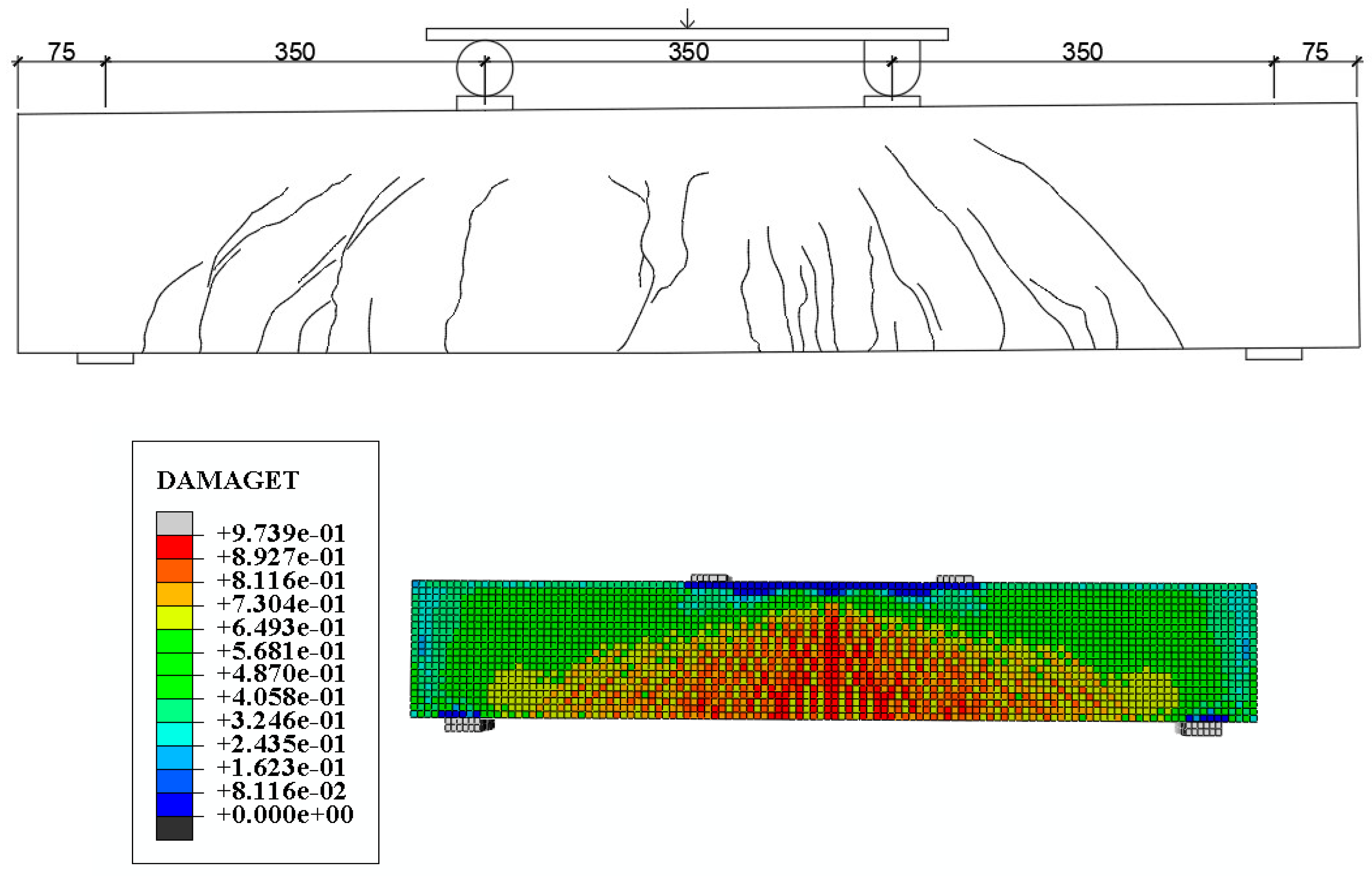
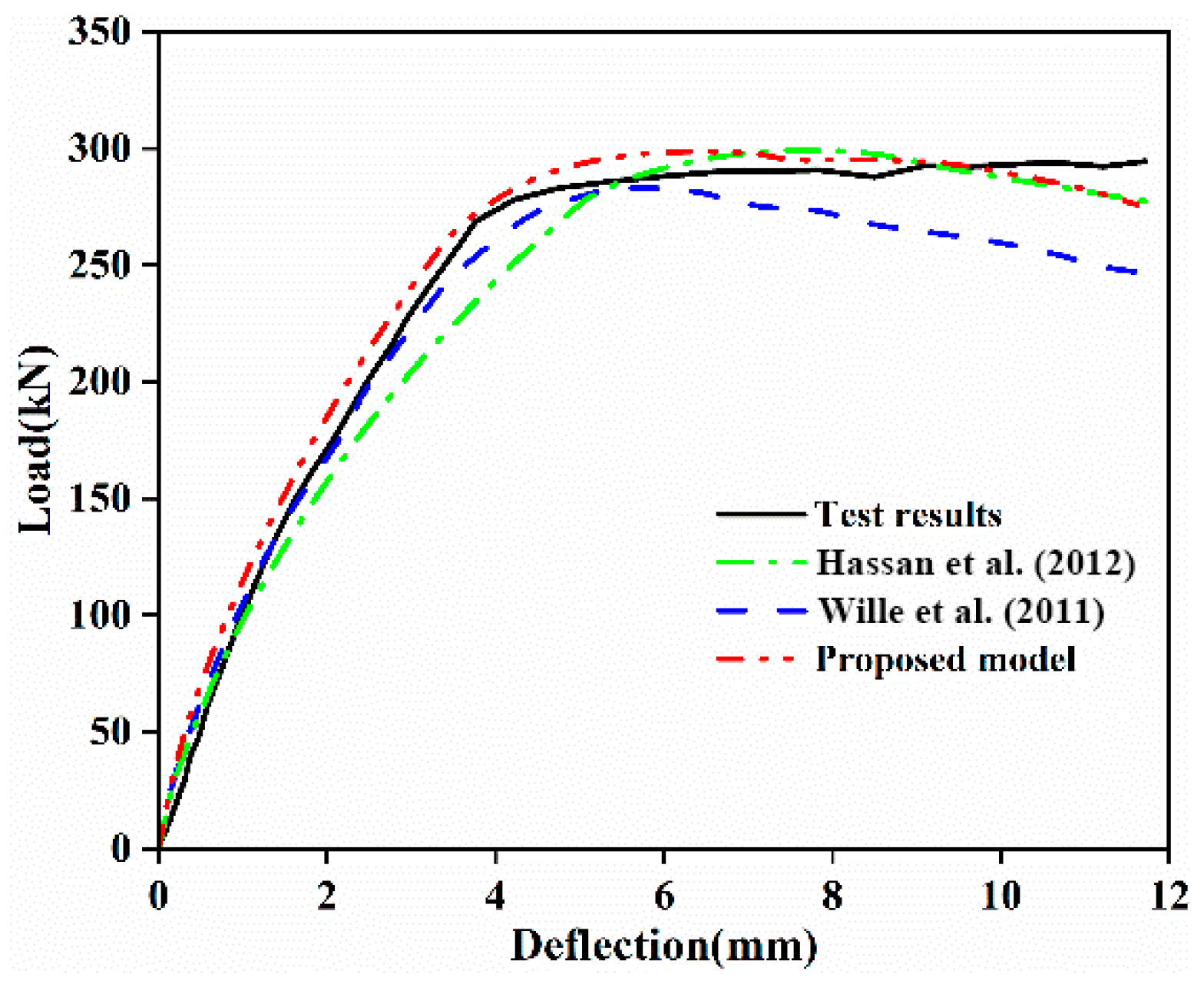
- Beam-scale finite element analysis showed that introducing a reduction coefficient of μ = 0.84 improved the agreement between the simulated and measured load–deflection responses. This coefficient should be regarded as an empirical member-scale calibration factor for the beam geometry, reinforcement layout, material properties, and loading condition considered in this study.
- (4)
- The proposed model establishes a connection among AE-based damage evolution, steel-fiber parameters, and member-scale finite element simulation. However, its application is still limited by the absence of direct fiber-orientation characterization, AE threshold-sensitivity analysis, and broader beam-scale validation. These issues should be further investigated in future studies.
Author Contributions
Funding
Institutional Review Board Statement
Informed Consent Statement
Data Availability Statement
Conflicts of Interest
Abbreviations
References
- Yoo, D.-Y.; Banthia, N. Mechanical properties of ultra-high-performance fiber-reinforced concrete: A review. Cem. Concr. Compos. 2016, 73, 267–280. [Google Scholar] [CrossRef]
- Abbas, S.; Nehdi, M.L.; Saleem, M.A. Ultra-High Performance Concrete: Mechanical Performance, Durability, Sustainability and Implementation Challenges. Int. J. Concr. Struct. Mater. 2016, 10, 271–295. [Google Scholar] [CrossRef]
- Bian, C.; Wang, J.-Y.; Guo, J.-Y. Damage mechanism of ultra-high performance fibre reinforced concrete at different stages of direct tensile test based on acoustic emission analysis. Constr. Build. Mater. 2021, 267, 120927. [Google Scholar] [CrossRef]
- Shen, X.; Brühwiler, E. Influence of local fiber distribution on tensile behavior of strain hardening UHPFRC using NDT and DIC. Cem. Concr. Res. 2020, 132, 106042. [Google Scholar] [CrossRef]
- Tao, Z.; Shao, X.; Qiu, M.; Chen, Z.; Gan, Y.; Hu, Y.; Zhan, J. Influence of fiber orientation and dispersion on flexural behavior of UHPFRC in the full-scale slab: Image analysis, magnetic test and constitutive model. J. Build. Eng. 2025, 114, 114182. [Google Scholar] [CrossRef]
- Jacopo, D.; Giovanni, L.; Gianluca, C.; Valeria, C. Uniaxial tensile behavior of ultra-high performance fiber-reinforced concrete (uhpfrc): Experiments and modeling. Compos. Struct. 2021, 258, 113433. [Google Scholar] [CrossRef]
- Le Hoang, A.; Fehling, E. Influence of steel fiber content and aspect ratio on the uniaxial tensile and compressive behavior of ultra high performance concrete. Constr. Build. Mater. 2017, 153, 790–806. [Google Scholar] [CrossRef]
- Sha, H.; Chong, X.; Li, J.; Gao, J.; Huang, J.; Zhan, B. A uniaxial tensile constitutive model for ultra-high performance concrete considering fiber volume fraction and orientation. J. Build. Eng. 2025, 113, 114003. [Google Scholar] [CrossRef]
- Hu, A.; Liang, X.; Yu, J.; Shi, Q.; Li, L. Experimental study on mechanical properties of ultra-high performance concrete under axial tension. J. Hunan Univ. (Nat. Sci.) 2018, 45, 30–37. (In Chinese) [Google Scholar] [CrossRef]
- Krahl, P.A.; Carrazedo, R.; El Debs, M.K. Mechanical damage evolution in UHPFRC: Experimental and numerical investigation. Eng. Struct. 2018, 170, 63–77. [Google Scholar] [CrossRef]
- Gao, X.; Wang, J.; Guo, J.; Liu, C. Axial tensile mechanical properties and constitutive relation model of ultra-high performance concrete under cyclic loading. Acta Mater. Compos. Sin. 2021, 38, 3925–3938. [Google Scholar] [CrossRef]
- Hashim, D.T.; Hejazi, F.; Lei, V.Y. Simplified Constitutive and Damage Plasticity Models for UHPFRC with Different Types of Fiber. Int. J. Concr. Struct. Mater. 2020, 14, 45. [Google Scholar] [CrossRef]
- Ma, T.; Zhang, L.; Xie, W.; Wang, W. A Damage Model of Ultra High Performance Concrete and its Application in Seismic Design of Gravity Dam. IOP Conf. Ser. Earth Environ. Sci. 2019, 233, 032019. [Google Scholar] [CrossRef]
- Yoo, D.-Y.; Kim, S.; Kim, J.-J.; Chun, B. An experimental study on pullout and tensile behavior of ultra-high-performance concrete reinforced with various steel fibers. Constr. Build. Mater. 2019, 206, 46–61. [Google Scholar] [CrossRef]
- Zhan, J.; Bayane, I.; Brühwiler, E.; Nussbaumer, A. Deciphering tensile fatigue behavior of UHPFRC using magnetoscopy, DIC and acoustic emission. Cem. Concr. Res. 2025, 196, 107924. [Google Scholar] [CrossRef]
- Plagué, T.; Desmettre, C.; Charron, J.-P. Influence of fiber type and fiber orientation on cracking and permeability of reinforced concrete under tensile loading. Cem. Concr. Res. 2017, 94, 59–70. [Google Scholar] [CrossRef]
- Wu, Z.; Shi, C.; He, W.; Wu, L. Effects of steel fiber content and shape on mechanical properties of ultra high performance concrete. Constr. Build. Mater. 2016, 103, 8–14. [Google Scholar] [CrossRef]
- Abrishambaf, A.; Pimentel, M.; Nunes, S. Influence of fibre orientation on the tensile behaviour of ultra-high performance fibre reinforced cementitious composites. Cem. Concr. Res. 2017, 97, 28–40. [Google Scholar] [CrossRef]
- Guo, Y.; Gao, D.; Ma, W.; Pi, H. Acoustic emission characteristics and constitutive model of steel fiber and steel ball reinforced UHPC under uniaxial tension. J. Build. Eng. 2025, 106, 112536. [Google Scholar] [CrossRef]
- Xu, X.; Jin, Z.; Yu, Y.; Li, N. Damage source and its evolution of ultra-high performance concrete monitoring by digital image correlation and acoustic emission technologies. J. Build. Eng. 2023, 65, 105734. [Google Scholar] [CrossRef]
- Yue, J.; Kunnath, S.; Xiao, Y. Uniaxial concrete tension damage evolution using acoustic emission monitoring. Constr. Build. Mater. 2020, 232, 117281. [Google Scholar] [CrossRef]
- Zhang, R.; Yan, X.; Guo, L. Deep learning-based classification of damage-induced acoustic emission signals in UHPC. Constr. Build. Mater. 2022, 356, 129285. [Google Scholar] [CrossRef]
- Yuan, R.; Shi, B. Acoustic emission activity in directly tensile test on marble specimens and its tensile damage constitutive model. Int. J. Coal Sci. Technol. 2018, 5, 295–304. [Google Scholar] [CrossRef]
- Bian, C.; Wang, J.-Y. Mechanical and damage mechanisms of reinforced ultra high performance concrete under tensile loading. Constr. Build. Mater. 2019, 226, 259–279. [Google Scholar] [CrossRef]
- Wang, J.-Y.; Chen, Z.-Z.; Wu, K. Properties of calcium sulfoaluminate cement made ultra-high performance concrete: Tensile performance, acoustic emission monitoring of damage evolution and microstructure. Constr. Build. Mater. 2019, 208, 767–779. [Google Scholar] [CrossRef]
- Wang, J.-Y.; Guo, J.-Y. Damage investigation of ultra high performance concrete under direct tensile test using acoustic emission techniques. Cem. Concr. Compos. 2018, 88, 17–28. [Google Scholar] [CrossRef]
- Peng, Y.; Meng, X.; Song, F.; Xu, G. Experimental study on the corrosion characteristics of concrete exposed to acid water containing aggressive carbon dioxide and sodium sulfate. Constr. Build. Mater. 2022, 321, 126397. [Google Scholar] [CrossRef]
- Gardner, N.J.; Lockman, M.J. Design Provisions for Drying Shrinkage and Creep of Normal-Strength Concrete. ACI Mater. J. 2001, 98, 159–167. [Google Scholar] [CrossRef]
- Shah, S.G.; Kishen, J.C. Use of acoustic emissions in flexural fatigue crack growth studies on concrete. Eng. Fract. Mech. 2012, 87, 36–47. [Google Scholar] [CrossRef]
- Prem, P.R.; Murthy, A.R. Acoustic emission monitoring of reinforced concrete beams subjected to four-point-bending. Appl. Acoust. 2017, 117, 28–38. [Google Scholar] [CrossRef]
- Lubliner, J.; Oliver, J.; Oller, S.; Oñate, E. A plastic-damage model for concrete. Int. J. Solids Struct. 1989, 25, 299–326. [Google Scholar] [CrossRef]
- Lee, J.; Fenves, G.L. Plastic-Damage Model for Cyclic Loading of Concrete Structures. J. Eng. Mech. 1998, 124, 892–900. [Google Scholar] [CrossRef]
- Rodriguez, J.; Martinez, F.; Marti, J. Concrete Constitutive Model, Calibration and Applications. In Proceedings of the SIMULIA Community Conference, Vienna, Austria, 22–24 May 2013; Available online: https://api.core.ac.uk/oai/oai:oa.upm.es:25832 (accessed on 15 March 2025).
- Al-Osta, M.; Isa, M.; Baluch, M.; Rahman, M. Flexural behavior of reinforced concrete beams strengthened with ultra-high performance fiber reinforced concrete. Constr. Build. Mater. 2017, 134, 279–296. [Google Scholar] [CrossRef]
- ASTM E976-99; Standard Guide for Determining the Reproducibility of Acoustic Emission Sensor Response. ASTM: West Conshohocken, PA, USA, 2026.
- Lemaitre, J. How to use damage mechanics. Nucl. Eng. Des. 1984, 80, 233–245. [Google Scholar] [CrossRef]
- Li, B.; Chi, Y.; Xu, L.; Li, C.; Shi, Y. Cyclic tensile behavior of SFRC: Experimental research and analytical model. Constr. Build. Mater. 2018, 190, 1236–1250. [Google Scholar] [CrossRef]
- Li, B.; Xu, L.; Chi, Y.; Huang, B.; Li, C. Experimental investigation on the stress-strain behavior of steel fiber reinforced concrete subjected to uniaxial cyclic compression. Constr. Build. Mater. 2017, 140, 109–118. [Google Scholar] [CrossRef]
- Soulioti, D.; Barkoula, N.; Paipetis, A.; Matikas, T.; Shiotani, T.; Aggelis, D. Acoustic emission behavior of steel fibre reinforced concrete under bending. Constr. Build. Mater. 2009, 23, 3532–3536. [Google Scholar] [CrossRef]
- Huang, L.; Chi, Y.; Xu, L.; Chen, P.; Zhang, A. Local bond performance of rebar embedded in steel-polypropylene hybrid fiber reinforced concrete under monotonic and cyclic loading. Constr. Build. Mater. 2016, 103, 77–92. [Google Scholar] [CrossRef]
- Lin, Z.; Li, V.C. Crack bridging in fiber reinforced cementitious composites with slip-hardening interfaces. J. Mech. Phys. Solids 1997, 45, 763–787. [Google Scholar] [CrossRef]
- Li, V.C. Postcrack Scaling Relations for Fiber Reinforced Cementitious Composites. J. Mater. Civ. Eng. 1992, 4, 41–57. [Google Scholar] [CrossRef]
- Yoo, D.-Y.; Kim, M.-J. High energy absorbent ultra-high-performance concrete with hybrid steel and polyethylene fibers. Constr. Build. Mater. 2019, 209, 354–363. [Google Scholar] [CrossRef]
- Wille, K.; Kim, D.J.; Naaman, A.E. Strain-hardening UHP-FRC with low fiber contents. Mater. Struct. 2011, 44, 583–598. [Google Scholar] [CrossRef]
- Savino, V.; Lanzoni, L.; Tarantino, A.; Viviani, M. Tensile constitutive behavior of high and ultra-high performance fibre-reinforced-concretes. Constr. Build. Mater. 2018, 186, 525–536. [Google Scholar] [CrossRef]
- Zhou, Z.; Qiao, P. Tensile behavior of ultra-high performance concrete: Analytical model and experimental validation. Constr. Build. Mater. 2019, 201, 842–851. [Google Scholar] [CrossRef]
- Hassan, A.; Jones, S.; Mahmud, G. Experimental test methods to determine the uniaxial tensile and compressive behaviour of ultra high performance fibre reinforced concrete (UHPFRC). Constr. Build. Mater. 2012, 37, 874–882. [Google Scholar] [CrossRef]





| Cement | Silica Fume | Sand | Superplasticizer | Water | |
|---|---|---|---|---|---|
| P.O52.5 | P.C42.5 | ||||
| 0.700 | 0.300 | 0.180 | 1.180 | 0.024 | 0.188 |
| Cement (P.O42.5) | Silica Fume | Sand | Superplasticizer | Water |
|---|---|---|---|---|
| 1.0 | 0.3 | 1.17 | 0.025 | 0.234 |
| Series | Matrix | Fiber Aspect Ratio | Fiber Volume Fraction/% | Specimen Labels | Purpose |
|---|---|---|---|---|---|
| U1-65 | U1 | 65 | 0.5, 1.0, 1.5 | U1-65-0.5 to U1-65-1.5 | AE damage analysis |
| U2-43 | U2 | 43 | 0.5, 1.0, 1.5, 2.0, 2.5, 3.0 | U2-43-0.5 to U2-43-3.0 | Fiber-parameter analysis |
| U2-65 | U2 | 65 | 0.5, 1.0, 1.5, 2.0, 2.5, 3.0 | U2-65-0.5 to U2-65-3.0 | Fiber-parameter analysis |
| U2-100 | U2 | 100 | 0.5, 1.0, 1.5, 2.0, 2.5, 3.0 | U2-100-0.5 to U2-100-3.0 | Fiber-parameter analysis |
| Beam | U1 | 65 | 3.0 | R-UHPC beam | Beam-scale validation |
| Dilatation Angle | Eccentricity | / | K | Viscosity Parameter |
|---|---|---|---|---|
| 36 | 0.1 | 1.16 | 0.667 | 0 |
Disclaimer/Publisher’s Note: The statements, opinions and data contained in all publications are solely those of the individual author(s) and contributor(s) and not of MDPI and/or the editor(s). MDPI and/or the editor(s) disclaim responsibility for any injury to people or property resulting from any ideas, methods, instructions or products referred to in the content. |
© 2026 by the authors. Licensee MDPI, Basel, Switzerland. This article is an open access article distributed under the terms and conditions of the Creative Commons Attribution (CC BY) license.
Share and Cite
Bao, Z.; Wang, Q.; Deng, J.; Zhang, M. Acoustic-Emission-Based Multiscale Tensile Constitutive Model for Ultra-High-Performance Concrete Considering Steel-Fiber Parameters and Beam-Scale Validation. Materials 2026, 19, 2428. https://doi.org/10.3390/ma19112428
Bao Z, Wang Q, Deng J, Zhang M. Acoustic-Emission-Based Multiscale Tensile Constitutive Model for Ultra-High-Performance Concrete Considering Steel-Fiber Parameters and Beam-Scale Validation. Materials. 2026; 19(11):2428. https://doi.org/10.3390/ma19112428
Chicago/Turabian StyleBao, Zhenyu, Qing Wang, Jinlan Deng, and Meng Zhang. 2026. "Acoustic-Emission-Based Multiscale Tensile Constitutive Model for Ultra-High-Performance Concrete Considering Steel-Fiber Parameters and Beam-Scale Validation" Materials 19, no. 11: 2428. https://doi.org/10.3390/ma19112428
APA StyleBao, Z., Wang, Q., Deng, J., & Zhang, M. (2026). Acoustic-Emission-Based Multiscale Tensile Constitutive Model for Ultra-High-Performance Concrete Considering Steel-Fiber Parameters and Beam-Scale Validation. Materials, 19(11), 2428. https://doi.org/10.3390/ma19112428