During the heat preservation and furnace cooling process, it was also the formation process of the lamellar structure. In this process, primarily the α phase was formed, followed by a phase transformation. As the heat-preservation temperature lay within the β phase region, the α phase nucleated and grew at the grain boundaries and within the grains of the γ phase during the heat-treatment process. Subsequently, an increasing number of α and γ phases were formed and grew in the alloy’s microstructure. During this process, the α phase also underwent an ordered transformation and was converted into the α
2 phase. After the heat treatment, a lamellar structure was finally formed in the microstructure [
21]. As the holding time within the β phase region was extended, a greater number of α phases emerged in the microstructure, and the α phase underwent an ordered transformation to form a relatively coarse α
2 phase. Therefore, during the subsequent optimization process of the heat treatment process, a method involving short-time holding at a high temperature and long-time holding at a low temperature could be employed to prevent the growth of the α
2 phase in the microstructure and refine the lamellar structure. Long-time holding at a low temperature enabled the uniform diffusion of the Nb element.
3.1. Microstructure Analysis of TiAl-Nb Alloy Sheet After Heat Treatment
Through the analysis of
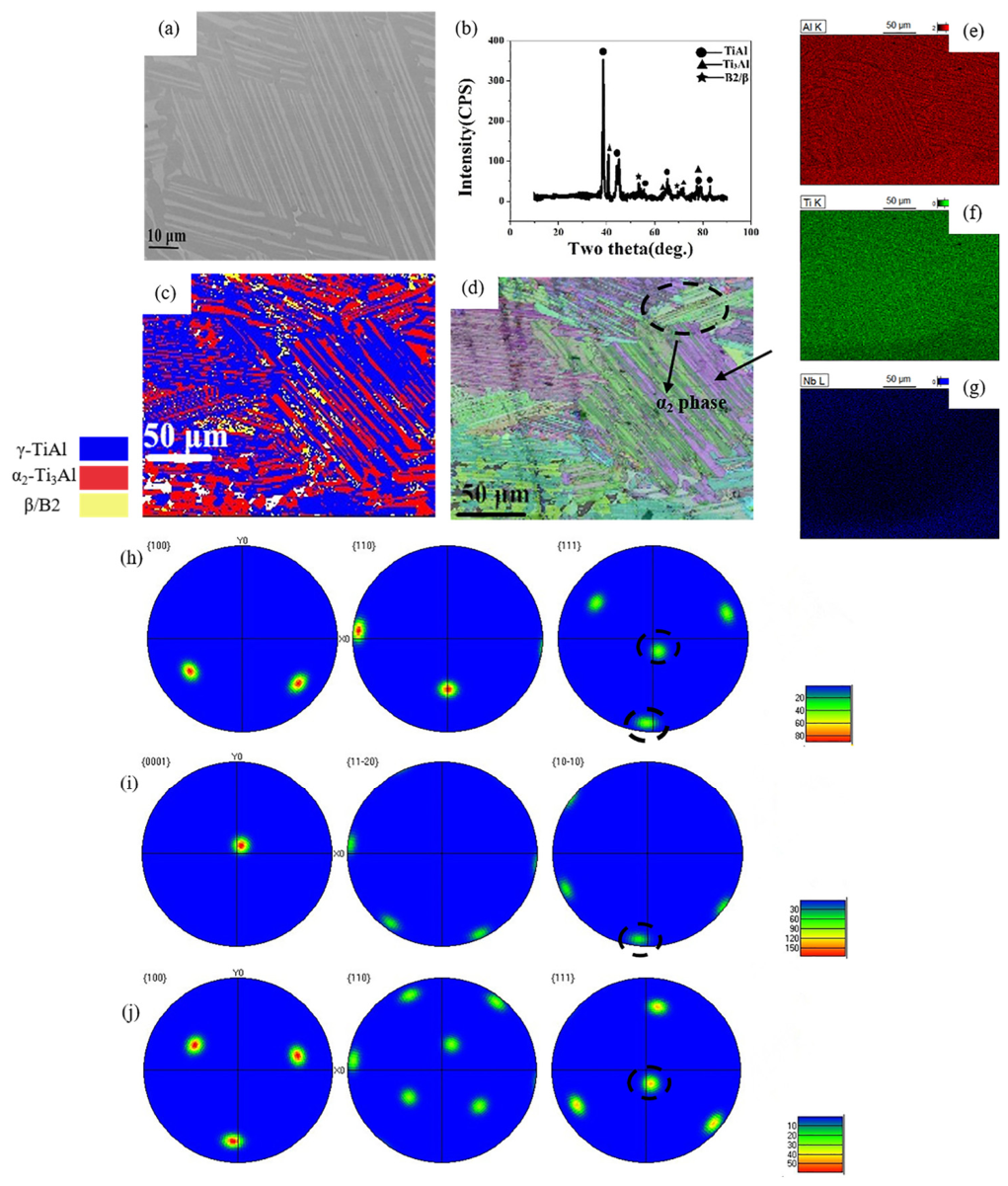
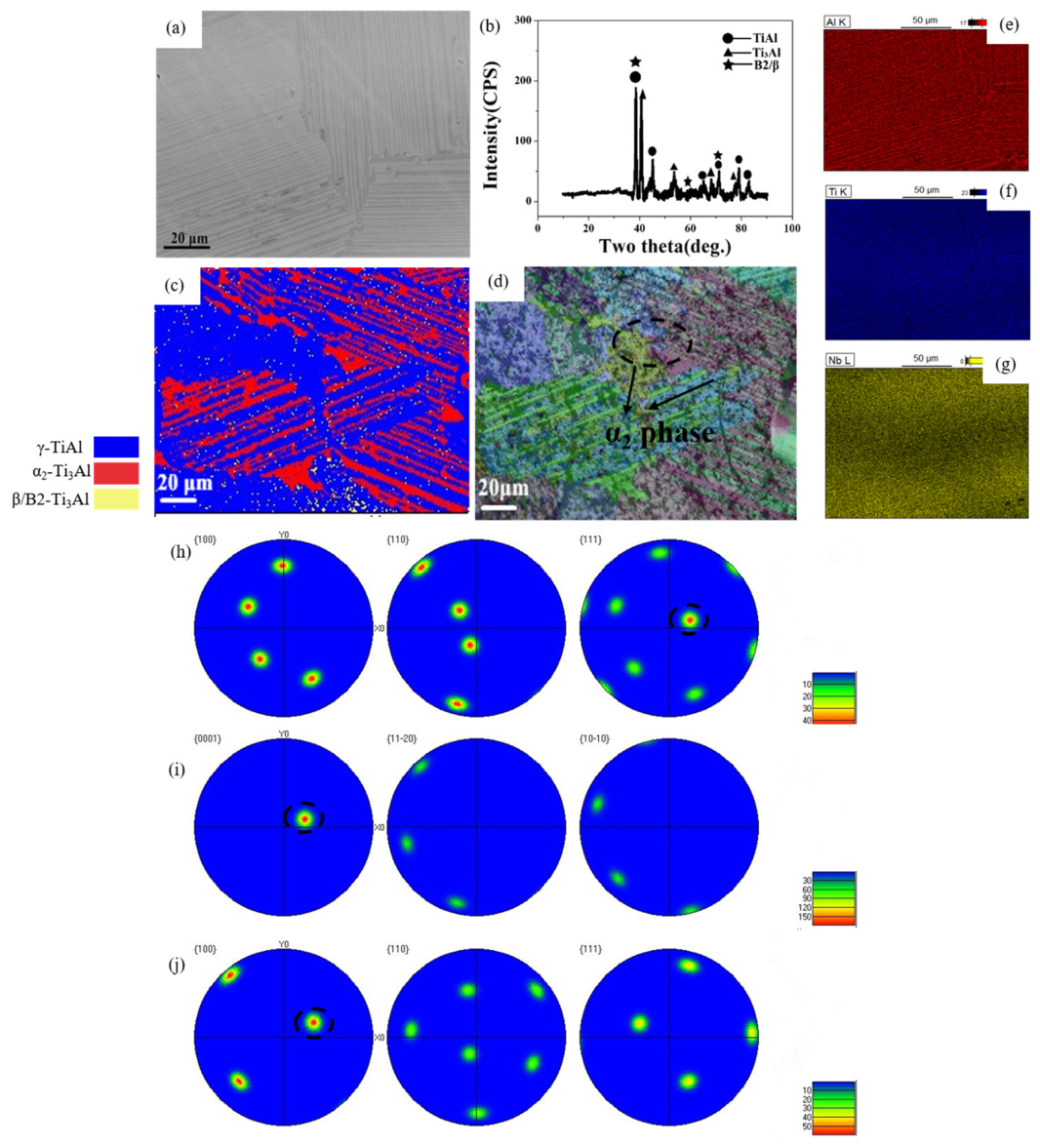
Figure 2a,b, it was found that, after heat treatment at 1410 °C for 5 min and then at 1150 °C for 2 h, the TiAl phase, Ti
3Al phase and B2/β phase were the main phase components of the alloy. Although a short high-temperature holding (3–5 min) alone was insufficient for full Nb homogenization, the subsequent long holding at 1150 °C for 2 h effectively promoted Nb diffusion, as confirmed by EDS elemental mapping showing a uniform Nb distribution after the two-step treatment (
Figure 2e–g). After heat treatment, lamellar structures were formed in the microstructure of the sheet. Since there were still some α
2 phases that had not transformed into a finer lamellar structure within the microstructure, it suggested that the holding time at a higher temperature was relatively long. During the heat-treatment process, a significant amount of the α phase appeared in the structure. Subsequently, the already-grown α phase underwent an ordered transformation to form the α
2 phase, leading to the formation of relatively coarse lamellar structures within the microstructure. Phase analysis and grain boundary analysis of the sheet were conducted by EBSD technology (
Figure 2c,d). All EBSD phase distribution maps included a color code (blue for γ, red for α
2, yellow for B2/β) for easy identification of each phase. An obvious lamellar structure was observed, but the lamellar structure was relatively coarse. The B2 phase was uniformly dispersed throughout the structure. The α
2 phase predominantly existed within the γ phase, and there were also certain α
2 phases that had not fully developed within the γ phase. Moreover, relatively coarse α
2 phases were found at the grain boundaries of the γ phase. Quantitative EBSD analysis revealed that the volume fraction of the B2/β phase was approximately 3.5–5.2%, which was consistent with the relatively low diffraction peak intensity of this phase in the XRD pattern. The orientation relationships were as follows (
Figure 2h–j): TiAl(111)//Ti
3Al(10
0), TiAl(111)//B2(111).
Through the analysis of
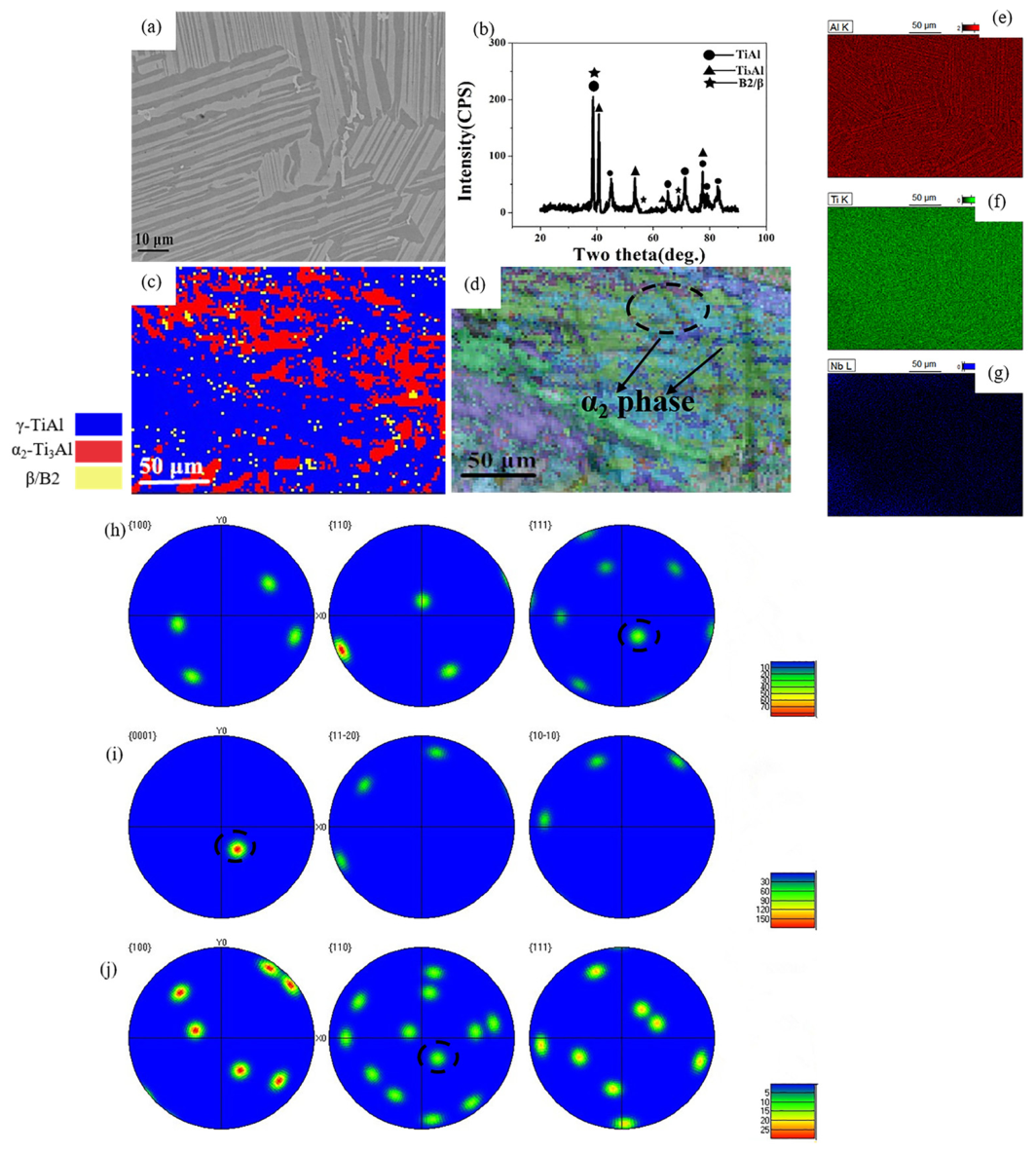
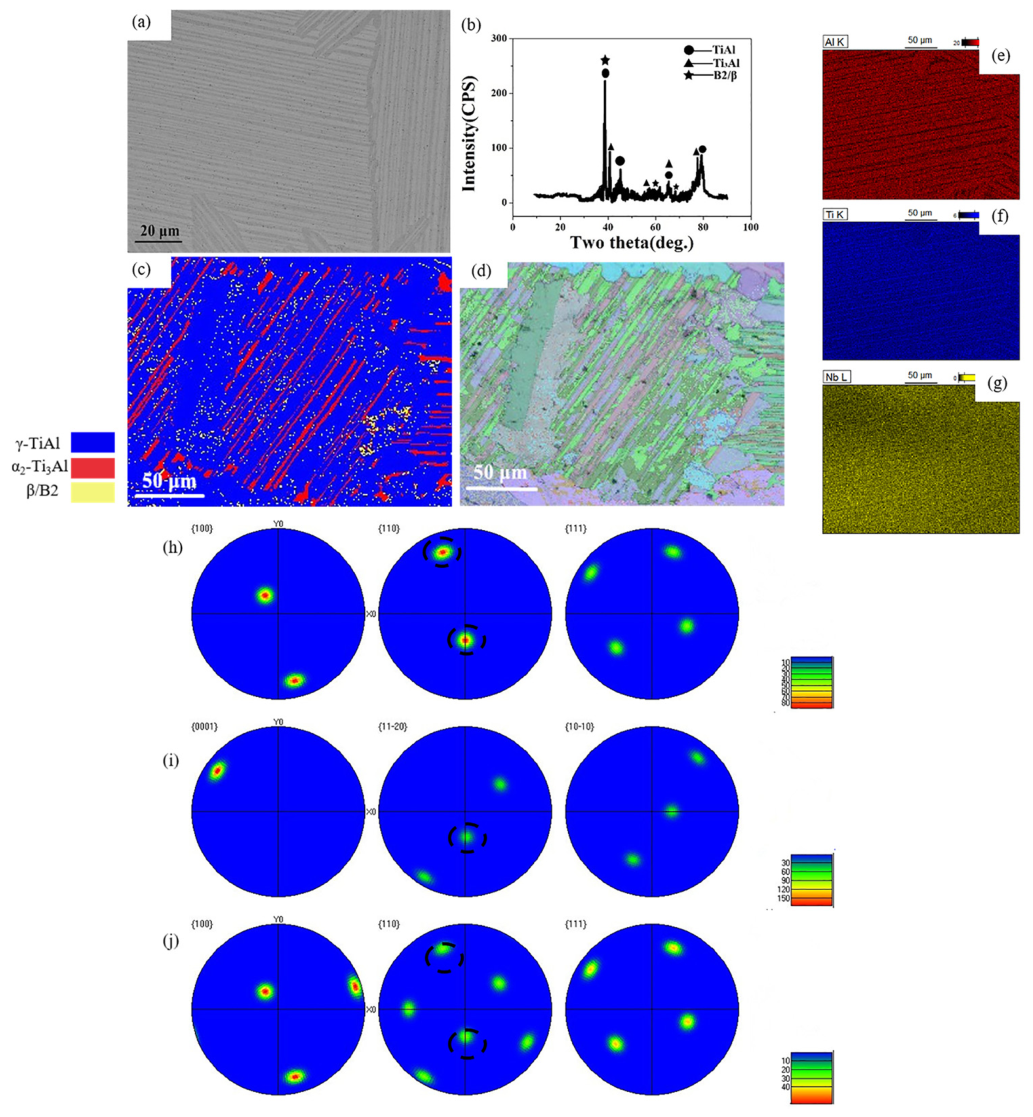
Figure 3a,b, it was found that, after heat treatment at 1430 °C for 5 min and then at 1150 °C for 2 h, combined with
Figure 2a, the lamellar structure was refined to a certain extent in the alloy structure. At the γ interface, the α
2 phase initially nucleated and underwent growth during the heat treatment process. Consequently, after a relatively extended holding period, lamellar α
2 phases were present at the interface, whereas the α phase that grew within the grains formed a lamellar structure. It should be noted that at higher temperatures, a shorter holding time was required to prevent the growth of lamellar structures. The analysis conducted in conjunction with EBSD (
Figure 3c,d) revealed that the lamellar structure within the sheet material remained relatively coarse, with the B2 phase dispersed throughout the microstructure. Moreover, there existed Ti
3Al phases that had not undergone lamellar transformation in the microstructure, and these plate-like Ti
3Al phases were primarily situated at the interfaces of the γ phase. Through the analysis of the orientation relationship between the TiAl, Ti
3Al and B2 phases (
Figure 3h–j), the orientation relationship TiAl(111)//Ti
3Al(0001), TiAl(111)//B2(110) was found.
Through the analysis of
Figure 4a,b, it was determined that, after subjecting the material to heat treatment at 1450 °C for 5 min followed by 1150 °C for 2 h, in comparison with
Figure 3 and
Figure 4, a relatively coarse lamellar structure was formed in the sheet. Considering the formation mechanism of the lamellar structure, it was observed that the α phase nucleated and grew at the γ/γ interface and the lamellar α
2 phase was formed at the grain boundary owing to the extended holding time at a high temperature. Simultaneously, the α phase that nucleated within the γ phase also underwent growth, leading to the formation of relatively coarse lamellar structures in the microstructure. Then, it was maintained at a low temperature for a comparatively long period to further uniformly distribute the elements within the structure and refine the lamellar structure of the material to a certain degree. Due to the long holding time at a high temperature, the lamellar structure in the microstructure grew, resulting in relatively coarse lamellar clusters. In conjunction with EBSD analysis, it was discovered that the B2 phase was distributed within the coarse lamellar structure (
Figure 4c,d). The combination of
Figure 3 further demonstrated that the formation of the α phase at the grain boundaries and within the grains was primarily attributed to the extended heat treatment duration in the β phase region. During this period, the α phase grew, leading to the appearance of relatively coarse lamellar structures in the microstructure, along with the plate-like Ti
3Al phase at the interfaces. The orientation relationship was as follows (
Figure 4h–j): TiAl(111)//Ti
3Al(10
0), TiAl(110)//B2(110).
Through the analysis of
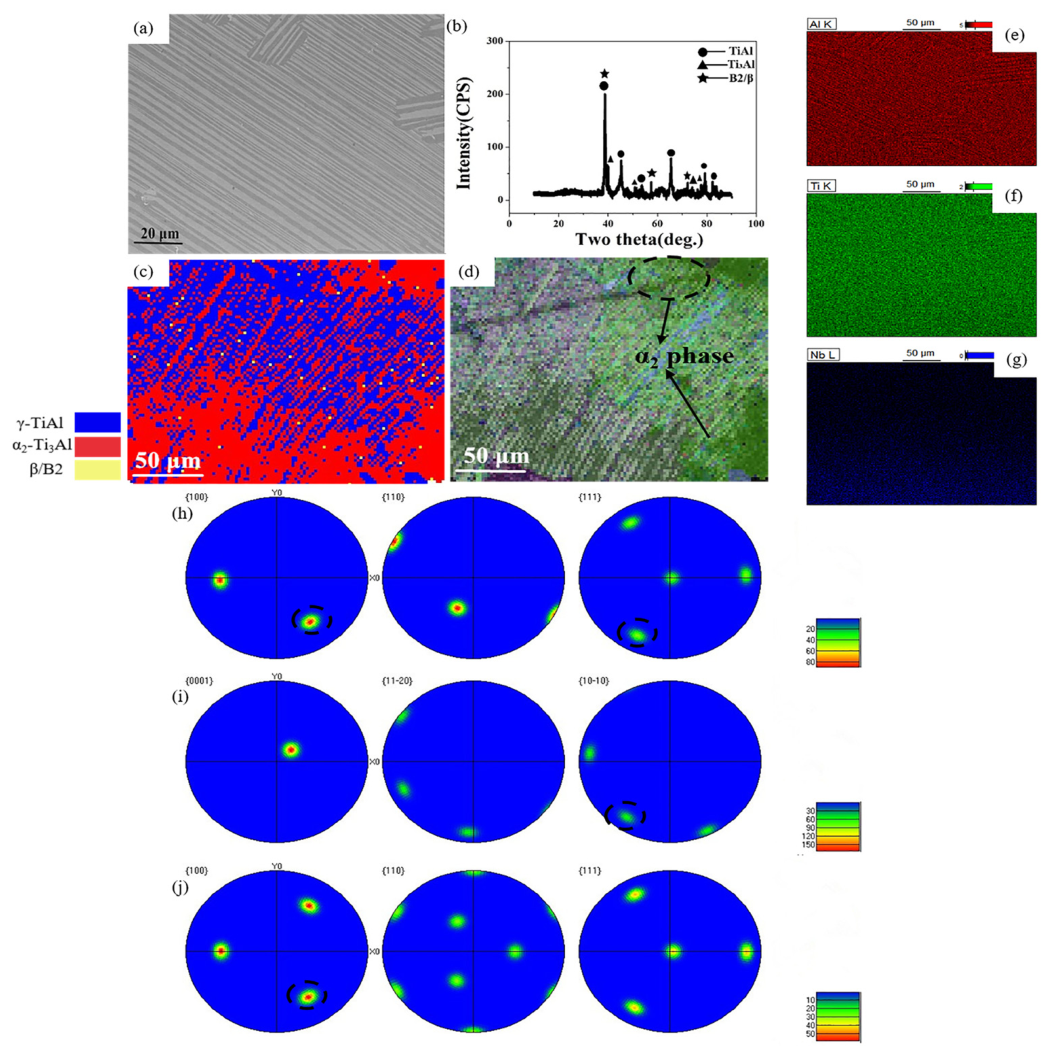
Figure 5a,b, it was found that, after heat treatment at 1410 °C for 3 min and then at 1150 °C for 2 h, the microstructure of the sheet was relatively uniform, and obvious lamellar structures appeared in the sheet microstructure. When compared with the phase composition subsequent to the previous heat treatment, there was no discernible change. The microstructure of the sheet primarily consisted of the TiAl phase, the Ti
3Al phase, and the B2/β phase. Due to the relatively short high-temperature holding time, less α phase was formed in the alloy structure. Following subsequent heat treatment steps, the α phase did not exhibit growth and instead underwent an ordered transformation, transitioning into the α
2 phase. Consequently, a relatively fine lamellar structure was formed within the alloy microstructure. Since the α phase formed initially at the γ phase interface and during the holding process, the α phase at the interface grew and transformed into the ordered α
2 phase, and a lamellar or relatively coarse α
2 phase appeared at the interface. An analysis of the size of the lamellar clusters in the sheet indicated that smaller lamellar clusters were formed in the microstructure. When combined with EBSD analysis (
Figure 5c,d), it was discovered that the phases in the sheet were predominantly the TiAl phase (blue area) and the Ti
3Al phase (red area), along with a minor quantity of the B2 phase (yellow area). The lamellar structure was relatively fine, with the B2 phase dispersed in the lamellar structure. Meanwhile, the Ti
3Al phase that had not transformed into the lamellar structure also existed in the structure. It can be found from
Figure 5d that the Ti
3Al phase existed in the form of lamellae at the grain boundaries of the γ phase. This phenomenon was primarily attributed to the fact that, during the heat treatment process, the α
2 phase nucleated initially at the γ phase grain boundaries and grew as the heat treatment progressed. The phase transformation relationships of TiAl, Ti
3Al and B2 (
Figure 5h–j) were as follows: TiAl(111)//Ti
3Al(10
0), TiAl(100)//B2(100).
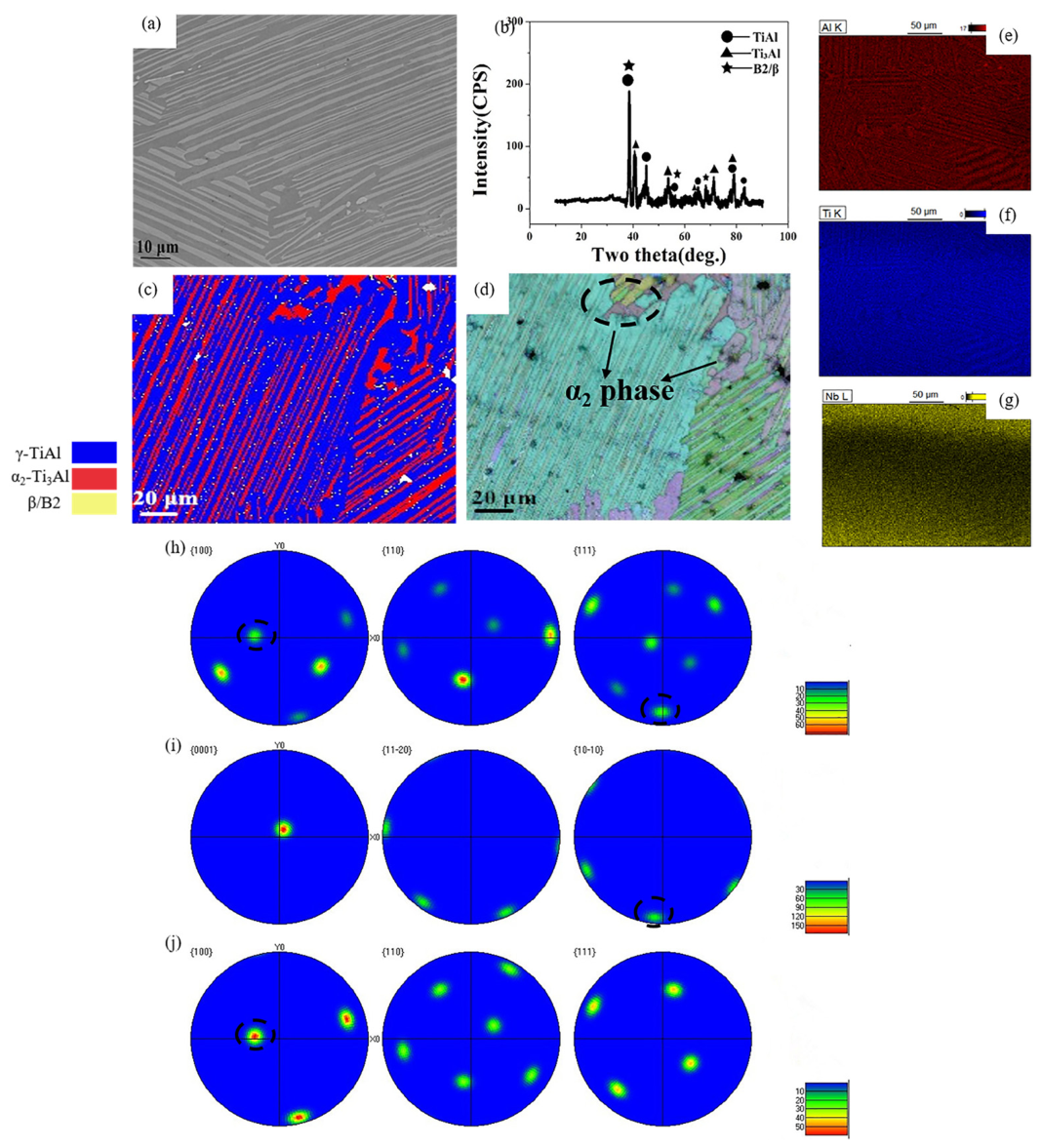
After the two-step heat treatment at 1430 °C for 3 min and at 1150 °C for 2 h (
Figure 6a,b), TiAl phase, Ti
3Al phase and B2/β phase were the main constituent phases of the alloy, and the lamellar structure was further refined, combined with
Figure 3. Owing to the relatively brief holding duration during high-temperature heat treatment, only a limited quantity of the α phase nucleated and grew at the interface of the γ phase. The α phase predominantly nucleated within the γ phase and, following an ordered transformation, developed a relatively fine lamellar structure. There was no obvious lamellar Ti
3Al phase in the sheet. The microstructure was mainly composed of a γ/α
2 lamellar structure and γ phase. In conjunction with the EBSD analysis (
Figure 6c,d), it was discovered that the lamellar structure within the sheet metal was relatively refined, and the B2 phase was distributed within the lamellar structure. The α
2 phase exhibited less nucleation at the γ phase interface. During the heat treatment process, the α phase predominantly nucleated within the γ phase and ultimately formed a relatively fine lamellar structure. TiAl, Ti
3Al and B2 phases had the following orientation relationships (
Figure 6h–j): TiAl(111)//Ti
3Al(0001), TiAl(111)//B2(100).
Through the analysis of
Figure 7a,b, it was observed that when the material was held at 1450 °C for 3 min and then at 1150 °C for 2 h, the lamellar structure in the microstructure of the sheet was relatively finer compared with that in
Figure 4. By analyzing the formation mechanism of the lamellar structure, it could be observed that, owing to the relatively short high-temperature holding time, the α phase nucleated within the γ phase and at the γ/γ interface. Due to the brief retention time within the β phase region, the α phase failed to grow, followed by an ordered transformation, which led to the formation of a relatively fine lamellar structure. In combination with EBSD analysis, it was found that the lamellar structure in the sheet metal was relatively fine and was composed of the B2 phase that was dispersedly distributed. Owing to the brief holding time within the β phase region, despite the formation of α phase nuclei at the grain boundaries and inside the grains, the formed α phase failed to grow. Consequently, subsequent to the ordering transformation, a fine lamellar structure emerged in the microstructure (
Figure 7c,d). The orientation relationship was as follows (
Figure 7h–j)): TiAl(110)//Ti
3Al(11
0), TiAl(110)//B2(110).
The results demonstrated that under short β-phase holding conditions (1410 °C × 3 min, 1430 °C × 3 min, and 1450 °C × 3 min), the average lamellar spacing values were approximately 98 nm, 105 nm, and 115 nm. These values were significantly smaller than those obtained for the corresponding 5 min holding conditions (210 nm, 195 nm, 230 nm). The EBSD grain boundary analysis results were consistent with these values, confirming that reducing the high-temperature holding time effectively suppressed α-phase growth and refined the lamellar spacing by more than 50%. The average EBSD confidence index ranged from 0.32 to 0.41 across all samples. The γ phase fraction varied between 64% and 72%, the α2 phase fraction ranged from 23% to 30%, and the B2 phase fraction remained between 5% and 6%. The short-time holding groups (3 min) exhibited a slightly higher γ-phase fraction (72%), corresponding to the finer lamellar structure.
Based on the aforementioned data, it was discovered that, when the heat treatment processes were 1410 °C for 3 min + 1150 °C for 2 h, 1430 °C for 3 min + 1150 °C for 2 h, and 1430 °C for 3 min + 1150 °C for 2 h, the microstructure of the TiAl—Nb alloy sheet consisted of the γ phase and a relatively fine γ/α2 lamellar structure.
3.2. TEM and HRTEM Analysis After Heat Treatment at Different Temperatures
Through TEM and HRTEM analyses of the microstructures after heat treatment at various temperatures, the orientation relationships between each phase within the microstructures were determined. The microstructures exhibiting a preferred orientation were selected, which, in turn, provided a theoretical foundation for the selection of the heat treatment process.
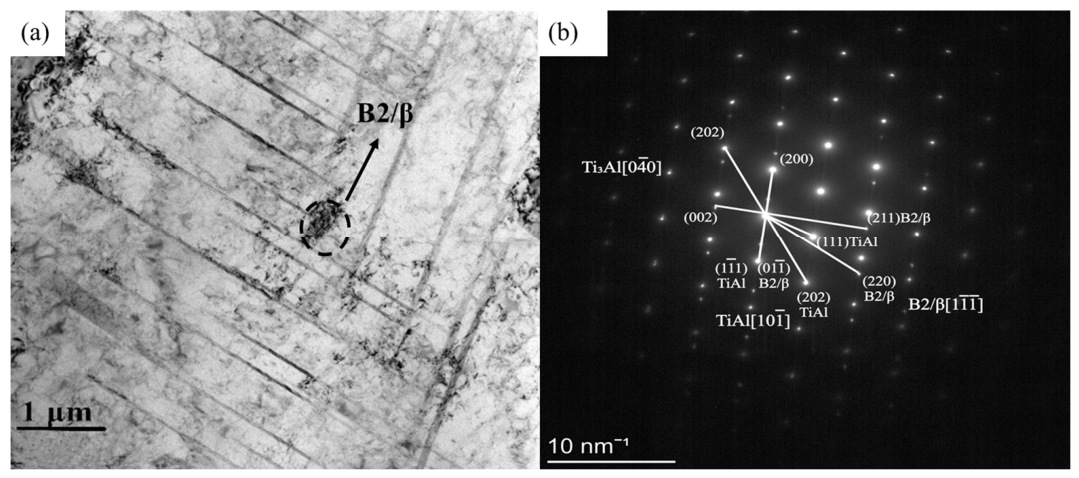
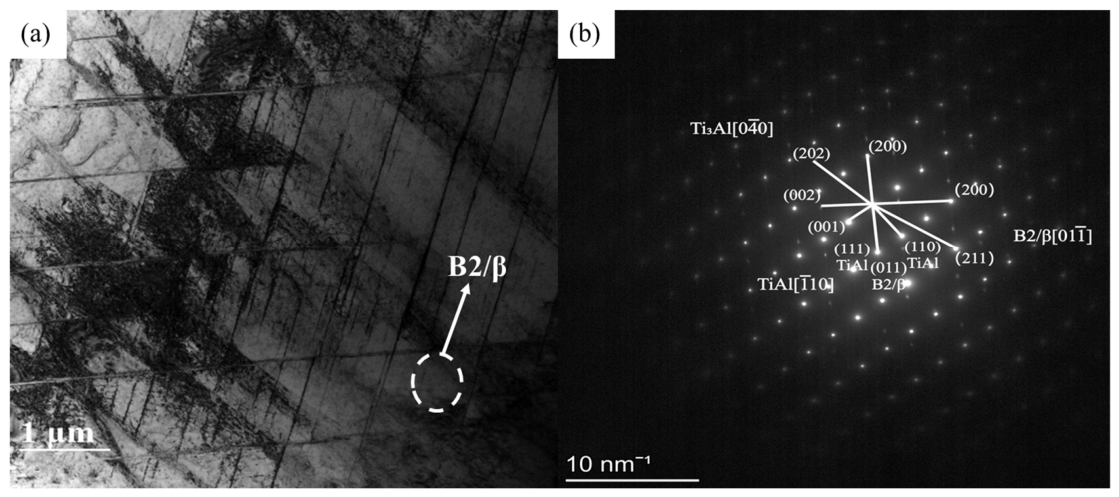
After the TiAl-Nb sheet underwent heat treatment at 1410 °C for 3 min and subsequently at 1150 °C for 2 h, the microstructure of the sheet predominantly consisted of the matrix γ-TiAl, lamellar α
2-Ti
3Al, and B2/β phases. The α
2 phase was dispersed within the γ phase in the form of fine needle-like structures, and the B2/β phase was primarily distributed within the microstructure in the form of ellipsoids, as depicted in
Figure 8a. As shown in
Figure 8b, the mismatch between the TiAl and Ti
3Al phases was 0.08, and they were semi-coherent interfaces. Therefore, Ti
3Al and the matrix TiAl phase were combined in the form of a semi-coherent interface. The mismatch between B2/β and TiAl phases was 0.008, with the two combined in the form of a coherent interface.
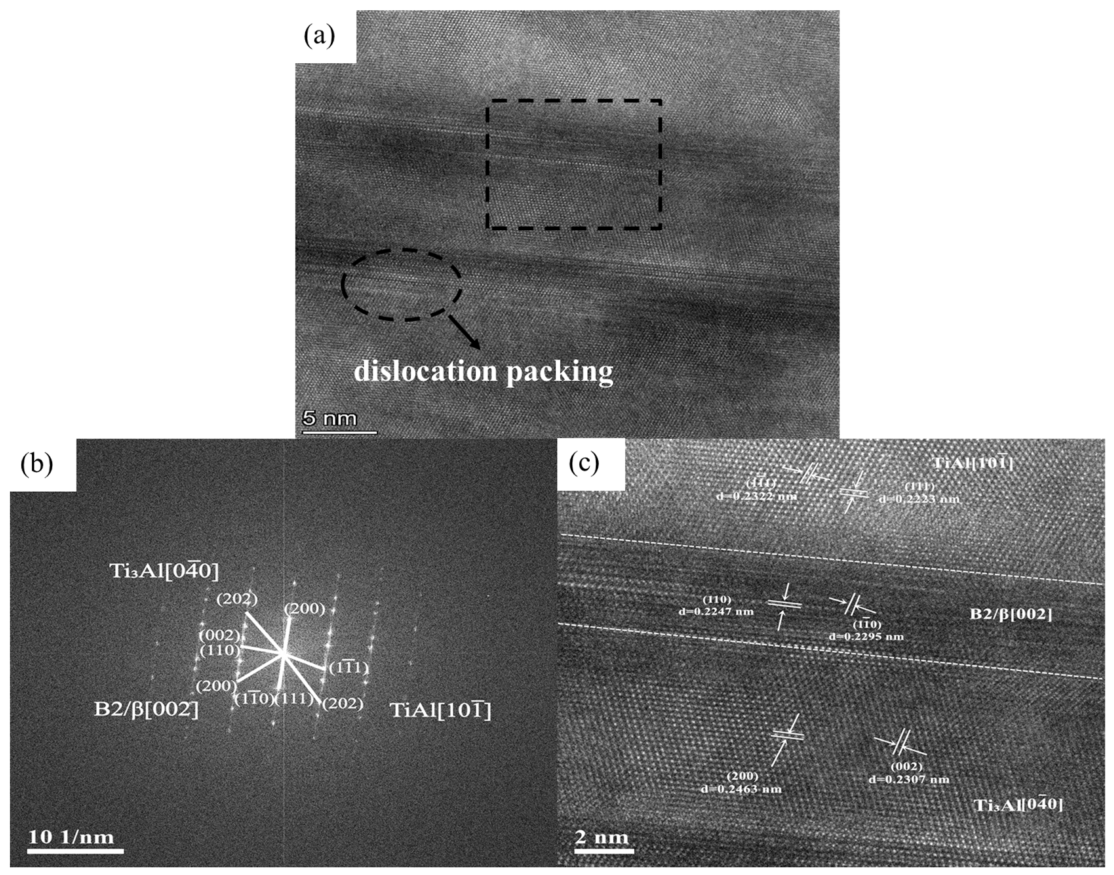
Figure 9a–c shows the HRTEM image of the TiAl-Nb sheet after heat treatment at 1410 °C for 3 min and 1150 °C for 2 h. After analysis, it was determined that the following crystallographic relationships existed among the interfaces of the γ-TiAl, α
2-Ti
3Al, and B2/β phases:
TiAl[10]//Ti3Al[00]//B2/β[002]
(11)TiAl//(002)Ti3Al//(10)B2/β
(111)TiAl//(200)Ti3Al//(110)B2/β
The mismatch degree between (1
1)TiAl and (002)Ti
3Al was calculated to be 0.15%. TiAl and Ti
3Al were well combined in the form of a coherent interface, and the two phases were well combined without a fixed or preferred crystallographic orientation. By calculating the mismatch degree of the (111)TiAl and the (200)B2/β, it was found that the mismatch degree between the two was 0.27%. The two also existed in the form of a coherent interface, and there was no fixed or preferred crystallographic orientation between them. Upon analysis of
Figure 9c, it was evident that there was distinct dislocation packing between the Ti
3Al phase, the B2/β phase, and the TiAl phase. This indicated that the presence of the Ti
3Al phase and the B2/β phase impeded the movement of dislocations, leading to dislocation packing and exerting a certain strengthening effect on the sheet. Simultaneously, the TiAl phase, Ti
3Al phase, and B2/β phase coexisted in the form of coherent interfaces, and the degree of mismatch was extremely low, suggesting that the interfacial surface energy was low. Consequently, it was more feasible to obtain a sheet structure containing a relatively large quantity of the γ(TiAl) phase.
After the TiAl-Nb sheet was maintained at 1430 °C for 3 min and subsequently at 1150 °C for 2 h, the microstructure of the sheet primarily comprised the matrix γ-TiAl, lamellar α
2-Ti
3Al, and ellipsoidal B2/β phases. The microstructure was predominantly lamellar, as depicted in
Figure 10a. The B2/β phases were dispersed within the relatively fine lamellar microstructure. As indicated in
Figure 10b, the mismatch between the TiAl and Ti
3Al phases was 0.08. The two were semi-coherent interfaces and they combined well. The mismatch between the B2/β and TiAl phases was 0.008, and the two combined in the form of a coherent interface.
Figure 11a presents the HRTEM image of the TiAl-Nb sheet subsequent to being held at 1430 °C for 3 min and then at 1150 °C for 2 h. The following crystallographic relationships were present among the interfaces of the γ-TiAl, α
2-Ti
3Al, and B2/β phases:
TiAl[10]//Ti3Al[00]//B2/β[01]
(002)TiAl//(200)Ti3Al//(200)B2/β
(110)TiAl//(002)Ti3Al//(011)B2/β
The degree of mismatch between (002)TiAl and (200)Ti
3Al was calculated to be 0.18. According to classical interface crystallography, a misfit δ < 0.05 is defined as a coherent interface, 0.05 ≤ δ < 0.25 as a semi-coherent interface (with misfit dislocations), and δ ≥ 0.25 as an incoherent interface. TiAl and Ti
3Al were tightly combined in the form of a semi-coherent interface, and there was no fixed or preferred crystallographic orientation between the two phases. Through the calculation of the mismatch degree between the (002)TiAl and the (200)B2/β, it was found that the mismatch between the two planes was 0.187. They also existed in the form of a semi-coherent interface, and there was no fixed or preferred crystallographic orientation between them. In
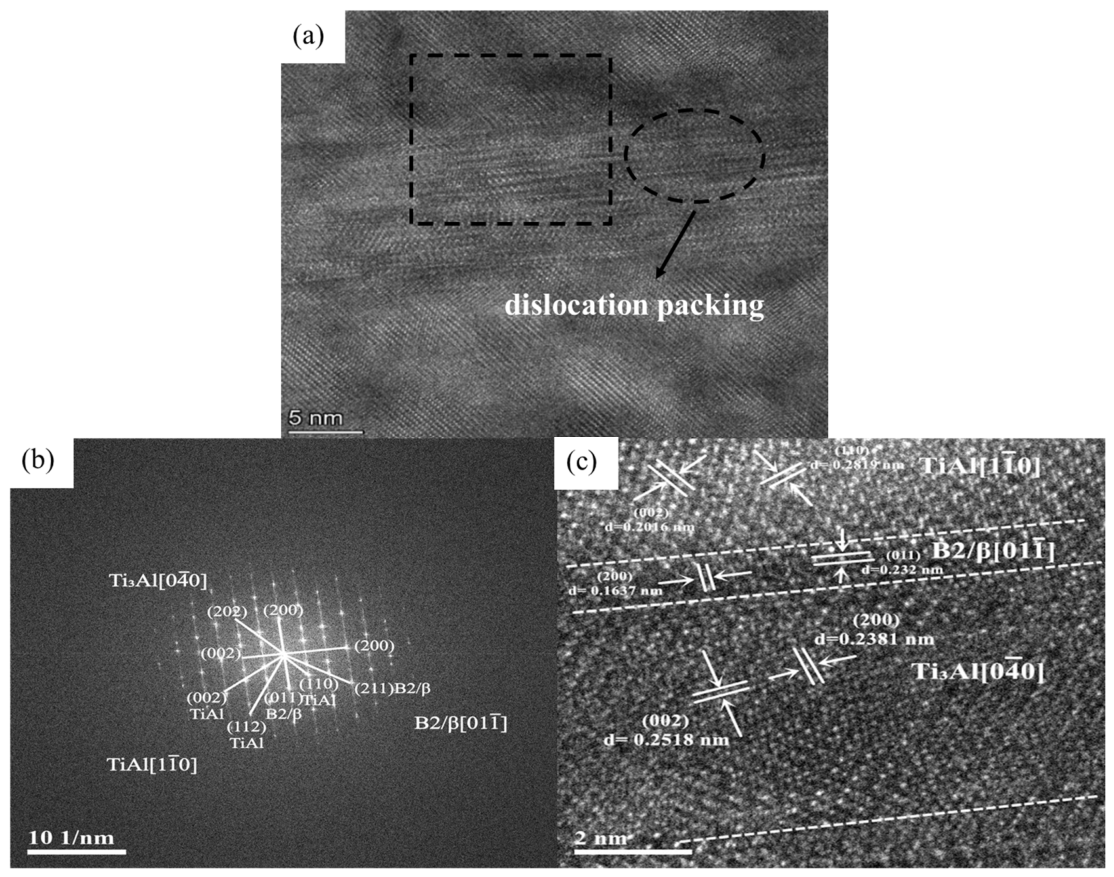
Figure 11a, it could be observed that there was dislocation packing at the interfaces between the Ti
3Al phase and the B2/β phase, as well as between the Ti
3Al phase and the TiAl phase. Both the Ti
3Al phase and the B2/β phase impeded the movement of dislocations. This impedance resulted in dislocation packing at the interfaces, consequently exerting a certain strengthening effect on the sheet. However, when compared with the microstructure obtained after holding at 1410 °C for 3 min and subsequently at 1150 °C for 2 h, the phases predominantly existed in the form of semi-coherent interfaces, and the mismatch was relatively significant. This made it challenging to acquire a microstructure with a higher content of the γ(TiAl) phase after heat treatment.
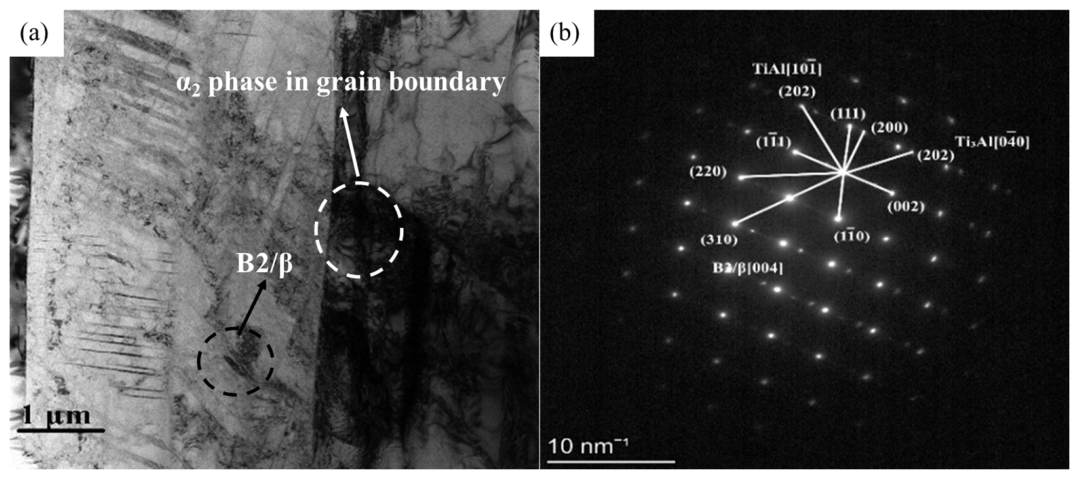
After the TiAl-Nb sheet underwent heat treatment at 1450 °C for 3 min and subsequently at 1150 °C for 2 h, as observed from
Figure 12a, the α
2 phase within the grains was relatively fine. Compared with the α
2 phase within the grains, the α
2 phase existing at the grain boundaries was coarser. The primary cause of this phenomenon was that, during the heat treatment process, the α phase initially nucleated and grew at the grain boundaries, followed by an ordered transformation, and it persisted at the grain boundaries. The mismatch between the TiAl and Ti
3Al phases was 0.0004, and the two were in the form of a coherent interface. The mismatch between the B2/β and TiAl phases was 0.01, and the two combined in the form of a coherent interface.
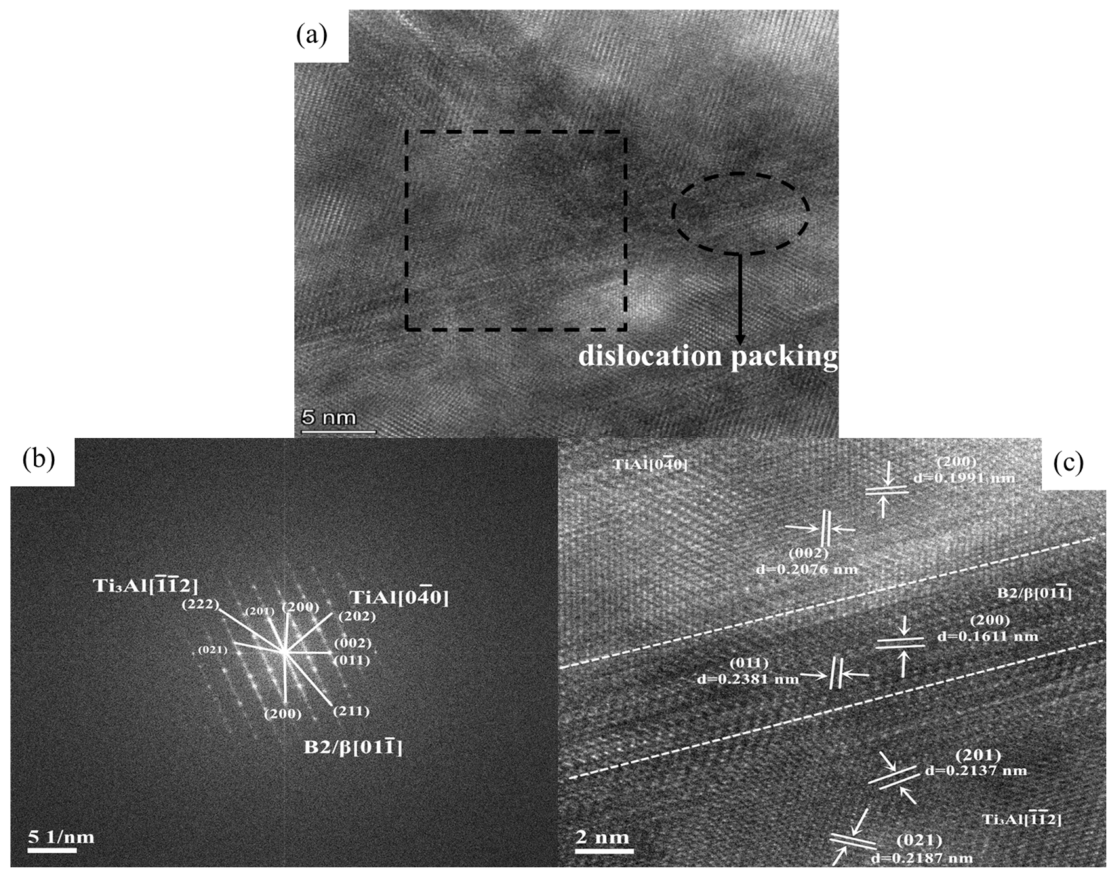
Through the analysis of
Figure 13, it was found that the following crystallographic relationships existed among the γ-TiAl, α
2-Ti
3Al and B2/β phase interfaces:
TiAl [00]//Ti3Al[2]//B2/β[01]
(200)TiAl//(201)Ti3Al//(200)B2/β
(002)TiAl//(021)Ti3Al//(011)B2/β
The mismatch between the (002)TiAl and (201)Ti
3Al phases was 5%. A semi-coherent interface was formed between TiAl and Ti
3Al, and the two phases combined well without a fixed or preferred crystallographic orientation. The mismatch between (002)TiAl and (200)B2/β was 22.4%, and they also existed in the form of a semi-coherent interface without a fixed or preferred crystallographic orientation. In
Figure 13a, it was found that there was also obvious dislocation packing between the Ti
3Al phase and the B2/β phase as well as the TiAl phase, indicating that the presence of the Ti
3Al phase and the B2/β phase hindered dislocation movement and played a certain strengthening role in the sheet. However, when compared with the microstructure obtained after holding at 1410 °C for 3 min and subsequently at 1150 °C for 2 h, the interfaces between the phases predominantly existed in the form of semi-coherent interfaces. Among these interfaces, the mismatch between the B2/β phase and the matrix TiAl phase was relatively high. As a result, it was difficult for the sheet to acquire a microstructure containing a substantial amount of the γ(TiAl) phase after heat treatment.
3.3. Analysis of the Orientation Relationship Between TiAl and Ti3Al After Heat Treatment at Different Temperatures
To further provide a basis for the selection of heat treatment processes, this paper employs the transformation matrix method to investigate the crystallographic orientation relationship between the TiAl phase and the Ti3Al phase in the microstructure of TiAl-Nb sheets after different heat treatment processes and consequently determine the preferred orientation relationship of the two phases in the TiAl-Nb alloy sheets. The principle of the matrix method involves calculating the transformation matrices B and A for each crystal orientation relationship. If the absolute values of the nine elements in transformation matrices A and B are identical, despite differences in their order and position, it can be concluded that these two crystallographic orientation relationships belong to the same type.
According to the research [
22], the crystal plane (hkl) could be expressed as G
*hkl = ha
1* + ka
2* + la
3*, and the vector of the normal direction of the (hkl) crystal plane is I
uvw = ua
1 + va
2 + wa
3. The relationship between G
*hkl = ha
1* + ka
2* + la
3* and I
uvw = ua
1 + va
2 + wa
3 is as follows:
This formula is applicable to all crystal systems. G represents the transformation matrix when the direct-space basis vectors a
1, a
2, a
3 of the crystal are expressed in relation to the reciprocal-space basis vectors a
1*, a
2*, a
3*; G
−1 denoted the inverse matrix of the transformation matrix G; a, b, and c are the lattice constants, while α, β, and γ are the inter-axial angles of the crystal [
23].
The lattice constant of Ti3Al is: a = b = 5.77 Å, c = 4.62 nm Å, α = β = 90°, γ = 120°. The lattice constant of TiAl is: a = b = 4.001 Å, c = 4.071 Å, α = β = γ = 90°. The above parameters are substituted into (3).
Based on the parallel relationship of crystal directions [u
2′v
2′w
2′]//[u
2v
2w
2] and Equation (1), the parallel relationship of the second set of crystal planes (h
2′k
2′l
2′)//(h
2k
2l
2) could be derived. Similarly, based on the parallel relationship of crystal planes (h
1′k
1′l
1′)//(h
1k
1l
1) and Equation (2), the parallel relationship of crystal directions [u
1′v
1′w
1′]//[u
1v
1w
1] could be derived. Consequently, the following three sets of parallel relationships can be obtained:
The orientation relationships between the Ti
3Al and TiAl phases under different heat treatment conditions are summarized in
Table 2.
The aforementioned bit-related relationship converts into the following matrix relationship:
A and B are transposed inverse matrices of each other, and B is the transformation matrix:
d1, d2, d3 are respectively the interplanar spacings of the (h1k1l1), (h2k2l2) and (h3k3l3) crystal planes of the TiAl phase, while d1′, d2′, d3′ are respectively the interplanar spacings of the (h1′k1′l1′), (h2′k2′l2′) and (h3′k3′l3′) crystal planes of the Ti3Al phase.
As shown in
Table 3, the calculation results indicate that, after heat treatment at 1430 °C and 1450 °C, there was no fixed or preferred crystal orientation relationship between the Ti
3Al phase and the TiAl matrix phase. After being maintained at 1410 °C for 3 min and subsequently at 1150 °C for 2 h, the Ti
3Al phase and the TiAl matrix phase exhibited a preferred orientation relationship, specifically Ti
3Al[0
0]//TiAl[10
], (002)Ti
3Al//(1
1)TiAl.
The variations in the Ti3Al/TiAl orientation relationships measured under different heat-treatment conditions reflected differences in variant selection during the α→α2 transformation. Short β-phase holding conditions (1410 °C × 3 min) promoted preferential α-phase nucleation at γ grain boundaries, resulting in the strong selection of specific orientation variants such as (002)Ti3Al//(111)TiAl, with a frequency of 72%. In contrast, higher temperatures or longer holding times promoted intragranular homogeneous nucleation, leading to a more random distribution of orientation variants.
Based on previous research findings regarding the mismatch, the interface of (002)Ti3Al//(11)TiAl not only exhibited a preferred orientation but also had a relatively small degree of mismatch. Owing to heat treatment within the β phase region, during the heat-treatment process, the α phase nucleated and grew at the interface between the γ phase and the β phase and, subsequently, underwent an ordered transformation to form the α2 phase. When the mismatch between the two phases was lower and they exhibited a favorable crystallographic matching degree, a greater quantity of γ(TiAl) and α2/γ lamellar structures could be formed within the matrix, and the formed lamellar structures were relatively fine.
In summary, by combining EBSD-based variant frequency statistics with matrix method analysis, we elucidated the variant selection rules during the B2/β→α→α2 + γ transformation under different heat-treatment paths. It was shown that a short β-phase holding favored the formation of low interfacial energy-preferred orientations, whereas higher temperatures or longer holding times lead to variant randomization.



 and
and