Study on the Properties of Waterborne Epoxy Resin/Polyurethane Composite Modified Emulsified Asphalt

Abstract
1. Introduction
2. Experimental Section
2.1. Raw Materials
2.2. Preparation of WER/PU Emulsion
2.3. Preparation of WEA and WER/PU-CMEA
2.4. Test Method
2.4.1. Fourier Transform Infrared Spectroscopy (FT-IR)
2.4.2. Storage Stability Test
2.4.3. Conventional Physical Performance Test
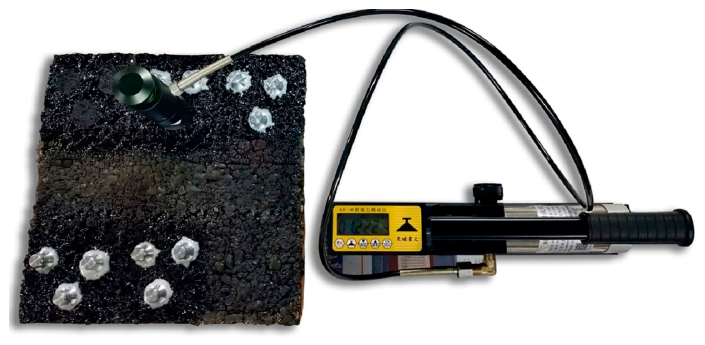
2.4.4. Adhesive Strength Test
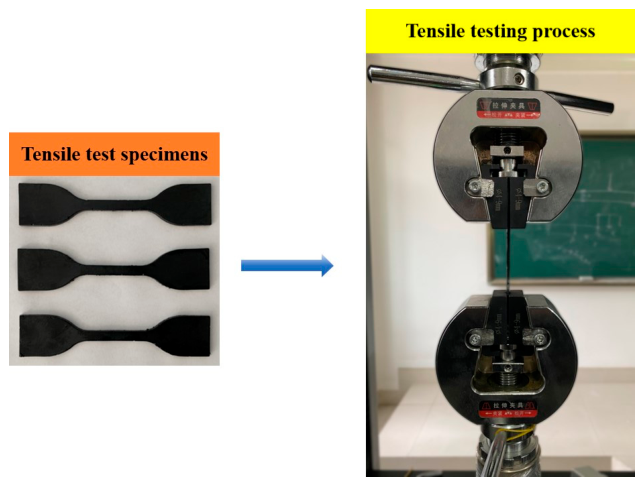
2.4.5. Tensile Strength Test
2.4.6. Scanning Electron Microscope (SEM) Test
2.4.7. Dynamic Shear Rheological (DSR) Test
2.4.8. Multi Stress Creep Recovery (MSCR) Test
2.4.9. Bending Beam Rheology (BBR) Test
2.4.10. Thin-Film Oven Test (TFOT)
3. Results and Analysis
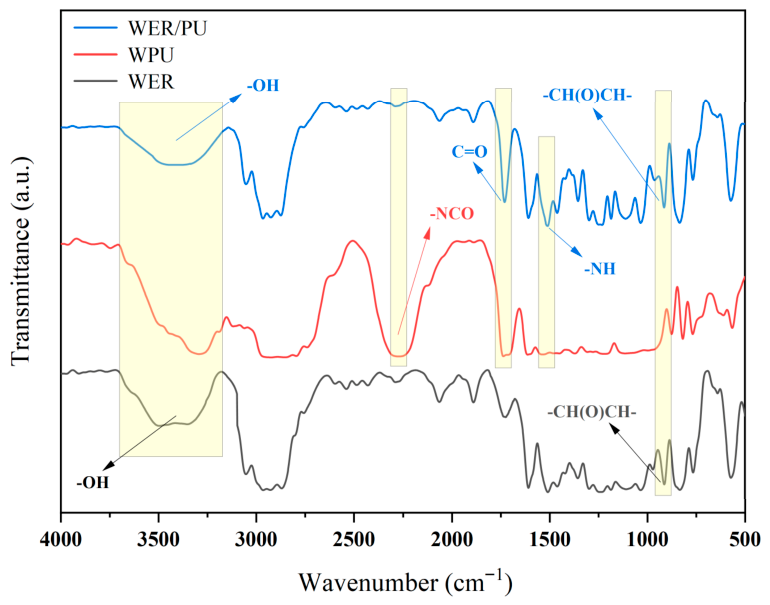
3.1. Structural Characterization
3.2. Compatibility Analysis
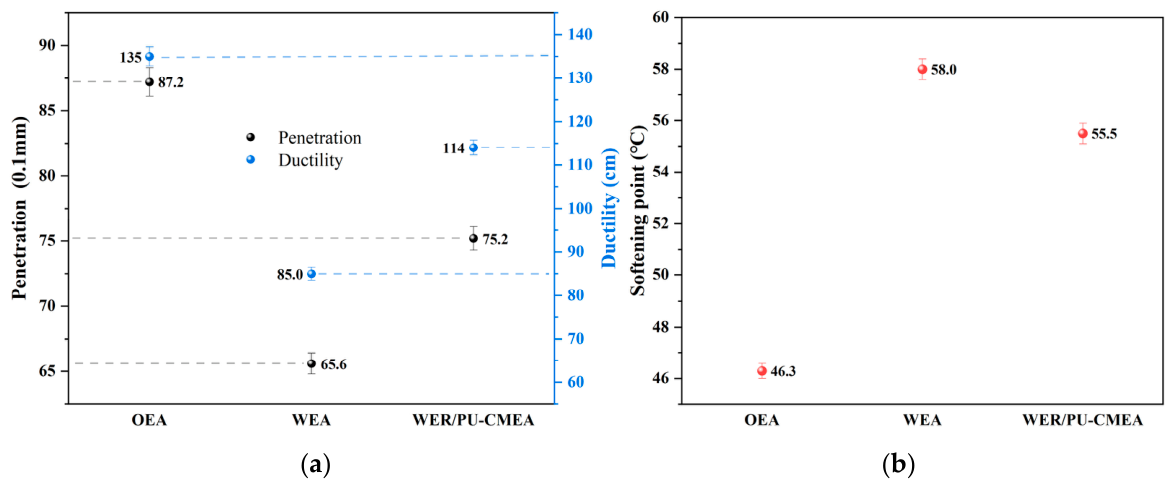
3.3. Conventional Physical Properties
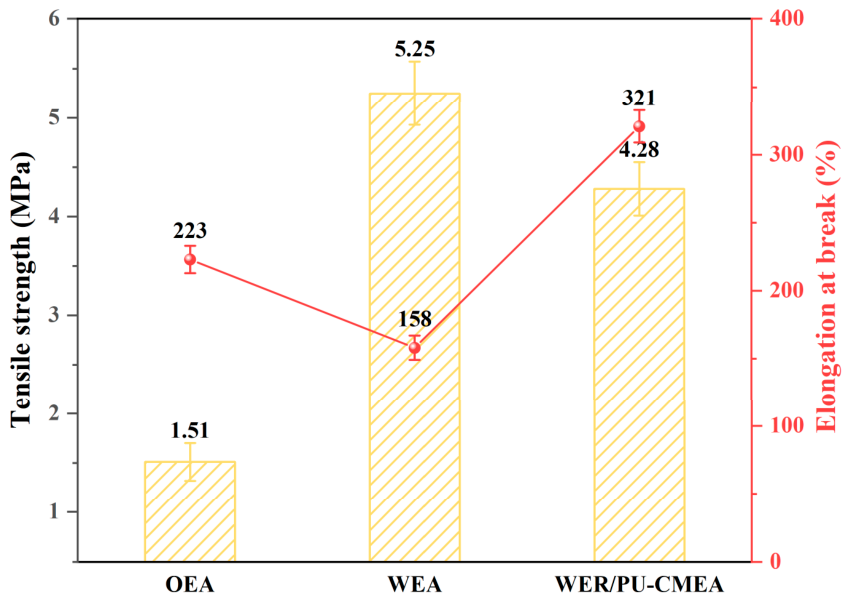
3.4. Mechanical Properties
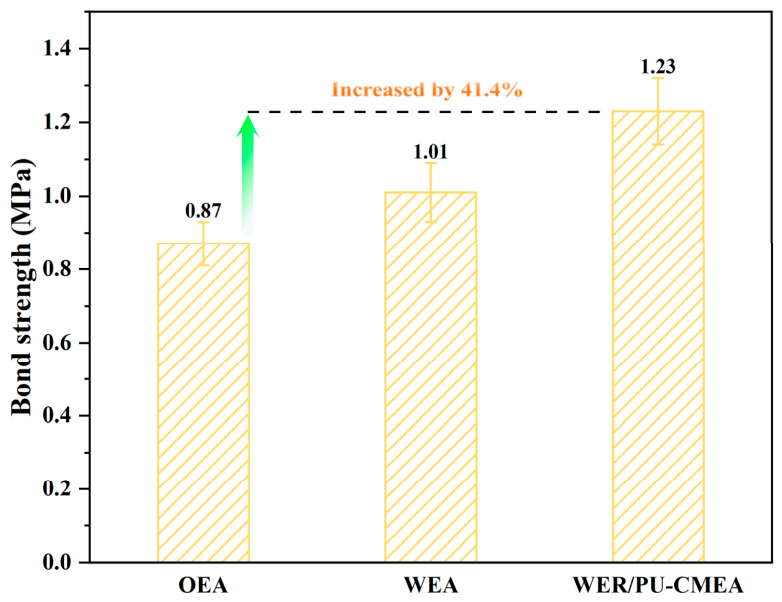
3.4.1. Bond Strength
3.4.2. Tensile Strength
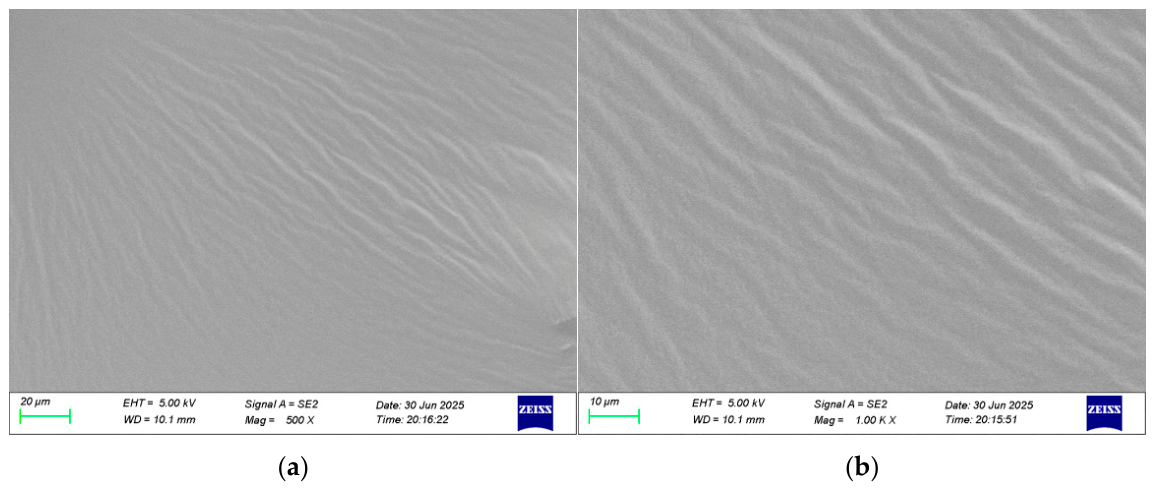
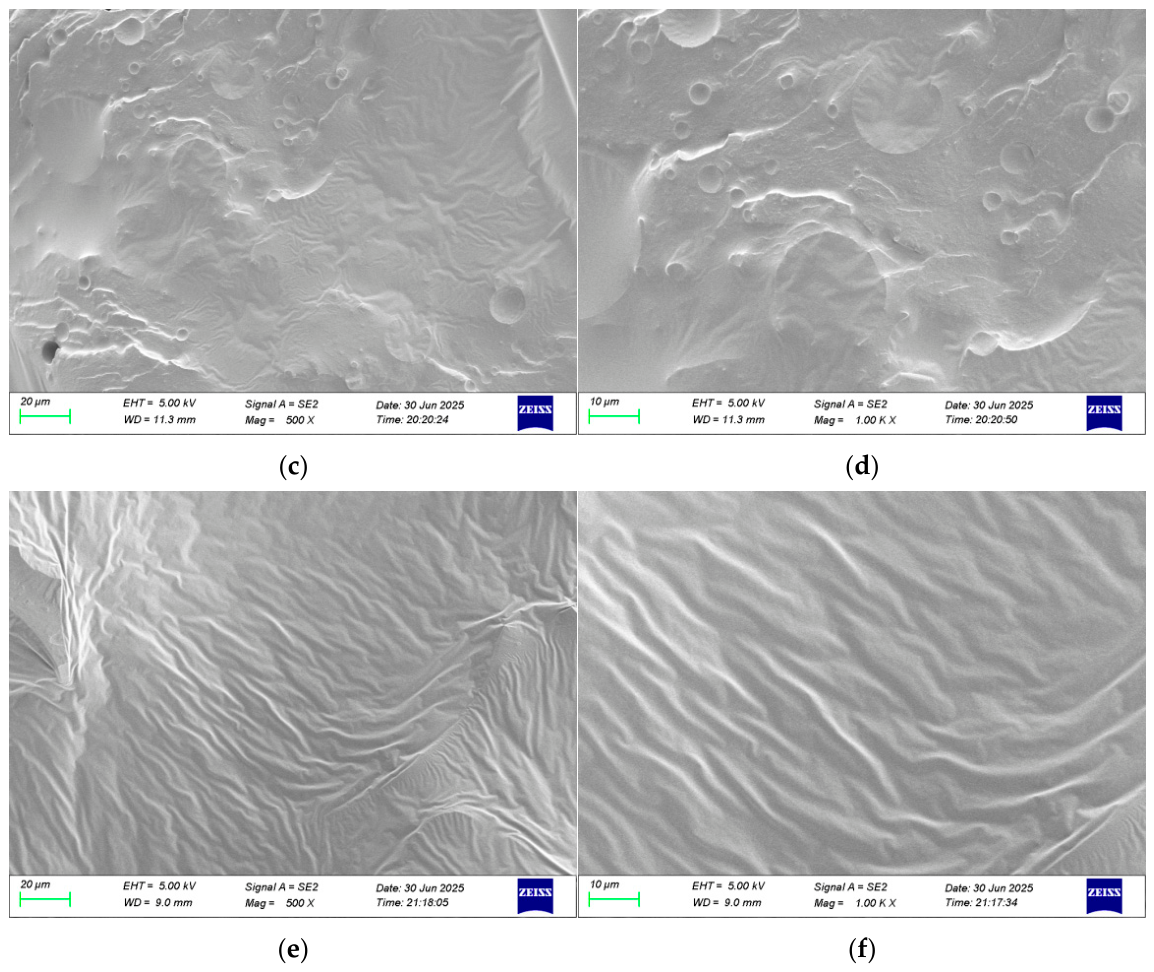
3.4.3. Microstructure of Fracture Surface
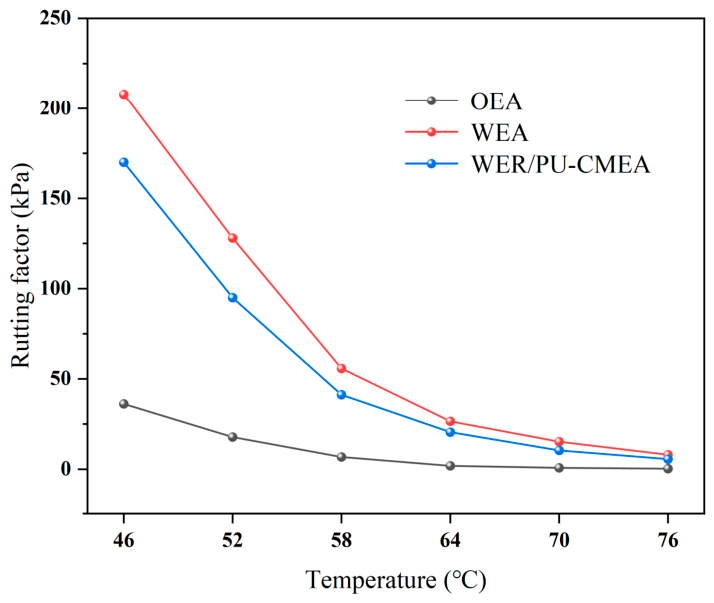
3.5. High Temperature Rheological Properties
3.5.1. Rutting Factor
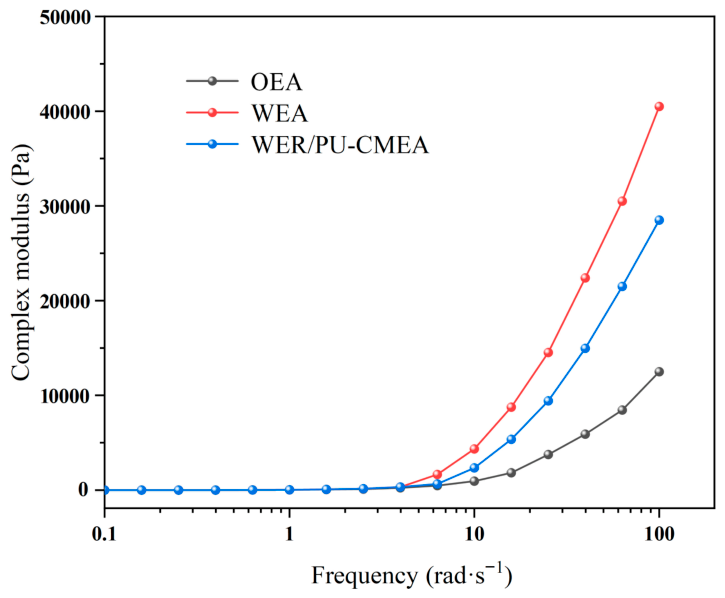
3.5.2. Complex Modulus (G*)
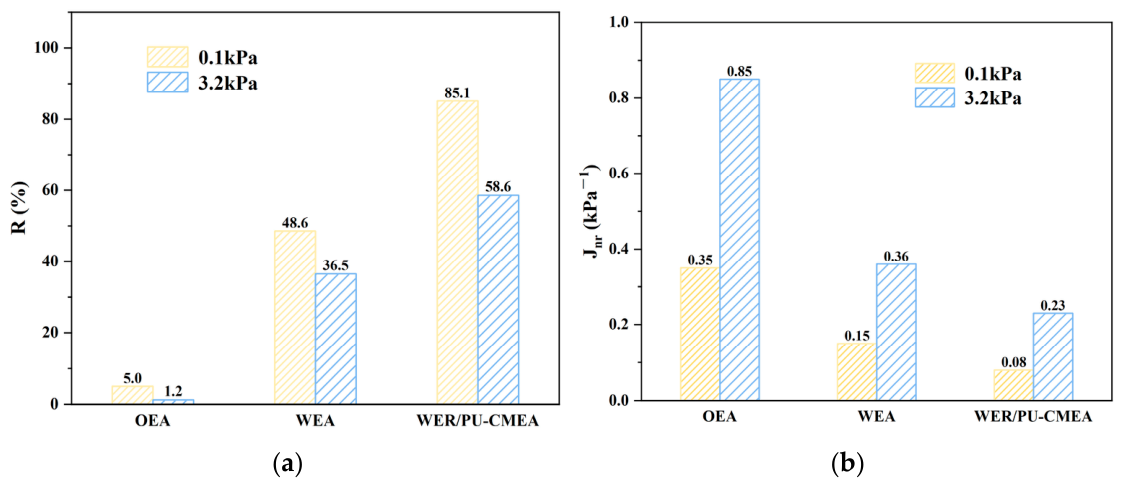
3.5.3. Creep Recovery Performance
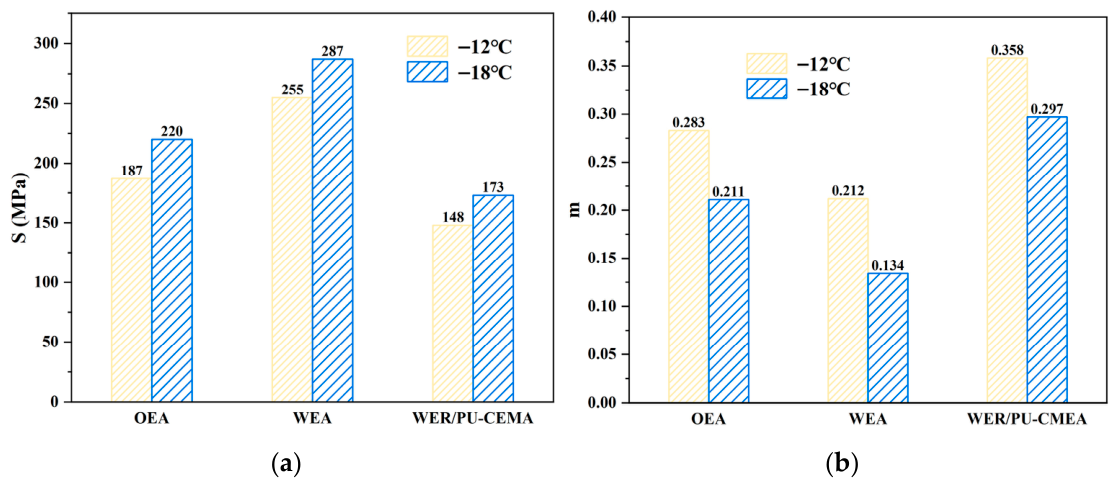
3.6. Low Temperature Crack Resistance
3.7. Short Term Aging Performance
4. Conclusions
- (1)
- The infrared spectra of each emulsified asphalt indicate that the spectrum of WER/PU CMEA retained the characteristic absorption peaks of OEA and WEA, while also exhibiting the characteristic peaks of PU, indicating that the PU segments had been successfully grafted onto the epoxy resin during the preparation process of WER/PU CMEA.
- (2)
- The introduction of WPU significantly improved the compatibility between emulsified asphalt and WER, enhanced the mechanical strength and structural integrity of the interfacial layer, and resulted in better storage stability of WER/PU-CMEA compared to WEA.
- (3)
- In WER/PU CMEA, the incorporation of polyurethane diluted the crosslink density of the epoxy rigid network to a certain extent, causing the material to exhibit some elasticity under compression, resulting in lower hardness than pure WEA; The introduction of polyurethane increased the free volume of molecular segments, which led to a corresponding decrease in the material’s thermal deformation temperature.
- (4)
- The incorporation of WPU enhanced the adhesive properties of WEA. Although it led to a slight decrease in tensile strength, the elongation at break was significantly improved, reaching up to 321%. Microscopic examination of the fractured surface of the tensile specimens revealed that WER/PU-CMEA possessed a hybrid network structure combining rigidity and flexibility, which resulted in a ductile fracture mode.
- (5)
- The MSCR and BBR test results demonstrated that in WER/PU-CMEA, the ring-opening polymerization between polyurethane and epoxy resin introduced a substantial number of flexible long-chain segments into the rigid three-dimensional epoxy network. This structure endowed WER/PU-CMEA with superior high-temperature creep recovery and low-temperature crack resistance compared to both OEA and WEA.
- (6)
- As the light component of aging asphalt is added after WER/PU curing, the asphaltene produced during aging is dissolved, the relative content of asphaltene is reduced, and the aging resistance of asphalt is improved.
Author Contributions
Funding
Data Availability Statement
Conflicts of Interest
References
- Li, X.; Li, J.; Li, Y.; Li, J.; Shen, Y.; Zhang, C.; Wei, J. Effect of laboratory long-term oven aging on the stiffness of asphalt mixtures. Constr. Build. Mater. 2020, 258, 120252. [Google Scholar] [CrossRef]
- Xu, L.; Wang, S.; Loprencipe, G.; Xiao, X.; Lai, Y. Performance and low-carbon assessment of polymer modification processes for emulsified asphalt based on grey rational analysis. Process Saf. Environ. Prot. 2026, 208, 108439. [Google Scholar] [CrossRef]
- Shan, B.; Cao, X.; Hao, Z.; Wu, Y.; Yang, X.; Li, X. Experimental and molecular dynamics simulations investigating the flexibility and compatibility of epoxidized soybean oil-reinforced epoxy asphalt. J. Mater. Civ. Eng. 2024, 36, 04024327. [Google Scholar] [CrossRef]
- Si, J.; Jia, Z.; Wang, J.; Yu, X.; Li, Y.; Dong, F.; Jiang, R. Comparative analysis of coldmixed epoxy and epoxy SBS-modified asphalts: Curing rheology, thermal, and mechanical properties. Constr. Build. Mater. 2018, 176, 165–171. [Google Scholar] [CrossRef]
- Shi, S.; Zang, D.; Chen, X.; Ma, T.; Gu, L.; Xu, D.; Liu, J. Preparation and properties of a novel waterborne epoxy resin modified emulsified asphalt. Constr. Build. Mater. 2023, 317, 130767. [Google Scholar] [CrossRef]
- Liu, M.; Han, S.; Pan, J.; Ren, W. Study on cohesion performance of waterborne epoxy resin emulsified asphalt as interlayer materials. Constr. Build. Mater. 2018, 177, 72–82. [Google Scholar] [CrossRef]
- Luo, S.; Liu, Z.; Yang, X.; Lu, Q.; Yin, J. Construction technology of warm and hot mix epoxy asphalt paving for long-span steel bridge. J. Constr. Eng. Manag. 2019, 145, 04019074. [Google Scholar] [CrossRef]
- Sun, Y.; Liu, C.; Hong, Y.; Liu, R.; Zhou, X. Synthesis and application of self-crosslinking and flame retardant waterborne polyurethane as fabric coating agent. Prog. Org. Coat. 2019, 137, 105323. [Google Scholar] [CrossRef]
- Lu, Y.; Larock, R.C. Soybean-oil-based waterborne polyurethane dispersions: Effects of polyol functionality and hard segment content on properties. Biomacromolecules 2008, 9, 3332–3340. [Google Scholar] [CrossRef] [PubMed]
- Li, X.; Li, J.; Wang, J.; Yuan, J.; Jiang, F.; Yu, X.; Xiao, F. Recent applications and developments of Polyurethane materials in pavement engineering. Constr. Build. Mater. 2021, 304, 124639. [Google Scholar] [CrossRef]
- Chen, R.; Xu, W.; Chen, Y. Preparation and properties of waterborne polyurethane and SBS composite-modified emulsified asphalt. Appl. Sci. 2024, 14, 7288. [Google Scholar] [CrossRef]
- JGJT 3410-2025; Standard Test Methods of Asphalt and Asphalt Mixture for Highway Engineering. Ministry of Transport of the People’s Republic of China: Beijing, China, 2025.
- ASTM D5/D5M-13; Standard Test Method for Penetration of Bituminous Materials. ASTM International: West Conshohocken, PA, USA, 2013.
- ASTM D113-17; Standard Test Method for Ductility of Asphalt Materials. ASTM International: West Conshohocken, PA, USA, 2017.
- ASTM D36/D36M-12; Standard Test Method for Softening Point of Bitumen (Ring-and-Ball Apparatus). ASTM International: West Conshohocken, PA, USA, 2012.
- ASTM D4541-22; Standard Test Method for Pull-Off Strength of Coatings Using Portable Adhesion Testers. ASTM International: West Conshohocken, PA, USA, 2022.
- ASTM D638-14; Standard Test Method for Tensile Properties of Plastics. ASTM International: West Conshohocken, PA, USA, 2014.
- ASTM D7175-15; Standard Test Method for Determining the Rheological Properties of Asphalt Binder Using a Dynamic Shear Rheometer. ASTM International: West Conshohocken, PA, USA, 2015.
- ASTM D638-20; Standard Test Method for Multiple Stress Creep and Recovery (MSCR) of Asphalt Binder Using a Dynamic Shear Rheometer. ASTM International: West Conshohocken, PA, USA, 2020.
- ASTM D6648-25a; Standard Test Method for Determining the Flexural Creep Stiffness of Asphalt Binder Using the Bending Beam Rheometer (BBR). ASTM International: West Conshohocken, PA, USA, 2025.
- ASTM D1754/D1754M-20; Standard Test Method for Effects of Heat and Air on Asphaltic Materials (Thin-Film Oven Test). ASTM International: West Conshohocken, PA, USA, 2020.
- He, L.; Hou, Y.; Yang, F. Study of the properties of waterborne epoxy resin emulsified asphalt and its modification mechanism. J. Mater. Civ. Eng. 2023, 35, 04023145. [Google Scholar] [CrossRef]
- Li, X.; Tang, X.; Tang, Z.; Guo, H.; Wang, X.; Ma, F.; Chao, Y.; Zheng, X.; Fu, R.; Pang, L.; et al. Sodium Lignosulfonate-Based Emulsifiers for Asphalt Emulsion. J. Appl. Polym. Sci. 2025, 142, 57736. [Google Scholar] [CrossRef]
- Peng, Y.; Miao, J.; Yu, X.; Yang, Y.; Yang, Q.; Kong, L.; Wang, W.; Chen, Y.; Liang, F.; Ao, T. The effect of anionic emulsifiers’ diversity and manufacturing processes on the stability and mechanical properties of the water-based epoxy-emulsified asphalt. Sci. Rep. 2024, 14, 22268. [Google Scholar] [CrossRef]
- Zhang, H.; Zhang, D.; Liu, F.; Wei, T. Investigation of a novel blocked waterborne polyurethane emulsified asphalt mixture for pothole repair: Material development, road performance and construction parameters. Road. Mater. Pavement Des. 2025, 26, 3161–3195. [Google Scholar] [CrossRef]
- Fan, Y.; Wu, Y.; Chen, H.; Liu, S.; Huang, W.; Wang, H.; Yang, J. Performance evaluation and structure optimization of low-emission mixed epoxy asphalt pavement. Materials 2022, 15, 6472. [Google Scholar] [CrossRef]
- Li, Y.; Huang, G.; He, Y.; Xu, X.; Gao, S. Effect of waterborne polyurethane on rheological properties of styrene-butadiene rubber emulsified asphalt. J. Mater. Civ. Eng. 2023, 35, 04022470. [Google Scholar] [CrossRef]
- Wang, P.; Tian, X.; Zhang, R.; Zhen, S. Effect of waterborne epoxy resin on properties of modified emulsified asphalt and its microstructure. J. Mater. Civ. Eng. 2021, 33, 04021177. [Google Scholar] [CrossRef]
- Li, M.; He, Z.; Yu, J.; Yu, L.; Shen, Z.; Kong, L. Rheological Properties and Modification Mechanism of Emulsified Asphalt Modified with Waterborne Epoxy/Polyurethan Composite. Materials 2024, 17, 5361. [Google Scholar] [CrossRef] [PubMed]
- Xu, P.; Cong, P.; Li, D.; Zhu, T. Toughness modification of hyperbranched polyester on epoxy asphalt. Constr. Build. Mater. 2016, 122, 473–477. [Google Scholar] [CrossRef]
- Zhang, F.; Zhang, L.; Yaseen, M.; Cai, Z.; Guo, X.; Guo, Y.; Huang, K. Study on preparation and properties of new thermosetting epoxy asphalt. Constr. Build. Mater. 2021, 311, 125307. [Google Scholar] [CrossRef]
- Wu, C.; Yang, H.; Cui, X.; Chen, Y.; Xi, Z.; Cai, J.; Zhang, J.; Xie, F. Performance and morphology of waterborne polyurethane asphalt in the vicinity of phase inversion. Materials 2024, 17, 3368. [Google Scholar] [CrossRef]
- GBT 30598-2014; General Specifications of Epoxy Asphalt Materials for Paving Roads and Bridges. General Administration of Quality Supervision, Inspection and Quarantine of the People’s Republic of China: Beijing, China, 2014.
- Zhao, S.; Nahar, S.N.; Schmets, A.J.; Huang, B.; Shu, X.; Scarpas, T. Investigation on the microstructure of recycled asphalt shingle binder and its blending with virgin bitumen. Road Mater. Pavement Des. 2025, 16, 21–38. [Google Scholar] [CrossRef]
- Jin, X.; Sun, S.; Guo, N.; Huang, S.; You, Z.; Tan, Y. Influence on polyurethane synthesis parameters upon the performance of base asphalt. Front. Mater. 2021, 8, 656261. [Google Scholar] [CrossRef]
- Mousavi, S.R.; Amraei, I.A. Toughening of dicyandiamide-cured DGEBA-based epoxy resin using MBS core-shell rubber particles. J. Compos. Mater. 2015, 49, 2357–2363. [Google Scholar] [CrossRef]
- Li, Z.; Cao, X.; Li, J.; Yang, X.; Huang, C. Preparation and characterization of bio-asphalt based on sludge-derived heavy Oil. Coatings 2024, 14, 992. [Google Scholar] [CrossRef]
- Zhao, S.; Ouyang, J.; Zhou, L. Rheological properties of polyurethane-modified asphalt and its effect on the performance of porous asphalt mixes. J. Mater. Civ. Eng. 2025, 37, 04025327. [Google Scholar] [CrossRef]





| Technical Parameters | Test Index | |
|---|---|---|
| Properties of Binder Residue | Solid content/% | 58.5 |
| Penetration (25 °C)/0.1 mm | 87.2 | |
| Softening point/°C | 46.3 | |
| Ductility (25 °C)/cm | >150 | |
| Material | Appearance | Solid Content (%) | Epoxy Value (eq/100 g) | Particle Size (μm) | Active Hydrogen Equivalent (g/eq) | PH |
|---|---|---|---|---|---|---|
| WER emulsion | milky liquid | 50 | 0.23 | <2.0 | - | 7.3 |
| Curing agent | pale yellow liquid | 50 | - | - | 220 | 8.5 |
| Appearance | Epoxy Value (eq/100 g) | Viscosity (mPa·s, 25 °C) | Organic Chlorine Value (eq/100 g) | Volatile Matter (%) |
|---|---|---|---|---|
| Light yellow viscous liquid | 0.46 | 30,000 | <0.014 | <1.0 |
| Material | Appearance | Molecular Weight (g/mol) | Hydroxyl Value (mgKOH/g) | NCO Content (%) | Acid Value (mgKOH/g) | Density (g/cm3) |
|---|---|---|---|---|---|---|
| PPG | Colorless liquid | 2000 | 56 | - | <0.5 | 1.00 |
| IPDI | Slightly yellow liquid | 222 | - | 37.8 | - | 1.05 |
| DMPA | white powder | 134 | 830 | - | 414 | - |
| TEA | pale yellow liquid | 149 | - | - | - | 1.12 |
| Material | Upper Solid Content (%) | Lower Solid Content (%) | Storage Stability (%) |
|---|---|---|---|
| OEA | 58.3 | 58.7 | 0.4 |
| WEA | 57.4 | 59.5 | 2.1 |
| WER/PU-CMEA | 57.5 | 58.6 | 1.1 |
| Types of Emulsified Asphalt | Softening Point (°C) | Penetration at 25 °C (0.1 mm) | Softening Point Difference (°C) | Penetration Ratio (%) | |
|---|---|---|---|---|---|
| OEA | Unaged | 46.3 | 87.2 | 6.7 | 58.8 |
| Aging | 53.0 | 51.3 | |||
| WEA | Unaged | 58.0 | 65.6 | 5.2 | 62.3 |
| Aging | 63.2 | 40.9 | |||
| WER/PU-CMEA | Unaged | 55.5 | 75.2 | 4.6 | 75.7 |
| Aging | 60.1 | 56.9 | |||
Disclaimer/Publisher’s Note: The statements, opinions and data contained in all publications are solely those of the individual author(s) and contributor(s) and not of MDPI and/or the editor(s). MDPI and/or the editor(s) disclaim responsibility for any injury to people or property resulting from any ideas, methods, instructions or products referred to in the content. |
© 2026 by the authors. Licensee MDPI, Basel, Switzerland. This article is an open access article distributed under the terms and conditions of the Creative Commons Attribution (CC BY) license.
Share and Cite
Bo, S.; Hou, Y.; Ren, M. Study on the Properties of Waterborne Epoxy Resin/Polyurethane Composite Modified Emulsified Asphalt. Materials 2026, 19, 2394. https://doi.org/10.3390/ma19112394
Bo S, Hou Y, Ren M. Study on the Properties of Waterborne Epoxy Resin/Polyurethane Composite Modified Emulsified Asphalt. Materials. 2026; 19(11):2394. https://doi.org/10.3390/ma19112394
Chicago/Turabian StyleBo, Siyu, Yitong Hou, and Minda Ren. 2026. "Study on the Properties of Waterborne Epoxy Resin/Polyurethane Composite Modified Emulsified Asphalt" Materials 19, no. 11: 2394. https://doi.org/10.3390/ma19112394
APA StyleBo, S., Hou, Y., & Ren, M. (2026). Study on the Properties of Waterborne Epoxy Resin/Polyurethane Composite Modified Emulsified Asphalt. Materials, 19(11), 2394. https://doi.org/10.3390/ma19112394