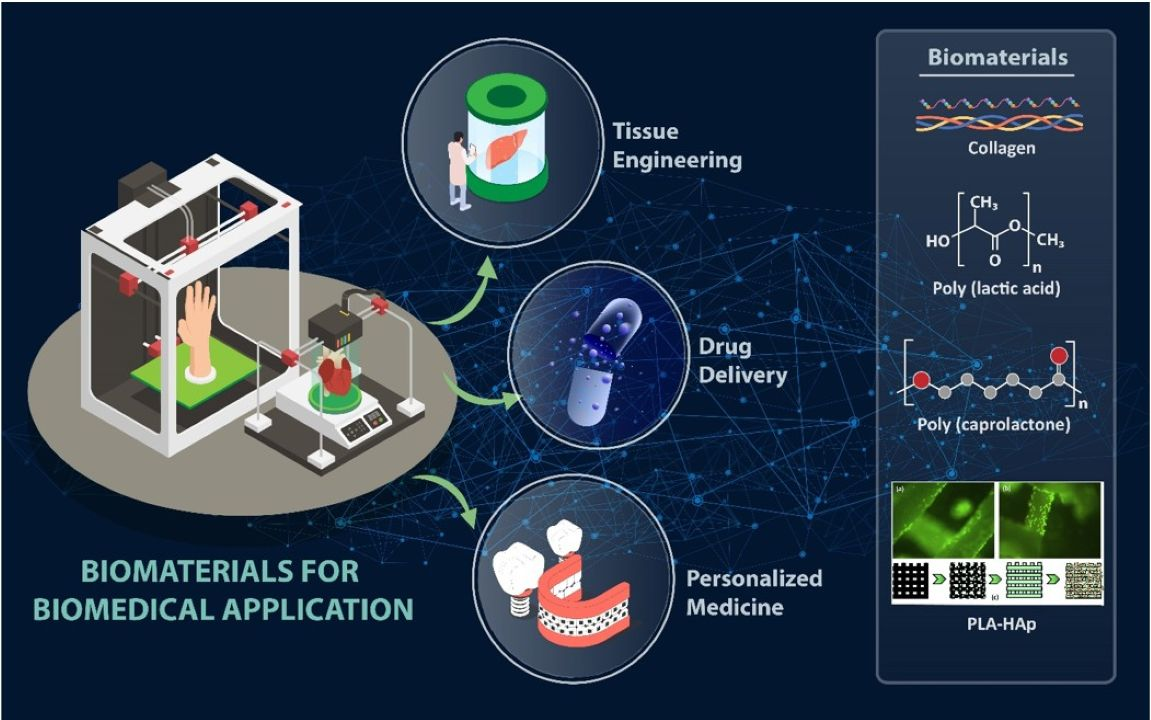
Biomaterial Strategies for Three-Dimensional Bioprinting and Drug Delivery Application

 , , ,
, , ,  , and
, and
Abstract
1. Introduction

| Material Type | Example | Properties | Common Applications | Ref. |
|---|---|---|---|---|
| Polymers | ||||
| Thermoplastics | PLA, ABS, PETG, TPU, Nylon | Lightweight, durable, flexible, easy to print | Prototyping, mechanical parts, wearables | [18] |
| Photopolymers | Resins (Standard, Tough, Flexible) | High resolution, smooth surface finish, biocompatible options | Dental modals, biomedical devices, tissue engineering scaffolds | [19] |
| Elastomers | TPE, TPU, Silicone | High elasticity, flexibility, and tear resistance | Soft robotics, prosthetics, seals, gaskets | [20] |
| Metals | ||||
| Stainless Steel | 316L, 17-4 PH | High strength, corrosion resistance, biocompatible | Medical implants (e.g., bone crews, stents), tooling | [21] |
| Titanium | Ti-6Al-4V | High strength-to-weight ratio, biocompatible, corrosion-resistant | Aerospace, medical implants (e.g., bone plates, dental implants) | [22] |
| Aluminum | AlSi10Mg | Lightweight, good thermal and electrical conductivity | Automotive parts, lightweight biomedical devices | [23] |
| Cobalt-Chrome | CoCr | High wear resistance, biocompatible, high-temperature stability | Dental implants, orthopedic implants, turbine blades | [24] |
| Ceramics | ||||
| Alumina | Al2O3 | High hardness, thermal stability, biocompatible | Dental crowns, bone scaffolds, cutting tools | [25] |
| Zirconia | ZnO2 | High strength, facture toughness, biocompatible | Dental implants, orthopedic implants, wear resistant components | [26] |
| Hydroxyapatite | Ca10(PO4)6(OH)2 | Biocompatible osteoconductive (promotes bone growth) | Bone tissue engineering dental implants | [27] |
| Composite | ||||
| Carbon Fiber Reinforced | Carbon fiber + Nylon, PLA, PEEK | High strength-to-weight ratio, stiffness, durability | Aerospace, automotive, sports equipment | [28] |
| Glass Fiber Reinforced | Glass fiber + Nylon, ABS | High strength, impact resistance, lightweight | Automotive parts, enclosures, structural components | [29] |
| Ceramic-Polymer | Ceramic particles + Photopolymer | Biocompatible, high resolution, tailored mechanical properties | Dental models, biomedical devices, tissue engineering scaffolds | [30] |
| Biomaterials | ||||
| Hydrogels | Alginate, Gelatin, Hyaluronic Acid | Biocompatible, tunable mechanical properties, cell-friendly | Bioprinting, tissue engineering, drug delivery systems | [31] |
| Decellularized ECM | dECM from heart, liver, cartilage | Biocompatible, biomimetic, promotes cell growth and tissue formation | Tissue engineering, regenerative medicine | [32] |
| Bioinks | Cell-laden hydrogels, PEG-based | Biocompatible, printable, supports cell viability and function | Bioprinting, organ-on-a-chip models, regenerative medicine | [33] |
| Advanced functional biomaterials | ||||
| Conductive Polymers | PEDOT:PSS, Conductive PLA | Electrically conductive, flexible, printable | Wearable electronics, sensors, flexible circuits | [34] |
| Magnetic Materials | Magnetic PLA, Iron-filled Nylon | Magnetic properties, good mechanical strength | Sensors, actuators, robotics | [35] |
2. Overview of 3D Printing Technologies
2.1. Types of 3D Printing Technologies
2.1.1. Fused Deposition Modeling (FDM)
2.1.2. Stereolithography (SLA)
2.1.3. Selective Laser Sintering (SLS)
2.1.4. Bioprinting-Specific Methods
2.2. Current Trends in Bioprinting
2.2.1. Innovations in Bioprinting Technologies
2.2.2. Integration of Biomaterials and Living Cells
3. Biomaterials in 3D Printing
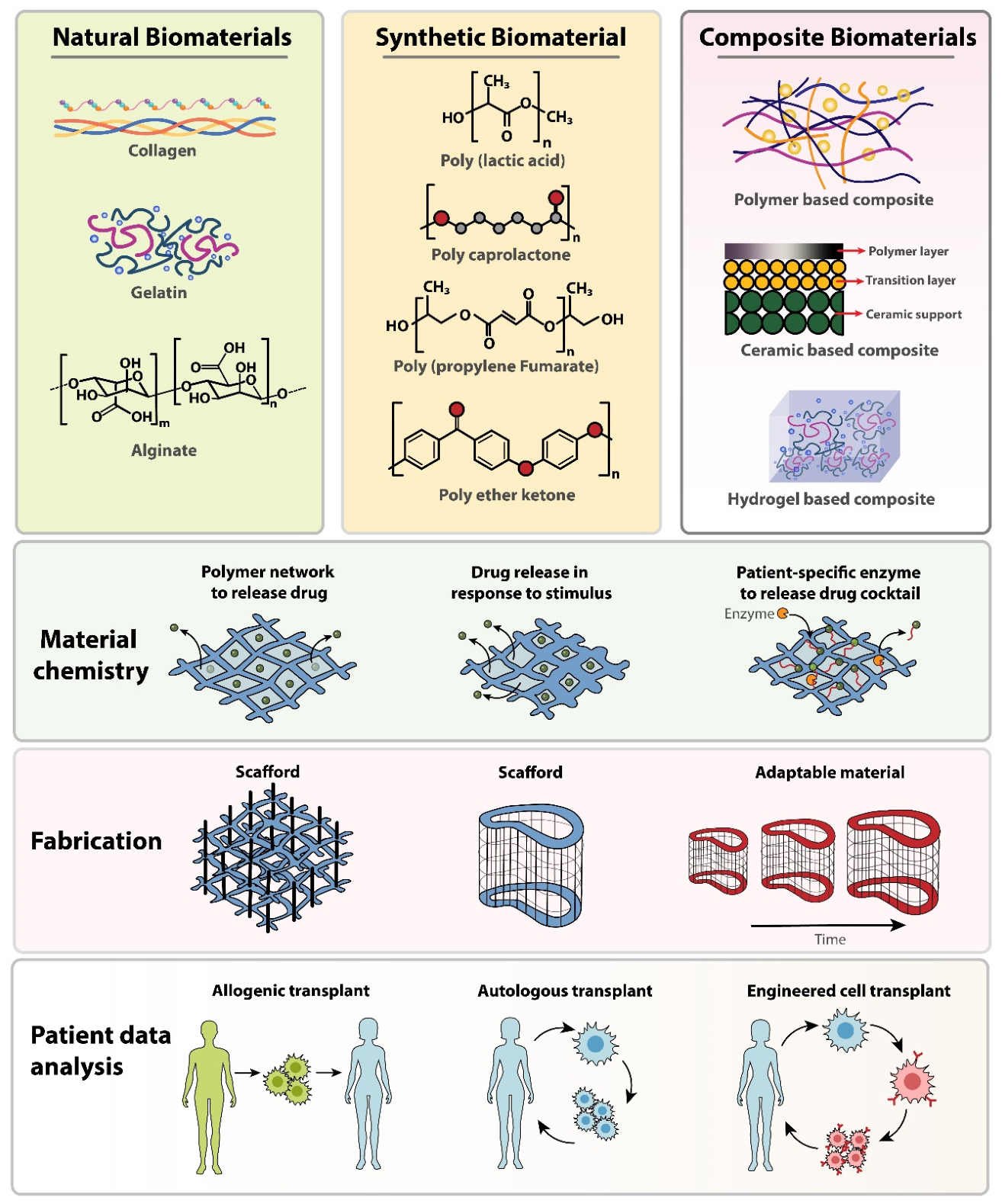
3.1. Categories of Biomaterials
3.1.1. Natural Biomaterials
3.1.2. Synthetic Biomaterials
3.1.3. Composite Biomaterials
3.2. Properties of Biomaterials
4. Mechanical Predictions in Bioprinting
4.1. Conventional Design
4.2. Topology Optimization
4.3. Artificial Intelligent (AI) Aided Design
5. Biomedical Application
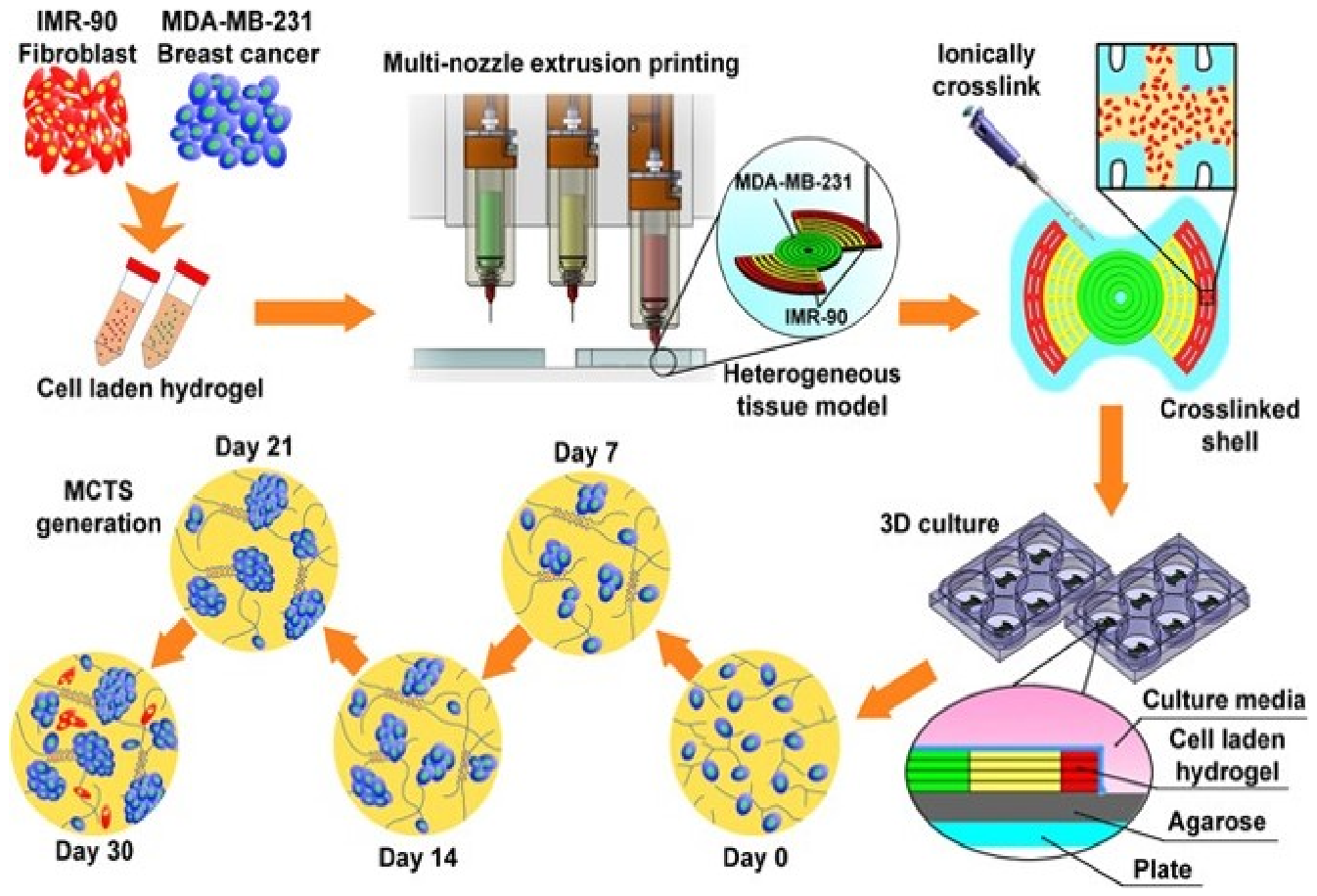
5.1. Tissue Engineering
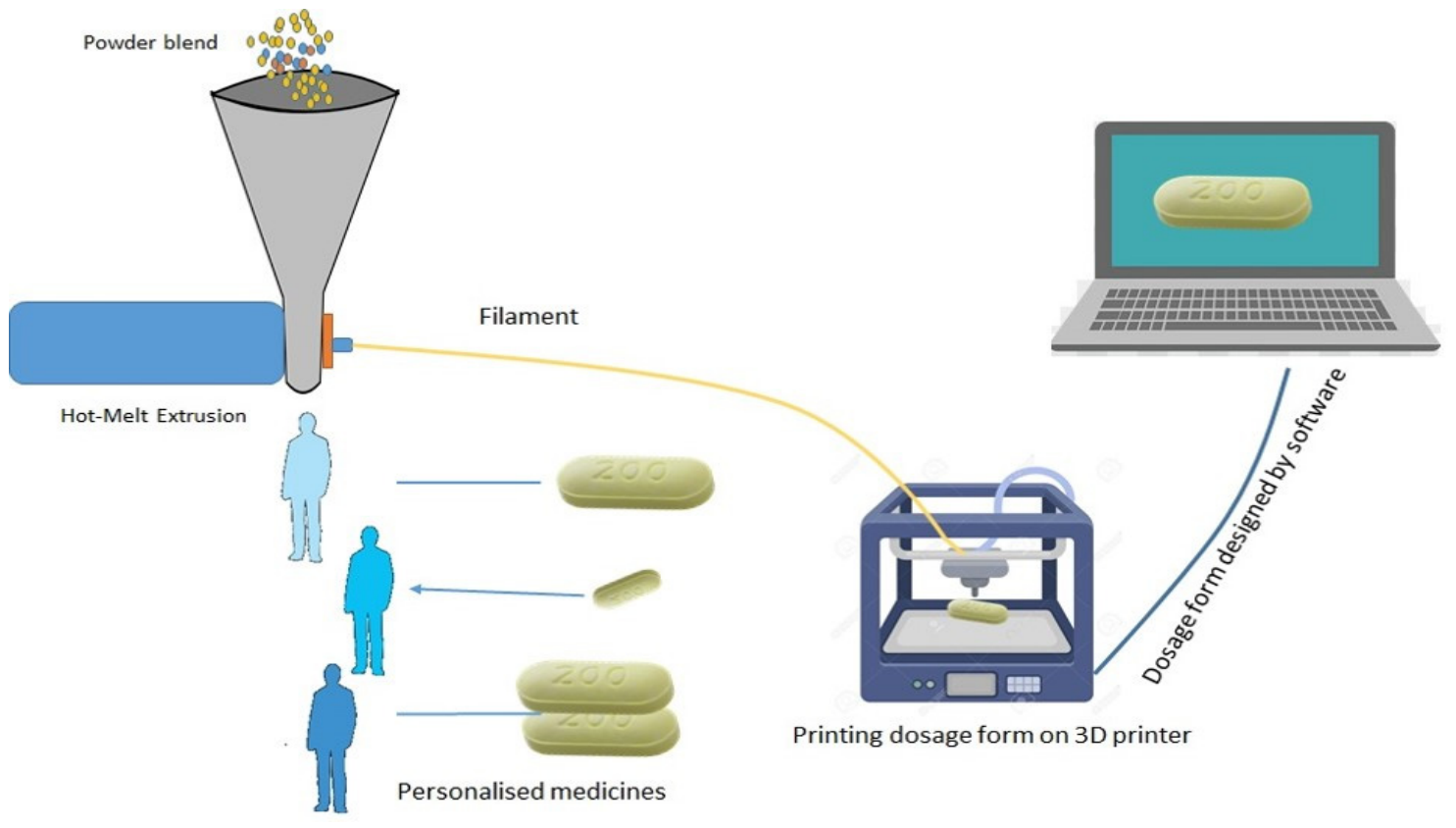
5.2. Drug Delivery Systems
5.3. Personalized Medicine
6. Future Directions
7. Conclusions
Author Contributions
Funding
Data Availability Statement
Conflicts of Interest
Abbreviations
| 2PP | Two-Photon Polymerization |
| ABS | Acrylonitrile Butadiene Styrene |
| ADSC | Adipose-Derived Stem Cell |
| AFS | Amniotic Fluid-derived Stem cell |
| AgNps | Silver Nanoparticles |
| AI | Artificial Intelligence |
| ALP | Alkaline Phosphatase |
| AM | Additive Manufacturing |
| BCP | Biphasic Calcium Phosphate |
| BJT | Binder Jetting |
| BMSC | Bone Marrow-derived Mesenchymal Stem Cell |
| CAD | Computer-Aided Design |
| CAE | Computer-Aided Engineering |
| CAM | Computer-Aided Manufacturing (or Chorioallantoic Membrane) |
| CBNs | Carbon-Based Nanomaterials |
| CFD | Computational Fluid Dynamics |
| CLIP | Continuous Liquid Interface Production |
| CMs | Cardiomyocytes |
| CNC | Computer Numerical Control |
| CNNs | Convolutional Neural Networks |
| CNT | Carbon Nanotube |
| CT | Computed Tomography |
| dECM | Decellularized Extracellular Matrix |
| DEF | Diethyl Fumarate |
| DIW | Direct Ink Writing |
| DLP | Digital Light Processing |
| DSC | Differential Scanning Calorimetry |
| eBM | Enhanced Bone Marrow |
| ECM | Extracellular Matrix |
| FBR | Foreign Body Response |
| FDA | Food and Drug Administration |
| FDM | Fused Deposition Modeling |
| FFF | Fused Filament Fabrication |
| GAGs | Glycosaminoglycans |
| G-code | Geometric Code |
| GelMA | Gelatin Methacryloyl |
| GO/PAM | Graphene Oxide/Polyacrylamide |
| HA | Hydroxyapatite |
| hFOB | Human Fetal Osteoblast cells |
| HME | Hot Melt Extrusion |
| ICBG | Iliac Crest Bone Graft |
| IM | Induced Membrane |
| iPSCs | Induced Pluripotent Stem Cells |
| LAB | Laser-Assisted Bioprinting |
| MA-HF | Microalgae-Loaded Hollow Fibrous |
| MEX | Material Extrusion |
| ML | Machine Learning |
| MOF | Metal-Organic Framework |
| MRI | Magnetic Resonance Imaging |
| MSCs | Mesenchymal Stem Cells |
| nHA | Nano-Hydroxyapatite |
| PCL | Polycaprolactone |
| ODFs | Orodispersible Films |
| PA | Photoacoustic |
| PCL-CNT | Polycaprolactone-Carbon Nanotube composite |
| PDA | Polydopamine |
| PEDOT-PSS | Poly(3,4-ethylenedioxythiophene) Polystyrene Sulfonate |
| PEEK | Polyether Ether Ketone |
| PEG | Polyethylene Glycol |
| PETG | Polyethylene Terephthalate Glycol |
| PETG-Fe3O4 | PETG with iron oxide nanoparticles |
| PK-PD | Pharmacokinetic-Pharmacodynamic |
| PLA | Polylactic Acid |
| PLA-HA | PLA-Hydroxyapatite composite |
| PLCL | Poly(L-lactide-co-caprolactone) |
| PLGA | Poly(lactide-co-glycolide) |
| PMMA | Poly(methyl methacrylate) |
| PPF | Poly(propylene fumarate) |
| PRP | Platelet-Rich Plasma |
| PTMC | Poly(trimethylene carbonate) |
| PVA | Polyvinyl Alcohol |
| PVOH | Poly(vinyl alcohol) |
| PVP | Polyvinylpyrrolidone |
| RGD | Arginine-Glycine-Aspartic acid |
| rhBMP-2 | Recombinant Human Bone Morphogenetic Protein-2 |
| SBM | Carbonated Hydroxyapatite |
| SLS | Selective Laser Sintering |
| SSE | Semisolid Extrusion |
| STL | Standard Triangle Language/Stereolithography file format |
| TPE | Thermoplastic Elastomer |
| TPU | Thermoplastic Polyurethane |
| β-TCMP | Magnesium-substituted β-tricalcium phosphate |
| β-TCP | Beta-tricalcium phosphate |
| µCCA | Microscale Cell Culture Analog |
References
- Advincula, R.C.; Dizon, J.R.C.; Caldona, E.B.; Viers, R.A.; Siacor, F.D.C.; Maalihan, R.D.; Espera, A.H. On the progress of 3D-printed hydrogels for tissue engineering. MRS Commun. 2021, 11, 539–553. [Google Scholar] [CrossRef]
- Mehrotra, S.; Moses, J.C.; Bandyopadhyay, A.; Mandal, B.B. 3D printing/bioprinting based tailoring of in vitro tissue models: Recent advances and challenges. ACS Appl. Bio Mater. 2019, 2, 1385–1405. [Google Scholar] [CrossRef]
- Bhardwaj, N.; Dey, S.; Bhar, B.; Mandal, B. Bioprinted in vitro tissue models: An emerging platform for developing therapeutic interventions and disease modelling. Prog. Biomed. Eng. 2023, 6, 012003. [Google Scholar] [CrossRef]
- Lengua, C. History of Rapid Prototyping. In Rapid Prototyping in Cardiac Disease: 3D Printing the Heart; Farooqi, K.M., Ed.; Springer International Publishing: Cham, Switzerland, 2017. [Google Scholar]
- Zhang, B.; Radisic, M. Organ-on-a-chip devices advance to market. Lab A Chip 2017, 17, 2395–2420. [Google Scholar] [CrossRef] [PubMed]
- Ding, X.; He, Y.; Li, X. The Applications of the Recellularization Organs in Organ Replacement at the Stage of Animal Research. In Decellularized Materials: Preparations Biomedical Applications; Springer: Singapore, 2021; pp. 415–487. [Google Scholar] [CrossRef]
- Shin, J.; Lee, Y.; Li, Z.; Hu, J.; Park, S.S.; Kim, K. Correction: Shin et al. Optimized 3D Bioprinting Technology Based on Machine Learning: A Review of Recent Trends and Advances. Micromachines 2022, 13, 363, Erratum in Micromachines 2025, 16, 415. [Google Scholar] [CrossRef] [PubMed]
- Chen, X.B.; Fazel Anvari-Yazdi, A.; Duan, X.; Zimmerling, A.; Gharraei, R.; Sharma, N.K.; Sweilem, S.; Ning, L. Biomaterials/bioinks and extrusion bioprinting. Bioact. Mater. 2023, 28, 511–536. [Google Scholar] [CrossRef] [PubMed]
- Li, X.; Liu, B.; Pei, B.; Chen, J.; Zhou, D.; Peng, J.; Zhang, X.; Jia, W.; Xu, T. Inkjet Bioprinting of Biomaterials. Chem. Rev. 2020, 120, 10793–10833. [Google Scholar] [CrossRef]
- Yu, C.; Schimelman, J.; Wang, P.; Miller, K.L.; Ma, X.; You, S.; Guan, J.; Sun, B.; Zhu, W.; Chen, S. Photopolymerizable Biomaterials and Light-Based 3D Printing Strategies for Biomedical Applications. Chem. Rev. 2020, 120, 10695–10743. [Google Scholar] [CrossRef]
- Chen, Z.; Du, C.; Liu, S.; Liu, J.; Yang, Y.; Dong, L.; Zhao, W.; Huang, W.; Lei, Y. Progress in biomaterials inspired by the extracellular matrix. Giant 2024, 19, 100323. [Google Scholar] [CrossRef]
- Chong, W.J.; Shen, S.; Li, Y.; Trinchi, A.; Pejak Simunec, D.; Kyratzis, I.; Sola, A.; Wen, C. Biodegradable PLA-ZnO nanocomposite biomaterials with antibacterial properties, tissue engineering viability, and enhanced biocompatibility. Smart Mater. Manuf. 2023, 1, 100004. [Google Scholar] [CrossRef]
- Amirpour, M.; Cracknell, D.; Amirian, A.; Alipour, A.N. Hybrid 3D printing of fluid-filled lattices for biomedical applications: A review. Int. J. Adv. Manuf. Technol. 2025, 136, 4083–4105. [Google Scholar] [CrossRef]
- Milojević, M.; Harih, G.; Vihar, B.; Vajda, J.; Gradišnik, L.; Zidarič, T.; Stana Kleinschek, K.; Maver, U.; Maver, T. Hybrid 3D Printing of Advanced Hydrogel-Based Wound Dressings with Tailorable Properties. Pharmaceutics 2021, 13, 564. [Google Scholar] [CrossRef]
- Mittal, R.; Woo, F.W.; Castro, C.S.; Cohen, M.A.; Karanxha, J.; Mittal, J.; Chhibber, T.; Jhaveri, V.M. Organ-on-chip models: Implications in drug discovery and clinical applications. J. Cell. Physiol. 2019, 234, 8352–8380. [Google Scholar] [CrossRef]
- Alzoubi, L.; Aljabali, A.A.; Tambuwala, M.M. Empowering precision medicine: The impact of 3D printing on personalized therapeutic. Aaps Pharmscitech 2023, 24, 228. [Google Scholar] [CrossRef]
- Verma, D.; Dong, Y.; Sharma, M.; Chaudhary, A.K. Advanced processing of 3D printed biocomposite materials using artificial intelligence. Mater. Manuf. Process. 2022, 37, 518–538. [Google Scholar] [CrossRef]
- Rasheed, A.; Hussain, M.; Ullah, S.; Ahmad, Z.; Kakakhail, H.; Riaz, A.A.; Khan, I.; Ahmad, S.; Akram, W.; Eldin, S.M. Experimental investigation and Taguchi optimization of FDM process parameters for the enhancement of tensile properties of Bi-layered printed PLA-ABS. Mater. Res. Express 2023, 10, 095307. [Google Scholar] [CrossRef]
- Fonseca, A.C.; Melchels, F.P.; Ferreira, M.J.; Moxon, S.R.; Potjewyd, G.; Dargaville, T.R.; Kimber, S.J.; Domingos, M. Emulating human tissues and organs: A bioprinting perspective toward personalized medicine. Chem. Rev. 2020, 120, 11093–11139. [Google Scholar] [CrossRef]
- Das, M.; Bhattacharya, A.B.; Parathodika, A.R.; Naskar, K. Room temperature Self-healable and extremely stretchable elastomer with improved mechanical Properties: Exploring a simplistic Metal-Ligand interaction. Eur. Polym. J. 2022, 174, 111341. [Google Scholar] [CrossRef]
- Murr, L.E.; Gaytan, S.M.; Ramirez, D.A.; Martinez, E.; Hernandez, J.; Amato, K.N.; Shindo, P.W.; Medina, F.R.; Wicker, R.B. Metal fabrication by additive manufacturing using laser and electron beam melting technologies. J. Mater. Sci. Technol. 2012, 28, 1–14. [Google Scholar] [CrossRef]
- Attar, H.; Prashanth, K.; Chaubey, A.; Calin, M.; Zhang, L.C.; Scudino, S.; Eckert, J. Comparison of wear properties of commercially pure titanium prepared by selective laser melting and casting processes. Mater. Lett. 2015, 142, 38–41. [Google Scholar] [CrossRef]
- Brandl, E.; Heckenberger, U.; Holzinger, V.; Buchbinder, D. Additive manufactured AlSi10Mg samples using Selective Laser Melting (SLM): Microstructure, high cycle fatigue, and fracture behavior. Mater. Des. 2012, 34, 159–169. [Google Scholar]
- Zhong, W.; Jiang, H.; Jia, K.; Ding, X.; Yadav, A.; Ke, Y.; Li, M.; Chen, Y.; Wang, D. Breathable and large curved area perceptible flexible piezoresistive sensors fabricated with conductive nanofiber assemblies. ACS Appl. Mater. Interfaces 2020, 12, 37764–37773. [Google Scholar] [CrossRef] [PubMed]
- Andrea, Z. Additive Manufacturing of Porous Ceramic Structures. 2015. Available online: https://api.semanticscholar.org/CorpusID:137845278 (accessed on 26 April 2015).
- Shishkovsky, I.; Yadroitsev, I.; Bertrand, P.; Smurov, I. Alumina–zirconium ceramics synthesis by selective laser sintering/melting. Appl. Surf. Sci. 2007, 254, 966–970. [Google Scholar] [CrossRef]
- Mondal, S.; Nguyen, T.P.; Pham, V.H.; Hoang, G.; Manivasagan, P.; Kim, M.H.; Nam, S.Y.; Oh, J. Hydroxyapatite nano bioceramics optimized 3D printed poly lactic acid scaffold for bone tissue engineering application. Ceram. Int. 2020, 46, 3443–3455. [Google Scholar] [CrossRef]
- Ning, F.; Cong, W.; Qiu, J.; Wei, J.; Wang, S. Additive manufacturing of carbon fiber reinforced thermoplastic composites using fused deposition modeling. Compos. Part B Eng. 2015, 80, 369–378. [Google Scholar]
- Justo, J.; Távara, L.; García-Guzmán, L.; París, F. Characterization of 3D printed long fibre reinforced composites. Compos. Struct. 2018, 185, 537–548. [Google Scholar] [CrossRef]
- Torre, M.; Giannitelli, S.M.; Mauri, E.; Trombetta, M.; Rainer, A. Additive manufacturing of biomaterials. In Advances in Chemical Engineering; Elsevier: Amsterdam, The Netherlands, 2021; Volume 57, pp. 233–260. [Google Scholar]
- Hospodiuk, M.; Dey, M.; Sosnoski, D.; Ozbolat, I.T. The bioink: A comprehensive review on bioprintable materials. Biotechnol. Adv. 2017, 35, 217–239. [Google Scholar] [CrossRef]
- Pati, F.; Jang, J.; Ha, D.-H.; Won Kim, S.; Rhie, J.-W.; Shim, J.-H.; Kim, D.-H.; Cho, D.-W. Printing three-dimensional tissue analogues with decellularized extracellular matrix bioink. Nat. Commun. 2014, 5, 3935. [Google Scholar] [CrossRef]
- Chimene, D.; Peak, C.W.; Gentry, J.L.; Carrow, J.K.; Cross, L.M.; Mondragon, E.; Cardoso, G.B.; Kaunas, R.; Gaharwar, A.K. Nanoengineered ionic–covalent entanglement (NICE) bioinks for 3D bioprinting. ACS Appl. Mater. Interfaces 2018, 10, 9957–9968. [Google Scholar] [CrossRef]
- Kim, S.-M.; Kim, C.-H.; Kim, Y.; Kim, N.; Lee, W.-J.; Lee, E.-H.; Kim, D.; Park, S.; Lee, K.; Rivnay, J. Influence of PEDOT: PSS crystallinity and composition on electrochemical transistor performance and long-term stability. Nat. Commun. 2018, 9, 3858. [Google Scholar] [CrossRef] [PubMed]
- Kim, H.; Lee, S. Characterization of electrical heating performance of CFDM 3D-printed graphene/polylactic acid (PLA) horseshoe pattern with different 3D printing directions. Polymers 2020, 12, 2955. [Google Scholar] [CrossRef] [PubMed]
- Altıparmak, S.C.; Yardley, V.A.; Shi, Z.; Lin, J. Extrusion-based additive manufacturing technologies: State of the art and future perspectives. J. Manuf. Process. 2022, 83, 607–636. [Google Scholar] [CrossRef]
- Hunde, B.R.; Woldeyohannes, A.D. Future prospects of computer-aided design (CAD)–A review from the perspective of artificial intelligence (AI), extended reality, and 3D printing. Results Eng. 2022, 14, 100478. [Google Scholar] [CrossRef]
- Gkartzou, E.; Koumoulos, E.P.; Charitidis, C.A. Production and 3D printing processing of bio-based thermoplastic filament. Manuf. Rev. 2017, 4, 1. [Google Scholar] [CrossRef]
- Donate, R.; Monzón, M.; Alemán-Domínguez, M.E. Additive manufacturing of PLA-based scaffolds intended for bone regeneration and strategies to improve their biological properties. e-Polymers 2020, 20, 571–599. [Google Scholar] [CrossRef]
- Raj, A.; Tyagi, B.; Sharma, G.S.; Sahai, A.; Sharma, R.S. Optimizing the process parameters with statistical and soft computing techniques for enhanced mechanical properties of acrylonitrile butadiene styrene material samples fabricated via fused filament fabrication technique. Prog. Addit. Manuf. 2024, 10, 2559–2583. [Google Scholar] [CrossRef]
- Dash, T.K.; Konkimalla, V.B. Polymeric modification and its implication in drug delivery: Poly-ε-caprolactone (PCL) as a model polymer. Mol. Pharm. 2012, 9, 2365–2379. [Google Scholar] [CrossRef]
- Thirugnanasambandam, A.; Dutta, H.; Gnanasagaran, C.L.; Kechagias, J.D. Development of 3D printed novel multi-polymer component based on blended filaments of polylactic acid and polyethylene terephthalate glycol. Prog. Addit. Manuf. 2024, 10, 1147–1160. [Google Scholar] [CrossRef]
- Zheng, H.; Zhu, S.; Chen, L.; Wang, L.; Zhang, H.; Wang, P.; Sun, K.; Wang, H.; Liu, C. 3D Printing Continuous Fiber Reinforced Polymers: A Review of Material Selection, Process, and Mechanics-Function Integration for Targeted Applications. Polymers 2025, 17, 1601. [Google Scholar] [CrossRef] [PubMed]
- Sajjad, R.; Butt, S.U.; Saeed, H.A.; Anwar, M.T.; Rasheed, T. Impact of multiple infill strategy on the structural strength of single build FDM printed parts. J. Manuf. Process. 2023, 89, 105–110. [Google Scholar] [CrossRef]
- Kafle, A.; Luis, E.; Silwal, R.; Pan, H.M.; Shrestha, P.L.; Bastola, A.K. 3D/4D Printing of Polymers: Fused Deposition Modelling (FDM), Selective Laser Sintering (SLS), and Stereolithography (SLA). Polymers 2021, 13, 3101. [Google Scholar] [CrossRef] [PubMed]
- Wang, X.; Liu, J.; Zhang, Y.; Kristiansen, P.M.; Islam, A.; Gilchrist, M.; Zhang, N. Advances in precision microfabrication through digital light processing: System development, material and applications. Virtual Phys. Prototyp. 2023, 18, e2248101. [Google Scholar] [CrossRef]
- Hu, Y.; Luo, Z.; Bao, Y. Trends in Photopolymerization 3D Printing for Advanced Drug Delivery Applications. Biomacromolecules 2025, 26, 85–117. [Google Scholar] [CrossRef]
- Wazeer, A.; Das, A.; Sinha, A.; Inaba, K.; Ziyi, S.; Karmakar, A. Additive manufacturing in biomedical field: A critical review on fabrication method, materials used, applications, challenges, and future prospects. Prog. Addit. Manuf. 2023, 8, 857–889. [Google Scholar] [CrossRef]
- Zhou, L.; Miller, J.; Vezza, J.; Mayster, M.; Raffay, M.; Justice, Q.; Al Tamimi, Z.; Hansotte, G.; Sunkara, L.D.; Bernat, J. Additive Manufacturing: A Comprehensive Review. Sensors 2024, 24, 2668. [Google Scholar] [CrossRef]
- Bareen, M.A.; Antonio, D.; Corradini, M.G.; Rossella, C.; Paolo, D.I.; Marta, S.; Carla, S. Enhancing 3D Printing Performance and Product Quality Through the Valorization of Food By-Products and Waste. Compr. Rev. Food Sci. Food Saf. 2025, 24, e70267. [Google Scholar] [CrossRef] [PubMed]
- Kushwaha, A.K.; Rahman, M.H.; Slater, E.; Patel, R.; Evangelista, C.; Austin, E.; Tompkins, E.; McCarroll, A.; Rajak, D.K.; Menezes, P.L. 1-Powder bed fusion–based additive manufacturing: SLS, SLM, SHS, and DMLS. In Tribology of Additively Manufactured Materials; Kumar, P., Misra, M., Menezes, P.L., Eds.; Elsevier: Amsterdam, The Netherlands, 2022; pp. 1–37. [Google Scholar] [CrossRef]
- Polo, S.; García-Domínguez, A.; Rubio, E.M.; Claver, J. Lattice Structures in Additive Manufacturing for Biomedical Applications: A Systematic Review. Polymers 2025, 17, 2285. [Google Scholar] [CrossRef]
- Alarifi, I.M. Revolutionising fabrication advances and applications of 3D printing with composite materials: A review. Virtual Phys. Prototyp. 2024, 19, e2390504. [Google Scholar] [CrossRef]
- Ma, Y.; Deng, B.; He, R.; Huang, P. Advancements of 3D bioprinting in regenerative medicine: Exploring cell sources for organ fabrication. Heliyon 2024, 10, e24593. [Google Scholar] [CrossRef]
- Chen, D.X. Extrusion bioprinting of scaffolds. In Extrusion Bioprinting of Scaffolds for Tissue Engineering Applications; Springer: Berlin/Heidelberg, Germany, 2018; pp. 117–145. [Google Scholar]
- Ng, W.L.; Shkolnikov, V. Jetting-based bioprinting: Process, dispense physics, and applications. Bio-Des. Manuf. 2024, 7, 771–799. [Google Scholar] [CrossRef]
- Zandrini, T.; Florczak, S.; Levato, R.; Ovsianikov, A. Breaking the resolution limits of 3D bioprinting: Future opportunities and present challenges. Trends Biotechnol. 2023, 41, 604–614. [Google Scholar] [CrossRef]
- Wang, R.M.; Christman, K.L. Decellularized myocardial matrix hydrogels: In basic research and preclinical studies. Adv. Drug Deliv. Rev. 2016, 96, 77–82. [Google Scholar] [CrossRef]
- Nwokoye, P.N.; Abilez, O.J. Bioengineering methods for vascularizing organoids. Cell Rep. Methods 2024, 4, 100779. [Google Scholar] [CrossRef] [PubMed]
- Bukhari, S.M.Z.S.; Bukhari, M.; Hossain, M. Vat photopolymerization of smart polymers for biomedical applications. ACS Appl. Polym. Mater. 2025, 7, 12117–12144. [Google Scholar] [CrossRef] [PubMed]
- Rothbauer, M.; Eilenberger, C.; Spitz, S.; Bachmann, B.E.; Kratz, S.R.; Reihs, E.I.; Windhager, R.; Toegel, S.; Ertl, P. Recent advances in additive manufacturing and 3D bioprinting for organs-on-A-chip and microphysiological systems. Front. Bioeng. Biotechnol. 2022, 10, 837087. [Google Scholar] [CrossRef]
- Ravanbakhsh, H.; Karamzadeh, V.; Bao, G.; Mongeau, L.; Juncker, D.; Zhang, Y.S. Emerging technologies in multi-material bioprinting. Adv. Mater. 2021, 33, 2104730. [Google Scholar] [CrossRef] [PubMed]
- Kloke, L. Multimaterial 3D bioprinting. In Multi-Material Additive Manufacturing; Elsevier: Amsterdam, The Netherlands, 2025; pp. 233–258. [Google Scholar]
- Fareez, U.N.M.; Naqvi, S.A.A.; Mahmud, M.; Temirel, M. Computational fluid dynamics (CFD) analysis of bioprinting. Adv. Healthc. Mater. 2024, 13, 2400643. [Google Scholar] [CrossRef]
- Soufivand, A.A.; Abolfathi, N.; Hashemi, S.A.; Lee, S.J. Prediction of mechanical behavior of 3D bioprinted tissue-engineered scaffolds using finite element method (FEM) analysis. Addit. Manuf. 2020, 33, 101181. [Google Scholar] [CrossRef]
- Kim, B.S.; Das, S.; Jang, J.; Cho, D.-W. Decellularized Extracellular Matrix-based Bioinks for Engineering Tissue- and Organ-specific Microenvironments. Chem. Rev. 2020, 120, 10608–10661. [Google Scholar] [CrossRef]
- Unal, A.Z.; West, J.L. Synthetic ECM: Bioactive Synthetic Hydrogels for 3D Tissue Engineering. Bioconjug. Chem. 2020, 31, 2253–2271. [Google Scholar] [CrossRef]
- Neumann, M.; di Marco, G.; Iudin, D.; Viola, M.; van Nostrum, C.F.; van Ravensteijn, B.G.P.; Vermonden, T. Stimuli-Responsive Hydrogels: The Dynamic Smart Biomaterials of Tomorrow. Macromolecules 2023, 56, 8377–8392. [Google Scholar] [CrossRef] [PubMed]
- Sakalem, M.E.; De Sibio, M.T.; da Costa, F.A.d.S.; de Oliveira, M. Historical evolution of spheroids and organoids, and possibilities of use in life sciences and medicine. Biotechnol. J. 2021, 16, 2000463. [Google Scholar] [CrossRef] [PubMed]
- Thangadurai, M.; Srinivasan, S.S.; Sekar, M.P.; Sethuraman, S.; Sundaramurthi, D. Emerging perspectives on 3D printed bioreactors for clinical translation of engineered and bioprinted tissue constructs. J. Mater. Chem. B 2024, 12, 350–381. [Google Scholar] [CrossRef]
- Chen, Q.; Pei, Y.; Tang, K.; Albu-Kaya, M.G. Structure, extraction, processing, and applications of collagen as an ideal component for biomaterials—A review. Collagen Leather 2023, 5, 20. [Google Scholar] [CrossRef]
- Mobaraki, M.; Ghaffari, M.; Yazdanpanah, A.; Luo, Y.; Mills, D.K. Bioinks and bioprinting: A focused review. Bioprinting 2020, 18, e00080. [Google Scholar] [CrossRef]
- De Maeseneer, T.; Zhou, F.; Annabi, N. Advanced Fabrication Techniques to Engineer Cell-Laden Multilayered Hollow Tubular Structures. Adv. Mater. Technol. 2025, 10, e00864. [Google Scholar] [CrossRef]
- Wu, W.; Yang, H.; Li, T.; Xie, Y.; Huang, G.; Zhang, W. Conductive and piezoelectric biomaterials: A comprehensive review of load-bearing soft tissue repair. Biomater. Sci. 2025, 13, 3755–3771. [Google Scholar] [CrossRef]
- Rahmati, M.; Silva, E.A.; Reseland, J.E.; Heyward, C.A.; Haugen, H.J. Biological responses to physicochemical properties of biomaterial surface. Chem. Soc. Rev. 2020, 49, 5178–5224. [Google Scholar] [CrossRef]
- Adhikari, J.; Roy, A.; Das, A.; Ghosh, M.; Thomas, S.; Sinha, A.; Kim, J.; Saha, P. Effects of Processing Parameters of 3D Bioprinting on the Cellular Activity of Bioinks. Macromol. Biosci. 2021, 21, 2000179. [Google Scholar] [CrossRef]
- Dwivedi, R.K.; Chauhan, P.S.; Sharma, A.K.; Singh, M.; Agarwal, A. Medical Imaging for Patient-Specific Implants Biomedical Implants: Materials, Design, and Manufacturing, 1st ed.; CRC Press: Boca Raton, FL, USA, 2024; pp. 39–60. [Google Scholar] [CrossRef]
- Trenfield, S.J.; Awad, A.; Goyanes, A.; Gaisford, S.; Basit, A.W. 3D printing pharmaceuticals: Drug development to frontline care. Trends Pharmacol. Sci. 2018, 39, 440–451. [Google Scholar] [CrossRef]
- Diamantides, N.; Wang, L.; Pruiksma, T.; Siemiatkoski, J.; Dugopolski, C.; Shortkroff, S.; Kennedy, S.; Bonassar, L.J. Correlating rheological properties and printability of collagen bioinks: The effects of riboflavin photocrosslinking and pH. Biofabrication 2017, 9, 034102. [Google Scholar] [CrossRef]
- Lee, B.H.; Lum, N.; Seow, L.Y.; Lim, P.Q.; Tan, L.P. Synthesis and characterization of types A and B gelatin methacryloyl for bioink applications. Materials 2016, 9, 797. [Google Scholar] [CrossRef] [PubMed]
- Jiang, T.; Munguia-Lopez, J.G.; Flores-Torres, S.; Grant, J.; Vijayakumar, S.; Leon-Rodriguez, A.D.; Kinsella, J.M. Directing the self-assembly of tumour spheroids by bioprinting cellular heterogeneous models within alginate/gelatin hydrogels. Sci. Rep. 2017, 7, 4575. [Google Scholar]
- Tcacencu, I.; Rodrigues, N.; Alharbi, N.; Benning, M.; Toumpaniari, S.; Mancuso, E.; Marshall, M.; Bretcanu, O.; Birch, M.; McCaskie, A.; et al. Osseointegration of porous apatite-wollastonite and poly(lactic acid) composite structures created using 3D printing techniques. Mater. Sci. Eng. C 2018, 90, 1–7. [Google Scholar] [CrossRef]
- Gómez-Guillén, M.C.; Turnay, J.; Fernández-Dıaz, M.; Ulmo, N.; Lizarbe, M.A.; Montero, P. Structural and physical properties of gelatin extracted from different marine species: A comparative study. Food Hydrocoll. 2002, 16, 25–34. [Google Scholar] [CrossRef]
- Liu, W.; Heinrich, M.A.; Zhou, Y.; Akpek, A.; Hu, N.; Liu, X.; Guan, X.; Zhong, Z.; Jin, X.; Khademhosseini, A. Extrusion bioprinting of shear-thinning gelatin methacryloyl bioinks. Adv. Healthc. Mater. 2017, 6, 1601451. [Google Scholar] [CrossRef]
- Hong, S.; Sycks, D.; Chan, H.F.; Lin, S.; Lopez, G.P.; Guilak, F.; Leong, K.W.; Zhao, X. 3D Printing of Highly Stretchable and Tough Hydrogels into Complex, Cellularized Structures. Adv. Mater. 2015, 27, 4035–4040. [Google Scholar] [CrossRef] [PubMed]
- Kattula, S.; Byrnes, J.R.; Wolberg, A.S. Fibrinogen and fibrin in hemostasis and thrombosis. Arterioscler. Thromb. Vasc. Biol. 2017, 37, e13–e21. [Google Scholar]
- Malafaya, P.B.; Silva, G.A.; Reis, R.L. Natural–origin polymers as carriers and scaffolds for biomolecules and cell delivery in tissue engineering applications. Adv. Drug Deliv. Rev. 2007, 59, 207–233. [Google Scholar] [CrossRef]
- Hakam, M.S.; Imani, R.; Abolfathi, N.; Fakhrzadeh, H.; Sharifi, A.M. Evaluation of fibrin-gelatin hydrogel as biopaper for application in skin bioprinting: An in-vitro study. Bio-Med. Mater. Eng. 2016, 27, 669–682. [Google Scholar] [CrossRef] [PubMed]
- England, S.; Rajaram, A.; Schreyer, D.J.; Chen, X. Bioprinted fibrin-factor XIII-hyaluronate hydrogel scaffolds with encapsulated Schwann cells and their in vitro characterization for use in nerve regeneration. Bioprinting 2017, 5, 1–9. [Google Scholar] [CrossRef]
- Serra, T.; Mateos-Timoneda, M.A.; Planell, J.A.; Navarro, M. 3D printed PLA-based scaffolds: A versatile tool in regenerative medicine. Organogenesis 2013, 9, 239–244. [Google Scholar] [CrossRef]
- Liu, Z.; Ge, Y.; Zhang, L.; Wang, Y.; Guo, C.; Feng, K.; Yang, S.; Zhai, Z.; Chi, Y.; Zhao, J.; et al. The effect of induced membranes combined with enhanced bone marrow and 3D PLA-HA on repairing long bone defects in vivo. J. Tissue Eng. Regen. Med. 2020, 14, 1403–1414. [Google Scholar] [CrossRef]
- Kang, H.; Jiang, X.; Liu, Z.; Liu, F.; Yan, G.; Li, F.J.N. Biodegradable 3d printed scaffolds of modified poly (Trimethylene carbonate) composite materials with poly (l-lactic acid) and hydroxyapatite for bone regeneration. Nanomaterials 2021, 11, 3215. [Google Scholar] [CrossRef]
- Zopf, D.A.; Hollister, S.J.; Nelson, M.E.; Ohye, R.G.; Green, G.E. Bioresorbable airway splint created with a three-dimensional printer. N. Engl. J. Med. 2013, 368, 2043–2045. [Google Scholar] [CrossRef]
- Radhakrishnan, S.; Nagarajan, S.; Belaid, H.; Farha, C.; Iatsunskyi, I.; Coy, E.; Soussan, L.; Huon, V.; Bares, J.; Belkacemi, K. Fabrication of 3D printed antimicrobial polycaprolactone scaffolds for tissue engineering applications. Mater. Sci. Eng. C 2021, 118, 111525. [Google Scholar] [CrossRef]
- Ho, C.M.B.; Mishra, A.; Lin, P.T.P.; Ng, S.H.; Yeong, W.Y.; Kim, Y.-J.; Yoon, Y.-J. 3D Printed Polycaprolactone Carbon Nanotube Composite Scaffolds for Cardiac Tissue Engineering. Macromol. Biosci. 2017, 17, 1600250. [Google Scholar] [CrossRef]
- Muwaffak, Z.; Goyanes, A.; Clark, V.; Basit, A.W.; Hilton, S.T.; Gaisford, S. Patient-specific 3D scanned and 3D printed antimicrobial polycaprolactone wound dressings. Int. J. Pharm. 2017, 527, 161–170. [Google Scholar] [CrossRef]
- Fisher, J.P.; Dean, D.; Mikos, A.G. Photocrosslinking characteristics and mechanical properties of diethyl fumarate/poly (propylene fumarate) biomaterials. Biomaterials 2002, 23, 4333–4343. [Google Scholar]
- Dadsetan, M.; Guda, T.; Runge, M.B.; Mijares, D.; LeGeros, R.Z.; LeGeros, J.P.; Silliman, D.T.; Lu, L.; Wenke, J.C.; Brown Baer, P.R.; et al. Effect of calcium phosphate coating and rhBMP-2 on bone regeneration in rabbit calvaria using poly(propylene fumarate) scaffolds. Acta Biomater. 2015, 18, 9–20. [Google Scholar] [CrossRef]
- Parthasarathy, J. 3D modeling, custom implants and its future perspectives in craniofacial surgery. Ann. Maxillofac. Surg. 2014, 4, 9–18. [Google Scholar] [CrossRef]
- Scolozzi, P. Maxillofacial Reconstruction Using Polyetheretherketone Patient-Specific Implants by “Mirroring” Computational Planning. Aesthetic Plast. Surg. 2012, 36, 660–665. [Google Scholar] [CrossRef]
- Roskies, M.; Jordan, J.O.; Fang, D.; Abdallah, M.-N.; Hier, M.P.; Mlynarek, A.; Tamimi, F.; Tran, S.D. Improving PEEK bioactivity for craniofacial reconstruction using a 3D printed scaffold embedded with mesenchymal stem cells. J. Biomater. Appl. 2016, 31, 132–139. [Google Scholar] [CrossRef]
- Tan, D.K.; Maniruzzaman, M.; Nokhodchi, A. Advanced pharmaceutical applications of hot-melt extrusion coupled with fused deposition modelling (FDM) 3D printing for personalised drug delivery. Pharmaceutics 2018, 10, 203. [Google Scholar] [CrossRef]
- Dhania, S.; Bernela, M.; Rani, R.; Parsad, M.; Grewal, S.; Kumari, S.; Thakur, R. Scaffolds the backbone of tissue engineering: Advancements in use of polyhydroxyalkanoates (PHA). Int. J. Biol. Macromol. 2022, 208, 243–259. [Google Scholar] [CrossRef]
- Zhang, B.; Wang, L.; Song, P.; Pei, X.; Sun, H.; Wu, L.; Zhou, C.; Wang, K.; Fan, Y.; Zhang, X. 3D printed bone tissue regenerative PLA/HA scaffolds with comprehensive performance optimizations. Mater. Des. 2021, 201, 109490. [Google Scholar] [CrossRef]
- Wang, C.; Meng, C.; Zhang, Z.; Zhu, Q. 3D printing of polycaprolactone/bioactive glass composite scaffolds for in situ bone repair. Ceram. Int. 2022, 48, 7491–7499. [Google Scholar] [CrossRef]
- Teixeira, B.N.; Aprile, P.; Mendonça, R.H.; Kelly, D.J.; Thiré, R.M.d.S.M. Evaluation of bone marrow stem cell response to PLA scaffolds manufactured by 3D printing and coated with polydopamine and type I collagen. J. Biomed. Mater. Res. Part B Appl. Biomater. 2019, 107, 37–49. [Google Scholar] [CrossRef]
- Li, W.; Dai, F.; Zhang, S.; Xu, F.; Xu, Z.; Liao, S.; Zeng, L.; Song, L.; Ai, F. Pore Size of 3D-Printed Polycaprolactone/Polyethylene Glycol/Hydroxyapatite Scaffolds Affects Bone Regeneration by Modulating Macrophage Polarization and the Foreign Body Response. ACS Appl. Mater. Interfaces 2022, 14, 20693–20707. [Google Scholar] [CrossRef]
- Lee, S.; Lee, H.S.; Chung, J.J.; Kim, S.H.; Park, J.W.; Lee, K.; Jung, Y. Enhanced Regeneration of Vascularized Adipose Tissue with Dual 3D-Printed Elastic Polymer/dECM Hydrogel Complex. Int. J. Mol. Sci. 2021, 22, 2886. [Google Scholar]
- Mondal, S.; Pal, U. 3D hydroxyapatite scaffold for bone regeneration and local drug delivery applications. J. Drug Deliv. Sci. Technol. 2019, 53, 101131. [Google Scholar] [CrossRef]
- Mondal, S.; Dorozhkin, S.V.; Pal, U. Recent progress on fabrication and drug delivery applications of nanostructured hydroxyapatite. WIREs Nanomed. Nanobiotechnol. 2018, 10, e1504. [Google Scholar] [CrossRef]
- Cox, S.C.; Thornby, J.A.; Gibbons, G.J.; Williams, M.A.; Mallick, K.K. 3D printing of porous hydroxyapatite scaffolds intended for use in bone tissue engineering applications. Mater. Sci. Eng. C 2015, 47, 237–247. [Google Scholar] [CrossRef] [PubMed]
- Peppas, N.A.; Hilt, J.Z.; Khademhosseini, A.; Langer, R. Hydrogels in Biology and Medicine: From Molecular Principles to Bionanotechnology. Adv. Mater. 2006, 18, 1345–1360. [Google Scholar] [CrossRef]
- Lee, H.; Kim, Y.; Kim, S.; Kim, G. Mineralized biomimetic collagen/alginate/silica composite scaffolds fabricated by a low-temperature bio-plotting process for hard tissue regeneration: Fabrication, characterisation and in vitro cellular activities. J. Mater. Chem. B 2014, 2, 5785–5798. [Google Scholar] [CrossRef]
- Zhang, N.; Li, R.; Zhang, L.; Chen, H.; Wang, W.; Liu, Y.; Wu, T.; Wang, X.; Wang, W.; Li, Y.; et al. Actuator materials based on graphene oxide/polyacrylamide composite hydrogels prepared by in situ polymerization. Soft Matter 2011, 7, 7231–7239. [Google Scholar] [CrossRef]
- Shin, S.R.; Jung, S.M.; Zalabany, M.; Kim, K.; Zorlutuna, P.; Kim, S.b.; Nikkhah, M.; Khabiry, M.; Azize, M.; Kong, J.; et al. Carbon-Nanotube-Embedded Hydrogel Sheets for Engineering Cardiac Constructs and Bioactuators. ACS Nano 2013, 7, 2369–2380. [Google Scholar] [CrossRef]
- Ibanez, R.I.R.; do Amaral, R.J.F.C.; Simpson, C.R.; Casey, S.M.; Reis, R.L.; Marques, A.P.; Murphy, C.M.; O’Brien, F.J. 3D Printed Scaffolds Incorporated with Platelet-Rich Plasma Show Enhanced Angiogenic Potential while not Inducing Fibrosis. Adv. Funct. Mater. 2022, 32, 2109915. [Google Scholar] [CrossRef]
- Mandal, A.; Chatterjee, K. Emerging trends in humidity-responsive 4D bioprinting. Chem. Eng. J. 2023, 455, 140550. [Google Scholar] [CrossRef]
- Rahmatabadi, D.; Mirasadi, K.; Bayati, A.; Khajepour, M.; Ghasemi, I.; Baniassadi, M.; Abrinia, K.; Bodaghi, M.; Baghani, M. 4D printing thermo-magneto-responsive PETG-Fe3O4 nanocomposites with enhanced shape memory effects. Appl. Mater. Today 2024, 40, 102361. [Google Scholar] [CrossRef]
- Shin, M.; Song, K.H.; Burrell, J.C.; Cullen, D.K.; Burdick, J.A. Injectable and conductive granular hydrogels for 3D printing and electroactive tissue support. Adv. Sci. 2019, 6, 1901229. [Google Scholar] [CrossRef]
- Fang, W.; Yang, M.; Wang, L.; Li, W.; Liu, M.; Jin, Y.; Wang, Y.; Yang, R.; Wang, Y.; Zhang, K.; et al. Hydrogels for 3D bioprinting in tissue engineering and regenerative medicine: Current progress and challenges. Int. J. Bioprint. 2023, 9, 759. [Google Scholar] [CrossRef]
- Kumar, R.; Singh, R.; Kumar, V.; Ranjan, N.; Gupta, J.; Bhura, N. On 3D printed thermoresponsive PCL-PLA nanofibers based architected smart nanoporous scaffolds for tissue reconstruction. J. Manuf. Process. 2024, 119, 666–681. [Google Scholar] [CrossRef]
- Wu, J.; Liu, L.; Du, W.; Lu, Y.; Li, R.; Wang, C.; Xu, D.; Ku, W.; Li, S.; Hou, W. Modulating cell stiffness for improved vascularization: Leveraging the MIL-53 (fe) for improved interaction of titanium implant and endothelial cell. J. Nanobiotechnol. 2024, 22, 422. [Google Scholar] [CrossRef]
- Collins, M.N.; Ren, G.; Young, K.; Pina, S.; Reis, R.L.; Oliveira, J.M. Scaffold fabrication technologies and structure/function properties in bone tissue engineering. Adv. Funct. Mater. 2021, 31, 2010609. [Google Scholar] [CrossRef]
- Syazwan, M.; Ahmad-Fauzi, M.; Balestri, W.; Reinwald, Y.; BI, Y.M. Effectiveness of various sintering aids on the densification and in vitro properties of carbonated hydroxyapatite porous scaffolds produced by foam replication technique. Mater. Today Commun. 2021, 27, 102395. [Google Scholar] [CrossRef]
- Zhang, B.; Sun, H.; Wu, L.; Ma, L.; Xing, F.; Kong, Q.; Fan, Y.; Zhou, C.; Zhang, X. 3D printing of calcium phosphate bioceramic with tailored biodegradation rate for skull bone tissue reconstruction. Bio-Des. Manuf. 2019, 2, 161–171. [Google Scholar]
- Wu, Y.; Cao, Q.; Wang, Y.; Liu, Y.; Xu, X.; Liu, P.; Li, X.; Zhu, X.; Zhang, X. Optimized fabrication of DLP-based 3D printing calcium phosphate ceramics with high-precision and low-defect to induce calvarial defect regeneration. Mater. Des. 2023, 233, 112230. [Google Scholar]
- Foroutan, S.; Hashemian, M.; Khosravi, M.; Nejad, M.G.; Asefnejad, A.; Saber-Samandari, S.; Khandan, A. A porous sodium alginate-CaSiO 3 polymer reinforced with graphene nanosheet: Fabrication and optimality analysis. Fibers Polym. 2021, 22, 540–549. [Google Scholar]
- Li, M.; Lu, J.; Luo, K.; Li, Y.; Chang, K.; Chen, K.; Zhou, J.; Rosen, J.; Hultman, L.; Eklund, P. Element replacement approach by reaction with Lewis acidic molten salts to synthesize nanolaminated MAX phases and MXenes. J. Am. Chem. Soc. 2019, 141, 4730–4737. [Google Scholar] [CrossRef] [PubMed]
- Salgado, A.J.; Coutinho, O.P.; Reis, R.L. Bone tissue engineering: State of the art and future trends. Macromol. Biosci. 2004, 4, 743–765. [Google Scholar] [CrossRef]
- Cheng, A.; Schwartz, Z.; Kahn, A.; Li, X.; Shao, Z.; Sun, M.; Ao, Y.; Boyan, B.D.; Chen, H. Advances in porous scaffold design for bone and cartilage tissue engineering and regeneration. Tissue Eng. Part B Rev. 2019, 25, 14–29. [Google Scholar]
- Baldino, L.; Naddeo, F.; Cardea, S.; Naddeo, A.; Reverchon, E. FEM modeling of the reinforcement mechanism of hydroxyapatite in PLLA scaffolds produced by supercritical drying, for tissue engineering applications. J. Mech. Behav. Biomed. Mater. 2015, 51, 225–236. [Google Scholar] [CrossRef] [PubMed]
- Farzadi, A.; Waran, V.; Solati-Hashjin, M.; Rahman, Z.A.A.; Asadi, M.; Osman, N.A.A. Effect of layer printing delay on mechanical properties and dimensional accuracy of 3D printed porous prototypes in bone tissue engineering. Ceram. Int. 2015, 41, 8320–8330. [Google Scholar] [CrossRef]
- Hollister, S.J.; Maddox, R.; Taboas, J.M. Optimal design and fabrication of scaffolds to mimic tissue properties and satisfy biological constraints. Biomaterials 2002, 23, 4095–4103. [Google Scholar] [CrossRef]
- Guest, J.K.; Prévost, J.H. Optimizing multifunctional materials: Design of microstructures for maximized stiffness and fluid permeability. Int. J. Solids Struct. 2006, 43, 7028–7047. [Google Scholar] [CrossRef]
- Bendsoe, M.P.; Sigmund, O. Topology Optimization: Theory, Methods, and Applications; Springer Science & Business Media: Dordrecht, The Netherlands, 2013. [Google Scholar]
- Kang, H.; Long, J.P.; Goldner, G.D.U.; Goldstein, S.A.; Hollister, S.J. A paradigm for the development and evaluation of novel implant topologies for bone fixation: Implant design and fabrication. J. Biomech. 2012, 45, 2241–2247. [Google Scholar] [CrossRef]
- Lin, C.-Y.; Schek, R.M.; Mistry, A.S.; Shi, X.; Mikos, A.G.; Krebsbach, P.H.; Hollister, S.J. Functional bone engineering using ex vivo gene therapy and topology-optimized, biodegradable polymer composite scaffolds. Tissue Eng. 2005, 11, 1589–1598. [Google Scholar] [CrossRef] [PubMed]
- Kang, H.; Lin, C.-Y.; Hollister, S.J. Topology optimization of three dimensional tissue engineering scaffold architectures for prescribed bulk modulus and diffusivity. Struct. Multidiscip. Optim. 2010, 42, 633–644. [Google Scholar] [CrossRef]
- Dias, M.; Fernandes, P.R.; Guedes, J.M.; Hollister, S.J. Permeability analysis of scaffolds for bone tissue engineering. J. Biomech. 2012, 45, 938–944. [Google Scholar] [CrossRef]
- Terada, K.; Ito, T.; Kikuchi, N. Characterization of the mechanical behaviors of solid-fluid mixture by the homogenization method. Comput. Methods Appl. Mech. Eng. 1998, 153, 223–257. [Google Scholar] [CrossRef]
- Guest, J.K.; Prévost, J.H. Topology optimization of creeping fluid flows using a Darcy–Stokes finite element. Int. J. Numer. Methods Eng. 2006, 66, 461–484. [Google Scholar]
- Xu, J.; Ge, H.; Zhou, X.; Yan, J.; Chi, Q.; Zhang, Z. Prediction of vascular tissue engineering results with artificial neural networks. J. Biomed. Inform. 2005, 38, 417–421. [Google Scholar]
- Sujeeun, L.Y.; Goonoo, N.; Ramphul, H.; Chummun, I.; Gimié, F.; Baichoo, S.; Bhaw-Luximon, A. Correlating in vitro performance with physico-chemical characteristics of nanofibrous scaffolds for skin tissue engineering using supervised machine learning algorithms. R. Soc. Open Sci. 2020, 7, 201293. [Google Scholar] [CrossRef]
- Ghaderzadeh, M.; Asadi, F.; Jafari, R.; Bashash, D.; Abolghasemi, H.; Aria, M. Deep convolutional neural network–based computer-aided detection system for COVID-19 using multiple lung scans: Design and implementation study. J. Med. Internet Res. 2021, 23, e27468. [Google Scholar] [CrossRef] [PubMed]
- Liu, F.-H.; Lee, R.-T.; Lin, W.-H.; Liao, Y.-S. Selective Laser Sintering of Bio-Metal Scaffold. Procedia CIRP 2013, 5, 83–87. [Google Scholar] [CrossRef]
- Ishack, S.; Mediero, A.; Wilder, T.; Ricci, J.L.; Cronstein, B.N. Bone regeneration in critical bone defects using three-dimensionally printed β-tricalcium phosphate/hydroxyapatite scaffolds is enhanced by coating scaffolds with either dipyridamole or BMP-2. J. Biomed. Mater. Res. Part B Appl. Biomater. 2017, 105, 366–375. [Google Scholar] [CrossRef]
- Malik, H.H.; Darwood, A.R.J.; Shaunak, S.; Kulatilake, P.; El-Hilly, A.A.; Mulki, O.; Baskaradas, A. Three-dimensional printing in surgery: A review of current surgical applications. J. Surg. Res. 2015, 199, 512–522. [Google Scholar] [CrossRef] [PubMed]
- Klein, G.T.; Lu, Y.; Wang, M.Y. 3D Printing and Neurosurgery—Ready for Prime Time? World Neurosurg. 2013, 80, 233–235. [Google Scholar] [CrossRef] [PubMed]
- Ayoub, A.F.; Rehab, M.; O’Neil, M.; Khambay, B.; Ju, X.; Barbenel, J.; Naudi, K. A novel approach for planning orthognathic surgery: The integration of dental casts into three-dimensional printed mandibular models. Int. J. Oral Maxillofac. Surg. 2014, 43, 454–459. [Google Scholar] [CrossRef]
- Skardal, A.; Mack, D.; Kapetanovic, E.; Atala, A.; Jackson, J.D.; Yoo, J.; Soker, S. Bioprinted Amniotic Fluid-Derived Stem Cells Accelerate Healing of Large Skin Wounds. Stem Cells Transl. Med. 2012, 1, 792–802. [Google Scholar] [CrossRef]
- Baker, M. A living system on a chip. Nature 2011, 471, 661–665. [Google Scholar] [CrossRef] [PubMed]
- Sung, J.H.; Kam, C.; Shuler, M.L. A microfluidic device for a pharmacokinetic–pharmacodynamic (PK–PD) model on a chip. Lab A Chip 2010, 10, 446–455. [Google Scholar] [CrossRef]
- Williamson, A.; Singh, S.; Fernekorn, U.; Schober, A. The future of the patient-specific Body-on-a-chip. Lab A Chip 2013, 13, 3471–3480. [Google Scholar] [CrossRef]
- Huh, D.; Matthews, B.D.; Mammoto, A.; Montoya-Zavala, M.; Hsin, H.Y.; Ingber, D.E. Reconstituting Organ-Level Lung Functions on a Chip. Science 2010, 328, 1662–1668. [Google Scholar] [CrossRef]
- Jang, K.-J.; Mehr, A.P.; Hamilton, G.A.; McPartlin, L.A.; Chung, S.; Suh, K.-Y.; Ingber, D.E. Human kidney proximal tubule-on-a-chip for drug transport and nephrotoxicity assessment. Integr. Biol. 2013, 5, 1119–1129. [Google Scholar]
- Meng, F.; Meyer, C.M.; Joung, D.; Vallera, D.A.; McAlpine, M.C.; Panoskaltsis-Mortari, A. 3D Bioprinted In Vitro Metastatic Models via Reconstruction of Tumor Microenvironments. Adv. Mater. 2019, 31, 1806899. [Google Scholar] [CrossRef]
- Liu, C.; Wang, Z.; Wei, X.; Chen, B.; Luo, Y. 3D printed hydrogel/PCL core/shell fiber scaffolds with NIR-triggered drug release for cancer therapy and wound healing. Acta Biomater. 2021, 131, 314–325. [Google Scholar] [CrossRef] [PubMed]
- Wei, X.; Liu, C.; Wang, Z.; Luo, Y. 3D printed core-shell hydrogel fiber scaffolds with NIR-triggered drug release for localized therapy of breast cancer. Int. J. Pharm. 2020, 580, 119219. [Google Scholar] [CrossRef] [PubMed]
- Frazer, H.; You, J.; Chen, Z.; Sayyar, S.; Liu, X.; Taylor, A.; Hodge, C.; Wallace, G.; Sutton, G. Development of a Platelet Lysate–Based Printable, Transparent Biomaterial with Regenerative Potential for Epithelial Corneal Injuries. Transl. Vis. Sci. Technol. 2020, 9, 40. [Google Scholar] [CrossRef]
- Mendes, B.B.; Gómez-Florit, M.; Hamilton, A.G.; Detamore, M.S.; Domingues, R.M.A.; Reis, R.L.; Gomes, M.E. Human platelet lysate-based nanocomposite bioink for bioprinting hierarchical fibrillar structures. Biofabrication 2020, 12, 015012. [Google Scholar] [CrossRef]
- Faramarzi, N.; Yazdi, I.K.; Nabavinia, M.; Gemma, A.; Fanelli, A.; Caizzone, A.; Ptaszek, L.M.; Sinha, I.; Khademhosseini, A.; Ruskin, J.N.; et al. Patient-Specific Bioinks for 3D Bioprinting of Tissue Engineering Scaffolds. Adv. Healthc. Mater. 2018, 7, 1701347. [Google Scholar] [CrossRef]
- Min, S.J.; Lee, J.S.; Nah, H.; Kim, S.H.; Moon, H.-J.; Reis, R.L.; Kwon, I.K.; Heo, D.N. Development of photo-crosslinkable platelet lysate-based hydrogels for 3D printing and tissue engineering. Biofabrication 2021, 13, 044102. [Google Scholar] [CrossRef]
- Bakirci, E.; Toprakhisar, B.; Zeybek, M.C.; Ince, G.O.; Koc, B. Cell sheet based bioink for 3D bioprinting applications. Biofabrication 2017, 9, 024105. [Google Scholar] [CrossRef]
- Choi, W.S.; Kim, J.H.; Ahn, C.B.; Lee, J.H.; Kim, Y.J.; Son, K.H.; Lee, J.W. Development of a Multi-Layer Skin Substitute Using Human Hair Keratinic Extract-Based Hybrid 3D Printing. Polymers 2021, 13, 2584. [Google Scholar]
- Plantz, M.A.; Minardi, S.; Lyons, J.G.; Greene, A.C.; Ellenbogen, D.J.; Hallman, M.; Yamaguchi, J.T.; Jeong, S.; Yun, C.; Jakus, A.E.; et al. Osteoinductivity and biomechanical assessment of a 3D printed demineralized bone matrix-ceramic composite in a rat spine fusion model. Acta Biomater. 2021, 127, 146–158. [Google Scholar] [CrossRef]
- Pati, F.; Ha, D.-H.; Jang, J.; Han, H.H.; Rhie, J.-W.; Cho, D.-W. Biomimetic 3D tissue printing for soft tissue regeneration. Biomaterials 2015, 62, 164–175. [Google Scholar] [CrossRef]
- Irmak, G.; Gümüşderelioğlu, M. Patients- and tissue-specific bio-inks with photoactivated PRP and methacrylated gelatin for the fabrication of osteochondral constructs. Mater. Sci. Eng. C 2021, 125, 112092. [Google Scholar] [CrossRef]
- Reis, D.P.; Domingues, B.; Fidalgo, C.; Reis, R.L.; Gasperini, L.; Marques, A.P. Bioinks Enriched with ECM Components Obtained by Supercritical Extraction. Biomolecules 2022, 12, 394. [Google Scholar] [CrossRef]
- Ryu, J.; Brittberg, M.; Nam, B.; Chae, J.; Kim, M.; Colon Iban, Y.; Magneli, M.; Takahashi, E.; Khurana, B.; Bragdon, C.R. Evaluation of Three-Dimensional Bioprinted Human Cartilage Powder Combined with Micronized Subcutaneous Adipose Tissues for the Repair of Osteochondral Defects in Beagle Dogs. Int. J. Mol. Sci. 2022, 23, 2743. [Google Scholar] [CrossRef]
- Schmitt, T.; Kajave, N.; Cai, H.H.; Gu, L.; Albanna, M.; Kishore, V. In vitro characterization of xeno-free clinically relevant human collagen and its applicability in cell-laden 3D bioprinting. J. Biomater. Appl. 2020, 35, 912–923. [Google Scholar] [CrossRef]
- Sorkio, A.; Koch, L.; Koivusalo, L.; Deiwick, A.; Miettinen, S.; Chichkov, B.; Skottman, H. Human stem cell based corneal tissue mimicking structures using laser-assisted 3D bioprinting and functional bioinks. Biomaterials 2018, 171, 57–71. [Google Scholar] [CrossRef]
- Daikuara, L.Y.; Yue, Z.; Skropeta, D.; Wallace, G.G. In vitro characterisation of 3D printed platelet lysate-based bioink for potential application in skin tissue engineering. Acta Biomater. 2021, 123, 286–297. [Google Scholar] [CrossRef]
- Driscoll, J.A.; Lubbe, R.; Jakus, A.E.; Chang, K.; Haleem, M.; Yun, C.; Singh, G.; Schneider, A.D.; Katchko, K.M.; Soriano, C.; et al. 3D-Printed Ceramic-Demineralized Bone Matrix Hyperelastic Bone Composite Scaffolds for Spinal Fusion. Tissue Eng. Part A 2019, 26, 157–166. [Google Scholar] [CrossRef]
- Placone, J.K.; Navarro, J.; Laslo, G.W.; Lerman, M.J.; Gabard, A.R.; Herendeen, G.J.; Falco, E.E.; Tomblyn, S.; Burnett, L.; Fisher, J.P. Development and Characterization of a 3D Printed, Keratin-Based Hydrogel. Ann. Biomed. Eng. 2017, 45, 237–248. [Google Scholar] [CrossRef]
- Okwuosa, T.C.; Pereira, B.C.; Arafat, B.; Cieszynska, M.; Isreb, A.; Alhnan, M.A. Fabricating a shell-core delayed release tablet using dual FDM 3D printing for patient-centred therapy. Pharm. Res. 2017, 34, 427–437. [Google Scholar] [CrossRef]
- Pietrzak, K.; Isreb, A.; Alhnan, M.A. A flexible-dose dispenser for immediate and extended release 3D printed tablets. Eur. J. Pharm. Biopharm. 2015, 96, 380–387. [Google Scholar] [CrossRef]
- Sjöholm, E.; Sandler, N. Additive manufacturing of personalized orodispersible warfarin films. Int. J. Pharm. 2019, 564, 117–123. [Google Scholar] [CrossRef]
- Martinez, P.R.; Goyanes, A.; Basit, A.W.; Gaisford, S. Influence of geometry on the drug release profiles of stereolithographic (SLA) 3D-printed tablets. AAPS PharmSciTech 2018, 19, 3355–3361. [Google Scholar] [CrossRef]
- Fu, J.; Yu, X.; Jin, Y. 3D printing of vaginal rings with personalized shapes for controlled release of progesterone. Int. J. Pharm. 2018, 539, 75–82. [Google Scholar] [CrossRef] [PubMed]
- Fang, D.; Yang, Y.; Cui, M.; Pan, H.; Wang, L.; Li, P.; Wu, W.; Qiao, S.; Pan, W. Three-Dimensional (3D)–Printed Zero-Order Released Platform: A Novel Method of Personalized Dosage Form Design and Manufacturing. AAPS PharmSciTech 2021, 22, 37. [Google Scholar] [CrossRef] [PubMed]


| Material | Drug Loading | Release Profile | Mechanism | Crosslinking Effect | Ref. |
|---|---|---|---|---|---|
| Collagen (Type I) | Low to moderate, increasing with collagen concentration and network density | Initial burst release followed by short-term sustained release | Primarily diffusion-controlled, with a minor contribution from matrix remodeling or degradation at later stages | Riboflavin photocrosslinking raises G′ and network density, limiting burst release and slowing diffusion. The effect is weaker at high collagen levels. Too much crosslinking can lower drug loading and cell viability, while slightly alkaline pH (~8) stiffens the gel and helps control release. | [79] |
| GelMA (Type A&B) | Moderate to high, tunable by degree of substitution and polymer concentration; higher DS adds more functional groups and improves drug incorporation | Reduced burst release compared to gelatin; supports sustained release dependent on crosslinking density and offers higher stability than physically crosslinked hydrogels | Mostly diffusion-controlled, but at greater crosslinking concentrations and during prolonged culture, there may be a shift toward a diffusion–degradation hybrid mechanism | Photocrosslinking at 365 nm increases storage modulus and network density, effectively reducing burst release and slowing diffusion. Higher degrees of substitution (DS) and polymer concentrations lead to greater crosslink density, which promotes more sustained release. Type B GelMA typically exhibits stronger crosslinking owing to its higher DS. While tunable stiffness (0.1–150 kPa) allows for tailored release profiles, excessive crosslinking can impair diffusion and compromise cell viability | [80] |
| Alginate/Gelatin composite | Moderate–high; enhanced by gelatin (provides binding sites) while alginate contributes to physical entrapment; tunable via composition ratio | The combination provides a reduced burst release compared to pure gelatin, supports sustained release over extended periods, and offers greater stability than single-component hydrogels | Primarily diffusion-controlled through alginate network; gelatin introduces partial degradation-controlled contribution (enzymatic/thermal) → hybrid mechanism | Ionic crosslinking of alginate (e.g., Ca2+) increases network density → reduces burst release and slows diffusion; gelatin provides bioactivity but is less stable (can dissolve at physiological temperature), leading to increased porosity over time; overall release can be tuned via alginate:gelatin ratio and crosslinking density; higher crosslinking → slower release but may reduce diffusivity | [81] |
| AW/PLA | Low–moderate; primarily enabled through PLA phase (drug incorporation into polymer matrix); ceramic AW phase contributes minimally to loading but enhances bioactivity | Predominantly long-term sustained release with minimal burst; suitable for extended delivery due to slow degradation of PLA | Mainly degradation-controlled (PLA hydrolysis); secondary diffusion contribution through porous structure and interconnected networks | AW increases porosity, bioactivity, and tissue ingrowth, indirectly facilitating diffusion; strong interfacial bonding prevents delamination → ensures consistent release; PLA degradation rate controls release kinetics; no chemical crosslinking; instead controlled by thermal bonding and physical interlocking between AW and PLA → stable structure with slow resorption; tunable via porosity, phase distribution, and degradation rate | [82] |
| Crosslinking/Reticulation Strategy | Bioink Composition | Bioprinting Technique | Main Outcomes and Biological Performance | Ref. |
|---|---|---|---|---|
| Fibrinogen–thrombin reaction | PL | Not specified | The bioink effectively supported corneal tissue re-epithelialization under ex vivo conditions. | [159] |
| Thrombin-mediated and Ca2+-induced fibrinogen gelation | PL + cellulose nanocrystals | Single extrusion using dual reservoirs with a support bath | Enabled ASC bioprinting without animal-derived supplements, maintaining cell viability and print fidelity. | [160] |
| Ca2+-triggered alginate crosslinking | PRP + alginate | Single extrusion | Promoted MSC proliferation and migration, as well as vascular-like tube formation with HUVECs. | [161] |
| UV light-induced photocrosslinking | PLMA/PCL, PLMA/alginate, PLMA/gelatin | Dual extrusion | Multiple cell types were successfully printed, and the constructs retained their geometry following photocrosslinking. | [162] |
| No chemical crosslinking | Fragmented fibroblast cell sheets + agarose hydrogel | Dual extrusion | First report of a bioink based on fragmented cell sheets; printed filaments fused into 3D constructs, although structural evidence was limited. | [163] |
| No chemical crosslinking | Keratin + PCL | Single extrusion combined with electrospinning | A stratified epidermal–dermal architecture was achieved, leading to improved in vivo wound healing compared with PCL scaffolds alone. | [164] |
| No chemical crosslinking | DBM + PLG + HA | Single extrusion | HA/DBM composites showed comparable spinal fusion efficacy while eliciting reduced inflammatory cytokine responses relative to commercial grafts. | [165] |
| Temperature-responsive gelation | adECM integrated with a PCL framework | Dual extrusion | ASC-laden printed constructs significantly enhanced soft tissue regeneration after in vivo implantation. | [166] |
| UV photocrosslinking | PRP with varying GelMA ratios | Single extrusion using three distinct inks for multilayer printing | Encapsulated ASCs underwent composition-dependent differentiation toward osteochondral tissue. | [167] |
| Blue-light photocrosslinking | PRP + GelMA | Single extrusion | Enhanced angiogenesis was observed in vitro and in CAM assays without inducing myofibroblast differentiation. | [116] |
| Temperature-triggered gelation | adECM + type I collagen within a PCL framework | Dual extrusion | Promoted adipose tissue regeneration through increased neovascularization and tissue formation. | [108] |
| Ca2+ diffusion–based crosslinking | fECM or aECM + alginic acid | Single extrusion onto gelatin with CaCl2 support | Introduced supercritical fluid–extracted ECM bioinks; however, no fully developed 3D printed constructs were demonstrated. | [168] |
| Thrombin–fibrinogen crosslinking | adECM + animal-derived ECM | Single extrusion using removable PCL support | Generated constructs exhibiting hyaline cartilage–like osteochondral repair following removal of the PCL support. | [169] |
| Temperature-dependent gelation | Type I collagen | Single extrusion within a gelatin support bath | Xenogeneic collagen failed to produce mechanically stable 3D constructs compared with human-derived collagen; no 3D structures were obtained. | [170] |
| Thrombin embedded within the ink | Type I collagen + HA + blood plasma | Laser-assisted bioprinting (LAB) | First demonstration of LAB using human-derived materials, achieving high-resolution printing and robust ASC proliferation and migration in vitro and in vivo. | [171] |
| UV light photocrosslinking | PL + GelMA | Single extrusion | Supported dermal fibroblast adhesion, proliferation, and extracellular matrix deposition. | [172] |
| Temperature-responsive gelation | adECM combined with a PCL framework | Dual extrusion | First demonstration of the printability of human-derived decellularized matrices using a synthetic PCL support framework. | [32] |
| No chemical crosslinking | DBM + PLG + HA | Single extrusion | Composite scaffolds outperformed DBM alone in vivo, showing enhanced spinal fusion outcomes. | [173] |
| UV light photocrosslinking | Keratin + photosensitive resin | Digital light processing (DLP) | Printed hydrogels significantly improved wound healing outcomes in a porcine thermal burn model in vivo. | [174] |
Disclaimer/Publisher’s Note: The statements, opinions and data contained in all publications are solely those of the individual author(s) and contributor(s) and not of MDPI and/or the editor(s). MDPI and/or the editor(s) disclaim responsibility for any injury to people or property resulting from any ideas, methods, instructions or products referred to in the content. |
© 2026 by the authors. Licensee MDPI, Basel, Switzerland. This article is an open access article distributed under the terms and conditions of the Creative Commons Attribution (CC BY) license.
Share and Cite
Phan, T.N.L.; Truong, T.T.; Vo, T.H.; Pham, V.H.; Nguyen, T.X.; Duong, T.K.N.; Doan, V.H.M.; Choi, J.; Misra, M.; Oh, J.; et al. Biomaterial Strategies for Three-Dimensional Bioprinting and Drug Delivery Application. Materials 2026, 19, 2186. https://doi.org/10.3390/ma19112186
Phan TNL, Truong TT, Vo TH, Pham VH, Nguyen TX, Duong TKN, Doan VHM, Choi J, Misra M, Oh J, et al. Biomaterial Strategies for Three-Dimensional Bioprinting and Drug Delivery Application. Materials. 2026; 19(11):2186. https://doi.org/10.3390/ma19112186
Chicago/Turabian StylePhan, Thi Nhat Linh, Thi Thuy Truong, Tan Hung Vo, Van Hiep Pham, Thi Xuan Nguyen, Thi Kim Ngan Duong, Vu Hoang Minh Doan, Jaeyeop Choi, Mrinmoy Misra, Junghwan Oh, and et al. 2026. "Biomaterial Strategies for Three-Dimensional Bioprinting and Drug Delivery Application" Materials 19, no. 11: 2186. https://doi.org/10.3390/ma19112186
APA StylePhan, T. N. L., Truong, T. T., Vo, T. H., Pham, V. H., Nguyen, T. X., Duong, T. K. N., Doan, V. H. M., Choi, J., Misra, M., Oh, J., & Mondal, S. (2026). Biomaterial Strategies for Three-Dimensional Bioprinting and Drug Delivery Application. Materials, 19(11), 2186. https://doi.org/10.3390/ma19112186