Hydration and Microstructure Evolution of Acrylamide-Modified Tunnel Slag Mortar Under Various Curing Conditions


Abstract
1. Introduction
2. Raw Materials and Experimental Methods
2.1. Experimental Raw Materials and Parameters
2.2. Experimental Methods
3. Results and Discussion
3.1. Hydration Characteristics
3.1.1. Hydration Process of AM-Modified TSM Under Various Curing Temperatures
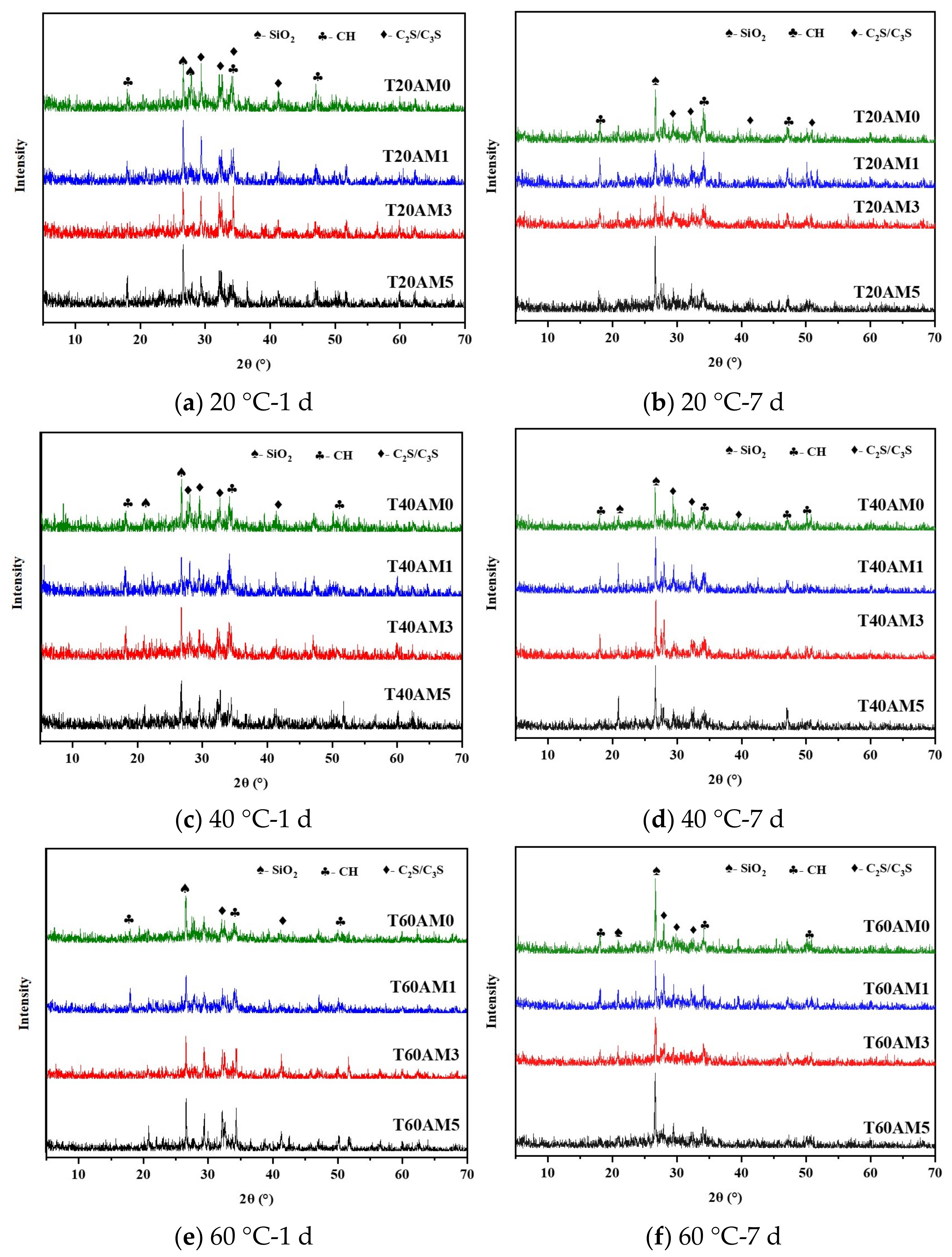
3.1.2. Hydration Product Evolution of AM-Modified TSM Under Various Curing Temperatures
3.2. Pore Structure
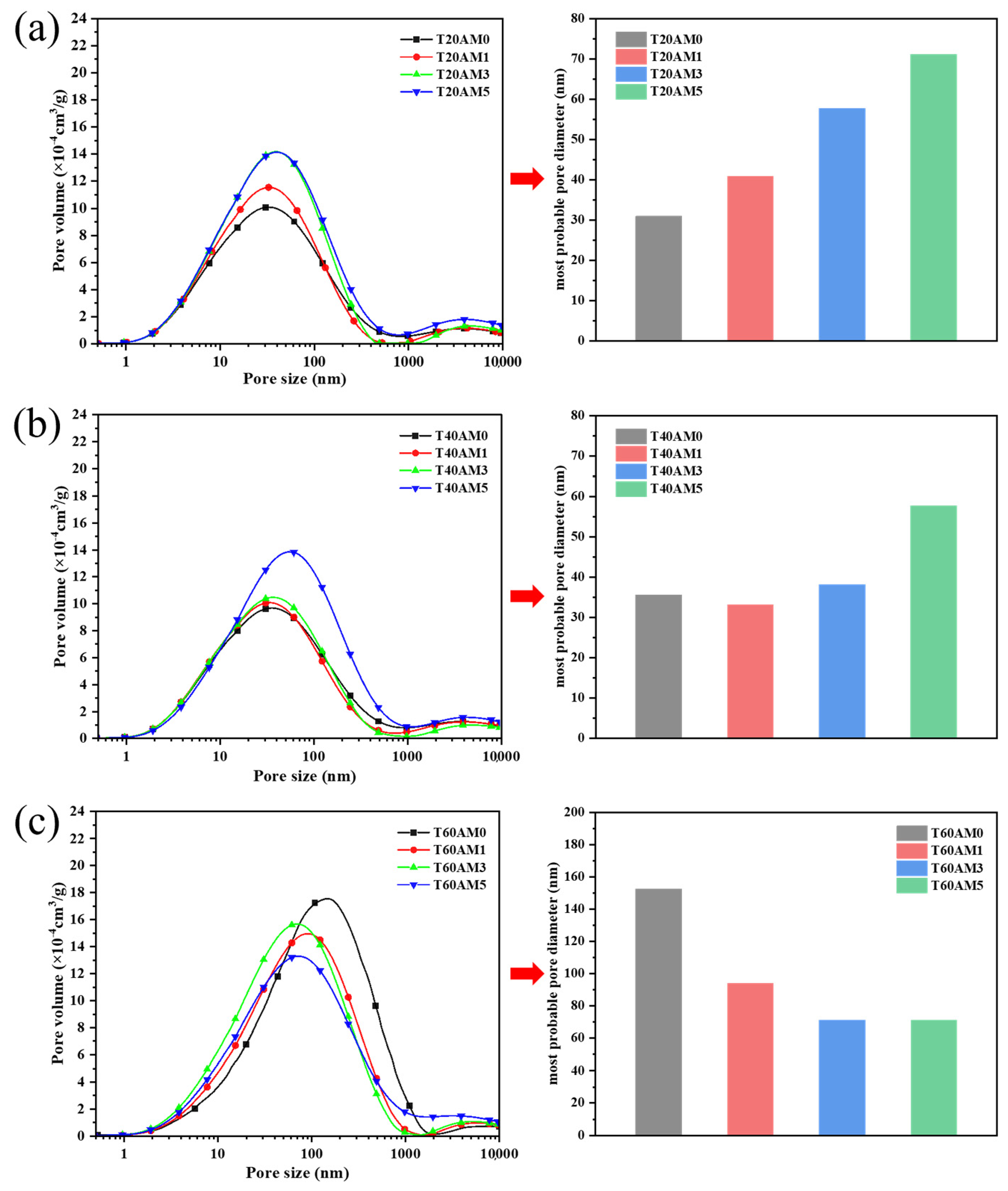
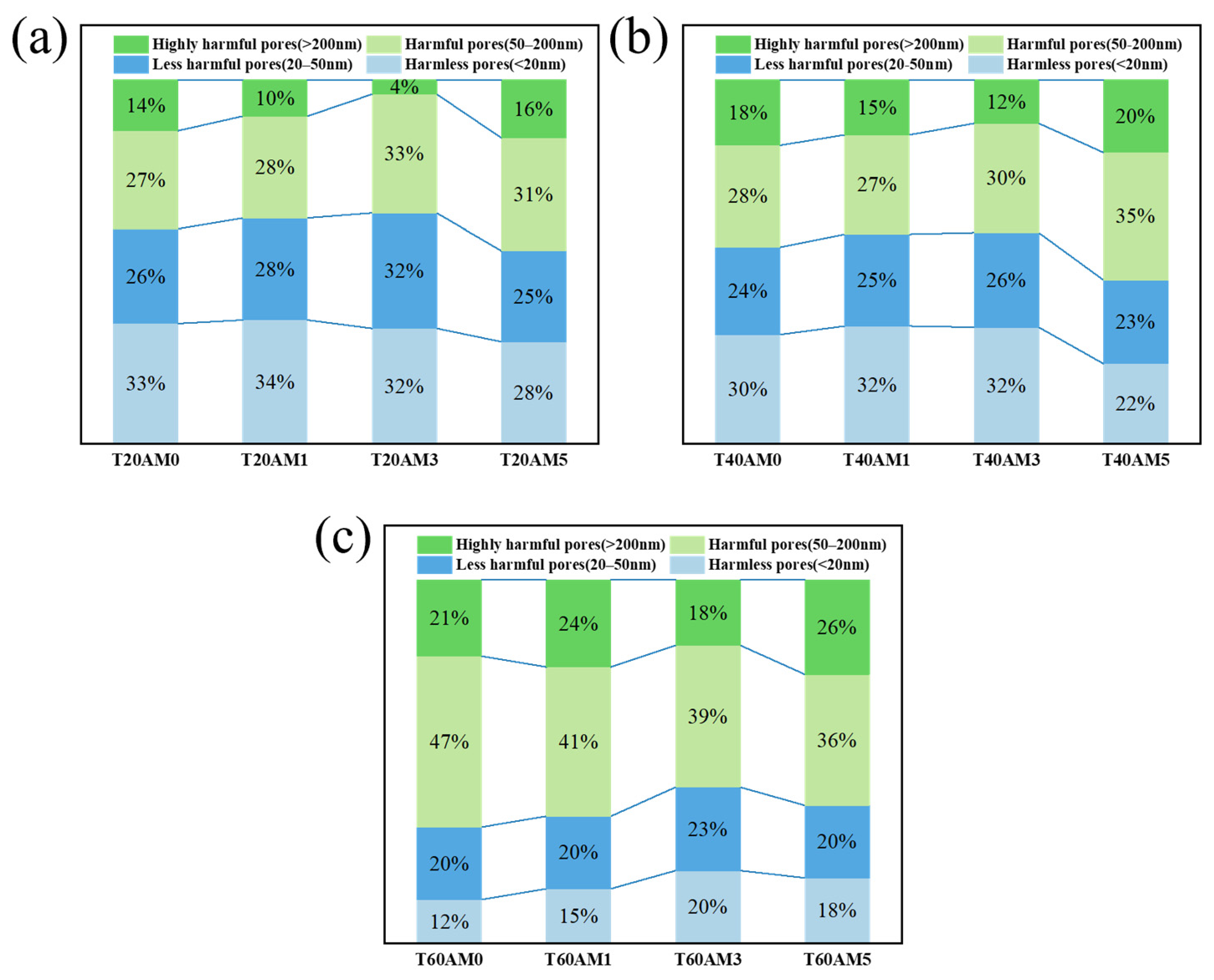
3.2.1. Pore Size Distribution of AM-Modified TSM Under Various Curing Temperatures
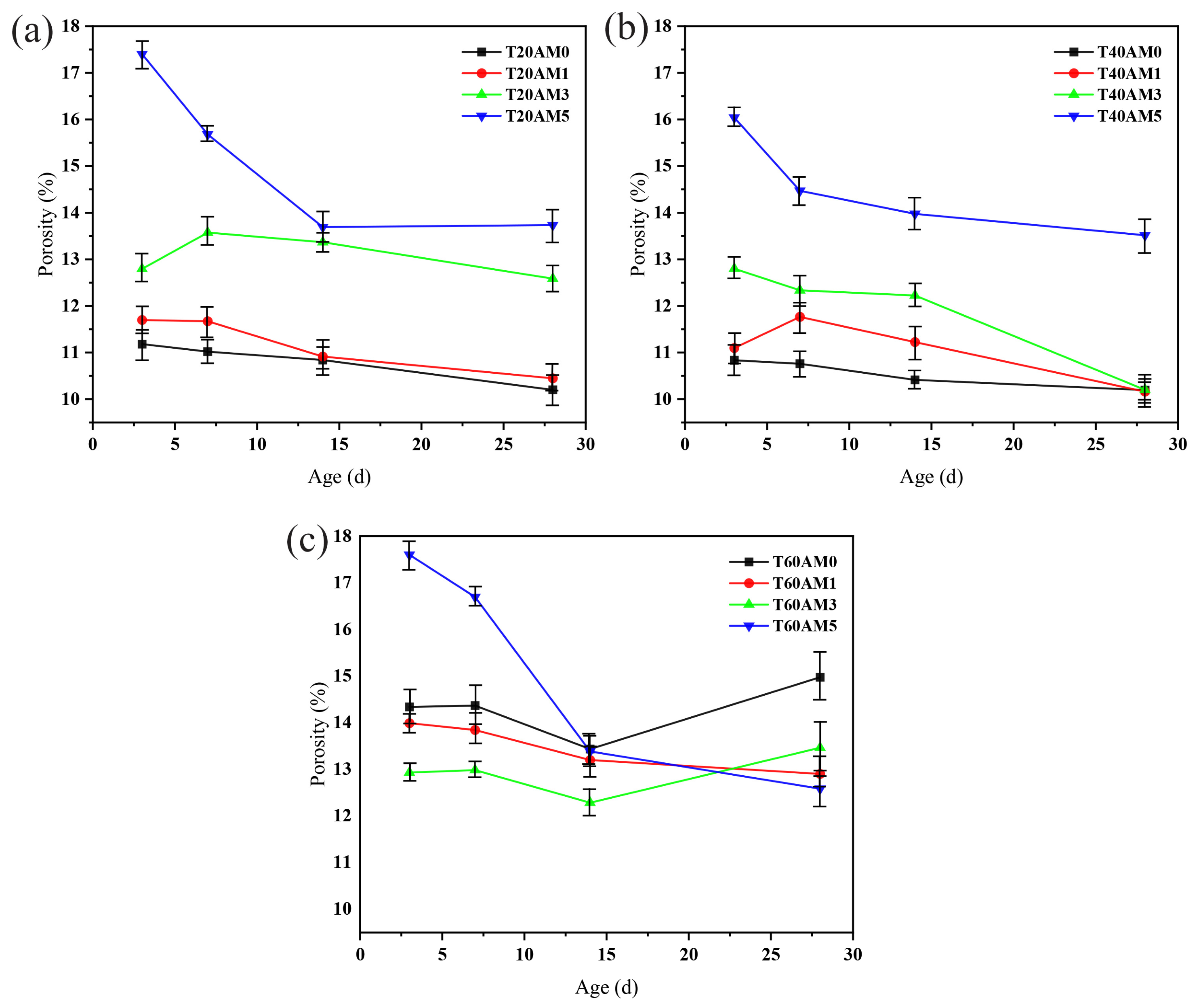
3.2.2. Porosity of AM-Modified TSM Under Various Curing Temperatures
3.2.3. Pore Size Distribution of AM-Modified TSM Under Various Curing Humidity
3.2.4. Porosity of AM-Modified TSM Under Various Curing Humidities
3.3. Micro-Morphology Structure
3.3.1. SEM Morphology of AM-Modified TSM Under Various Curing Temperatures
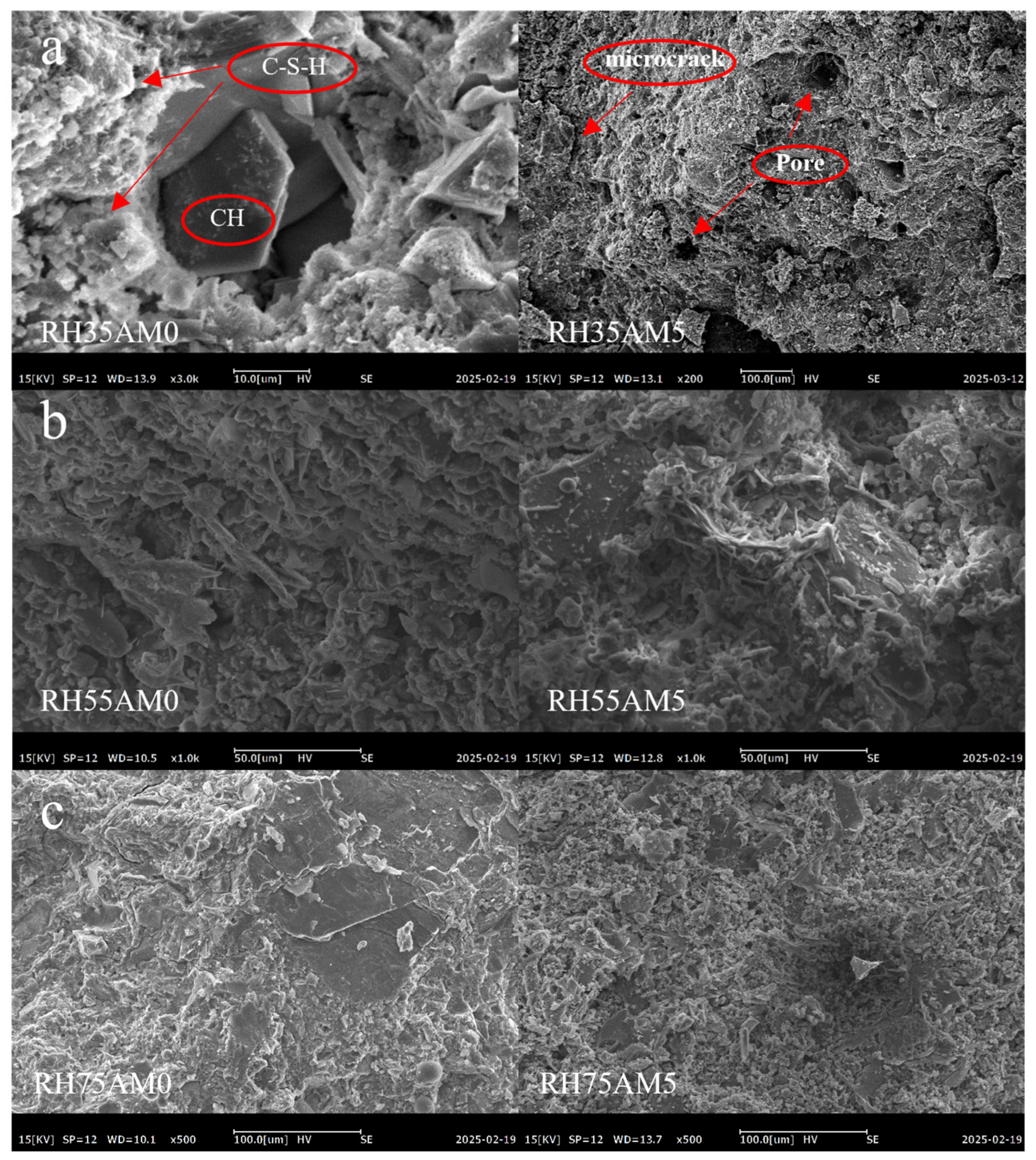
3.3.2. SEM Morphology of AM-Modified TSM Under Various Curing Humidities
3.4. Synergistic Regulation Mechanism of Curing Temperature-Humidity and AM on the Hydration and Pore Structure of TSM
4. Conclusions
- (1)
- The incorporation of AM did not generate new identifiable crystalline hydration products, but mainly affected the early hydration rate of TSM. At 20 °C, AM mainly delayed the formation of hydration products, prolonged the early hydration stages, and reduced the hydration degree. When the curing temperature increased to 40–60 °C, temperature promoted the initial dissolution of ions and the formation of early hydration products, thereby weakening the adverse effect of AM on hydration. Among the investigated dosages, 3% AM showed a more favorable synergistic response under the present experimental conditions.
- (2)
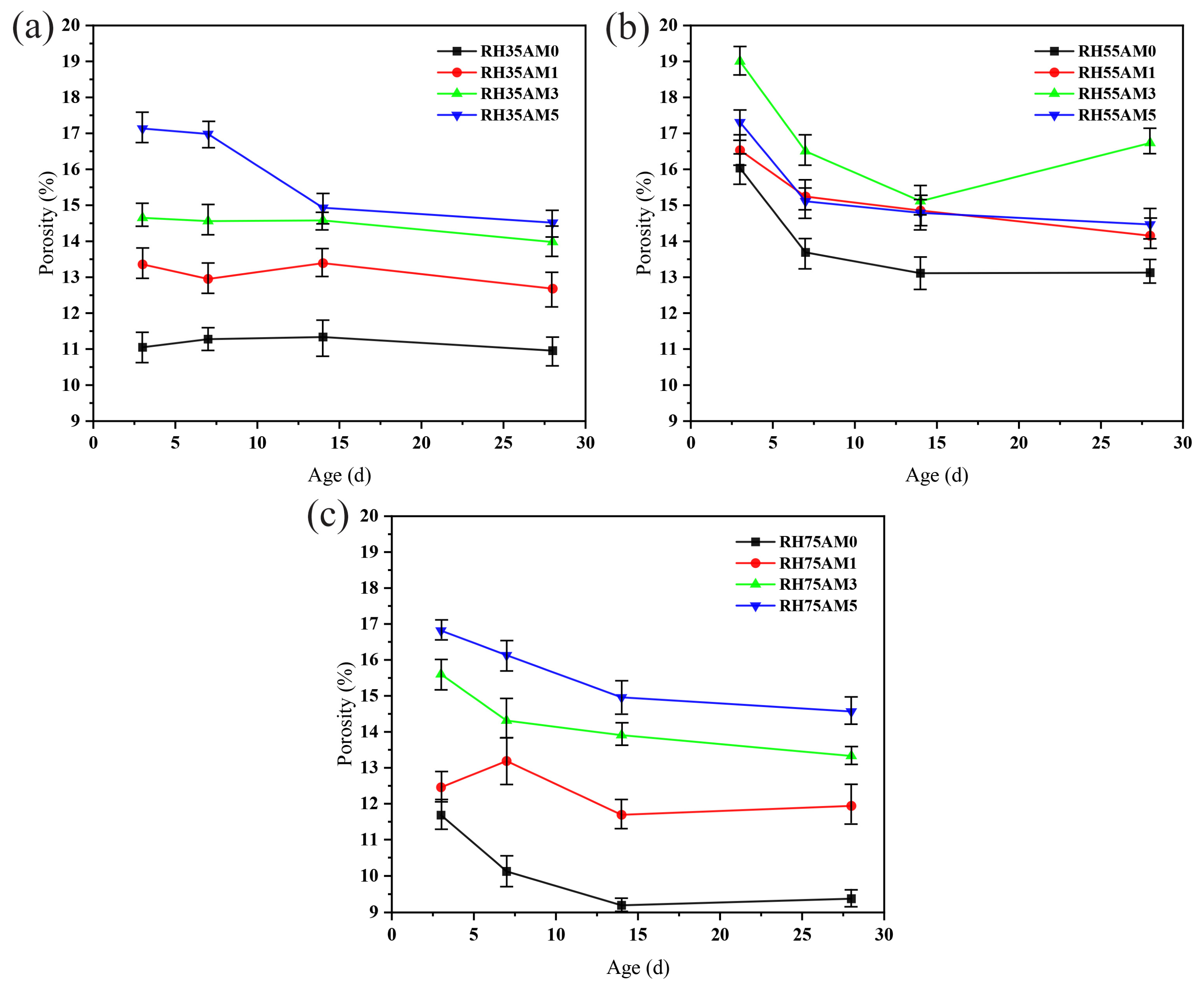
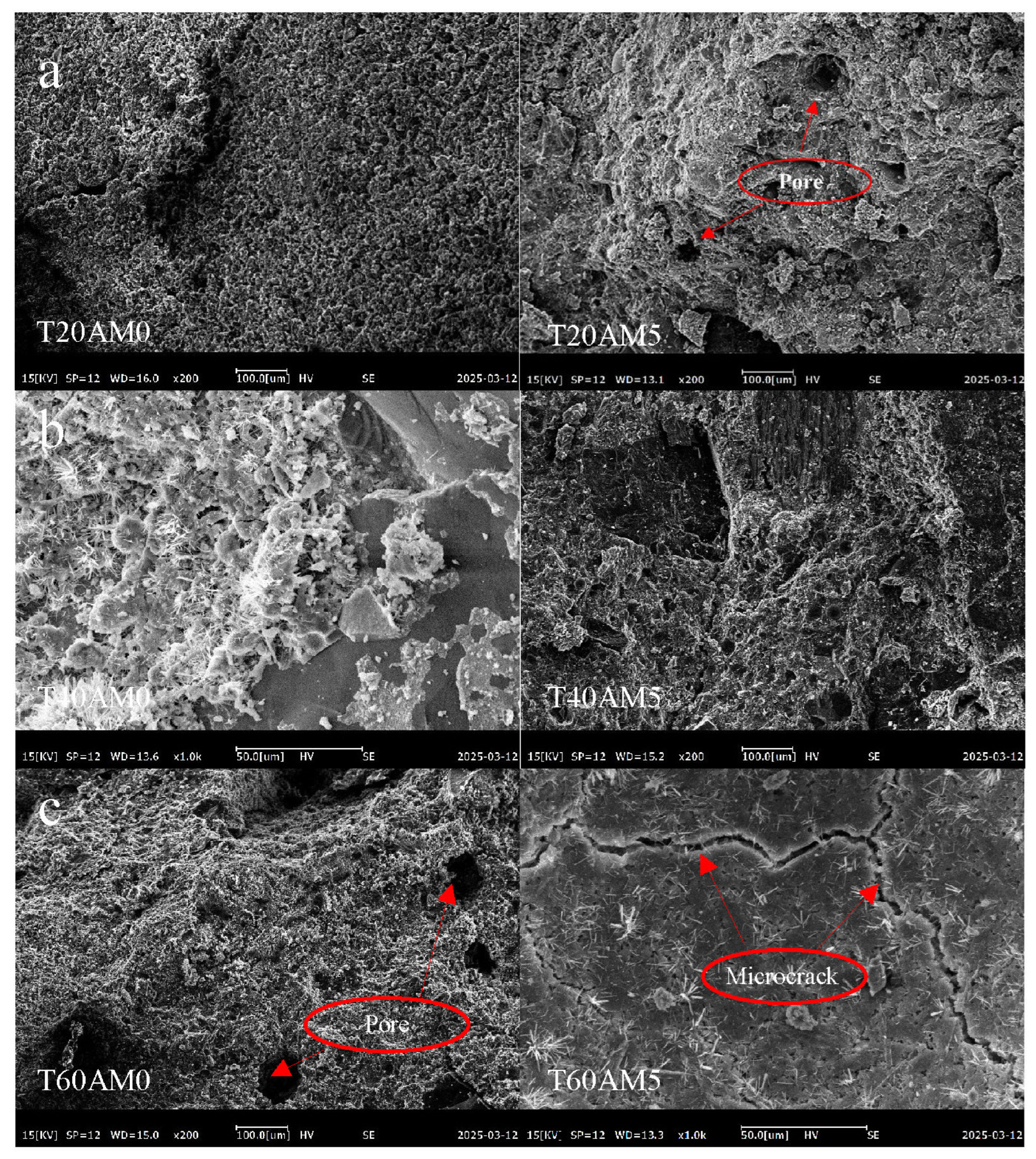
- The incorporation of AM generally increased the porosity of TSM, but the magnitude of this increase gradually decreased with age and was more evident at higher AM dosages. When the curing temperature increased to 60 °C, the adverse effect of AM on porosity and characteristic pore size was further weakened. Under 20 °C curing, AM increased the most probable pore diameter of the mortar; however, in terms of pore size distribution, 3% AM showed the best pore refinement effect, reducing the volume fraction of highly harmful pores by 71.4% compared with the unmodified specimen. Under 60 °C curing, although AM reduced the porosity and characteristic pore size to some extent, it did not alter the overall pore-coarsening trend induced by high temperature. SEM observations showed that the AM-modified specimens had a relatively denser microstructure and more uniform filling of hydration products, which was generally consistent with the pore structure test results.
- (3)
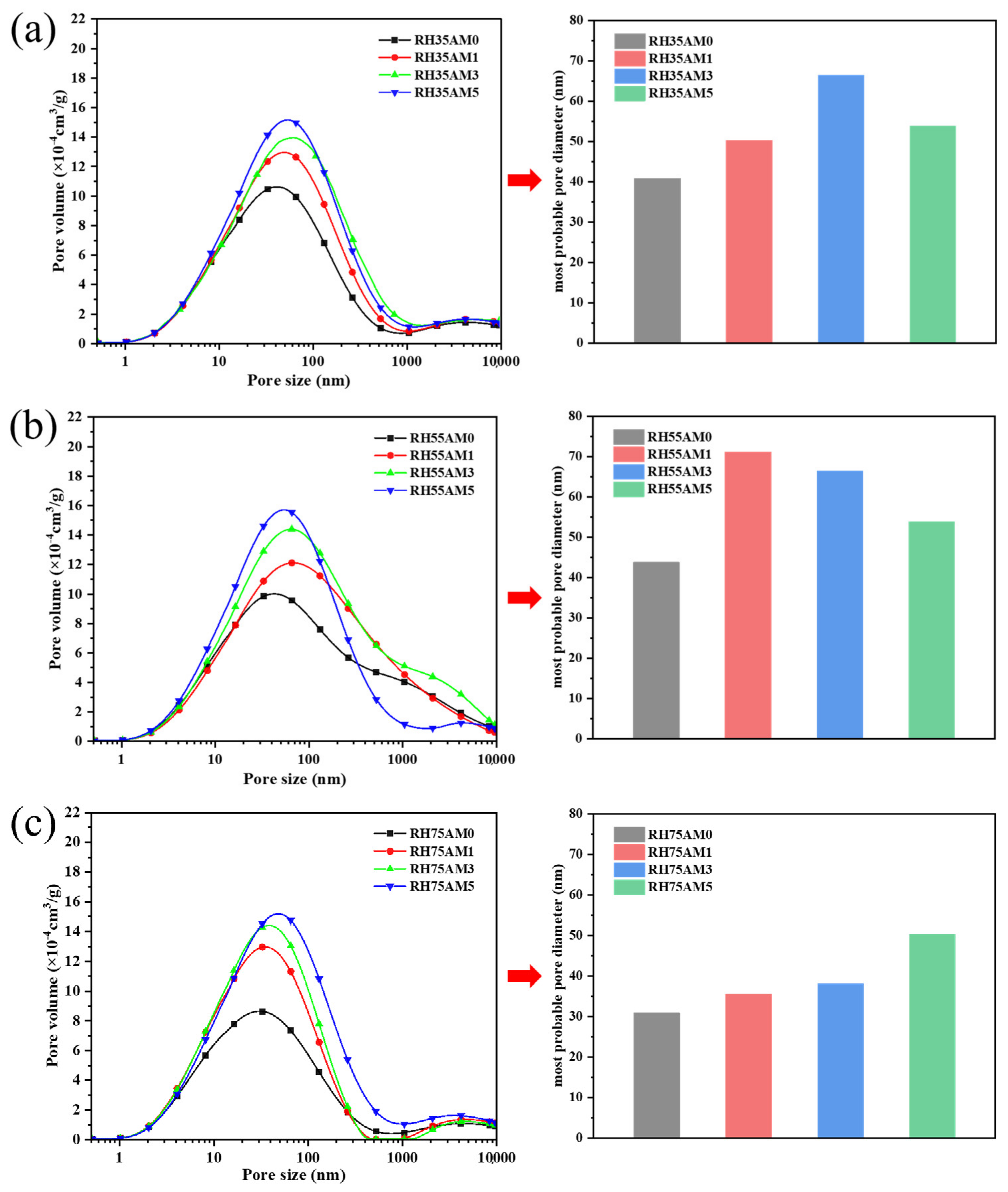
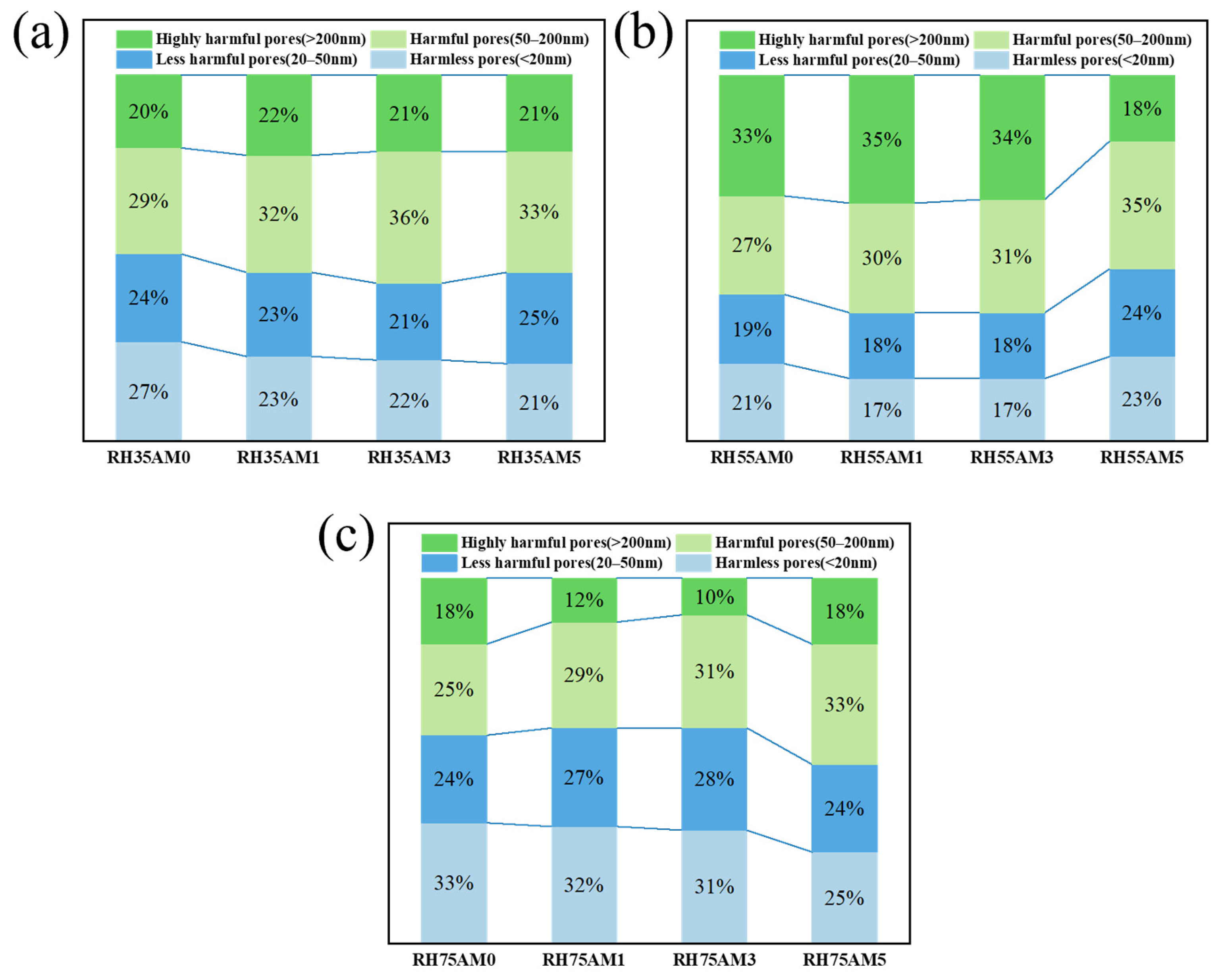
- The adverse effect of AM on the pore structure of TSM exhibited pronounced humidity sensitivity. Under 35–55% RH, the proportion of harmful pores larger than 50 nm increased significantly, and the most probable pore diameters of the specimens containing 1% and 3% AM were both markedly higher than that of unmodified TSM, indicating that low humidity amplified the pore structure deterioration induced by AM. In contrast, under 75% RH, the TSM specimens with AM dosages below 3% exhibited a denser microstructure; however, when the AM dosage increased to 5%, the most probable pore diameter increased significantly. Overall, these results indicate that compared with unmodified TSM, AM-modified TSM is more sensitive to curing humidity, and sufficient curing humidity is more critical for pore structure optimization.
Author Contributions
Funding
Data Availability Statement
Conflicts of Interest
References
- Nguyen, H.; Vu, T.; Vo, T.P.; Thai, H.-T. Efficient machine learning models for prediction of concrete strengths. Constr. Build. Mater. 2021, 266, 120950. [Google Scholar] [CrossRef]
- Du, F.; Jin, Z.; Yu, Y. A review on the mechanics and durability in ultra-high strength cement-based composites materials. Mater. Rep. 2017, 31, 44–51. (In Chinese) [Google Scholar] [CrossRef]
- Verian, K.P.; Ashraf, W.; Cao, Y. Properties of recycled concrete aggregate and their influence in new concrete production. Resour. Conserv. Recycl. 2018, 133, 30–49. [Google Scholar] [CrossRef]
- Huang, H.; Du, C.; Yi, F.; Chen, D.; Zhang, C. Microstructural and mechanical evolution of recycled fiber-reinforced tunnel slag concrete under wet-dry cycles. Sustain. Chem. Pharm. 2025, 43, 101905. [Google Scholar] [CrossRef]
- Lothenbach, B.; Scrivener, K.; Hooton, R.D. Supplementary cementitious materials. Cem. Concr. Res. 2011, 41, 1244–1256. [Google Scholar] [CrossRef]
- Huang, F.; Li, H.; Wang, Z.; Yi, Z.; Jin, H.; Wen, H. Research status and existing problems of resource utilization of tunnel slag as building materials. China Railw. 2019, 8, 14–18. (In Chinese) [Google Scholar] [CrossRef]
- Sun, X.; Li, Y.; Wei, X.; Yu, J.; Wang, M. High contents of steel slag in road concrete: Hydration mechanism, mechanical property and durability performance. Constr. Build. Mater. 2023, 400, 132703. [Google Scholar] [CrossRef]
- Shao, L.J.; Feng, P.; Liu, Q.; Zhang, Y.; Yu, Z.; Yan, S. In-situ polymerization-modified cement composites: A critical review. Constr. Build. Mater. 2024, 449, 138294. [Google Scholar] [CrossRef]
- Wang, X.F.; He, Z.Z.; Yang, J.H.; Zhang, N.; Huang, T.; Wang, Y.; Zhou, Z.W. Super toughened immiscible poly(L-lactide)/poly(ethylene vinyl acetate) (PLLA/EVA) blend achieved by in situ cross-linking reaction and carbon nanotubes. Compos. Part A Appl. Sci. Manuf. 2016, 91, 105–116. [Google Scholar] [CrossRef]
- Li, X.; Kang, H.L.; Shen, J.X.; Zhang, L.Q.; Nishi, T.; Ito, K.; Zhao, C.X.; Coates, P. Highly toughened polylactide with novel sliding graft copolymer by in situ reactive compatibilization, crosslinking and chain extension. Polymer 2014, 55, 4313–4323. [Google Scholar] [CrossRef]
- Wang, Q.C.; Ding, X.Y.; Li, J.B.; Jin, H.B.; Gao, H.C. Minimizing the interfacial resistance for a solid-state lithium battery running at room temperature. Chem. Eng. J. 2022, 448, 137740. [Google Scholar] [CrossRef]
- Zhang, X.; Du, M.; Fang, H.; Shi, M.; Zhang, C.; Wang, F. Polymer-modified cement mortars: Their enhanced properties, applications, prospects, and challenges. Constr. Build. Mater. 2021, 299, 124290. [Google Scholar] [CrossRef]
- Tanks, J.; Naito, K.; Tamura, K. Rigid epoxy networks with very high intrinsic fracture toughness using a piperazine-based in-situ polymerization strategy. Mater. Lett. 2023, 335, 133821. [Google Scholar] [CrossRef]
- Misumi, J.; Oyama, T. Low viscosity and high toughness epoxy resin modified by in situ radical polymerization method for improving mechanical properties of carbon fiber reinforced plastics. Polymer 2018, 156, 1–9. [Google Scholar] [CrossRef]
- Zhao, X.; Li, Y.; Chen, W.; Li, S.; Zhao, Y.; Du, S. Improved fracture toughness of epoxy resin reinforced with polyamide 6/graphene oxide nanocomposites prepared via in situ polymerization. Compos. Sci. Technol. 2019, 171, 180–189. [Google Scholar] [CrossRef]
- Liu, Q.; Liu, W.; Li, Z.; Sun, G. Ultra-lightweight cement composites with excellent flexural strength, thermal insulation and water resistance achieved by establishing interpenetrating network. Constr. Build. Mater. 2020, 250, 118923. [Google Scholar] [CrossRef]
- Tang, J.H. Effect of Toughening Materials on Cement Hydration Mechanism and Mechanical Properties. Ph.D. Thesis, Southeast University, Nanjing, China, 2018. [Google Scholar] [CrossRef]
- Pan, C.; Liu, S.; Yao, S.; Gao, X.; Zhang, H.; Zhu, J.; Shen, P.; Guan, X.; Li, H. Influence of acrylamide in-situ polymerization on the mechanical properties and microstructure of OPC-CSA-Cs-FA quaternary system. J. Build. Eng. 2023, 67, 105906. [Google Scholar] [CrossRef]
- Yao, H.; Fan, M.; Huang, T.; Yuan, Q.; Xie, Z.; Chen, Z.; Li, Y.; Wang, J. Retardation and bridging effect of anionic polyacrylamide in cement paste and its relationship with early properties. Constr. Build. Mater. 2021, 306, 124822. [Google Scholar] [CrossRef]
- Bai, Y.; Wang, Y.; Xi, Y. Modeling the effect of temperature gradient on moisture and ionic transport in concrete. Cem. Concr. Compos. 2020, 106, 103454. [Google Scholar] [CrossRef]
- Zhang, G.; Li, Z.; Zhang, L.; Shang, Y.; Wang, H. Experimental research on drying control condition with minimal effect on concrete strength. Constr. Build. Mater. 2017, 135, 194–202. [Google Scholar] [CrossRef]
- Kallel, H.; Carré, H.; La Borderie, C.; Masson, B.; Tran, N.C. Effect of temperature and moisture on the instantaneous behaviour of concrete. Cem. Concr. Compos. 2017, 80, 326–332. [Google Scholar] [CrossRef]
- Kjellsen, K.O.; Detwiler, R.J.; Gjørv, O.E. Pore structure of plain cement pastes hydrated at different temperatures. Cem. Concr. Res. 1990, 20, 927–933. [Google Scholar] [CrossRef]
- Chan, Y.N.; Peng, G.F.; Anson, M. Residual strength and pore structure of high-strength concrete and normal strength concrete after exposure to high temperatures. Cem. Concr. Compos. 1999, 21, 23–27. [Google Scholar] [CrossRef]
- Zhang, Z.; Zhang, B.; Yan, P. Hydration and microstructures of concrete containing raw or densified silica fume at different curing temperatures. Constr. Build. Mater. 2016, 121, 483–490. [Google Scholar] [CrossRef]
- Nassif, A.Y.; Petrou, M.F. Influence of cold weather during casting and curing on the stiffness and strength of concrete. Constr. Build. Mater. 2013, 44, 161–167. [Google Scholar] [CrossRef]
- Du, X.Q.; Li, Z.L.; Han, J.J.; Tan, C. Effect of different humidity-controlling modes on microstructure and compressive behavior of ordinary concrete. J. Mater. Civ. Eng. 2020, 32, 04019337. [Google Scholar] [CrossRef]
- Xu, L.L.; Wang, P.M.; Zhang, G.F. Formation of ettringite in Portland cement/calcium aluminate cement/calcium sulfate ternary system hydrates at lower temperatures. Constr. Build. Mater. 2012, 31, 347–352. [Google Scholar] [CrossRef]
- Liu, Z.Z.; Sha, A.M.; Hu, L.Q.; Lu, Y.W. Kinetic and thermodynamic modeling of Portland cement hydration at low temperatures. Chem. Pap. 2017, 71, 741–751. [Google Scholar] [CrossRef]
- Mi, Z.X.; Hu, Y.; Li, Q.B.; An, Z.Z. Effect of curing humidity on the fracture properties of concrete. Constr. Build. Mater. 2018, 169, 403–413. [Google Scholar] [CrossRef]
- Davila, J.M.; Sarmiento, A.M.; Fortes, J.C.; Santisteban, M.; Leiva, M.; Cordoba, F.; Cabello, J.E.; Grande, J.A. Determination of the extreme reduction of concrete strength due to acid mine drainage by laboratory tests on specimens located in a real environment. Constr. Build. Mater. 2021, 269, 121817. [Google Scholar] [CrossRef]
- GB/T 176-2017; Cement Chemical Analysis Methods. China Standard Press: Beijing, China, 2018.
- Nie, S.; Ma, Y.; Guo, J.; Chai, M.; Lu, S. Study on diffusion law of sulfate ions in concrete under different temperature conditions. Water Resour. Hydropower Eng. 2022, 53, 186–196. (In Chinese) [Google Scholar] [CrossRef]
- Fang, L.; Zhou, J.; Yuan, Q.; Que, Y.; Chen, Z.; Zhang, C. Rheological properties of fresh cement paste modified by in situ polymerization of acrylamide monomer. J. Mater. Civ. Eng. 2023, 35, 04023467. [Google Scholar] [CrossRef]
- Zhao, H.; Jiang, K.; Di, Y.; Xu, W.; Li, W.; Tian, Q.; Liu, J. Effects of curing temperature and superabsorbent polymers on hydration of early-age cement paste containing a CaO-based expansive additive. Mater. Struct. 2019, 52, 108. [Google Scholar] [CrossRef]
- Liu, Q.; Lu, Z.; Xu, J.; Li, Z.; Sun, G. Insight into the in situ copolymerization of monomers on cement hydration and the mechanical performance of cement paste. J. Sustain. Cem.-Based Mater. 2023, 12, 736–750. [Google Scholar] [CrossRef]
- Liu, Q.; Ming, X.; Wang, M.; Wang, Q.; Li, Y.; Li, Z.; Hou, D.; Geng, G. Probing the hydration behavior of tricalcium aluminate under the in situ polymerization of acrylic acid. Cem. Concr. Res. 2024, 177, 107429. [Google Scholar] [CrossRef]
- Liang, R.; Liu, Q.; Hou, D.; Li, Z.; Sun, G. Flexural strength enhancement of cement paste through monomer incorporation and in situ bond formation. Cem. Concr. Res. 2022, 152, 106675. [Google Scholar] [CrossRef]
- Wu, Z.W.; Lian, H.Z. High Performance Concrete; China Railway Publishing House: Beijing, China, 1999. (In Chinese) [Google Scholar]
- Wu, K.; Long, J.; Qing, L.; De Schutter, G. Recent advance of monomer in-situ polymerization modified cement-based materials. Constr. Build. Mater. 2024, 432, 136542. [Google Scholar] [CrossRef]
- Liu, Q.; Lu, Z.; Hu, X.; Chen, B.; Li, Z.; Liang, R.; Sun, G. A mechanically strong polymer-cement composite fabricated by in situ polymerization within the cement matrix. J. Build. Eng. 2021, 42, 103048. [Google Scholar] [CrossRef]
- Xu, C.; Dai, Y.; Peng, Y.; Wang, J.; Zhang, Z.; Gui, Q.; Zeng, Q. Multi-scale structure of in-situ polymerized cementitious composites with improved flowability, strength, deformability and anti-permeability. Compos. Part B Eng. 2022, 245, 110222. [Google Scholar] [CrossRef]
- Sun, F.; Pang, X.; Wei, J.; Matschei, T.; Sun, L.; Yu, Y.; Wang, H.; Sun, J. Stability of calcium silicate hydrates produced by alite hydration at high and ultrahigh temperatures. Cem. Concr. Res. 2024, 179, 107469. [Google Scholar] [CrossRef]
- Omer, A.M.; Tamer, T.M.; Hassan, M.E.; Khalifa, R.E.; Abd El-Monaem, E.M.; Eltaweil, A.S.; Mohy Eldin, M.S. Fabrication of grafted carboxymethyl cellulose superabsorbent hydrogel for water retention and sustained release of ethephon in sandy soil. Arab. J. Sci. Eng. 2023, 48, 561–572. [Google Scholar] [CrossRef]
- Yin, B.; Hua, X.; Qi, D.; Wang, P.; Qiao, G.; Fan, F.; Hua, X.; Wang, X.; Hou, D. Performance cement-based composite obtained by in-situ growth of organic–inorganic frameworks during the cement hydration. Constr. Build. Mater. 2022, 336, 127533. [Google Scholar] [CrossRef]



| SiO2 | Al2O3 | Fe2O3 | CaO | MgO | Na2O | K2O | SO3 | TiO2 | P2O5 | Cl− | LOI | Insol. | |
|---|---|---|---|---|---|---|---|---|---|---|---|---|---|
| Cement | 23.1 | 6.6 | 3.1 | 56.7 | 0.81 | 0.3 | 0.6 | 2.50 | 0.4 | — | 0.02 | 2.36 | 0.47 |
| Tunnel slag | 66.45 | 16.23 | 4.40 | 1.87 | 0.96 | 5.33 | 3.86 | 0.06 | 0.34 | 0.25 | 0.06 | — | — |
| Code | Mix Proportions | Curing Temperature (°C) | ||
|---|---|---|---|---|
| Water-to-Binder Ratio | Binder-to-Sand Ratio | AM Dosage (%) | ||
| T20AM0 | 0.35 | 0.783 | 0 | 20 |
| T20AM1 | 1 | 20 | ||
| T20AM3 | 3 | 20 | ||
| T20AM5 | 5 | 20 | ||
| T40AM0 | 0 | 40 | ||
| T40AM1 | 1 | 40 | ||
| T40AM3 | 3 | 40 | ||
| T40AM5 | 5 | 40 | ||
| T60AM0 | 0 | 60 | ||
| T60AM1 | 1 | 60 | ||
| T60AM3 | 3 | 60 | ||
| T60AM5 | 5 | 60 | ||
Disclaimer/Publisher’s Note: The statements, opinions and data contained in all publications are solely those of the individual author(s) and contributor(s) and not of MDPI and/or the editor(s). MDPI and/or the editor(s) disclaim responsibility for any injury to people or property resulting from any ideas, methods, instructions or products referred to in the content. |
© 2026 by the authors. Licensee MDPI, Basel, Switzerland. This article is an open access article distributed under the terms and conditions of the Creative Commons Attribution (CC BY) license.
Share and Cite
Hu, D.; Ran, M.; Yu, Y.; Yang, G.; Gu, X.; Hu, N.; Chen, S. Hydration and Microstructure Evolution of Acrylamide-Modified Tunnel Slag Mortar Under Various Curing Conditions. Materials 2026, 19, 2179. https://doi.org/10.3390/ma19112179
Hu D, Ran M, Yu Y, Yang G, Gu X, Hu N, Chen S. Hydration and Microstructure Evolution of Acrylamide-Modified Tunnel Slag Mortar Under Various Curing Conditions. Materials. 2026; 19(11):2179. https://doi.org/10.3390/ma19112179
Chicago/Turabian StyleHu, Dongkang, Maosheng Ran, Yue Yu, Guo Yang, Xiang Gu, Nan Hu, and Shuo Chen. 2026. "Hydration and Microstructure Evolution of Acrylamide-Modified Tunnel Slag Mortar Under Various Curing Conditions" Materials 19, no. 11: 2179. https://doi.org/10.3390/ma19112179
APA StyleHu, D., Ran, M., Yu, Y., Yang, G., Gu, X., Hu, N., & Chen, S. (2026). Hydration and Microstructure Evolution of Acrylamide-Modified Tunnel Slag Mortar Under Various Curing Conditions. Materials, 19(11), 2179. https://doi.org/10.3390/ma19112179