Concrete Damaged Plasticity-Based Analysis of Damage and Stiffness Degradation in Cooling Tower Shells Under Spatially Variable Seismic Loading

Abstract
1. Introduction
2. Materials and Methods
2.1. Multi-Support Structures Under Spatially Varying Earthquake Ground Motion
- s, g—degrees of freedom of structure and ground respectively,
- , , —mass, damping and stiffness matrices,
- , , —accelerations, velocities and displacements for each DOF of the structure,
- , , —accelerations, velocities and displacements for each DOF of the ground,
- —reaction vector.
2.2. Conditional Random Field Simulation of Ground Motions for Multiple-Support Structures
- Dij—separation distance between two field points (i, j),
- ωd—predominant frequency of the shock,
- v—wave velocity,
- α—space scale parameter (α > 0), which controls the coherence drop and depends on local geological conditions,
- σ—standard deviation of the recorded shock.
- —maximum ground acceleration of the original record,
- —uniform random variable from a range <0, 1>.
- —vector of unknown values (generated signal),
- —vector of known values (registered signal),
- —conditional covariance matrix of the random field,
- —vector of conditional mean values.
- —truncation parameter, dependent on the ratio. When this ratio is 4.0 or greater, the truncation can be disregarded (.
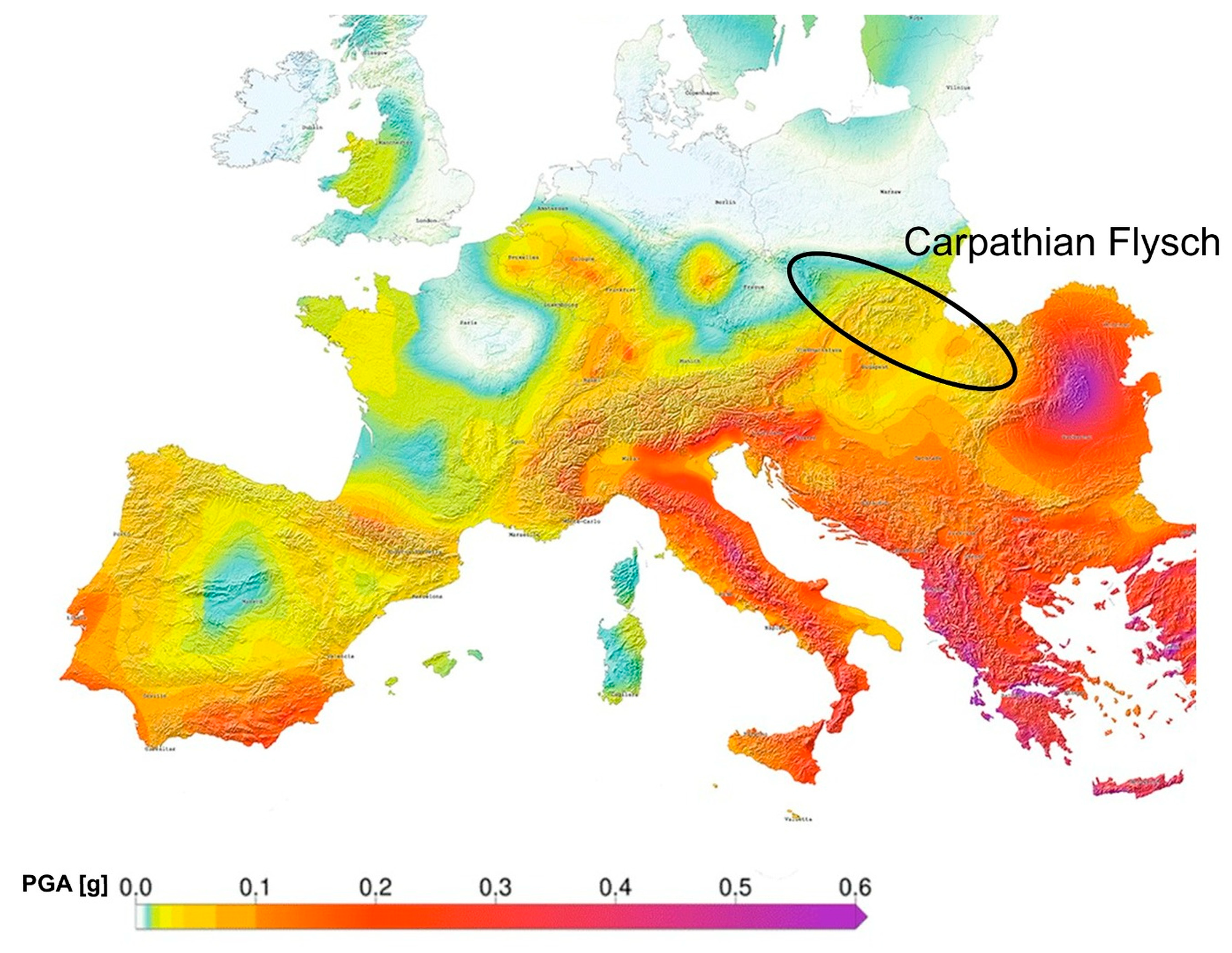
2.3. Carpathian Flysch Seismicity and a Natural Seismic Shock Used for Dynamic Analyses
2.4. Constitutive Parameters of the Concrete Damaged Plasticity Model
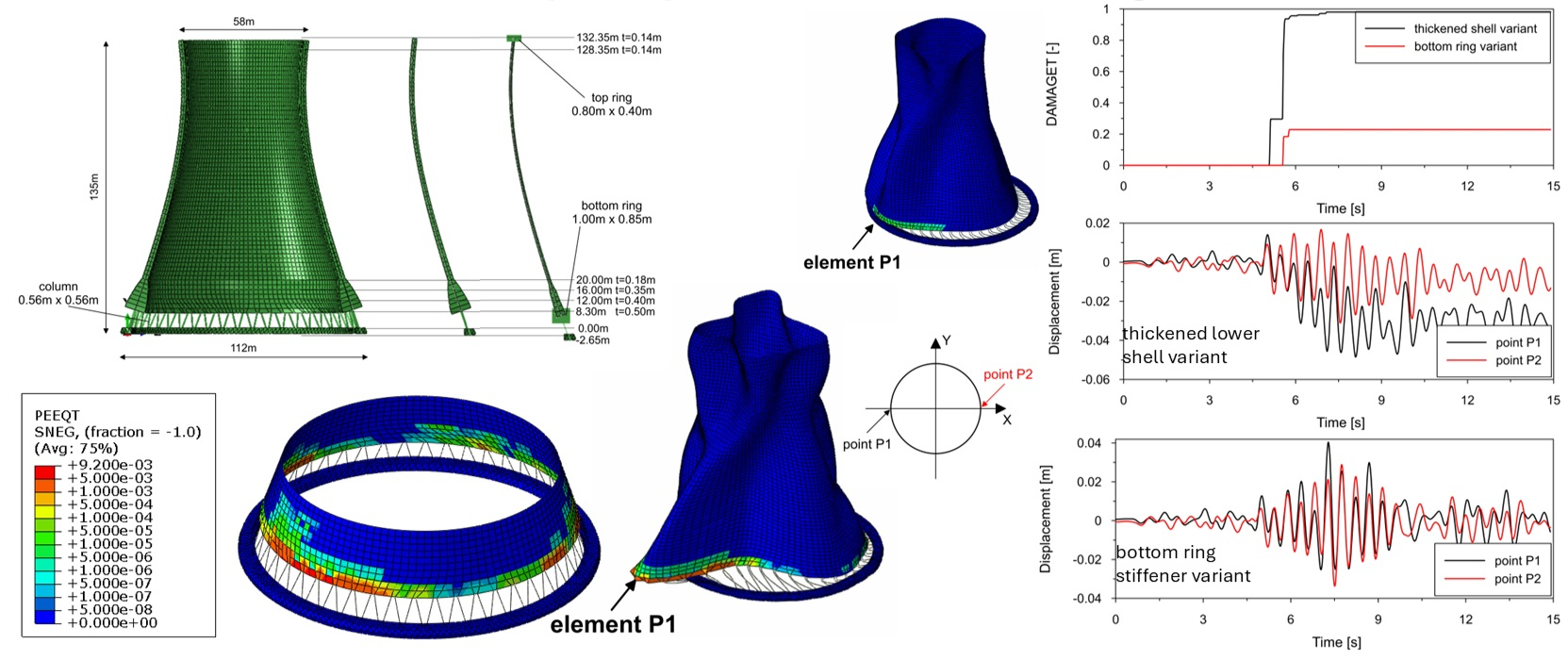
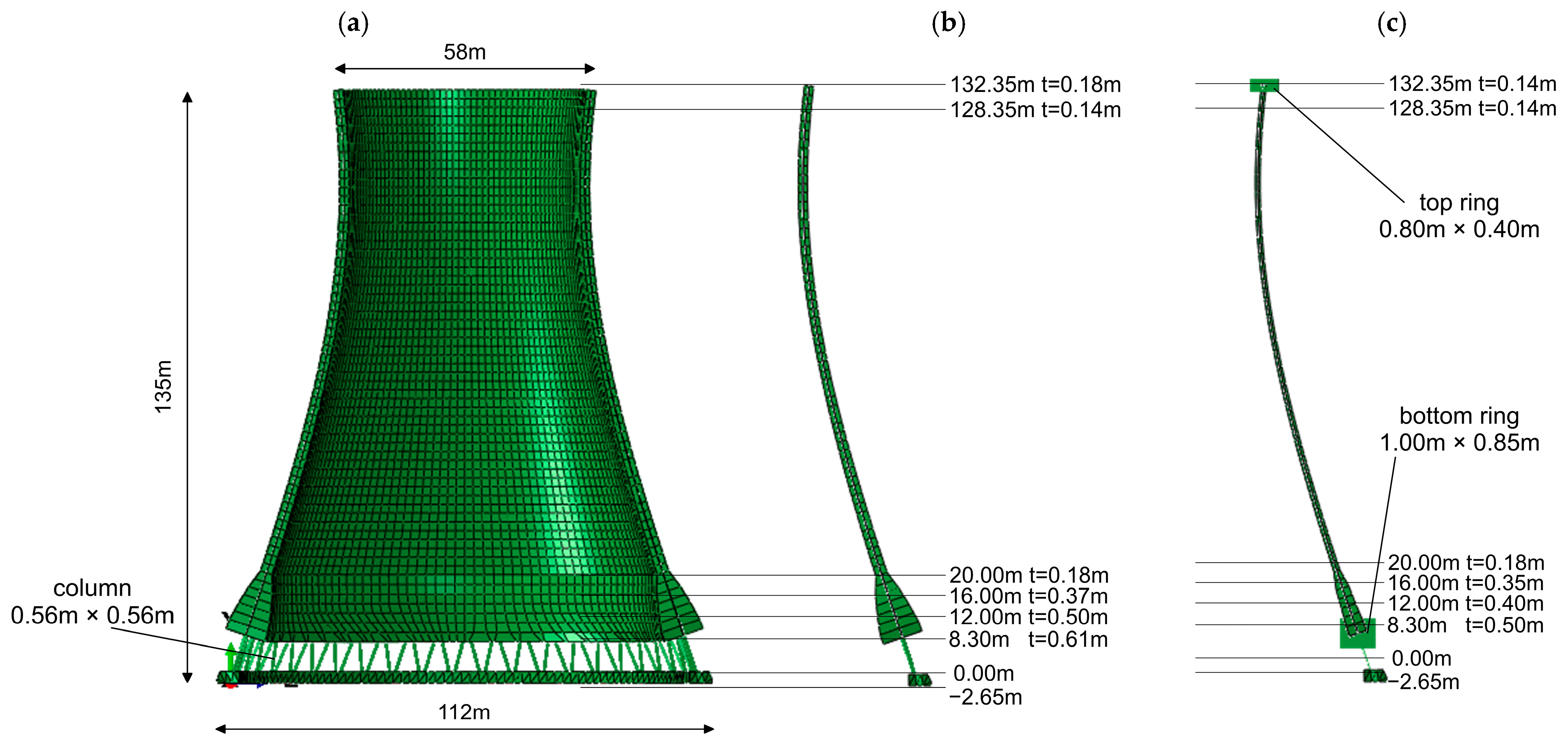
2.5. Structural Layout and Numerical Model Assembly of the Cooling Tower
- (i)
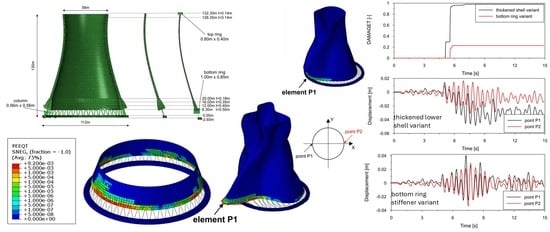
- Variant 1—a tower with a locally thickened shell in the lower region, and
- (ii)
- Variant 2—a tower equipped with a bottom ring stiffener.
2.6. Limitations of the Study
3. Results and Discussion
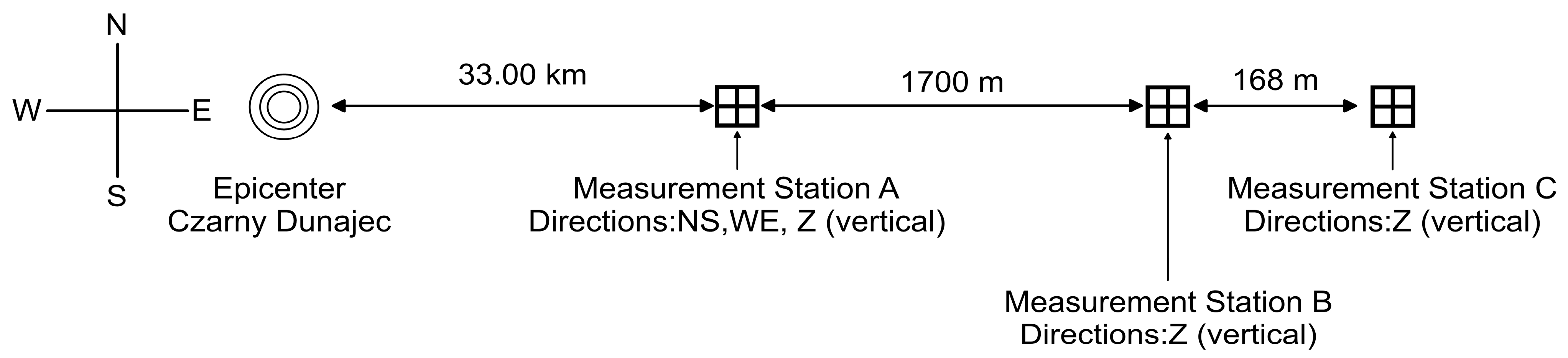
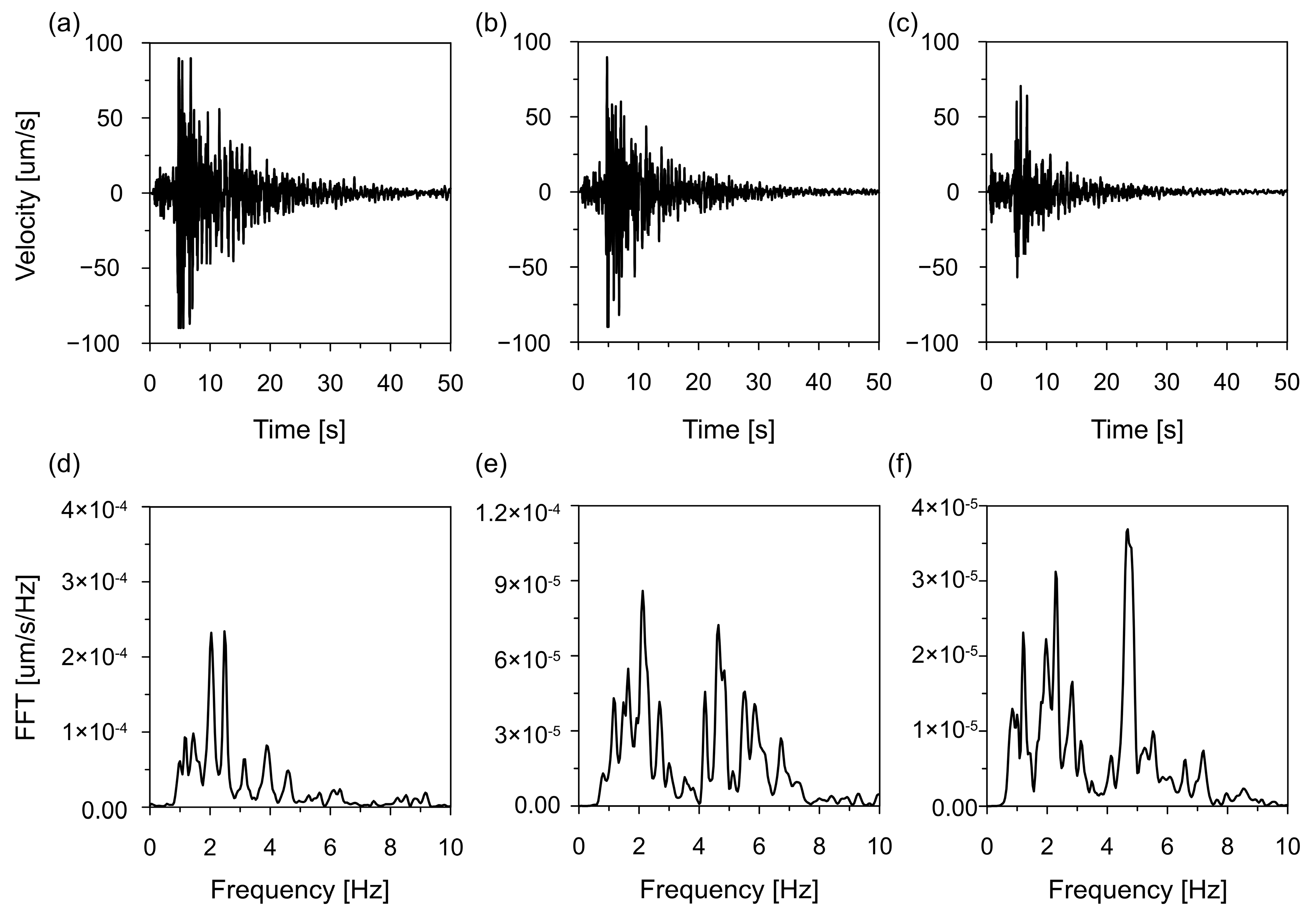
3.1. Determination of Wave Velocity and Space Scale Parameter for Carpathian Flysch Bedrock Conditions
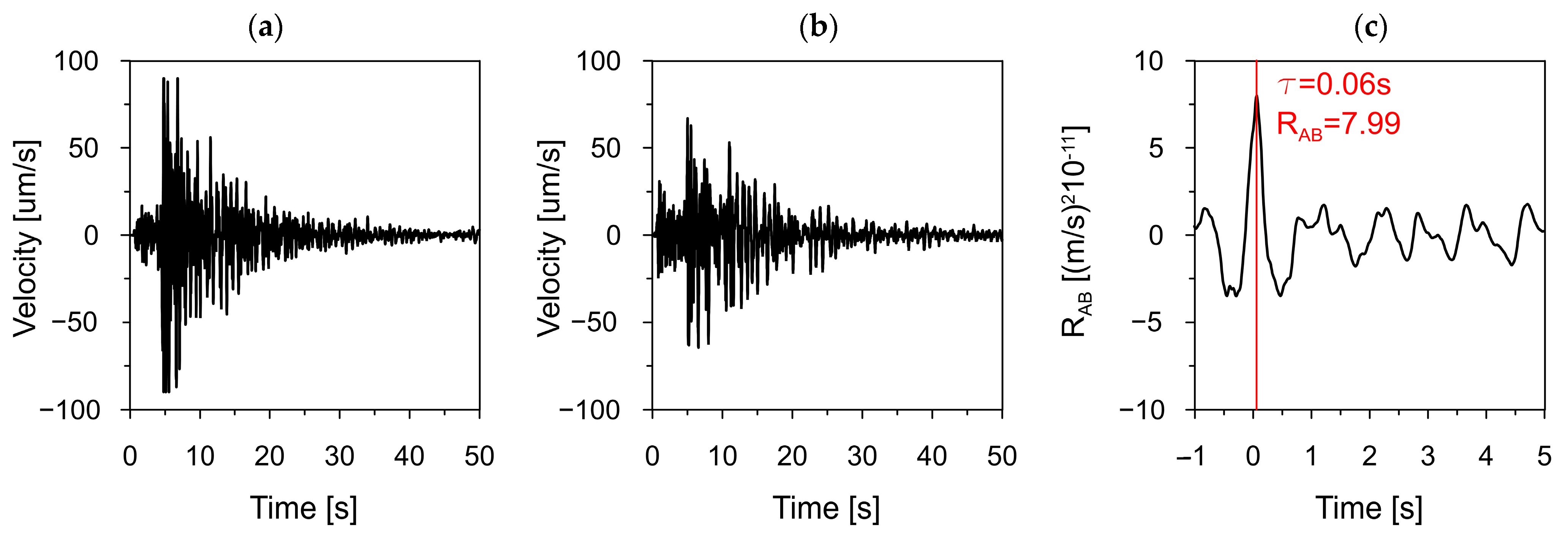
- distance between sensors: ,
- dominant frequency of the seismic excitation: ,
- seismic wave velocity: ,
- standard deviation of the signal at Station A: ,
- maximum cross-correlation value: .
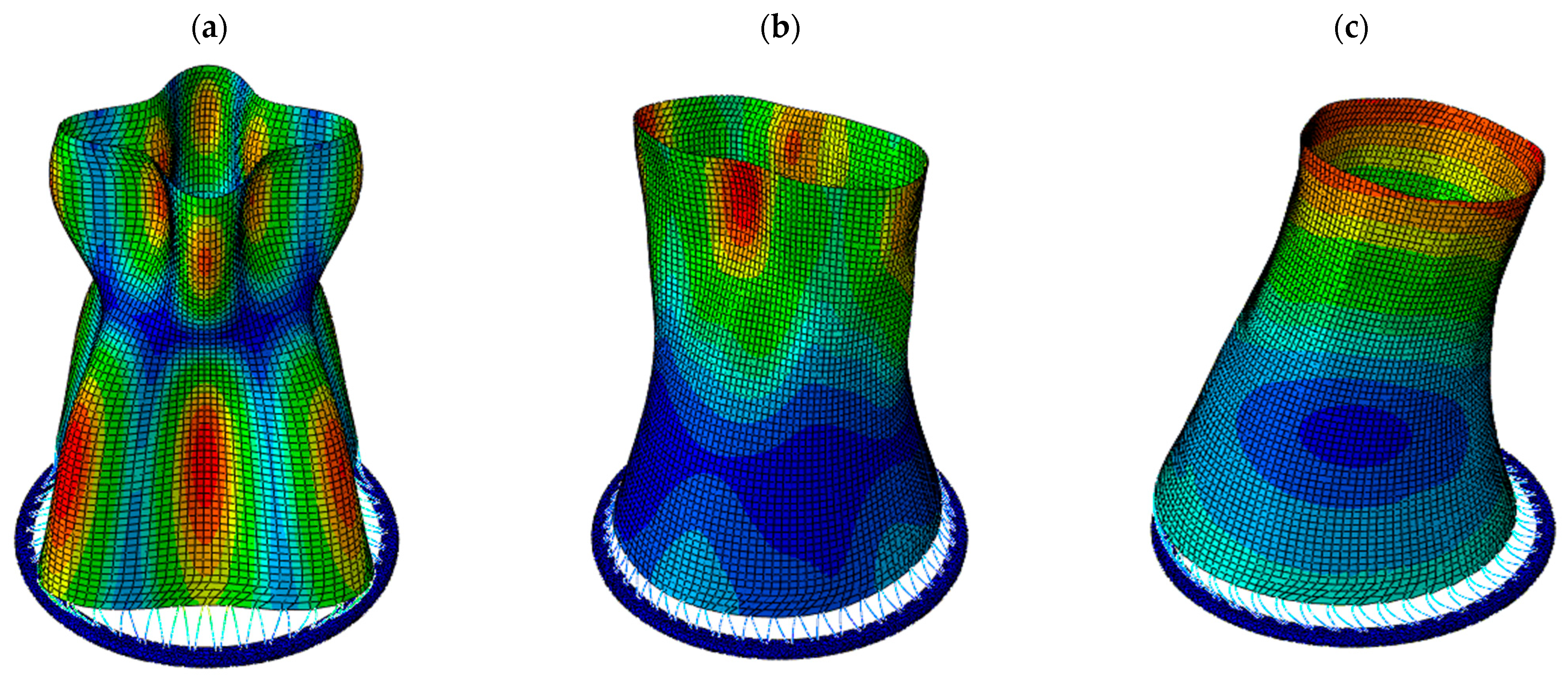
3.2. Dynamic Characteristics of the Cooling Tower
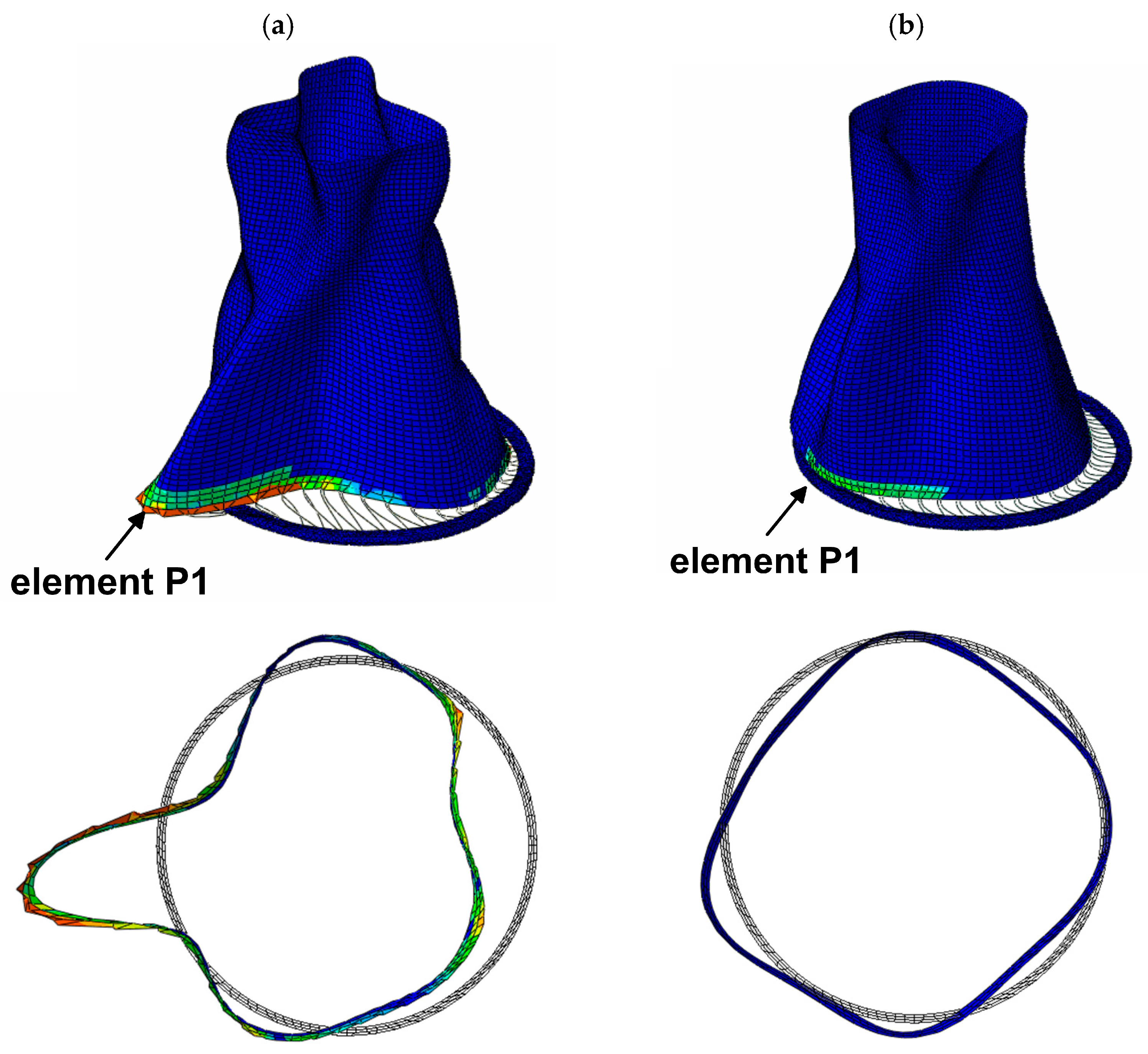
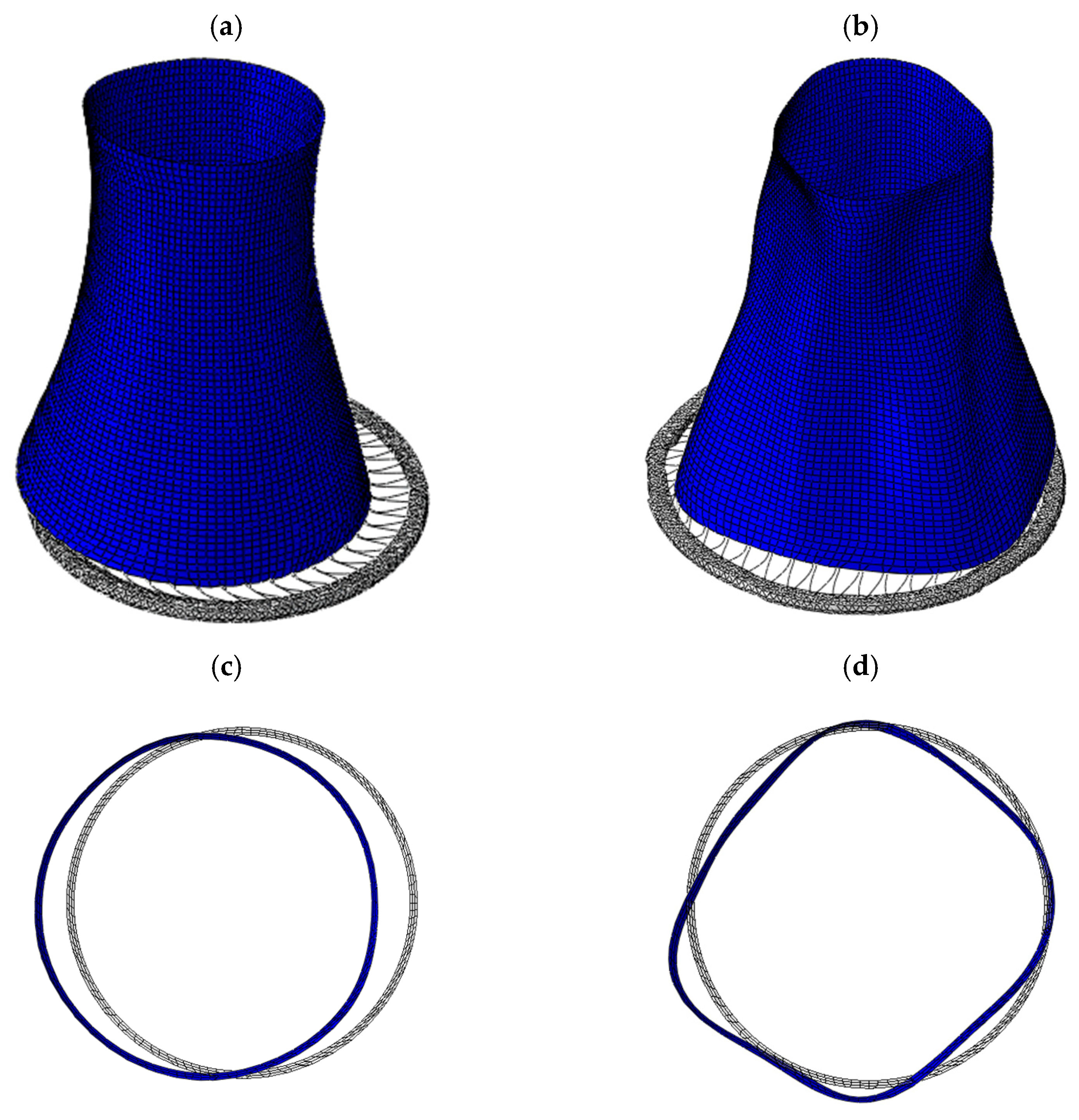
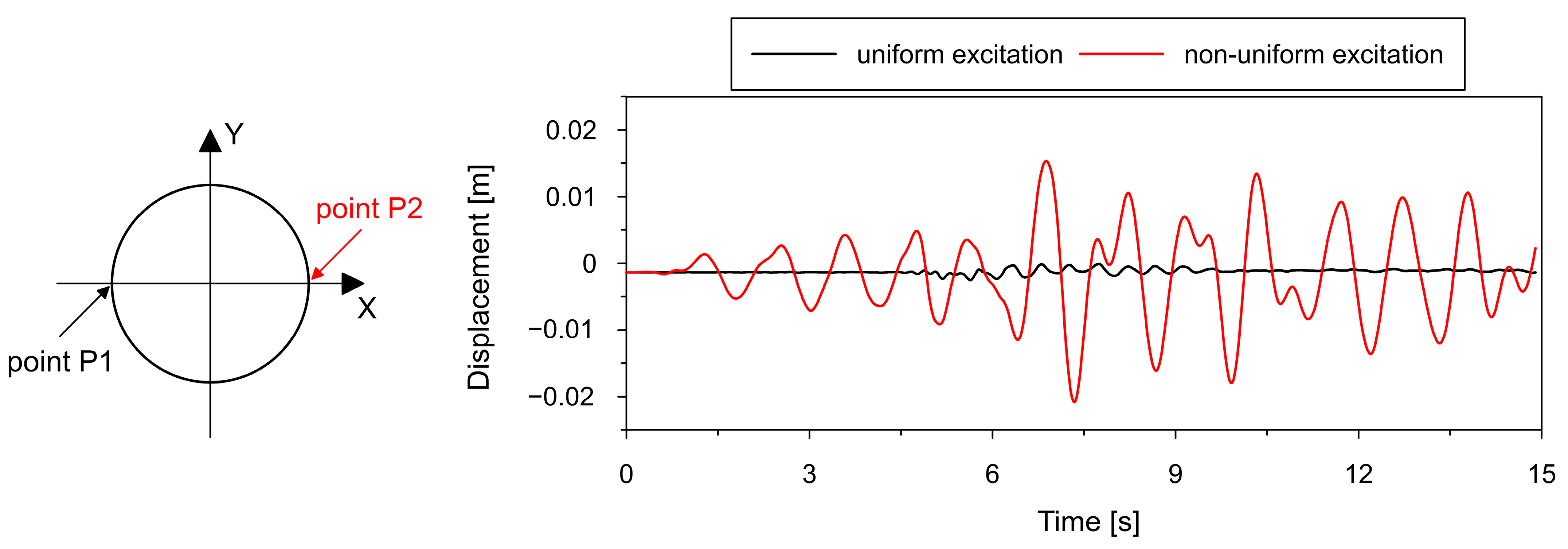
3.3. Uniform vs. Non-Uniform Kinematic Excitation: Effects on Cooling Tower Ovalization
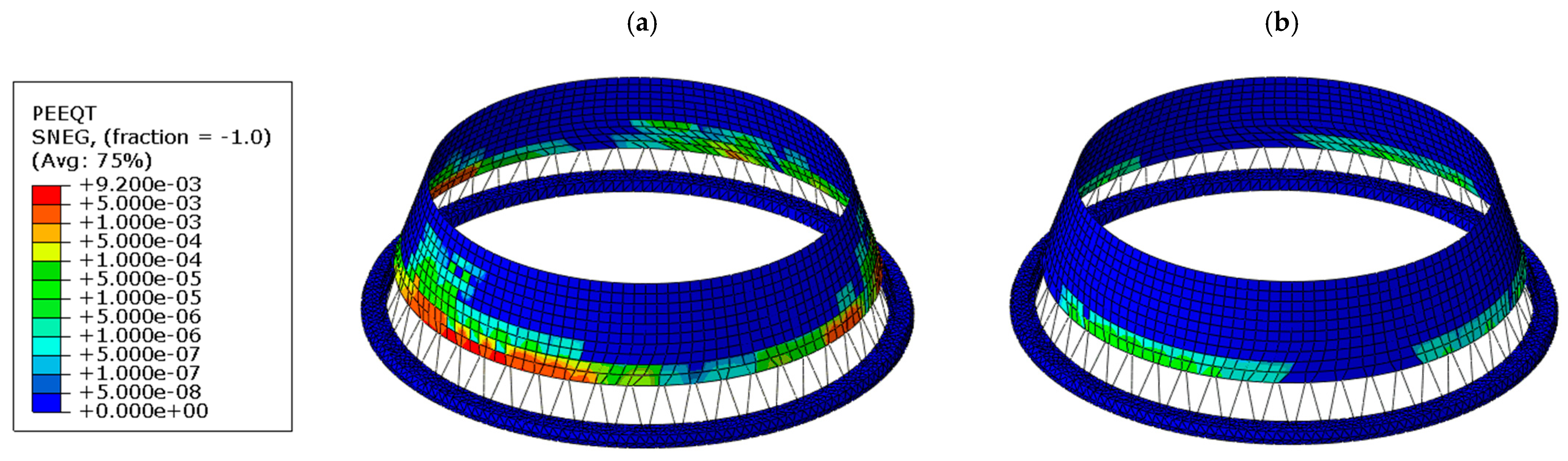
3.4. Comparative Assessment of Thickened Lower Shell and Bottom Ring Stiffener Considering Nonlinear Material Behavior in Cooling Tower Dynamics Under SVEGM
4. Conclusions
- The application of the CDP constitutive model proves essential for capturing realistic seismic behavior, as linear or simplified approaches cannot reproduce the observed damage evolution and stiffness loss. Accurate representation of material nonlinearity is therefore critical for reliable assessment of reinforced concrete shell structures.
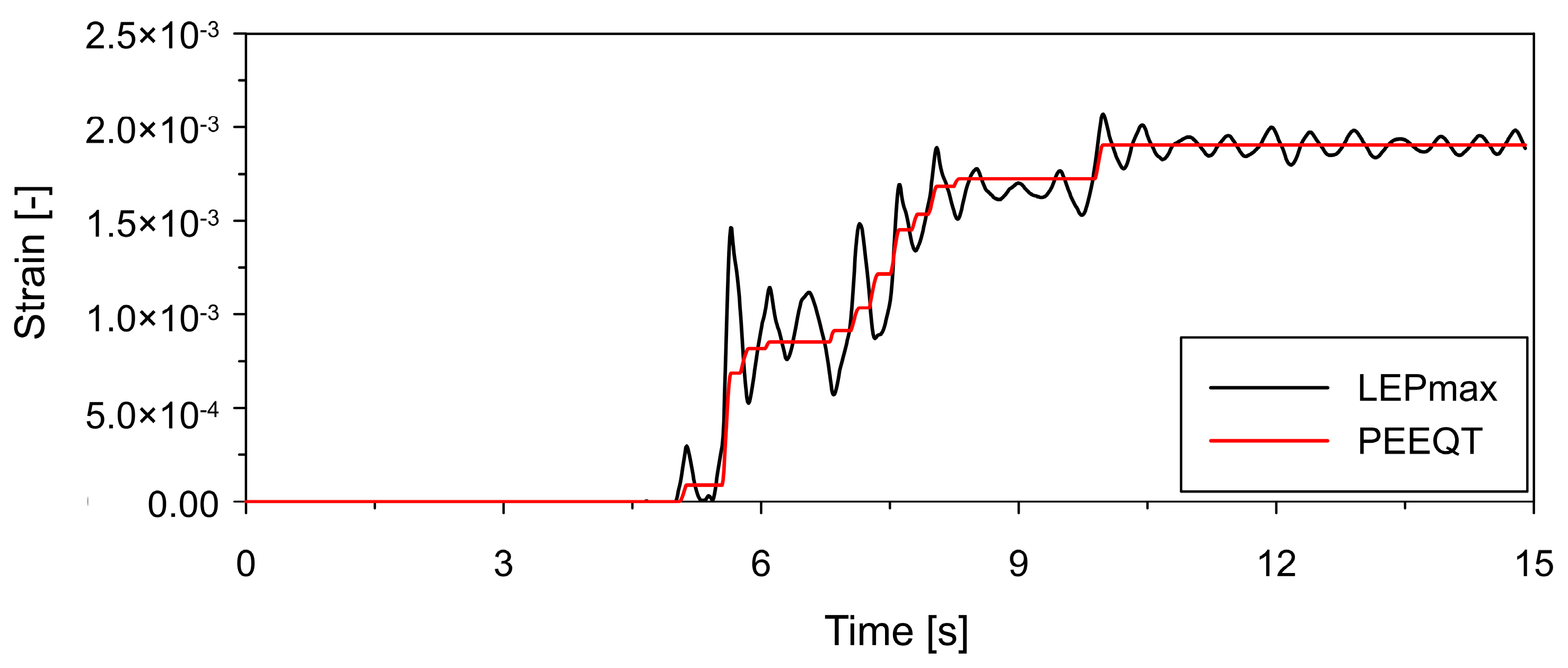
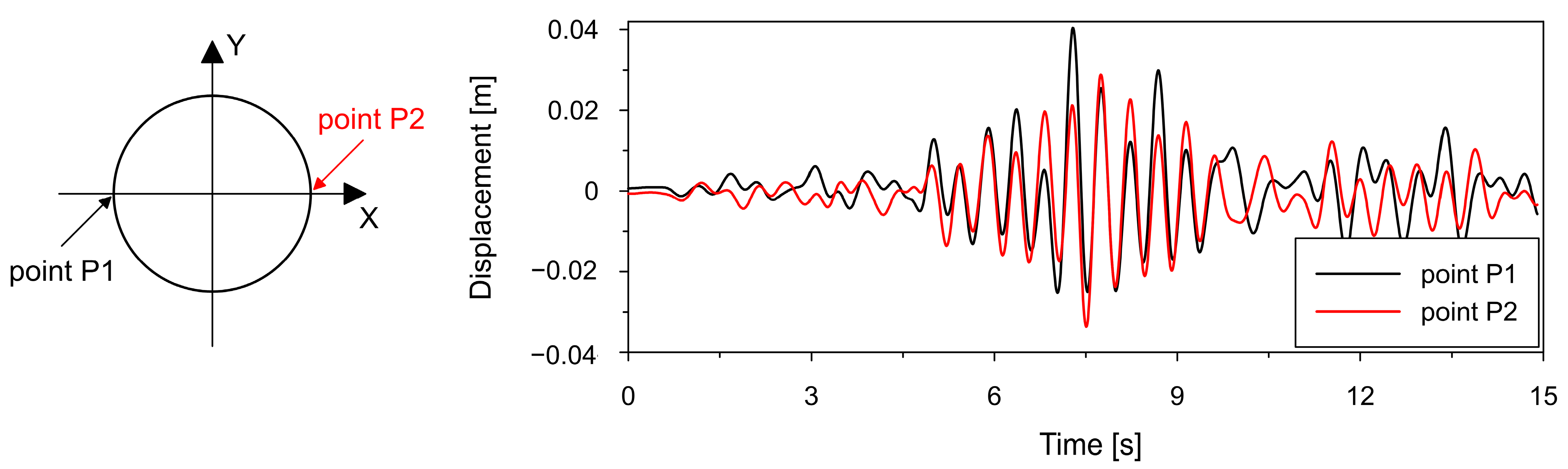
- The seismic response of the cooling tower is governed primarily by local material behavior, rather than global dynamic characteristics. The results demonstrate that tensile damage evolution, plastic strain accumulation, and stiffness degradation control the overall structural performance. Spatially varying earthquake excitation significantly intensifies material degradation mechanisms. Wave passage and incoherence effects activate complex deformation modes, leading to increased cracking, damage localization, and non-uniform distribution of plastic strains, particularly in the lower shell region.
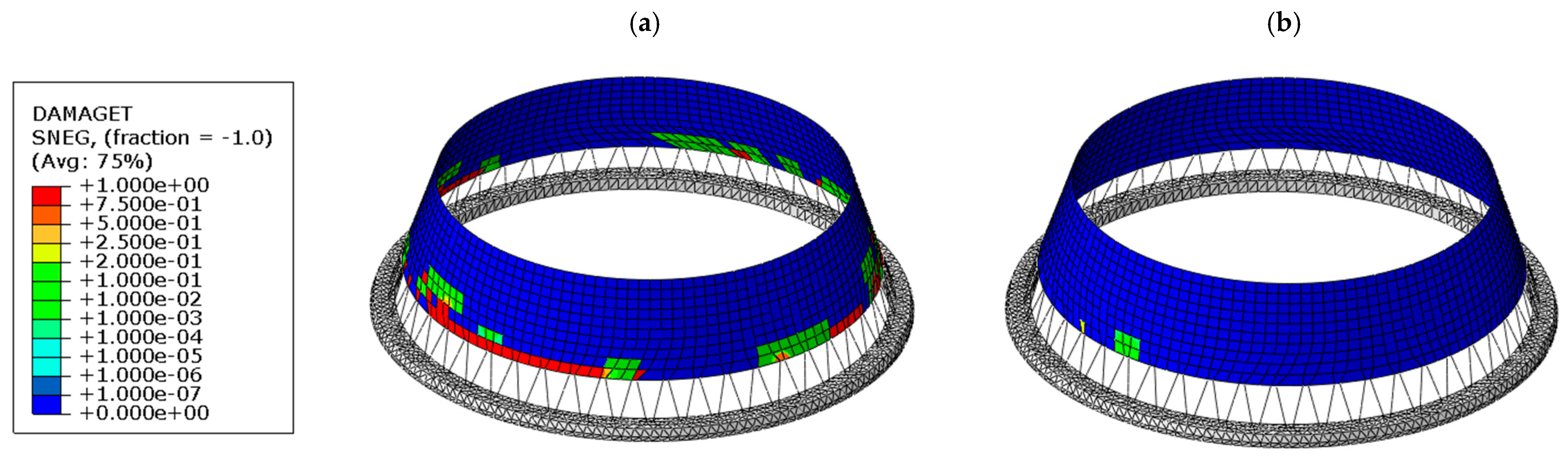
- The locally thickened shell configuration does not effectively prevent damage accumulation, as it leads to the formation of extended plastic zones and irreversible material degradation. The increased thickness modifies stiffness but does not sufficiently limit tensile damage propagation.
- The bottom ring-stiffened configuration provides a substantially improved material response, as it reduces tensile damage, limits plastic strain development, and mitigates stiffness degradation. The presence of the ring stiffener alters the stress distribution, preventing the formation of continuous damage zones and maintaining predominantly elastic behavior in critical regions.
Author Contributions
Funding
Institutional Review Board Statement
Informed Consent Statement
Data Availability Statement
Conflicts of Interest
References
- Harte, R.; Kratzig, W.B. Large-scale cooling towers as part of an efficient and cleaner energy generating technology. Thin-Walled Struct. 2002, 40, 651–664. [Google Scholar] [CrossRef]
- Heggade, V.N. Design and construction aspects of large cooling towers. In Proceedings of the 2-Day Workshop on Design, Construction, Maintenance and Water Proofing of Liquid Retaining Structures, Bangalore, India, 28–29 January 2005. [Google Scholar]
- Wang, X.; Liu, S.; Cao, P.; Song, J.; Wang, C.; Xu, S.; Zhu, S. SACTI model in prediction and assessment of large scale natural draft cooling tower environmental impact of nuclear power plant. Sci. Rep. 2023, 13, 11171. [Google Scholar] [CrossRef] [PubMed]
- IS 11504:2020; Criteria for Structural Design of Reinforced Concrete Natural Draught Cooling Towers. Bureau of Indian Standards: New Delhi, India, 2020.
- VGB PowerTech e.V. Guidelines on the Structural Design, Calculation, Engineering and Construction of Cooling Tower of Cooling Towers; VGB PowerTech e.V.: Essen, Germany, 2010. [Google Scholar]
- Harte, R.; Wittek, U. Recent developments of cooling tower design. In Proceedings of the International Association for Shell and Spatial Structures (IASS) Symposium 2009, Valencia, Spain, 28 September–2 October 2009. [Google Scholar]
- Abu-Sitta, S.; Davenport, A. Earthquake Design of Cooling Towers. J. Struct. Div. 1970, 96, 1889–1902. [Google Scholar] [CrossRef]
- Zheng, N.H.; Zhang, W.P.; Zhou, Y.; Cai, F.; Liu, Y. Seismic response analysis of reinforced concrete cooling tower subjected to corrosion. Eng. Struct. 2025, 344, 121286. [Google Scholar] [CrossRef]
- Zhang, J.F.; Pei, H.; Li, J.; Ge, Y.-J.; Zhao, L. Failure process and ultimate strength of RC hyperbolic cooling towers under equivalent static wind loads. Thin-Walled Struct. 2022, 176, 109307. [Google Scholar] [CrossRef]
- Zheng, N.H.; Cai, F.; Zhou, Y.; Jia, D.F.; Zhang, W.P. Case study on seismic fragility analysis of a corroded reinforced concrete cooling tower. In Life-Cycle Performance of Structures and Infrastructure Systems in Diverse Environments; CRC Press: Boca Raton, FL, USA, 2025; pp. 870–878. [Google Scholar] [CrossRef]
- Huang, T.; Zhou, H.; Beiraghi, H. Collapse Simulation and Response Assessment of a Large Cooling Tower Subjected to Strong Earthquake Ground Motions. Comput. Model. Eng. Sci. 2020, 123, 691–715. [Google Scholar] [CrossRef]
- Sabouri-Ghomi, S.; Nik, F.A.; Roufegarinejad, A.; Bradford, M.A. Numerical Study of the Nonlinear Dynamic Behaviour of Reinforced Concrete Cooling Towers under Earthquake Excitation. Adv. Struct. Eng. 2006, 9, 433–442. [Google Scholar] [CrossRef]
- Zerva, A. Spatial Variation of Seismic Ground Motion. Modeling and Engineering Applications; CRC Press, Taylor & Francis Group: Boca Raton, FL, USA, 2009. [Google Scholar]
- Harichandran, R.S. Spatial Variation of Earthquake Ground Motion, What is It, How do We Model it, and What are Its Engineering Implications; Department of Civil and Environmental Engineering, Michigan State University: East Lansing, MI, USA, 1999. [Google Scholar]
- Masri, S.F.; Weingarten, V. Transient Response of Cooling Towers to Propagating Boundary Excitation. In Proceedings of the 6th World Conference on Earthquake Engineering (WCEE), New Delhi, India, 10–14 January 1977. [Google Scholar]
- Dulińska, J. Cooling Tower Shell under Asynchronous Kinematic Excitation Using Concrete Damaged Plasticity Model. Key Eng. Mater. 2013, 535–536, 469–472. [Google Scholar] [CrossRef]
- Lin, F.; Ji, H.; Li, Y.; Zuo, Z.; Gu, X.; Li, Y. Prediction of ground motion due to the collapse of a large-scale cooling tower under strong earthquakes. Soil Dyn. Earthq. Eng. 2014, 65, 43–54. [Google Scholar] [CrossRef]
- Peters, H. Ring-stiffened shell constructions—A structural alternative or a technical and economic necessity? Eng. Struct. 1986, 8, 17–24. [Google Scholar] [CrossRef]
- Gaikwad, T.; Gore, N.; Sayagavi, V.; Madhavi, K.; Pattiwar, S. Effect of Wind Loading on Analysis of Natural Draught Hyperbolic Cooling Tower. Int. J. Eng. Adv. Technol. 2014, 4, 34–39. [Google Scholar]
- Sabouri-Ghomi, S.; Kharrazi, M.; Javidan, P. Effect of stiffening rings on buckling stability of R.C. hyperbolic cooling towers. Thin-Walled Struct. 2006, 44, 152–158. [Google Scholar] [CrossRef]
- Der Kiureghian, A. A coherency model for spatially varying ground motions. Earthq. Eng. Struct. Dyn. 1996, 25, 99–111. [Google Scholar] [CrossRef]
- Chopra, A.K. Dynamics of Structures: Theory and Applications to Earthquake Engineering, 5th ed.; University of California at Berkeley: Berkeley, CA, USA; Pearson: Boston, MA, USA, 2017. [Google Scholar]
- Clough, R.W.; Penzien, J. Dynamics of Structures, 3rd ed.; Computers and Structures, Inc.: Walnut Creek, CA, USA, 2003. [Google Scholar]
- EN 1998-1:2004; Eurocode 8: Design of Structures for Earthquake Resistance—Part 1: General Rules, Seismic Actions and Rules for Buildings. CEN: Brussels, Belgium, 2005.
- Jankowski, R.; Wilde, K. A simple method of conditional random field simulation of ground motions for long structures. Eng. Struct. 2000, 22, 552–561. [Google Scholar] [CrossRef]
- Jankowski, R.; Walukiewicz, H. Modeling of two-dimensional random fields. Prob. Eng. Mech. 1997, 12, 115–121. [Google Scholar] [CrossRef]
- Jankowski, R. Numerical simulation of space-time conditional random fields of ground motions. Lect. Notes Comput. Sci. 2006, 3993, 56–59. [Google Scholar] [CrossRef]
- Dikme, Y. Anadolu Agency via Getty Images. License: CC BY. Available online: http://efehr.org/start/ (accessed on 16 April 2026).
- Rudziński, Ł.; Lasocki, S.; Orlecka-Sikora, B.; Wiszniowski, J.; Olszewska, D.; Kokowski, J.; Mirek, J. Integrating Data under the European Plate Observing System from the Regional and Selected Local Seismic Networks in Poland. Seism. Res. Lett. 2021, 92, 1717–1725. [Google Scholar] [CrossRef]
- Plesiewicz, B.; Wiszniowski, J.; Karkowska, K.; Kijko, A. Seismic hazard assessment in the Podhale region, Poland—Zone and smoothed seismicity approach. Acta Geophys. 2025, 73, 2153–2169. [Google Scholar] [CrossRef]
- Available online: https://www.igf.edu.pl/ (accessed on 16 April 2026).
- Plesiewicz, B. Catalog of Natural Earthquakes in Poland 1496–2013. 2024. Available online: https://www.igf.edu.pl/en/catalog-of-natural-earthquakes-in-poland/ (accessed on 23 April 2026). (In Polish)
- Lewandowski, K. Proposal for the Preparation of New Building Standards in Poland to Protect against Earthquakes in the Next 50 Years. Buildings 2023, 13, 2090. [Google Scholar] [CrossRef]
- Jaroszewicz, L.R.; Kurzych, A.; Krajewski, Z.; Marć, P.; Kowalski, J.K.; Bobra, P.; Zembaty, Z.; Sakowicz, B.; Jankowski, R. Review of the Usefulness of Various Rotational Seismometers with Laboratory Results of Fibre-Optic Ones Tested for Engineering Applications. Sensors 2016, 16, 2161. [Google Scholar] [CrossRef]
- Soni, T.; Schiffer, C.; Mazur, S.; Mikołajczak, M.; Müller, J.; Potočný, T.; Bazarnik, J.; Hoffmann, A.; Süle, B.; Wegler, W.; et al. A dense seismological profile through the Western Carpathians–new data for understanding Earth’s structure, geodynamic evolution and seismicity. Ann. Geophys. 2025, 68, DM572. [Google Scholar] [CrossRef]
- Ismail-Zadeh, A.; Sokolov, V.; Bonjer, K.P. Tectonic stress, seismicity, and seismic hazard in the southeastern Carpathians. Nat. Hazards 2007, 42, 493–514. [Google Scholar] [CrossRef]
- Borleanu, F.; Petrescu, L.; Placinta, A.O.; Magrini, F.; Grecu, B.; Radulian, M.; De Siena, L. Seismic attenuation tomography of Eastern Europe from ambient seismic noise analysis. Geophys. J. Int. 2024, 236, 547–564. [Google Scholar] [CrossRef]
- Chen, G.; Qiu, J.; Tang, C.; Wang, J.; Zeng, Y. Seismic Performance Analysis of the Cooling Tower Structure in Kunshan High-tech Industrial Heritage Park. In Proceedings of the 2025 International Conference on Engineering Management and Safety Engineering (EMSE 2025), Nanjing, China, 21 March 2025; pp. 87–95. [Google Scholar] [CrossRef]
- Singh, M.; Sen, S.; Pathak, H.; Dogra, A.B. Early age cracking relevant to mass concrete dam structures during the construction schedule. Constr. Build. Mater. 2024, 411, 134739. [Google Scholar] [CrossRef]
- Dassault Systèmes Simulia Corp. Abaqus/Standard User’s Manual; Dassault Systèmes Simulia Corp: Johnston, RI, USA, 2020. [Google Scholar]
- Jankowiak, T.; Łodygowski, T. Identification Of Parameters Of Concrete Damage Plasticity Constitutive Model. Found. Civ. Environ. Eng. 2005, 6, 53–69. [Google Scholar]
- Apostoł, S.; Gąsiorowska, E.; Mirosławska, A. As-Built Documentation of Geological Mapping of the Bedrock in the Area of the Main Dam Structures on the Dunajec River at Czorsztyn-Niedzica; Krakow, Poland, 1996. (In Polish) [Google Scholar]
- Dziewański, J. (Ed.) Geological and Engineering Conditions of the Substrate of the Czorsztyn-Niedzica and Sromowce Wyżne Reservoir System Named After Gabriel Narutowicz on the Dunajec River; Studies, Dissertations, Monographs—Polish Academy of Sciences, Institute of Mineral Resources and Energy: Kraków, Poland, 1998. (In Polish) [Google Scholar]
- Bestyński, Z.; Sieinski, E.; Śliwiński, P. Geophysical investigation and the use of their results in the evaluation of the stability of slopes of artificial water reservoirs in the flysch Carpathians. Arch. Civ. Eng. 2022, 68, 71–85. [Google Scholar] [CrossRef]
- Alipour, A.; Zareian, F. Study Rayleigh damping in structures; uncertainties and treatments. In Proceedings of the 14th World Conference on Earthquake Engineering, Beijing, China, 12–17 October 2008. [Google Scholar]







| Concrete Compression Hardening | Concrete Compression Damage | ||
| Compression Yield Stress [kPa] | Crushing Strain [-] | Compression Damage Parameter [-] | Crushing Strain [-] |
| 15,000 | 0.00 | 0.00 | 0.00 |
| 20,190 | 7.473 × 10⁻⁵ | 0.00 | 7.473 × 10⁻⁵ |
| 30,000 | 9.884 × 10⁻⁵ | 0.00 | 9.884 × 10⁻⁵ |
| 40,300 | 0.0001541 | 0.00 | 0.0001541 |
| 50,000 | 0.0007615 | 0.00 | 0.0007615 |
| 40,230 | 0.0025575 | 0.19 | 0.0025575 |
| 20,230 | 0.0056754 | 0.60 | 0.0056754 |
| 5250 | 0.0117331 | 0.89 | 0.0117331 |
| Concrete Tension Stiffening | Concrete Tension Damage | ||
| Tension Yield Stress [kPa] | Cracking Strain [-] | Tension Damage Parameter [-] | Cracking Strain [-] |
| 1998.93 | 0.00 | 0.00 | 0.00 |
| 2842.00 | 3.333 × 10⁻⁵ | 0.00 | 3.333 × 10⁻⁵ |
| 1869.81 | 0.0001604 | 0.41 | 0.0001604 |
| 862.72 | 0.0002797 | 0.69 | 0.0002797 |
| 226.25 | 0.0006845 | 0.92 | 0.0006845 |
| 56.57 | 0.0010867 | 0.98 | 0.0010867 |
Disclaimer/Publisher’s Note: The statements, opinions and data contained in all publications are solely those of the individual author(s) and contributor(s) and not of MDPI and/or the editor(s). MDPI and/or the editor(s) disclaim responsibility for any injury to people or property resulting from any ideas, methods, instructions or products referred to in the content. |
© 2026 by the authors. Licensee MDPI, Basel, Switzerland. This article is an open access article distributed under the terms and conditions of the Creative Commons Attribution (CC BY) license.
Share and Cite
Boroń, P.; Dulińska, J.M. Concrete Damaged Plasticity-Based Analysis of Damage and Stiffness Degradation in Cooling Tower Shells Under Spatially Variable Seismic Loading. Materials 2026, 19, 2139. https://doi.org/10.3390/ma19102139
Boroń P, Dulińska JM. Concrete Damaged Plasticity-Based Analysis of Damage and Stiffness Degradation in Cooling Tower Shells Under Spatially Variable Seismic Loading. Materials. 2026; 19(10):2139. https://doi.org/10.3390/ma19102139
Chicago/Turabian StyleBoroń, Paweł, and Joanna Maria Dulińska. 2026. "Concrete Damaged Plasticity-Based Analysis of Damage and Stiffness Degradation in Cooling Tower Shells Under Spatially Variable Seismic Loading" Materials 19, no. 10: 2139. https://doi.org/10.3390/ma19102139
APA StyleBoroń, P., & Dulińska, J. M. (2026). Concrete Damaged Plasticity-Based Analysis of Damage and Stiffness Degradation in Cooling Tower Shells Under Spatially Variable Seismic Loading. Materials, 19(10), 2139. https://doi.org/10.3390/ma19102139