Properties and Synergistic Mechanism of Ultra-High-Performance Concrete Incorporating Spontaneous Combustion Gangue (Sand) and Phosphorus Slag

 , ,
, ,
Highlights
- PS substitution improves UHPC flowability by up to 16.83%.
- Substitution of 40% SCGS optimizes particle packing density and aggregate gradation.
- Persistent pozzolanic reactions generate C-S-H gel, enhancing late-stage compressive strength.
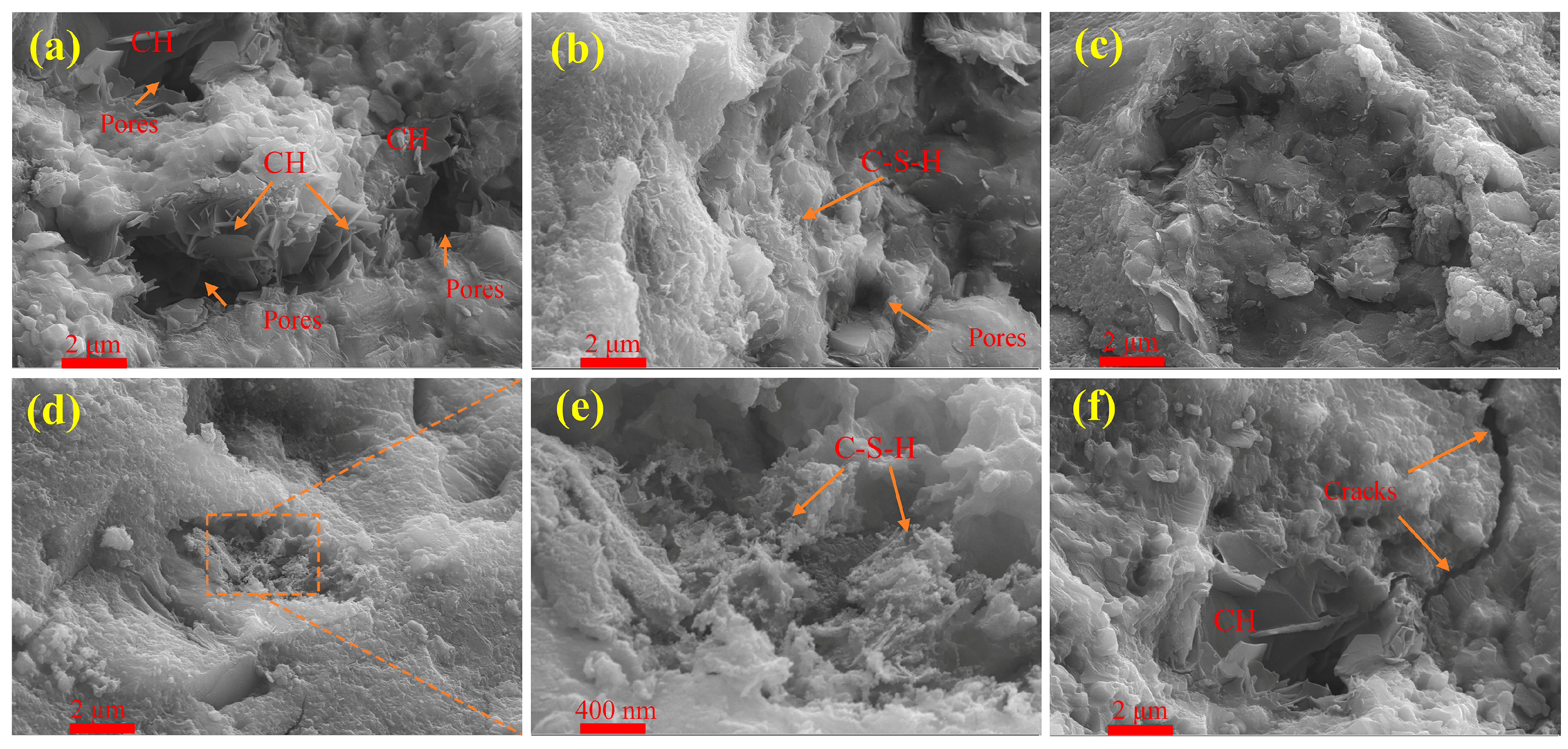
- Consuming CH produces C-S-H gel, creating a dense and uniform microstructure.
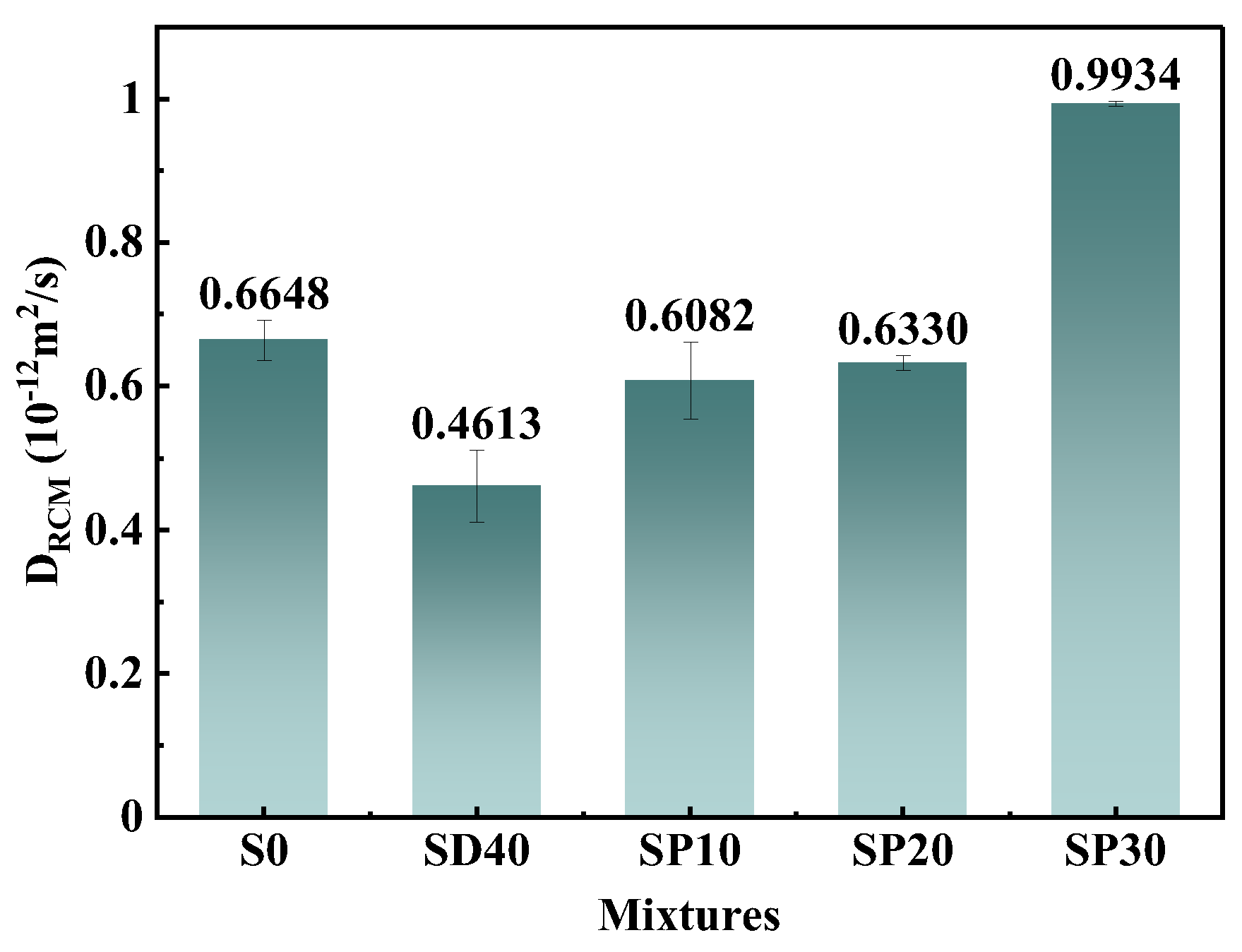
- Superior chloride penetration resistance was achieved with PS content below 20%.
Abstract
1. Introduction
2. Materials and Methods
2.1. Test Methods
2.1.1. Wet Packing Density
2.1.2. Fluidity
2.1.3. Setting Time
2.1.4. Compressive Strength
2.1.5. XRD
2.1.6. SEM
2.1.7. Rapid Chloride Ion Migration Test (RCMT)
2.1.8. Capillary Water Absorption
2.1.9. Ecological Evaluation
2.2. Materials
2.3. Preparation of UHPC
3. Results and Discussion
3.1. The Effect of SCGS on the Performance of UHPC
3.1.1. Wet Packing Density
3.1.2. Fluidity
3.1.3. Compressive Strength
3.1.4. SCGS Optimal Dosage Determination
3.2. The Effect of PS on the Performance of UHPC
3.2.1. Wet Packing Density
3.2.2. Fluidity
3.2.3. Setting Time
3.2.4. Compressive Strength
3.2.5. XRD
3.2.6. SEM
3.2.7. RCMT
3.2.8. Capillary Water Absorption
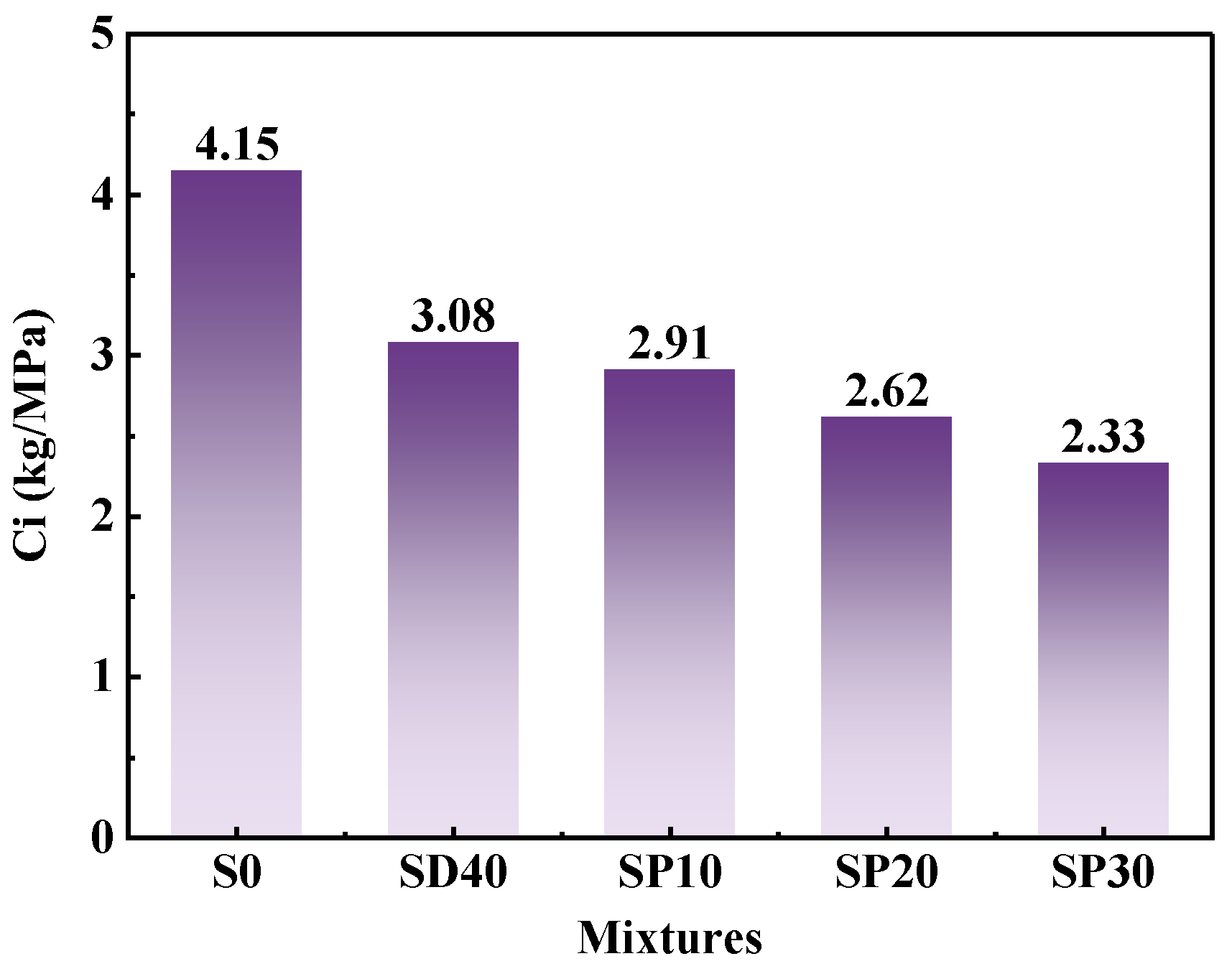
3.2.9. Ecological Evaluation
4. Conclusions
- (1)
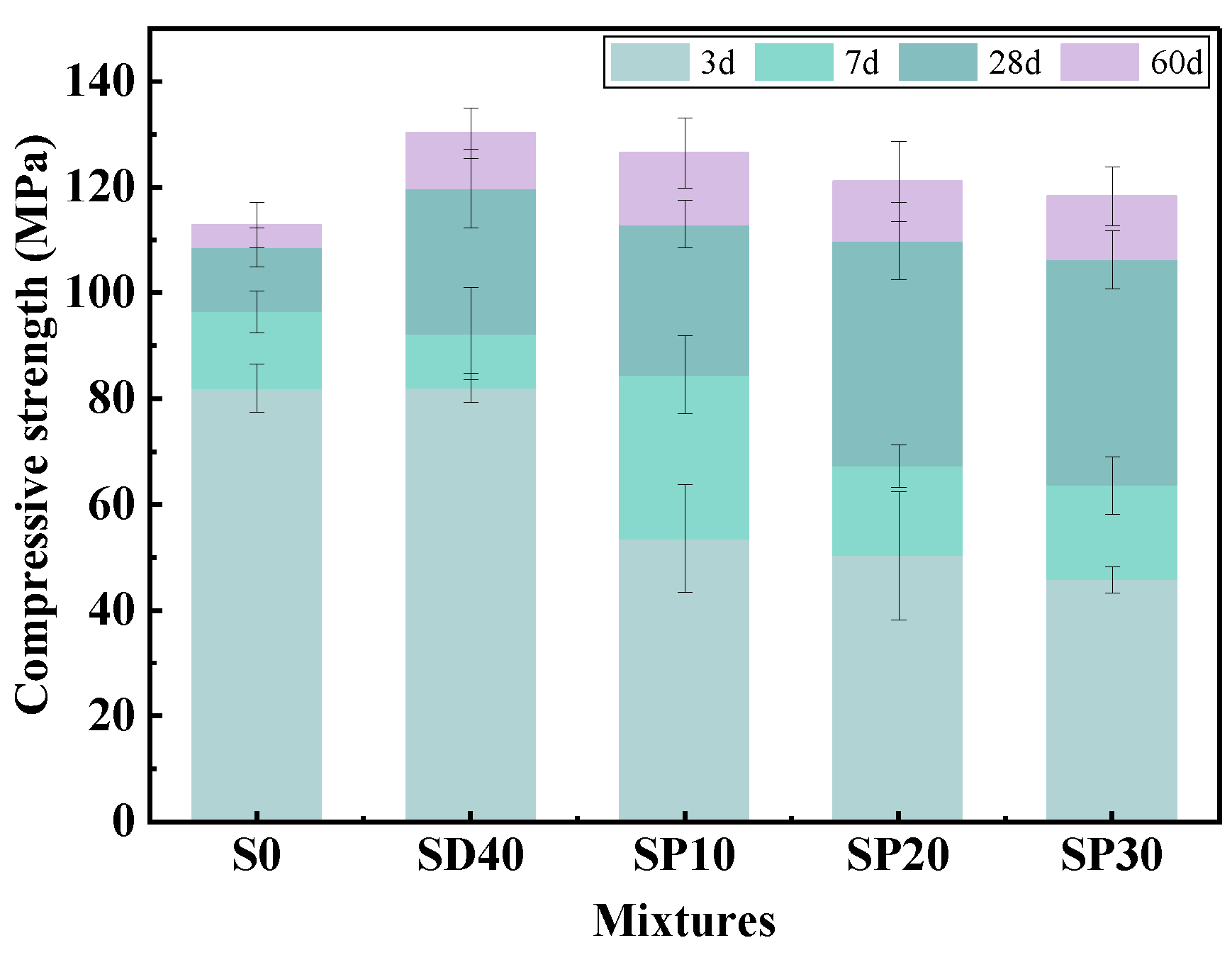
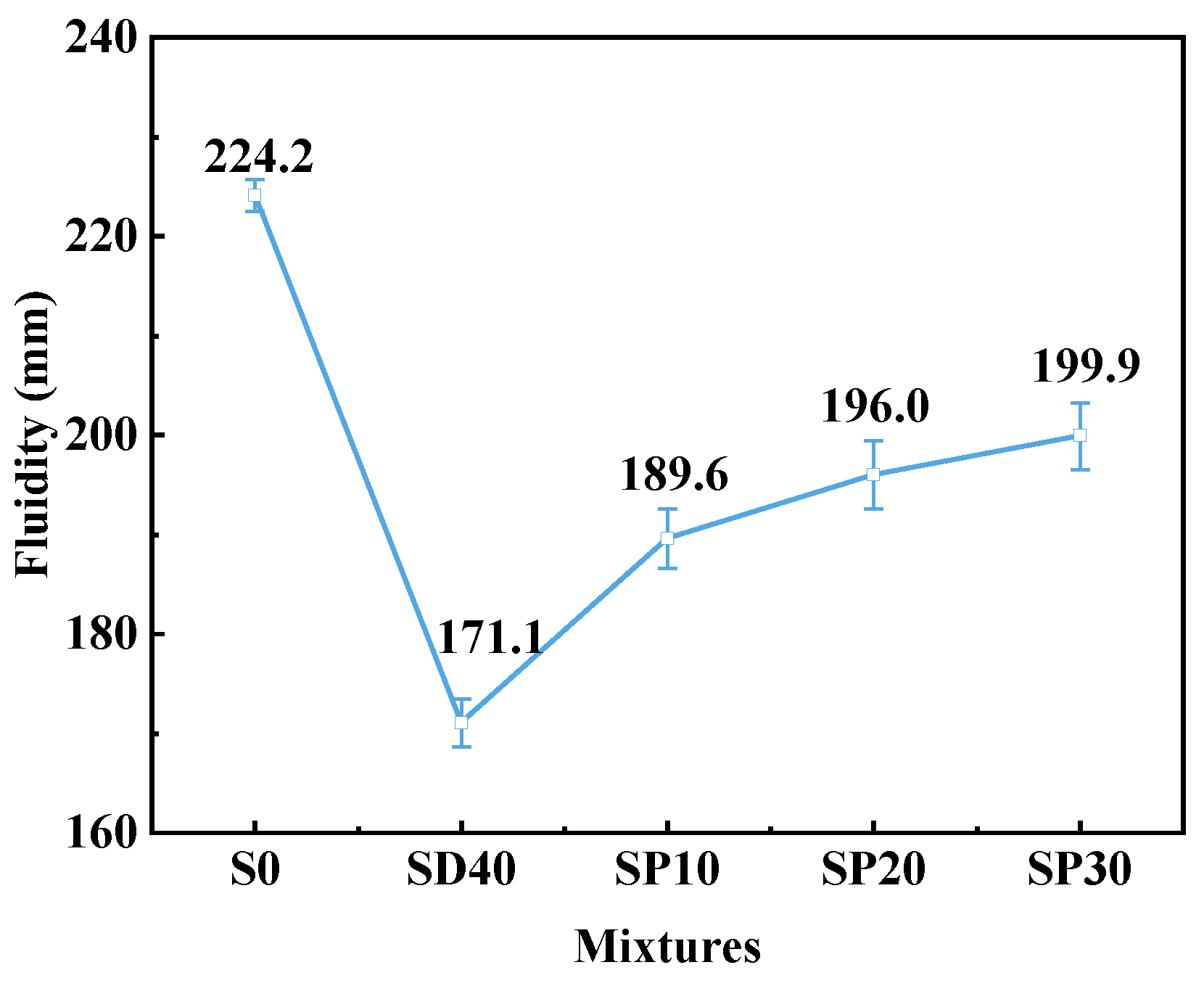
- The pozzolanic activity of PS is weaker than that of SCG, but partial substitution of PC with PS can significantly improve the fluidity of the system and ensure uniform distribution of various phases. The fluidity of UHPC gradually increases with the increase in PS content, with a maximum improvement of up to 16.83% at a replacement rate of 30%. The pozzolanic activity of PS and SCG is utilized, leading to the generation of more C-S-H gel, which fills the pores and enhances the compactness of eco-UHPC. This results in a synergistic advantage of the pozzolanic effect and fluidity regulation effect of SCG and PS.
- (2)
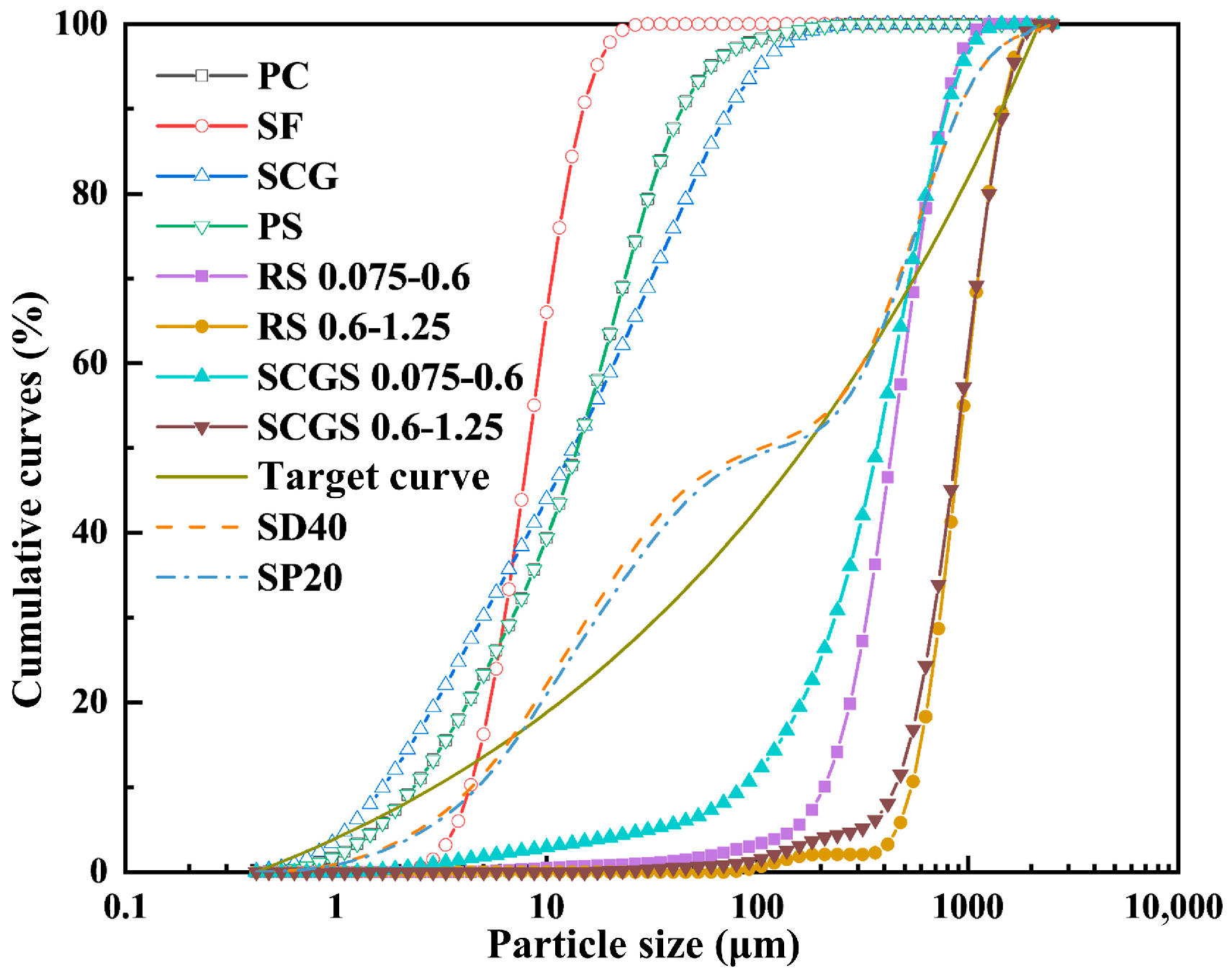
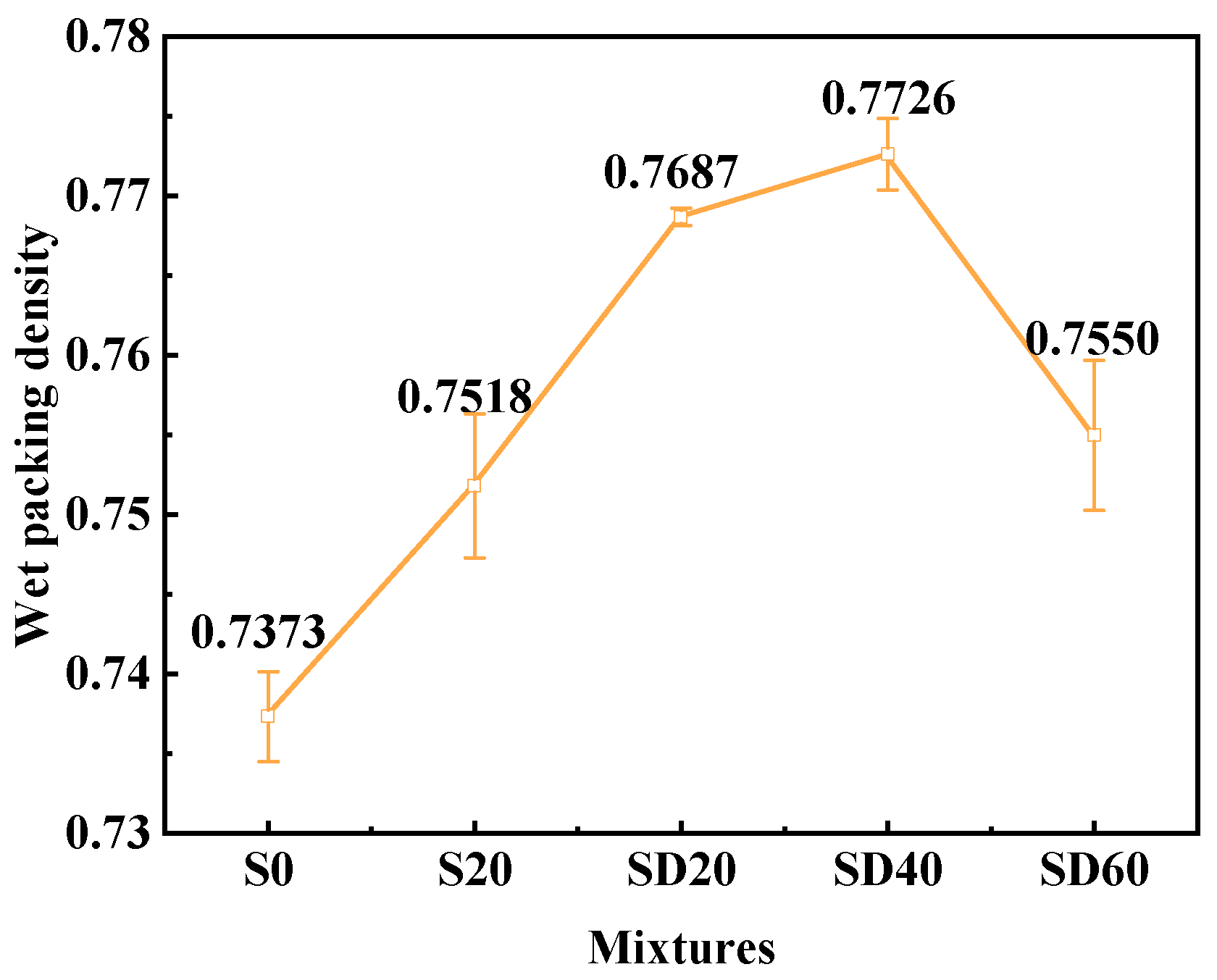
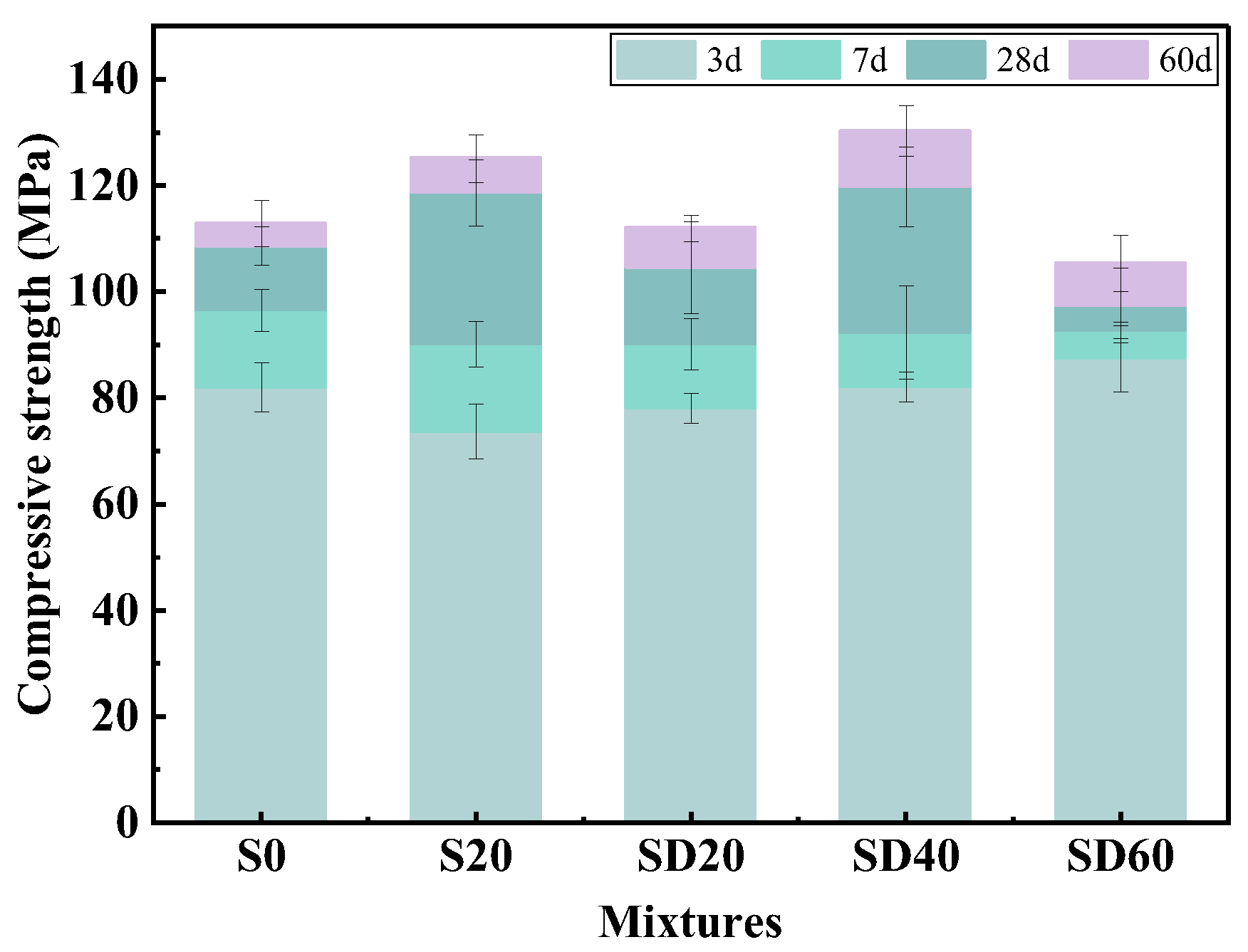
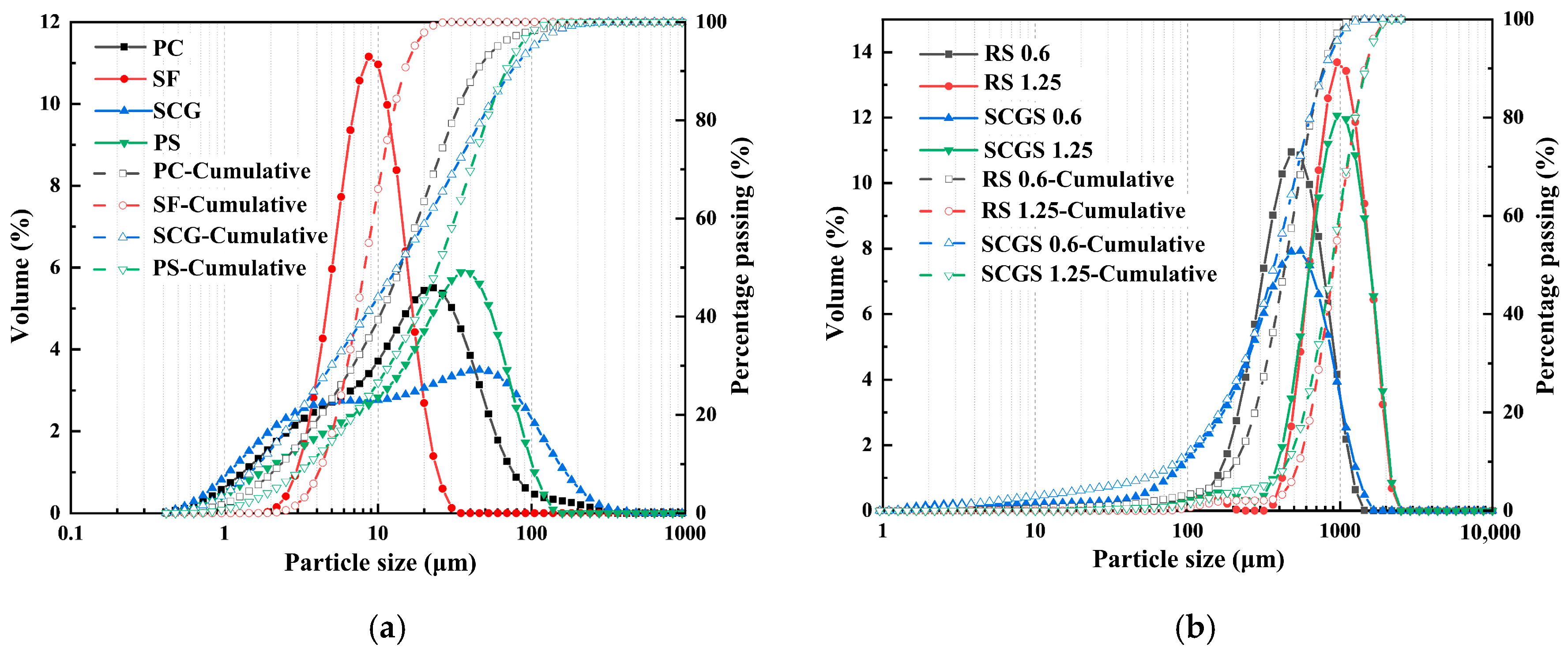
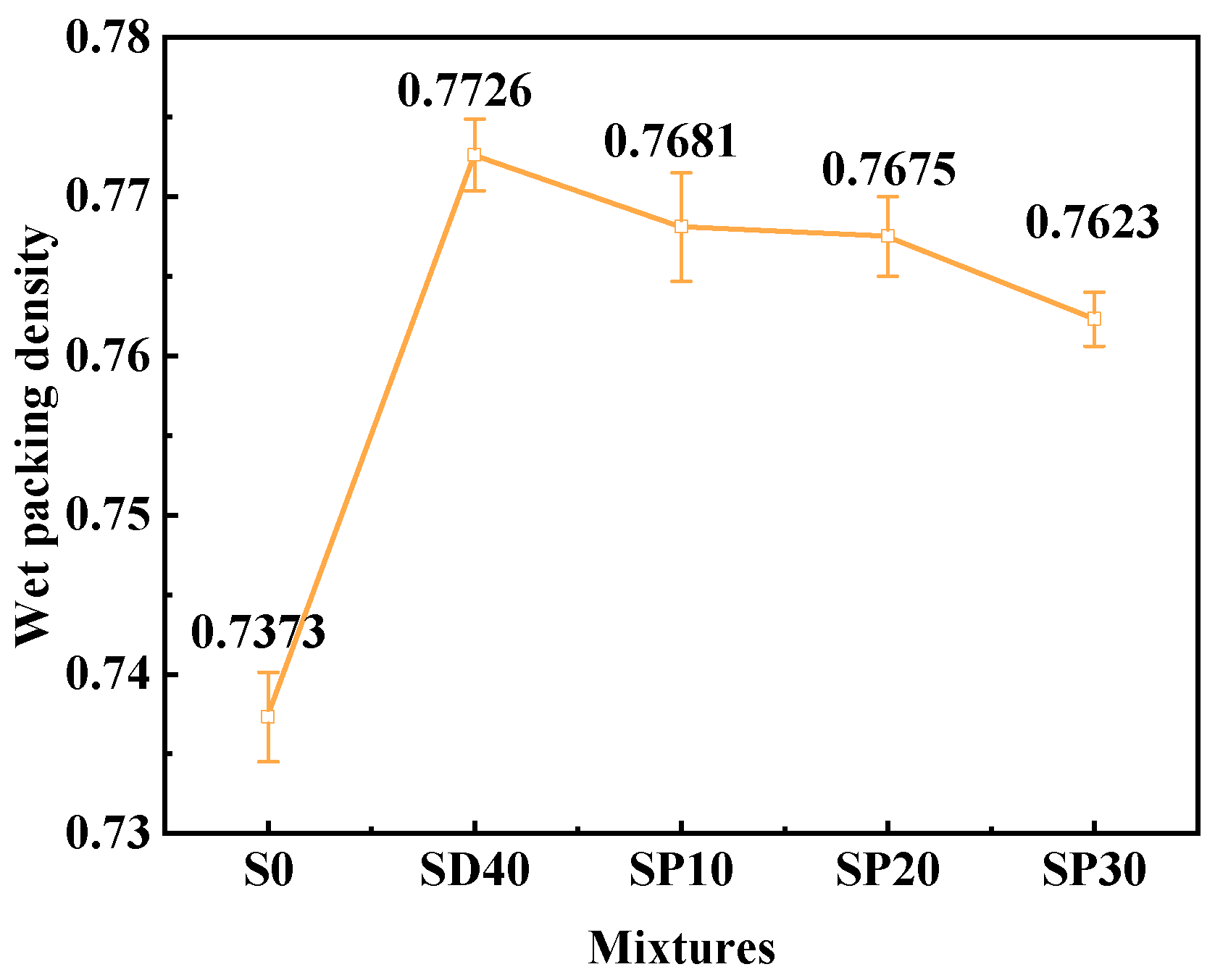
- The inert particles of SCGS and PS effectively improve the aggregate gradation of UHPC, which benefits the formation of a dense packing system and improves the wet packing density of UHPC. When the content of SCGS reaches 40%, the wet packing density of UHPC achieves its maximum value (0.7726). The excellent fluidity enables the inert particles to disperse evenly, forming good heterogeneous crystal nucleus points. This facilitates rapid filling of interstitial voids between inert particles by C-S-H gels, resulting in a dense microstructure.
- (3)
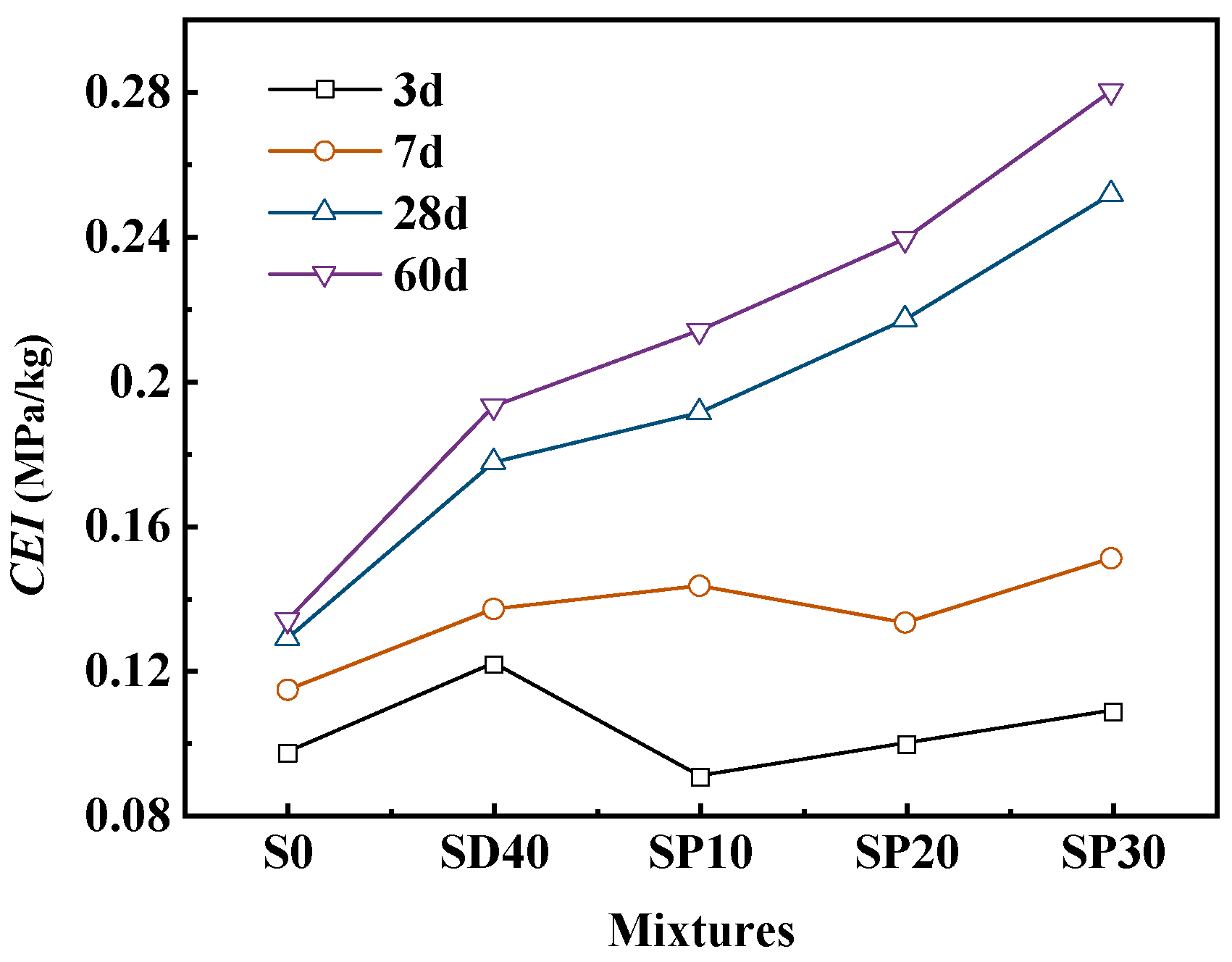
- The SiO2 reactivity of both SCG and PS is found to be relatively low. However, the strongly alkaline environment provided by CH can penetrate the surface inert layer, thereby enabling continuous SiO2 hydration. The pozzolanic reaction in SCG and PS is characterized by its slowness and persistence, with a marked acceleration occurring during the mid-to-late stages (7–60 days) to continuously generate C-S-H gel. This approach successfully compensates for the cement’s natural reduction in strength development during the final hydration phase. As a result, compressive strengths exceeding those of UHPC without solid waste at 60 days are achieved.
- (4)
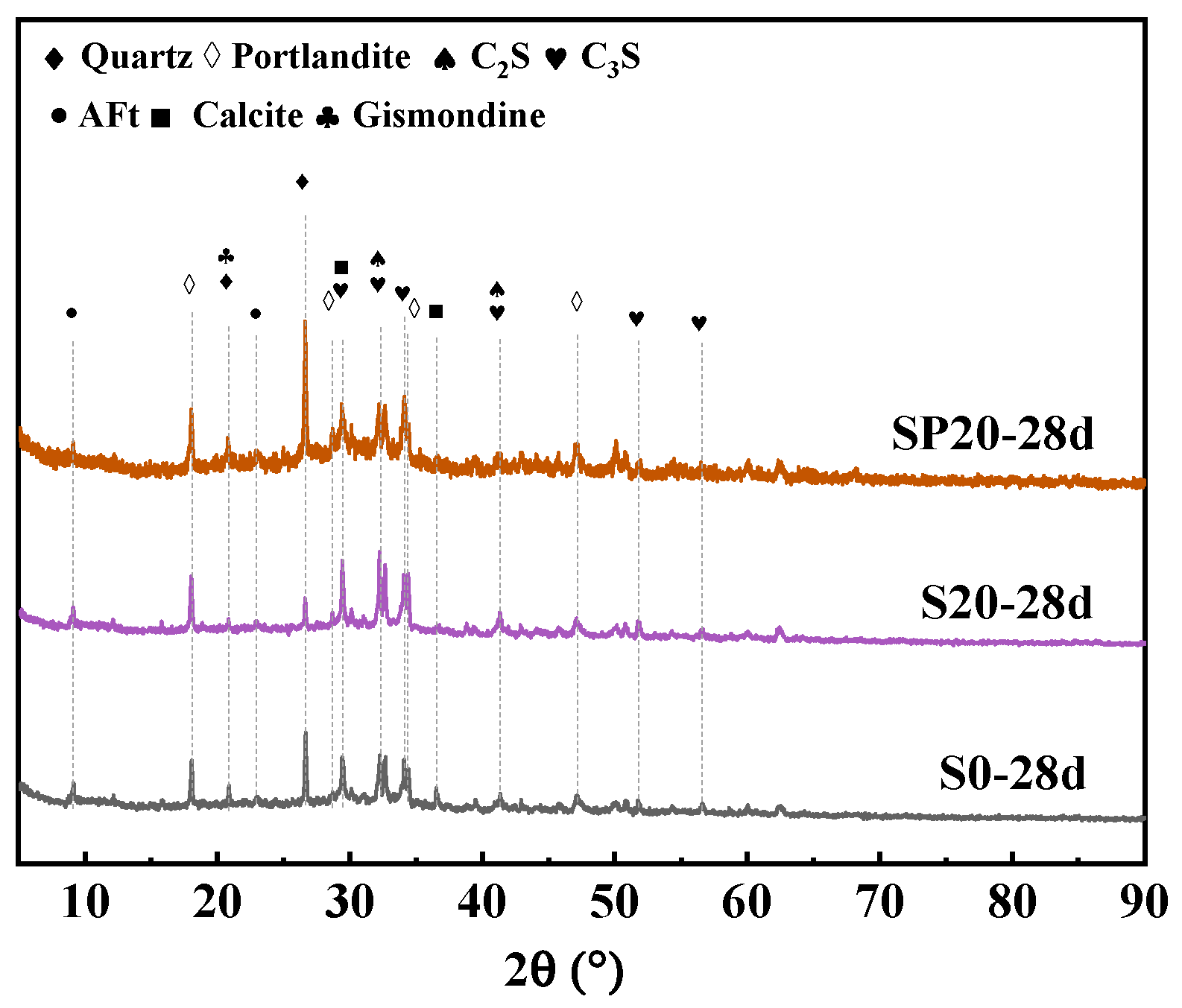
- The UHPC without solid waste generates more CH, which is the weak link of the system due to its low strength and weak inter-crystal bonding. The pozzolanic reaction of SCG and PS consumes a large amount of CH, which transforms the low-strength CH into high-strength C-S-H gel. In particular, a certain number of capillary pores and interfacial transition zone pores are formed at the early stage of cement hydration, and the C-S-H gel generated by the pozzolanic reaction can aim to fill these pores, making the microstructure of UHPC dense and uniform, which is an important contributor to why the compressive strength of the system is significantly higher than that of UHPC without solid waste.
- (5)
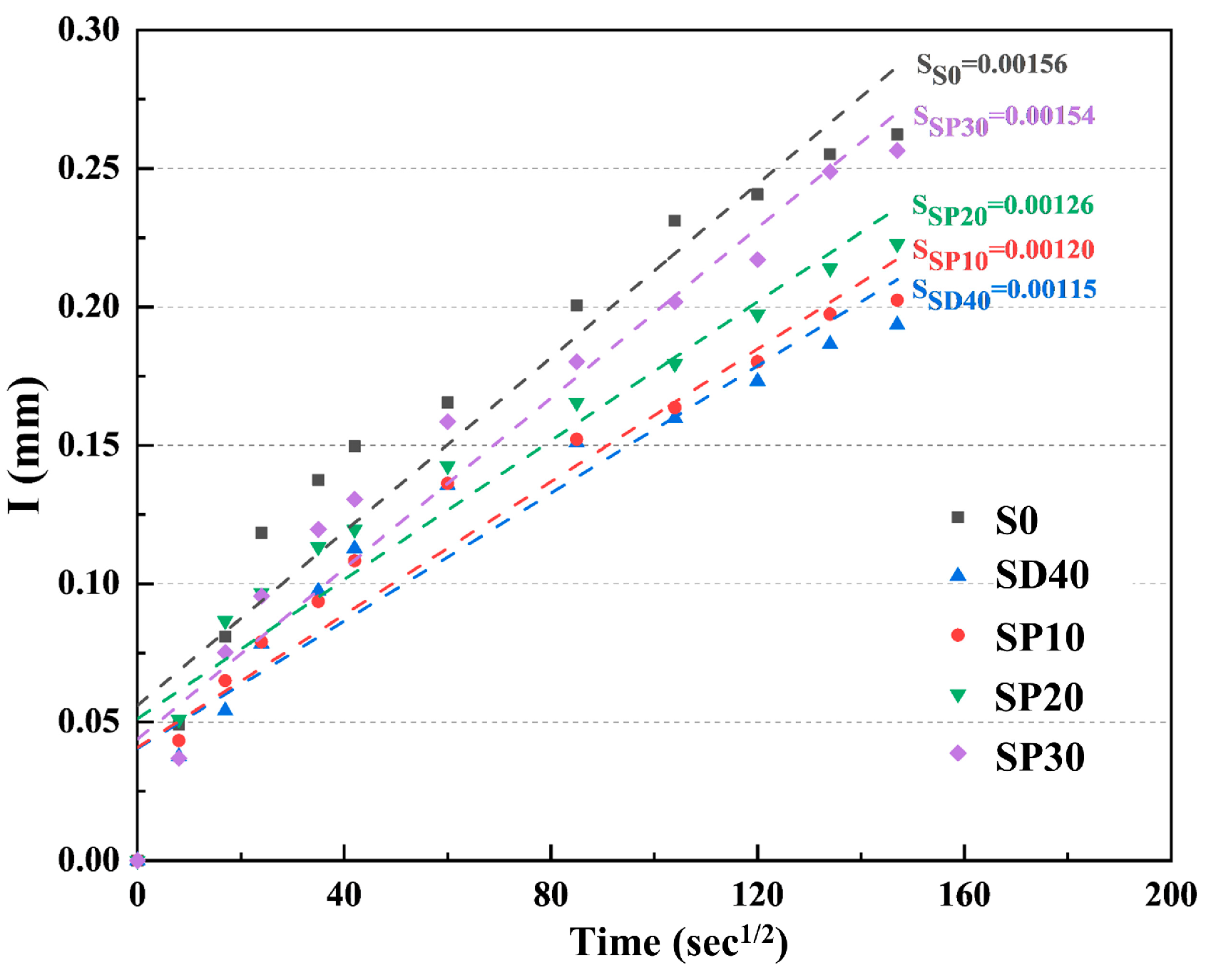
- The weaker activity of PS leads to a slight decrease in the Cl- permeability resistance of UHPC. However, SCG exhibits higher pozzolanic reaction activity, and PS exerts an efficient modification effect on fluidity, particularly with regard to the efficient nucleation effect of uniformly dispersed inert particles of PS and SCGS. In this case, C-S-H gels grow interspersed with inert particles to form a reticulated intertwined dense structure, which effectively divides the originally connected pore network into disconnected isolated small pores. The connected pores that make Cl- diffuse or permeate rapidly are completely solved, so the system shows very high chloride ion penetration resistance, and especially when the PS doping is not more than 20%, the chloride ion penetration resistance of the eco-UHPC is better than that of the group without solid waste.
Author Contributions
Funding
Data Availability Statement
Conflicts of Interest
References
- Liu, Y.; Wei, Y. Effect of calcined bauxite powder or aggregate on the shrinkage properties of UHPC. Cem. Concr. Compos. 2021, 118, 103967. [Google Scholar] [CrossRef]
- Lv, Y.; Qin, Y.; Wang, J.; Li, G.; Zhang, P.; Liao, D.; Xi, Z.; Yang, L. Effect of incorporating hematite on the properties of Ultra-High Performance Concrete including nuclear radiation resistance. Constr. Build. Mater. 2022, 327, 126950. [Google Scholar] [CrossRef]
- Shi, J.; Pan, W.; Kang, J.; Yu, Z.; Sun, G.; Li, J.; Zheng, K.; Shen, J. Properties of Ultra-High Performance Concrete incorporating iron tailings powder and iron tailings sand. J. Build. Eng. 2024, 83, 108442. [Google Scholar] [CrossRef]
- Zhang, Y.; Liu, W.; Wang, Q.; Zhang, L. Coupling mechanisms and synergistic effects in Portland Cement-ceramic powder-ground granulated blast furnace slag-CFB desulfurization ash composite binder. Waste Biomass Valorization 2025, 17, 2569–2580. [Google Scholar] [CrossRef]
- Sun, C.; Yan, C.; Li, J.; Ma, J.; Li, Y. Ultra-high-performance concrete from 100% solid waste: Mechanical strength, microstructure and sustainability analysis. Case Stud. Constr. Mater. 2025, 23, e05482. [Google Scholar] [CrossRef]
- Zhao, X.; Nematollahi, B.; Chougan, M.; Xiao, J. Approaches to reduce cost and environmental impacts of UHPC production: A review. Case Stud. Constr. Mater. 2025, 22, e04644. [Google Scholar] [CrossRef]
- Song, J.; Banthia, N.; Yoo, D.-Y. Effect of supplementary cementitious materials on durability of Ultra-High-Performance Concrete: A review. Cem. Concr. Compos. 2025, 163, 106198. [Google Scholar] [CrossRef]
- Bai, Q.; Xin, Z.; Ma, H.-Y.; Sun, W.-H.; Liu, H.-B.; Jiang, C.-J. Graphite tailings powder driving the low-carbon transformation of Ultra-High Performance Concrete (UHPC): Innovative pathways for solid waste resource utilization and synergistic mechanisms for performance enhancement. Constr. Build. Mater. 2025, 486, 141932. [Google Scholar] [CrossRef]
- Liu, H.-B.; Xin, Z.; Ma, H.-Y.; Guo, H.-Y.; Bai, Q.; Jiang, C.-J. Utilization of finely ground graphite tailings as a sustainable substitute for quartz powder in ultra-high performance concrete: A comprehensive study on performance, microstructure, and environmental impact. J. Build. Eng. 2026, 124, 116064. [Google Scholar] [CrossRef]
- Wu, H.; Liu, C.; Zhao, Y.; Chen, G.; Gao, J. Elucidating the role of recycled concrete powder in low-carbon Ultra-High Performance Concrete (UHPC): Multi-performance evaluation. Constr. Build. Mater. 2024, 441, 137520. [Google Scholar] [CrossRef]
- Sun, C.; Chen, L.; Xiao, J.; Singh, A.; Zeng, J. Compound utilization of construction and industrial waste as cementitious recycled powder in mortar. Resour. Conserv. Recycl. 2021, 170, 105561. [Google Scholar] [CrossRef]
- Yonis, A.; Oinam, Y.; Pyo, S. Hydration, fresh and mechanical properties of clinker-free ultra-high performance concrete (UHPC) incorporating thermo-mechanically activated waste concrete powder. J. Build. Eng. 2026, 120, 115550. [Google Scholar] [CrossRef]
- Yang, R.; Yu, R.; Shui, Z.; Gao, X.; Xiao, X.; Zhang, X.; Wang, Y.; He, Y. Low carbon design of an Ultra-High Performance Concrete (UHPC) incorporating phosphorous slag. J. Clean. Prod. 2019, 240, 118157. [Google Scholar] [CrossRef]
- Yalçınkaya, Ç.; Yazıcı, H. Effects of ambient temperature and relative humidity on early-age shrinkage of UHPC with high-volume mineral admixtures. Constr. Build. Mater. 2017, 144, 252–259. [Google Scholar] [CrossRef]
- Sun, Z.; Wang, Y.; Ji, T.; Zhang, Y.; Fang, Y.; Li, L.; Liu, J.; Hu, Z. Gold tailings sand to prepare eco-friendly ultra-high performance concrete matrix: A synergistic approach to fine aggregate-cementitious material packing density for performance enhancement. Case Stud. Constr. Mater. 2026, 24, e05942. [Google Scholar] [CrossRef]
- Wang, X.; Wu, D.; Geng, Q.; Hou, D.; Wang, M.; Li, L.; Wang, P.; Chen, D.; Sun, Z. Characterization of sustainable Ultra-High Performance Concrete (UHPC) including expanded perlite. Constr. Build. Mater. 2021, 303, 124245. [Google Scholar] [CrossRef]
- Liu, S.; Zheng, W.; Wu, F. Preparation of ultra-high performance concrete containing waste foundry sand and its application in structures. Structures 2023, 58, 105472. [Google Scholar] [CrossRef]
- Nguyen, N.-V.; Ngo, T.T.; Thai, D.-K.; Kim, S.-E. Enhancing fire resistance and mitigating spalling in non-fibrous UHPC using calcined bauxite aggregate. J. Build. Eng. 2026, 118, 114897. [Google Scholar] [CrossRef]
- Zhang, H.; Ji, T.; Zeng, X.; Yang, Z.; Lin, X.; Liang, Y. Mechanical behavior of Ultra-High Performance Concrete (UHPC) using recycled fine aggregate cured under different conditions and the mechanism based on integrated microstructural parameters. Constr. Build. Mater. 2018, 192, 489–507. [Google Scholar] [CrossRef]
- Chen, K.; Cheng, S.; Wu, Q.; Chen, X.; Zhao, C.; Li, S.; Lu, J. Utilization of recycled fine aggregate in Ultra-High Performance Concrete: Mechanical strength, microstructure and environment impacts. Constr. Build. Mater. 2024, 439, 137364. [Google Scholar] [CrossRef]
- Zhou, Y.; Guo, D.; Xing, F.; Guo, M. Multiscale mechanical characteristics of Ultra-High Performance Concrete incorporating different particle size ranges of recycled fine aggregate. Constr. Build. Mater. 2021, 307, 125131. [Google Scholar] [CrossRef]
- Guo, Y.; Gao, D.; Qin, D.; Pi, H. Properties of UHPC with totally recycled fine aggregates and its mixture design method. J. Build. Eng. 2025, 100, 111769. [Google Scholar] [CrossRef]
- Chen, G.; Huang, Y.; Yang, R.; Yu, R.; Xiao, R.; Wang, Z.; Ke, X.; Xie, G.; Cheng, J.; Bao, M. Comparative study on mechanical properties and microstructure development of Ultra-High Performance Concrete incorporating phosphorous slag under different curing regimes. Constr. Build. Mater. 2023, 392, 131963. [Google Scholar] [CrossRef]
- Xu, P.; Liu, G.; Wang, Y.; Zhu, Y.; Wan, X.; Xu, H. Properties of UHPC products prepared by sawing mud and gold mine tailings via static pressure forming. Case Stud. Constr. Mater. 2025, 23, e05257. [Google Scholar] [CrossRef]
- Du, J.; Zou, K.; Chen, R.; Zhou, J.; Wang, X.; Zou, Y.; Zhang, Z.; Yang, J. A low-clinker design of ultra-high-performance concrete (UHPC) with high-volume slag activated by flue gas desulfurization (FGD) gypsum. Constr. Build. Mater. 2026, 506, 144990. [Google Scholar] [CrossRef]
- Zhu, M.; Xue, S.; Zhu, J.; Ahmad, M.R.; Dai, J.-G. Development and characterization of underwater-cast ultra-high-performance geopolymer concrete. Constr. Build. Mater. 2026, 506, 144907. [Google Scholar] [CrossRef]
- Li, Z.; Gu, X.; Liu, B.; Liu, J.; Zhang, Y.; Yang, B.; Cheng, B.; Kong, Y.; Nehdi, M.L.; Zhang, L. A novel approach for revealing the strength evolution mechanism of limestone-calcined clay cement with self-ignition coal gangue and shell powder. Constr. Build. Mater. 2024, 444, 137854. [Google Scholar] [CrossRef]
- Xu, Y.; Wu, Q.; Zhang, Y.; Han, D.; Nehdi, M.L.; Zhang, L. Preparation of Ultra-High Performance Concrete using spontaneous combustion gangue as a substitute for cement. Mater. Today Commun. 2024, 41, 110856. [Google Scholar] [CrossRef]
- Kwan, A.K.H.; Ng, P.L.; Huen, K.Y. Effects of fines content on packing density of fine aggregate in concrete. Constr. Build. Mater. 2014, 61, 270–277. [Google Scholar] [CrossRef]
- GB/T 2419-2005; Test Method for Fluidity of Cement Mortar. National Standard of the People’s Republic of China: Beijing, China, 2005.
- GB/T 1346-2011; Test Methods for Water Requirement of Normal Consistency, Setting Time and Soundness of the Portland Cement. National Standard of the People’s Republic of China: Beijing, China, 2011.
- EN 196-1; Methods of Testing Cement: Determination of Strength. European Committee for Standardization: Brussels, Belgium, 2005.
- NT Build 492; Concrete, Mortar and Cement-Based Repair Materials: Chloride Migration Coefficient from Non-Steady-State Migration Experiments. Nordtest: Espoo, Finland, 1999.
- ASTM C1585-13; Standard Test Method for Measurement of Rate of Absorption of Water by Hydraulic Cement Concrete. ASTM International: West Conshohocken, PA, USA, 2013.
- ISO 14040; Environmental Management-Life Cycle Assessment-Principles and Framework. International Organization for Standardization: Geneva, Switzerland, 1997.
- ISO 14044; Environmental Management-Life Cycle Assessment-Requirements and Guidelines. International Organization for Standardization: Geneva, Switzerland, 2006.
- Wang, X.; Yu, R.; Shui, Z.; Song, Q.; Liu, Z.; Bao, M.; Liu, Z.; Wu, S. Optimized treatment of recycled construction and demolition waste in developing sustainable Ultra-High Performance Concrete. J. Clean. Prod. 2019, 221, 805–816. [Google Scholar] [CrossRef]
- Müller, H.S.; Haist, M.; Vogel, M. Assessment of the sustainability potential of concrete and concrete structures considering their environmental impact, performance and lifetime. Constr. Build. Mater. 2014, 67, 321–337. [Google Scholar] [CrossRef]
- Damineli, B.L.; Kemeid, F.M.; Aguiar, P.S.; John, V.M. Measuring the eco-efficiency of cement use. Cem. Concr. Compos. 2010, 32, 555–562. [Google Scholar] [CrossRef]
- Wang, L.; Guo, F.; Lin, Y.; Yang, H.; Tang, S.W. Comparison between the effects of phosphorous slag and fly ash on the C-S-H structure, long-term hydration heat and volume deformation of cement-based materials. Constr. Build. Mater. 2020, 250, 118807. [Google Scholar] [CrossRef]
- Zhang, Y.; Wu, Q.; Yang, D.; Wang, Q.; Qu, Z.; Zhong, Y. Study on the properties of alkali-activated phosphorus slag mortar mixed with granulated blast furnace slag/fly ash. J. Aust. Ceram. Soc. 2024, 60, 1281–1291. [Google Scholar] [CrossRef]
- Zhang, Y.; Yang, D.; Wang, Q. Performance study of alkali-activated phosphate slag-granulated blast furnace slag composites: Effect of the granulated blast furnace slag content. Arch. Civ. Mech. Eng. 2023, 23, 181. [Google Scholar] [CrossRef]
- Yu, R.; Spiesz, P.; Brouwers, H.J.H. Mix design and properties assessment of Ultra-High Performance Fibre Reinforced Concrete (UHPFRC). Cem. Concr. Res. 2014, 56, 29–39. [Google Scholar] [CrossRef]
- Yu, R.; Spiesz, P.; Brouwers, H.J.H. Development of an eco-friendly Ultra-High Performance Concrete (UHPC) with efficient cement and mineral admixtures uses. Cem. Concr. Compos. 2015, 55, 383–394. [Google Scholar] [CrossRef]
- Wang, D.; Shi, C.; Farzadnia, N.; Shi, Z.; Jia, H. A review on effects of limestone powder on the properties of concrete. Constr. Build. Mater. 2018, 192, 153–166. [Google Scholar] [CrossRef]
- Fan, D.; Yu, R.; Shui, Z.; Wu, C.; Wang, J.; Su, Q. A novel approach for developing a green Ultra-High Performance Concrete (UHPC) with advanced particles packing meso-structure. Constr. Build. Mater. 2020, 265, 120339. [Google Scholar] [CrossRef]
- Wang, X.; Yu, R.; Shui, Z.; Song, Q.; Zhang, Z. Mix design and characteristics evaluation of an eco-friendly Ultra-High Performance Concrete incorporating recycled coral based materials. J. Clean. Prod. 2017, 165, 70–80. [Google Scholar] [CrossRef]
- Fan, D.; Zhang, C.; Lu, J.; Liu, K.; Yin, T.; Dong, E.; Yu, R. Recycling of steel slag powder in green Ultra-High Strength Concrete (UHSC) mortar at various curing conditions. J. Build. Eng. 2023, 70, 106361. [Google Scholar] [CrossRef]
- Zhu, P.; Du, S.; Heng, P.; Zhang, L.; Zhang, S.; Wu, Y. Investigation on Mix Proportions of Ultra-High Performance Concrete with Recycled Powder and Recycled Sand. Buildings 2025, 15, 1048. [Google Scholar] [CrossRef]
- Lee, N.K.; Lee, H.K. Setting and mechanical properties of alkali-activated fly ash/slag concrete manufactured at room temperature. Constr. Build. Mater. 2013, 47, 1201–1209. [Google Scholar] [CrossRef]
- Su, Y.; Zhao, H.; He, X.; Zheng, Z.; Ma, Q.; Ding, J.; Bao, M. The effect of wet-grinding phosphorus slag on the hydration kinetics of Portland cement. Constr. Build. Mater. 2023, 364, 129942. [Google Scholar] [CrossRef]
- Huang, Y.; Chen, G.; Yang, R.; Yu, R.; Xiao, R.; Wang, Z.; Xie, G.; Cheng, J. Hydration kinetics and microstructure development of Ultra-High Performance Concrete (UHPC) by high volume of phosphorus slag powder. Cem. Concr. Compos. 2023, 138, 104978. [Google Scholar] [CrossRef]
- GB/T 31387-2015; Reactive Powder Concrete. National Standard of the People’s Republic of China: Beijing, China, 2015.
- Fan, D.; Yu, R.; Shui, Z.; Liu, K.; Feng, Y.; Wang, S.; Li, K.; Tan, J.; He, Y. A new development of eco-friendly Ultra-High Performance Concrete (UHPC): Towards efficient steel slag application and multi-objective optimization. Constr. Build. Mater. 2021, 306, 124913. [Google Scholar] [CrossRef]
- Fan, D.; Yu, R.; Fu, S.; Yue, L.; Wu, C.; Shui, Z.; Liu, K.; Song, Q.; Sun, M.; Jiang, C. Precise design and characteristics prediction of Ultra-High Performance Concrete (UHPC) based on artificial intelligence techniques. Cem. Concr. Compos. 2021, 122, 104171. [Google Scholar] [CrossRef]
- Zhang, Z.; Wang, Q.; Yang, J. Hydration mechanisms of composite binders containing phosphorus slag at different temperatures. Constr. Build. Mater. 2017, 147, 720–732. [Google Scholar] [CrossRef]
- Sun, C.; Chen, L.; Xiao, J.; Liu, Q.; Zuo, J. Low-carbon and fundamental properties of eco-efficient mortar with recycled powders. Materials 2021, 14, 7503. [Google Scholar] [CrossRef] [PubMed]
- Ahmed, T.; Elchalakani, M.; Karrech, A.; Mohamed Ali, M.S.; Guo, L. Development of eco-UHPC with very-low-C3A cement and ground granulated blast-furnace slag. Constr. Build. Mater. 2021, 284, 122787. [Google Scholar] [CrossRef]
- Duan, X.; Xia, J.; Yang, J. Influence of coal gangue fine aggregate on microstructure of cement mortar and its action mechanism. J. Build. Mater. 2014, 17, 700–705. [Google Scholar] [CrossRef]







| SiO2 | Al2O3 | CaO | Fe2O3 | MgO | SO3 | K2O | Na2O | TiO2 | P2O5 | LOI | D10 (μm) | D50 (μm) | D90 (μm) |
|---|---|---|---|---|---|---|---|---|---|---|---|---|---|
| 32.31 | 2.54 | 56.39 | 0.46 | 2.42 | 0.94 | 0.66 | 0.28 | 0.19 | 2.29 | – | 3.51 | 24.38 | 67.71 |
| Mixtures | PC | SCG | PS | SF | RS0–0.6 | RS0.6–1.25 | SCGS0–0.6 | SCGS0.6–1.25 | Water | SP |
|---|---|---|---|---|---|---|---|---|---|---|
| S0 | 844 | 0 | 0 | 169 | 709 | 304 | 0 | 0 | 182 | 20 |
| S20 | 675 | 169 | 0 | 169 | 709 | 304 | 0 | 0 | 182 | 20 |
| SD20 | 675 | 169 | 0 | 169 | 567 | 243 | 142 | 61 | 182 | 20 |
| SD40 | 675 | 169 | 0 | 169 | 425 | 182 | 284 | 122 | 182 | 20 |
| SD60 | 675 | 169 | 0 | 169 | 284 | 122 | 425 | 182 | 182 | 20 |
| SP10 | 591 | 169 | 84 | 169 | 425 | 182 | 284 | 122 | 182 | 20 |
| SP20 | 506 | 169 | 169 | 169 | 425 | 182 | 284 | 122 | 182 | 20 |
| SP30 | 422 | 169 | 253 | 169 | 425 | 182 | 284 | 122 | 182 | 20 |
Disclaimer/Publisher’s Note: The statements, opinions and data contained in all publications are solely those of the individual author(s) and contributor(s) and not of MDPI and/or the editor(s). MDPI and/or the editor(s) disclaim responsibility for any injury to people or property resulting from any ideas, methods, instructions or products referred to in the content. |
© 2026 by the authors. Licensee MDPI, Basel, Switzerland. This article is an open access article distributed under the terms and conditions of the Creative Commons Attribution (CC BY) license.
Share and Cite
Zhang, Y.; Ye, Y.; Tan, Y.; Ren, Q.; Li, W.; Yan, T.; Wang, Q.; Wu, Q. Properties and Synergistic Mechanism of Ultra-High-Performance Concrete Incorporating Spontaneous Combustion Gangue (Sand) and Phosphorus Slag. Materials 2026, 19, 2079. https://doi.org/10.3390/ma19102079
Zhang Y, Ye Y, Tan Y, Ren Q, Li W, Yan T, Wang Q, Wu Q. Properties and Synergistic Mechanism of Ultra-High-Performance Concrete Incorporating Spontaneous Combustion Gangue (Sand) and Phosphorus Slag. Materials. 2026; 19(10):2079. https://doi.org/10.3390/ma19102079
Chicago/Turabian StyleZhang, Yannian, Youlin Ye, Yingliang Tan, Qiyue Ren, Wande Li, Tingyi Yan, Qingjie Wang, and Qi Wu. 2026. "Properties and Synergistic Mechanism of Ultra-High-Performance Concrete Incorporating Spontaneous Combustion Gangue (Sand) and Phosphorus Slag" Materials 19, no. 10: 2079. https://doi.org/10.3390/ma19102079
APA StyleZhang, Y., Ye, Y., Tan, Y., Ren, Q., Li, W., Yan, T., Wang, Q., & Wu, Q. (2026). Properties and Synergistic Mechanism of Ultra-High-Performance Concrete Incorporating Spontaneous Combustion Gangue (Sand) and Phosphorus Slag. Materials, 19(10), 2079. https://doi.org/10.3390/ma19102079