Synergistic Effects of the Si/Al Stoichiometry and Catalyst Content on the Growth Mechanism of Mullite Whiskers

 ,
,
Highlights
- Reveals the decisive influence of the Al2O3/SiO2 molar ratio and its interaction with HF on whisker morphology.
- Identifies two distinct catalytic reaction pathways for mullite whisker formation under fluorine catalysis.
- Elucidates the correlation mechanism between the catalytic pathway and phase transformation temperature in the Al–Si–F system.
- Deepens the understanding of the formation mechanism of mullite whiskers prepared via fluorine catalysis.
- Provides a theoretical basis for tailoring whisker morphology and controlling the corundum phase transformation.
Abstract
1. Introduction
2. Experimental Procedures
2.1. Sample Preparation
2.2. Microstructure Characterizations
3. Results and Discussion
3.1. TEM Analysis of Whiskers
3.2. Effects of the Si:Al Ratio on the Morphology of Mullite Whiskers
3.3. Synergistic Effects of the Si:Al Ratio and Catalyst Content
4. Formation Mechanism of Mullite Whiskers
4.1. Analysis of the Phase Transformation Mechanism in the Al–Si–O System
4.2. Analysis of the Catalytic Mechanism
5. Conclusions
- (1)
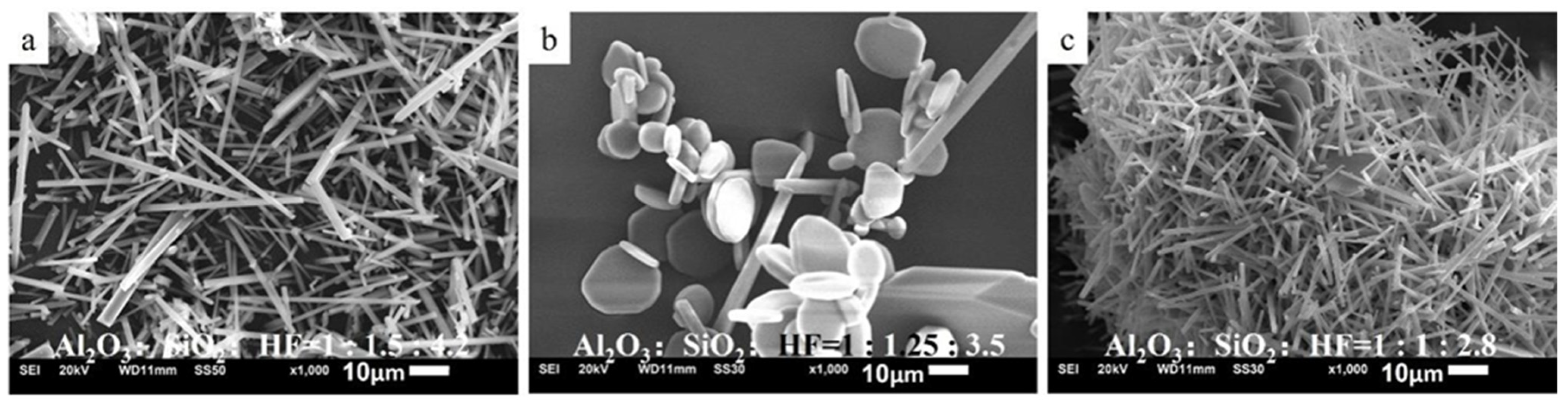
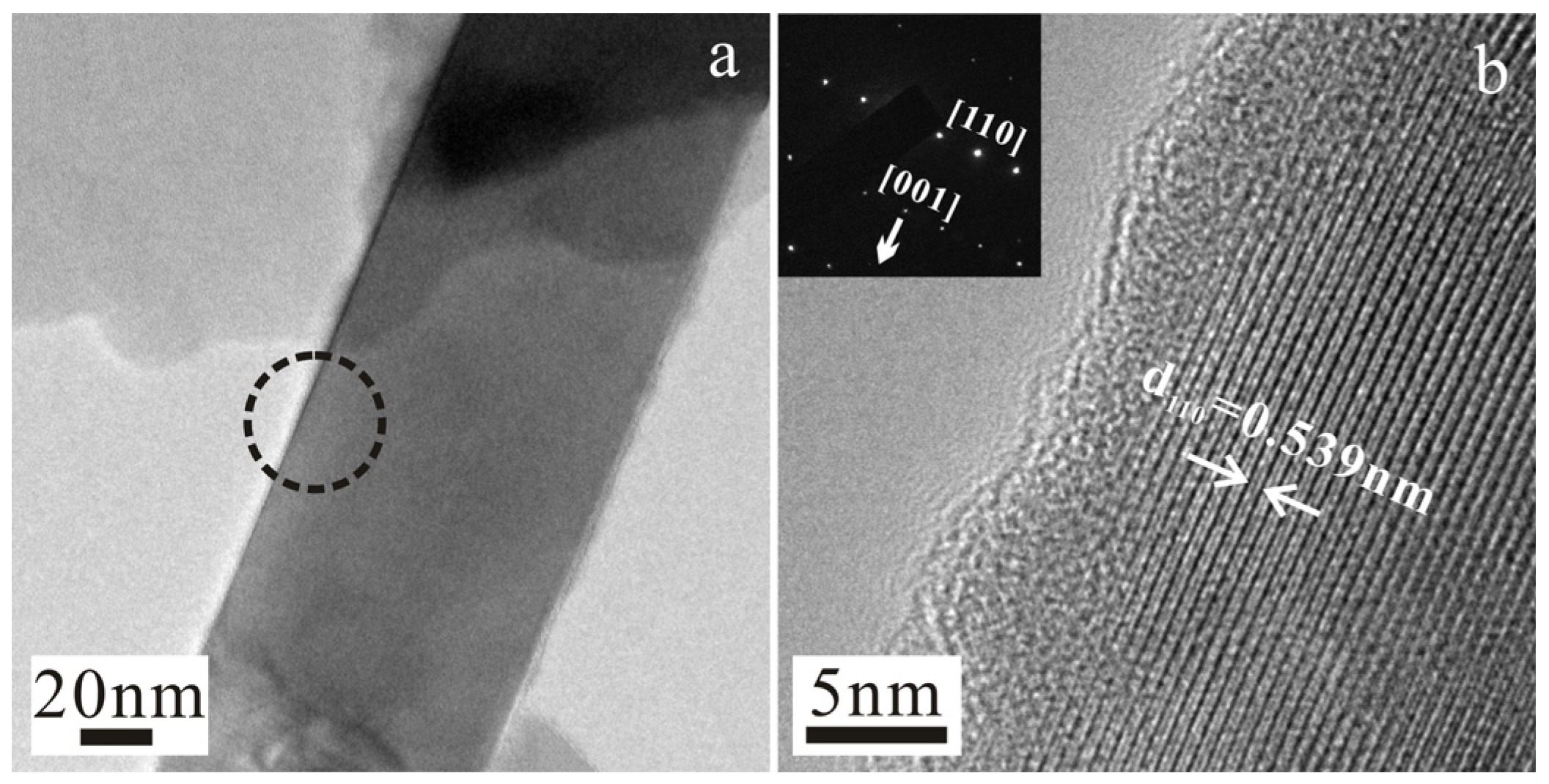
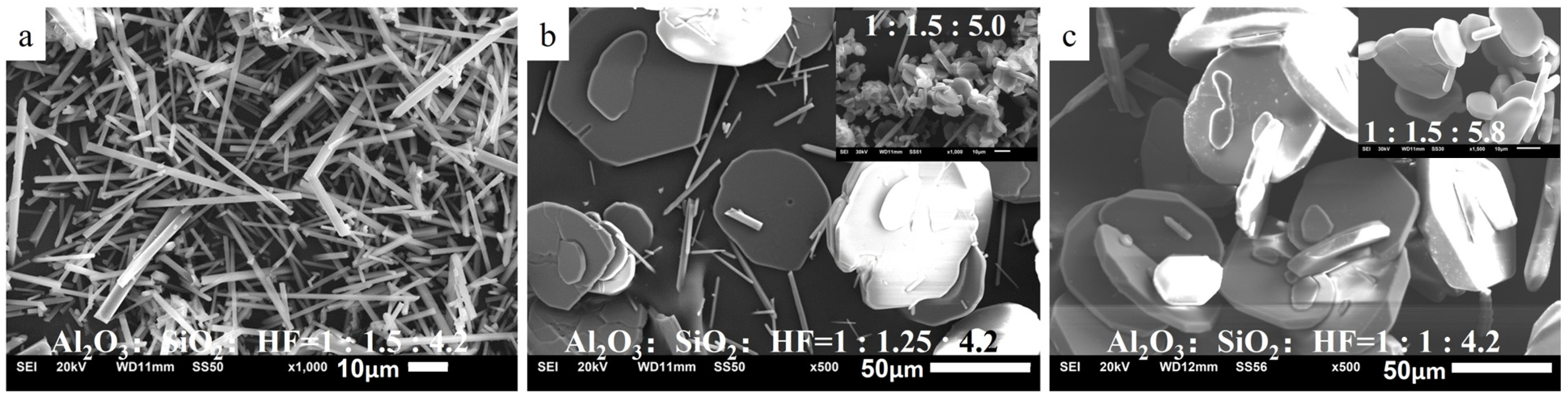
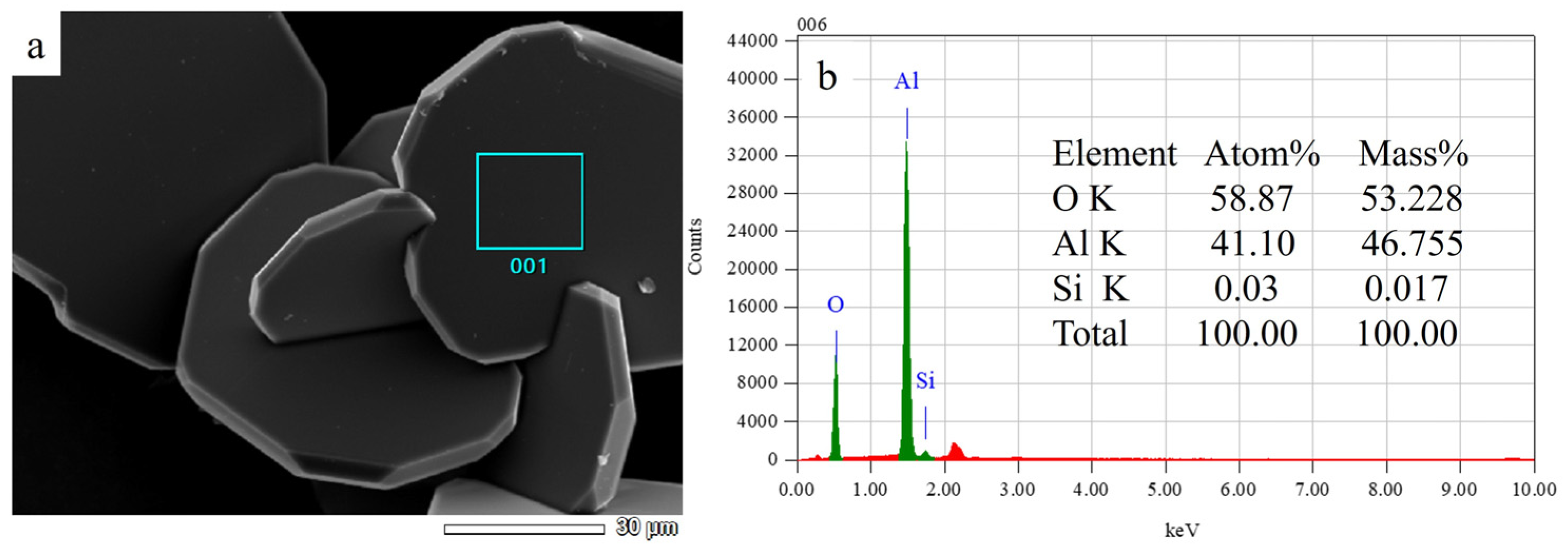
- Single-crystal mullite whiskers were prepared via HF catalysis, and the growth direction of the whiskers is along the [001] crystallographic axis, as revealed via TEM and SAED analyses. Under the conditions of sufficient HF catalysis, the obtained product is entirely composed of mullite whiskers. When the Al2O3:HF ratio is maintained constant, a reduction in the SiO2 content leads to the formation of numerous flake-shaped structures in the product, as evidenced by the SEM images. The corresponding EDS analysis reveals the generation of Al2O3. A further reduction in the SiO2 content results in the complete transformation of the product into flake-shaped Al2O3, the diameter and thickness of which increase with decreasing SiO2 content. The effect of the reduction in the SiO2 content is analogous to that of an increase in the catalyst content, which is ascribed to the excessive consumption of Si in the system by fluorine during whisker growth. Therefore, the reduction in the SiO2 content under fully catalyzed conditions leads to the formation of an aluminum-rich system, generating numerous flake-shaped Al2O3 structures.
- (2)
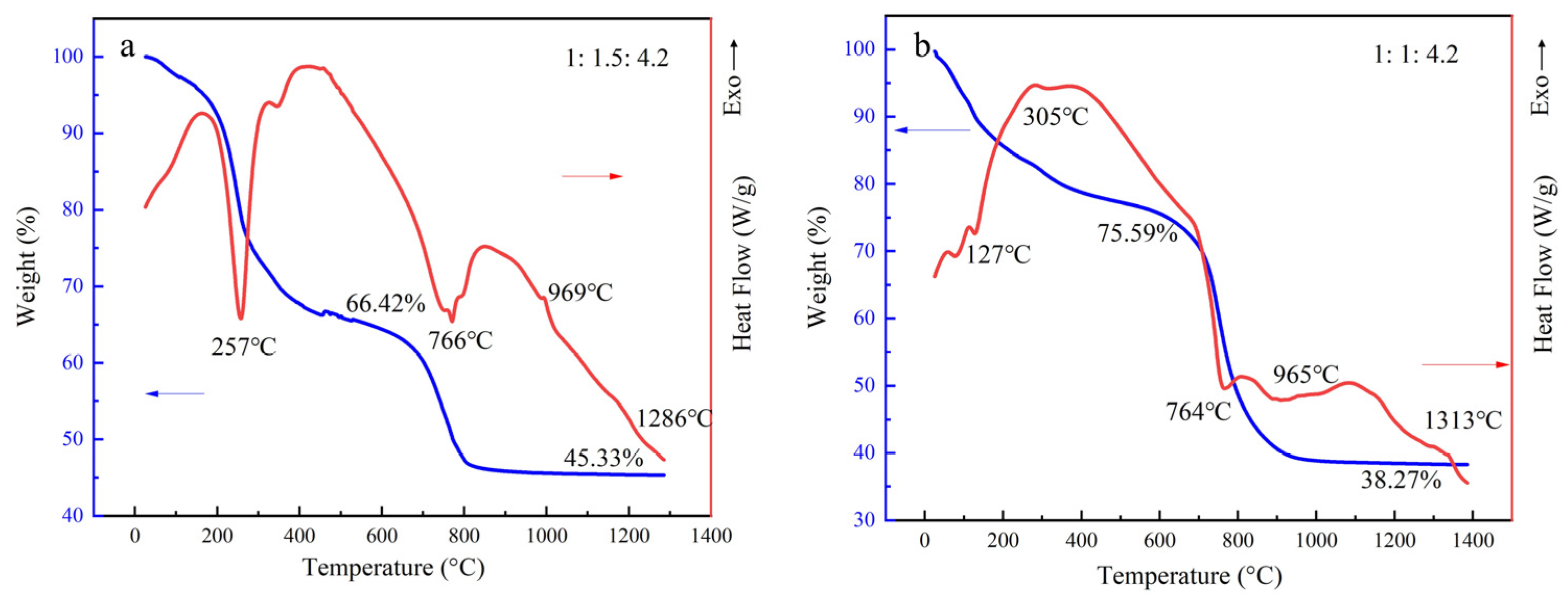
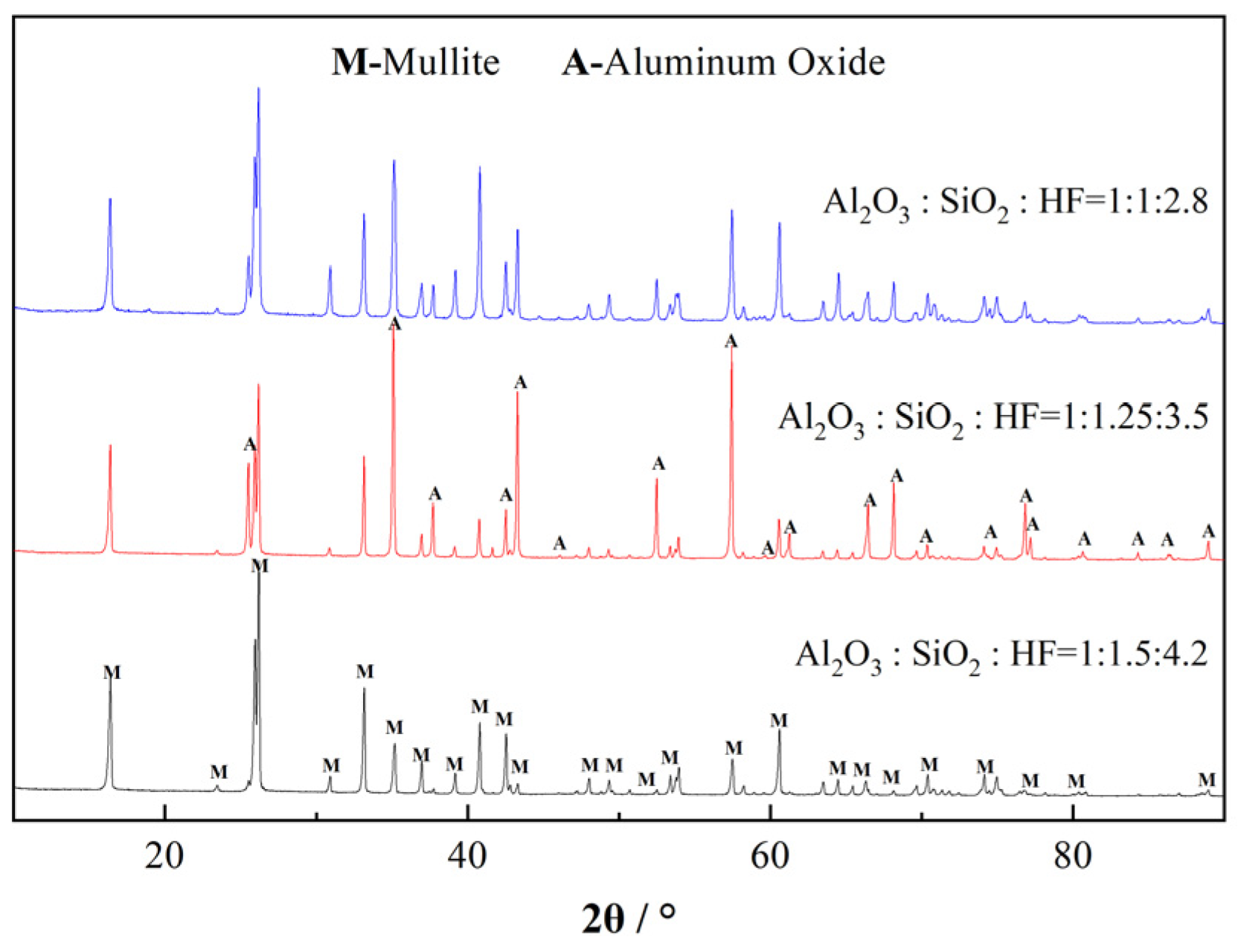
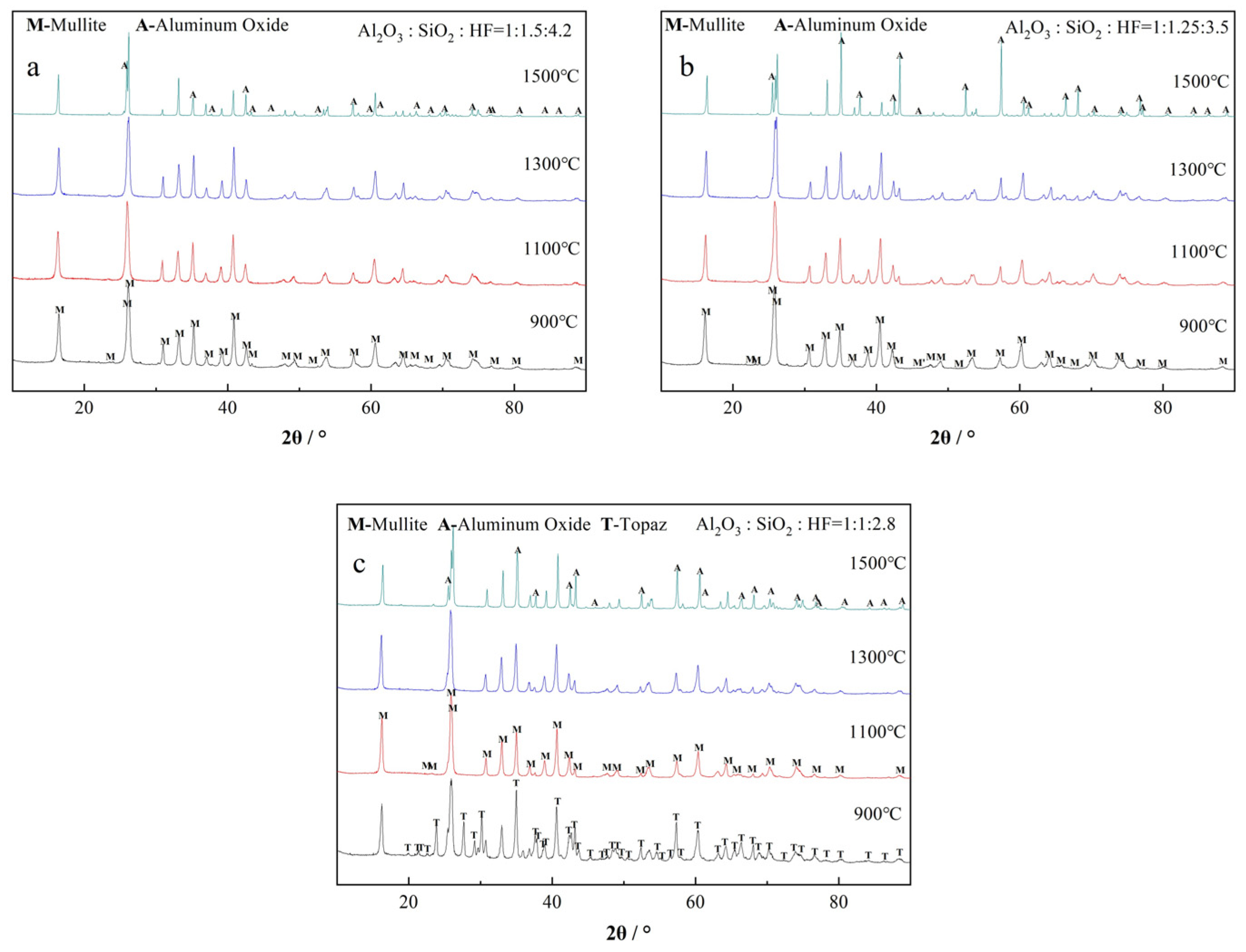
- SiO2 and HF exhibit synergistic effects on the growth of mullite whiskers during fluorine catalysis. When the SiO2 and HF contents in the system are simultaneously reduced, the resulting product comprises a mixture of mullite whiskers and flake-shaped alumina structures, with the latter component being dominant. However, a further reduction in both components leads to an increase in the content of mullite whiskers. The phase transformation in the system featuring different compositional ratios at 900–1500 °C indicates that: ① when the SiO2 and HF contents are relatively high (Al2O3:SiO2:HF = 1:1.5:4.2), the alumina phase begins to form at 1500 °C; however, when the contents of both components are reduced, the onset temperature for the formation of the alumina phase gradually decreases to 1100 °C. ② Different proportions of Al2O3, SiO2, and HF can lead to distinct catalytic processes. Specifically, at the lowest SiO2 and HF contents (Al2O3:SiO2:HF = 1:1:2.8), Si and F ions preferentially generate the silicon-rich topaz phase (Al8.0Si4.0O18.4F5.6H2.4), which gradually transforms into the mullite phase. Conversely, when the molar amount of SiO2 exceeds that of Al2O3, the aluminum-rich mullite phase is directly generated, precluding the formation of the topaz phase.
- (3)
- The formation mechanism of mullite whiskers can be explained using the phase transformation in the Al–Si–O system, reasonably describing the experimental phenomena. Literature reports suggest that the mullite phase exhibits a lower activation energy for crystallization and a higher activation energy for growth, whereas the alumina phase demonstrates an opposite trend. Accordingly, during the phase transformation occurring in the Al–Si–O system, the transient alumina-rich mullite phase is first generated at low temperatures and gradually transforms into a stable orthorhombic mullite phase, which is followed by the recrystallization and precipitation of the alumina phase at high temperatures. During this process, the relatively low SiO2 content facilitates the formation of the alumina-rich mullite phase, which probably fulfills the compositional and structural fluctuations of alumina nucleation. Therefore, with the reduction in the SiO2 content, the formation temperature of the alumina phase decreases.
- (4)
- Combining the literature findings and the experimental data obtained in this study, different ratios of Al2O3, SiO2, and HF lead to two distinct catalytic pathways. When the SiO2 and HF contents are relatively low and the Al:Si ratio is approximately equivalent to the stoichiometric ratio 3:2 of mullite, pathway I reactions occur. The F ions enter the Al–Si–O system via SiF4 to form the fluorine-containing topaz phase. However, when the SiO2 and HF contents are relatively high, pathway II reactions occur, and the mullite phase is directly generated via AlF3 and SiF4, precluding the formation of fluorine oxides. Notably, the initial formation of the topaz phase at relatively low temperatures consumes numerous Al ions, suppressing the formation of alumina at high temperatures. In pathway II, the simultaneous reduction in the SiO2 and HF contents leads to a decrease in the SiF4 content. Therefore, the content of the mullite phase decreases, which provides a plausible explanation for the phenomenon in which the group featuring an intermediate compositional ratio exhibits a lower content of mullite whiskers than the base group.
Author Contributions
Funding
Data Availability Statement
Conflicts of Interest
References
- SchmÜcker, M.; Hildmann, B.; Schneider, H. Mechanism of 2/1- to 3/2-mullite transformation at 1650 degrees C. Am. Mineral. 2002, 87, 1190–1193. [Google Scholar] [CrossRef]
- Cui, X. Research and application progress of inorganic whiskers. Fine Chem. Raw Mater. Intermed. 2007, 5, 25–28. [Google Scholar]
- Cui, K.; Zhang, Y.; Fu, T.; Wang, J.; Zhang, X. Toughening Mechanism of Mullite Matrix Composites: A Review. Coatings 2020, 10, 672. [Google Scholar] [CrossRef]
- Liu, Z.; Pan, S.; Dong, Z.; Wen, J.; Wang, J.; Yu, J. Progress in preparation, growth mechanism, and application of mullite whiskers. Refractories 2023, 57, 270–276. [Google Scholar]
- Ding, X.; Liu, X.; Li, J.; Wu, F.; Luo, X. Mullite whiskers prepared by the molten salt method using iron tailings. Ceram. Int. 2026, 52, 1115–1121. [Google Scholar] [CrossRef]
- Chen, G.; Qi, H.; Xing, W.; Xu, N. Synthesis of porous mullite support with needle-like structure by in-situ reaction sintering. J. Inorg. Mater. 2008, 23, 597–601. [Google Scholar] [CrossRef]
- Abdullayev, A.; Klimm, D.; Kamutzki, F.; Gurlo, A.; Bekheet, M.F. AlF3-assisted flux growth of mullite whiskers and their application in fabrication of porous mullite-alumina monoliths. Open Ceram. 2021, 7, 100145. [Google Scholar] [CrossRef]
- Peng, P.; Chris, S. Preparation of mullite whiskers from topaz decomposition. Mater. Lett. 2004, 58, 1288–1291. [Google Scholar] [CrossRef]
- Miao, X. Porous mullite ceramics from natural topaz. Mater. Lett. 1999, 38, 167–172. [Google Scholar] [CrossRef]
- Okada, K.; Kaneda, J.-I.; Kameshima, Y.; Yasumori, A.; Takei, T. Crystallization kinetics of mullite from polymeric Al2O3-SiO2 xerogels. Mater. Lett. 2003, 57, 3155–3159. [Google Scholar] [CrossRef]
- Deng, X.; Wang, J.; Zhang, H.; Li, F.; Zhao, W.; Huang, Z.; Zhang, S. Preparation and growth mechanism of mullite whiskers. J. Chin. Ceram. Soc. 2016, 44, 901–907. [Google Scholar]
- Rashad, M.; Balasubramanian, M. A quantitative analysis of in-situ gases on the properties of porous mullite developed from clay and AlF3·3H2O. Ceram. Int. 2019, 45, 1420–1423. [Google Scholar] [CrossRef]
- Zhang, H.; Wang, Q.; Wang, J.; Yu, F.; Tang, J.; Zhang, K.; Zhao, Z. Preparation and strengthening mechanism of porous mullite with high porosity and whisker framework catalyzed by HF in situ. J. Northwestern Polytech. Univ. 2021, 39, 208–215. [Google Scholar] [CrossRef]
- Tian, X.; Li, C.; Wu, L.; Liu, S.; Li, H.; Deng, N.; Wang, C. Synthesis and dispersion of mullite whiskers. Mod. Technol. Ceram. 2018, 39, 122–130. [Google Scholar]
- Schneider, H.; Schreuer, J.; Hildmann, B. Structure and properties of mullite-A review. J. Eur. Ceram. Soc. 2008, 28, 329–344. [Google Scholar] [CrossRef]
- Zhang, H.; Duan, X.; Yu, F.; Tang, J.; Xie, H.; Zhang, K. Study on the effect of fluorine-containing catalyst on the anisotropic growth process of mullite whiskers. J. Synth. Cryst. 2019, 48, 1326–1330. [Google Scholar]
- Zhang, D. Preparation of Mullite Whisker/Fiber Composites and Research on Whisker Growth Mechanism. Doctoral Dissertation, Tianjin University, Tianjin, China, 2019. [Google Scholar]
- Schneider, H.; Okada, K.; Pask, J.A. Mullite and Mullite Ceramics; Wiley: New York, NY, USA, 1994. [Google Scholar]
- Okada, K. Activation energy of mullitization from various starting materials. J. Eur. Ceram. Soc. 2008, 28, 377–382. [Google Scholar] [CrossRef]
- Douy, A. Crystallisation of amorphous spray-dried precursors in the Al2O3-SiO2 system. J. Eur. Ceram. Soc. 2006, 26, 1447–1454. [Google Scholar] [CrossRef]
- Tkalcec, E.; Ivankovic, H.; Nass, R.; Schmidt, H. Crystallization kinetics of mullite formation in diphasic gels containing different alumina components. J. Eur. Ceram. Soc. 2003, 23, 1465–1475. [Google Scholar] [CrossRef]
- Wu, Y.; Song, Z.; Yang, Y.; Li, Y.; Cui, P. Study on the phase transformation and phase transformation control of alumina α. Chin. J. Rare Met. 2004, 6, 1043–1048. [Google Scholar]
- Ipek, M.; Toplan, N.; Toplan, H.O. Transformation kinetics of θ- to α-phase of alumina powders prepared from different alumina salts by chemical processing. J. Therm. Anal. Calorim. 2016, 125, 645–649. [Google Scholar] [CrossRef]
- Deléglise, F.; Berger, M.; Bunsell, A. Microstructural evolution under load and high temperature deformation mechanisms of a mullite/alumina fibre. J. Eur. Ceram. Soc. 2002, 22, 1501–1512. [Google Scholar] [CrossRef]
- Choi, H.; Lee, J. Synthesis of Mullite Whiskers. J. Am. Ceram. Soc. 2002, 85, 481–483. [Google Scholar] [CrossRef]


| Influence of Si/Al Ratio | ||
| Group | Molar ratio of Al2O3:SiO2:HF | Notes |
| 1 | 1:1.5:4.2 | Base group |
| 2 | 1:1.25:4.2 | Fixed ratio of Al2O3 and HF |
| 3 | 1:1:4.2 | |
| Synergistic influences of Si/Al ratio and catalyst content | ||
| Group | Molar ratio of Al2O3:SiO2:HF | Notes |
| 1 | 1:1.5:4.2 | Base group |
| 2 | 1:1.25:3.5 | Fixed ratio of SiO2/HF |
| 3 | 1:1:2.8 | |
| Sample No. | Al2O3:SiO2 | Morphology | Diameter of Whisker/μm | Aspect Ratio | Diameter of Flake/μm | Ratio of Diameter/Thickness |
|---|---|---|---|---|---|---|
| 2-a | 1:1.5 | Rod-shaped | 1.6 ± 0.24 | 10.4 ± 1.87 | ||
| 2-b | 1:1.25 | Flake-shaped + a few rod-shaped | 2.1 ± 0.49 | 9.3 ± 2.79 | 38.7 ± 11.22 | 12.1 ± 1.45 |
| 2-c | 1:1 | Flake-shaped | 45.5 ± 10.46 | 7.7 ± 1.00 |
| Al2O3:SiO2:HF | 1:1.5:4.2 | 1:1.25:3.5 | 1:1:2.8 |
|---|---|---|---|
| Crystalline phase | M + A | M + A | M + A |
| Semiquantitative analysis/% | 88 + 12 | 43 + 57 | 68 + 32 |
| Temperature/°C | 900 | 1100 | 1300 | 1500 |
|---|---|---|---|---|
| 1:1.5:4.2 | M | M | M | M (88%) + A (12%) |
| 1:1.25:3.5 | M’ (72%) + M (28%) | M | M (80%) + A (20%) | M (43%) + A (57%) |
| 1:1:2.8 | T (35%) + M (65%) | M (77%) + A (23%) | M (72%) + A (28%) | M (68%) + A (32%) |
Disclaimer/Publisher’s Note: The statements, opinions and data contained in all publications are solely those of the individual author(s) and contributor(s) and not of MDPI and/or the editor(s). MDPI and/or the editor(s) disclaim responsibility for any injury to people or property resulting from any ideas, methods, instructions or products referred to in the content. |
© 2026 by the authors. Licensee MDPI, Basel, Switzerland. This article is an open access article distributed under the terms and conditions of the Creative Commons Attribution (CC BY) license.
Share and Cite
Zhang, H.; Yu, F.; Li, H.; Li, H.; Zhi, Q.; Li, B.; He, F.; Liu, Y. Synergistic Effects of the Si/Al Stoichiometry and Catalyst Content on the Growth Mechanism of Mullite Whiskers. Materials 2026, 19, 2065. https://doi.org/10.3390/ma19102065
Zhang H, Yu F, Li H, Li H, Zhi Q, Li B, He F, Liu Y. Synergistic Effects of the Si/Al Stoichiometry and Catalyst Content on the Growth Mechanism of Mullite Whiskers. Materials. 2026; 19(10):2065. https://doi.org/10.3390/ma19102065
Chicago/Turabian StyleZhang, Haihong, Fangli Yu, Haifu Li, Haibo Li, Qiang Zhi, Bin Li, Fengli He, and Yeye Liu. 2026. "Synergistic Effects of the Si/Al Stoichiometry and Catalyst Content on the Growth Mechanism of Mullite Whiskers" Materials 19, no. 10: 2065. https://doi.org/10.3390/ma19102065
APA StyleZhang, H., Yu, F., Li, H., Li, H., Zhi, Q., Li, B., He, F., & Liu, Y. (2026). Synergistic Effects of the Si/Al Stoichiometry and Catalyst Content on the Growth Mechanism of Mullite Whiskers. Materials, 19(10), 2065. https://doi.org/10.3390/ma19102065