Influence of Gypsum Type on Early Hydration Kinetics and Autogenous Shrinkage of Supersulfated Cement-Based UHPC Matrix


Abstract
1. Introduction
2. Experimental Program
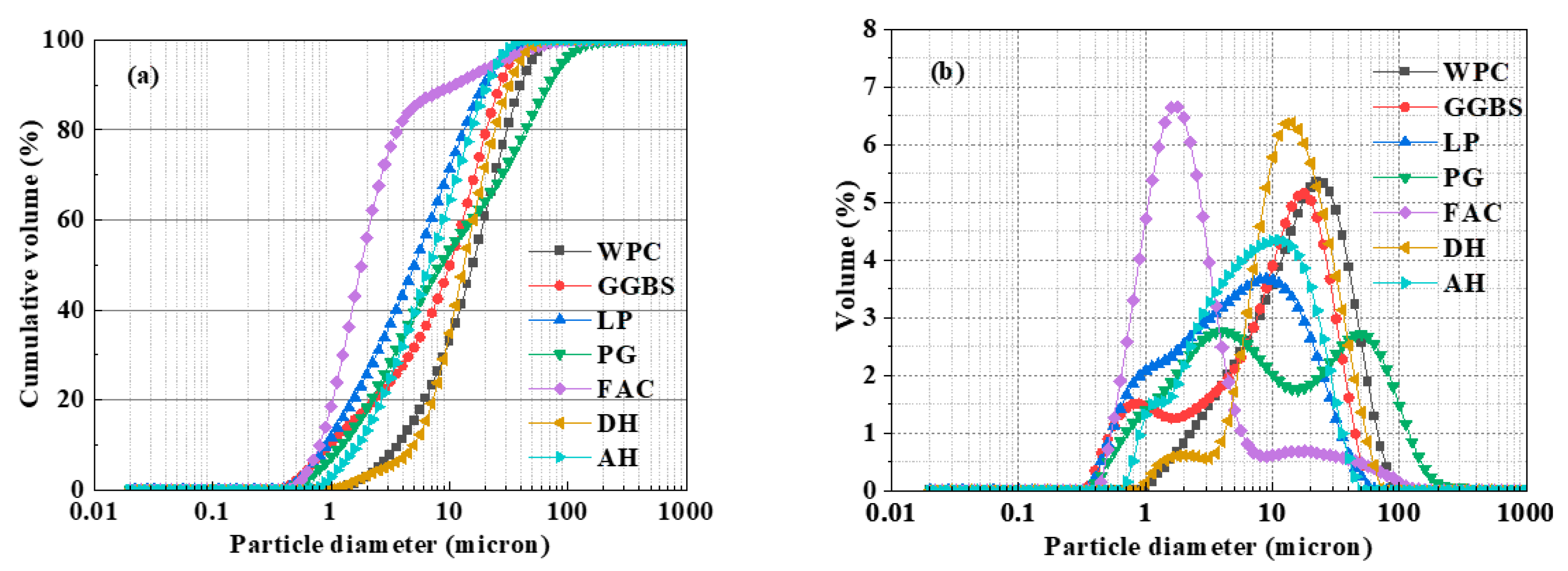
2.1. Materials
2.2. Specimen Preparation
2.3. Methods
2.3.1. Mechanical Performance Testing
2.3.2. Isothermal Calorimetry
2.3.3. X-Ray Diffraction (XRD) Analysis
2.3.4. Thermogravimetric–Differential Scanning Calorimetry (TG–DSC)
2.3.5. Scanning Electron Microscopy (SEM)
2.3.6. Low-Field Nuclear Magnetic Resonance (LF-NMR)
2.3.7. Setup for Shrinkage Testing
2.3.8. Initial Setting Time Testing
3. Results and Discussion
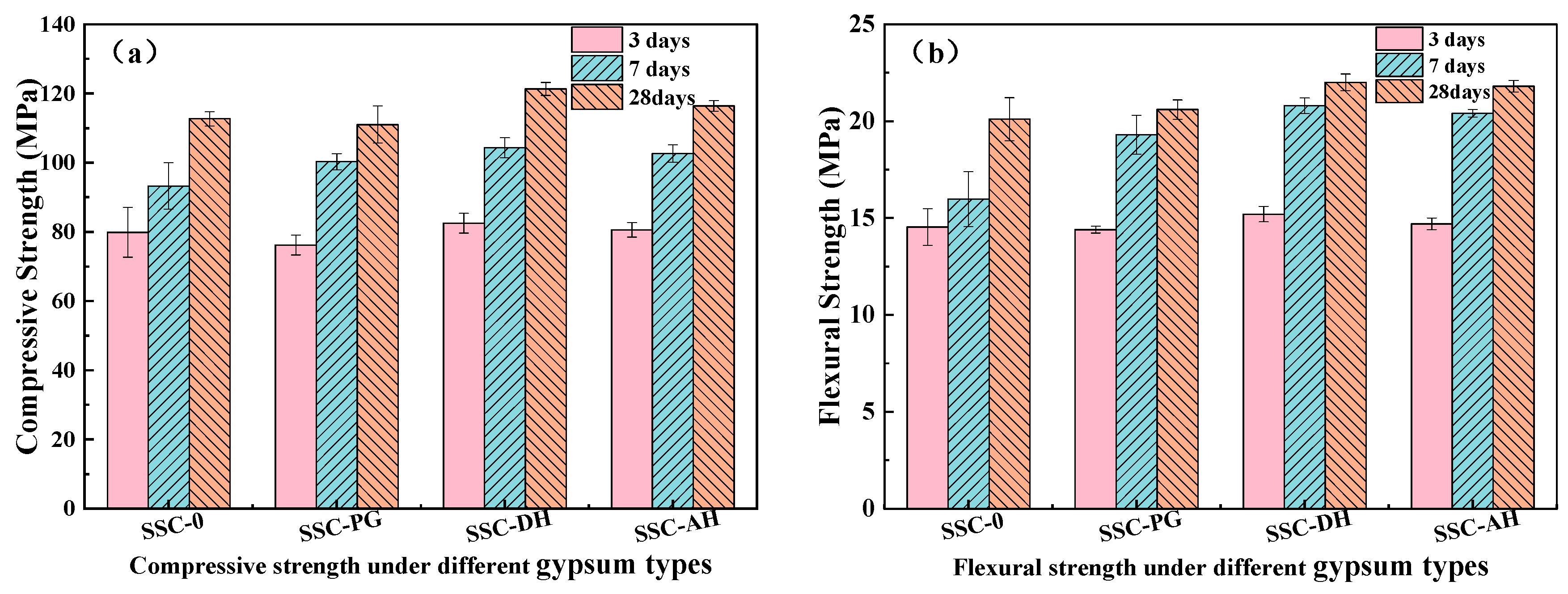
3.1. Mechanical Properties
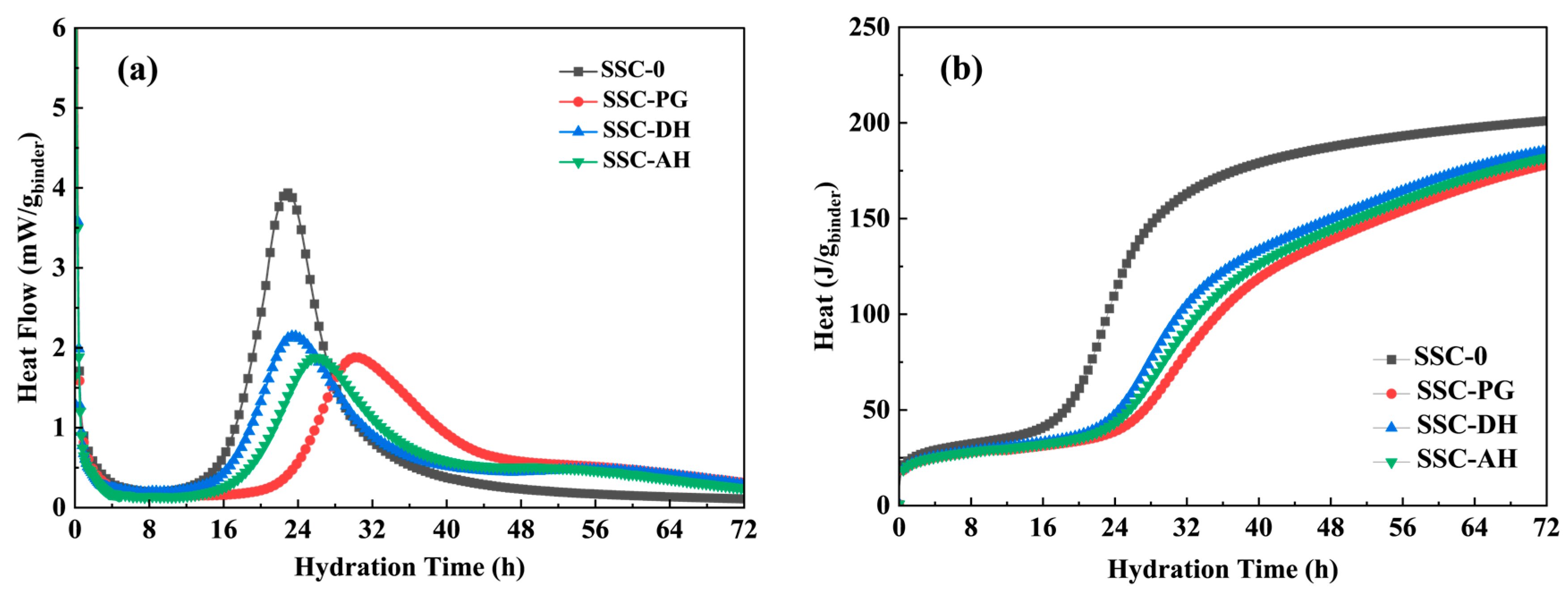
3.2. Heat of Hydration
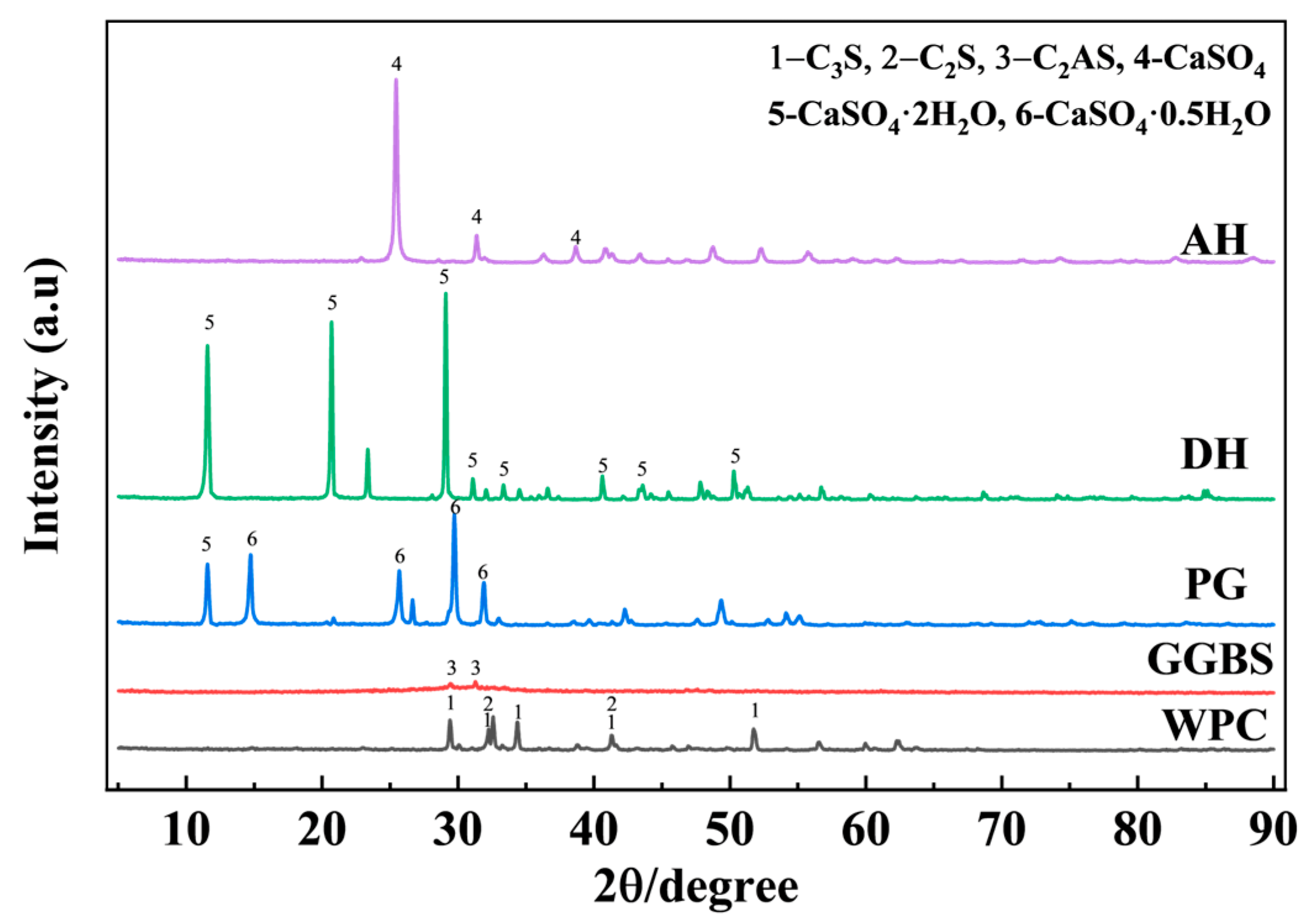
3.3. X-Ray Diffraction (XRD)
3.4. TG–DSC
3.5. SEM Results
3.6. LF-NMR
3.7. Autogenous Shrinkage Measurement
4. Conclusions
- (1)
- Gypsum type influences the early hydration kinetics of SSC-based UHPC matrix by affecting sulfate dissolution rates. DH shows relatively rapid dissolution, releasing SO42− ions to support slag hydration, with the second exothermic peak at 23.5 h and relatively high early bound water content at 3 d. AH exhibits slower dissolution, with a delayed second peak at 26.1 h, consistent with sustained but gradual sulfate release. PG, due to the presence of soluble phosphate and fluoride impurities, prolongs the induction period, shifting the second peak to 30.1 h and resulting in lower early hydration extent.
- (2)
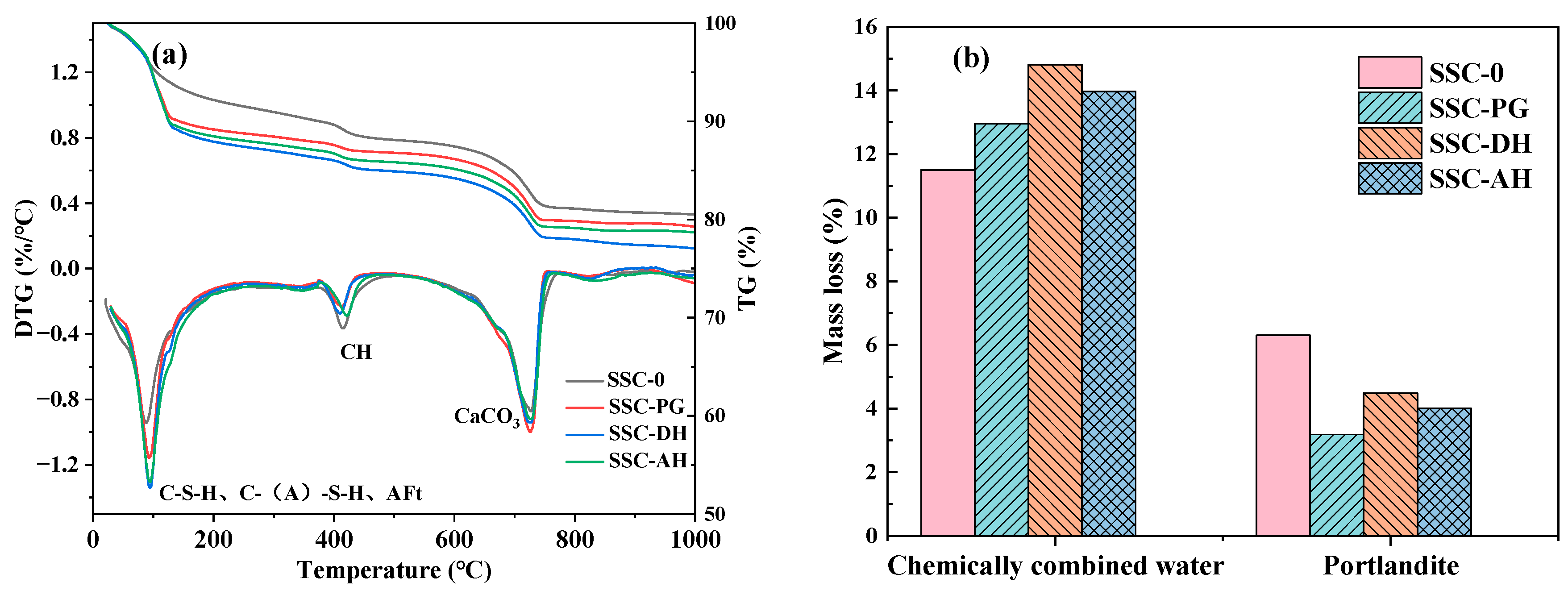
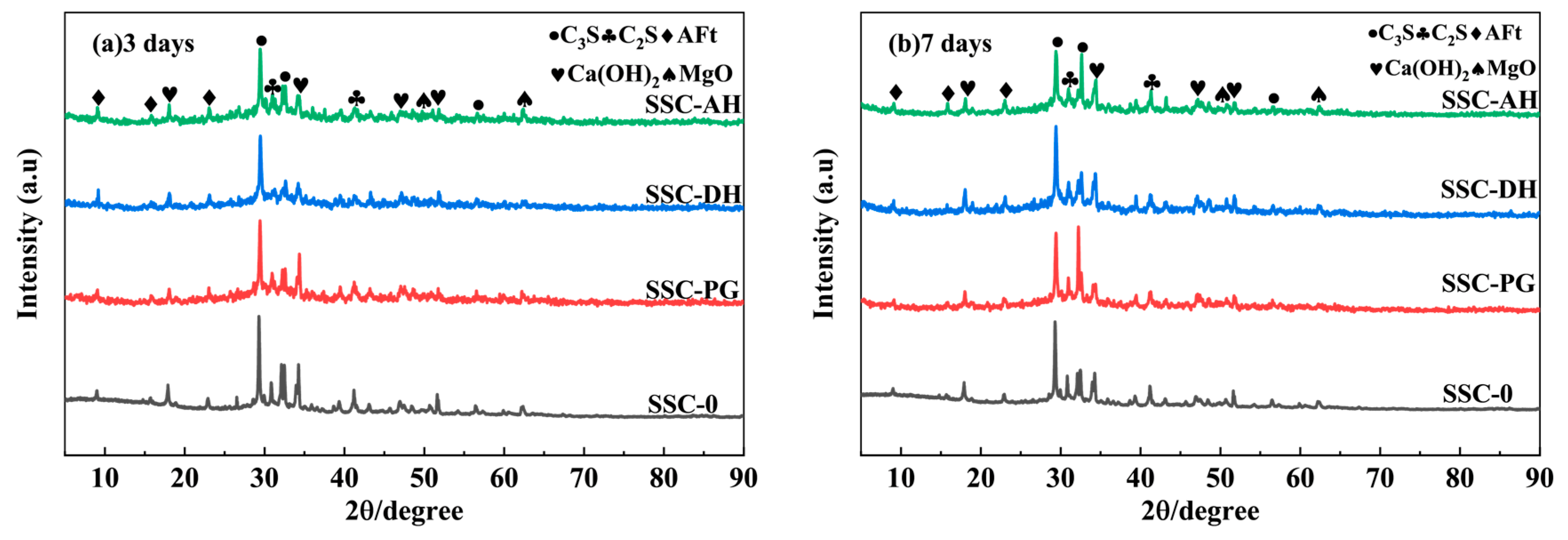
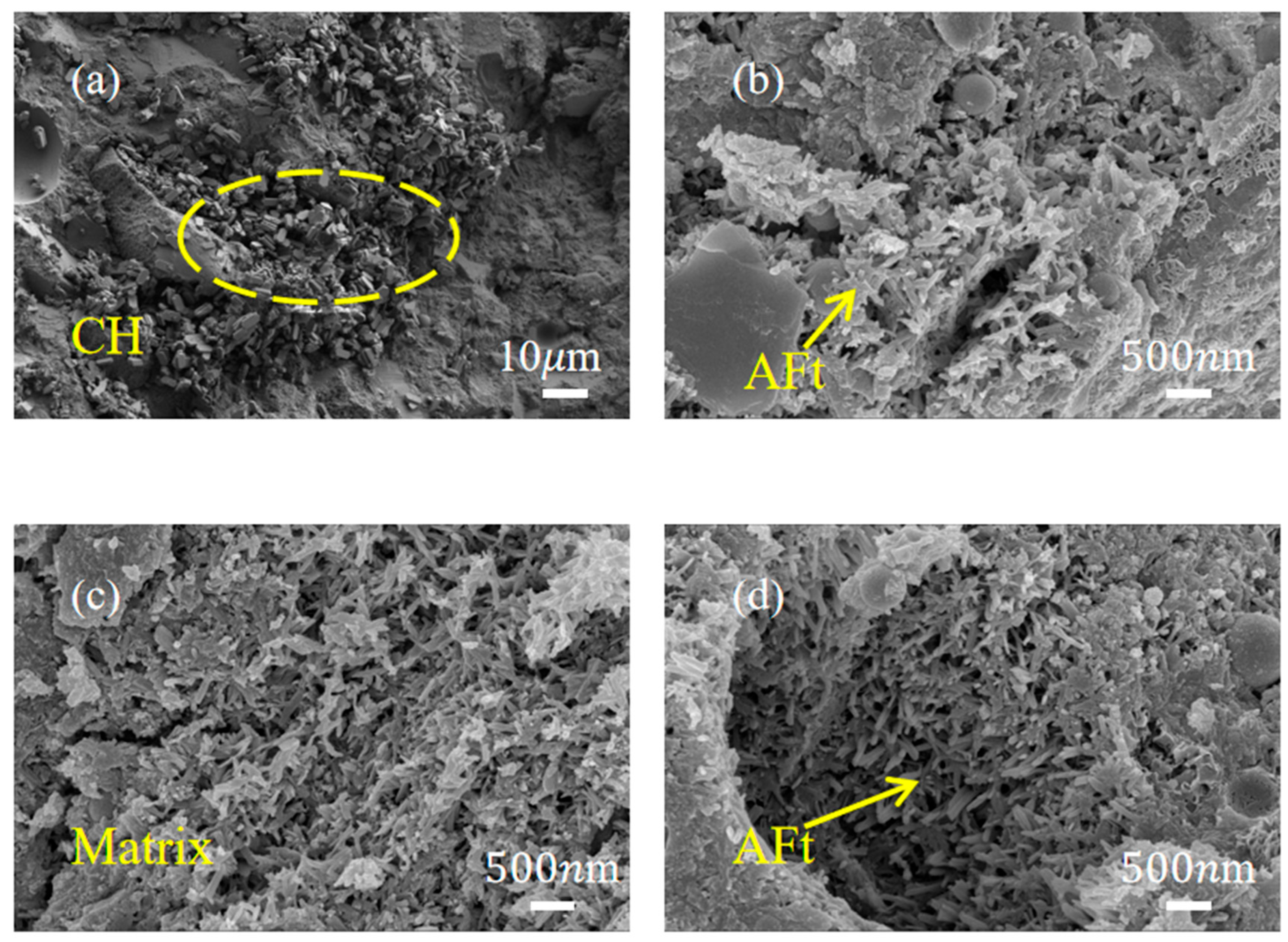
- Hydration product assemblage and microstructural development are strongly influenced by gypsum type. XRD and SEM reveal that SSC-0 is dominated by large CH crystals (~10 μm), while SSC-DH develops abundant, well-crystallized AFt intergrown with C-S-H gel at 3 d. SSC-AH shows similar features but with delayed formation. SSC-PG exhibits limited early AFt, consistent with its retarded hydration. TG analysis quantifies these differences: SSC-DH achieves the highest chemically bound water at 3 d (14.81%), confirming abundant water-rich hydrate formation, while SSC-0 shows the lowest (11.50%), suggesting more pronounced early hydration in the DH system.
- (3)
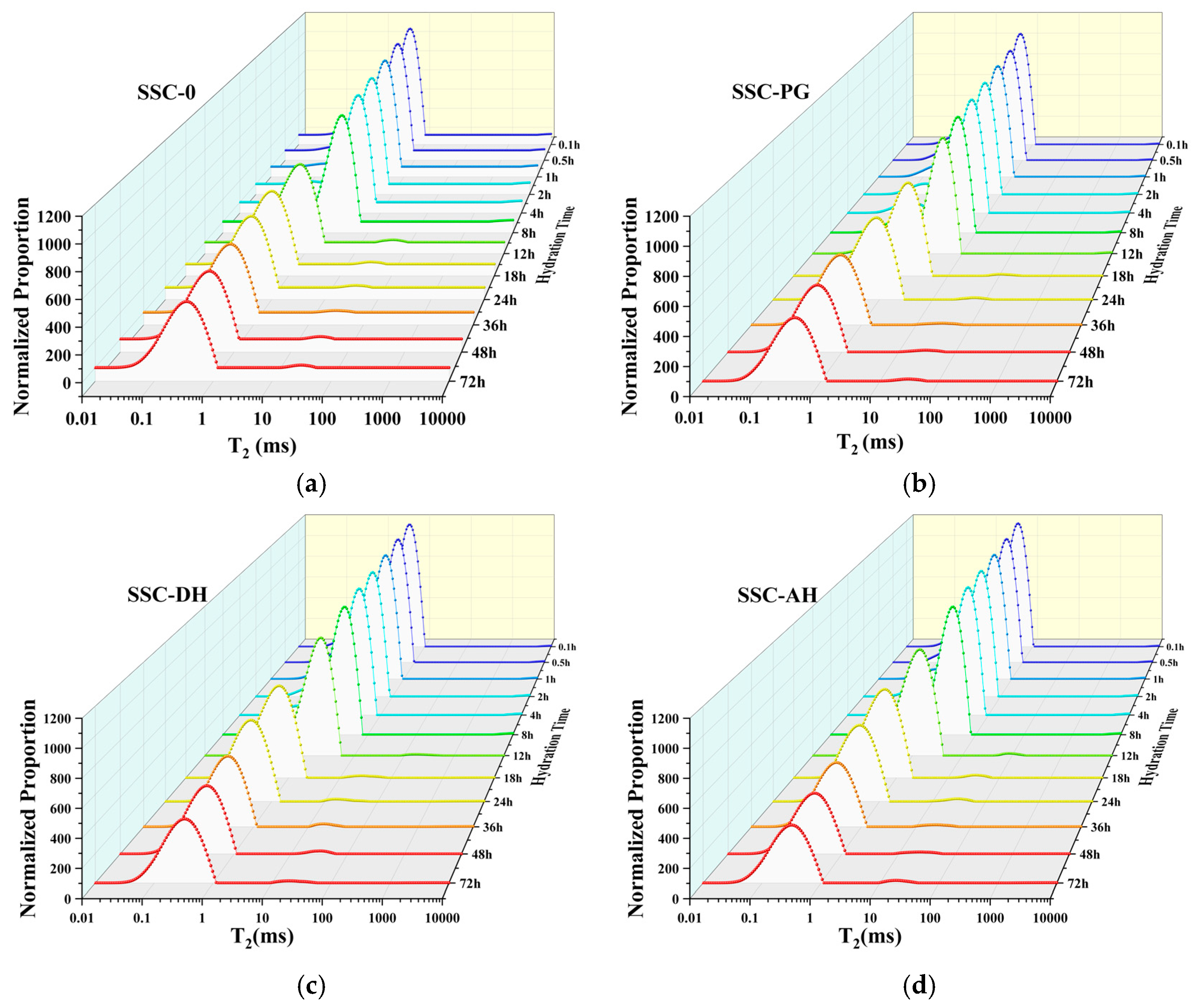
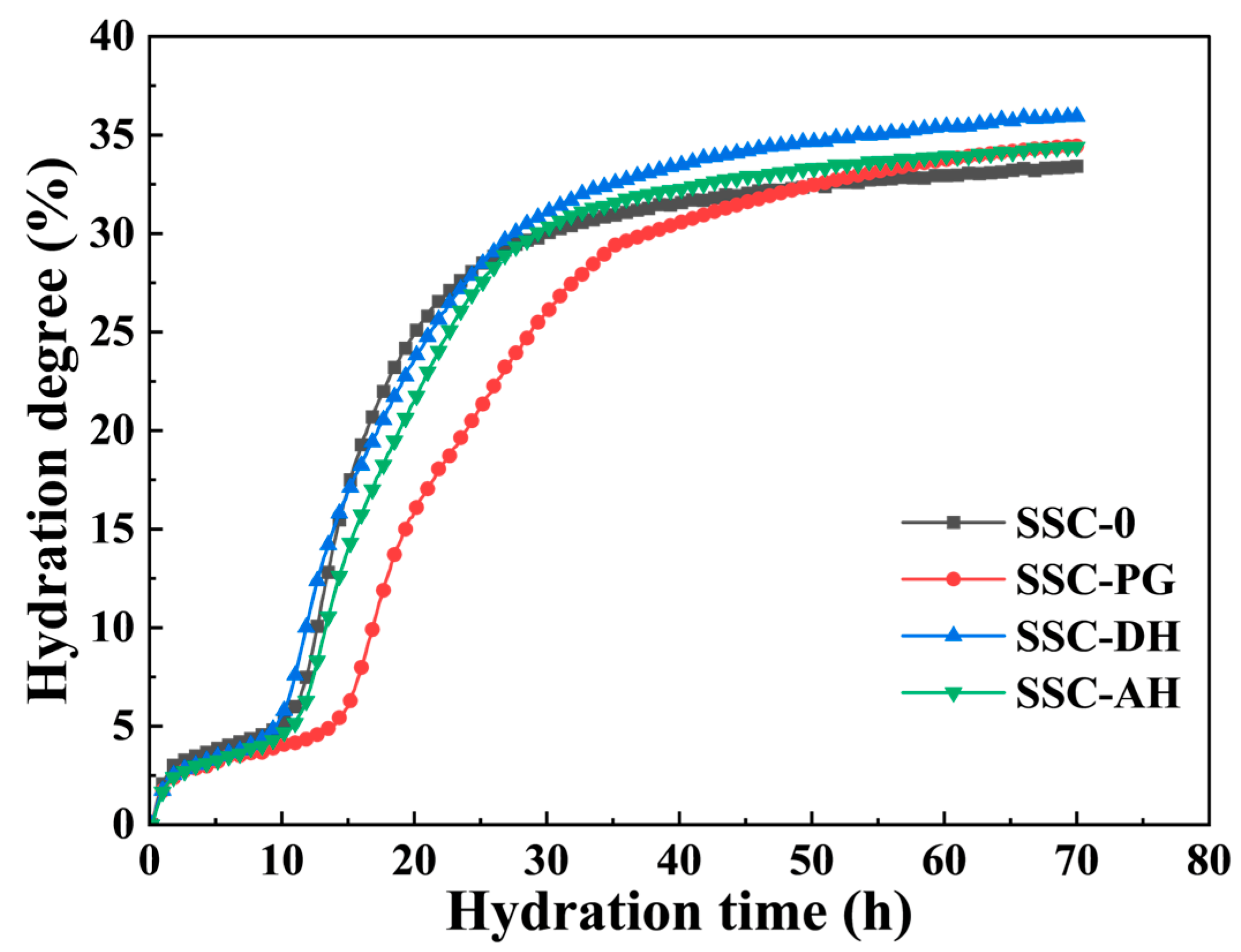
- LF-NMR provides supportive evidence regarding hydration-related water consumption and pore-environment evolution that underpin the macroscopic performance. At 72 h, SSC-DH exhibits the highest hydration degree, consistent with its high early strength and chemically bound water. T2 relaxation spectra show that SSC-DH develops the finest pore structure, with peaks shifting toward shorter relaxation times, indicating an increased proportion of gel pores. SSC-AH shows intermediate pore refinement, while SSC-PG retains a coarser pore structure at early ages, reflecting its delayed hydration.
- (4)
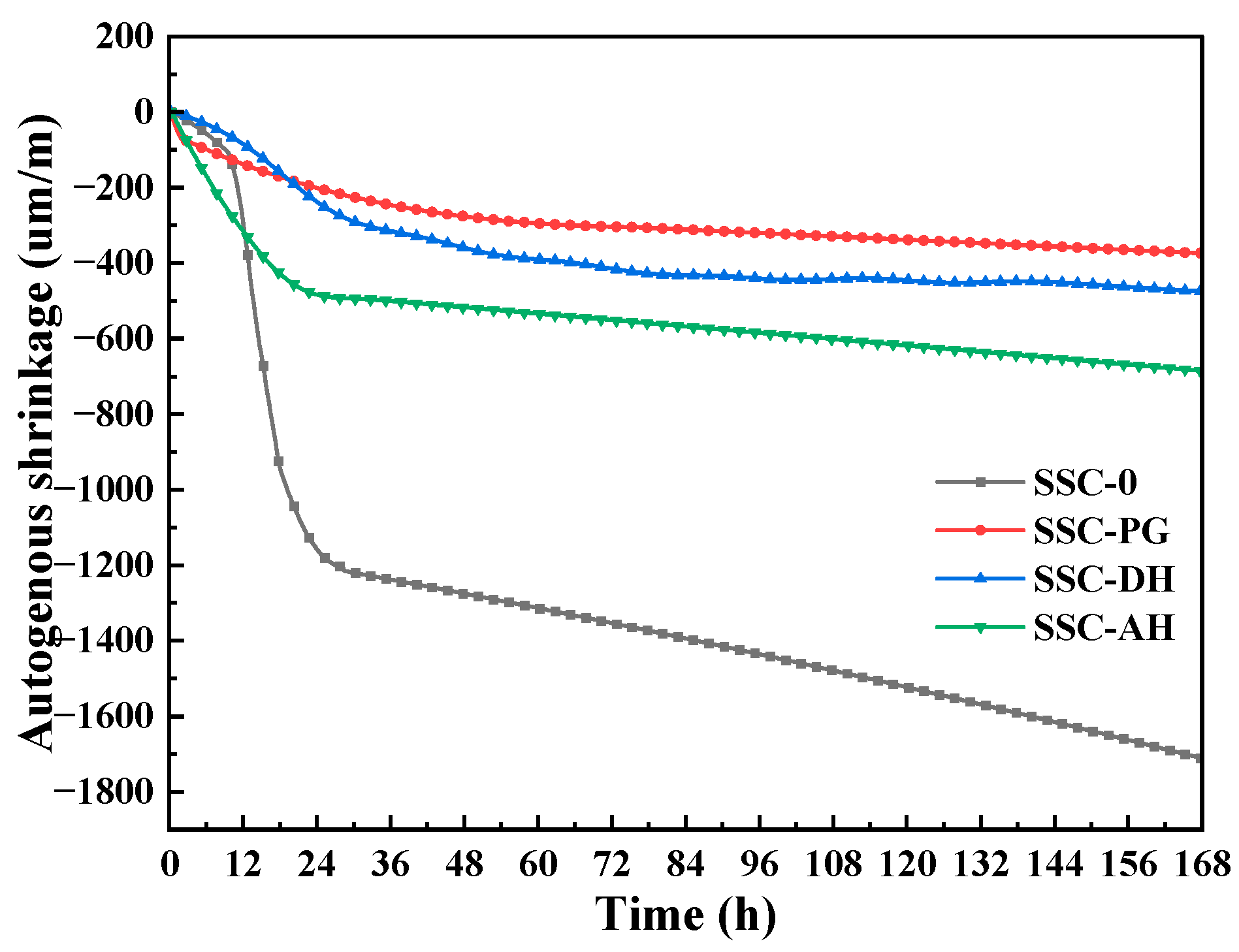
- SSC incorporation reduces autogenous shrinkage of the UHPC matrix by 58.2–78.1% at 7 d compared to the control. The mechanisms vary with gypsum type. SSC-DH and SSC-AH show reduced shrinkage that may be associated with AFt formation during hardening, which may contribute to compensating some self-desiccation stresses, with DH exhibiting greater reduction (72.2% at 7 d) due to more timely AFt development. PG achieves passive shrinkage reduction (78.1% at 7d), but this behavior is primarily attributed to strong early-age retardation rather than an intrinsic shrinkage-compensation effect, as delayed setting prolongs the plastic phase and reduces post-set hydration rate, leading to compromised early strength.
Author Contributions
Funding
Data Availability Statement
Acknowledgments
Conflicts of Interest
References
- ASTM C1856/C1856M-17; Standard Practice for Fabricating and Testing Specimens of Ultra-High Performance Concrete. ASTM International: West Conshohocken, PA, USA, 2017.
- Amran, M.; Huang, S.-S.; Onaizi, A.M.; Makul, N.; Abdelgader, H.S.; Ozbakkaloglu, T. Recent trends in ultra-high performance concrete (UHPC): Current status, challenges, and future prospects. Constr. Build. Mater. 2022, 352, 129029. [Google Scholar] [CrossRef]
- Zheng, Z.; Tan, H.; Zeng, J.; Yang, J.; Zheng, G.; Zhu, M.; Liu, Y.; Li, X.; Wang, Q. Ecological ultra-high-performance concrete incorporating multi-scale and multi-source solid wastes as nano-micron filler, ultrafine binder and fine aggregate. Constr. Build. Mater. 2025, 463, 140002. [Google Scholar] [CrossRef]
- Moman, A.A.; Sundar, D.; Zeng, K.; Tatar, J.; Radlińska, A.; Rajabipour, F. Autogenous and drying shrinkage in Ultra-High-Performance Concrete (UHPC) and the effectiveness of internal curing. Constr. Build. Mater. 2025, 464, 140217. [Google Scholar] [CrossRef]
- Ghafari, E.; Costa, H.; Júlio, E. Statistical mixture design approach for eco-efficient UHPC. Cem. Concr. Compos. 2015, 55, 17–25. [Google Scholar] [CrossRef]
- Shi, C.; Wu, Z.; Xiao, J.; Wang, D.; Huang, Z.; Fang, Z. A review on ultra high performance concrete: Part I. Raw materials and mixture design. Constr. Build. Mater. 2015, 101, 741–751. [Google Scholar] [CrossRef]
- Zhang, X.; Wu, Z.; Xie, J.; Hu, X.; Shi, C. Trends toward lower-carbon ultra-high performance concrete (UHPC)—A review. Constr. Build. Mater. 2024, 420, 135602. [Google Scholar] [CrossRef]
- Park, J.K.; Park, S.H.; Kim, D.J. Effect of matrix shrinkage on rate sensitivity of the pullout response of smooth steel fibers in ultra-high-performance concrete. Cem. Concr. Compos. 2018, 94, 226–237. [Google Scholar] [CrossRef]
- Wen, C.; Shen, D.; Shao, H.; Ji, L. Autogenous shrinkage and tensile creep of supersulfated cement concrete at early age. Constr. Build. Mater. 2024, 411, 134236. [Google Scholar] [CrossRef]
- Wu, L.; Farzadnia, N.; Shi, C.; Zhang, Z.; Wang, H. Autogenous shrinkage of high performance concrete: A review. Constr. Build. Mater. 2017, 149, 62–75. [Google Scholar] [CrossRef]
- Hajiesmaeili, A.; Hafiz, M.A.; Denarié, E. Tensile response of ultra high performance PE fiber reinforced concretes (PE-UHPFRC) under imposed shrinkage deformations. Mater. Struct. 2021, 54, 114. [Google Scholar] [CrossRef]
- Song, Q.; Yu, R.; Shui, Z.; Chen, L.; Liu, Z.; Gao, X.; Zhang, J.; He, Y. Intrinsic effect of hybrid fibres 3D network on the electrochemical characteristics of Ultra-High Performance Fibre Reinforced Composites (UHPFRC). Cem. Concr. Compos. 2020, 114, 103818. [Google Scholar] [CrossRef]
- Wu, Z.; Shi, C.; He, W.; Wu, L. Effects of steel fiber content and shape on mechanical properties of ultra high performance concrete. Constr. Build. Mater. 2016, 103, 8–14. [Google Scholar] [CrossRef]
- Yao, J.; Ge, Y.; Ruan, W.; Meng, J. Effects of PVA fiber on shrinkage deformation and mechanical properties of ultra-high performance concrete. Constr. Build. Mater. 2024, 417, 135399. [Google Scholar] [CrossRef]
- Ahmed, T.; Elchalakani, M.; Karrech, A.; Mohamed Ali, M.S.; Guo, L. Development of ECO-UHPC with very-low-C3A cement and ground granulated blast-furnace slag. Constr. Build. Mater. 2021, 284, 122787. [Google Scholar] [CrossRef]
- Jiang, R.; Zhou, Y.; Peng, Z.; Wang, J.; Yang, J.; Jin, M. The influence of different kinds of weak acid salts on the macro-performance, micro-structure, and hydration mechanism of the supersulfated cement. J. Build. Eng. 2023, 66, 105937. [Google Scholar]
- Li, B.; Hou, P.; Chen, H.; Zhao, P.; Du, P.; Wang, S.; Cheng, X. GGBS hydration acceleration evidence in supersulfated cement by nanoSiO2. Cem. Concr. Compos. 2022, 132, 104609. [Google Scholar] [CrossRef]
- Liu, S.; Chang, S.; Tu, Y.; Luo, S. Immobilisation mechanism for nuclear waste containing aluminium by supersulfated cement containing phosphogypsum. Cem. Concr. Compos. 2023, 139, 104991. [Google Scholar] [CrossRef]
- Sun, Z.; Nie, S.; Zhou, J.; Li, H.; Chen, Z.; Xu, M.; Mu, R.; Wang, Y. Hydration mechanism of calcium sulfoaluminate-activated supersulfated cement. J. Clean. Prod. 2022, 333, 130094. [Google Scholar] [CrossRef]
- Cabrera-Luna, K.; Burciaga-Diaz, O.; Santana-Carrillo, J.L.; Escalante-Garcia, J.I. Environmental performance of sustainable supersulfated cements based on blast furnace slag: A life cycle study. Environ. Res. 2025, 279, 121876. [Google Scholar] [CrossRef] [PubMed]
- Kang, Z.; Zhang, J.; Li, N.; Lv, T.; Yang, Y.; Lu, J. Utilization of biochar as a green additive in supersulfated cement: Properties, mechanisms, and environmental impacts. Constr. Build. Mater. 2024, 445, 137923. [Google Scholar] [CrossRef]
- Wu, Q.; Xue, Q.; Yu, Z. Research status of super sulfate cement. J. Clean. Prod. 2021, 294, 126228. [Google Scholar] [CrossRef]
- Liu, S.; Wang, L.; Yu, B. Effect of modified phosphogypsum on the hydration properties of the phosphogypsum-based supersulfated cement. Constr. Build. Mater. 2019, 214, 9–16. [Google Scholar] [CrossRef]
- Huang, J.; Huang, J.; Min, J.; Lv, R.; Kuang, H.; Hu, H.; Yang, R.; Tang, P.; Zhao, Q.; Jian, S.; et al. Hydration mechanism of a sodium-doped phosphogypsum-based hemihydrate whisker (omongwaite) in supersulfated cement system. Constr. Build. Mater. 2024, 427, 136236. [Google Scholar] [CrossRef]
- Zheng, K.; Wang, X.; Liu, P.; Liu, Y.; Wang, J.; Xie, N. Reassessing the role of harmful elements in phosphogypsum: Advantage of phosphorus impurities in solid waste recycling. Constr. Build. Mater. 2025, 494, 143554. [Google Scholar] [CrossRef]
- GB/T 9776-2022; Calcined Gypsum. National Standard of the People’s Republic of China: Beijing, China, 2022.
- Huang, Y.; Lin, Z.; Zhang, Z.; Li, G. Phosphogypsum as a Component of Calcium Sulfoaluminate Cement: Hazardous Elements Immobilization, Radioactivity and Performances. J. Clean. Prod. 2019, 210, 864–873. [Google Scholar] [CrossRef]
- Yu, B.Y.; Gao, Y.X.; Wang, J. Hydration behavior of super sulphated cement with different types of gypsum. J. Build. Mater. 2014, 17, 965–971. (In Chinese) [Google Scholar]
- Rubert, S.; Angulski da Luz, C.; Varela, M.V.F.; Pereira Filho, J.I.; Hooton, R.D. Hydration mechanisms of supersulfated cement: The role of alkali activator and calcium sulfate content. J. Therm. Anal. Calorim. 2018, 134, 971–980. [Google Scholar] [CrossRef]
- Schöler, A.; Lothenbach, B.; Winnefeld, F.; Zajac, M. Hydration of quaternary Portland cement blends containing blast-furnace slag, siliceous fly ash and limestone powder. Cem. Concr. Compos. 2015, 55, 374–382. [Google Scholar] [CrossRef]
- Mun, K.J.; Hyoung, W.K.; Lee, C.W.; So, S.Y.; Soh, Y.S. Basic properties of non-sintering cement using phosphogypsum and waste lime as activator. Constr. Build. Mater. 2007, 21, 1342–1350. [Google Scholar] [CrossRef]
- GB/T 17671-2021; Test Method of Cement Mortar Strength (ISO Method). National Standard of the People’s Republic of China: Beijing, China, 2021.
- Du, Y.; Yang, W.; Ge, Y.; Wang, S.; Liu, P. Thermal conductivity of cement paste containing waste glass powder, metakaolin and limestone filler as supplementary cementitious material. J. Clean. Prod. 2021, 287, 125018. [Google Scholar] [CrossRef]
- Liu, S.; Wang, L.; Li, Q.; Song, J. Hydration properties of Portland cement-copper tailing powder composite binder. Constr. Build. Mater. 2020, 251, 118882. [Google Scholar] [CrossRef]
- Li, Z.; Wei, Y.; Xu, J.; Yao, W.; She, A. Carbonation mixing effects on cement hydration: Insights from low-field NMR measurements. Constr. Build. Mater. 2025, 483, 141804. [Google Scholar] [CrossRef]
- McDonald, P.J.; Korb, J.P.; Mitchell, J.; Monteilhet, L. Surface relaxation and chemical exchange in hydrating cement pastes: A two-dimensional NMR relaxation study. Phys. Rev. E 2005, 72, 011409. [Google Scholar] [CrossRef]
- Seo, J.; Nawaz, A.; Jang, J.G.; Lee, H.K. Modifications in hydration kinetics and characteristics of calcium aluminate cement upon blending with calcium sulfoaluminate cement. Constr. Build. Mater. 2022, 342, 127958. [Google Scholar] [CrossRef]
- Martin, L.H.; Winnefeld, F.; Tschopp, E.; Müller, C.J.; Lothenbach, B. Influence of fly ash on the hydration of calcium sulfoaluminate cement. Cem. Concr. Res. 2017, 95, 152–163. [Google Scholar] [CrossRef]
- GB/T 50082-2024; Standard for Test Methods for Long-Term Performance and Durability of Concrete (with Clause Explanation). National Standard of the People’s Republic of China: Beijing, China, 2024.
- Amin, M.N.; Kim, J.S.; Dat, T.T.; Kim, J.K. Improving test methods to measure early age autogenous shrinkage in concrete based on air cooling. IES J. Part A Civ. Struct. Eng. 2010, 3, 244–256. [Google Scholar] [CrossRef]
- ASTM C403/C403M-23; Standard Test Method for Time of Setting of Concrete Mixtures by Penetration Resistance. ASTM International: West Conshohocken, PA, USA, 2023.
- Ding, H.; Shen, X.; Chen, A.; Gu, R.; Fang, Y.; Li, D. Study on the Effect of Three Types of Calcium Sulfate on the Early Hydration and Workability of Self-Compacting Repair Mortar. Materials 2023, 16, 5648. [Google Scholar] [CrossRef] [PubMed]
- Wei, S.; Zhong, D.; Wang, J.; Qian, B.; Sun, J.; Hu, Y.; Liu, H.; Zhang, Y.; Chen, X. The influence of lithium slag with a high content of alkali, sulfate and fluoride on the performance of supersulfated cement. J. Therm. Anal. Calorim. 2025, 150, 5433–5447. [Google Scholar] [CrossRef]
- Wu, Y.; Xu, F.; Wu, X.; Jiao, Y.; Sun, T.; Li, Z.; Zhang, H.; Liu, G.; Zhao, L. Retardation mechanism of phosphogypsum in phosphogypsum-based excess-sulfate cement. Constr. Build. Mater. 2024, 428, 136293. [Google Scholar] [CrossRef]
- Miao, W.; Chen, J.; Jiang, L.; Li, X.; Lv, Y. Effect of gypsum type on the hydration of lithium slag based supersulfated cement. Constr. Build. Mater. 2025, 467, 140338. [Google Scholar] [CrossRef]
- Hu, Z.; Guo, S.; Zhu, H.; Xu, J.; Dai, X.; Chen, Q.; Liu, Y.; Wang, F.; Li, Z. Synergetic effect of C-S-H seeds and SAP on LC3 UHPC: Microstructure evolution, compressive strength and autogenous shrinkage. J. Clean. Prod. 2025, 502, 145364. [Google Scholar] [CrossRef]
- Ma, S.; Zhang, Z.; Liu, X.; Han, F. Quantitative characterization of the early hydration of magnesium potassium phosphate cement: In-situ experiment with low field NMR. Constr. Build. Mater. 2023, 377, 131066. [Google Scholar] [CrossRef]
- She, A.; Li, G.; Tan, L.; Wei, Y.; Zuo, J.; Yao, W. Comprehensive analysis of early-stage hydration and microstructure evolution in Sufflaminate cement: Insights from low-field NMR and isothermal calorimetry. J. Build. Eng. 2023, 80, 108076. [Google Scholar] [CrossRef]
- Brouwers, H.J.H. The work of Powers and Brownyard revisited: Part 1. Cem. Concr. Res. 2004, 34, 1697–1716. [Google Scholar] [CrossRef]
- Merzouki, T.; Bouasker, M.; Houda Khalifa, N.E.; Mounanga, P. Contribution to the modeling of hydration and chemical shrinkage of slag-blended cement at early age. Constr. Build. Mater. 2013, 44, 368–380. [Google Scholar] [CrossRef]
- Chen, W.; Brouwers, H.J.H. The hydration of slag, part 1: Reaction models for alkali-activated slag. J. Mater. Sci. 2006, 42, 428–443. [Google Scholar] [CrossRef]
- Lam, L.; Wong, Y.L.; Poon, C.S. Degree of hydration and gel/space ratio of high-volume fly ash/cement systems. Cem. Concr. Res. 2000, 30, 747–756. [Google Scholar] [CrossRef]
- Wang, X.-Y.; Lee, H.-S. Modeling the hydration of concrete incorporating fly ash or slag. Cem. Concr. Res. 2010, 40, 984–996. [Google Scholar] [CrossRef]
- Zhou, C.; Ren, F.; Zeng, Q.; Xiao, L.; Wang, W. Pore-size resolved water vapor adsorption kinetics of white cement mortars as viewed from proton NMR relaxation. Cem. Concr. Res. 2018, 105, 31–43. [Google Scholar] [CrossRef]
- Xu, Y.; Zhang, C.; Chen, C.; Zhang, Y. Effect of superabsorbent polymer on the foam-stability of foamed concrete. Cem. Concr. Compos. 2022, 127, 104398. [Google Scholar] [CrossRef]






| Component | CaO | SiO2 | Al2O3 | Fe2O3 | MgO | Na2O | K2O | SO3 | P2O5 |
|---|---|---|---|---|---|---|---|---|---|
| WPC | 64.51 | 21.32 | 4.61 | 3.20 | 1.32 | 0.14 | 0.66 | 2.21 | - |
| GGBS | 41.04 | 31.57 | 14.06 | 0.65 | 8.52 | 0.48 | 0.28 | 2.13 | - |
| PG | 43.99 | 6.05 | 0.25 | 0.06 | 0.03 | - | 0.10 | 48.44 | 0.67 |
| LP | 50.29 | 1.37 | 0.43 | 0.15 | 4.40 | - | 0.08 | - | - |
| FAC | 9.13 | 57.53 | 18.20 | 4.96 | 2.12 | 2.18 | 2.54 | 0.24 | - |
| Materials | SSC-0 | SSC-PG | SSC-DH | SSC-AH |
|---|---|---|---|---|
| WPC | 1 | 0.7 | 0.7 | 0.7 |
| SSC:PG | 0 | 0.06 | 0 | 0 |
| SSC:DH | 0 | 0 | 0.06 | 0 |
| SSC:AH | 0 | 0 | 0 | 0.06 |
| SSC:GGBS | 0 | 0.225 | 0.225 | 0.225 |
| SSC:WPC | 0 | 0.015 | 0.015 | 0.015 |
| GGBS | 0.369 | 0.369 | 0.369 | 0.369 |
| LP | 0.166 | 0.166 | 0.166 | 0.166 |
| FAC | 0.049 | 0.049 | 0.049 | 0.049 |
| 20–40 Meshes Sand | 0.881 | 0.881 | 0.881 | 0.881 |
| 40–80 Meshes Sand | 0.881 | 0.881 | 0.881 | 0.881 |
| Water | 0.295 | 0.295 | 0.295 | 0.295 |
| SP | 0.010 | 0.010 | 0.010 | 0.010 |
| Defoamer | 0.001 | 0.001 | 0.001 | 0.001 |
| Groups | SSC-0 | SSC-PG | SSC-DH | SSC-AH |
|---|---|---|---|---|
| Times (h) | 8.7 | 10.3 | 11.7 | 13.6 |
Disclaimer/Publisher’s Note: The statements, opinions and data contained in all publications are solely those of the individual author(s) and contributor(s) and not of MDPI and/or the editor(s). MDPI and/or the editor(s) disclaim responsibility for any injury to people or property resulting from any ideas, methods, instructions or products referred to in the content. |
© 2026 by the authors. Licensee MDPI, Basel, Switzerland. This article is an open access article distributed under the terms and conditions of the Creative Commons Attribution (CC BY) license.
Share and Cite
Ju, Y.; She, A.; Wang, J. Influence of Gypsum Type on Early Hydration Kinetics and Autogenous Shrinkage of Supersulfated Cement-Based UHPC Matrix. Materials 2026, 19, 1985. https://doi.org/10.3390/ma19101985
Ju Y, She A, Wang J. Influence of Gypsum Type on Early Hydration Kinetics and Autogenous Shrinkage of Supersulfated Cement-Based UHPC Matrix. Materials. 2026; 19(10):1985. https://doi.org/10.3390/ma19101985
Chicago/Turabian StyleJu, Yuanwei, Anming She, and Junyan Wang. 2026. "Influence of Gypsum Type on Early Hydration Kinetics and Autogenous Shrinkage of Supersulfated Cement-Based UHPC Matrix" Materials 19, no. 10: 1985. https://doi.org/10.3390/ma19101985
APA StyleJu, Y., She, A., & Wang, J. (2026). Influence of Gypsum Type on Early Hydration Kinetics and Autogenous Shrinkage of Supersulfated Cement-Based UHPC Matrix. Materials, 19(10), 1985. https://doi.org/10.3390/ma19101985