Bioadsorbents from Household Biowastes: A Sustainable Solution for CO2 Capture


Abstract
1. Introduction
2. Materials and Methods
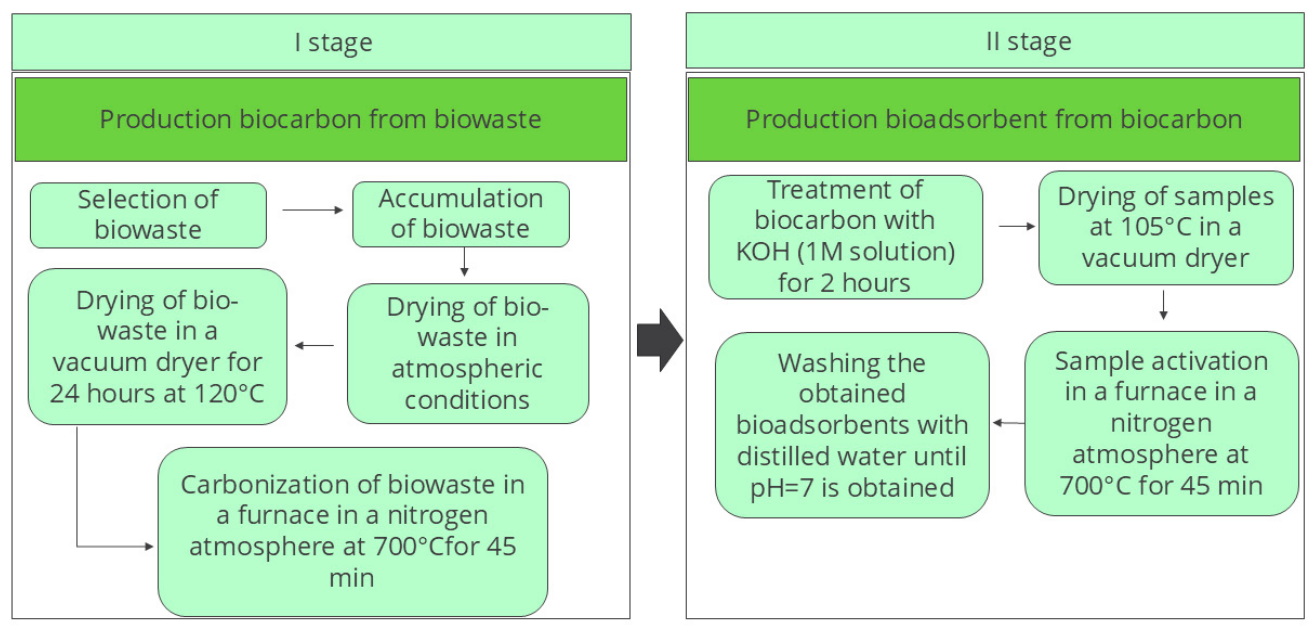
2.1. Preparation of Bioadsorbents
2.2. Characterization of the Bioadsorbents
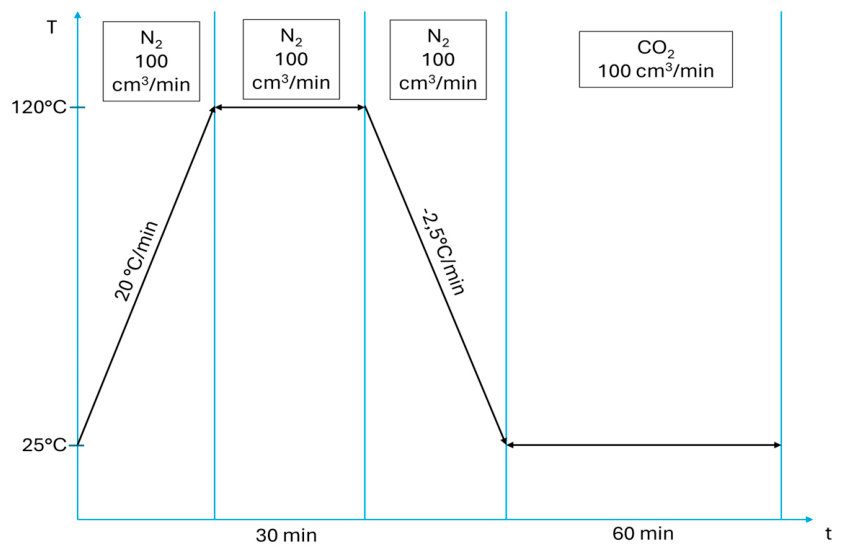
2.3. CO2 Capture
3. Results and Discussion
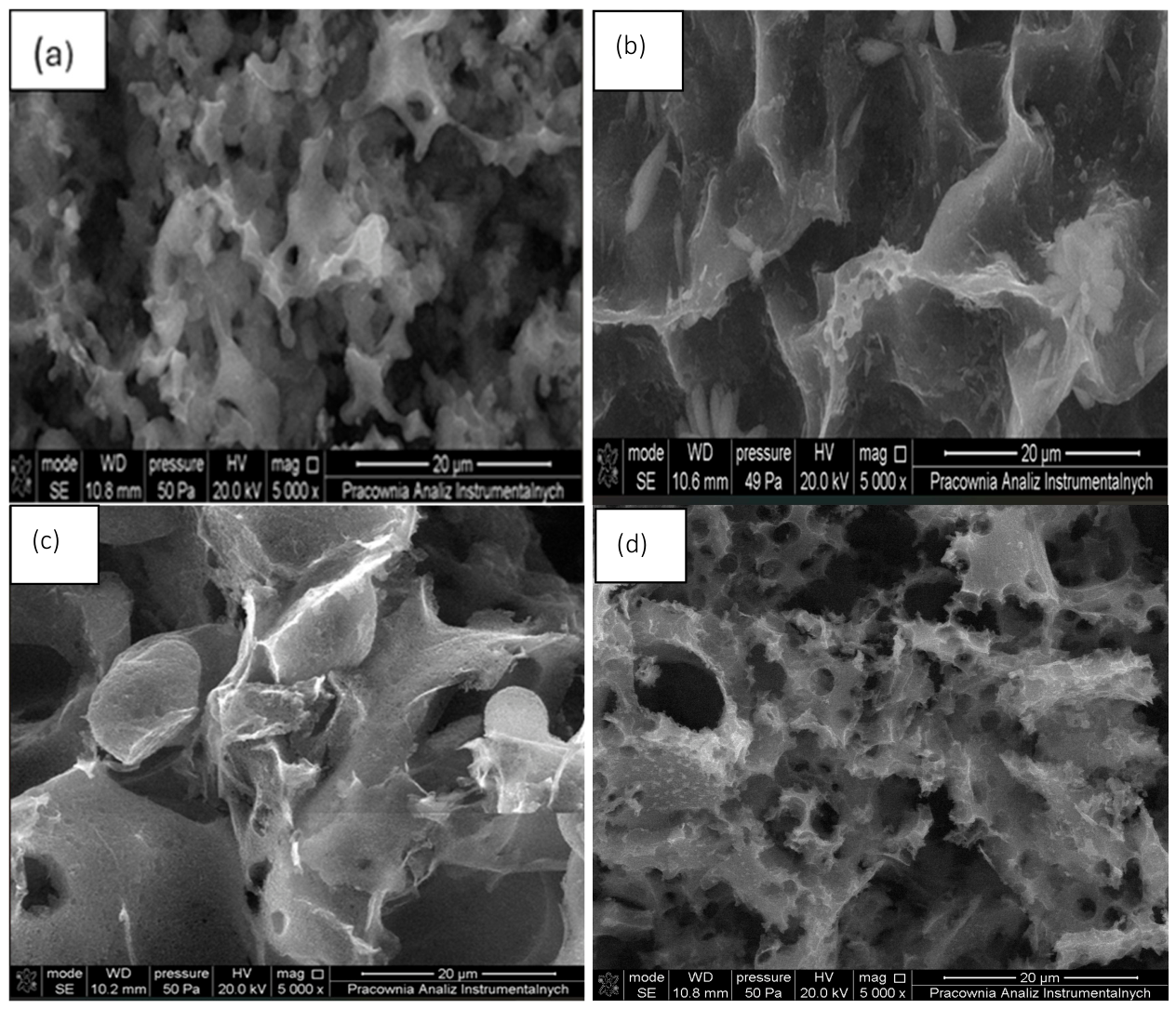
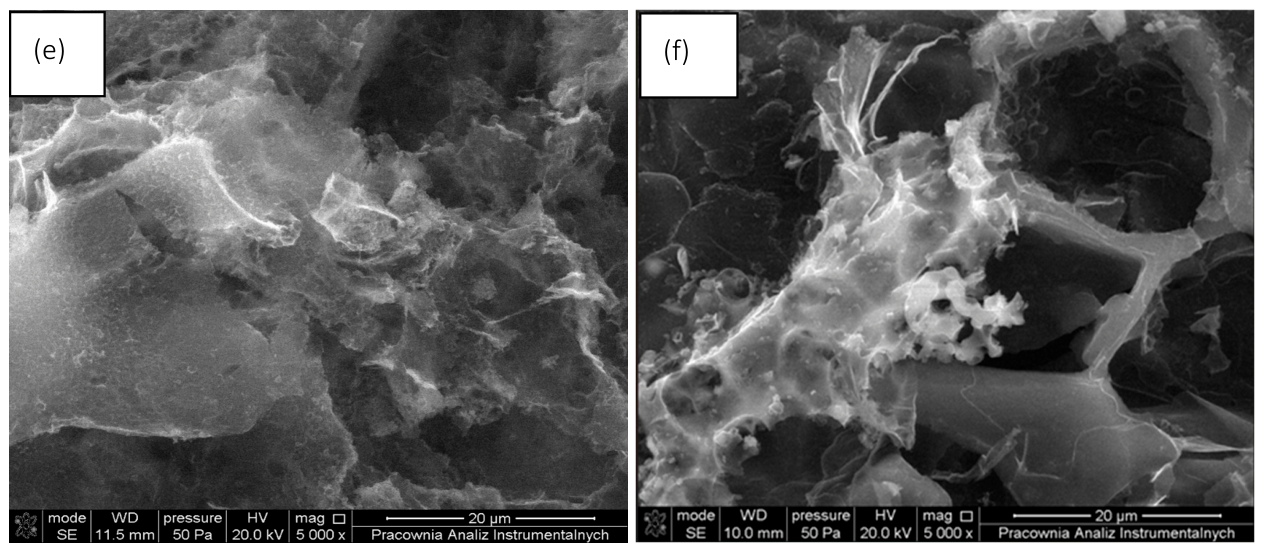
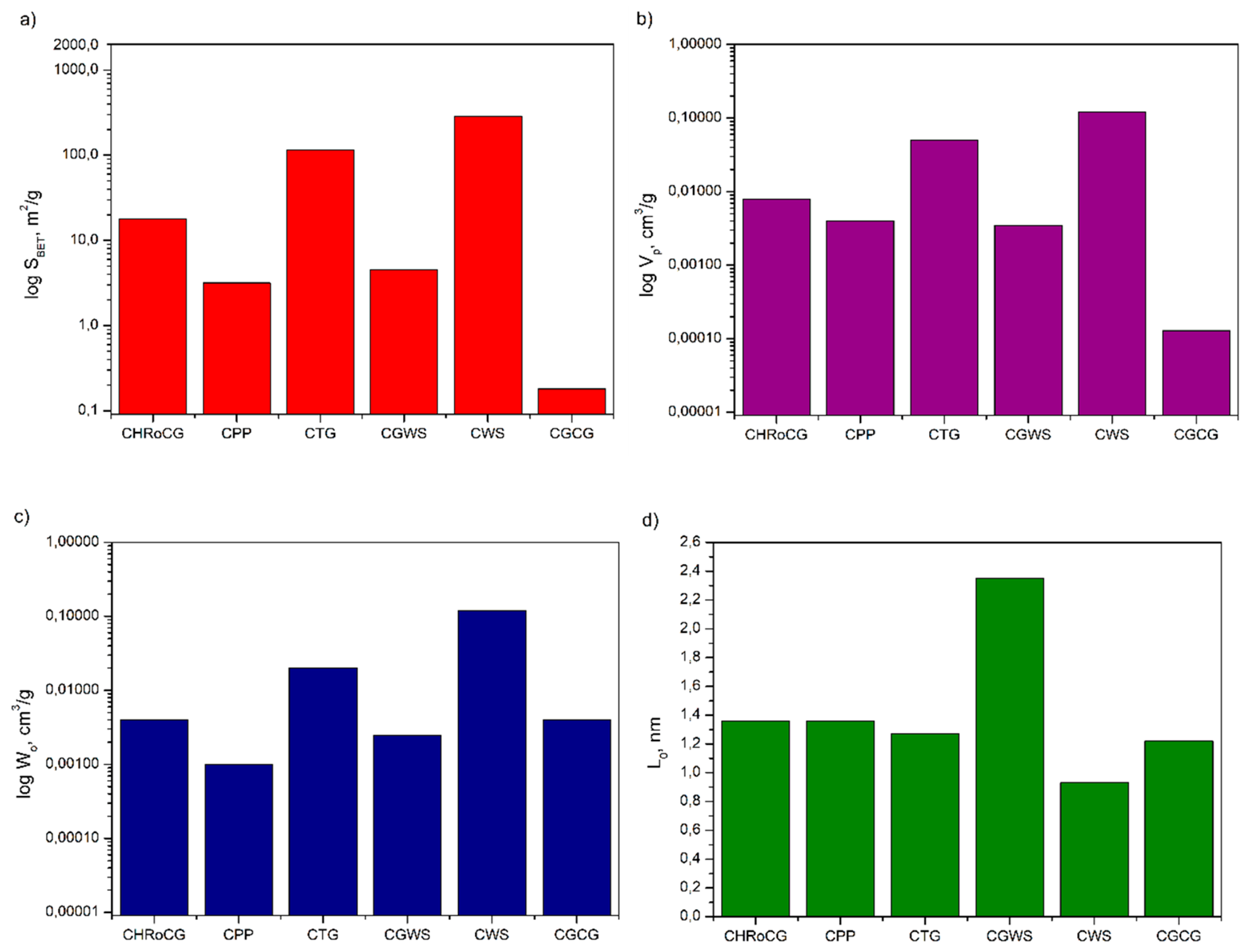
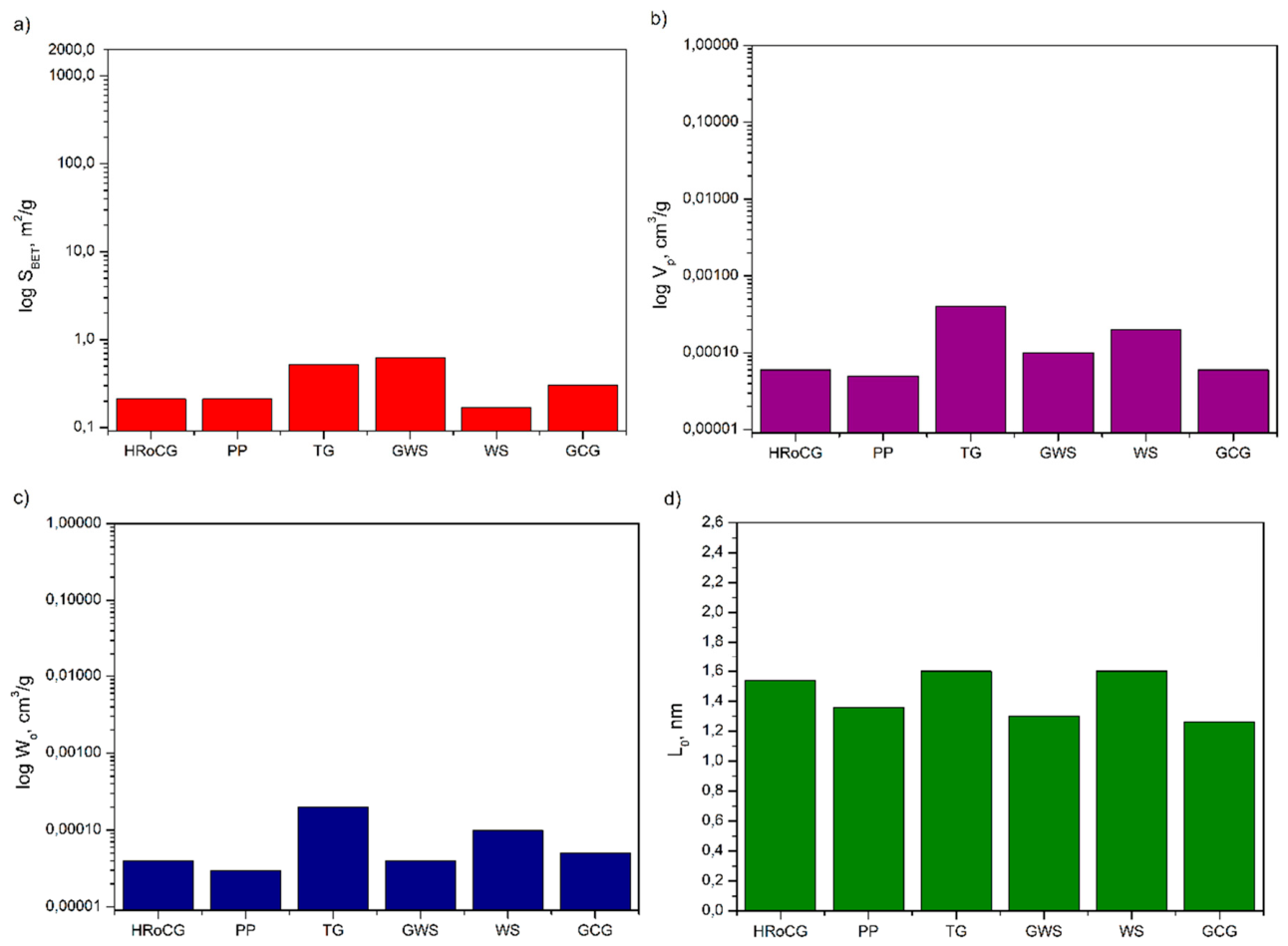
3.1. Physicochemical Properties of the Adsorbents
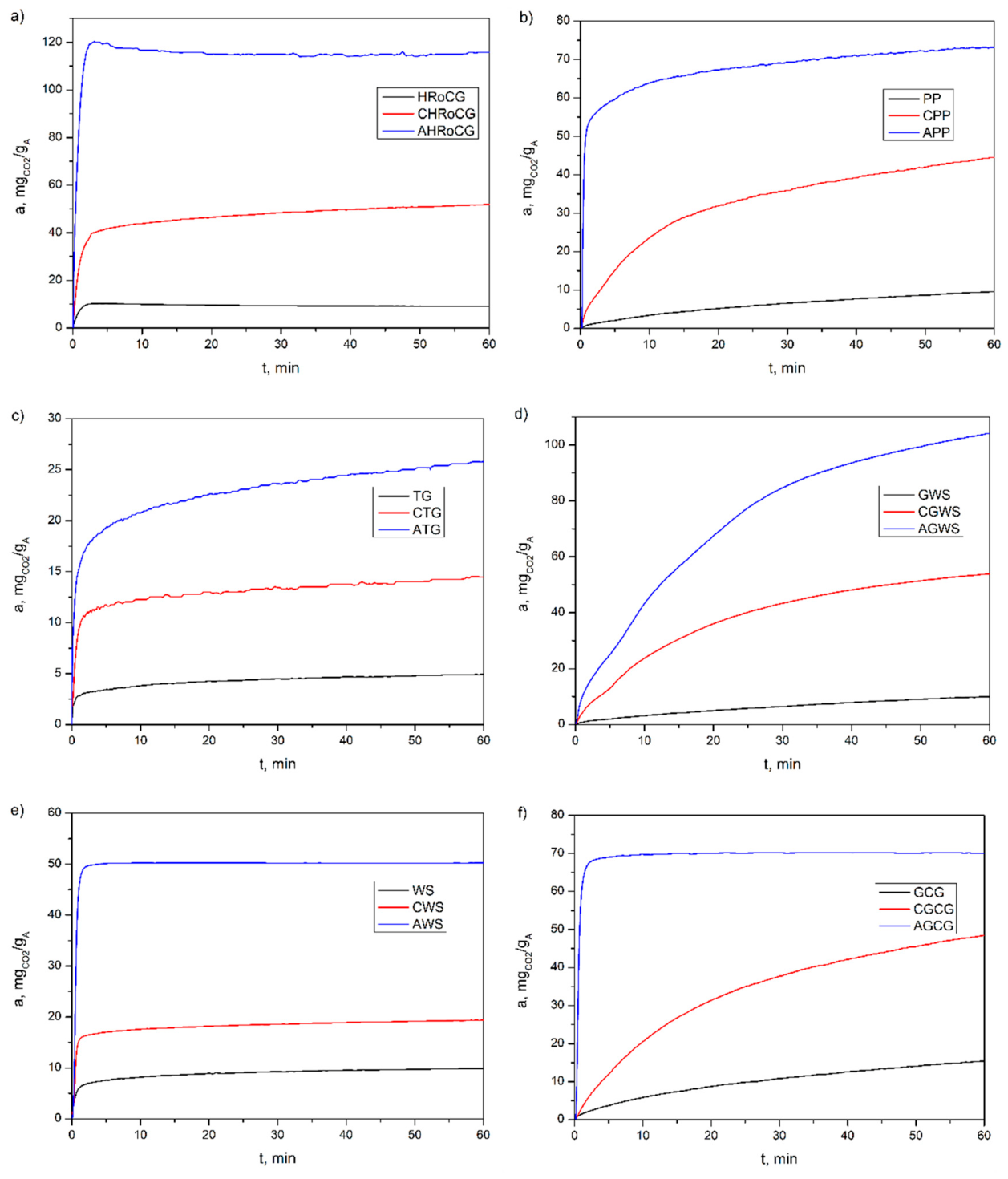
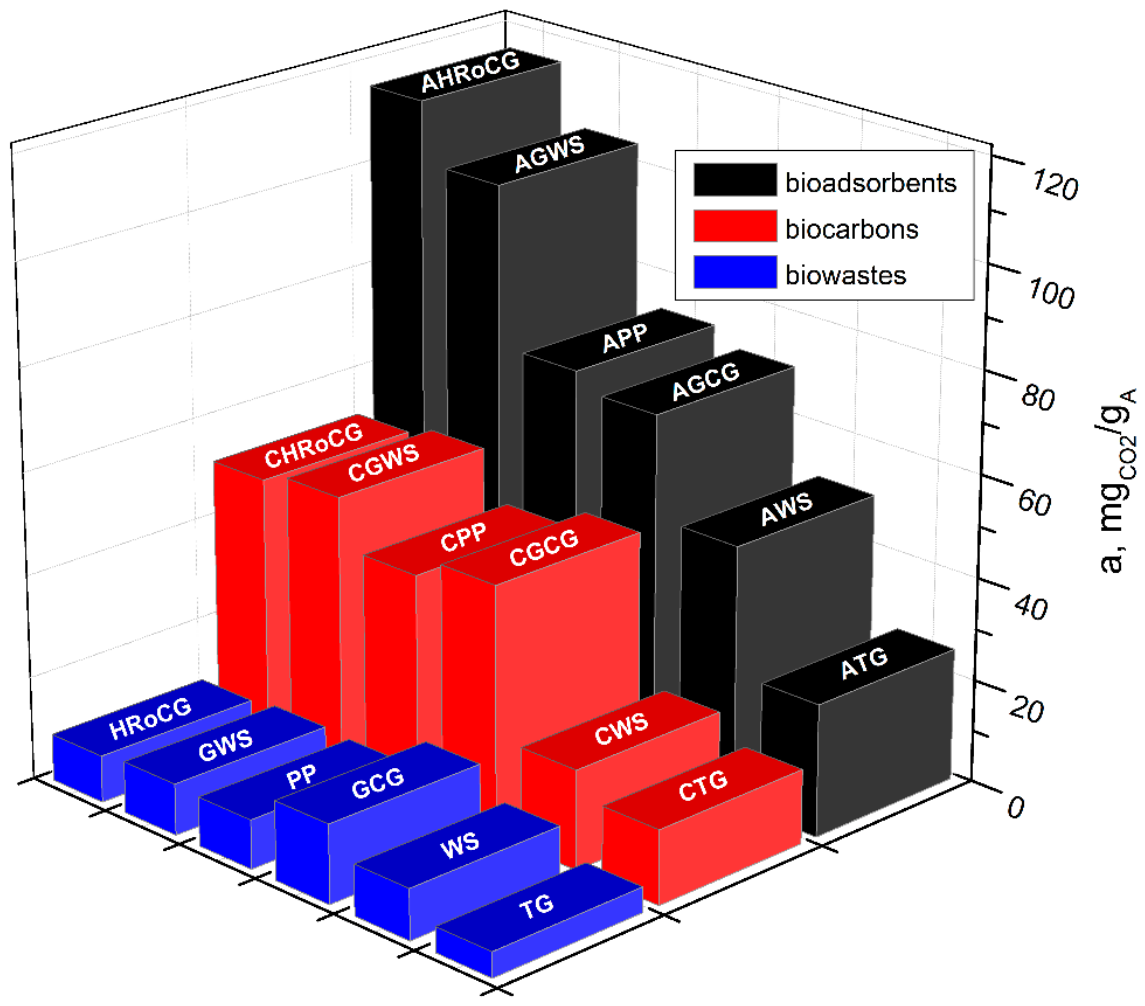
3.2. CO2 Capture by Biowaste, Biocarbon and Bioadsorbents
3.3. Effect of Porous Properties on CO2 Sorption Capacity of Biowaste, Biocarbon and Bioadsorbents
4. Conclusions
Author Contributions
Funding
Data Availability Statement
Conflicts of Interest
Nomenclature
| AGCG | activated green coffee grounds (activated biocarbon) |
| AGWS | activated green walnut shells (activated biocarbon) |
| AHRoCG | activated high roasted coffee grounds (activated biocarbon) |
| APP | activated potato peelings (activated biocarbon) |
| ATG | activated tea grounds (activated biocarbon) |
| AWS | activated walnut shells (activated biocarbon) |
| CGCG | charred green coffee grounds (biocarbon) |
| CGWS | charred green walnut shells (biocarbon) |
| CHRoCG | charred high roasted coffee grounds (biocarbon) |
| CPP | charred potato peelings (biocarbon) |
| CTG | charred tea grounds (biocarbon) |
| CWS | charred walnut shells (biocarbon) |
| GCG | green coffee grounds (biowaste) |
| GWS | green walnut shells (biowaste) |
| HRoCG | high roasted coffee grounds (biowaste) |
| PP | potato peelings (biowaste) |
| TG | tea grounds (biowaste) |
| WS | walnut shells (biowaste) |
| a | CO2 sorption capacity, mgCO2/gA |
| Lo | average pore diameter, nm |
| Q | theta angle, ° |
| SBET | specific surface area, m2/g |
| t | time, min |
| T | temperature, °C |
| Vp | total pore volume, cm3/g |
| Wo | micropore volume, cm3/g |
| λ | wavenumber, cm−1 |
| Va | volume adsorbed, cm3/g |
| D | pore diameter, nm |
References
- Ghiata, I.; Al-Ansari, T. A review of carbon capture and utilisation as a CO2 abatement opportunity within the EWF nexus. TIDEE TERI Inf. Dig. Energy Environ. 2021, 20, 260–261. [Google Scholar] [CrossRef]
- Wawrzyńczak, D.; Majchrzak-Kucęba, I.; Pevida, C.; Bonura, G.; Nogueriche, R.; De Falco, M. Carbon Chain in Carbon Dioxide Industrial Utilization Technologies: Case Study; Taylor & Francis Group: Częstochowa, Poland, 2022. [Google Scholar]
- Modak, A.; Jana, S. Advancement in porous adsorbents for post-combustion CO2 capture. Microporous Mesoporous Mater. 2019, 276, 107–132. [Google Scholar] [CrossRef]
- Akeeb, O.; Wang, L.; Xie, W.; Davis, R.; Alkasrawi, M.; Toan, S. Post-combustion CO2 capture via a variety of temperature ranges and material adsorption proces: A review. J. Environ. Manag. 2022, 313, 115026. [Google Scholar] [CrossRef]
- Wawrzyńczak, D.; Majchrzak-Kucęba, I.; Srokosz, K.; Kozak, M.; Nowak, W.; Zdeb, J.; Smółka, W.; Zajchowski, A. The pilot dual-reflux vacuum pressure swing adsorption unit for CO2 capture from flue gas. Sep. Purif. Technol. 2019, 209, 560–570. [Google Scholar] [CrossRef]
- Olivares-Marín, M.; Maroto-Valer, M.M. Development of adsorbents for CO2 capture from waste materials: A review. Greenh. Gases Sci. Technol. 2012, 2, 20–35. [Google Scholar] [CrossRef]
- Kaur, B.; Singh, J.; Gupta, R.K.; Bhunia, H. Porous carbon derived from polyethylene terephthalate (PET) waste for CO2 capture studies. J. Environ. Manag. 2019, 242, 68–80. [Google Scholar] [CrossRef] [PubMed]
- Olivares-Marin, M.; Garcia, S.; Pevida, C.; Wong, M.S.; Maroto-Valer, M. The influence of the precursor and synthesis method on the CO2 capture capacity of carpet waste-based sorbents. J. Environ. Manag. 2011, 92, 2810–2817. [Google Scholar] [CrossRef]
- Zhu, S.; Zhao, B.; Zhang, H.; Su, Y. Biomas-based adsorbents for post-combustion CO2 capture: Preparation, performances, modeling and assessment. J. Environ. Manag. 2023, 328, 117020. [Google Scholar] [CrossRef] [PubMed]
- Khan, M.H.; Akash, N.M.; Akter, S.; Rukh, M.; Nzediegwu Ch Md Shahinoor, I. A comprehensive review of coconut-based porous materials for wastewater treatment and CO2 capture. J. Environ. Manag. 2023, 338, 117825. [Google Scholar] [CrossRef]
- Sołtysik, M.; Majchrzak-Kucęba, I.; Wawrzyńczak, D. Characterization of Bioadsorbents from Organic Municipal Waste. Materials 2024, 17, 1954. [Google Scholar] [CrossRef]
- Faggiano, A.; Cicatelli, A.; Guarino, F.; Castiglione, S.; Proto, A.; Fiorentino, A.; Motta, O. Oprimizing CO2 capture: Effects of chemical functionalization on woodchip biochar adsorption performance. J. Environ. Manag. 2025, 380, 125059. [Google Scholar] [CrossRef]
- Zhou, S.; Ding, S.; Xu, H.; Zhu, L.; Wang, S. Development and CO2 capture of nitrogen-enriched microporous carbon by coupling waste polyamides with lignocellulosic biomass. J. Environ. Manag. 2024, 369, 122384. [Google Scholar] [CrossRef]
- Kim, J.Y.; Lee, T.; Cha, H.; Song, H.; Kwon, E.E. Changing biomass into carbon-negative through dual-step approach: CO2-assisted pyrolysis and biochar-based CO2 adsorption. J. Environ. Manag. 2025, 383, 125484. [Google Scholar] [CrossRef]
- Zhao, W.; Guo, X.; Zhou, Z.; Wang, Z.; Han, M.; Wang, X. Preparation and CO2 adsorption of N-doped biochar and effect of acetone on its adsorption performance. J. Environ. Manag. 2025, 389, 126041. [Google Scholar] [CrossRef]
- Querejeta, N.; Gil, M.V.; Rubiera, F.; Pevida, C. Sustainable coffee-based CO2 adsorbents: Toward a greener production via hydrothermal carbonization. Greenh. Gases Sci. Technol. 2018, 8, 309–323. [Google Scholar] [CrossRef]
- Kourmentza, C.; Economou, C.h.N.; Tsafrakidou, P.; Kornaros, M. Spent coffee grounds make much more than waste: Exploring recent advances and future exploitation strategies for the valorization of an emerging food waste stream. J. Clean. Prod. 2018, 172, 980–992. [Google Scholar] [CrossRef]
- Deepak, K.R.; Mohan, S.; Dinesha, P.; Balasubramanian, R. CO2 uptake by activated hydrochar derived from orange peel (Citrus reticulata): Influence of carbonization temperatue. J. Environ. Manag. 2023, 342, 118350. [Google Scholar] [CrossRef] [PubMed]
- Monteagudo, J.M.; Durán, A.; Mänttäri, M.; López, S. Insights into the adsorption of CO2 generated from synthetic urban wastewater treatment on olive pomace biochar. J. Environ. Manag. 2023, 339, 117951. [Google Scholar] [CrossRef]
- Nazir, G.; Rehman, A.; Park, S.-J. Valorization of shrimp shell biowaste for environmental remediation: Efficient contender for CO2 adsorption and separation. J. Environ. Manag. 2021, 299, 113661. [Google Scholar] [CrossRef] [PubMed]
- Luo, S.; Chen, S.; Chen, S.; Zhuang, L.; Ma, N.; Xu, T.; Li, Q.; Hou, X. Preparation and characterization of amine-functionalized sugarcane bagasse for CO2 capture. J. Environ. Manag. 2016, 168, 142–148. [Google Scholar] [CrossRef]
- Ouzzine, M.; Serafin, J.; Sreńscek-Nazzal, J. Single step preparation of activated biocarbons derived from pomegranate peels and their CO2 adsorption performance. J. Anal. Appl. Pyrolysis 2021, 160, 105338. [Google Scholar] [CrossRef]
- Tahmasebpoor, M.; Iranvandi, M.; Heidari, M.; Azimi, B.; Pevida, C. Development of novel waste tea-derived activated carbon promoted with SiO2 nanoparticles as highly robust and easily fluidizable sorbent for low-temperature CO2 capture. J. Environ. Chem. Eng. 2023, 11, 110437. [Google Scholar] [CrossRef]
- Pavlas, M.; Dvořáček, J.; Pitschke, T.; Peche, R. Biowaste Treatment and waste-to-energy—Environmental benefits. Energies 2020, 13, 1994. [Google Scholar] [CrossRef]
- De Lira, J.D.A. Exergetic Cost of an Operating Sugarcane Power Plant Análise de Custo Exergetico de Uma Usina no Setor Sucroalcooleiro. Doctoral Dissertation, State University of Campinas, Campinas, Brazil, 2022. [Google Scholar]
- Pawłowski, L.; Pawłowska, M.; Cel, W.; Wójcik Oliveira, K.; Dzierżak, R.; Wang, L.; Li, C.; Zhou, G. Cereals role in carbon dioxide absorption in China and Poland. In The Role of Agriculture in Climate Change Mitigation; Pawłowski, L., Litwińczuk, Z., Zhou, G., Eds.; United States Department of Agriculture: Washington, DC, USA, 2020; pp. 40–44. [Google Scholar]
- Dreyer, H. Towards sustainable potato production: Partnering to support family farmers in Africa. Potato Res. 2017, 60, 237–238. [Google Scholar] [CrossRef]
- Barampouti, E.M.; Christofi, A.; Malamis, D.; Mai, S. A sustainable approach to valorizo potato peel waste towards biofuel production. Biomass Convers. Biorefinery 2023, 13, 8197–8208. [Google Scholar] [CrossRef]
- Biscoff, R.K.; Enweremadu, C.C. Cashew nutshell liquid: A potential inedible source of biodiesel for heavy duty vehicles in sub-Saharan Africa. Energy Sources Part A Recovery Util. Environ. Eff. 2023, 45, 905–923. [Google Scholar]
- Fernandes, A.S.; Mello, F.V.C.; Thode Filho, S.; Carpes, R.M.; Honório, J.G.; Marques, M.R.C.; Felzenszwalb, I.; Ferraz, E.R.A. Impacts of discarded coffee waste on human and environmental health. Ecotoxicol. Environ. Saf. 2017, 141, 30–36. [Google Scholar] [CrossRef]
- Chen, J.; Yang, J.; Hu, X.; Li, Z.; Shen, S.; Radosz, M.; Fan, M. Enhanced CO2 capture capacity of nitrogen-doped biomass-derived porous carbons. ACS Sustain. Chem. Enginnering 2016, 4, 1439–1445. [Google Scholar] [CrossRef]
- Chowdhury, A.; Sarkar, S.; Chowdhury, A.; Bardhan, S.; Mandal, P.; Chowdhury, M. Tea waste management: A case study from West Bengal, Indian. Indian J. Sci. Technol. 2016, 9, 1–6. [Google Scholar] [CrossRef]
- Hughes, S.R.; López-Núñez, J.C.; Jones, M.A.; Moser, B.R.; Cox, E.J.; Lindquist, M.; Galindo-Leva, L.Á.; Riaño-Herrera, N.M.; Rodriguez-Valencia, N.; Gast, F.; et al. Sustainable conversion of coffee and other crop wastes to biofuels and bioproducts using coupled biochemical and thermochemical processes in a multi-stage biorefinery concept. Appl. Microbiol. Biotechnol. 2014, 98, 8413–8431. [Google Scholar] [CrossRef]
- Idrees, M.; Rangari, V.; Jeelani, S. Sustainable packaging waste-derived activated carbon for carbon dioxide capture. J. CO2 Util. 2018, 26, 380–387. [Google Scholar] [CrossRef]
- Ma, Z.; Yang, Z.; Zhang, H.; Liu, Z. Nitrogen-doped microporous carbon materials with uniform pore diameters: Design and applications in CO2 and H2 adsorption. Microporous Mesoporous Mater. 2020, 296, 109992. [Google Scholar] [CrossRef]
- Plaza, M.G.; González, A.S.; Pevida, C.; Rubiera, F. Green coffee based CO2 adsorbent with high performance in postcombustion conditions. Fuel 2015, 140, 633–648. [Google Scholar] [CrossRef]
- Karić, N.; Maia, A.S.; Teodorović, A.; Atanasova, N.; Langergraber, G.; Crini, G.; Riberio, A.R.L.; Dolić, M. Bio-waste valorisation: Agricultural wastes as biosorbents for removal of (in) organic pollutants in wastewater treatment. Chem. Eng. J. Adv. 2022, 9, 100239. [Google Scholar] [CrossRef]
- Kim, M.J.; Choi, S.W.; Kim, H.; Mun, S.; Lee, K.B. Simple synthesis of spent coffee ground-based microporous carbons using K2CO3 as an activation agent and their application to CO2 capture. Chem. Eng. J. 2020, 397, 125404. [Google Scholar] [CrossRef]
- Travis, W.; Gadipelli, S.; Guo, Z. Superior CO2 adsorption from waste coffee ground derived carbons. RSC Adv. 2015, 5, 29558–29562. [Google Scholar] [CrossRef]
- Plaza, M.G.; González, A.; Pevida, C.; Pis, J.J.; Rubiera, F. Valorization of spent coffee grounds as CO2 adsorbents for postcombustion capture applications. Appl. Energy 2012, 99, 272–279. [Google Scholar] [CrossRef]
- Ogungbenro, A.E.; Quang, D.V.; Al-Ali, K.; Abu-Zahra, M.R.M. Activated carbon from date seeds for CO2 capture applications. Energy Procedia 2017, 114, 2313–2321. [Google Scholar] [CrossRef]
- Ogungbenro, A.E.; Quang, D.V.; Al-Ali, K.A.; Vega, L.F.; Abu-Zahra, M.R.M. Physical synthesis and characterization of activated carbon from date seeds for CO2 capture. J. Environ. Chem. Eng. 2018, 6, 4245–4252. [Google Scholar] [CrossRef]
- Alazmi, A.; Nicolae, S.A.; Modugno, P.; Hasanov, B.E.; Titirici, M.M.; Costa, P.M.F.J. Activated Carbon from Palm Date Seeds for CO2 Capture. Int. J. Environ. Res. Public Health 2021, 18, 12142. [Google Scholar] [CrossRef]
- Abuelnoor, N.; AlHajaj, A.; Khaleel, M.; Vega, L.F.; Zahra, M.A. Single step synthesis and characterization of activated carbon from date seeds for CO2 capture. In Proceedings of the 15th Greenhouse Gas Control Technologies Conference, Cheltenham, UK, 15–21 March 2021. [Google Scholar]
- Lillo-Ródenas, M.A.; Cazorla-Amorós, D.; Linares-Solano, A. Understanding chemical reactions between carbons and NaOH and KOH: An insight into the chemical activation mechanism. Carbon 2003, 41, 267–275. [Google Scholar] [CrossRef]
- Zhu, L.; Zha, N.; Tong, L.; Lv, Y. Structural and adsorption characteristics of potassium carbonate activated biochar. R. Soc. Chem. Adv. 2018, 8, 21012–21019. [Google Scholar] [CrossRef]
- Chen, W.; Gong, M.; Li, K.; Xia, M.; Chen, Z.; Xiao, H.; Fang, Y.; Chen, Y.; Yang, H.; Chen, H. Insight into KOH activation mechanism during biomass pyrolysis: Chemical reactions between O-containing groups and KOH. Appl. Energy 2020, 278, 115730. [Google Scholar] [CrossRef]
- Raymund-Piñero, E.; Azaïs, P.; Cacciaguerra, T.; Cazorla-Amorós, D.; Linares-Solano, A.; Béguin, F. KOH and NaOH activation mechanisms of multiwalled carbon nanotubes with different structural organisation. Carbon 2005, 43, 786–795. [Google Scholar] [CrossRef]
- Yue, L.; Xia, Q.; Wang, L.; DaCosta, H.; Yang, J.; Hu, X. CO2 adsorption at nitrogen-doped carbons prepared by K2CO3 activation of urea-modified coconut shell. J. Colloid Interface Sci. 2018, 511, 259–267. [Google Scholar] [CrossRef]
- Ello, A.S.; Souza, L.K.C.; Trokorey, A.; Jaroniec, M. Coconut shell-based microporous carbons for CO2 capture. Microporous Mesoporous Mater. 2013, 180, 280–283. [Google Scholar] [CrossRef]
- Vargas, D.P.; Giraldo, L.; Silvestre-Albero, J.; Moreno-Piraján, J.C. CO2 adsorption on binderless activated carbon monoliths. Adsorption 2011, 17, 497–504. [Google Scholar] [CrossRef]
- Li, D.; Ma, T.; Zhang, R.; Tian, Y.; Qiao, Y. Preparation of porous carbons with high low-pressure CO2 uptake by KOH activation of rice husk char. Fuel 2015, 139, 68–70. [Google Scholar] [CrossRef]
- Panwar, N.L.; Kothari, R.; Tyagi, V.V. Thermo chemical conversion of biomass—Eco friendly energy routes. Renew. Sustain. Energy Rev. 2012, 16, 1801–1816. [Google Scholar] [CrossRef]
- Dong, Q.; Zhang, Y.; Li, M.; Li, B.; Li, C.; Liu, D. CO2 capture and microwave absorption by pine sawdust biochars obtained via molten salt pyrolysis. Biomass Bioenergy 2025, 201, 108053. [Google Scholar] [CrossRef]
- Li, B.; Li, M.; Xie, X.; Li, C.; Liu, D. Pyrolysis of rice husk in molten lithium chloride: Biochar structure evolution and CO2 adsorption. J. Energy Inst. 2024, 113, 101526. [Google Scholar] [CrossRef]
- Vargas, D.P.; Giraldo, L.; Erto, A.; Moreno-Piraján, J.C. Chemical modification of activated carbon monoliths for CO2 adsorption. J. Therm. Anal. Calorim. 2013, 114, 1039–1047. [Google Scholar] [CrossRef]
- Giraldo, L.; Vargas, D.P.; Moreno-Piraján, J.C. Study of CO2 adsorption on chemically modified activated carbon with nitric acid and ammonium aqueous. Front. Chem. 2020, 8, 543452. [Google Scholar] [CrossRef]
- Sergio, A.; Giraldo, L.; Moreno-Piraján, J.C. Adsorption of CO2 on activated carbons prepared by chemical activation with cupric nitrate. Am. Chem. Soc. Omega 2020, 5, 10423–10432. [Google Scholar]
- He, S.; Chen, G.; Xiao, H.; Shi, G.; Ruan, C.; Ma, Y.; Dai, H.; Yuan, B.; Chen, X.; Yang, X. Facile preparation of N-doped activated carbon produced from rice husk for CO2 capture. J. Colloid Interface Sci. 2021, 582, 90–101. [Google Scholar] [CrossRef]
- Boonpoke, A.; Chiarakorn, S.; Laosiripojana, N.; Towprayoon, S.; Chidthaisong, A. Synthesis of activated carbon and MCM-41 from bagasse and rice husk and their carbon dioxide adsorption capacity. J. Sustain. Energy Environ. 2011, 2, 77–81. [Google Scholar]
- Serafin, J.; Narkiewicz, U.; Morawski, A.W.; Wróbel, R.J.; Michalkiewicz, B. Highly microporous activated carbons from biomass for CO2 capture and effective micropores at different conditions. J. CO2 Util. 2017, 18, 73–79. [Google Scholar] [CrossRef]
- McEnanev, B. Estimation of the dimensions of micropores in active carbons using the Dubinin-Radushkevich equation. Carbon 1987, 25, 69–75. [Google Scholar] [CrossRef]
- Carrott, P.J.M.; Carrott, R.M. Evaluation of the Stoeckli method for the estimation of micropore size distributions of activated charcoal cloths. Carbon 1999, 37, 647–656. [Google Scholar] [CrossRef]
- Huang, Y.; Ma, E.; Zhao, G. Thermal and structure analysis on reaction mechanisms during the preparation of activated carbon fibers by KOH activation from liquefied wood-based fibers. Ind. Crops Prod. 2015, 69, 447–455. [Google Scholar] [CrossRef]
- Wang, L.; Wang, X.; Zou, B.; Ma, X.; Qu, Y.; Rong, C.; Li, Y.; Su, Y.; Wang, Z. Preparation of carbon black from rice husk by hydrolysis carbonization and pyrolysis. Bioresour. Technol. 2011, 102, 8220–8224. [Google Scholar] [CrossRef]
- Mukherjee, A.; Borugadda, V.B.; Dynes, J.J.; Niu, C.; Dalai, A.K. Carbon dioxide capture from flue gas in biochar produced from spent coffee grounds: Effect of surface chemistry and porous structure. J. Environ. Chem. Eng. 2021, 9, 106049. [Google Scholar] [CrossRef]
- Aranovich, G.L.; Donohue, M.D. Adsorption isotherms for microporous adsorbents. Carbon 1995, 33, 1369–1375. [Google Scholar] [CrossRef]
- Wang, J.; Kaskel, S. KOH activation of carbon-based materials for energy storage. J. Mater. Chem. 2012, 22, 23710–23725. [Google Scholar] [CrossRef]
- Qu, J.; Wang, Y.; Tian, X.; Jiang, Z.; Deng, F.; Tao, Y.; Jiang, Q.; Wang, L.; Zhang, Y. KOH-activated porous biochar with high specific surface area for adsorptive removal of chromium (VI) and naphthalene from water: Affecting factors, mechanisms and reusability exploration. J. Hazard. Mater. 2021, 401, 123292. [Google Scholar] [CrossRef]
- Petrovic, B.; Gorbounov, M.; Soltani, S.M. Impact of surface functional groups and their introduction methods on the mechanisms of CO2 adsorption on porous carbonaceous adsorbents. Carbon Capture Sci. Technol. 2022, 3, 100045. [Google Scholar] [CrossRef]
- Lozano-Castelló, D.; Cazorla-Amorós, D.; Linares-Solano, A. Usefulness of CO2 adsorption at 273 K for the characterization of porous carbons. Carbon 2004, 42, 1233–1242. [Google Scholar] [CrossRef]

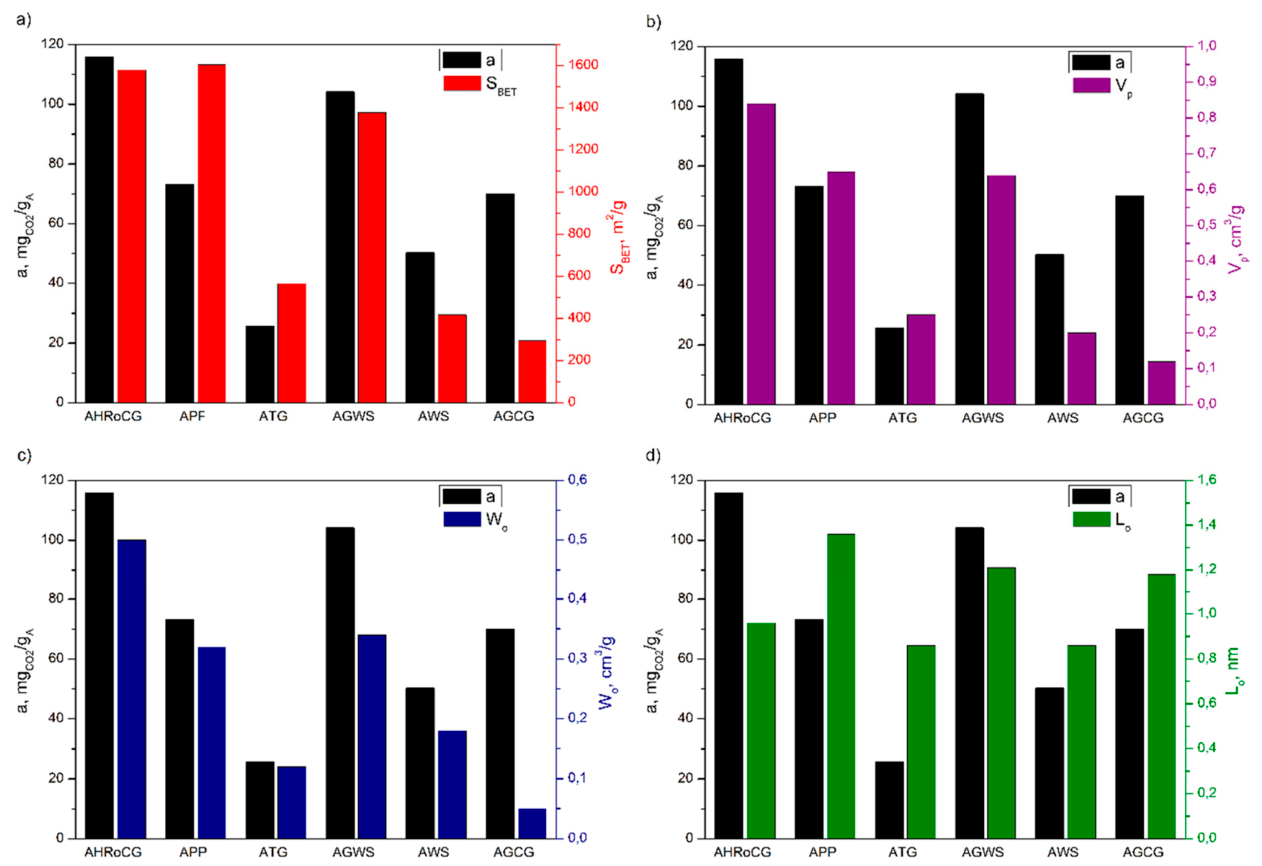
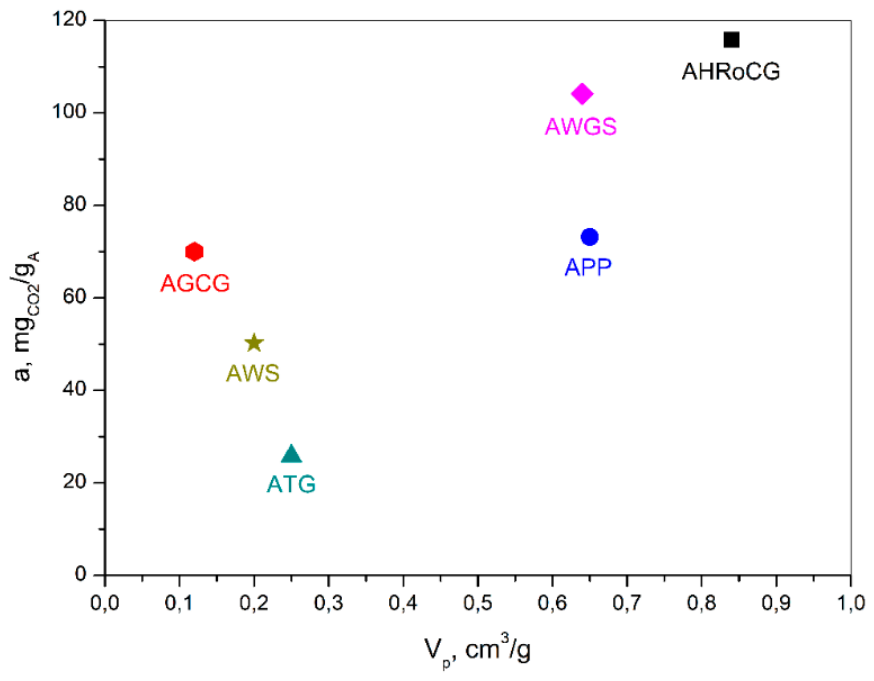

| Biowaste | Bioadsorbent | Pore Structure Parameters (SBET; Vp; W0) | Sorption CO2, mgCO2/gA 25 °C, 1 Bar | Ref. |
|---|---|---|---|---|
| coffee grounds | CG800-1 | 1692; (-); (-) | 195.0 | [38] |
| NCLK-3 | 840; (-); (-) | 131.4 | [40] | |
| CG 700 2-1 | 1624; (-); (-) | 193.5 | [39] | |
| coconut shell | NC-650-4 | 1687; (-); (-) | 210.0 | [31] |
| CN-600-3 | 1034; (-); (-) | 162.0 | [51] | |
| Cnut-3.5 h | 1327; (-); (-) | 170.0 | [50] | |
| carrot peels | CP | 1379; 0.58; 0.51 | 185.0 | [61] |
| pomegranate peels | PP-K-800 | 2144; 1.28; (-) | 159.0 | [22] |
| waste tea | WTAC | 256.5; (-); (-) | 87.4 | [23] |
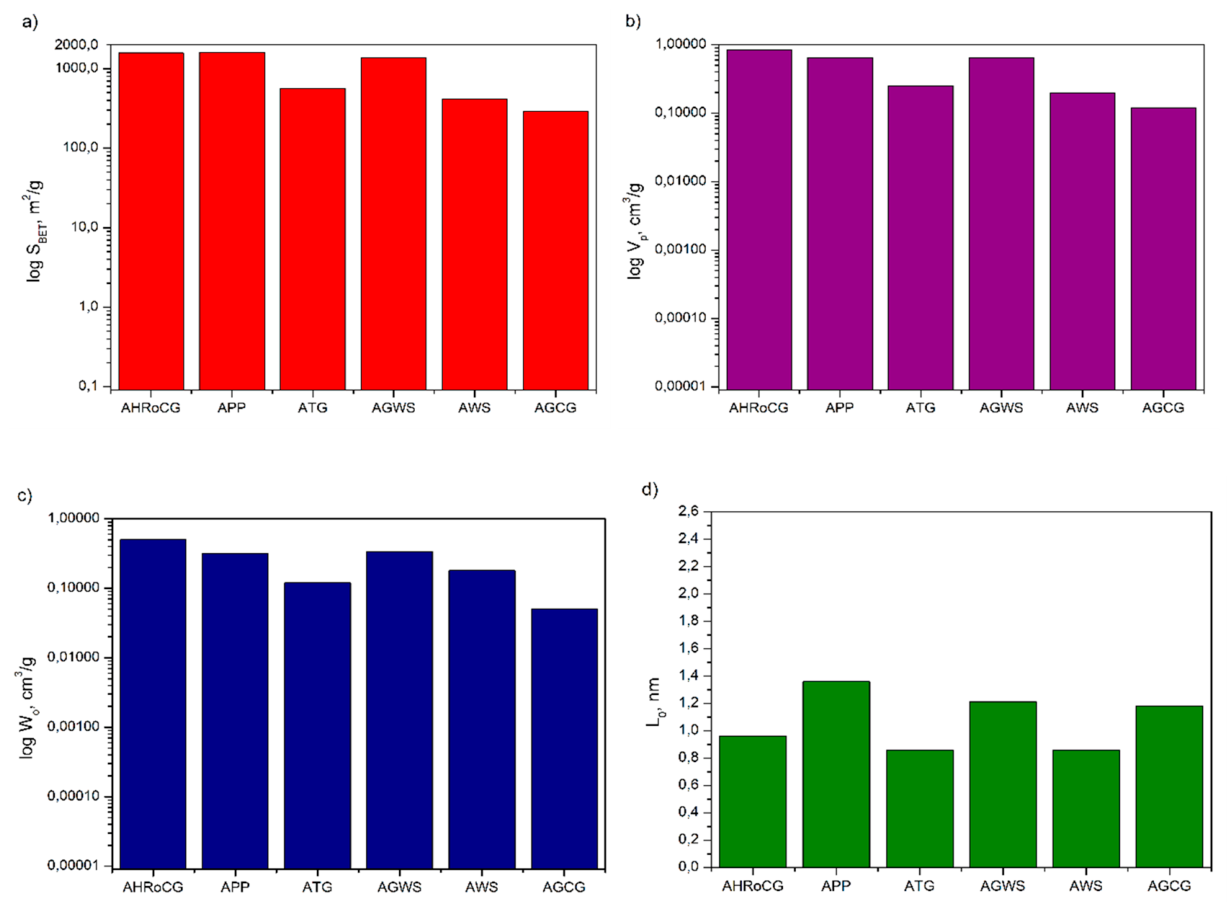
| high roasted coffee grounds (HRoCG) | AHRoCG | 1580; 0.84; 0.5 | 115.8 | This study |
| potato peelings (PP) | APP | 1604; 0.65; 0.32 | 73.2 | This study |
| tea grounds (TG) | ATG | 564; 0.25; 0.12 | 25.8 | This study |
| green walnut shells (GWS) | AGWS | 1376; 0.64; 0.34 | 104.1 | This study |
| walnut shells (WS) | AWS | 416; 0.2; 0.18 | 50.2 | This study |
| green coffee grounds (GCG) | AGCG | 293; 0.12; 0.05 | 70.0 | This study |
Disclaimer/Publisher’s Note: The statements, opinions and data contained in all publications are solely those of the individual author(s) and contributor(s) and not of MDPI and/or the editor(s). MDPI and/or the editor(s) disclaim responsibility for any injury to people or property resulting from any ideas, methods, instructions or products referred to in the content. |
© 2026 by the authors. Licensee MDPI, Basel, Switzerland. This article is an open access article distributed under the terms and conditions of the Creative Commons Attribution (CC BY) license.
Share and Cite
Sołtysik, M.; Majchrzak-Kucęba, I.; Wawrzyńczak, D. Bioadsorbents from Household Biowastes: A Sustainable Solution for CO2 Capture. Materials 2026, 19, 1937. https://doi.org/10.3390/ma19101937
Sołtysik M, Majchrzak-Kucęba I, Wawrzyńczak D. Bioadsorbents from Household Biowastes: A Sustainable Solution for CO2 Capture. Materials. 2026; 19(10):1937. https://doi.org/10.3390/ma19101937
Chicago/Turabian StyleSołtysik, Marcelina, Izabela Majchrzak-Kucęba, and Dariusz Wawrzyńczak. 2026. "Bioadsorbents from Household Biowastes: A Sustainable Solution for CO2 Capture" Materials 19, no. 10: 1937. https://doi.org/10.3390/ma19101937
APA StyleSołtysik, M., Majchrzak-Kucęba, I., & Wawrzyńczak, D. (2026). Bioadsorbents from Household Biowastes: A Sustainable Solution for CO2 Capture. Materials, 19(10), 1937. https://doi.org/10.3390/ma19101937