Suppression Mechanism of Early-Age Autogenous Shrinkage Cracking in Low Water-to-Binder Ratio Cement-Based Materials Incorporating Ground Granulated Blast-Furnace Slag and Silica Fume

Abstract
1. Introduction
2. Experimental Materials
2.1. Materials
- 1.
- Cement
- 2.
- GGBS
- 3.
- SF
- 4.
- Superplasticizer
- 5.
- Water
- 6.
- Coarse Aggregate
- 7.
- Fine Aggregate
- 8.
- Mixture Proportioning Design
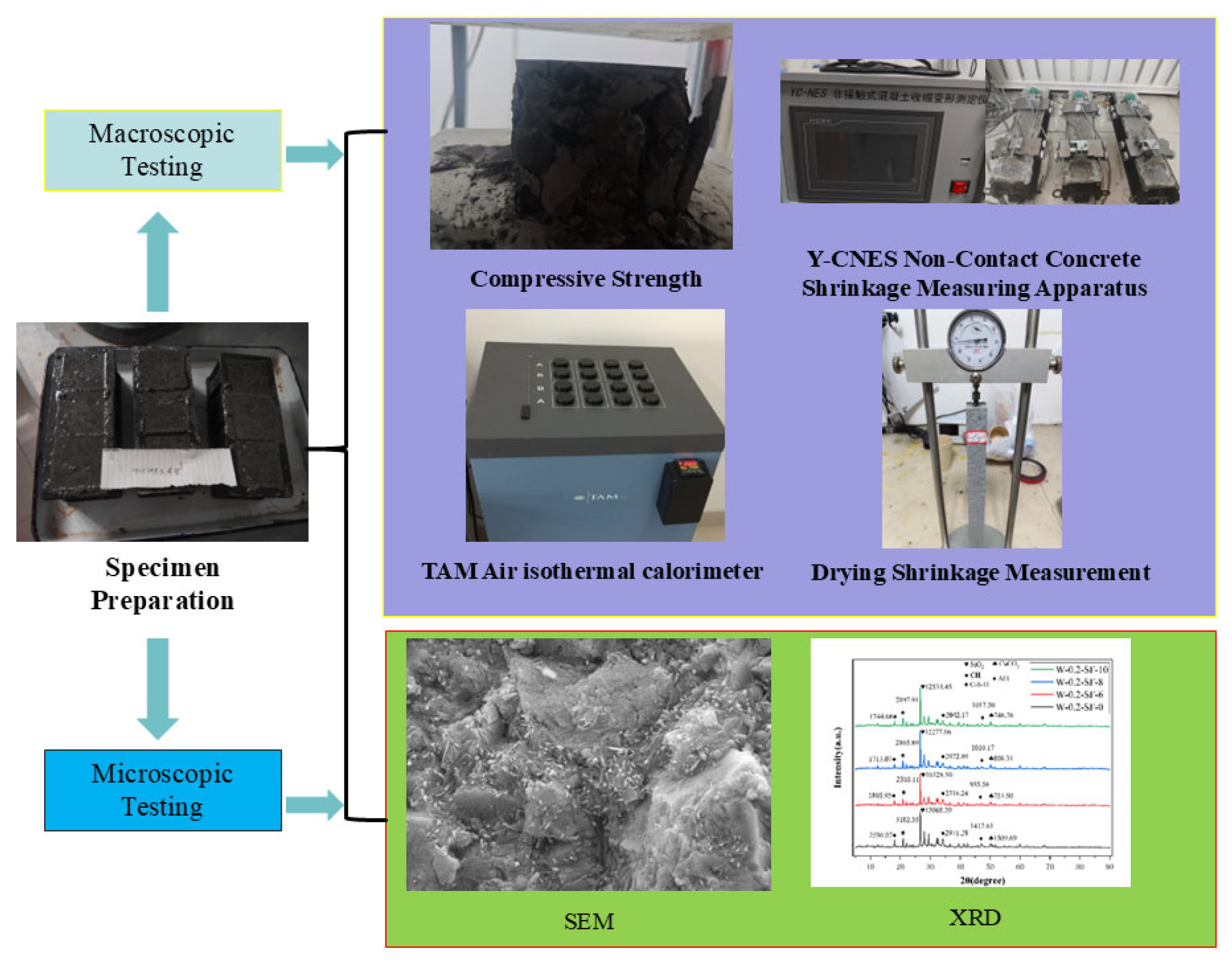
2.2. Experimental Methods and Testing Apparatus
- 1.
- Specimen Preparation
- 2.
- Compressive Strength Testing
- 3.
- Autogenous Shrinkage Test
- 4.
- Drying Shrinkage Test
- 5.
- Heat of Hydration Test
- 6.
- X-ray Diffraction (XRD) Analysis
- 7.
- SEM microstructure
3. Results and Discussion
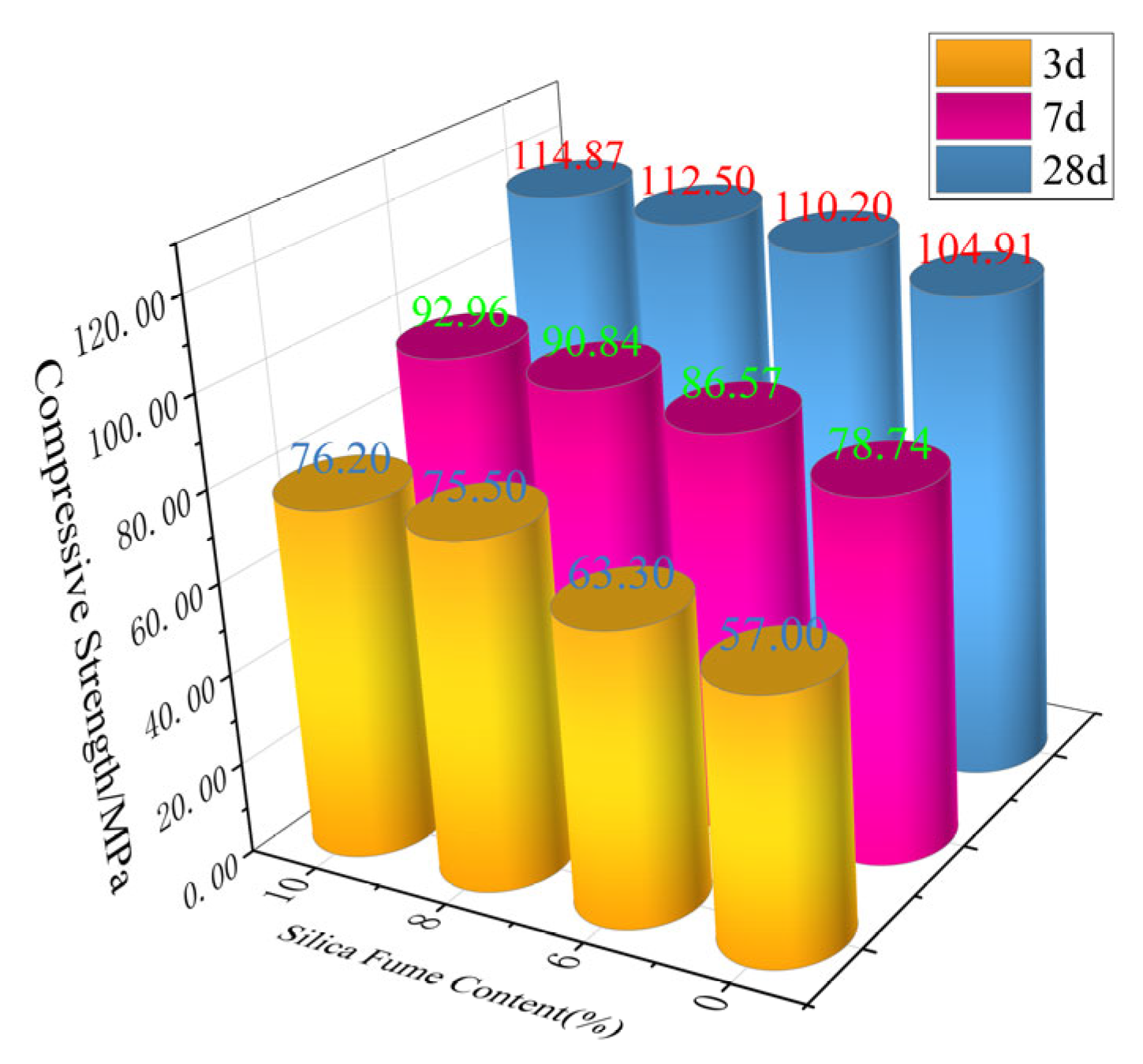
3.1. Analysis of Mechanical Properties of GGBS-SF Composite Concrete
3.2. Analysis of Shrinkage Properties of GGBS-SF Composite Concrete
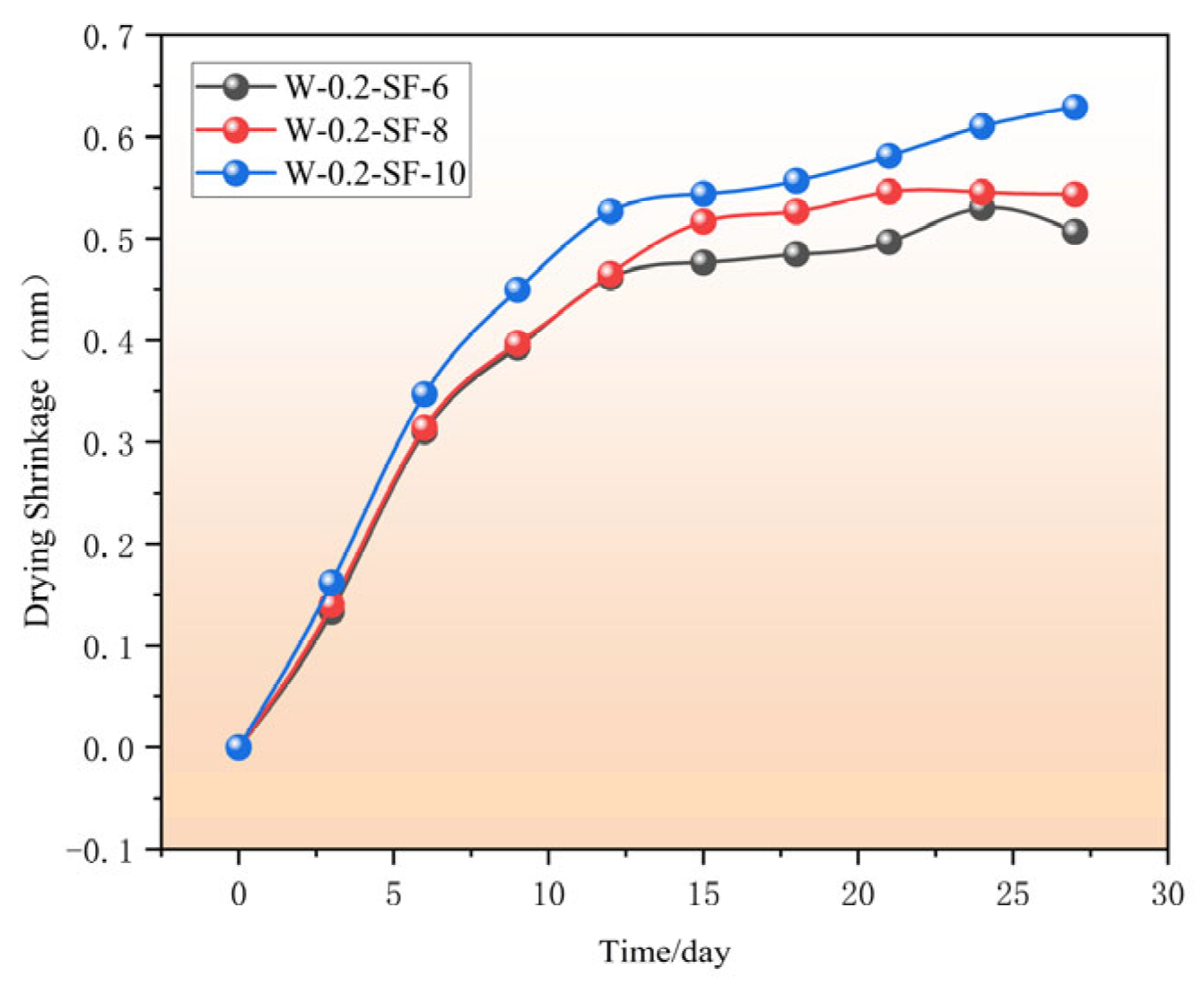
3.2.1. Drying Shrinkage Analysis
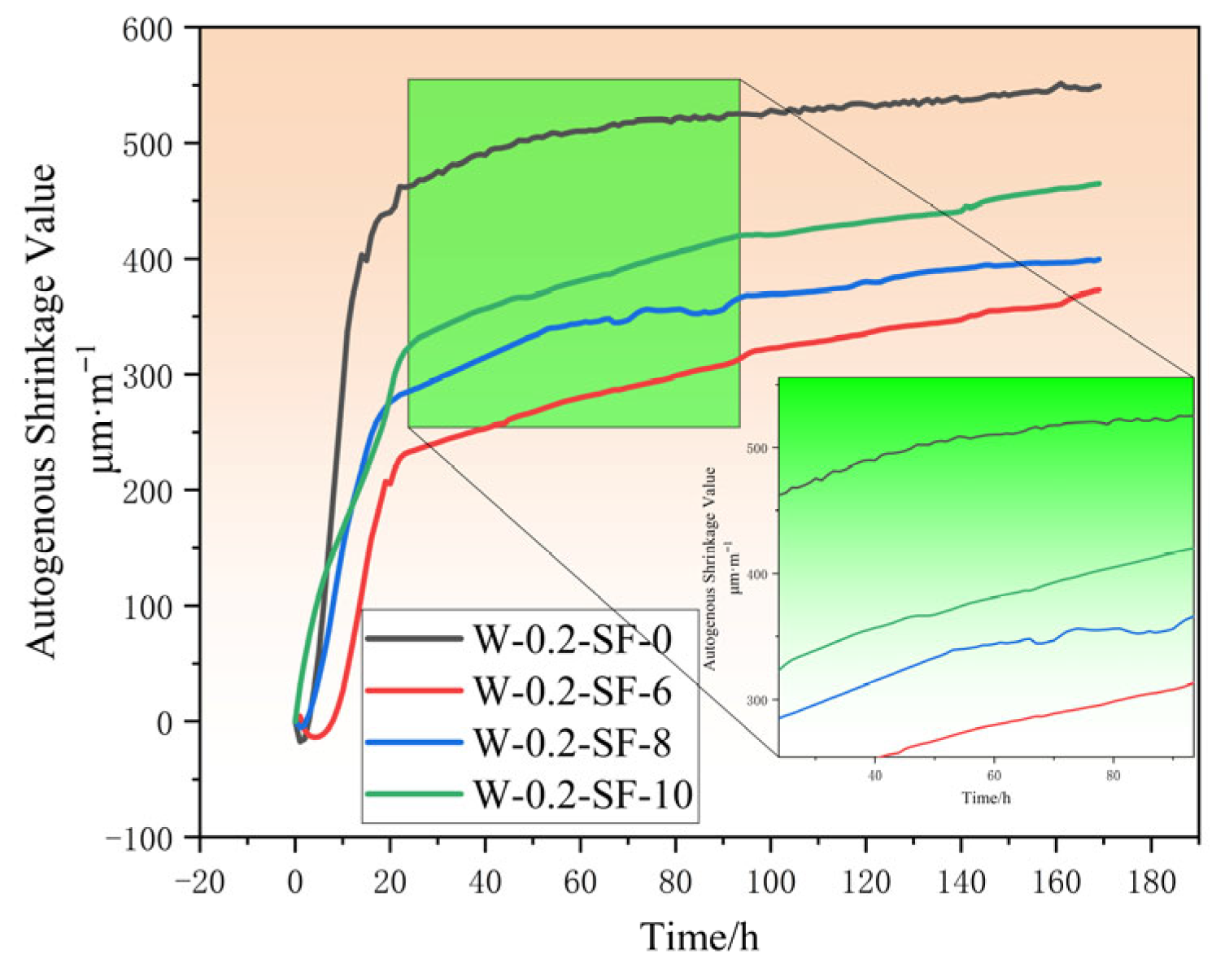
3.2.2. Autogenous Shrinkage Analysis
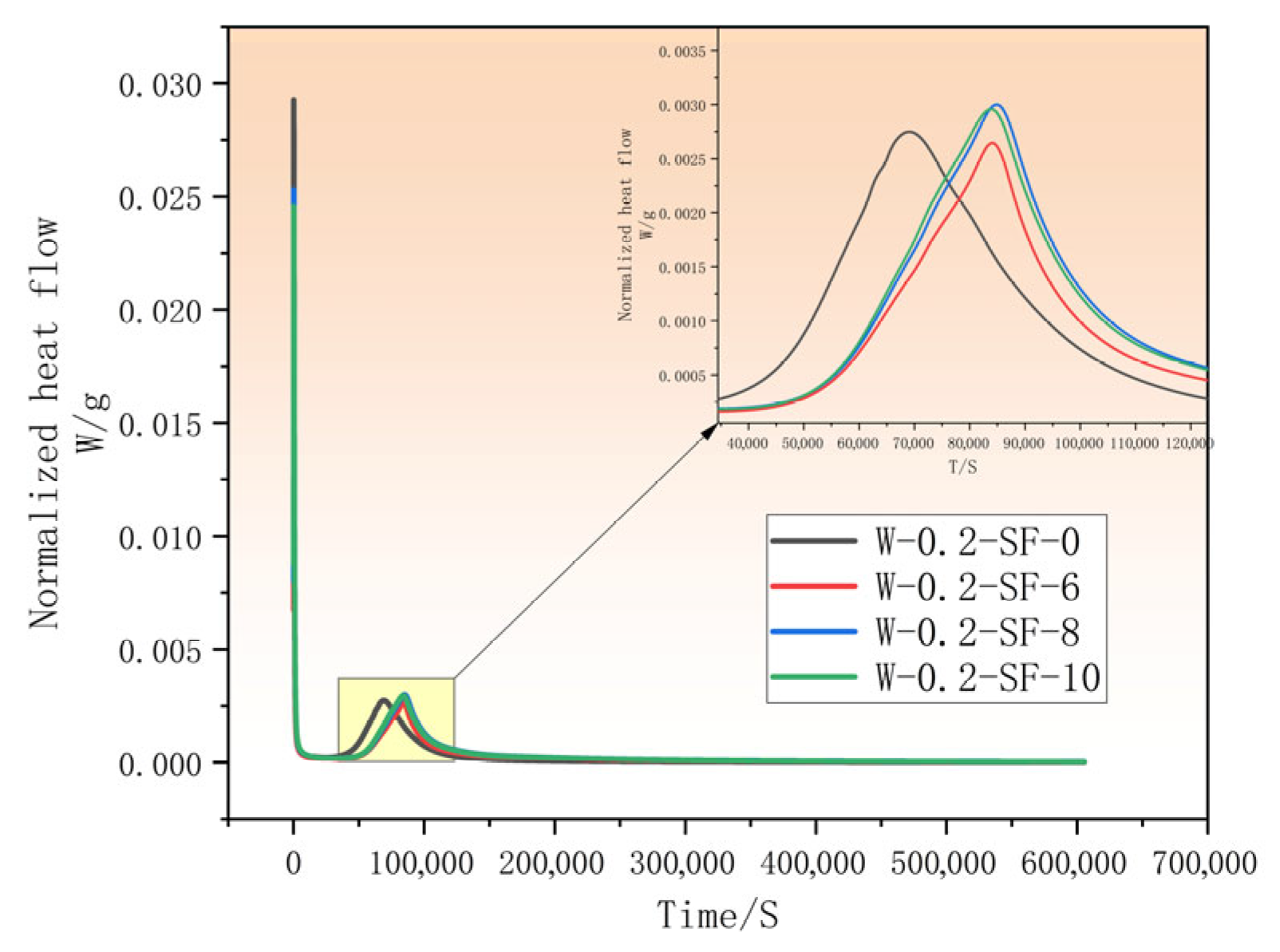
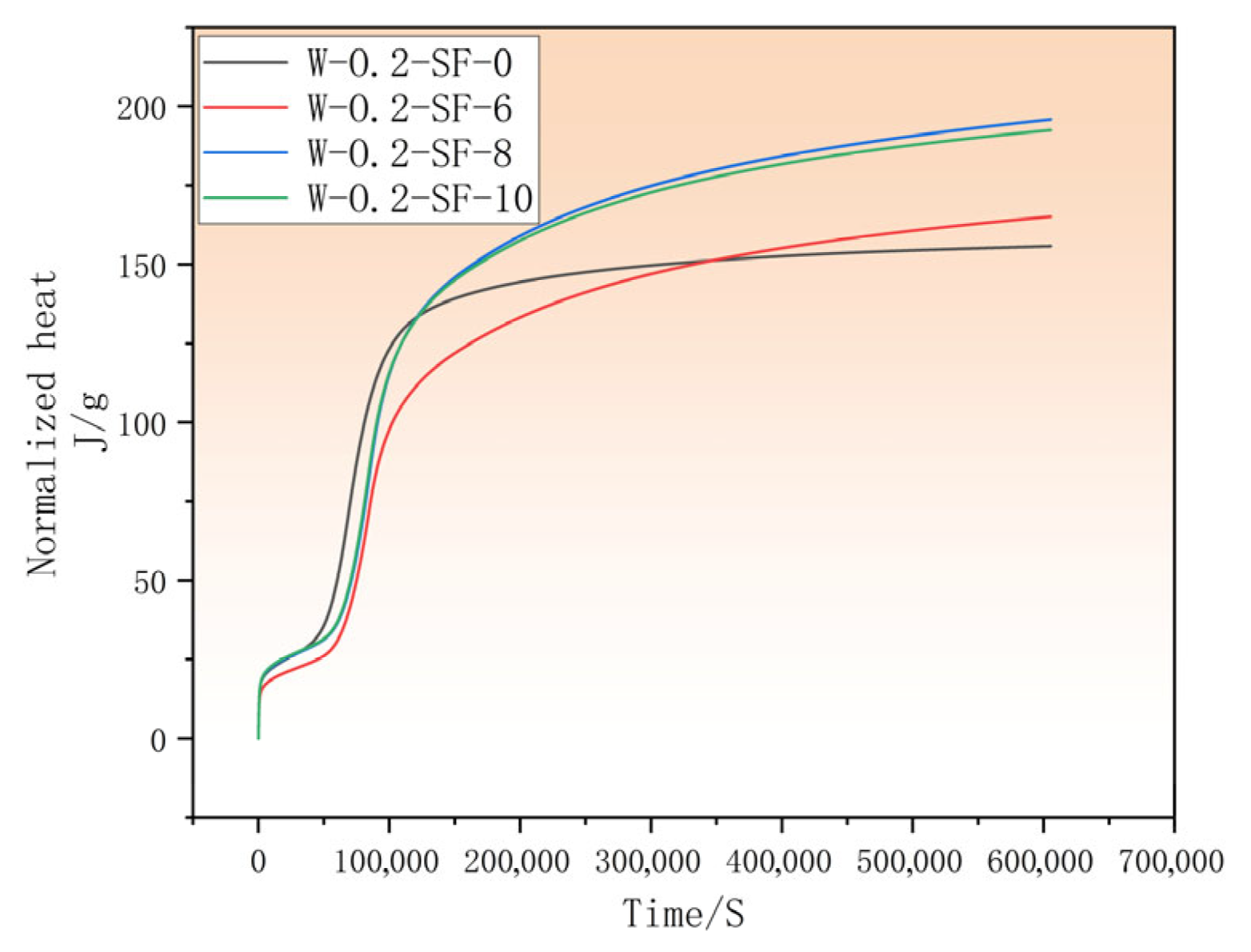
3.3. Analysis of Hydration Heat in GGBS-SF Composite Concrete
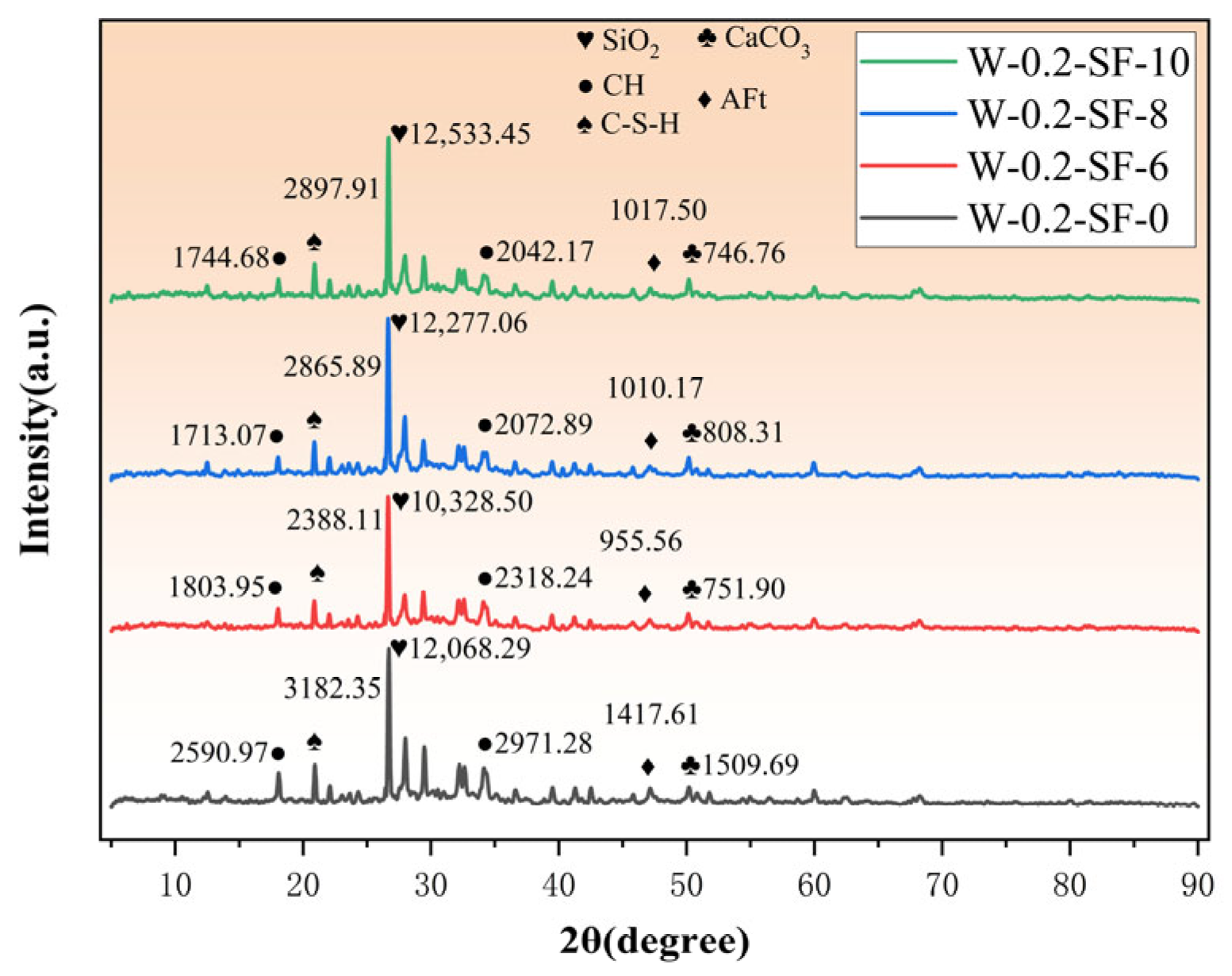
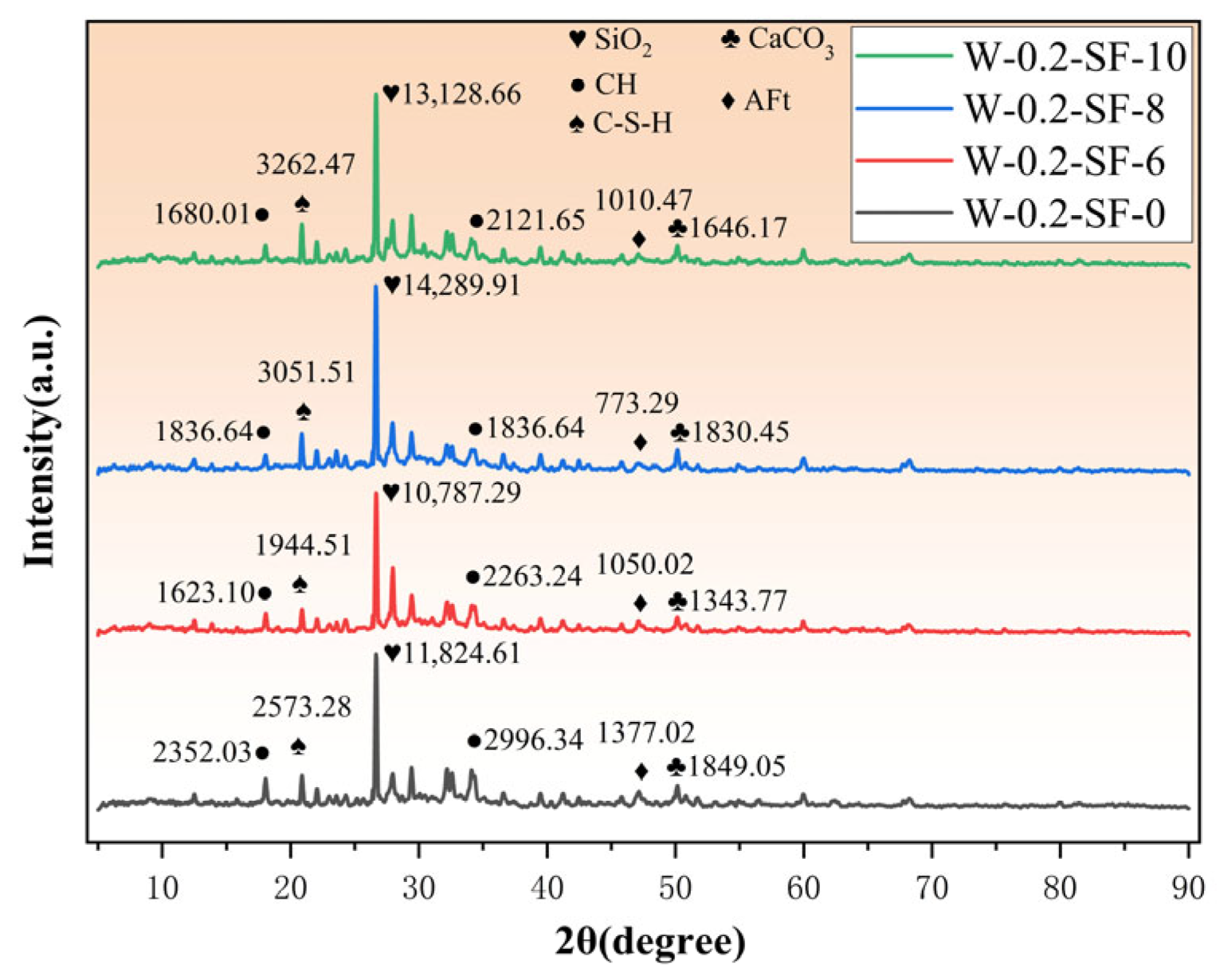
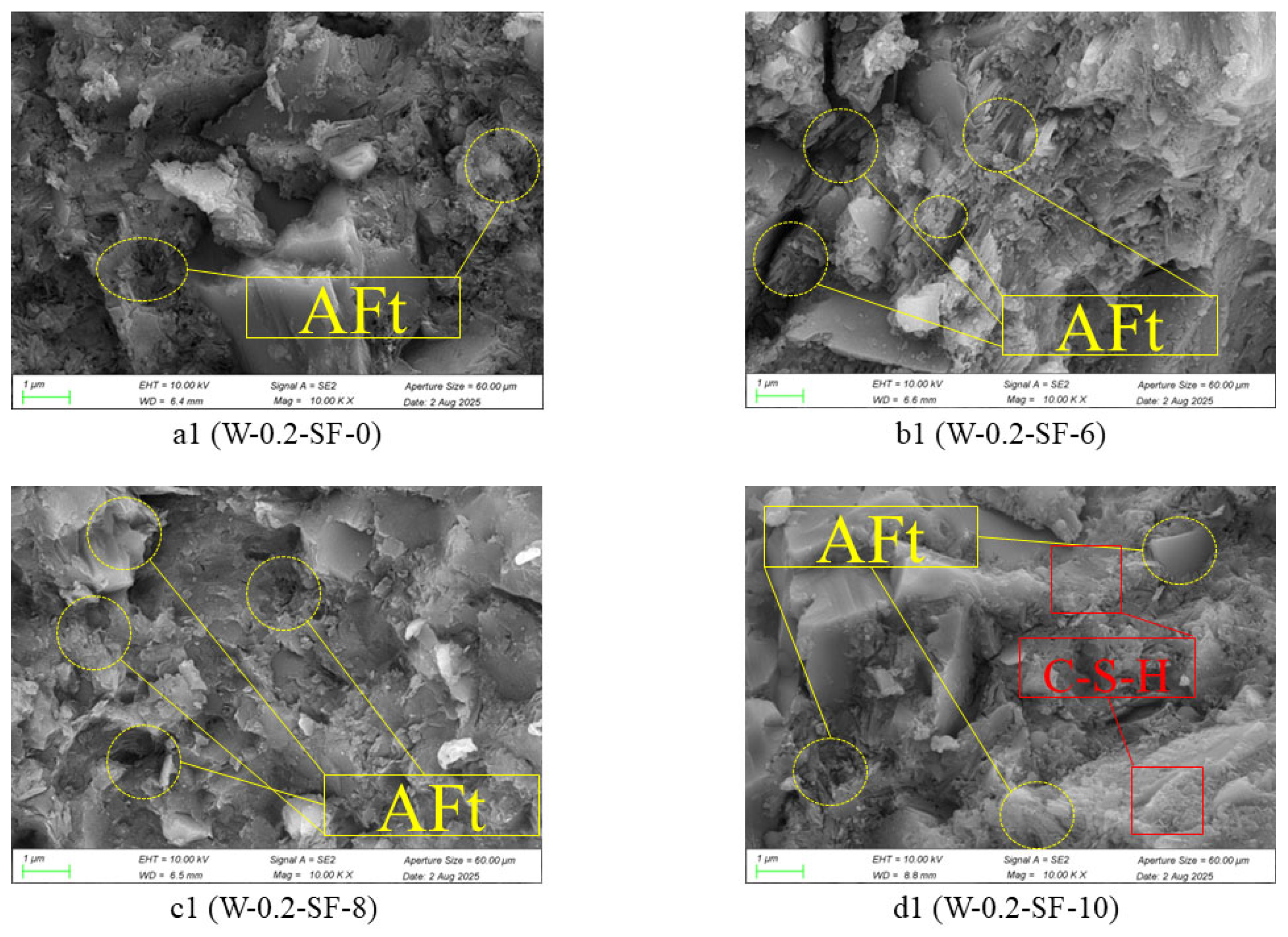
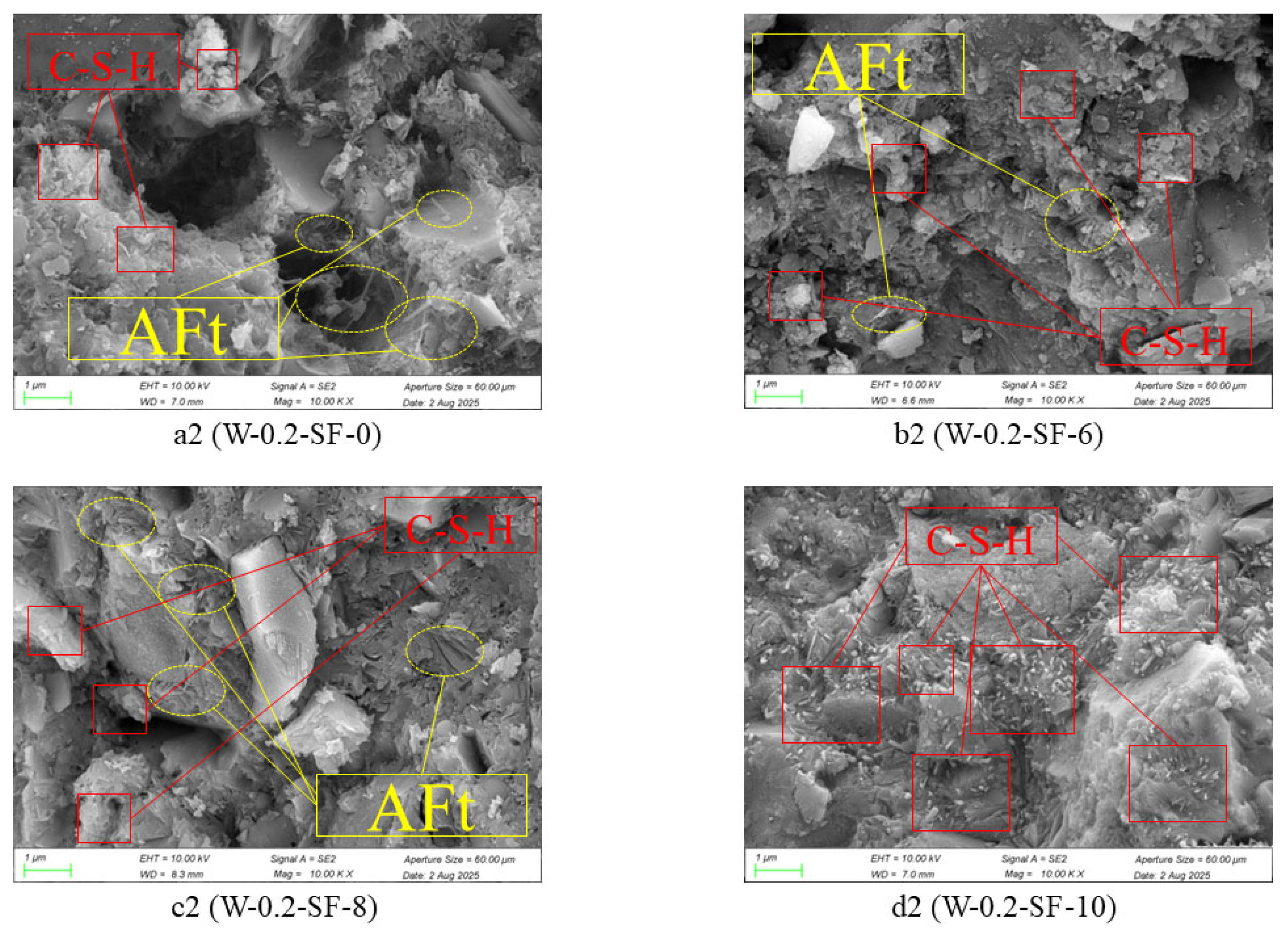
3.4. Analysis of Microstructural Test Results for GGBS-SF Composite Concrete
4. Conclusions
5. Limitations
Author Contributions
Funding
Data Availability Statement
Conflicts of Interest
References
- Aïtcin, P.C. Cements of yesterday and today: Concrete of tomorrow. Cem. Concr. Res. 2000, 30, 1349–1359. [Google Scholar] [CrossRef] [Scilit]
- Richard, P.; Cheyrezy, M. Composition of reactive powder concretes. Cem. Concr. Res. 1995, 25, 1501–1511. [Google Scholar] [CrossRef] [Scilit]
- De Larrard, F.; Sedran, T. Optimization of ultra-high-performance concrete by the use of a packing model. Cem. Concr. Res. 1994, 24, 997–1009. [Google Scholar] [CrossRef] [Scilit]
- Tazawa, E.; Miyazawa, S. Experimental study on mechanism of autogenous shrinkage of concrete. Cem. Concr. Res. 1995, 25, 1633–1638. [Google Scholar] [CrossRef] [Scilit]
- Kovler, K.; Zhutovsky, S. Overview and future trends of shrinkage research. Mater. Struct. 2006, 39, 827–847. [Google Scholar] [CrossRef] [Scilit]
- Yanrong, Z.; Xiangming, K.; Liang, G.; Feng, X. Variations of yield stress of fresh cement pastes in the presence of superplasticizer highlighted by a hydration index. J. Mater. Civ. Eng. 2017, 29, 04016215. [Google Scholar] [CrossRef] [Scilit]
- Tutumluer, E.; Pan, T. Aggregate morphology affecting strength and permanent deformation behavior of unbound aggregate materials. J. Mater. Civ. Eng. 2008, 20, 617–627. [Google Scholar] [CrossRef] [Scilit]
- Lothenbach, B.; Scrivener, K.; Hooton, R.D. Supplementary cementitious materials. Cem. Concr. Res. 2011, 41, 1244–1256. [Google Scholar] [CrossRef] [Scilit]
- Atiş, C.D. Strength properties of high-volume fly ash roller compacted and workable concrete, and influence of curing condition. Cem. Concr. Res. 2005, 35, 1112–1121. [Google Scholar] [CrossRef] [Scilit]
- Sobolev, K.G.; Batrakov, V.G. Effect of a polyethylhydrosiloxane admixture on the durability of concrete with supplementary cementitious materials. J. Mater. Civ. Eng. 2007, 19, 809–819. [Google Scholar] [CrossRef] [Scilit]
- Escalante-Garcıa, J.I.; Sharp, J.H. The microstructure and mechanical properties of blended cements hydrated at various temperatures. Cem. Concr. Res. 2001, 31, 695–702. [Google Scholar] [CrossRef] [Scilit]
- Naik, T.R.; Kraus, R.N.; Ramme, B.W.; Canpolat, F. Effects of fly ash and foundry sand on performance of architectural precast concrete. J. Mater. Civ. Eng. 2012, 24, 851–859. [Google Scholar] [CrossRef] [Scilit]
- Jiang, C.; Yang, Y.; Wang, Y.; Zhou, Y.; Ma, C. Autogenous shrinkage of high performance concrete containing mineral admixtures under different curing temperatures. Constr. Build. Mater. 2014, 61, 260–269. [Google Scholar] [CrossRef] [Scilit]
- Wong, H.S.; Razak, H.A. Efficiency of calcined kaolin and silica fume as cement replacement material for strength performance. Cem. Concr. Res. 2005, 35, 696–702. [Google Scholar] [CrossRef] [Scilit]
- Sabir, B.B. High-strength condensed silica fume concrete. Mag. Concr. Res. 1995, 47, 219–226. [Google Scholar] [CrossRef] [Scilit]
- Bentz, D.P.; Sato, T.; De la Varga, I.; Weiss, W.J. Fine limestone additions to regulate setting in high volume fly ash mixtures. Cem. Concr. Compos. 2012, 34, 11–17. [Google Scholar] [CrossRef] [Scilit]
- Zhang, M.H.; Islam, J. Use of nano-silica to reduce setting time and increase early strength of concretes with high volumes of fly ash or slag. Constr. Build. Mater. 2012, 29, 573–580. [Google Scholar] [CrossRef] [Scilit]
- Lura, P.; Jensen, O.M.; Van Breugel, K. Autogenous shrinkage in high-performance cement paste: An evaluation of basic mechanisms. Cem. Concr. Res. 2003, 33, 223–232. [Google Scholar] [CrossRef] [Scilit]
- Hanehara, S.; Tomosawa, F.; Kobayakawa, M.; Hwang, K. Effects of water/powder ratio, mixing ratio of fly ash, and curing temperature on pozzolanic reaction of fly ash in cement paste. Cem. Concr. Res. 2001, 31, 31–39. [Google Scholar] [CrossRef] [Scilit]
- Huang, O.D.; Subedi, S.; Game, D.; Arce, G.A.; Noorvand, H.; Hassan, M.M.; Radovic, M. Feasibility of using calcined clays and reclaimed coal ashes in binary and ternary cementitious systems. J. Build. Eng. 2024, 95, 110186. [Google Scholar] [CrossRef] [Scilit]
- Papadakis, V.G. Effect of supplementary cementing materials on concrete resistance against carbonation and chloride ingress. Cem. Concr. Res. 2000, 30, 291–299. [Google Scholar] [CrossRef] [Scilit]
- Guo, Z.; Jiang, T.; Zhang, J.; Kong, X.; Chen, C.; Lehman, D.E. Mechanical and durability properties of sustainable self-compacting concrete with recycled concrete aggregate and fly ash, slag and silica fume. Constr. Build. Mater. 2020, 231, 117115. [Google Scholar] [CrossRef] [Scilit]
- Özbay, E.; Erdemir, M.; Durmuş, H.İ. Utilization and efficiency of ground granulated blast furnace slag on concrete properties—A review. Constr. Build. Mater. 2016, 105, 423–434. [Google Scholar] [CrossRef] [Scilit]
- Benazzouk, A.; Douzane, O.; Mezreb, K.; Quéneudec, M. Physico-mechanical properties of aerated cement composites containing shredded rubber waste. Cem. Concr. Compos. 2006, 28, 650–657. [Google Scholar] [CrossRef] [Scilit]
- Antonaci, P.; Bruno, C.L.E.; Gliozzi, A.S.; Scalerandi, M. Monitoring evolution of compressive damage in concrete with linear and nonlinear ultrasonic methods. Cem. Concr. Res. 2010, 40, 1106–1113. [Google Scholar] [CrossRef] [Scilit]
- Adak, D.; Mandal, S. Strength and durability performance of fly ash–based process-modified geopolymer concrete. J. Mater. Civ. Eng. 2019, 31, 04019174. [Google Scholar] [CrossRef] [Scilit]
- GB/T 29417-2012; Test Methods for Drying Shrinkage Cracking Performance of Cement Mortar and Concrete. National Standards of the People’s Republic of China: Beijing, China, 2012.






| Chemical Composition | CaO | SiO2 | Al2O3 | Fe2O3 | SO3 | Na2O | MgO | (LOI)/% |
|---|---|---|---|---|---|---|---|---|
| % | 63.92 | 21.34 | 4.86 | 3.56 | 2.87 | 0.56 | 1.82 | 1.69 |
| Specific Surface Area (m2/Kg) | Standard Consistency/(% by Mass of Cement) | Initial Setting Time/min | Final Setting Time/min | Soundness | Flexural Strength/MPa | Compressive Strength/MPa | ||
|---|---|---|---|---|---|---|---|---|
| 3 d | 28 d | 3 d | 28 d | |||||
| 384 | 27.1 | 172 | 254 | Pass | 5.5 | 8.7 | 27.1 | 46.9 |
| GGBS | CaO | SiO2 | Al2O3 | SO3 | MgO | Fe2O3 | TiO2 | K2O | Na2O |
|---|---|---|---|---|---|---|---|---|---|
| % | 39.30 | 34.53 | 12.73 | 0.40 | 8.27 | 1.93 | 0.90 | 0.80 | 0.30 |
| SF | CaO | SiO2 | Al2O3 | SO3 | MgO | Fe2O3 | TiO2 | K2O | Na2O |
|---|---|---|---|---|---|---|---|---|---|
| % | 0.29 | 87.50 | 2.15 | 0.52 | 3.86 | 0.70 | 1.11 | 3.31 | 0.56 |
| PH | Water Reduction Rate/% | 28-Day Shrinkage Ratio/% | Air Content/% | Difference in Final Setting Time (t) | Compressive Strength Ratio | ||||
|---|---|---|---|---|---|---|---|---|---|
| Initial Setting | Final Setting | 1 d | 3 d | 7 d | 28 d | ||||
| 6.8 | 47 | 102 | 2.0 | +25 | +20 | 186 | 179 | 175 | 168 |
| Specimen Number | Cementitious Material | Aggregate | |||
|---|---|---|---|---|---|
| Cement (%) | SF (%) | GGBS (%) | Fine Aggregate (kg/m3) | Coarse Aggregate (kg/m3) | |
| W-0.2-SF-0 | 100 | 0 | 0 | 860 | 1050 |
| W-0.2-SF-6 | 70 | 6 | 24 | ||
| W-0.2-SF-8 | 8 | 22 | |||
| W-0.2-SF-10 | 10 | 20 | |||
Disclaimer/Publisher’s Note: The statements, opinions and data contained in all publications are solely those of the individual author(s) and contributor(s) and not of MDPI and/or the editor(s). MDPI and/or the editor(s) disclaim responsibility for any injury to people or property resulting from any ideas, methods, instructions or products referred to in the content. |
© 2025 by the authors. Licensee MDPI, Basel, Switzerland. This article is an open access article distributed under the terms and conditions of the Creative Commons Attribution (CC BY) license.
Share and Cite
Li, S.; You, G.; Yu, G.; Jiang, C.; Xia, X.; Yu, D. Suppression Mechanism of Early-Age Autogenous Shrinkage Cracking in Low Water-to-Binder Ratio Cement-Based Materials Incorporating Ground Granulated Blast-Furnace Slag and Silica Fume. Materials 2026, 19, 131. https://doi.org/10.3390/ma19010131
Li S, You G, Yu G, Jiang C, Xia X, Yu D. Suppression Mechanism of Early-Age Autogenous Shrinkage Cracking in Low Water-to-Binder Ratio Cement-Based Materials Incorporating Ground Granulated Blast-Furnace Slag and Silica Fume. Materials. 2026; 19(1):131. https://doi.org/10.3390/ma19010131
Chicago/Turabian StyleLi, Shuangxi, Guanglang You, Gang Yu, Chunmeng Jiang, Xinguang Xia, and Dongzheng Yu. 2026. "Suppression Mechanism of Early-Age Autogenous Shrinkage Cracking in Low Water-to-Binder Ratio Cement-Based Materials Incorporating Ground Granulated Blast-Furnace Slag and Silica Fume" Materials 19, no. 1: 131. https://doi.org/10.3390/ma19010131
APA StyleLi, S., You, G., Yu, G., Jiang, C., Xia, X., & Yu, D. (2026). Suppression Mechanism of Early-Age Autogenous Shrinkage Cracking in Low Water-to-Binder Ratio Cement-Based Materials Incorporating Ground Granulated Blast-Furnace Slag and Silica Fume. Materials, 19(1), 131. https://doi.org/10.3390/ma19010131