Influence of a Silane Coupling Agent and MWCNTs on the Structural and Durability Performance of CFRP Rebars


Abstract
1. Introduction
2. Materials and Experimental Methods
2.1. Materials and Sample Preparation
2.2. Experimental Methods
3. Results
3.1. Changes in Epoxy Properties with Additive Incorporation (Working Time and Viscosity)
3.2. Mechanical Properties of CFRP Rebars
3.3. Evaluation of CFRP Rebar Performance After High-Temperature Exposure
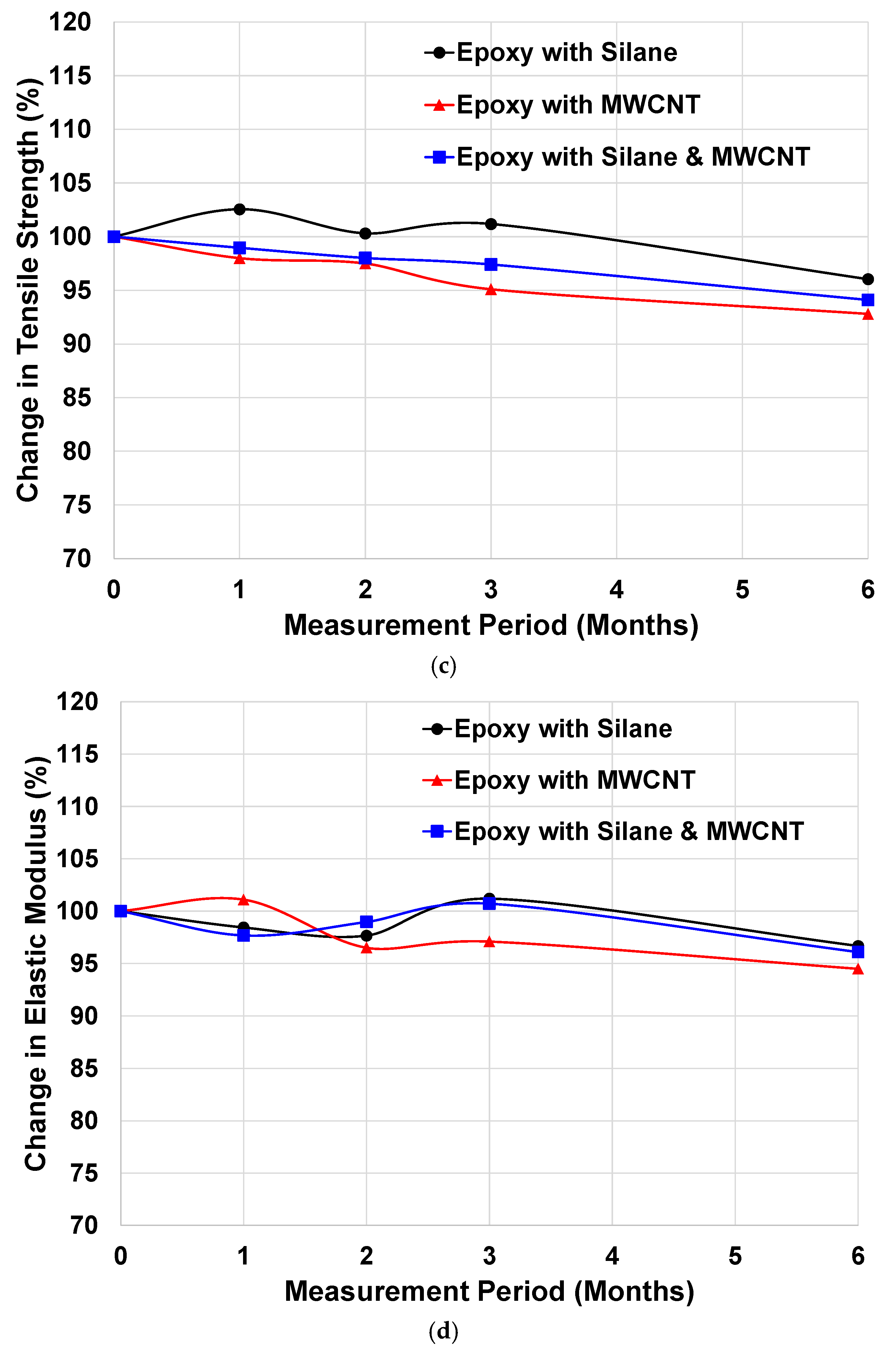
3.4. Performance Evaluation of CFRP Rebars Under Various Exposure Conditions
4. Conclusions
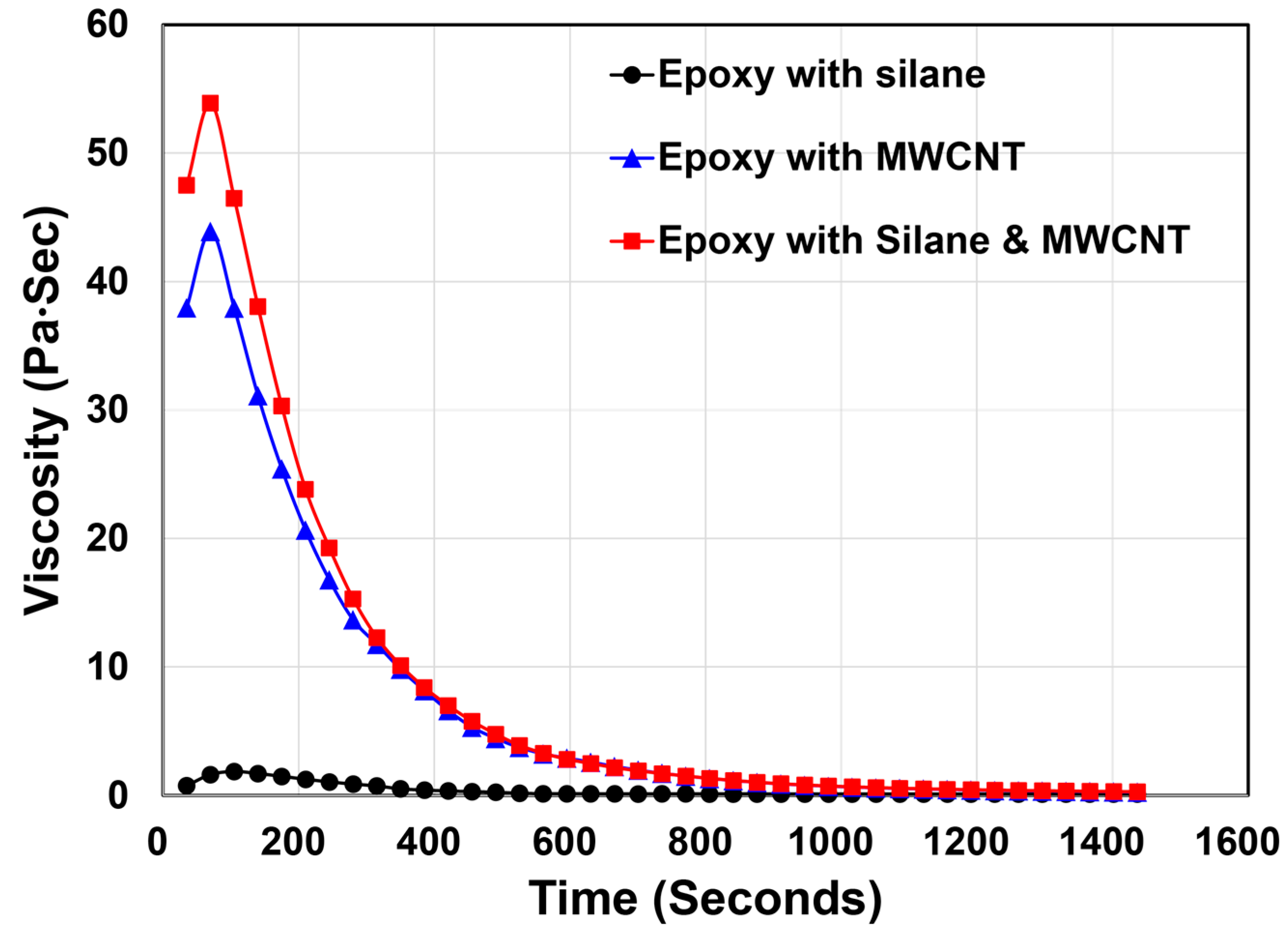
- The incorporation of silane coupling agents and MWCNTs increased the working time of the epoxy matrix, and although MWCNTs initially increased viscosity, all mixtures reached stable viscosity levels suitable for pultrusion processing.
- All additive-modified CFRP rebars exhibited higher tensile strength and elastic modulus than those fabricated with unmodified epoxy. Silane provided the greatest mechanical enhancement by improving fiber–matrix interfacial adhesion, while the combined use of silane and MWCNTs resulted in an antagonistic effect due to interfacial competition and increased viscosity.
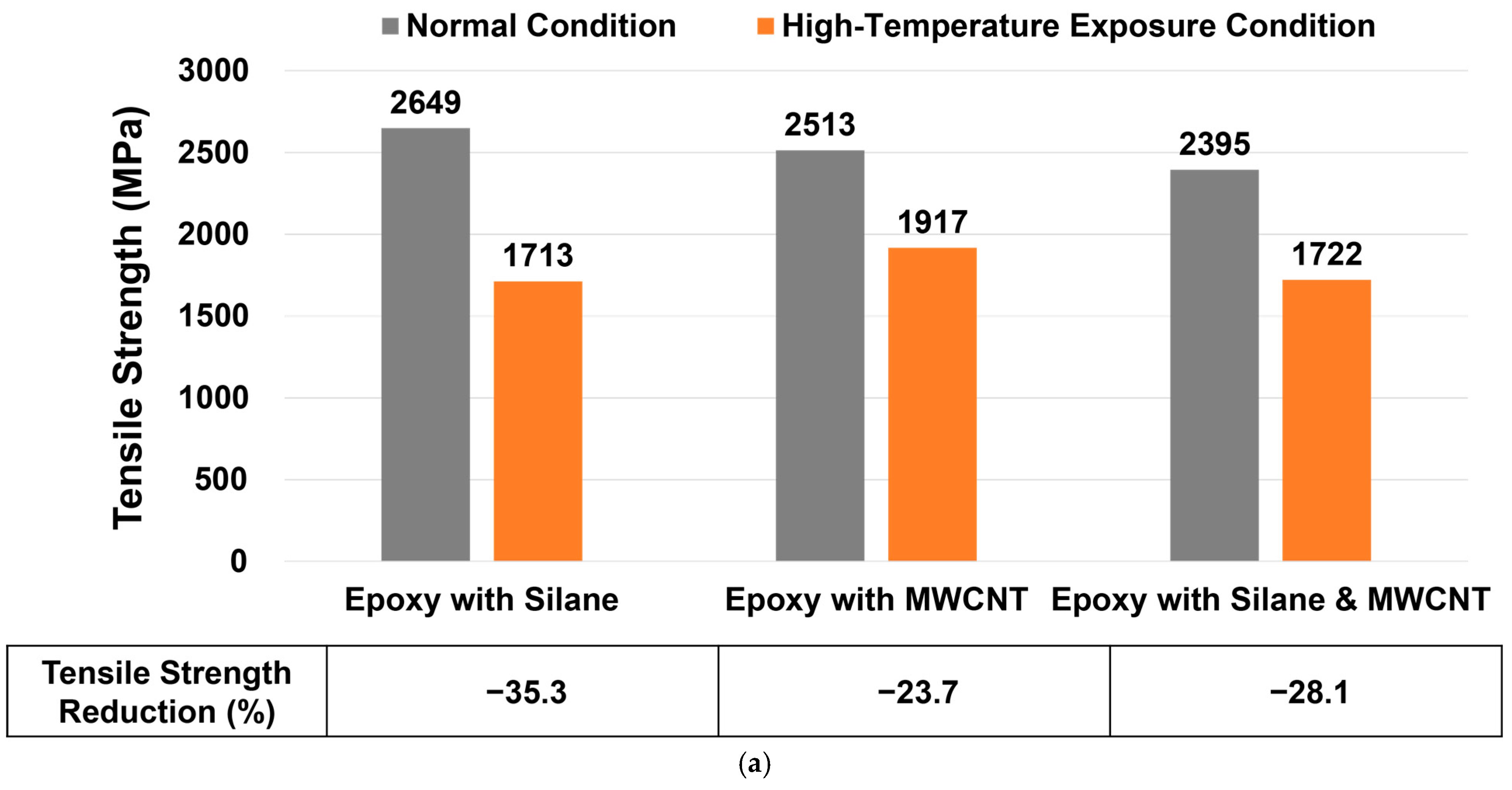
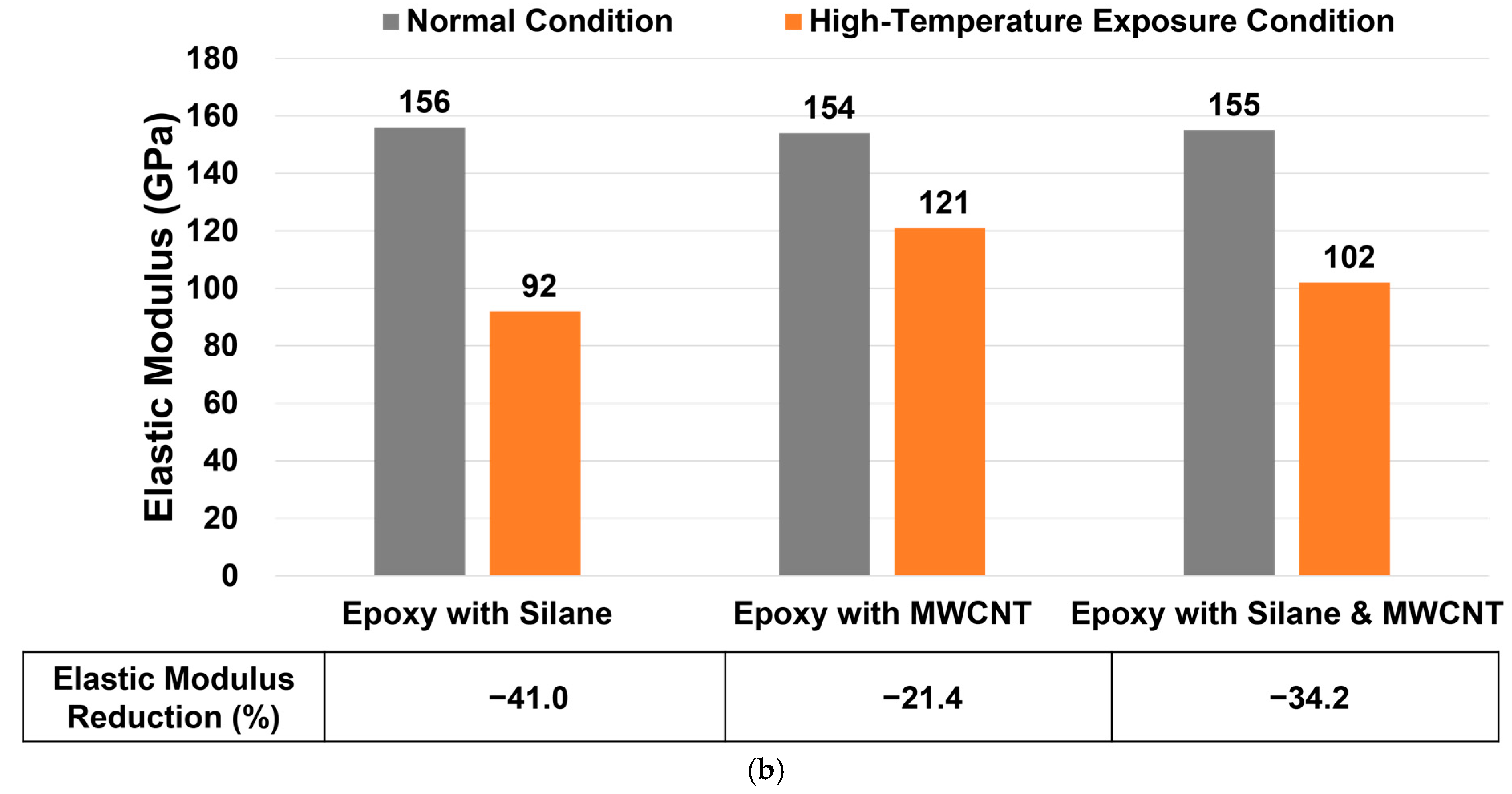
- After exposure to 250 °C, CFRP rebars showed reductions in mechanical properties; however, MWCNT-modified rebars retained the highest proportion of their original strength and stiffness, demonstrating superior thermal resistance through matrix reinforcement and crack-bridging effects.
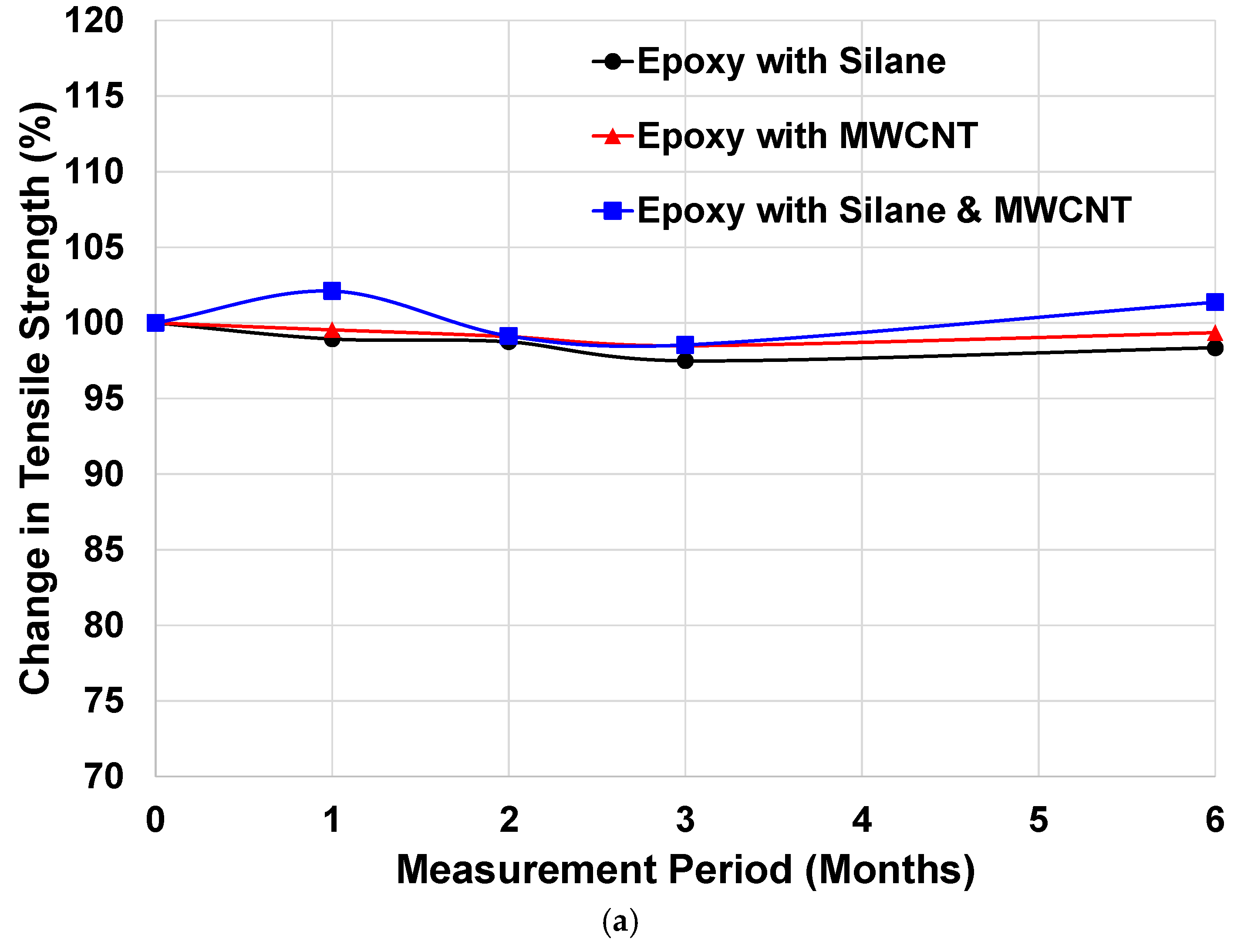
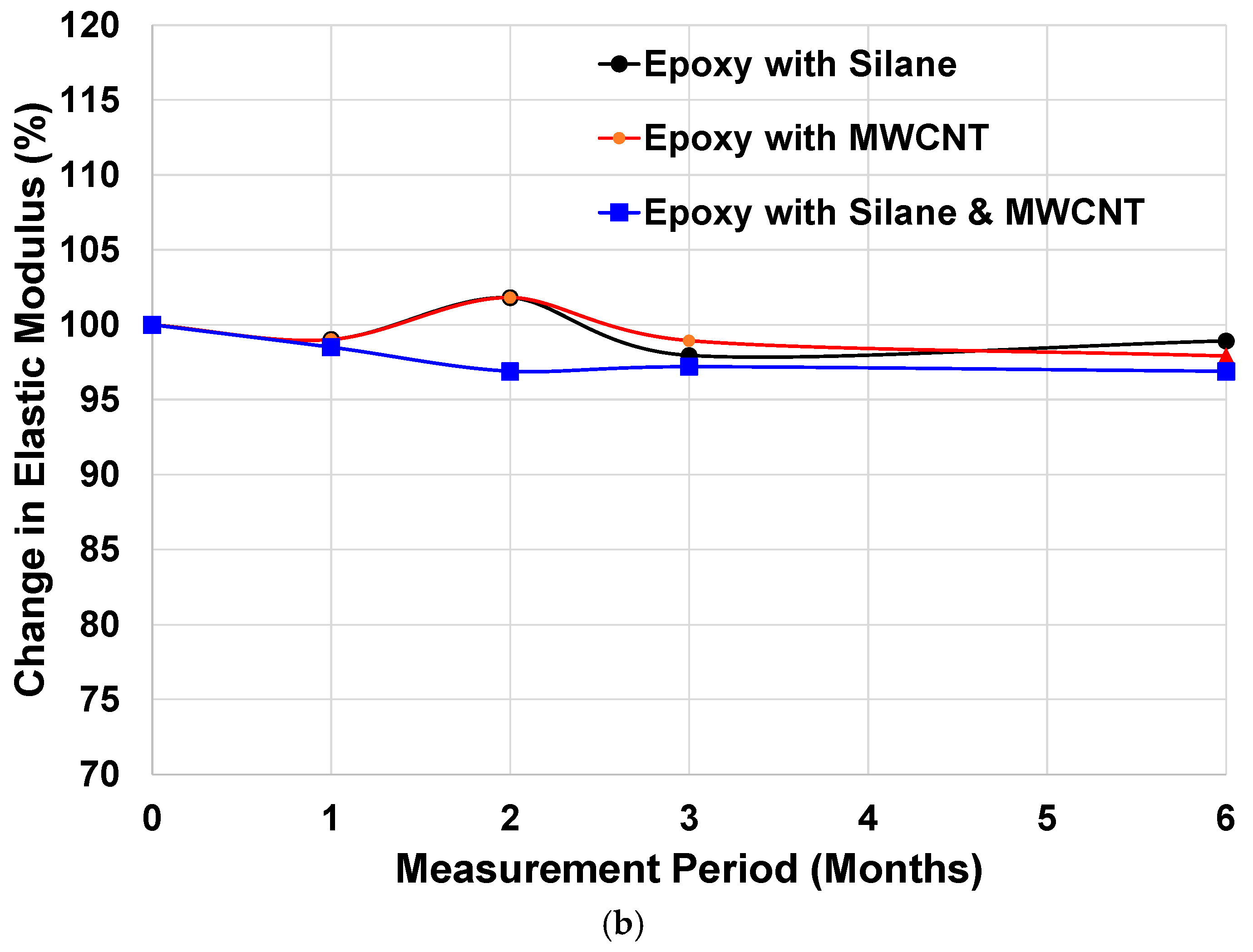
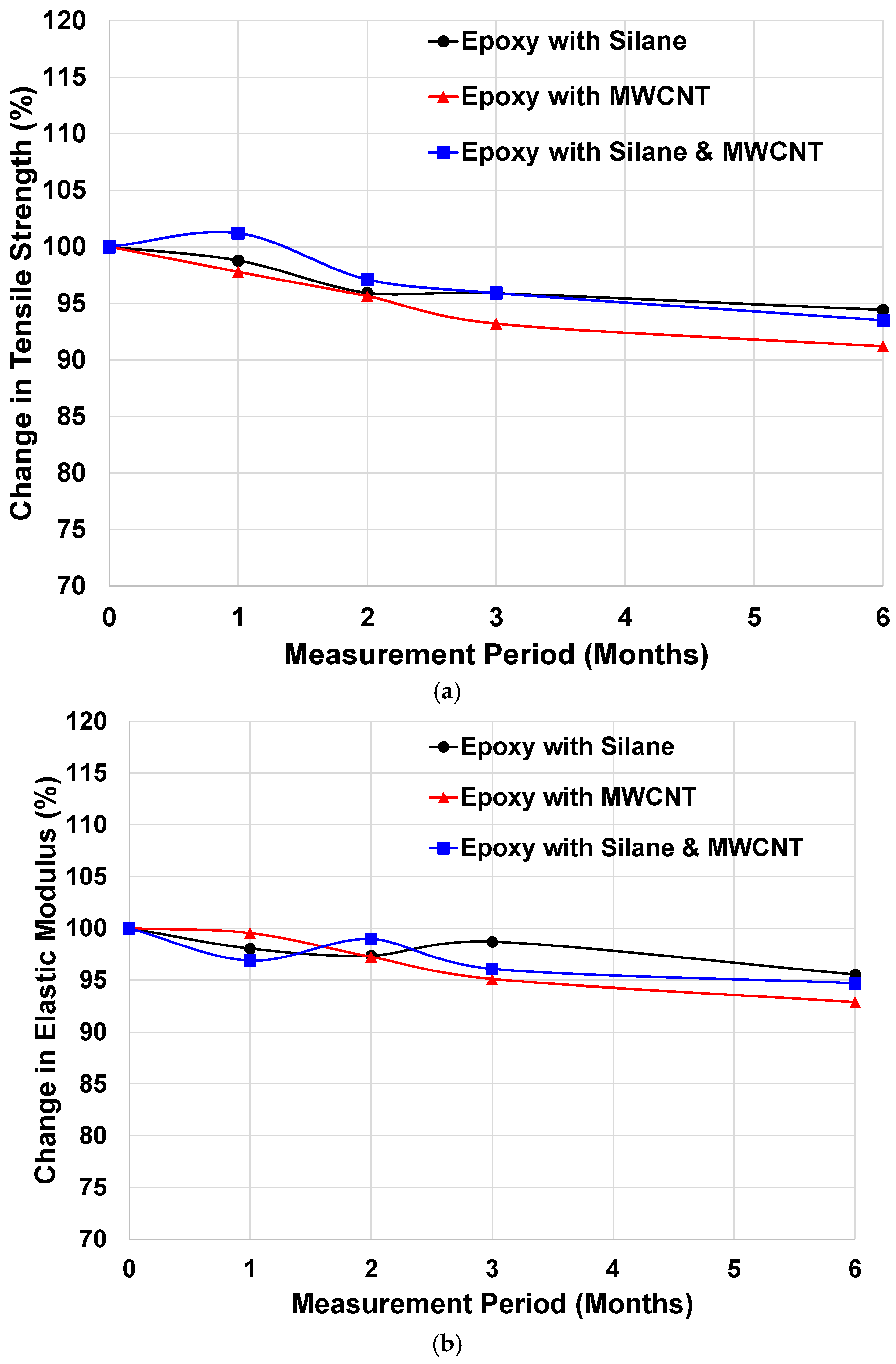
- No meaningful degradation was observed in simulated marine environments, confirming the inherent durability of CFRP rebars under chloride exposure. In contrast, gradual performance reductions occurred under alkaline conditions, with silane-modified rebars showing the greatest resistance due to enhanced interfacial stability.
- Rebars exposed to the ASTM D7705 alkaline solution experienced more severe deterioration than those immersed in Ca(OH)2, supporting previous findings that the ASTM solution is significantly more aggressive and not fully representative of real concrete pore environments.
Author Contributions
Funding
Institutional Review Board Statement
Informed Consent Statement
Data Availability Statement
Conflicts of Interest
References
- Alsultani, R.; Saber, Q.; Al-Saadi, A.; Mohammed, O.; Abed, S.; Naser, R.; Hussein, A.; Muslim, F.; Fadhil, H.; Karim, I. The Impact of Climate Change on the Reinforcement Durability of Concrete Bridge Structures. Open Civ. Eng. J. 2024, 18, e18741495337012. [Google Scholar] [CrossRef]
- Forzieri, G.; Bianchi, A.; e Silva, F.B.; Herrera, M.A.M.; Leblois, A.; Lavalle, C.; Aerts, J.C.; Feyen, L. Escalating impacts of climate extremes on critical infrastructures in Europe. Glob. Environ. Change 2018, 48, 97–107. [Google Scholar] [CrossRef] [PubMed]
- Al-Kodmany, K.; Ali, M.M. High-Performance Tall Buildings: An Overview of Recent Developments. Encyclopedia 2025, 5, 53. [Google Scholar] [CrossRef]
- Konar, T. Mega-tall buildings: Current trends, challenges and future prospects. Discov. Civ. Eng. 2025, 2, 138. [Google Scholar] [CrossRef]
- Kale, K.R.; Pandit, D.M.; Atrale, A.G.; Manal, S.S.; Gore, R.H.; Bhumare, A.S. Structural Analysis in Civil Engineering: The Impact of Smart Materials on Construction Technology. Adv. Consum. Res. 2025, 2, 5120–5128. [Google Scholar]
- Chrysanidis, T.; Mousama, D.; Tzatzo, E.; Alamanis, N.; Zachos, D. Study of the effect of a seismic zone to the construction cost of a five-story reinforced concrete building. Sustainability 2022, 14, 10076. [Google Scholar] [CrossRef]
- Mehta, P.K.; Monteiro, P.J. Concrete Microstructure, Properties, and Materials; McGraw-Hill: Columbus, OH, USA, 2006. [Google Scholar]
- Park, R.; Paulay, T. Reinforced Concrete Structures; John Wiley & Sons: Hoboken, NJ, USA, 1991. [Google Scholar]
- Gjørv, O.E. Durability of concrete structures. Arab. J. Sci. Eng. 2011, 36, 151–172. [Google Scholar] [CrossRef]
- Emparanza, A.R.; Kampmann, R.; De CasoBasalo, F. State-of-the-Practice of FRP Rebar Global Manufacturing; CAMX—The Composite and Advanced Materials Expo: Orlando, FL, USA; 2017.
- Rajak, D.K.; Wagh, P.H.; Linul, E. Manufacturing technologies of carbon/glass fiber-reinforced polymer composites and their properties: A review. Polymers 2021, 13, 3721. [Google Scholar] [CrossRef] [PubMed]
- Zhu, H.; He, Y.; Cai, G.; Cheng, S.; Zhang, Y.; Larbi, A.S. Bond performance of carbon fiber reinforced polymer rebars in ultra-high-performance concrete. Constr. Build. Mater. 2023, 387, 131646. [Google Scholar] [CrossRef]
- Vijayan, D.S.; Sivasuriyan, A.; Devarajan, P.; Stefańska, A.; Wodzyński, Ł.; Koda, E. Carbon fibre-reinforced polymer (CFRP) composites in civil engineering application—A comprehensive review. Buildings 2023, 13, 1509. [Google Scholar] [CrossRef]
- Ortiz, J.D.; Khedmatgozar Dolati, S.S.; Malla, P.; Nanni, A.; Mehrabi, A. FRP-reinforced/strengthened concrete: State-of-the-art review on durability and mechanical effects. Materials 2023, 16, 1990. [Google Scholar] [CrossRef] [PubMed]
- Nepomuceno, E.; Sena-Cruz, J.; Correia, L.; D’Antino, T. Review on the bond behavior and durability of FRP bars to concrete. Constr. Build. Mater. 2021, 287, 123042. [Google Scholar] [CrossRef]
- Guo, R.; Xian, G.; Li, F.; Li, C.; Hong, B. Hygrothermal resistance of pultruded carbon, glass and carbon/glass hybrid fiber reinforced epoxy composites. Constr. Build. Mater. 2022, 315, 125710. [Google Scholar] [CrossRef]
- Yu, Y.; Pan, Y.; Zhou, R.; Miao, X. Effects of water and alkaline solution on durability of carbon-glass hybrid fiber reinforced polymer bars. Polymers 2021, 13, 3844. [Google Scholar] [CrossRef]
- Uthaman, A.; Xian, G.; Thomas, S.; Wang, Y.; Zheng, Q.; Liu, X. Durability of an epoxy resin and its carbon fiber-reinforced polymer composite upon immersion in water, acidic, and alkaline solutions. Polymers 2020, 12, 614. [Google Scholar] [CrossRef]
- Yun, H.-D.; Lee, S.-Y.; Kang, D.-H.; Choi, W. Retention strength of carbon fiber reinforced polymer rebar under elevated temperatures. Sci. Rep. 2025, 15, 17408. [Google Scholar] [CrossRef]
- Semitekolos, D.; Terzopoulou, S.; Charitidis, C. Enhancing Carbon Fiber-Reinforced Polymers’ Performance and Reparability Through Core–Shell Rubber Modification and Patch Repair Techniques. Polymers 2025, 17, 407. [Google Scholar] [CrossRef] [PubMed]
- Kim, N.-i.; Kwon, D.-y.; Burenkhangai, D.; Lee, K.-m.; Bae, S.-y.; Chu, Y.-s. A study on manufacturing CFRP rebar with a high tensile strength. J. Korean Ceram. Soc. 2023, 60, 488–495. [Google Scholar] [CrossRef]
- Yum, W.S.; Chu, Y.-S. The effect of various types of silane coupling agents on the bond strength and tensile strength of carbon fiber. J. Korean Cryst. Growth Cryst. Technol. 2024, 34, 219–224. [Google Scholar]
- Kamae, T.; Drzal, L.T. Carbon fiber/epoxy composite property enhancement through incorporation of carbon nanotubes at the fiber–matrix interphase–Part I: The development of carbon nanotube coated carbon fibers and the evaluation of their adhesion. Compos. Part A Appl. Sci. Manuf. 2012, 43, 1569–1577. [Google Scholar] [CrossRef]
- Mirsalehi, S.A.; Youzbashi, A.A.; Sazgar, A. Enhancement of out-of-plane mechanical properties of carbon fiber reinforced epoxy resin composite by incorporating the multi-walled carbon nanotubes. SN Appl. Sci. 2021, 3, 630. [Google Scholar] [CrossRef]
- Lee, J.-H.; Rhee, K.Y.; Park, S.J. Silane modification of carbon nanotubes and its effects on the material properties of carbon/CNT/epoxy three-phase composites. Compos. Part A Appl. Sci. Manuf. 2011, 42, 478–483. [Google Scholar] [CrossRef]
- ASTM D4440; Standard Test Method for Rheological Properties of Polyester Resins. ASTM International: West Conshohocken, PA, USA, 2015.
- ASTM D2471; Standard Test Method for Gel Time and Peak Exothermic Temperature of Reacting Thermosetting Resins. ASTM International: West Conshohocken, PA, USA, 2019.
- KS F ISO 10460; Fibre-Reinforced Polymer (FRP) Bars for Concrete—Test Methods. Korean Standards Association: Seoul, Republic of Korea, 2014.
- ASTM D7913/D7913M; Standard Test Method for Bond Strength of Fiber-Reinforced Polymer (FRP) Bars by Pullout Testing. ASTM International: West Conshohocken, PA, USA, 2014.
- ASTM D7705/D7705M; Standard Guide for Testing the Alkaline Resistance of Fiber-Reinforced Polymer (FRP) Composites. ASTM International: West Conshohocken, PA, USA, 2012.
- Park, S.-J.; Bae, K.-M.; Seo, M.-K. A study on rheological behavior of MWCNTs/epoxy composites. J. Ind. Eng. Chem. 2010, 16, 337–339. [Google Scholar] [CrossRef]
- Allaoui, A.; Bounia, N. Rheological and electrical transitions in carbon nanotube/epoxy suspensions. Curr. Nanosci. 2010, 6, 158–162. [Google Scholar] [CrossRef][Green Version]
- He, J.; Huang, Y. Effect of silane-coupling agents on interfacial properties of CF/PI composites. J. Appl. Polym. Sci. 2007, 106, 2231–2237. [Google Scholar] [CrossRef]
- Demet, S.M. Synergistic and Antagonistic Effects of Hybridization and MWCNT Reinforcement on the Solid Particle Erosion of Glass/Carbon Fiber Composites. Polymers 2025, 17, 2434. [Google Scholar] [CrossRef]
- Zeinedini, A.; Akhavan-Safar, A.; da Silva, L.F. The role of agglomeration in the physical properties of CNTs/polymer nanocomposites: A literature review. Proc. Inst. Mech. Eng. Part L J. Mater. Des. Appl. 2025, 14644207251316470. [Google Scholar] [CrossRef]
- Wu, Q.; Zhu, W.; Zhang, C.; Liang, Z.; Wang, B. Study of fire retardant behavior of carbon nanotube membranes and carbon nanofiber paper in carbon fiber reinforced epoxy composites. Carbon 2010, 48, 1799–1806. [Google Scholar] [CrossRef]
- Chai, G.-Q.; Zhu, G.-Q.; Gao, Y.; Zhou, J.; Gao, S. Flame retardancy of carbon nanotubes reinforced carbon fiber/epoxy resin composites. Appl. Sci. 2019, 9, 3275. [Google Scholar] [CrossRef]
- Tiefenthaler, A.; Urban, M. Thermal stability of silane coupling agents on Nextel fibres. Composites 1989, 20, 145–150. [Google Scholar] [CrossRef]
- Kang, D.-H.; Choi, W. Durability of carbon fiber-reinforced polymer (CFRP) rebar exposed to long-term alkaline environment. Constr. Build. Mater. 2025, 496, 143757. [Google Scholar] [CrossRef]
- Wang, T.; Razaqpur, A.G.; Chen, S. Durability of GFRP and CFRP Bars in the Pore Solution of Calcium Sulfoaluminate Cement Concrete Made with Fresh or Seawater. Polymers 2023, 15, 3306. [Google Scholar] [CrossRef]
- Manalo, A.; Maranan, G.; Benmokrane, B.; Cousin, P.; Alajarmeh, O.; Ferdous, W.; Liang, R.; Hota, G. Comparative durability of GFRP composite reinforcing bars in concrete and in simulated concrete environments. Cem. Concr. Compos. 2020, 109, 103564. [Google Scholar] [CrossRef]
- Nkurunziza, G.; Debaiky, A.; Cousin, P.; Benmokrane, B. Durability of GFRP bars: A critical review of the literature. Prog. Struct. Eng. Mater. 2005, 7, 194–209. [Google Scholar] [CrossRef]
- Rolland, A.; Benzarti, K.; Quiertant, M.; Chataigner, S. Accelerated aging behavior in alkaline environments of GFRP reinforcing bars and their bond with concrete. Materials 2021, 14, 5700. [Google Scholar] [CrossRef]
- Uthaman, A.; Lal, H.M.; Li, C.; Xian, G.; Thomas, S. Mechanical and water uptake properties of epoxy nanocomposites with surfactant-modified functionalized multiwalled carbon nanotubes. Nanomaterials 2021, 11, 1234. [Google Scholar] [CrossRef] [PubMed]



| Raw Material | Tensile Strength (MPa) | Elastic Modulus (GPa) | Density (g/cm3) | Remark |
|---|---|---|---|---|
| Carbon Fiber | 4500–5000 | 230–240 | ~1.80 | Primary reinforcement |
| Glass Fiber | 2000–3000 | 70–75 | ~2.55 | Rib formation |
| Epoxy resin | 60–80 * | 3.0~3.5 * | ~1.20 | Matrix material |
| Resin to Harder Ratio | Impregnation Zone Temperature (°C) | Curing Oven Temp (°C) | Production Speed (cm/min) | Curing Time (min) | |||||
|---|---|---|---|---|---|---|---|---|---|
| 47:53 | 45 | 120 | 180 | 120 | 130 | 170 | 180 | 3 | 30 |
| Sample Label | Epoxy Resin | Additive | Sum | ||
|---|---|---|---|---|---|
| Resin | Harder | Silane Coupling Agent | MWCNT | ||
| Epoxy with Silane | 47.14 | 51.86 | 1.0 | 0.0 | 100.0 |
| Epoxy with MWCNT | 47.60 | 51.90 | 0.0 | 0.5 | |
| Epoxy with Silane & MWCNT | 46.90 | 51.60 | 1.0 | 0.5 | |
| Sample Label | Working Time (Hours) |
|---|---|
| Epoxy with Silane | 12.5 |
| Epoxy with MWCNT | 16 |
| Epoxy with Silane & MWCNT | 20 |
| Sample Label | Tensile Strength (MPa) | Elastic Modulus (GPa) | Bond Strength (MPa) |
|---|---|---|---|
| Epoxy with Silane | 2649 (49) | 156 (8) | 17.0 (1.0) |
| Epoxy with MWCNT | 2513 (25) | 154 (9) | 16.5 (0.7) |
| Epoxy with Silane & MWCNT | 2395 (72) | 155 (8) | 15.5 (0.5) |
Disclaimer/Publisher’s Note: The statements, opinions and data contained in all publications are solely those of the individual author(s) and contributor(s) and not of MDPI and/or the editor(s). MDPI and/or the editor(s) disclaim responsibility for any injury to people or property resulting from any ideas, methods, instructions or products referred to in the content. |
© 2025 by the authors. Licensee MDPI, Basel, Switzerland. This article is an open access article distributed under the terms and conditions of the Creative Commons Attribution (CC BY) license.
Share and Cite
Yum, W.S.; Kwon, D.Y.; Chu, Y.S. Influence of a Silane Coupling Agent and MWCNTs on the Structural and Durability Performance of CFRP Rebars. Materials 2026, 19, 106. https://doi.org/10.3390/ma19010106
Yum WS, Kwon DY, Chu YS. Influence of a Silane Coupling Agent and MWCNTs on the Structural and Durability Performance of CFRP Rebars. Materials. 2026; 19(1):106. https://doi.org/10.3390/ma19010106
Chicago/Turabian StyleYum, Woo Sung, Do Young Kwon, and Yong Sik Chu. 2026. "Influence of a Silane Coupling Agent and MWCNTs on the Structural and Durability Performance of CFRP Rebars" Materials 19, no. 1: 106. https://doi.org/10.3390/ma19010106
APA StyleYum, W. S., Kwon, D. Y., & Chu, Y. S. (2026). Influence of a Silane Coupling Agent and MWCNTs on the Structural and Durability Performance of CFRP Rebars. Materials, 19(1), 106. https://doi.org/10.3390/ma19010106