Article

Optimization of LCD-Based 3D Printing for the Development of Clotrimazole-Coated Microneedle Systems


1
Chair and Department of Pharmaceutical Technology, 3D Printing Division, Poznan University of Medical Sciences, 3 Rokietnicka, 60-806 Poznań, Poland
2
Chair and Department of Genetics and Pharmaceutical Microbiology, Poznan University of Medical Sciences, 3 Rokietnicka, 60-806 Poznań, Poland
3
Chair and Department of Toxicology, Poznan University of Medical Sciences, 3 Rokietnicka, 60-806 Poznań, Poland
4
Chair and Department of Chemical Technology of Drugs, Poznan University of Medical Sciences, 3 Rokietnicka, 60-806 Poznań, Poland
5
Chair and Department of Pharmaceutical Technology, Division of Industrial Pharmacy, Poznan University of Medical Sciences, 3 Rokietnicka, 60-806 Poznań, Poland
6
Chair and Department of Pharmaceutical Technology, Poznan University of Medical Sciences, 3 Rokietnicka, 60-806 Poznań, Poland
7
Center for Dermal Research and Ernest Mario School of Pharmacy, Rutgers, The State University of New Jersey, Piscataway, NJ 08854, USA
*
Authors to whom correspondence should be addressed.
Materials 2025, 18(7), 1580; https://doi.org/10.3390/ma18071580
Submission received: 28 February 2025 / Revised: 23 March 2025 / Accepted: 26 March 2025 / Published: 31 March 2025
(This article belongs to the Special Issue Design and Application of Additive Manufacturing: 3rd Edition)

Abstract

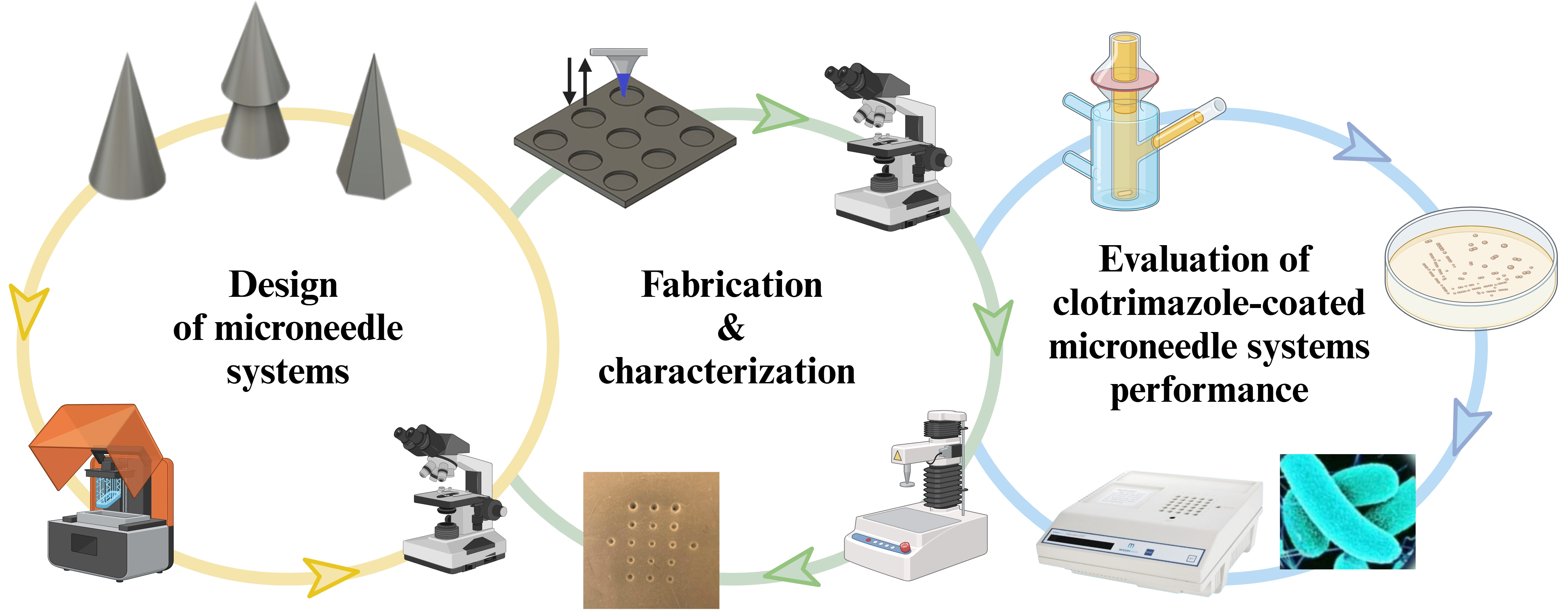
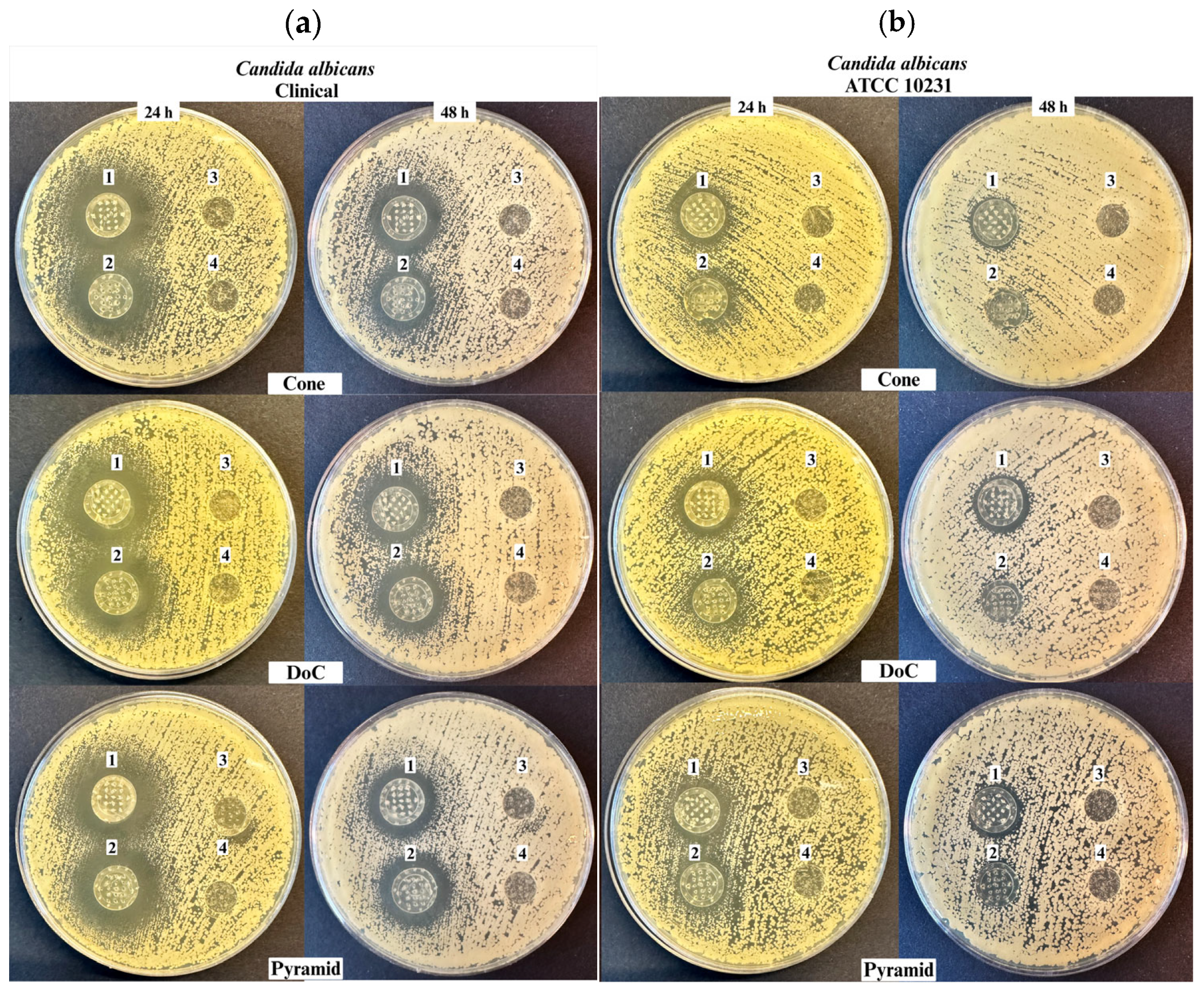
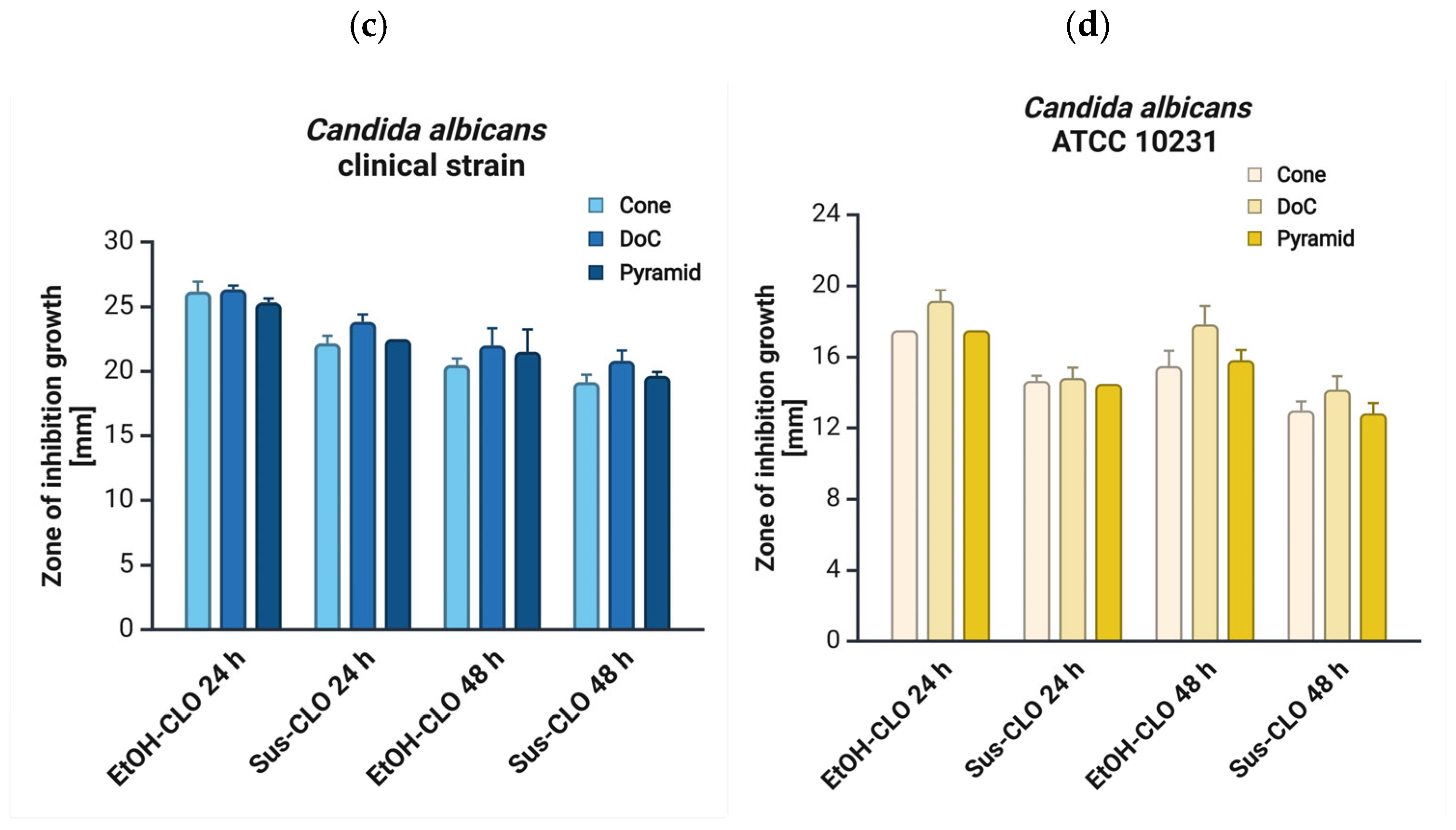
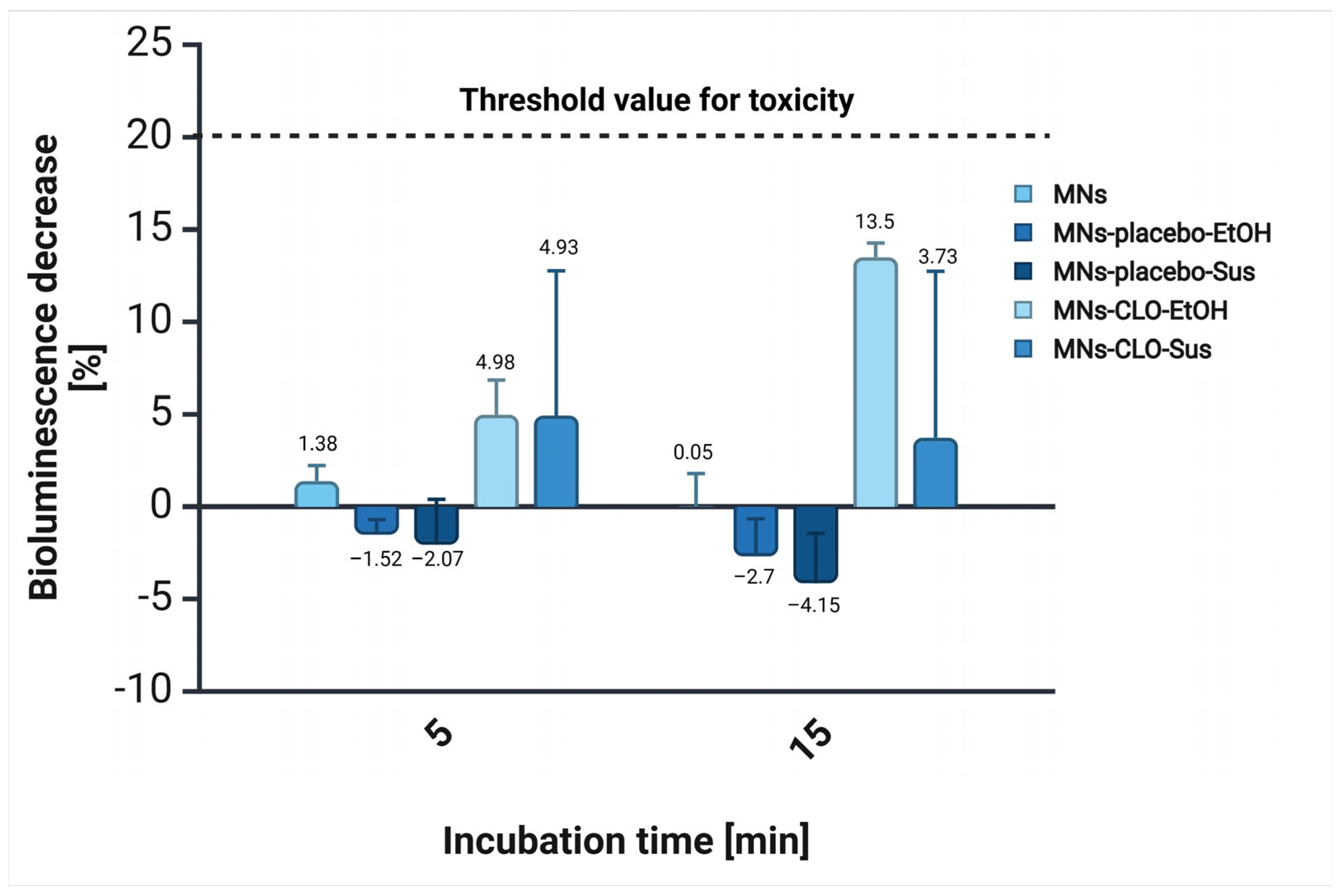
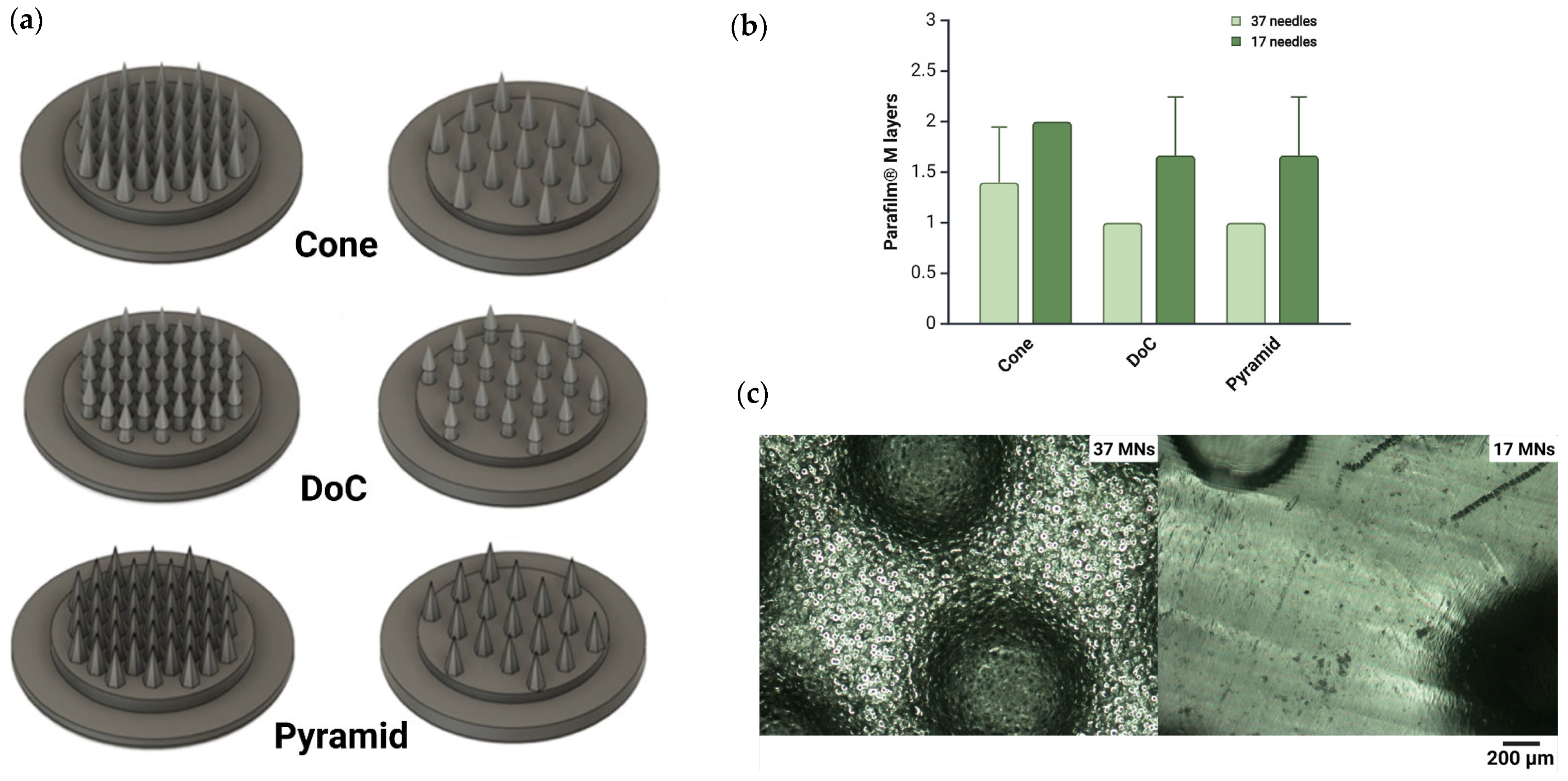
Fungal infections pose a significant global health problem, affecting 20–25% of the population and contributing to over 3.75 million deaths annually. Clotrimazole (CLO) is a widely used topical antifungal drug, but its efficacy is limited by poor penetration through the stratum corneum. Microneedle (MN) systems, composed of micron-scale structures arranged on a patch, offer a promising strategy to overcome the outermost skin barrier and enhance drug penetration into deeper layers. However, optimizing MN design, particularly in terms of size, shape, and fabrication technology, is essential for efficient drug delivery. This study aimed to develop CLO-coated MN systems using an Liquid Crystal Display (LCD)-based 3D printing technique and a thin-film dip-coating method. A comprehensive optimization of printing parameters, including anti-aliasing, layer thickness, curing time, and printing angle, was conducted to ensure the desired mechanical properties. The optimized MNs were coated with either suspension or ethanol-based CLO-hydrogels, with ethanol hydrogel demonstrating superior characteristics. Additionally, the study investigated how microneedle geometry and coating formulation influenced drug release. Antifungal activity against reference and clinical origin Candida albicans strains varied significantly depending on the coating formulation. Finally, the acute toxicity test confirmed no significant toxic effects on Aliivibrio fischeri, indicating the potential biocompatibility and safety of the developed MN-based drug delivery system.
Keywords: microneedle systems; additive manufacturing; 3D printing; fungal skin infections; clotrimazole microneedle systems; additive manufacturing; 3D printing; fungal skin infections; clotrimazole
Graphical Abstract