Article

The Impact of Test Device on the Evaluation Cooling Effect of Radiation-Cooling Materials
School of Material Science and Engineering, Wuhan University of Technology, Wuhan 430070, China
*
Author to whom correspondence should be addressed.
Materials 2025, 18(7), 1512; https://doi.org/10.3390/ma18071512
Submission received: 4 March 2025 / Revised: 24 March 2025 / Accepted: 26 March 2025 / Published: 27 March 2025
(This article belongs to the Special Issue Advances in Sustainable Energy Materials and Devices)

Abstract

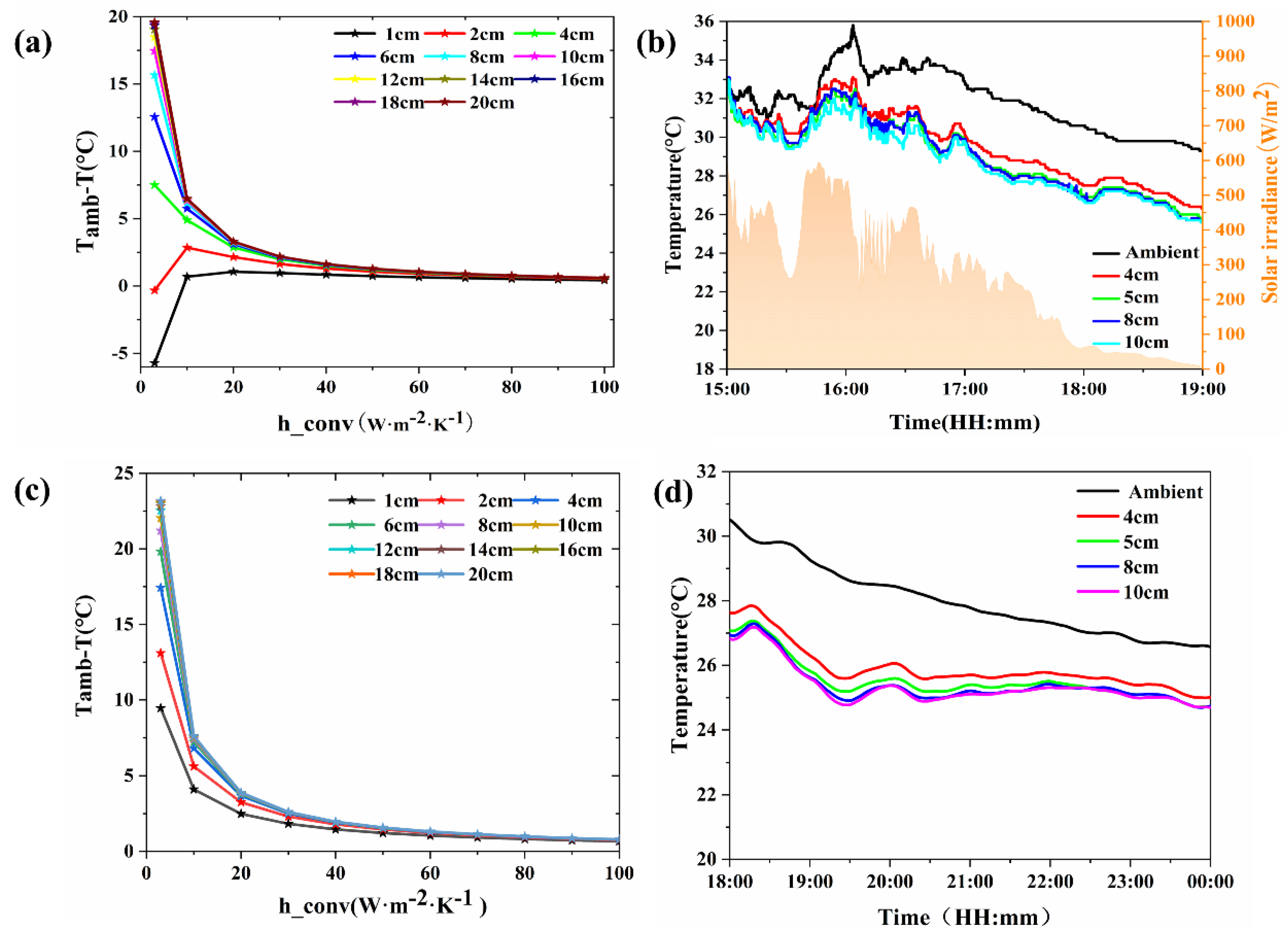
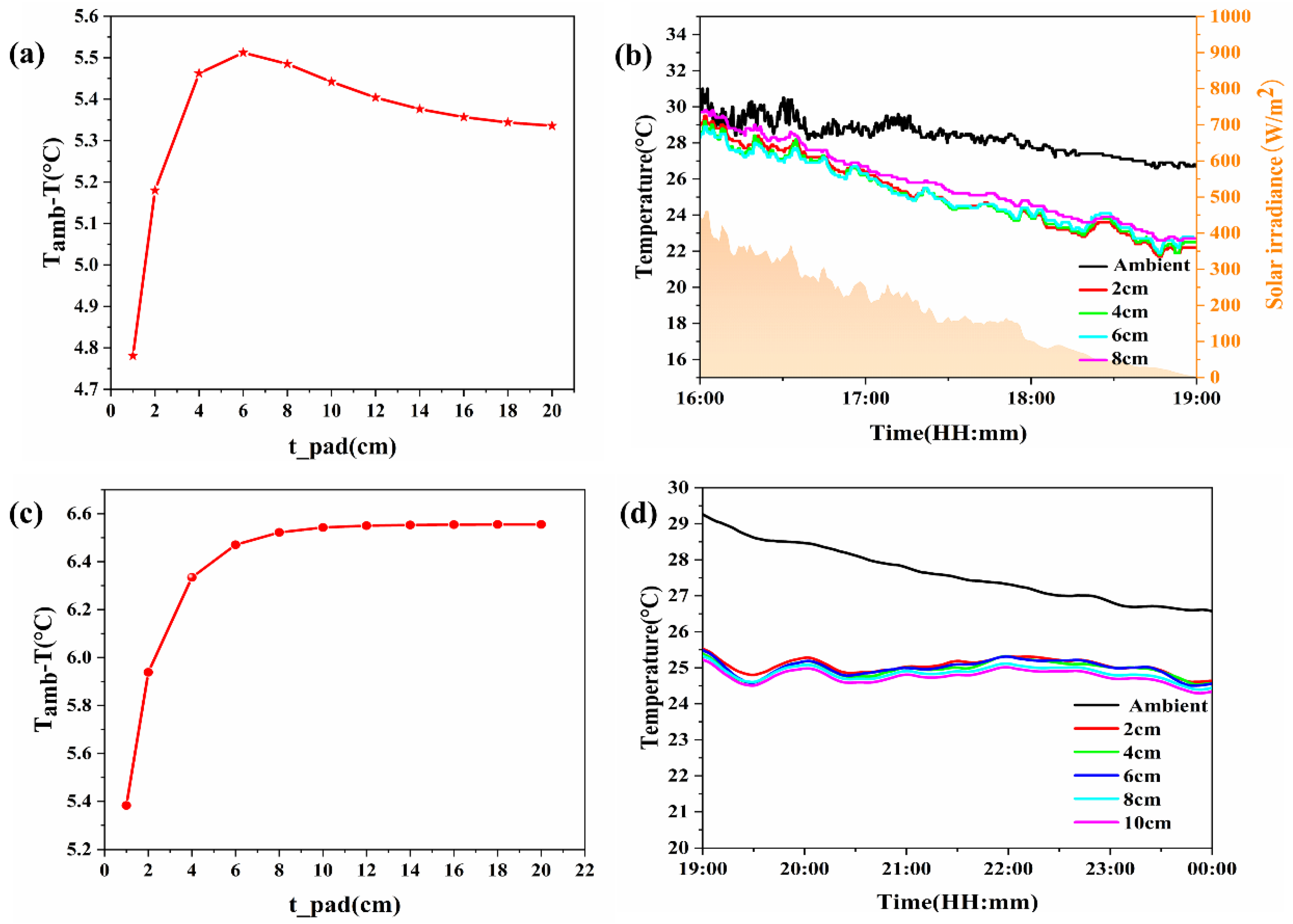
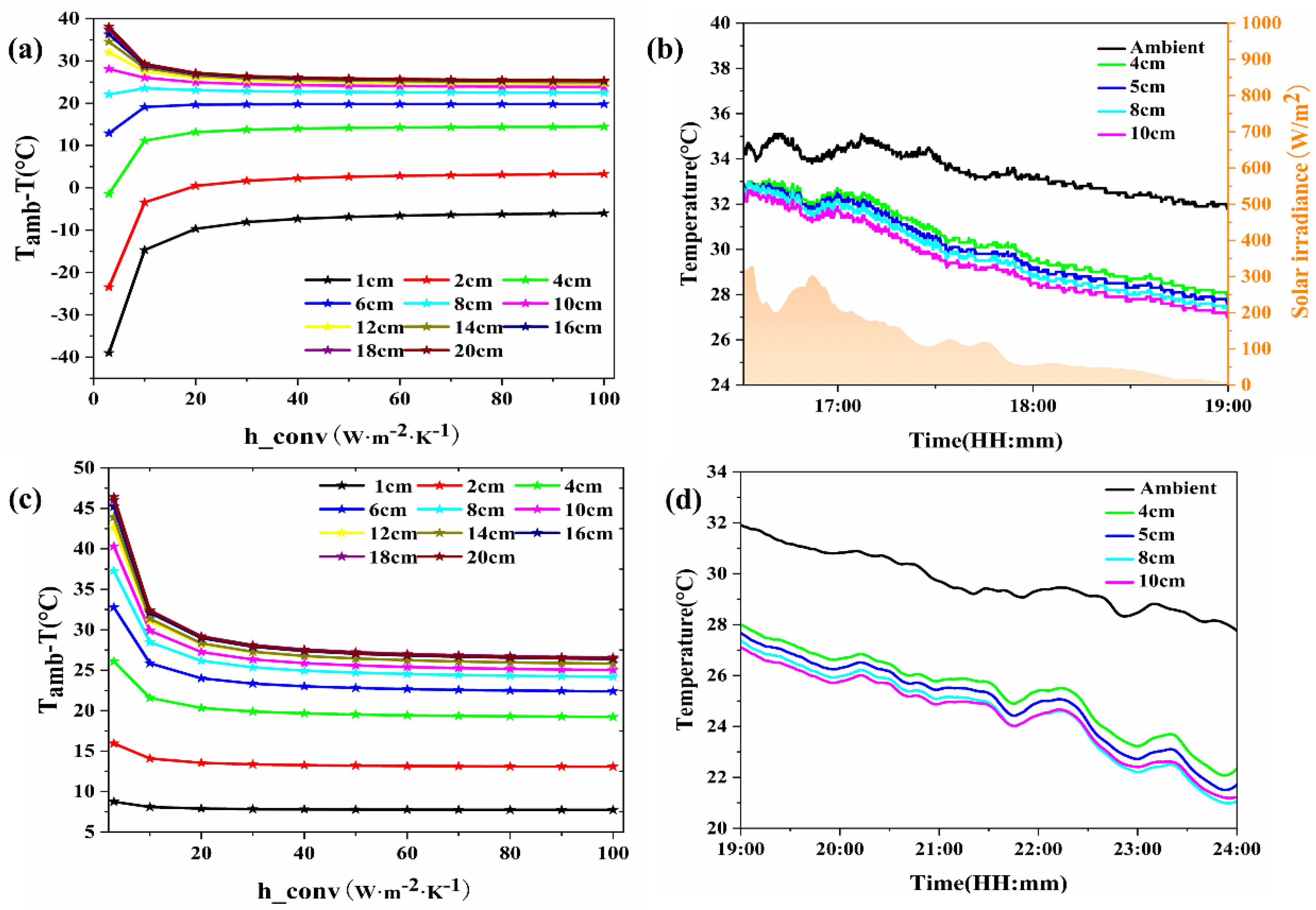
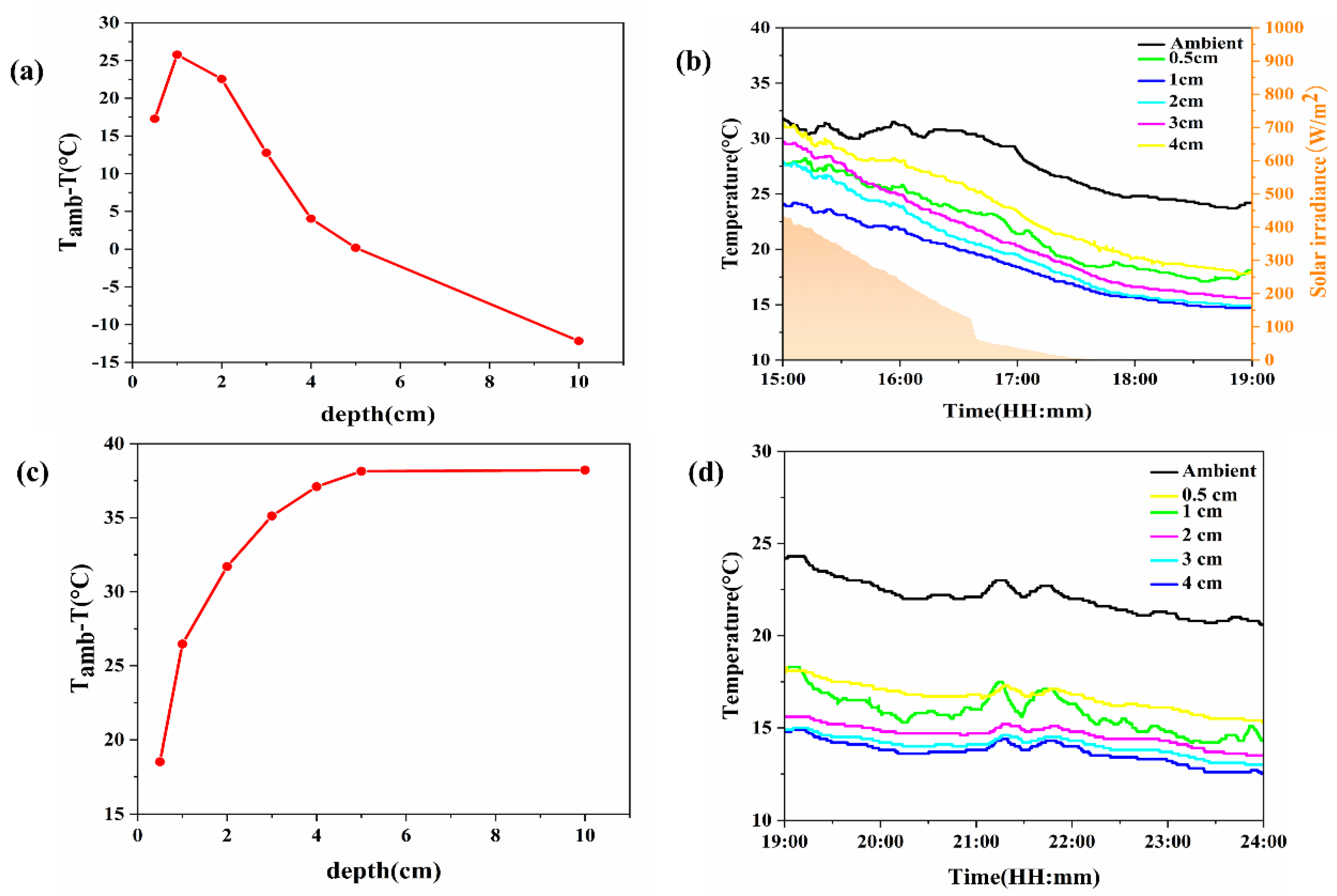
Passive radiation cooling technology, as a new zero-energy refrigeration technology method, has received widespread attention in recent years. However, due to differences in the testing devices used by different teams, it becomes difficult to directly compare the cooling performance of the respective prepared materials. This study combines experimental and theoretical methods to explore the impact of testing equipment and sample size on the results of the radiative cooling capacity evaluation. The research results show that when evaluating the cooling performance of materials in thermal insulation chambers, if the sample diameter is equal to or larger than 10 cm, at a sample diameter ≥ 10 cm in insulated chambers, cooling capacity stabilizes at ~25 °C (daytime) and ~28 °C (nighttime), with <2% variation across larger sizes. The evaluation of cooling capacity is not affected by the structure of the test equipment or the size of the material. However, variations in sample placement depth will always have a significant impact on the evaluation results, so a uniform placement depth needs to be specified. In addition, when using an open device to evaluate the cooling performance of materials, if the sample diameter is greater than or equal to 10 cm and the foam pad thickness is greater than or equal to 8 cm, foam pad thickness ≥ 8 cm in open devices reduces thermal interference by 89%, enabling consistent evaluations. The measured value of the cooling capacity is also not affected by the structure and material size of the test device. This study provides a basis for the standardization of radiant cooling testing, thereby promoting the practical application of radiant cooling technology.
Keywords: passive radiation cooling; testing device; structure; size; depth passive radiation cooling; testing device; structure; size; depth