Article

Dielectric Properties of Composite PZT Films with Distinct Phase-Transition Temperatures via Aerosol Deposition


1
Program in Semiconductor Convergence, Department of Materials Science and Engineering, Inha University, 100 Inha-ro, Michuhol-gu, Incheon 22212, Republic of Korea
2
Department of Semiconductor Systems Engineering, Sejong University, 209, Neungdong-ro, Gwangjin-gu 05006, Republic of Korea
3
Department of Materials Science and Engineering, University of Science and Technology of China, Hefei 230026, China
*
Authors to whom correspondence should be addressed.
Ye-Ji Son and Seung-Wook Kim contributed equally to this manuscript.
Materials 2025, 18(7), 1427; https://doi.org/10.3390/ma18071427
Submission received: 31 January 2025 / Revised: 17 March 2025 / Accepted: 20 March 2025 / Published: 24 March 2025
(This article belongs to the Special Issue Advances in Ferroelectric and Piezoelectric Materials)

Abstract

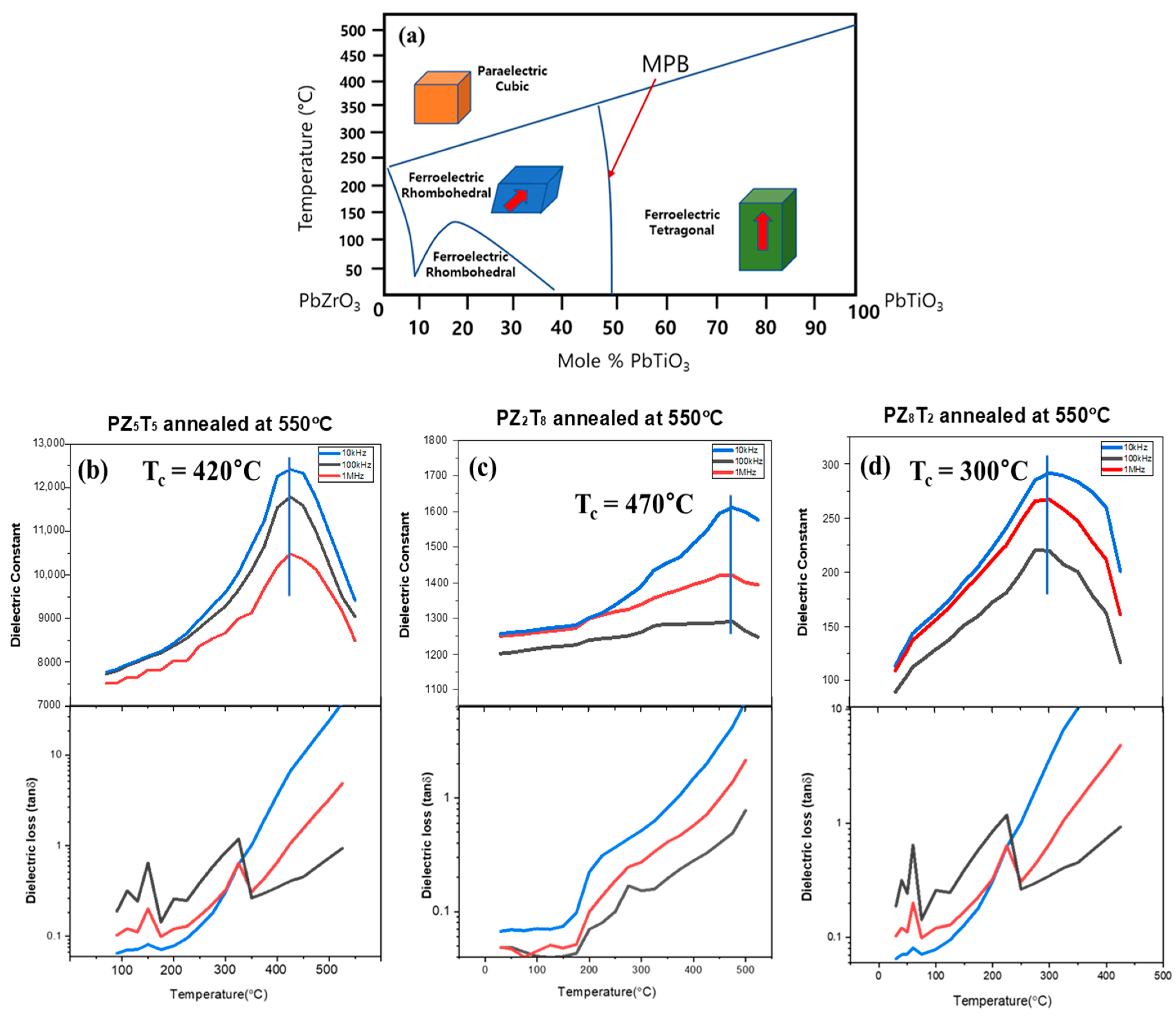
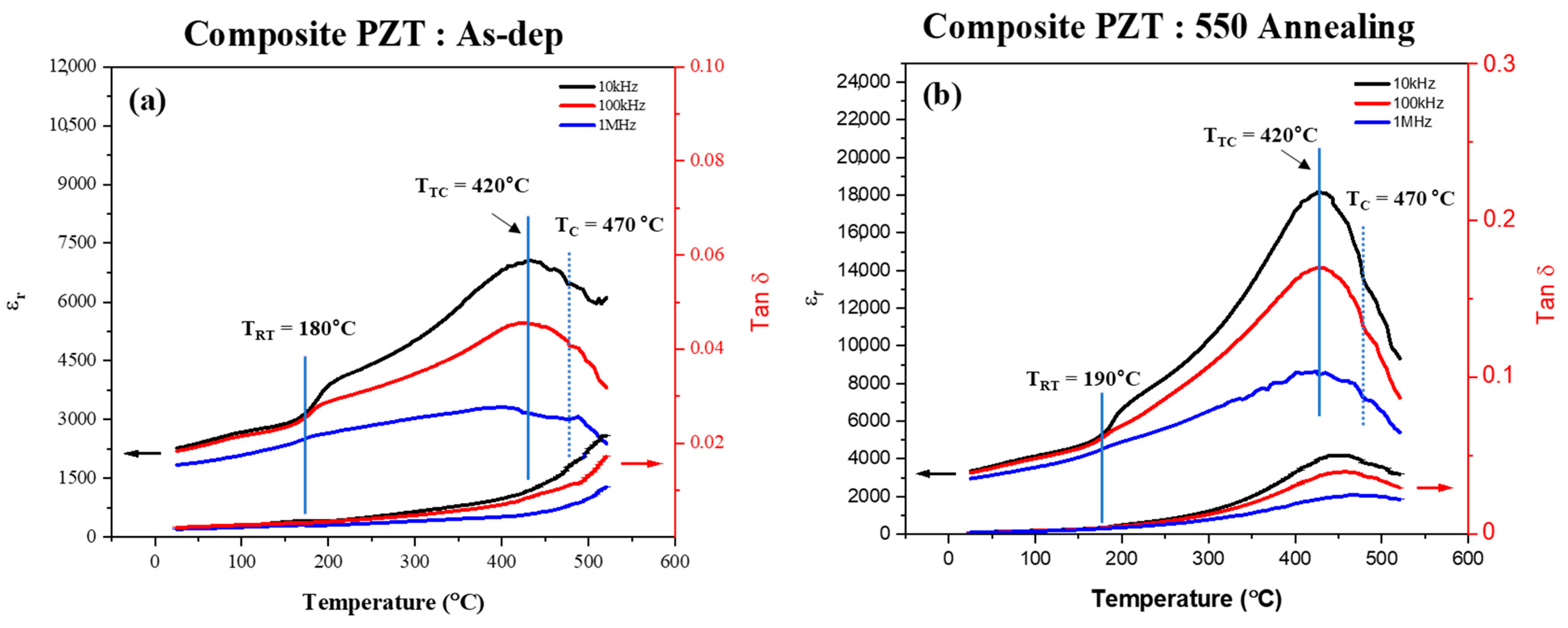
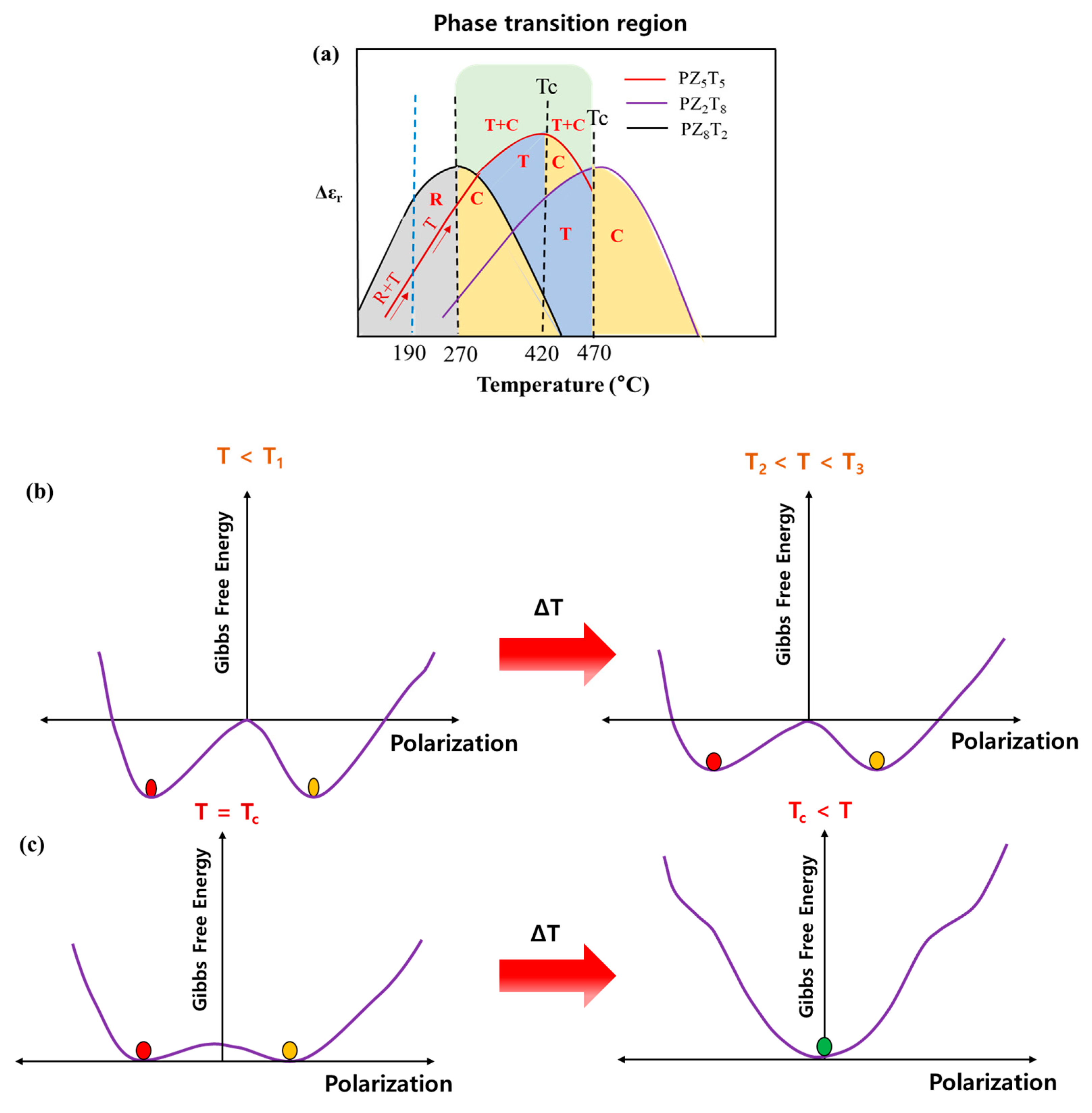
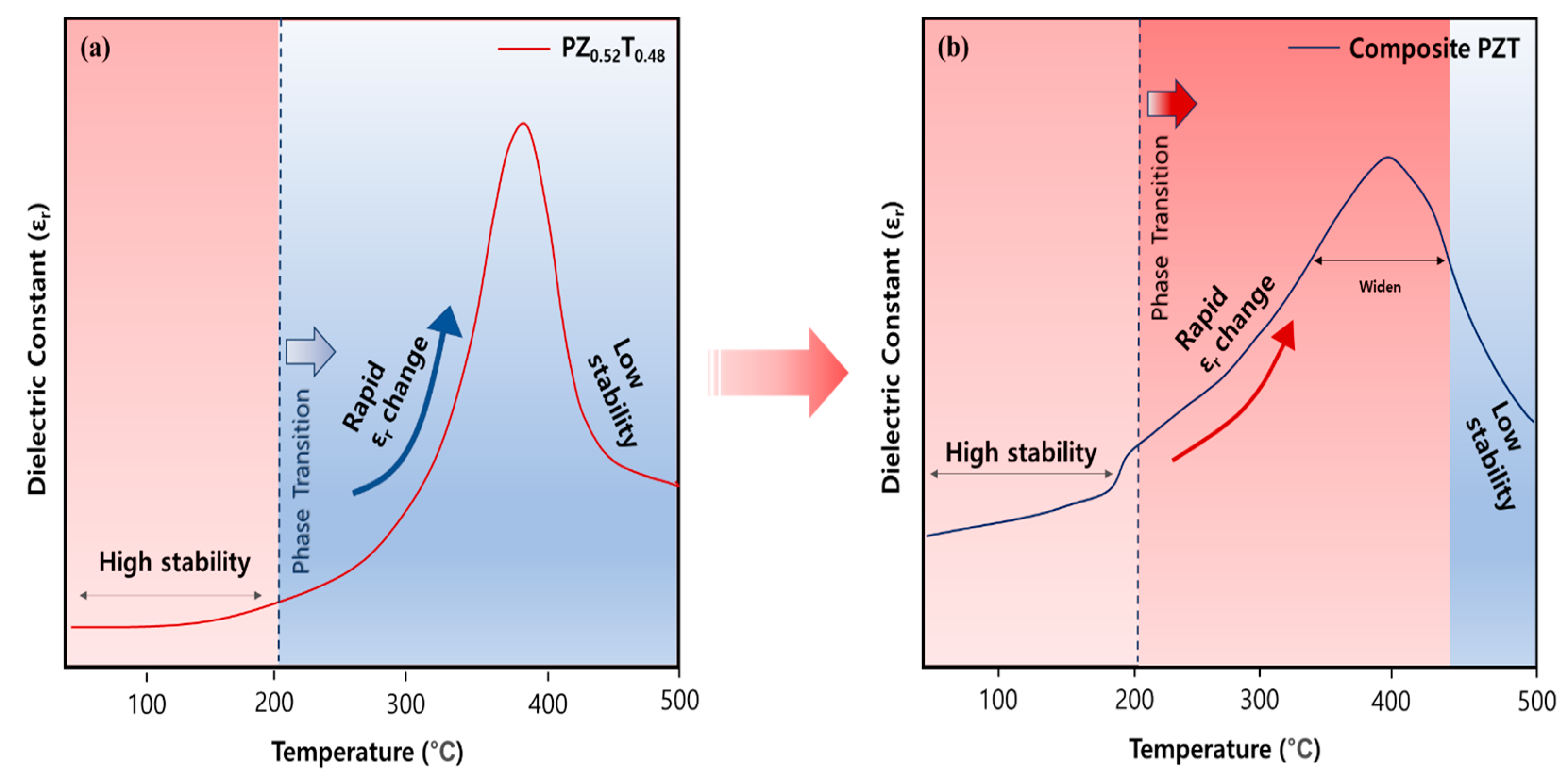
With the increasing demand for ceramic-based capacitors in energy storage and electronics, ferroelectrics have gained attention due to their high dielectric coefficient. However, near the phase-transition temperature, a significant variation in dielectric coefficient leads to reduced temperature stability and degradation of electrical properties, limiting their applications. To address this, composite films with multiple phase-transition temperatures can provide a stable dielectric response over a broad temperature range. Conventional ceramic processing cannot achieve this due to interdiffusion during high-temperature sintering. To overcome this, we utilized the aerosol deposition (AD) process, which enables the fabrication of high-density ceramic films at room temperature while preserving the distinct Curie temperatures (Tc) of different compositions. We prepared composite films with three PZT compositions: Pb(Zr0.2Ti0.8)O3, Pb(Zr0.52Ti0.48)O3, and Pb(Zr0.8Ti0.2)O3. Compared to single-phase Pb(Zr0.52Ti0.48)O3, the composite film exhibited a higher dielectric coefficient with reduced variation across a broad temperature range due to overlapping phase transitions. The AD-fabricated composite PZT films offer enhanced thermal stability, making them suitable for temperature-sensitive applications such as compact power electronics and portable devices.
Keywords: lead zirconate titanate; aerosol deposition; phase coexistence; morphotropic phase boundary; temperature stability lead zirconate titanate; aerosol deposition; phase coexistence; morphotropic phase boundary; temperature stability