Composite Structure as a Stress Wave Barrier Zone Under Impulse Loading: Microscale Numerical Analysis of Attenuation



Highlights
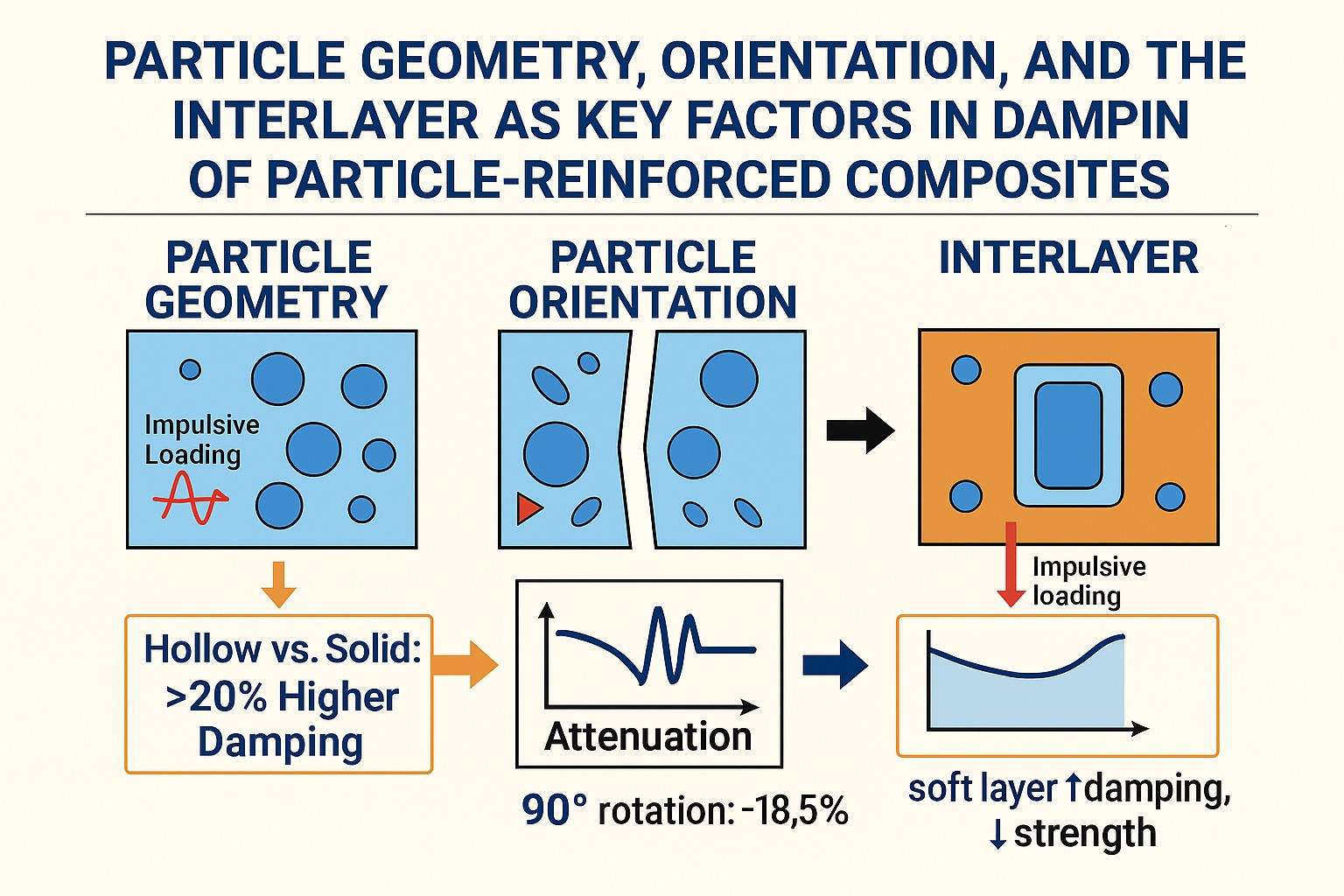
- In discontinuously reinforced composites, hollow inclusions enhance stress wave attenuation by over 20% compared to solid ones due to greater deformation and scattering.
- Elongated inclusion orientation strongly affects attenuation, with perpendicular alignment increasing efficiency by 18.5%.
- A compliant interlayer and specified inclusion distribution further improve attenuation by 3–11%.
- Optimizing inclusion shape and orientation enhances stress wave attenuation.
- Hollow inclusions and compliant large interlayers increases energy dissipation and scattering.
- Controlled inclusion distribution enables efficient stress wave barrier zones design.
Abstract
1. Introduction
2. Methodology, Materials, and Numerical Models
- Reflection—a portion of the wave energy is reflected back;
- Transmission and subsequent refraction—part of the wave energy enters the inclusion, changing its direction and amplitude;
- Interference of reflected waves—superposition of waves.
3. Numerical Results: Influence of Microstructural Factors on Stress Wave Scattering
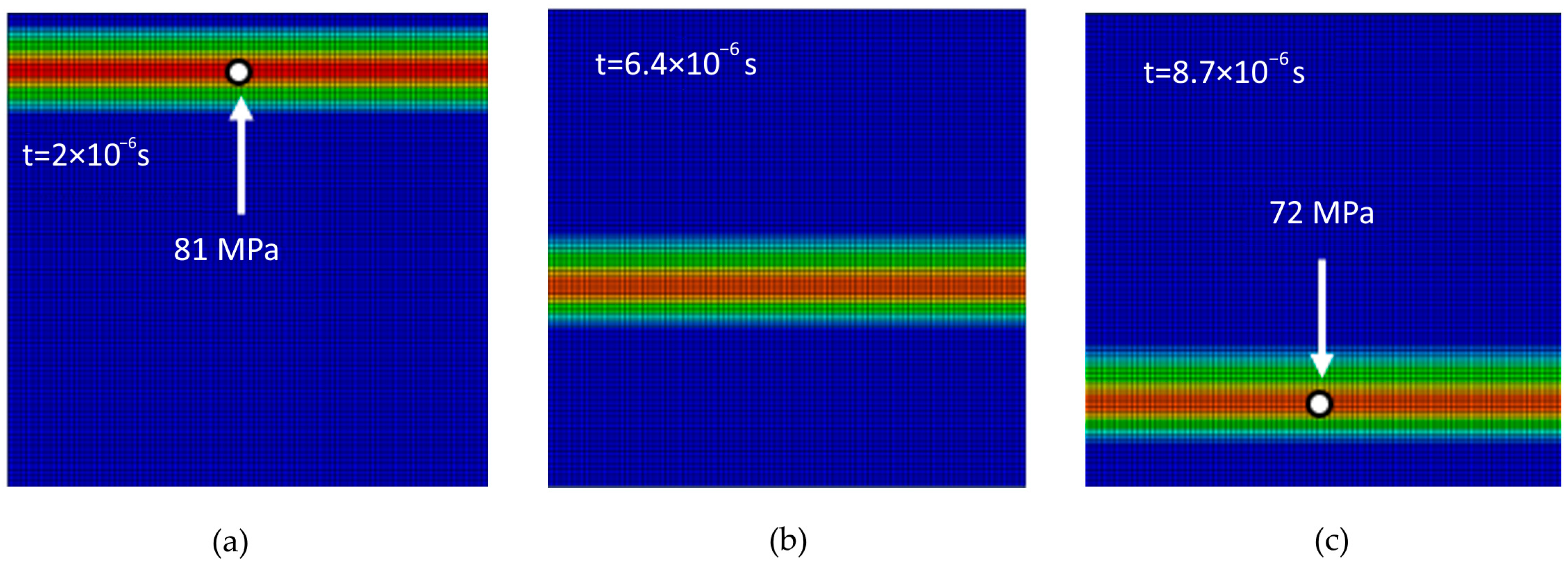
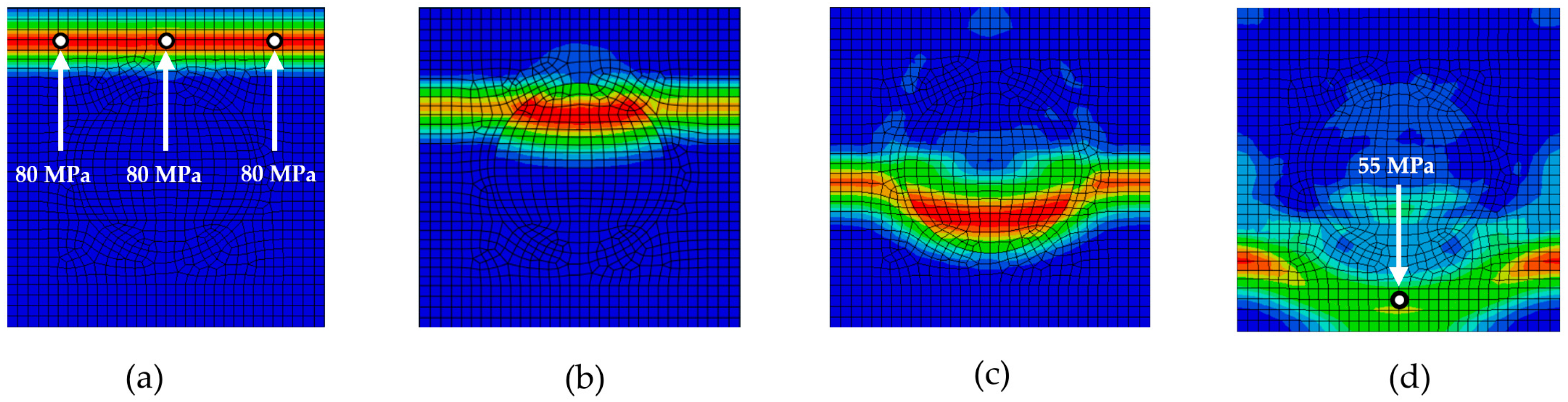
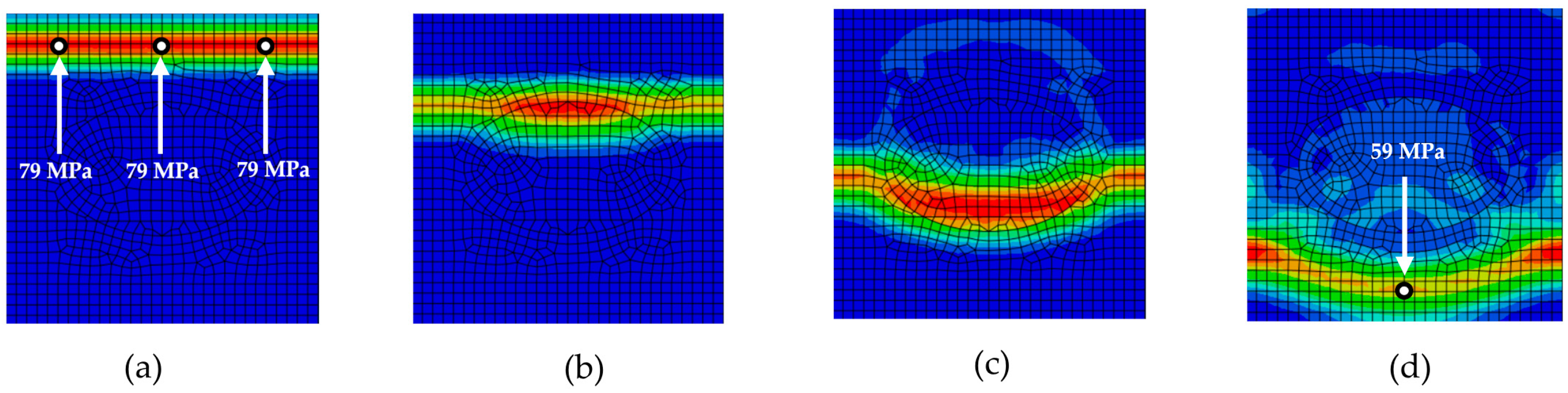
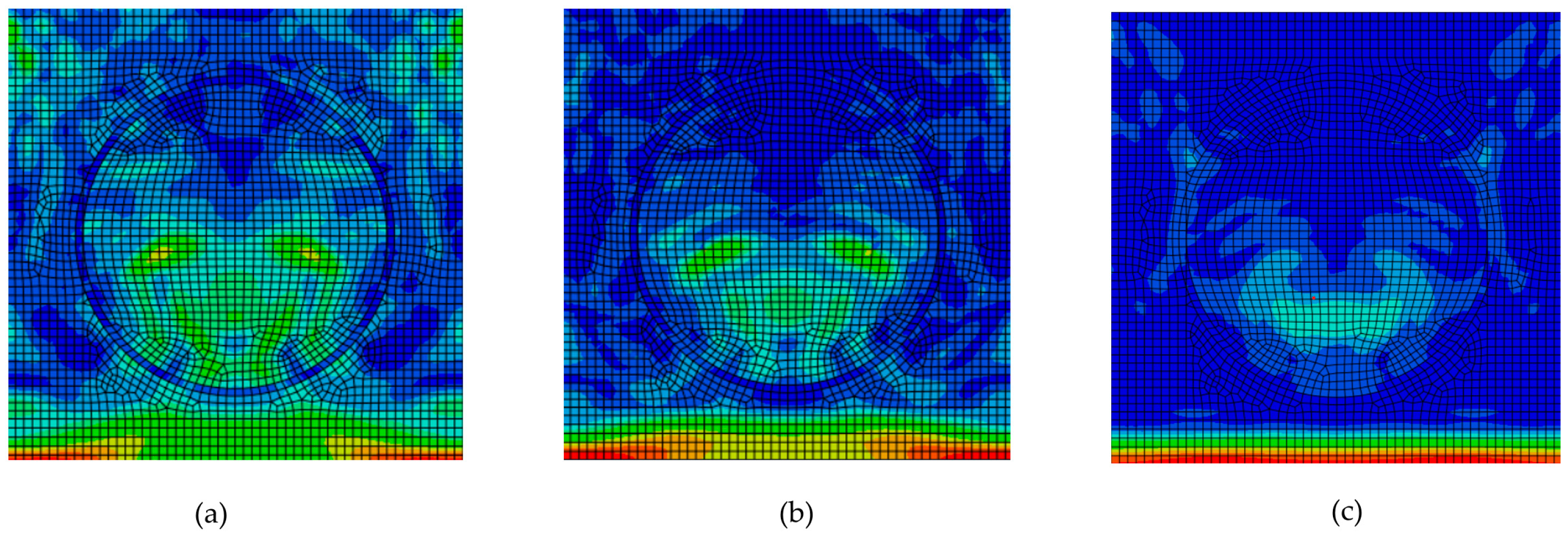
3.1. Visualization of Stress Wave Propagation and Its Scattering in RUCs of Discontinuously Reinforced Composites
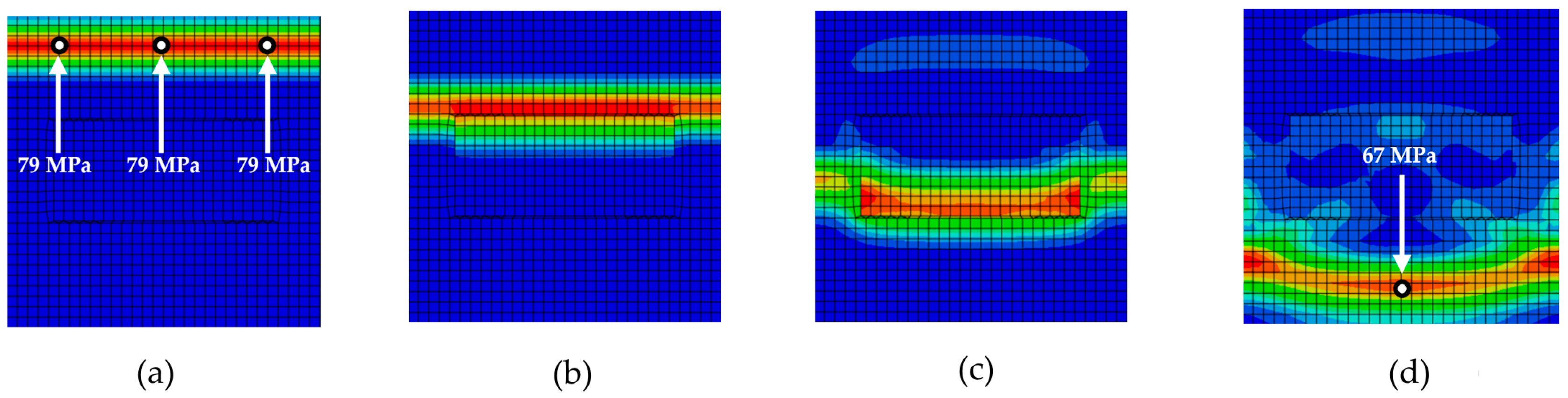
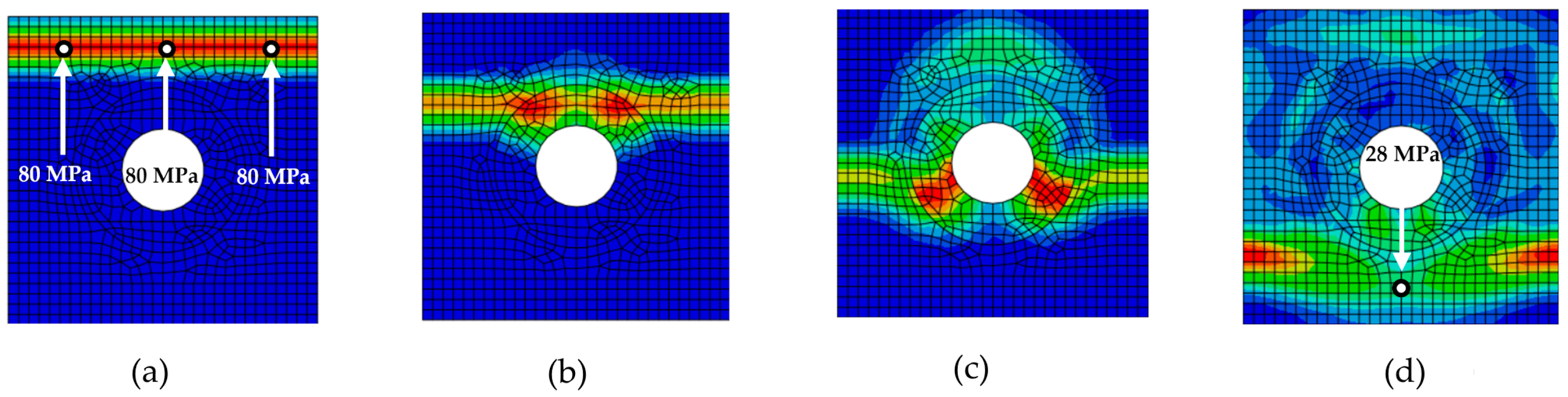
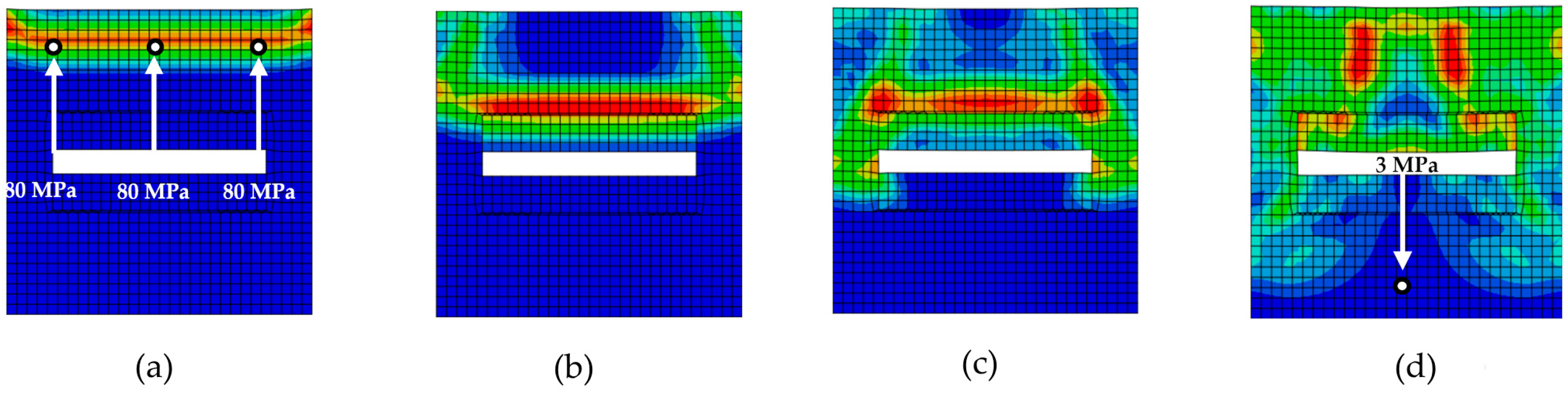
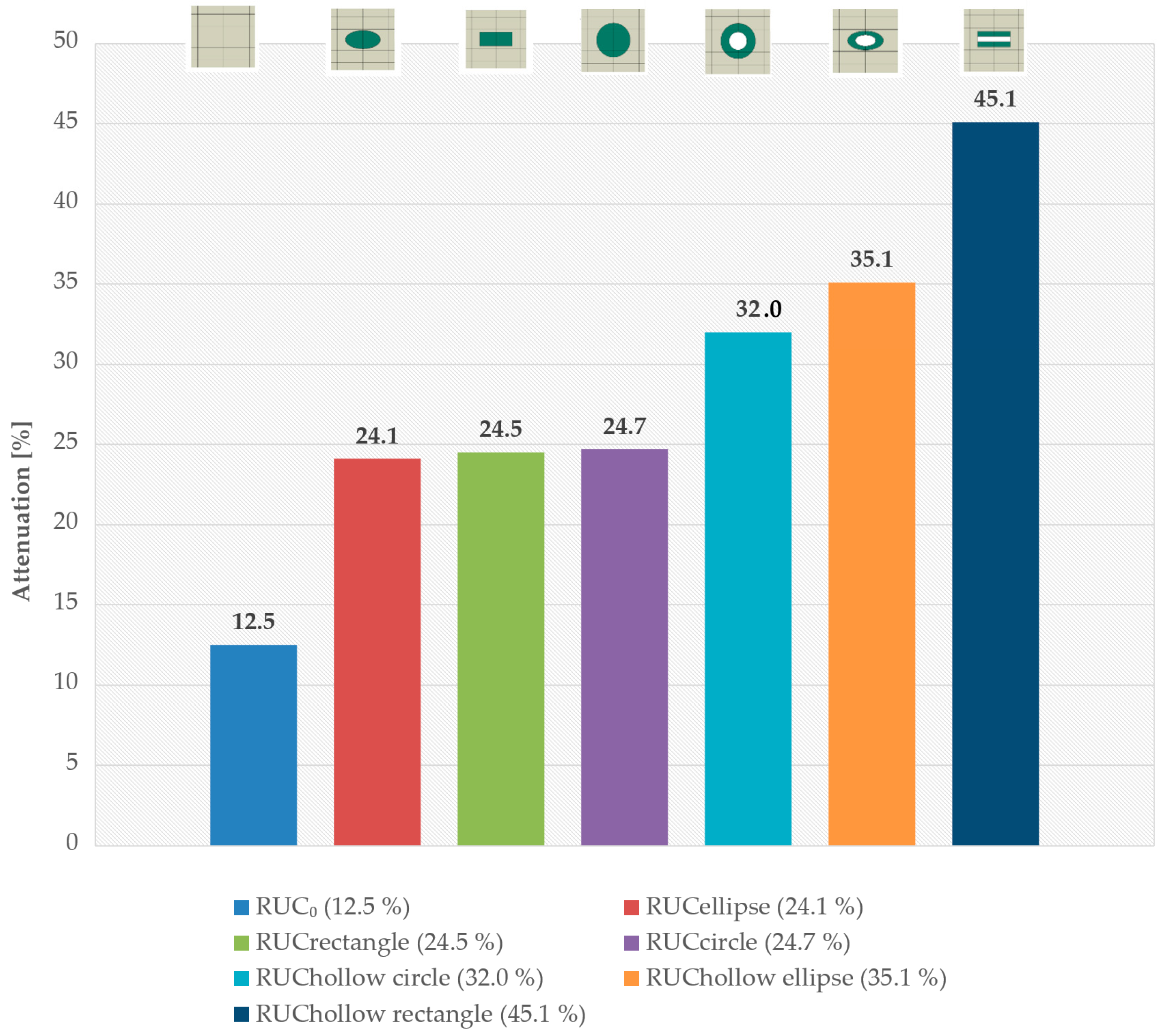
3.2. Inclusion Shape Factor
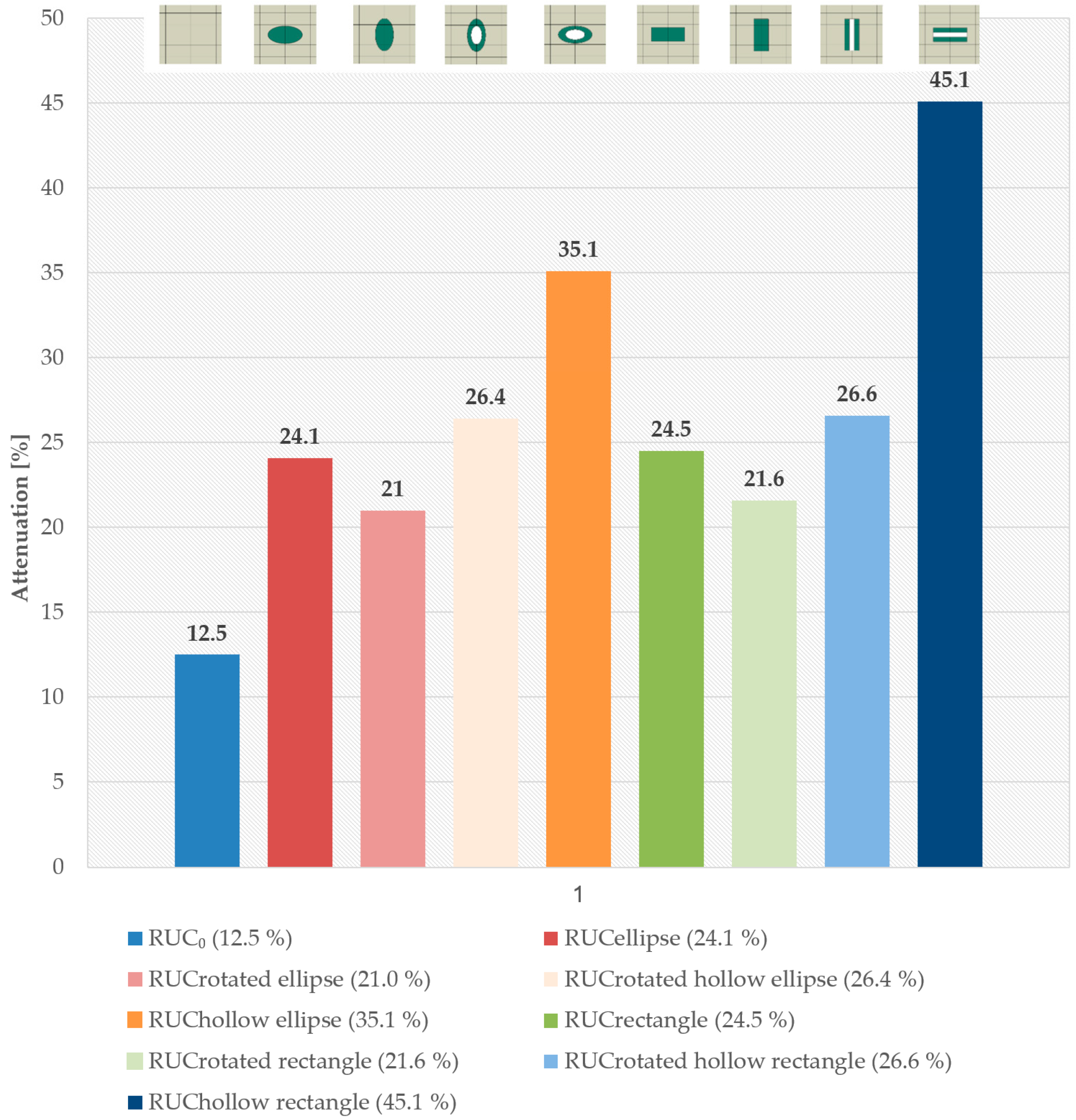
3.3. Inclusion Orientation Factor
- Perpendicular orientation: The wave impacts the lateral surface of the elongated inclusion, which presents a sudden change in mechanical impedance due to shape anisotropy of inclusion. This abrupt impedance mismatch causes strong reflection and generates secondary waves that interfere and scatter in multiple directions. The enhanced scattering and energy redistribution increase stress wave attenuation and create an effective stress barrier zone. Additionally, the concentration of stress at the inclusion interfaces can lead to local high-stress gradients. The shape anisotropy of inclusions makes mechanical impedance direction-dependent.
- Parallel orientation: The inclusion aligns with wave propagation, presenting a smoother path with minimal impedance variation. Consequently, the wave travels more continuously, with weak reflection and low scattering, resulting in reduced stress wave attenuation. The directional dependence of these effects directly arises from the anisotropic inclusion shape and its influence on the local wave–material interactions.
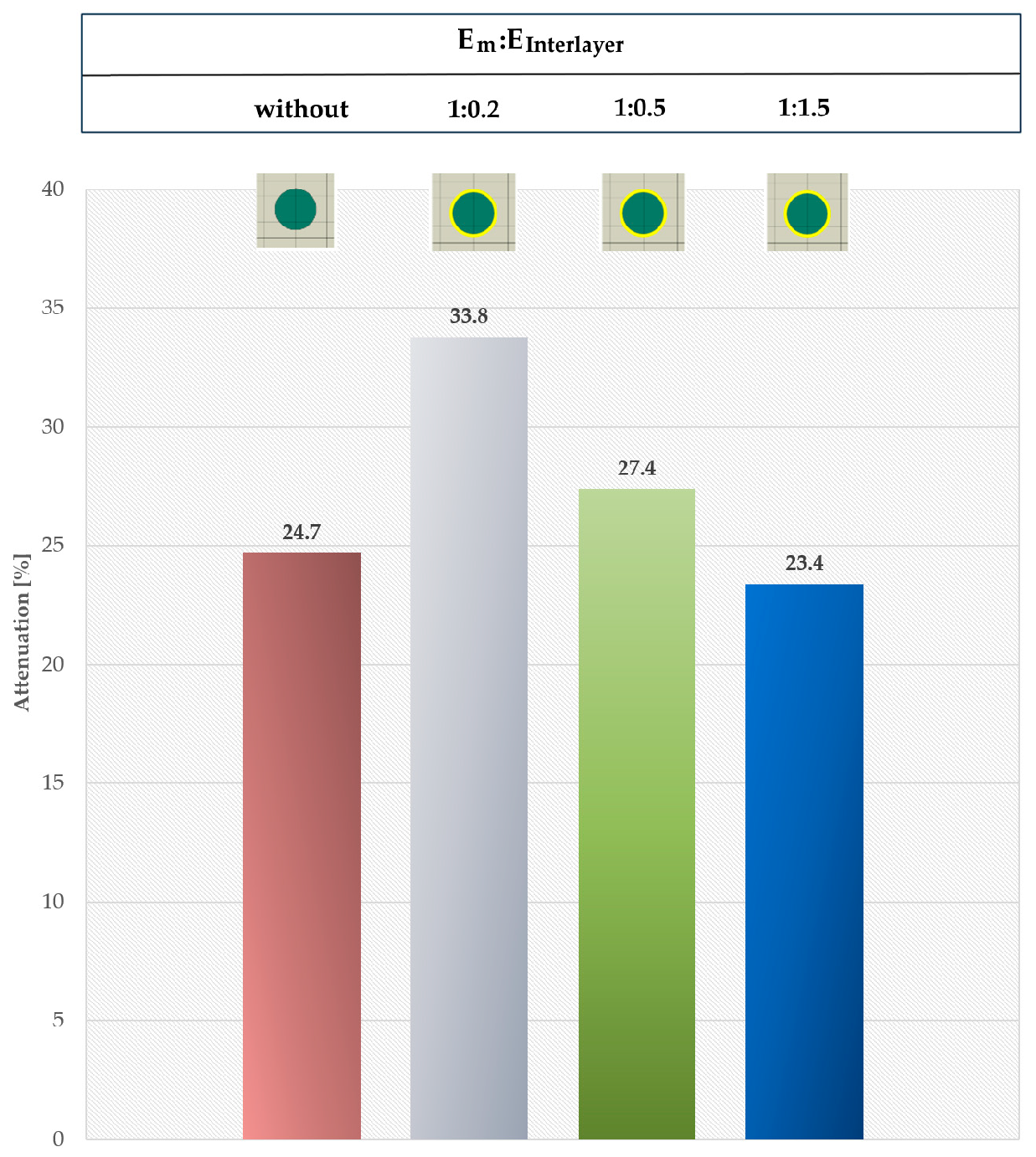
3.4. Interlayer Presence Factor
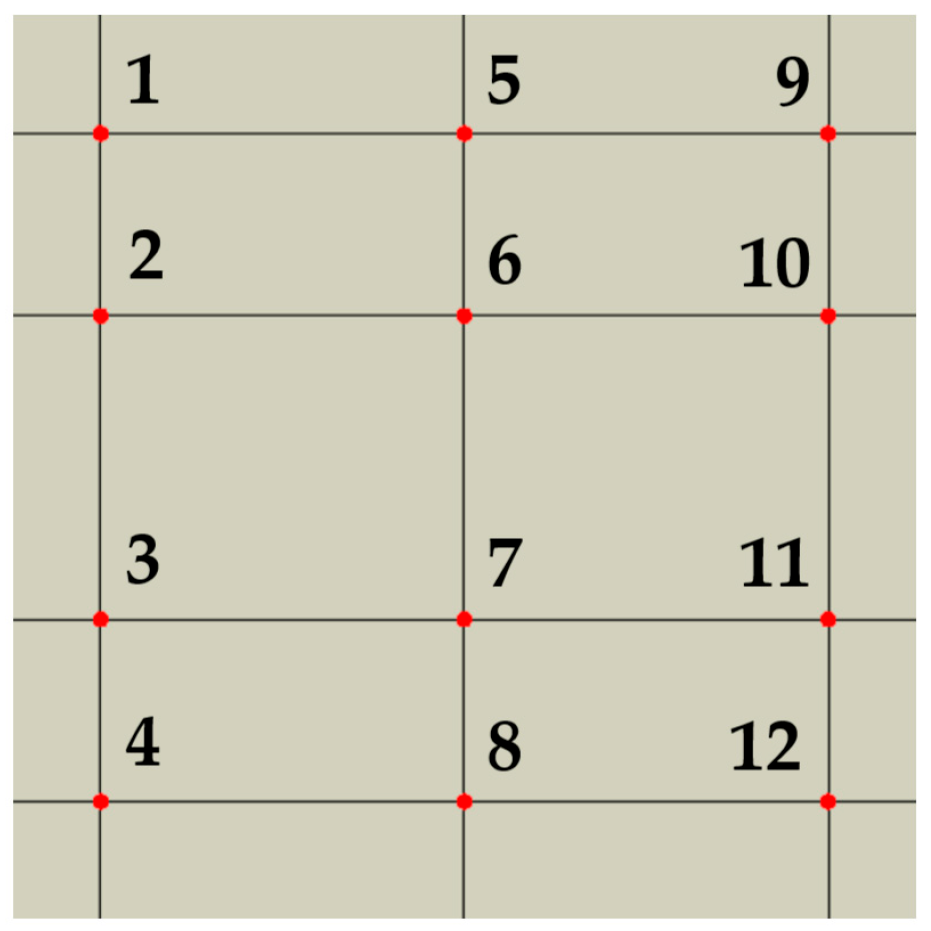
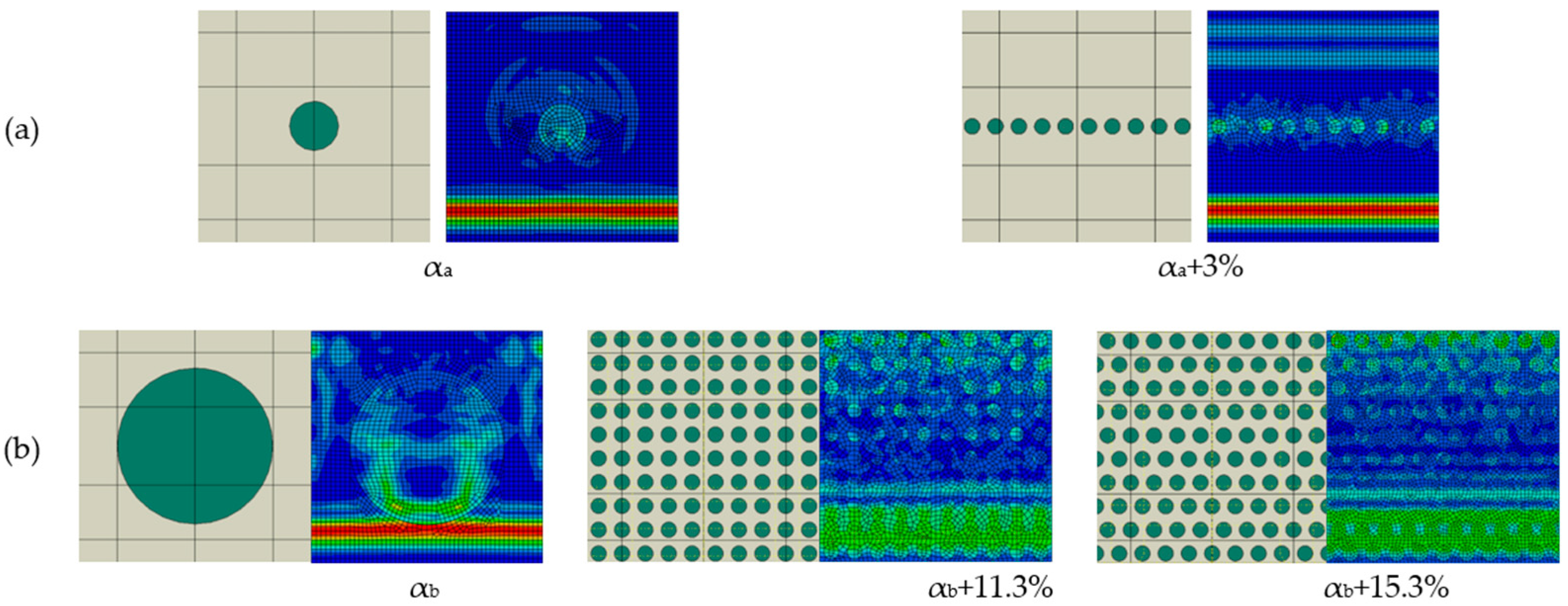
3.5. Inclusion Distribution and Interface Length Factor
4. Implications of Analysis for Stress Wave Barrier Zone Composite Inner Structure
- Hollow inclusions, as well as the presence of an interlayer, introduce multiple internal interfaces that markedly enhance the probability of interactions between the propagating stress wave and the internal topology of the composite.
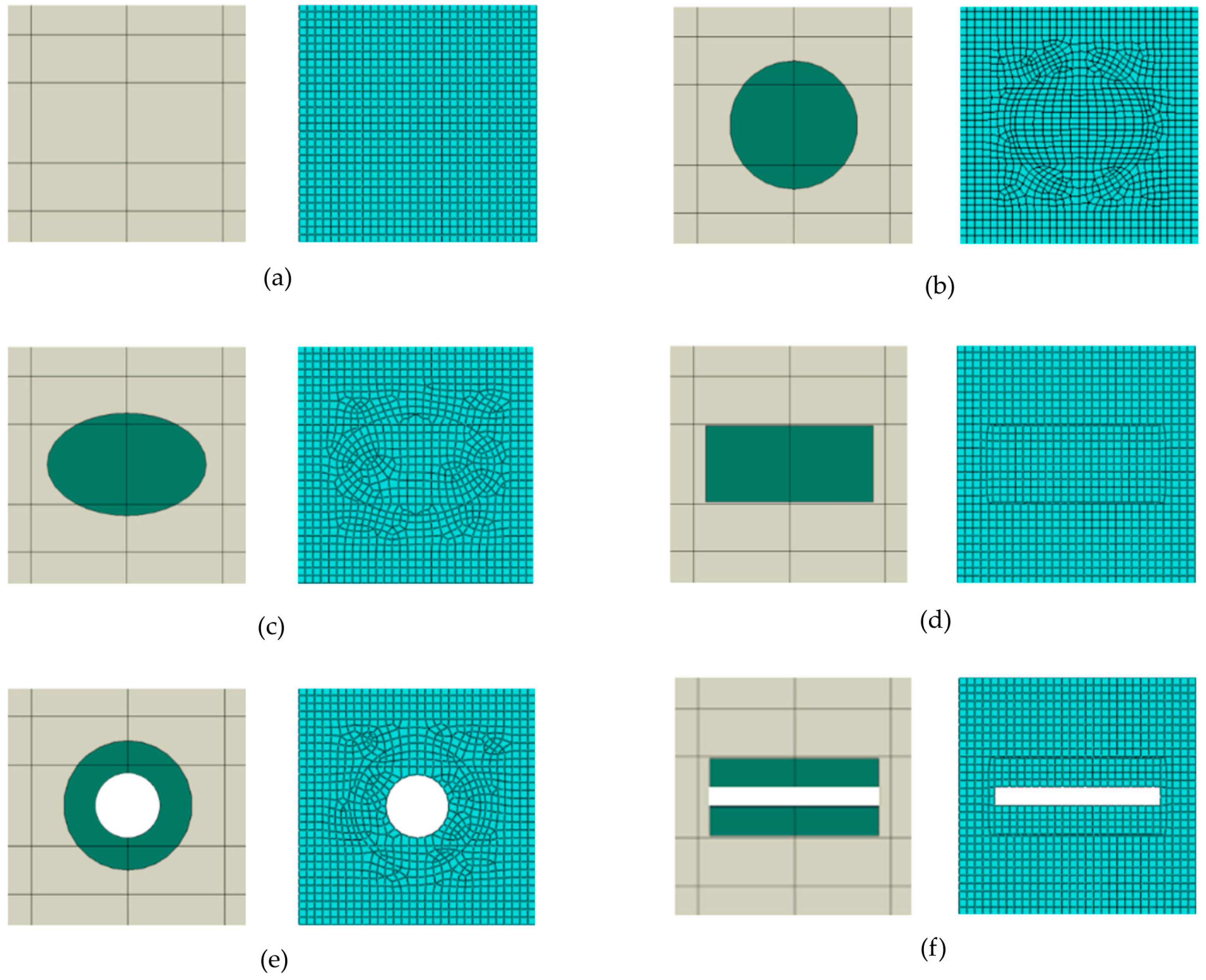
- Hollow inclusions increase the amount of energy for deformation. The most significant improvement was observed for the hollow rectangular inclusion, which demonstrated a 20.6% higher attenuation than the solid rectangular configuration.
- The orientation of the inclusions relative to the loading direction, i.e., orientation parallel and perpendicular to stress wave direction, demonstrated that even for identical inclusion geometries, the attenuation can vary significantly (up to 18.5% for the hollow rectangular inclusion).
- The presence of a long and compliant interlayer between the matrix and the inclusion further enhances stress wave amplitude decrease, typically on the order of units.
- For the same inclusion area fraction, redistribution of inclusions can lead to a further increase, typically on the order of units.
5. Comparison with Experimental Data
6. Conclusions
- Preference for hollow inclusions, which introduce multiple internal interfaces;
- Optimization of inclusion orientation and distribution with respect to the dominant direction of stress wave propagation;
- Use of soft and large interlayers in components of minor structural significance, where strength is not critical and damping and attenuation performance is prioritized.
Author Contributions
Funding
Data Availability Statement
Conflicts of Interest
References
- Murčinková, Z.; Živčák, J.; Sabol, D. Torsional Vibrations in the Resonance of High-Speed Rotor Bearings Reduced by Dynamic Properties of Carbon Fiber Polymer Composites. Materials 2023, 16, 3324. [Google Scholar] [CrossRef]
- Murčinková, Z.; Adamčík, P.; Živčák, J. Re-Design of Machine Tool Joint Components Based on Polymer Fillings for High-Speed Performance. Materials 2021, 14, 6913. [Google Scholar] [CrossRef] [PubMed]
- Murčinková, Z.; Živčák, J.; Zajac, J.; Adamčík, P. Passive Multi-Layer Composite Damper of Flat Belt Tensioner Idler. Appl. Sci. 2021, 11, 3267. [Google Scholar] [CrossRef]
- Michal, P.; Vaško, M.; Sapieta, M.; Majko, J.; Fiačan, J. The Impact of Internal Structure Changes on the Damping Properties of 3D-Printed Composite Material. Appl. Sci. 2024, 14, 5701. [Google Scholar] [CrossRef]
- Jalgar, S.R.; Hunashyal, A.M.; Prabhu, U.S.; Gurumurthy, B.M.; Hiremath, P.; Naik, N. Dynamic Mechanical Analysis and Optimization of Vibration Damping in Epoxy-Based Nano Cement Composite Dampers for Sustainable Structures. J. Compos. Sci. 2025, 9, 202. [Google Scholar] [CrossRef]
- Raza, A.; Mieloszyk, M.; Rimašauskienė, R.; Jūrėnas, V.; Maqsood, N.; Rimašauskas, M.; Kuncius, T. Dynamic Properties and Vibration Control of Additively Manufactured Carbon and Glass Fiber Reinforced Polymer Composites Using MFC: A Numerical Study with Experimental Validation. J. Manuf. Mater. Process. 2025, 9, 235. [Google Scholar] [CrossRef]
- Murčinková, Z.; Adamčík, P.; Sabol, D. Dynamic Response of Components Containing Polymer Composites in the Resonance Region for Vibration Amplitudes up to 5 g. Polymers 2022, 14, 5051. [Google Scholar] [CrossRef]
- Pozorski, Z.; Pozorska, J. Influence of the Heterogeneity of the Core Material on the Local Instability of a Sandwich Panel. Materials 2022, 15, 6687. [Google Scholar] [CrossRef]
- Panda, A.; Dyadyura, K.; Harničárová, M.; Valíček, J.; Pandová, I.; Palková, Z. The Conditions for Obtaining Self-Organized Structures on the Tribological Surfaces of Composite Materials Based on Polytetrafluoroethylene Which Is Used in Automotive and Other Demanding Technologies. MM Sci. J. 2019, 3500–3508. [Google Scholar] [CrossRef]
- Fa, L.; Li, L.; Gong, H.; Chen, W.; Jiang, J.; You, G.; Zhao, M. Investigation of the Physical Mechanism of Acoustic Attenuation in Viscous Isotropic Solids. Micromachines 2022, 13, 1526. [Google Scholar] [CrossRef]
- Shah, S.; Hazell, P.J.; Wang, H.; Escobedo, J.P. Shock Wave Mitigation in Heterogeneous Systems: A Review. J. Dyn. Behav. Mater. 2025, 11, 338–368. [Google Scholar] [CrossRef]
- Biwa, S. Independent Scattering and Wave Attenuation in Viscoelastic Composites. Mech. Mater. 2001, 33, 635–647. [Google Scholar] [CrossRef]
- Kim, J.; Torquato, S. Multifunctional Composites for Elastic and Electromagnetic Wave Propagation. Proc. Natl. Acad. Sci. USA 2020, 117, 8764–8774. [Google Scholar] [CrossRef]
- Liu, K.; Tian, L.; Gao, T.; Wang, Z.; Li, P. An Explicit DFE2 Method for Transient Multiscale Analysis. Int. J. Mech. Sci. 2025, 285, 109808. [Google Scholar] [CrossRef]
- Bendat, J.S.; Piersol, A.G. Engineering Applications of Correlation and Spectral Analysis; Wiley: Hoboken, NJ, USA, 2013; ISBN 978-0-471-57055-4. [Google Scholar]
- Lakes, R.S. Viscoelastic Materials; Cambridge University Press: Cambridge, UK, 2009. [Google Scholar]
- Gardea, F.; Glaz, B.; Riddick, J.; Lagoudas, D.C.; Naraghi, M. Energy Dissipation Due to Interfacial Slip in Nanocomposites Reinforced with Aligned Carbon Nanotubes. ACS Appl. Mater. Interfaces 2015, 7, 9725–9735. [Google Scholar] [CrossRef]
- Suhr, J.; Koratkar, N.A. Energy Dissipation in Carbon Nanotube Composites: A Review. J. Mater. Sci. 2008, 43, 4370–4382. [Google Scholar] [CrossRef]
- Tang, X.; Yan, X. A Review on the Damping Properties of Fiber Reinforced Polymer Composites. J. Ind. Text. 2020, 49, 693–721. [Google Scholar] [CrossRef]
- Tian, Y.; Kim, W.; Kiziltas, A.; Mielewski, D.; Argento, A. Effects of Interfacial Dynamics on the Damping of Biocomposites. Sci. Rep. 2022, 12, 20042. [Google Scholar] [CrossRef]
- Biswas, S.; Jana, P.; Chatterjee, A. Hysteretic Damping in an Elastic Body with Frictional Microcracks. Int. J. Mech. Sci. 2016, 108, 61–71. [Google Scholar] [CrossRef]
- Ma, H.; Geng, P.; Xu, T.; Bandaru, A.K.; Aravand, A.; Falzon, B.G. Analytical Fracture Toughness Model for Multiphase Epoxy Matrices Modified by Thermoplastic and Carbon Nanotube/Thermoplastic. Compos. Part A Appl. Sci. Manuf. 2024, 177, 107948. [Google Scholar] [CrossRef]
- Remillat, C. Damping Mechanism of Polymers Filled with Elastic Particles. Mech. Mater. 2007, 39, 525–537. [Google Scholar] [CrossRef]
- Butruille, T.; Crone, J.C.; Portela, C.M. Decoupling Particle-Impact Dissipation Mechanisms in 3D Architected Materials. Proc. Natl. Acad. Sci. USA 2024, 121, e2313962121. [Google Scholar] [CrossRef] [PubMed]
- Caputo, S.; Hristov, V.; Munaò, G.; Herbst, H.; Pizzirusso, A.; Donati, G.; Milano, G. Effect of Bidispersity on Polymer-Bound Layers of Carbon Black Primary Particles: Combining Large-Scale Simulations and Experiments. Macromolecules 2023, 56, 10119–10131. [Google Scholar] [CrossRef]
- Xu, D.; Guo, Y. Local Resonant Attenuation of Stress Waves in Particulate Composites. Materials 2021, 14, 2991. [Google Scholar] [CrossRef]
- Briccola, D.; Tomasin, M.; Netti, T.; Pandolfi, A. The Influence of a Lattice-Like Pattern of Inclusions on the Attenuation Properties of Metaconcrete. Front. Mater. 2019, 6, 35. [Google Scholar] [CrossRef]
- Li, C.; Tang, Z.; Ju, J.W.; Zhong, J. Engineering Interfacial Transition Zone with Polymer/CNT Nanocomposites Coating: Break the Dilemma Between Strength and Damping. Compos. Part B Eng. 2025, 112910. [Google Scholar] [CrossRef]
- Li, C.; Zhong, J.; Sun, Y. Novel Approach to Enhance the Damping Performance of Cement-Based Materials Through Polymer/Carbon Nanotube Composite Coating and Gradation of Aggregates. Constr. Build. Mater. 2025, 471, 140708. [Google Scholar] [CrossRef]
- Wan, D.; Tang, H.; Wang, H.; Wang, Y.; Yang, F.; Sun, Y.; Wang, Y. Microstructure, Mechanical Properties and Damping of SiC/Mg97Zn1Y2 Composites. J. Wuhan Univ. Technol.—Mater. Sci. Ed. 2024, 39, 1580–1585. [Google Scholar] [CrossRef]
- Liu, Q.; Qi, F.; Wang, Q.; Ding, H.; Chu, K.; Liu, Y.; Li, C. The Influence of Particles Size and Its Distribution on the Degree of Stress Concentration in Particulate Reinforced Metal Matrix Composites. Mater. Sci. Eng. A 2018, 731, 351–359. [Google Scholar] [CrossRef]
- Zhao, W.; Huang, S.J.; Wu, Y.J.; Kang, C.W. Particle Size and Particle Percentage Effect of AZ61/SiCp Magnesium Matrix Micro- and Nano-Composites on Their Mechanical Properties Due to Extrusion and Subsequent Annealing. Metals 2017, 7, 293. [Google Scholar] [CrossRef]
- Madeira, S.; Miranda, G.; Carneiro, V.H.; Soares, D.; Silva, F.S.; Carvalho, O. The Effect of SiCp Size on High Temperature Damping Capacity and Dynamic Young’s Modulus of Hot-Pressed AlSi–SiCp MMCs. Mater. Des. 2016, 93, 409–417. [Google Scholar] [CrossRef]
- Li, Y.Y.; Liu, Y.B.; Cao, Z.Y. Damping Properties of 6063Al/Al2O3 SiO2 Particle Reinforced Composites. Mater. Sci. Forum 2007, 546, 633–637. [Google Scholar] [CrossRef]
- Fulgione, M.; Palladino, S.; Esposito, L.; Sarfarazi, S.; Modano, M. A Multi-Stage Framework Combining Experimental Testing, Numerical Calibration, and AI Surrogates for Composite Panel Characterization. Buildings 2025, 15, 3900. [Google Scholar] [CrossRef]
- Cai, B.; Yao, Z.; Zhang, X.; Li, C.; Liu, X.; Zhang, C.; Wang, Z. Damping Model of Fiber Reinforced Composites and Factors Affecting Damping and Dynamic Response. Appl. Compos. Mater. 2021, 28, 1451–1476. [Google Scholar] [CrossRef]
- Sabol, D.; Murčinková, Z. Stress Wave Propagation and Decay Based on Micro-Scale Modelling in the Topology of Polymer Composite with Circular Particles. Polymers 2024, 16, 2189. [Google Scholar] [CrossRef] [PubMed]
- Ravindran, S.; Tessema, A.; Kidane, A.; Jordan, J. Weak-shock wave propagation in polymer-based particulate composites. J. Appl. Phys. 2019, 125, 145104. [Google Scholar] [CrossRef]
- Luo, G.; Cheng, P.; Yu, Y.; Geng, X.; Zhao, Y.; Xia, Y.; Zhang, R.; Shen, Q. Influence on elastic wave propagation behavior in polymers composites: An analysis of inflection phenomena. Polymers 2023, 15, 1680. [Google Scholar] [CrossRef]
- Kettenbeil, C.; Ravichandran, G. Experimental investigation of the dynamic behavior of metaconcrete. Int. J. Impact Eng. 2018, 111, 199–207. [Google Scholar] [CrossRef]
- Geng, X.; Zhang, C.; Zhou, B.; Zhang, J.; Luo, G.; Shen, Q. Experiment and simulation for ultrasonic wave propagation in multiple-particle reinforced composites. Ultrasonics 2023, 132, 106971. [Google Scholar] [CrossRef]
- Ono, K. Ultrasonic attenuation of carbon-fiber reinforced composites. J. Compos. Sci. 2023, 7, 479. [Google Scholar] [CrossRef]
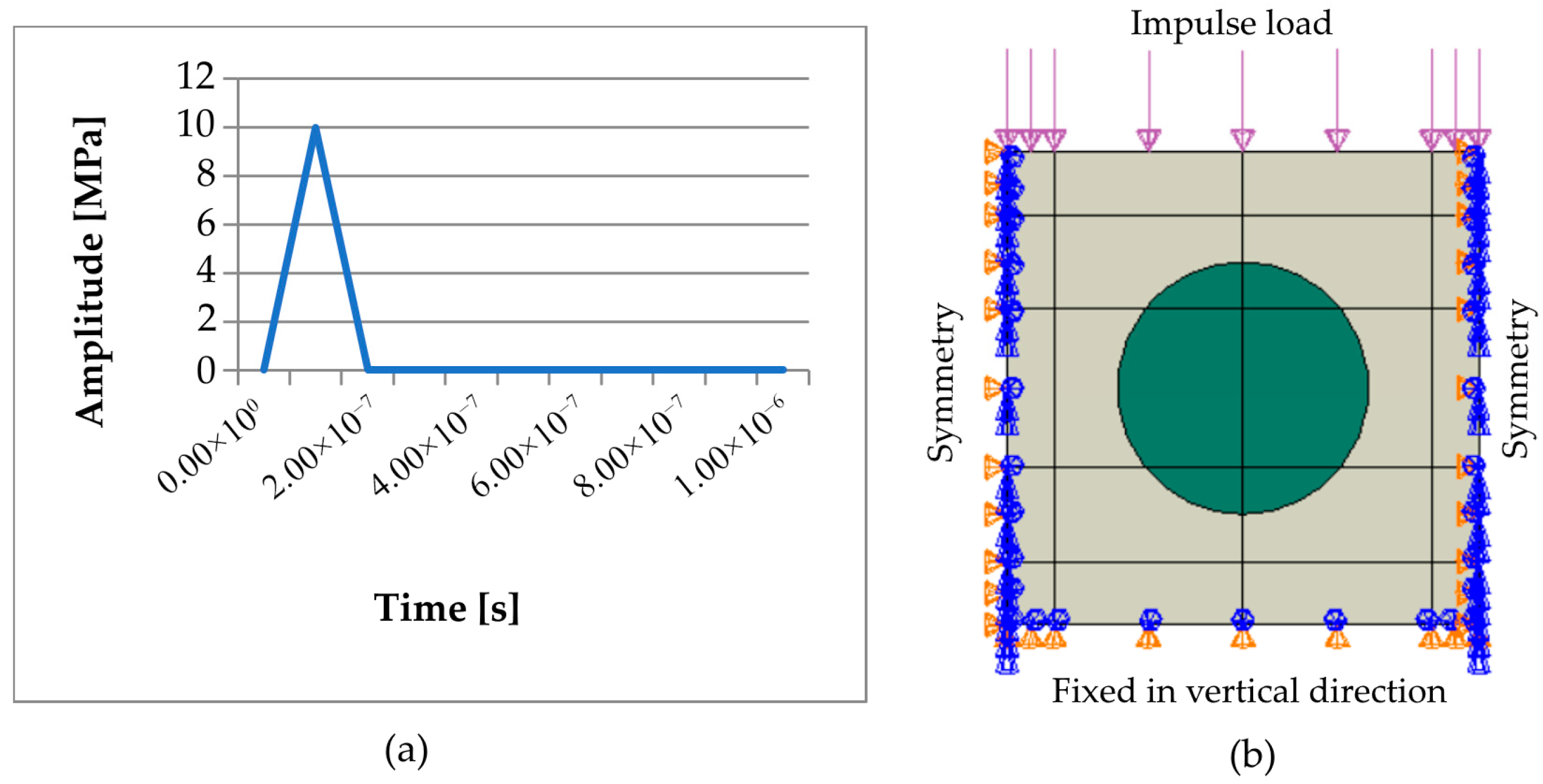
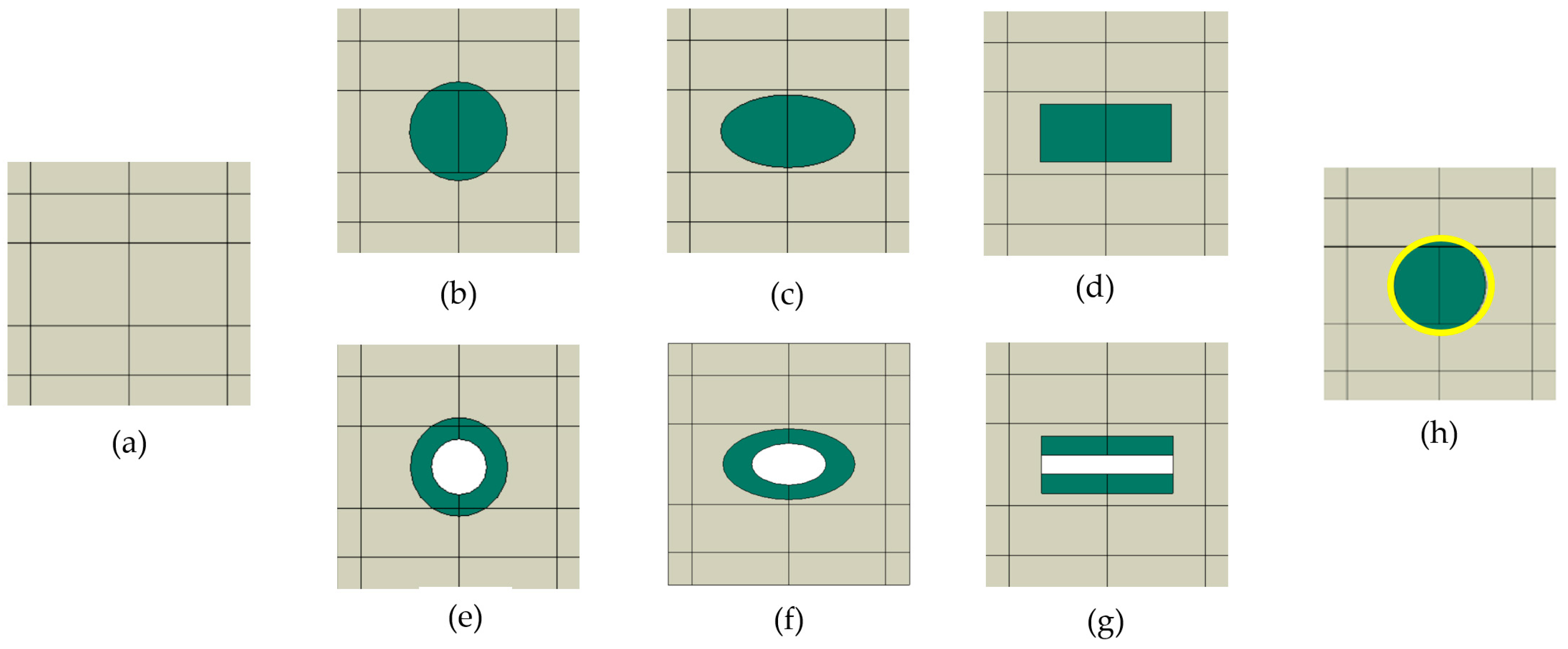

| Elastic Modulus E [103 MPa] | Poisson’s Ratio ν [-] | Densityρ [kg/m3] | Material Type | |
| Matrix | Em = 2.4 | νm = 0.35 | ρm = 1200 | Homogeneous, Isotropic |
| Inclusion | Einc = 4.8 | νinc = 0.35 | ρinc = 2400 | Homogeneous, Isotropic |
| Interface | - | - | - | bonded |
| Interlayer | Einterlayer = 0.2 × Em | νinterlayer = 0.35 | ρinterlayer = 1200 | Homogeneous, Isotropic |
| Einterlayer = 0.5 × Em | ||||
| Einterlayer = 1.5 × Em |
Disclaimer/Publisher’s Note: The statements, opinions and data contained in all publications are solely those of the individual author(s) and contributor(s) and not of MDPI and/or the editor(s). MDPI and/or the editor(s) disclaim responsibility for any injury to people or property resulting from any ideas, methods, instructions or products referred to in the content. |
© 2025 by the authors. Licensee MDPI, Basel, Switzerland. This article is an open access article distributed under the terms and conditions of the Creative Commons Attribution (CC BY) license (https://creativecommons.org/licenses/by/4.0/).
Share and Cite
Murčinková, Z.; Sabol, D.; Baron, P. Composite Structure as a Stress Wave Barrier Zone Under Impulse Loading: Microscale Numerical Analysis of Attenuation. Materials 2025, 18, 5599. https://doi.org/10.3390/ma18245599
Murčinková Z, Sabol D, Baron P. Composite Structure as a Stress Wave Barrier Zone Under Impulse Loading: Microscale Numerical Analysis of Attenuation. Materials. 2025; 18(24):5599. https://doi.org/10.3390/ma18245599
Chicago/Turabian StyleMurčinková, Zuzana, Dominik Sabol, and Petr Baron. 2025. "Composite Structure as a Stress Wave Barrier Zone Under Impulse Loading: Microscale Numerical Analysis of Attenuation" Materials 18, no. 24: 5599. https://doi.org/10.3390/ma18245599
APA StyleMurčinková, Z., Sabol, D., & Baron, P. (2025). Composite Structure as a Stress Wave Barrier Zone Under Impulse Loading: Microscale Numerical Analysis of Attenuation. Materials, 18(24), 5599. https://doi.org/10.3390/ma18245599