Parameter Optimisation of Johnson–Cook Constitutive Models for Single Abrasive Grain Micro-Cutting Simulation: A Novel Methodology Based on Lateral Material Displacement Analysis



Highlights
- The Johnson–Cook models were analysed under grinding conditions;
- Criteria were developed to assess non-conformity cross-section scratches.
- A method for optimising the Johnson–Cook constitutive equations was proposed;
- The applied methodology enables high computational accuracy.
Abstract
1. Introduction
2. Materials and Methods
2.1. Experimental Setup
2.2. Constitutive Models
2.3. Simulation Assumptions and Selection Constants for the Johnson–Cook Model
2.4. Methodology and Criteria for Assessing Non-Conformity in the Scratch Area, Depth, and Side Pile-Ups
3. Results
4. Discussion
5. Conclusions
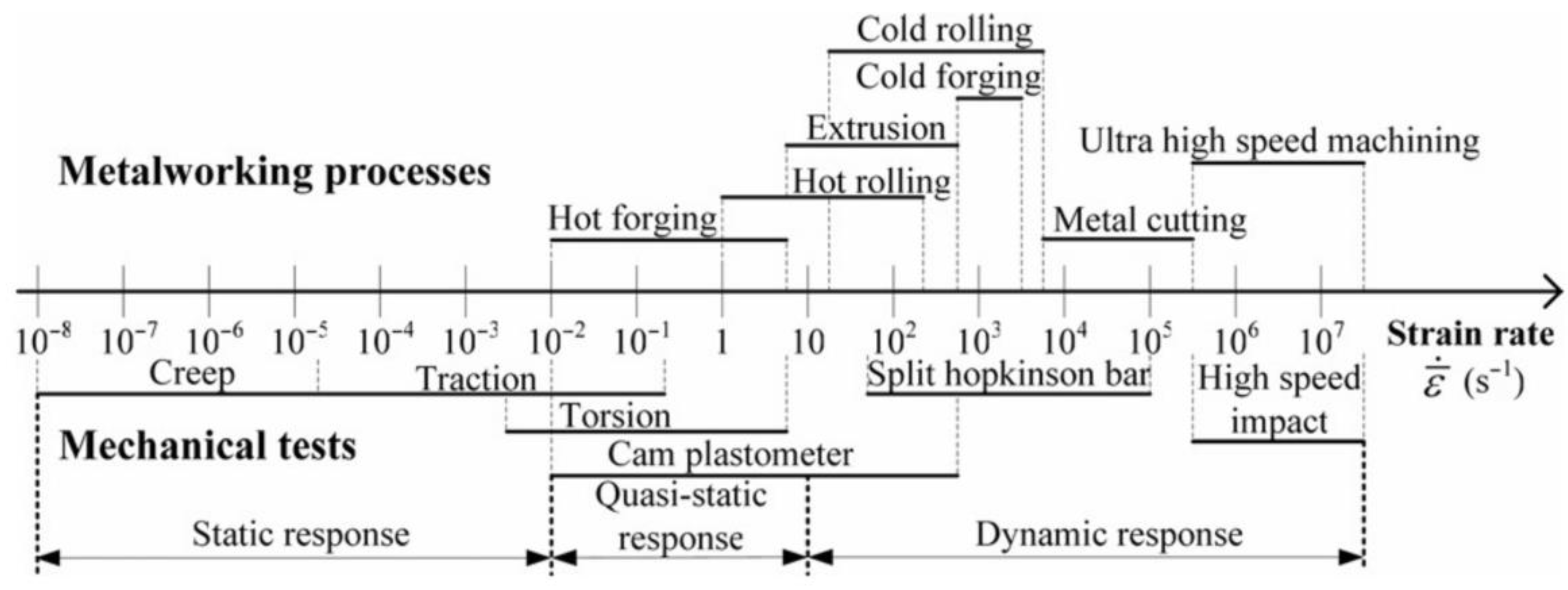
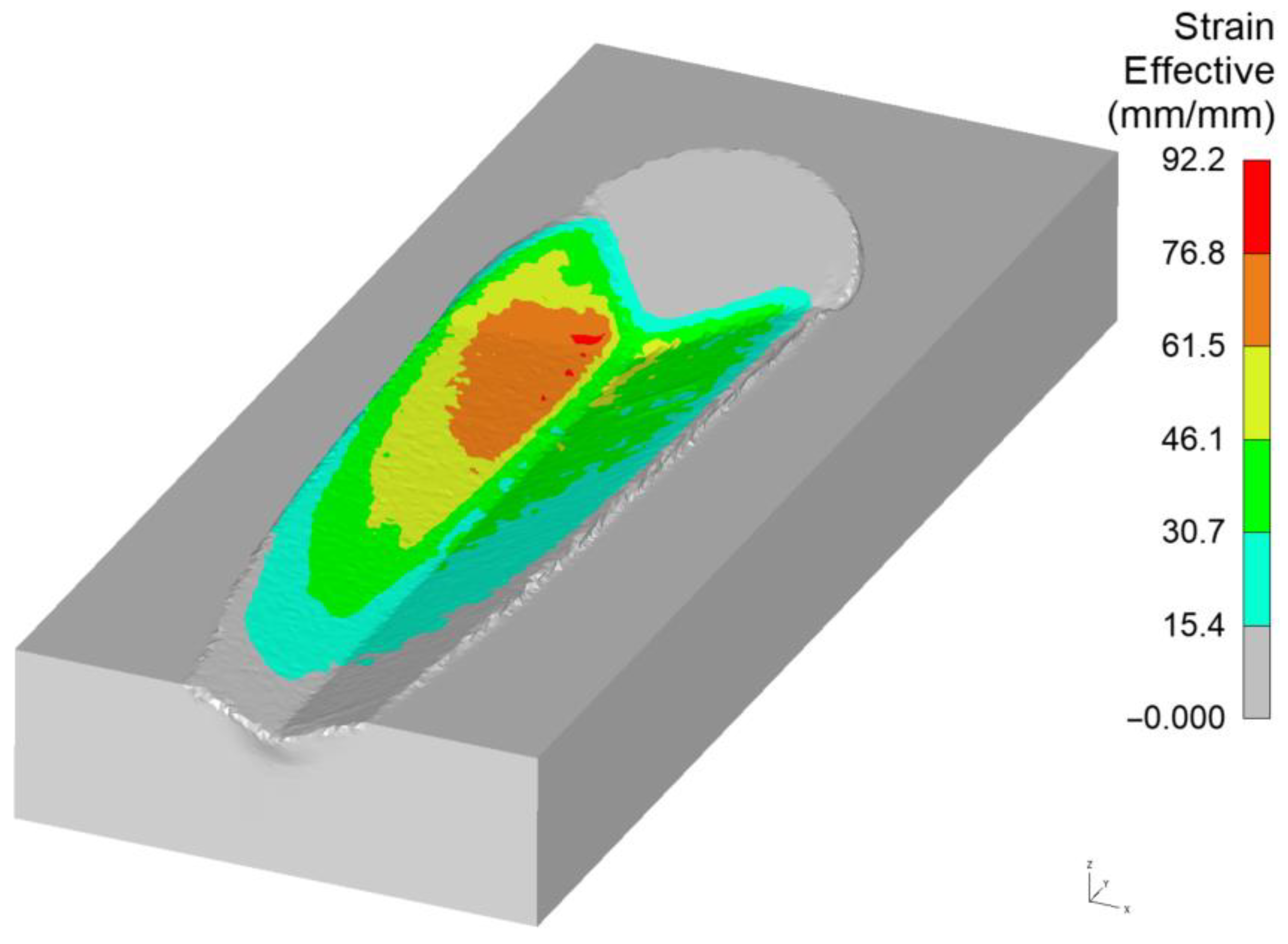
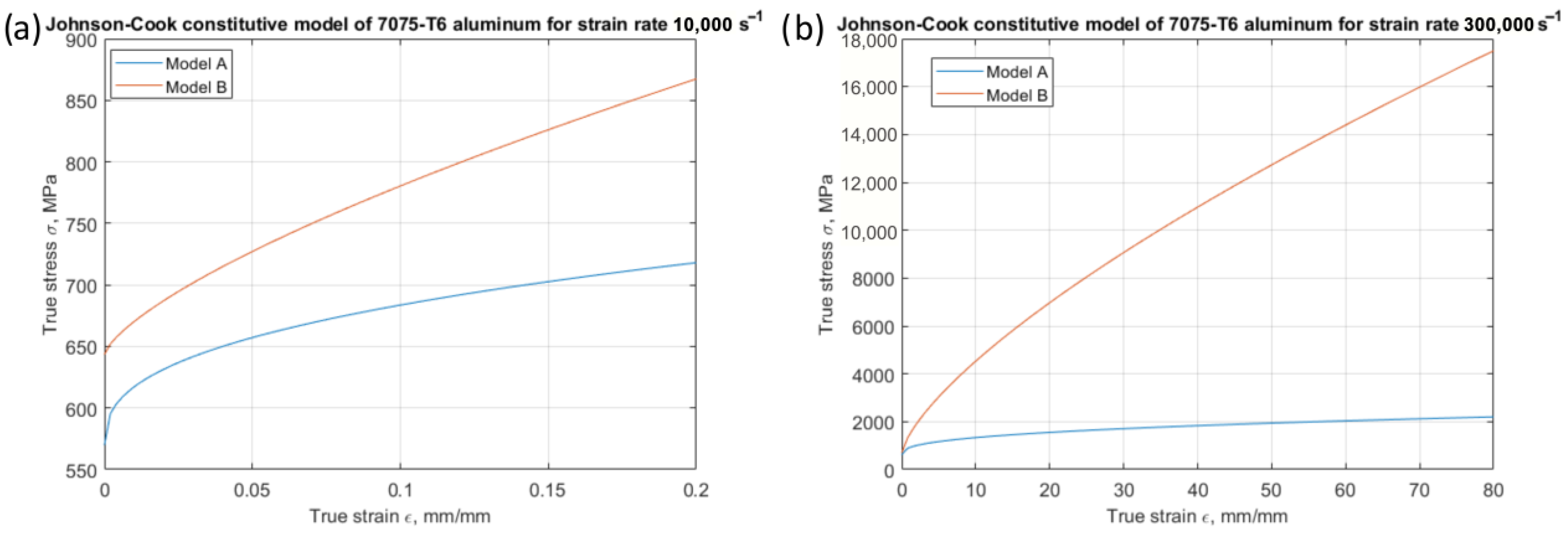
- The development of the Johnson–Cook constitutive model for dynamic material behaviour in the grinding process necessitates the verification of the accuracy of model parameter selection within the strain rate range of 105 to 107 and large strains induced by negative rake angles of abrasive grains, reaching ε = 70. Dynamic changes in the conditions within the contact zone between abrasive grains and the workpiece significantly affect the roughness parameters of ground surfaces. The methodology for tuning constitutive models makes it possible to build more accurate simulations, which will enable a better understanding of the surface formation process during grinding.
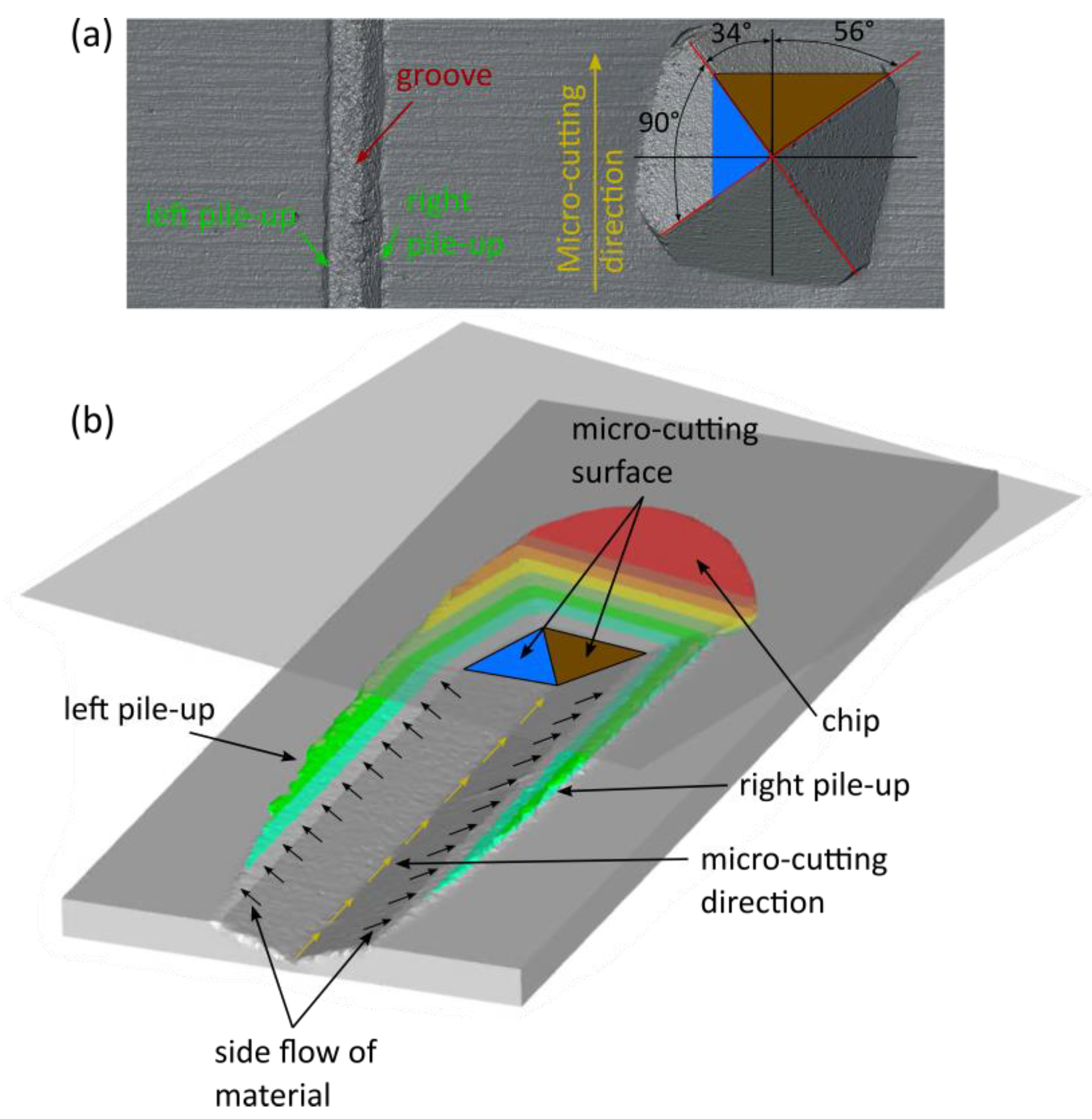
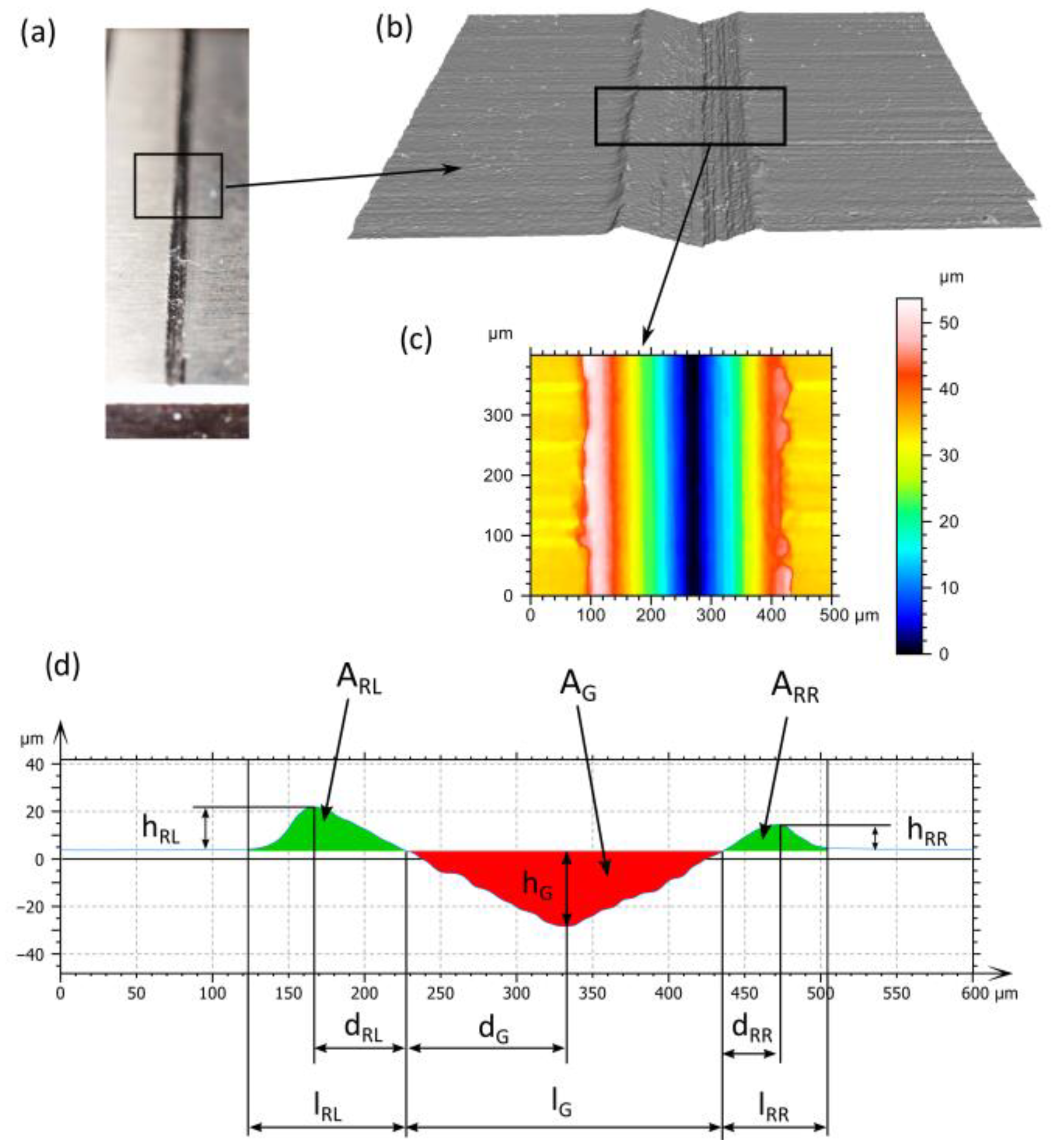
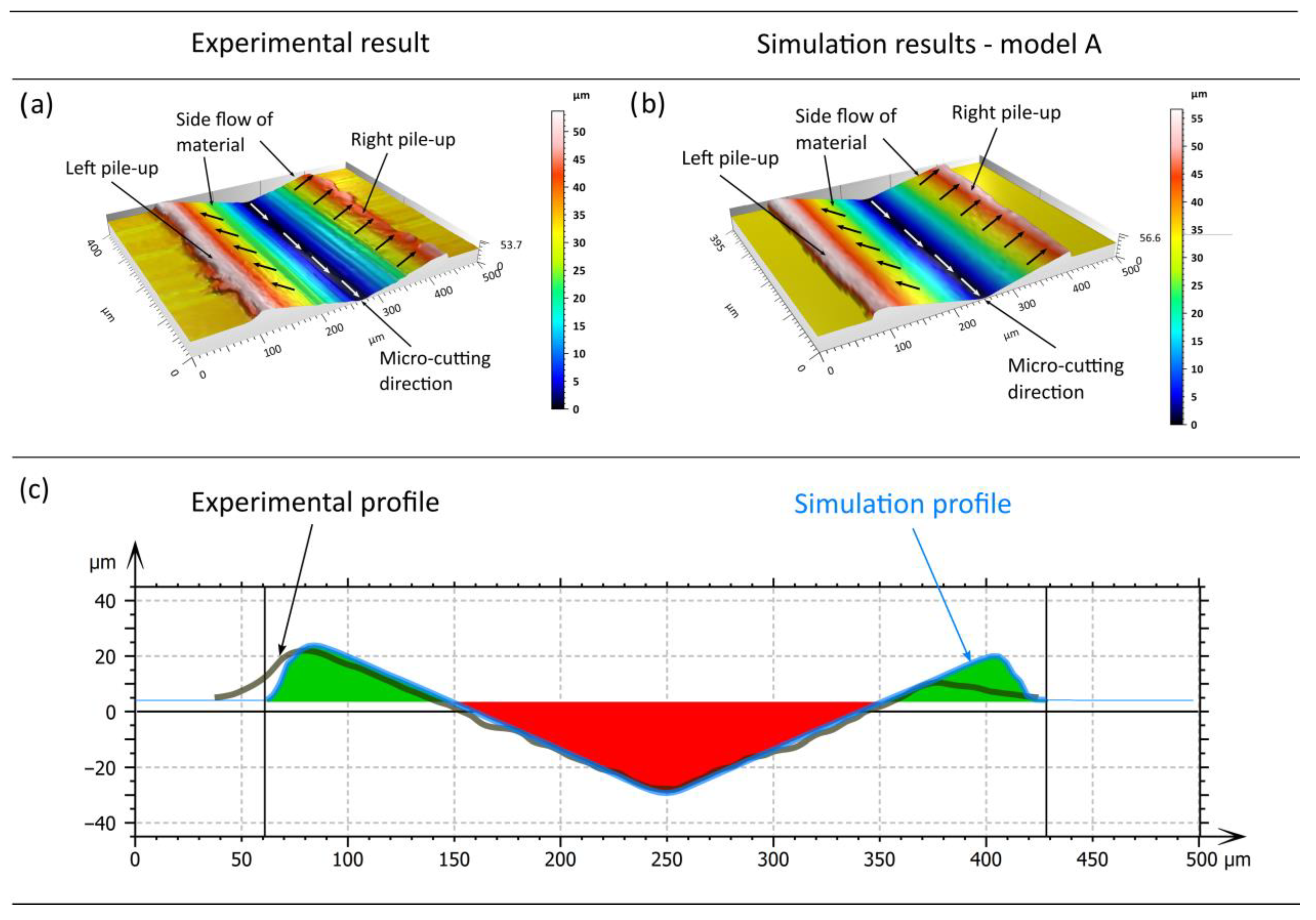
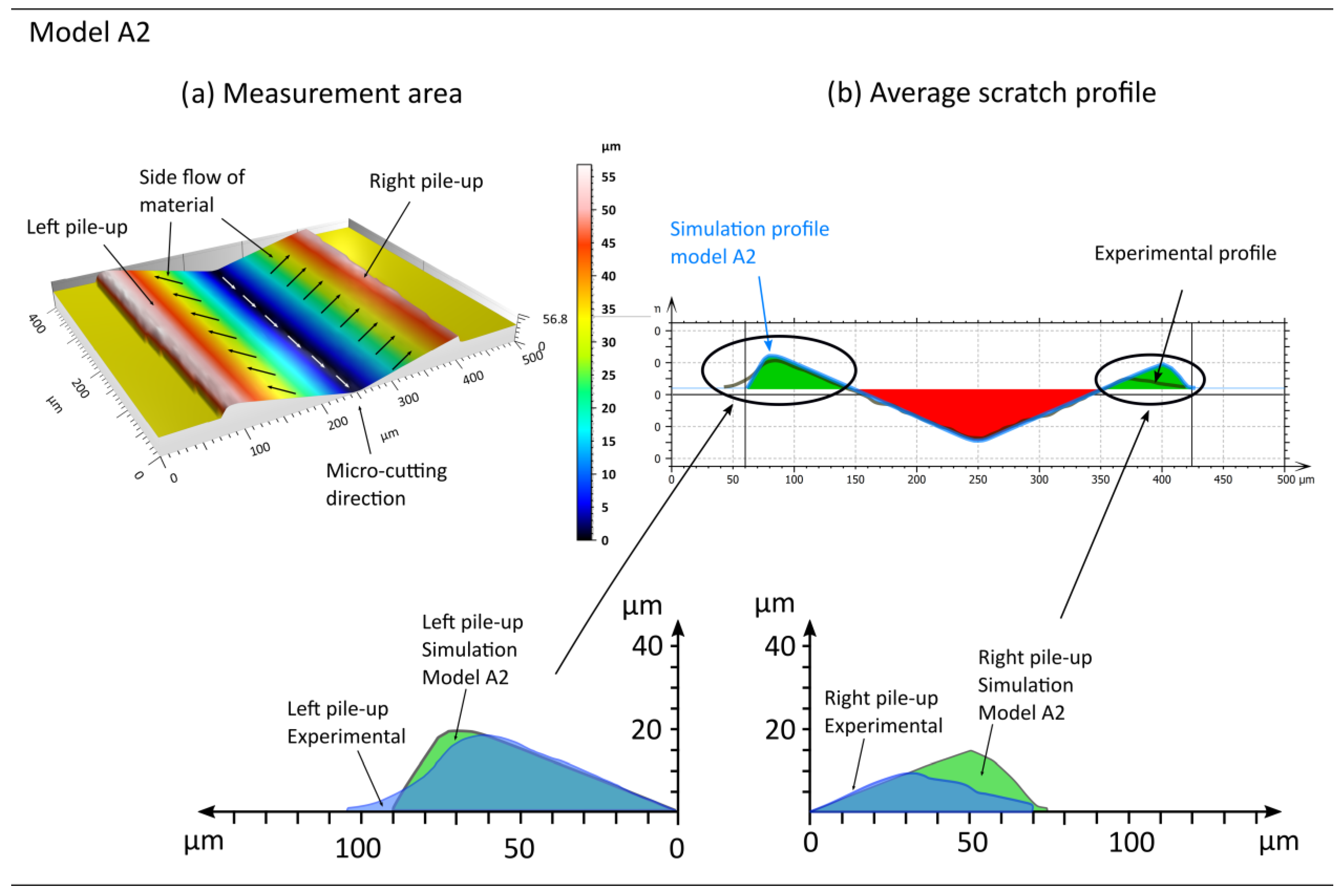
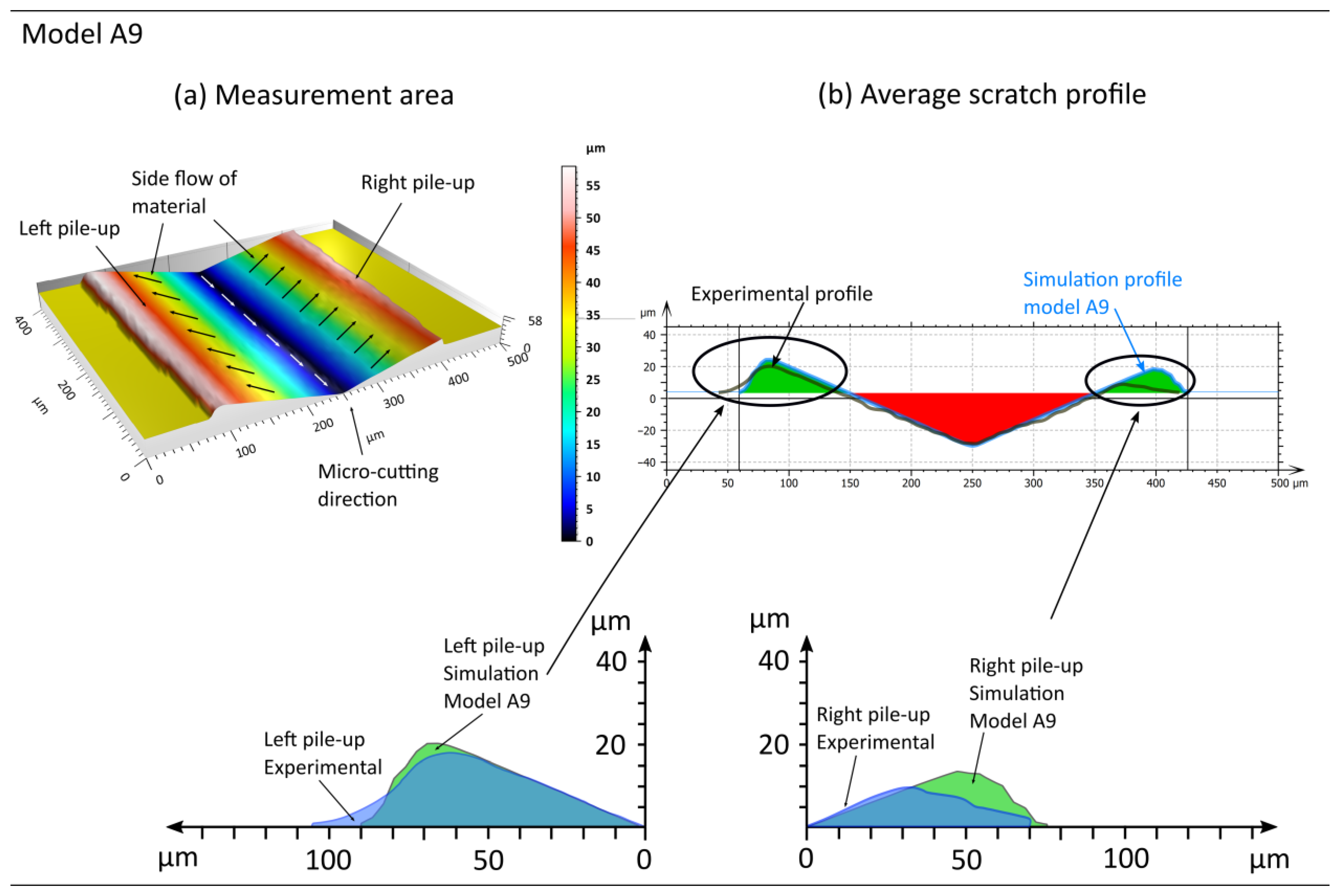
- An analysis of the simulation studies revealed that, while the pile-up cross-sectional area results exhibited satisfactory convergence, their actual shapes significantly deviated from reality. Comprehensive information regarding lateral material displacements during the micro-cutting process can be obtained by analysing the shapes of pile-ups, which were described in the studies as height h, width l, and width to the highest point d. Based on this information, the influence of tuning the Johnson–Cook constitutive model parameters on the convergence of computer simulation models with experimental studies can be estimated.
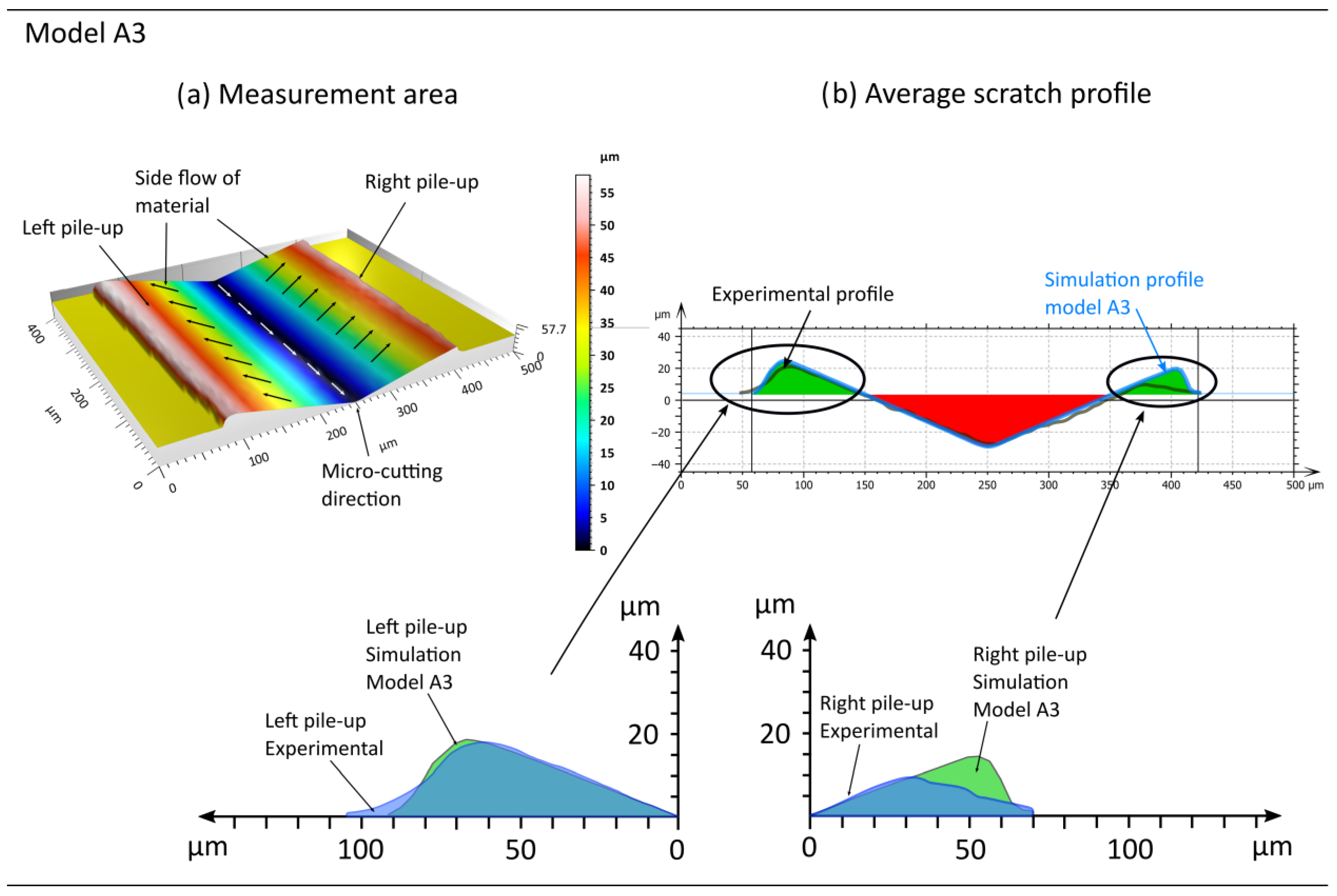
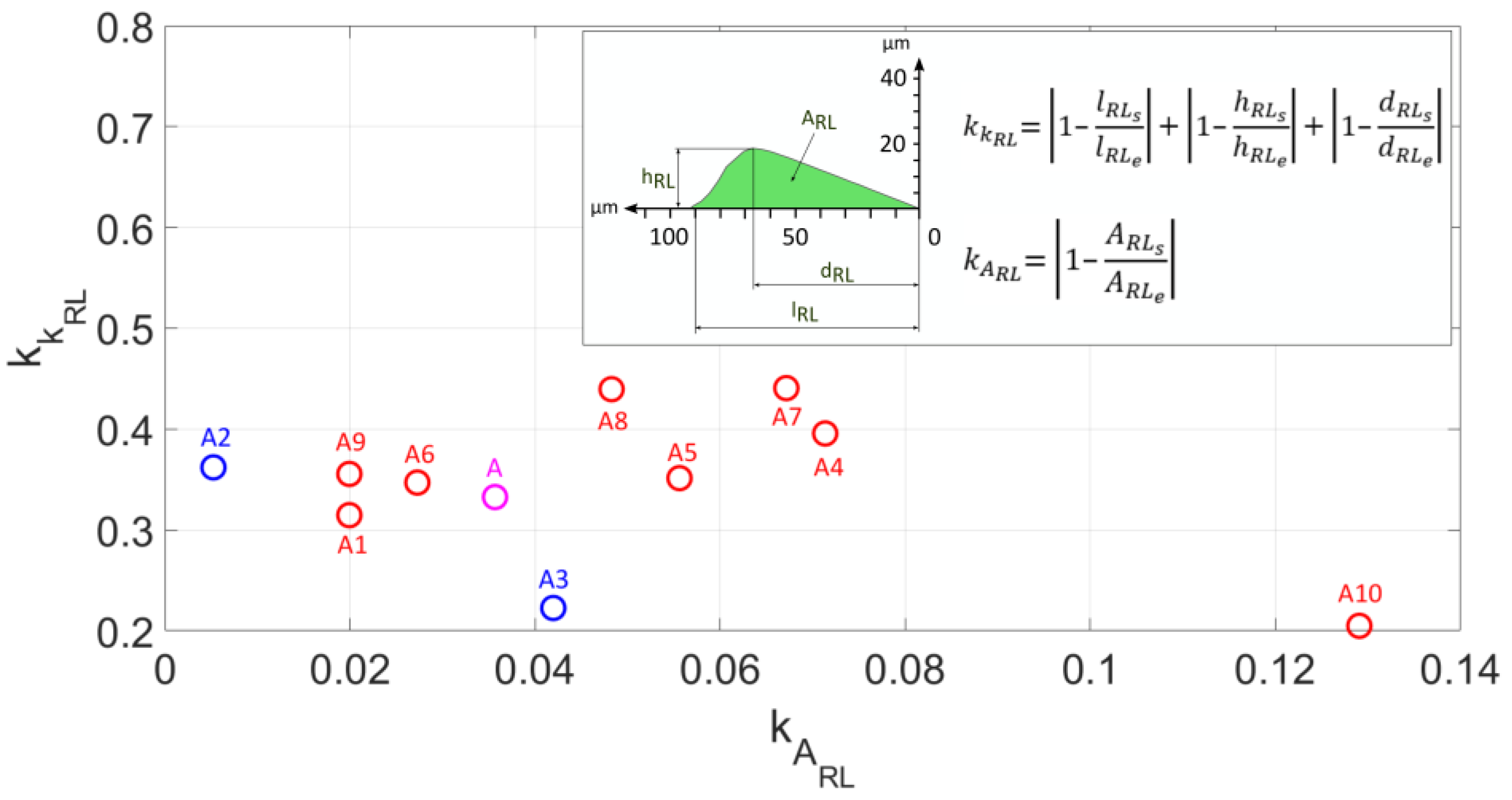
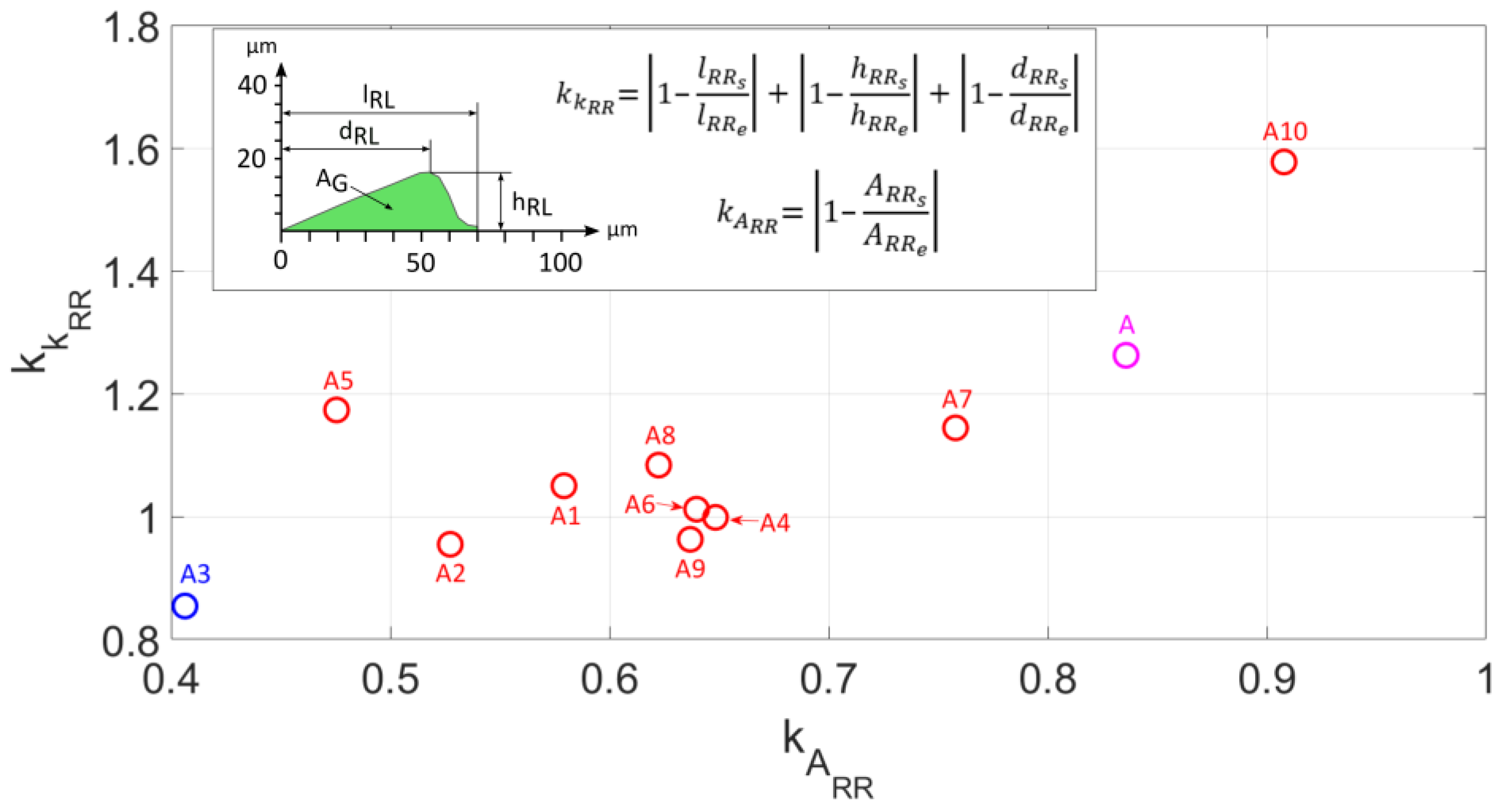
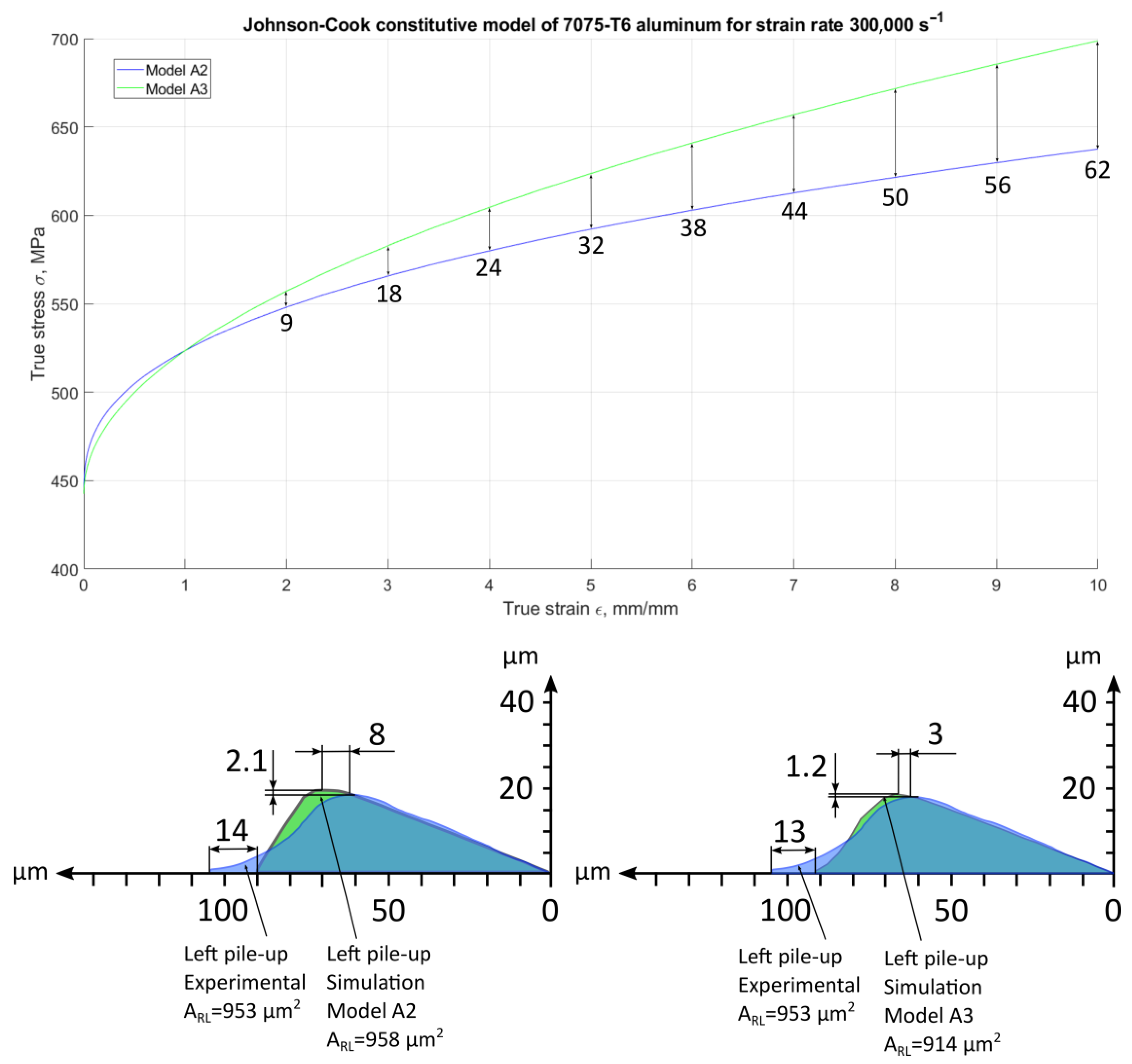
- The optimal convergence of pile-up cross-sectional area ARL and ARR, as well as the shape lRL, lRR, dRL, dRR, was achieved by modifying the Johnson–Cook model parameters B and n, which govern the material’s plastic strengthening curve, and parameter C, which accounts for the strain rate effects. The most favourable results were obtained for model A3, whose model parameters describing aluminium alloy 7075-T6 were as follows: A = 473 MPa, B = 80 MPa, n = 0.5, C = 0.001.
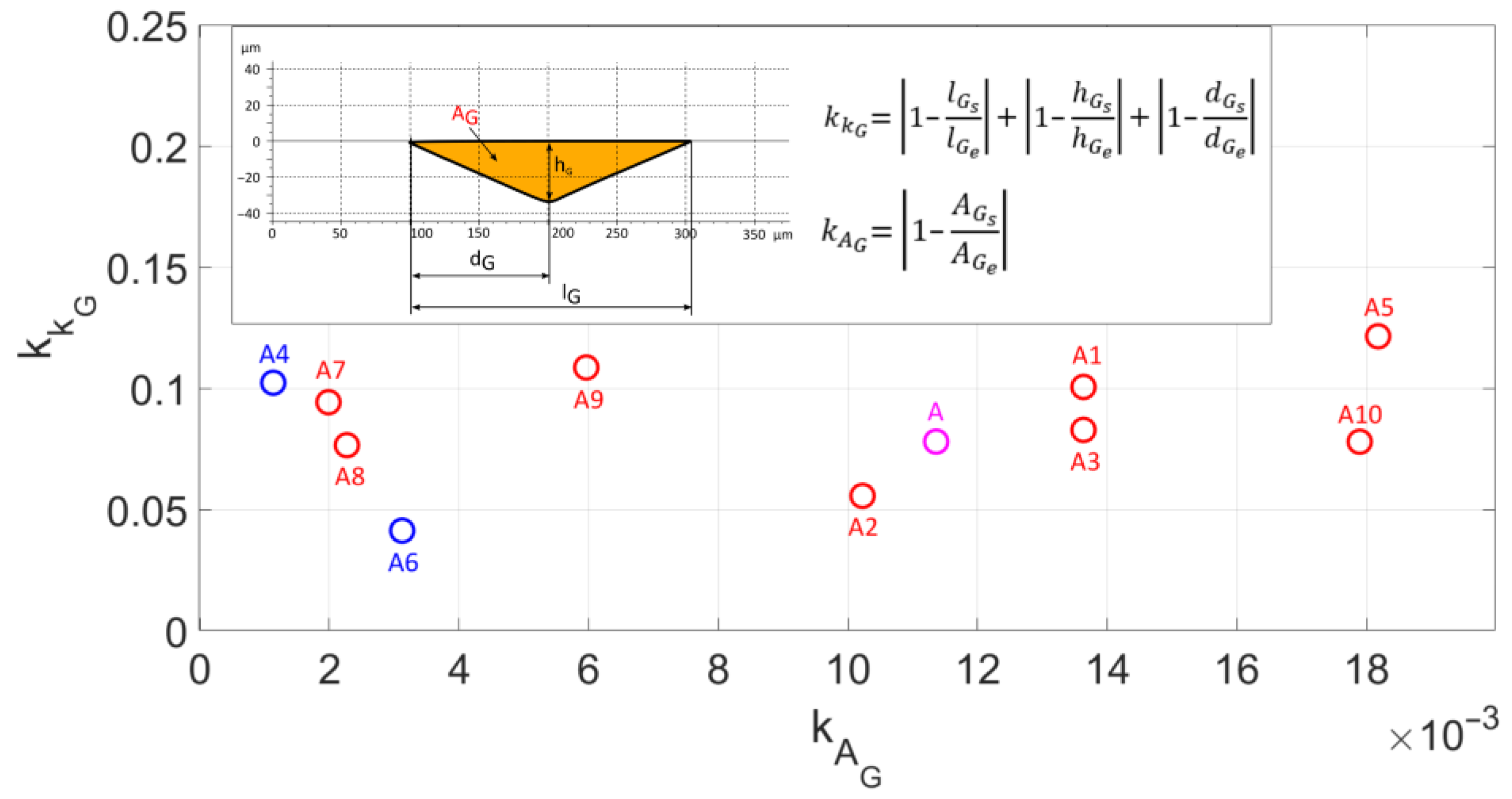
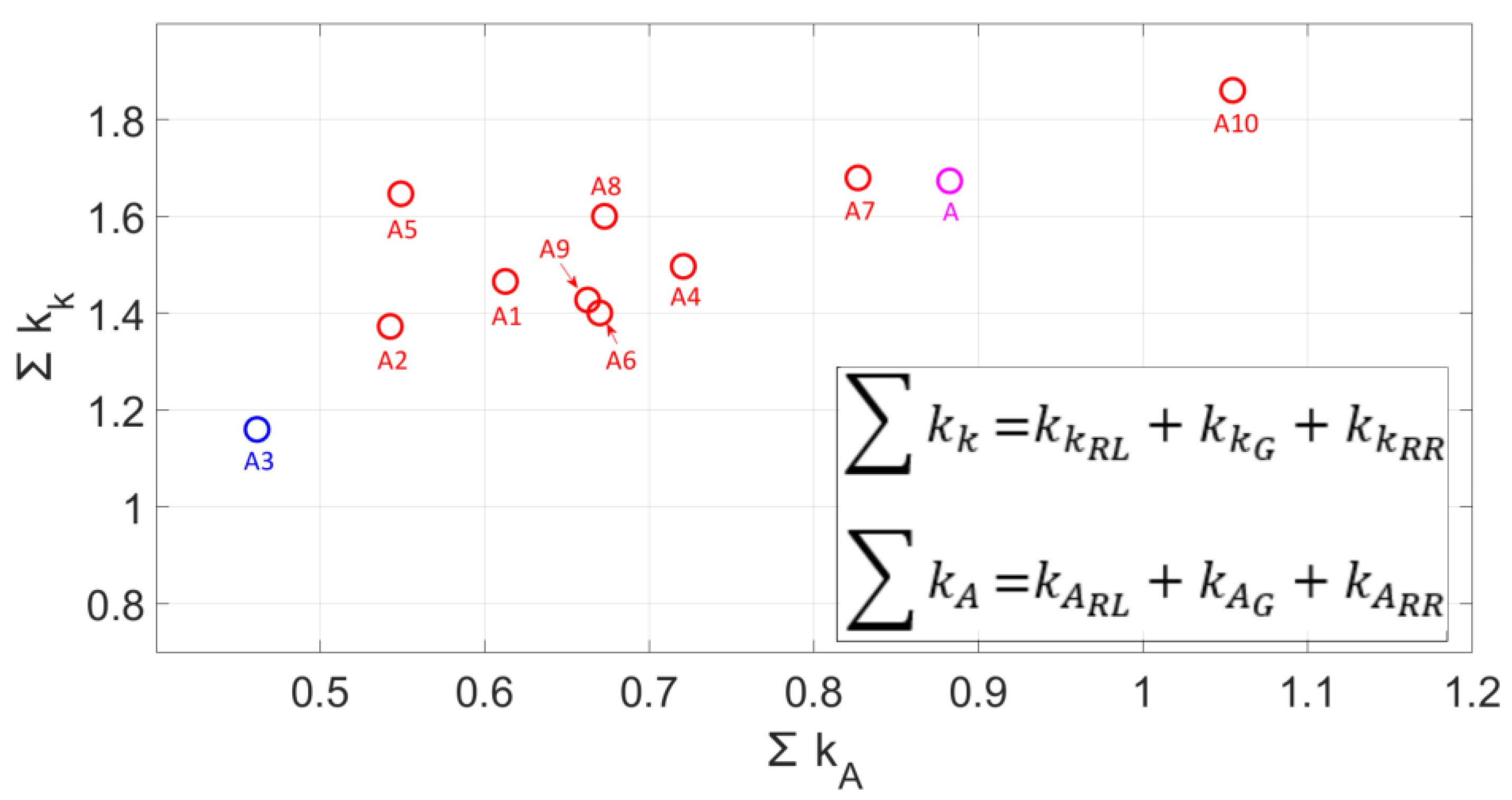
- The scratch test, conducted experimentally and computationally with velocities typical for grinding processes, employs a criterion to evaluate the non-conformity of the areas and shapes of lateral pile-ups and scratches. This test facilitates the tuning of the Johnson–Cook constitutive model parameters. An analysis of the criterion revealed that the optimal convergence of the simulation study results with experimental data was achieved for model A3. In this model, the results of the summation of the non-conformity criteria for both the pile-up and groove cross-sectional areas , as well as the summation of deviations in parameters defining the shape of lateral pile-ups and scratches , were the most effective. The proposed methodology reduced the mismatch criterion () from 0.88 (baseline model A) to 0.46 (optimised model A3), representing a 47% improvement in volumetric accuracy.
Author Contributions
Funding
Data Availability Statement
Conflicts of Interest
References
- Wang, T.; Zou, L.; Li, H.; Huang, Y. A prediction model of residual stress for belt-grinding blade based on geometrical characteristic and progressive wear of abrasive grains. Int. J. Numer. Methods Eng. 2022, 123, 2814–2836. [Google Scholar] [CrossRef]
- Kadivar, A.; Azarhoushang, B.; Klement, U.; Krajnik, P. The role of specific energy in micro-grinding of titanium alloy. Precis. Eng. 2021, 72, 172–183. [Google Scholar] [CrossRef]
- Qiu, B.; Zhu, Y.; Ding, W. An investigation on material removal mechanism in ultra-high-speed grinding of nickel-based superalloy: Three-dimensional simulation and experimental verification. Int. J. Adv. Manuf. Technol. 2020, 110, 919–933. [Google Scholar] [CrossRef]
- Sima, M.; Ozel, T. Modified material constitutive models for serrated chip formation simulations and experimental validation in machining of titanium alloy Ti–6Al–4V. Int. J. Mach. Tools Manuf. 2010, 50, 943–960. [Google Scholar] [CrossRef]
- Johnson, G.R.; Cook, W.H. A constitutive model and data for metals subjected to large strains, high strain rates and high temperatures. In Proceedings of the Seventh International Symposium on Ballistics, The Hague, The Netherlands, 19–21 April 1983; pp. 541–547. [Google Scholar]
- Jomaa, W.; Mechri, O.; Levesque, J.; Songmene, V.; Bocher, P.; Gakwaya, A. Finite element simulation and analysis of serrated chip formation during high–speed machining of AA7075–T651 alloy. J. Manuf. Process. 2017, 26, 446–458. [Google Scholar] [CrossRef]
- Dai, C.W.; Yu, T.Y.; Ding, W.F.; Xu, J.H.; Yin, Z.; Li, H. Single diamond grain cutting-edges morphology effect on grinding mechanism of Inconel 718. Precis. Eng. 2019, 55, 119–126. [Google Scholar] [CrossRef]
- Wu, C.; Li, B.; Liu, Y.; Pang, J.; Liang, S.Y. Strain rate-sensitive analysis for grinding damage of brittle materials. Int. J. Adv. Manuf. Technol. 2017, 89, 2221–2229. [Google Scholar] [CrossRef]
- Li, P.; Chen, S.; Xiao, H.; Chen, Z.; Qu, M.; Dai, H.; Jin, T. Effects of local strain rate and temperature on the workpiece subsurface damage in grinding of optical glass. Int. J. Mech. Sci. 2020, 182, 105737. [Google Scholar] [CrossRef]
- Kouadri, S.; Necib, K.; Atlati, S.; Haddag, B.; Nouari, M. Quantification of the chip segmentation in metal machining: Application to machining the aeronautical aluminium alloy AA2024-T351 with cemented carbide tools WC-Co. Int. J. Mach. Tools Manuf. 2013, 64, 102–113. [Google Scholar] [CrossRef]
- Yılmaz, O.D.; Oliaei, S.N.B. Effect of constitutive material model on the finite element simulation of shear localization onset. Simul. Model. Pract. Theory 2020, 104, 102105. [Google Scholar] [CrossRef]
- Beranoagirre, A.; López de Lacalle, L.N. Grinding of Gamma TiAl Intermetallic Alloys. Procedia Eng. 2013, 63, 489–498. [Google Scholar] [CrossRef]
- González, H.; Calleja, A.; Pereira, O.; Ortega, N.; López de Lacalle, L.N.; Barton, M. Super Abrasive Machining of Integral Rotary Components Using Grinding Flank Tools. Metals 2018, 8, 24. [Google Scholar] [CrossRef]
- Chen, Z.; Zhao, P.; Yan, R.; Tian, G.; Yang, M.; Shi, Y. Quantitative finite element analysis of microscopic surface formation for TC4 aeroengine blade polishing using single-grain method. Int. J. Adv. Manuf. Technol. 2024, 132, 2941–2955. [Google Scholar] [CrossRef]
- Gonzalo, O.; Jauregi, H.; Uriarte, L.G.; López de Lacalle, L.N. Prediction of specific force coefficients from a FEM cutting model. Int. J. Adv. Manuf. Technol. 2009, 43, 348–356. [Google Scholar] [CrossRef]
- Lipiński, D.; Rypina, Ł.; Banaszek, K.; Tomkowski, R. Experimental investigation and numerical analysis of material removal efficiency using abrasive microaggregates in grinding processes of Ti6Al4V. Precis. Eng. 2024, 91, 476–488. [Google Scholar] [CrossRef]
- Rasim, M.; Mattfeld, P.; Klocke, F. Analysis of the grain shape influence on the chip formation in grinding. J. Mater. Process Technol. 2015, 226, 60–68. [Google Scholar] [CrossRef]
- Rypina, Ł.; Lipiński, D.; Bałasz, B.; Kacalak, W.; Szatkiewicz, T. Analysis and modelling of the micro-cutting process of Ti-6Al-4V titanium alloy with single abrasive grain. Materials 2020, 13, 5835. [Google Scholar] [CrossRef]
- Rypina, Ł.; Lipiński, D.; Banaszek, K.; Kacalak, W.; Szafraniec, F. Influence of the Geometrical Features of the Cutting Edges of Abrasive Grains on the Removal Efficiency of the Ti6Al4V Titanium Alloy. Materials 2022, 15, 6189. [Google Scholar] [CrossRef]
- Kumar, G.; Chakladar, N.D.; Paul, S. Modelling of single grit micro-cutting of Ti-6Al-4V and In-718 with experimental validation. Tribol. Int. 2025, 208, 110661. [Google Scholar] [CrossRef]
- Gao, Y.; Wang, F.; Liang, Y.; Han, J.; Su, J.; Tong, Y.; Liu, L. Cutting Performance of Randomly Distributed Active Abrasive Grains in Gear Honing Process. Micromachines 2021, 12, 1119. [Google Scholar] [CrossRef]
- Oxley, P.L.B.; Welsh, M.J.M. Calculating the shear angle in orthogonal metal cutting from fundamental stress, strain, strain-rate properties of the work piece material. In Proceedings of the Fourth International Conference Machine Tool Design and Research, Manchester, UK, 24 September 1963; pp. 73–86. [Google Scholar]
- Wang, B.; Liu, Z.; Su, G.; Ai, X. Brittle Removal Mechanism of Ductile Materials with Ultrahigh-Speed Machining. J. Manuf. Sci. Eng. 2015, 137, 061002. [Google Scholar] [CrossRef]
- Zhang, H.; Chen, W. Research on the grinding mechanism based on the cutting simulation. Adv. Mater. Res. 2012, 510, 395–400. [Google Scholar] [CrossRef]
- Zhao, B.; Jiang, G.; Ding, W.; Xiao, G.; Huan, H.; Wang, Y. Characterisation of the wear properties of a single-aggregated cubic boron nitride grain during Ti–6Al–4V alloy grinding. Wear 2020, 452–453, 203296. [Google Scholar] [CrossRef]
- Ding, Z.; Li, B.; Liang, S. Maraging steel phase transformation in high strain rate grinding. Int. J. Adv. Manuf. Technol. 2015, 80, 711–718. [Google Scholar] [CrossRef]
- Brar, N.; Joshi, V.; Harris, B. Constitutive model constants for Al7075-t651 and Al7075-t6. In Shock Compression of Condensed Matter 2009: Proceedings of the American Physical Society Topical Group on Shock Compression of Condensed Matter, Nashville, TN, USA, 28 June–3 July 2009; AIP Publishing: Melville, NY, USA, 2009; pp. 945–948. [Google Scholar] [CrossRef]
- Zhang, D.-N.; Shangguan, Q.-Q.; Xie, C.-J.; Liu, F. A modified Johnson–Cook model of dynamic tensile behaviors for 7075-T6 aluminum alloy. J. Alloys Compd. 2015, 619, 186–194. [Google Scholar] [CrossRef]
- Setti, D.; Kirsch, B.; Aurich, J.C. An analytical method for prediction of material deformation behavior in grinding using single grit analogy. Procedia CIRP 2017, 58, 263–268. [Google Scholar] [CrossRef]



| left pile-up width | |
| right pile-up width | |
| left pile-up height | |
| right pile-up height | |
| width to the highest point of the left pile-up | |
| width to the highest point of the right pile-up | |
| groove width | |
| groove height | |
| width to the lowest point of the groove | |
| left pile-up area | |
| right pile-up area | |
| groove area |
| Model | A [MPa] | B [MPa] | n | C |
|---|---|---|---|---|
| A | 473 | 210 | 0.3813 | 0.033 |
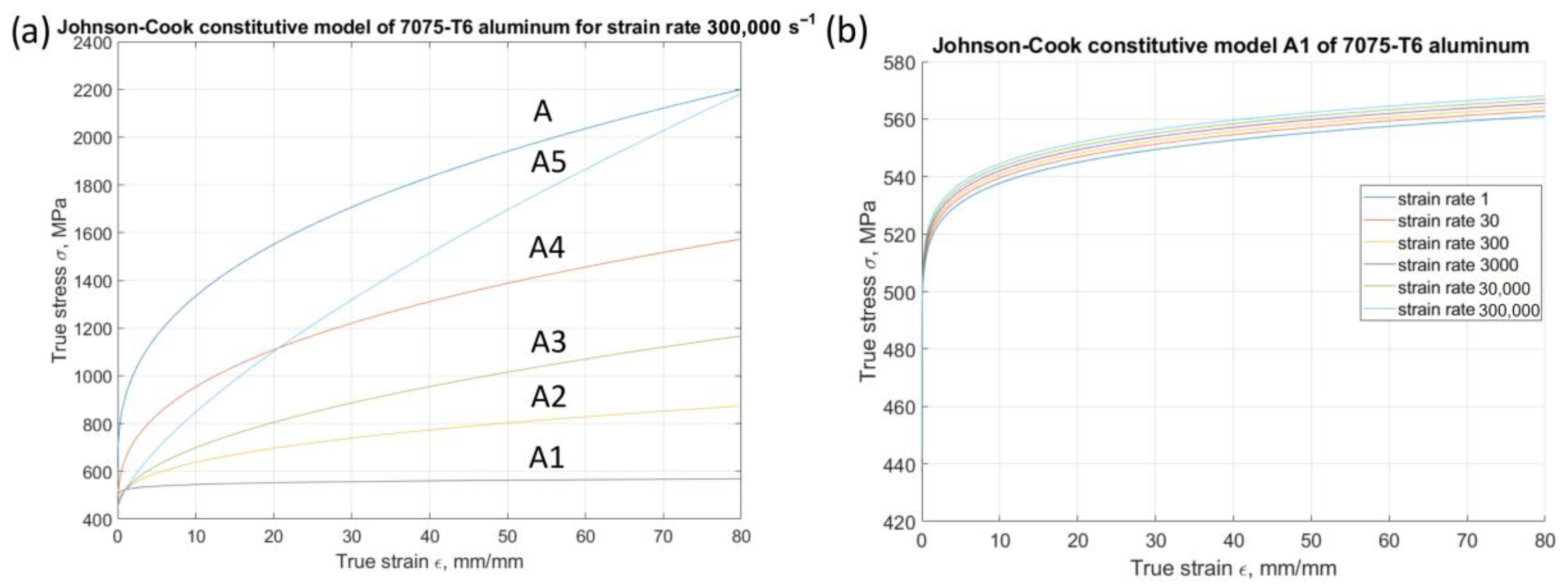
| A1 | 473 | 80 | 0.1 | 0.001 |
| A2 | 473 | 80 | 0.3813 | 0.001 |
| A3 | 473 | 80 | 0.5 | 0.001 |
| A4 | 473 | 210 | 0.3813 | 0.001 |
| A5 | 473 | 80 | 0.7 | 0.001 |
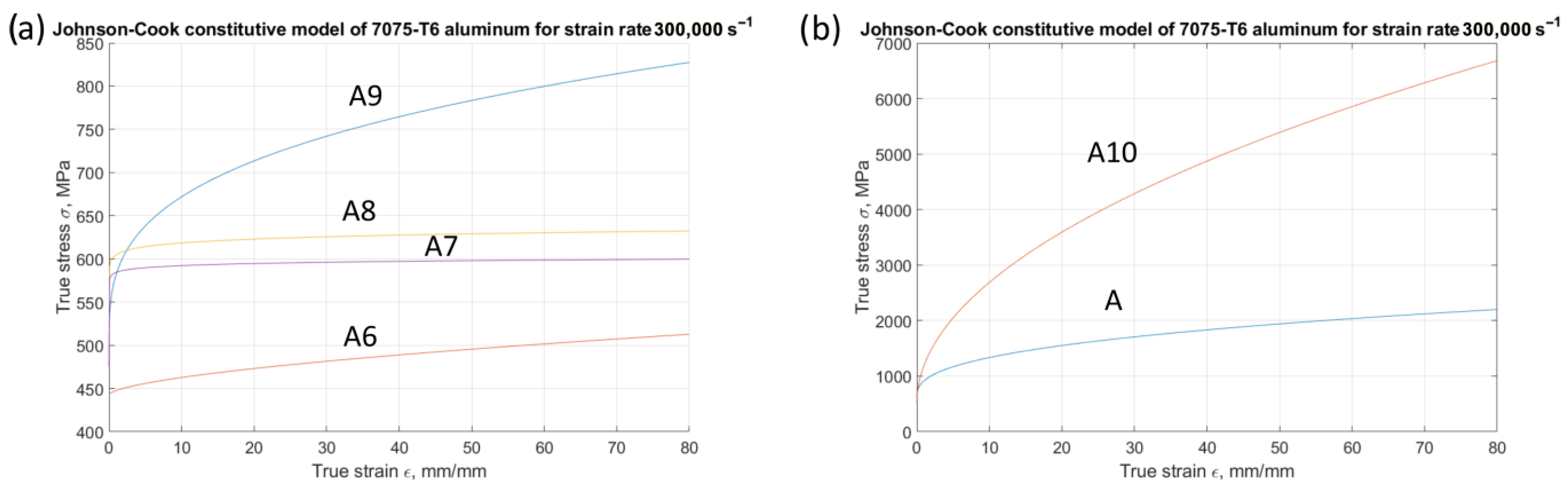
| A6 | 473 | 5 | 0.6 | 0.001 |
| A7 | 473 | 100 | 0.03 | 0.007 |
| A8 | 473 | 100 | 0.05 | 0.01 |
| A9 | 473 | 80 | 0.3 | 0.01 |
| A10 | 473 | 600 | 0.5 | 0.012 |
| No. | ARL [µm2] | lRL [µm] | dRL [µm] | hRL [µm] | ARR [µm2] | lRR [µm] | dRR [µm] | hRR [µm] | AG [µm2] | lG [µm] | hG [µm] | dG [µm] |
|---|---|---|---|---|---|---|---|---|---|---|---|---|
| EXP | 953 | 104 | 62 | 18.0 | 347 | 70 | 38 | 9.23 | 3521 | 205 | 31.7 | 103 |
| A | 919 | 88 | 68 | 19.8 | 637 | 73 | 54 | 16.6 | 3561 | 202 | 33.4 | 102 |
| No. | ARL [µm2] | lRL [µm] | dRL [µm] | hRL [µm] | ARR [µm2] | lRR [µm] | dRR [µm] | hRR [µm] | AG [µm2] | lG [µm] | hG [µm] | dG [µm] |
|---|---|---|---|---|---|---|---|---|---|---|---|---|
| A1 | 934 | 91 | 68 | 20 | 548 | 72 | 51 | 15.5 | 3569 | 202 | 33.5 | 100 |
| A2 | 958 | 90 | 70 | 20.1 | 530 | 74 | 50 | 14.6 | 3557 | 204 | 33 | 102 |
| A3 | 913 | 91 | 65 | 19.2 | 488 | 70 | 50 | 14.2 | 3569 | 203 | 33.4 | 101 |
| A4 | 1021 | 95 | 71 | 21.3 | 572 | 71 | 50 | 15.4 | 3525 | 201 | 33.4 | 100 |
| A5 | 900 | 90 | 69 | 20.2 | 512 | 71 | 55 | 15.8 | 3585 | 201 | 33.7 | 99 |
| EXP | 953 | 104 | 62 | 18.0 | 347 | 70 | 38 | 9.23 | 3521 | 205 | 31.7 | 103 |
| Parameter | Side | Model A6 | Model A9 |
|---|---|---|---|
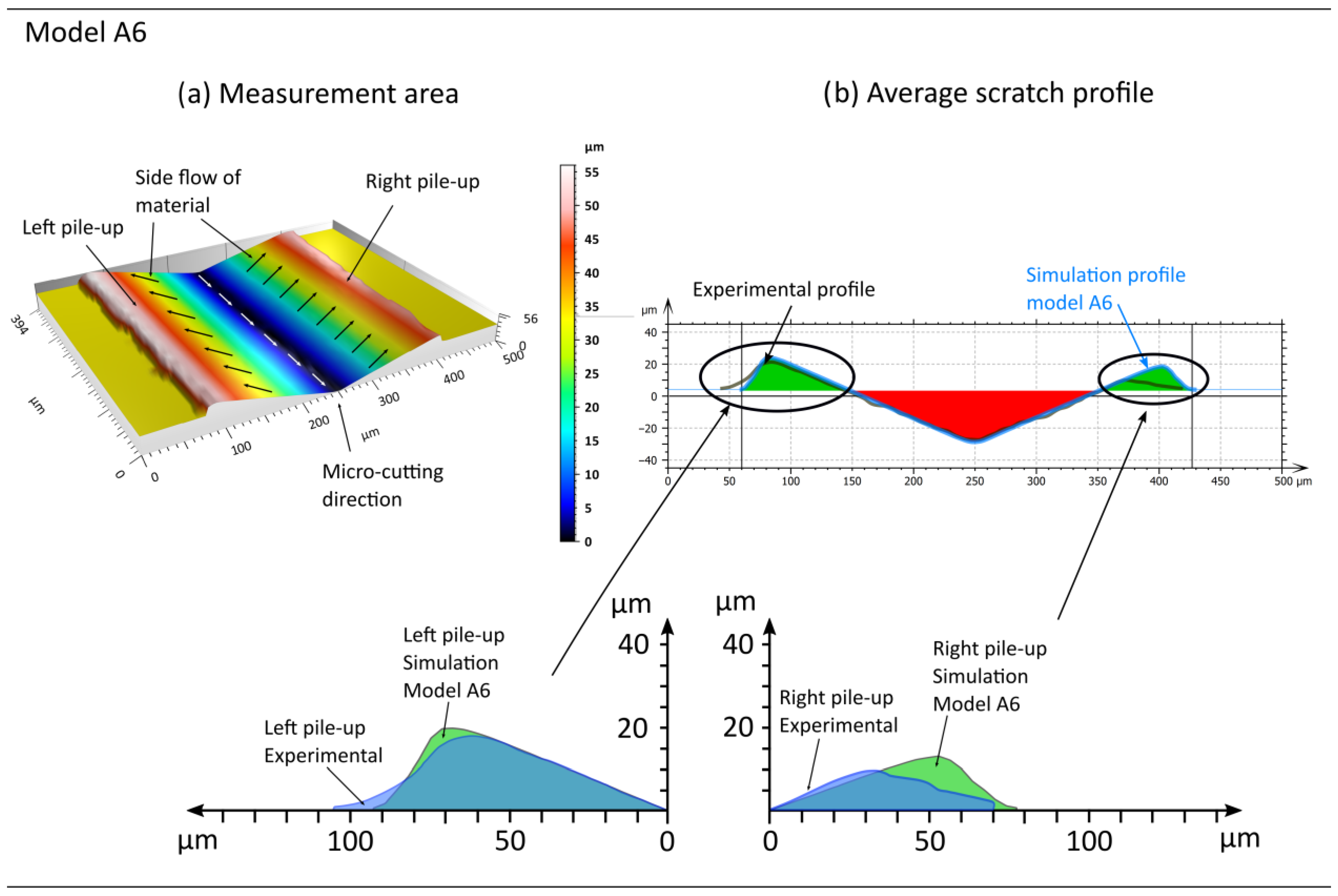
| Pile-up height (h) | Left | 12.5% | 14.4% |
| Right | 58.0% | 55.0% | |
| Pile-up width (l) | Left | 12.9% | 11.2% |
| Right | 11.4% | 7.1% | |
| Width to highest point (d) | Left | ~11% | ~11% |
| Right | 32% | 34% |
| No. | ARL [µm2] | lRL [µm] | dRL [µm] | hRL [µm] | ARR [µm2] | lRR [µm] | dRR [µm] | hRR [µm] | AG [µm2] | lG [µm] | hG [µm] | dG [µm] |
|---|---|---|---|---|---|---|---|---|---|---|---|---|
| A6 | 927 | 91 | 70 | 20 | 569 | 78 | 50 | 14.6 | 3532 | 205 | 32.7 | 102 |
| A7 | 1017 | 92 | 72 | 21.3 | 610 | 76 | 52 | 15.6 | 3514 | 202 | 33.3 | 100 |
| A8 | 999 | 91 | 71 | 21.4 | 563 | 71 | 52 | 15.7 | 3513 | 203 | 33.2 | 101 |
| A9 | 934 | 89 | 69 | 20.1 | 568 | 75 | 51 | 14.3 | 3542 | 201 | 33.6 | 100 |
| A10 | 830 | 90 | 65 | 18.7 | 662 | 79 | 59 | 17.5 | 3584 | 204 | 33.4 | 101 |
| EXP | 953 | 104 | 62 | 18.0 | 347 | 70 | 38 | 9.23 | 3521 | 205 | 31.7 | 103 |
Disclaimer/Publisher’s Note: The statements, opinions and data contained in all publications are solely those of the individual author(s) and contributor(s) and not of MDPI and/or the editor(s). MDPI and/or the editor(s) disclaim responsibility for any injury to people or property resulting from any ideas, methods, instructions or products referred to in the content. |
© 2025 by the authors. Licensee MDPI, Basel, Switzerland. This article is an open access article distributed under the terms and conditions of the Creative Commons Attribution (CC BY) license (https://creativecommons.org/licenses/by/4.0/).
Share and Cite
Rypina, Ł.; Lipiński, D.; Tomkowski, R. Parameter Optimisation of Johnson–Cook Constitutive Models for Single Abrasive Grain Micro-Cutting Simulation: A Novel Methodology Based on Lateral Material Displacement Analysis. Materials 2025, 18, 5559. https://doi.org/10.3390/ma18245559
Rypina Ł, Lipiński D, Tomkowski R. Parameter Optimisation of Johnson–Cook Constitutive Models for Single Abrasive Grain Micro-Cutting Simulation: A Novel Methodology Based on Lateral Material Displacement Analysis. Materials. 2025; 18(24):5559. https://doi.org/10.3390/ma18245559
Chicago/Turabian StyleRypina, Łukasz, Dariusz Lipiński, and Robert Tomkowski. 2025. "Parameter Optimisation of Johnson–Cook Constitutive Models for Single Abrasive Grain Micro-Cutting Simulation: A Novel Methodology Based on Lateral Material Displacement Analysis" Materials 18, no. 24: 5559. https://doi.org/10.3390/ma18245559
APA StyleRypina, Ł., Lipiński, D., & Tomkowski, R. (2025). Parameter Optimisation of Johnson–Cook Constitutive Models for Single Abrasive Grain Micro-Cutting Simulation: A Novel Methodology Based on Lateral Material Displacement Analysis. Materials, 18(24), 5559. https://doi.org/10.3390/ma18245559