Optimization of Mix Design for Lightweight Boards Based on GGBFS–Waste Rock Wool Using Response Surface Methodology
Abstract
1. Introduction
2. Experimental Design and Methods
2.1. Materials
2.2. Experimental Design and Statistical Analysis
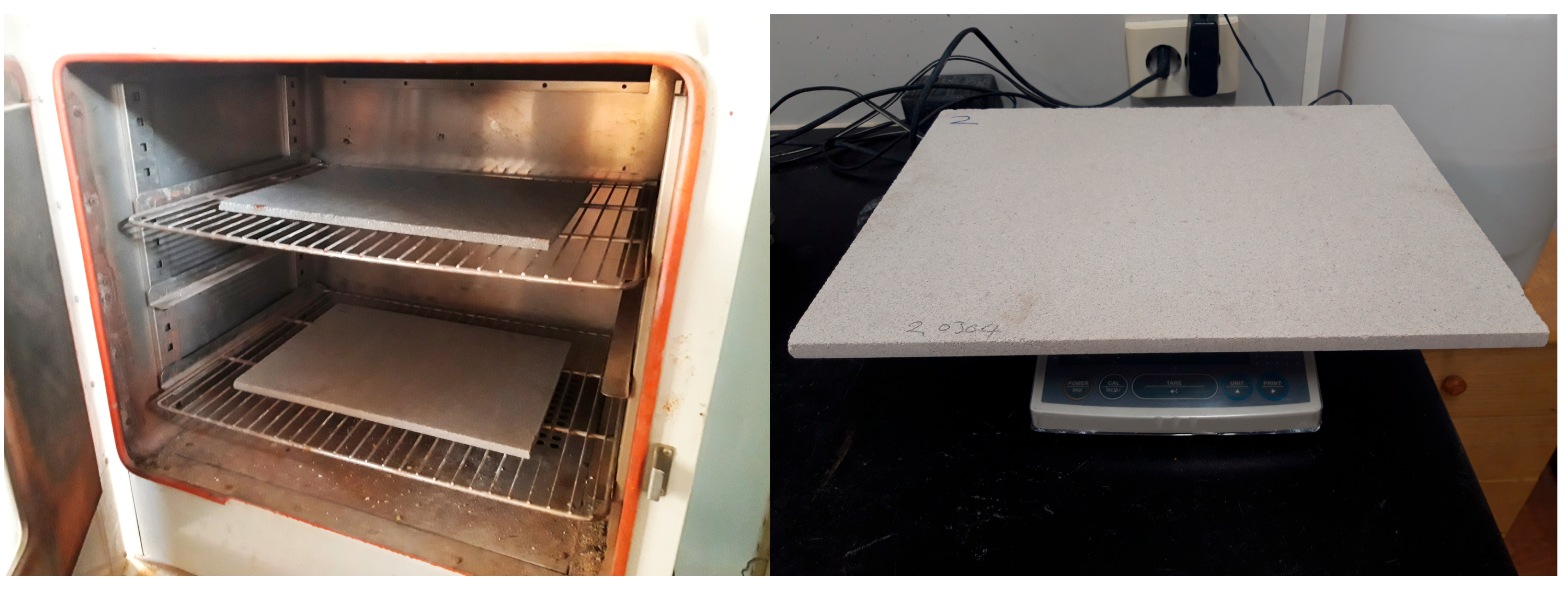
2.3. Manufacturing and Testing Methods for Lightweight Boards
3. Experimental Results
3.1. Physical Property Test Results
3.2. Response Surface Analysis Results and Statistical Significance Evaluation
3.2.1. Second-Order Polynomial Regression Models
- Regression Model for Flexural Failure Load (Y1)
- Regression Model for Moisture Content (Y2)
- Regression Model for Specific Gravity (Y3)
3.2.2. Analysis of Variance (ANOVA) Results
3.3. Optimal Condition Derivation via Response Surface Analysis
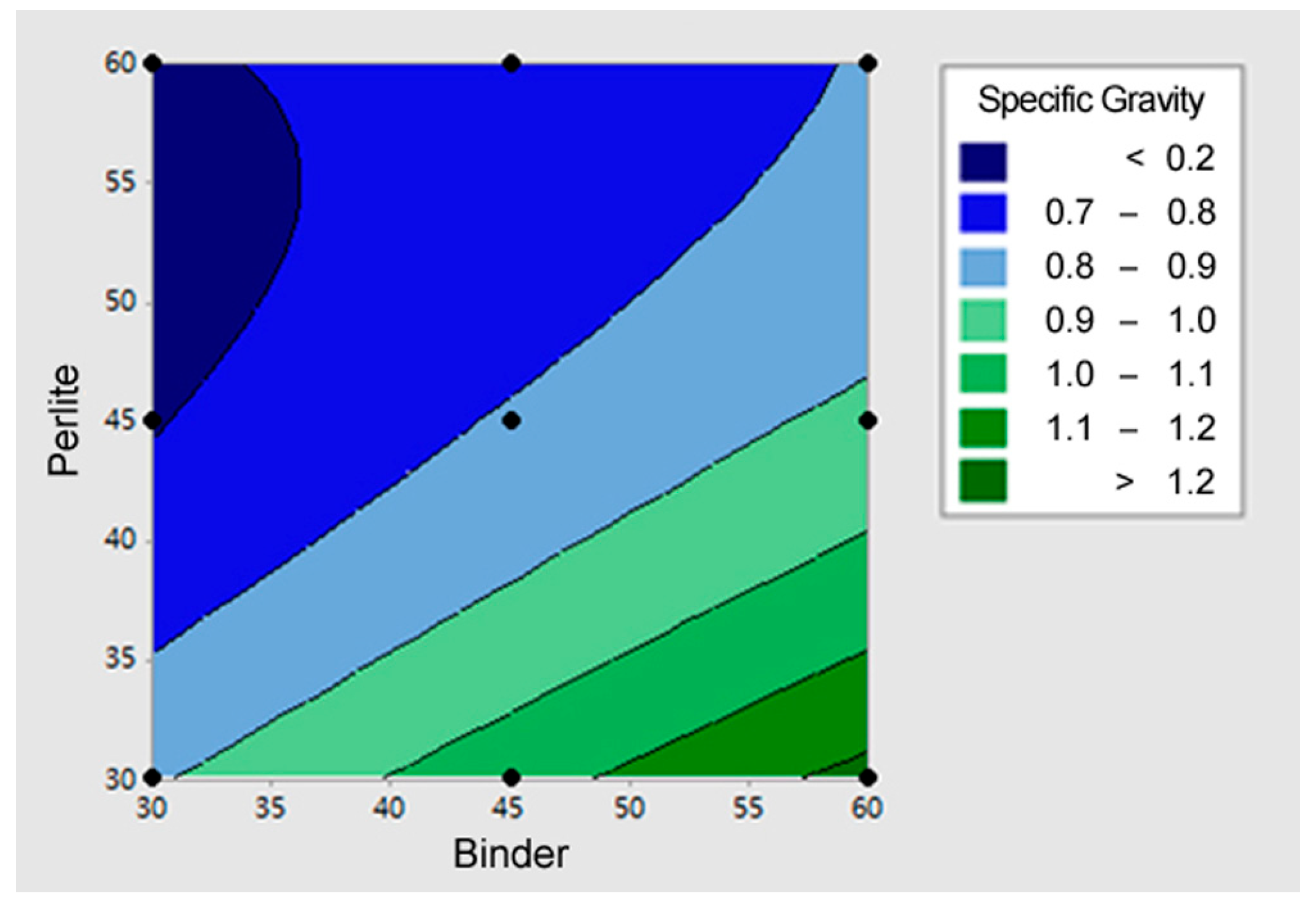
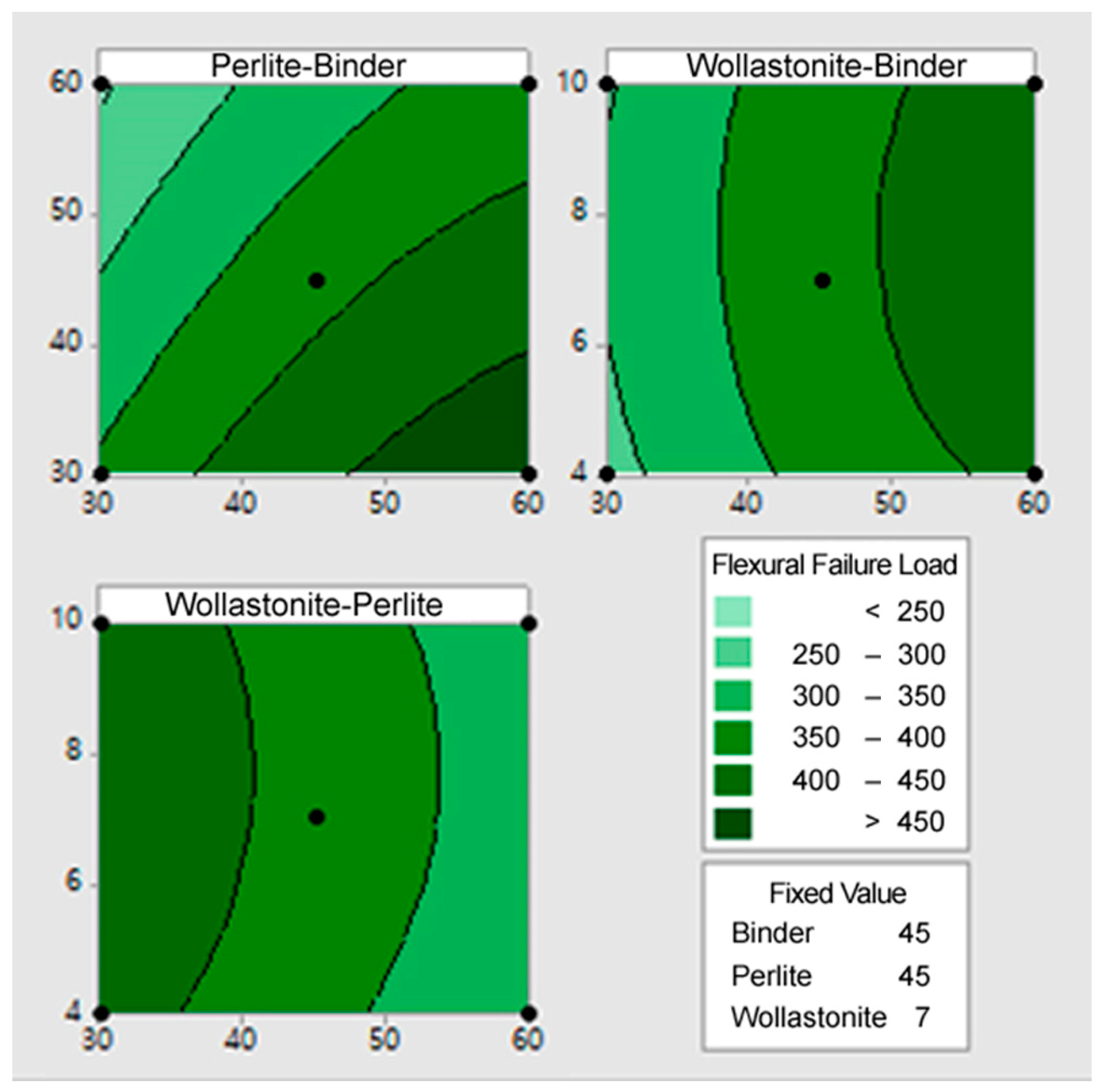
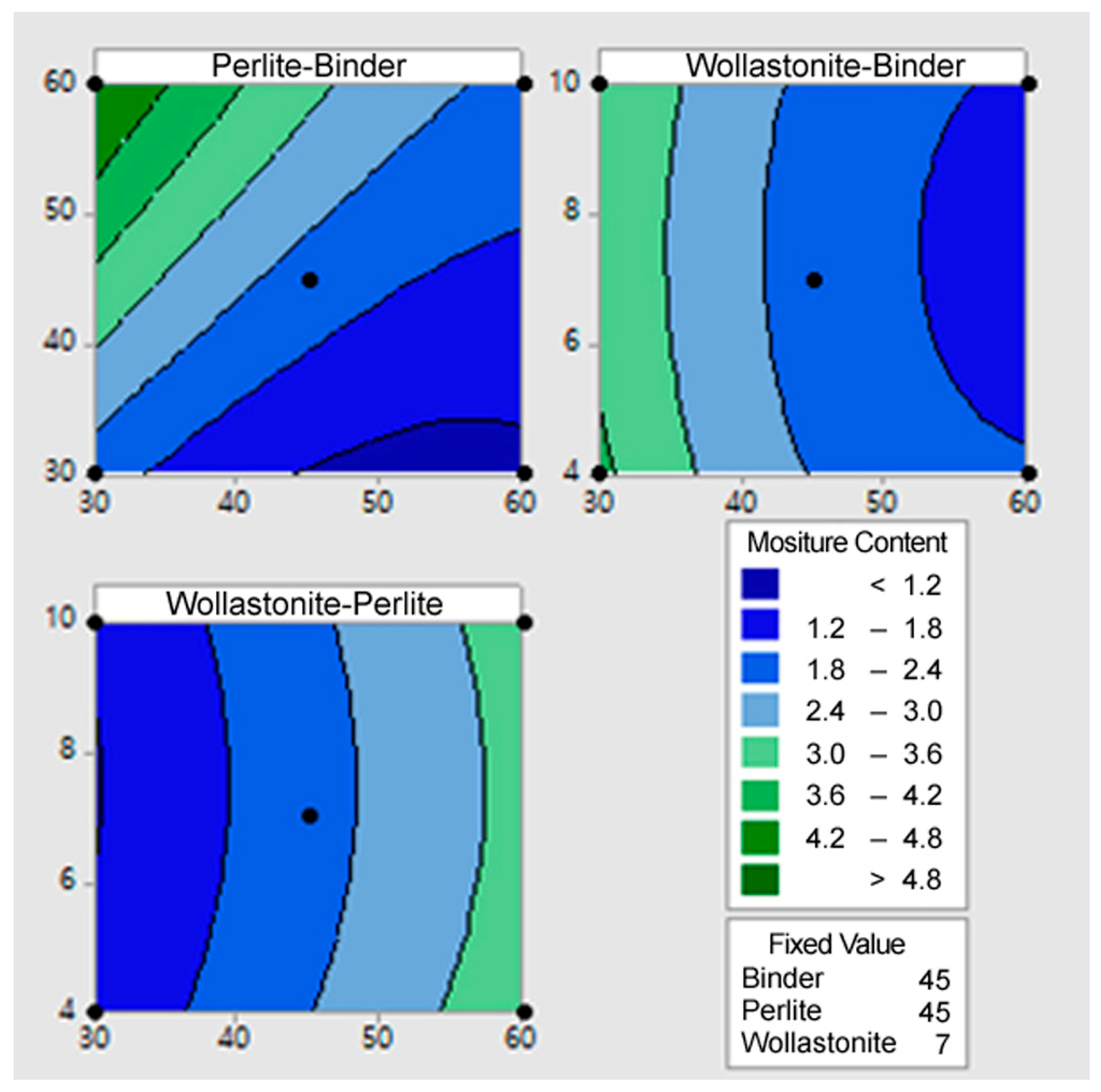
3.3.1. Contour Plot Analysis
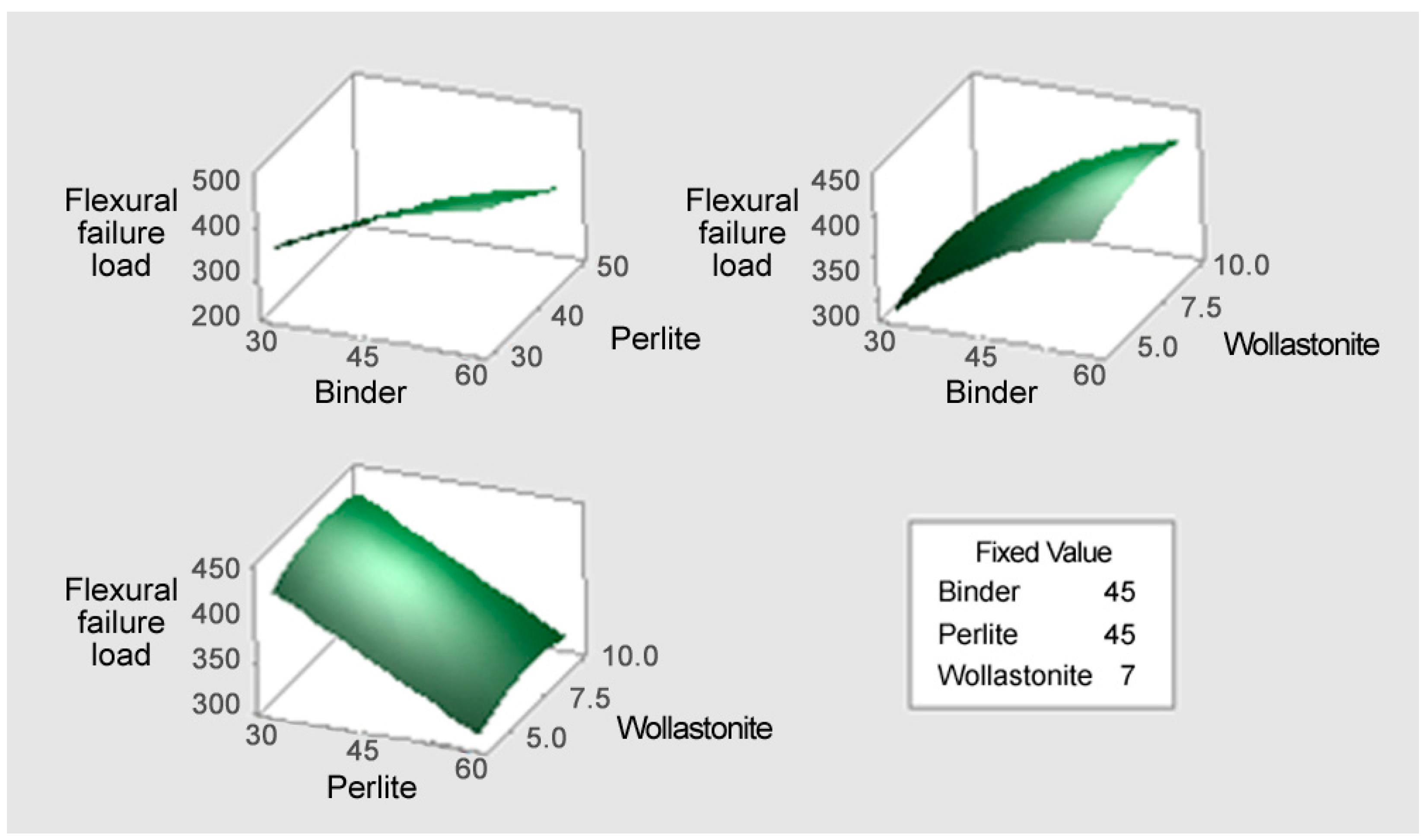
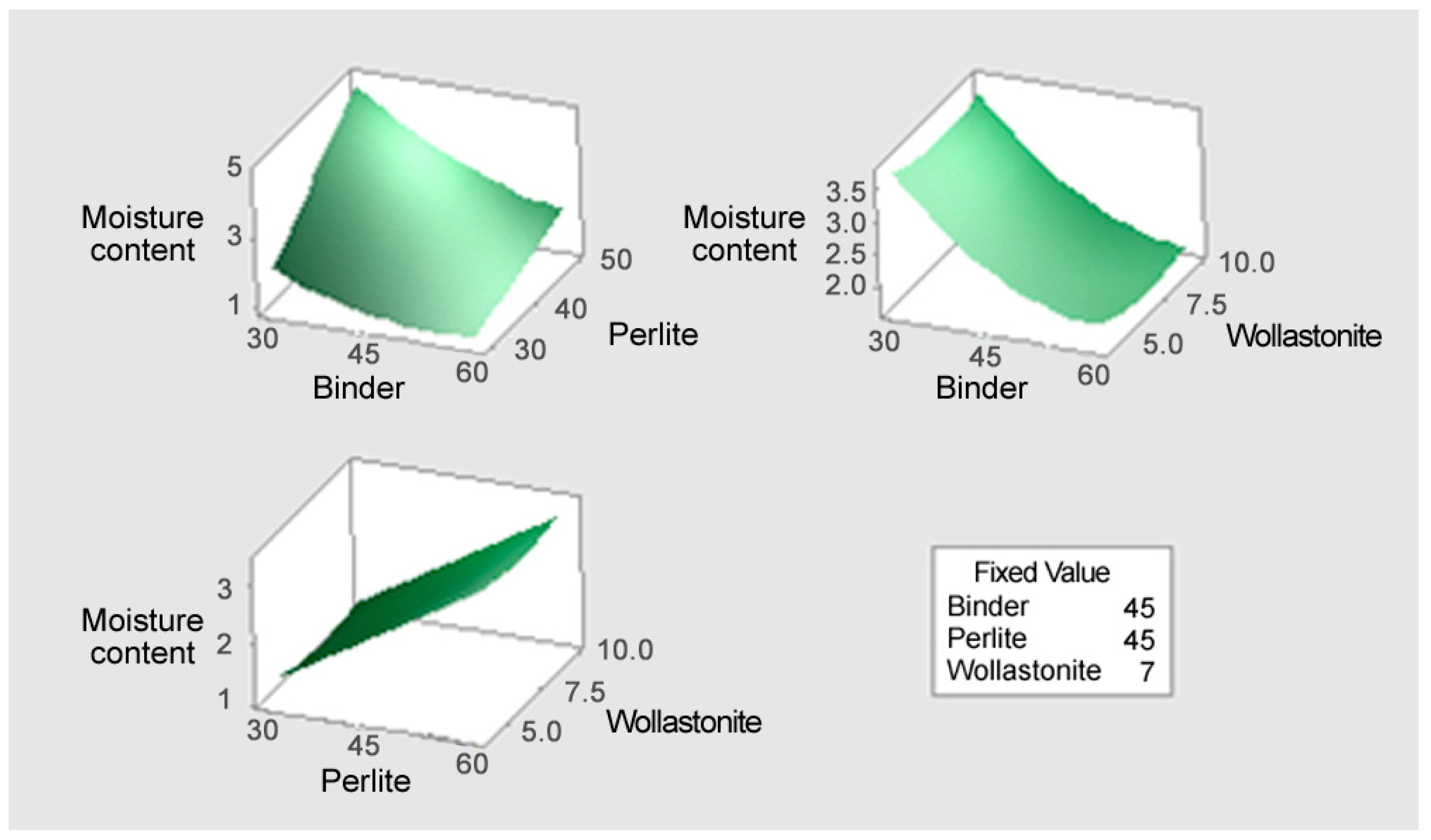
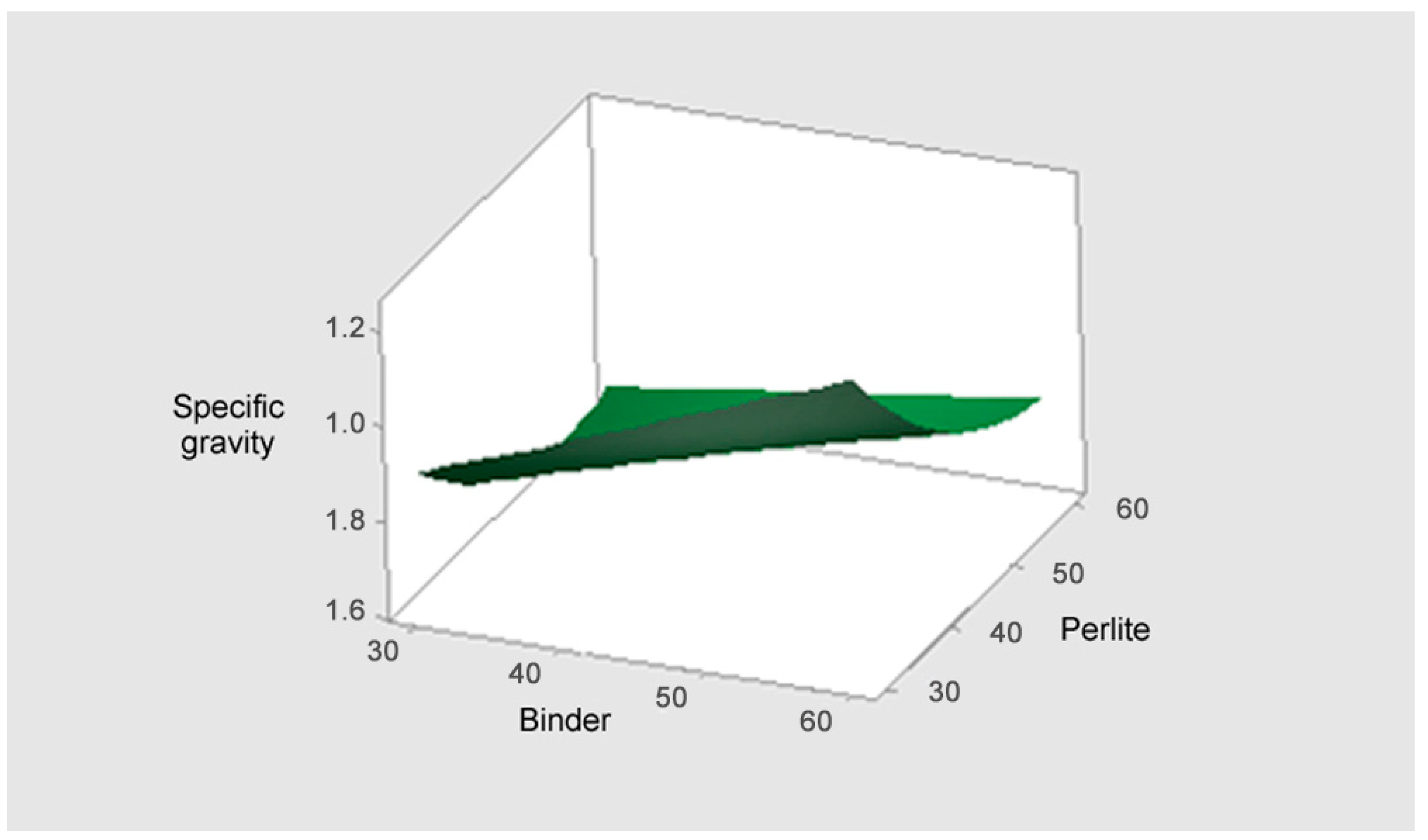
3.3.2. Response Surface Analysis (3D Plots)
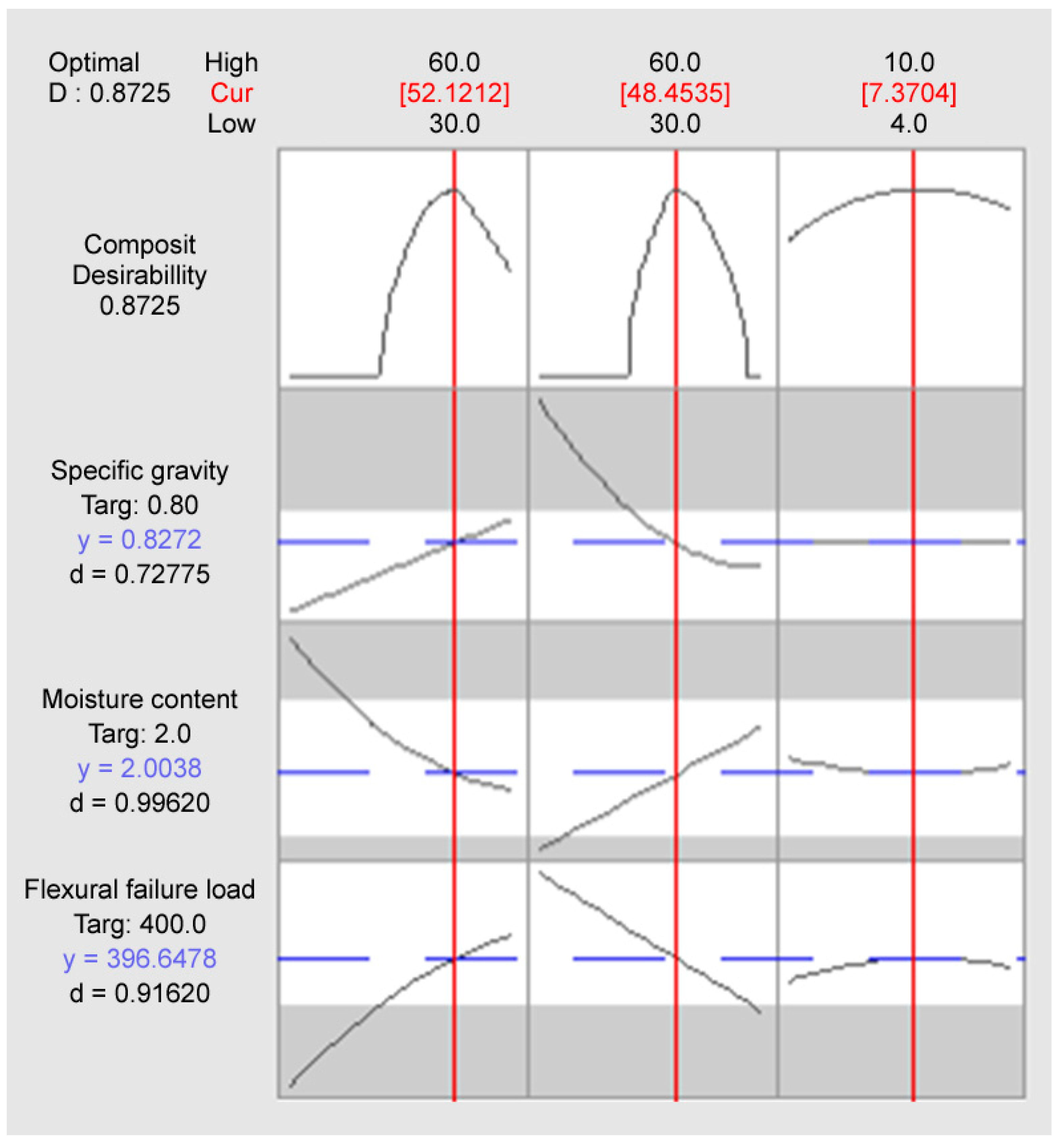
3.4. Optimal Mix Proportion Derivation via Response Surface Analysis
4. Experimental Verification of Response Optimization Results
5. Conclusions
Funding
Informed Consent Statement
Data Availability Statement
Conflicts of Interest
References
- Spanodimitriou, Y.; Ciampi, G.; Tufano, L.; Scorpio, M. Flexible and lightweight solutions for energy improvement in construction: A literature review. Energies 2023, 16, 6637. [Google Scholar] [CrossRef] [Scilit]
- Benachio, G.L.F.; Freitas, M.D.C.D.; Tavares, S.F. Circular economy in the construction industry: A systematic literature review. J. Clean. Prod. 2020, 260, 121046. [Google Scholar] [CrossRef] [Scilit]
- Kumar, M.V. A Review on Sustainable Construction. Int. J. Res. Rev. 2024, 11, 251–258. [Google Scholar] [CrossRef] [Scilit]
- Fan, X.; Guo, Y.; Zhao, Q.; Zhu, Y. Structural optimization and application research of alkali-activated slag ceramsite compound insulation block based on finite element method. Mathematics 2021, 9, 2488. [Google Scholar] [CrossRef] [Scilit]
- Roque, E.; Oliveira, R.; Almeida, R.M.; Vicente, R.; Figueiredo, A. Lightweight and prefabricated construction as a path to energy efficient buildings: Thermal design and execution challenges. Int. J. Environ. Sustain. Dev. 2020, 19, 1–32. [Google Scholar] [CrossRef] [Scilit]
- Agrawal, Y.; Gupta, T.; Sharma, R.; Panwar, N.L.; Siddique, S. A comprehensive review on the performance of structural lightweight aggregate concrete for sustainable construction. Constr. Mater. 2021, 1, 39–62. [Google Scholar] [CrossRef] [Scilit]
- Nakano, K.; Karube, M.; Hattori, N. Environmental impacts of building construction using cross-laminated timber panel construction method: A case of the research building in Kyushu, Japan. Sustainability 2020, 12, 2220. [Google Scholar] [CrossRef] [Scilit]
- Kwek, S.Y.; Awang, H. Utilization of industrial waste materials for the production of lightweight aggregates: A review. J. Sustain. Cem. Based Mater. 2021, 10, 353–381. [Google Scholar] [CrossRef] [Scilit]
- Raut, S.P.; Ralegaonkar, R.V.; Mandavgane, S.A. Development of sustainable construction material using industrial and agricultural solid waste: A review of waste-create bricks. Constr. Build. Mater. 2011, 25, 4037–4042. [Google Scholar] [CrossRef] [Scilit]
- Milat, M.; Juradin, S.; Ostojić-Škomrlj, N.; Tesovnik, A. Recycling Mineral Wool Waste: Towards Sustainable Construction Materials. Recycling 2025, 10, 174. [Google Scholar] [CrossRef] [Scilit]
- Ibrahim, M.; Rahman, M.K.; Najamuddin, S.K.; Alhelal, Z.S.; Acero, C.E. A review on utilization of industrial by-products in the production of controlled low strength materials and factors influencing the properties. Constr. Build. Mater. 2022, 325, 126704. [Google Scholar] [CrossRef] [Scilit]
- Awoyera, P.; Adesina, A. A critical review on application of alkali activated slag as a sustainable composite binder. Case Stud. Constr. Mater. 2019, 11, e00268. [Google Scholar] [CrossRef] [Scilit]
- Kucharczyk, S.; Pichór, W. The effect of waste-expanded perlite on alkali activation of ground granulated blast furnace slag. Mater. Struct. 2023, 56, 58. [Google Scholar] [CrossRef] [Scilit]
- Qin, Y.; Qu, C.; Ma, C.; Zhou, L. One-part alkali-activated materials: State of the art and perspectives. Polymers 2022, 14, 5046. [Google Scholar] [CrossRef] [Scilit]
- Al-Noaimat, Y.A.; Ghaffar, S.H.; Chougan, M.; Al-Kheetan, M.J. A review of 3D printing low-carbon concrete with one-part geopolymer: Engineering, environmental and economic feasibility. Case Stud. Constr. Mater. 2023, 18, e01818. [Google Scholar] [CrossRef] [Scilit]
- Sengul, O.; Azizi, S.; Karaosmanoglu, F.; Tasdemir, M.A. Effect of expanded perlite on the mechanical properties and thermal conductivity of lightweight concrete. Energy Build. 2011, 43, 671–676. [Google Scholar] [CrossRef] [Scilit]
- Doner, S.; Lyngdoh, G.A.; Nayak, S.; Das, S. Fracture response of wollastonite fiber-reinforced cementitious composites: Evaluation using micro-indentation and finite element simulation. Ceram. Int. 2022, 48, 15493–15503. [Google Scholar] [CrossRef] [Scilit]
- Cao, Q.; Su, L.; Zhou, C.; Pan, K.; Wu, J.; Han, X. Enhancing Fracture Properties in Cementitious Composites through Hybrid Fiber Reinforcement. ACI Mater. J. 2025, 122, 27. [Google Scholar] [CrossRef] [Scilit]
- Yang, Y.; Neding, B.; Mu, W.; Mi, Z.; Hedström, P. Revealing the interdependence of microstructure evolution, micromechanics and macroscopic mechanical behavior of multi-phase medium Mn steels. Mater. Sci. Eng. A 2022, 839, 142857. [Google Scholar] [CrossRef] [Scilit]
- Sydor, N.; Marushchak, U.; Braichenko, S.; Rusyn, B. Development of component composition of engineered cementitious composites. In Proceedings of the International Scientific Conference EcoComfort and Current Issues of Civil Engineering, Lviv, Ukraine, 16–18 September 2020. [Google Scholar]
- Lu, J.X.; Shen, P.; Ali, H.A.; Poon, C.S. Mix design and performance of lightweight ultra high-performance concrete. Mater. Des. 2022, 216, 110553. [Google Scholar] [CrossRef] [Scilit]
- Sinkhonde, D.; Onchiri, R.O.; Oyawa, W.O.; Mwero, J.N. Response surface methodology-based optimisation of cost and compressive strength of rubberised concrete incorporating burnt clay brick powder. Heliyon 2021, 7, e08565. [Google Scholar] [CrossRef] [Scilit]
- Ferdosian, I.; Camões, A. Eco-efficient ultra-high performance concrete development by means of response surface methodology. Cem. Concr. Compos. 2017, 84, 146–156. [Google Scholar] [CrossRef] [Scilit]
- Vishwakarma, A.; Tarangini, D. Optimization of Geopolymer Concrete Mix Design Using Response Surface Methodology (RSM) for Enhanced Compressive Strength in MINITAB. J. Eng. Sci. 2025, 16, 49–62. [Google Scholar]
- KS F 2563; Ground Granulated Blast-Furnace for Use in Concrete. Korean Agency for Technology and Standards: Maengdong-myeon, Republic of Korea, 2020.
- KS F 3504; Gypsum Boards. Korean Agency for Technology and Standards: Maengdong-myeon, Republic of Korea, 2023.
- Angelopoulos, P.M. Insights in the physicochemical and mechanical properties and characterization methodology of perlites. Minerals 2024, 14, 113. [Google Scholar] [CrossRef] [Scilit]
- Lee, J.H.; Hwang, W.J.; Lee, C.W.; Lee, S.S. Properties of Magnesia Composites According to Replacement Ratio of Perlite. Teh. Glas. 2023, 17, 524–528. [Google Scholar] [CrossRef] [Scilit]
- Adhikary, P.; Arifuzzaman, M.; Kabir, E. Compressive properties of expanded perlite based particulate composite for the application in building insulation Board. J. Eng. Adv. 2020, 1, 01–05. [Google Scholar] [CrossRef] [Scilit]
- Zhang, Y.; Tang, Z.; Zhou, X.; Zheng, Y.; Liu, Z. Effect of alkali activator and granulated blast furnace slag on the properties of lithium slag-based high-strength lightweight aggregates. Sci. Rep. 2025, 15, 30115. [Google Scholar] [CrossRef] [Scilit] [PubMed]
- Azimi, Z.; Toufigh, V. Influence of blast furnace slag on pore structure and transport characteristics in low-calcium fly-ash-based geopolymer concrete. Sustainability 2023, 15, 13348. [Google Scholar] [CrossRef] [Scilit]




| Water to Binder Ratio | Binder Material Weight Ratio (%) | Alkali Activator | |||
|---|---|---|---|---|---|
| GGBFS (A) | Waste Rock Wool (B) | Anhydrous Gypsum | NaOH | Na2CO3 | |
| 40 | 70 | 20 | 10 | 3% of (A+B) weight | 5% of (A+B) weight |
| Composition (%) | ||||||||
|---|---|---|---|---|---|---|---|---|
| SiO2 | CaO | Al2O3 | Fe2O3 | MgO | K2O | Na2O | SO3 | TiO2 |
| 33.32 | 21.24 | 15.77 | 8.57 | 8.02 | 0.72 | 1.51 | 0.47 | 0.39 |
| Code | Independent Variable (Experimental Factor) | Factor Range (wt%) | Coded Level (−1) | Coded Level (0) | Coded Level (+1) |
|---|---|---|---|---|---|
| X1 | Binder | 30~60 | 30 | 45 | 60 |
| X2 | Expanded Perlite | 30~60 | 30 | 45 | 60 |
| X3 | Wollastonite | 4~10 | 4 | 7 | 10 |
| Run No. | Code | Binder (X1, wt%) | Perlite (X2, wt%) | Wollastonite (X3, wt%) | Note |
|---|---|---|---|---|---|
| 1 | (0, 0, 0) | 45 | 45 | 7 | Center point |
| 2 | (+1, −1, 0) | 60 | 30 | 7 | Factor point |
| 3 | (+1, +1, 0) | 60 | 60 | 7 | Factor point |
| 4 | (−1, 0, +1) | 30 | 45 | 10 | Factor point |
| 5 | (−1, −1, 0) | 30 | 30 | 7 | Factor point |
| 6 | (0, −1, −1) | 45 | 30 | 4 | Factor point |
| 7 | (0, +1, +1) | 45 | 60 | 10 | Factor point |
| 8 | (0, 0, 0) | 45 | 45 | 7 | Center point |
| 9 | (0, −1, 1) | 45 | 30 | 10 | Factor point |
| 10 | (−1, 0, −1) | 30 | 45 | 4 | Factor point |
| 11 | (0, 0, 0) | 45 | 45 | 7 | Center point |
| 12 | (+1, 0, −1) | 60 | 45 | 4 | Factor point |
| 13 | (+1, 0, +1) | 60 | 45 | 10 | Factor point |
| 14 | (0, +1, −1) | 45 | 60 | 4 | Factor point |
| 15 | (−1, +1, 0) | 30 | 60 | 7 | Factor point |
| Run No. | Binder (X1, wt%) | Perlite (X2, wt%) | Wollastonite (X3, wt%) | Flexural Failure Load (Y1, N) | Moisture Content (Y2, %) | Specific Gravity (Y3) |
|---|---|---|---|---|---|---|
| 1 | 45 | 45 | 7 | 380.3 | 2.2 | 0.80 |
| 2 | 60 | 30 | 7 | 479.7 | 1.2 | 1.21 |
| 3 | 60 | 60 | 7 | 371.0 | 2.4 | 0.82 |
| 4 | 30 | 45 | 10 | 289.7 | 3.8 | 0.72 |
| 5 | 30 | 30 | 7 | 361.0 | 1.9 | 0.84 |
| 6 | 45 | 30 | 4 | 440.3 | 1.3 | 1.08 |
| 7 | 45 | 60 | 10 | 320.7 | 3.2 | 0.74 |
| 8 | 45 | 45 | 7 | 381.0 | 2.2 | 0.81 |
| 9 | 45 | 30 | 10 | 430.0 | 1.3 | 1.12 |
| 10 | 30 | 45 | 4 | 270.7 | 3.9 | 0.71 |
| 11 | 45 | 45 | 7 | 380.0 | 2.2 | 0.80 |
| 12 | 60 | 45 | 4 | 410.0 | 1.7 | 0.94 |
| 13 | 60 | 45 | 10 | 430.3 | 1.6 | 0.87 |
| 14 | 45 | 60 | 4 | 300.0 | 3.4 | 0.76 |
| 15 | 30 | 60 | 7 | 260.0 | 4.7 | 0.66 |
| Source | DF | Adj SS | Adj MS | F-Value | p-Value |
|---|---|---|---|---|---|
| Model | 5 | 60,966 | 12,193.2 | 113.45 | 0 |
| Linear | 3 | 59,275 | 19,758.3 | 183.83 | 0 |
| Binder | 1 | 32,512.5 | 32,512.5 | 302.5 | 0 |
| Perlite | 1 | 26,450 | 26,450 | 246.1 | 0 |
| Wollastonite | 1 | 312.5 | 312.5 | 2.91 | 0.122 |
| Quadratic | 2 | 1691 | 845.5 | 7.87 | 0.011 |
| Binder × Binder | 1 | 1188 | 1188 | 11.05 | 0.009 |
| Wollastonite × Wollastonite | 1 | 616.6 | 616.6 | 5.74 | 0.04 |
| Error | 9 | 967.3 | 107.5 | ||
| Lack-of-Fit | 7 | 967.3 | 138.2 | * | * |
| Pure Error | 2 | 0 | 0 | ||
| Total | 14 | 61,933.3 |
| Source | DF | Adj SS | Adj MS | F-Value | p-Value |
|---|---|---|---|---|---|
| Model | 6 | 16.1691 | 2.69485 | 81.59 | 0 |
| Linear | 3 | 14.865 | 4.955 | 150.02 | 0 |
| Binder | 1 | 6.845 | 6.845 | 207.24 | 0 |
| Perlite | 1 | 8 | 8 | 242.21 | 0 |
| Wollastonite | 1 | 0.02 | 0.02 | 0.61 | 0.459 |
| Quadratic | 2 | 0.6641 | 0.33205 | 10.05 | 0.007 |
| Binder × Binder | 1 | 0.6058 | 0.60577 | 18.34 | 0.003 |
| Wollastonite × Wollastonite | 1 | 0.0879 | 0.08791 | 2.66 | 0.141 |
| 2-Way Interaction | 1 | 0.64 | 0.64 | 19.38 | 0.002 |
| Binder × Perlite | 1 | 0.64 | 0.64 | 19.38 | 0.002 |
| Error | 8 | 0.2642 | 0.03303 | ||
| Lack-of-Fit | 6 | 0.2642 | 0.04404 | * | * |
| Pure Error | 2 | 0 | 0 | ||
| Total | 14 | 16.4333 |
| Source | DF | Adj SS | Adj MS | F-Value | p-Value |
|---|---|---|---|---|---|
| Model | 4 | 0.348293 | 0.087073 | 65.96 | 0 |
| Linear | 2 | 0.30425 | 0.152125 | 115.25 | 0 |
| Binder | 1 | 0.1058 | 0.1058 | 80.15 | 0 |
| Perlite | 1 | 0.19845 | 0.19845 | 150.34 | 0 |
| Quadratic | 1 | 0.031943 | 0.031943 | 24.2 | 0.001 |
| Perlite × Perlite | 1 | 0.031943 | 0.031943 | 24.2 | 0.001 |
| 2-Way Interaction | 1 | 0.0121 | 0.0121 | 9.17 | 0.013 |
| Binder × Perlite | 1 | 0.0121 | 0.0121 | 9.17 | 0.013 |
| Error | 10 | 0.0132 | 0.00132 | ||
| Lack-of-Fit | 8 | 0.0132 | 0.00165 | * | * |
| Pure Error | 2 | 0 | 0 | ||
| Total | 14 | 0.361493 |
| Response | Goal | Lower Limit | Target | Upper Limit | Weight | Importance |
|---|---|---|---|---|---|---|
| Flexural Failure Load | Target | 360 | 400 | 480 | 1 | 1 |
| Moisture Content | Target | 1.2 | 2.0 | 3.0 | 1 | 1 |
| Density | Target | 0.6 | 0.8 | 0.9 | 1 | 1 |
| Factor | Optimal Mix Ratio | Response | Target | Predicted Value (y) | Desirability (d) |
|---|---|---|---|---|---|
| Binder | 52.1212 | Moisture Content | 2.0 | 2.0038 | 0.99620 |
| Perlite | 48.4535 | Flexural Failure Load | 400.0 | 396.6478 | 0.91620 |
| Wollastonite | 7.3704 | Density | 0.80 | 0.8272 | 0.72775 |
| Response | Fitted Value | SE Fit | 95% CI | 95% PI |
|---|---|---|---|---|
| Flexural Failure Load | 396.82 | 4.67 | (386.26, 407.37) | (371.10, 422.54) |
| Moisture Content | 2.0038 | 0.0824 | (1.8139, 2.1940) | (1.5438, 2.4641) |
| Density | 0.8272 | 0.0148 | (0.7942, 0.8602) | (0.7398, 0.9146) |
| Category | Flexural Failure Load (N) | Moisture Content (%) | Density (g/cm3) |
|---|---|---|---|
| Predicted Value | 396.82 | 2.00 | 0.83 |
| Experimental Value | 408.54 | 2.15 | 0.85 |
| Deviation (Absolute) | 11.72 | 0.15 | 0.02 |
Disclaimer/Publisher’s Note: The statements, opinions and data contained in all publications are solely those of the individual author(s) and contributor(s) and not of MDPI and/or the editor(s). MDPI and/or the editor(s) disclaim responsibility for any injury to people or property resulting from any ideas, methods, instructions or products referred to in the content. |
© 2025 by the author. Licensee MDPI, Basel, Switzerland. This article is an open access article distributed under the terms and conditions of the Creative Commons Attribution (CC BY) license (https://creativecommons.org/licenses/by/4.0/).
Share and Cite
Lee, J.-C. Optimization of Mix Design for Lightweight Boards Based on GGBFS–Waste Rock Wool Using Response Surface Methodology. Materials 2025, 18, 5376. https://doi.org/10.3390/ma18235376
Lee J-C. Optimization of Mix Design for Lightweight Boards Based on GGBFS–Waste Rock Wool Using Response Surface Methodology. Materials. 2025; 18(23):5376. https://doi.org/10.3390/ma18235376
Chicago/Turabian StyleLee, Jun-Cheol. 2025. "Optimization of Mix Design for Lightweight Boards Based on GGBFS–Waste Rock Wool Using Response Surface Methodology" Materials 18, no. 23: 5376. https://doi.org/10.3390/ma18235376
APA StyleLee, J.-C. (2025). Optimization of Mix Design for Lightweight Boards Based on GGBFS–Waste Rock Wool Using Response Surface Methodology. Materials, 18(23), 5376. https://doi.org/10.3390/ma18235376