Crack Arrest Effect of FeMnNiSi-Inconel625-Ni60 Laminated Structure Prepared by Laser Cladding Additive Manufacturing

Abstract
1. Introduction
- Most of the existing studies prepare a single coating on the substrate surface, and there is a lack of research on laminated structures.
- Most of the existing studies prepare specific alloy materials Ni60 or coating Fe35A on the substrate surface and optimize the process parameters, but lack the universal verification of the material system.
- Most of the existing research aims to refine grains, reduce cracks, and enhance the fusion between substrate and cladding by optimizing process parameters and increasing surface electromagnetic fields, but there is no targeted related research.
2. Experimental Materials and Methods
2.1. Test Materials
2.2. Laser Cladding Process
2.3. Preparation and Characterization of Test Samples
3. Test Results
3.1. Interface Micromorphology
3.2. Interface Element Analysis
3.3. Phase Composition Analysis
3.4. Microhardness
3.5. Friction and Wear Properties
3.6. Corrosion Resistance
4. Conclusions
- (1)
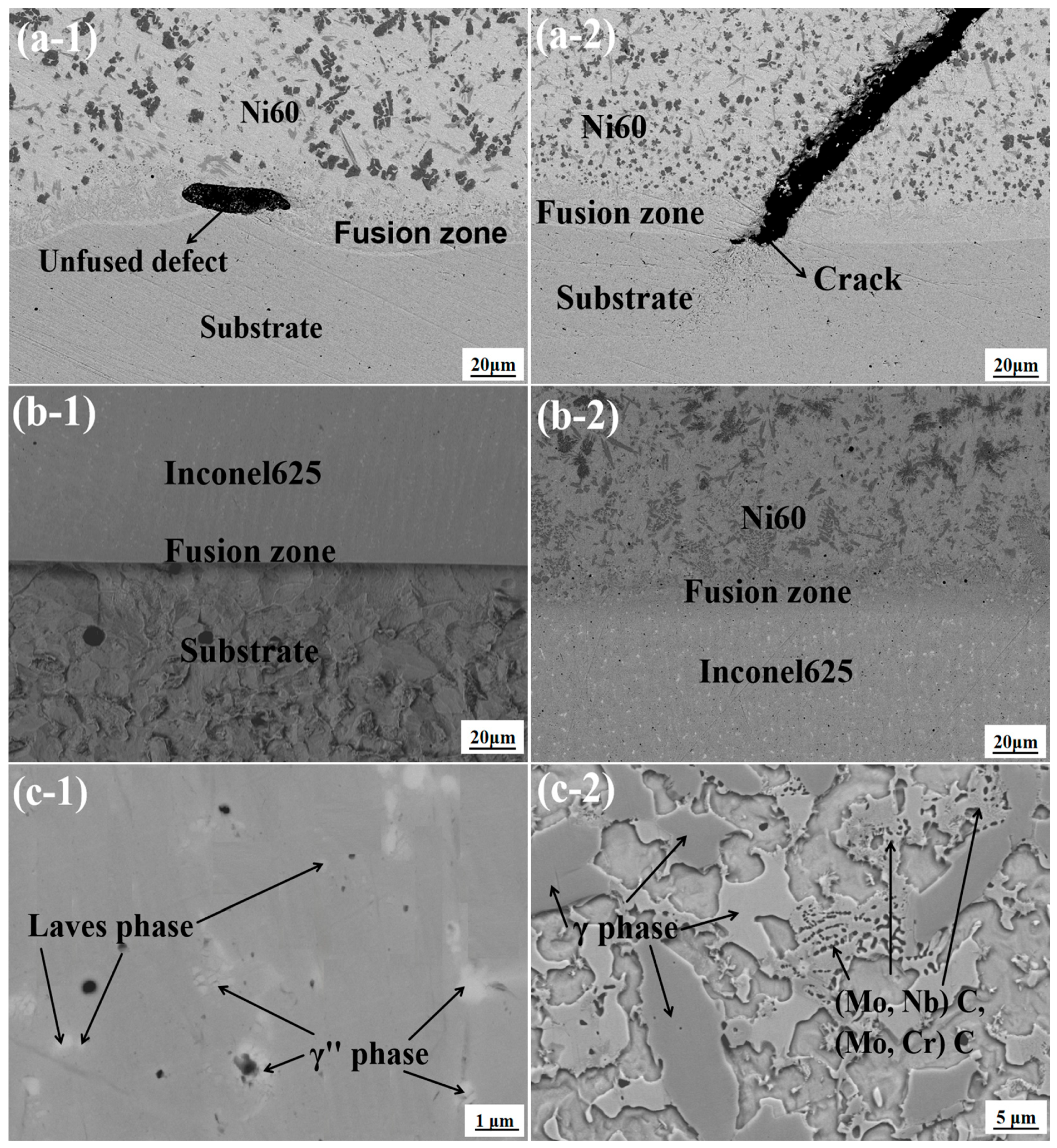
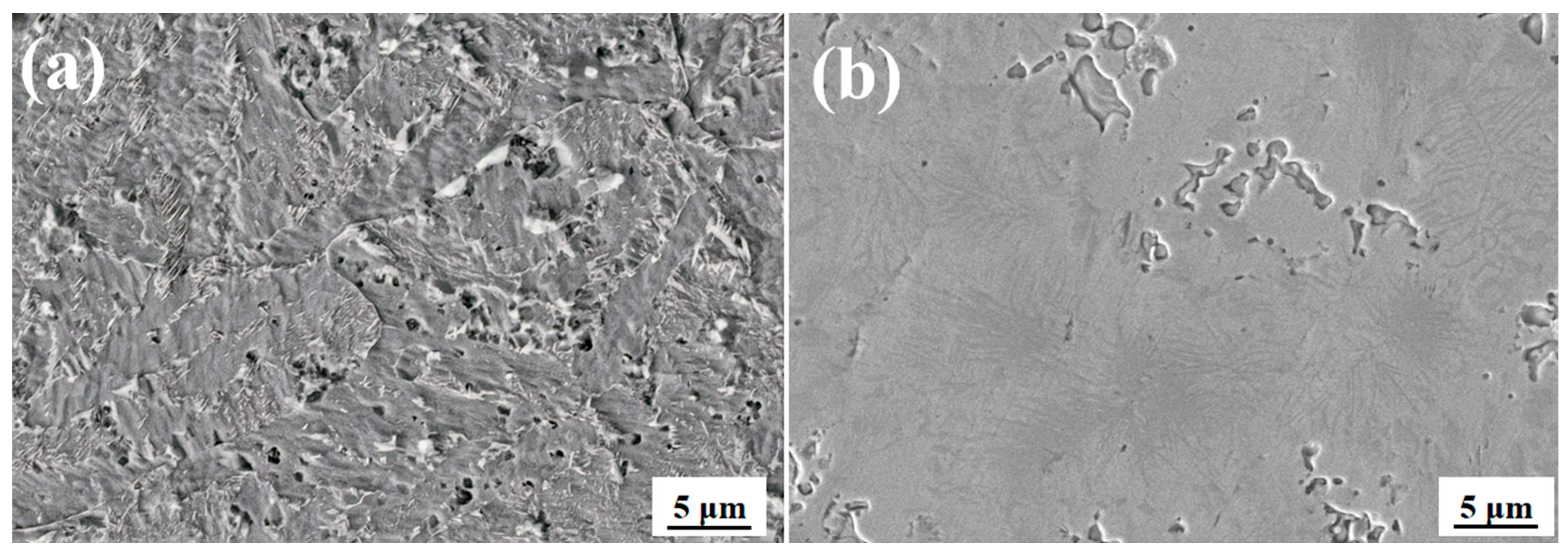
- By observing the micromorphology of the interface area between the Ni60 single cladding layer and the FeMnNiSi-Inconel625-Ni60 laminated structure, we found unfused defects and obvious cracks in the fusion zone of the single cladding layer, while there were no obvious cladding defects in the two cladding layer areas of the laminated structure.
- (2)
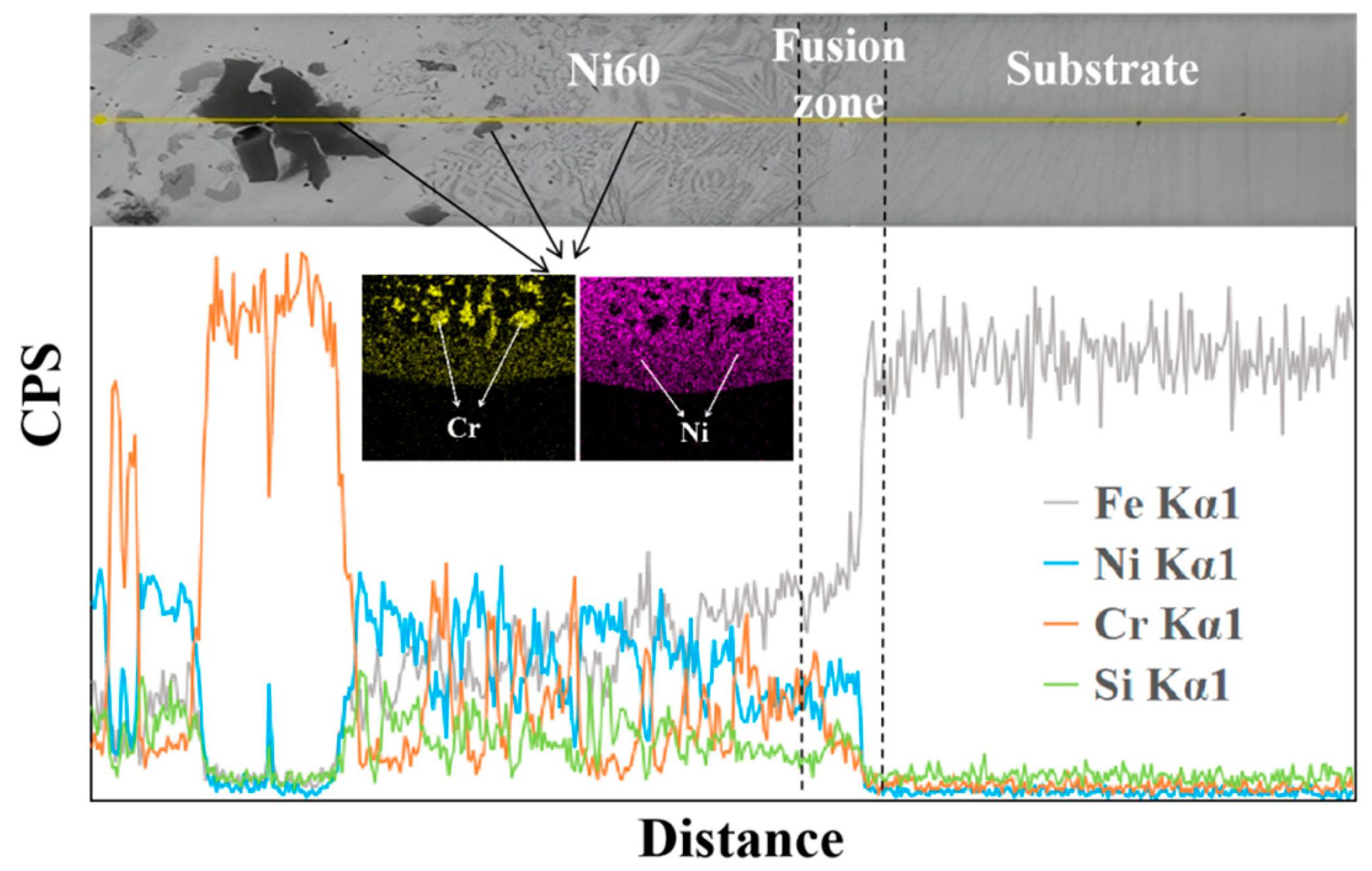
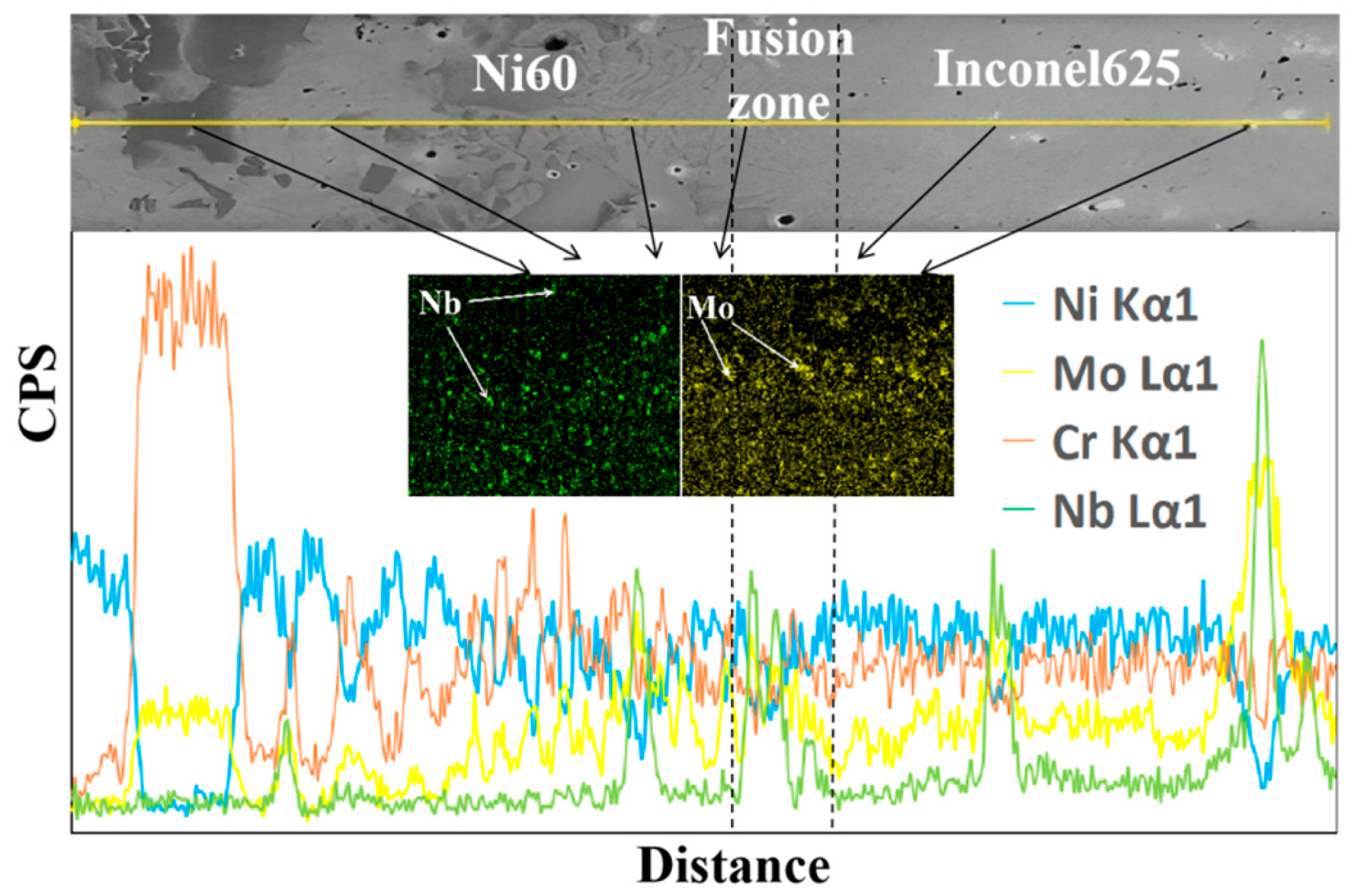
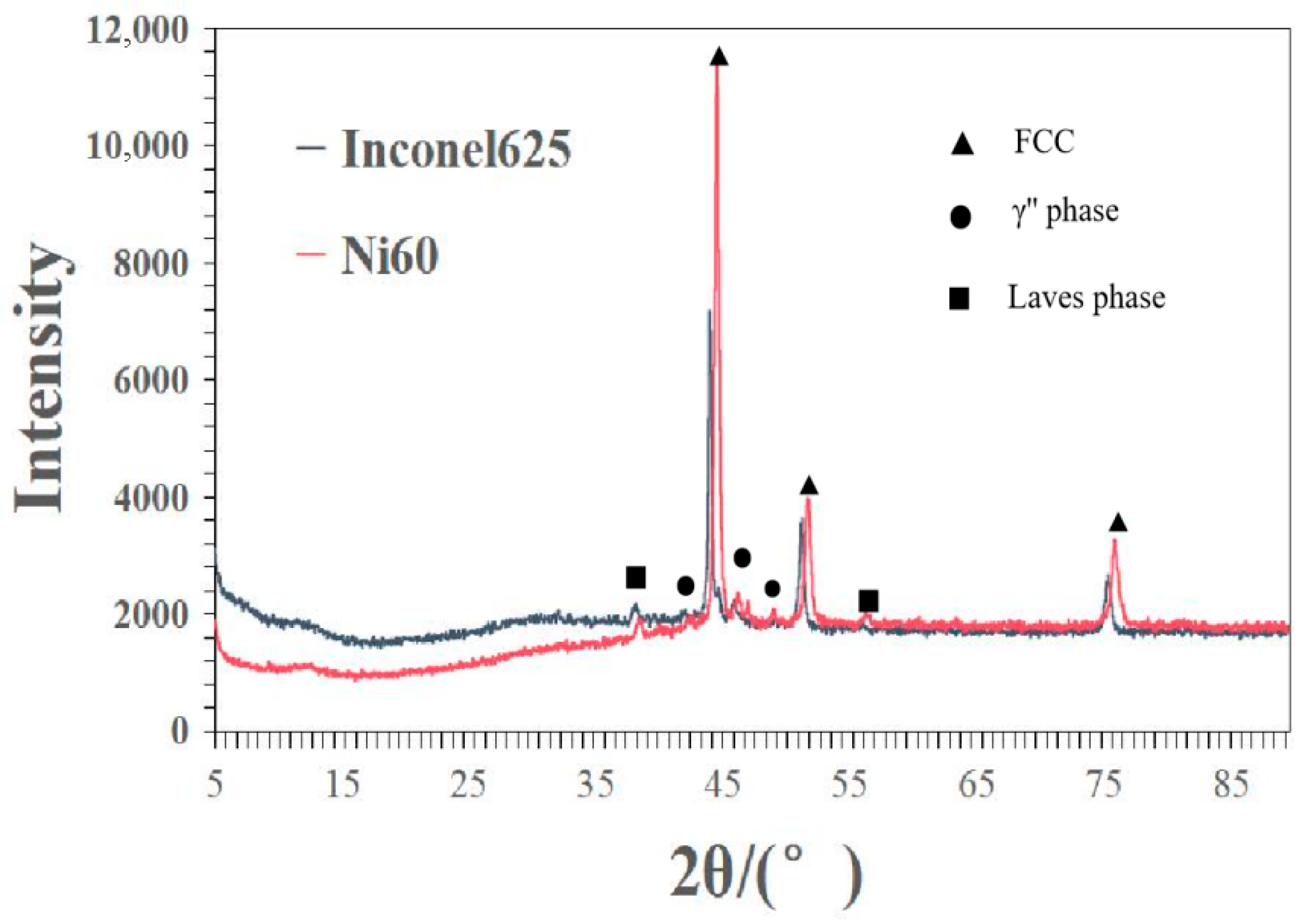
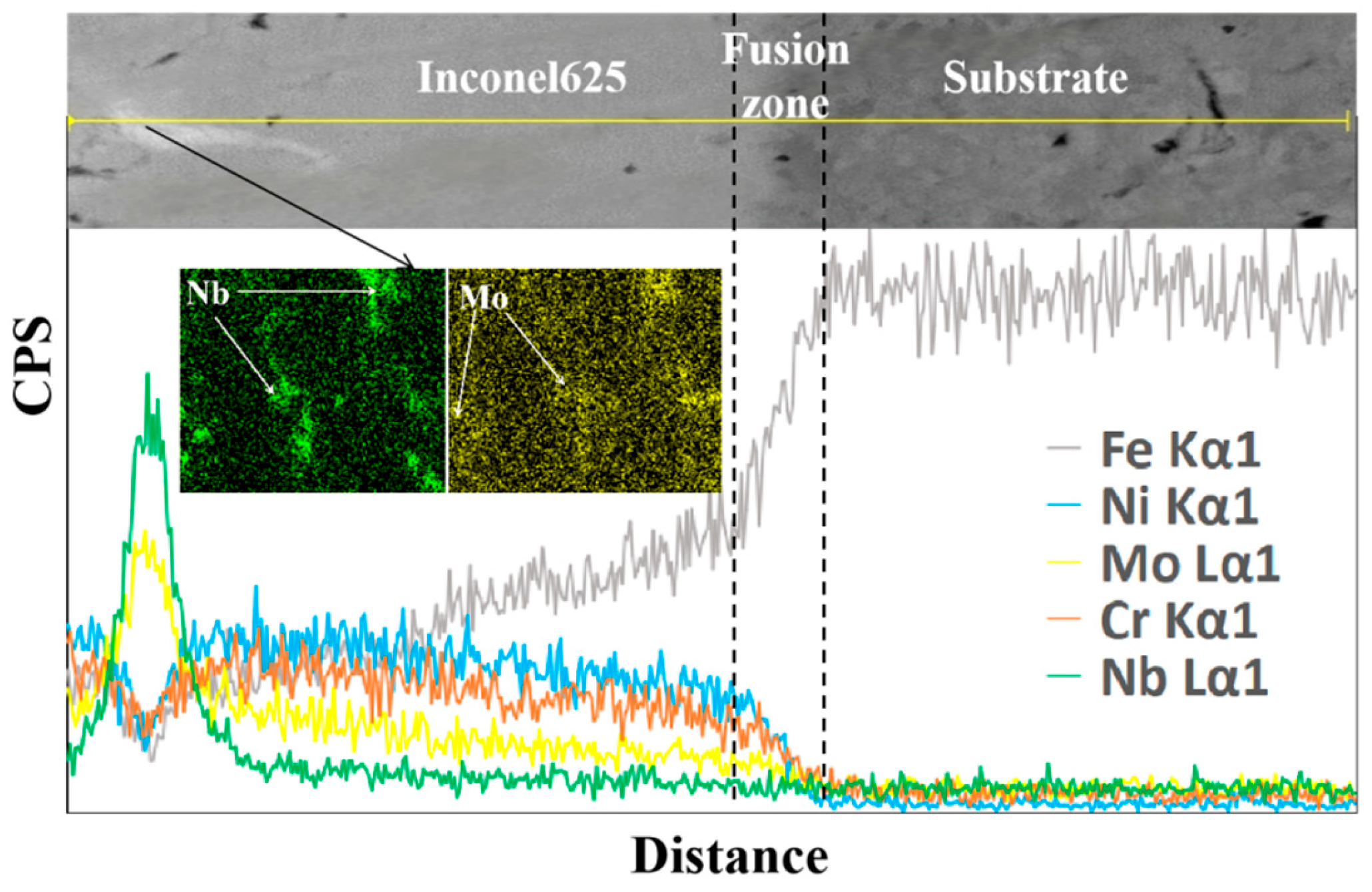
- Through EBSD micromorphology, interface elements, and phase composition analysis, it can be seen that the Cr element aggregates at the interface of Ni60 single coating and the Ni element decreases, thus forming a hard brittle phase and FCC phase. The difference in the thermal expansion coefficients of the two phases leads to interface stress concentration, which increases the risk of crack generation; the enrichment of Nb and Mo elements at the interface of the stacked structure FeMnNiSi-Inconel625 promotes the precipitation of γ″ phase and forms a nanoscale Laves phase under the synergistic segregation of Nb-Mo, which refines the grains while reducing local stress concentration; two Nb-Mo synergistic segregation phenomena appear in the fusion line area of the stacked structure Inconel625-Ni60 interface, which can not only inhibit the formation and aggregation of carbides to achieve the effect of grain refinement but also form pinning dislocations, deflect the crack propagation path, and reduce crack generation. The FeMnNiSi-Inconel625-Ni60 stacked structure presents a dual mechanism of reducing stress concentration and inhibiting cracks.
- (3)
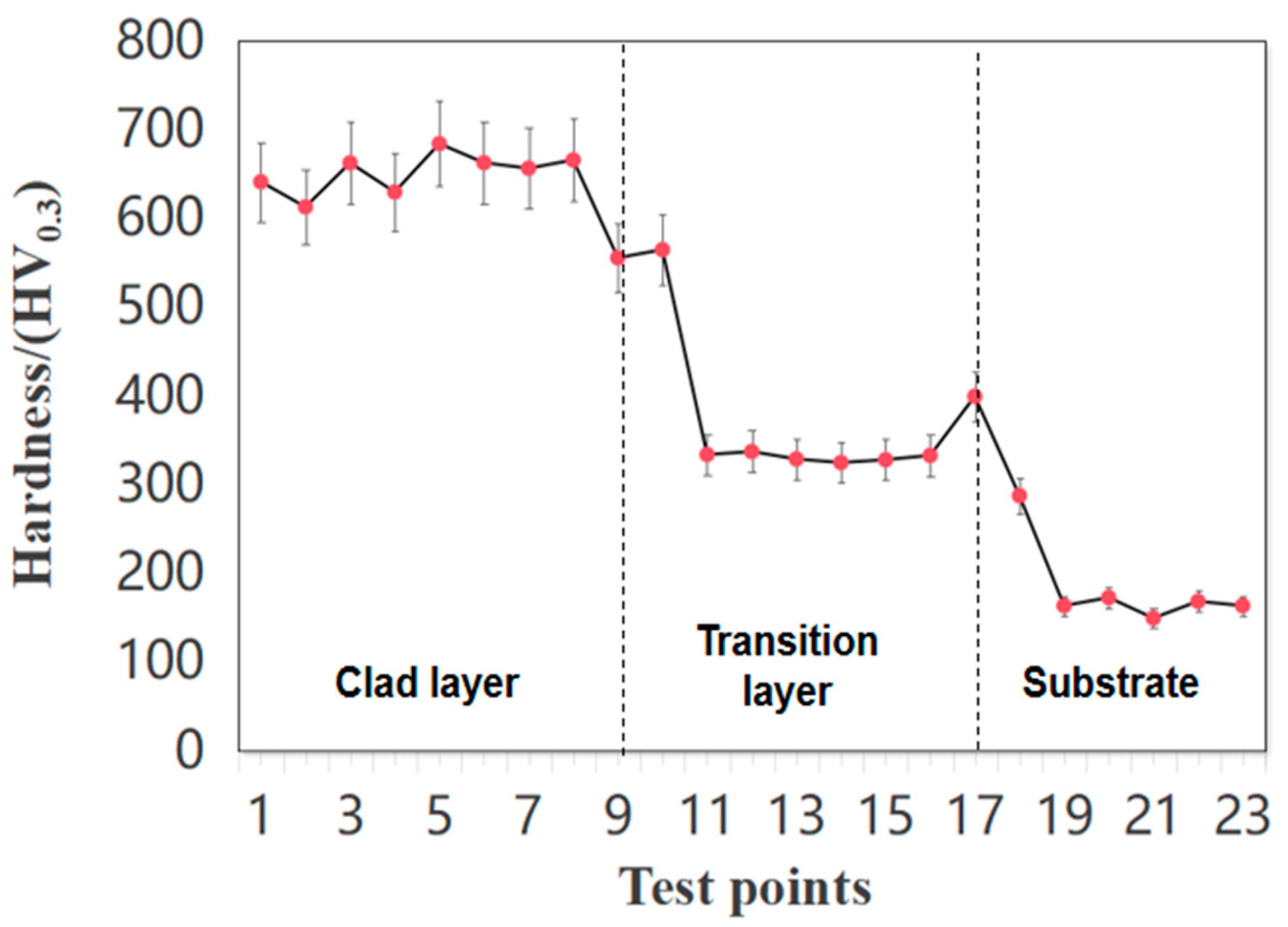
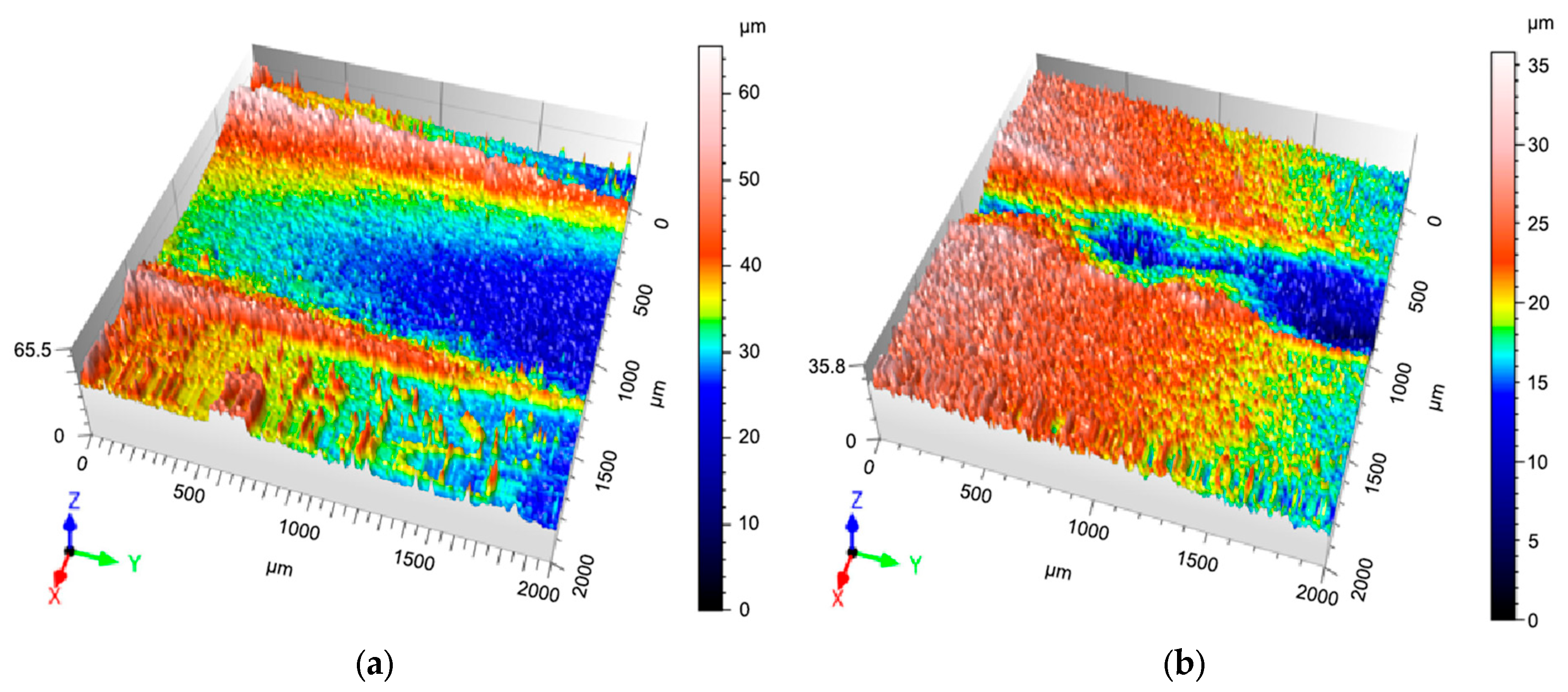
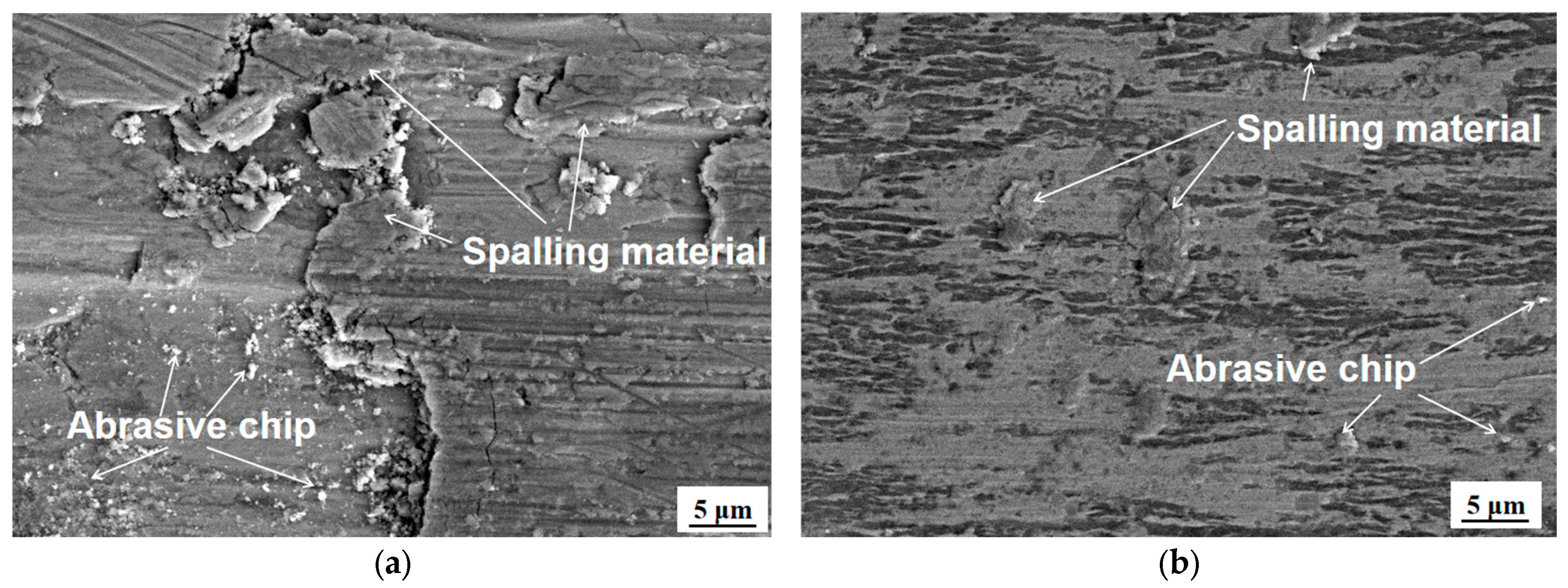
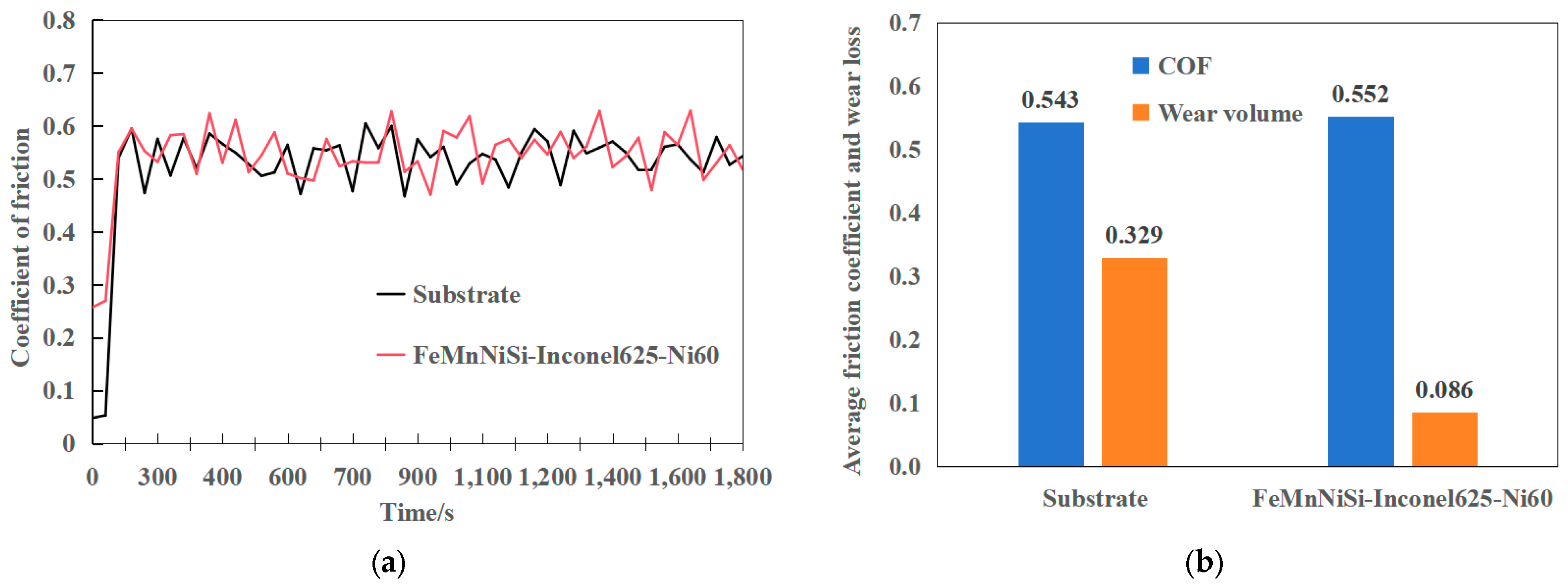
- The hardness test results show that the average microhardness of the Ni60 surface cladding layer of the laminated structure is 641.31 HV0.3, which is 3.88 times the average microhardness of the substrate (165.22 HV0.3). The average microhardness of the base layer Inconel625 is 340.71 HV0.3, which is 2.06 times the microhardness of the substrate. The wear resistance test results show that the wear volume of the laminated cladding layer is 0.086 mm3, which is 0.243 mm3 less than the wear volume of the substrate 0.329 mm3; the wear rate of the laminated cladding layer is 0.86 × 10⁻² mm3/(N·m), which is 73.86% lower than the wear rate of the substrate 3.29 × 10⁻² mm3/(N·m); the substrate wear scar surface has a large area of adhesion and material peeling, resulting in severe wear, while the surface wear of the laminated cladding layer is significantly weakened, mainly due to abrasive wear, and has better wear resistance.
- (4)
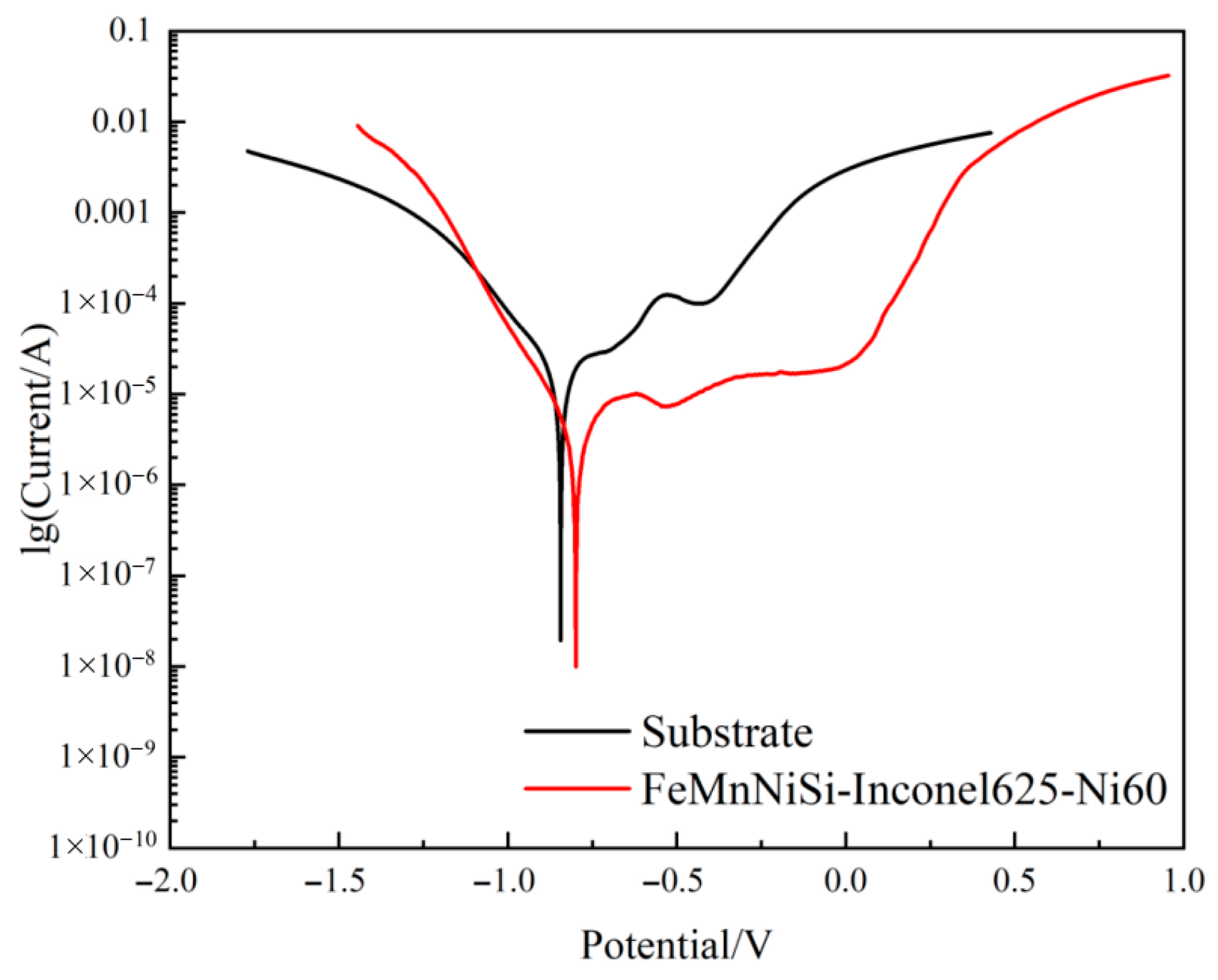
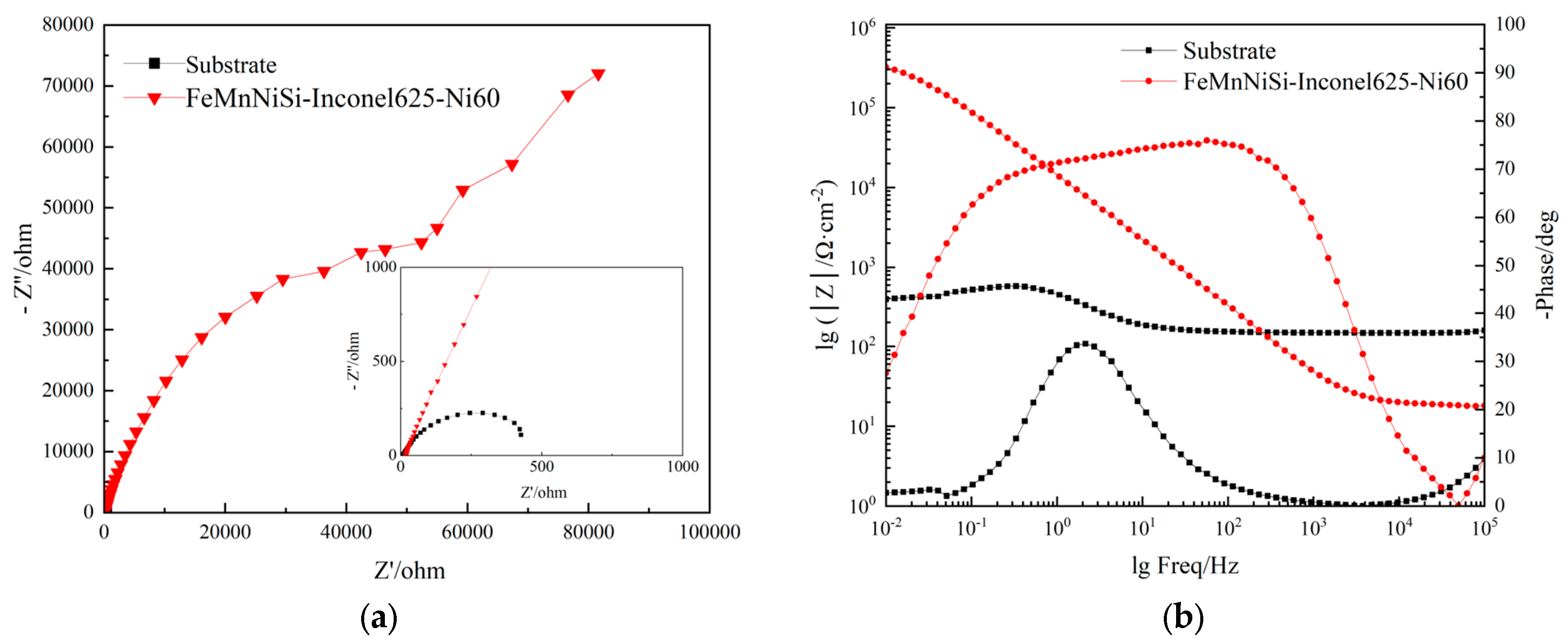
- The electrochemical corrosion test results indicate that under identical environmental conditions, the laminated structure cladding layer exhibits superior corrosion resistance compared to the substrate. Specifically, the cladding layer demonstrates a higher self-corrosion potential (−0.780 V vs. −0.844 V for the substrate), a lower corrosion current density (8.32 × 10⁻⁶ A/cm2 vs. 6.546 × 10⁻⁵ A/cm2), and a significantly higher polarization resistance (8623.6 Ω vs. 2426.9 Ω). Additionally, the frequency-stable region width at the highest impedance modulus |Z| is notably wider for the cladding layer, and its corrosion rate is 71.86% slower than that of the substrate. These findings confirm that the laminated structure has a slow corrosion rate, minimal corrosion tendency, and excellent overall corrosion resistance.
Author Contributions
Funding
Institutional Review Board Statement
Informed Consent Statement
Data Availability Statement
Conflicts of Interest
References
- Zhang, Q.; Li, Z.; Yu, Z. Optimization of Process Parameters for Laser Cladding FeNiMoCoCrTi High Entropy Alloy Coating on 45 # Steel. Mech. Strength 2021, 2, 308–312. [Google Scholar] [CrossRef]
- Cao, P.; Gu, X.; Yan, S. The effect of shot blasting pretreatment on gas carburizing efficiency and layer characteristics of 45 steel. Met. Heat Treat. 2022, 47, 143–146. [Google Scholar] [CrossRef]
- Chen, X.; Zhang, D.; Sun, W.; Wang, Y.; Zhang, J. Effect of scanning speed on deformation and microstructure of laser cladding thin high-speed steel plate. Surf. Technol. 2019, 48, 150–157. [Google Scholar] [CrossRef]
- Dong, M.; Jin, K.; Huang, G.; Zhao, H.; Xuan, L.; Qiao, X.; Chen, P. Influence of scanning path on residual stress and tribological properties of multi-pass laser cladding layer. China Surf. Eng. 2025, 38, 75–86. [Google Scholar] [CrossRef]
- Li, T.; Long, H.; Qiu, C.; Wang, M.; Li, D.; Dong, Z.; Gui, Y. Multi-Objective Optimization of Process Parameters of 45 Steel Laser Cladding Ni60PTA Alloy Powder. Coatings 2022, 12, 939. [Google Scholar] [CrossRef]
- Luo, X.; Yao, Z.; Zhang, P.; Zhou, K. Corrosion resistance of Al-Cr composite reinforcement layer on 45 steel surface. Rare Met. Mater. Eng. 2018, 47, 7. [Google Scholar]
- Liu, L.; Li, S.; Dou, W.; Han, F.; Lin, K. Process optimization and performance study of laser cladding Ni60 alloy coating on 316L stainless steel surface. China Laser 2024, 51, 1602207. [Google Scholar] [CrossRef]
- Cao, J.; Yang, X.; Wang, S.; Zhang, H.; Yang, L.; Qiao, Y.; Li, C. Wear and Corrosion Resistance of Ni60 TiC Ceramic Coating Laser Cladded on 45 Steel Surface. Rare Met. Mater. Eng. 2020, 49, 611–617. [Google Scholar]
- Wang, S.; Zheng, S.; Liu, W.; Zhu, X.; Zhou, M.; Jiang, H. Optimization of Process Parameters for Laser Cladding Fe35A Alloy on 45 Steel Surface. Adv. Laser Optoelectron. 2021, 58, 0914007. [Google Scholar] [CrossRef]
- Wang, Y.; Zhou, H.; Wang, Z.; Xiang, N.; Cao, X. The influence of electromagnetic field on the microstructure and properties of laser cladding nickel based coatings. Surf. Technol. 2024, 53, 198–207. [Google Scholar] [CrossRef]
- Lu, X.; Liu, X.; Yu, P.; Chen, Y. Effects of post heat-treatment on microstructure and tribological properties of Ni60/H-BN self-lubricating anti-wear composite coating on 304 stainless steel by laser cladding. Tribology 2016, 36, 49–54. [Google Scholar] [CrossRef]
- Yang, W.; Li, S.; Xiao, Q.; Chen, D.; Wang, S.; Zhang, B. Research Status and Development Trends of Friction reducing and Wear resistant Laser Cladding Coatings. Lubr. Seal. 2023, 48, 171–182. [Google Scholar] [CrossRef]
- Qian, S.; Qiu, Y. Research on the microstructure and properties of nickel-based alloy layer remanufactured by laser cladding. Electroplat. Finish. 2024, 46, 69–75. [Google Scholar] [CrossRef]
- La, P.; Xue, Q.; Liu, W. Effects of boron doping on tribological properties of Ni3Al–Cr7C3 coatings under dry sliding. Wear 2001, 249, 93–99. [Google Scholar] [CrossRef]
- Shen, X.; Chen, L.; Wu, Y.; Chen, C.; Zhang, X.; Zhou, W.; Ren, X. Effect of Substrate Material Properties on Microstructure and Mechanical Properties of Ni60 Coatings Prepared by Extreme High-Speed Laser Cladding. Steel Res. Int. 2024, 95, 2300531. [Google Scholar] [CrossRef]
- Wang, W.; Sun, W.; Zhou, H.; Xing, X.; Yang, K.; Yu, J. Research on Crack Formation Mechanism and Matching Method of Laser Cladding Nickel based Alloy Coating. Hot Process. Technol. 2022, 51, 83–88. [Google Scholar] [CrossRef]
- Fang, Z.; Luo, F.; Yao, J.; Zhang, Q. Effect of transition alloy layer on microstructure and properties of high hardness iron-based multilayer laser cladding thick cladding. Prog. Laser Optoelectron. 2004, 41, 4. [Google Scholar]
- Zhang, X.; Wang, A.; Zhang, X.; Qiao, X.; Huang, Z. Microstructure and properties of laser cladding Ni45-CaF2-WS2 self-lubricating coating. J. Chin. Soc. Nonferrous Met. 2008, 18, 215–220. [Google Scholar] [CrossRef]
- Ou, J.; Zhang, G.; Peng, Y.; Chen, W.; Zheng, Z.; Zheng, K. Microstructure and abrasive wear behavior of TiC–Cr7C3–Fe composites fabricated by spark plasma sintering. Int. J. Refract. Met. Hard Mater. 2025, 131, 107228. [Google Scholar] [CrossRef]
- Singh, C.V.; Bagui, S.; Sahoo, B.K.; Umbare, O.S.; Tarafder, S.; Sivaprasad, S. Comparison of low cycle fatigue behaviour of additively manufactured and wrought Inconel625 alloys. Mater. Sci. Eng. A 2024, 903, 14. [Google Scholar] [CrossRef]
- Li, J.; Wang, R.; Pan, L.; Zhou, X.; Yang, K. Effect of LaB6 on Microstructure and High-temperature Oxidation Resistance of Inconel625 Alloy Coating Fabricated by Plasma Transferred Arc Surfacing. Surf. Technol. 2025, 54, 98–107+142. [Google Scholar] [CrossRef]
- Liu, Y.; Sun, Y. Effects of alloying elements Si, V and Ti on microstructure and properties of 40Cr13 martensitic stainless steel. Jinshu Rechuli/Heat Treat. Met. 2024, 49, 256–261. [Google Scholar] [CrossRef]
- Rao, G.G.; Vasquez, V.R. Correction: Micromechanical model to study the deformation behavior and effect of misfits on mechanical properties in Ni-based superalloys—A phase-field approach. J. Mater. Res. 2025, 40, 1745. [Google Scholar] [CrossRef]
- Wang, X.; Huang, Y.; Liu, Q.; Xie, L.; Xu, Q.; Huang, J. Effect of Molybdenum Content on the Microstructure and Wear Resistance of CoCrFeNiMo High Entropy Alloy Laser Cladding Coating on Carbon Steel Surface. Electroplat. Coat. 2020, 39, 1201–1208. [Google Scholar] [CrossRef]
- Zhang, J.W.; Yu, L.M.; Liu, C.X.; Ding, R.; Liu, Y. Synergistic Strengthening of High-Cr Martensitic Heat-Resistant Steel and Application of Thermo-Mechanical Treatments. Acta Metall. Sin. 2024, 60, 713–730. [Google Scholar] [CrossRef]
- Xiao, X.; Lu, S.; Hu, P.; Huang, M. Toughening Method of Laves Intermetallic Compound Cr2Nb. Aerosp. Mater. Technol. 2007, 37, 5. [Google Scholar]
- Iyer, S.K.M.; Ramasamy, K.; Subramaniam, P. Design and development of SS316L/Inconel625 based composite functional gradient materials for high-pressure pneumatic tools. Rare Met. Mater. Eng. 2025, 54, 363–376. [Google Scholar] [CrossRef]
- Aramide, B.; Pityana, S.; Sadiku, R.; Jamiru, T.; Popoola, P. Improving the durability of tillage tools through surface modification—A review. Int. J. Adv. Manuf. Technol. 2021, 116, 83–98. [Google Scholar] [CrossRef]
- Zhang, Z.; Cao, Z.; Wei, D.; Ge, P.; Zhou, W.; Chen, G.; Zu, Y.; Fu, X. The influence of laser shock surface micro pit texturing on the micro motion wear behavior of diamond-like carbon coatings. China Laser 2025, 52, 0402206. [Google Scholar] [CrossRef]
- Xiao, B.; Jia, W.; Wang, J.; Zhou, L. Selective electron beam melting of WMoTaNbVFeCoCrNi refractory high-entropy alloy. Mater. Charact. 2022, 193, 112278. [Google Scholar] [CrossRef]
- Walczak, M.; Nowak, W.J.; Szala, M.; Grądzka-Dahlke, M.; Maciaszek, N.; Vališ, D.; Pasierbiewicz, K. Effect of molybdenum addition on microstructure and behavior of AlCoCrFeNi high-entropy alloys in wet environments. Arch. Civ. Mech. Eng. 2025, 25, 205. [Google Scholar] [CrossRef]
- Duan, S.; Ren, W.; Lei, W.; Wang, Y. Study on the microstructure and properties of rail cladding layer after laser quenching. J. Manuf. Process. 2023, 108, 14. [Google Scholar] [CrossRef]
- Hu, P.; Song, R.; Li, X.J.; Deng, J.; Chen, Z.-Y.; Li, Q.-W.; Wang, K.-S.; Cao, W.-C.; Liu, D.-X.; Yu, H.-L. Influence of concentrations of chloride ions on electrochemical corrosion behavior of titanium-zirconium-molybdenum alloy. J. Alloys Compd. 2017, 708, 367–372. [Google Scholar] [CrossRef]
- Feng, X.T.; Gu, H.; Zhou, S.F.; Lei, J. Microstructure and Electrochemical Corrosion Behavior of TC4 Titanium Alloy Cladding Layer Prepared with Powder Feeding Laser Additive Manufacturing. Chin. J. Lasers 2019, 46, 44–53. [Google Scholar] [CrossRef]







| Material | C | Ni | Cr | Mo | Mn | Nb | B | Si | Fe |
|---|---|---|---|---|---|---|---|---|---|
| FeMnNiSi | 0.44 | 0.20 | 0.20 | — | 0.8 | — | — | 0.30 | Bal |
| Ni60 | 0.10 | 60 | 16 | 2 | — | — | 3.5 | 3.5 | Bal |
| Inconel625 | 0.10 | 63 | 20 | 8 | 0.3 | 3.55 | — | 0.1 | 3.0 |
| Sample | Average Coefficient of Friction | Test Load /N | Sliding Distance /mm | Microhardness /HV0.3 | Wear Volume /mm3 |
|---|---|---|---|---|---|
| Substrate | 0.543 | 20 | 5 | 165.22 | 0.329 |
| Sandwich structure | 0.552 | 20 | 5 | 641.31 | 0.086 |
| Sample | Wear Depth /μm | Wear Width/ μm | Wear Cross-Sectional Area/μm2 | Wear Volume/ mm3 | Wear Rate/ mm3/(N·m) |
|---|---|---|---|---|---|
| Substrate | 18.6 | 780 | 7806 | 0.329 | 3.29 × 10⁻² |
| FeMnNiSi-Inconel625-Ni60 | 16.5 | 460 | 3883 | 0.086 | 0.86 × 10⁻² |
Disclaimer/Publisher’s Note: The statements, opinions and data contained in all publications are solely those of the individual author(s) and contributor(s) and not of MDPI and/or the editor(s). MDPI and/or the editor(s) disclaim responsibility for any injury to people or property resulting from any ideas, methods, instructions or products referred to in the content. |
© 2025 by the authors. Licensee MDPI, Basel, Switzerland. This article is an open access article distributed under the terms and conditions of the Creative Commons Attribution (CC BY) license (https://creativecommons.org/licenses/by/4.0/).
Share and Cite
Ding, L.; Lei, W.; Chen, J. Crack Arrest Effect of FeMnNiSi-Inconel625-Ni60 Laminated Structure Prepared by Laser Cladding Additive Manufacturing. Materials 2025, 18, 4996. https://doi.org/10.3390/ma18214996
Ding L, Lei W, Chen J. Crack Arrest Effect of FeMnNiSi-Inconel625-Ni60 Laminated Structure Prepared by Laser Cladding Additive Manufacturing. Materials. 2025; 18(21):4996. https://doi.org/10.3390/ma18214996
Chicago/Turabian StyleDing, Lihong, Weining Lei, and Jufang Chen. 2025. "Crack Arrest Effect of FeMnNiSi-Inconel625-Ni60 Laminated Structure Prepared by Laser Cladding Additive Manufacturing" Materials 18, no. 21: 4996. https://doi.org/10.3390/ma18214996
APA StyleDing, L., Lei, W., & Chen, J. (2025). Crack Arrest Effect of FeMnNiSi-Inconel625-Ni60 Laminated Structure Prepared by Laser Cladding Additive Manufacturing. Materials, 18(21), 4996. https://doi.org/10.3390/ma18214996