Research on Forging Process of C83600 Tin Bronze Valve Body Based on Rheological Behavior and Hot Processing Diagram

Abstract
1. Introduction
2. Experiment and Method
2.1. Hot Compression Experiment
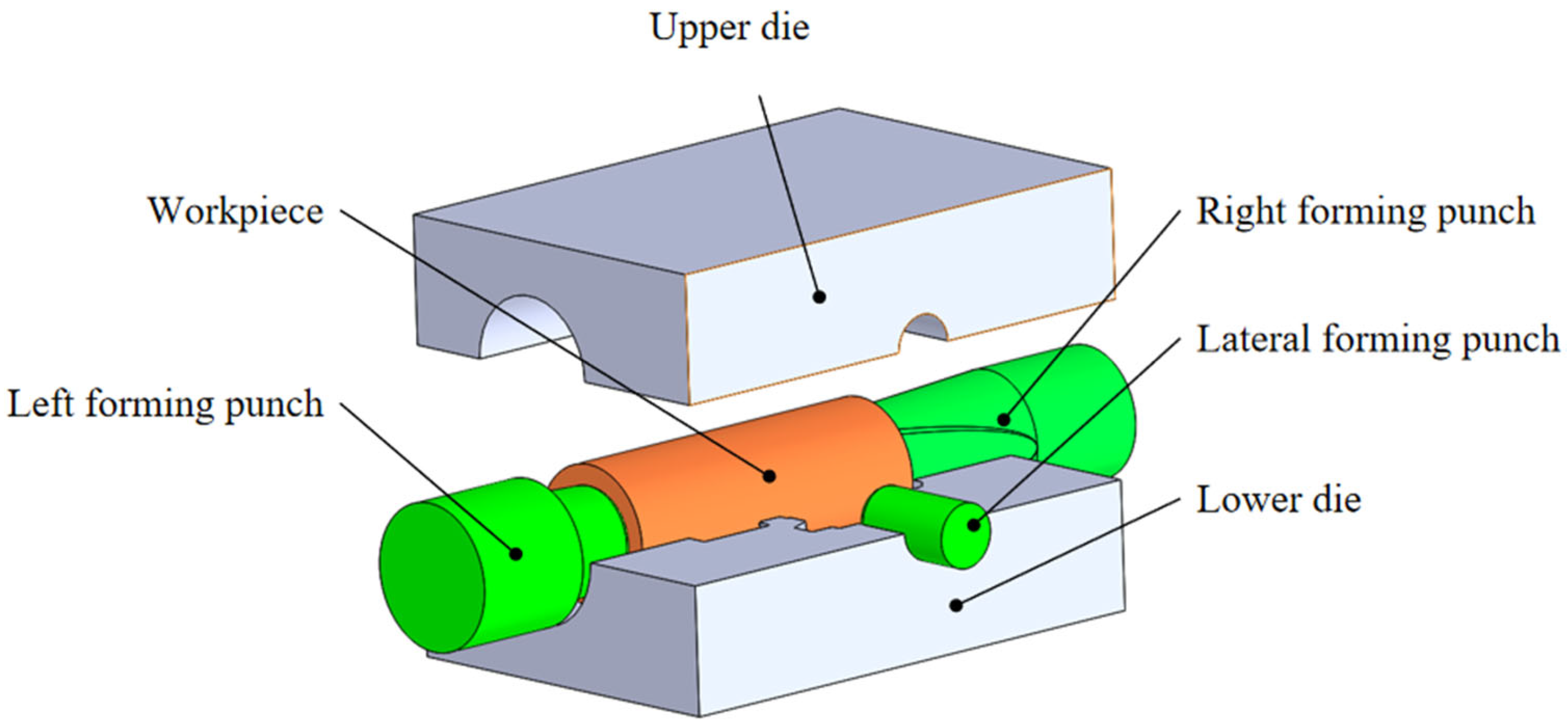
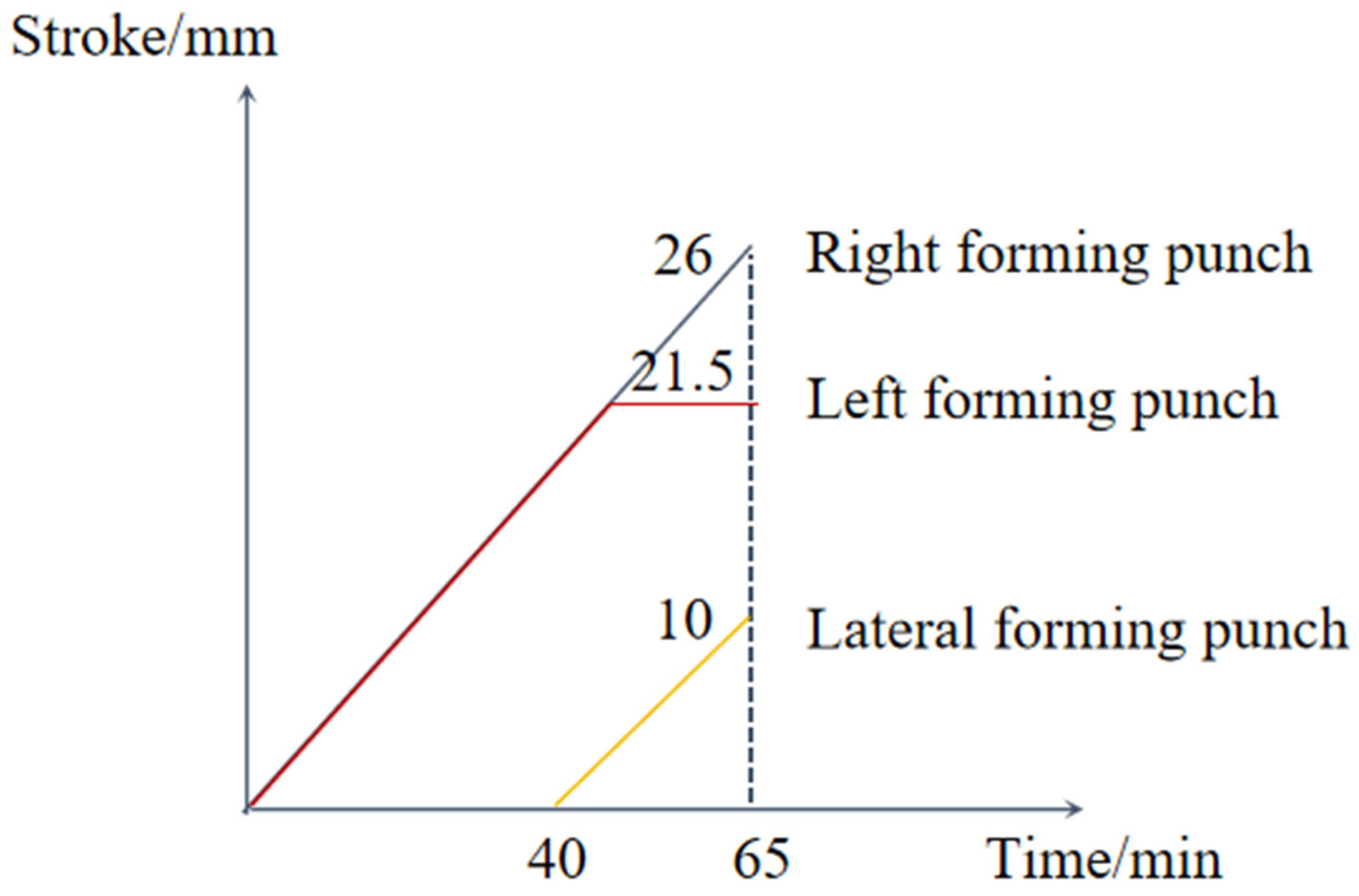
2.2. Finite Element Model
3. Results and Discussion
3.1. Rheological Curve Analysis
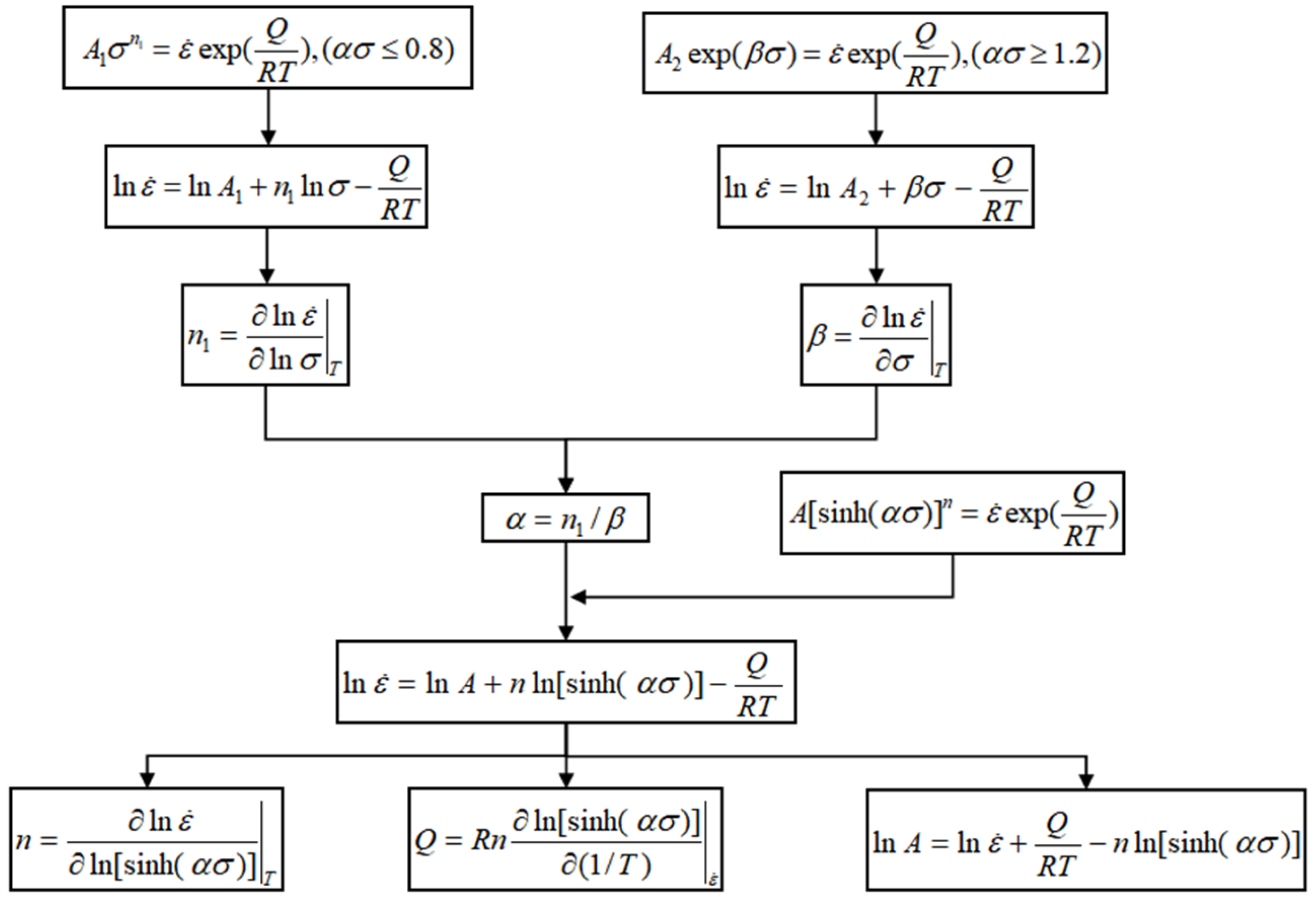
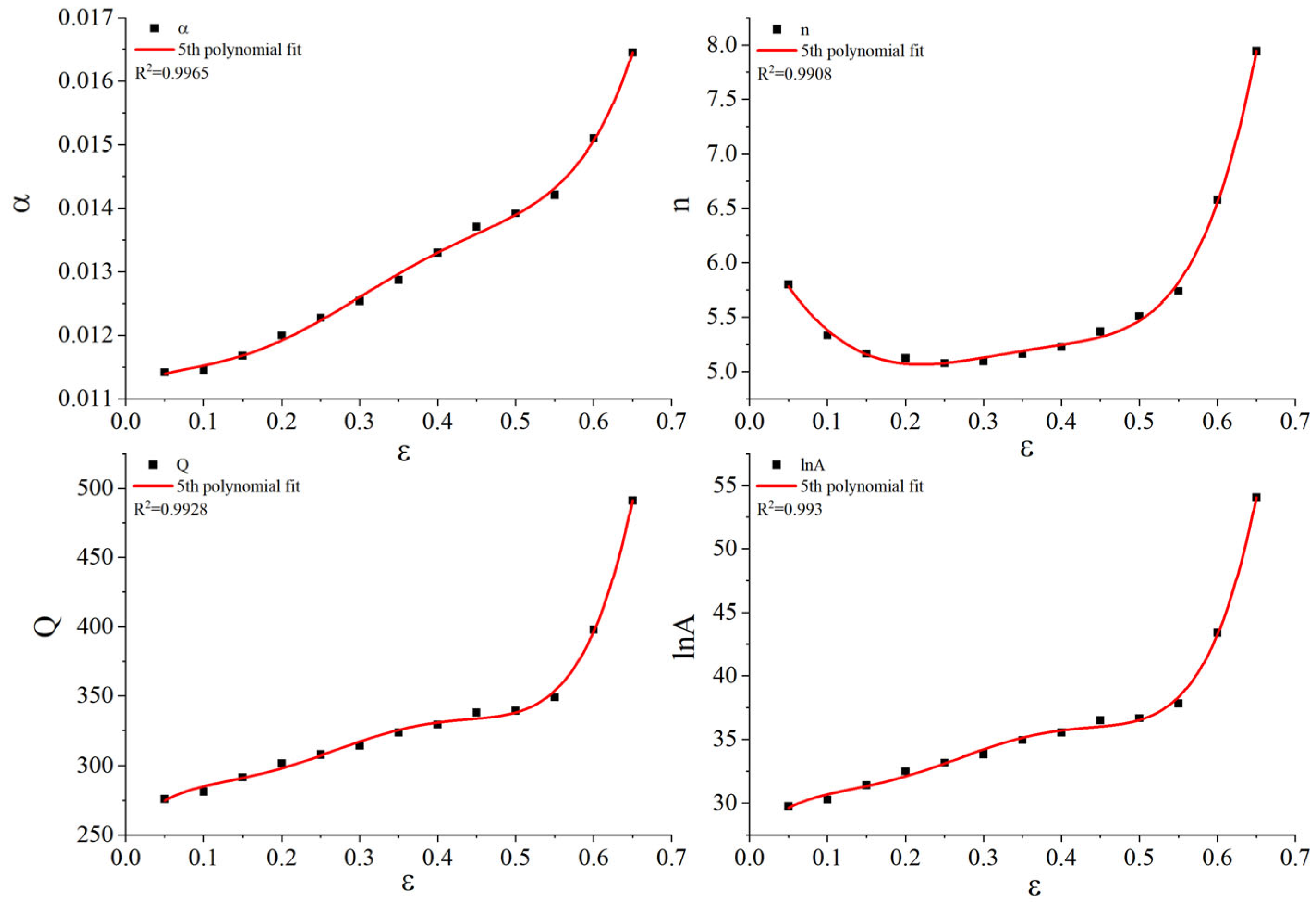
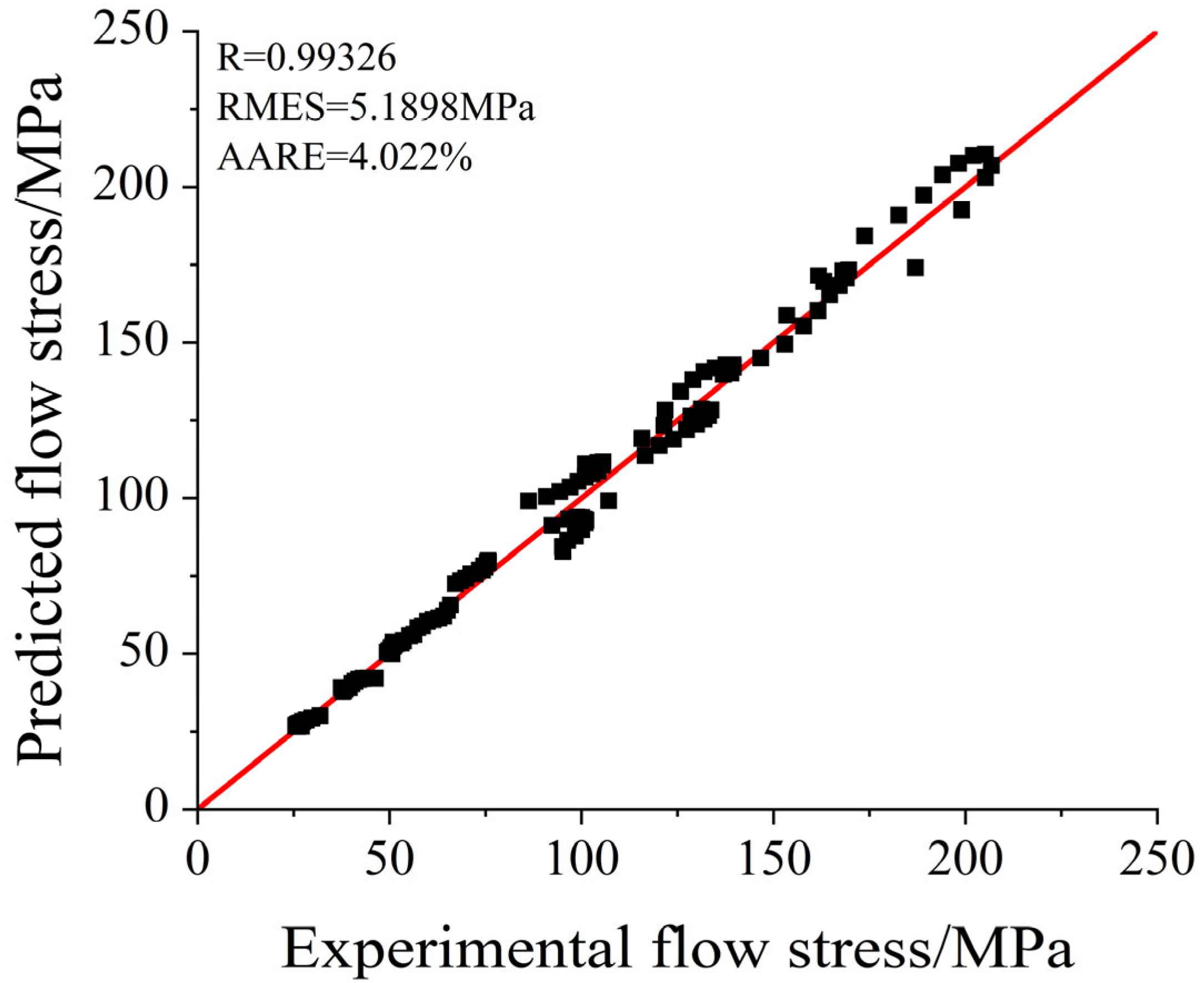
3.2. Construction and Application of Constitutive Equation
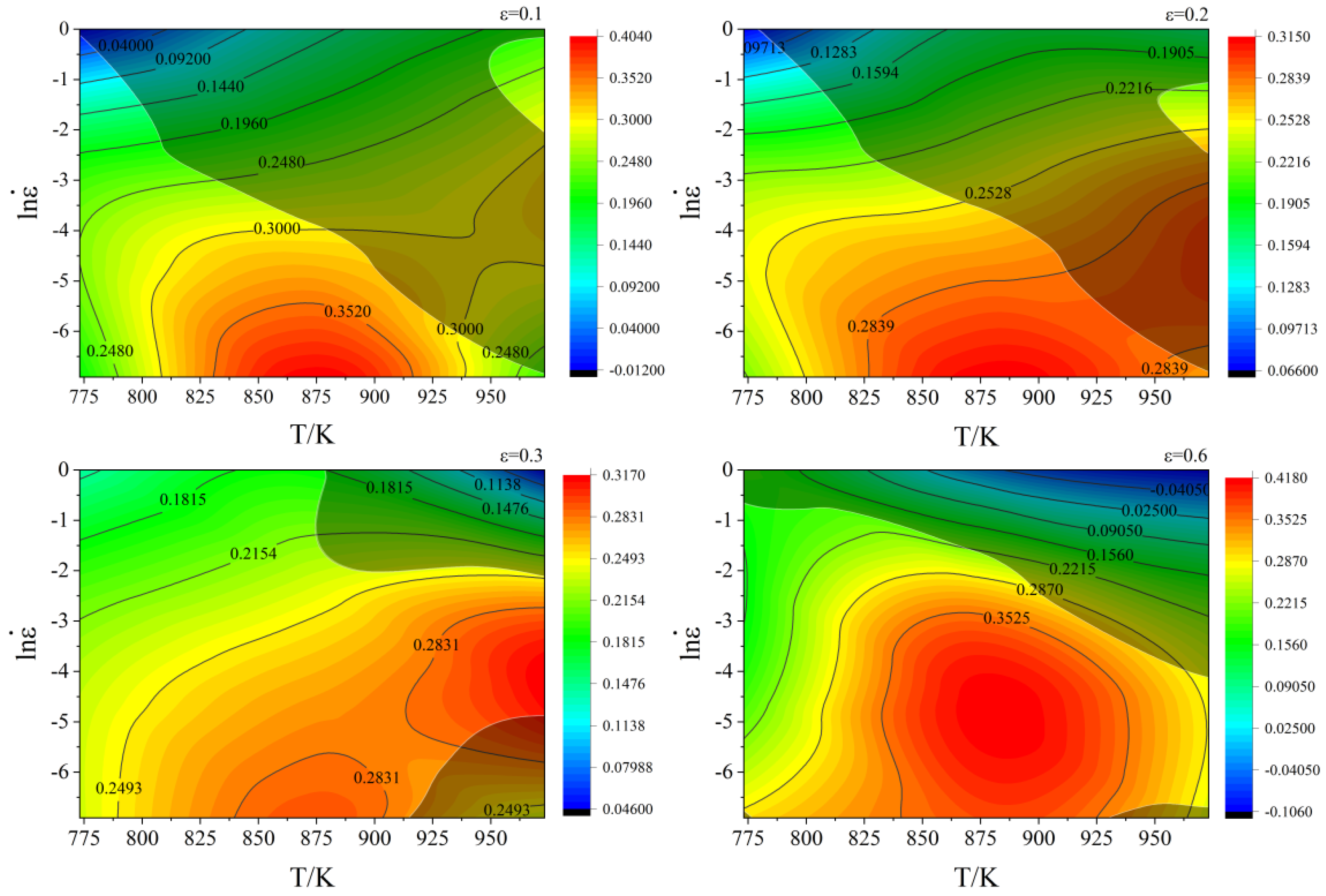
3.3. Construction of Hot Working Diagram
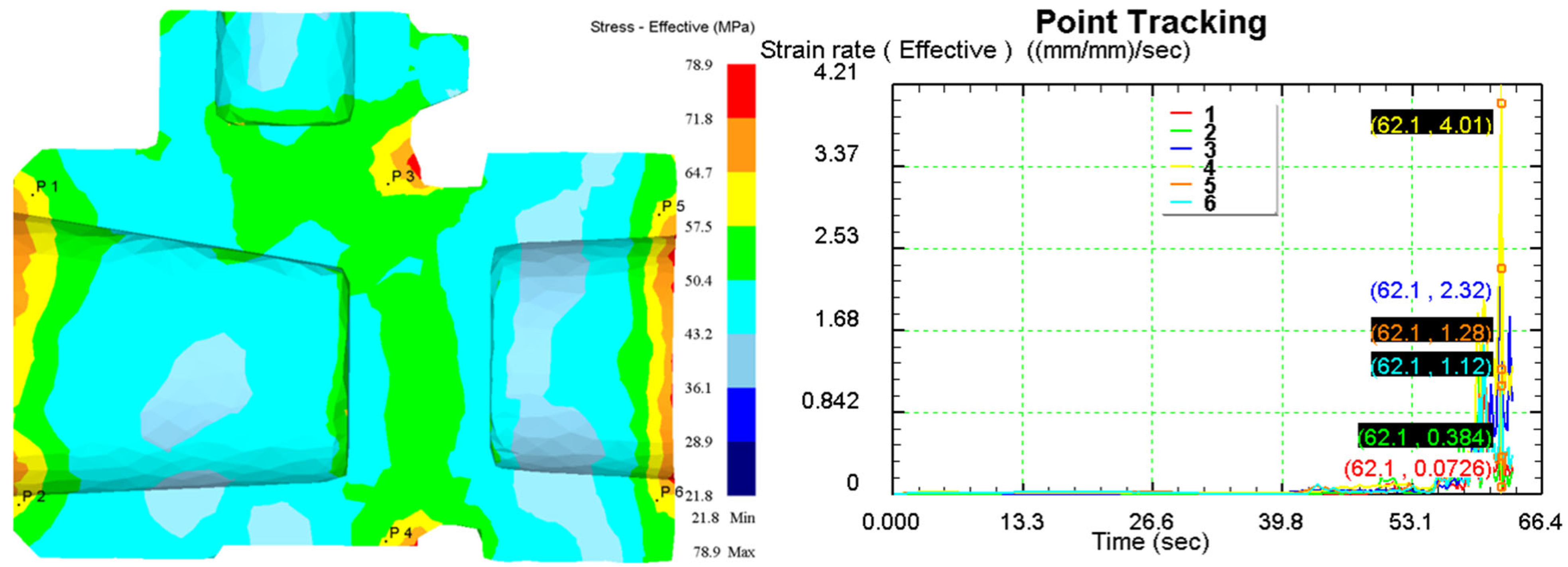
3.4. Valve Body Forging Simulation Verification
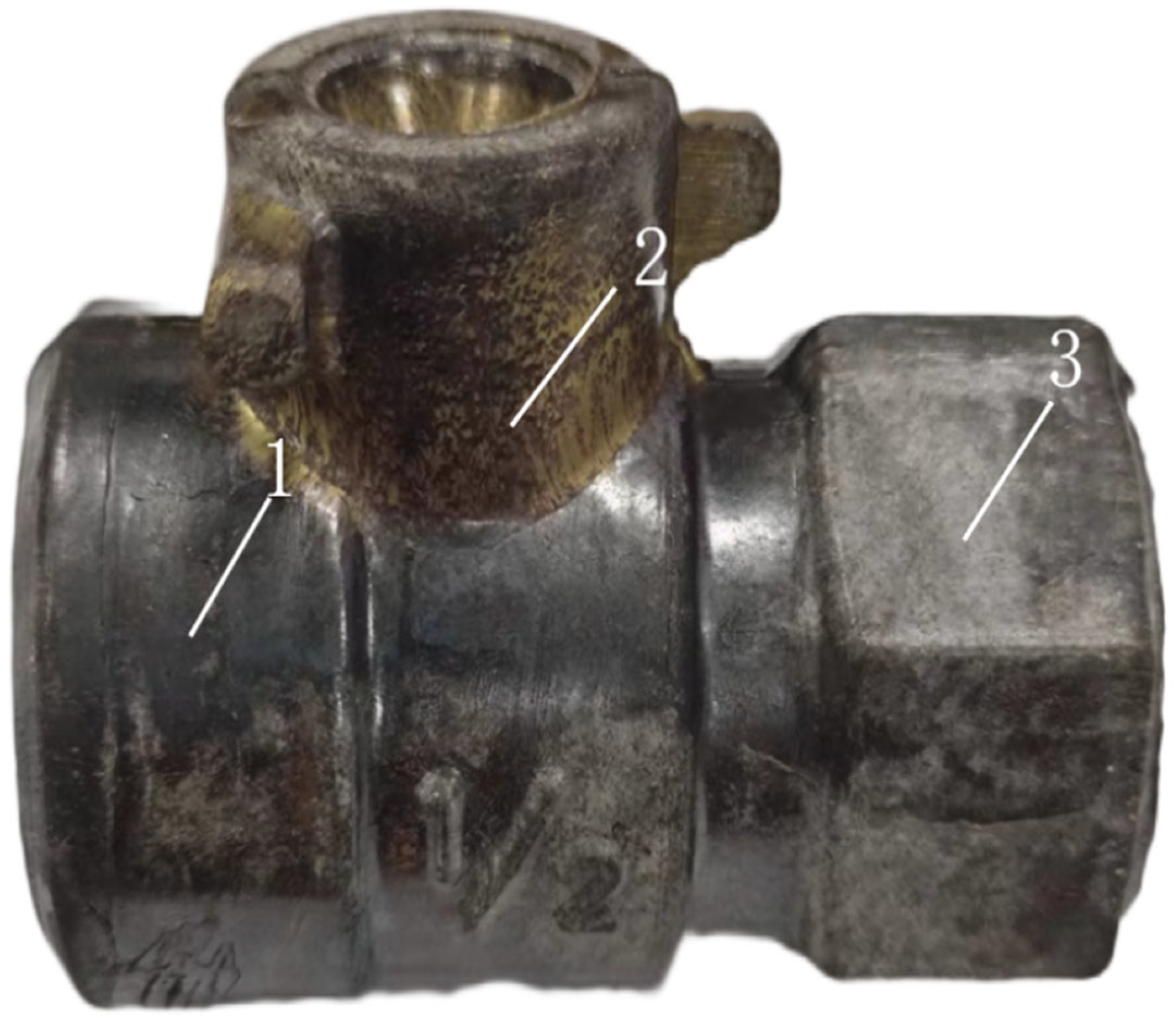
3.5. Tin Bronze Valve Body Trial Production
4. Conclusions
- (1)
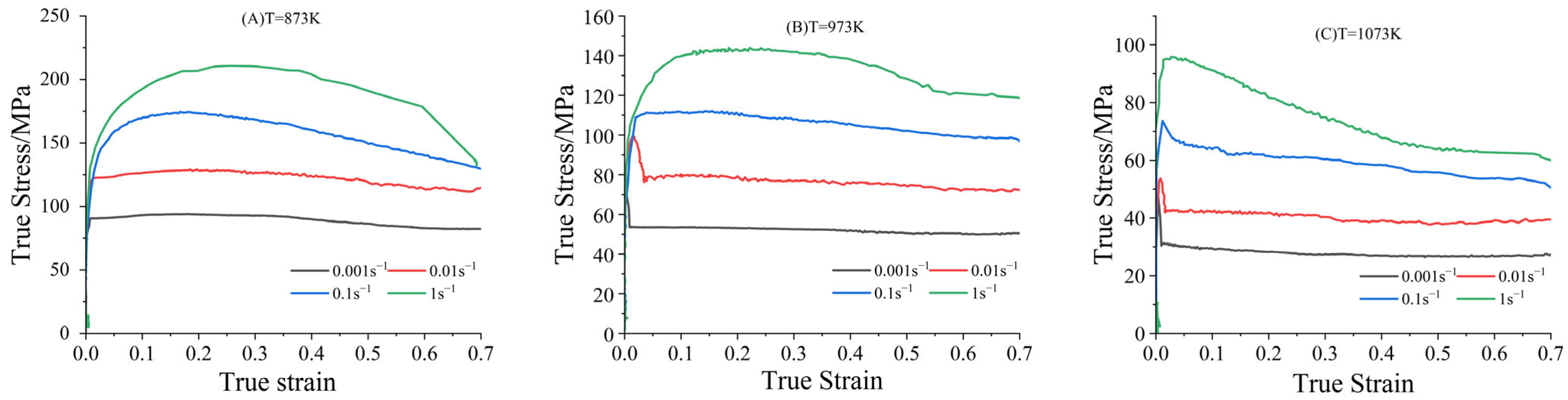
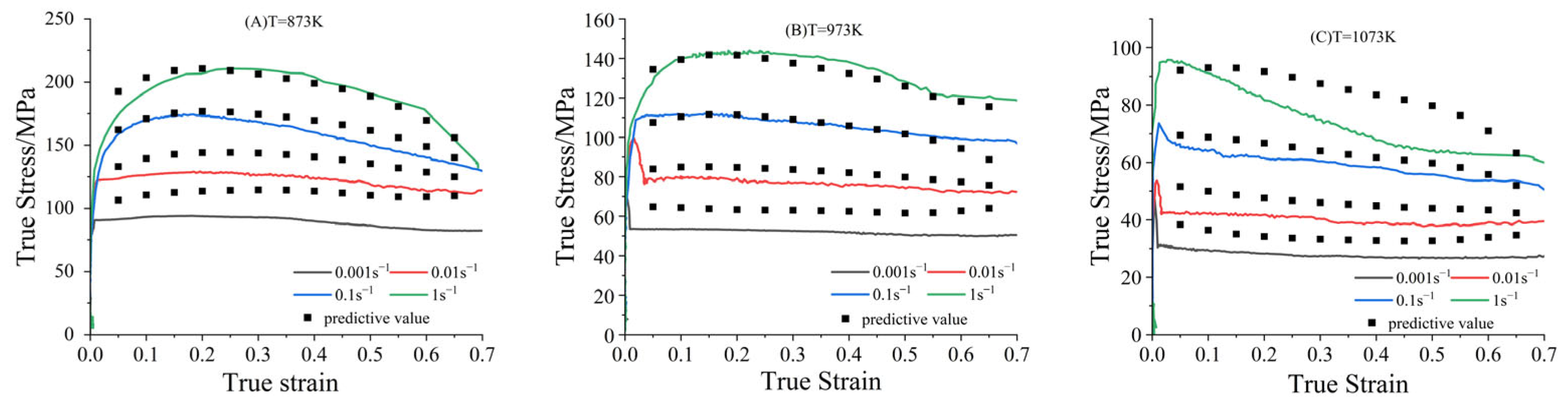
- Flow stress curves for C83600 were obtained via thermal simulation experiments conducted at various deformation temperatures and strain rates. Notably, when the temperature surpasses 973 K, the flow stress curve reaches its peak, indicating significant softening due to the dynamic recrystallization effect, which substantially outweighs work hardening.
- (2)
- Using the hot working diagram, optimal forging process parameters were identified: temperatures ranging from 850 to 900 K and strain rates varying from 0.0067 to 0.0483 s−1. These conditions promote high thermal stability during working, enhance dynamic recovery and recrystallization processes, and facilitate the formation of a fine and uniform microstructure.
- (3)
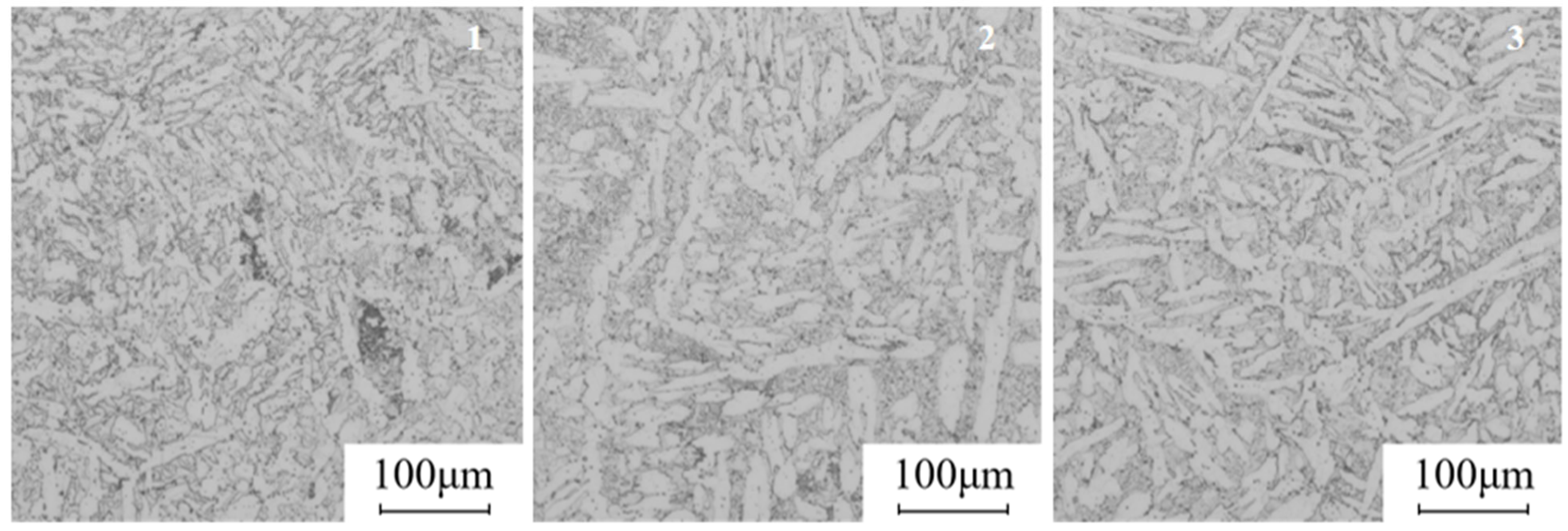
- The valve body forging produced using simulation parameters is completely filled with no signs of underfilling and displays only a minor forging flash bump. The feasibility of the forging process was further substantiated by trial production, which also verified that the microstructural outcomes align with the forging temperatures and strain rates recommended by the hot working diagram.
Author Contributions
Funding
Institutional Review Board Statement
Informed Consent Statement
Data Availability Statement
Conflicts of Interest
References
- Yu, S.D. Improve the compactness of the Tin bronze valve. Foundry 2005, 1, 83–85. [Google Scholar]
- Hu, X.H.; Jiang, W.D. Study on the Casting Process of Metal Mold for Large-scale Copper Sleeve Castings. Foundry Technol. 2005, 9, 834–835. [Google Scholar]
- Dong, Y.J.; Yang, W.Q. Sand Casting Process Design of Tin Bronze Two-Way Cock Valve Shell. Foundry 2022, 71, 779–782. [Google Scholar]
- Wei, L.Q.; Yang, W.Q. Sand Casting Technology of Marine Tin Bronze Four-way Valve Box. Spec. Cast. Nonferrous Alloys 2023, 43, 142–144. [Google Scholar]
- Li, L.H.; Wang, C.G.; Xiao, Z.; Jiang, Y.B.; Wang, Z.Y.; Zhu, Y.X. Numerical Simulation of Tin Bronze Valve Casting Process. J. Netshape Form. Eng. 2024, 16, 231–240. [Google Scholar]
- Xiao, H.; Duan, Z.K.; Li, N.Y.; Xiong, C.; Zhou, R.F.; Lu, D.H.; Jang, Y.H. Effect of Heat Treatment Temperature on Microstructure and Mechanical Properties of Semi-solid Extruded Tin Bronze. Rare Met. Mater. Eng. 2019, 48, 235–241. [Google Scholar]
- Zhang, X.C.; Chen, L.; Xiao, H.; Zhou, Y.H.; Chen, H.; Duan, Z.K. Microstructure Evolution and Mechanical Properties of Semi-Solid Thixotropic Reverse Extrusion Tin Bronze. Rare Met. Mater. Eng. 2022, 51, 2240–2249. [Google Scholar]
- Su, X.B.; Feng, Z.X.; Gao, C.P.; Hao, W.C. Effect of heating temperature on microstructure and mechanical properties for tin bronze after extrusion. Forg. Stamp. Technol. 2017, 42, 156–159. [Google Scholar]
- You, L.; Tan, Z.Y.; Wang, C.; Feng, J. Study on the Casting Process of Tin Bronze Impeller. Foundry 2015, 64, 1005–1007+1012. [Google Scholar]
- Sellars, C.M.; Mctegart, W.J. On the mechanism of hot deformation. Acta Metall. 1966, 14, 1136–1138. [Google Scholar] [CrossRef] [Scilit]
- Wei, D.J.; Liu, R.R.; Zuo, C.K.; Zhou, H.T. High temperature plastic deformation constitutive equation of a new alloy for Piston ring. Met. Mater. Int. 2020, 26, 739–746. [Google Scholar] [CrossRef] [Scilit]
- Liu, Y.; Li, M.; Ren, X.W.; Xiao, Z.B.; Zhang, X.Y.; Huang, Y.C. Flow stress prediction of Hastelloy C-276 alloy using modified Zerilli−Armstrong, Johnson−Cook and Arrhenius-type constitutive models. Trans. Nonferrous Met. Soc. China 2020, 11, 3031–3042. [Google Scholar] [CrossRef] [Scilit]
- Chen, T.G.; Yao, Y.; Jia, Y.; Su, B.; Liu, G.Y.; Zeng, B. Hot deformation constitutive equation and plastic instability of 30Cr4MoNiv ultra-high-strength steel. Metals 2021, 11, 769. [Google Scholar] [CrossRef] [Scilit]
- Sun, H.L.; Yin, J.; Ma, R.; Jin, X. Constitutive model of high-temperature flow behavior of HPb59-1 copper alloy. J. Plast. Eng. 2022, 29, 157–164. [Google Scholar]
- He, L.F. Forming Die and Technology Design for Brass Vale Body by FEM Simulation. Ph.D. Thesis, Shandong University, Jinan, China, 2008. [Google Scholar]
- Zhang, W. Research experiment of copper precision forging die based on DEFORM. J. Jiamusi Univ. Nat. Sci. Ed. 2011, 29, 83–88. [Google Scholar]
- Roebuck, B.; Lord, J.D.; Varma, R.K.; Loveday, M.S. Guidelines for the measurement of flow stress in hot axisymmetric compression tests. NPL Rep. CMMT 1997, 1, 1–19. [Google Scholar]
- Zhao, Y. Research on Forging Process Design and Metal Deformation Laws of Aluminum Alloy Axle Box. Ph.D. Thesis, Shandong University, Jinan, China, 2018. [Google Scholar]
- Conte, A.L. Constitutive equations to correlate uniaxial creep behaviour vs stress and temperature for inconel 718. Mater. High Temp. 2023, 40, 395–411. [Google Scholar] [CrossRef] [Scilit]
- Ahmedabadi, P. Nonlinear multivariate constitutive equations for modeling hot deformation behavior. Mater. Res. Express 2023, 10, 096513. [Google Scholar] [CrossRef] [Scilit]
- Mosleh, A.O.; Mikhaylovskaya, V.A.; Kotov, D.A.; Portnoy, V.K. Arrhenius-Type Constitutive Equation Model of Superplastic Deformation Behaviour of Different Titanium Based Alloys. Defect Diffus. Forum 2018, 385, 45–52. [Google Scholar] [CrossRef] [Scilit]
- Raja, N.; Kumar, A.; Patel, S.K. Hot deformation and microstructural evolution of ultrasonically fabricated as-cast Al-7.3Zn-2.2Mg-2Cu alloy. Mater. Charact. 2023, 206 Pt A, 113404. [Google Scholar] [CrossRef] [Scilit]
- Joshua, T.O.; Alaneme, K.K.; Kareem, A.S.; Bodunrin, M.O. Hot deformation characteristics and processing map analysis of Al-Zn/stainless steel particles-based composite. J. Alloys Metall. Syst. 2024, 7, 100086. [Google Scholar] [CrossRef] [Scilit]
- Li, L.; Ma, G.D.; Huang, H.G.; Xiao, H.; Yuan, Z.; Li, Y.; Zhou, R. Flow behavior analysis and prediction of flow instability of a lamellar TA10 titanium alloy. Mater. Charact. 2022, 194, 112403. [Google Scholar] [CrossRef] [Scilit]
- Marek, W.; Łukasz, L.; Aneta, S.Ł. Application of processing maps and numerical modelling for identification of parameters and limitations of hot forging process of 80MnSi8-6 steel. Arch. Civ. Mech. Eng. 2023, 23, 240–248. [Google Scholar]




| Chemical Composition | Cu | Sn | Zn | Pb | Fe | Al | Te | Si | Ni | P | S |
|---|---|---|---|---|---|---|---|---|---|---|---|
| Content (%) | Bal | 5.0 | 5.0 | 5.0 | 0.3 | 0.01 | 0.25 | 0.01 | 2.5 | 0.05 | 0.1 |
| Parameters | Value |
|---|---|
| Extruding velocity (mm/s) | 0.2 |
| Initial forging temperature (K) | 923 |
| Mold temperature (K) | 573 |
| Heat conductivity coefficient (N/s/mm/°C) | 4 |
| Friction coefficient | 0.2 |
| Blank Material | C83600 |
| Mold material | AISI-H-13 |
| n | Q | lnA | |||||
|---|---|---|---|---|---|---|---|
| 0.01116 | 6.35582 | 249.69938 | 26.96271 | ||||
| 0.00697 | −13.19679 | 751.24089 | 80.17521 | ||||
| −0.06228 | 31.25312 | −6339.93351 | −686.977201 | ||||
| 0.36319 | 63.75671 | 28746.06675 | 3155.2434 | ||||
| −0.76296 | −314.68161 | −57157.04415 | −6328.19644 | ||||
| 0.54751 | 307.03771 | 40853.68326 | 4553.59336 |
| Number | Point 1 | Point 2 | Point 3 | Point 4 | Point 5 | Point 6 |
|---|---|---|---|---|---|---|
| Value | 0.00889 | 0.01129 | 0.0234 | 0.0386 | 0.0152 | 0.0160 |
Disclaimer/Publisher’s Note: The statements, opinions and data contained in all publications are solely those of the individual author(s) and contributor(s) and not of MDPI and/or the editor(s). MDPI and/or the editor(s) disclaim responsibility for any injury to people or property resulting from any ideas, methods, instructions or products referred to in the content. |
© 2025 by the authors. Licensee MDPI, Basel, Switzerland. This article is an open access article distributed under the terms and conditions of the Creative Commons Attribution (CC BY) license (https://creativecommons.org/licenses/by/4.0/).
Share and Cite
Yang, J.; Zeng, Y.; Chen, Y.; Huang, L.; Liu, W.; Wang, C.; Qin, X. Research on Forging Process of C83600 Tin Bronze Valve Body Based on Rheological Behavior and Hot Processing Diagram. Materials 2025, 18, 2872. https://doi.org/10.3390/ma18122872
Yang J, Zeng Y, Chen Y, Huang L, Liu W, Wang C, Qin X. Research on Forging Process of C83600 Tin Bronze Valve Body Based on Rheological Behavior and Hot Processing Diagram. Materials. 2025; 18(12):2872. https://doi.org/10.3390/ma18122872
Chicago/Turabian StyleYang, Jian, Yangbiao Zeng, Yuhang Chen, Lirong Huang, Wen Liu, Chaoyang Wang, and Xiao Qin. 2025. "Research on Forging Process of C83600 Tin Bronze Valve Body Based on Rheological Behavior and Hot Processing Diagram" Materials 18, no. 12: 2872. https://doi.org/10.3390/ma18122872
APA StyleYang, J., Zeng, Y., Chen, Y., Huang, L., Liu, W., Wang, C., & Qin, X. (2025). Research on Forging Process of C83600 Tin Bronze Valve Body Based on Rheological Behavior and Hot Processing Diagram. Materials, 18(12), 2872. https://doi.org/10.3390/ma18122872