Article

Effect of Polishing Systems on the Surface Roughness and Color Stability of Aged and Stained Bulk-Fill Resin Composites


Faculty of Dentistry, Department of Restorative Dentistry, Near East University, 99138 Nicosia, Türkiye
*
Author to whom correspondence should be addressed.
Materials 2024, 17(14), 3576; https://doi.org/10.3390/ma17143576
Submission received: 1 July 2024 / Revised: 11 July 2024 / Accepted: 17 July 2024 / Published: 19 July 2024

Abstract

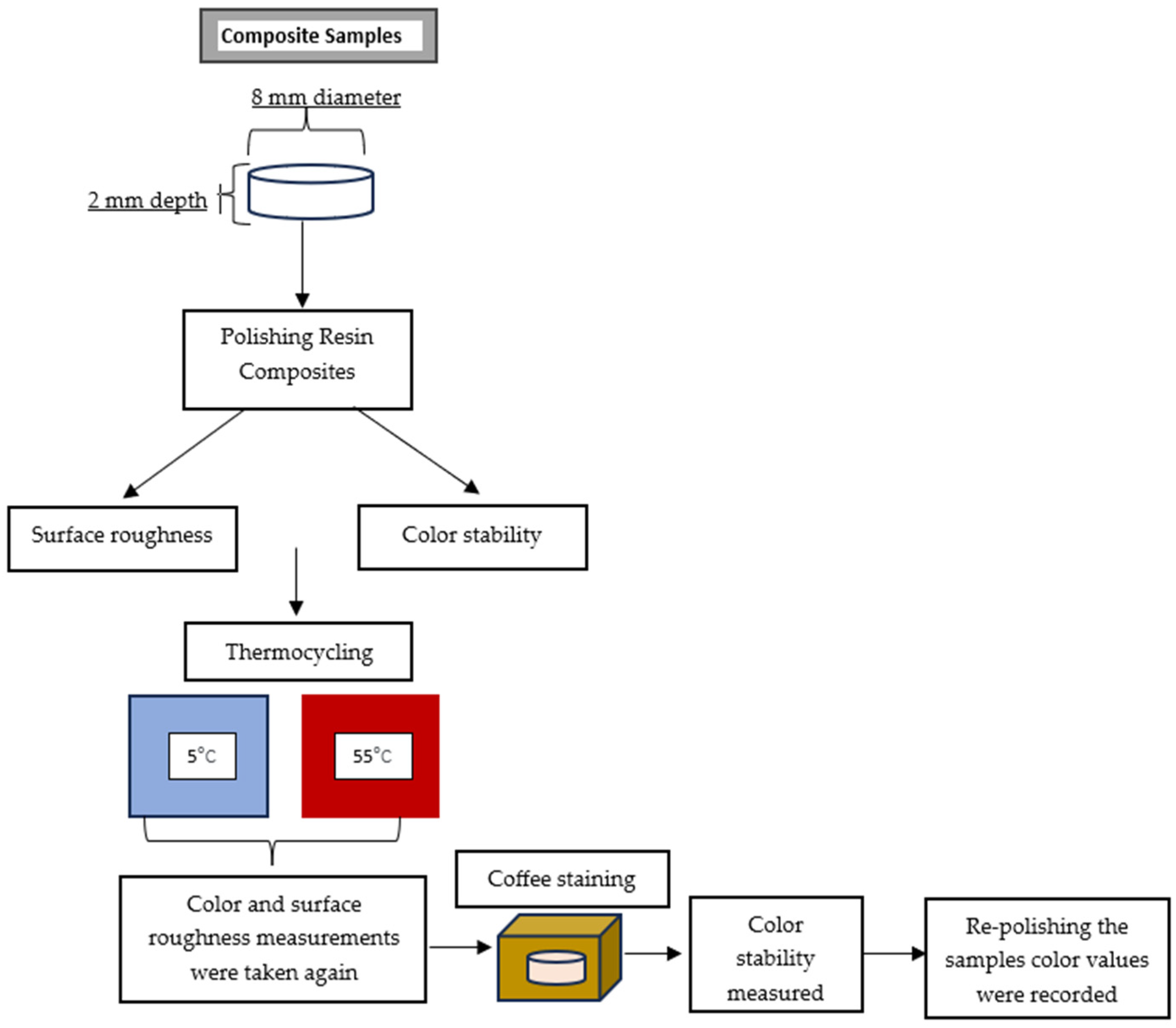
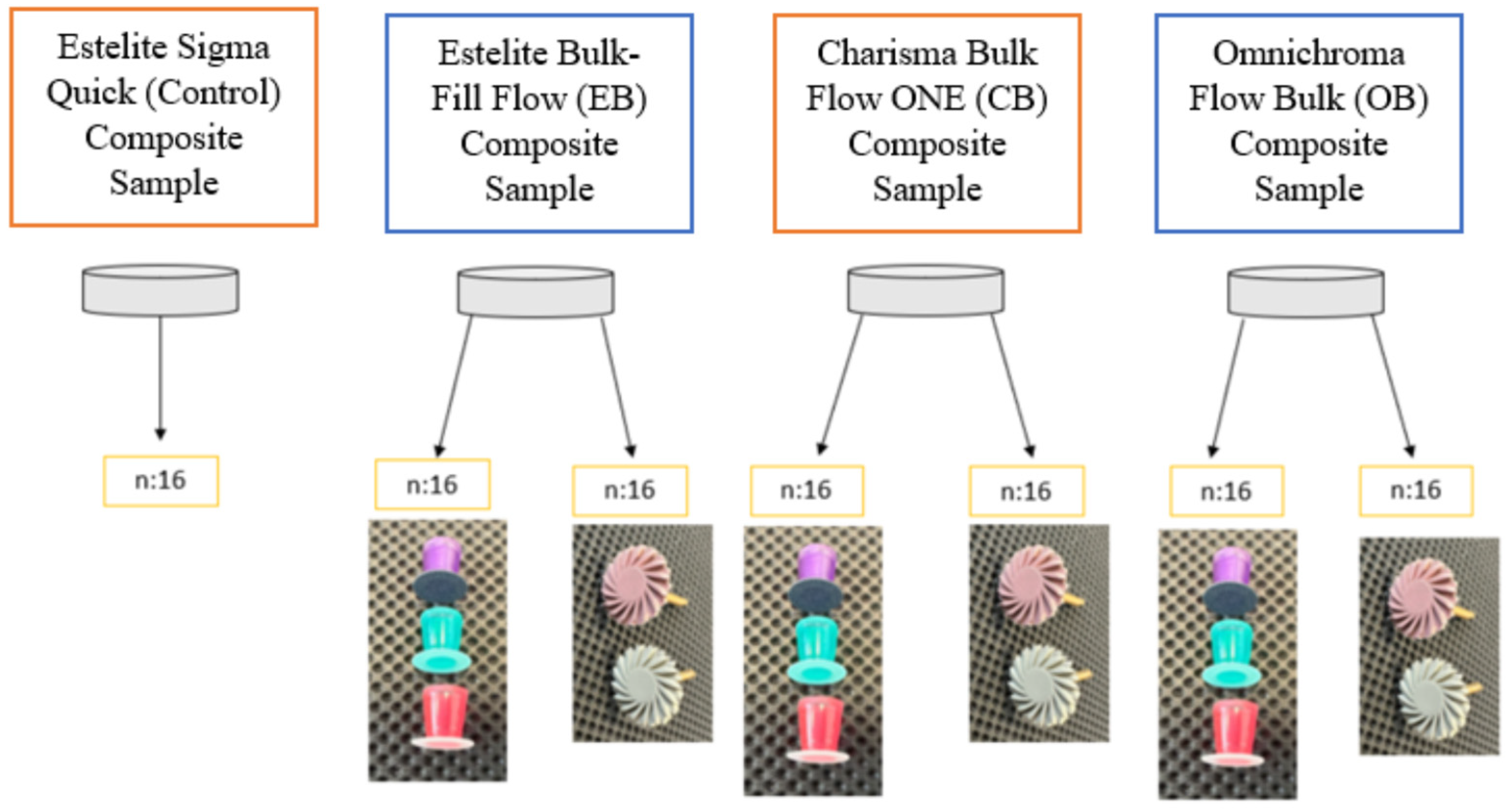
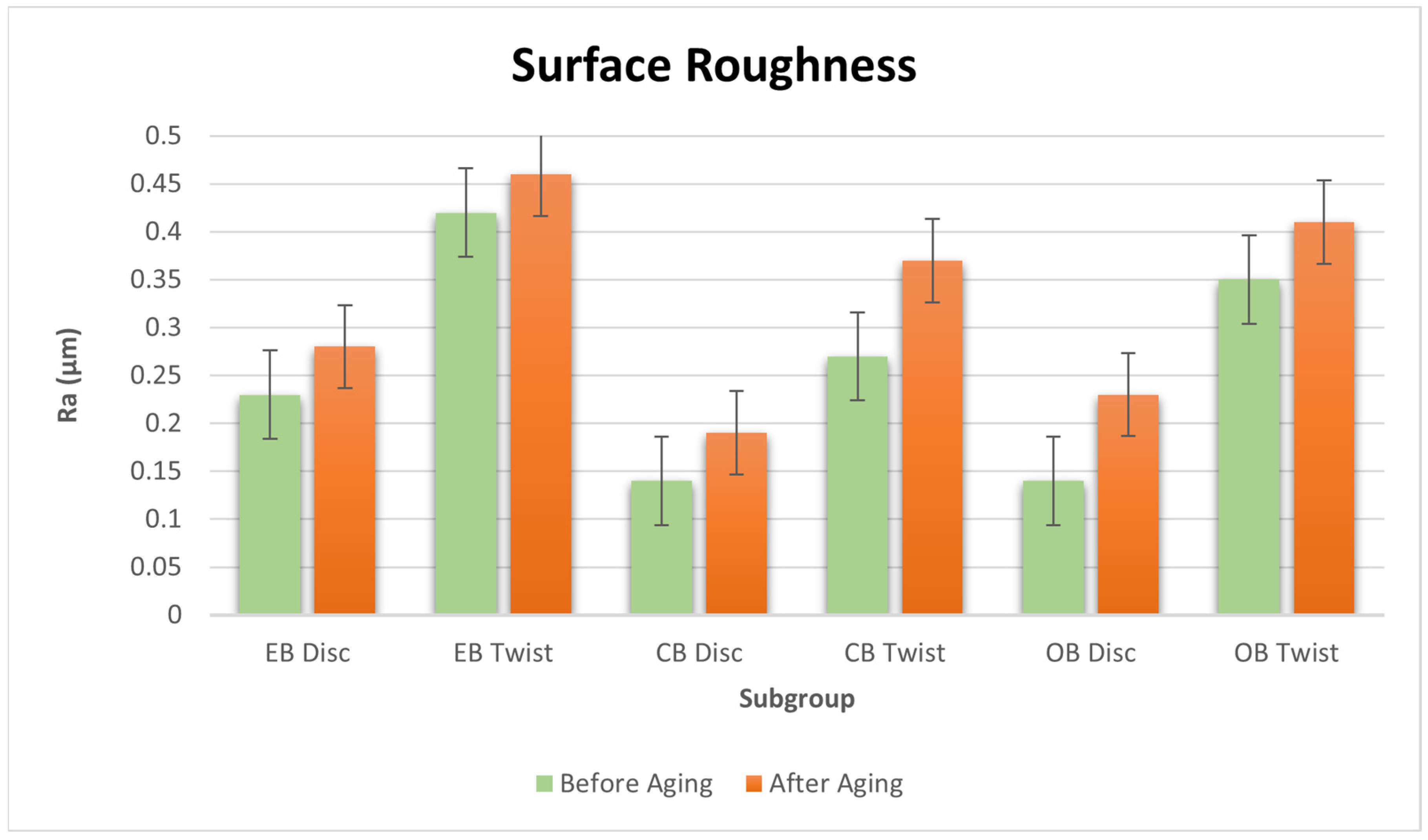
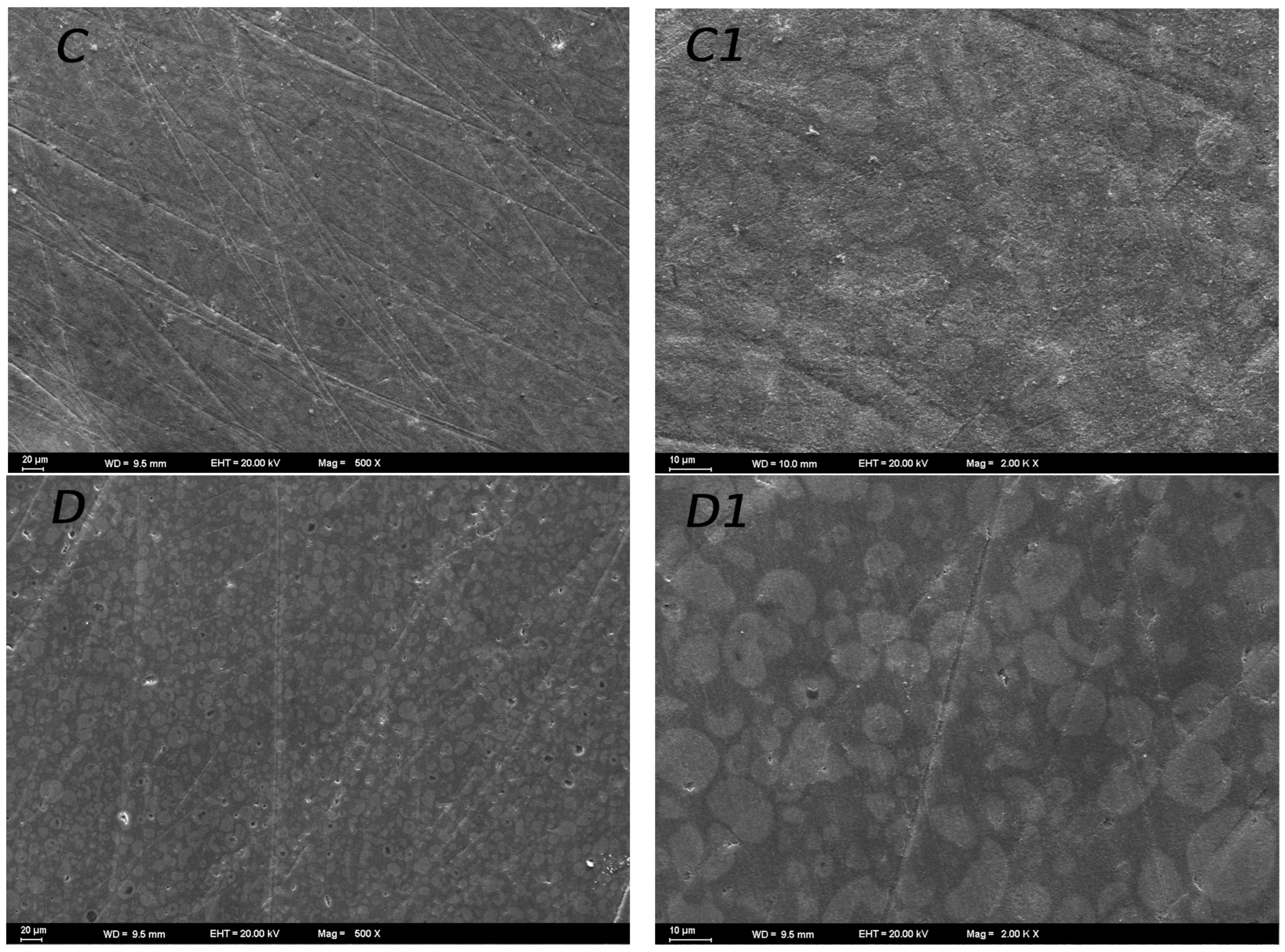
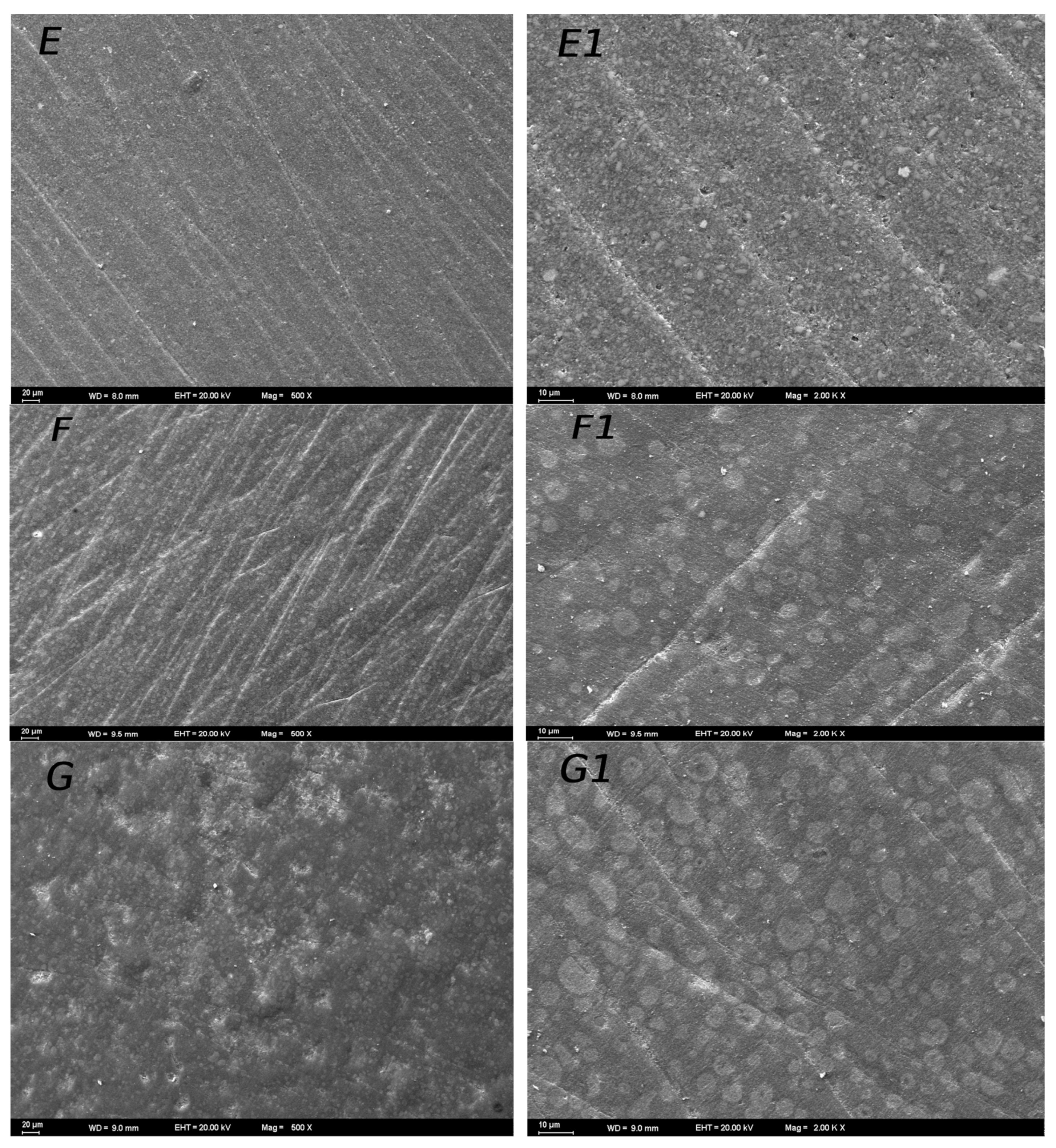
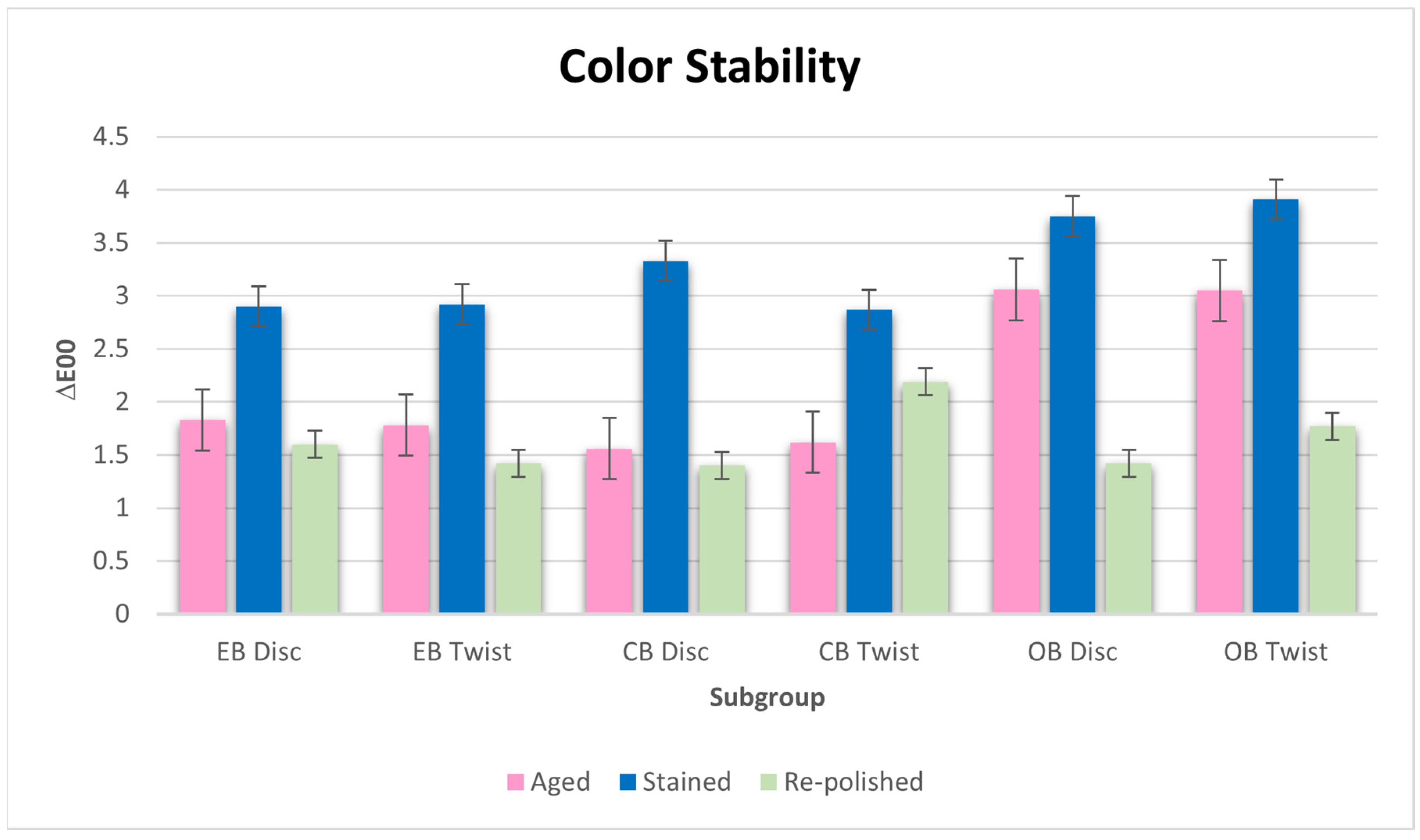
The aim of this study is to investigate how two different polishing techniques affect the color stability, surface roughness, and changes in surface morphology of aged and coffee-stained bulk-fill resin composites. A total of 112 disc-shaped samples were prepared using Omnichroma Flow Bulk (OB), Charisma Bulk Flow One (CB), Estelite Bulk Fill Flow (EB), and Estelite Sigma Quick (control). Samples were divided into two subgroups (n = 16) and aged using thermocycling. A profilometer was used to measure the surface roughness (Ra) and a spectrophotometer was used for color stability (ΔE00). The EB group had the highest Ra values both before aging (disc: 0.23 ± 0.05, twist: 0.42 ± 0.05) and after aging (discs: 0.28 ± 0.04, twist: 0.46 ± 0.05). The OB group had the highest ΔE00 values before and after aging (discs: 3.06 ± 0.54, twist 3.05 ± 0.41) and the highest after coffee-staining (discs: 3.75 ± 0.70, twist: 3.91 ± 0.57). Re-polishing reduced the ΔE00 values in all materials but did not restore all to clinically acceptable levels. According to the results of this study, it can be concluded that the surface roughness and color stability of resin composites are notably influenced by the polishing technique, aging process, and coffee staining. Specimens that were polished using the multi-stage Super-Snap discs consistently exhibited smoother surfaces across all bulk-fill resin composites compared to those polished with the two-stage Diacomp plus Twist.
Keywords: single-shade bulk-fill; aging; SEM; surface roughness; color stability; polishing single-shade bulk-fill; aging; SEM; surface roughness; color stability; polishing