Article

A Hydration Model to Evaluate the Properties of Cement–Quartz Powder Hybrid Concrete

1
Department of Architectural Engineering, Kangwon National University, Chuncheon-si 24341, Republic of Korea
2
Department of Integrated Energy and Infra System, Kangwon National University, Chuncheon-si 24341, Republic of Korea
*
Authors to whom correspondence should be addressed.
Materials 2024, 17(11), 2769; https://doi.org/10.3390/ma17112769
Submission received: 18 May 2024 / Revised: 3 June 2024 / Accepted: 5 June 2024 / Published: 6 June 2024
(This article belongs to the Section Construction and Building Materials)

Abstract

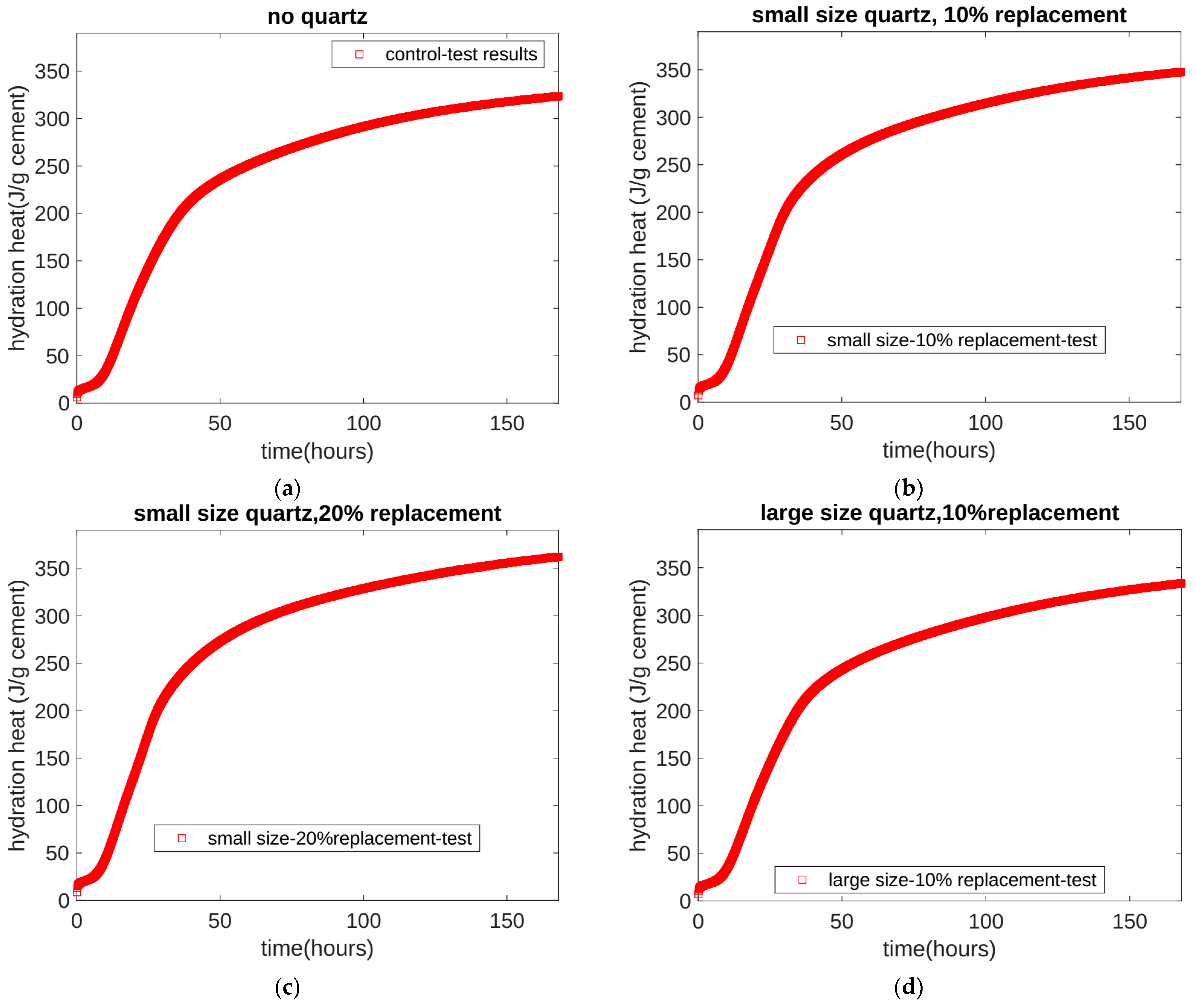
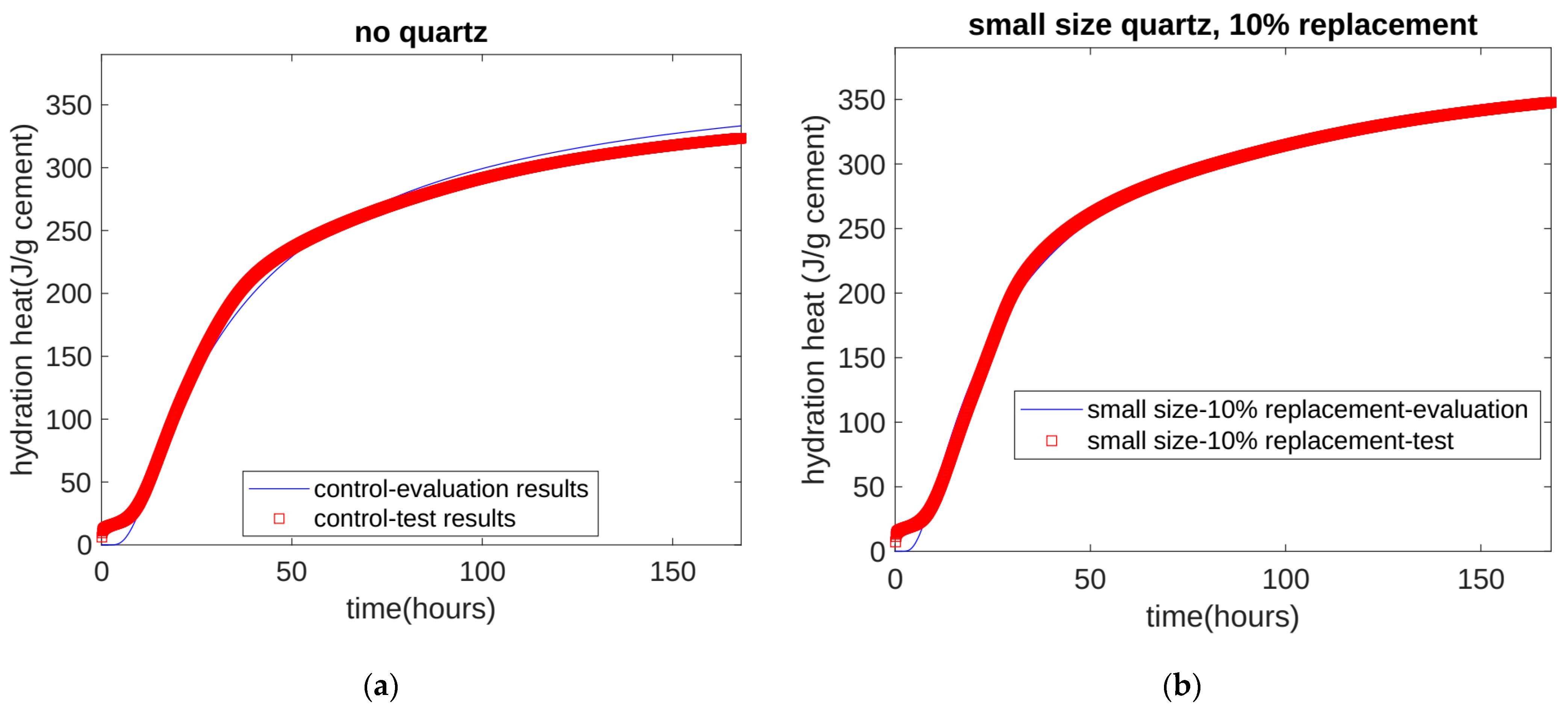
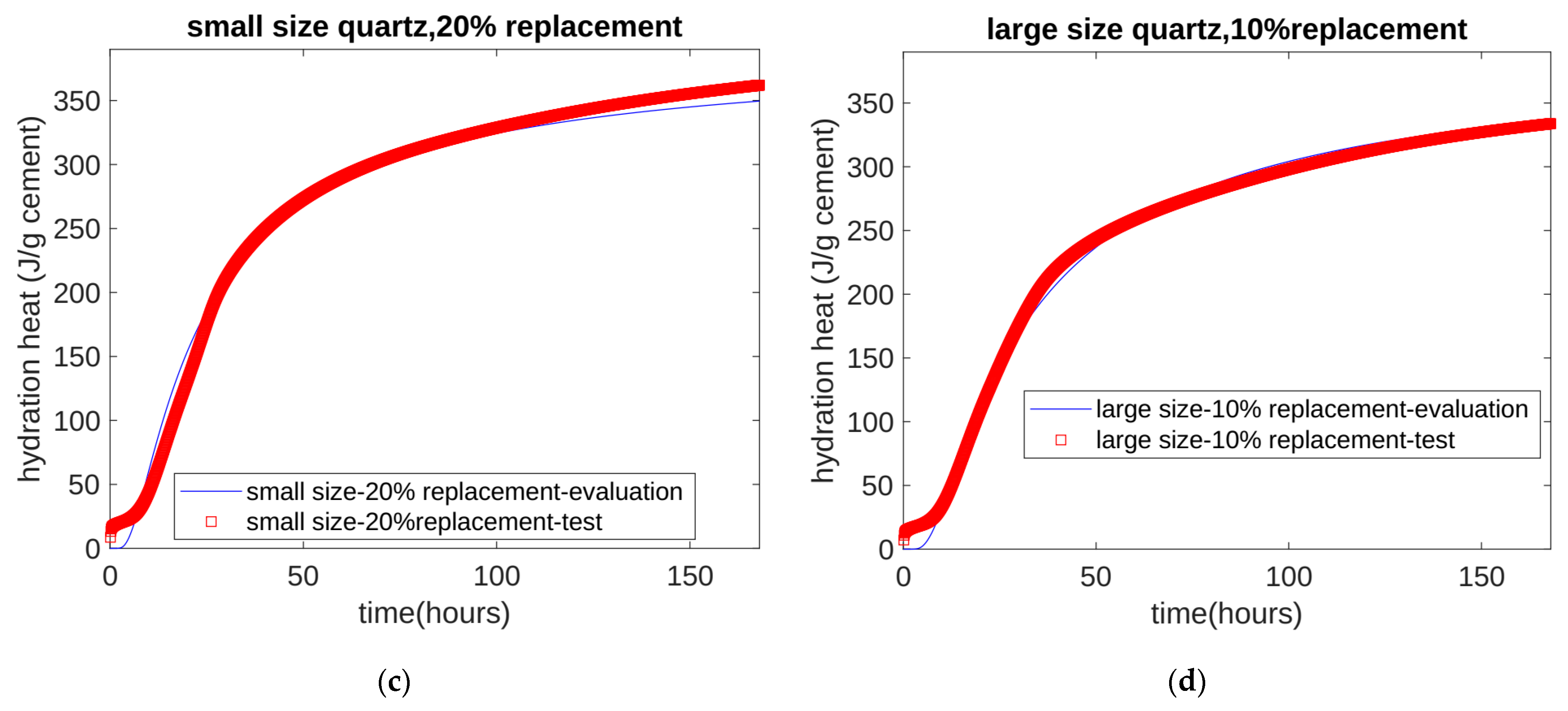
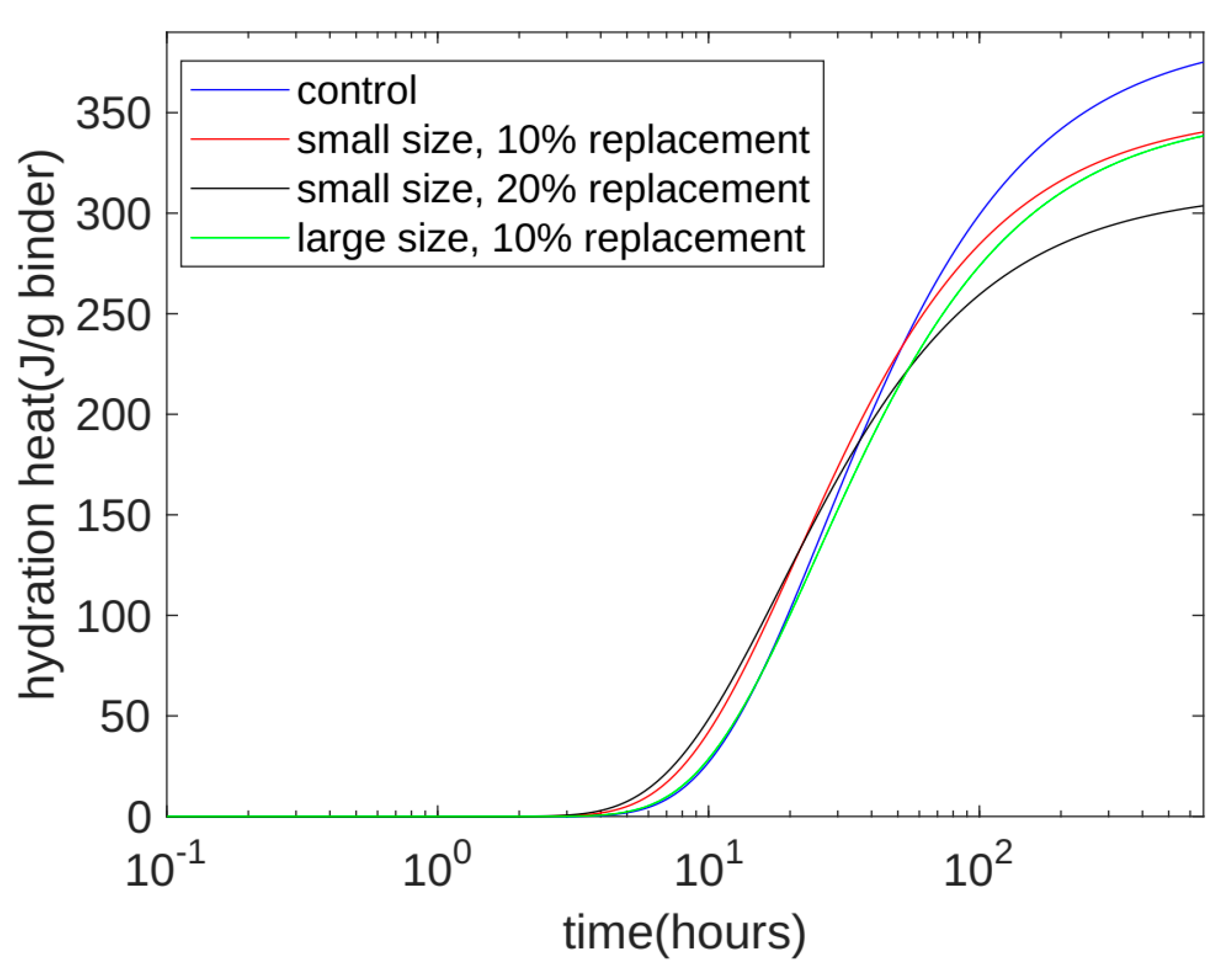
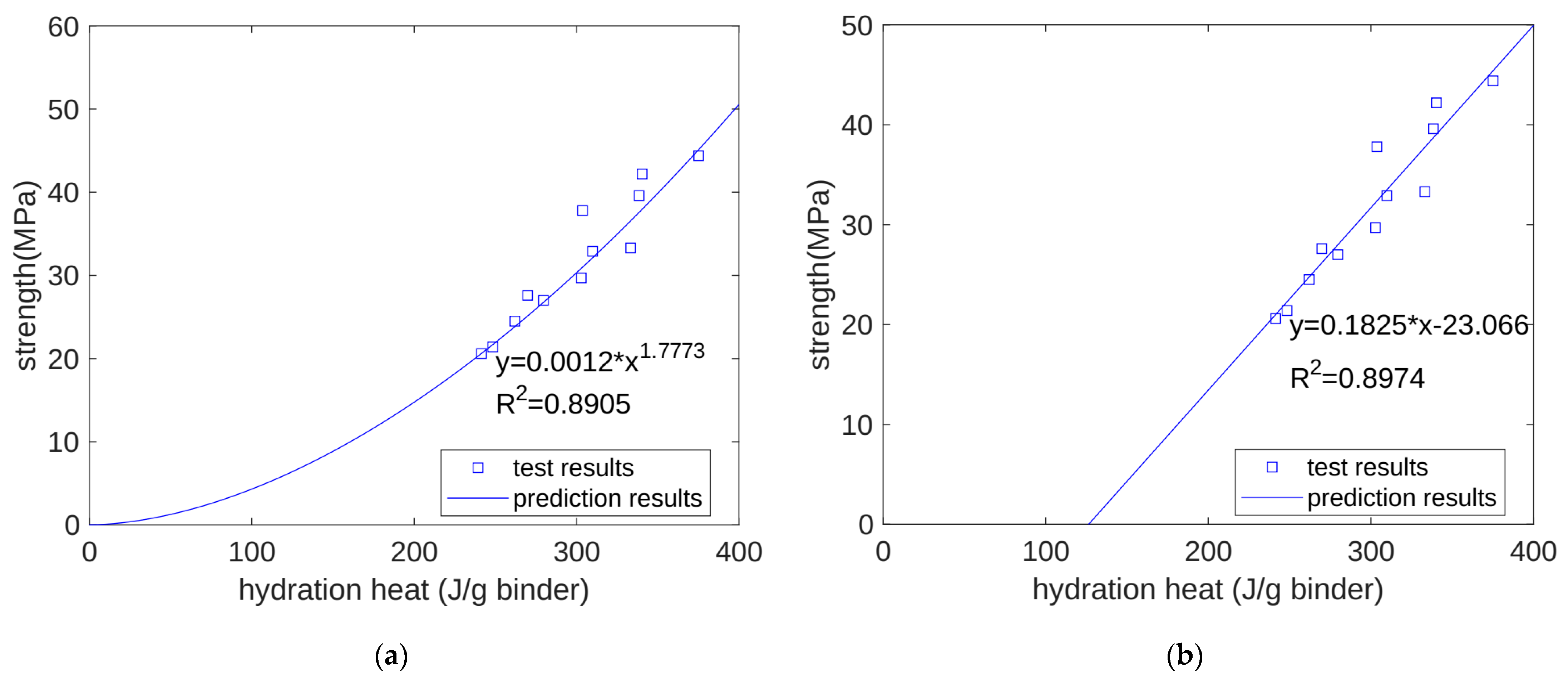
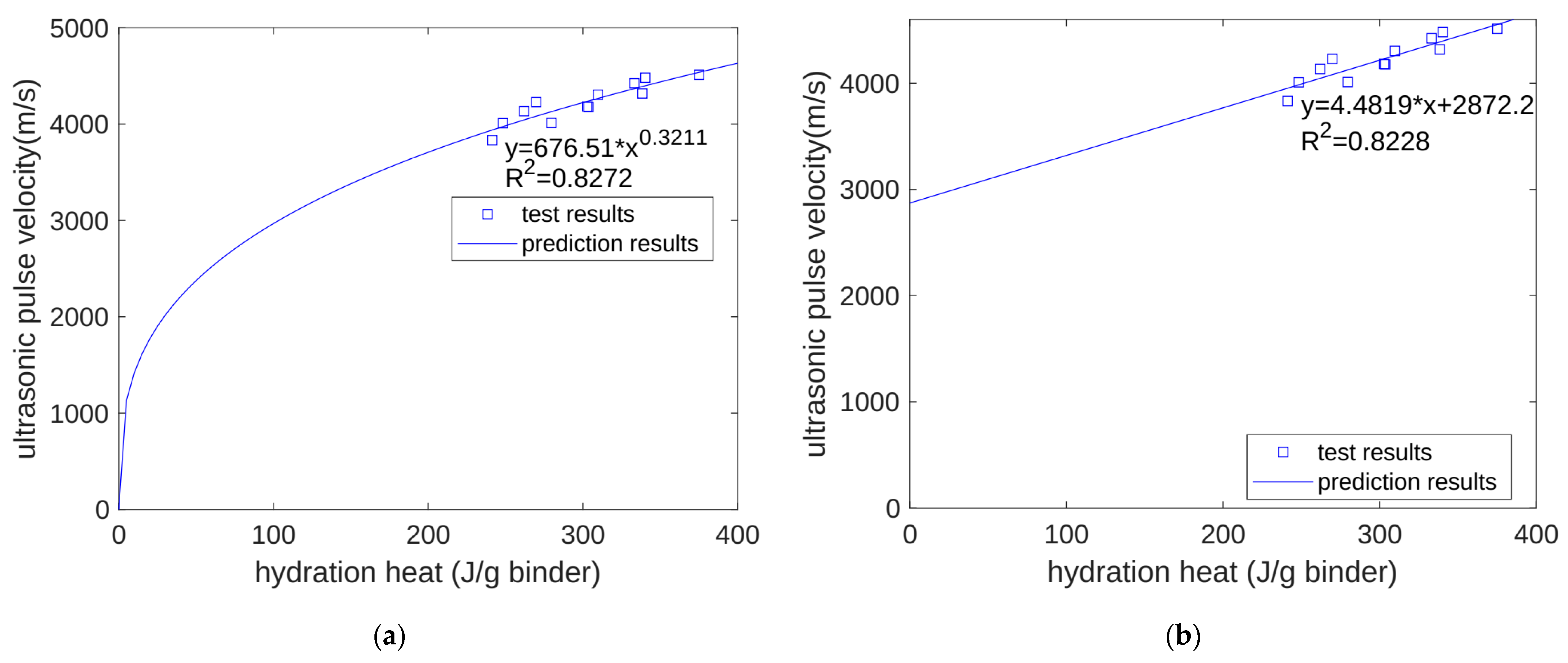
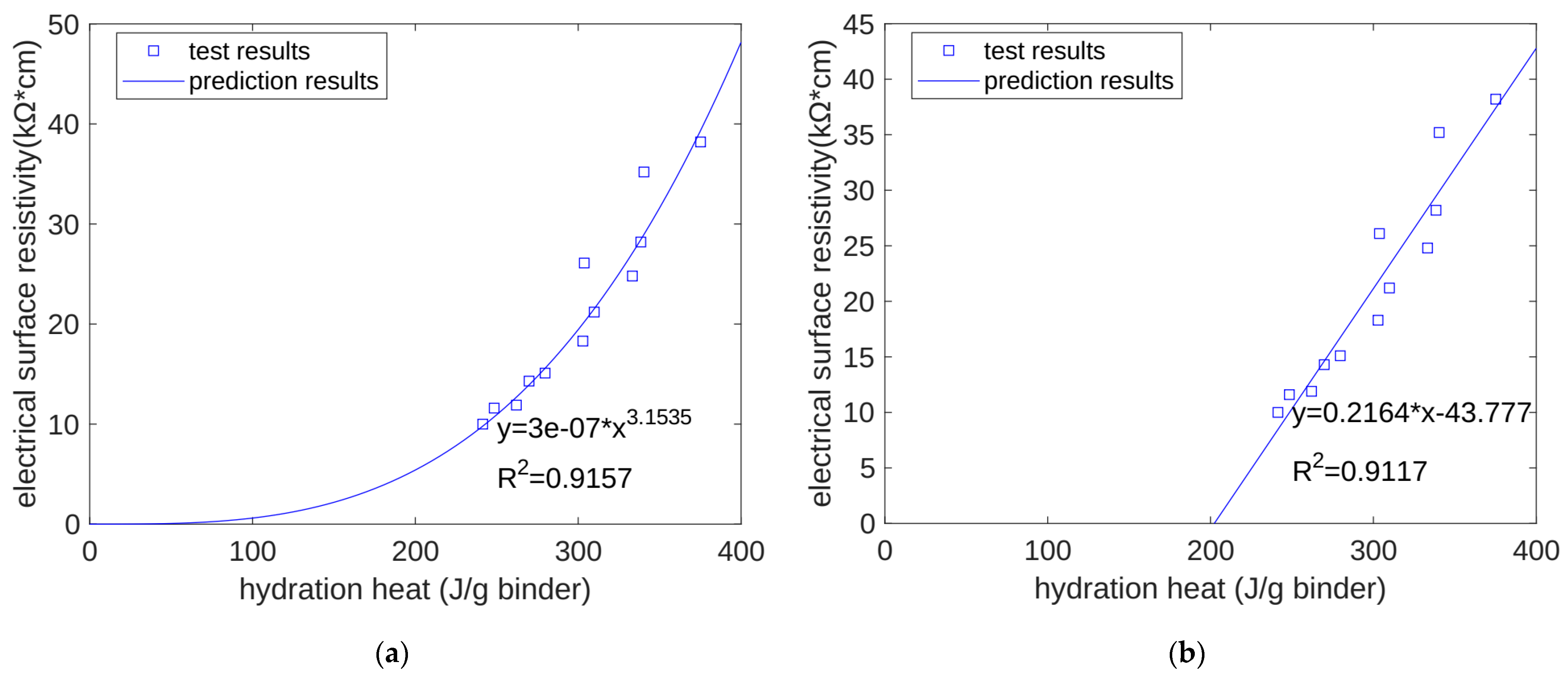
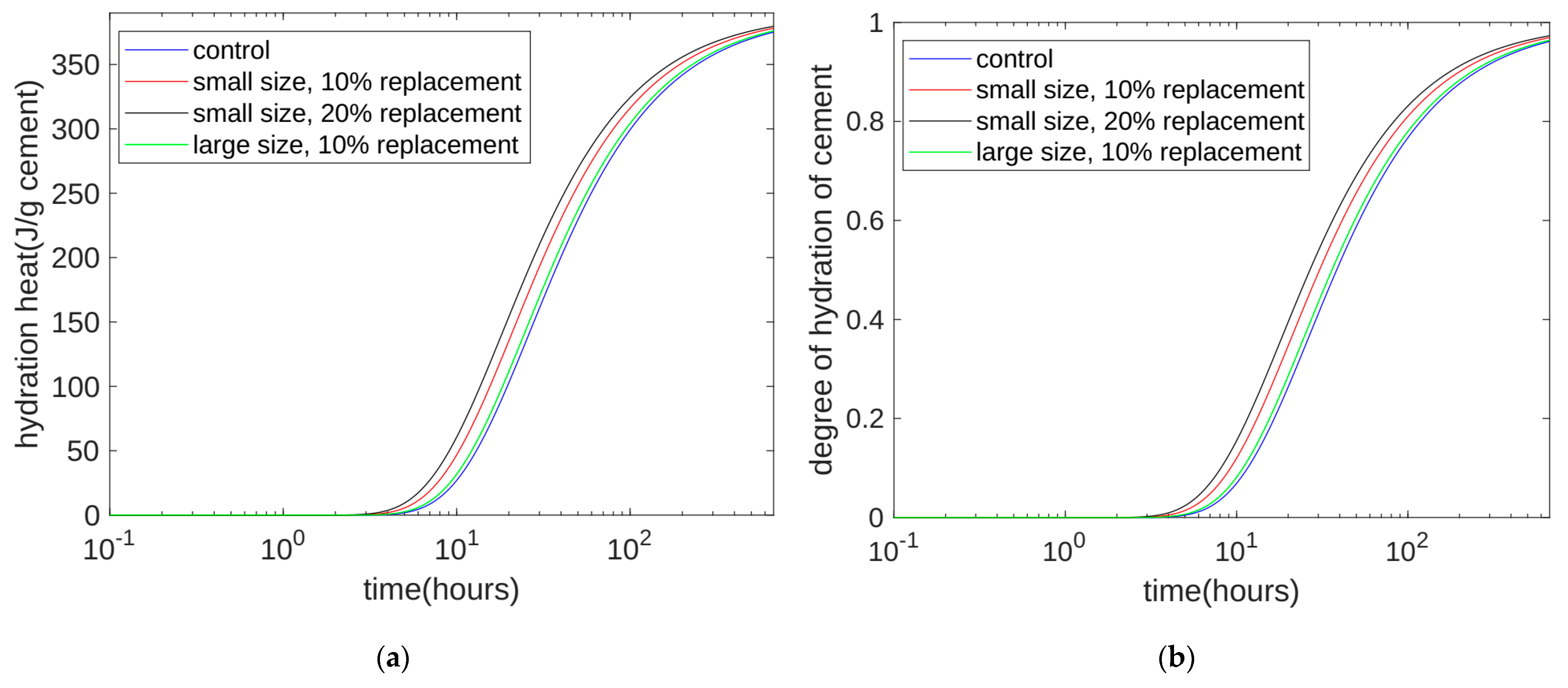
Although quartz powder is a common concrete filling material, the importance and originality of this study lies in the development of a hydration model for quartz powder–cement binary mixtures and the adoption of this model to predict the development of concrete material properties. The purpose of this study is to use this model to promote the material design of environmentally friendly concrete and to elucidate the relationships in the development of the various properties of quartz powder concrete. The method used in this study was as follows: The parameters of the hydration model were obtained through seven days of hydration heat experiments. The hydration heat up to 28 days was also calculated, and the various properties of the concrete were predicted from the heat of hydration. The main findings of this study were as follows: (1) The ultimate hydration heat released per gram of cement for the different quartz powder substitution rates and quartz powder particle fineness was the same, at 390.145 J/g cement, as was the shape index of the hydration model at −1.003. (2) Moreover, through the model calculations, we found that, at the twenty-eighth day of the curing period for the quartz powder specimens with different quartz powder substitution amounts and different fineness, the reaction level of the cement was similar, at 0.963, as were the values of the cumulative heat of hydration, with both at 375.5 J/g cement. (3) The model showed that, in the late stage (28 days) of hydration for quartz powders of different fineness and when the substitution amount was the same, the cumulative heat of hydration over 28 days was similar. (4) The properties of concrete were evaluated using the calculated hydration heat. Overall, the predictive performance of the power and linear functions was similar, with no significant differences being found.
Keywords: cement; quartz powder; fineness; replacement ratio; hydration model; properties prediction cement; quartz powder; fineness; replacement ratio; hydration model; properties prediction