Article

Lead-Free Ternary Glass for Radiation Protection: Composition and Performance Evaluation for Solar Cell Coverage

1
Physics Department, College of Science, Jouf University, Sakaka P.O. Box 2014, Saudi Arabia
2
Physics Department, Faculty of Science, Al-Azhar University, Assiut 71452, Egypt
3
Department of Physics, Faculty of Science, University of Tabuk, Tabuk 47512, Saudi Arabia
4
INPOLDE Research Center, Department of Chemistry, Physics and Environment, Faculty of Sciences and Environment, Dunarea de Jos University of Galati, 47 Domneasca Street, 800008 Galati, Romania
5
Institute of Physics and Technology, Ural Federal University, 620075 Yekaterinburg, Russia
*
Authors to whom correspondence should be addressed.
Materials 2023, 16(8), 3036; https://doi.org/10.3390/ma16083036
Submission received: 8 March 2023 / Revised: 5 April 2023 / Accepted: 6 April 2023 / Published: 12 April 2023
(This article belongs to the Special Issue Recent Advances in Electromagnetic Interference Shielding Materials)

Abstract

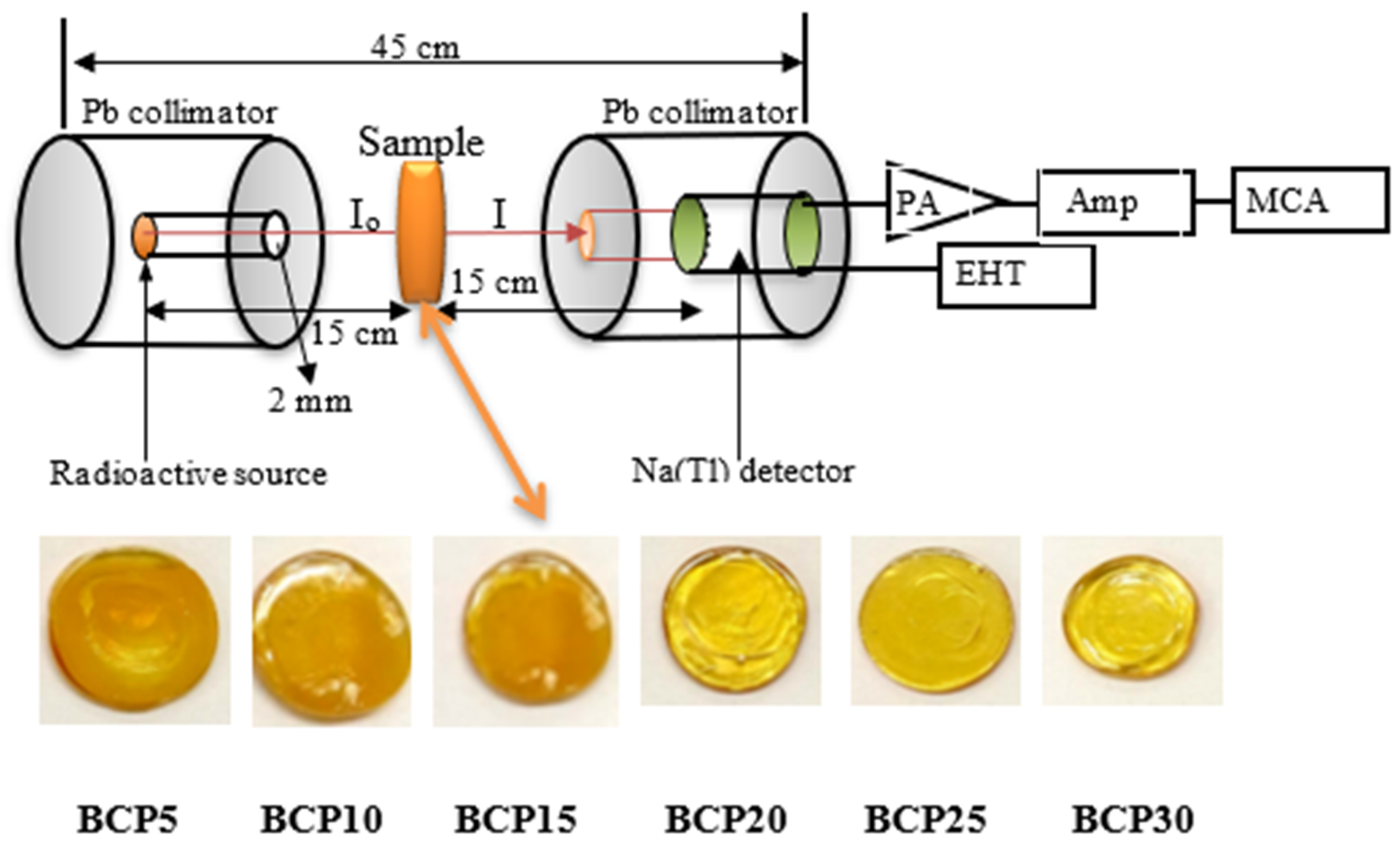
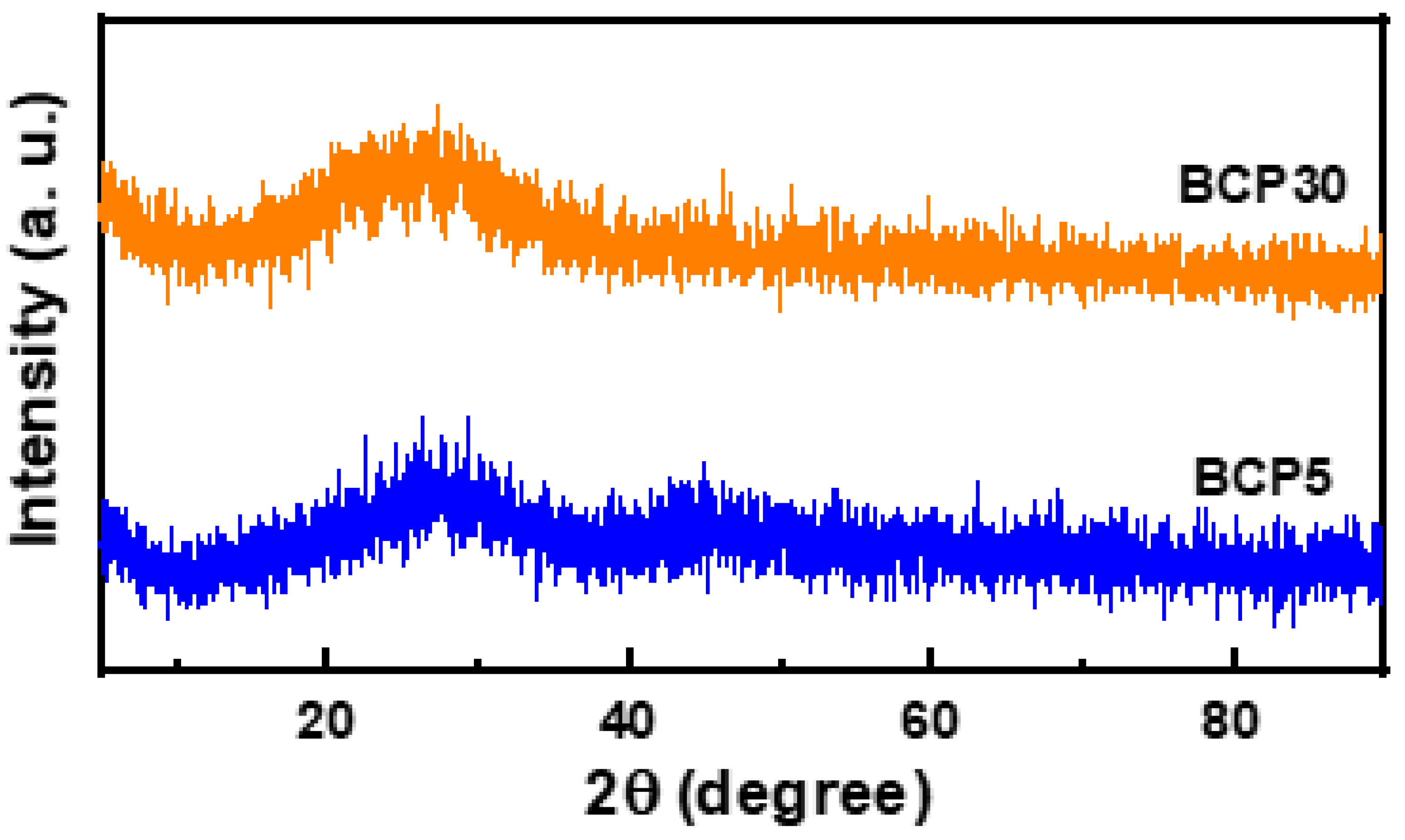
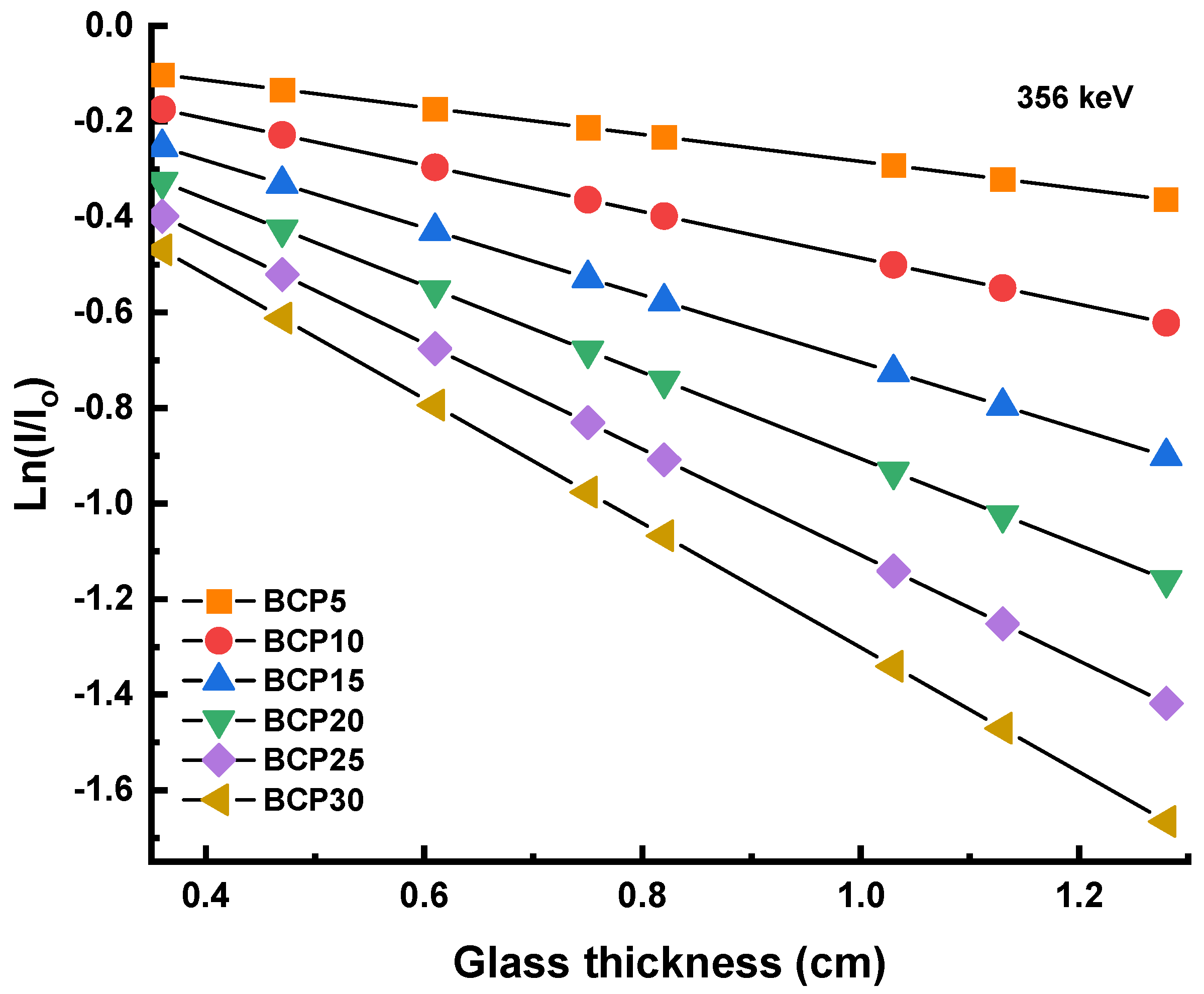
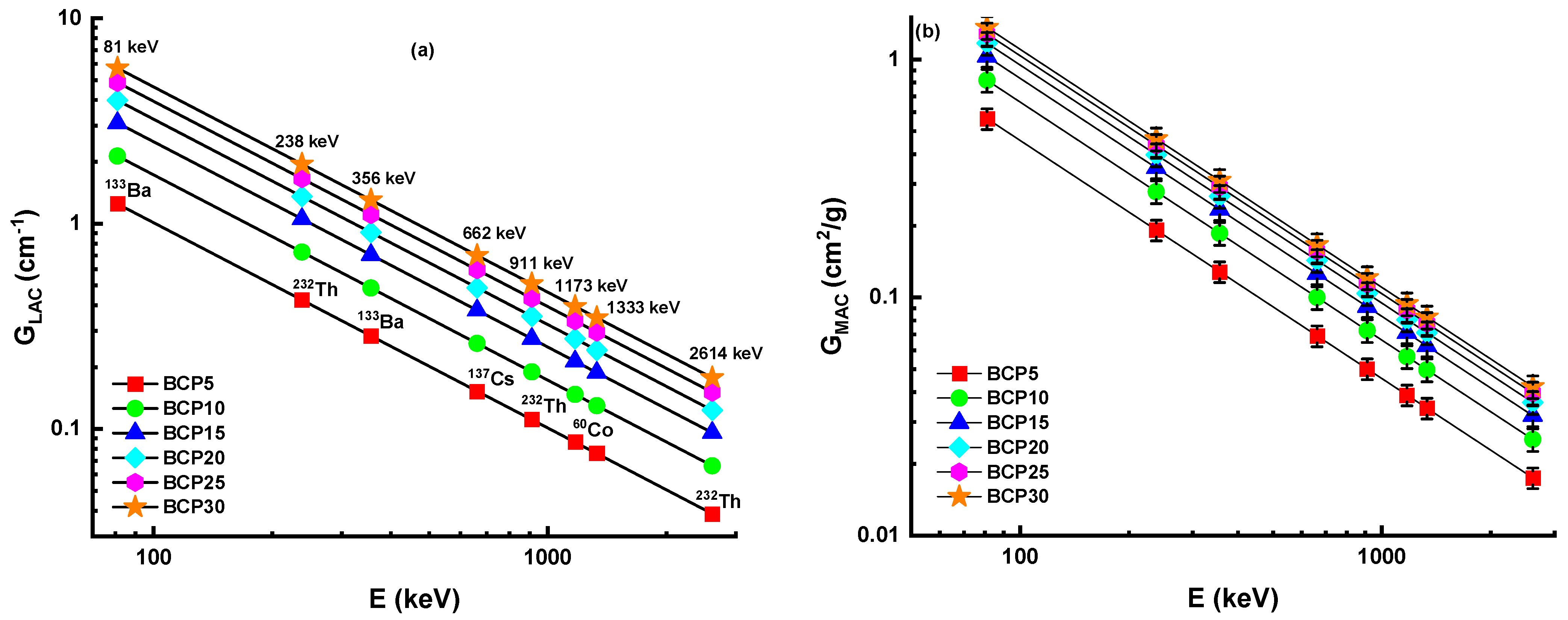
Solar cells in superstrate arrangement need a protective cover glass as one of its main components. The effectiveness of these cells is determined by the cover glass’s low weight, radiation resistance, optical clarity, and structural integrity. Damage to the cell covers brought on by exposure to UV irradiation and energetic radiation is thought to be the root cause of the ongoing issue of a reduction in the amount of electricity that can be generated by solar panels installed on spacecraft. Lead-free glasses made of xBi2O3–(40 − x)CaO-60P2O5 (x = 5, 10, 15, 20, 25, and 30 mol%) were created using the usual approach of melting at a high temperature. The amorphous nature of the glass samples was confirmed using X-ray diffraction. At energies of 81, 238, 356, 662, 911, 1173, 1332, and 2614 keV, the impact of various chemical compositions on gamma shielding in a phospho-bismuth glass structure was measured. The evaluation of gamma shielding revealed that the results of the mass attenuation coefficient of glasses increase as the Bi2O3 content increases but decrease as the photon energy increases. As a result of the study conducted on the radiation-deflecting properties of ternary glass, a lead-free low-melting phosphate glass that exhibited outstanding overall performance was developed, and the optimal composition of a glass sample was identified. The 60P2O5–30Bi2O3–10CaO glass combination is a viable option for use in radiation shielding that does not include lead.
Keywords: gamma shielding; Bi2O3; neutrons; structure; phospho-bismuth glass gamma shielding; Bi2O3; neutrons; structure; phospho-bismuth glass