Article

Hydrogen Dissociation Reaction on First-Row Transition Metal Doped Nanobelts

1
Department of Chemistry, College of Science, King Faisal University, Al-Ahsa 31982, Saudi Arabia
2
Department of Chemistry, COMSATS University Islamabad, Abbottabad Campus, Abbottabad 22060, Pakistan
3
Chemical Sciences, Faculty of Science, Universiti Brunei Darussalam, Jalan Tungku Link, Gadong BE1410, Brunei
*
Authors to whom correspondence should be addressed.
These authors contributed equally to this work.
Materials 2023, 16(7), 2792; https://doi.org/10.3390/ma16072792
Submission received: 3 March 2023 / Revised: 28 March 2023 / Accepted: 29 March 2023 / Published: 31 March 2023
(This article belongs to the Special Issue The Composite Materials of Today and Tomorrow)

Abstract

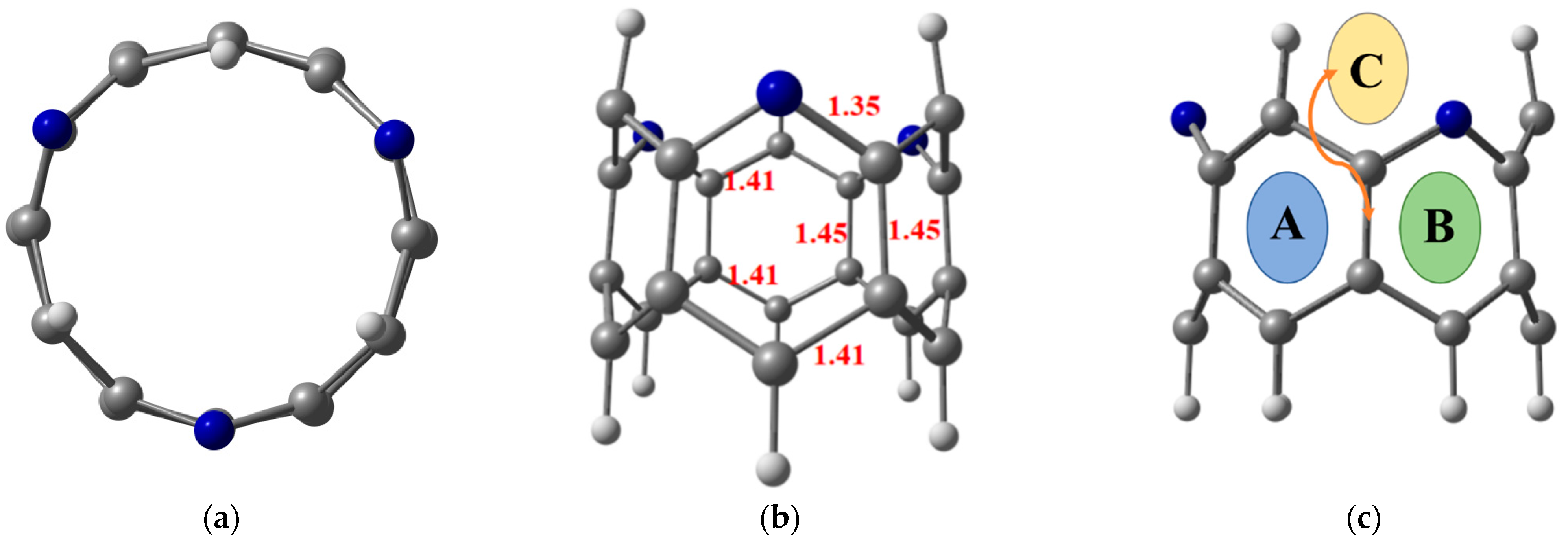
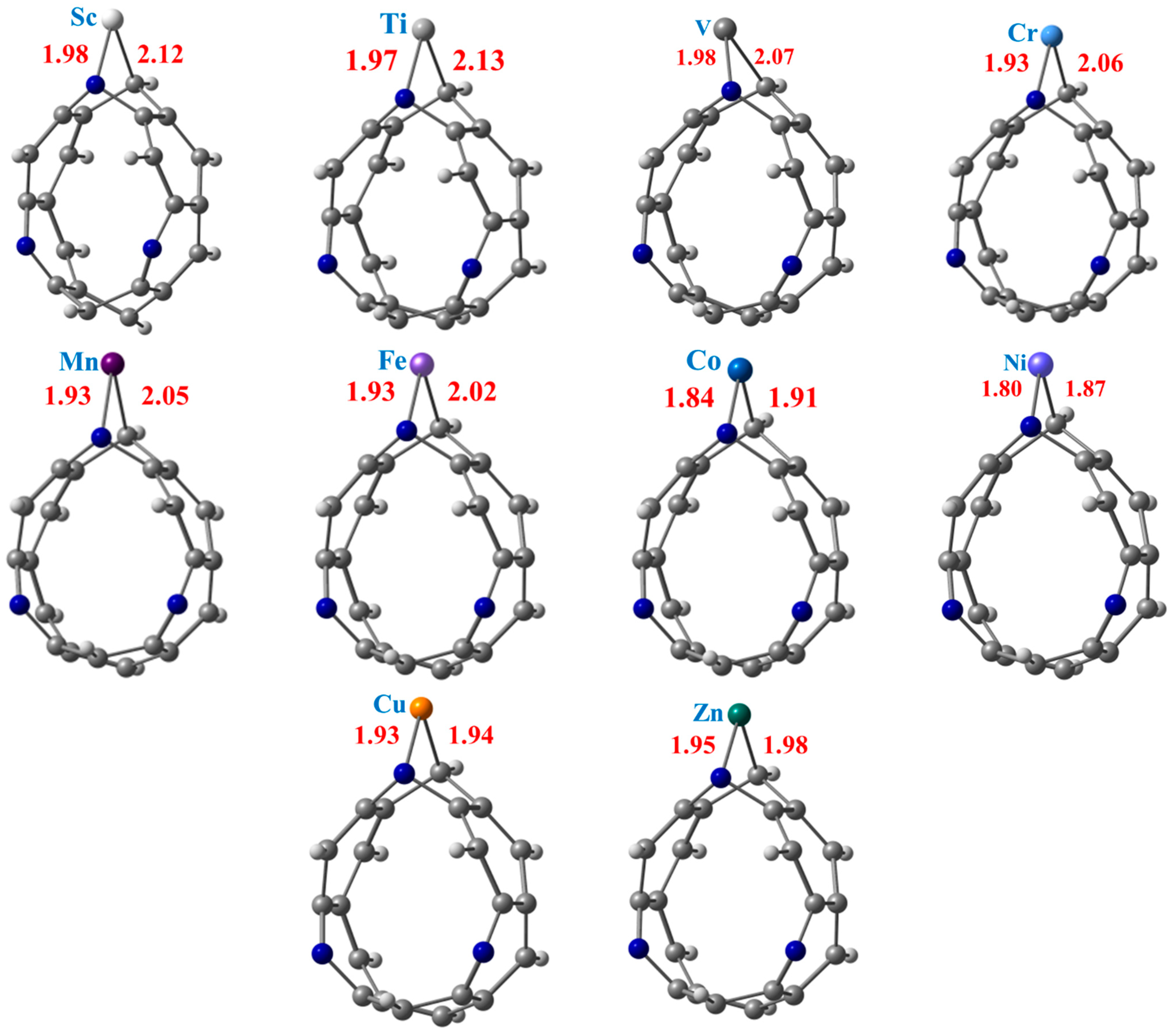
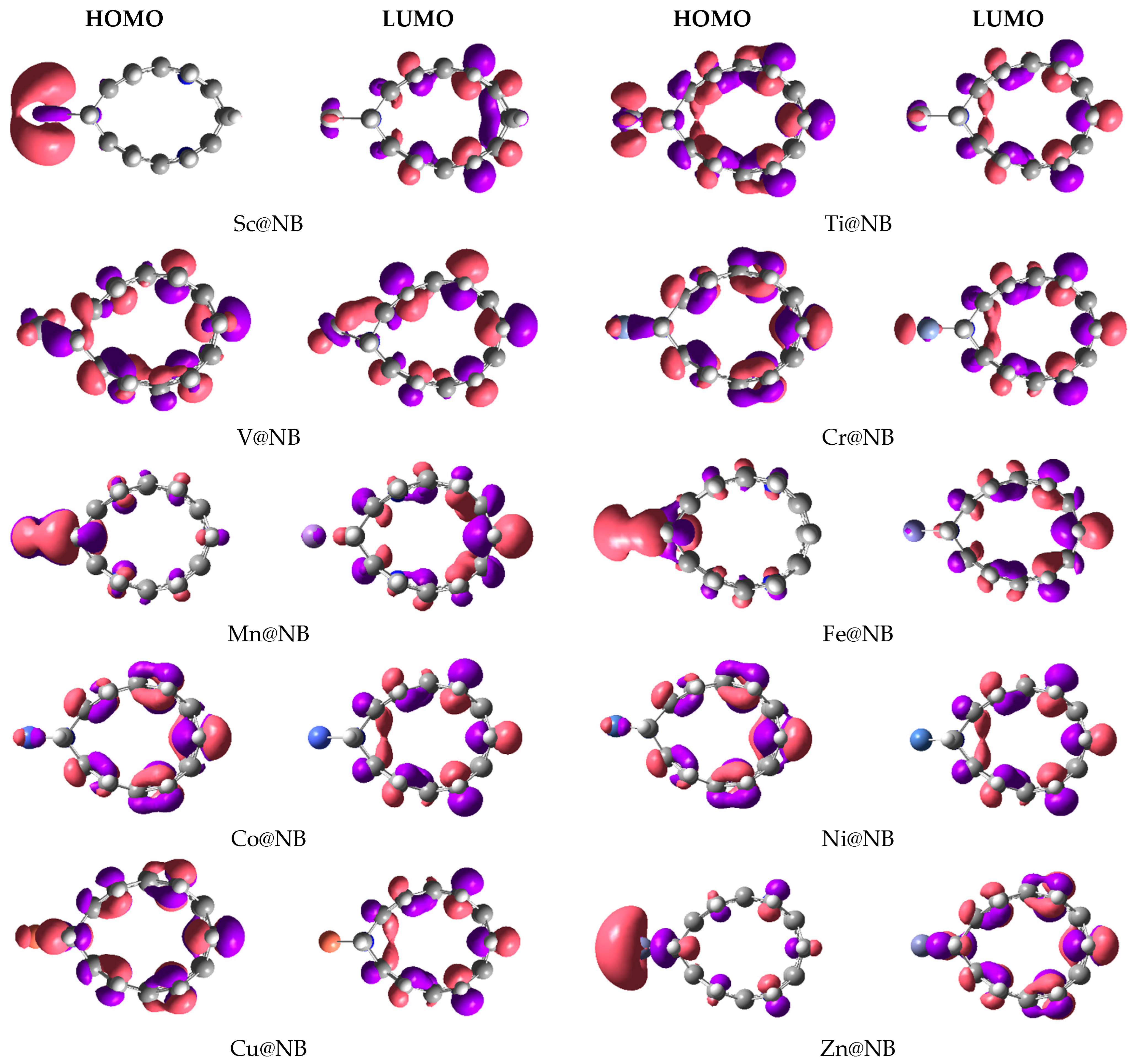
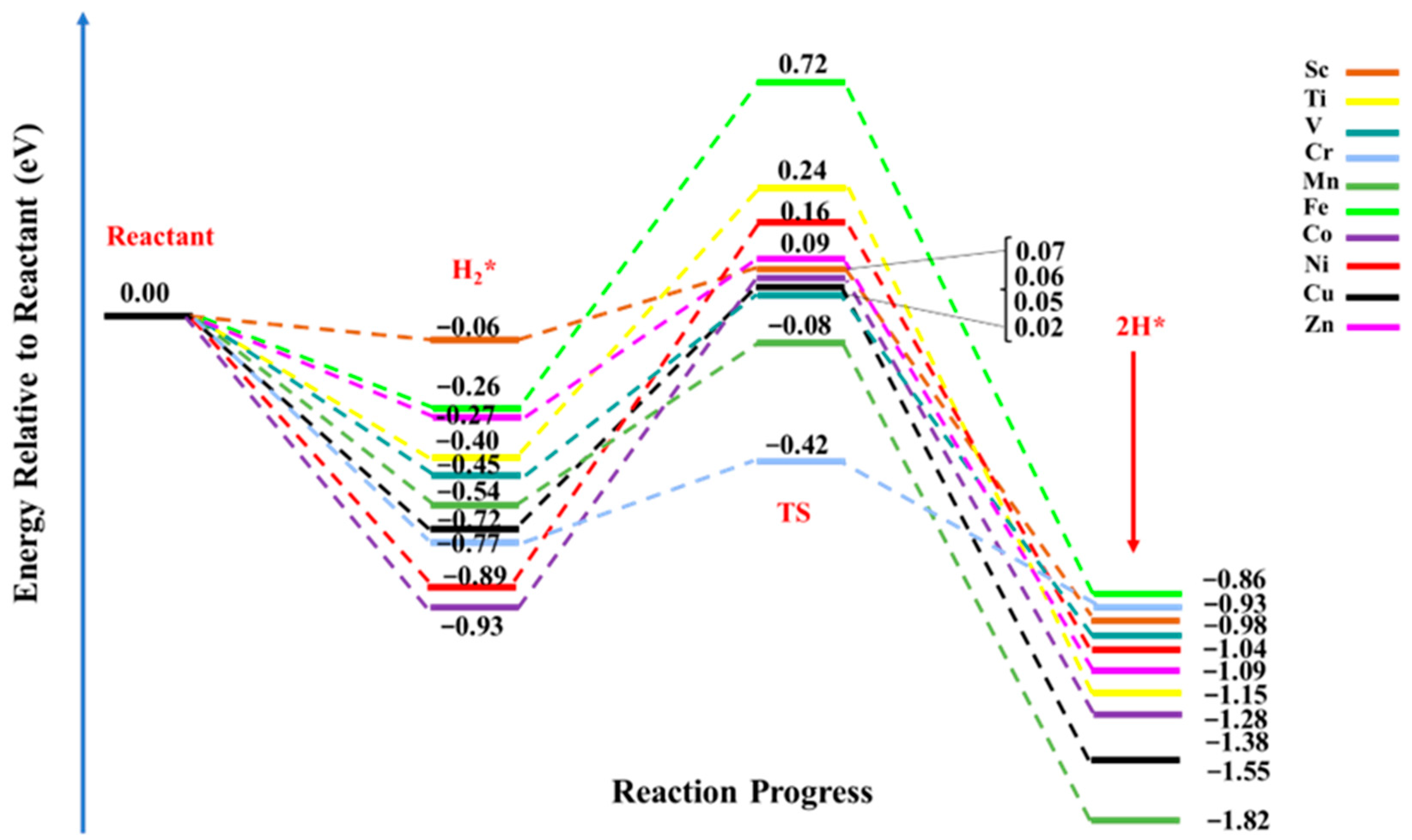
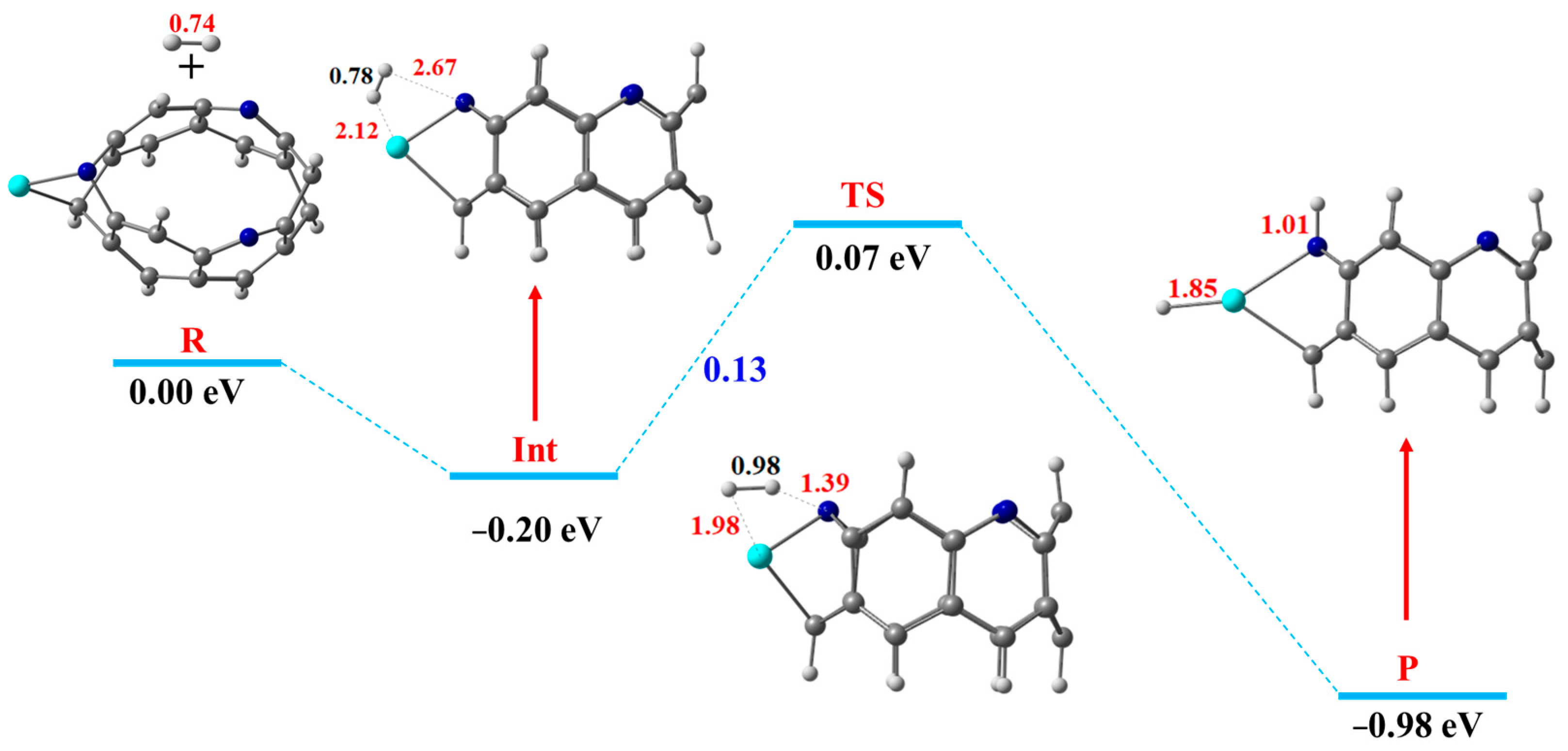
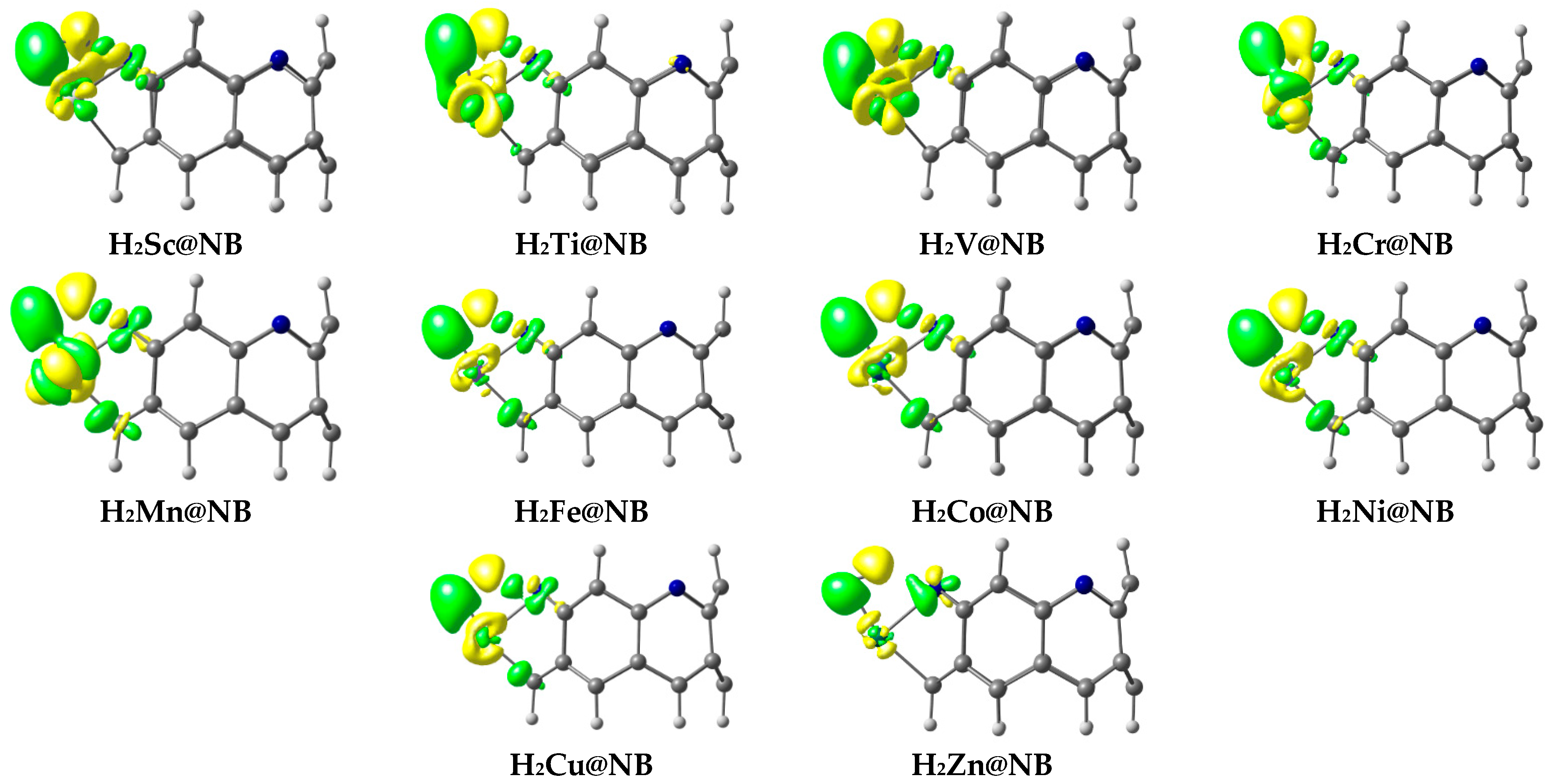
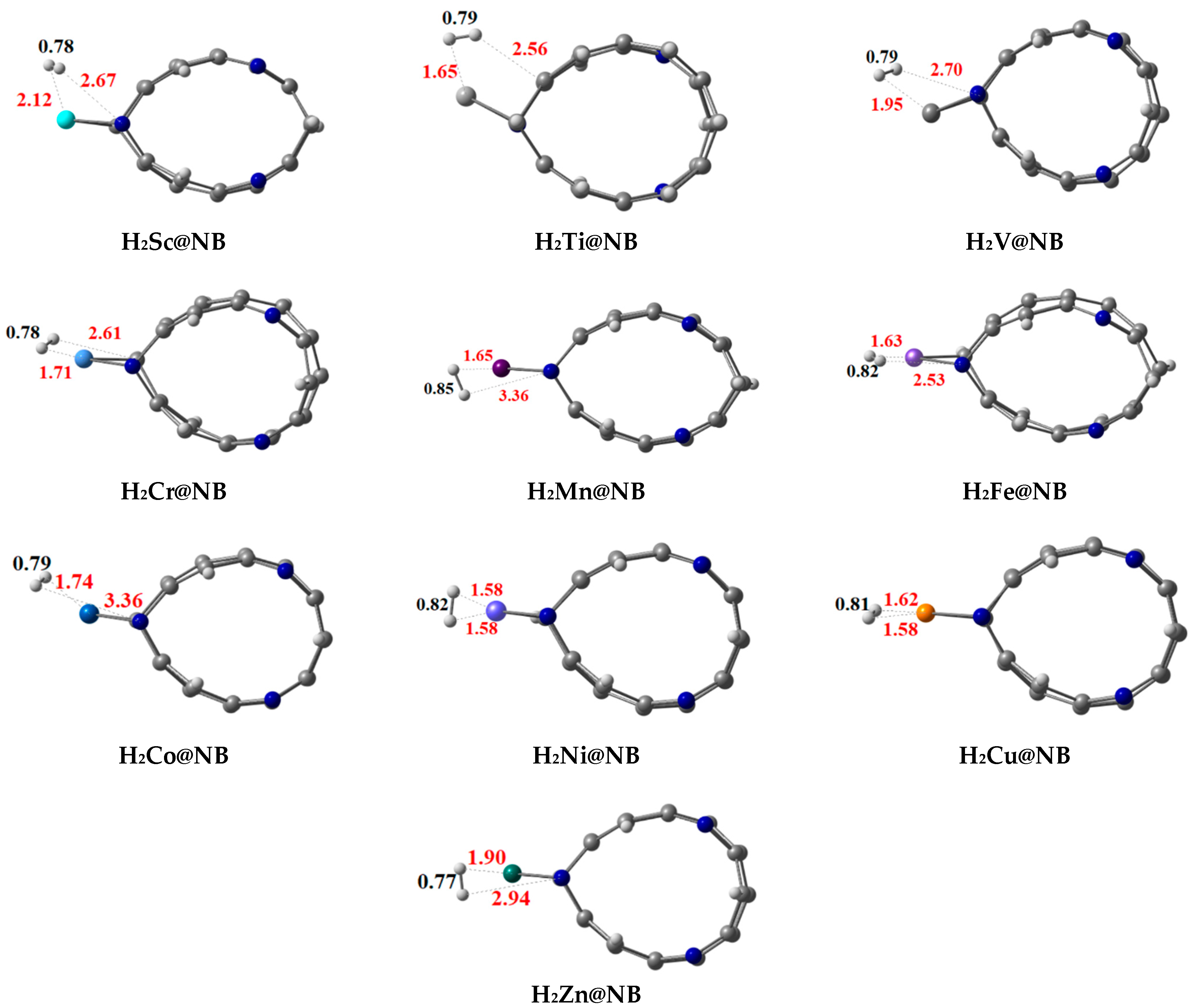
Zigzag molecular nanobelts have recently captured the interest of scientists because of their appealing aesthetic structures, intriguing chemical reactivities, and tantalizing features. In the current study, first-row transition metals supported on an H6-N3-belt[6]arene nanobelt are investigated for the electrocatalytic properties of these complexes for the hydrogen dissociation reaction (HDR). The interaction of the doped transition metal atom with the nanobelt is evaluated through interaction energy analysis, which reveals the significant thermodynamic stability of TM-doped nanobelt complexes. Electronic properties such as frontier molecular orbitals and natural bond orbitals analyses are also computed, to estimate the electronic perturbation upon doping. The highest reduction in the HOMO–LUMO energy gap compared to the bare nanobelt is seen in the case of the Zn@NB catalyst (4.76 eV). Furthermore, for the HDR reaction, the Sc@NB catalyst displays the best catalytic activity among the studied catalysts, with a hydrogen dissociation barrier of 0.13 eV, whereas the second-best catalytic activity is observed for the Zn@NB catalyst (0.36 eV). It is further found that multiple active sites, i.e., the presence of the metal atom and nitrogen atom moiety, help to facilitate the dissociation of the hydrogen molecule. These key findings of this study enhance the understanding of the relative stability, electronic features, and catalytic bindings of various TM@NB catalysts.
Keywords: molecular nanobelts; transition metal; dissociation barrier; density functional theory; hydrogen molecule molecular nanobelts; transition metal; dissociation barrier; density functional theory; hydrogen molecule