Article

Method of Stamping the Progression of a Beverage End Rivet of a Thinner Sheet of AW-5182 Alloy

by
Mariusz Łucarz
* and
Michał Jędrychowski
Faculty of Foundry Engineering, AGH University of Science and Technology, Reymonta 23 St., 30-059 Krakow, Poland
*
Author to whom correspondence should be addressed.
Materials 2023, 16(18), 6244; https://doi.org/10.3390/ma16186244
Submission received: 31 August 2023 / Revised: 12 September 2023 / Accepted: 14 September 2023 / Published: 16 September 2023
(This article belongs to the Special Issue Advanced Materials – Microstructure, Manufacturing and Analysis)

Abstract

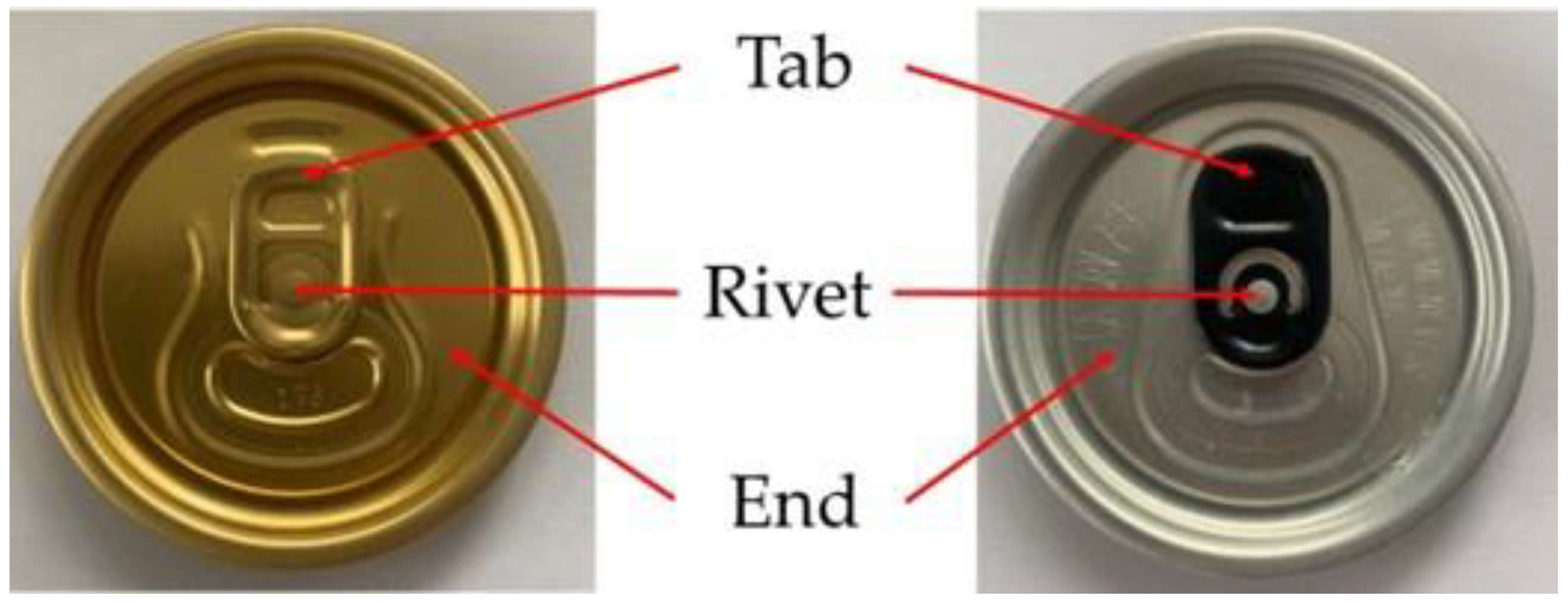
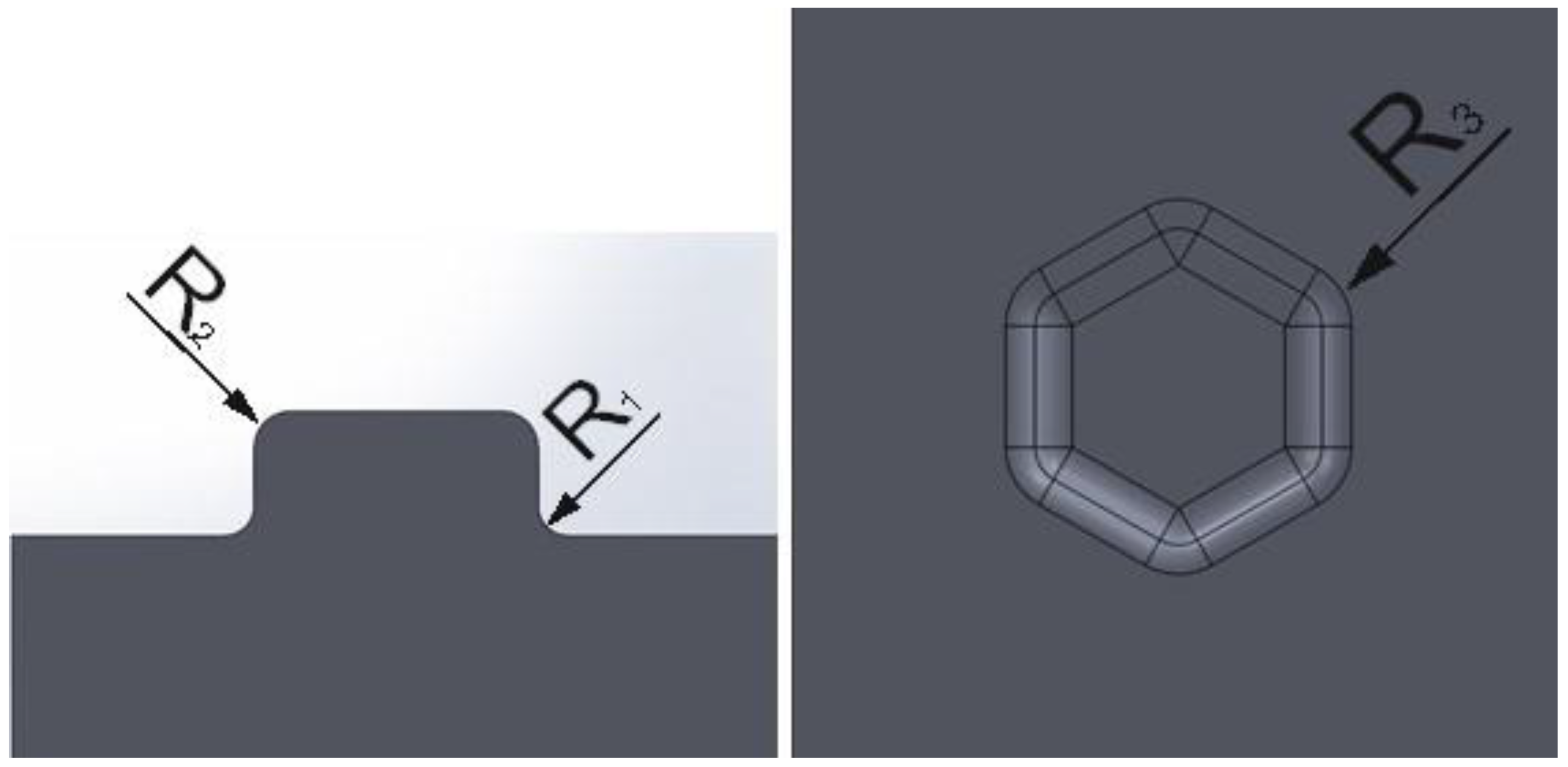
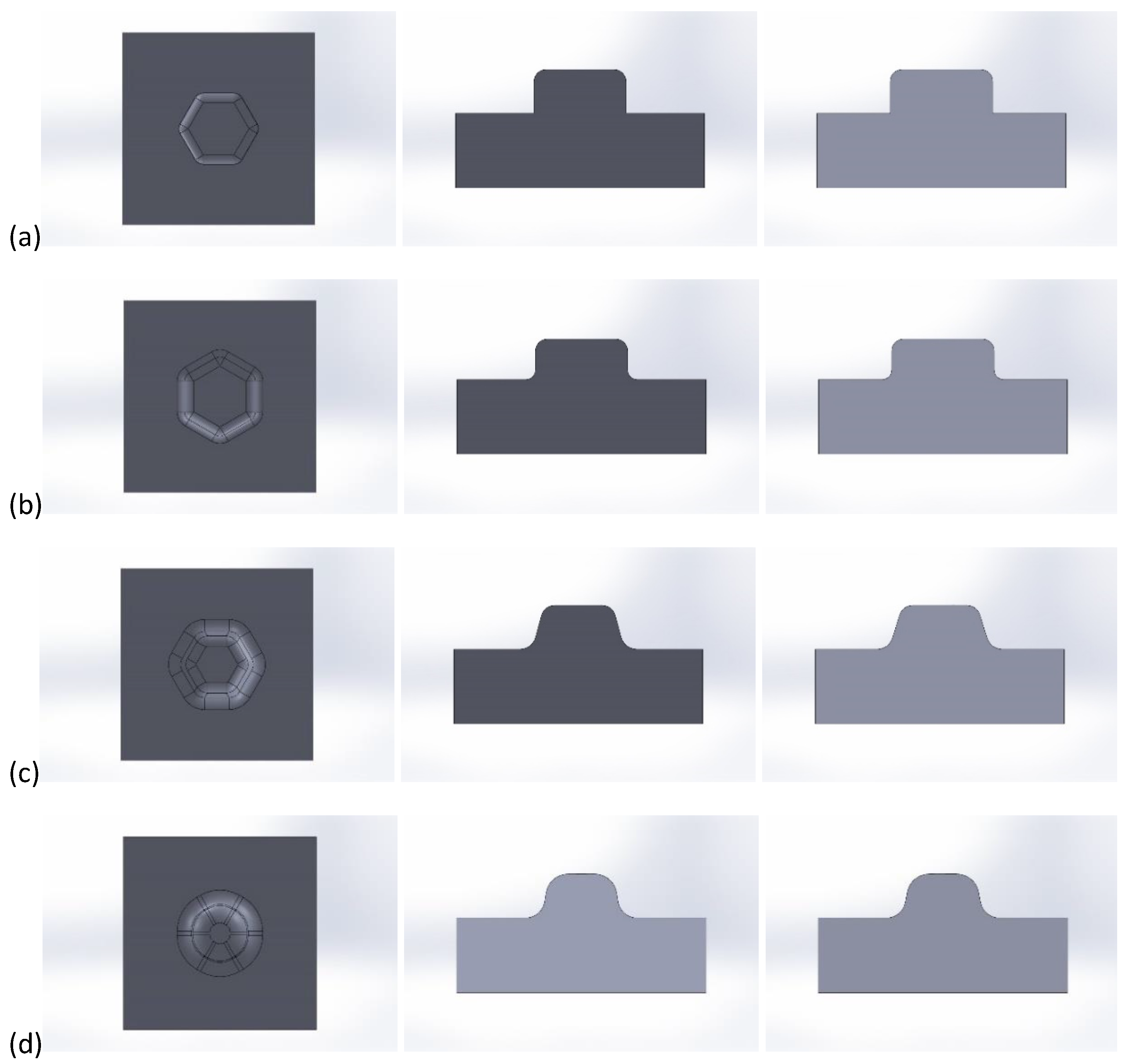
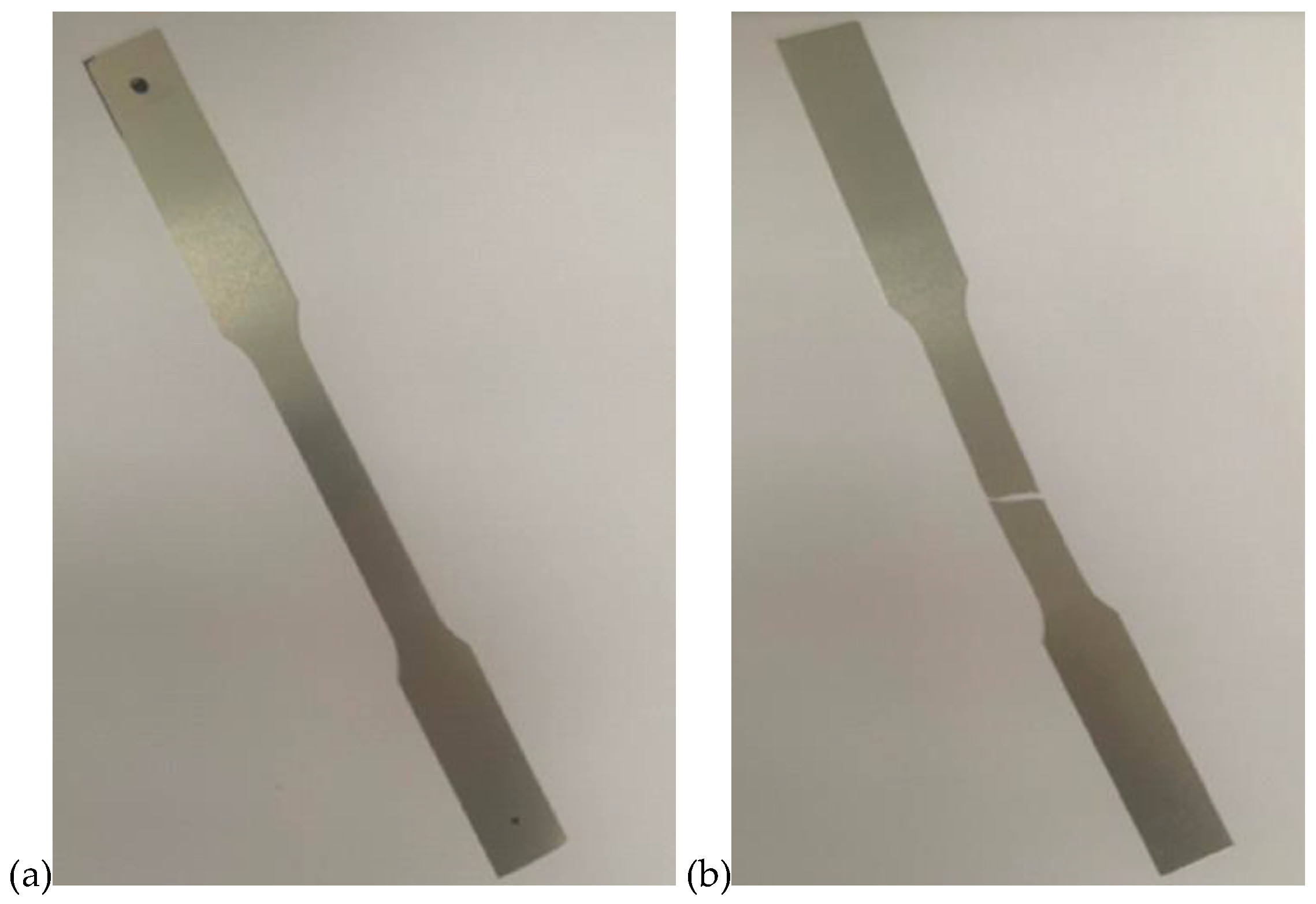
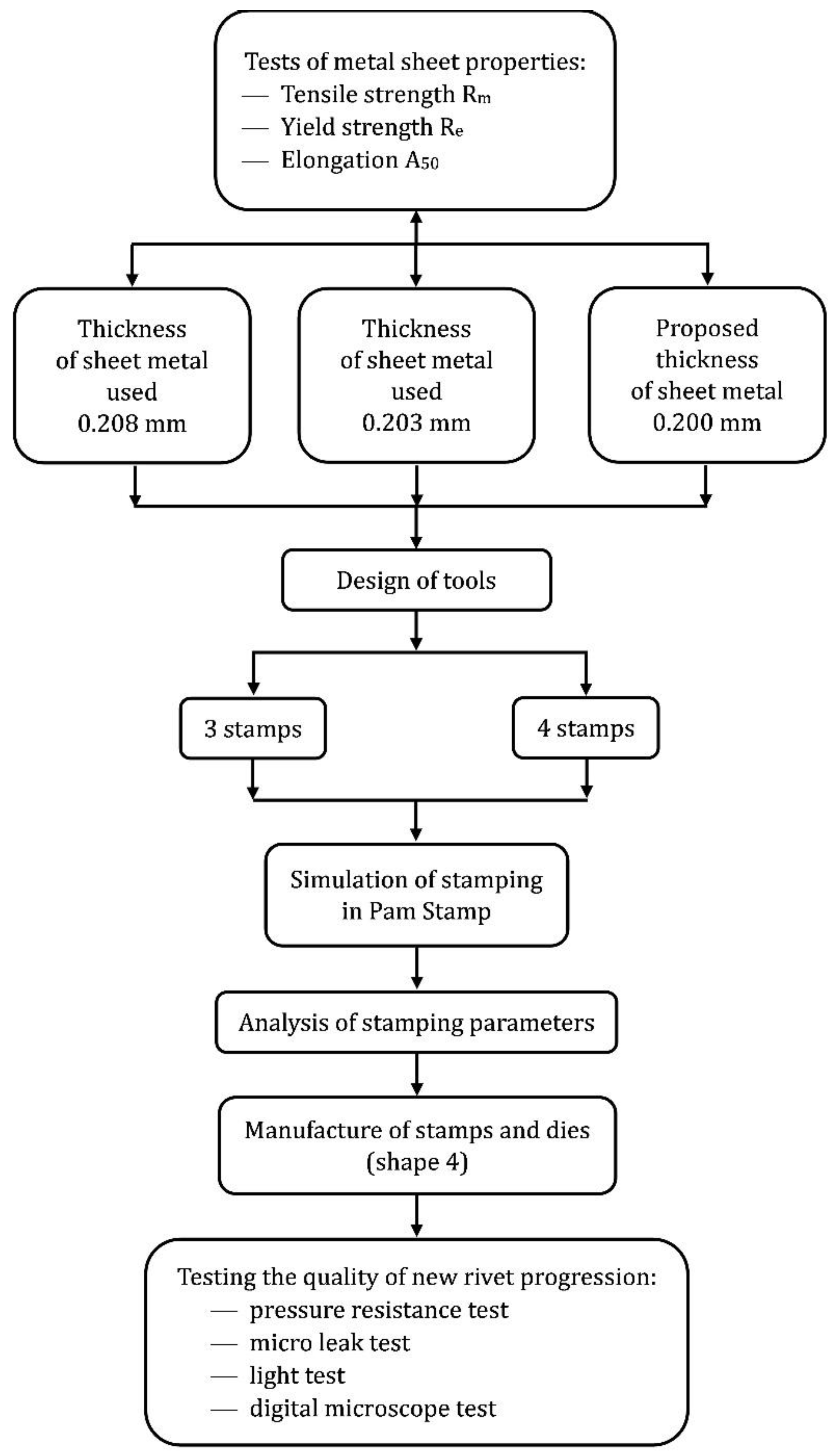
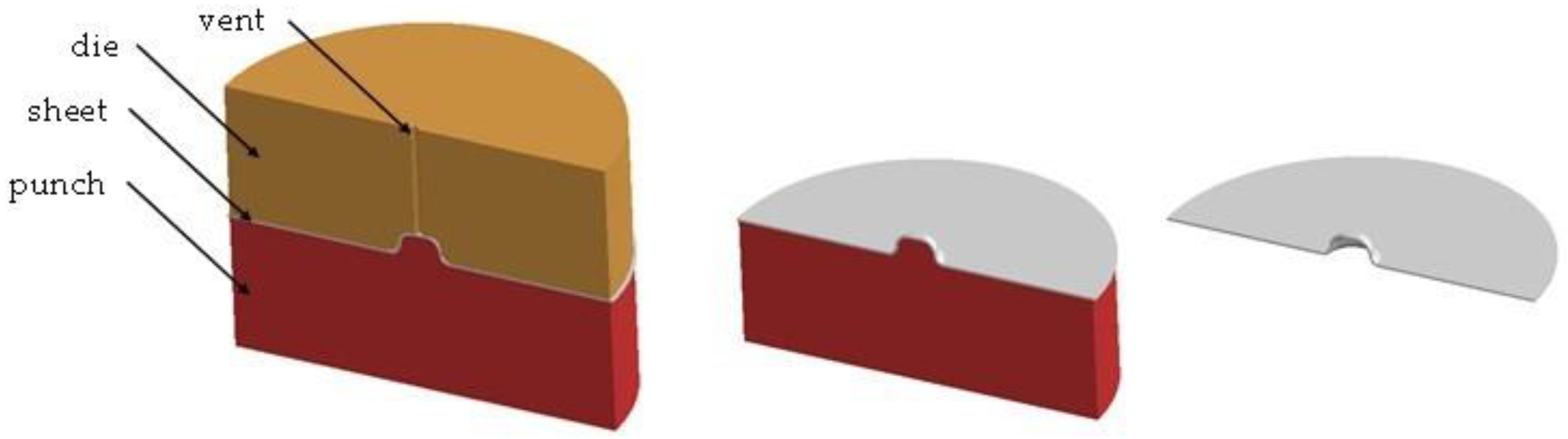
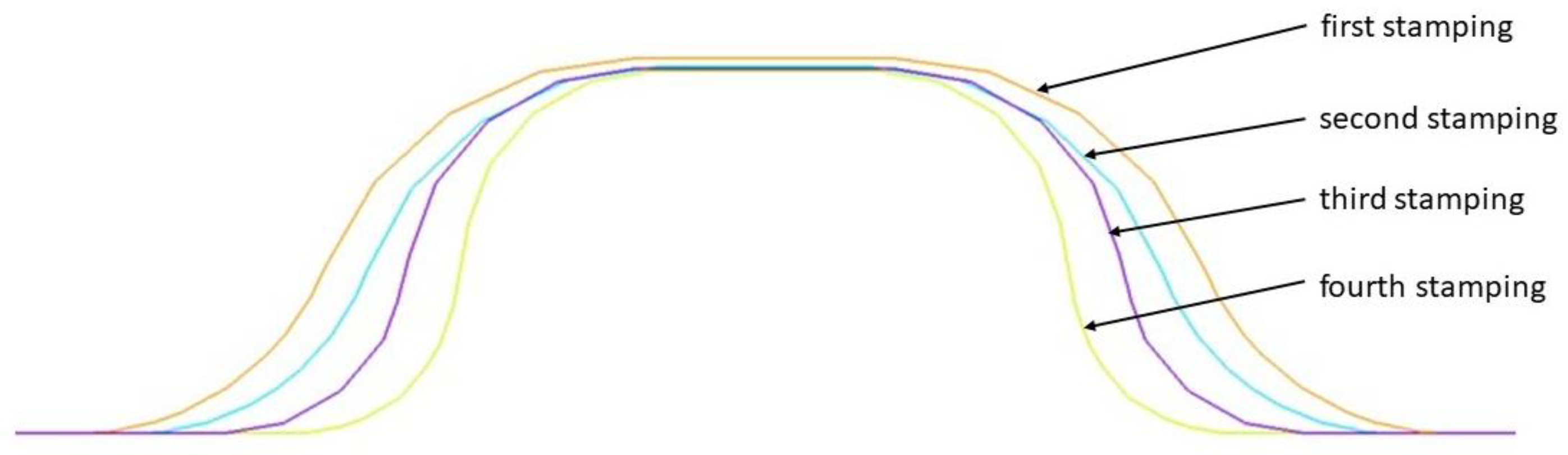
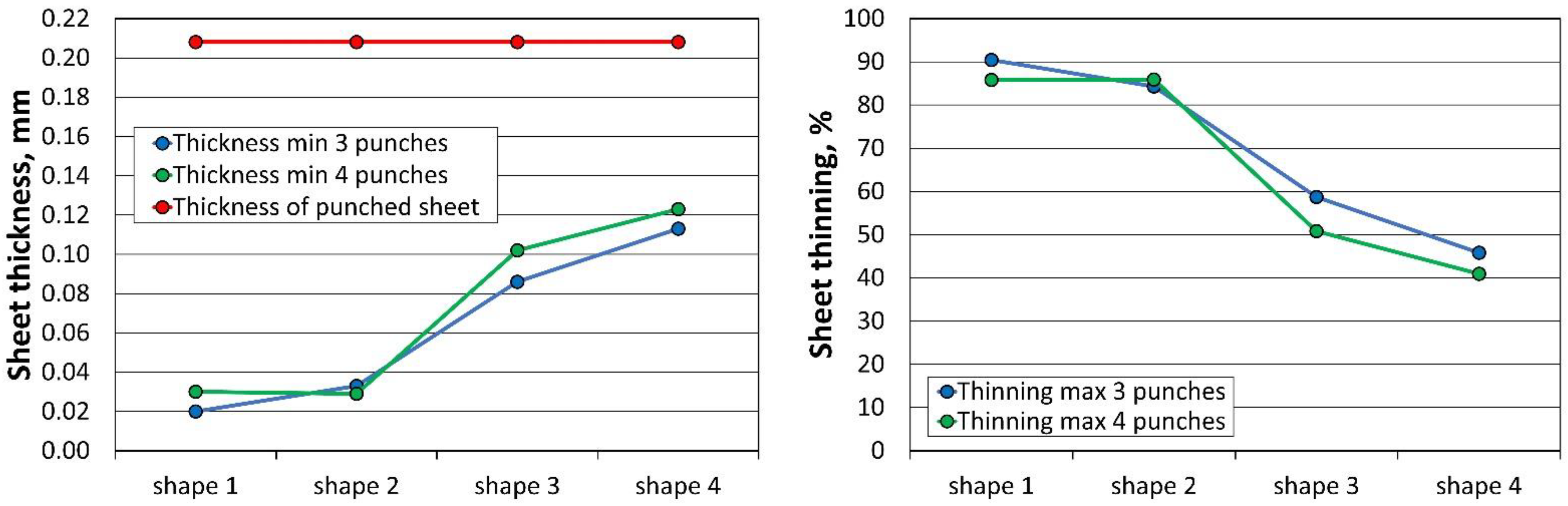
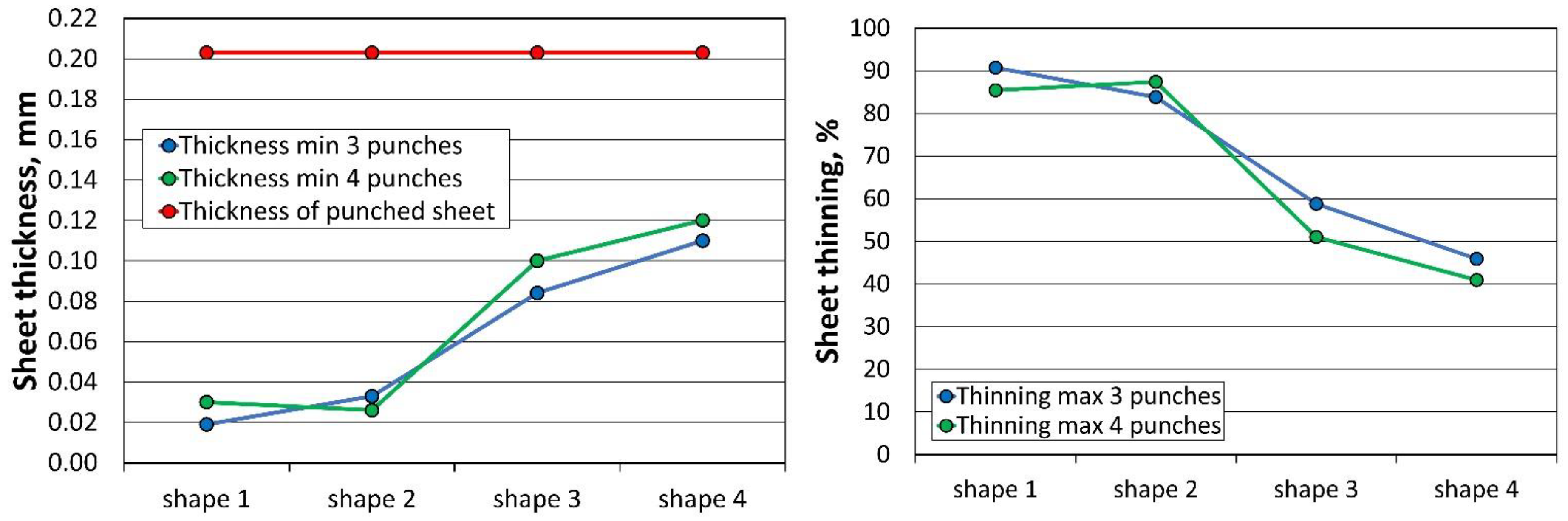
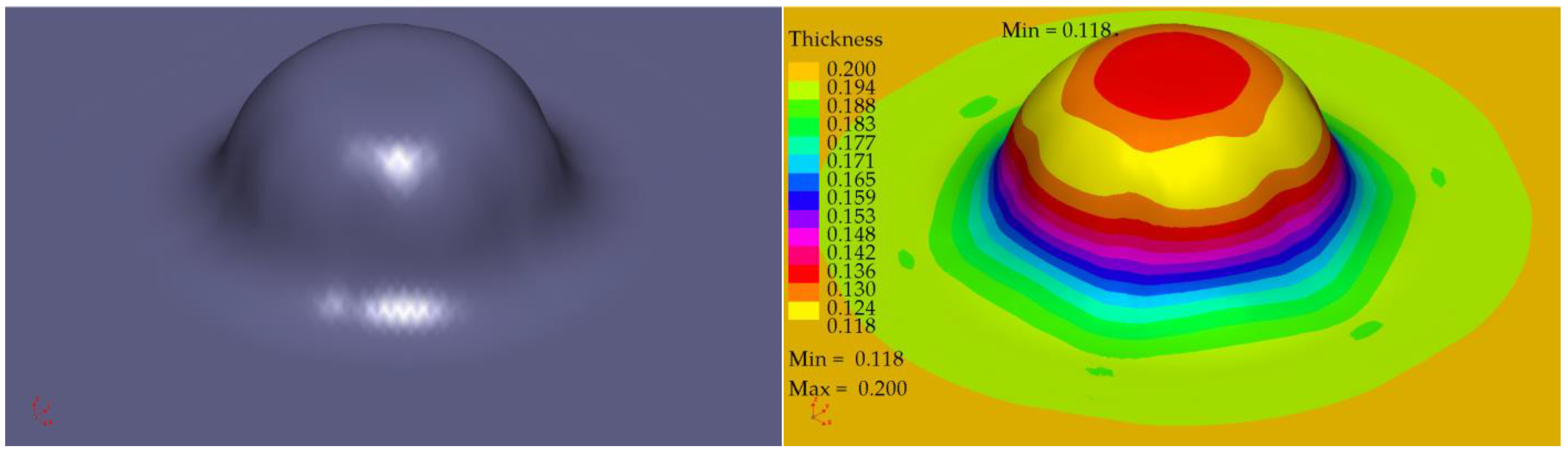
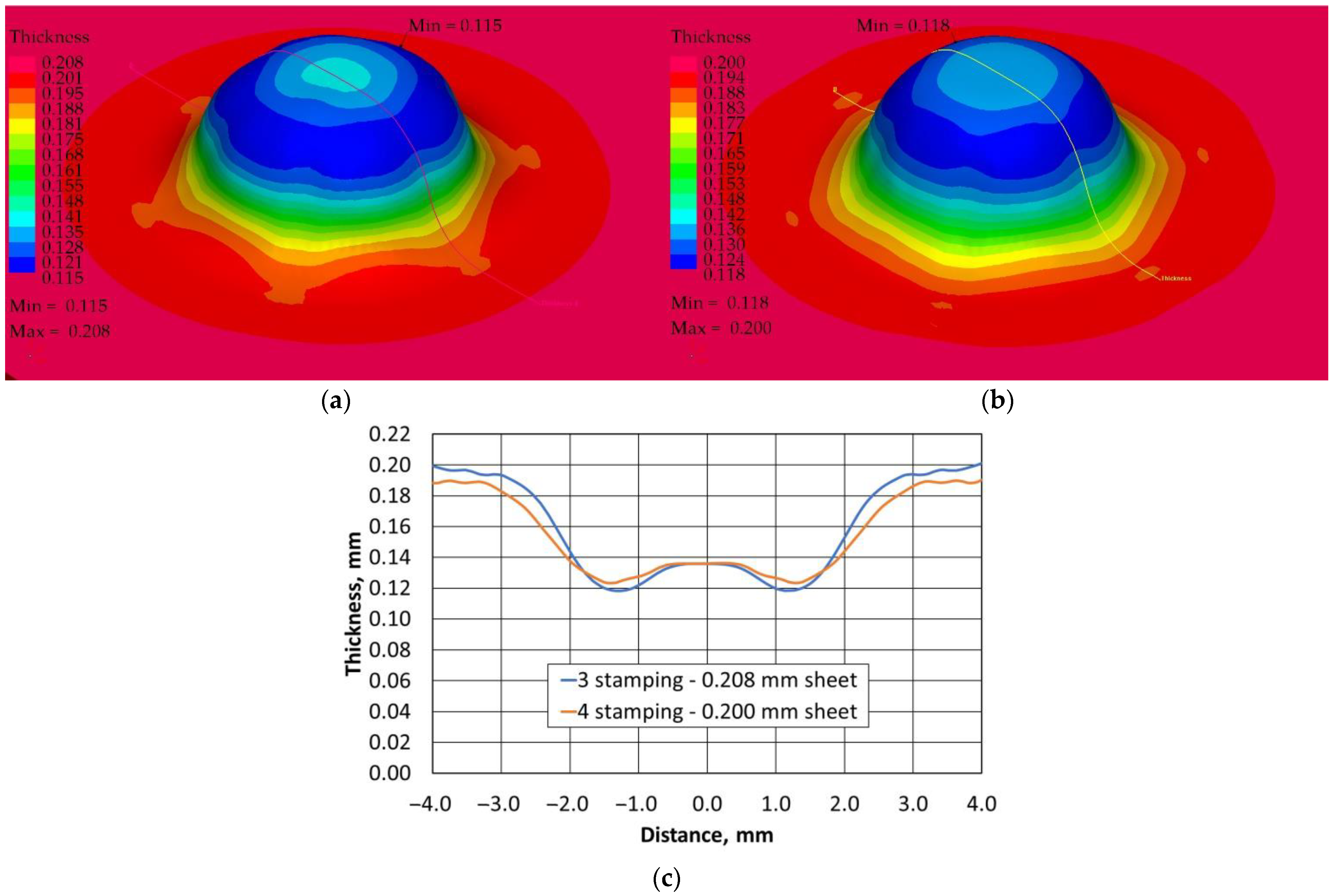
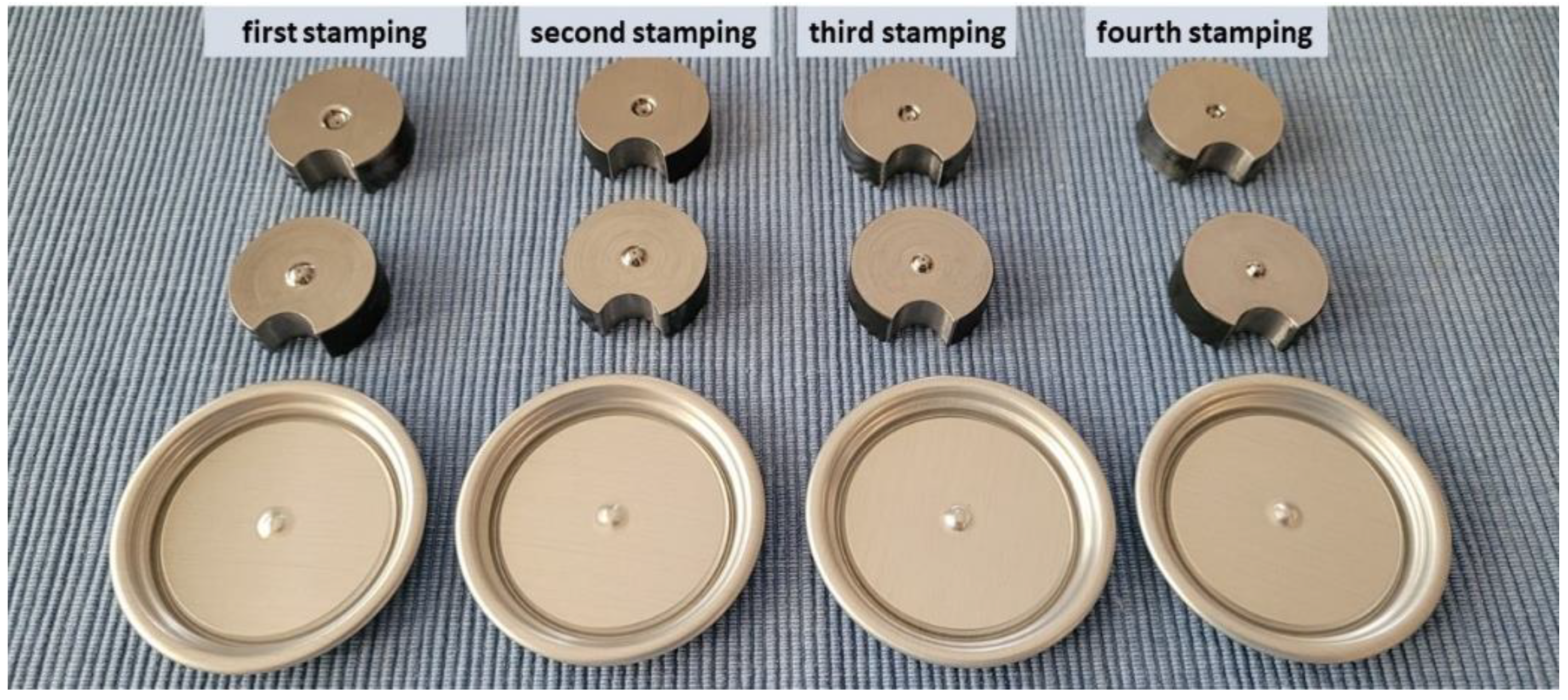
This paper presents a new solution for shaping the rivet progression of a beverage end. The classic method uses three operations to press the cylindrical rivet using 0.208 mm and 0.203 mm thick sheets. The increasing demand for aluminium alloys is prompting measures to make more efficient use of this raw material. One possible solution is to produce packaging from ever thinner sheets. This requires the design of new tooling and the preparation of an appropriate technological process. A method has been developed to stamp a hexagonal-shaped rivet from 0.200 mm thick sheet metal, increasing the number of stamping operations to four. The proposed method was verified through a numerical analysis using the PAM STAMP 2022.0 software package. It was found that for appropriately shaped tools, sheet thicknesses of the stamped component could be achieved that were not less than those for the currently used technology, thus eliminating any possible break in the material structure. Suitable tools and experimental stamping tests were carried out for the developed process. In the simulations, the material Al5182_iso_Xmm was adopted from the programme database, while the experiments were performed on a laboratory press using AW-5182-H48 sheets with a thickness of 0.200 mm. The purpose of the study was to determine the validity for the proposed method of forming the rivet of the beverage end.
Keywords: beverage end; stamping; AW-5182 alloy; PAM STAMP simulations; quality tests beverage end; stamping; AW-5182 alloy; PAM STAMP simulations; quality tests