Article

Investigating the Effects of Recycled Aggregate and Mineral Admixtures on the Mechanical Properties and Performance of Concrete

1
Engineering Materials Department, Faculty of Engineering, Zagazig University, Zagazig 44519, Egypt
2
Housing and Building National Research Centre, Giza 11511, Egypt
*
Author to whom correspondence should be addressed.
Materials 2023, 16(14), 5134; https://doi.org/10.3390/ma16145134
Submission received: 3 June 2023 / Revised: 12 July 2023 / Accepted: 14 July 2023 / Published: 21 July 2023
(This article belongs to the Special Issue Advanced Construction Materials and Processes in Poland)

Abstract

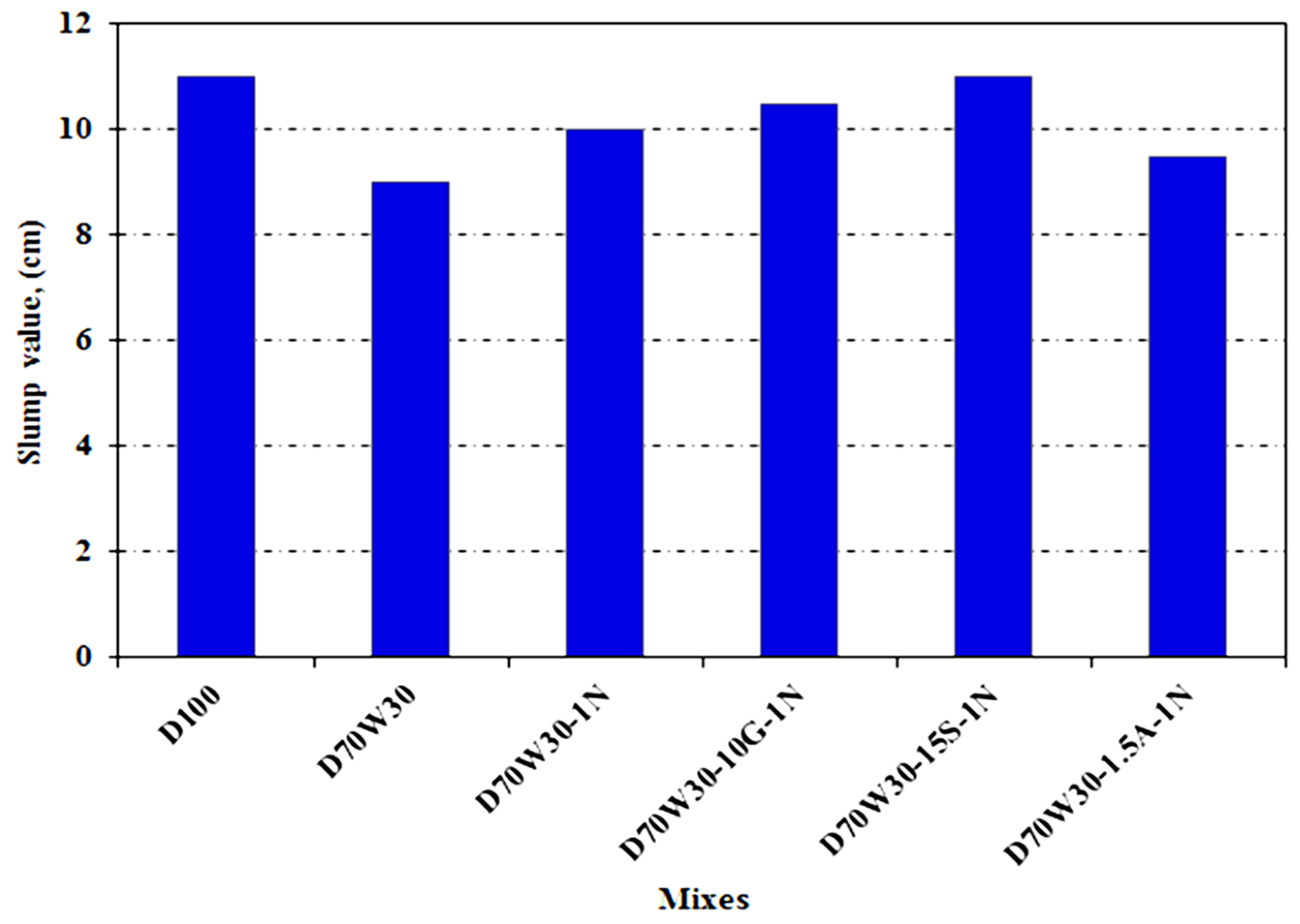
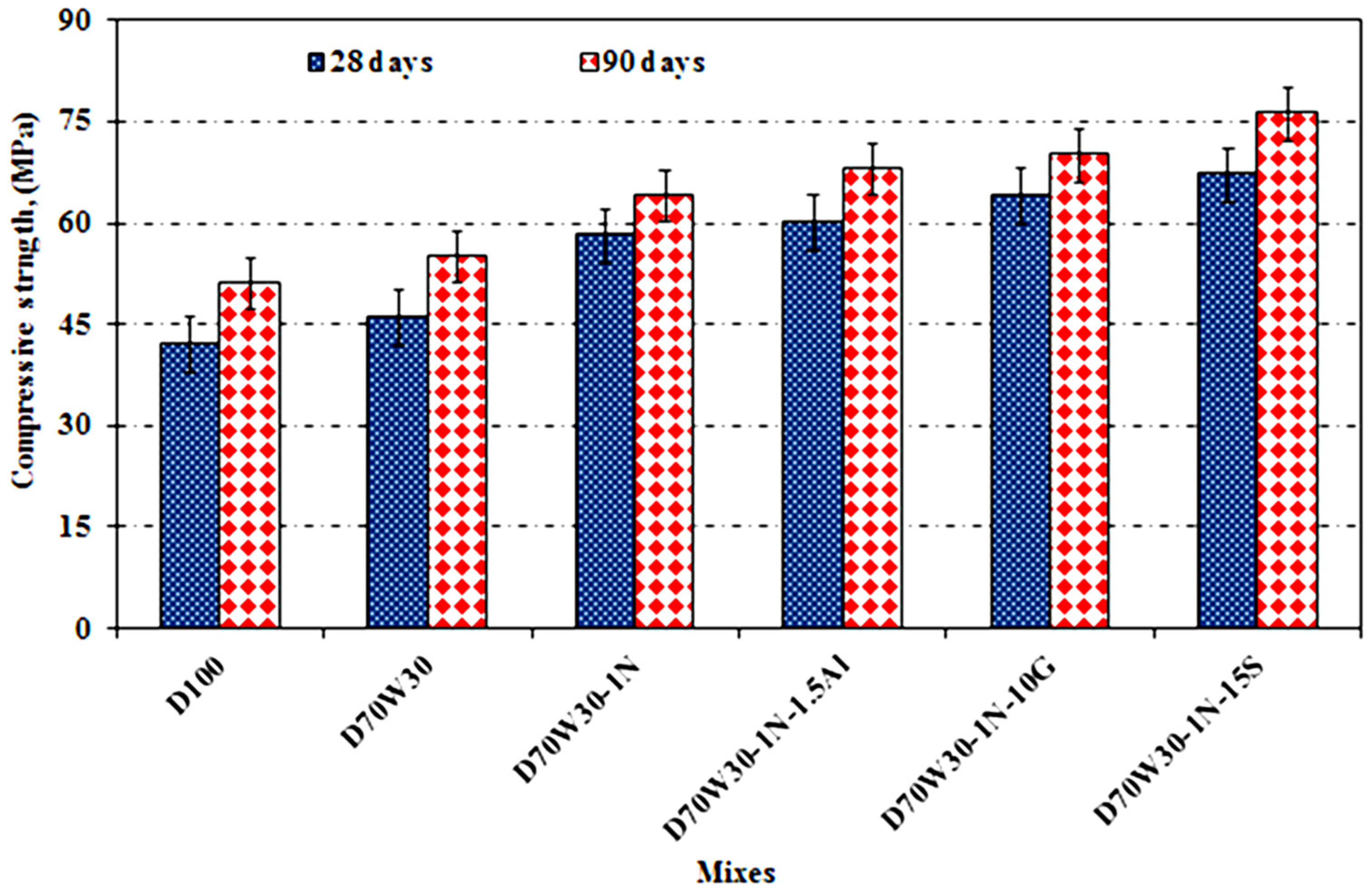
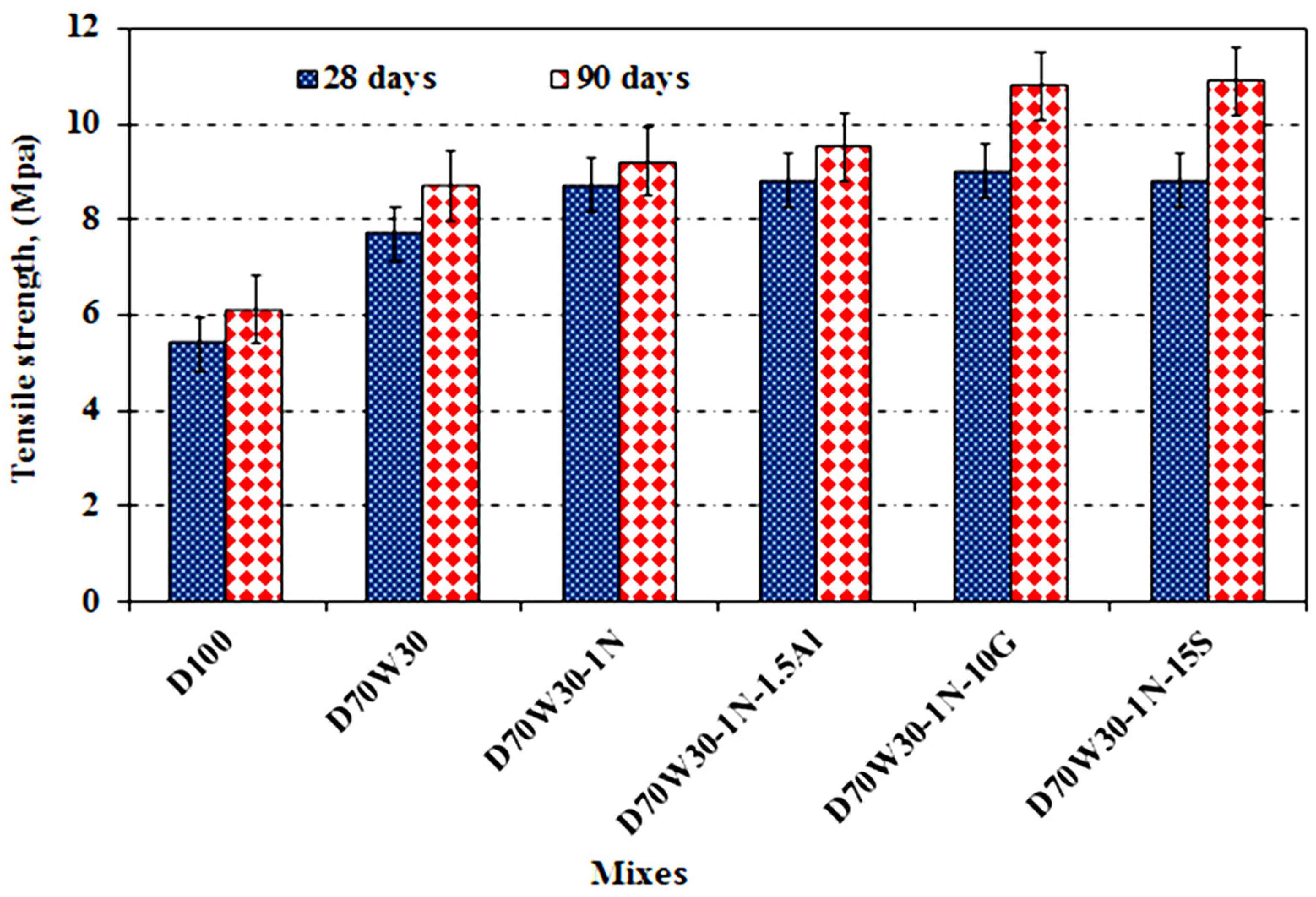
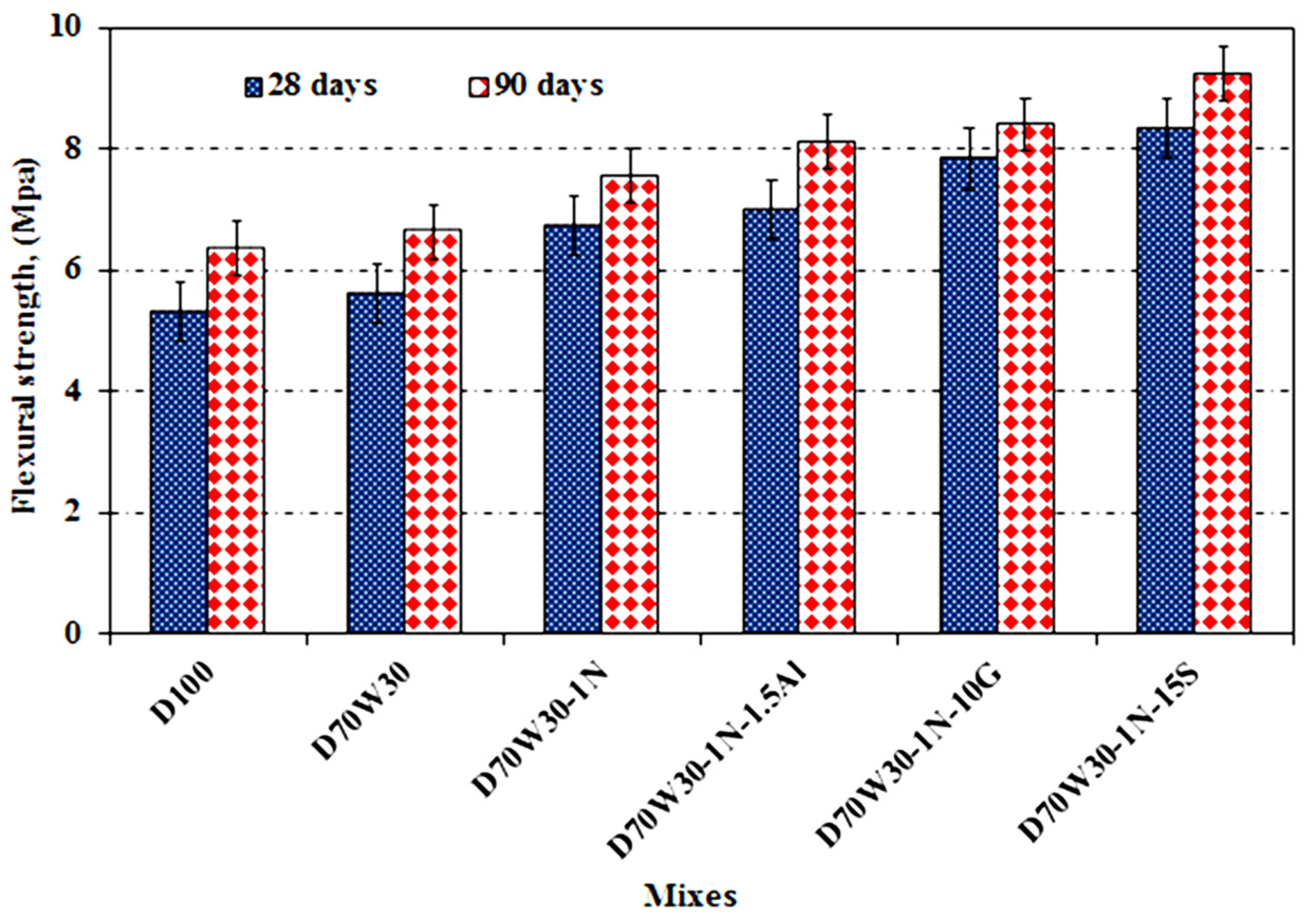
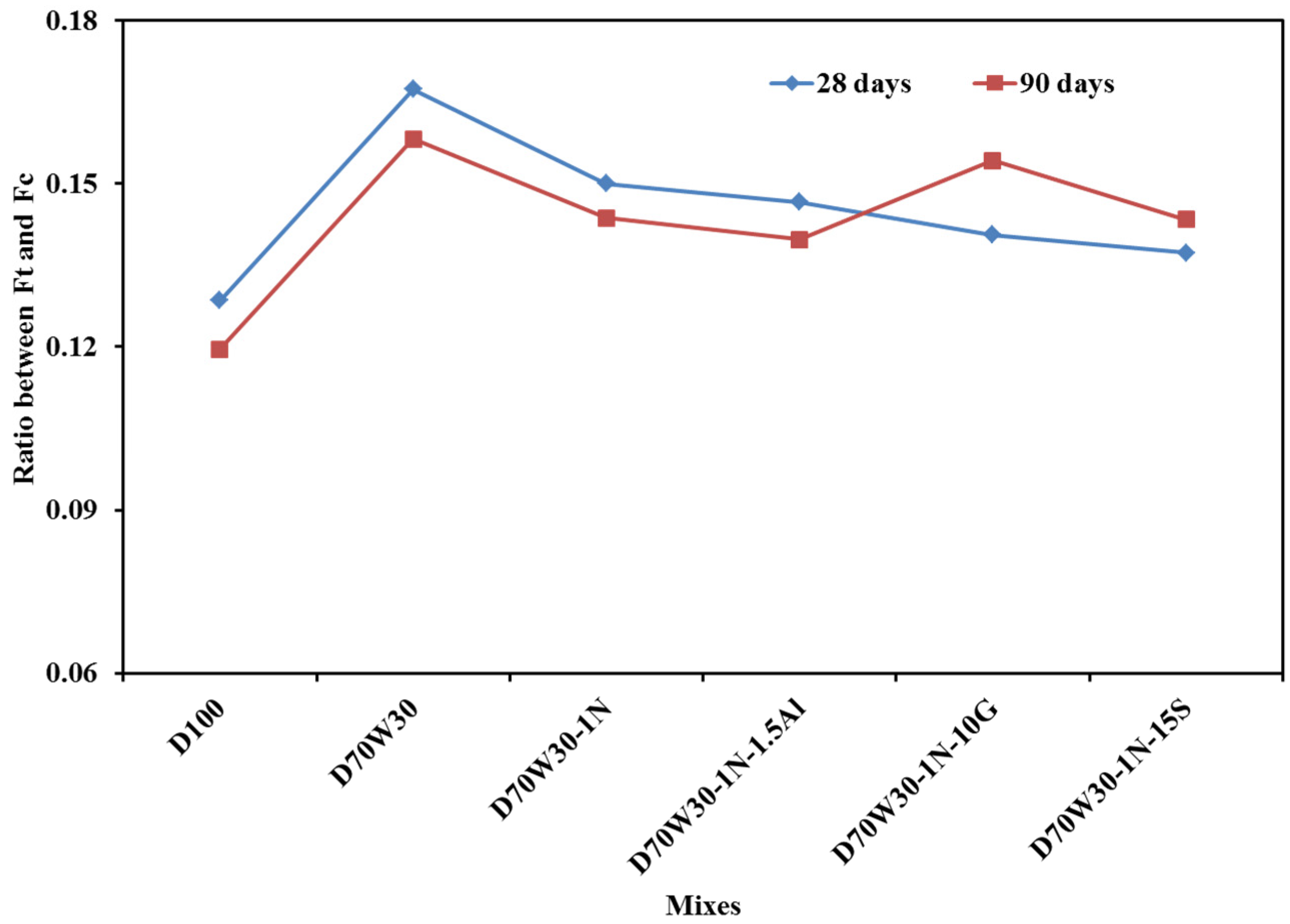
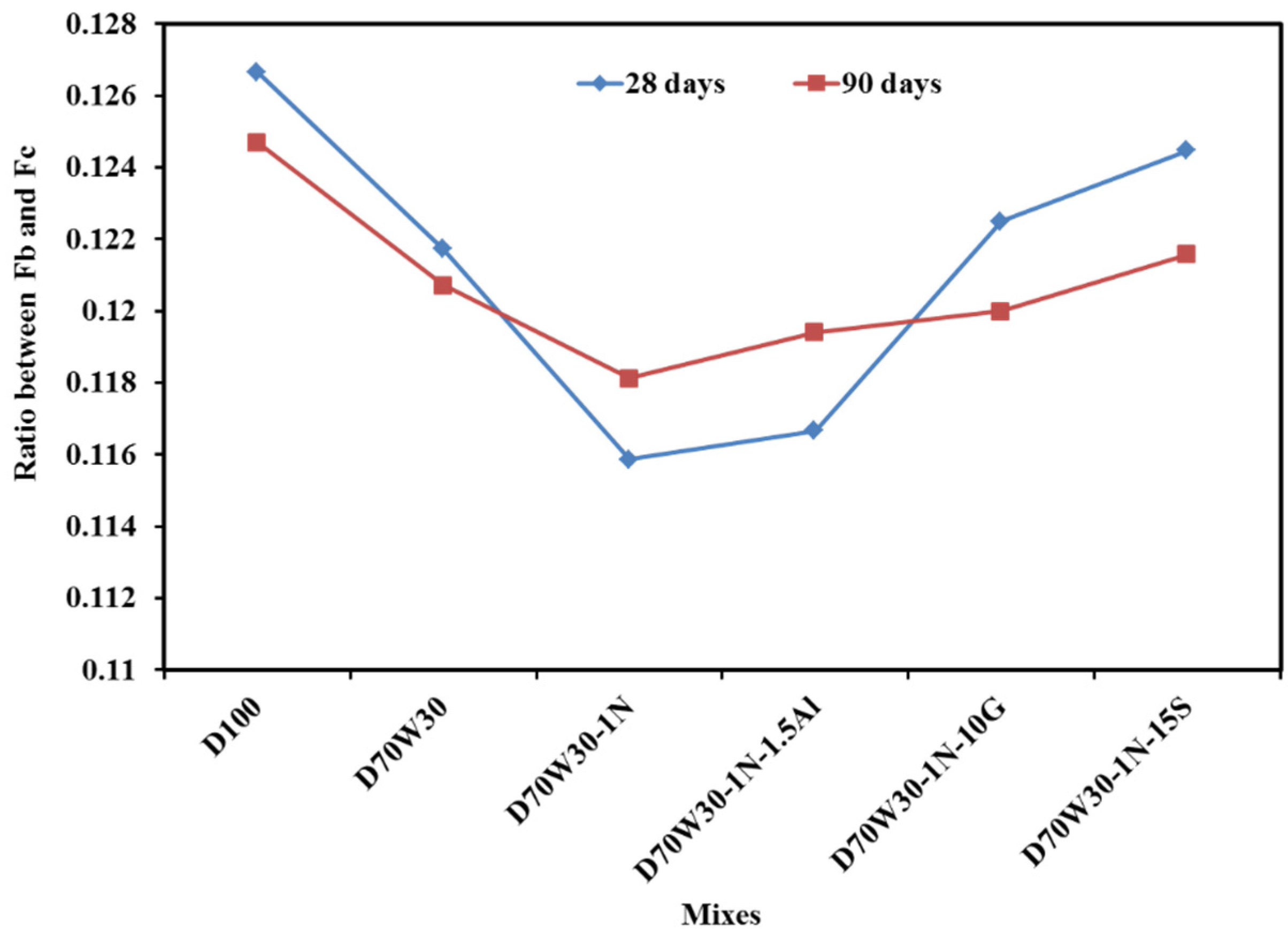
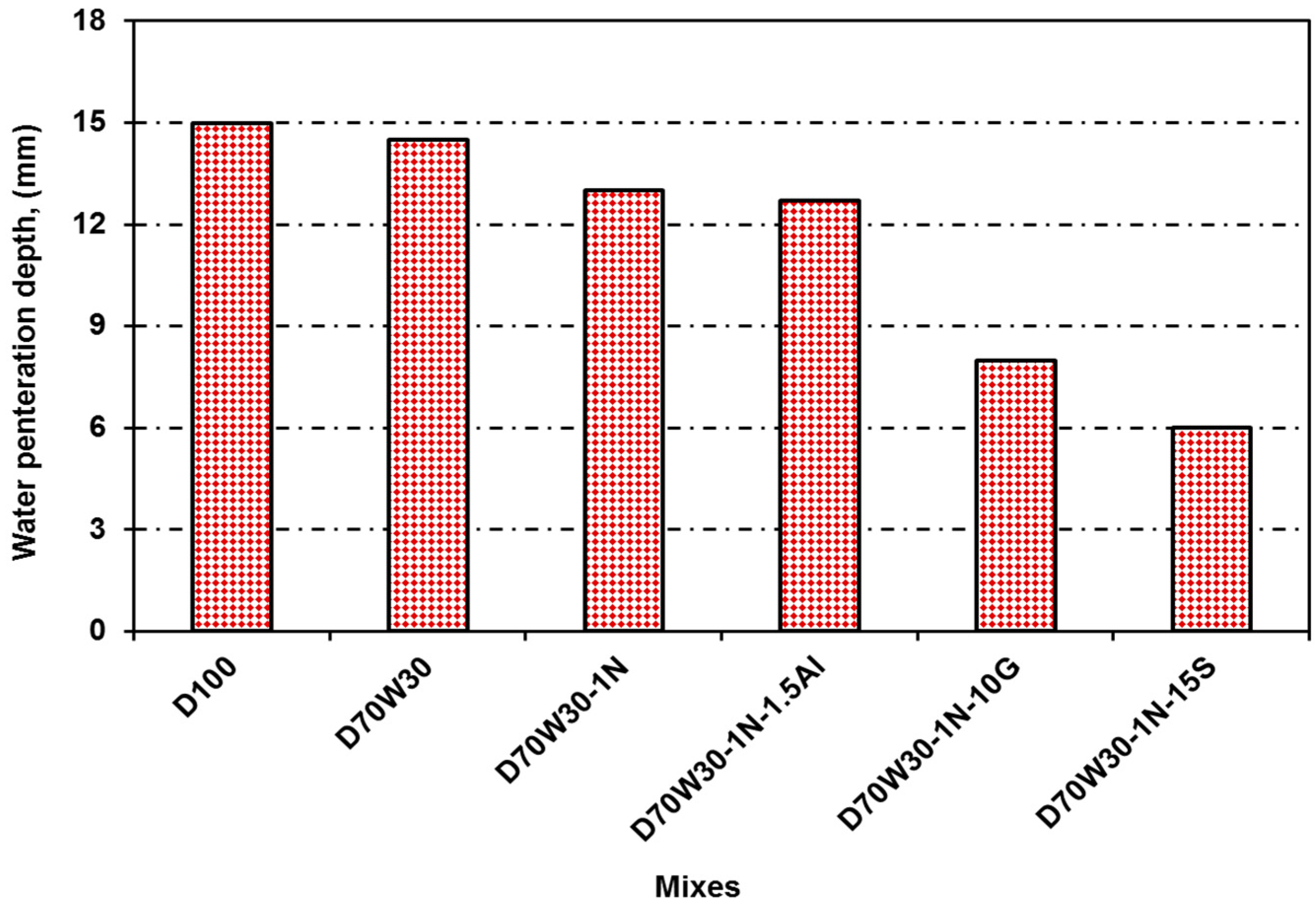
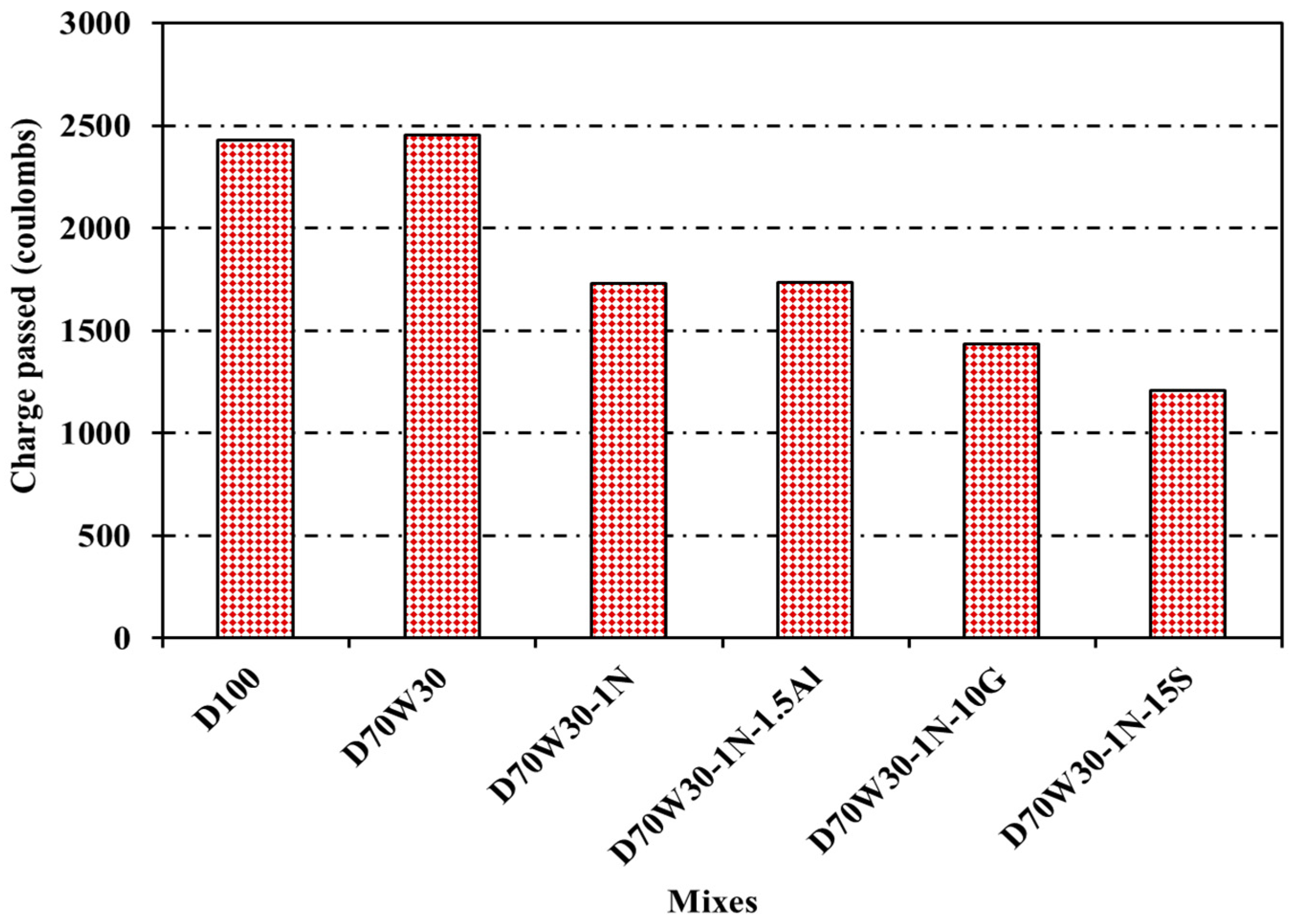
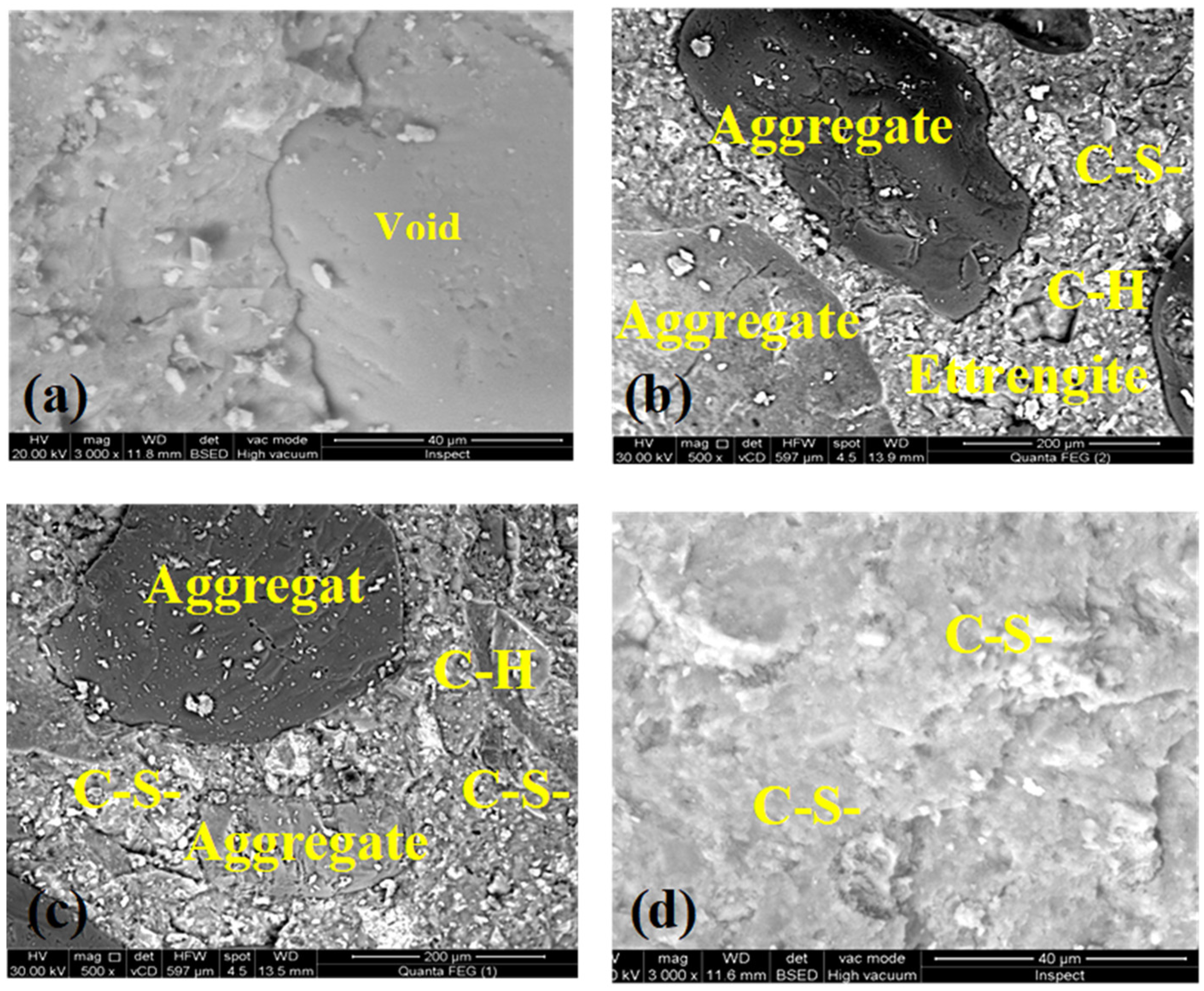
In this work, the effects of recycled concrete aggregate, modified with mineral admixtures and nanosilica, on the mechanical properties and performance of concrete after curing in tap water for 28 and 90 days were investigated. The compressive (ƒc), indirect tensile (ƒt), and flexural (ƒb) strengths for the cured concrete specimens were measured, and the concrete strength ratios were analyzed. The water and rapid chloride permeabilities were measured. SEM analysis of the microstructure was also performed. The coarse aggregates used were dolomite (control) and recycled concrete aggregate, incorporating different mineral admixtures, including ground, granulated blast slag, granite, and nanosilica. It was found that the slump values of the dolomite concrete decreased compared with recycled aggregate concrete. Compared to the control mix produced with the recycled aggregate, the slump value of the concrete mixes created with the recycled aggregate increased by approximately 11.1% with the addition of binary cementing materials of 1% NS. The results also indicate that the concrete mix containing the recycled aggregate had the highest compressive strength, tensile strength, and flexural strength compared to that of the dolomite aggregate. Regarding the compressive strength, the addition of 1% NS and 15% slag improved the physico-mechanical properties of the recycled aggregate concretes compared to the other mixes after curing in tap water. Compared to the other mixes, the concrete mix containing 1% NS and 15% slag had a comparatively dense and compact microstructure.
Keywords: concrete; recycle aggregate; microstructure; nanosilica; slag; compressive strength; tensile strength; flexure strength concrete; recycle aggregate; microstructure; nanosilica; slag; compressive strength; tensile strength; flexure strength