Article

Influence of the Accelerated Aging Process on the Fragment-Resistant Properties of Para-Aramid Body Armor

Institute of Security Technologies “MORATEX”, Marii Sklodowskiej-Curie 3 Street, 90-505 Lodz, Poland
*
Author to whom correspondence should be addressed.
Materials 2022, 15(18), 6492; https://doi.org/10.3390/ma15186492
Submission received: 19 August 2022 / Revised: 13 September 2022 / Accepted: 15 September 2022 / Published: 19 September 2022
(This article belongs to the Special Issue Materials Dedicated for Armours and Protection Systems)

Abstract

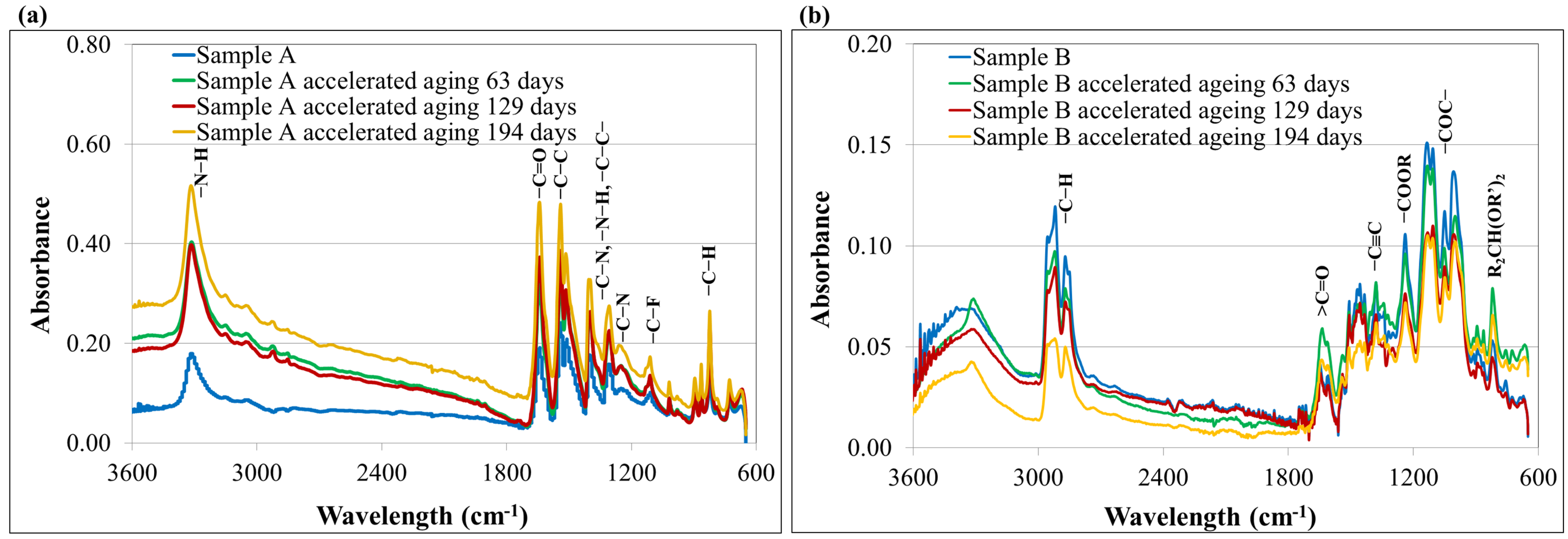
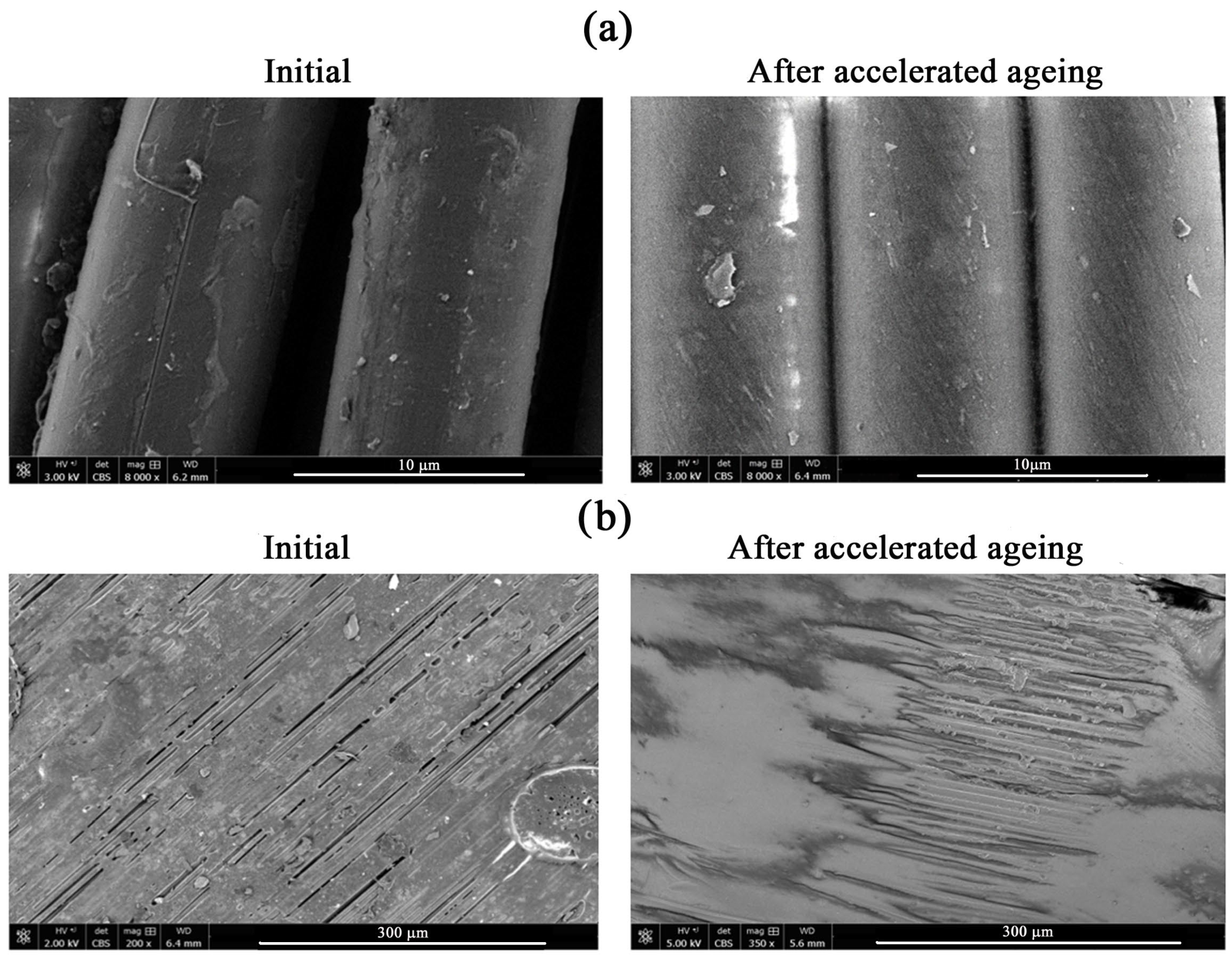
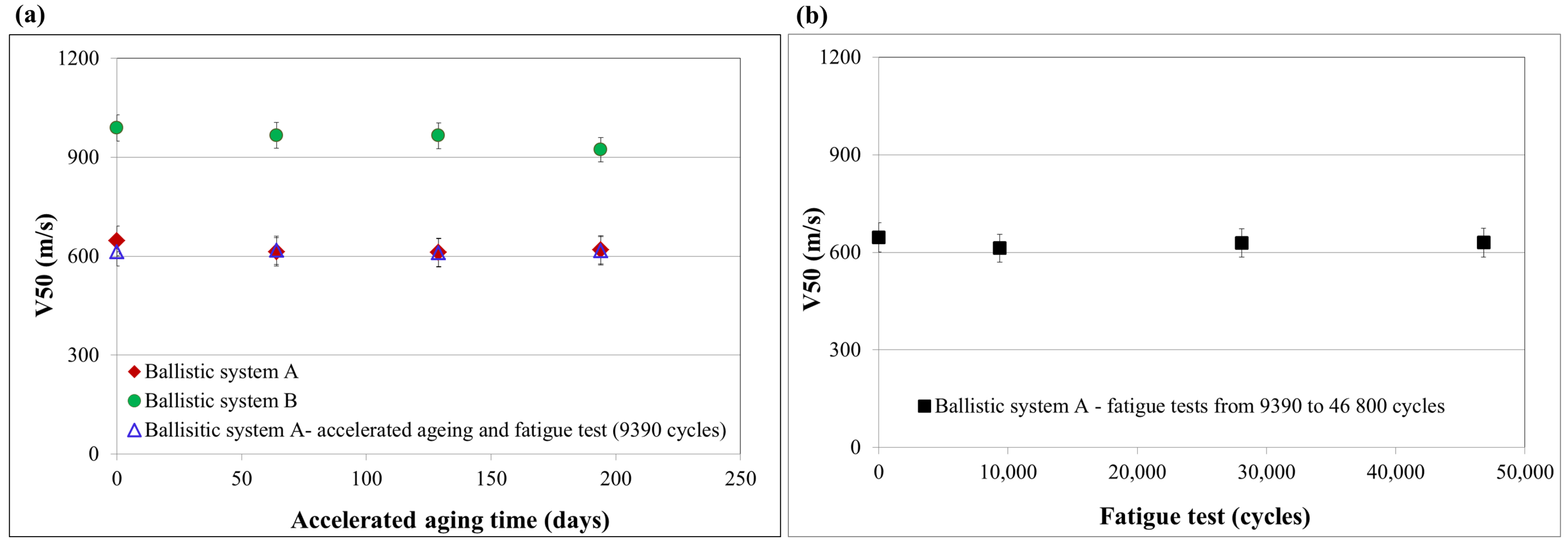
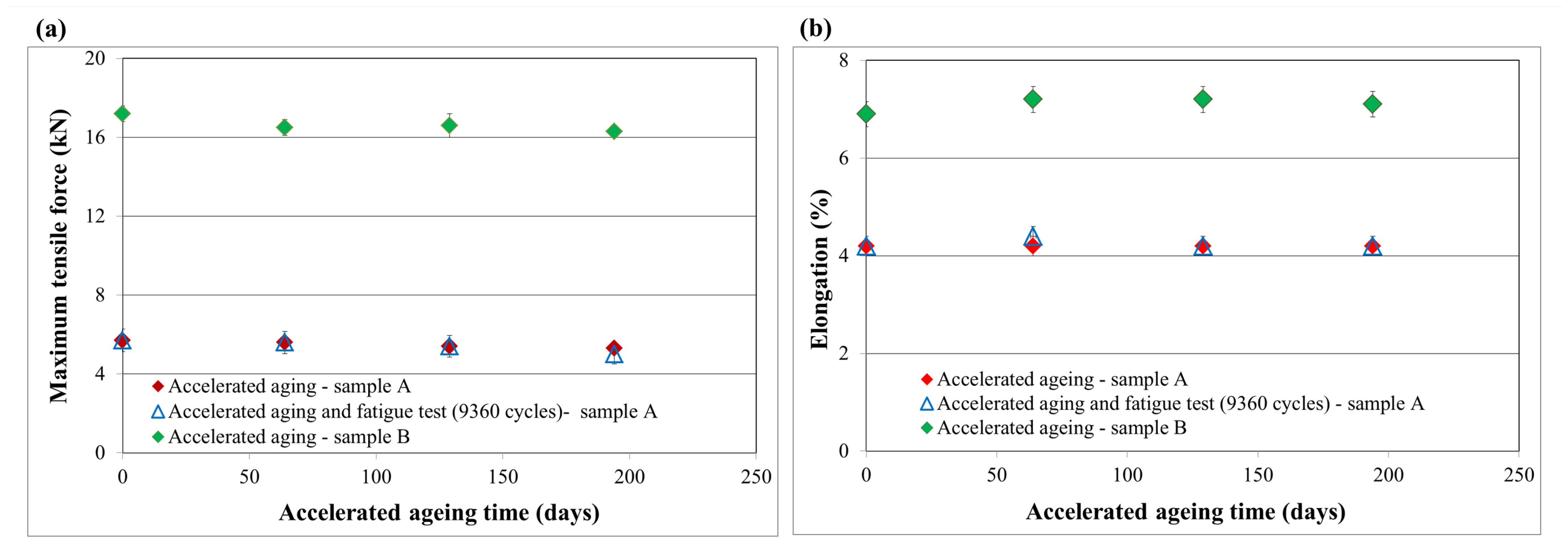
Para-aramid materials such as Twaron® and Kevlar® are commonly used for ballistic-resistant body armor, which are designed to protect human life and health. For this reason, the materials from which body armor are made should be thoroughly investigated in the area of long-term reliability, particularly with regard to exposure to UV light, humidity and temperature, as these are known causes of degradation in commonly used ballistic materials. This research presents the durability of soft and hard ballistic inserts designed using para-aramid (Twaron®) materials. Para-aramid ballistic inserts not subjected to accelerated aging processes and also ones subjected to laboratory aging for 63, 129 and 194 days, which corresponded to 2, 4 and 6 years of aging in real conditions, were tested. The selected para-aramid inserts were verified in terms of ballistic and physico-mechanical properties as well as changes in chemical structure of the ballistic materials. Ballistic tests were carried out with the use of a 1.1 g FSP.22 fragment according to STANAG 2920. Changes in the microstructure of the para-aramid materials were evaluated using infrared spectroscopy and scanning electron microscopy. The obtained results indicate that despite the changes which took place at the molecular level in the Twaron® materials, accelerated aging processes do not affect the fragmentation resistance properties of ballistic inserts made of para-aramid materials.
Keywords: accelerated ageing; ballistic inserts; para-aramid; fragment resistance; infrared spectroscopy; thermogravimetry; scanning electron microscopy accelerated ageing; ballistic inserts; para-aramid; fragment resistance; infrared spectroscopy; thermogravimetry; scanning electron microscopy