Article

Modeling and Control of Layer Height in Laser Wire Additive Manufacturing
1
Department of Engineering, University of Luxembourg, 6, Rue -Kalergi, L-1359 Luxembourg, Luxembourg
2
Mechanical and Mechatronics Engineering Department, Faculty of Engineering and Information Technology, An-Najah National University, Nablus P.O. Box 7, Palestine
3
Plateforme DRIEG CND and Assembly, Institut de Soudure, 4 Bd Henri Becquerel, 57970 Yutz, France
*
Author to whom correspondence should be addressed.
Materials 2022, 15(13), 4479; https://doi.org/10.3390/ma15134479
Submission received: 19 May 2022 / Revised: 15 June 2022 / Accepted: 22 June 2022 / Published: 25 June 2022
(This article belongs to the Special Issue Monitoring and Control in Additive Manufacturing Processes)

Abstract

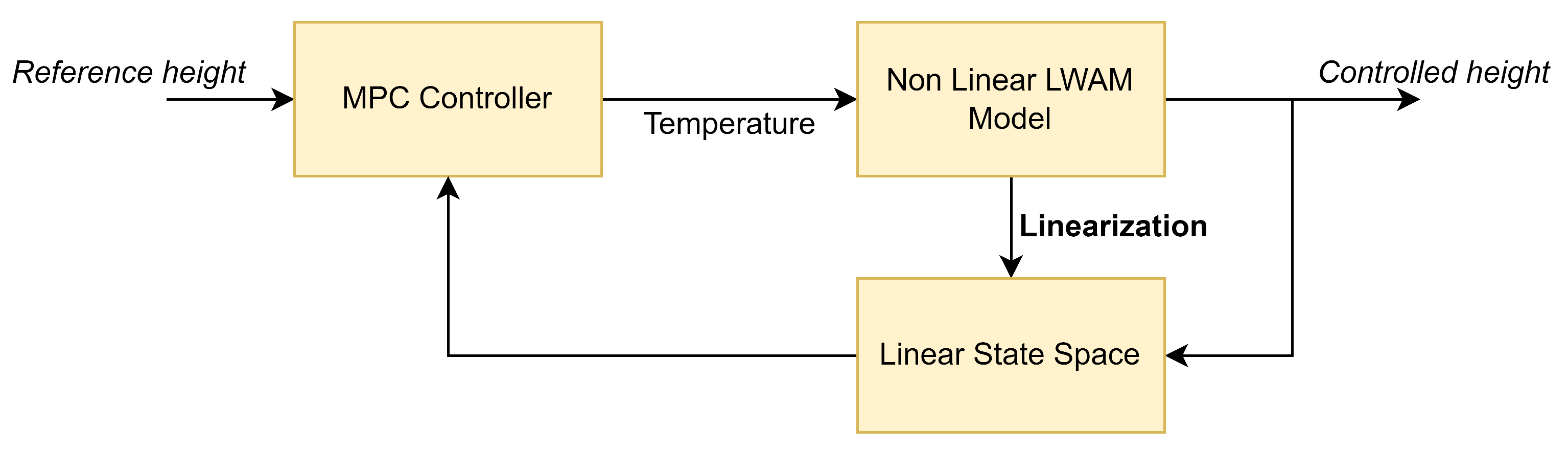
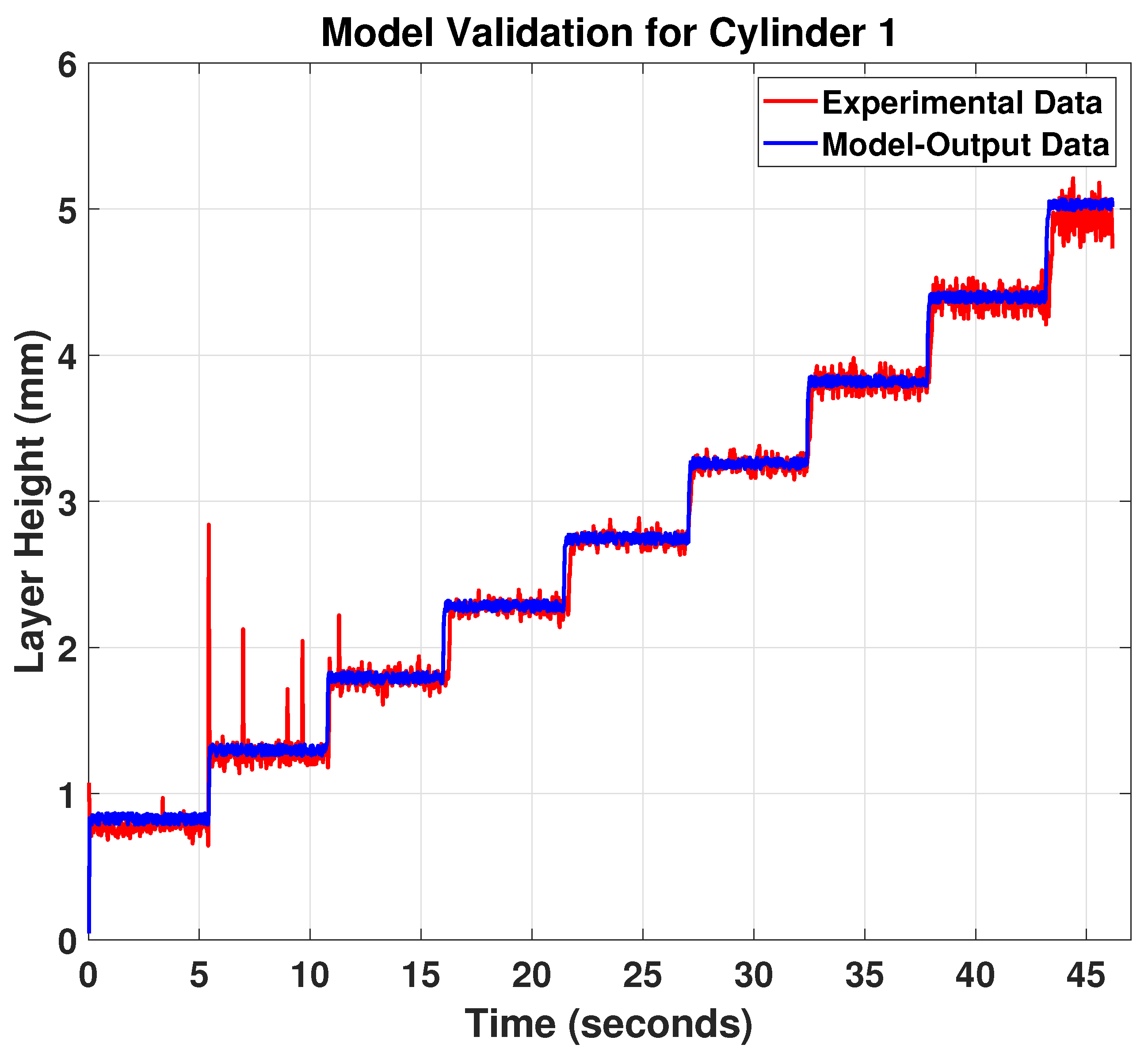
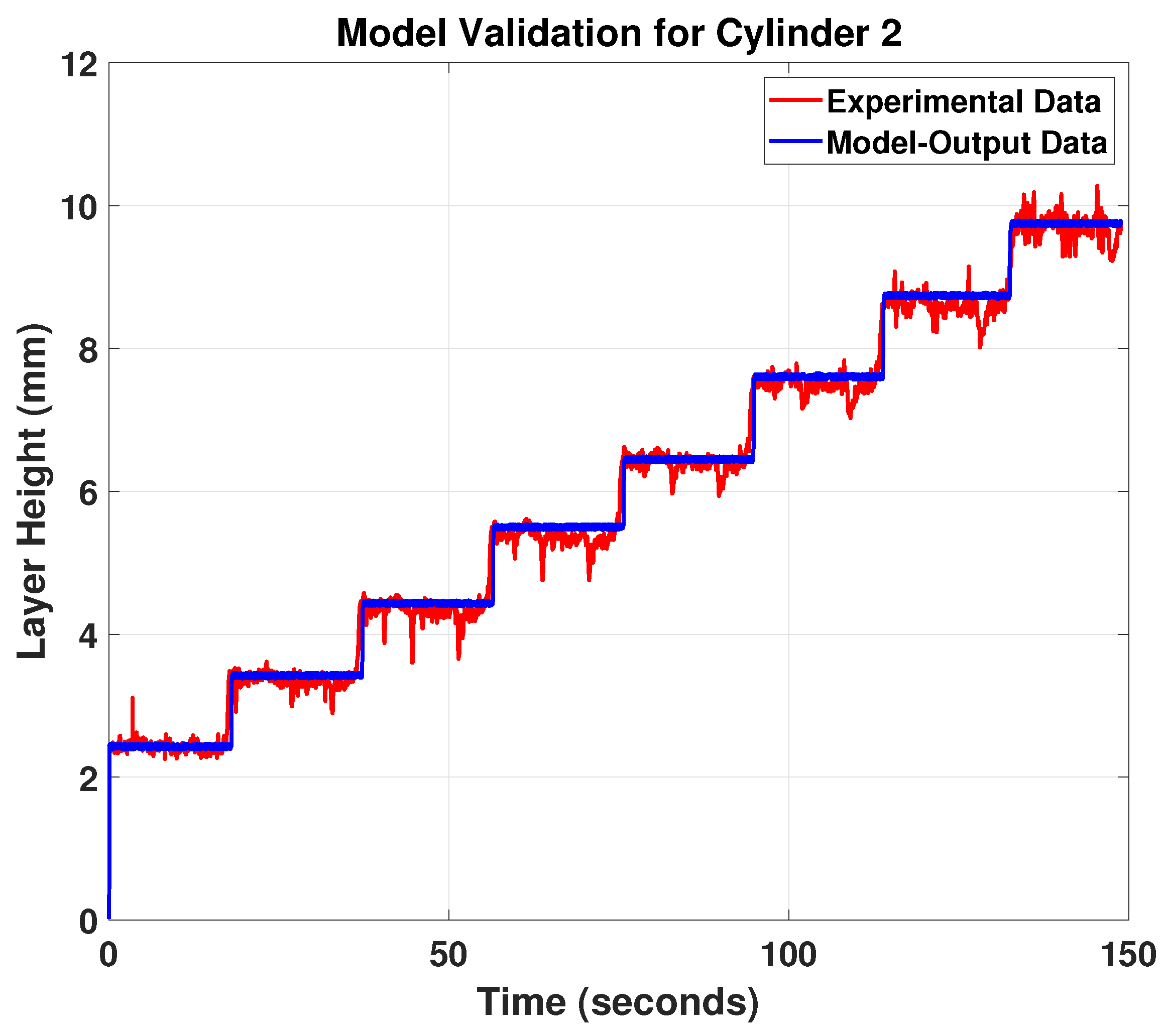
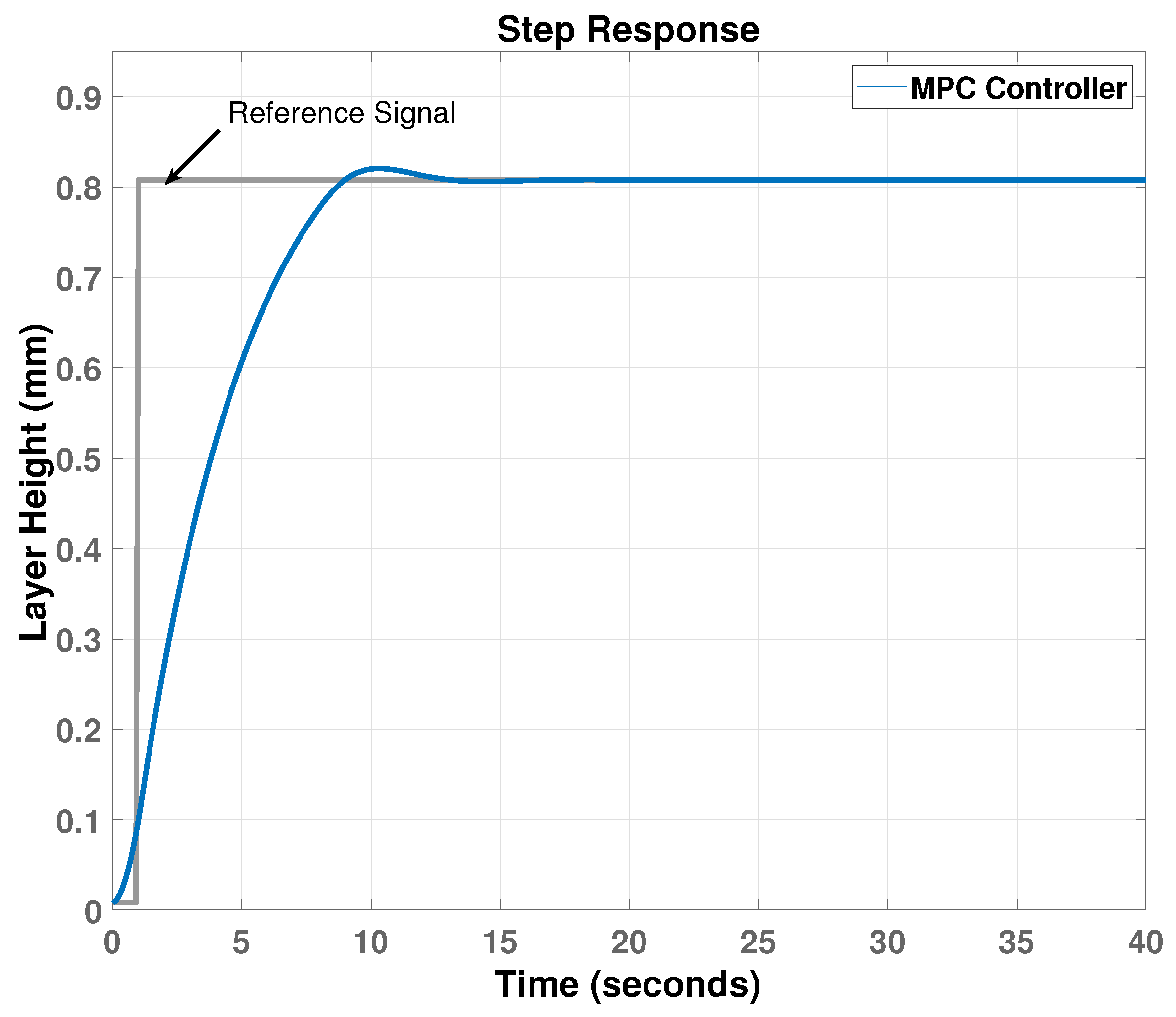
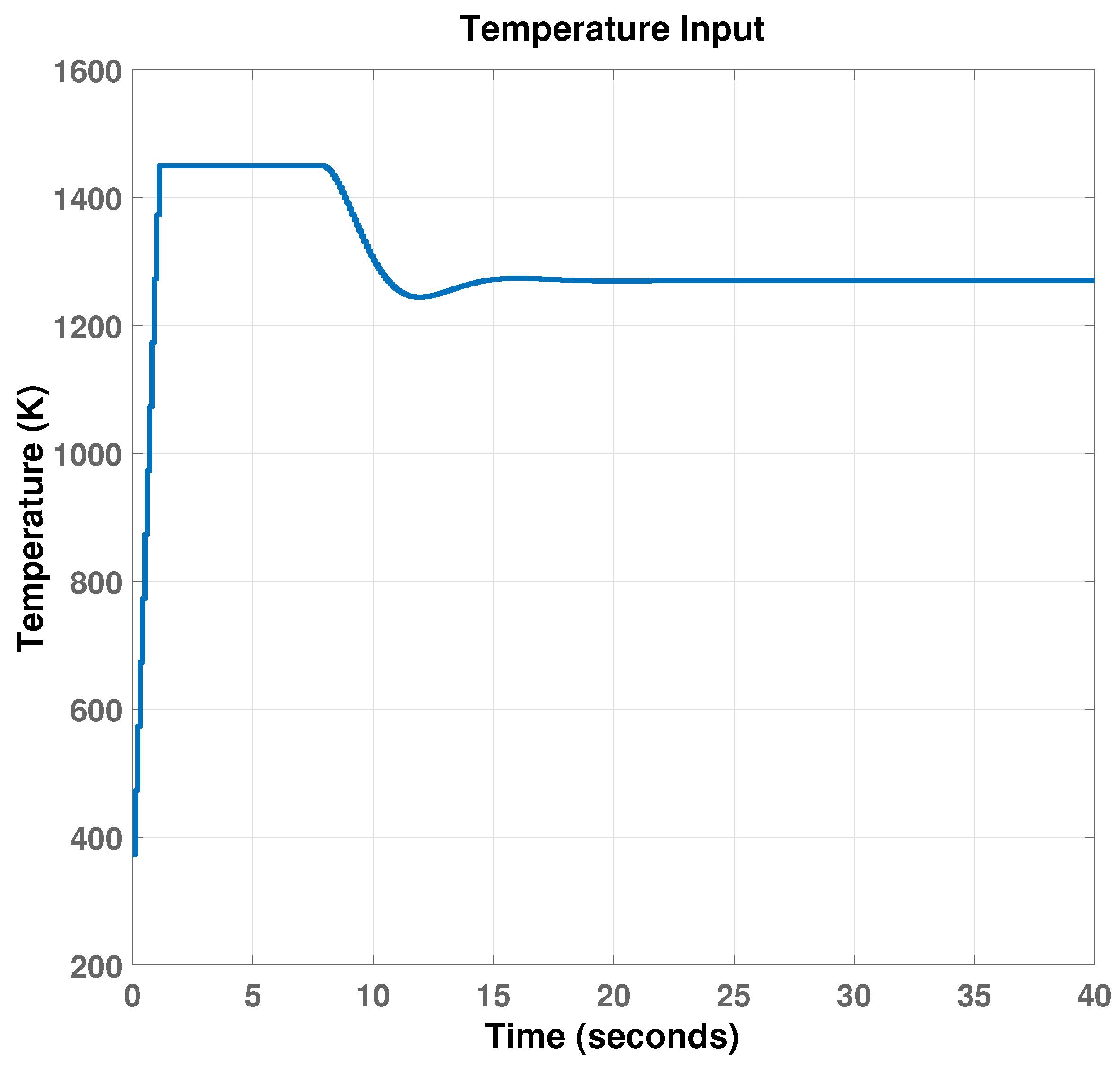
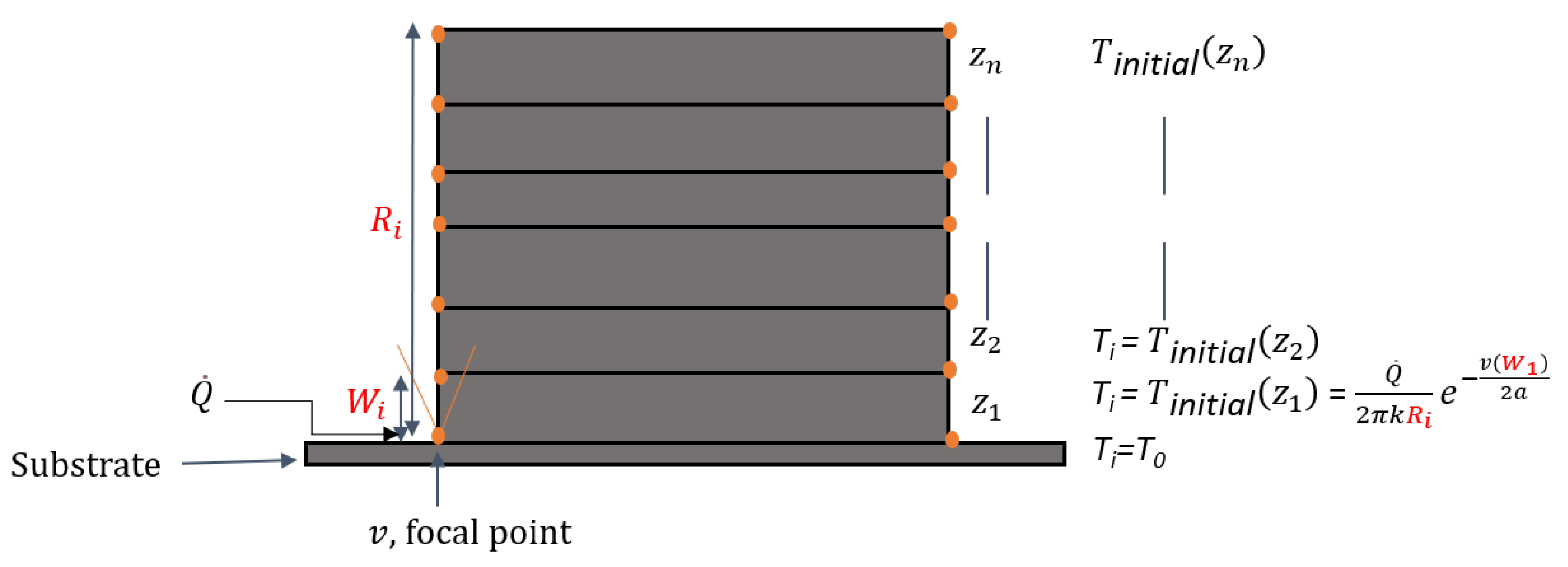
Laser Wire Additive Manufacturing (LWAM) is a flexible and fast manufacturing method used to produce variants of high metal geometric complexity. In this work, a physics-based model of the bead geometry including process parameters and material properties was developed for the LWAM process of large-scale products. The developed model aimed to include critical process parameters, material properties and thermal history to describe the relationship between the layer height with different process inputs (i.e., the power, the standoff distance, the temperature, the wire-feed rate, and the travel speed). Then, a Model Predictive Controller (MPC) was designed to keep the layer height trajectory constant taking into consideration the constraints faced in the LWAM technology. Experimental validation results were performed to check the accuracy of the proposed model and the results revealed that the developed model matches the experimental data. Finally, the designed MPC controller was able to track a predefined layer height reference signal by controlling the temperature input of the system.
Keywords: Laser Wire Additive Manufacturing; Model Predictive Controller; physics-based model Laser Wire Additive Manufacturing; Model Predictive Controller; physics-based model