Article

Study on Simulation and Experiment of Cu, C-Doped Ag/Ni Contact Materials
1
State Key Laboratory of Reliability and Intelligence of Electrical Equipment, Hebei University of Technology, Tianjin 300130, China
2
Guilin Electrical Equipment Scientific Research Institute Co., Ltd., Guilin 541000, China
3
Xiamen Hongfa Electroacoustic Co., Ltd., Xiamen 361000, China
*
Author to whom correspondence should be addressed.
Materials 2022, 15(11), 4019; https://doi.org/10.3390/ma15114019
Submission received: 8 May 2022 / Revised: 26 May 2022 / Accepted: 31 May 2022 / Published: 6 June 2022

Abstract

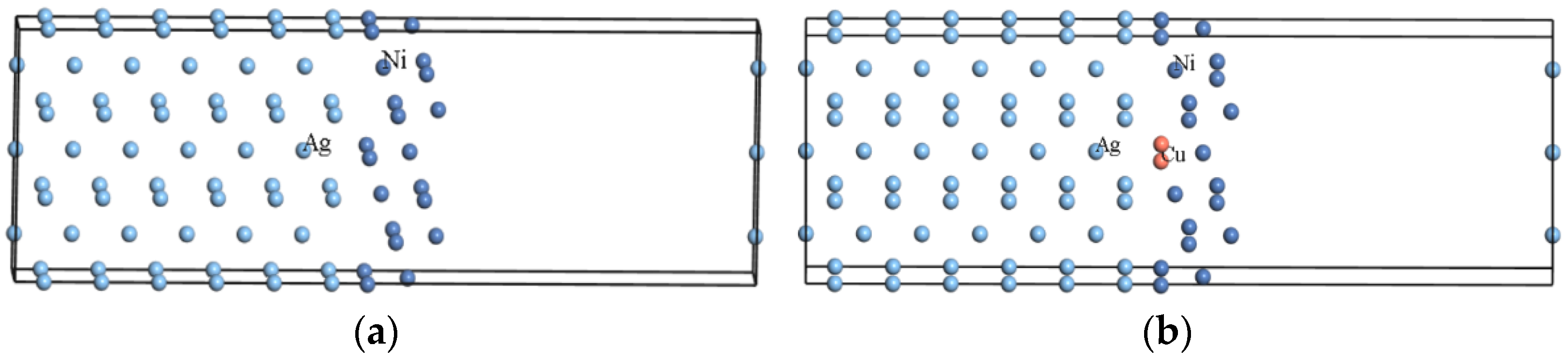
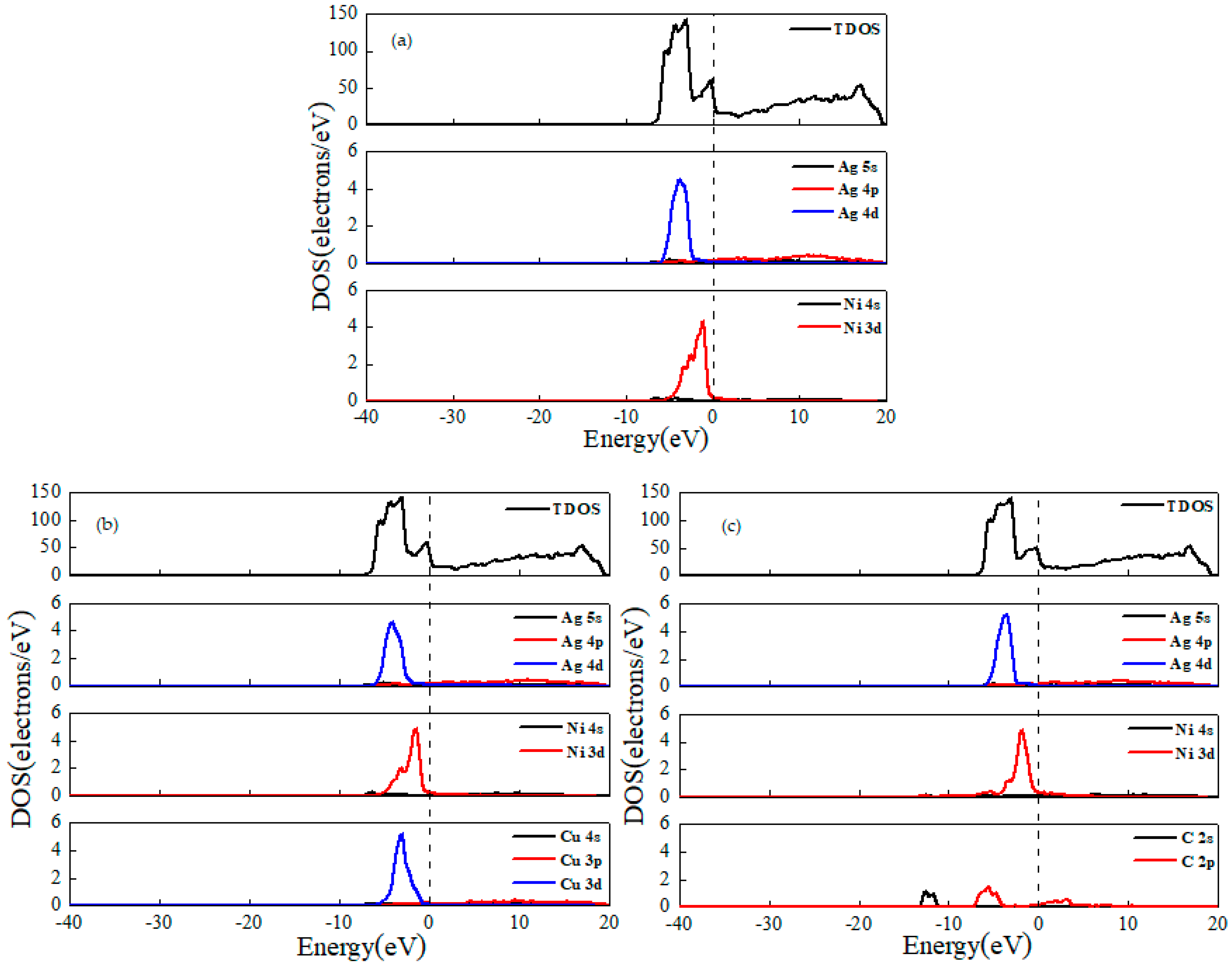
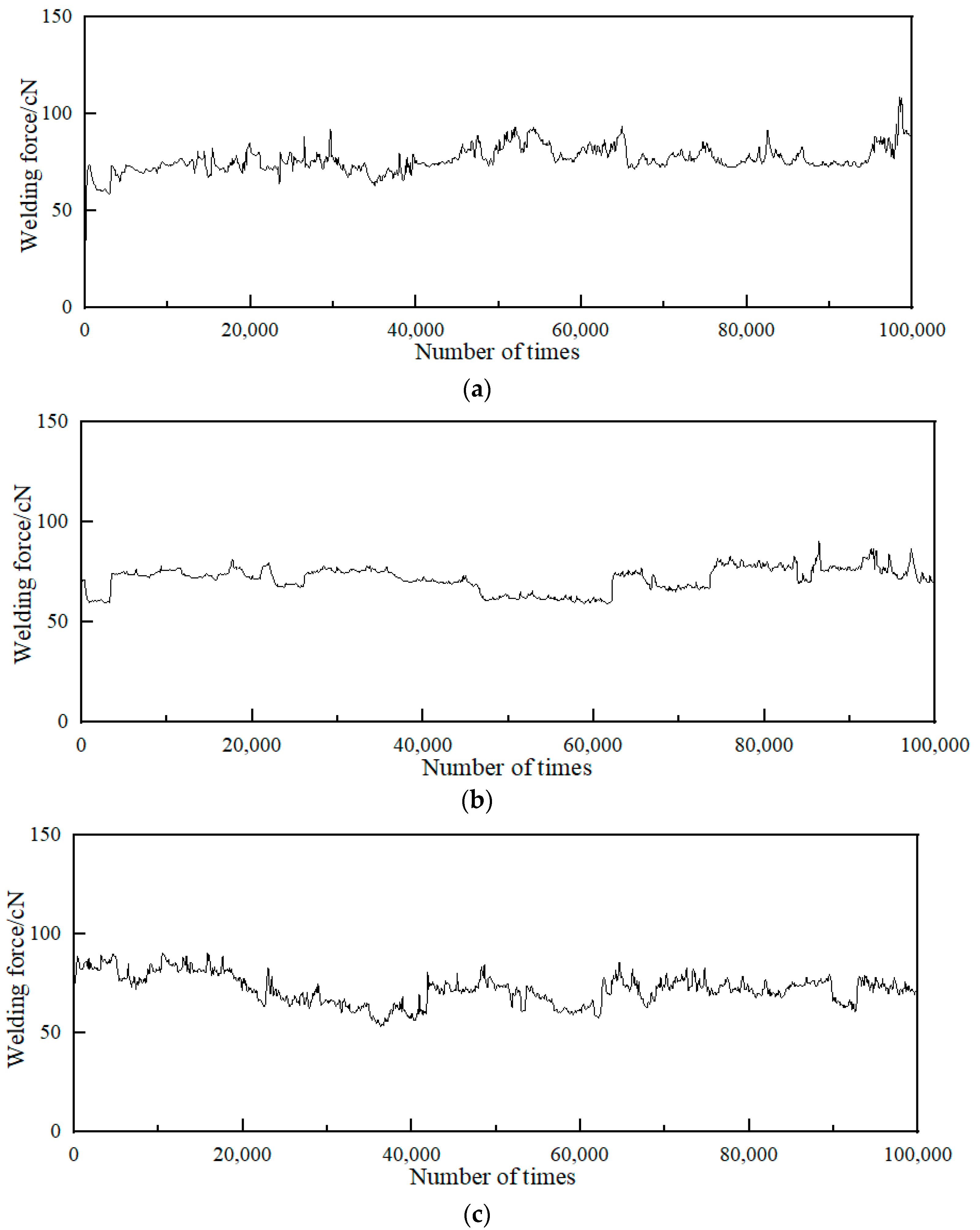
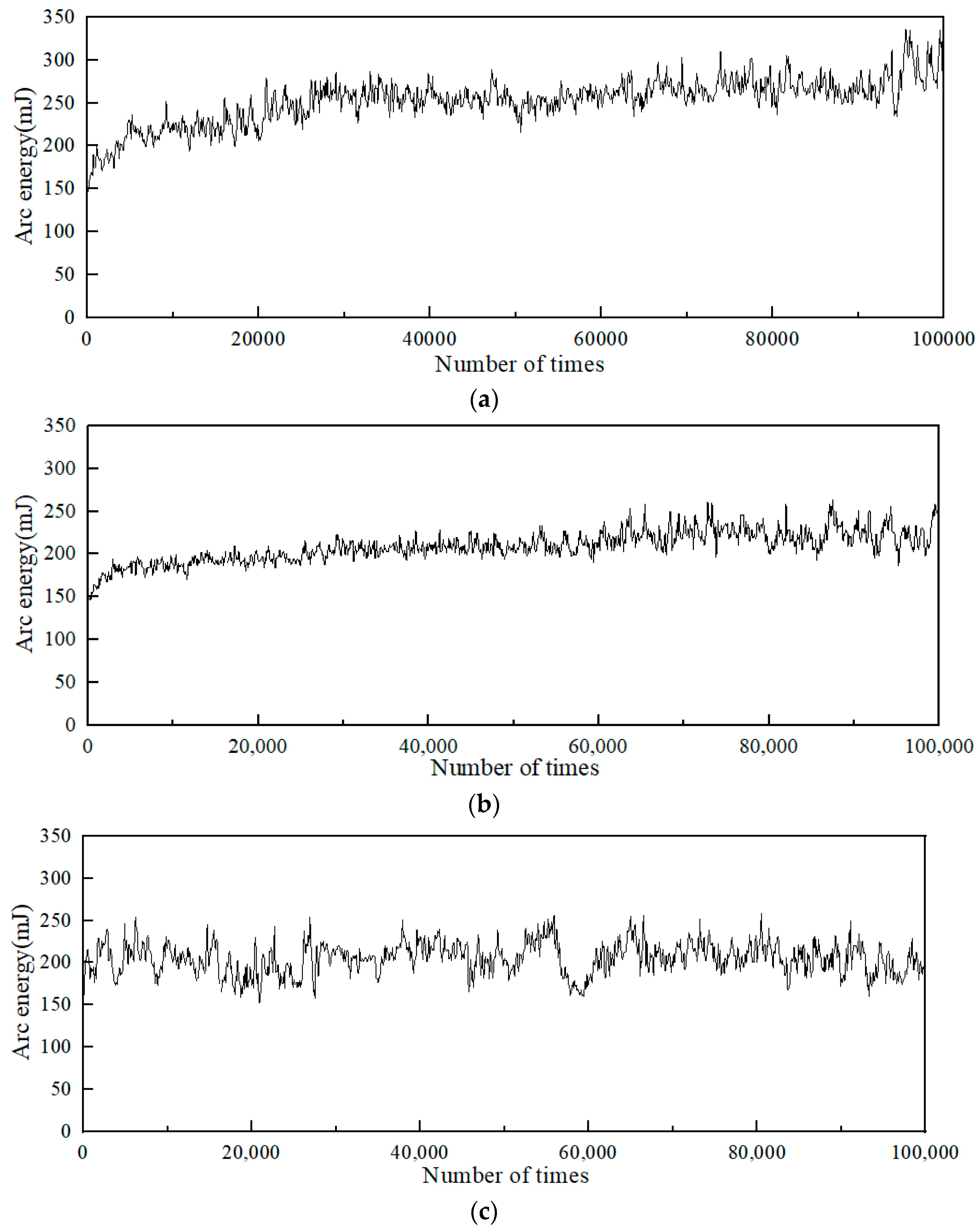
Ag/Ni contact material with greenery and good performance is a cadmium-free silver-based contact material that has been vigorously developed in recent years. However, Ag/Ni contact material has poor welding resistance. Based on the first principles of density functional theory, the interface model of Cu, C-doped Ag/Ni was established. The work of separation and interfacial energy of interface models showed that doping can improve the interfacial bonding strength and interfacial stability, with C-doped Ag/Ni having the strongest stability and interfacial bonding strength. It can be seen from the population and density of state that covalent bonds exist between Ag and Ni atoms of the Ag/Ni phase interface at the electronic structure level. Finally, the doped Ag/Ni contact material was prepared by the powder metallurgy method. Through the arc energy and welding force in the electrical contact experiment, it was obtained that the welding resistance of C-doped Ag/Ni was better than Cu-doped Ag/Ni contact material, which verified the correctness of the simulation results. Overall, the present study provides a theoretical method for the screening of doping elements to improve the performance of Ag/Ni contact material.
Keywords: Ag/Ni contact material; density functional theory; doping; interfacial bonding strength Ag/Ni contact material; density functional theory; doping; interfacial bonding strength