Article

Electronic Properties and Structure of Silicene on Cu and Ni Substrates
by
Alexander Galashev
* and
Alexey Vorob’ev
Institute of High-Temperature Electrochemistry, Ural Branch, Russian Academy of Sciences, Sofia Kovalevskaya Str. 22, 620990 Yekaterinburg, Russia
*
Author to whom correspondence should be addressed.
Materials 2022, 15(11), 3863; https://doi.org/10.3390/ma15113863
Submission received: 18 April 2022 / Revised: 20 May 2022 / Accepted: 26 May 2022 / Published: 28 May 2022
(This article belongs to the Special Issue Electrochemical Processes, Materials and Devices)

Abstract

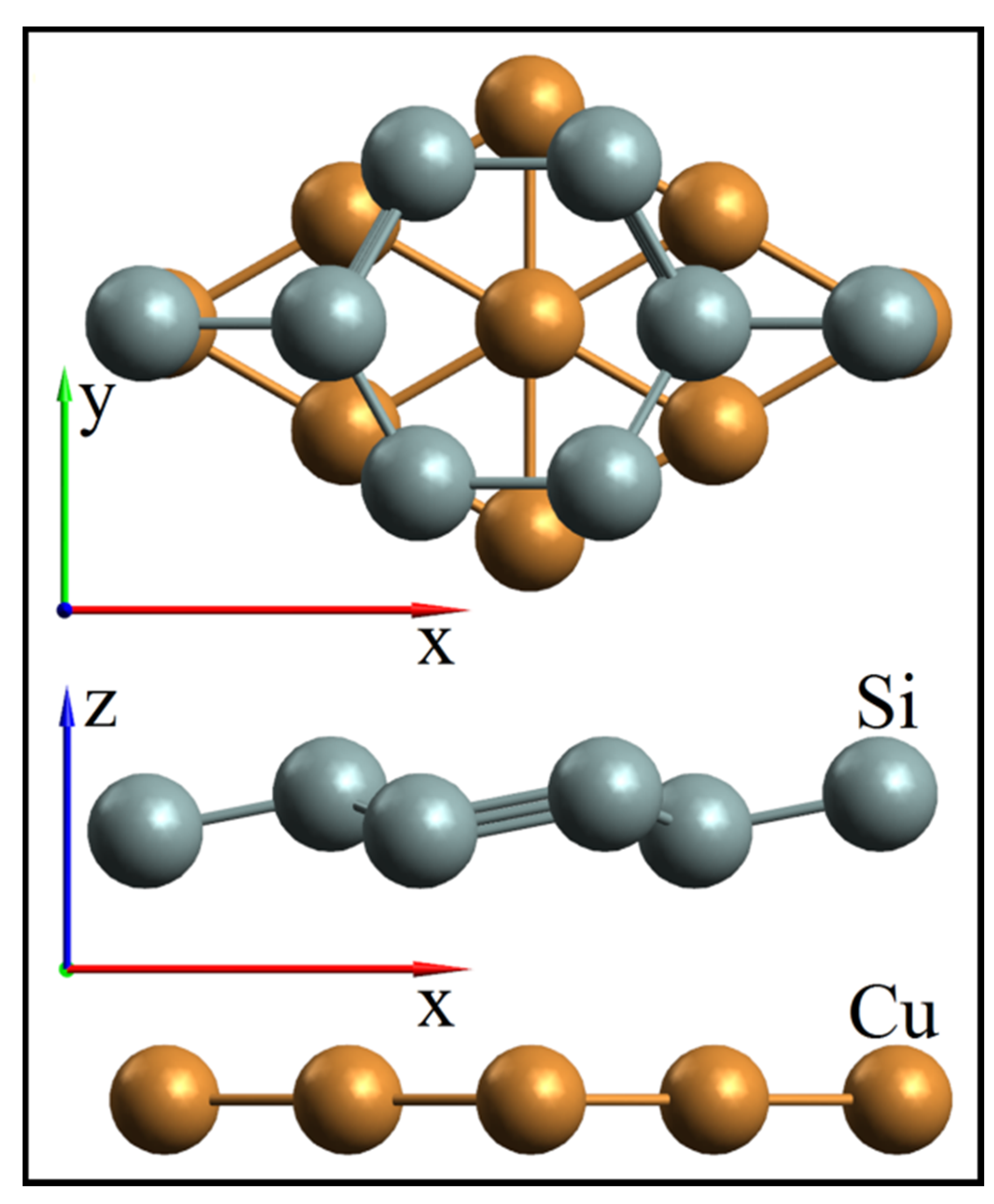
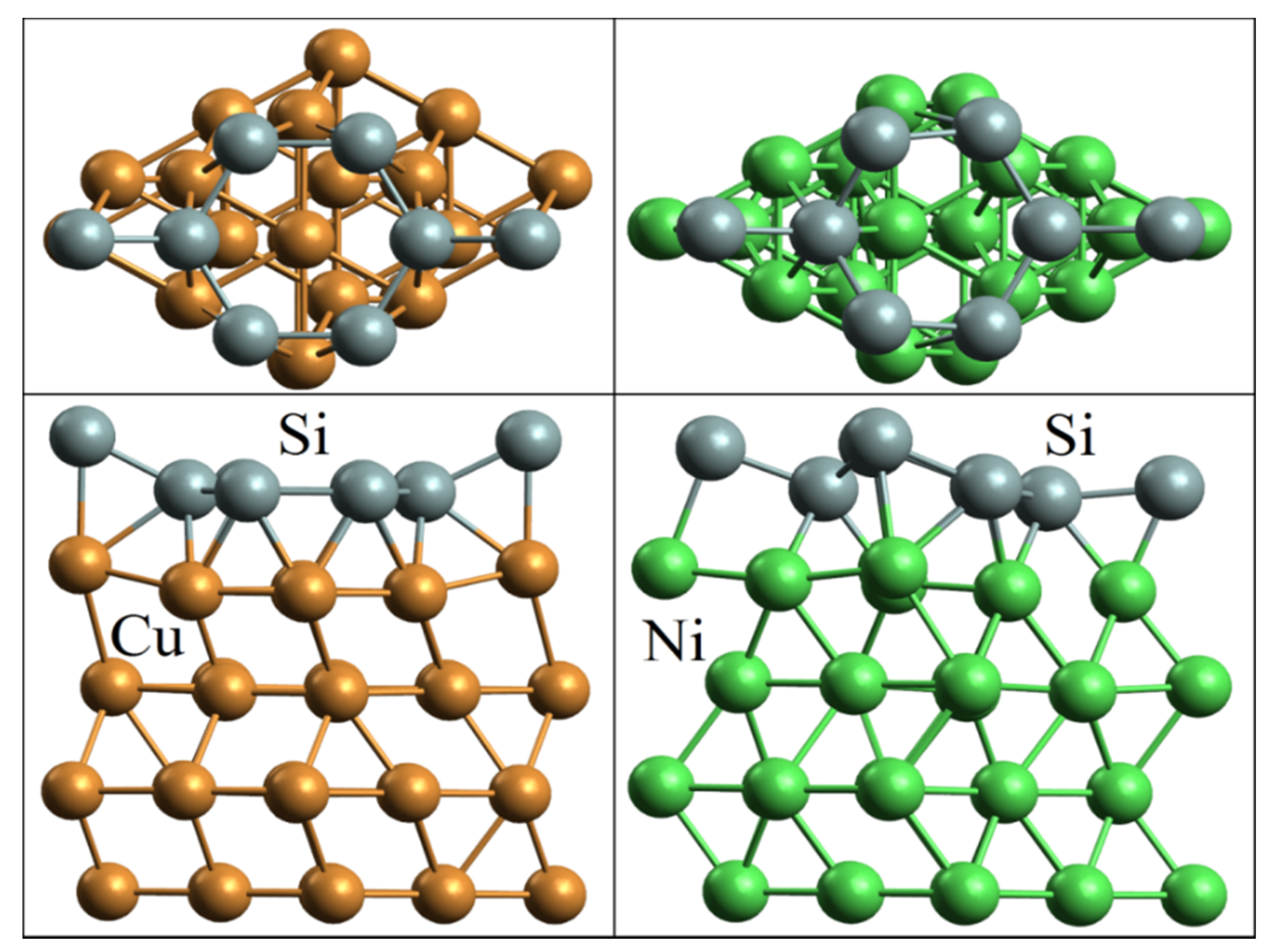
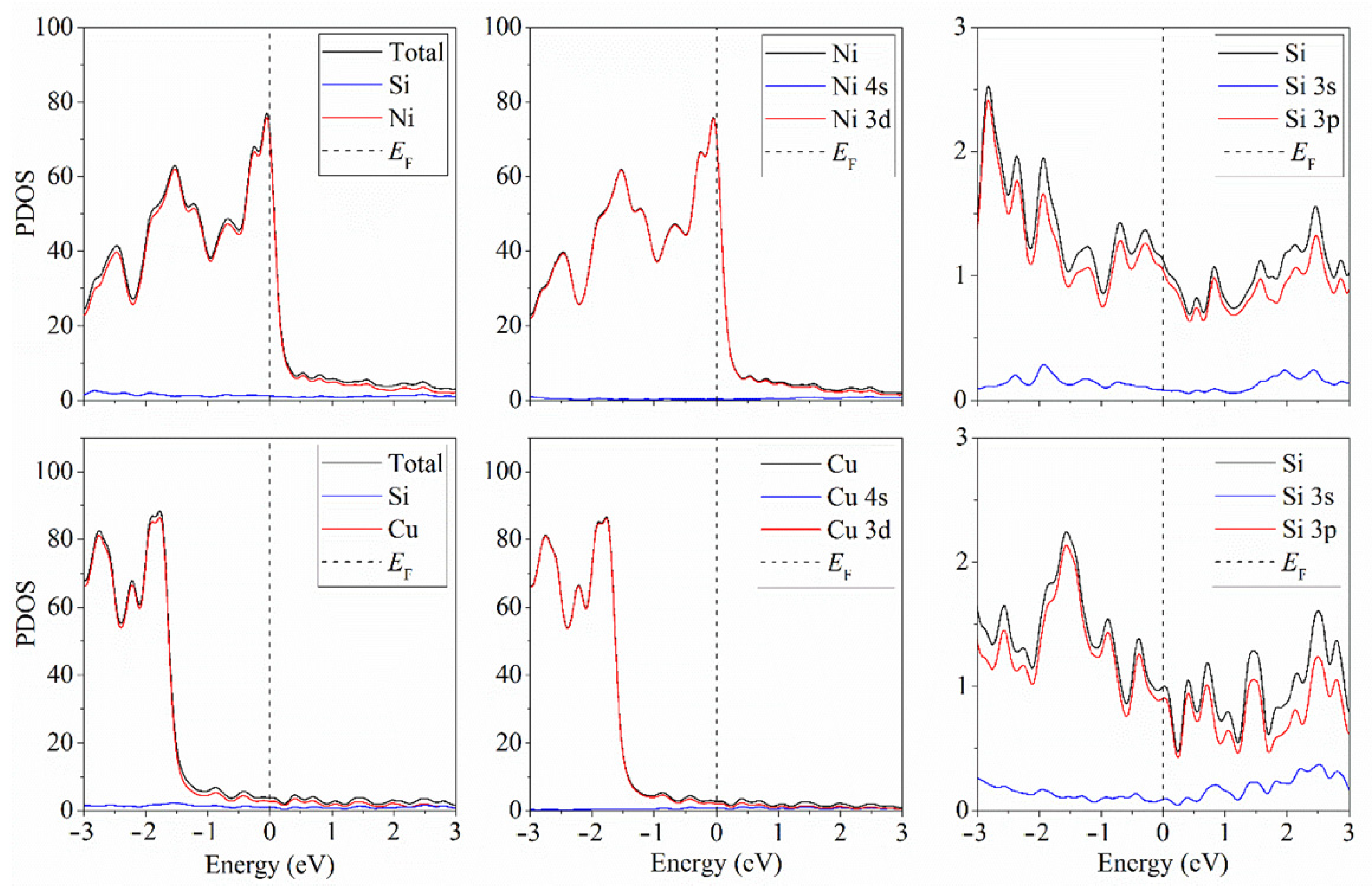
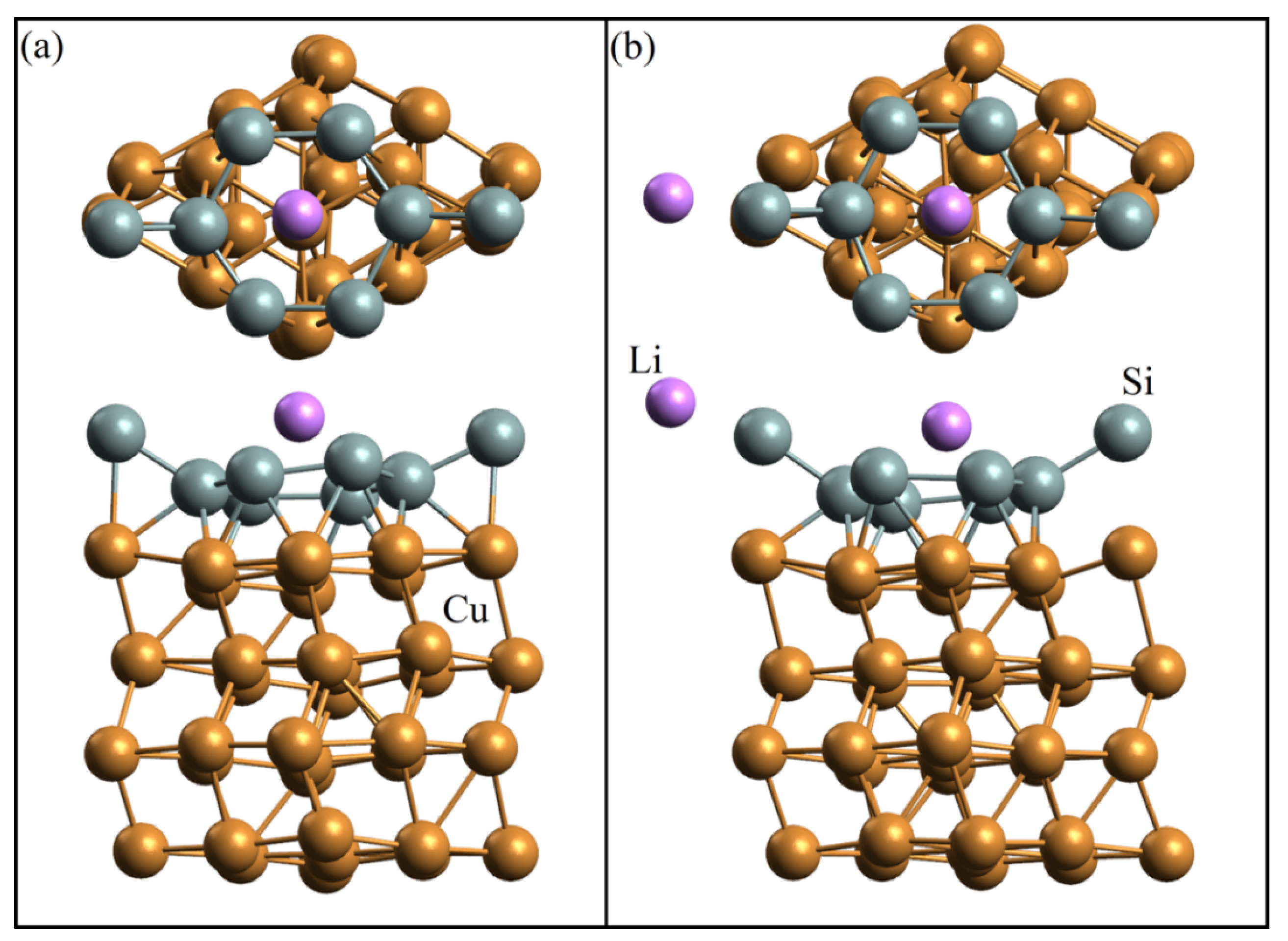
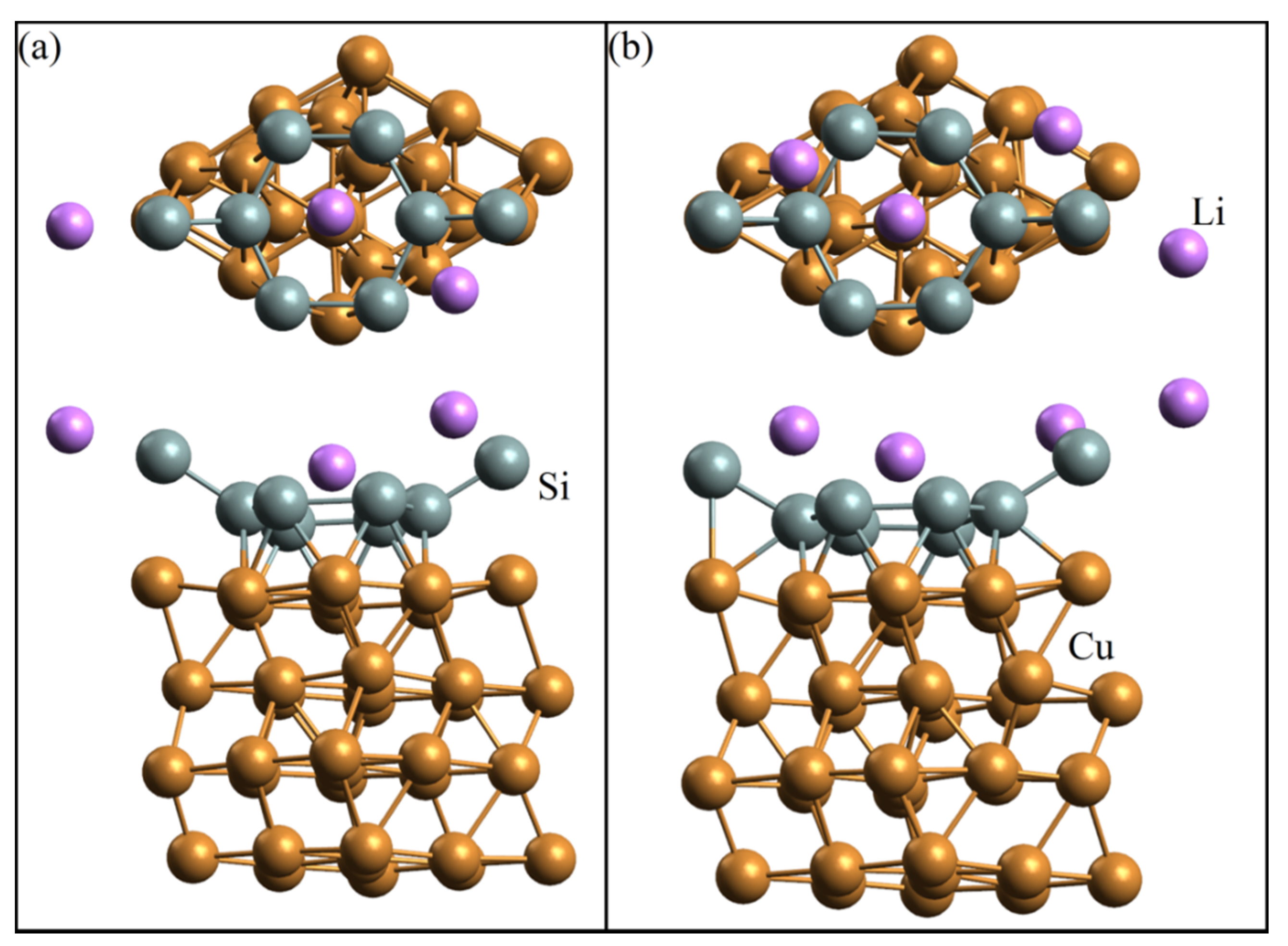
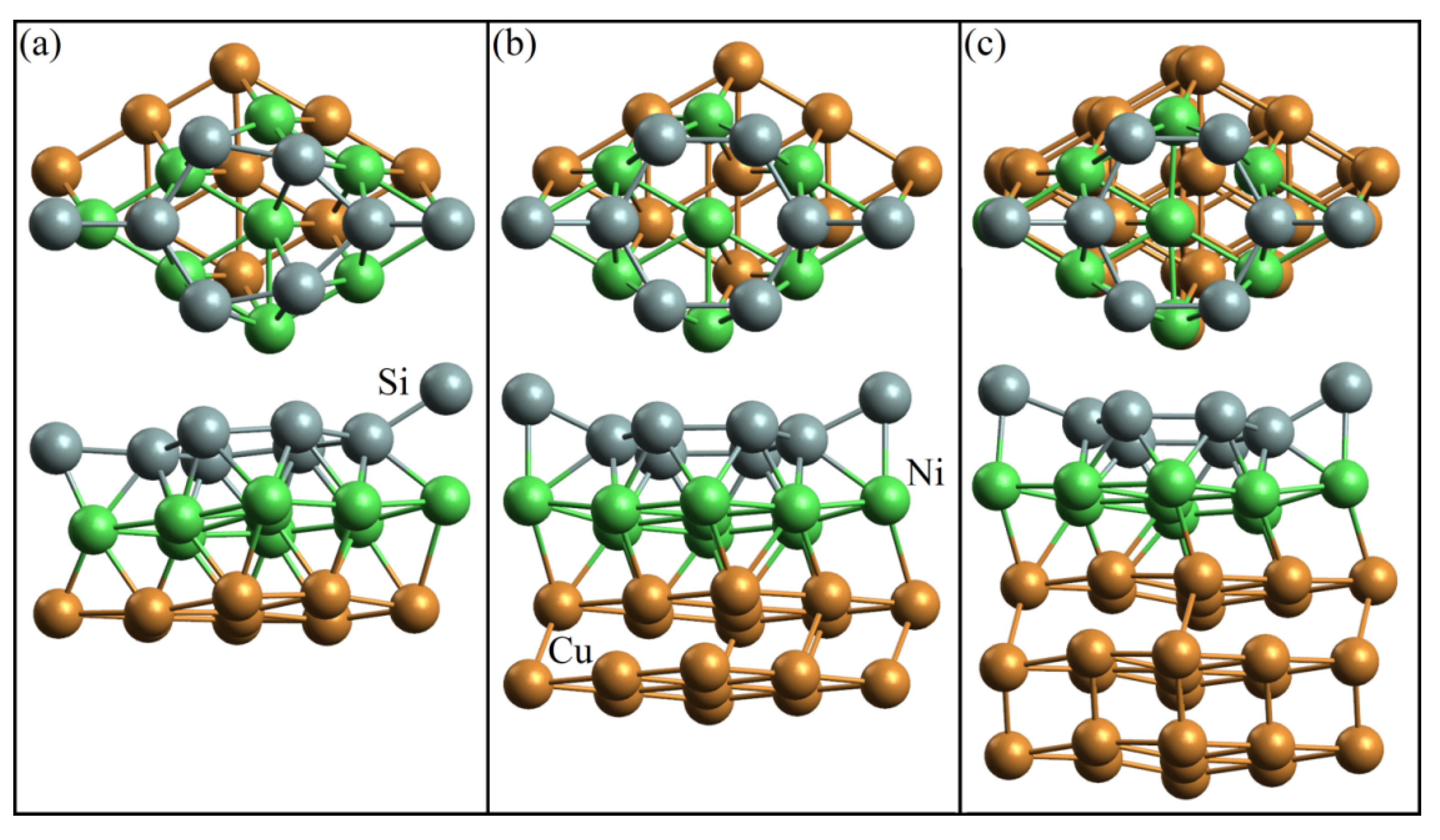
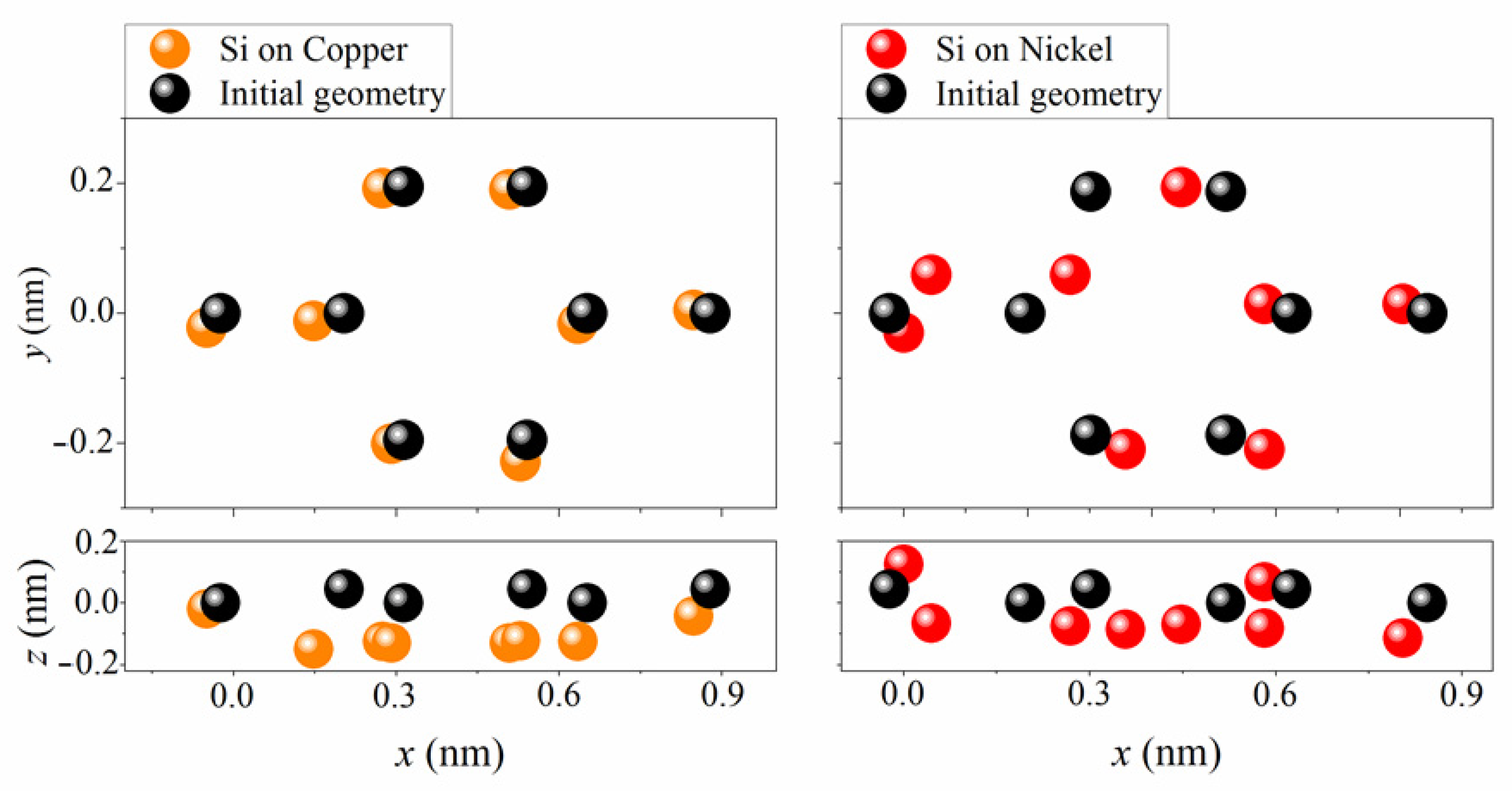
Silicene, together with copper or nickel, is the main component of electrodes for solar cells, lithium-ion batteries (LIB) and new-generation supercapacitors. The aim of this work was to study the electronic properties and geometric structure of “silicene–Ni” and “silicene–Cu” systems intended for use as LIB electrodes. The densities of electronic states, band structures, adhesion energies and interatomic distances in the silicene–(Cu, Ni) systems were determined by ab initio calculations. Silicene on a copper substrate exhibited temperature stability in the temperature range from 200 to 800 K, while on a nickel substrate, the structure of silicene was rearranged. Adsorption energies and bond lengths in the “silicene–Cu” system were calculated in the range of Li/Si ratios from 0.125 to 0.5. The formation of the Li2 isomer during the adsorption of lithium in a ratio to silicon of 0.375 and 0.5 was observed. Silicene was found to remain stable when placed on a copper substrate coated with a single layer of nickel. The charge redistribution caused by the addition of a nickel intermediate layer between silicene and a copper substrate was studied.
Keywords: adhesion; silicene; structure; substrate; lithium adhesion; silicene; structure; substrate; lithium