Article

Effects of Fillet Weld Size and Sleeve Material Strength on the Residual Stress Distribution and Structural Safety While Implementing the New Sleeve Repair Process

1
School of Materials Science and Engineering, China University of Petroleum, West Changjiang Road, Huangdao District, Qingdao 266580, China
2
Risk Assessment Institute, SINOPEC Research Institute of Safety Engineering, Co., Ltd., Songling Road, Laoshan District, Qingdao 266580, China
*
Author to whom correspondence should be addressed.
Materials 2021, 14(23), 7463; https://doi.org/10.3390/ma14237463
Submission received: 16 October 2021 / Revised: 1 December 2021 / Accepted: 2 December 2021 / Published: 5 December 2021
(This article belongs to the Topic Metallurgical and Materials Engineering)

Abstract

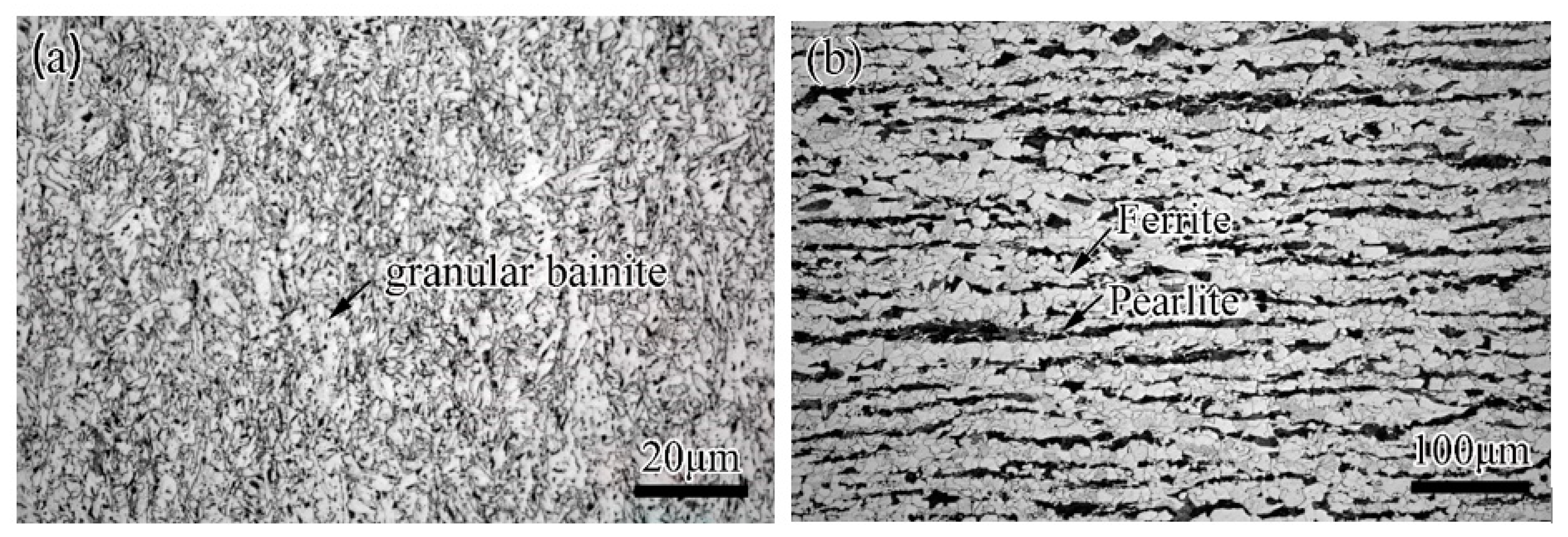
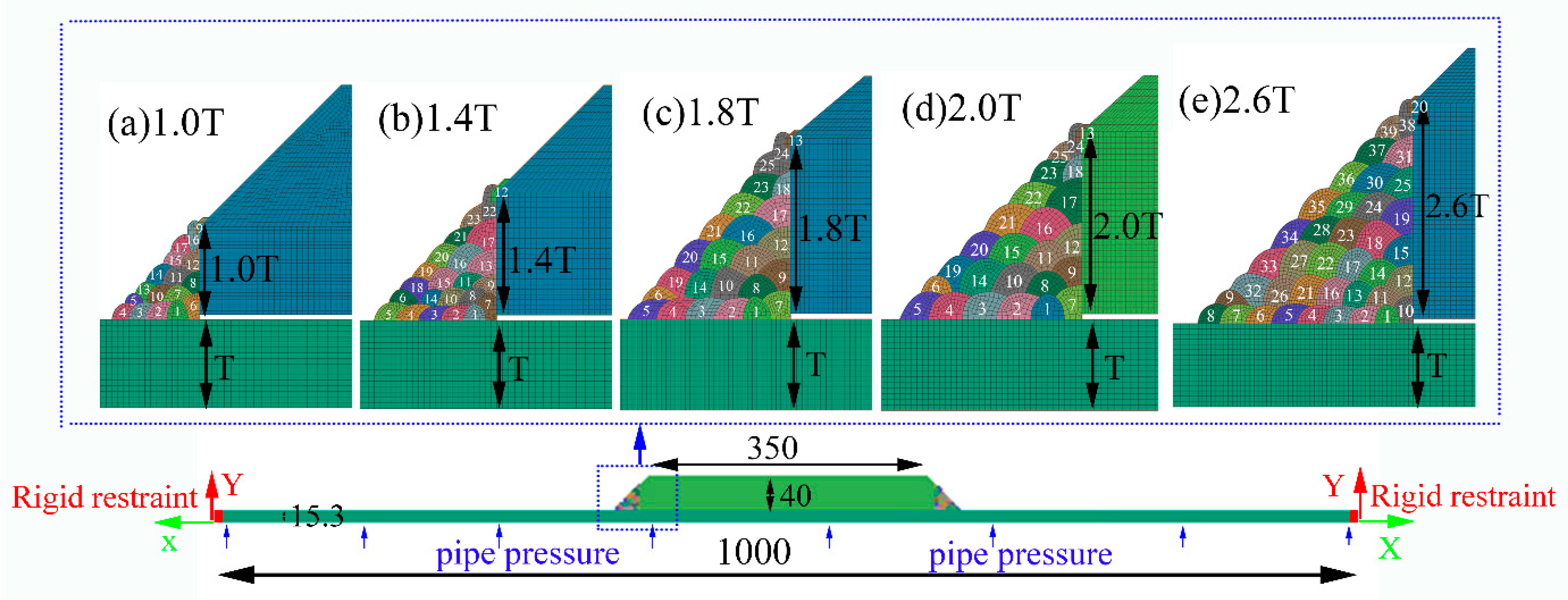
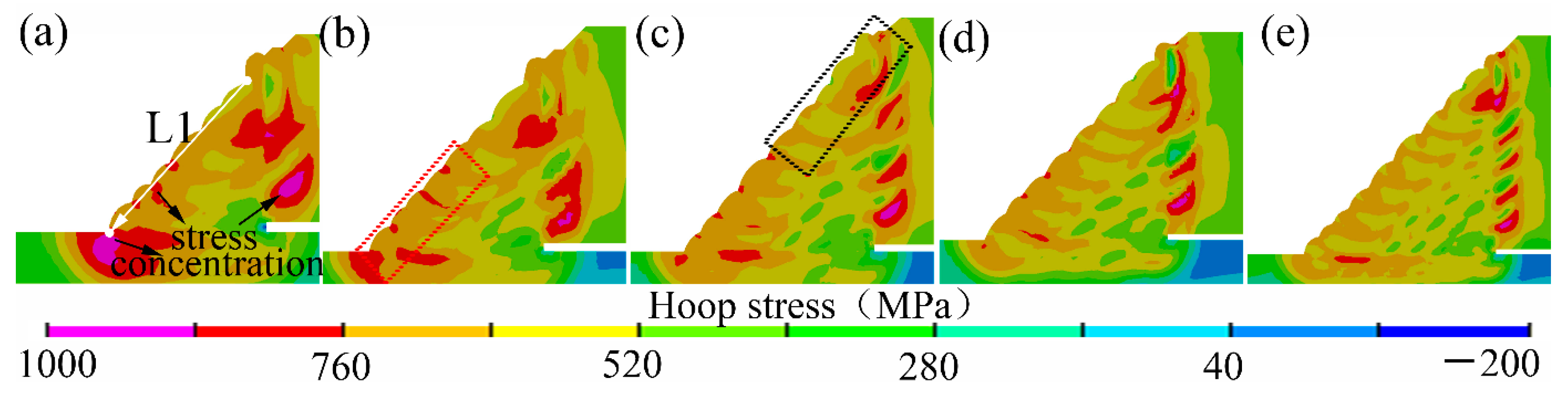
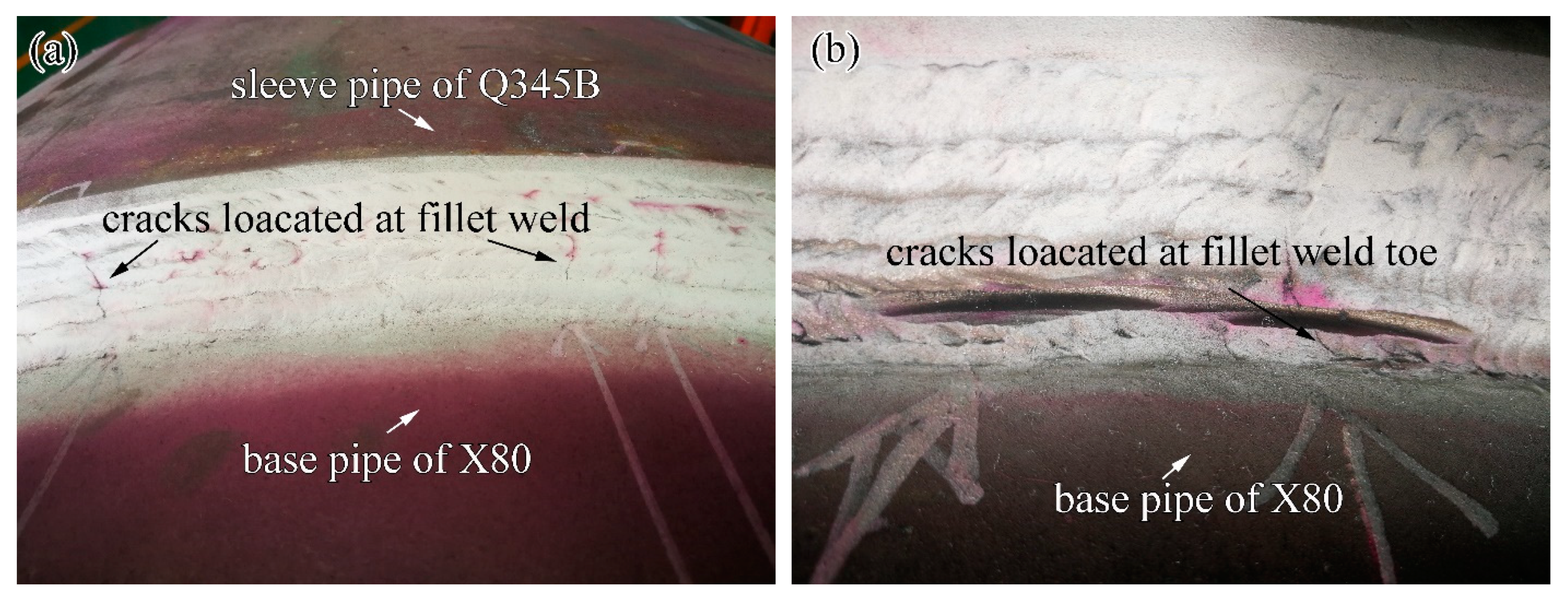
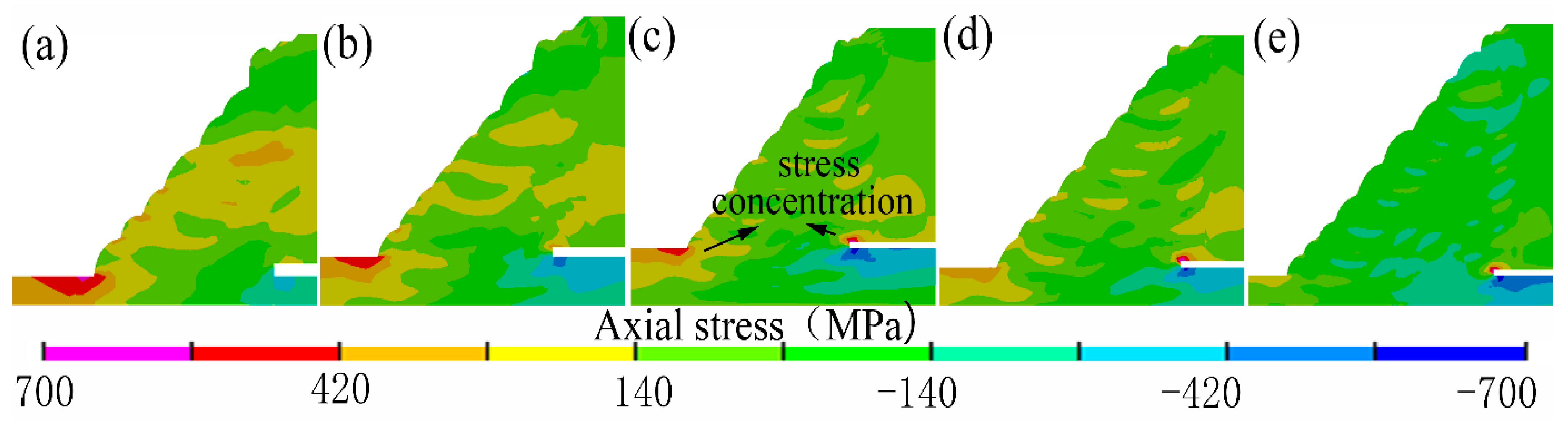
The process optimization and structural safety improvement of the in-service repair welding of the X80 pipeline are very important. In this paper, the temperature, microstructure, and stress distribution were analyzed using the combination of TMM (thermal-metallurgical-mechanical) simulations and the corresponding verification experiments. The effects of the sleeve material strength and the fillet weld size were discussed. The results showed that the fillet weld zone was mainly composed of ferrite and bainite when the material of the sleeve pipe was Q345B. Furthermore, the sleeve pipe’s HAZ (heat affected zone) was dominated by lath martensite, lath bainite, and granular bainite. Moreover, granular bainite and a small amount of ferrite were found in the HAZ of the X80 pipe. It was found that, as the fillet weld size increased, the welding residual stress distribution became more uniform. The hoop stress at weld toe reduced from ~860 MPa of case A to ~680 MPa of case E, and the axial stress at weld toe reduced from ~440 MPa of case A to ~380 MPa of case E. From the viewpoint of welding residual stress, fillet weld size was suggested to be larger than 1.4T. The stress concentration and the stress distribution showed a correlation with the cracking behavior. Weld re-solidification ripples on the weld surface and weld ripples between welding passes or near the weld toe could cause stress concentration and the corresponding crack initiation. Furthermore, when the material of the sleeve pipe changed from Q345B to X80, the high-level tensile stress zone was found to be enlarged. The hoop stress at weld toe increased from ~750 to ~800 MPa, and the axial stress at weld toe increased from ~500 to ~600 MPa. After implementing the new sleeve repair welding process where X80 replaces the material of sleeve pipe, the cracking risk in sleeve pipe will improve. From the perspective of the welding residual stress, it was concluded that the fillet weld size reduction and the sleeve material strength improvement are harmful to in-service welded structures’ safety and integrity.
Keywords: in-service repair welding; fillet weld size; sleeve material strength; welding residual stress in-service repair welding; fillet weld size; sleeve material strength; welding residual stress