Article

New Edge Crush Test Configuration Enhanced with Full-Field Strain Measurements

by
Tomasz Garbowski
1,
Anna Knitter-Piątkowska
2,* and
Aleksander Marek
3
1
Department of Biosystems Engineering, Poznan University of Life Sciences, Wojska Polskiego 50, 60-627 Poznań, Poland
2
Institute of Structural Analysis, Poznan University of Technology, Piotrowo 5, 60-965 Poznań, Poland
3
Faculty of Engineering and Physical Sciences, University of Southampton, Highfield SO17 1BJ, UK
*
Author to whom correspondence should be addressed.
Materials 2021, 14(19), 5768; https://doi.org/10.3390/ma14195768
Submission received: 31 August 2021 / Revised: 25 September 2021 / Accepted: 29 September 2021 / Published: 2 October 2021
(This article belongs to the Special Issue Mechanics of Corrugated and Composite Materials)

Abstract

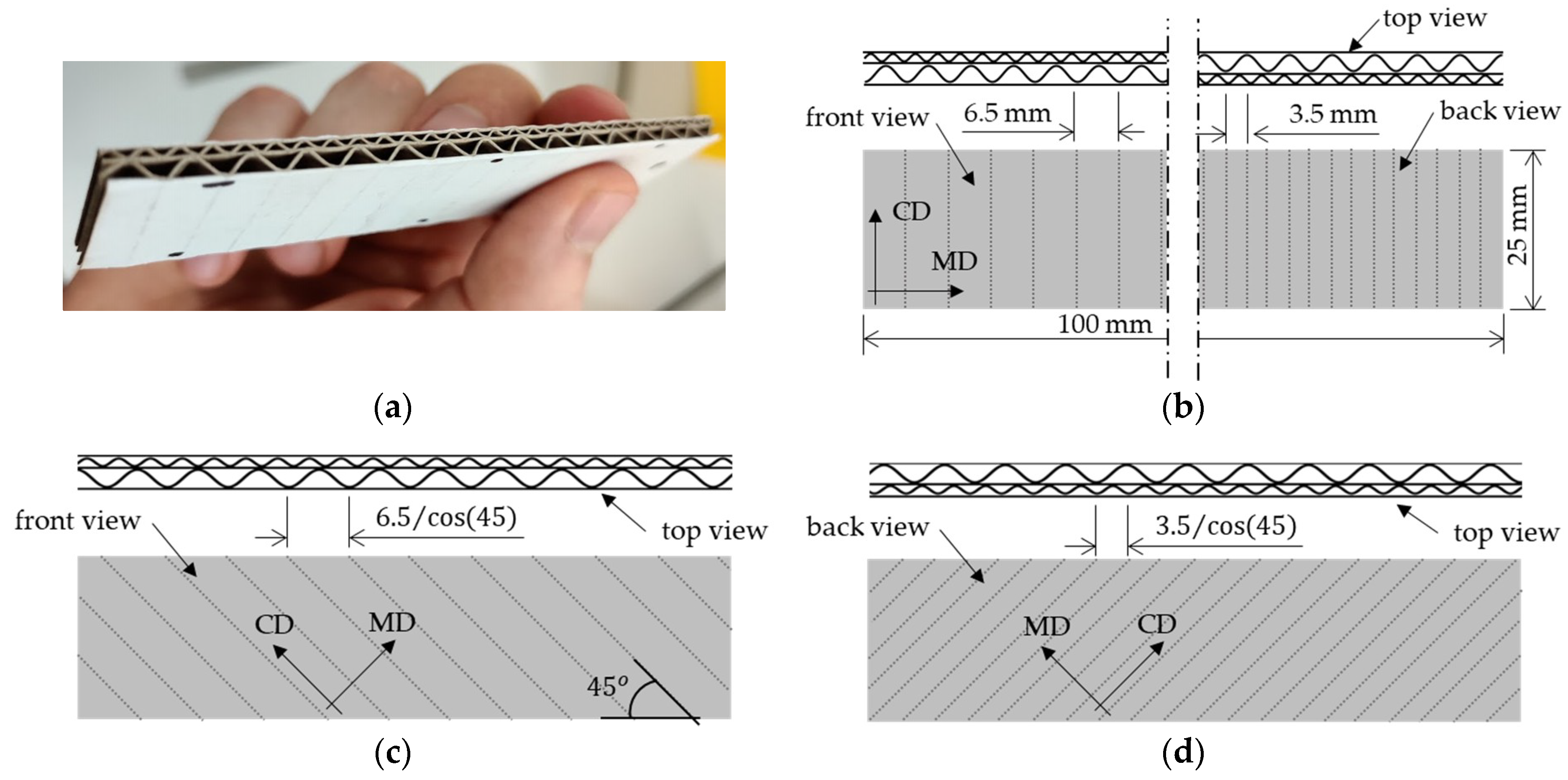
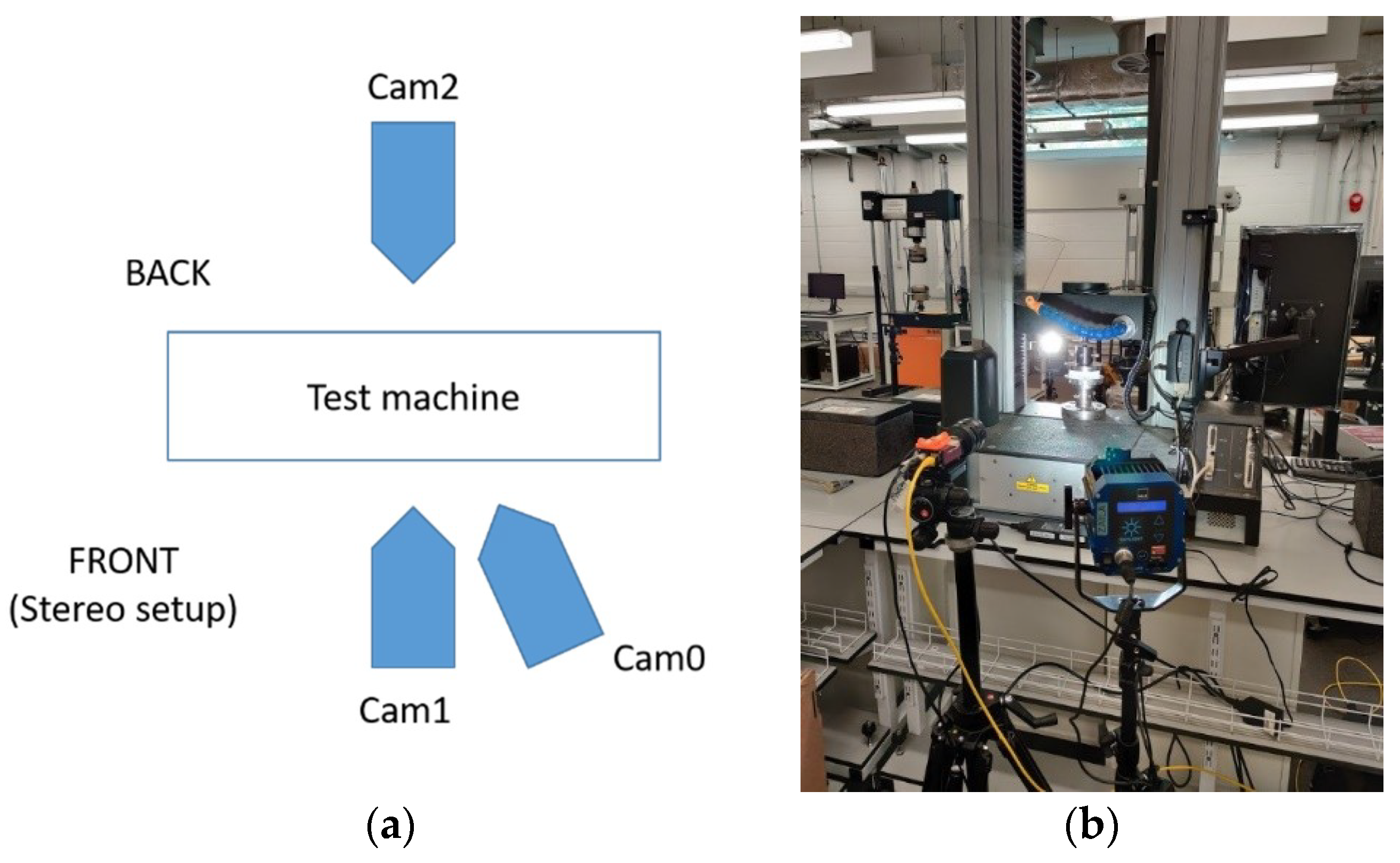
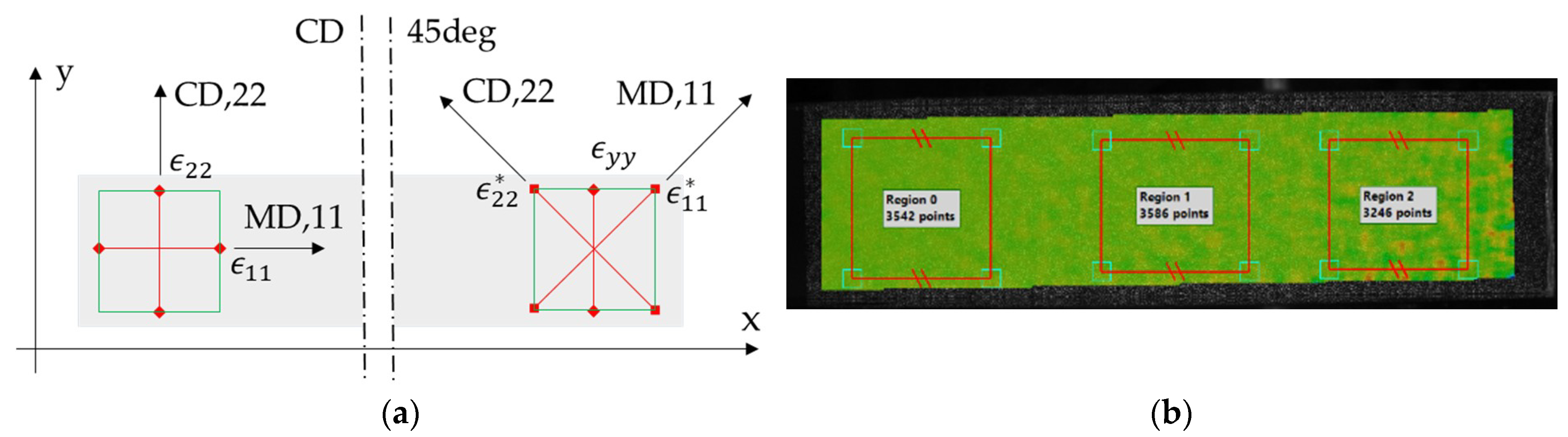
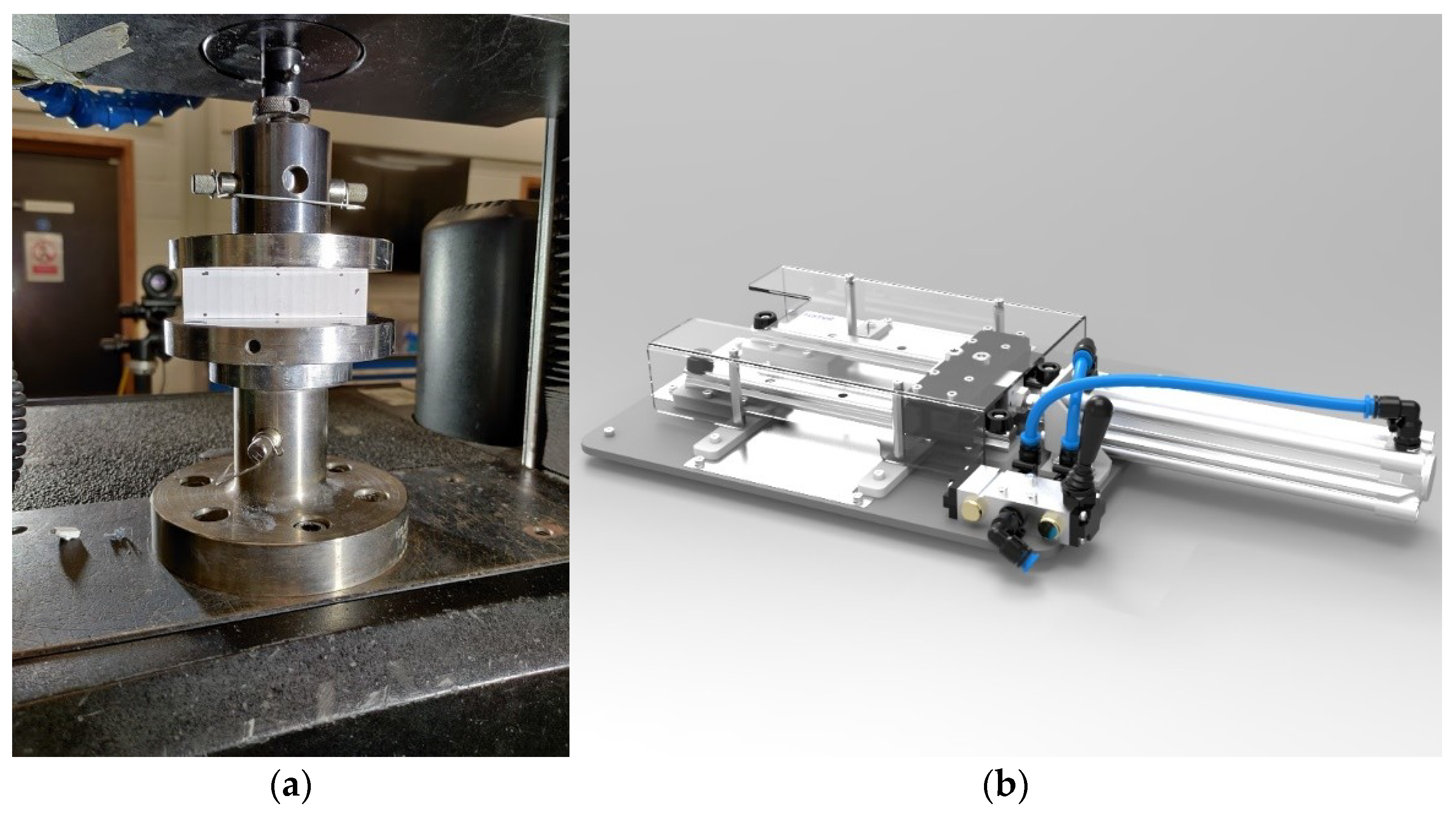
The standard edge crush test (ECT) allows the determination of the crushing strength of the corrugated cardboard. Unfortunately, this test cannot be used to estimate the compressive stiffness, which is an equally important parameter. This is because any attempt to determine this parameter using current lab equipment quickly ends in a fiasco. The biggest obstacle is obtaining a reliable measurement of displacements and strains in the corrugated cardboard sample. In this paper, we present a method that not only allows for the reliable identification of the stiffness in the loaded direction of orthotropy in the corrugated board sample, but also the full orthotropic material stiffness matrix. The proposed method uses two samples: (a) traditional, cut crosswise to the wave direction of the corrugated core, and (b) cut at an angle of 45°. Additionally, in both cases, an optical system with digital image correlation (DIC) was used to measure the displacements and strains on the outer surfaces of samples. The use of a non-contact measuring system allowed us to avoid using the measurement of displacements from the crosshead, which is burdened with a large error. Apart from the new experimental configuration, the article also proposes a simple algorithm to quickly characterize all sought stiffness parameters. The obtained results are finally compared with the results obtained in the homogenization procedure of the cross-section of the corrugated board. The results were consistent in both cases.
Keywords: corrugated cardboard; edge crush test; orthotropic elasticity; digital image correlation; compressive stiffness corrugated cardboard; edge crush test; orthotropic elasticity; digital image correlation; compressive stiffness