Article

Transformed Shell Structures Determined by Regular Networks as a Complex Material for Roofing
Department of Architectural Design and Engineering Graphics, Rzeszow University of Technology, Al. Powstańców Warszawy 12, 35-959 Rzeszów, Poland
Materials 2021, 14(13), 3582; https://doi.org/10.3390/ma14133582
Submission received: 4 June 2021 / Revised: 21 June 2021 / Accepted: 23 June 2021 / Published: 26 June 2021

Abstract

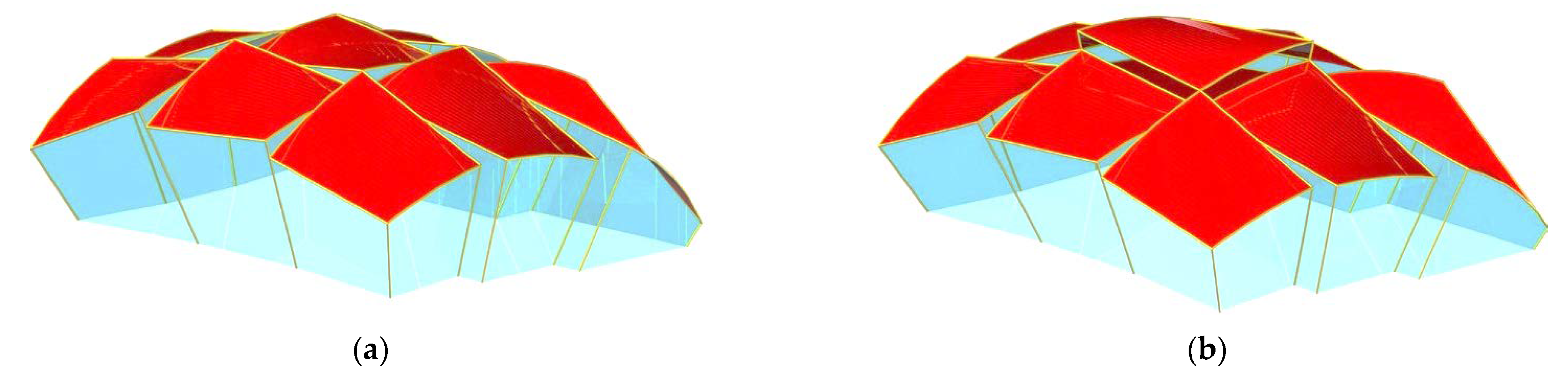
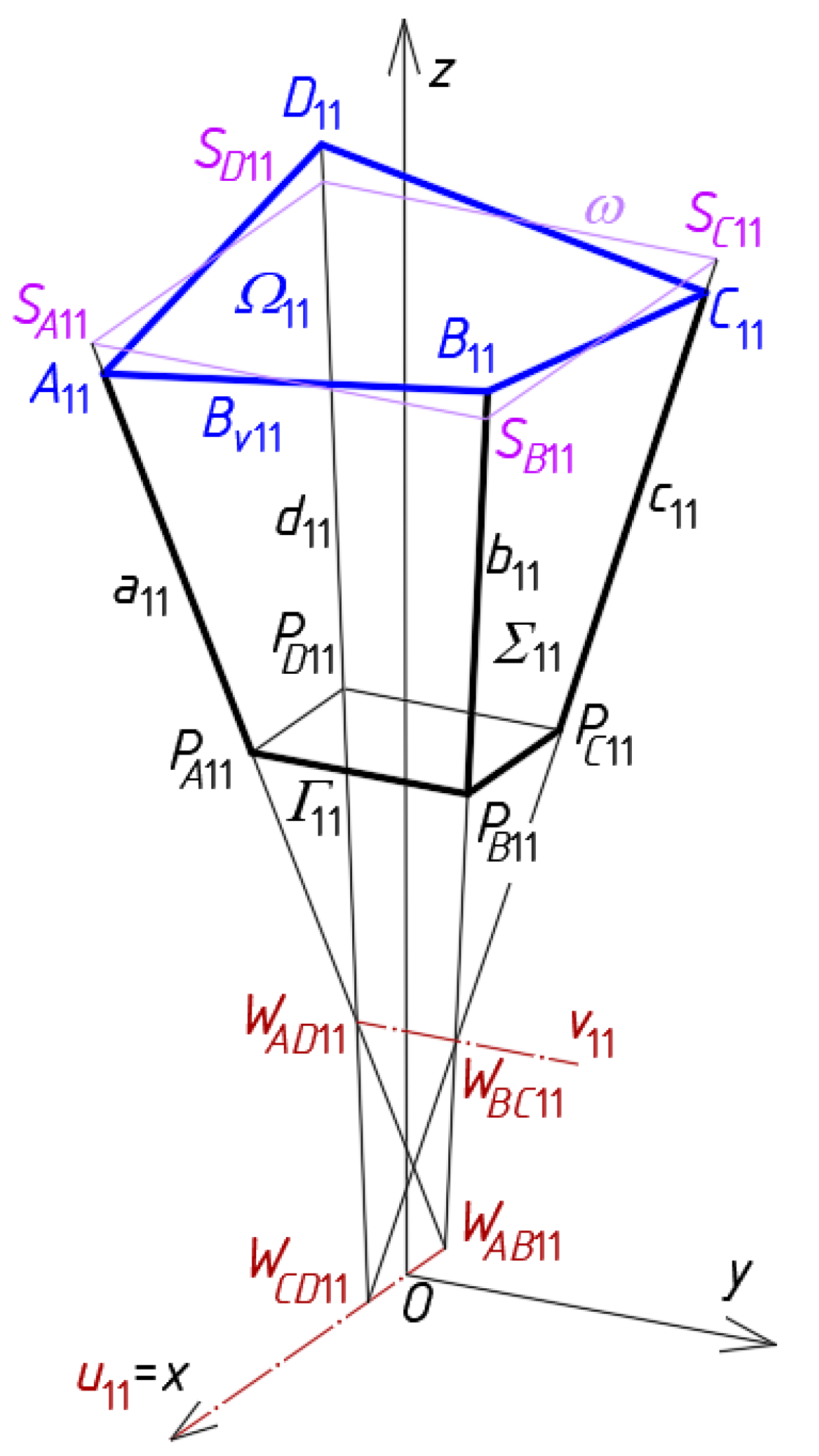
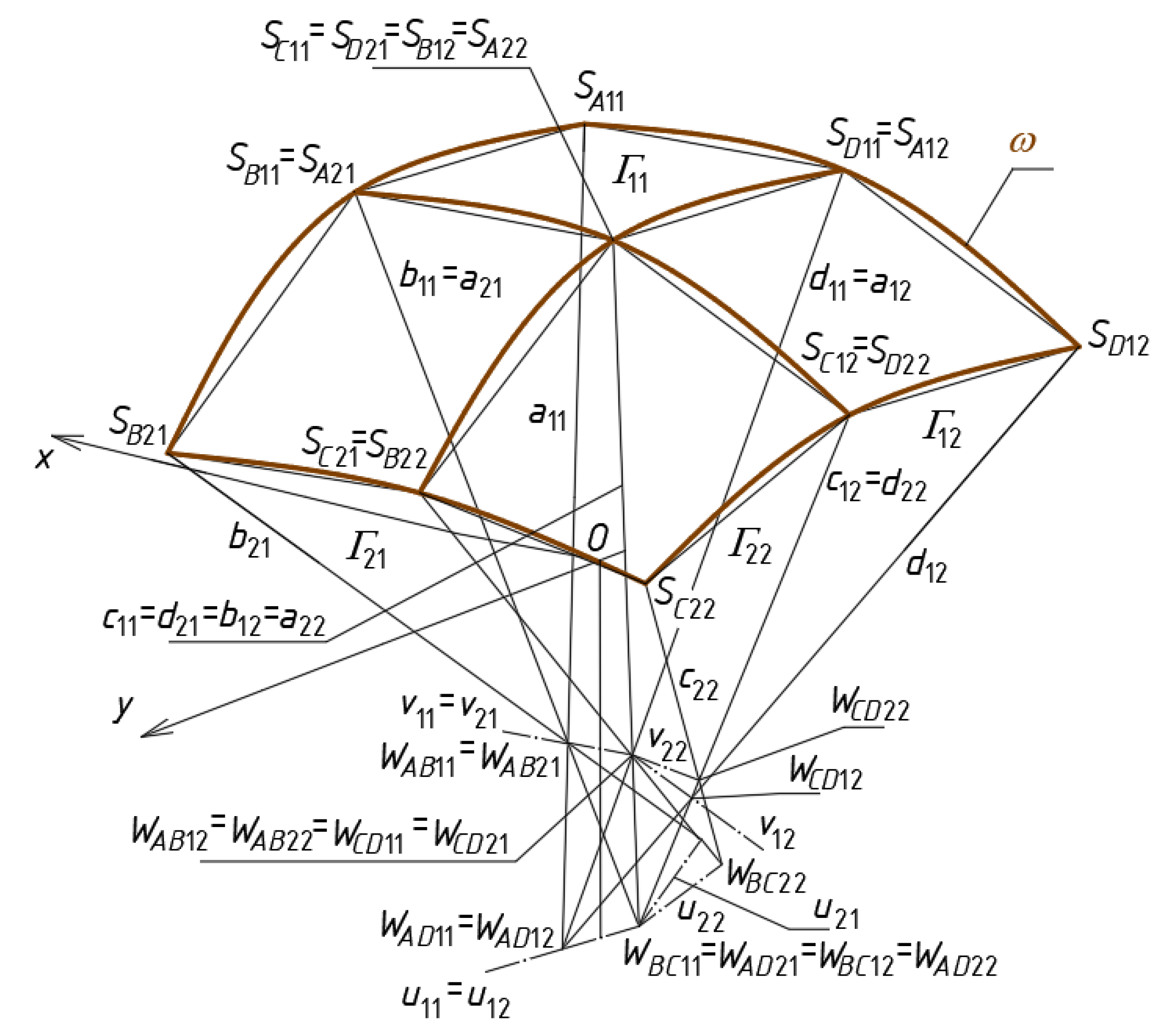
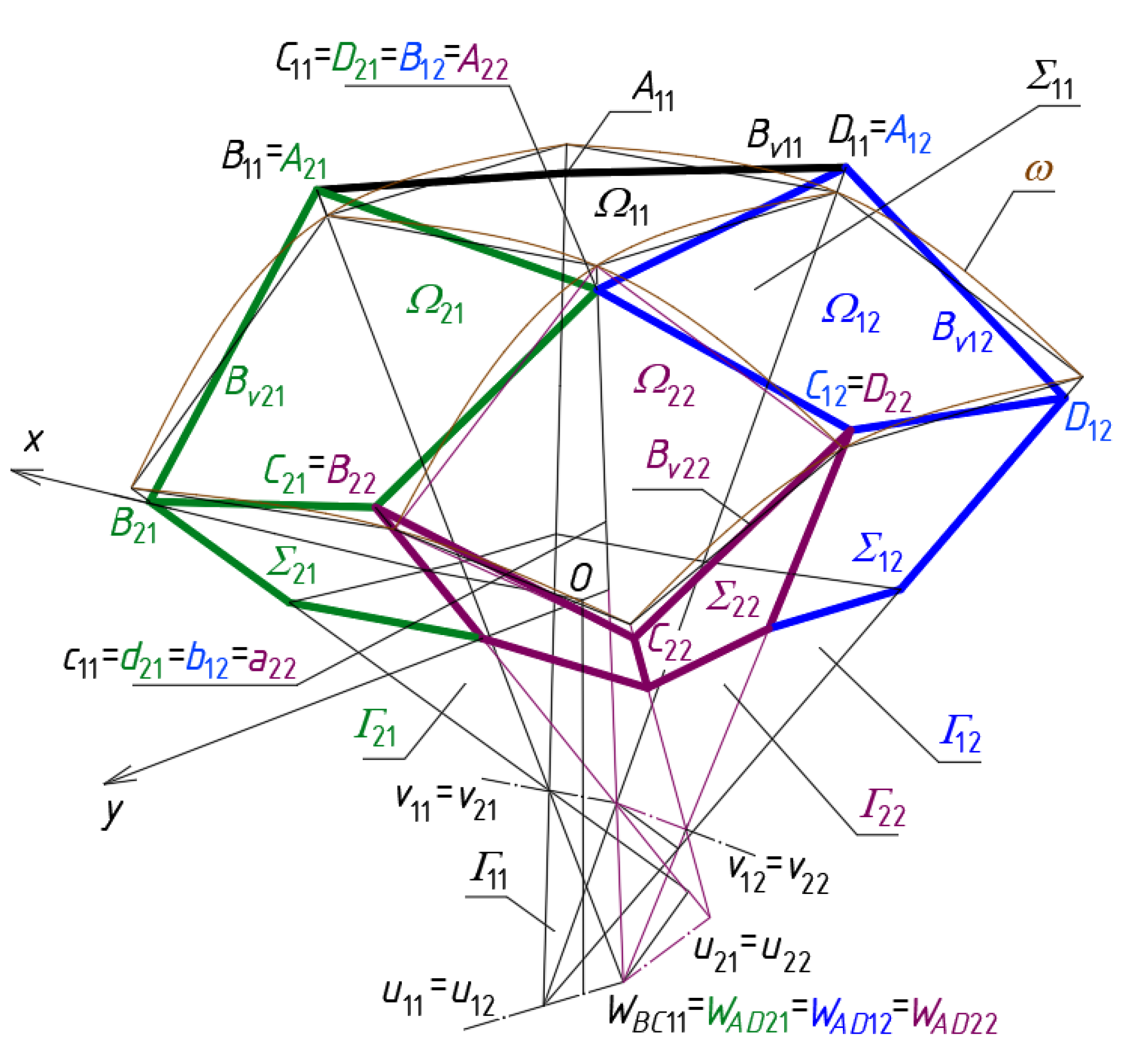
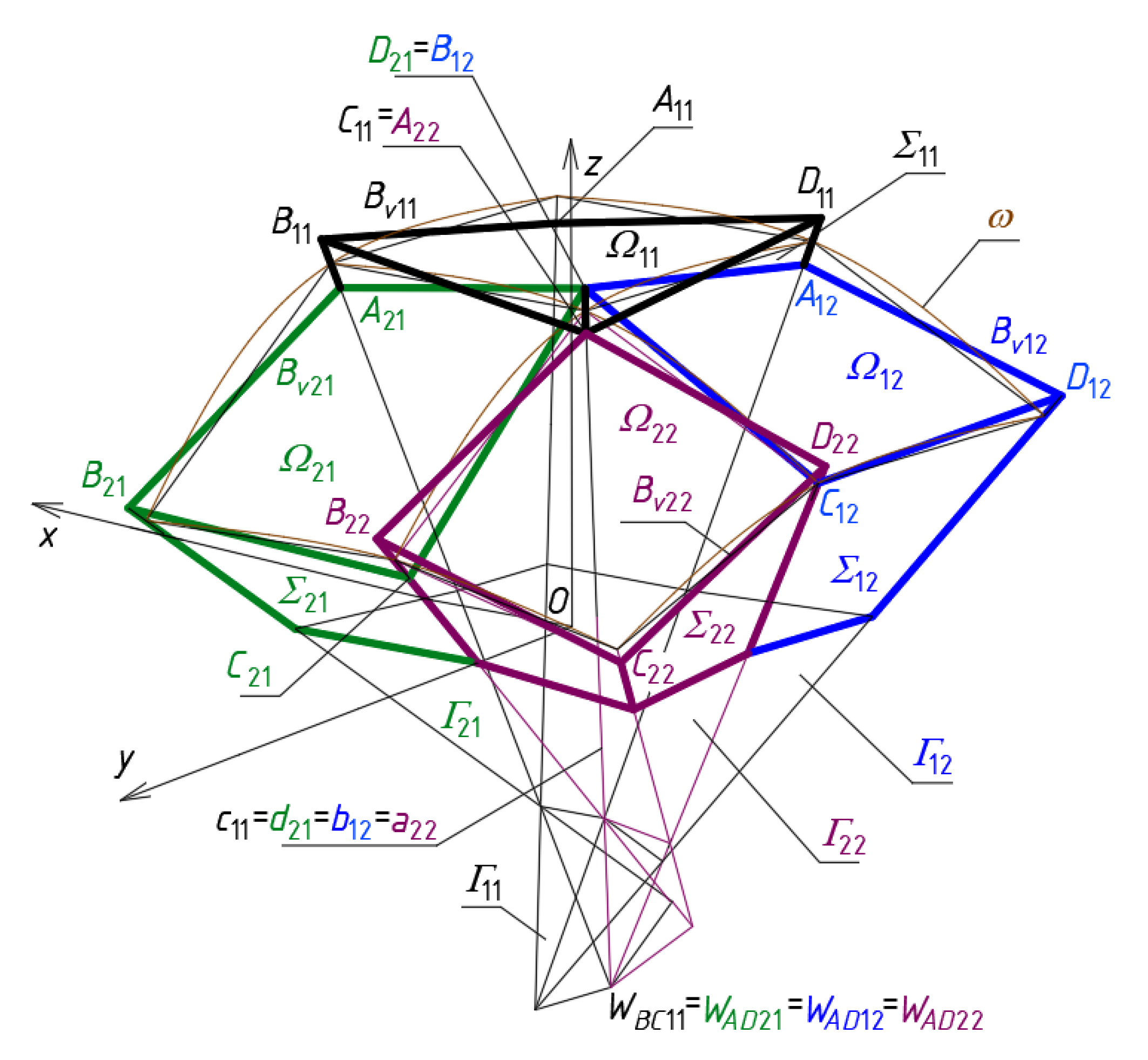
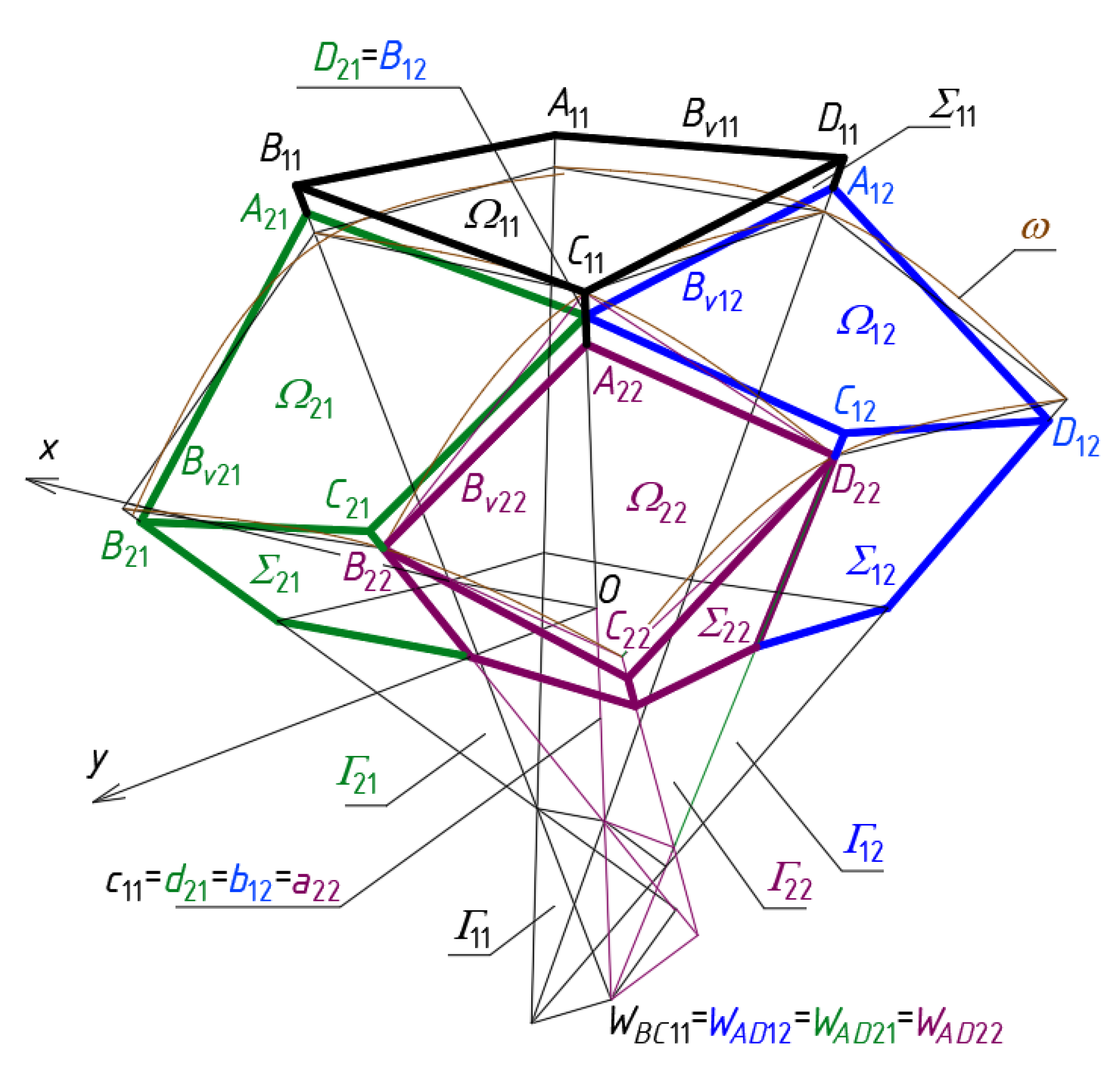
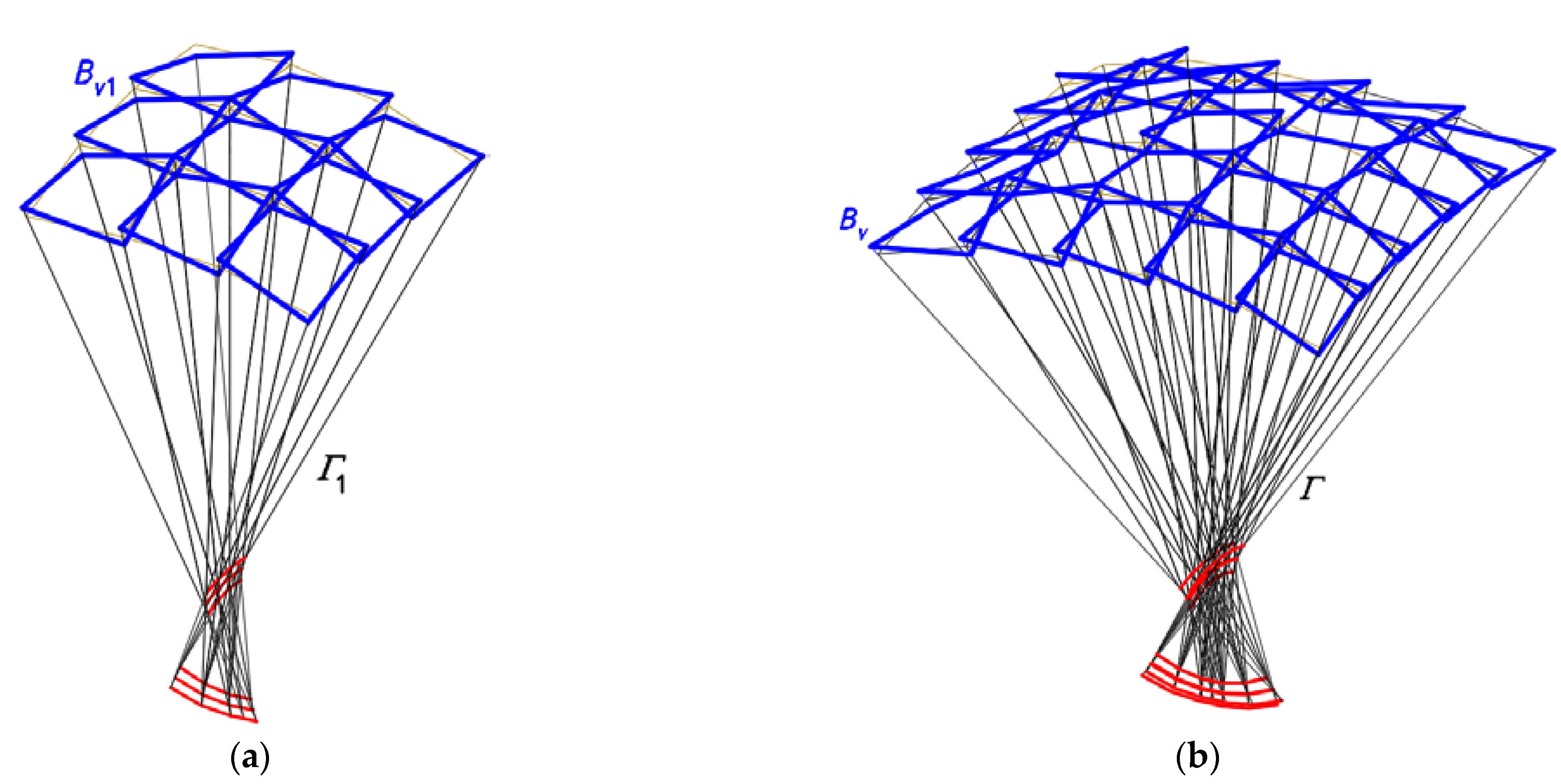
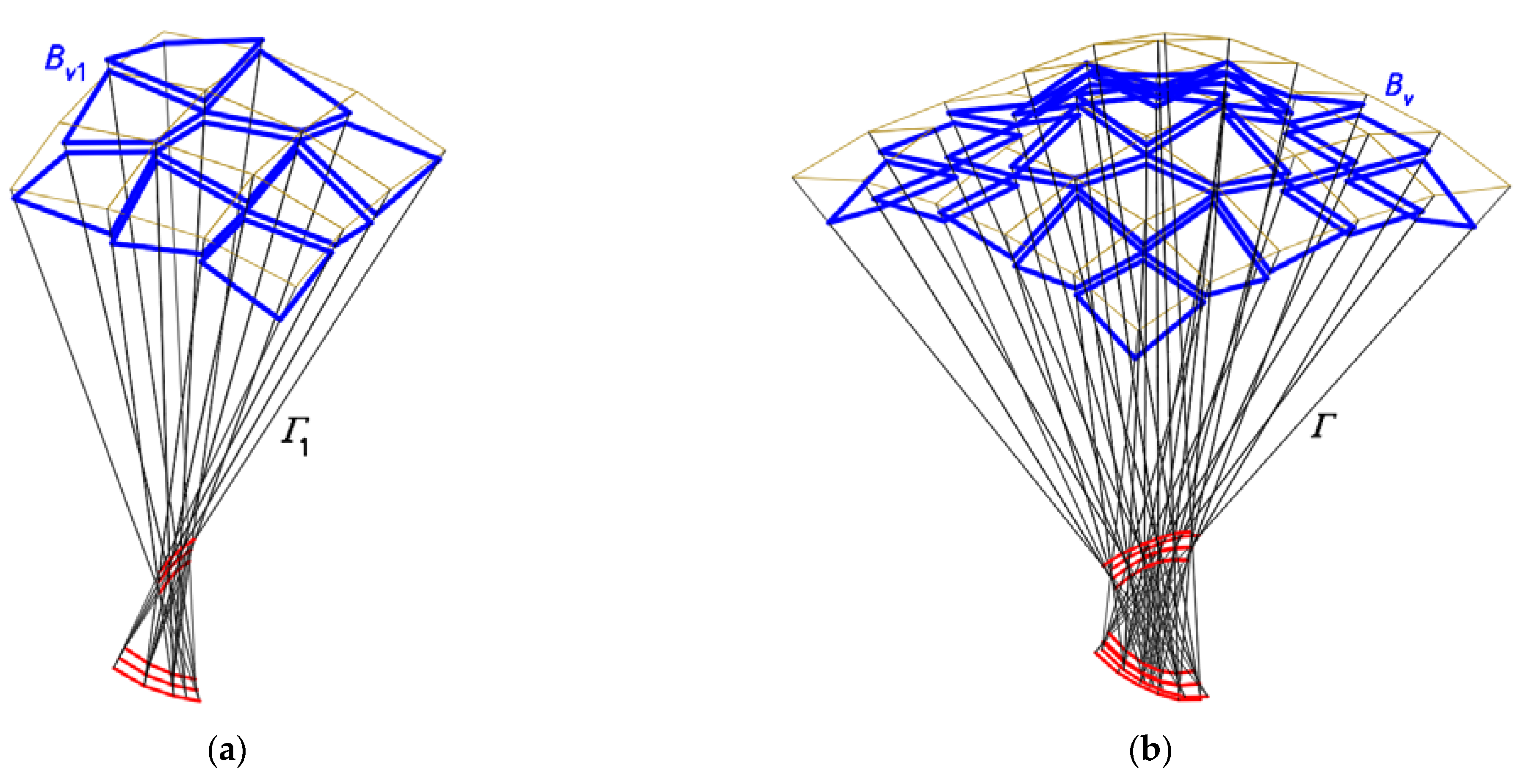
The article presents a comprehensive extension of the proprietary basic method for shaping innovative systems of corrugated shell roof structures by means of a specific complex material that comprises regular transformable shell units limited by spatial quadrangles. The units are made up of nominally plane folded sheets transformed into shell shapes. The similar shell units are regularly and effectively arranged in the three-dimensional space in an orderly manner with a universal regular reference surface, polyhedral network, and polygonal network. The extended method leads to the increase in the variety of the designed complex shell roof forms and plane-walled elevation forms of buildings. For this purpose, the rules governing the creation of the continuous roof shell structures of many shells arranged in different unconventional visually attractive patterns and their discontinuous regular modifications are sought. To obtain several novel groups of similar unconventional parametric roof forms, single division coefficients and double division coefficients are used. The easy and intuitive modifications of the positions of the vertices belonging to the polygonal network on the side edges of the polyhedral network accomplished by means of a parametric algorithm allow one to adjust the geometry of the complete shell units to the geometric and material constraints related to the orthotropic properties of the transformed sheeting by means of these coefficients. The innovative approach to the shaping of the diverse unconventional roof structures requires the solving of many interdisciplinary problems in the field of mathematics, civil engineering, construction, morphology, architecture, mechanics, computer visualization, and programming.
Keywords: regular systems of shells; parametric polyhedral networks; polygonal networks; division coefficients; corrugated shell roofs; complex substitute material; unconventional building free forms regular systems of shells; parametric polyhedral networks; polygonal networks; division coefficients; corrugated shell roofs; complex substitute material; unconventional building free forms