Article

New Grain Formation Mechanisms during Powder Bed Fusion

1
Chair of Materials Science and Engineering for Metals, Friedrich-Alexander-Universität Erlangen-Nürnberg, Martensstr. 5, 91058 Erlangen, Germany
2
Joint Institute of Advanced Materials and Processes, Friedrich-Alexander-Universität Erlangen-Nürnberg, Dr.-Mack-Str. 81, 90762 Fürth, Germany
*
Author to whom correspondence should be addressed.
Materials 2021, 14(12), 3324; https://doi.org/10.3390/ma14123324
Submission received: 19 May 2021 / Revised: 8 June 2021 / Accepted: 11 June 2021 / Published: 16 June 2021
(This article belongs to the Special Issue Microstructure and Mechanics of Metallic Materials)

Abstract

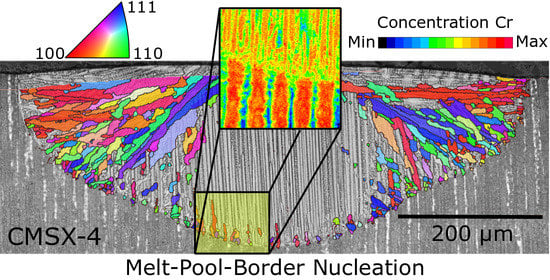
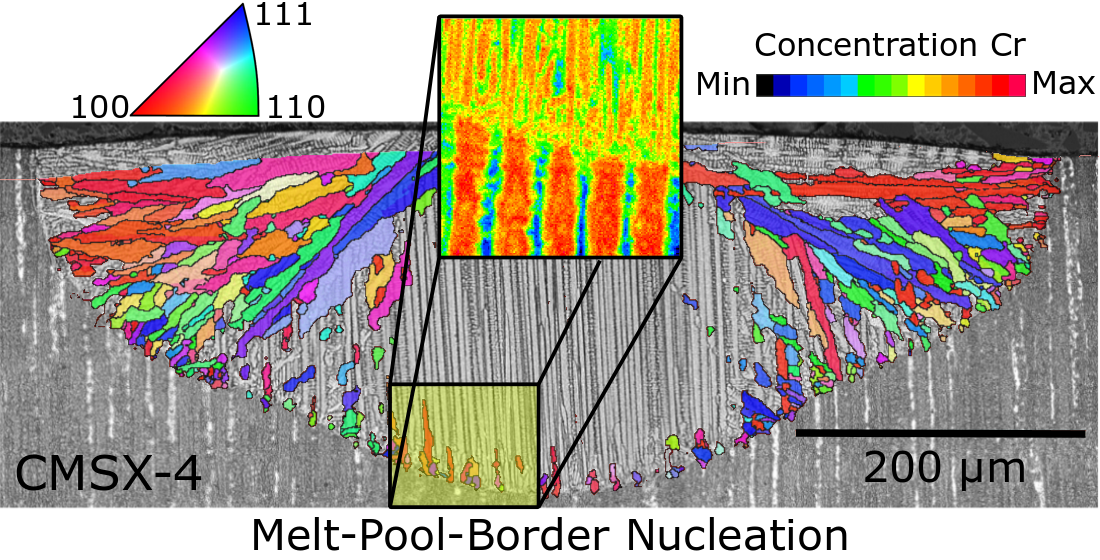
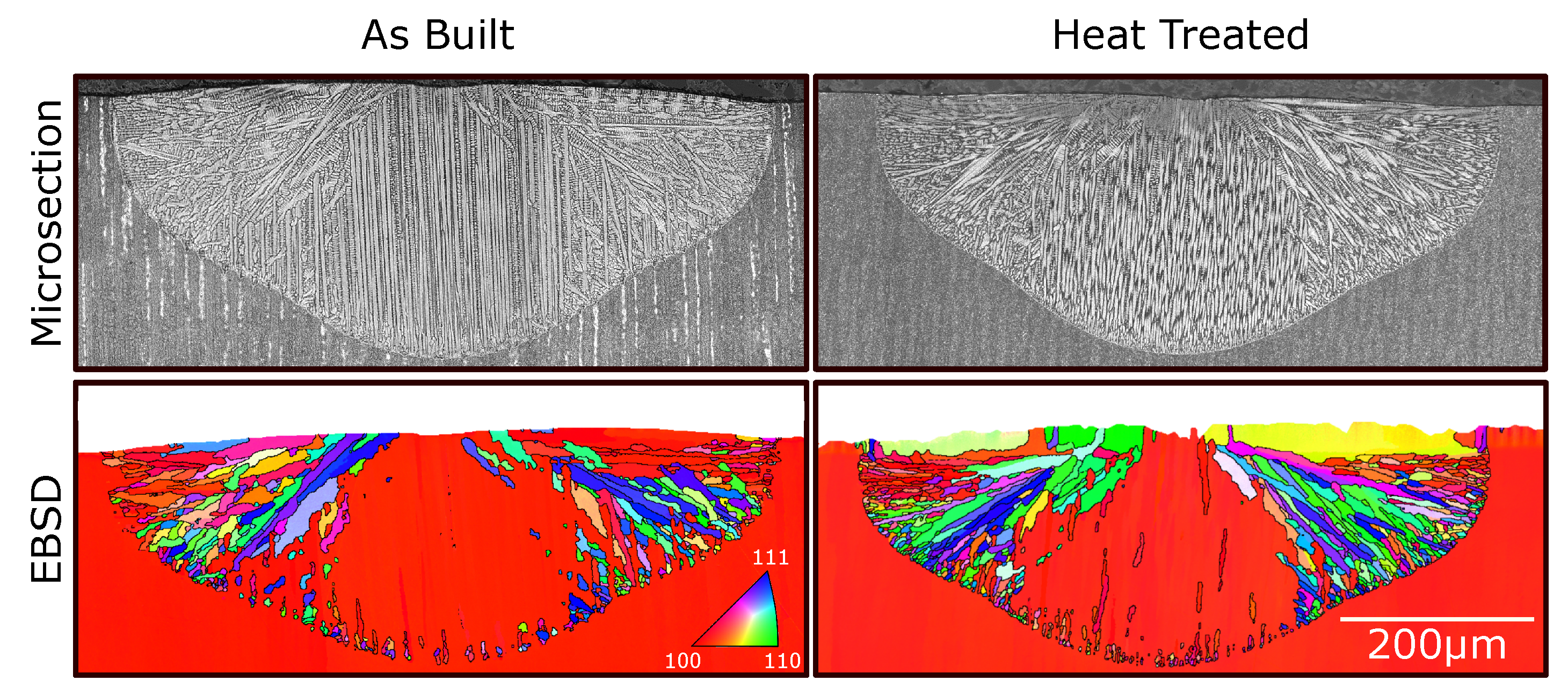
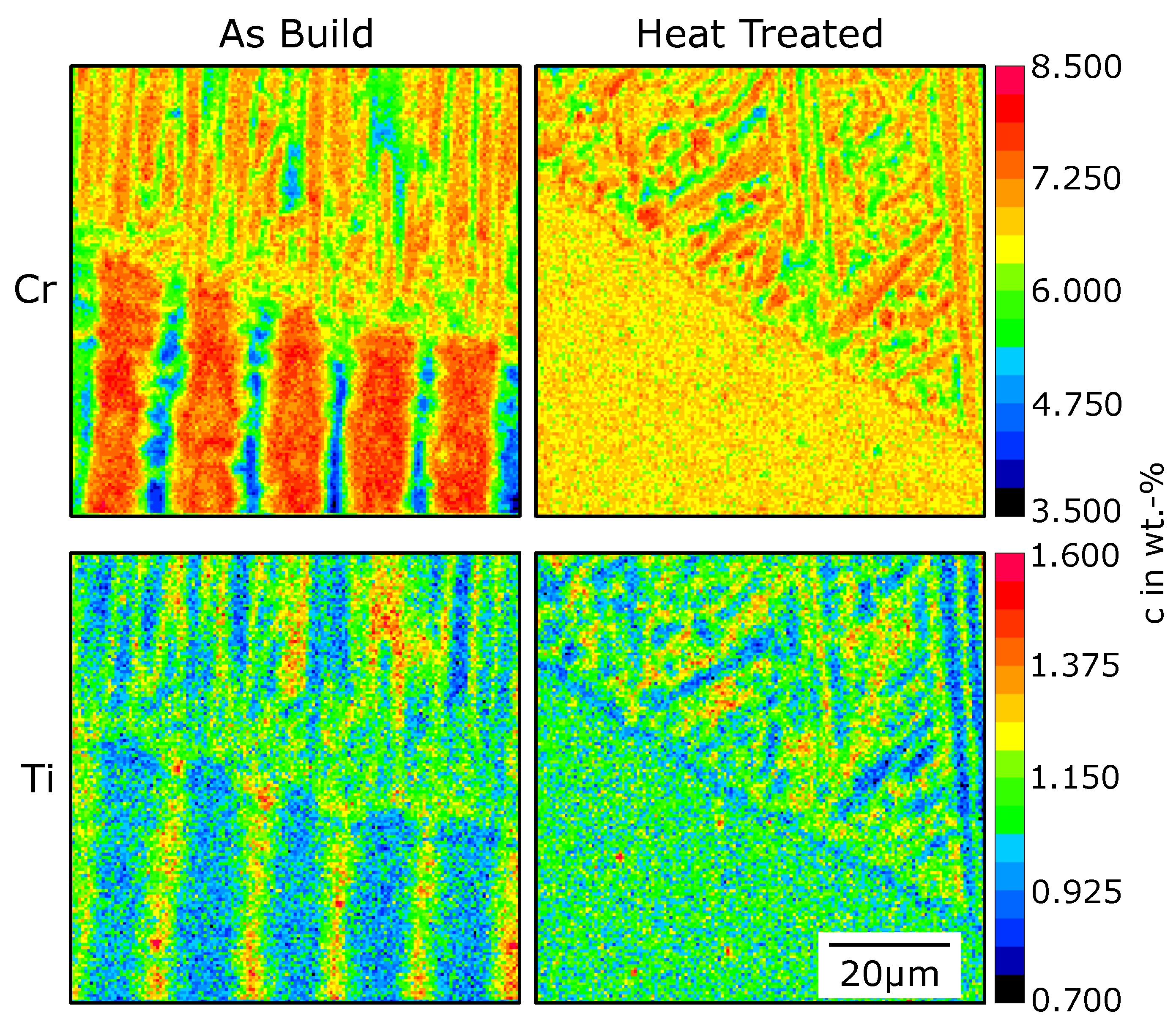
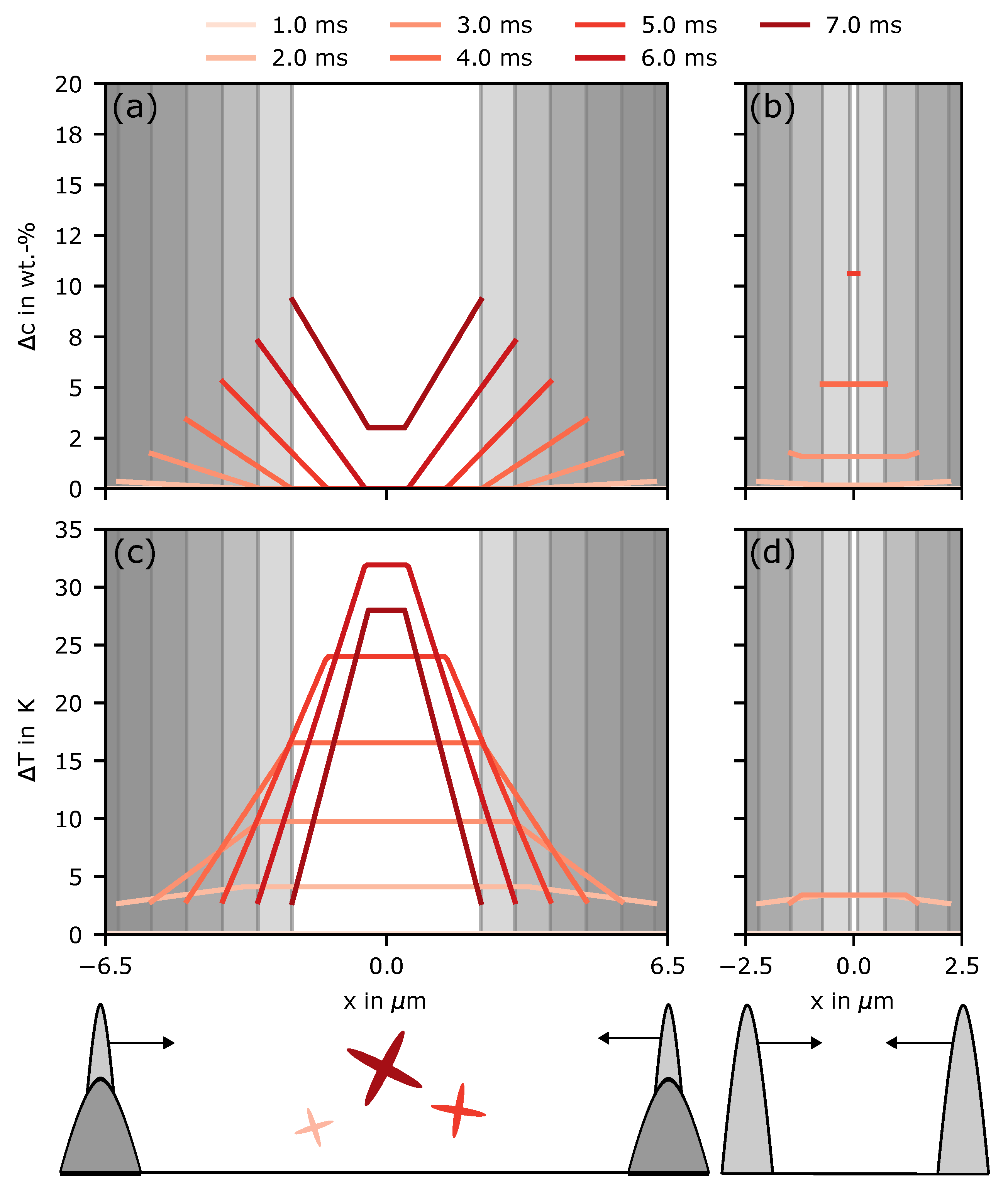
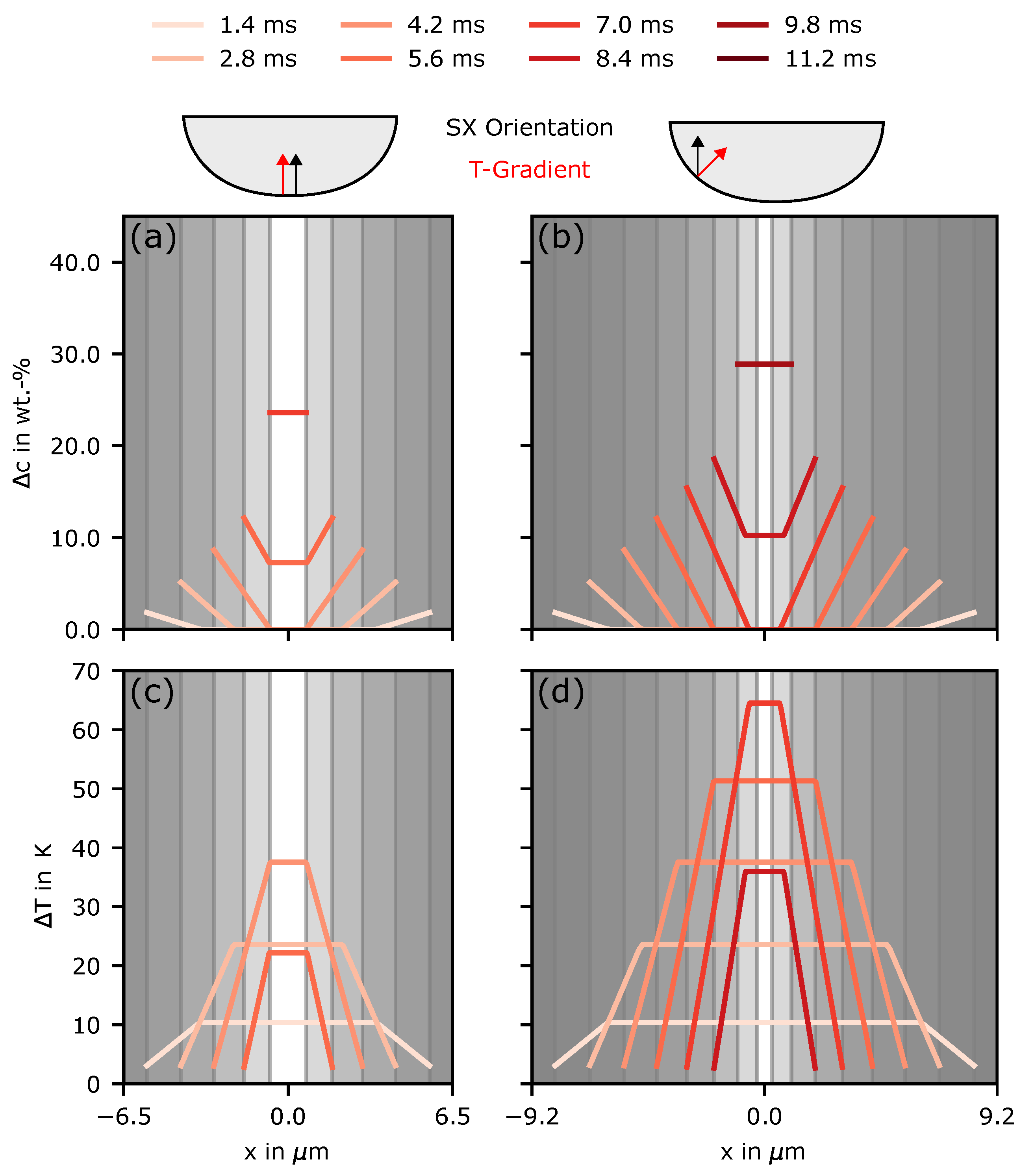
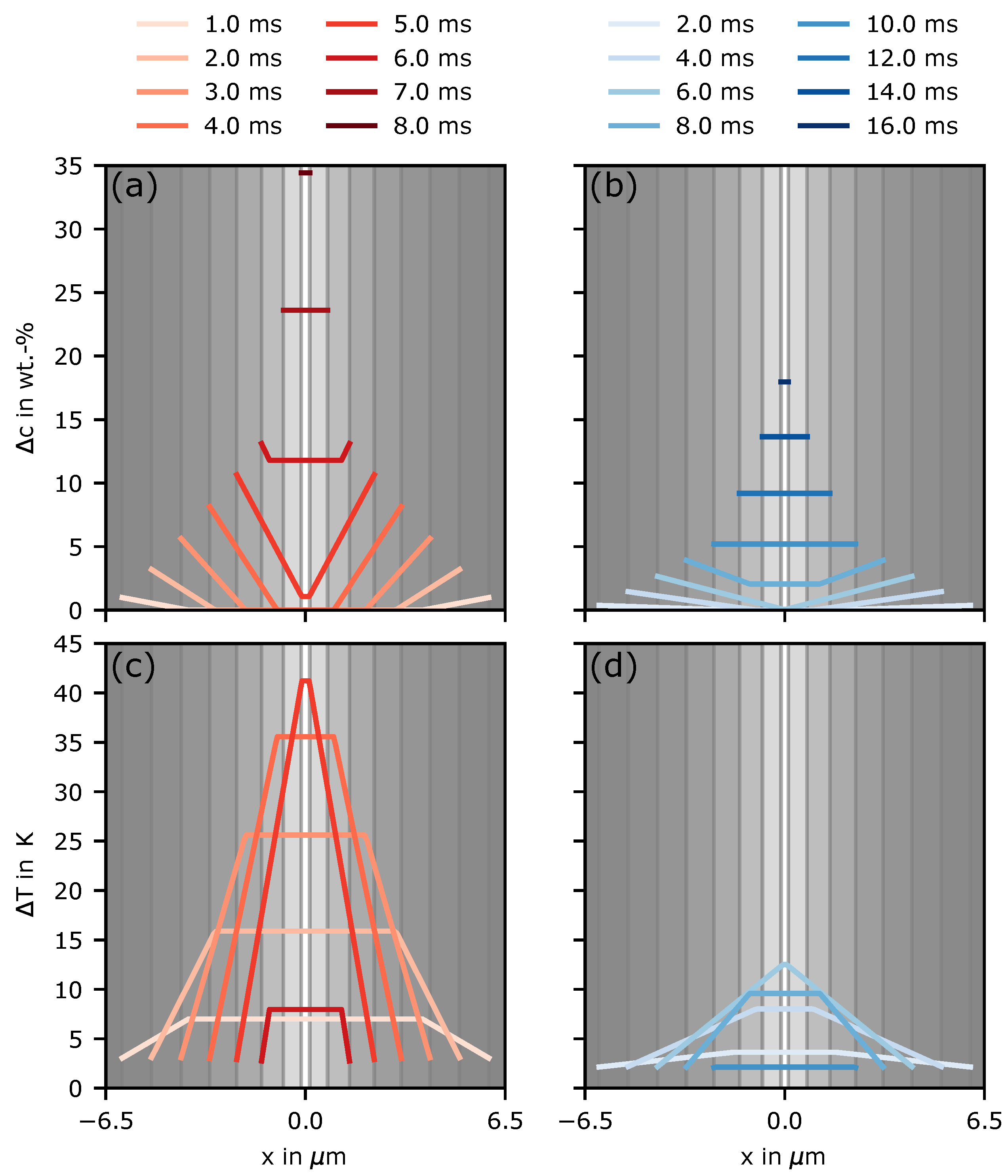
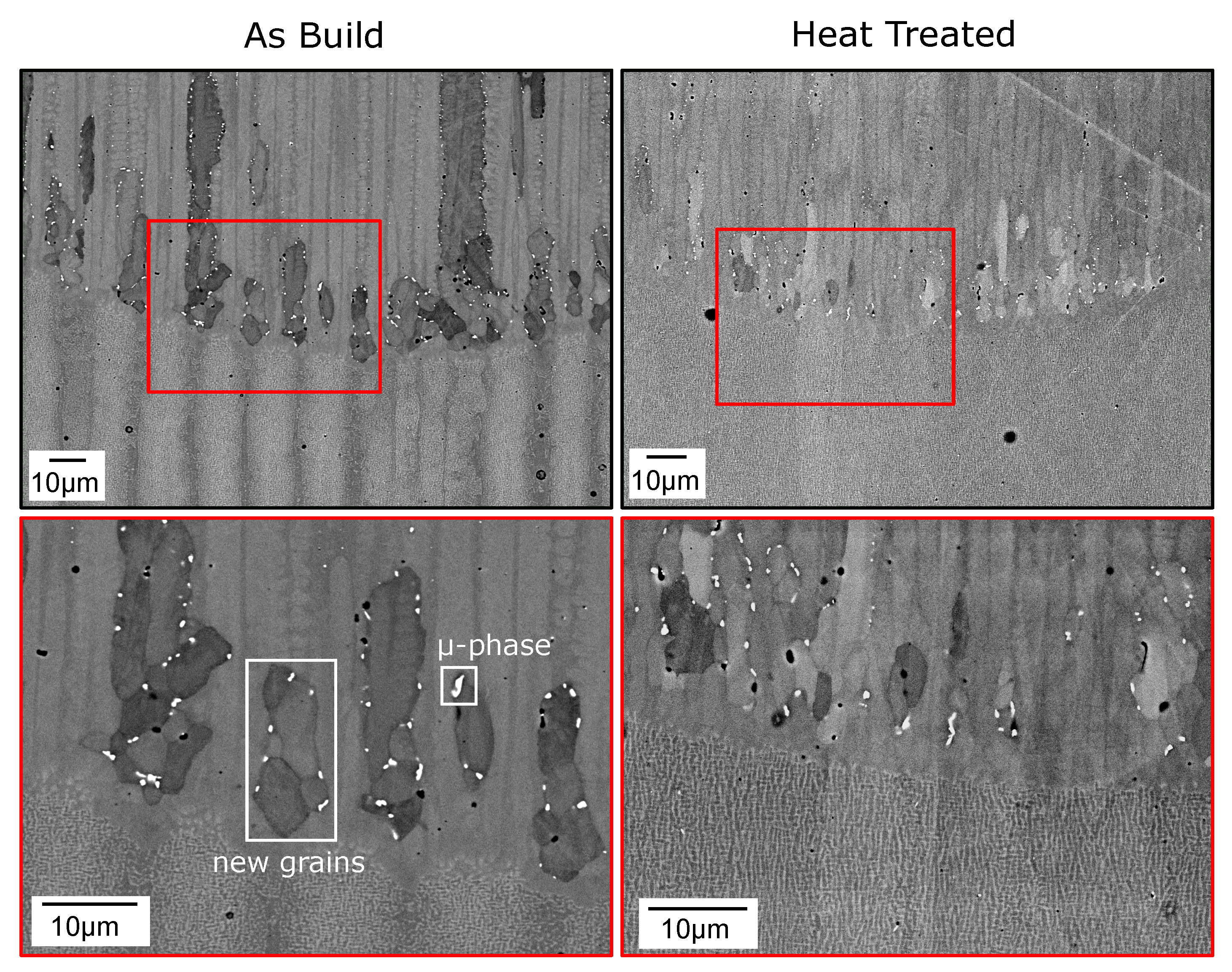
Tailoring the mechanical properties of parts by influencing the solidification conditions is a key topic of powder bed fusion. Depending on the application, single crystalline, columnar, or equiaxed microstructures are desirable. To produce single crystals or equiaxed microstructures, the control of nucleation is of outstanding importance. Either it should be avoided or provoked. There are also applications, such as turbine blades, where both microstructures at different locations are required. Here, we investigate nucleation at the melt-pool border during the remelting of CMSX-4® samples built using powder bed fusion. We studied the difference between remelting as-built and homogenized microstructures. We identified two new mechanisms that led to grain formation at the beginning of solidification. Both mechanisms involved a change in the solidification microstructure from the former remelted and newly forming material. For the as-built samples, a discrepancy between the former and new dendrite arm spacing led to increased interdentritic undercooling at the beginning of solidification. For the heat-treated samples, the collapse of a planar front led to new grains. To identify these mechanisms, we conducted experimental and numerical investigations. The identification of such mechanisms during powder bed fusion is a fundamental prerequisite to controlling the solidification conditions to produce single crystalline and equiaxed microstructures.
Keywords: selective electron beam melting; nucleation; single crystal; equiaxed; crystal growth; grain structure; stray grains; microstructure; solidification; numerical simulation selective electron beam melting; nucleation; single crystal; equiaxed; crystal growth; grain structure; stray grains; microstructure; solidification; numerical simulation
Graphical Abstract