Article

Fully Quantum Modeling of Exciton Diffusion in Mesoscale Light Harvesting Systems
1
Bremen Center for Computational Materials Science, University of Bremen, 28359 Bremen, Germany
2
Max Planck Institute for the Physics of Complex Systems, Nöthnitzer Str., 38, 01187 Dresden, Germany
3
Center for Geodata and Analysis, Faculty of Geographical Science, Beijing Normal University, Beijing 100875, China
4
Institute of Automation, Chinese Academy of Sciences, Beijing 100190, China
5
School of Materials Science and Engineering, Nanyang Technological University, Singapore 639798, Singapore
*
Author to whom correspondence should be addressed.
Materials 2021, 14(12), 3291; https://doi.org/10.3390/ma14123291
Submission received: 28 April 2021 / Revised: 6 June 2021 / Accepted: 8 June 2021 / Published: 14 June 2021
(This article belongs to the Special Issue Recent Advances in Photosynthetic Materials)

Abstract

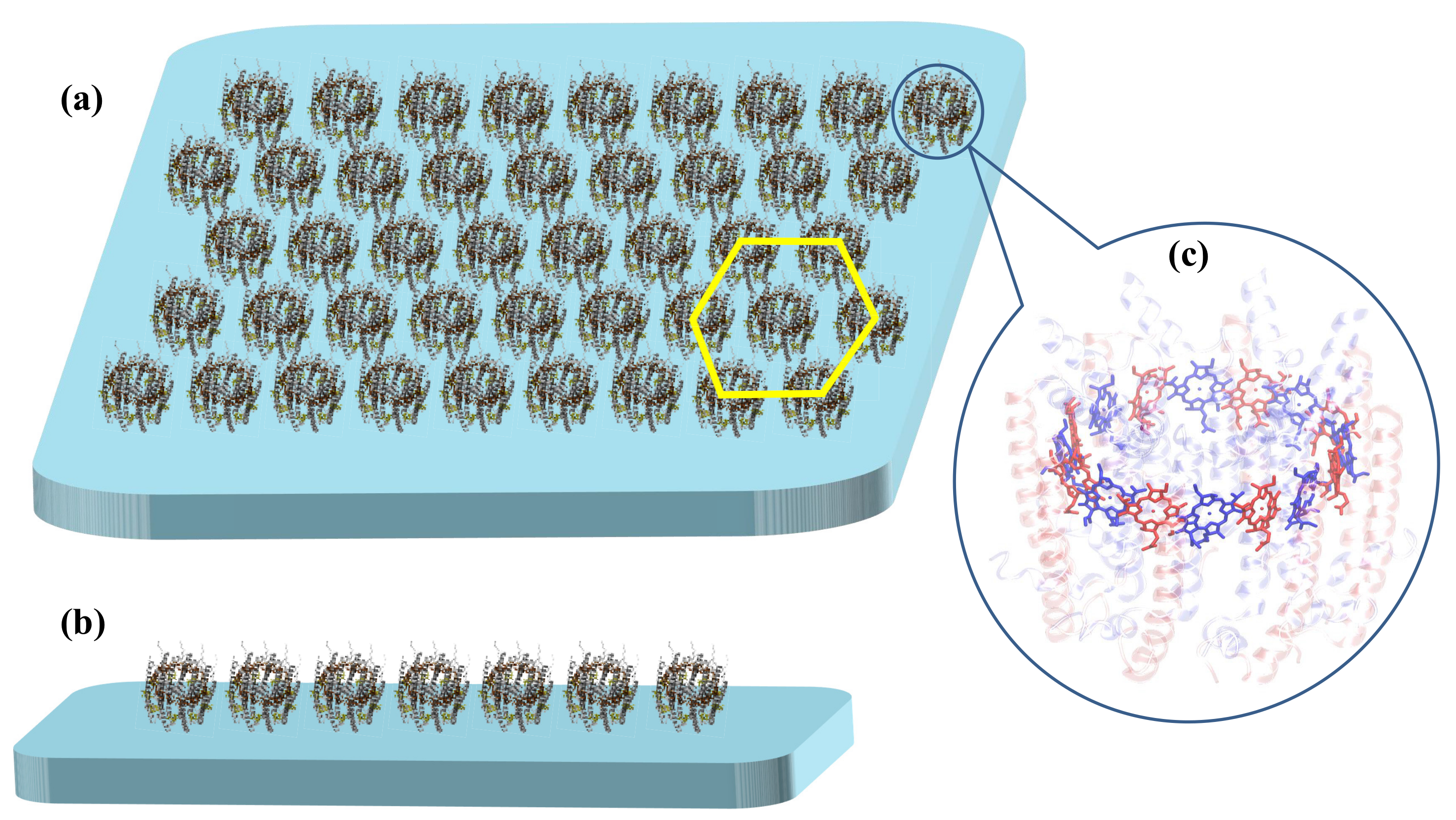
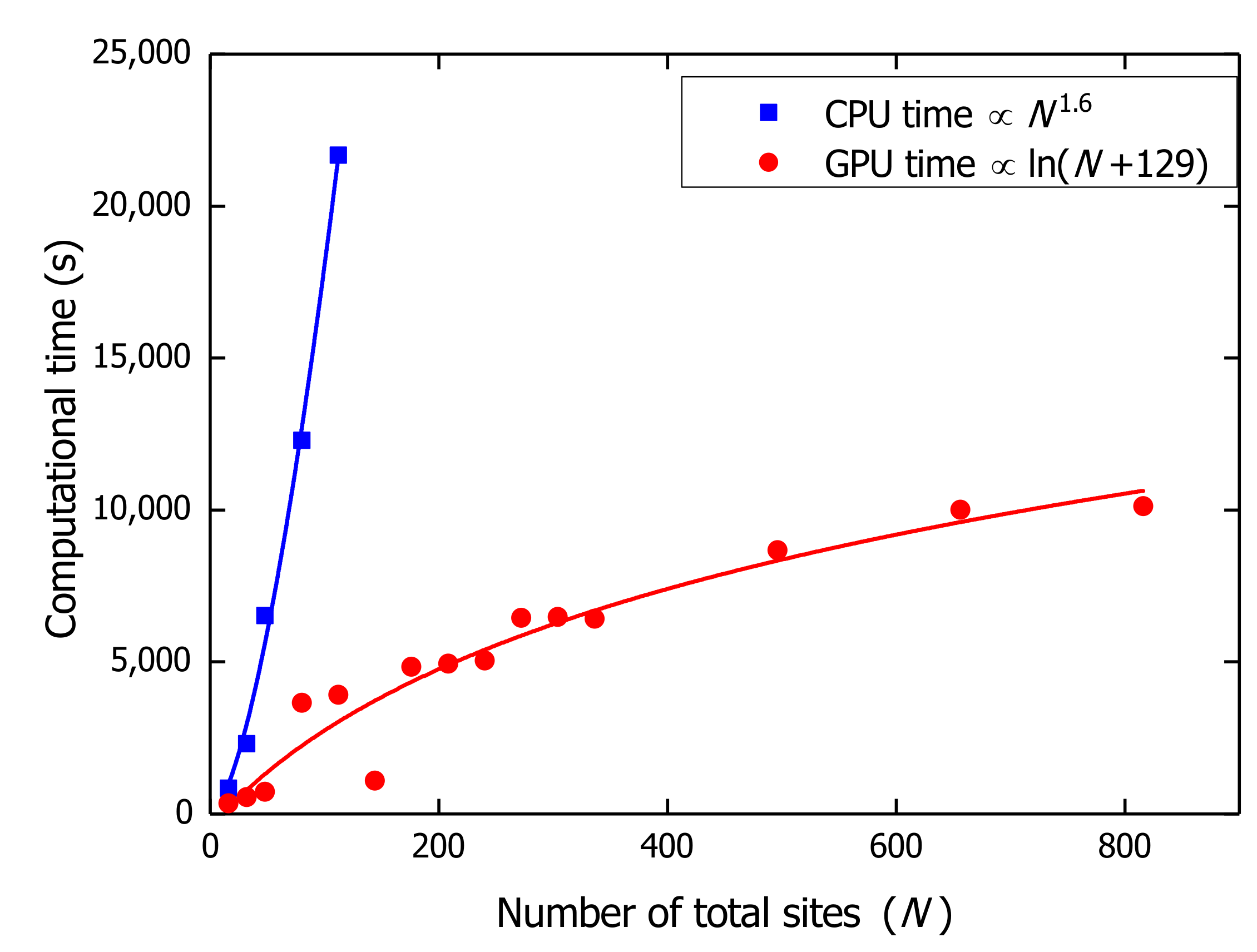
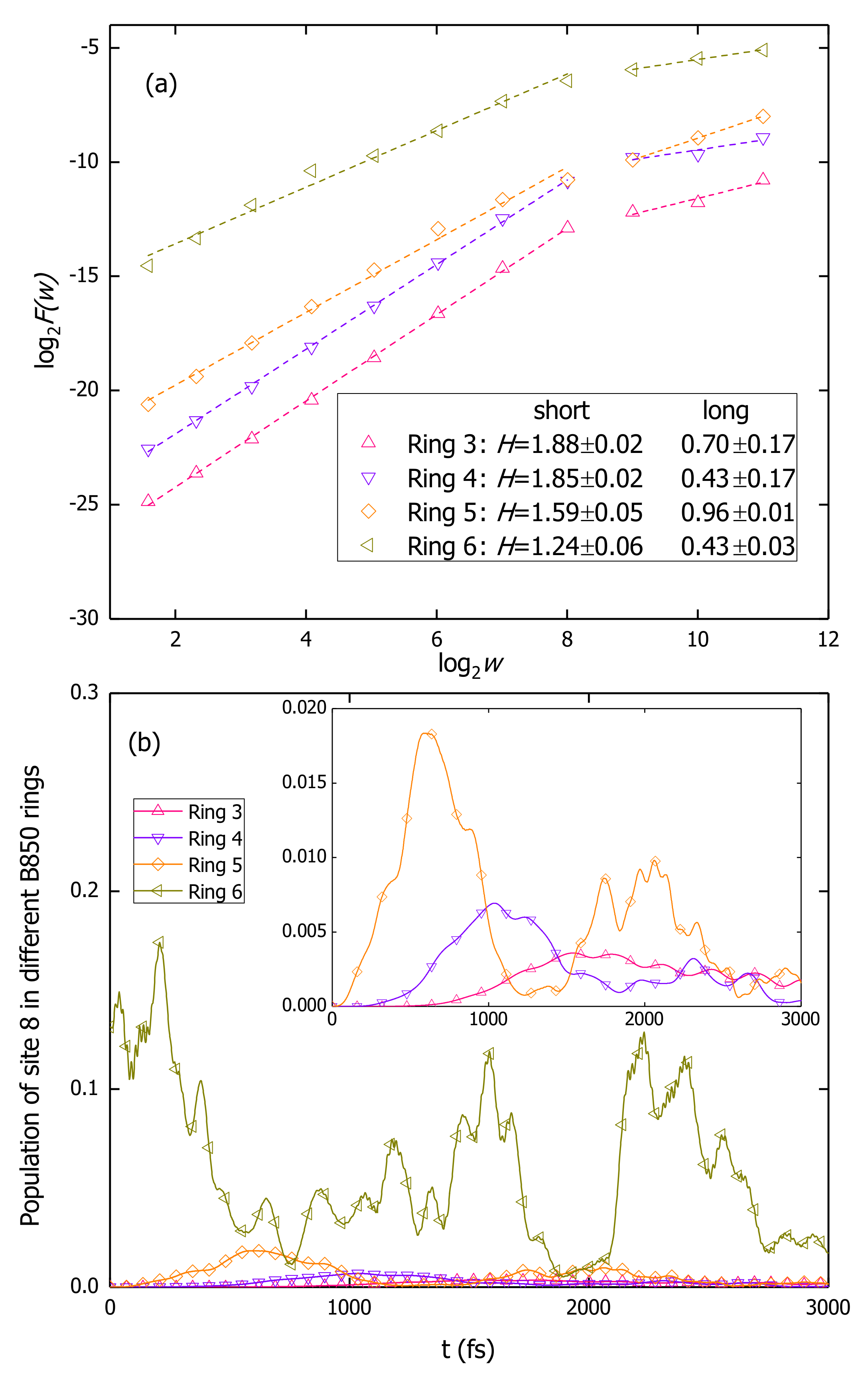
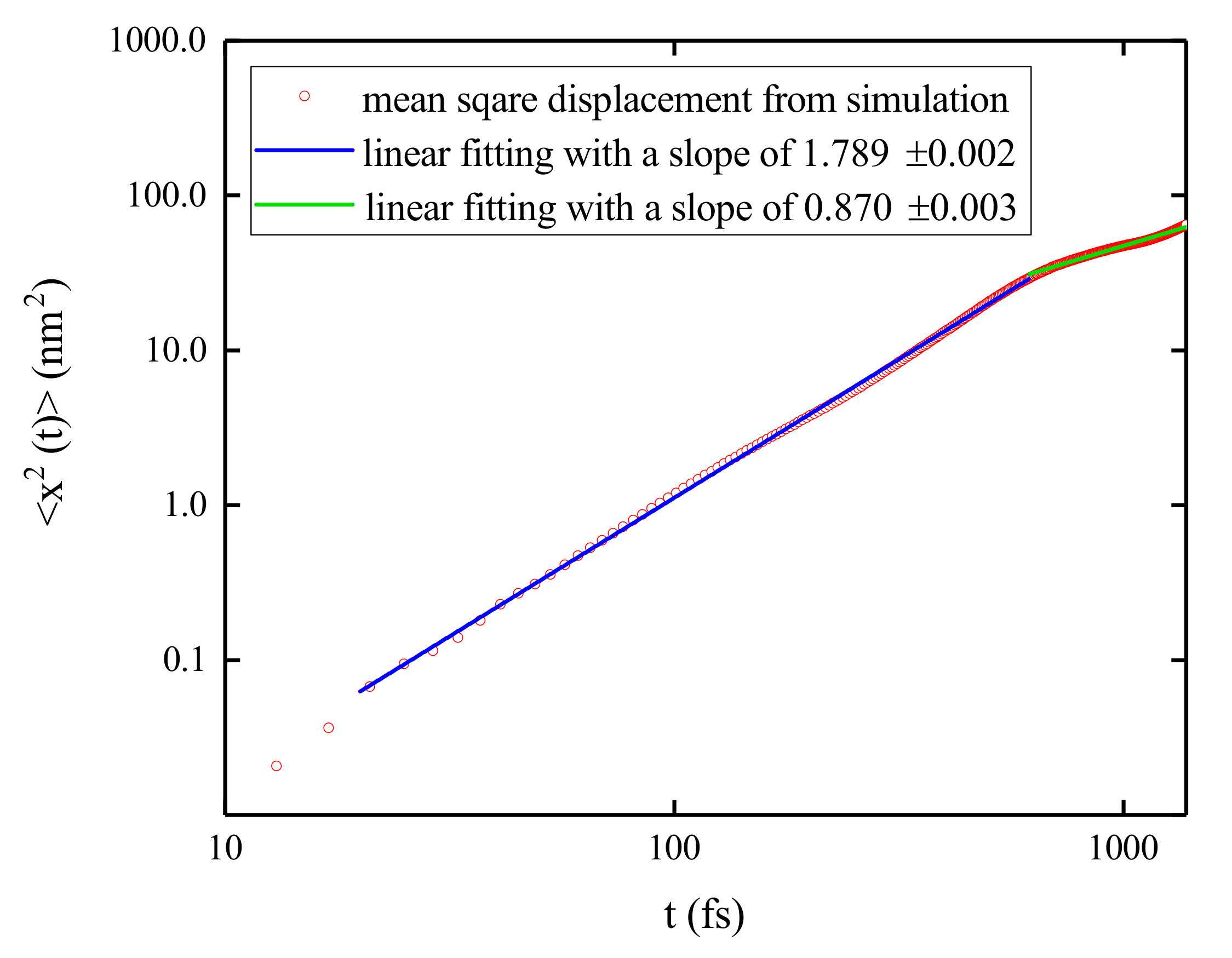
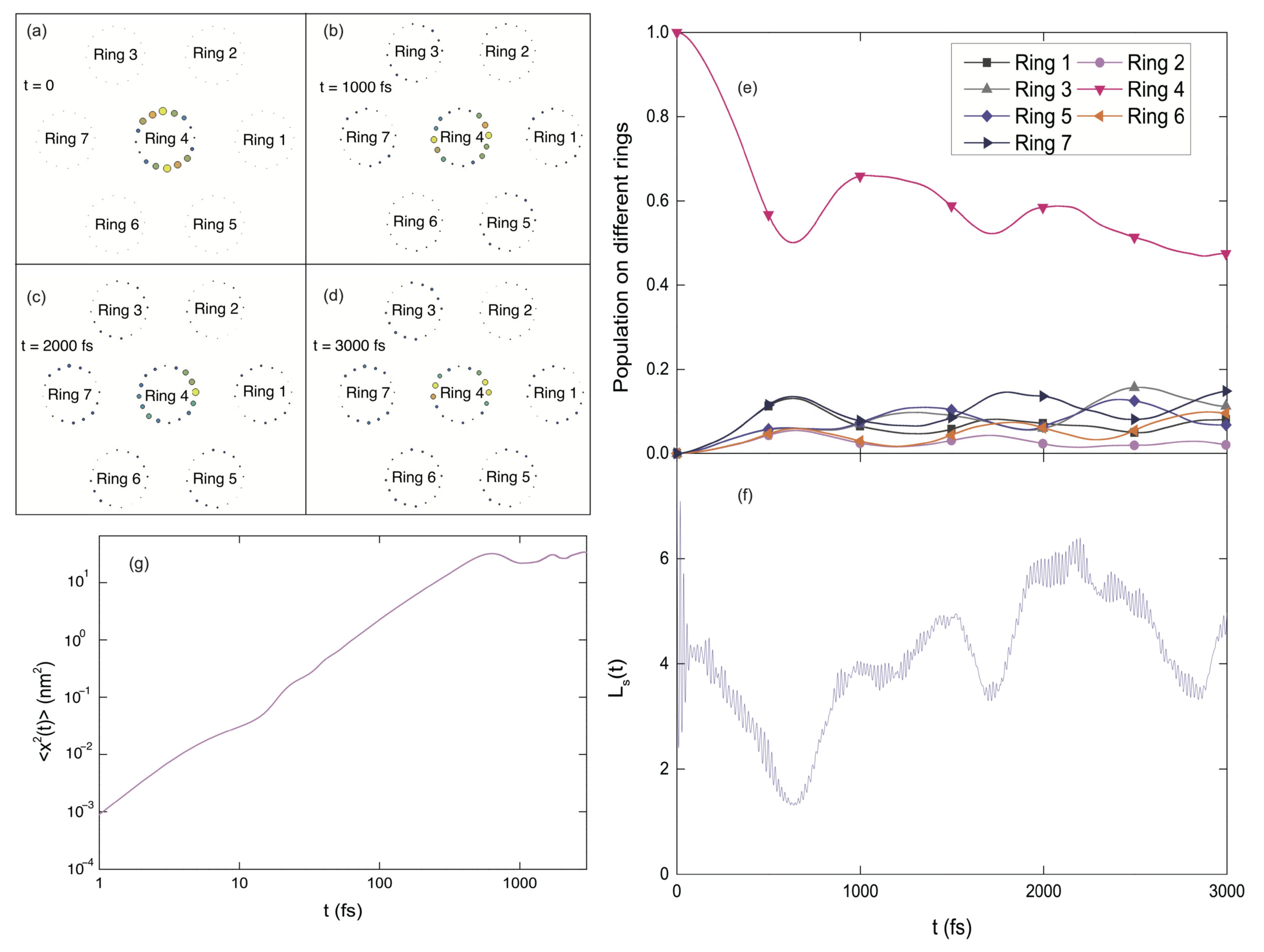
It has long been a challenge to accurately and efficiently simulate exciton–phonon dynamics in mesoscale photosynthetic systems with a fully quantum mechanical treatment due to extensive computational resources required. In this work, we tackle this seemingly intractable problem by combining the Dirac–Frenkel time-dependent variational method with Davydov trial states and implementing the algorithm in graphic processing units. The phonons are treated on the same footing as the exciton. Tested with toy models, which are nanoarrays of the B850 pigments from the light harvesting 2 complexes of purple bacteria, the methodology is adopted to describe exciton diffusion in huge systems containing more than 1600 molecules. The superradiance enhancement factor extracted from the simulations indicates an exciton delocalization over two to three pigments, in agreement with measurements of fluorescence quantum yield and lifetime in B850 systems. With fractal analysis of the exciton dynamics, it is found that exciton transfer in B850 nanoarrays exhibits a superdiffusion component for about 500 fs. Treating the B850 ring as an aggregate and modeling the inter-ring exciton transfer as incoherent hopping, we also apply the method of classical master equations to estimate exciton diffusion properties in one-dimensional (1D) and two-dimensional (2D) B850 nanoarrays using derived analytical expressions of time-dependent excitation probabilities. For both coherent and incoherent propagation, faster energy transfer is uncovered in 2D nanoarrays than 1D chains, owing to availability of more numerous propagating channels in the 2D arrangement.
Keywords: excitation energy transfer; superdiffusion; light harvesting complexes; fractal analyses; graphic processing units excitation energy transfer; superdiffusion; light harvesting complexes; fractal analyses; graphic processing units