Modeling of Bridging Law for Bundled Aramid Fiber-Reinforced Cementitious Composite and its Adaptability in Crack Width Evaluation



Abstract
1. Introduction
2. Calculation of Bridging Law and Modeling
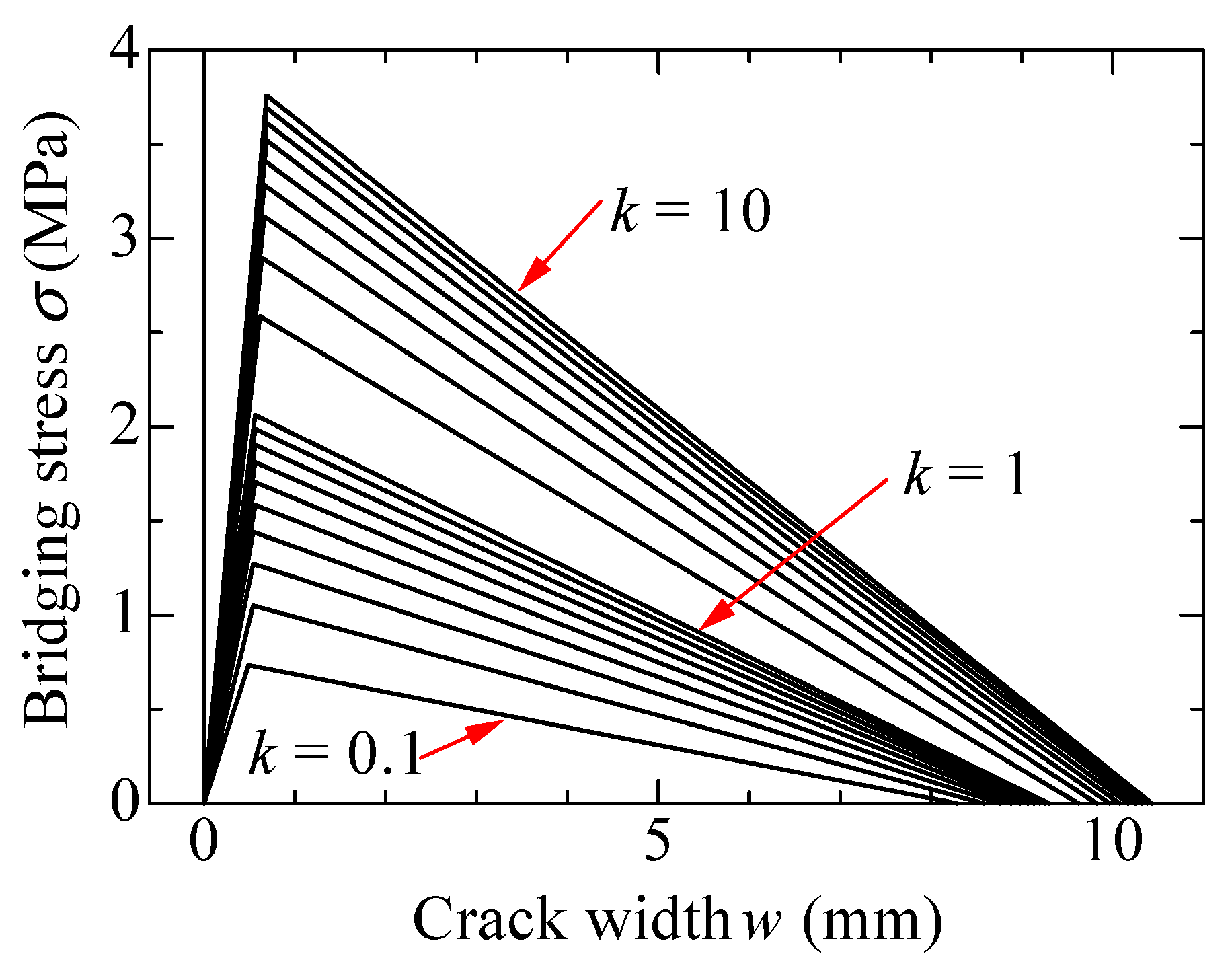
2.1. Calculation of Bridging Law
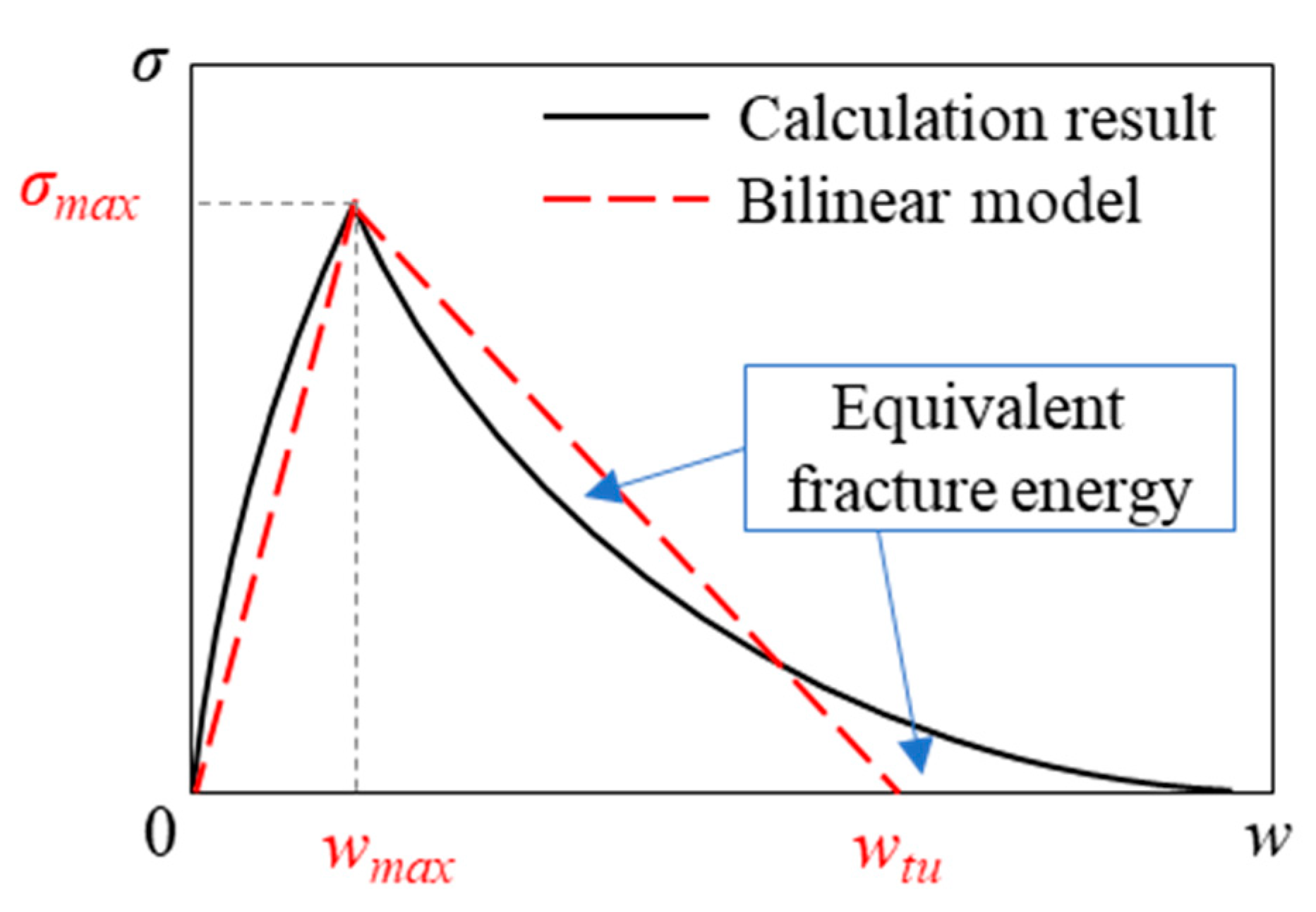
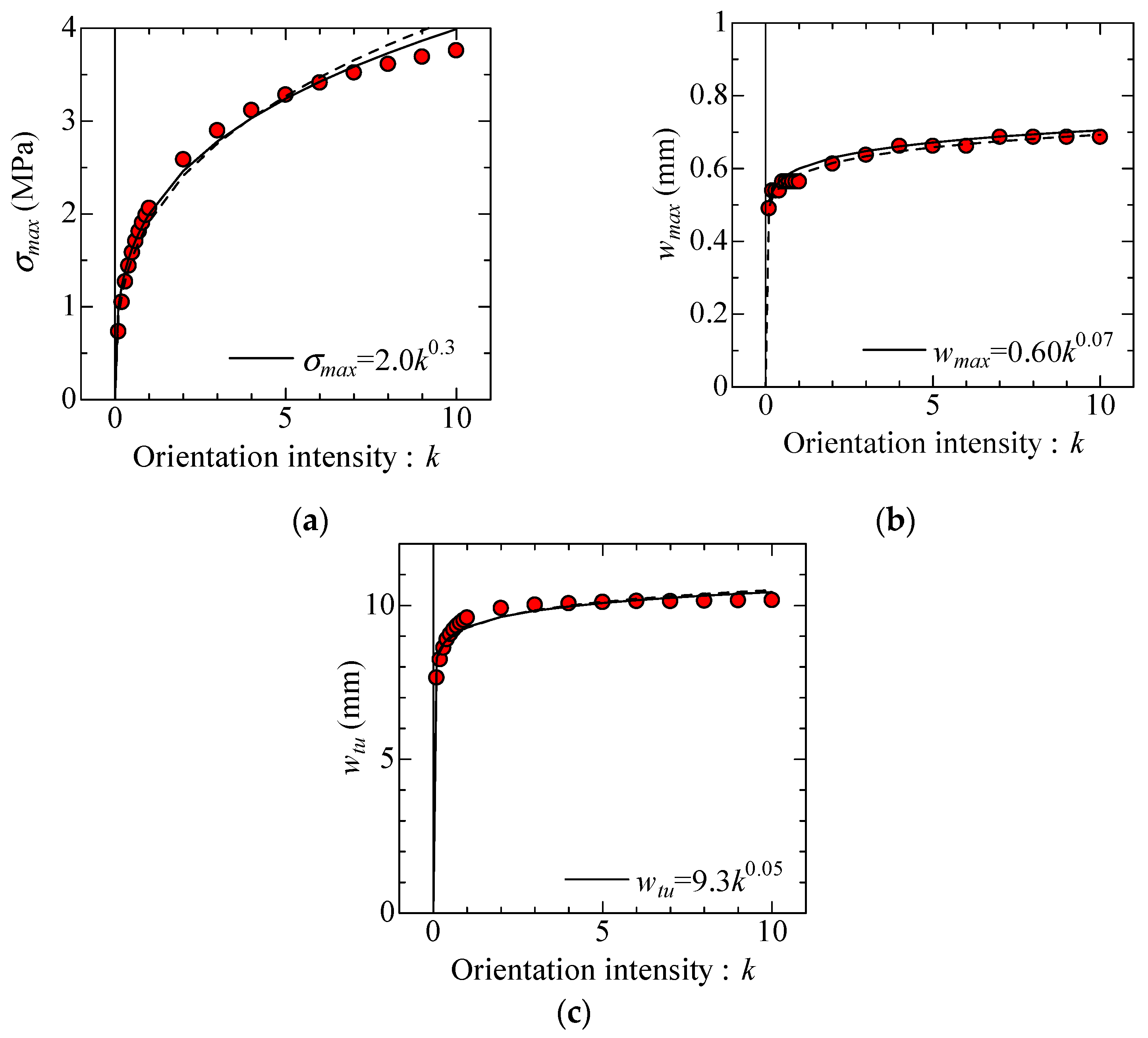
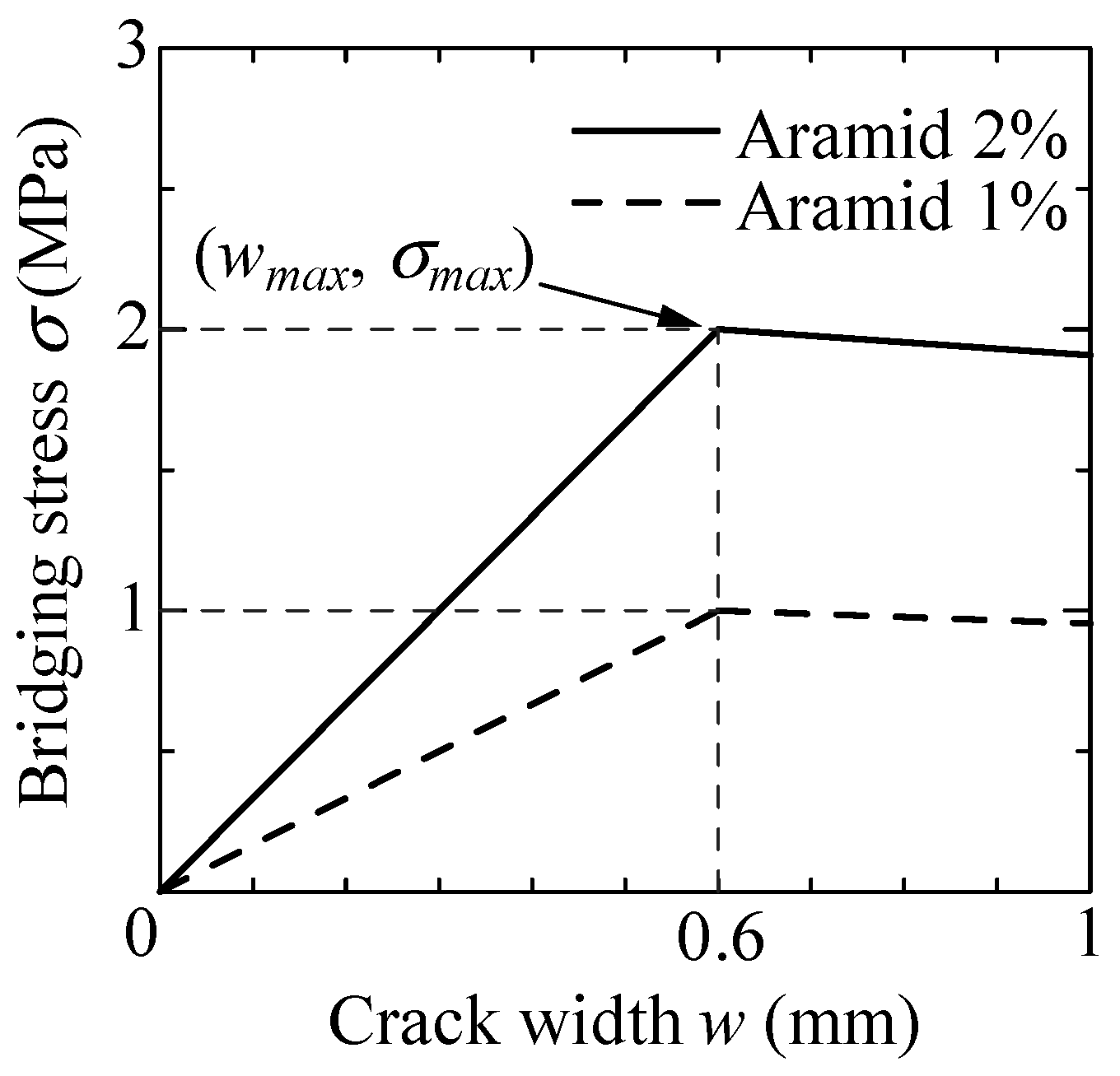
2.2. Modeling of Bridging Law
3. Uniaxial Tension Test of Aramid-FRCC Specimens with Steel Rebar
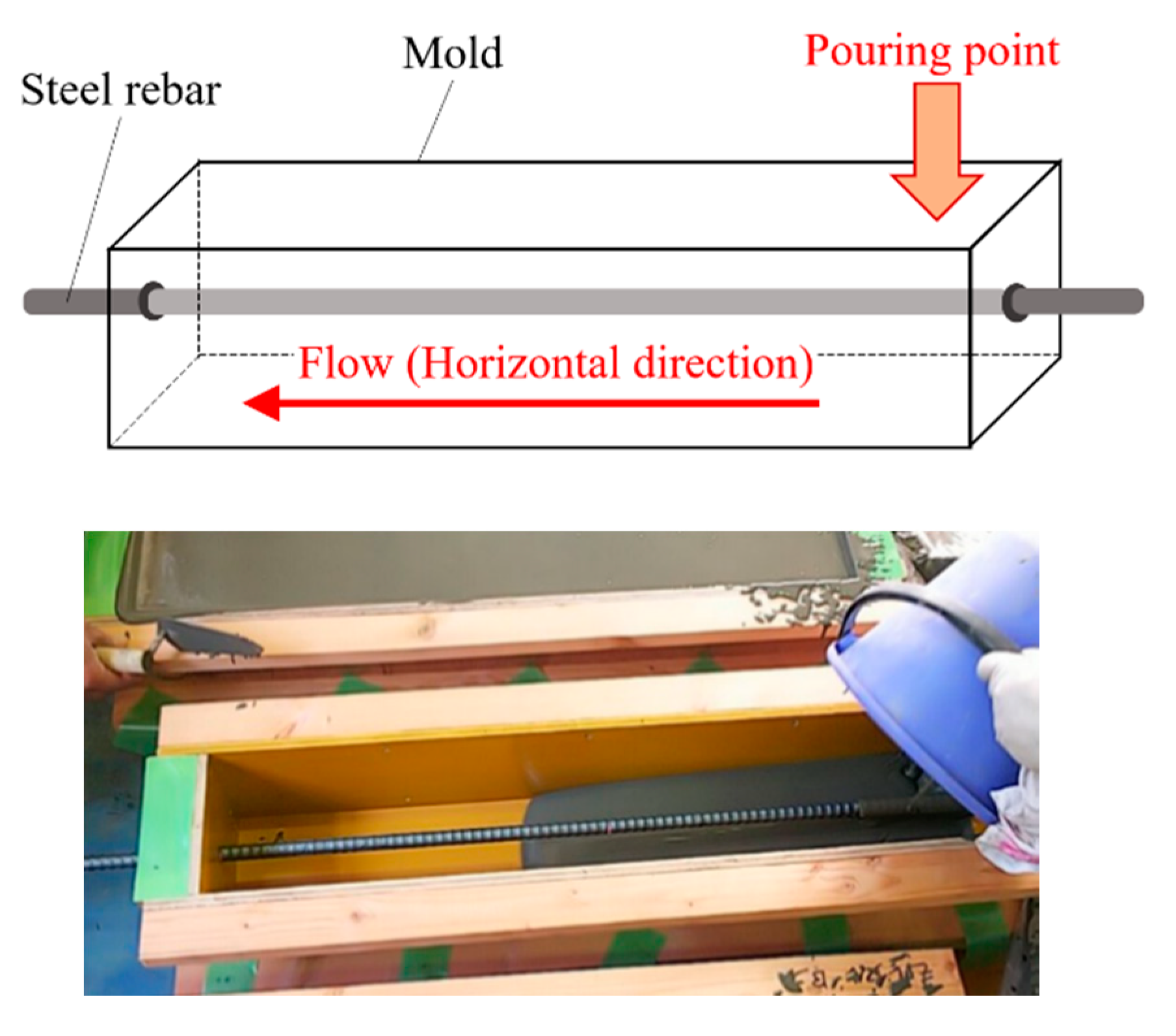
3.1. Specimens and Used Materials
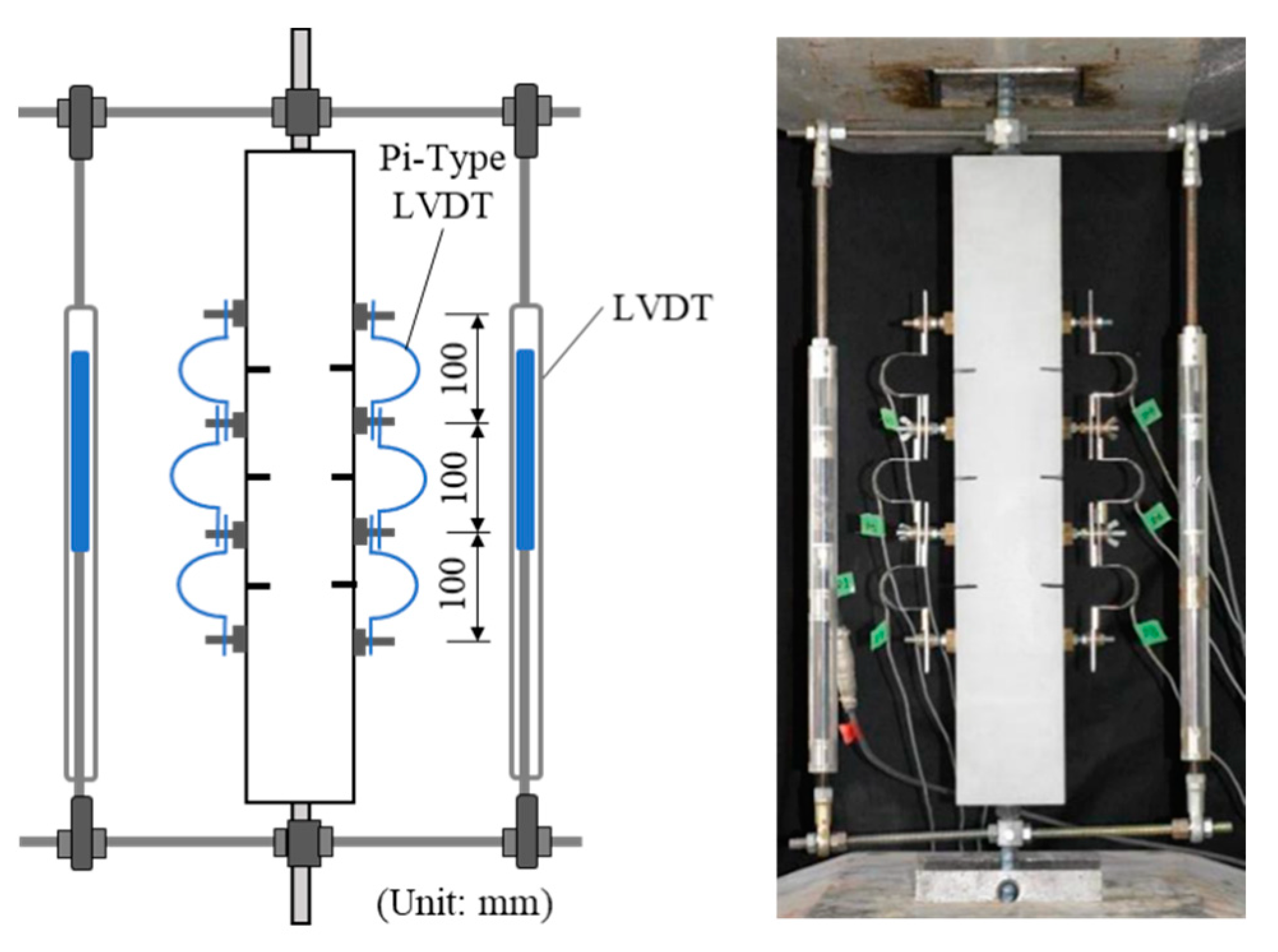
3.2. Loading and Measurements
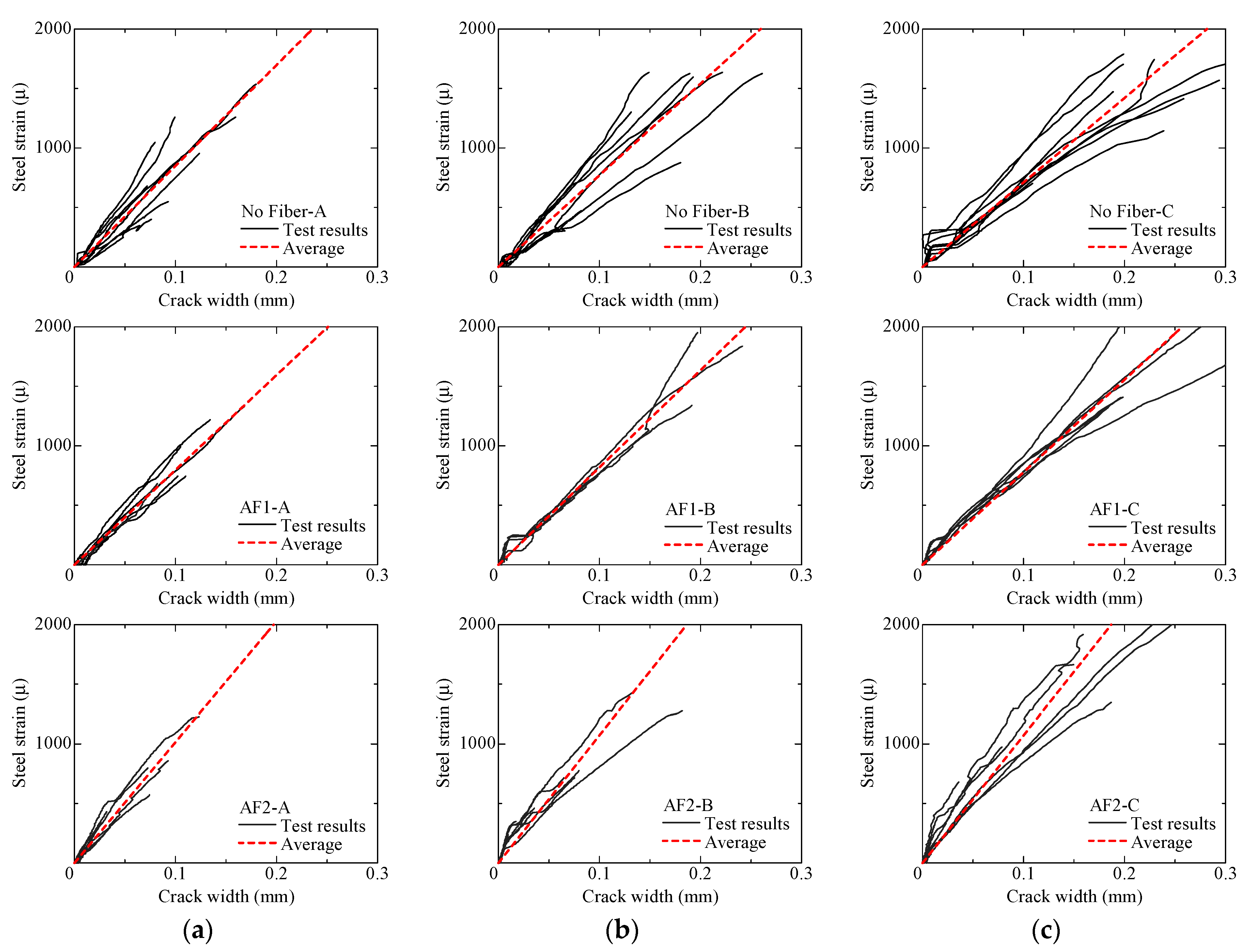
3.3. Test Results
4. Adaptability of Modeled Bridging Laws in Crack Width Evaluation
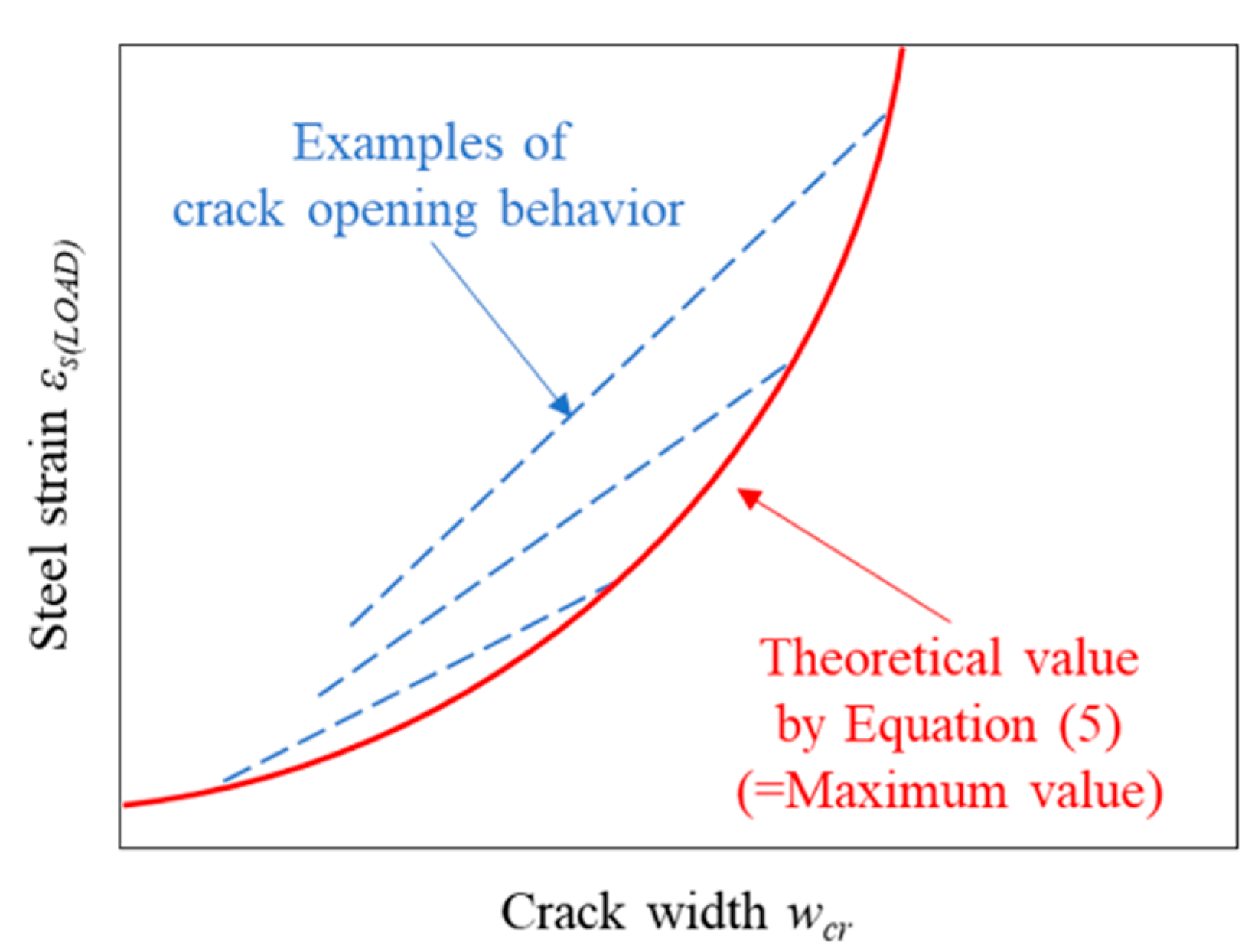
4.1. Theoretical Curve of Steel Strain–Crack Width Relationship
4.2. Comparison between Theoretical Curve and Test Results
5. Conclusions
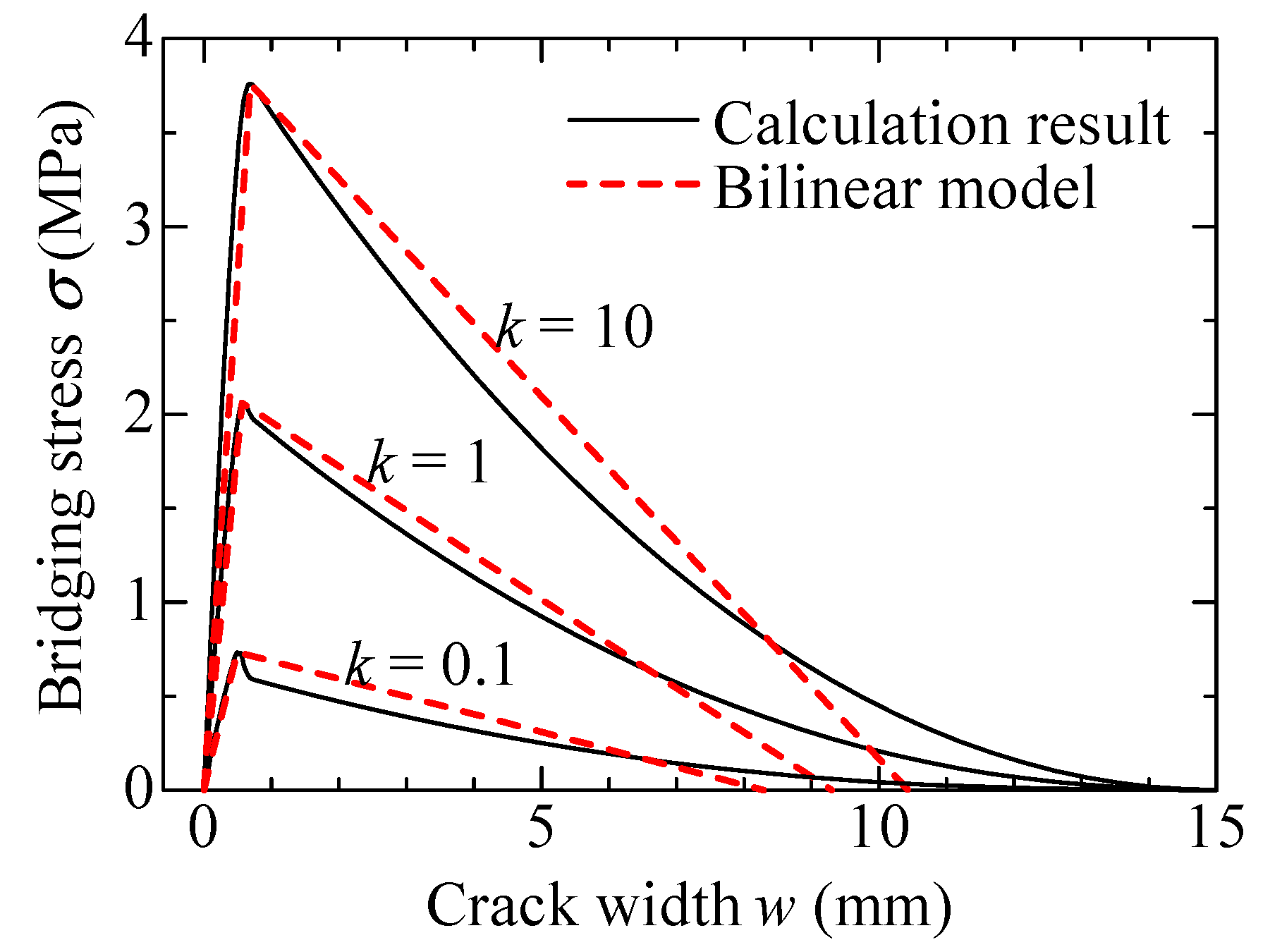
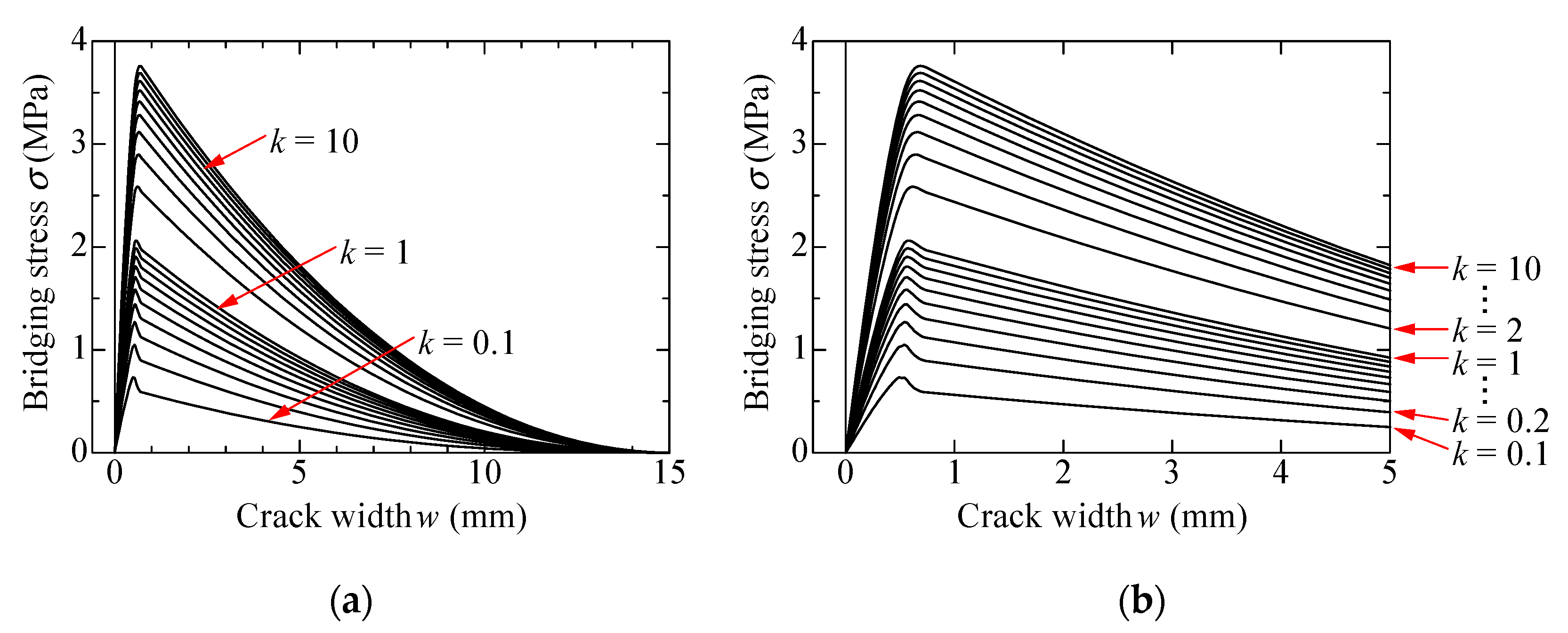
- To propose the simplified model of bridging law of bundled aramid-FRCC, the bridging law is calculated by assuming various cases of fiber orientation and expressed as bilinear model. The characteristic points of the model are given by the function of fiber orientation intensity.
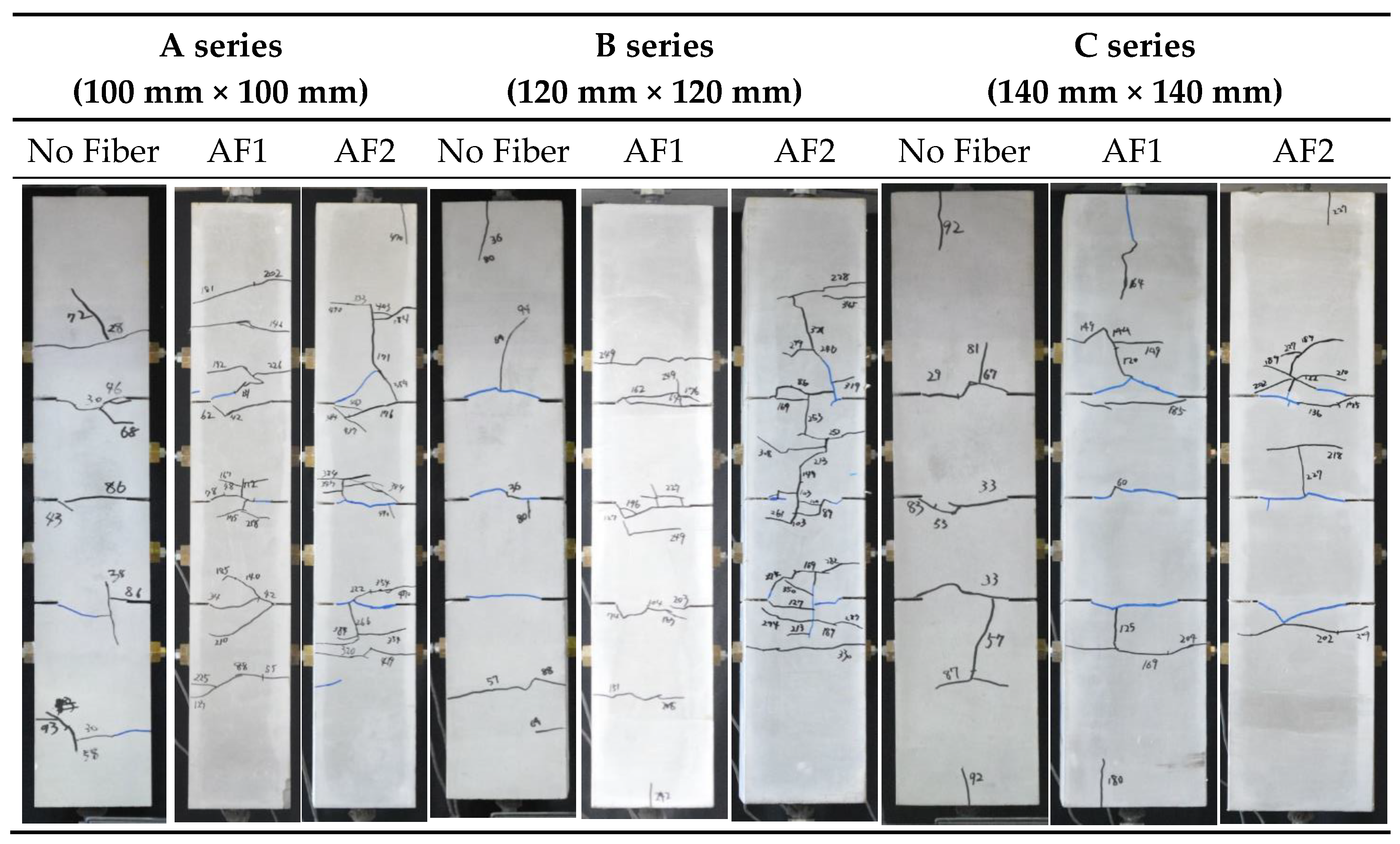
- The uniaxial tension test of aramid-FRCC specimens with steel rebar is conducted, and crack-opening behavior is measured experimentally. The crack width tends to be smaller in AF2 (fiber volume fraction of 2%) specimens, compared with No Fiber and AF1 (that of 1%) specimens.
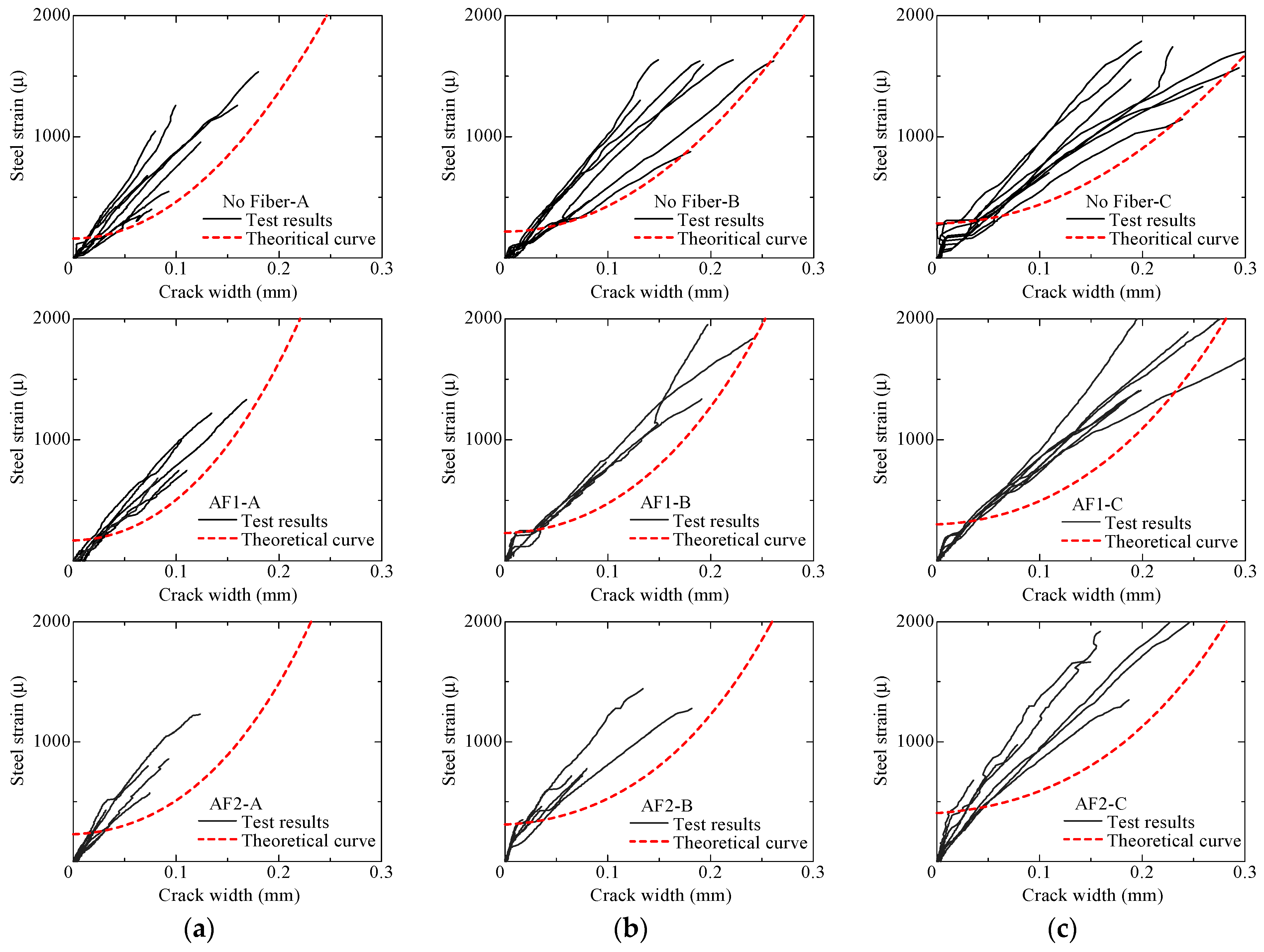
- The theoretical curves of steel strain–crack width relationships are calculated by using the modeled bridging law. The calculated curves show good agreements with the test results in each parameter.
Author Contributions
Funding
Institutional Review Board Statement
Informed Consent Statement
Data Availability Statement
Conflicts of Interest
References
- Matsumoto, T.; Mihashi, H. JCI-DFRCC Summary Report on DFRCC Terminologies and Application Concepts. In Proceedings of the JCI International Workshop on Ductile Fiber Reinforced Cementitious Composites (DFRCC), Takayama, Japan, 21–22 October 2002; pp. 59–66. [Google Scholar]
- Rokugo, K.; Kanda, T. (Eds.) Strain Hardening Cement Composites: Structural Design and Performance; RILEM State-of-the-Art Reports 6; Springer: Heidelberg, Germany, 2013; p. 90. [Google Scholar]
- Li, V.C. Engineered Cementitious Composites (ECC)-Bendable Concrete for Sustainable and Resilient Infrastructure; Springer: Heidelberg, Germany, 2019; p. 419. [Google Scholar]
- Löfgren, I. Fiber-Reinforced Concrete for Industrial Construction-A Fracture Mechanics Approach to Material Testing and Structural Analysis. Ph.D. Thesis, Department of Civil and Environmental Engineering, Chalmers University of Technology, Gothenburg, Sweden, 2005. [Google Scholar]
- Balaguru, P.N.; Shah, S.P. Basic Concepts and Mechanical Properties: Tension, Fiber-Reinforced Cement Composites; McGraw-Hill: New York, NY, USA, 1992; pp. 37–84. [Google Scholar]
- Amin, A.; Foster, S.J.; Muttoni, A. Derivation of the σ-w Relationship for SFRC from Prism Bending Tests. Struct. Concr. 2015, 16, 93–105. [Google Scholar] [CrossRef] [Scilit]
- Eduardo, B.P.; Gregor, F.; Joaquim, A.O. Barros. Direct assessment of tensile stress-crack opening behavior of Strain Hardening Cementitious Composites (SHCC). Cem. Concr. Res. 2012, 42, 834–846. [Google Scholar]
- Jing, Y.; Christopher, K.Y. Leung. Novel experimental method to determine crack-bridging constitutive relationship of SHCC using digital image processing. Strain-Hardening Cement-Based Composites SHCC-4. RILEM Bookseries 2018, 15, 55–62. [Google Scholar] [CrossRef] [Scilit]
- Li, V.C.; Stang, H.; Krenchel, H. Micromechanics of crack bridging in fibre-reinforced concrete. Mater. Struct. 1993, 26, 486–494. [Google Scholar] [CrossRef] [Scilit]
- Naaman, A.E.; Shah, S.P. Pull-Out Mechanism in Steel Fiber-Reinforced Concrete. ASCE J. Struct. Div. 1976, 102, 1537–1548. [Google Scholar]
- Shannag, M.; Brincker, R.; Hansen, W. Pullout behavior of steel fibers from cement-based composites. Cem. Concr. Res. 1997, 27, 925–936. [Google Scholar] [CrossRef] [Scilit]
- Wang, Y.; Li, V.C.; Backer, S. Analysis of Synthetic Fiber Pull-Out from a Cement Matrix. MRS Proc. 1987, 114, 159–165. [Google Scholar] [CrossRef] [Scilit]
- Kiyota, M.; Mihashi, H.; Kanda, T.; Kawamata, A. Study on Bond Characteristics of Fibers in Cementitious Composites. In Proceedings of the Japan Concrete Institute, Sapporo, Hokkaido, Japan, 4–6 July 2001; Volume 23, No.2. pp. 187–192. (In Japanese) [Google Scholar]
- Wang, Y.; Backer, S.; Li, V. A statistical tensile model of fibre reinforced cementitious composites. Composites 1989, 20, 265–274. [Google Scholar] [CrossRef] [Scilit]
- Kanakubo, T. Tensile Characteristics Evaluation Method for Ductile Fiber-Reinforced Cementitious Composites. J. Adv. Concr. Technol. 2006, 4, 3–17. [Google Scholar] [CrossRef] [Scilit]
- Laranjeira, F.; Aguado, A.; Molins, C.; Grunewald, S.; Walraven, J.; Cavalaro, S.H.P. Framework to predict the orientation of fibers in FRC: A novel philosophy. Cem. Concr. Res. 2012, 42, 752–768. [Google Scholar] [CrossRef] [Scilit]
- Li, V.C.; Wang, S. On High Performance Fiber Reinforced Cementitious Composites. In Proceedings of the Symposium of Ductile Fiber-Reinforced Cementitious Composites, Chiyoda-ku, Tokyo, Japan, 4–5 December 2003; pp. 13–23. [Google Scholar]
- Kanakubo, T.; Miyaguchi, M.; Asano, K. Influence of Fiber Orientation on Bridging Performance of Polyvinyl Alcohol Fi-ber-Reinforced Cementitious Composites. ACI Mater. J. 2016, 113, 131–141. [Google Scholar]
- Watanabe, K.; Ozu, Y.; Miyaguchi, M.; Kanakubo, T. Influence of placing method considering fiber orientation to bending characteristics of DFRCC. In Proceedings of the 7th International Conference of Asian Concrete Federation ACF 2016, Hanoi, Vietnam, 30 October–2 November 2016. [Google Scholar]
- Ozu, Y.; Watanabe, K.; Yasojima, A.; Kanakubo, T. Evaluation of Size Effect in Bending Characteristics of DFRCC Based on Bridging Law. In Proceedings of the 7th International Conference of Asian Concrete Federation ACF 2016, Hanoi, Vietnam, 30 October–2 November 2016. [Google Scholar]
- Ozu, Y.; Yamada, H.; Yasojima, A.; Kanakubo, T. Evaluation of Shear and Tensile Bridging Characteristics of PVA Fibers Based on Bridging Law. RILEM Bookseries 2017, 15, 88–96. [Google Scholar] [CrossRef] [Scilit]
- Sano, N.; Yamada, H.; Miyaguchi, M.; Yasojima, A.; Kanakubo, T. Structural Performance of Beam-Column Joint using DFRCC. In Proceedings of the 11th Canadian Conference on Earthquake Engineering -Facing Seismic Risk, Victoria, BC, Canada, 21–24 July 2015; pp. 1–10. [Google Scholar]
- Ozu, Y.; Miyaguchi, M.; Kanakubo, T. Modeling of Bridging Law for PVA Fiber-Reinforced Cementitious Composite Con-sidering Fiber Orientation. J. Archit. Eng. 2018, 12, 651–661. [Google Scholar]
- Sunaga, D.; Namiki, K.; Kanakubo, T. Crack width evaluation of fiber-reinforced cementitious composite considering in-teraction between deformed steel rebar. Constr. Build. Mater. 2020, 261, 119968. [Google Scholar] [CrossRef] [Scilit]
- Nanni, A. Properties of Aramid-Fiber Reinforced Concrete and SIFCON. J. Mater. Civ. Eng. 1992, 4, 1–15. [Google Scholar] [CrossRef] [Scilit]
- Uchida, Y.; Takeyama, T.; Dei, T. Ultra high strength fiber reinforced concrete using aramid fiber. In Proceedings of the 7th International Conference on Fracture Mechanics of Concrete and Concrete Structures, Jeju, Korea, 23–28 May 2010; pp. 1492–1497. [Google Scholar]
- Pitcha, J.; Chung, N.T.; Ganchai, T.; Linh, V.H. Bui. Mechanical properties of aramid fiber-reinforced composites and per-formance on repairing concrete beams damaged by corrosion. Songklanakarin J. Sci. Technol. 2020, 42, 637–644. [Google Scholar]
- Kanda, T.; Li, V.C. Interface Property and Apparent Strength of High-Strength Hydrophilic Fiber in Cement Matrix. J. Mater. Civ. Eng. 1998, 10, 5–13. [Google Scholar] [CrossRef] [Scilit]
- Balaguru, P.N.; Shah, S.P. Properties of Constituent Materials. In Fiber-Reinforced Cement Composites; McGraw-Hill: New York, NY, USA, 1992; pp. 101–114. [Google Scholar]
- Kanakubo, T.; Echizen, S.; Wang, J.; Mu, Y. Pullout Behavior of Bundled Aramid Fiber in Fiber-Reinforced Cementitious Composite. Materials 2020, 13, 1746. [Google Scholar] [CrossRef] [Scilit] [PubMed]
- An Outstanding Para-Aramid Combining Unique Properties. Available online: https://www. teijinara-mid.com/wp-content/uploads/2018/10/Product-brochure-Technora.pdf (accessed on 29 October 2020).
- Jordan, R.D.; Frank, J.V. Cracking Behavior of Steel Fiber-Reinforced Concrete Members Containing Conventional Rein-forcement. ACI Struct. J. 2013, 110, 481–490. [Google Scholar]
- Ogura, H.; Kunieda, M.; Nakamura, H. Tensile Fracture Analysis of Fiber Reinforced Cement-Based Composites with Rebar Focusing on the Contribution of Bridging Forces. J. Adv. Concr. Technol. 2019, 17, 216–231. [Google Scholar] [CrossRef] [Scilit]



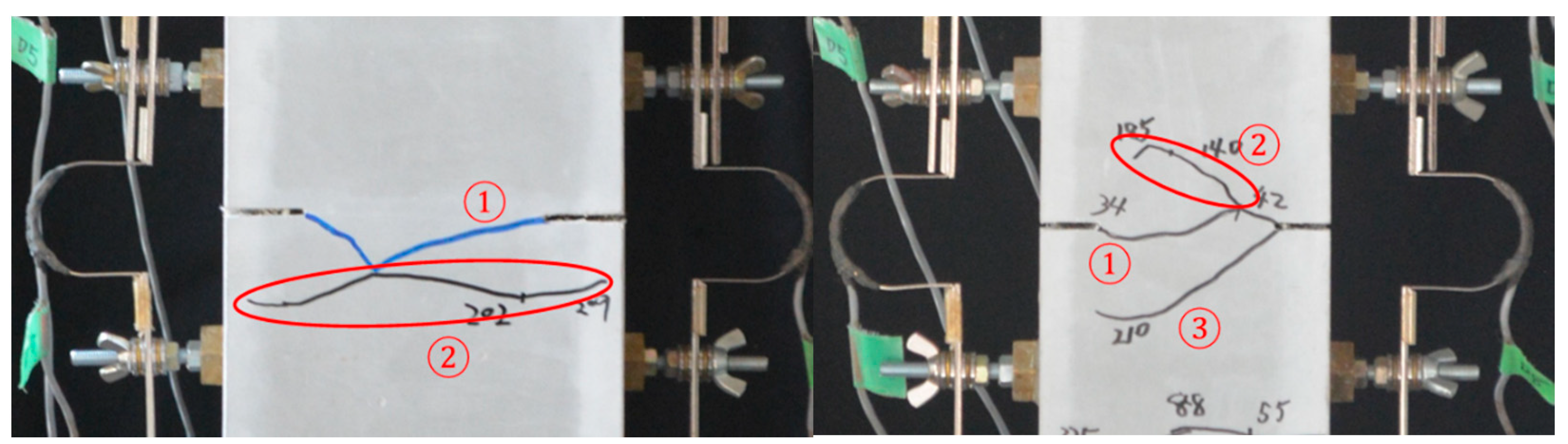
 first crack,
  second crack, and
  third crack).


| Parameter | Input | |
|---|---|---|
| Fiber Volume Fraction, Vf (%) | 2.0 | |
| Length of Fiber, lf (mm) | 30 | |
| Diameter of Fiber, df (mm) | 0.5 | |
| Apparent Rupture Strength of Fiber, σfu (MPa) [30] | σfu = 1080 · e −0.667ψ | |
| Bilinear Model [30] | Maximum Pullout Load, Pmax (N) | Pmax = 7.47 · lb |
| Crack Width at Pmax, wmax (mm) | Wmax = 0.13 · lb0.64 | |
| Type | Common Factor | Cross-Section (Section at Slit) | Volume Fraction of Fibers |
|---|---|---|---|
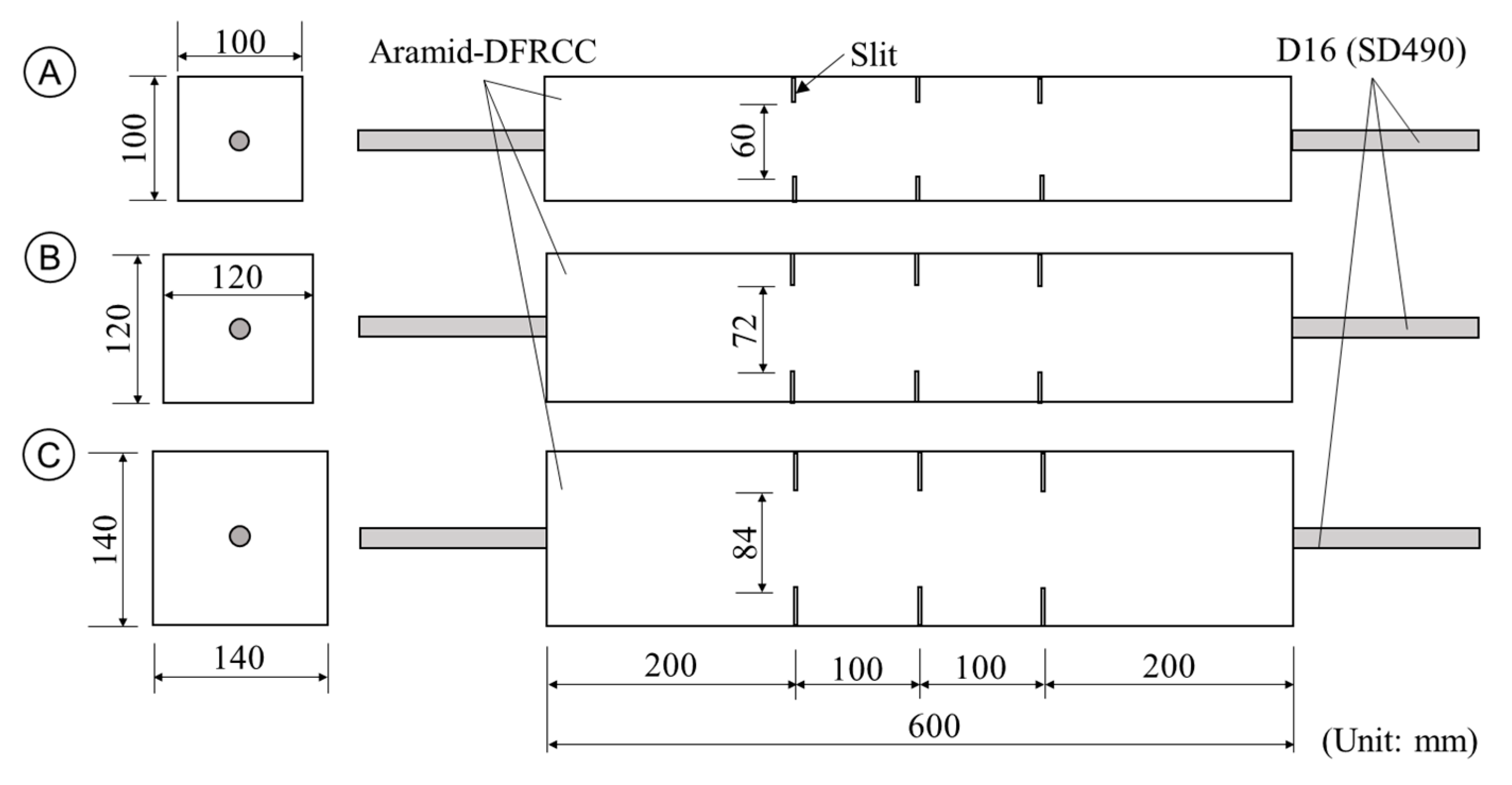
| No Fiber-A [24] | Length: 600 mm Number of slits: 6 Spacing of slits: 100 mm Steel rebar: D16 (SD490) Fiber: Bundled aramid | 100 mm × 100 mm (100 mm × 60 mm) | - |
| AF1-A | 1.0% | ||
| AF2-A | 2.0% | ||
| No Fiber-B [24] | 120 mm × 120 mm (120 mm ×72 mm) | - | |
| AF1-B | 1.0% | ||
| AF2-B | 2.0% | ||
| No Fiber-C [24] | 140 mm × 140 mm (140 mm × 84 mm) | - | |
| AF1-C | 1.0% | ||
| AF2-C | 2.0% |
| Type | Unit Weight (kg/m3) | Compressive Strength (MPa) | Elastic Modulus (GPa) | ||||
|---|---|---|---|---|---|---|---|
| Water | Cement | Sand | Fly Ash | Aramid Fiber | |||
| No Fiber [24] | 380 | 678 | 484 | 291 | 0 | 52.5 | 18.1 |
| AF1 | 13.9 | 48.2 | 18.1 | ||||
| AF2 | 27.8 | 47.5 | 16.4 | ||||
| Type | Yield Strength (MPa) | Yield Strain (μ) | Elastic Modulus (GPa) | Tensile Strength (MPa) |
|---|---|---|---|---|
| D16 (SD490) | 516 | 2604 | 198 | 709 |
| No Fiber [24] | AF1 | AF2 | Remarks | ||||
|---|---|---|---|---|---|---|---|
| Steel Rebar | Perimeter | φs | Mm | 50 | Nominal Value | ||
| Cross-Sectional Area | As | mm2 | 198.6 | ||||
| Elastic Modulus | Es | GPa | 198 | Material Test | |||
| FRCC | Cross-Sectional Area | Ac | mm2 | A:1002, B:1202, C:1402 | – | ||
| Elastic Modulus | Ec | GPa | 18.1 | 18.1 | 16.4 | Material Test | |
| Cracking Strength | σcr | Mpa | 1.03 | 1.09 | 1.45 | Tension Test | |
| Bond Stiffness | kbo | N/mm3 | 50 | [24] | |||
Publisher’s Note: MDPI stays neutral with regard to jurisdictional claims in published maps and institutional affiliations. |
© 2021 by the authors. Licensee MDPI, Basel, Switzerland. This article is an open access article distributed under the terms and conditions of the Creative Commons Attribution (CC BY) license (http://creativecommons.org/licenses/by/4.0/).
Share and Cite
Sunaga, D.; Koba, T.; Kanakubo, T. Modeling of Bridging Law for Bundled Aramid Fiber-Reinforced Cementitious Composite and its Adaptability in Crack Width Evaluation. Materials 2021, 14, 179. https://doi.org/10.3390/ma14010179
Sunaga D, Koba T, Kanakubo T. Modeling of Bridging Law for Bundled Aramid Fiber-Reinforced Cementitious Composite and its Adaptability in Crack Width Evaluation. Materials. 2021; 14(1):179. https://doi.org/10.3390/ma14010179
Chicago/Turabian StyleSunaga, Daiki, Takumi Koba, and Toshiyuki Kanakubo. 2021. "Modeling of Bridging Law for Bundled Aramid Fiber-Reinforced Cementitious Composite and its Adaptability in Crack Width Evaluation" Materials 14, no. 1: 179. https://doi.org/10.3390/ma14010179
APA StyleSunaga, D., Koba, T., & Kanakubo, T. (2021). Modeling of Bridging Law for Bundled Aramid Fiber-Reinforced Cementitious Composite and its Adaptability in Crack Width Evaluation. Materials, 14(1), 179. https://doi.org/10.3390/ma14010179