Article

The Effect of Polarity and Hydrostatic Pressure on Operational Characteristics of Rutile Electrode in Underwater Welding


by
Andrés M. Moreno-Uribe
1,*,
Alexandre Q. Bracarense
1 and
Ezequiel C. P. Pessoa
2
1
Programa de Pós-Graduação em Engenharia Mecânica—PPGMEC, Robotics, Welding and Simulation Laboratory—LRSS., Federal University of Minas Gerais—UFMG, Belo Horizonte 31270-901, Brazil
2
Welding/Materials Joining Engineering Department, LeTourneau University, 2100 S. Mobberly Avenue, Longview, TX 75602, USA
*
Author to whom correspondence should be addressed.
Materials 2020, 13(21), 5001; https://doi.org/10.3390/ma13215001
Submission received: 16 August 2020 / Revised: 21 September 2020 / Accepted: 21 September 2020 / Published: 6 November 2020
(This article belongs to the Special Issue Underwater Processing of Materials)

Abstract

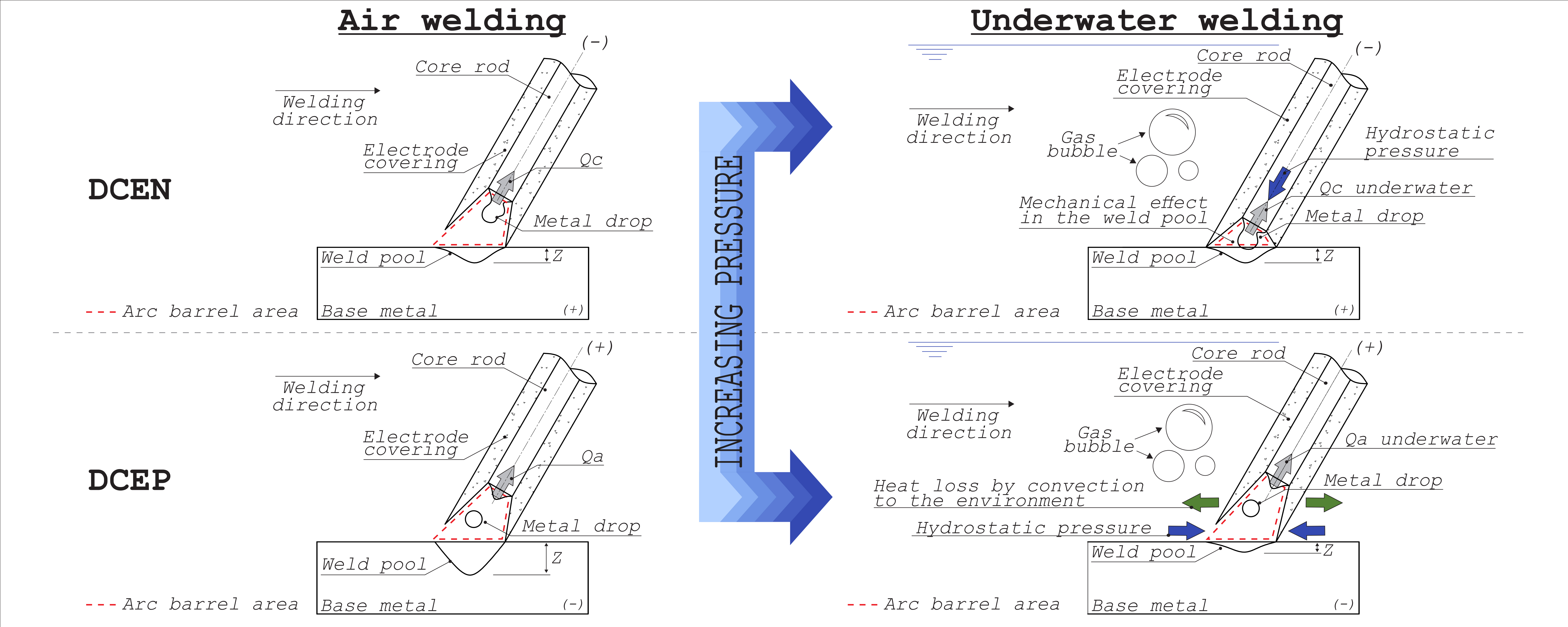
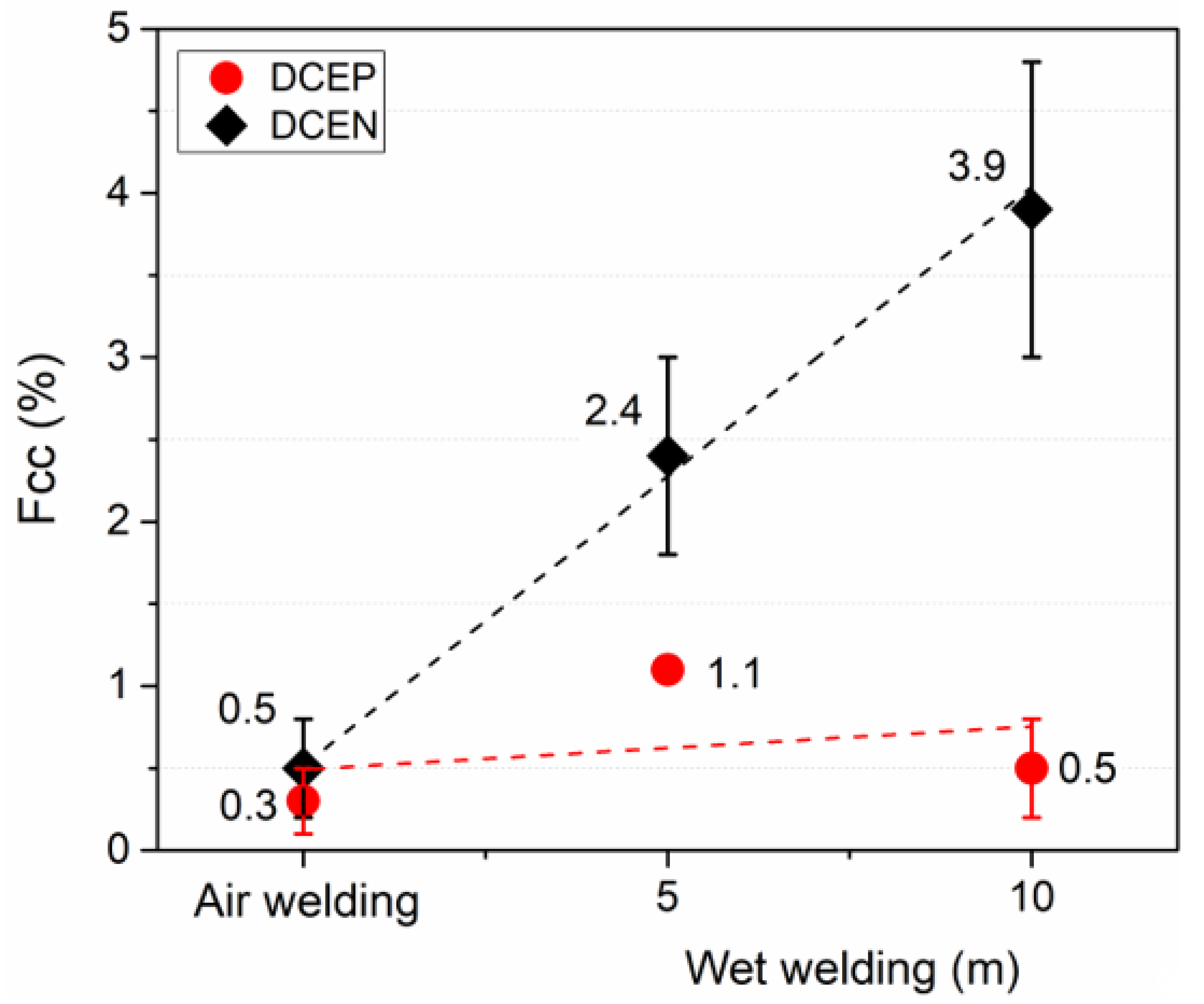
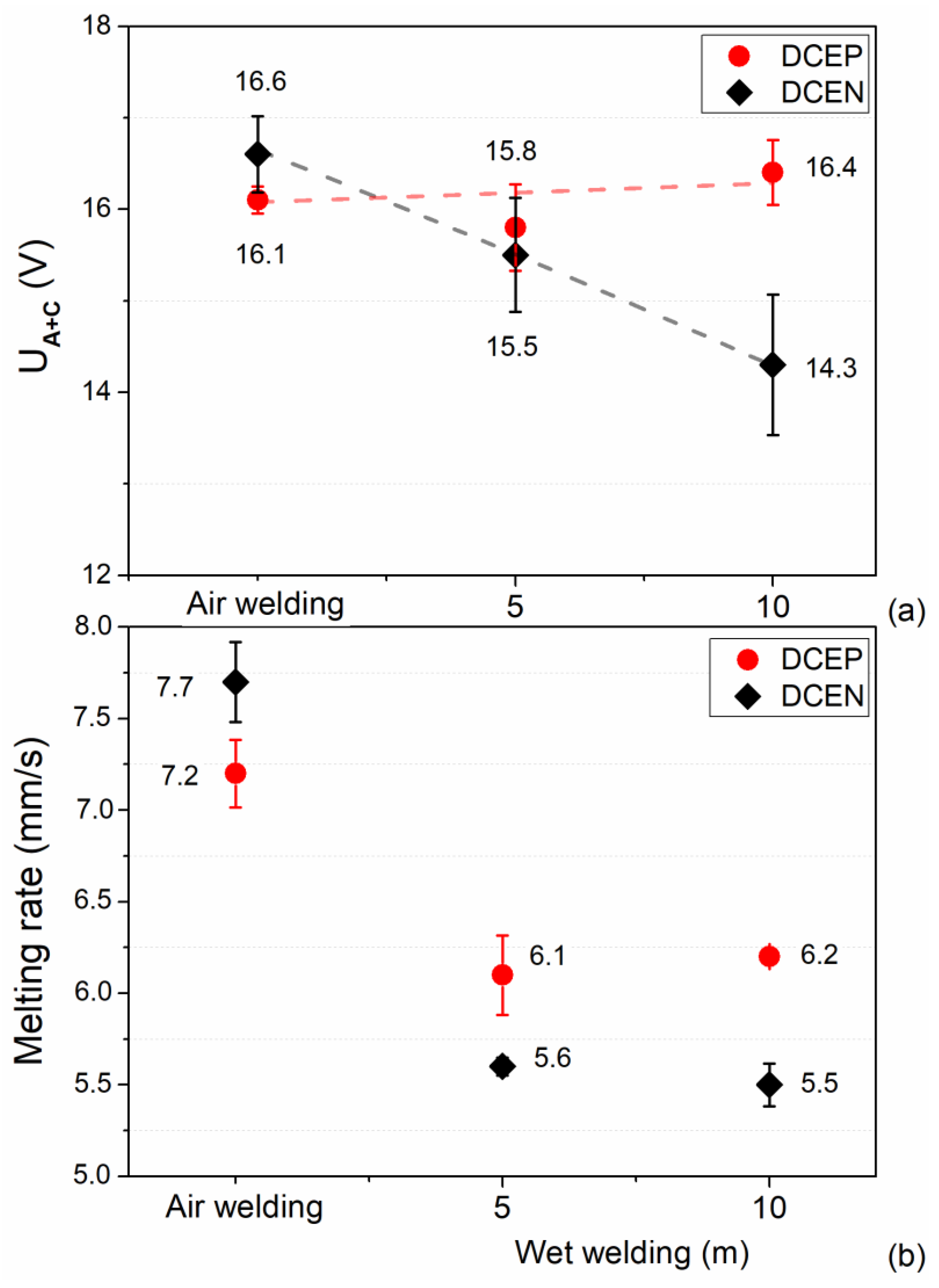
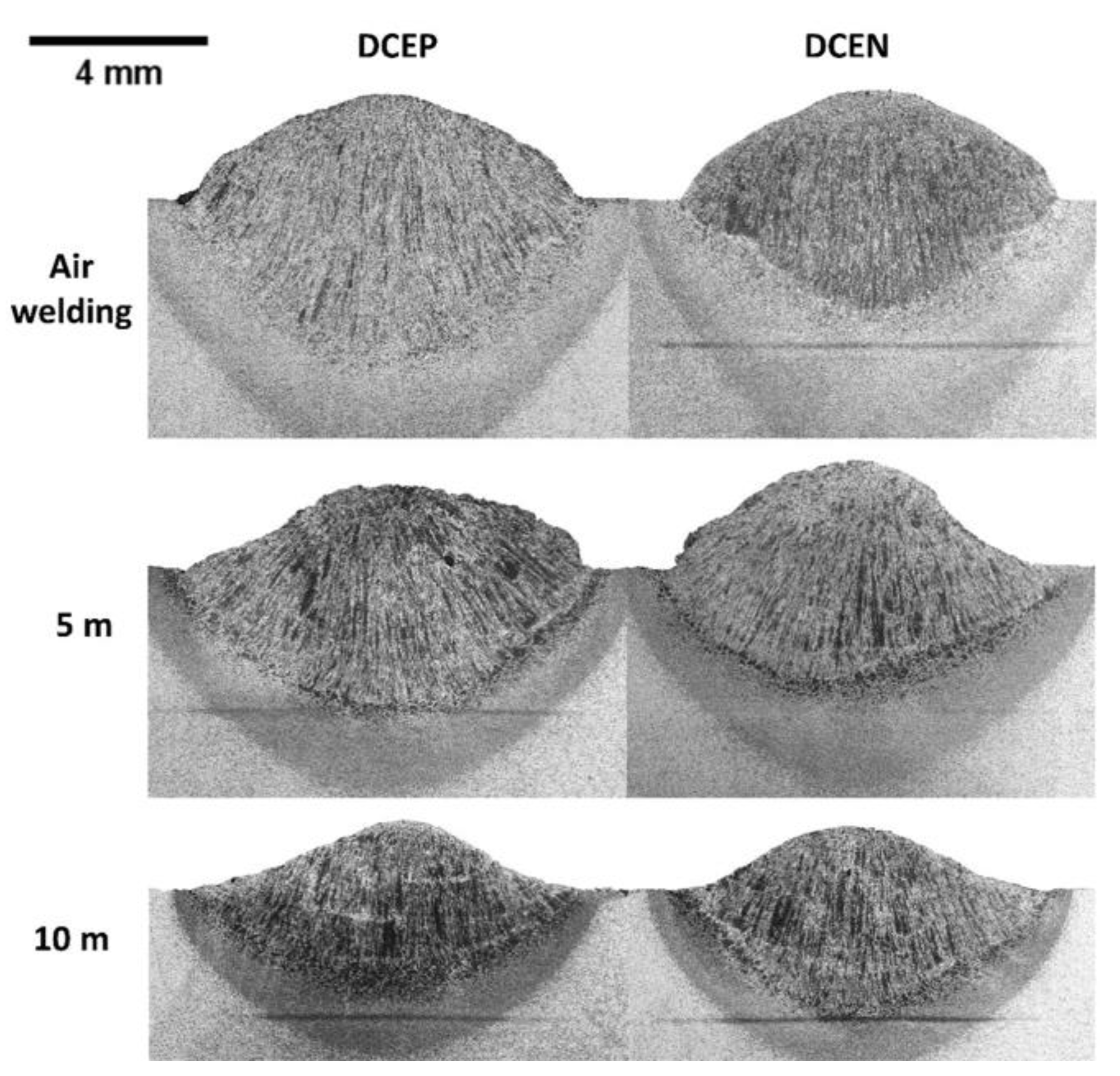
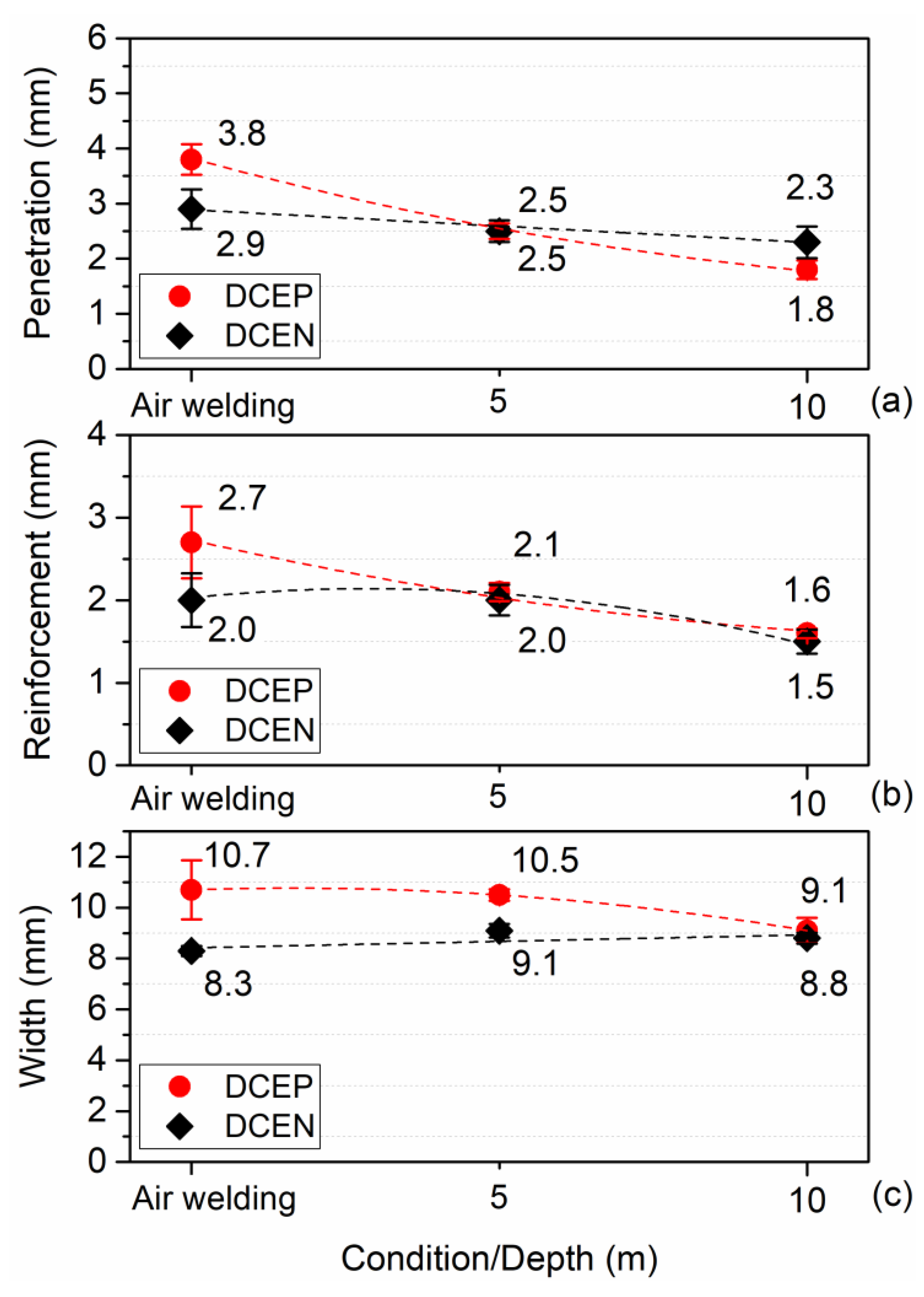
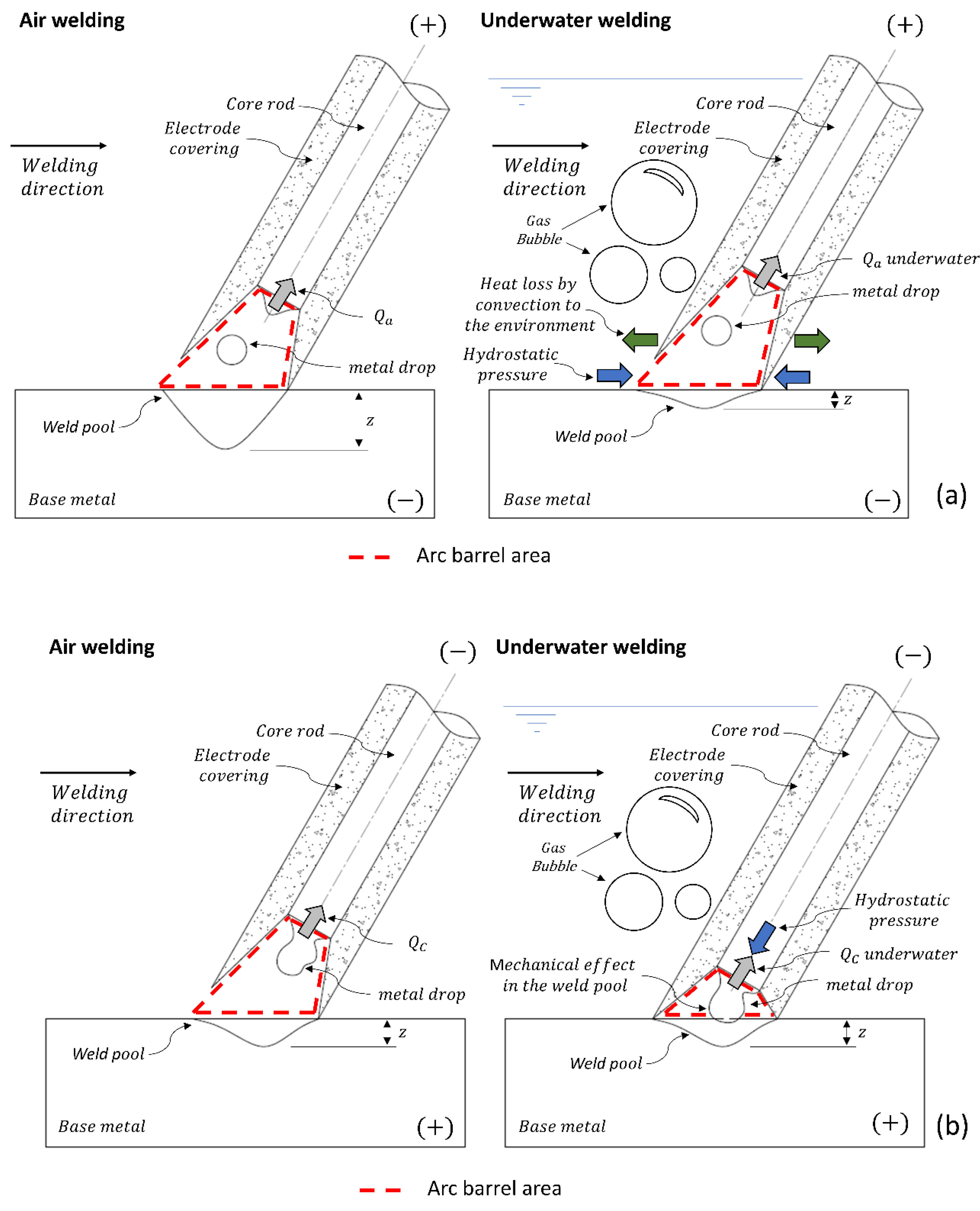
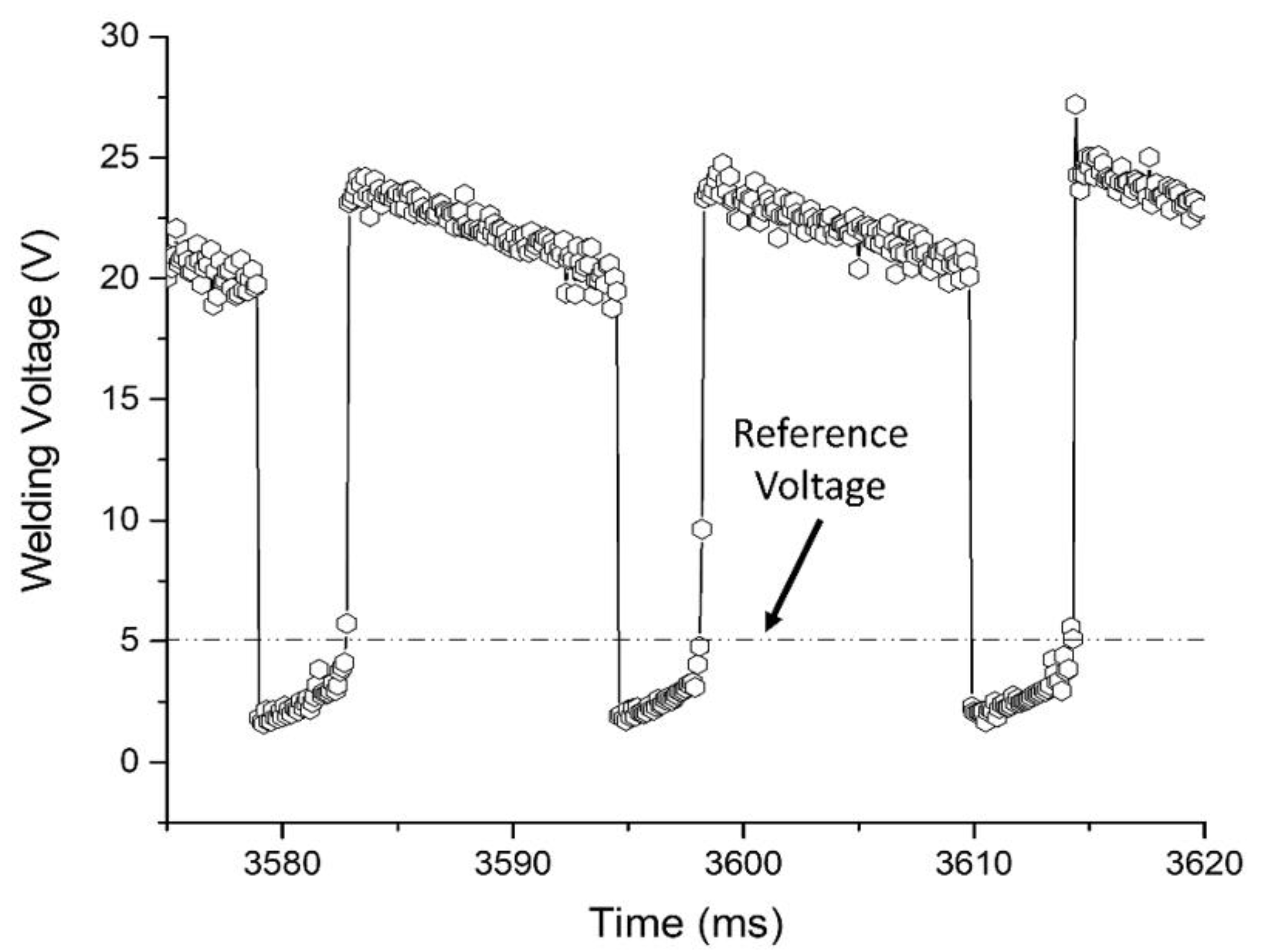
In order to provide a better understanding of the phenomena that define the weld bead penetration and melting rate of consumables in underwater welding, welds were developed with a rutile electrode in air welding conditions and at the simulated depths of 5 and 10 m with the use of a hyperbaric chamber and a gravity feeding system. In this way, voltage and current signals were acquired. Data processing involved the welding voltage, determination of the sum of the anodic and cathodic drops, calculation of the short-circuit factor, and determination of the melting rate. Cross-sectional samples were also taken from the weld bead to assess bead geometry. As a result, the collected data show that the generation of energy in the arc–electrode connection in direct polarity (direct current electrode negative-DCEN) is affected by the hydrostatic pressure, causing a loss of fusion efficiency, a drop of operating voltage, decreased arc length, and increased number of short-circuit events. The combination of these characteristics kept the weld bead geometry unchanged, compared to dry weld conditions. With the positive electrode (direct current electrode positive-DCEP), radial losses were derived from greater arc lengths resulting from increasing hydrostatic pressure, which led to a decrease in weld penetration.
Keywords: underwater welding; wet welding; polarity; arc phenomena; weld bead morphology; SMAW underwater welding; wet welding; polarity; arc phenomena; weld bead morphology; SMAW
Graphical Abstract