

Mechanical, Thermal, and Moisture Buffering Properties of Novel Insulating Hemp-Lime Composite Building Materials

 , and
, and
Abstract
1. Introduction
2. Materials and Methods
2.1. Raw Materials
2.2. Compositions of Hempcrete Samples
2.3. Mixing, Moulding, and Curing
2.4. Experimental Tests
2.4.1. Mechanical Tests
2.4.2. Thermal Tests
2.4.3. Moisture Buffering Capacity Tests
3. Results
3.1. Density Results
3.2. Compression and Splitting Tensile Test Results
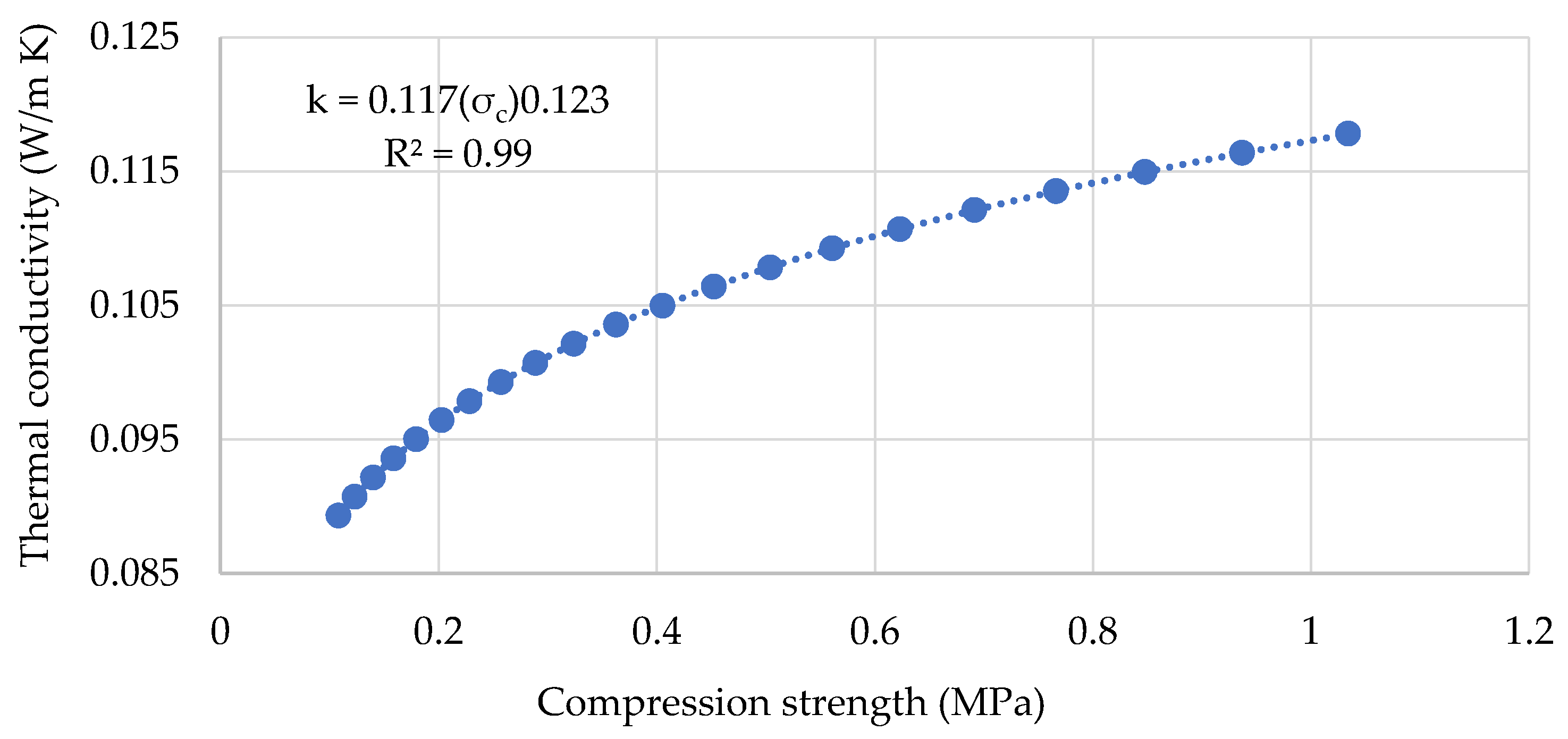
3.3. Thermal Properties Results
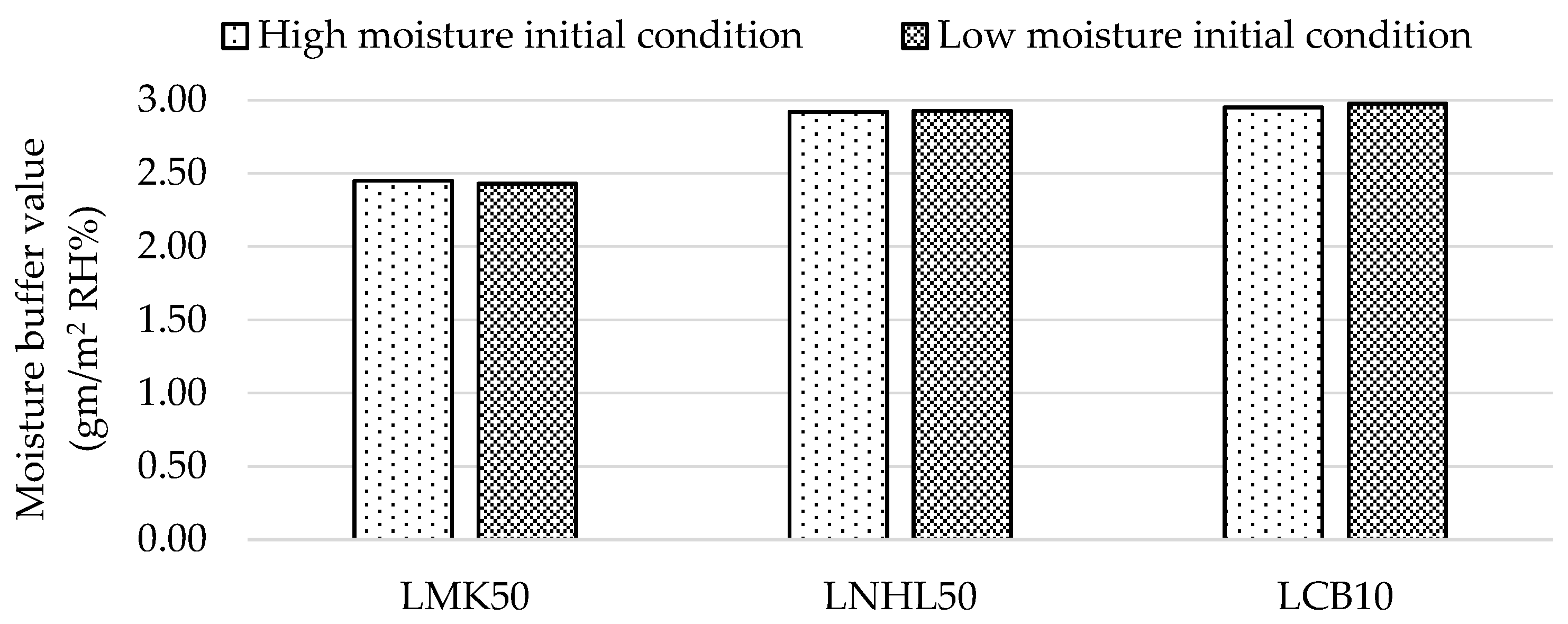
3.4. Moisture Buffering Results
4. Discussion
5. Conclusions and Future Research
- The thermal and mechanical properties of hempcrete depend on its density. Hence, the large-scale utilization of hemp-lime composites in the construction industry requires the use of manufactured blocks, wall panels, or spraying techniques to enable the construction of consistent code complying envelope systems. Therefore, future work should focus on the processing methods for optimizing and standardization of hempcrete design mixes for different envelope applications and installations. Furthermore, future work should increase the number of tested samples for each design mix to ensure consistency.
- The higher content of hemp hurd combined with an application-orientated level and direction of compaction can lead to the development of products suitable for infill wall utilizations. A follow-up study should investigate mechanical properties in the perpendicular and thermal behavior in the parallel direction of hempcrete formulas with a 1:1 binder to hemp hurd ratio and 300−400 kg/m3 density. Further research should also optimize compaction levels and orientations for infill wall installations of hemp-lime composites using blocks or wall panels.
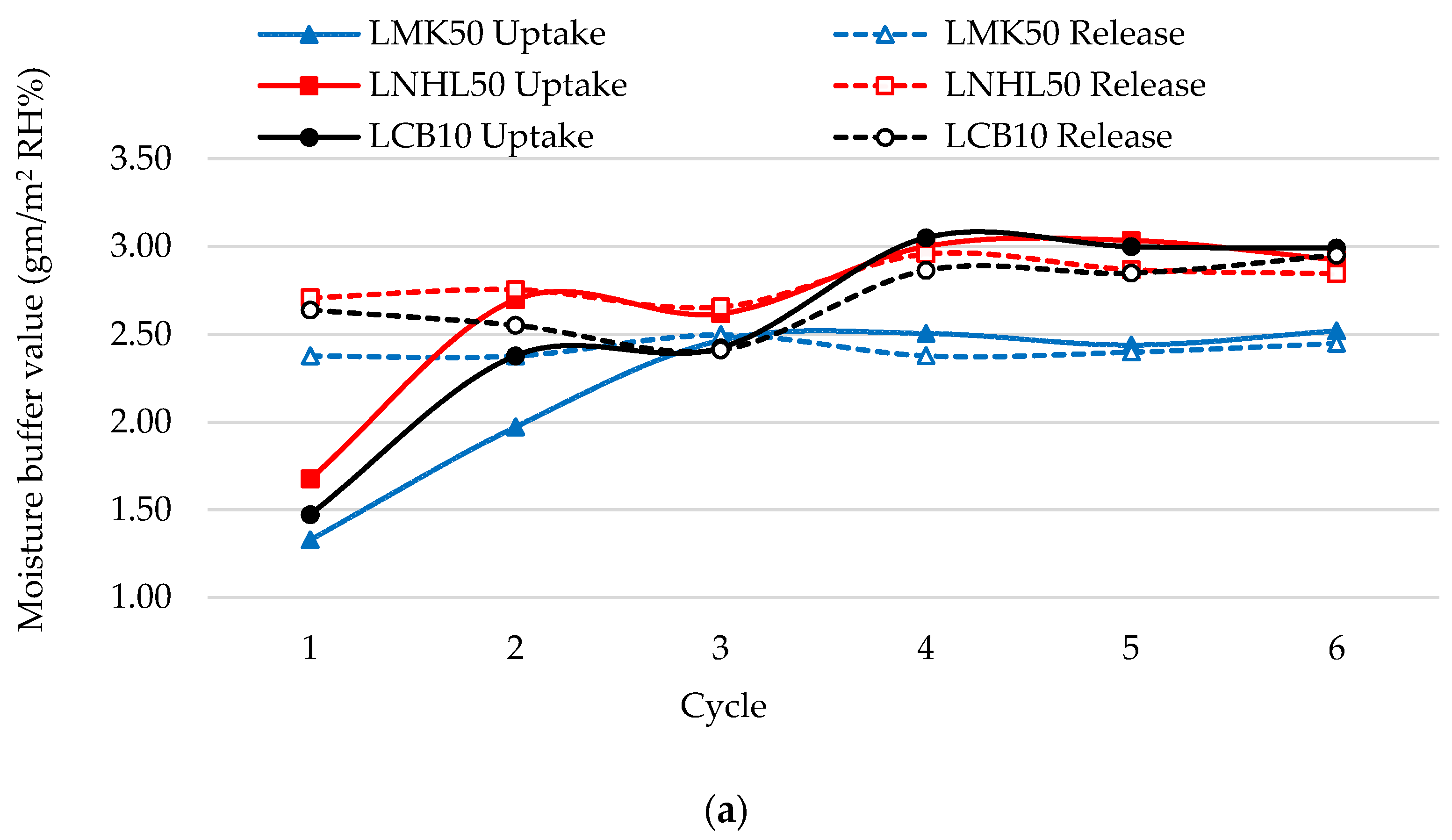
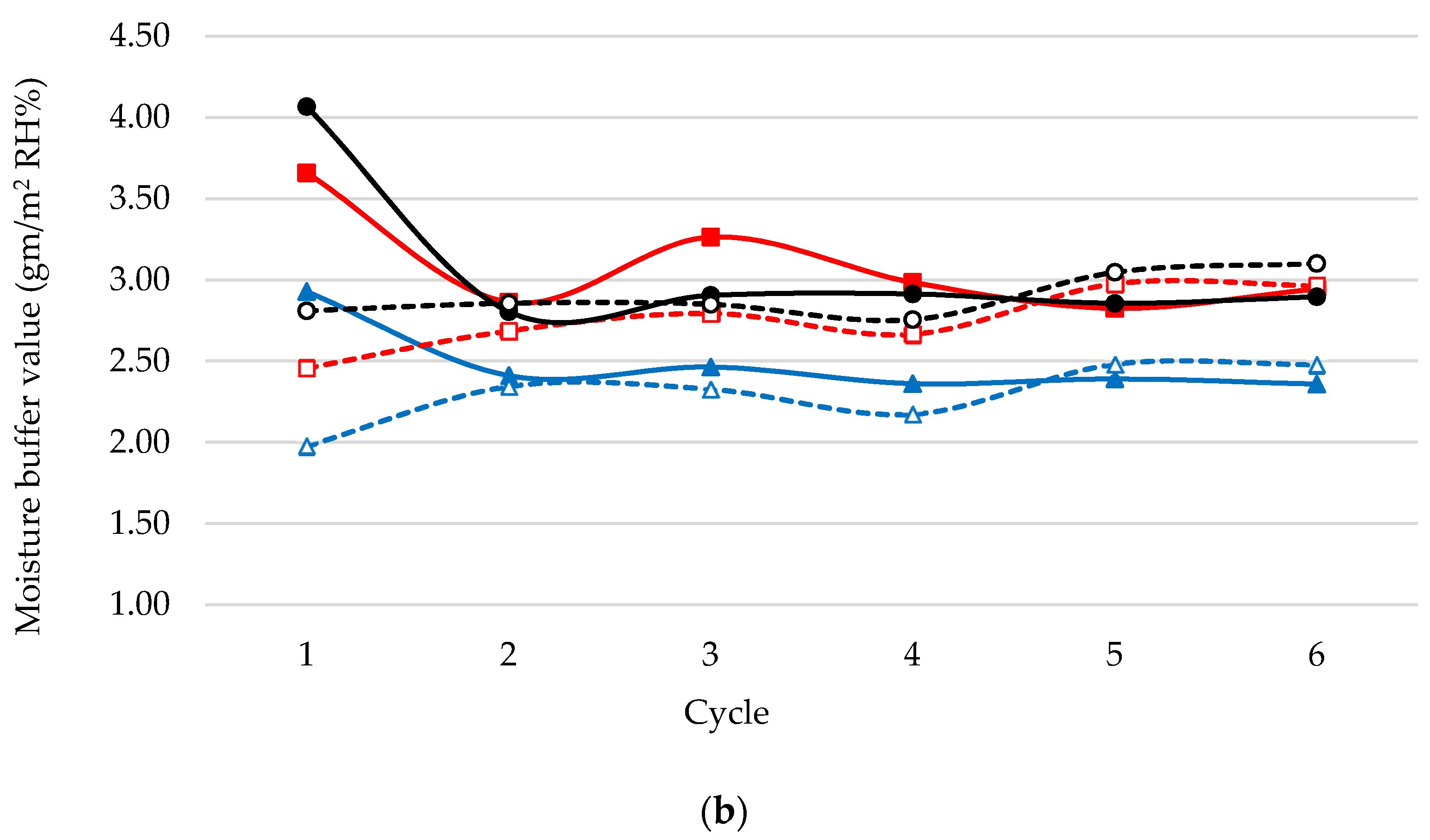
- Although all the developed design mixes have mechanical and hygrothermal properties suitable for infill wall applications, in small amounts, recycled crushed brick is an excellent alternative to conventional pozzolans for creating more environmentally-friendly hempcrete composites. For example, the hempcrete samples with 10% crushed brick have the lowest thermal conductivity considering their density and the highest moisture buffer capacity. Furthermore, the new hydrated lime and crushed brick formulas have comparable mechanical properties to metakaolin and hydraulic lime formulas. Future research should combine and optimize the use of the investigated lime mortars and pozzolans in hemp-lime mixes. A follow-up study should also explore other locally available materials that can improve hemp-lime composites’ performance and affordability while reducing their environmental impact.
- The water content is an essential design parameter due to its significant impact on the hempcrete samples’ mechanical and thermal properties. This study indicates that a smaller amount of water (i.e., ≤2.5 kg) leads to some specimens’ inferior mechanical properties due to incomplete hydration caused by the high suction ability of the hemp hurd. A follow-up study should optimize water content for different infill wall application approaches such as blocks, wall panels, or spray-in. Further research should also develop a hemp pretreatment process and investigate water retainers’ application to balance the high suction of the hurd and improve mechanical behavior and durability of hemp-lime composites. Future research should also investigate hemp-lime composites’ durability and decay under different environmental conditions.
Author Contributions
Funding
Acknowledgments
Conflicts of Interest
References
- Stanwix, W.; Sparrow, A. The Hempcrete Book: Designing and Building with Hemp-Lime; Green Books; UK Hempcrete: Matlock, UK, 2014. [Google Scholar]
- Pochwala, S.; Makiola, D.; Anweiler, S.; Bohm, M. The Heat Conductivity Properties of Hemp-Lime Composite Material Used in Single-Family Buildings. Materials 2020, 13, 1011. [Google Scholar] [CrossRef] [Scilit]
- Magwood, C. Essential Hempcrete Construction: The Complete Step-by-Step Guide; New Society Publishers: Gabriola Island, BC, Canada, 2016. [Google Scholar]
- Jami, T.; Karade, S.R.; Singh, L.P. A review of the properties of hemp concrete for green building applications. J. Clean. Prod. 2019, 239, 117852. [Google Scholar] [CrossRef] [Scilit]
- Evrard, A. Transient Hygrothermal Behavior of Lime-Hemp Materials. Ph.D. Thesis, Universite Catholique De Louvain, Ottignies-Louvain-la-Neuve, Belgium, 2008. [Google Scholar]
- Manh, D.T. Contribution to the Development of Precast Hempcrete Using Innovative Pozzolanic Binder. Ph.D. Thesis, Université Toulouse III-Paul Sabatier, Toulouse, France, 2014. [Google Scholar]
- Ntimugura, F.; Vinai, R.; Harper, A.; Walker, P. Mechanical, thermal, hygroscopic and acoustic properties of bio-aggregates—Lime and alkali—Activated insulating composite materials: A review of current status and prospects for miscanthus as an innovative resource in the South West of England. Sustain. Mater. Technol. 2020, 26, e00211. [Google Scholar] [CrossRef] [Scilit]
- De Bruijn, P.; Johansson, P. Moisture fixation and thermal properties of lime–hemp concrete. Constr. Build. Mater. 2013, 47, 1235–1242. [Google Scholar] [CrossRef] [Scilit]
- Cérézo, V. Propriétés Mécaniques, Thermiques et Acoustiques d’un Matériau à Base de Particules Végétales: Approche Expérimentale et Modélisation Théorique; Le grade de docteur L’Institut National des Sciences Appliquées de Lyon: Lyon, France, 2005. [Google Scholar]
- Walker, R.; Pavía, S. Moisture transfer and thermal properties of hemp–lime concretes. Constr. Build. Mater. 2014, 64, 270–276. [Google Scholar] [CrossRef] [Scilit]
- Arnaud, L.; Boyeux, B.; Hustache, Y. Hemp and the Construction Industry; Hemp: Industrial Production and Uses; CABI: Wallingford, UK, 2013; pp. 239–259. [Google Scholar]
- Lawrence, M.; Fodde, E.; Paine, K.; Walker, P. Hygrothermal Performance of an Experimental Hemp-Lime Building. Key Eng. Mater. 2012, 517, 413–421. [Google Scholar] [CrossRef] [Scilit]
- Latif, E.; Lawrence, M.; Shea, A.; Walker, P. Moisture buffer potential of experimental wall assemblies incorporating formulated hemp-lime. Build. Environ. 2015, 93, 199–209. [Google Scholar] [CrossRef] [Scilit]
- Collet, F.; Chamoin, J.; Pretot, S.; Lanos, C. Comparison of the hygric behaviour of three hemp concretes. Energy Build. 2013, 62, 294–303. [Google Scholar] [CrossRef] [Scilit]
- Rahim, M.; Douzane, O.; Tran Le, A.D.; Langlet, T. Effect of moisture and temperature on thermal properties of three bio-based materials. Constr. Build. Mater. 2016, 111, 119–127. [Google Scholar] [CrossRef] [Scilit]
- Yates, T. Final Report on the Construction of the Hemp House at Haverhill, Suffolk; Building Research Establishment: Watford, UK, 2002. [Google Scholar]
- Abdellatef, Y.; Kavgic, M. Thermal, microstructural and numerical analysis of hempcrete-microencapsulated phase change material composites. Appl. Therm. Eng. 2020, 178, 115520. [Google Scholar] [CrossRef] [Scilit]
- Elfordy, S.; Lucas, F.; Tancret, F.; Scudeller, Y.; Goudet, L. Mechanical and thermal properties of lime and hemp concrete (“hempcrete”) manufactured by a projection process. Constr. Build. Mater. 2008, 22, 2116–2123. [Google Scholar] [CrossRef] [Scilit]
- Barnat-Hunek, D.; Smarzewski, P.; Fic, S. Mechanical and Thermal Properties of Hemp-Lime Composites. Compos. Theory Pract. 2015, 15, 21–27. [Google Scholar]
- Nguyen, T.-T.; Picandet, V.; Amziane, S.; Baley, C. Influence of compactness and hemp hurd characteristics on the mechanical properties of lime and hemp concrete. Eur. J. Environ. Civ. Eng. 2009, 13, 1039–1050. [Google Scholar] [CrossRef] [Scilit]
- Tronet, P.; Lecompte, T.; Picandet, V.; Baley, C. Study of lime hemp composite precasting by compaction of fresh mix—An instrumented die to measure friction and stress state. Powder Technol. 2014, 258, 285–296. [Google Scholar] [CrossRef] [Scilit]
- Walker, R.; Pavía, S. Behaviour and Properties of Lime-Pozzolan Pastes. In Proceedings of the 8th International Masonry Conference, Dresden, Germany, 4–7 July 2010. [Google Scholar]
- Walker, R.; Pavia, S.; Mitchell, R. Mechanical properties and durability of hemp-lime concretes. Constr. Build. Mater. 2014, 61, 340–348. [Google Scholar] [CrossRef] [Scilit]
- Sheridan, J.; Sonebi, M.; Taylor, S.; Amziane, S. Effect of linseed oil and metakaolin on the mechanical, thermal and transport properties of hemp-lime concrete. In Proceedings of the 2nd International Conference on Bio-Based Building Materials, Clermont Ferrand, France, 21–23 June 2017; pp. 125–133. [Google Scholar]
- Silva, R.V.; De Brito, J.; Dhir, R.K. Properties and composition of recycled aggregates from construction and demolition waste suitable for concrete production. Constr. Build. Mater. 2014, 65, 201–217. [Google Scholar] [CrossRef] [Scilit]
- Williams, J.; Lawrence, M.; Walker, P. The influence of the casting process on the internal structure and physical properties of hemp-lime. Mater. Struct. 2017, 50, 108. [Google Scholar] [CrossRef] [Scilit]
- ASTM C136–06, Standard Test Method for Sieve Analysis of Fine and Coarse Aggregates; ASTM International: West Conshohocken, PA, USA, 2006.
- ASTM C207-06, Standard Specification for Hydrated Lime for Masonry Purposes; ASTM International: West Conshohocken, PA, USA, 2006.
- ASTM C618, Standard Specification for Coal Fly Ash and Raw or Calcined Natural Pozzolan for Use in Concrete; ASTM International: West Conshohocken, PA, USA, 2012.
- ASTM C1707, Standard Specification for Pozzolanic Hydraulic Lime for Structural Purposes; ASTM International: West Conshohocken, PA, USA, 2009.
- Nguyen, T.T. Contribution à l’étude de la Formulation et du Procédé de Fabrication d’éléments de Construction en Béton de Chanvre. Ph.D. Thesis, Université de Bretagne Sud, Morbihan, France, 2010. [Google Scholar]
- Pinkos, J. The Effectiveness of Hempcrete as an Infill Insulation in the Prairies Compared to a Standard Building Based on Power Consumption. Master’s Thesis, University of Manitoba, Winnipeg, MB, Canada, 2014. [Google Scholar]
- Collet, F.; Pretot, S. Thermal conductivity of hemp concretes: Variation with formulation, density and water content. Constr. Build. Mater. 2014, 65, 612–619. [Google Scholar] [CrossRef] [Scilit]
- ASTM C39/C39M, Standard Test Method for Compressive Strength of Cylindrical Concrete Specimens; ASTM International: West Conshohocken, PA, USA, 2012.
- ASTM C496/C496M-17, Standard Test Method for Splitting Tensile Strength of Cylindrical Concrete Specimens; ASTM International: West Conshohocken, PA, USA, 2017.
- ASTM D4832-16e1, Standard Test Method for Preparation and Testing of Controlled Low Strength Material (CLSM) Test Cylinders; ASTM International: West Conshohocken, PA, USA, 2016.
- ASTM C469/C469M-14, Standard Test Method for Static Modulus of Elasticity and Poisson’s Ratio of Concrete in Compression; ASTM International: West Conshohocken, PA, USA, 2014.
- ASTM C518–17, Standard Test Method for Steady-State Thermal Transmission Properties by Means of the Heat Flow Meter Apparatus; ASTM International: West Conshohocken, PA, USA, 2017.
- ASTM C1784-14, Standard Test Method for Using a Heat Flow Meter Apparatus for Measuring Thermal Storage Properties of Phase Change Materials and Products; ASTM International: West Conshohocken, PA, USA, 2014.
- NIST SRM 1450. Energy and Environment Division, NIST. Available online: https://www.nist.gov/energy-andenvironment-division/nist-srm-1450 (accessed on 10 November 2018).
- Tleoubaev, A.; Brzezinski, A. Thermal Diffusivity and Volumetric Specific Heat Measurements Using Heat Flow Meter Instruments. In Proceedings of the Thermal Conductivity 29/Thermal Expansion 17 Conference, Birmingham, Alabama, 24–27 June 2007. [Google Scholar]
- Rode, C.; Peuhkuri, R.H.; Hansen, K.K.; Time, B.; Svennberg, K.; Arfvidsson, J.; Ojanen, T. NORDTEST Project on Moisture Buffer Value of Materials. In Proceedings of the AIVC 26th Conference: Ventilation in Relation to the Energy Performance of Buildings, Brussels, Belgium, 21–23 September 2005; pp. 47–52. [Google Scholar]
- Ge, H.; Yang, X.; Fazio, P.; Rao, J. Influence of moisture load profiles on moisture buffering potential and moisture residuals of three groups of hygroscopic materials. Build. Environ. 2014, 81, 162–171. [Google Scholar] [CrossRef] [Scilit]
- Li, Y.; Fazio, P.; Rao, J. An investigation of moisture buffering performance of wood paneling at room level and its buffering effect on a test room. Build. Environ. 2012, 47, 205–216. [Google Scholar] [CrossRef] [Scilit]
- Eires, R.; Nunes, J.P.; Fangueiro, R.; Jalali, S.; Camões, A. New Eco-Friendly Hybrid Composite Materials for Civil Construction. In Proceedings of the European Conference on Composite Materials Biarritz, Biarritz, France, 29 August–1 September 2006. [Google Scholar]
- Tran Le, A.D.; Maalouf, C.; Mai, T.H.; Wurtz, E.; Collet, F. Transient hygrothermal behaviour of a hemp concrete building envelope. Energy Build. 2010, 42, 1797–1806. [Google Scholar] [CrossRef] [Scilit]
- Evrard, A.; Herde, A.D. Bioclimatic envelopes made of lime and hemp concrete. In Proceedings of the CISBAT2005 Conference—Renewables in a Changing Climate—Innovation in Building Envelopes and Environmental Systems at Lausanne, Lausanne, Switzerland, 27–28 September 2005. [Google Scholar]
- Nguyen, T.T.; Picandet, V.; Carre, P.; Lecompte, T.; Amziane, S.; Baley, C. Effect of compaction on mechanical and thermal properties of hemp concrete. Eur. J. Environ. Civ. Eng. 2010, 14, 545–560. [Google Scholar] [CrossRef]
- Murphy, F.; Pavía, S.; Walker, R. An assessment of some physical properties of hemp-lime concrete. In Proceedings of the BCRI Bridge Infrastructure Concrete Research Ireland, Cork, Ireland, 2 September 2010; pp. 431–438. [Google Scholar]

| Design Mix | Name | Mix Ratio by Mass Hemp/Lime/Pozzolan/Water * | Hemp/Lime/Pozzolan/Water (by Mass) | |||||
|---|---|---|---|---|---|---|---|---|
| H | L | CB | MK | NHL | Water | |||
| Hydrated lime-crushed brick | LCB10 | 1 | 0.9 | 0.1 | - | - | 2.5 | 22%/21%/2%/55% |
| LCB20 | 1 | 0.8 | 0.2 | - | - | 2.5 | 22%/18%/4%/56% | |
| LCB20A | 1 | 0.8 | 0.2 | - | - | 3 | 20%/16%//4%/60% | |
| Hydrated lime-metakaolin | LMK10 | 1 | 0.9 | - | 0.1 | - | 2.6 | 22%//20%/2%/56% |
| LMK20 | 1 | 0.8 | - | 0.2 | - | 3 | 20%/16%/4%/60% | |
| LMK20A | 1 | 0.8 | - | 0.2 | - | 2.5 | 22%/18%/4%/56% | |
| LMK50 | 1 | 0.5 | - | 0.5 | - | 3 | 20%/10%/10%/60% | |
| LMK50A | 1 | 0.5 | - | 0.5 | - | 2.5 | 22%/11%/11%/56% | |
| LMK70 | 1 | 0.3 | - | 0.7 | - | 2.5 | 22%/7%/15%/56% | |
| LMK70A | 1 | 0.3 | - | 0.7 | - | 2.75 | 21%/6%/15%/58% | |
| LMK70B | 1 | 0.3 | - | 0.7 | - | 3 | 20%/6%/14%/60% | |
| Hydrated lime-natural hydraulic lime | LNHL50 | 1 | 0.5 | - | - | 0.5 | 2.5 | 22%/11%/11%/56% |
| LNHL50A | 1 | 0.5 | - | - | 0.5 | 3 | 20%/10%/10%/60% | |
| LNHL70 | 1 | 0.3 | - | - | 0.7 | 2.5 | 22%/7%/15%/56% | |
| LNHL70A | 1 | 0.3 | - | - | 0.7 | 3 | 20%/6%/14%/60% | |
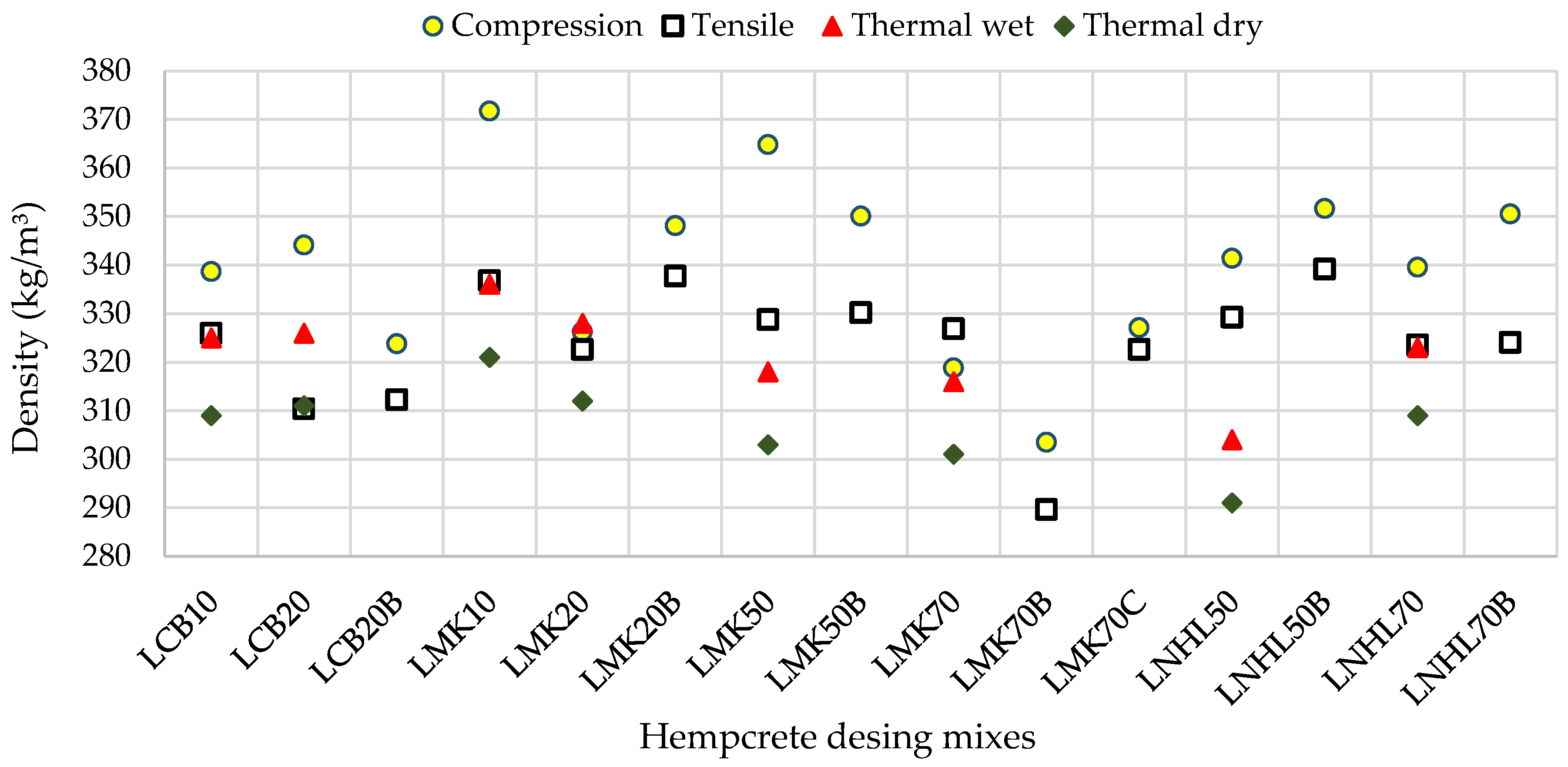
| Density (kg/m3) | Compression | Splitting Tensile | Thermal Wet | Thermal Dry |
|---|---|---|---|---|
| Minimum | 304 | 290 | 304 | 291 |
| Average * | 340 ± 9 | 324 ± 6 | 322 ± 6 | 307 ± 6 |
| Maximum | 372 | 339 | 336 | 321 |
| Standard deviation | 17.2 | 12.1 | 8.9 | 8.3 |
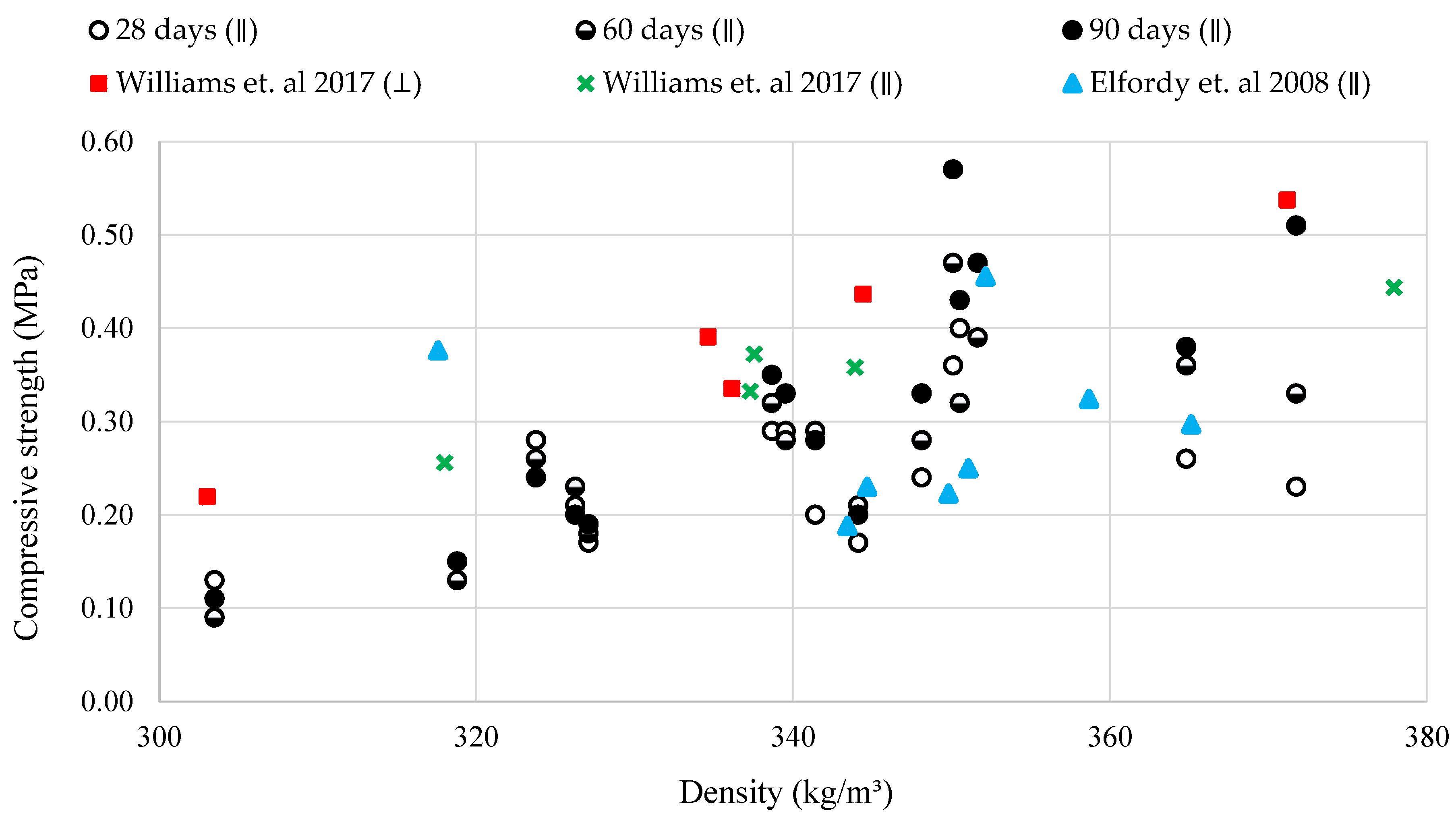
| Name | Water (kg) | Density (CT 1) (kg/m3) | Compressive Strength (MPa) | E (MPa) | Density (STT 2) (kg/m3) | Splitting Tensile Strength (MPa) |
|---|---|---|---|---|---|---|
| LCB10 | 2.5 | 339 | 0.32 | 10.42 | 326 | 0.0244 |
| LCB20 | 2.5 | 344 | 0.19 | 6.38 | 310 | 0.0219 |
| LCB20B | 3 | 324 | 0.26 | 3.16 | 312 | 0.0223 |
| LMK10 | 2.6 | 372 | 0.36 | 10.84 | 329 | 0.0219 |
| LMK20 | 2.5 | 326 | 0.21 | 7.20 | 330 | 0.0270 |
| LMK20B | 3 | 348 | 0.28 | 9.00 | 323 | 0.0222 |
| LMK50 | 2.5 | 365 | 0.33 | 8.05 | 338 | 0.0307 |
| LMK50B | 3 | 350 | 0.47 | 8.31 | 337 | 0.0342 |
| LMK70 | 2.5 | 319 | 0.14 | 7.64 | 327 | 0.0160 |
| LMK70B | 2.75 | 304 | 0.11 | 4.27 | 290 | 0.0101 |
| LMK70C | 3 | 327 | 0.18 | 4.00 | 323 | 0.0183 |
| LNHL50 | 2.5 | 341 | 0.26 | 9.01 | 329 | 0.0307 |
| LNHL50B | 3 | 352 | 0.42 | 5.21 | 339 | 0.0348 |
| LNHL70 | 2.5 | 340 | 0.30 | 10.22 | 324 | 0.0260 |
| LNHL70B | 3 | 351 | 0.38 | 8.22 | 324 | 0.0229 |
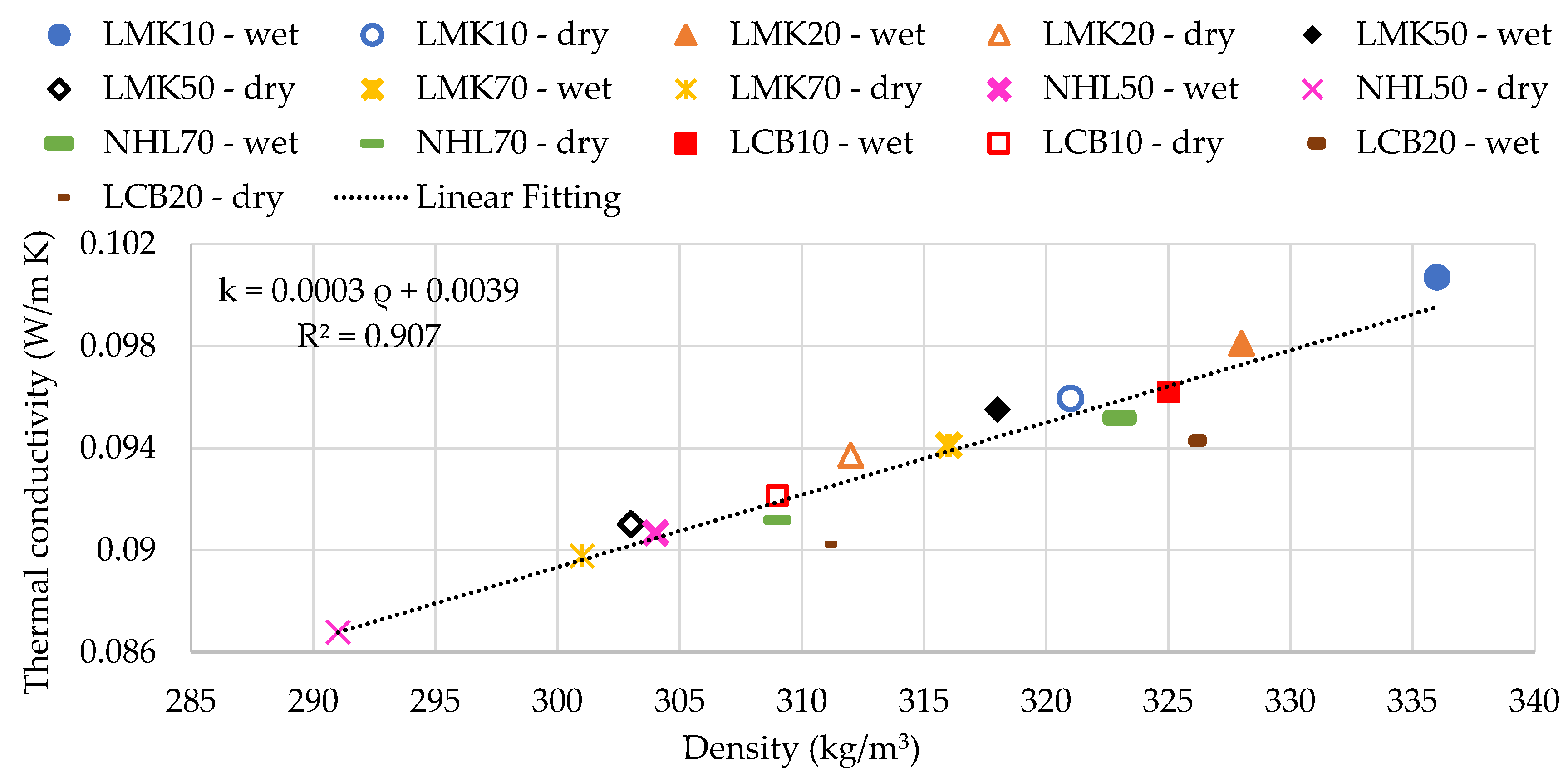
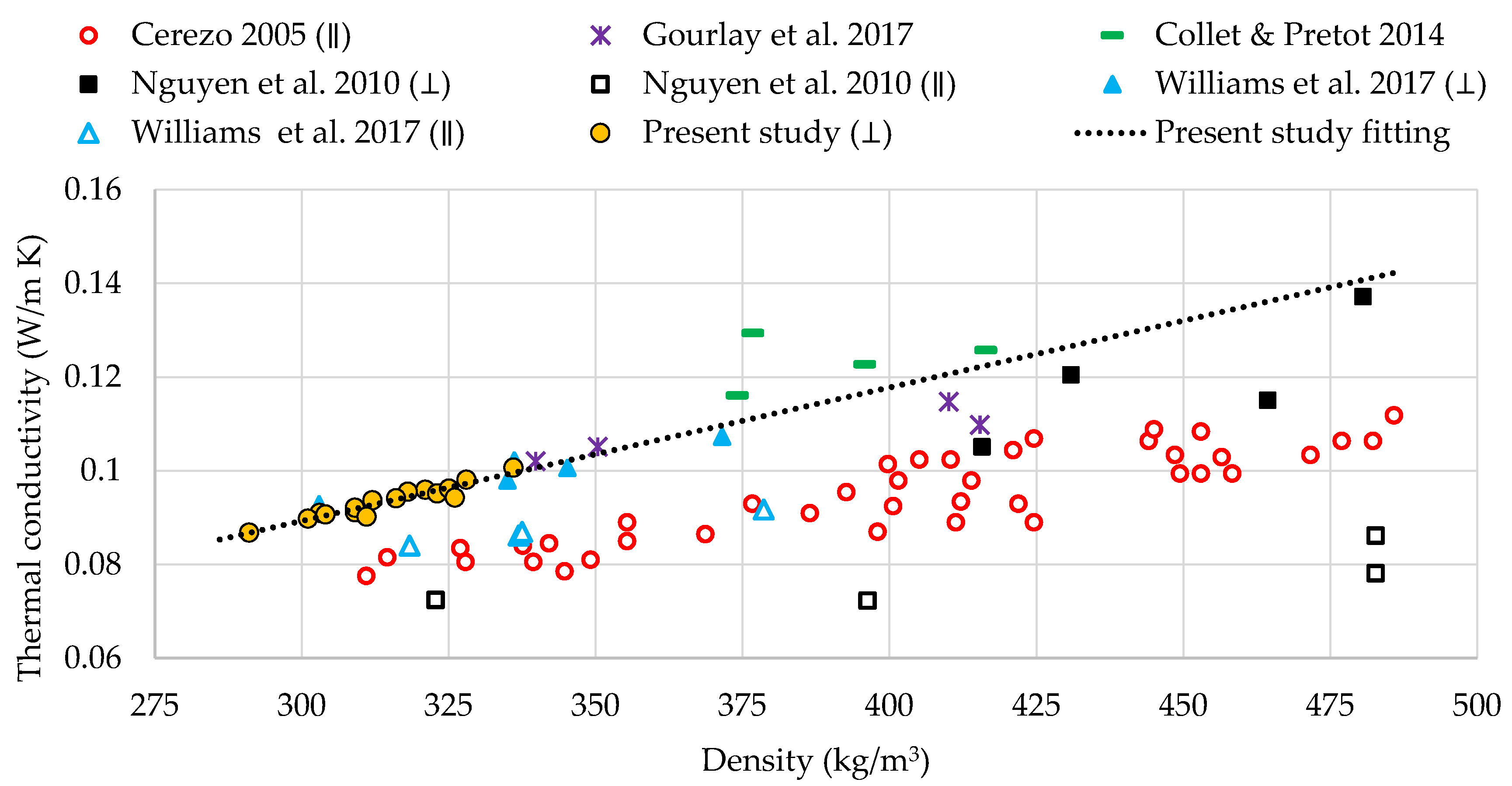
| Sample | State | Density (kg/m3) | Thermal Conductivity (W/m K) | Specific Heat Capacity (J/kg K) | Thermal Diffusivity (m2/s) × 10−7 |
|---|---|---|---|---|---|
| LCB10 | wet | 325 | 0.0962 | 1504 | 1.968 |
| dry | 309 | 0.0921 | 1350 | 2.209 | |
| LCB20 | wet | 326 | 0.0943 | 1398 | 2.069 |
| dry | 311 | 0.0902 | 1250 | 2.321 | |
| LMK10 | wet | 336 | 0.1007 | 1536 | 1.951 |
| dry | 321 | 0.0959 | 1397 | 2.140 | |
| LMK20 | wet | 328 | 0.0981 | 1530 | 1.955 |
| dry | 312 | 0.0937 | 1385 | 2.169 | |
| LMK50 | wet | 318 | 0.0955 | 1523 | 1.972 |
| dry | 303 | 0.0910 | 1379 | 2.178 | |
| LMK70 | wet | 316 | 0.0941 | 1498 | 1.988 |
| dry | 301 | 0.0898 | 1352 | 2.206 | |
| LNHL50 | wet | 304 | 0.0907 | 1520 | 1.962 |
| dry | 291 | 0.0868 | 1383 | 2.156 | |
| LNHL70 | wet | 323 | 0.0952 | 1557 | 1.893 |
| dry | 309 | 0.0912 | 1421 | 2.076 |
Publisher’s Note: MDPI stays neutral with regard to jurisdictional claims in published maps and institutional affiliations. |
© 2020 by the authors. Licensee MDPI, Basel, Switzerland. This article is an open access article distributed under the terms and conditions of the Creative Commons Attribution (CC BY) license (http://creativecommons.org/licenses/by/4.0/).
Share and Cite
Abdellatef, Y.; Khan, M.A.; Khan, A.; Alam, M.I.; Kavgic, M. Mechanical, Thermal, and Moisture Buffering Properties of Novel Insulating Hemp-Lime Composite Building Materials. Materials 2020, 13, 5000. https://doi.org/10.3390/ma13215000
Abdellatef Y, Khan MA, Khan A, Alam MI, Kavgic M. Mechanical, Thermal, and Moisture Buffering Properties of Novel Insulating Hemp-Lime Composite Building Materials. Materials. 2020; 13(21):5000. https://doi.org/10.3390/ma13215000
Chicago/Turabian StyleAbdellatef, Yaser, Mohammad Amil Khan, Asif Khan, Mehdi Iftekharul Alam, and Miroslava Kavgic. 2020. "Mechanical, Thermal, and Moisture Buffering Properties of Novel Insulating Hemp-Lime Composite Building Materials" Materials 13, no. 21: 5000. https://doi.org/10.3390/ma13215000
APA StyleAbdellatef, Y., Khan, M. A., Khan, A., Alam, M. I., & Kavgic, M. (2020). Mechanical, Thermal, and Moisture Buffering Properties of Novel Insulating Hemp-Lime Composite Building Materials. Materials, 13(21), 5000. https://doi.org/10.3390/ma13215000


