Effects of Calcium Silicate Slag on Hydration of Cementitious Pastes


Abstract
:1. Introduction
2. Experimental Procedure
2.1. Sample Preparation
2.2. Methods
3. Results and Analysis
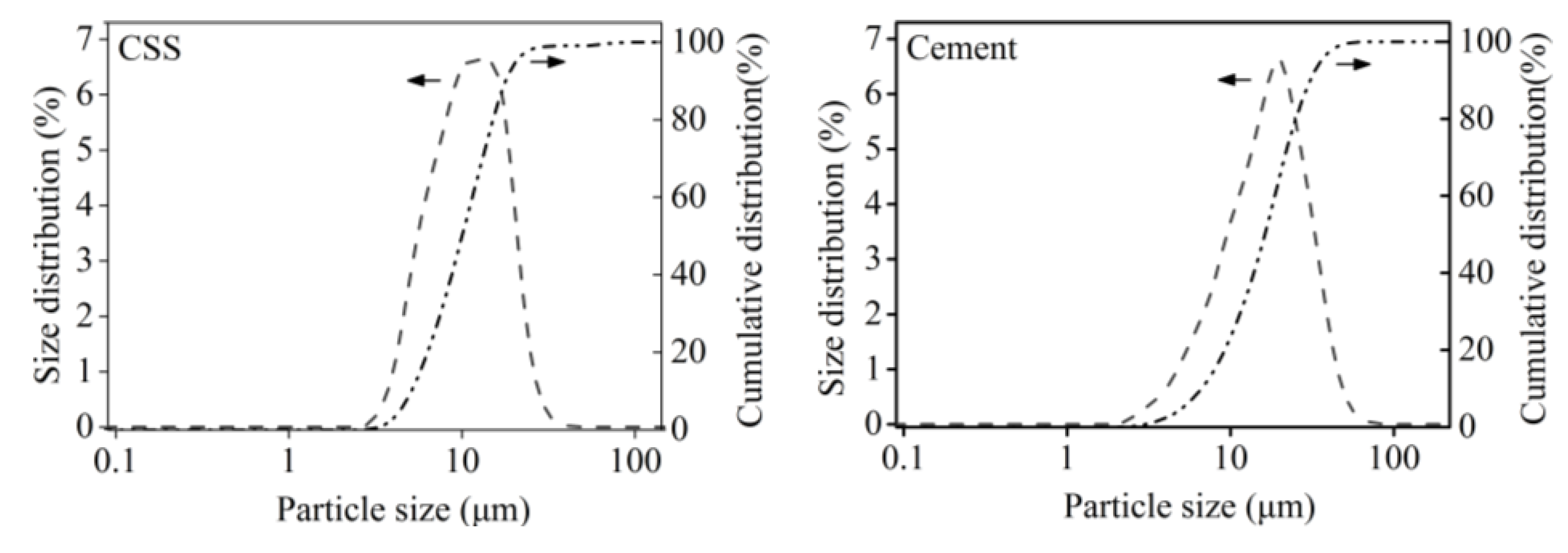
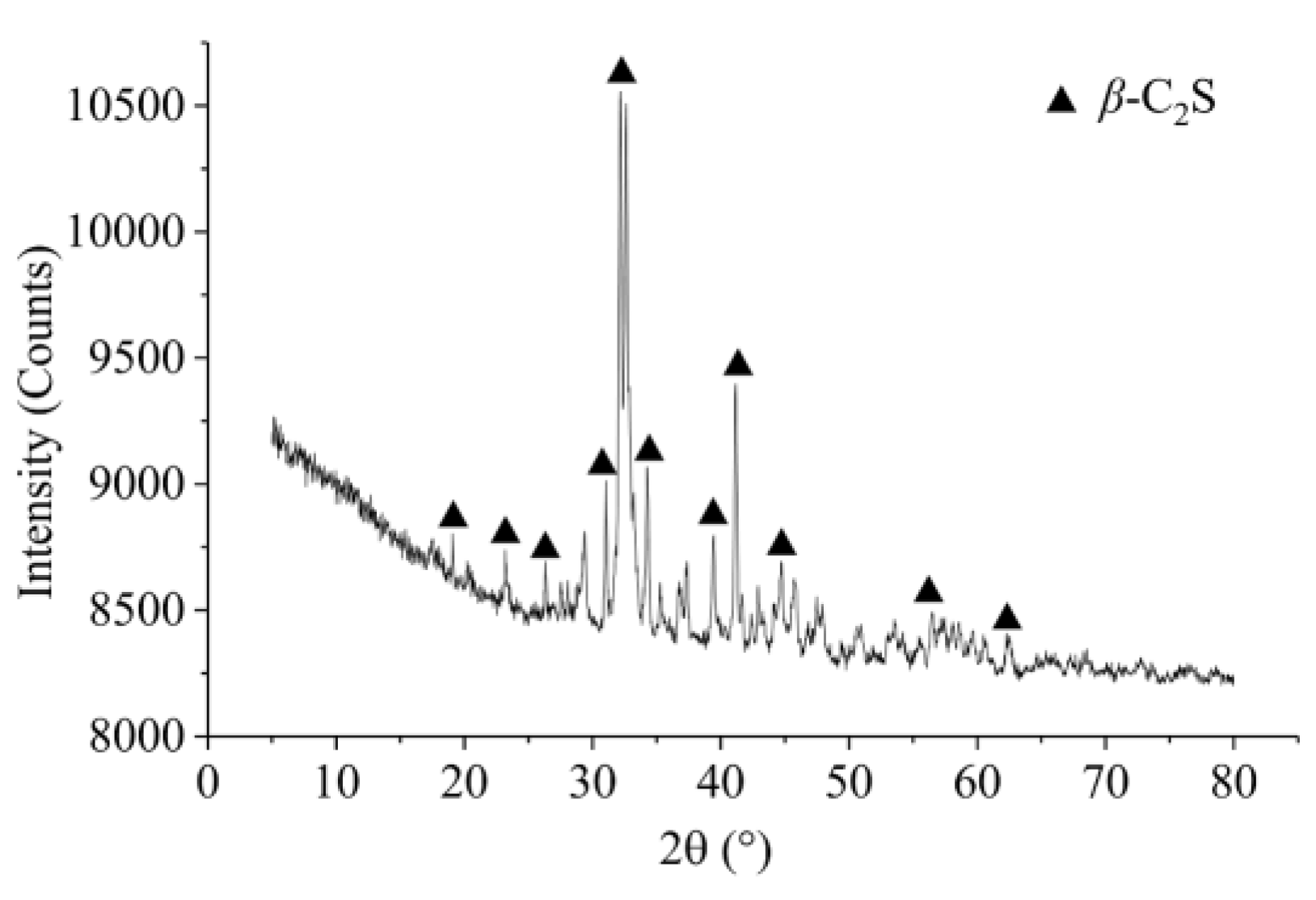
3.1. Characteristics of CSS
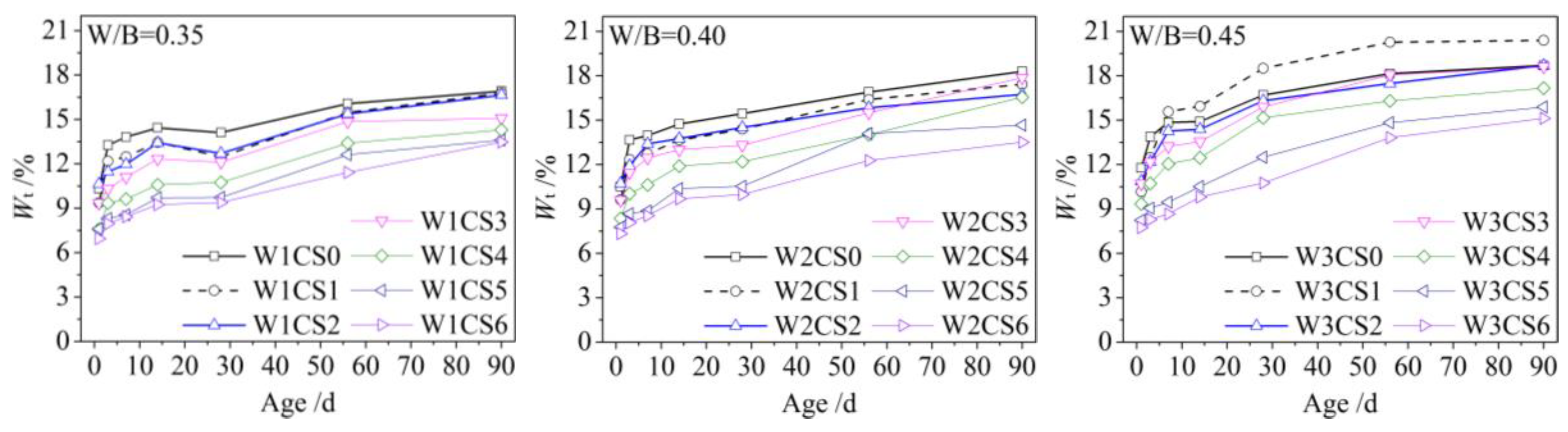
3.2. Quantitative Analysis of Chemically Combined Water
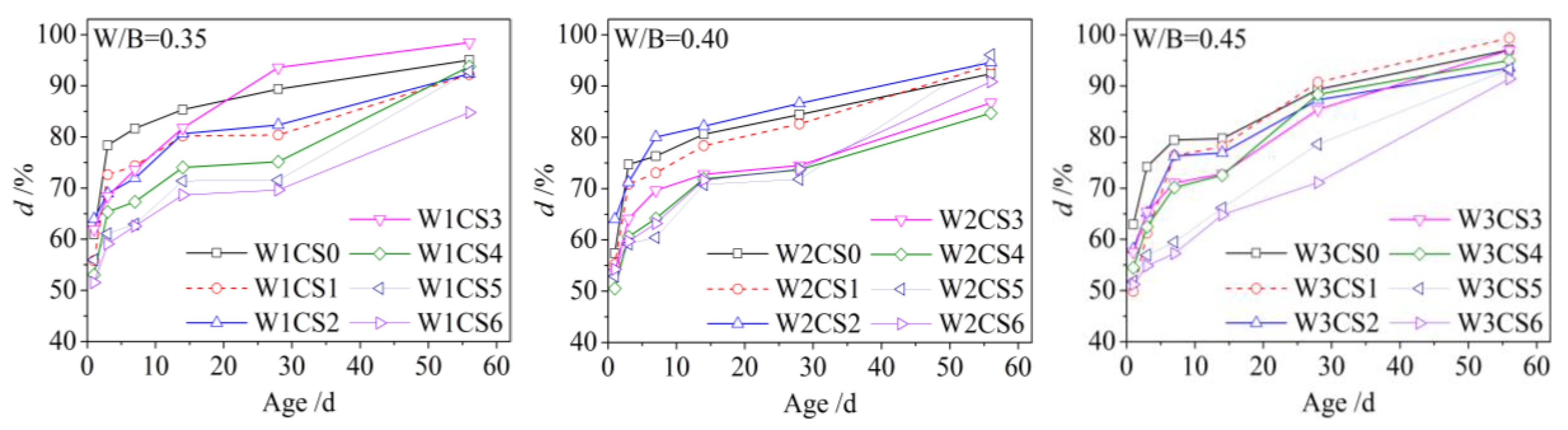
3.3. Hydration Degree
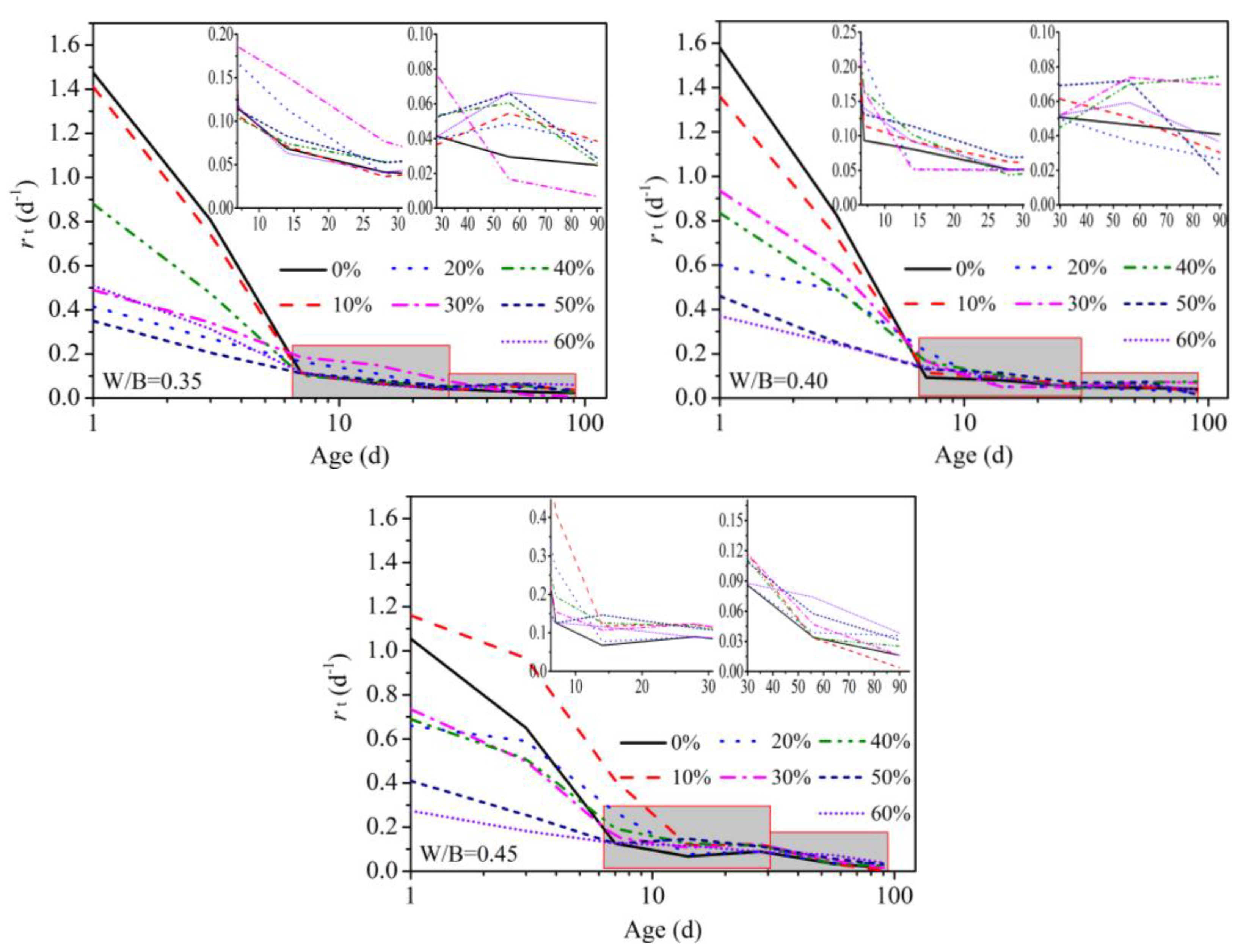
3.4. Hydration Rate
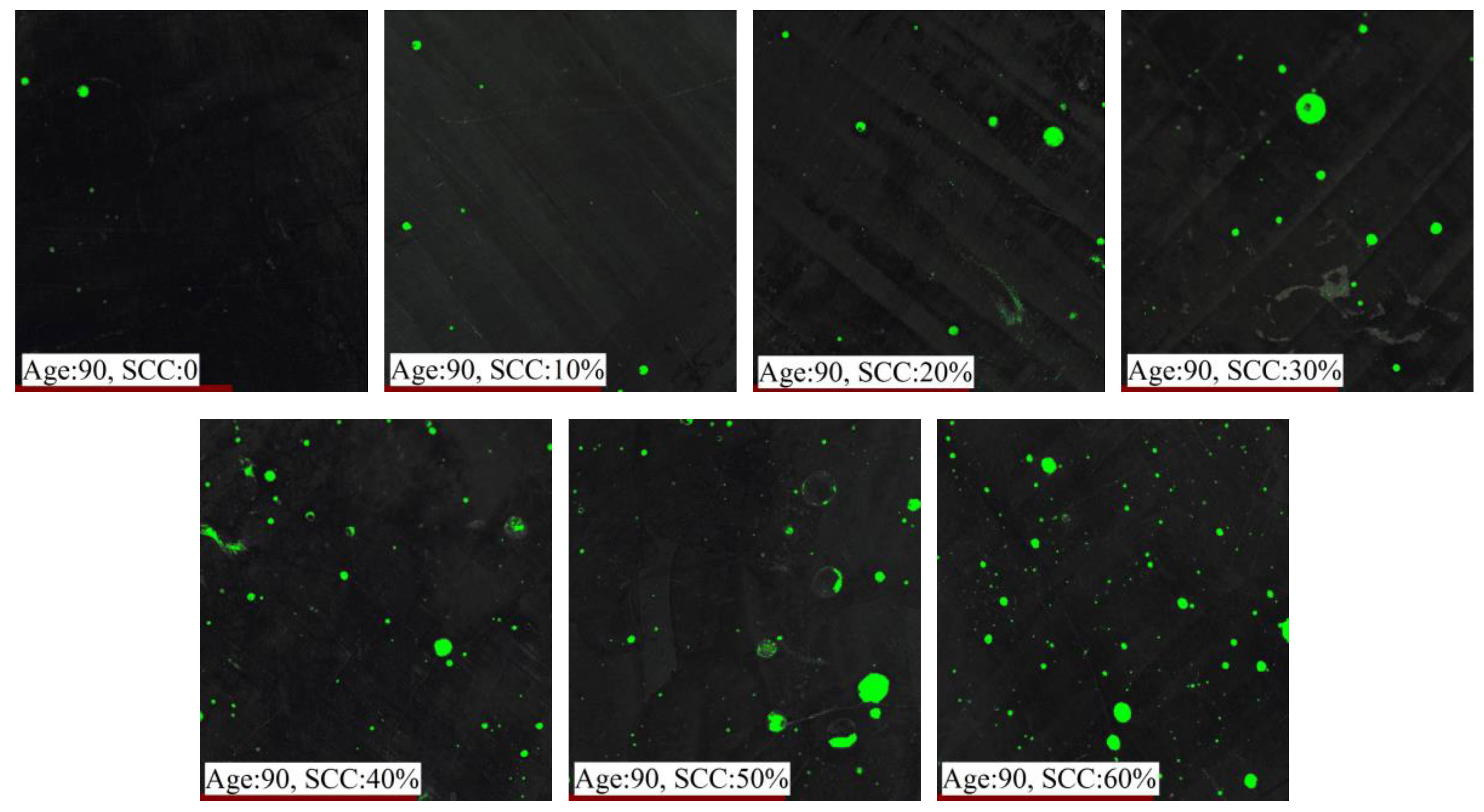
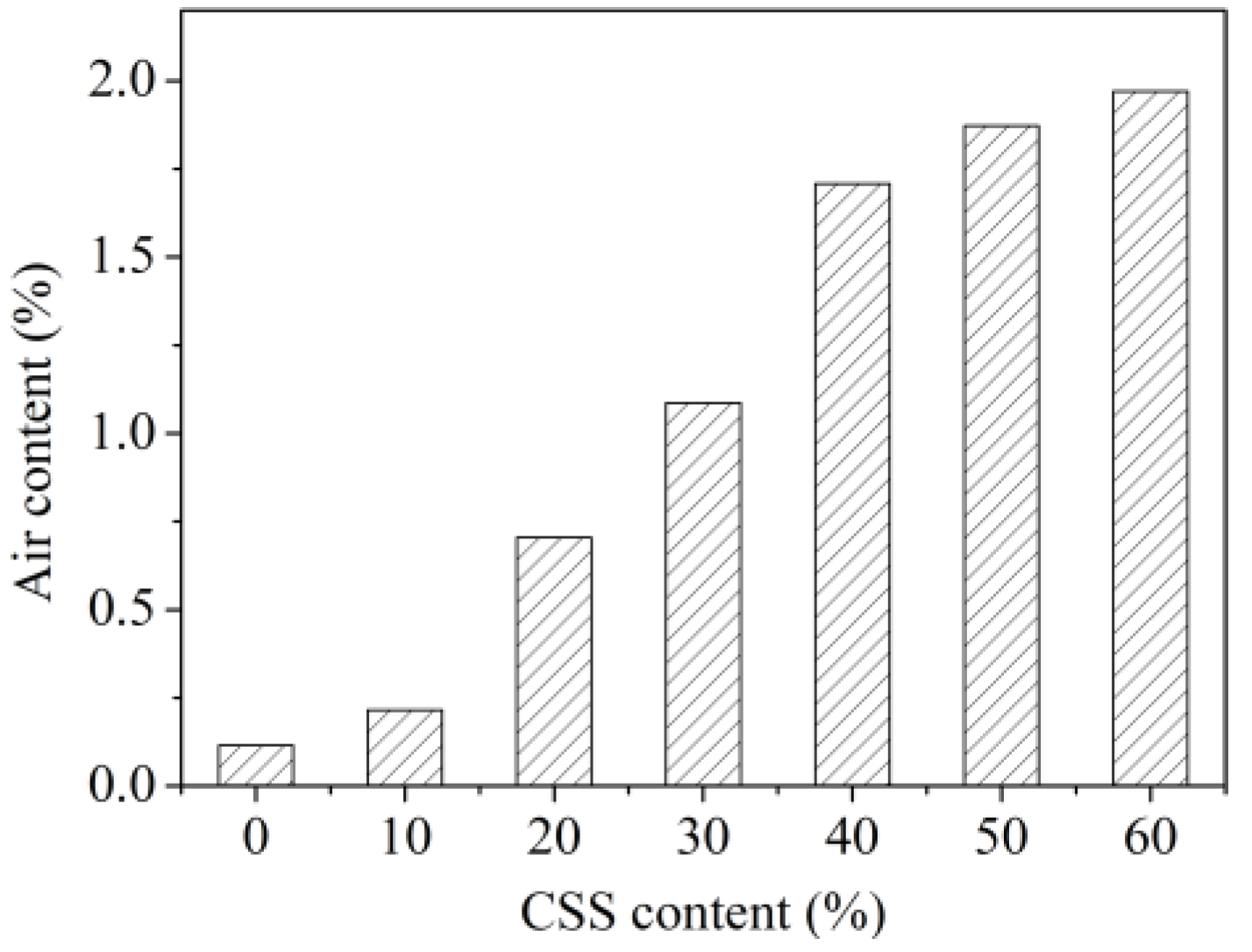
3.5. Pore Structure
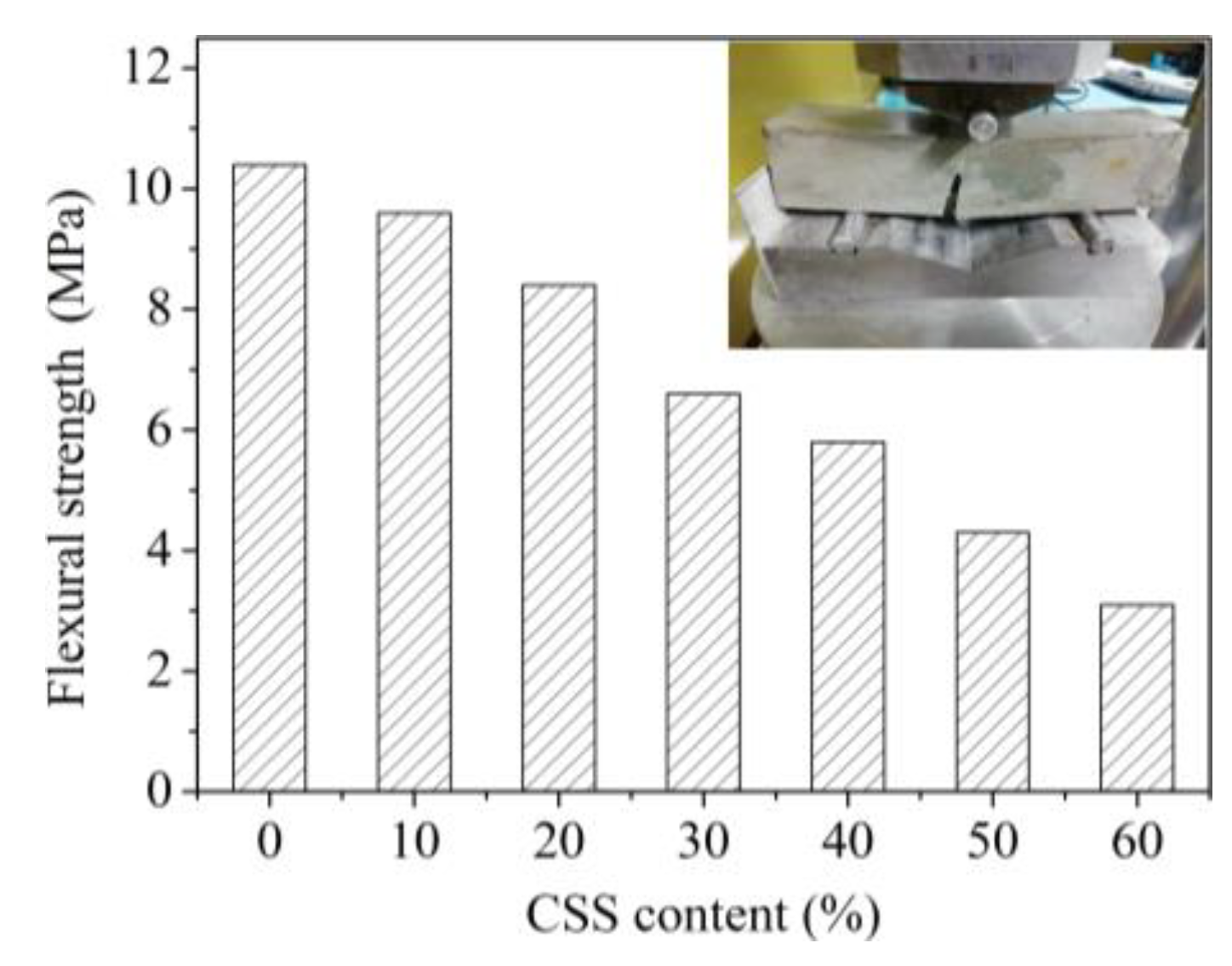
3.6. Flexural Strength
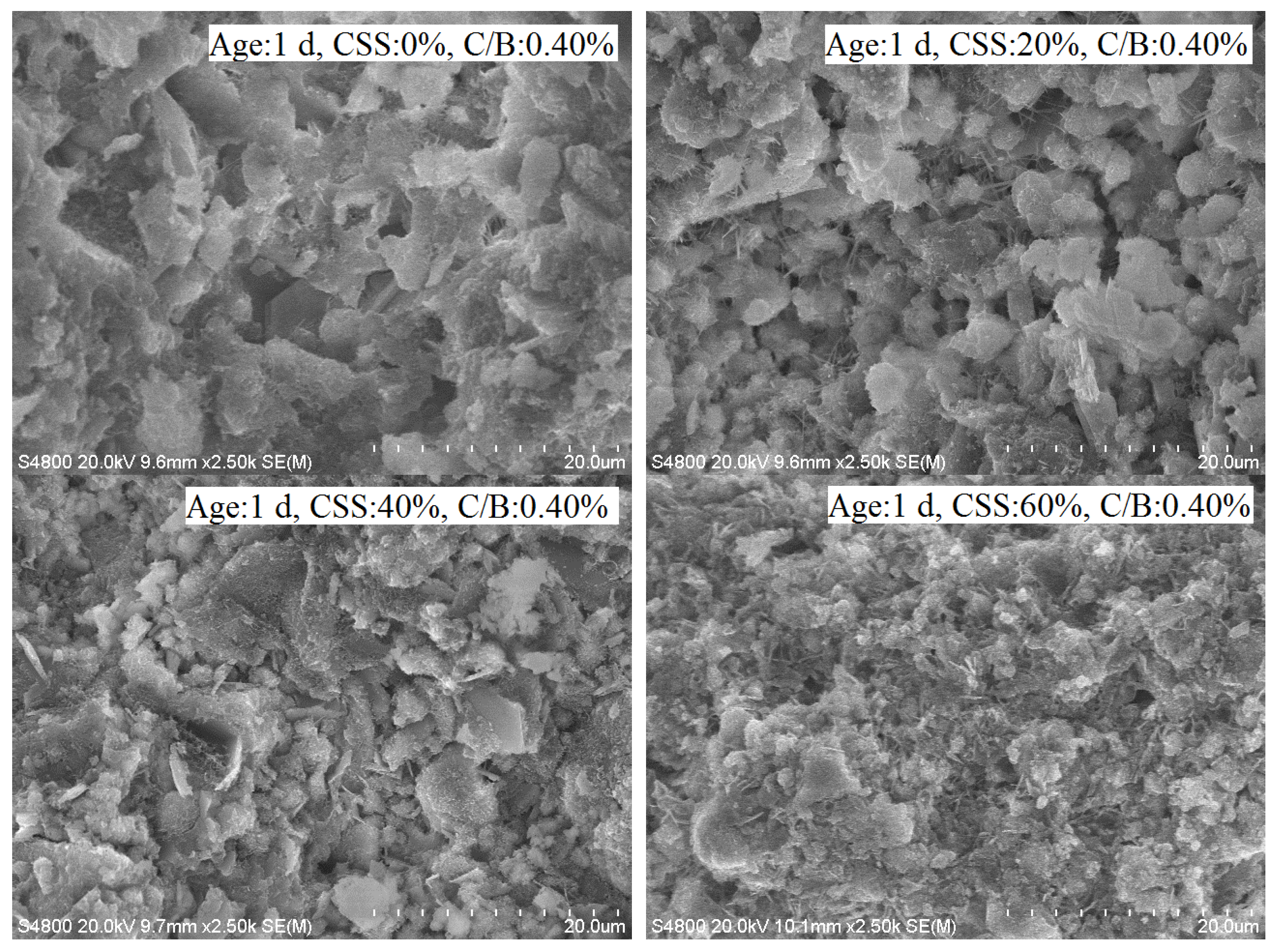
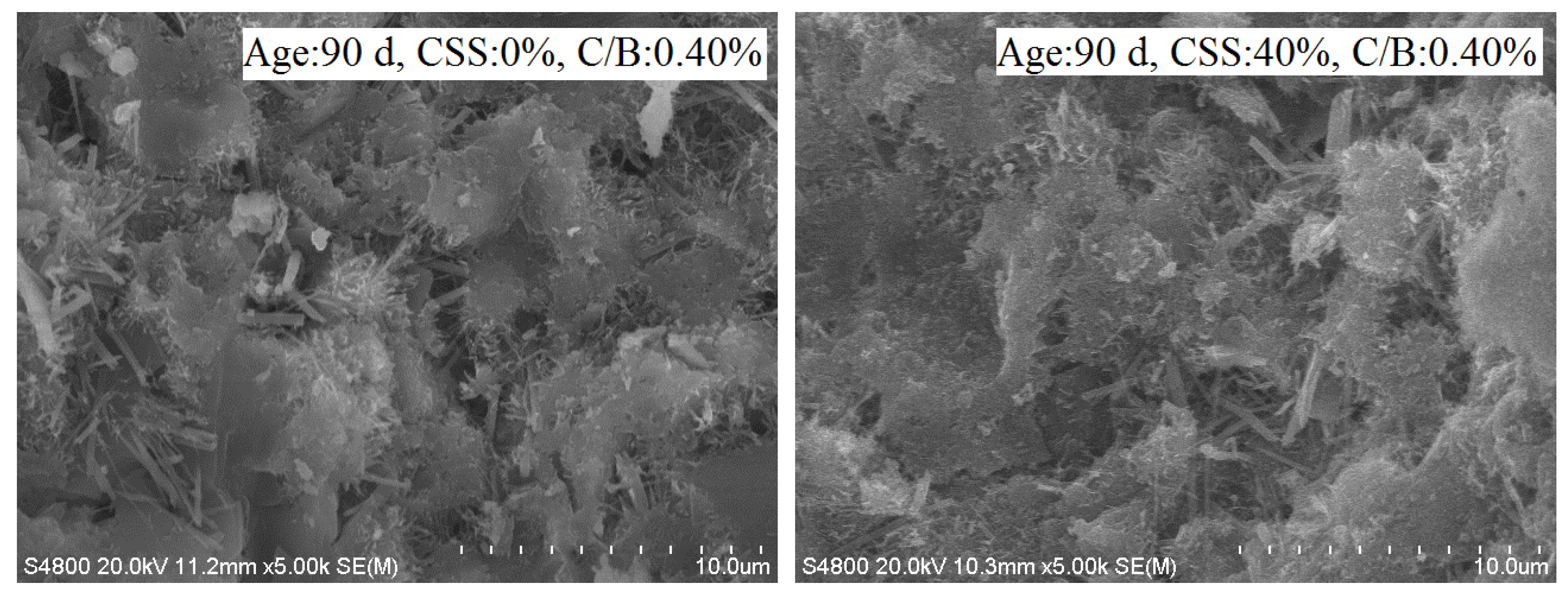
3.7. SEM Analyses
4. Conclusions
- (1)
- The main mineral composition of CSS was β-C2S, and its hydration was slower than that of cement.
- (2)
- After cement was partly replaced with CSS, the hydration rates of the composite pastes containing both cement and CSS slowed down, chemically combined water could be reduced, and more aging time was needed to reach a high hydration degree.
- (3)
- After more CSS is added into the cementitious pastes, there are more and bigger pores with higher air contents. However, flexural strength is lower.
- (4)
- The calcium silicate hydrate gel appeared spherical in the micromorphology of cementitious paste. After more CSS was added into the sample, the volume of the spherical gel decreased, and chemically combined water decreased.
- (5)
- Based on the results of particle size distribution, flexural strength and chemically combined water, CSS was active after mechanical ball-milling.
- (6)
- The hydration of cementitious pastes could be regulated by addition of CSS.
- (7)
- These results can be applied to decrease hydration heat during large concrete construction and reduce CSS discharge.
Author Contributions
Funding
Conflicts of Interest
References
- Wang, L.; Yang, H.; Zhou, S.; Chen, E.; Tang, S. Hydration, mechanical property and C-S-H structure of early-strength low-heat cement-based materials. Mater. Lett. 2018, 217, 151–154. [Google Scholar] [CrossRef]
- Campillo, I.; Guerrero, A.; Dolado, J.S.; Porro, A.; Ibanez, J.; Goñi, S. Improvement of initial mechanical strength by nanoalumina in belite cements. Mater. Lett. 2007, 61, 1889–1892. [Google Scholar] [CrossRef]
- Huang, H.; Shen, X.-D. Interaction effect of triisopropanolamine and glucose on the hydration of Portland cement. Constr. Build. Mater. 2014, 65, 360–366. [Google Scholar] [CrossRef]
- Wang, L.; Yang, H.; Zhou, S.; Chen, E.; Tang, S. Mechanical properties, long-term hydration heat, shinkage behavior and crack resistance of dam concrete designed with low heat Portland (LHP) cement and fly ash. Constr. Build. Mater. 2018, 187, 1073–1091. [Google Scholar] [CrossRef]
- Ju, Y.; Lei, H. Actual Temperature Evolution of Thick Raft Concrete Foundations and Cracking Risk Analysis. Adv. Mater. Sci. Eng. 2019, 2019, 7029671. [Google Scholar] [CrossRef]
- Huang, Y.; Liu, G.; Huang, S.; Rao, R.; Hu, C. Experimental and finite element investigations on the temperature field of a massive bridge pier caused by the hydration heat of concrete. Constr. Build. Mater. 2018, 192, 240–252. [Google Scholar] [CrossRef]
- Hekal, E.; Abo-El-Enein, S.; El-Korashy, S.; Megahed, G.; El-Sayed, T. Hydration characteristics of Portland cement—Electric arc furnace slag blends. HBRC J. 2013, 9, 118–124. [Google Scholar] [CrossRef]
- Hekal, E.E.; Abo-El-Enein, S.A.; El-Korashy, S.A.; Megahed, G.M.; El-Sayed, T.M. Utilization of electric arc furnace dust as an admixture to Portland cement pastes. J. Therm. Anal. Calorim. 2013, 114, 613–619. [Google Scholar] [CrossRef]
- Saraya, M.E.I. Study physico-chemical properties of blended cements containing fixed amount of silica fume, blast furnace slag, basalt and limestone, a comparative study. Constr. Build. Mater. 2014, 72, 104–112. [Google Scholar] [CrossRef]
- Rahhal, V.; Talero, R. Calorimetry of Portland cement with silica fume, diatomite and quartz additions. Constr. Build. Mater. 2009, 23, 3367–3374. [Google Scholar] [CrossRef]
- Rahhal, V.; Talero, R. Calorimetry of Portland cement with metakaolins, quartz and gypsum additions. J. Therm. Anal. Calorim. 2008, 91, 825–834. [Google Scholar] [CrossRef]
- Zhang, Y.M.; Sun, W.; Yan, H.D. Hydration of high-volume fly ash cement pastes. Cem. Concr. Compos. 2000, 22, 445–452. [Google Scholar] [CrossRef]
- Berry, E.; Hemmings, R.; Cornelius, B. Mechanisms of hydration reactions in high volume fly ash pastes and mortars. Cem. Concr. Compos. 1990, 12, 253–261. [Google Scholar] [CrossRef]
- Lam, L.; Wong, Y.; Poon, C. Degree of hydration and gel/space ratio of high-volume fly ash/cement systems. Cem. Concr. Res. 2000, 30, 747–756. [Google Scholar] [CrossRef]
- Heikal, M.; Ibrahim, N. Hydration, microstructure and phase composition of composite cements containing nano-clay. Constr. Build. Mater. 2016, 112, 19–27. [Google Scholar] [CrossRef]
- Aleem, S.A.E.; Heikal, M.; Morsi, W. Hydration characteristic, thermal expansion and microstructure of cement containing nano-silica. Constr. Build. Mater. 2014, 59, 151–160. [Google Scholar] [CrossRef]
- Heikal, M.; El-Didamony, H.; Morsy, M.S. Limestone-filled pozzolanic cement. Cem. Concr. Res. 2000, 30, 1827–1834. [Google Scholar] [CrossRef]
- Sun, J.M.; Chen, P. Resourcing Utilization of High Alumina Fly Ash. Adv. Mater. Res. 2013, 652, 2570–2575. [Google Scholar] [CrossRef]
- Zhan, J.; Geng, C.; Yang, F.; Li, W. Study on the Activity of Calcium Silicate Slag. In Proceedings of the 2015 4th International Conference on Sensors, Measurement and Intelligent Materials, Shenzhen, China, 27–28 December 2015; pp. 650–653. [Google Scholar]
- Yang, Z.; Sun, J.; Zhang, Z. Using silicate-calcium slag generated in process of extracting alumina from fly ash as cement admixture. J. Environ. Eng. 2014, 9, 3989–3995. (In Chinese) [Google Scholar]
- Zhang, N.; Li, H.; Zhao, Y.; Liu, X. Hydration characteristics and environmental friendly performance of a cementitious material composed of calcium silicate slag. J. Hazard. Mater. 2016, 306, 67–76. [Google Scholar] [CrossRef]
- Feng, C.; Yao, Y.; Li, Y.; Liu, X.; Sun, H. Thermal activation on calcium silicate slag from high-alumina fly ash: A technical report. Clean Technol. Environ. Policy 2014, 16, 667–672. [Google Scholar] [CrossRef]
- Taha, A.; El-Hemaly, S.; Mosalamy, F.; Galal, A. Hydration of dicalcium silicate in the presence of concrete admixtures. Thermochim. Acta 1987, 118, 143–149. [Google Scholar] [CrossRef]
- Sharara, A.; El-Didamony, H.; Ebied, E.; El-Aleem, A. Hydration characteristics of β-C2S in the presence of some pozzolanic materials. Cem. Concr. Res. 1994, 24, 966–974. [Google Scholar] [CrossRef]
- National Standards of the People’s Republic of China. Method of Testing Cement-Determination of Strength (GB/T17671-1999); State Bureau of Quality and Technical Supervision of China: Beijing, China, 1999.



| Oxides (%) | CaO | MgO | Al2O3 | Fe2O3 | SiO2 | Na2O | LOI |
|---|---|---|---|---|---|---|---|
| CSS | 51.75 | 1.14 | 5.5 | 2.55 | 27.69 | 3.1 | 9.88 |
| P.O 42.5 cement | 55.01 | 2.24 | 7.19 | 2.96 | 23.44 | 0.68 | 2.86 |
| Sample | Mix Proportion (by Mass)/% | Sample | Mix Proportion (by Mass)/% | Sample | Mix Proportion (by Mass)/% | ||||||
|---|---|---|---|---|---|---|---|---|---|---|---|
| CSS | Cement | W/B | CSS | Cement | W/B | CSS | Cement | W/B | |||
| W1CS0 | 0 | 100 | 0.35 | W2CS0 | 0 | 100 | 0.40 | W3CS0 | 0 | 100 | 0.45 |
| W1CS1 | 10 | 90 | 0.35 | W2CS1 | 10 | 90 | 0.40 | W3CS1 | 10 | 90 | 0.45 |
| W1CS2 | 20 | 80 | 0.35 | W2CS2 | 20 | 80 | 0.40 | W3CS2 | 20 | 80 | 0.45 |
| W1CS3 | 30 | 70 | 0.35 | W2CS3 | 30 | 70 | 0.40 | W3CS3 | 30 | 70 | 0.45 |
| W1CS4 | 40 | 60 | 0.35 | W2CS4 | 40 | 60 | 0.40 | W3CS4 | 40 | 60 | 0.45 |
| W1CS5 | 50 | 50 | 0.35 | W2CS5 | 50 | 50 | 0.40 | W3CS5 | 50 | 50 | 0.45 |
| W1CS6 | 60 | 40 | 0.35 | W2CS6 | 60 | 40 | 0.40 | W3CS6 | 60 | 40 | 0.45 |
© 2019 by the authors. Licensee MDPI, Basel, Switzerland. This article is an open access article distributed under the terms and conditions of the Creative Commons Attribution (CC BY) license (http://creativecommons.org/licenses/by/4.0/).
Share and Cite
Zhang, J.; Yan, C.; Bai, P.; Wang, X.; Liu, S.; Liu, Z. Effects of Calcium Silicate Slag on Hydration of Cementitious Pastes. Materials 2019, 12, 3094. https://doi.org/10.3390/ma12193094
Zhang J, Yan C, Bai P, Wang X, Liu S, Liu Z. Effects of Calcium Silicate Slag on Hydration of Cementitious Pastes. Materials. 2019; 12(19):3094. https://doi.org/10.3390/ma12193094
Chicago/Turabian StyleZhang, Ju, Changwang Yan, Pucun Bai, Xiaoxiao Wang, Shuguang Liu, and Zhigang Liu. 2019. "Effects of Calcium Silicate Slag on Hydration of Cementitious Pastes" Materials 12, no. 19: 3094. https://doi.org/10.3390/ma12193094
APA StyleZhang, J., Yan, C., Bai, P., Wang, X., Liu, S., & Liu, Z. (2019). Effects of Calcium Silicate Slag on Hydration of Cementitious Pastes. Materials, 12(19), 3094. https://doi.org/10.3390/ma12193094