Experimental and Numerical Investigations of High-Speed Projectile Impacts on 7075-T651 Aluminum Plates

Abstract
1. Introduction
2. Material Model
2.1. Johnson-Cook Material Model
2.2. Element Dependent Failure Strain
2.3. User Defined Material Model (UMAT) for LS-DYNA
3. Impact Test Using Gas-gun System
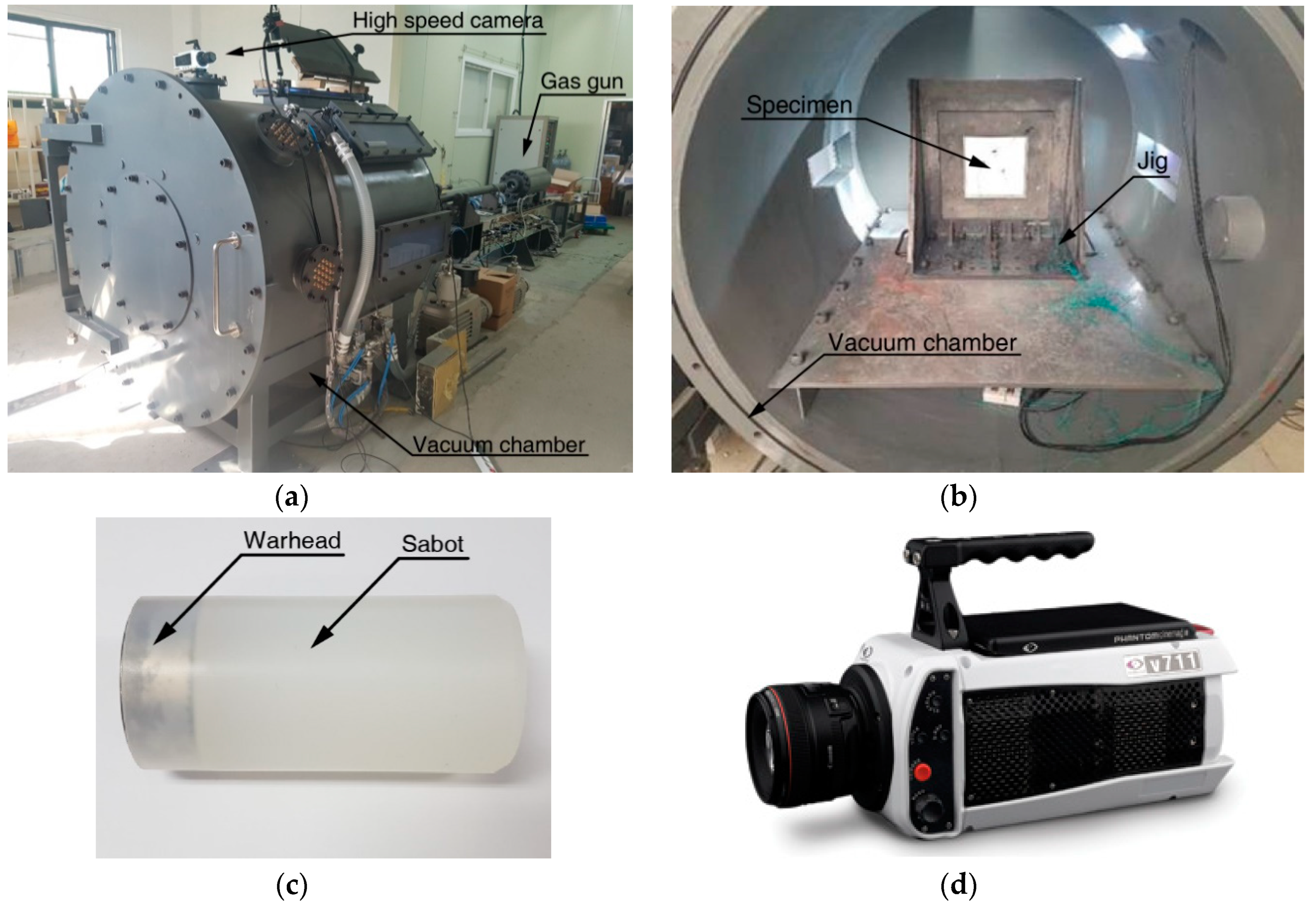
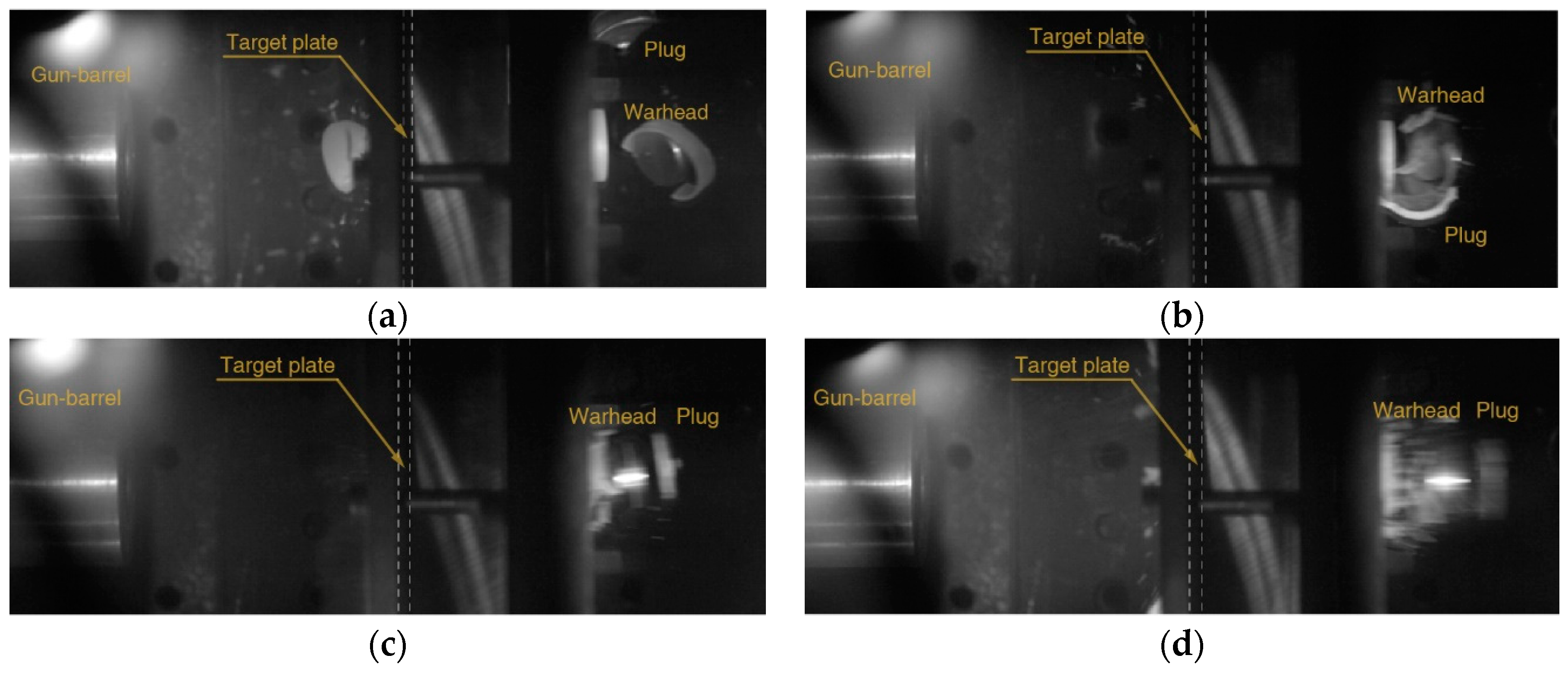
3.1. Experimental Setup
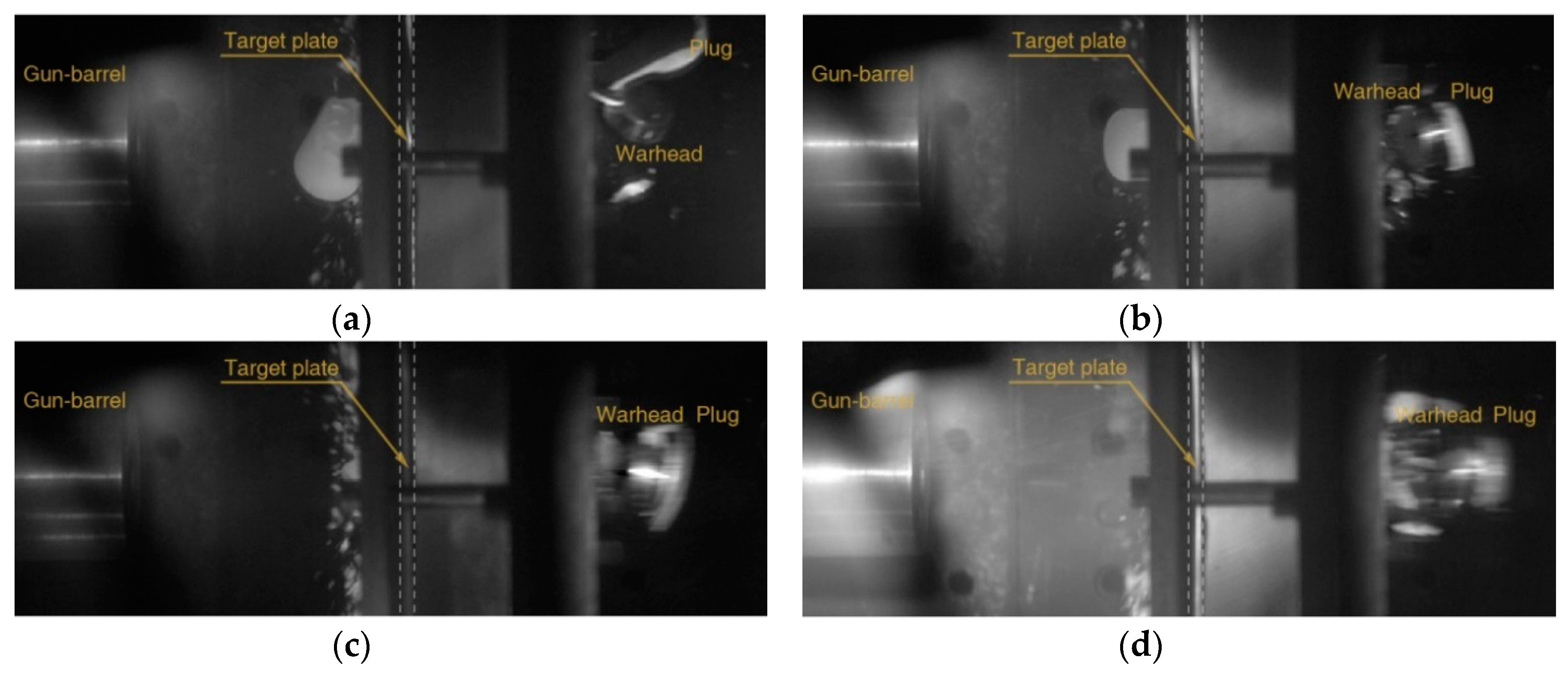
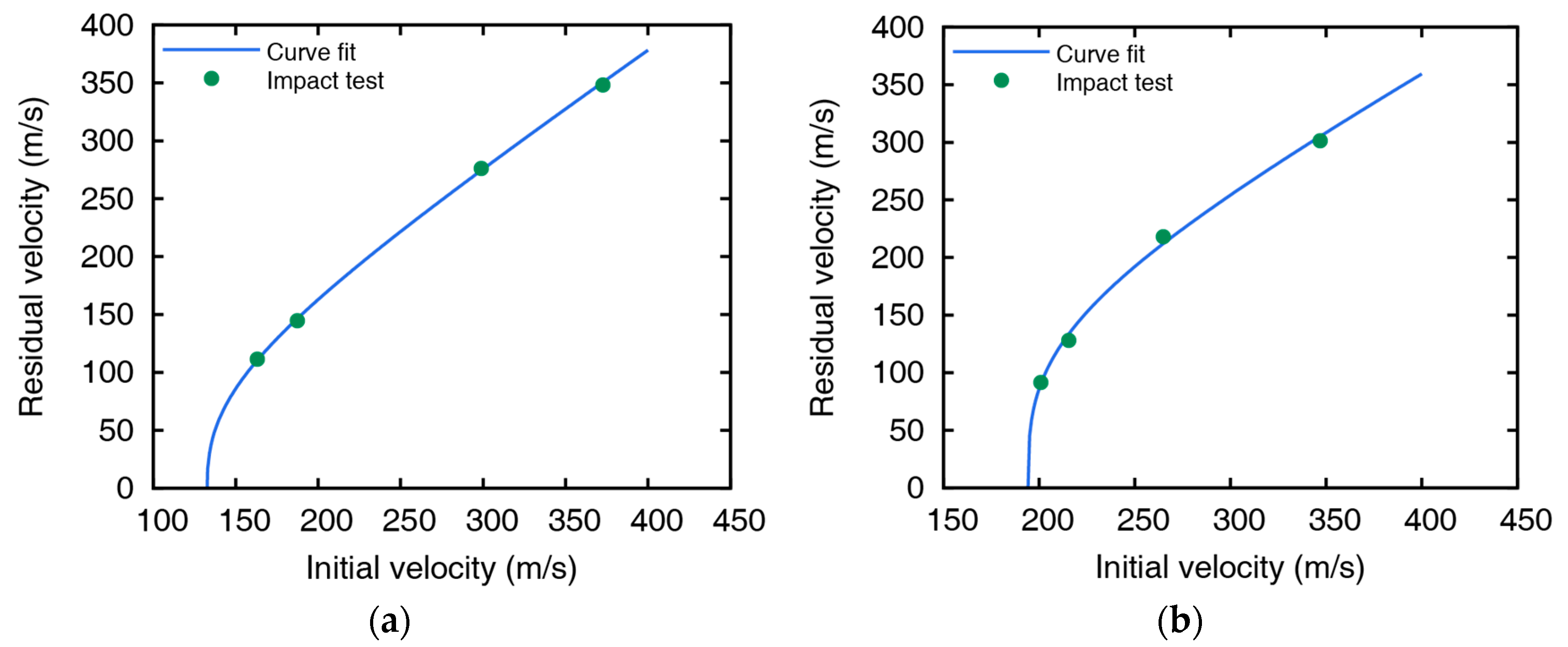
3.2. Impact Tests on 7075-T651 Aluminum Plates
4. Numerical Simulations
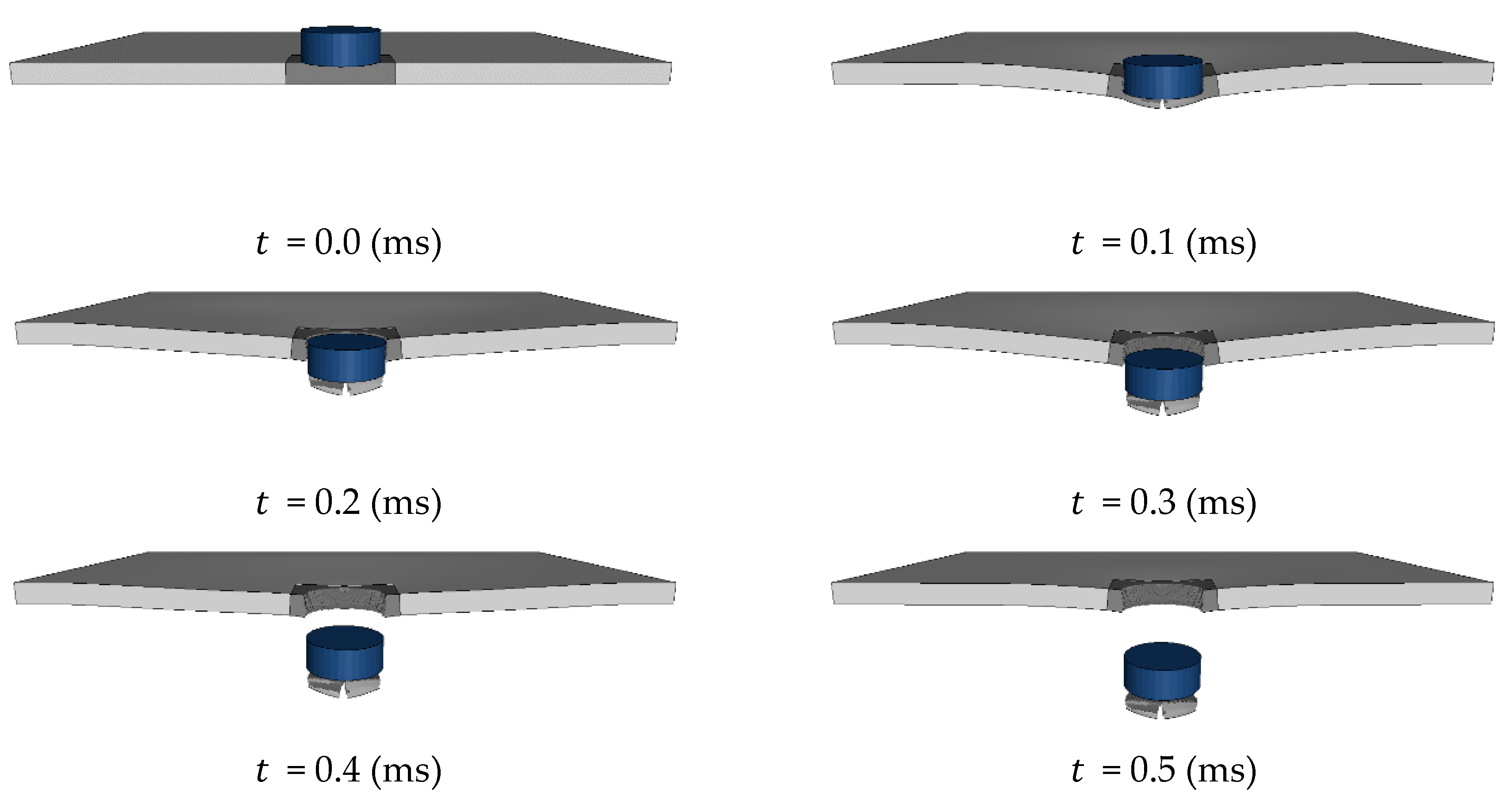
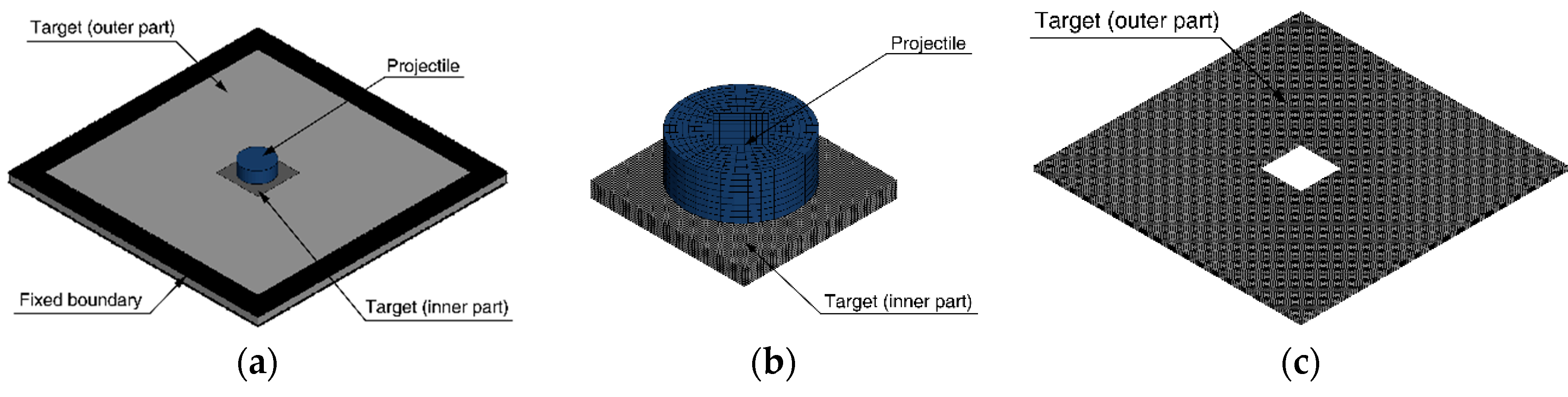
4.1. Numerical Model and Impact Simulations
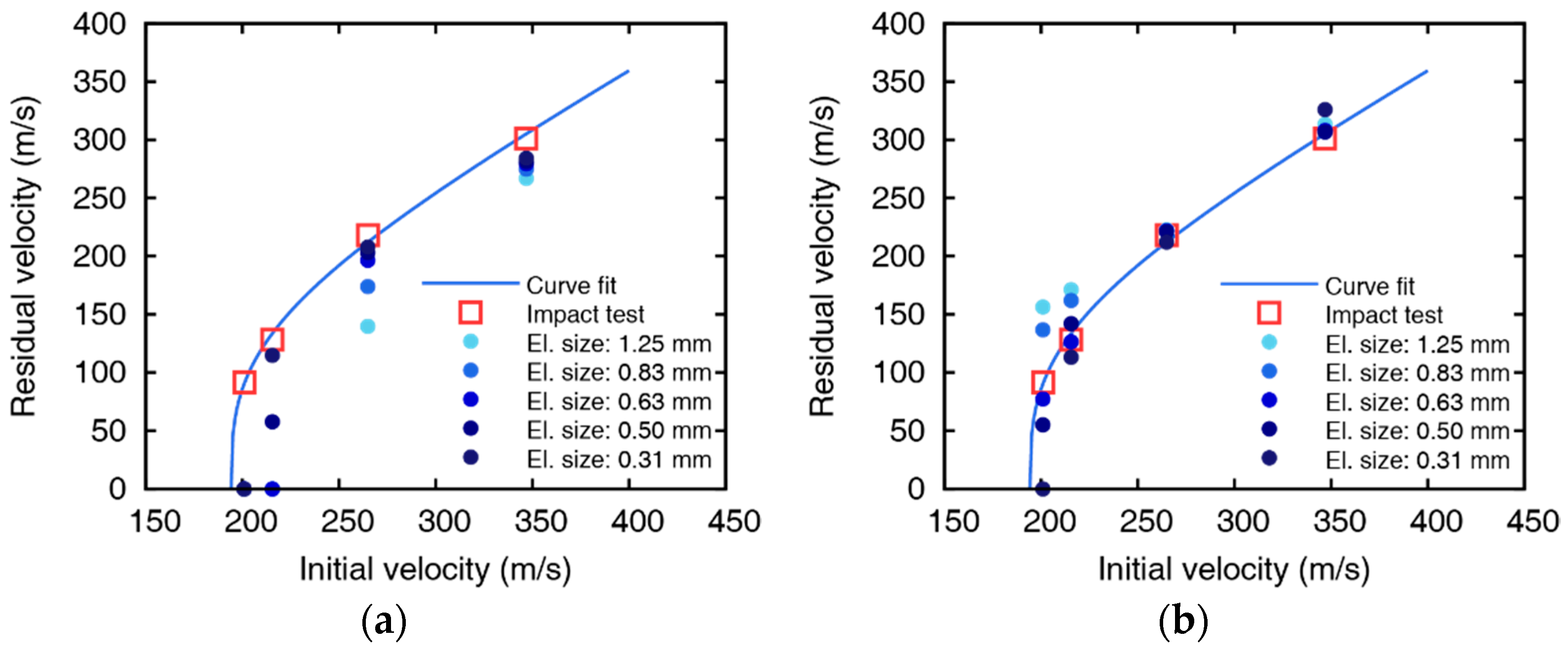
4.2. Failure Strain Value for Residual Velocity
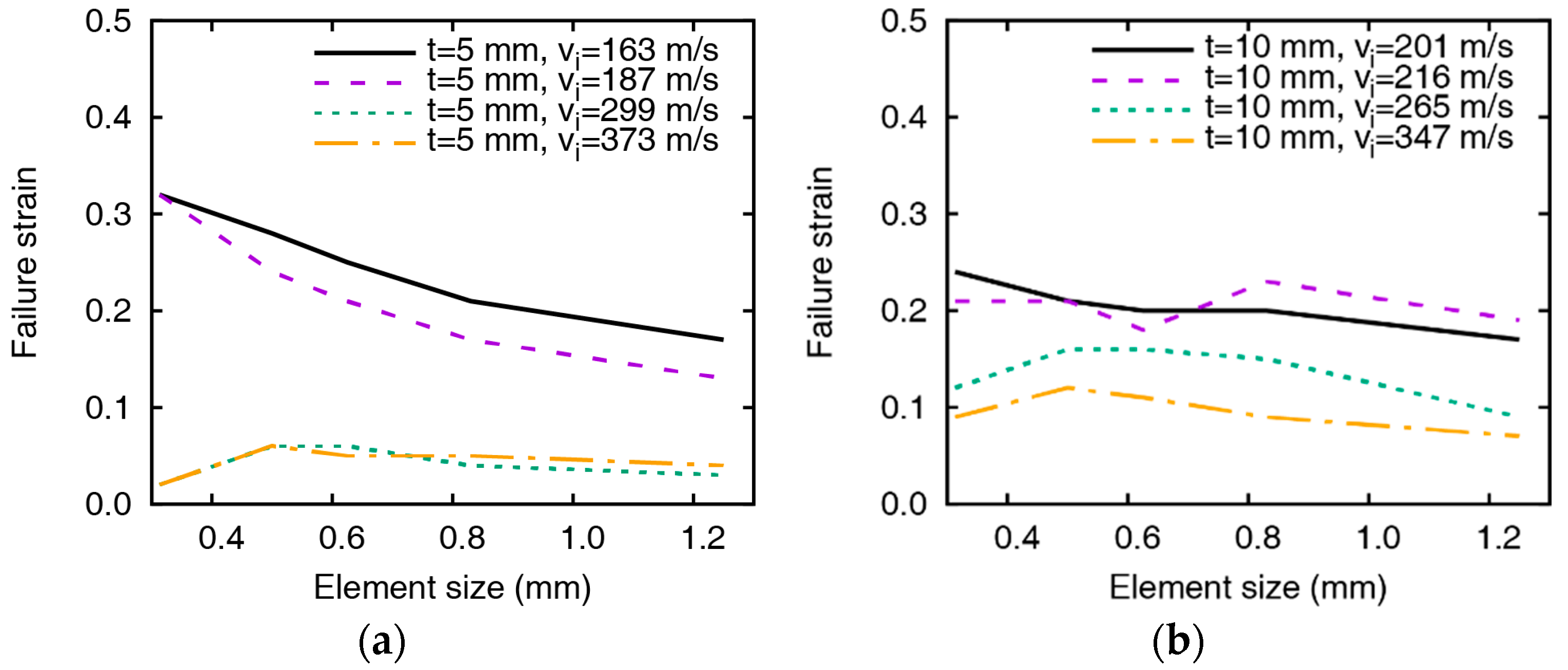
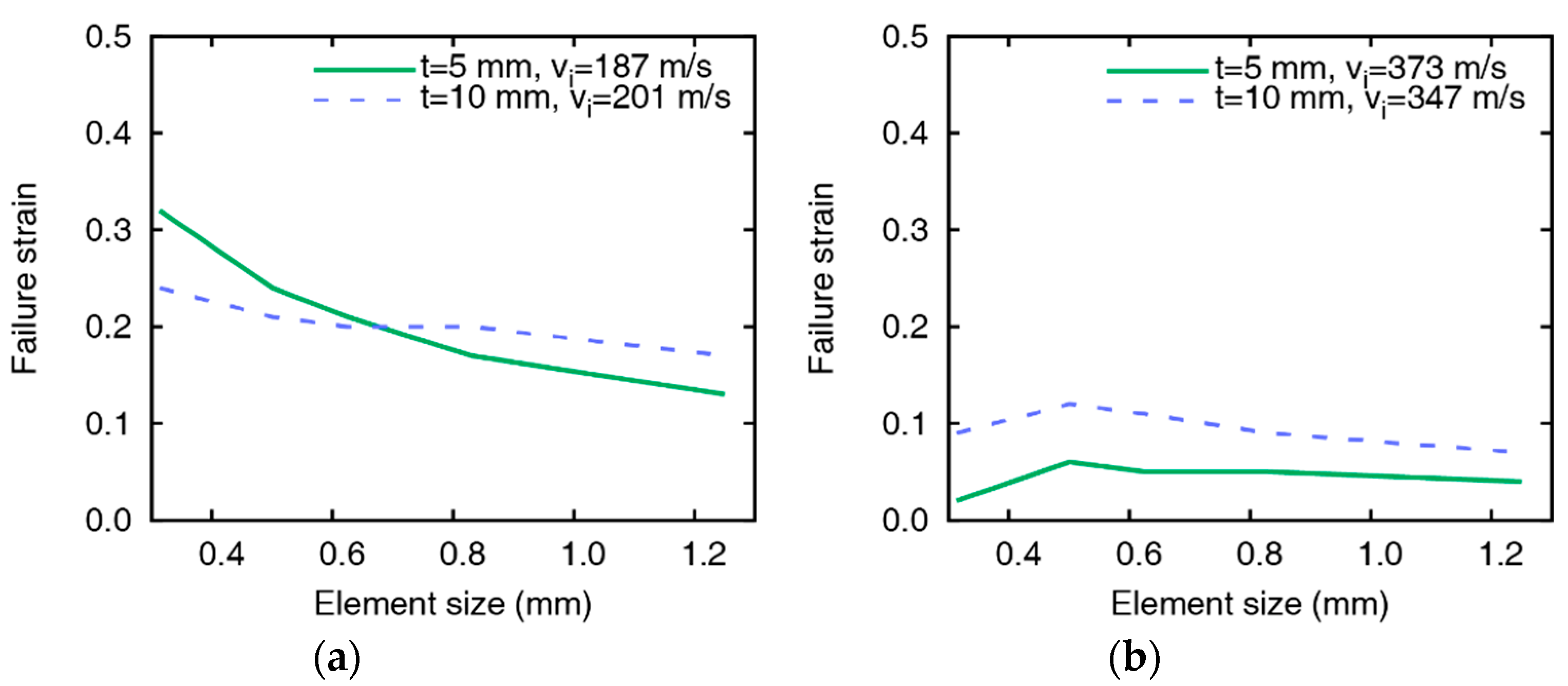
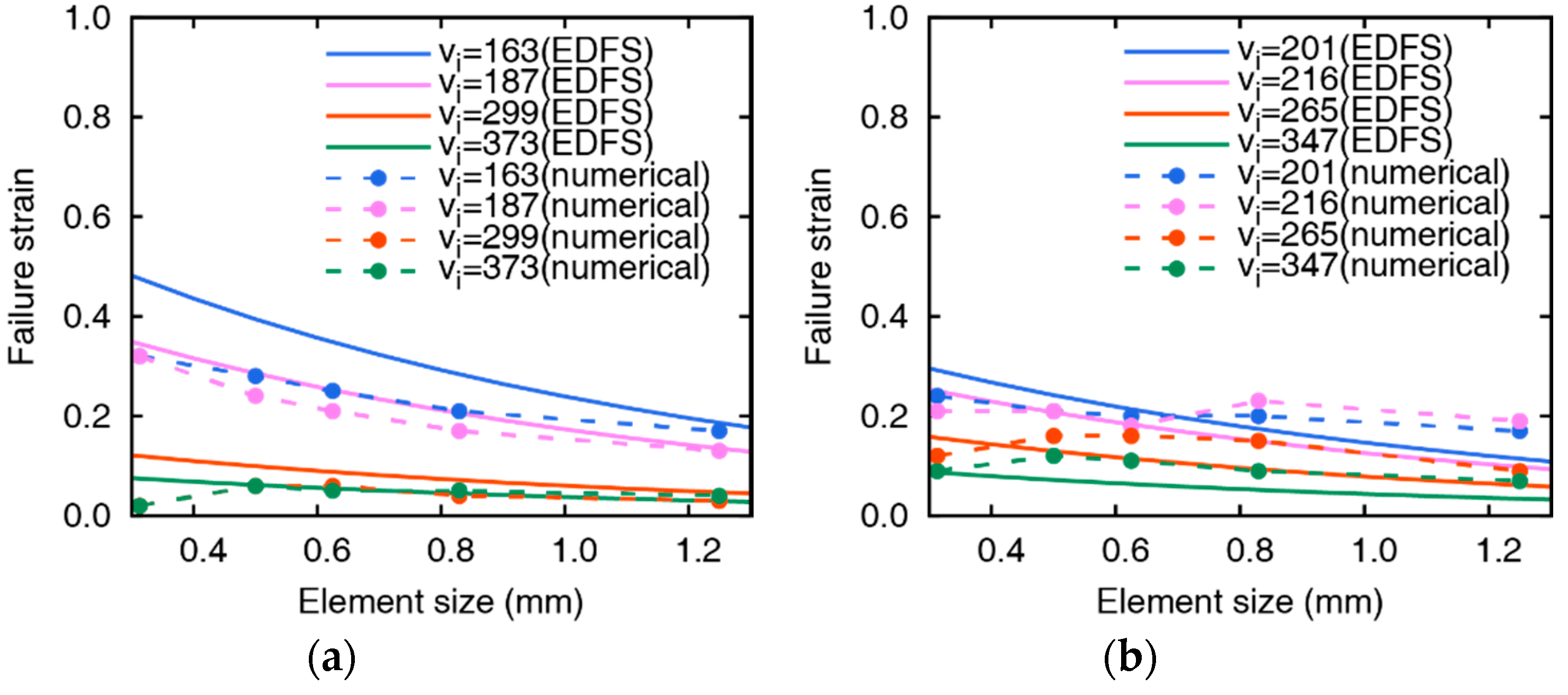
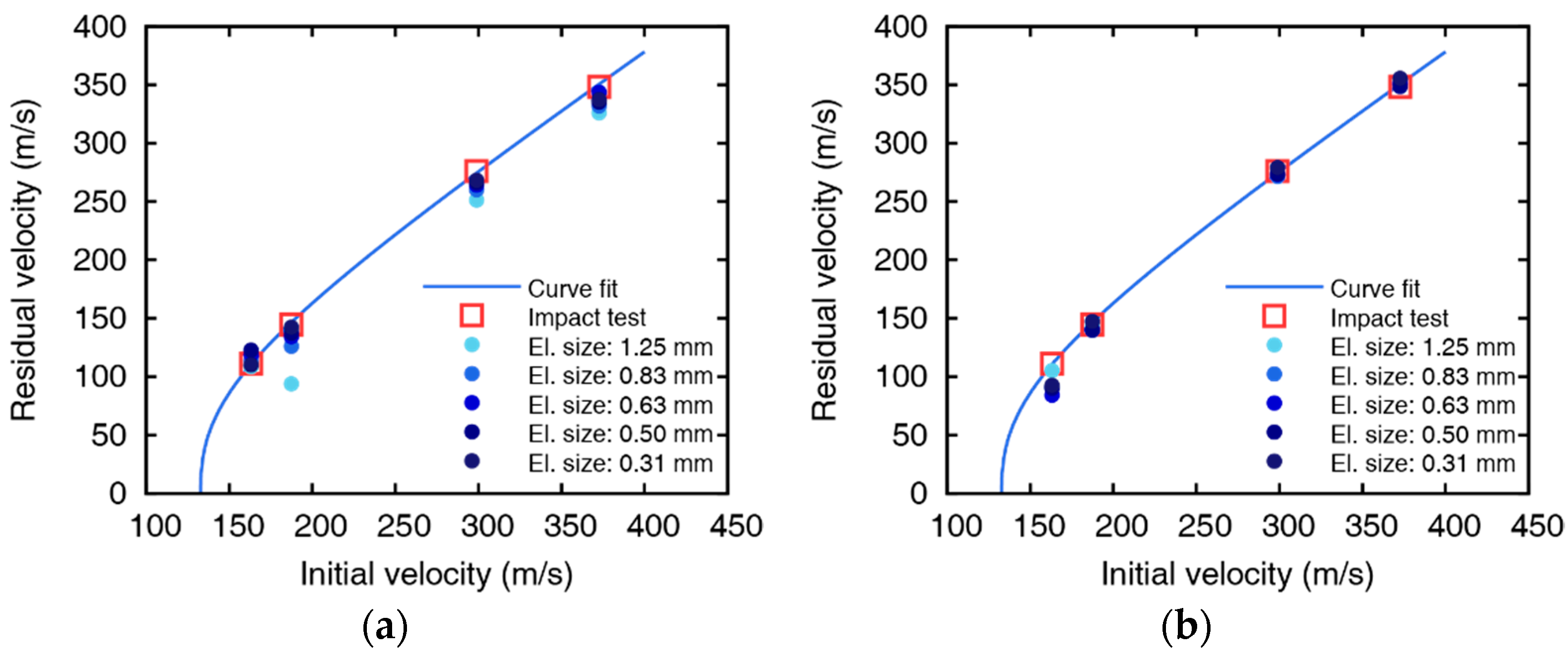
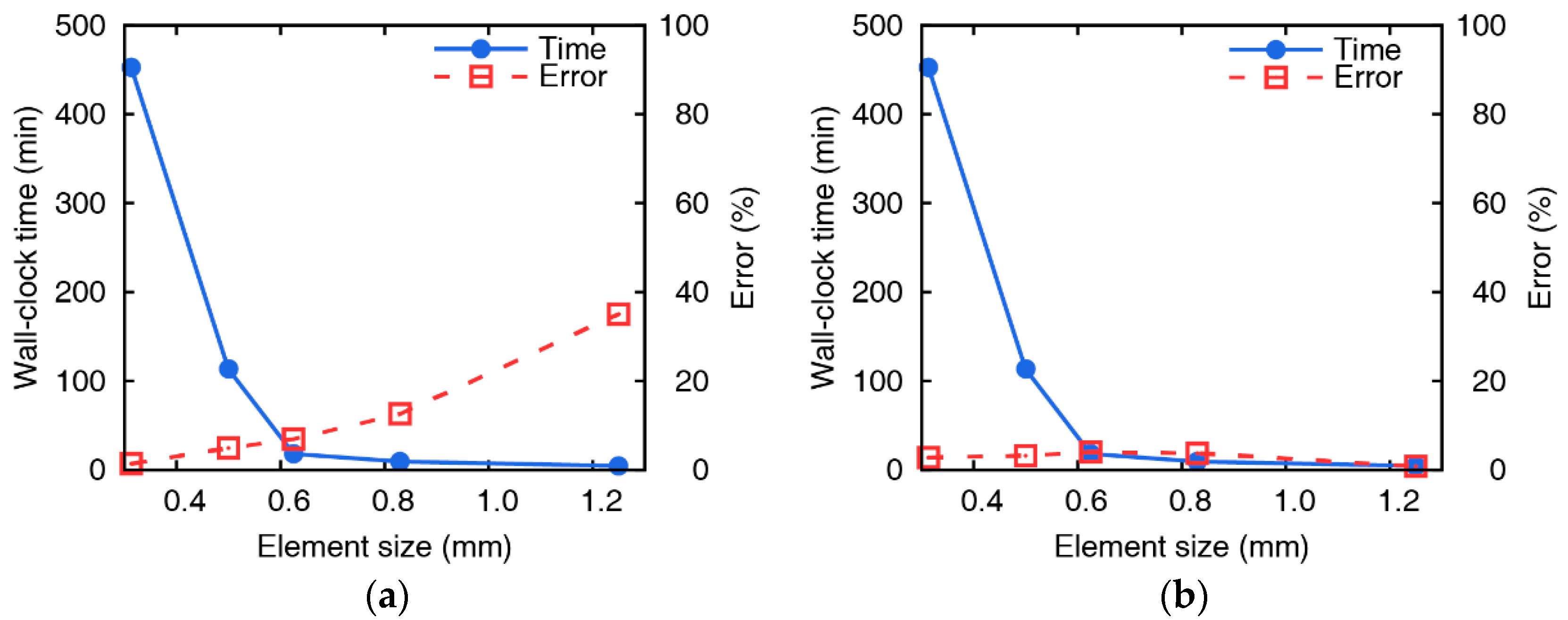
4.3. The Relationship Between Element Size and Failure Strain with Various Impact Velocity
5. Implementation of EDFS to UMAT
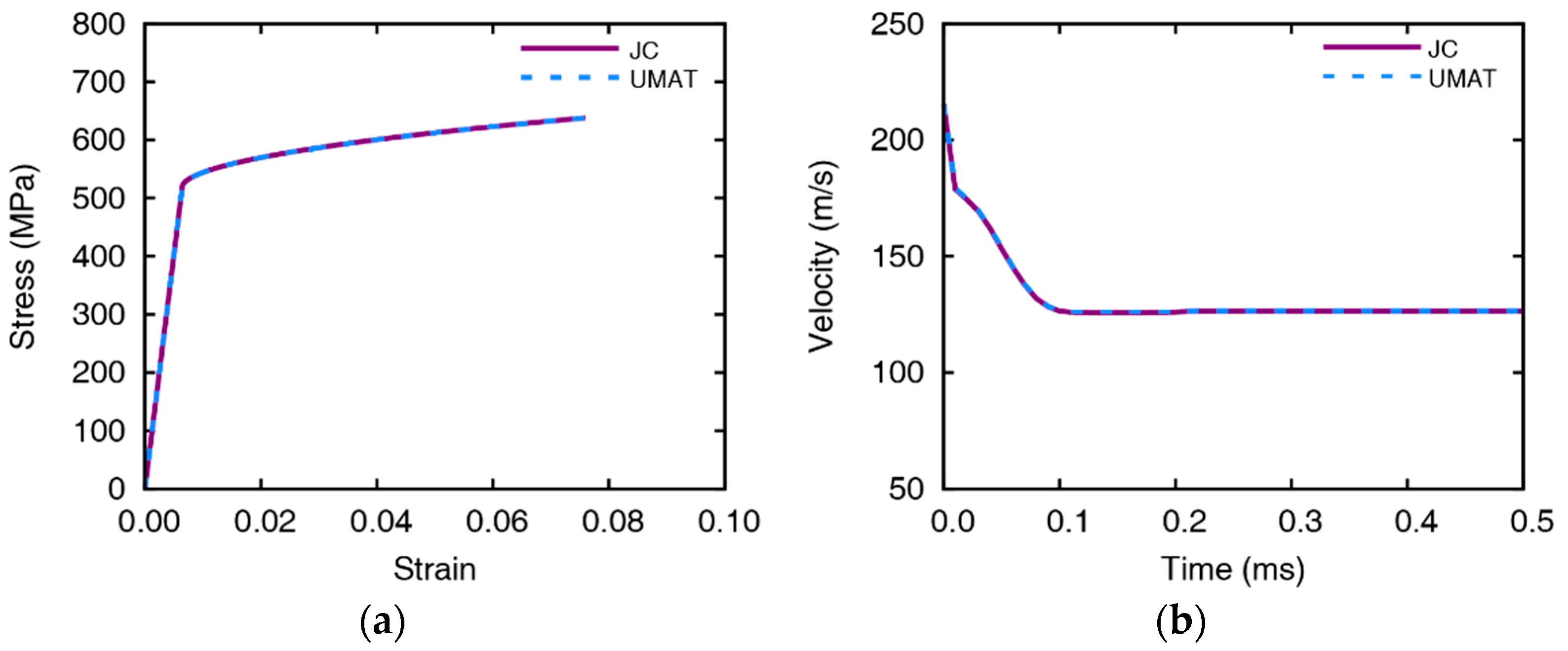
5.1. Implementation of EDFS in Johnson-Cook Constitutive Model
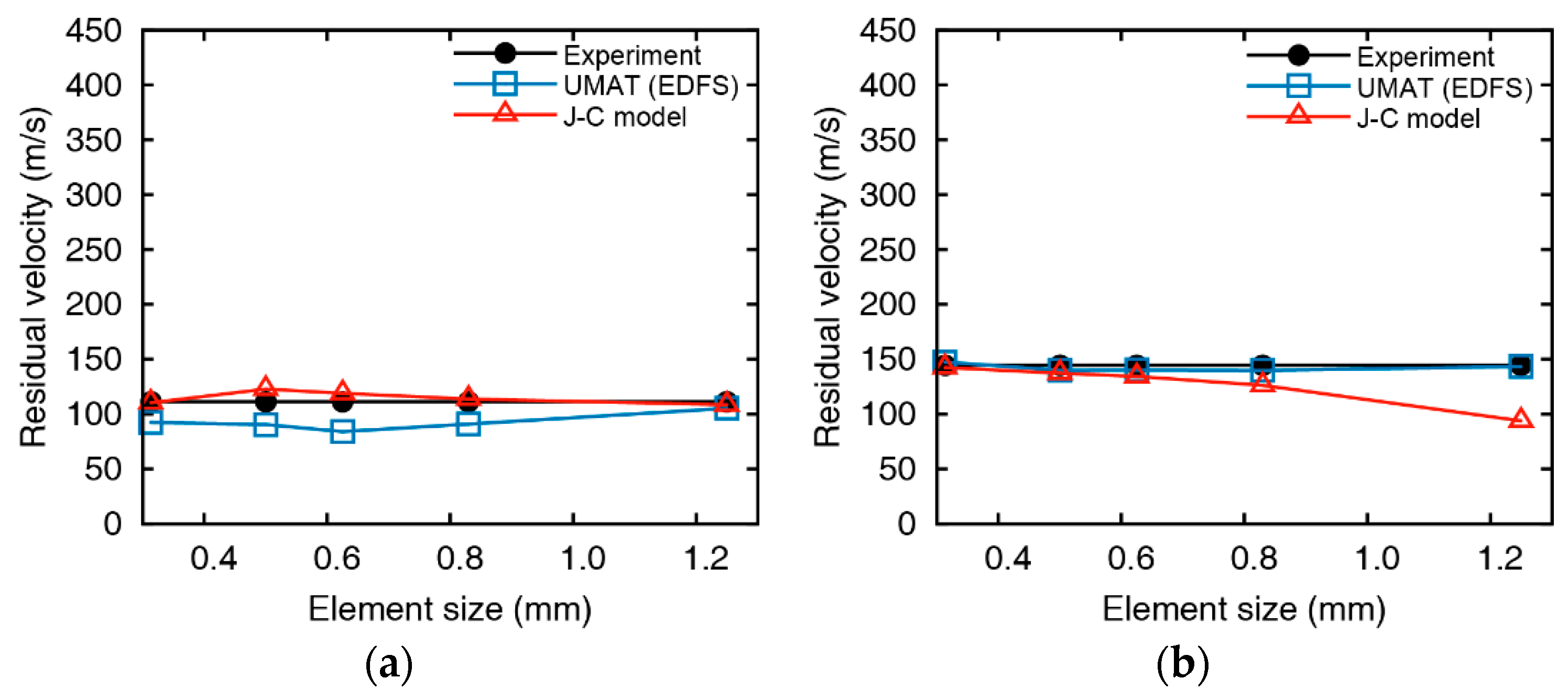
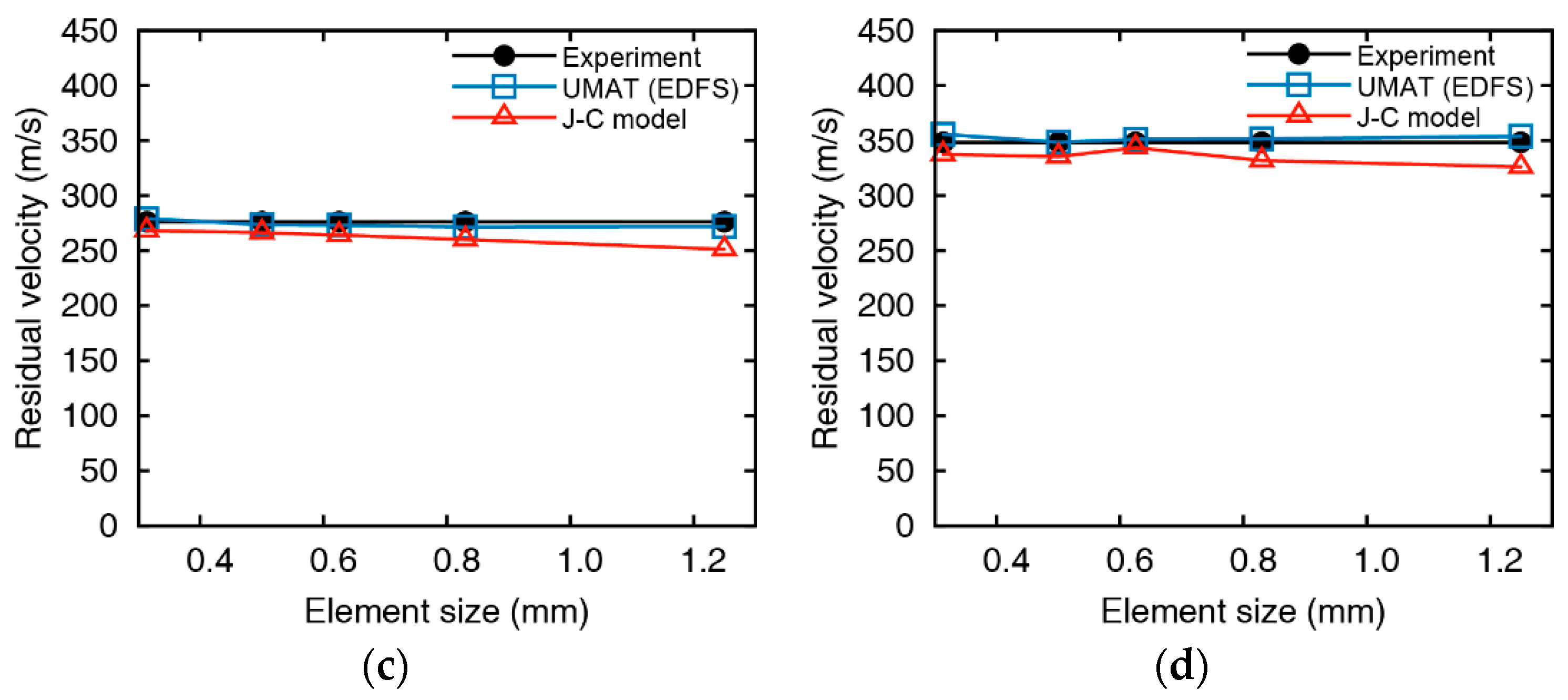
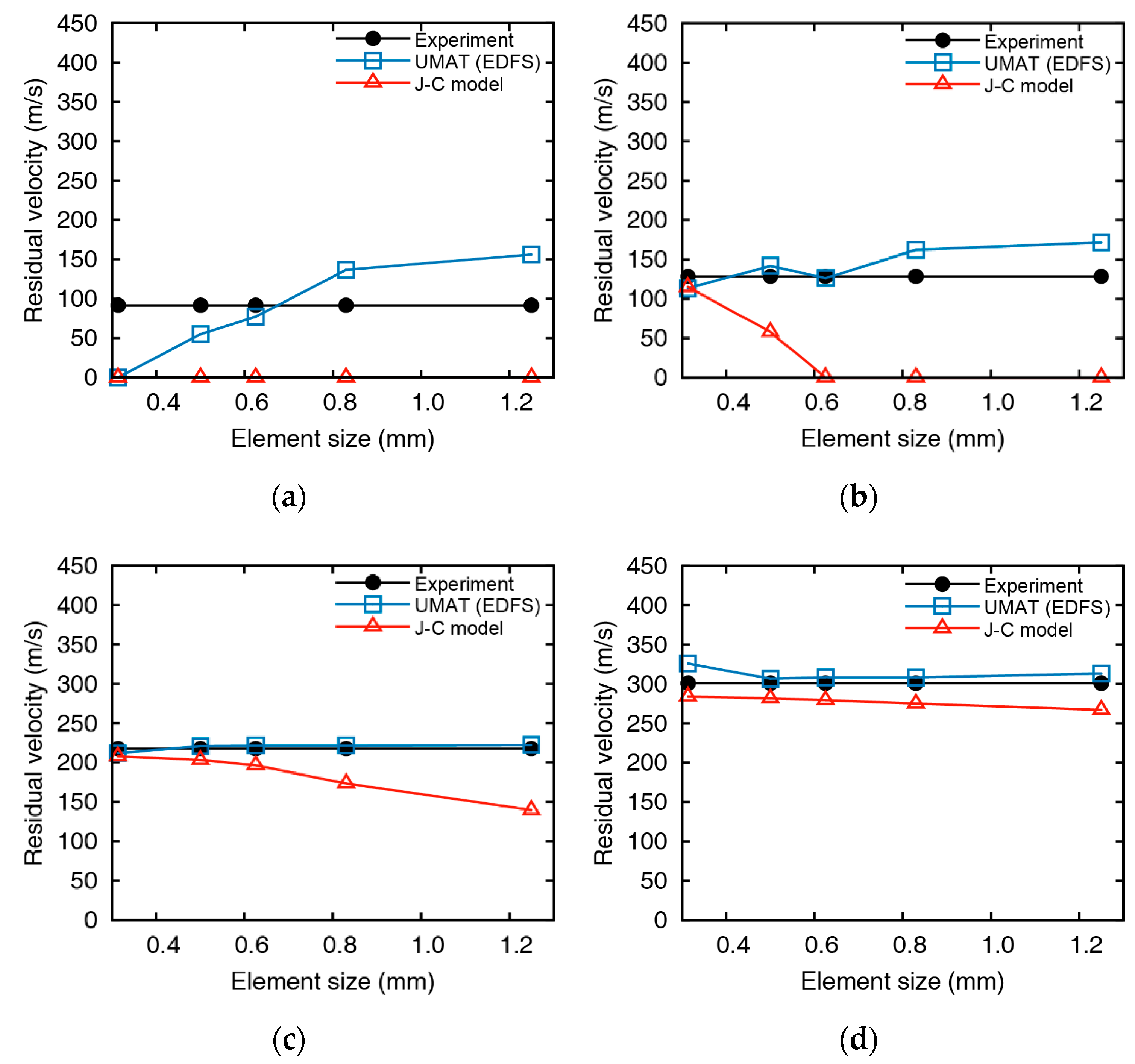
5.2. Comparative Studies with Johnson-Cook Damage Model
6. Summary and Conclusions
Supplementary Materials
Author Contributions
Funding
Conflicts of Interest
References
- Backman, M.E.; Goldsmith, W. The mechanics of penetration of projectiles into targets. Int. J. Eng. Sci. 1978, 16, 1–99. [Google Scholar] [CrossRef]
- Kar, A.K. Residual velocity for projectiles. Nucl. Eng. Des. 1979, 53, 87–95. [Google Scholar] [CrossRef]
- Johnson, W.; Ghosh, S.K.; Reid, S.R. Piercing and Hole-Flanging of Metal Sheets: General Study. Mem. Sci. Rev. Met. 1980, 4, 585–606. [Google Scholar]
- Johnson, W.; Chitkara, N.R.; Ibrahim, A.H.; Dasgupta, A.K. Hole flanging and punching of circular plates with conically headed cylindrical punches. J. Strain Anal. 1973, 8, 228–241. [Google Scholar] [CrossRef]
- Corbett, G.G.; Reid, S.R.; Johnson, W. Impact loading of plates and shells by free-flying projectiles: A review. Int. J. Impact Eng. 1996, 18, 141–230. [Google Scholar] [CrossRef]
- Lee, J.; Liu, W.; Hong, J.-W. Impact fracture analysis enhanced by contact of peridynamic and finite element formulations. Int. J. Impact Eng. 2016, 87, 108–119. [Google Scholar] [CrossRef]
- Garcia, C.; Trendafilova, I.; Zucchelli, A. The effect of polycaprolactone nanofibers on the dynamic and impact behavior of glass fibre reinforced polymer composites. J. Compos. Sci. 2018, 2, 43. [Google Scholar] [CrossRef]
- Garcia, C.; Trendafilova, I. Triboelectric sensor as a dual system for impact monitoring and prediction of the damage in composite structures. Nano Energy 2019, 60, 527–535. [Google Scholar] [CrossRef]
- Lee, K.; Han, S.E.; Hong, J.-W. Analysis of impact of large commercial aircraft on a prestressed containment building. Nucl. Eng. Des. 2013, 265, 431–449. [Google Scholar] [CrossRef]
- Lee, K.; Jung, J.-W.; Hong, J.-W. Advanced aircraft analysis of an F-4 Phantom on a reinforced concrete building. Nucl. Eng. Des. 2014, 273, 505–528. [Google Scholar] [CrossRef]
- Zerilli, F.J.; Armstrong, R.W. Dislocation-mechanics-based constitutive relations for material dynamics calculations. J. Appl. Phys. 1987, 61, 1816–1825. [Google Scholar] [CrossRef]
- Børvik, T.; Langseth, M.; Hopperstad, O.S.; Malo, K.A. Ballistic penetration of steel plates. Int. J. Impact Eng. 1999, 22, 855–886. [Google Scholar] [CrossRef]
- Børvik, T.; Hopperstad, O.S.; Berstad, T.; Langseth, M. Numerical simulation of plugging failure in ballistic penetration. Int. J. Solids Struct. 2001, 38, 6241–6264. [Google Scholar] [CrossRef]
- Chen, G.; Li, J.; He, Y.; Ren, C. A new approach to the determination of plastic flow stress and failure initiation strain for aluminum alloys cutting process. Comput. Mater. Sci. 2014, 95, 568–578. [Google Scholar] [CrossRef]
- Krishnan, K.; Sockalingam, S.; Bansal, S.; Rajan, S.D. Numerical simulation of ceramic composite armor subjected to ballistic impact. Compos. Part B Eng. 2010, 41, 583–593. [Google Scholar] [CrossRef]
- Liu, K.; Wang, Z.; Tang, W.; Zhang, Y.; Wang, G. Experimental and numerical analysis of laterally impacted stiffened plates considering the effect of strain rate. Ocean Eng. 2015, 99, 44–54. [Google Scholar] [CrossRef]
- Wiehahn, M.A.; Nurick, G.N.; Bowles, H.C. Some insights into the mechanism of the deformation and tearing of thin plates at high strain rates incorporating temperature dependent material properties. WIT Trans. Built Environ. 2000, 48, 35–46. [Google Scholar]
- Alsos, H.S.; Amdahl, J.; Hopperstad, O.S. On the resistance to penetration of stiffened plates, Part II: Numerical analysis. Int. J. Impact Eng. 2009, 36, 875–887. [Google Scholar] [CrossRef]
- Gang, H.; Kwak, H.-G. A tensile criterion to minimize FE mesh-dependency in concrete beams under blast loading. Comput. Concr. 2017, 20, 1–10. [Google Scholar]
- Villavicencio, R.; Sutherland, L.; Soares, C.G. Numerical simulation of transversely impacted, clamped circular aluminium plates. Ships Offshore Struct. 2012, 7, 31–45. [Google Scholar] [CrossRef]
- Garg, A.K.; Abolmaali, A. Finite-element modeling and analysis of reinforced concrete box culverts. J. Transp. Eng. 2009, 135, 121–128. [Google Scholar] [CrossRef]
- Ehlers, S. Strain and stress relation until fracture for finite element simulations of a thin circular plate. Thin-Walled Struct. 2010, 48, 1–8. [Google Scholar] [CrossRef]
- Raimondo, L.; Iannucci, L.; Robinson, P.; Curtis, P.T. A progressive failure model for mesh-size-independent FE analysis of composite laminates subject to low-velocity impact damage. Compos. Sci. Technol. 2012, 72, 624–632. [Google Scholar] [CrossRef]
- Lee, W.-S.; Sue, W.-C.; Lin, C.-F.; Wu, C.-J. The strain rate and temperature dependence of the dynamic impact properties of 7075 aluminum alloy. J. Mater. Process. Technol. 2000, 100, 116–122. [Google Scholar] [CrossRef]
- Senthil, K.; Iqbal, M.A.; Chandel, P.S.; Gupta, N.K. Study of the constitutive behavior of 7075-T651 aluminum alloy. Int. J. Impact Eng. 2017, 108, 171–190. [Google Scholar] [CrossRef]
- Yoshio, B. Extra super duralumin and successive aluminum alloys for aircraft. J. Jpn. Inst. Light Met. (Sumitomo Light Met. Ind. Ltd. Jpn.) 2015, 39, 378–395. [Google Scholar]
- Banerjee, A.; Dhar, S.; Acharyya, S.; Datta, D.; Nayak, N. Determination of Johnson cook material and failure model constants and numerical modelling of Charpy impact test of armour steel. Mater. Sci. Eng. A 2015, 640, 200–209. [Google Scholar] [CrossRef]
- He, A.; Xie, G.; Zhang, H.; Wang, X. A comparative study on Johnson–Cook, modified Johnson–Cook and Arrhenius-type constitutive models to predict the high temperature flow stress in 20CrMo alloy steel. Mater. Des. 2013, 52, 677–685. [Google Scholar] [CrossRef]
- Johnson, G.R.; Cook, W.H. A constitutive model and data for metals subjected to large strains, high strain rates and high temperatures. In Proceedings of the 7th International Symposium on Ballistics, The Hague, The Netherlands, 19–21 April 1983; Volnme 21, pp. 541–547. [Google Scholar]
- Zukas, J.A.; Nicholas, T.; Swift, H.F.; Greszczuk, L.B.; Curran, D.R.; Malvern, L.E. Impact dynamics. J. Appl. Mech. 1983, 50, 702. [Google Scholar] [CrossRef]
- Johnson, G.R.; Cook, W.H. Fracture characteristics of three metals subjected to various strains, strain rates, temperatures and pressures. Eng. Fract. Mech. 1985, 21, 31–48. [Google Scholar] [CrossRef]
- Jorgensen, K.C.; Swan, V. Modeling of armour-piercing projectile perforation of thick aluminium plates. In Proceedings of the 13th International LS-DYNA Users Conference, Dearborn, MI, USA, 8–10 June 2014. [Google Scholar]
- Hallquist, J.O. LS-DYNA Keyword User’s Manual. 2007. Available online: http://lstc.com/pdf/ls-dyna_971_manual_k.pdf (accessed on 24 August 2019).






| Density | Young’s Modulus | Poisson’s Ratio | Yield Strength | Ultimate Strength |
|---|---|---|---|---|
| 2700 kg/m3 | 70 GPa | 0.3 | 520 MPa | 572 MPa |
| Case | 1 | 2 | 3 | 4 | 5 |
|---|---|---|---|---|---|
| Initial Velocity (m/s) | 127.0 | 163.2 | 187.4 | 298.8 | 372.8 |
| Residual Velocity (m/s) | - | 111.2 | 144.4 | 276.2 | 348.3 |
| Case | 1 | 2 | 3 | 4 | 5 |
|---|---|---|---|---|---|
| Initial Velocity (m/s) | 150.6 | 200.9 | 215.5 | 264.9 | 346.8 |
| Residual Velocity (m/s) | - | 91.5 | 128.2 | 218.1 | 301.2 |
| Parameter | a | b | n | c |
|---|---|---|---|---|
| Value | 5.20 × 10⁸ | 4.77 × 10⁸ | 0.52 | 0.001 |
| Component | Outer Part | Inner Part | ||||
|---|---|---|---|---|---|---|
| Element Size (mm) | 1.25 | 0.31 | 0.50 | 0.63 | 0.83 | 1.25 |
| Number of Elements | 22,400 | 409,600 | 100,000 | 51,200 | 21,600 | 6400 |
| Component | Outer Part | Inner Part | ||||
|---|---|---|---|---|---|---|
| Element Size (mm) | 1.25 | 0.31 | 0.50 | 0.63 | 0.83 | 1.25 |
| Number of Elements | 44,800 | 819,200 | 200,000 | 102,400 | 43,200 | 12,800 |
© 2019 by the authors. Licensee MDPI, Basel, Switzerland. This article is an open access article distributed under the terms and conditions of the Creative Commons Attribution (CC BY) license (http://creativecommons.org/licenses/by/4.0/).
Share and Cite
Jung, J.-W.; Lee, S.E.; Hong, J.-W. Experimental and Numerical Investigations of High-Speed Projectile Impacts on 7075-T651 Aluminum Plates. Materials 2019, 12, 2736. https://doi.org/10.3390/ma12172736
Jung J-W, Lee SE, Hong J-W. Experimental and Numerical Investigations of High-Speed Projectile Impacts on 7075-T651 Aluminum Plates. Materials. 2019; 12(17):2736. https://doi.org/10.3390/ma12172736
Chicago/Turabian StyleJung, Jae-Wook, Sang Eon Lee, and Jung-Wuk Hong. 2019. "Experimental and Numerical Investigations of High-Speed Projectile Impacts on 7075-T651 Aluminum Plates" Materials 12, no. 17: 2736. https://doi.org/10.3390/ma12172736
APA StyleJung, J.-W., Lee, S. E., & Hong, J.-W. (2019). Experimental and Numerical Investigations of High-Speed Projectile Impacts on 7075-T651 Aluminum Plates. Materials, 12(17), 2736. https://doi.org/10.3390/ma12172736