Article

Assessment of the Wave Energy in the Black Sea Based on a 15-Year Hindcast with Data Assimilation


Department of Mechanical Engineering, “Dunarea de Jos” University of Galati, 47 Domneasca Street, Galati 800201, Romania
Energies 2015, 8(9), 10370-10388; https://doi.org/10.3390/en80910370
Submission received: 25 June 2015 / Revised: 20 July 2015 / Accepted: 9 September 2015 / Published: 21 September 2015
(This article belongs to the Special Issue Tools and Techniques for Economic Delivery of Ocean Energy)

Abstract

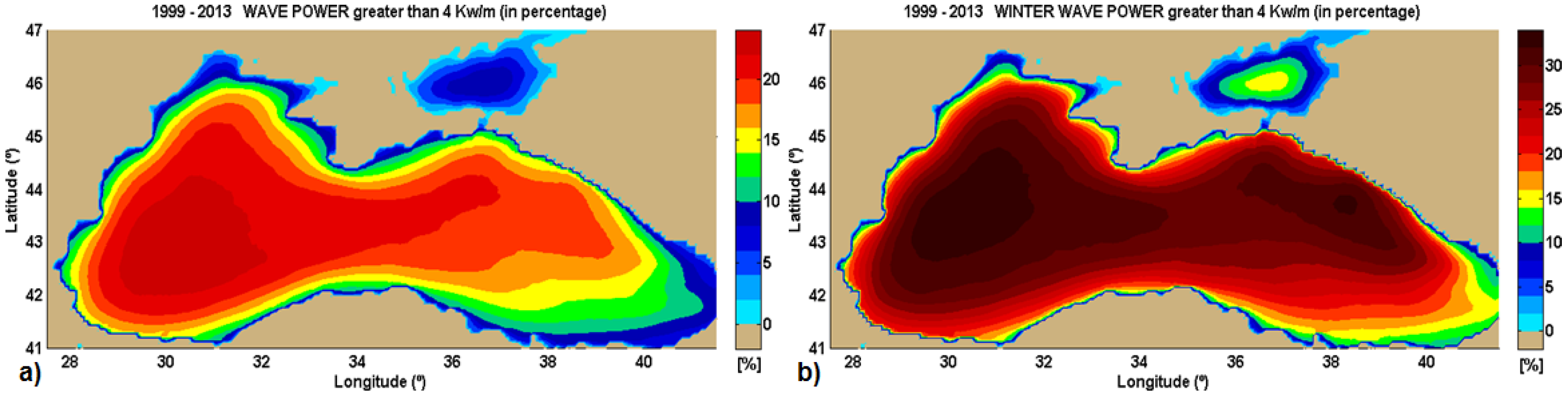
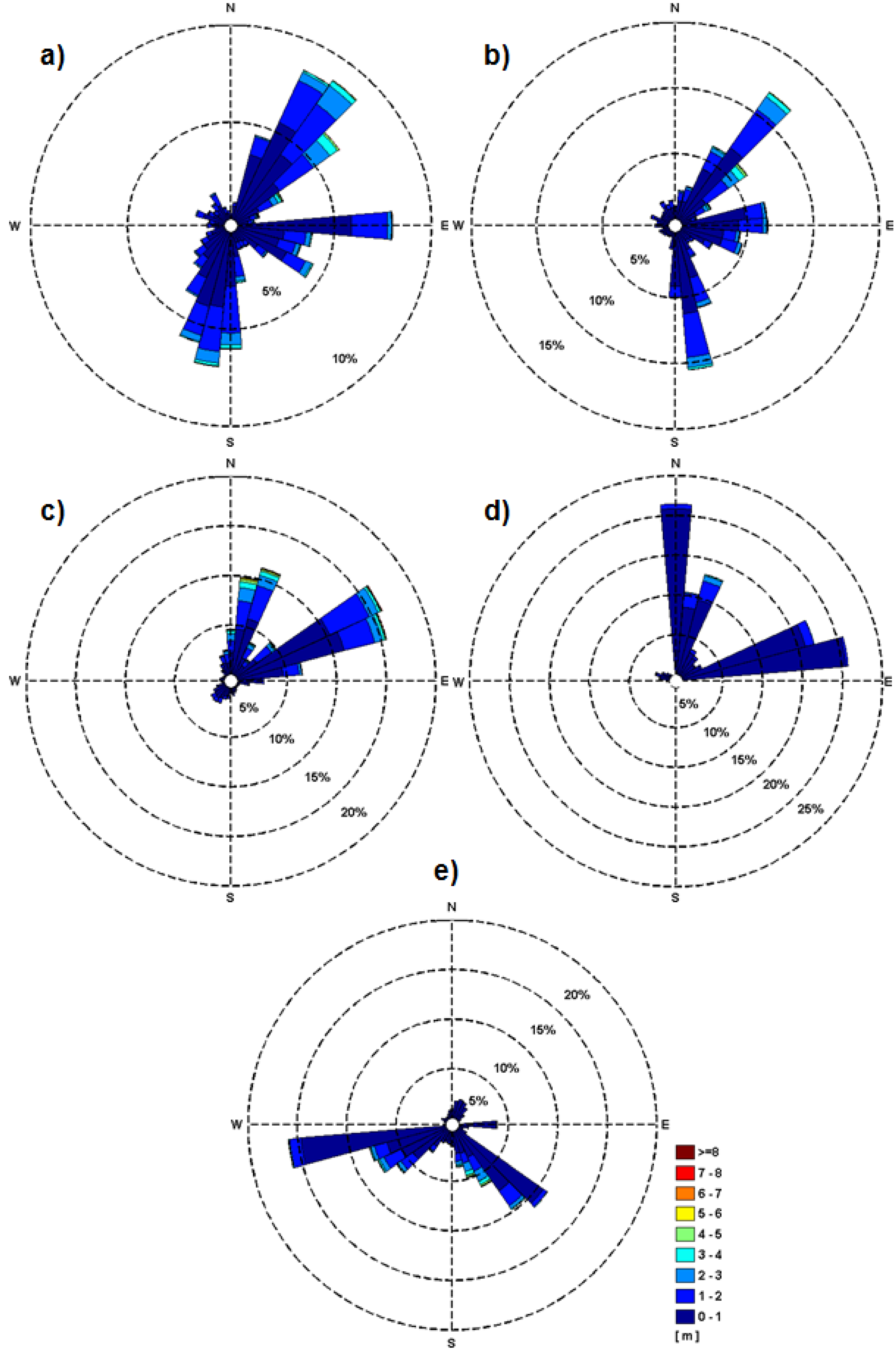
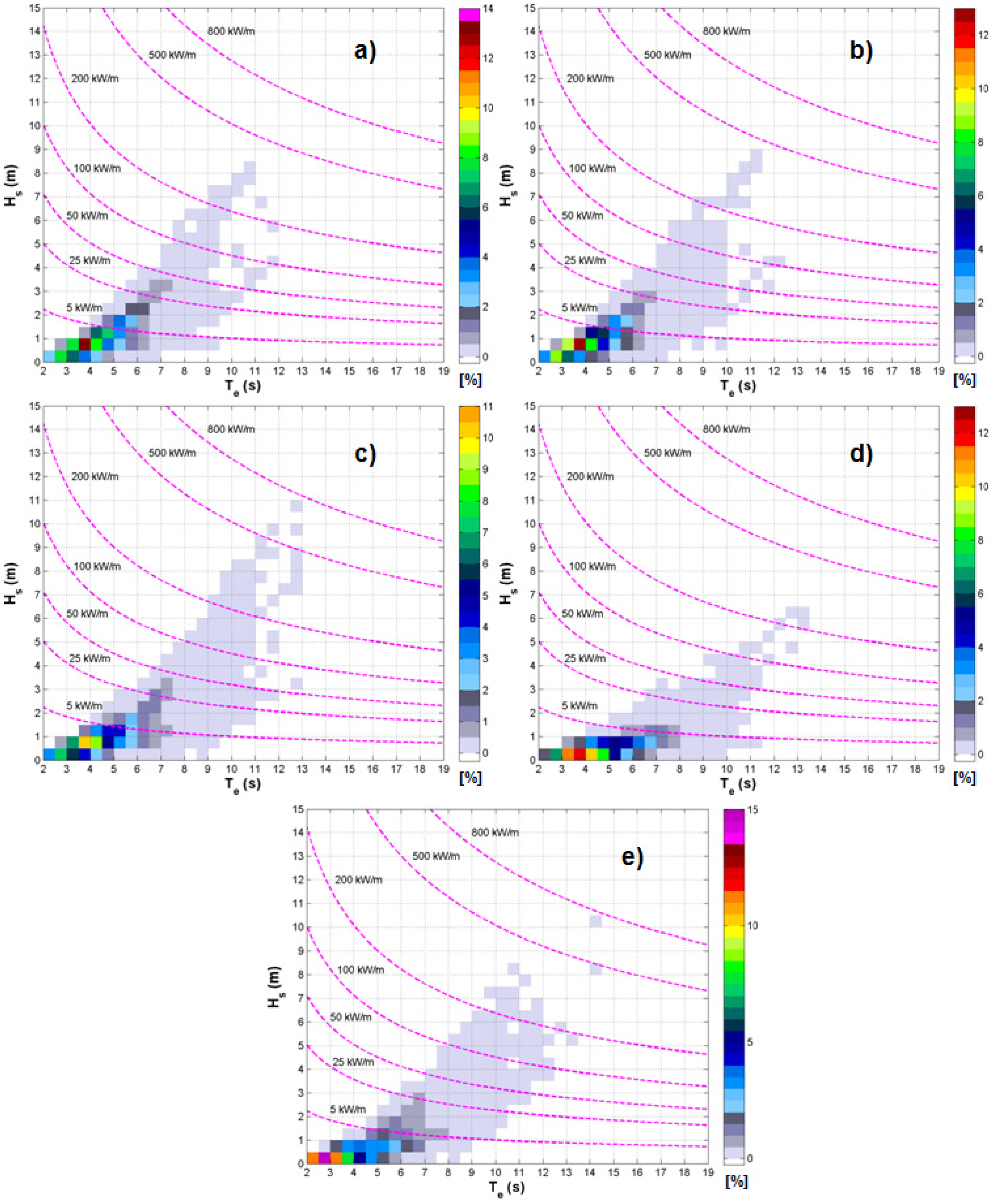
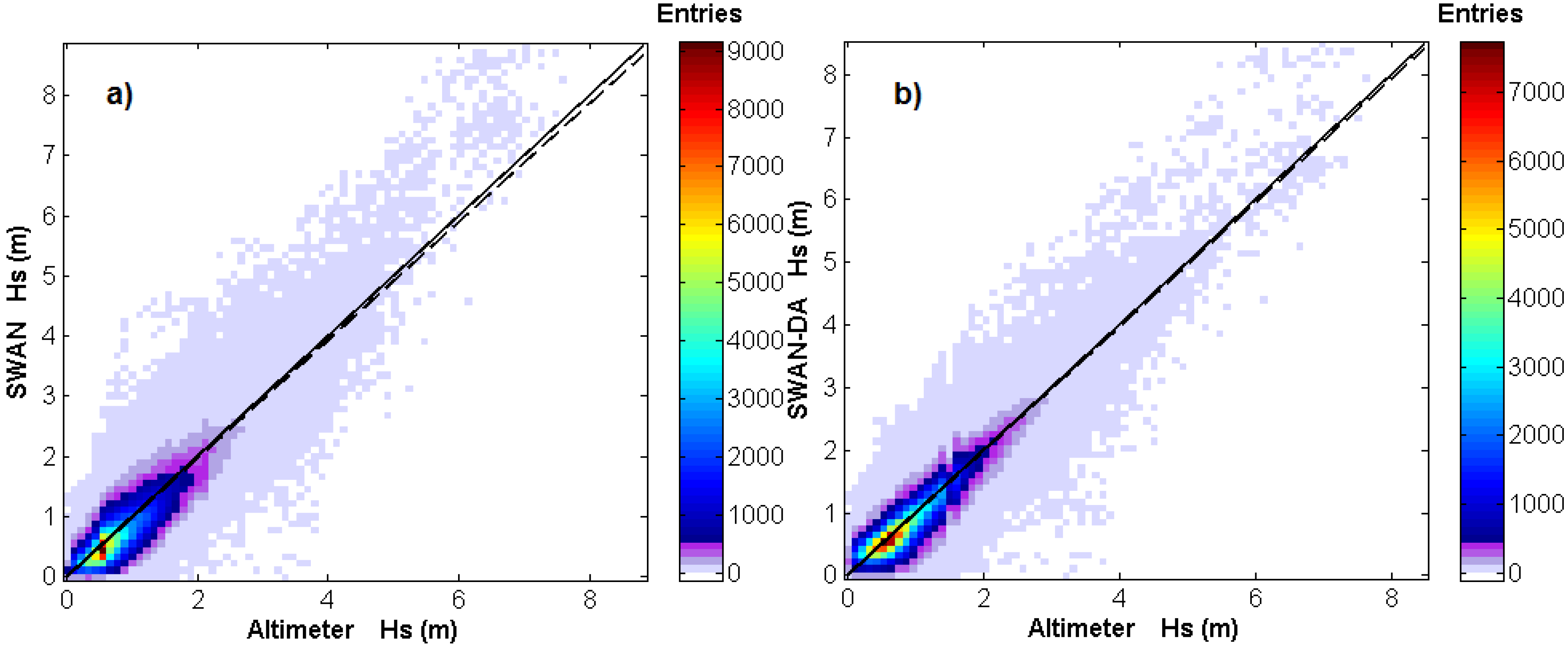
The principal target of the present work is to assess the wave energy potential in the Black Sea, identifying also some relevant energetic features and possible patterns. A wave prediction system based on the Simulating Waves Nearshore model (SWAN) has been implemented and intensively tested in the entire sea basin. Moreover, considering an optimal interpolation technique, an assimilation scheme of the satellite data has been developed, leading to a visible improvement of the wave model predictions in terms of significant wave heights and, consequently, also in terms of wave power. Using this wave prediction system with data assimilation, simulations have been performed for a 15-year period (1999–2013). Considering the results of this 15-year wave hindcast, an analysis of the wave energy conditions in the basin of the Black Sea has been carried out. This provided a more comprehensive picture concerning the wave energy patterns in the coastal environment of the Black Sea focused on the average wave conditions that might be expected in this sea. Following the results presented, it can be concluded that the wave energy extraction in the Black Sea can become an issue of interest, especially from the perspective of the hybrid solutions.
Keywords: wave energy; Black Sea; Simulating Waves Nearshore (SWAN); data assimilation; satellite data wave energy; Black Sea; Simulating Waves Nearshore (SWAN); data assimilation; satellite data
Graphical Abstract