Effects of Buffer Gas Composition on Autoignition of Dimethyl Ether
Abstract
1. Introduction
2. Experimental
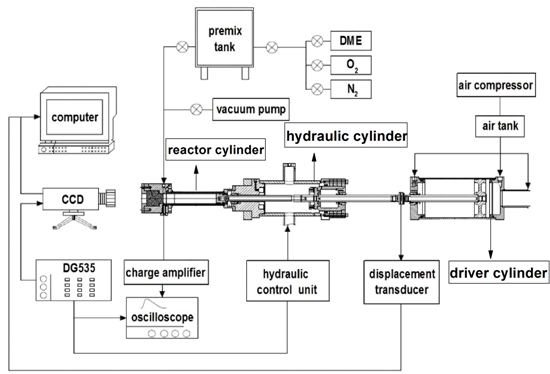
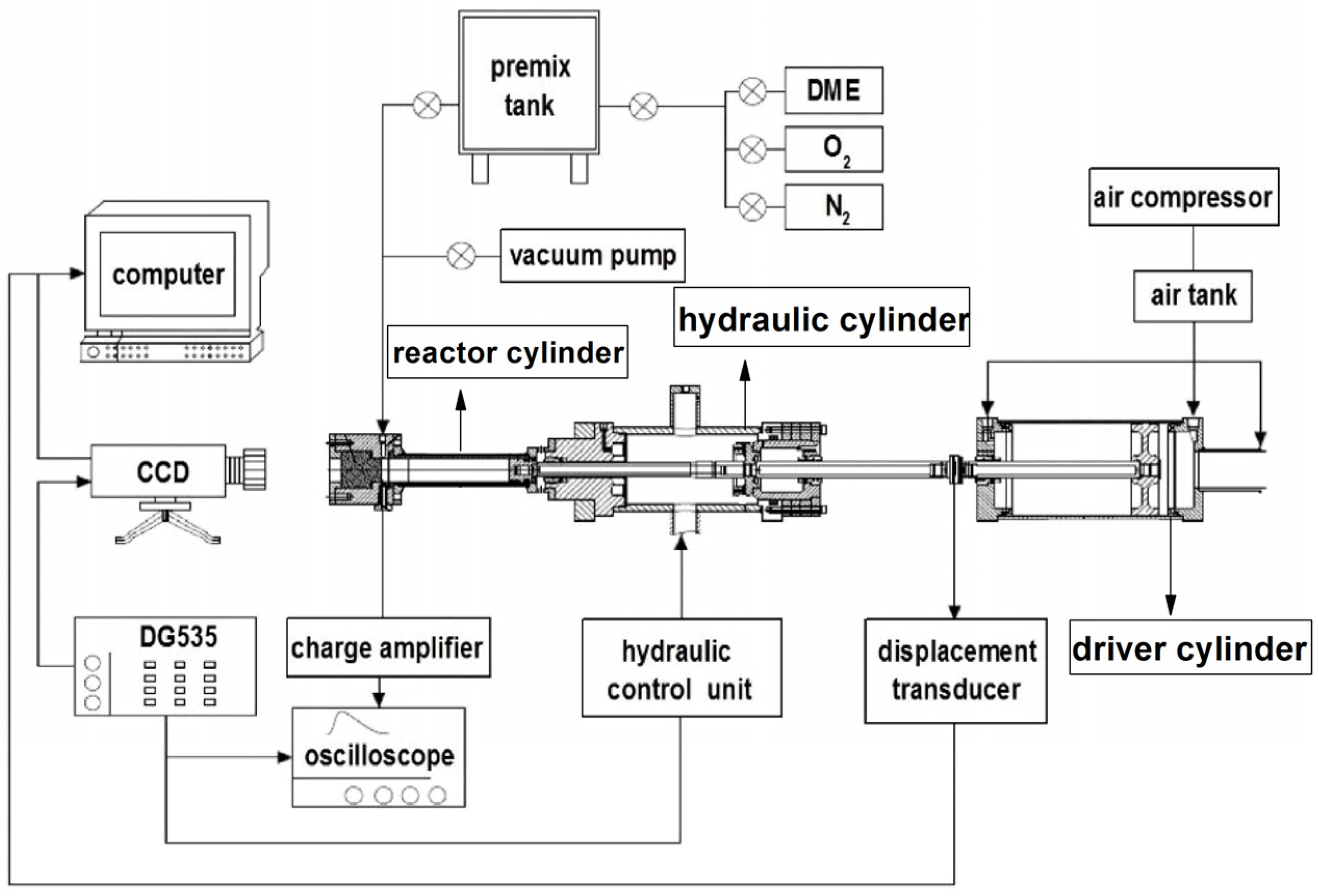
2.1. Rapid Compression Machine
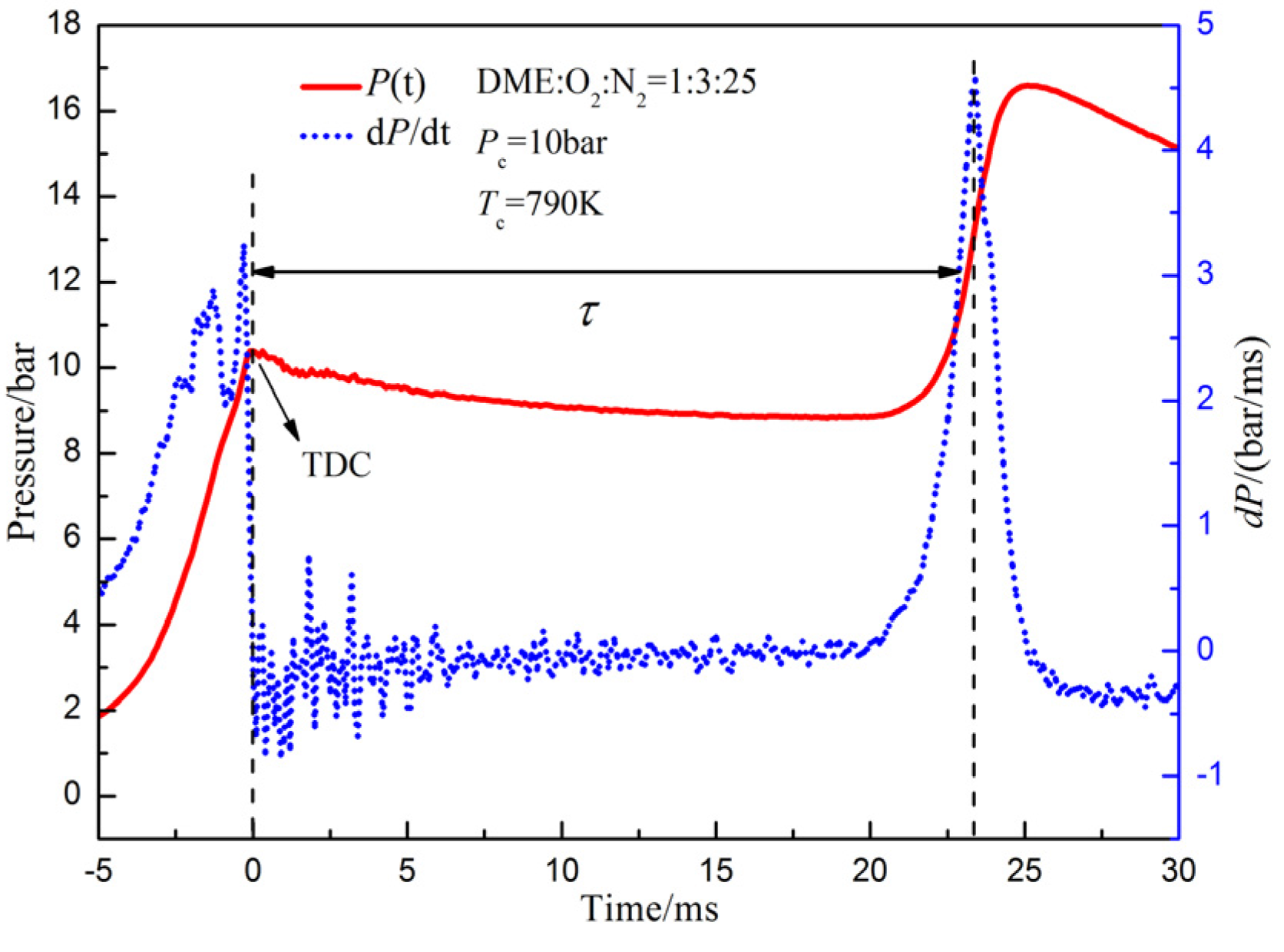
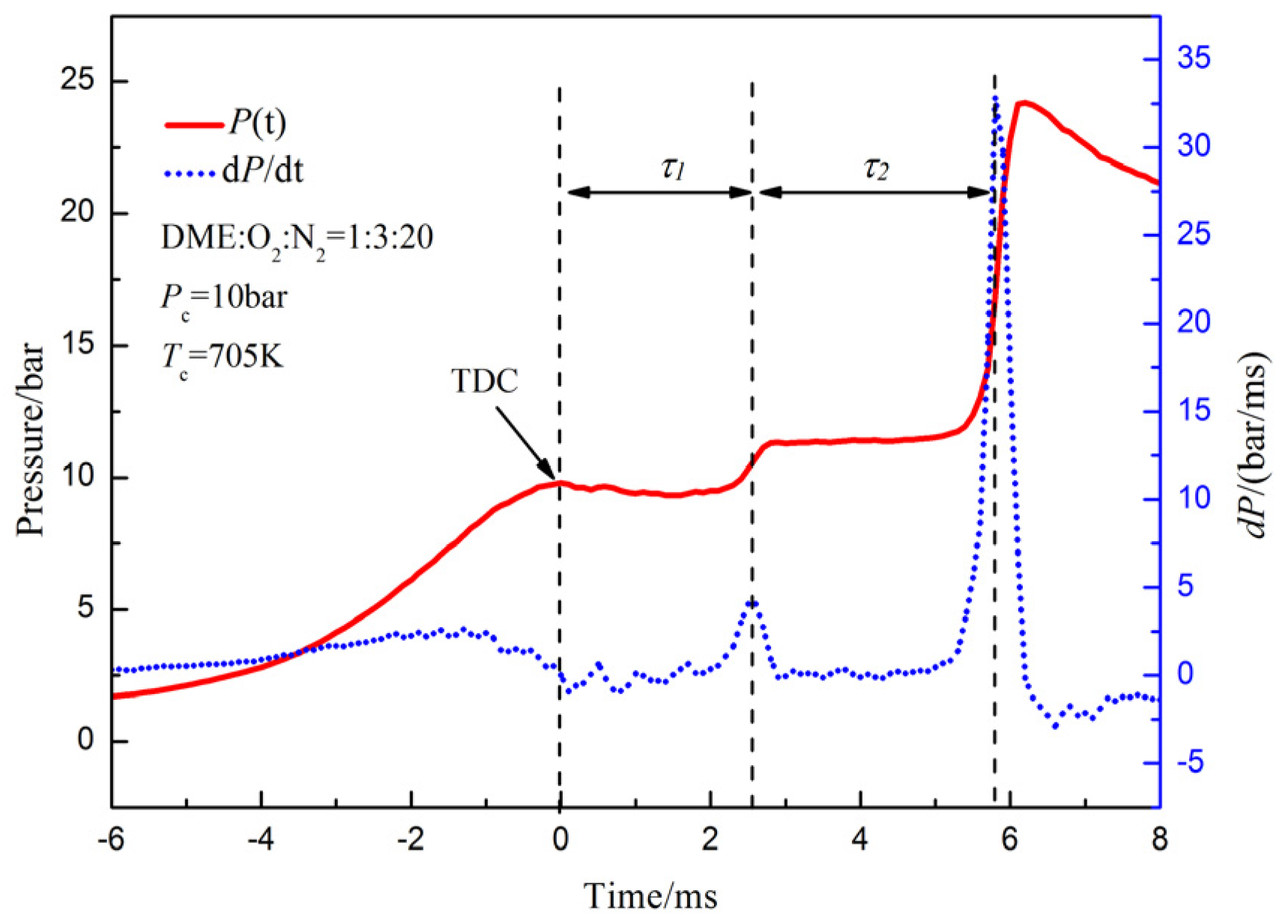
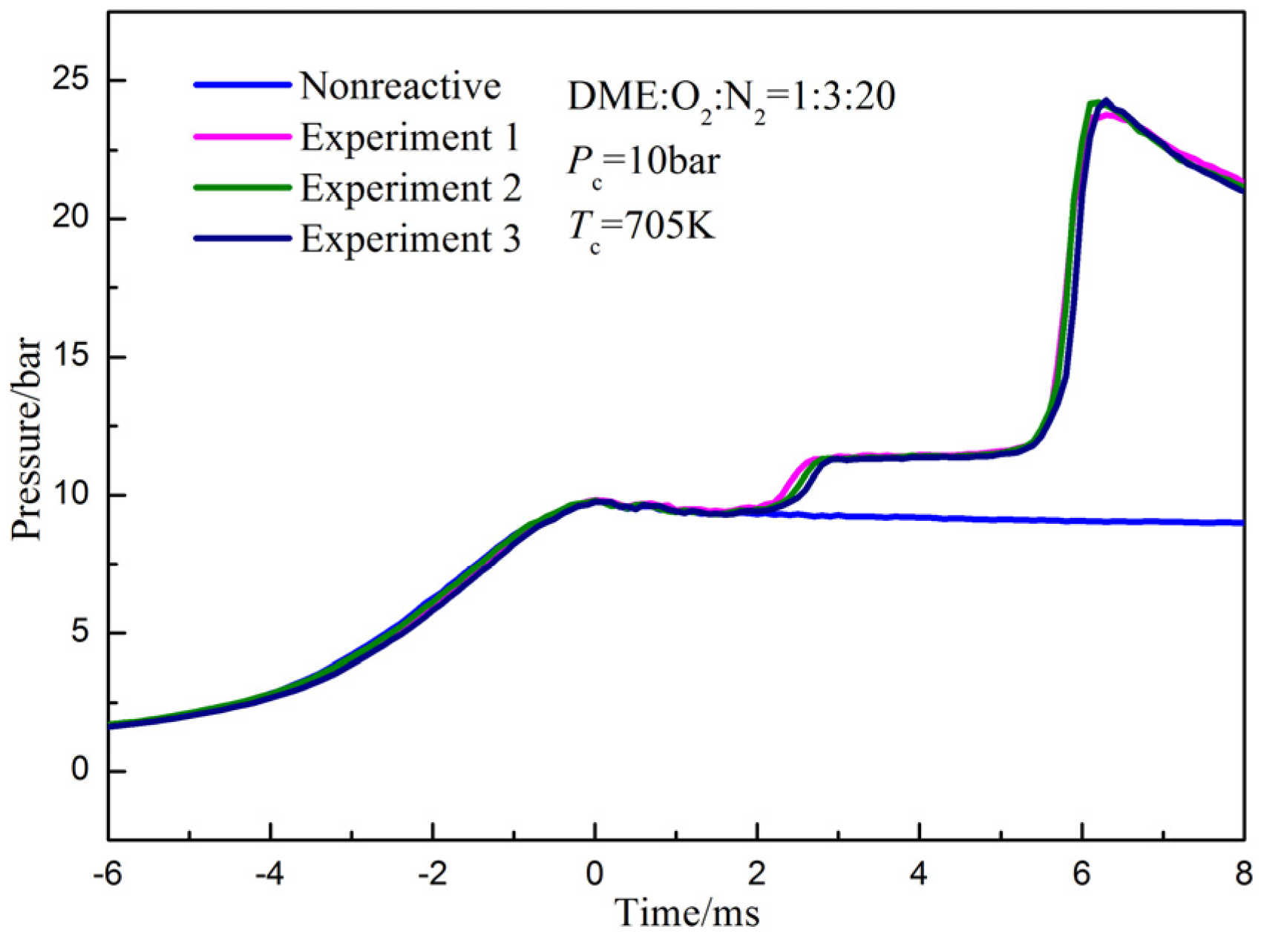
2.2. Definition of Ignition Delay and Repeatability of Experiments

2.3. Preparation of Gas Mixture
2.4. Experimental Conditions

| Mole proportion | Dilution ratio (%) | φ | Pc (bar) | Tc (K) |
|---|---|---|---|---|
| Dimethyl ether (DME):O2:N2 = 1:3:20 | 36.31 | 1 | 10 | 670–795 |
| DME:O2:N2:Ar = 1:3:10:10 | 36.31 | |||
| DME:O2:Ar:CO2 = 1:3:12.245:7.755 | 36.31 | |||
| DME:O2:N2 = 1:3:25 | 47.29 | |||
| DME:O2:N2 = 1:3:30 | 55.04 |
3. Numerical Simulations
4. Results and Discussion
4.1. Thermal and Chemical Effects of Buffer Gas Composition
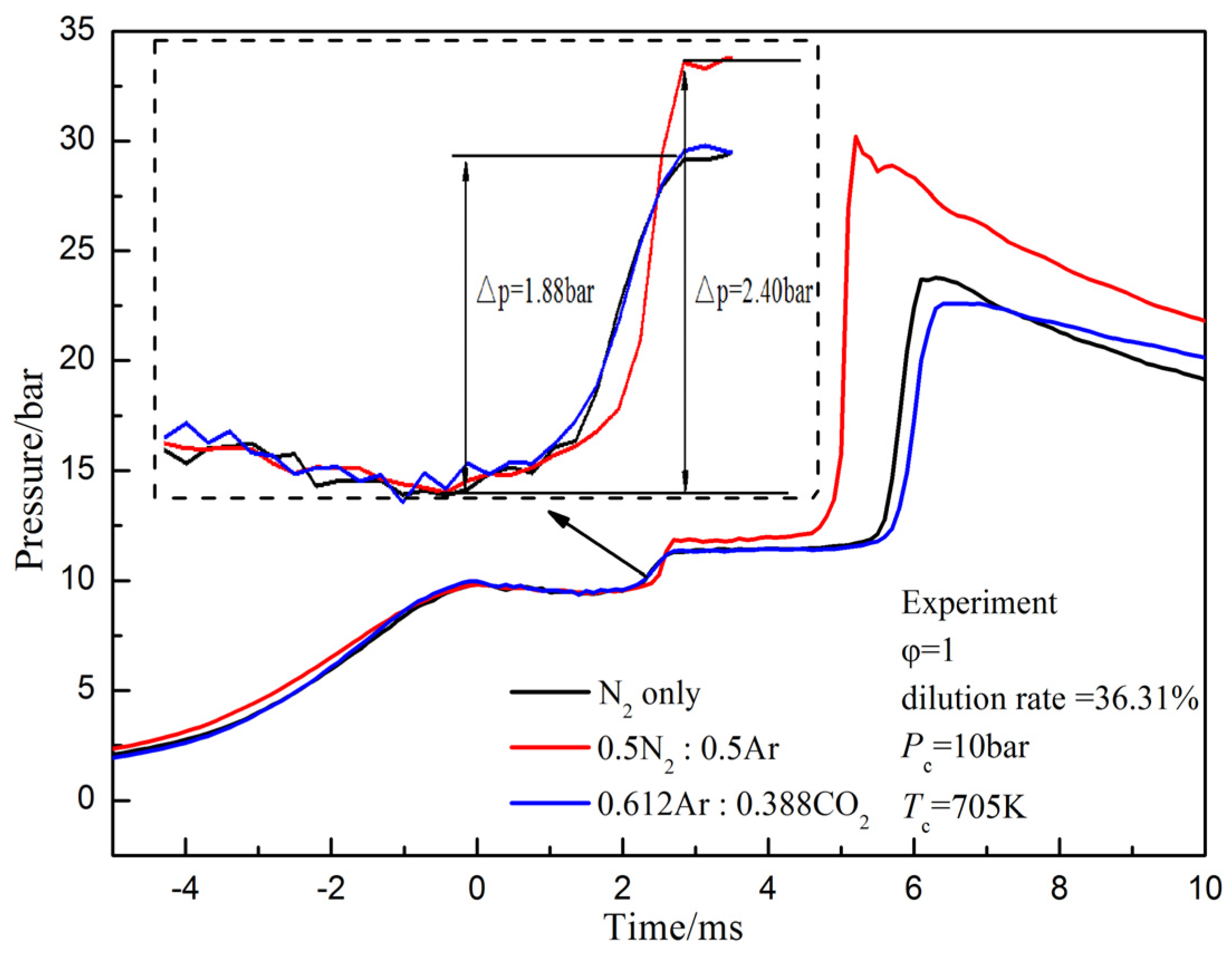
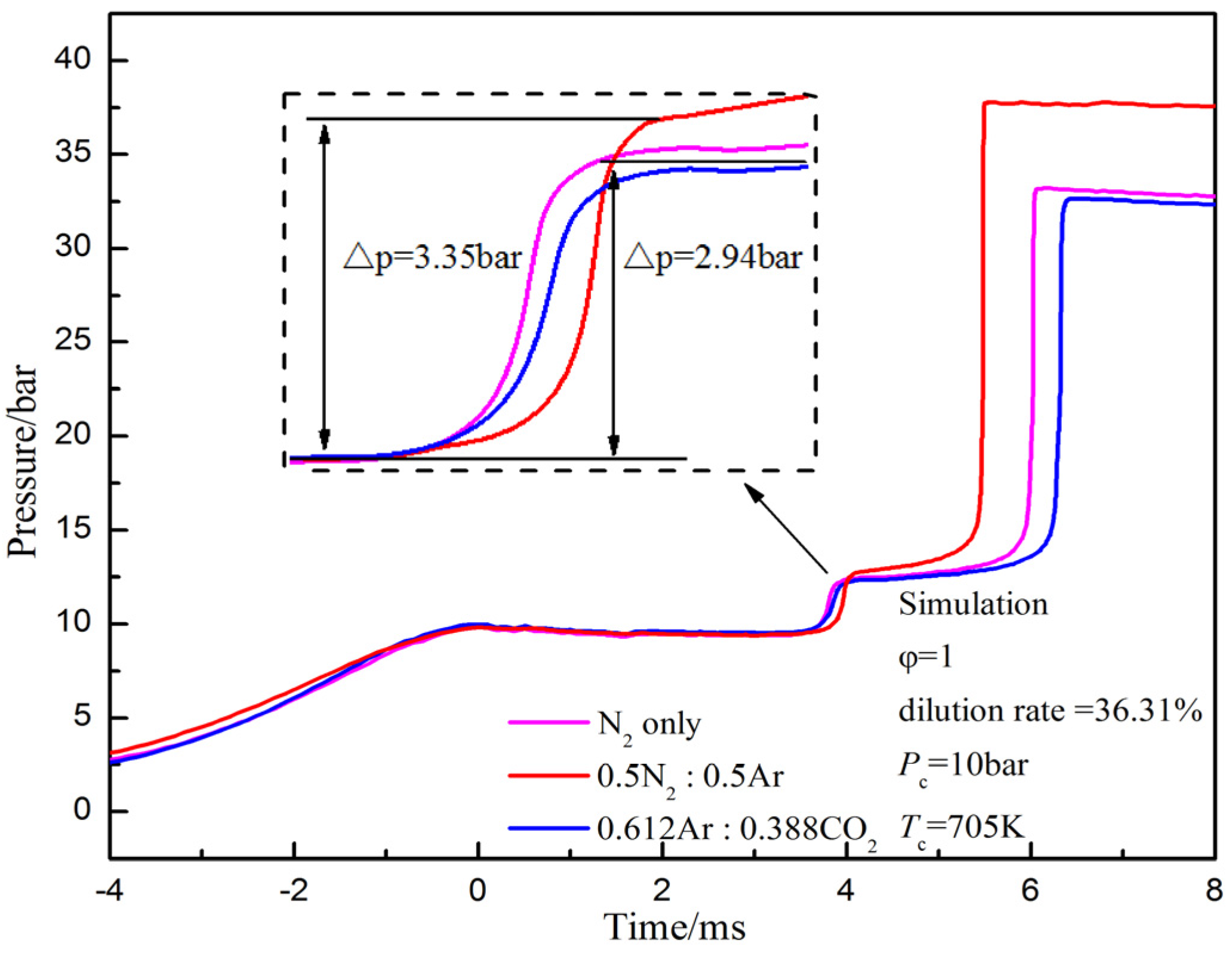
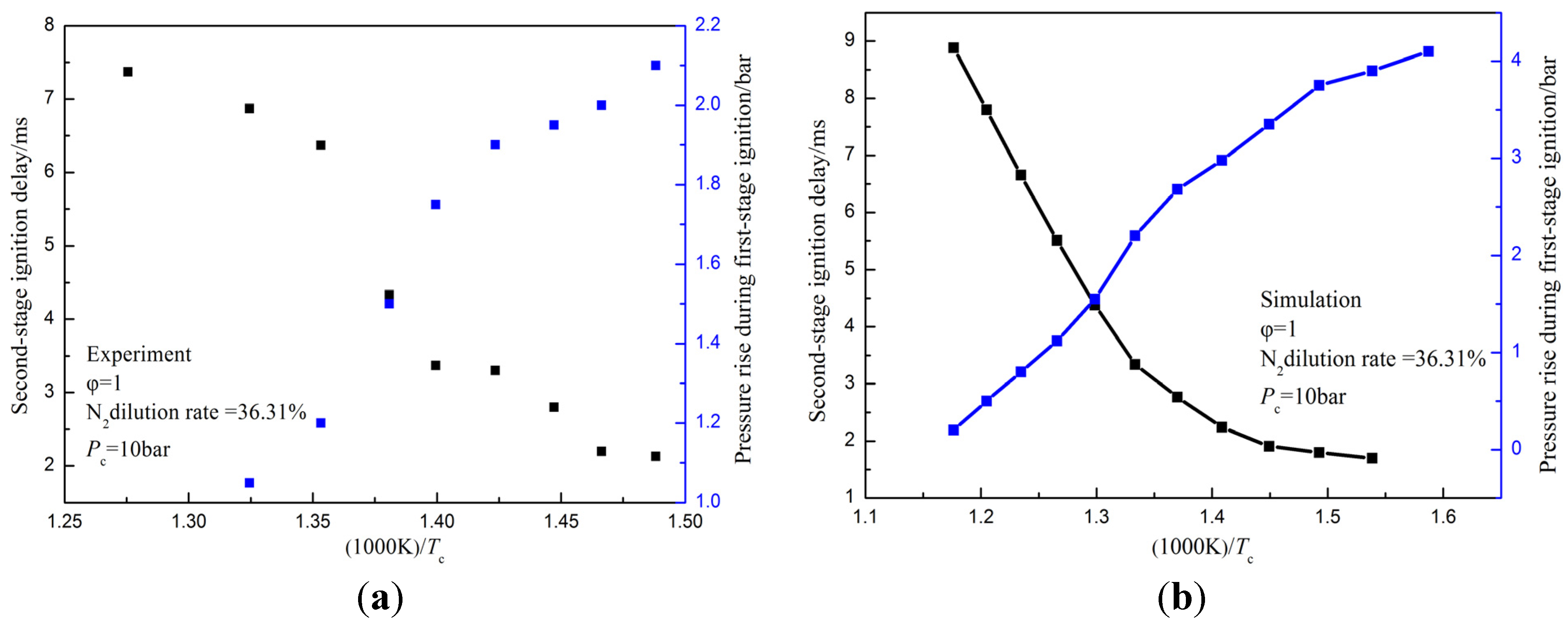
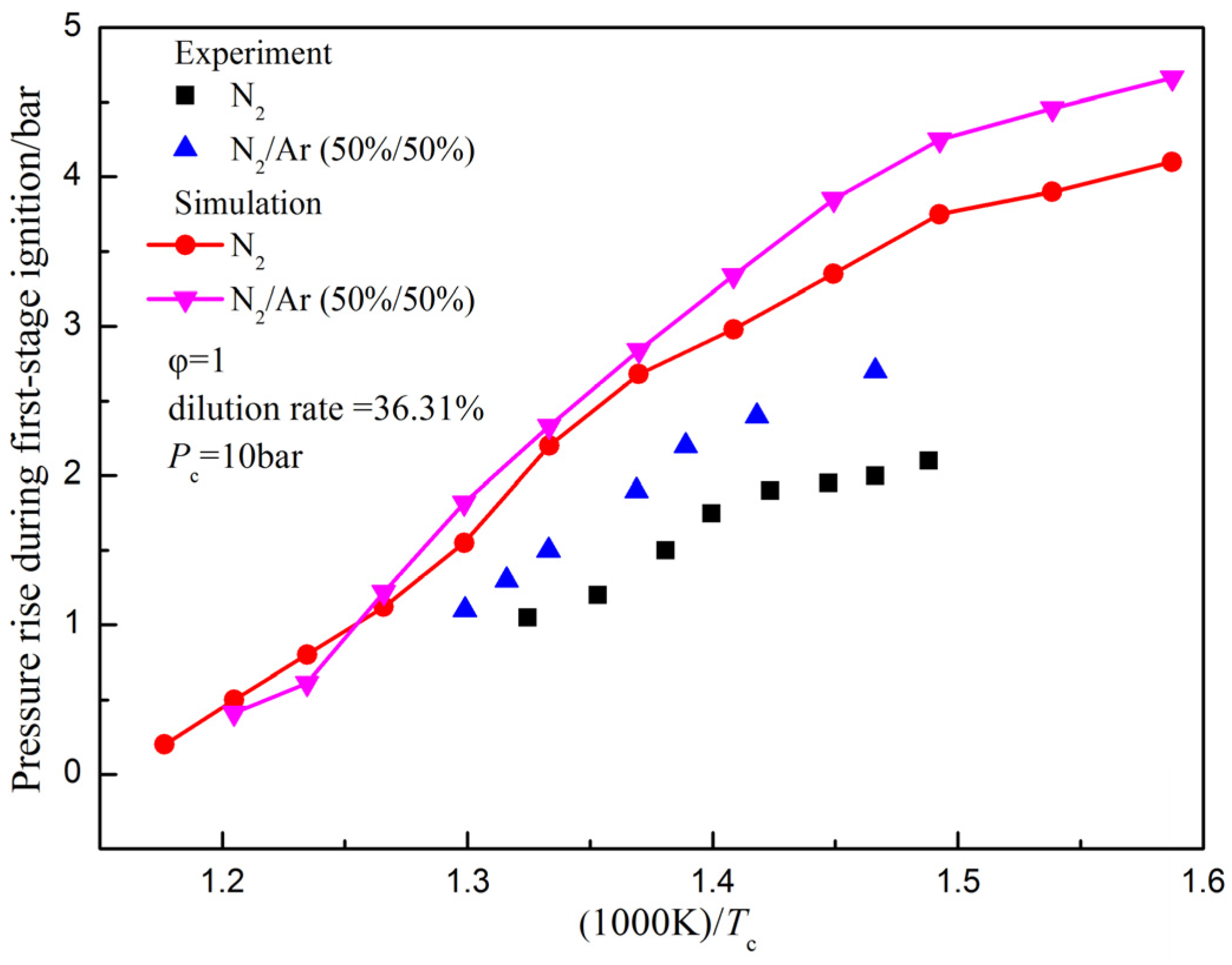
| Reactions | N2 | Ar | CO2 | Ar/CO2 (61.2%/38.8%) |
|---|---|---|---|---|
| H + O2 (+M) <=> HO2 (+M) | 1 | 1 | 3.8 | 2.09 |
| H2O2 (+M) <=> 2OH (+M) | 1 | 0.64 | 3.8 | 1.87 |
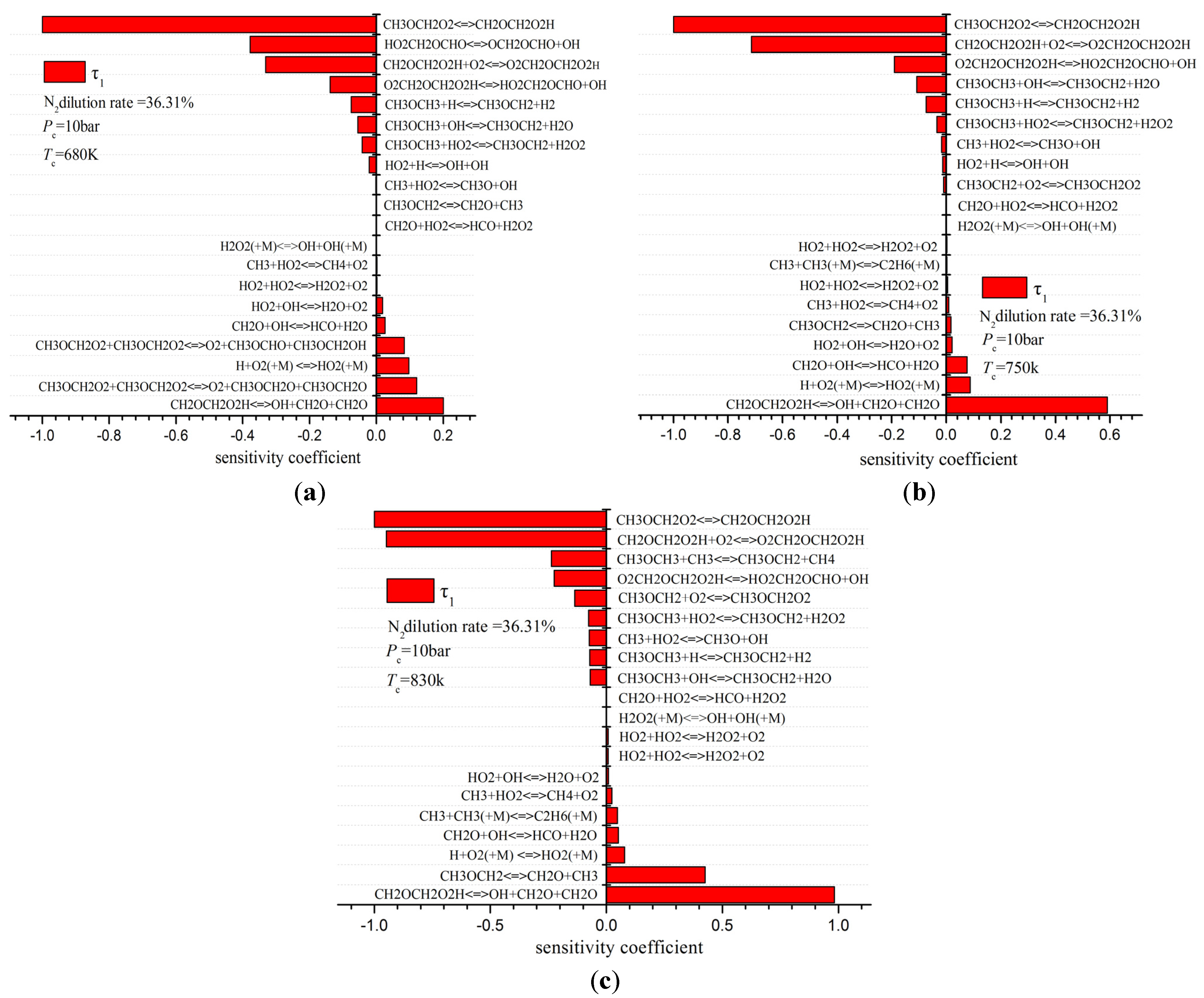
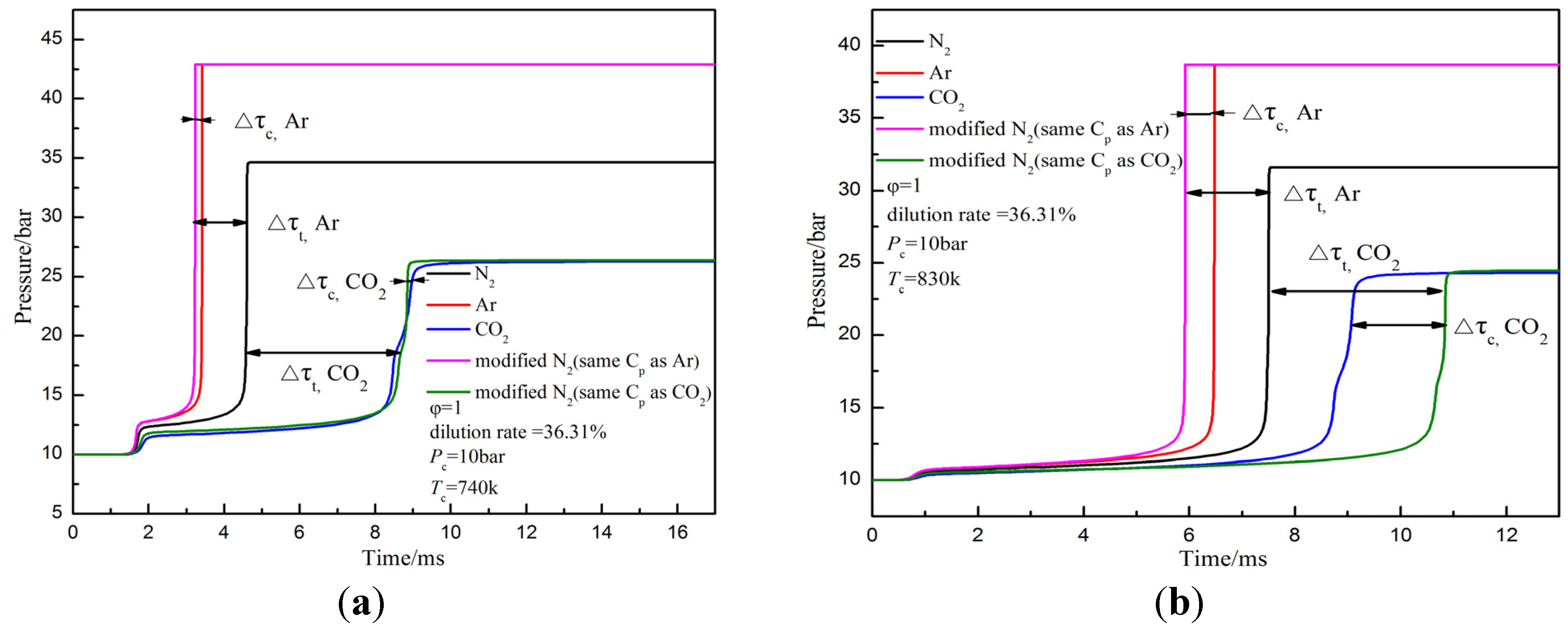
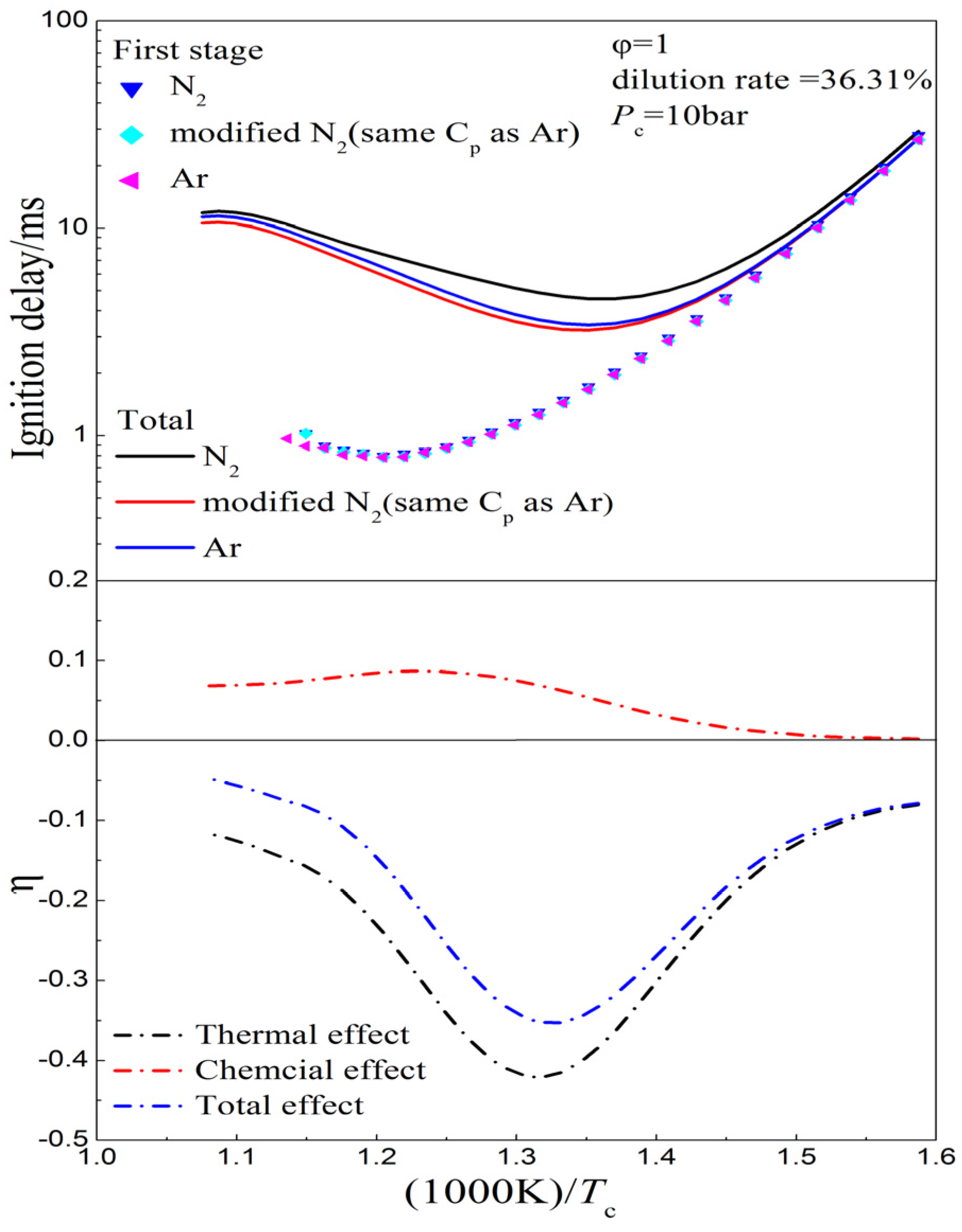
4.2. Dilution Effects of Buffer Gas Composition
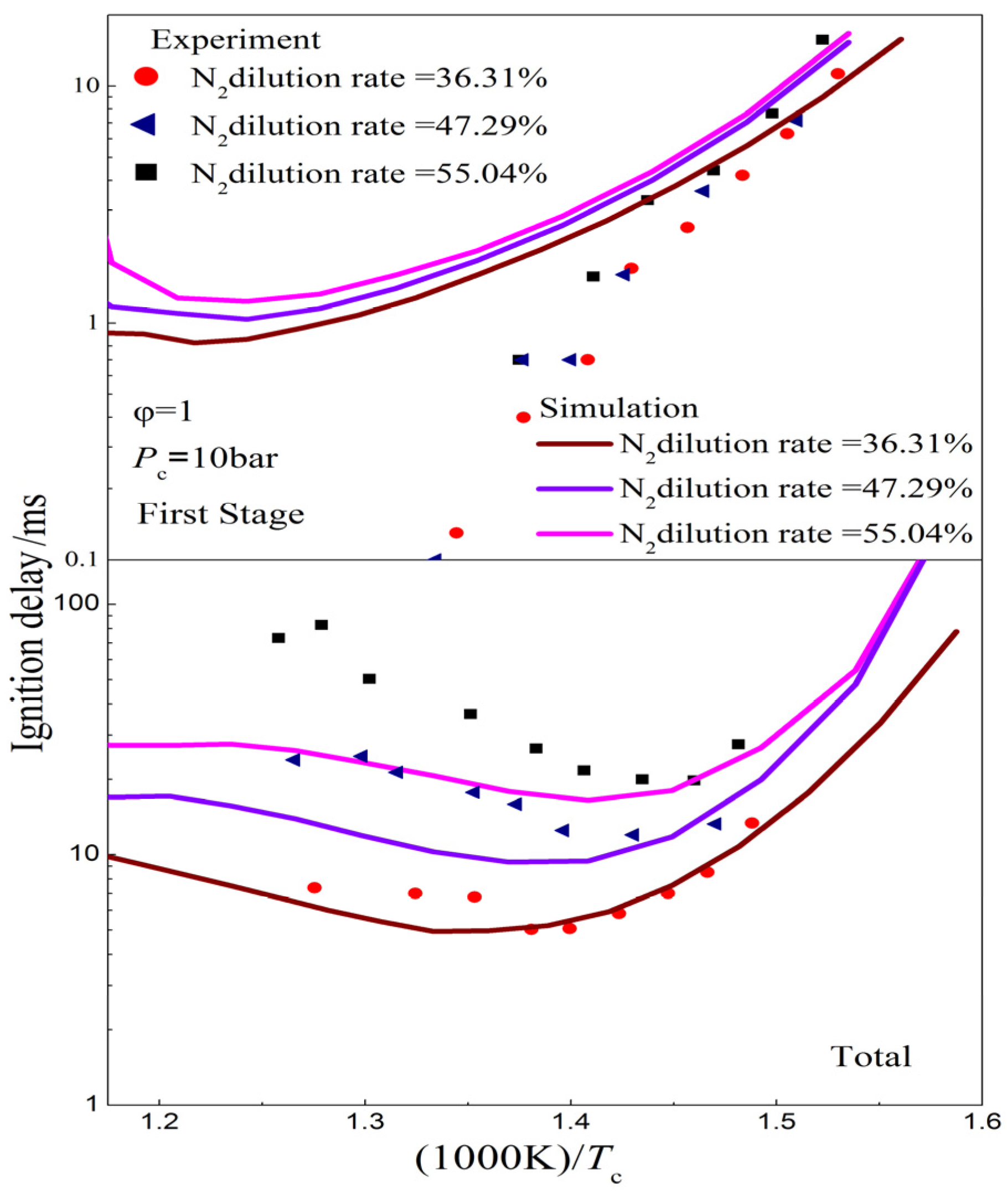

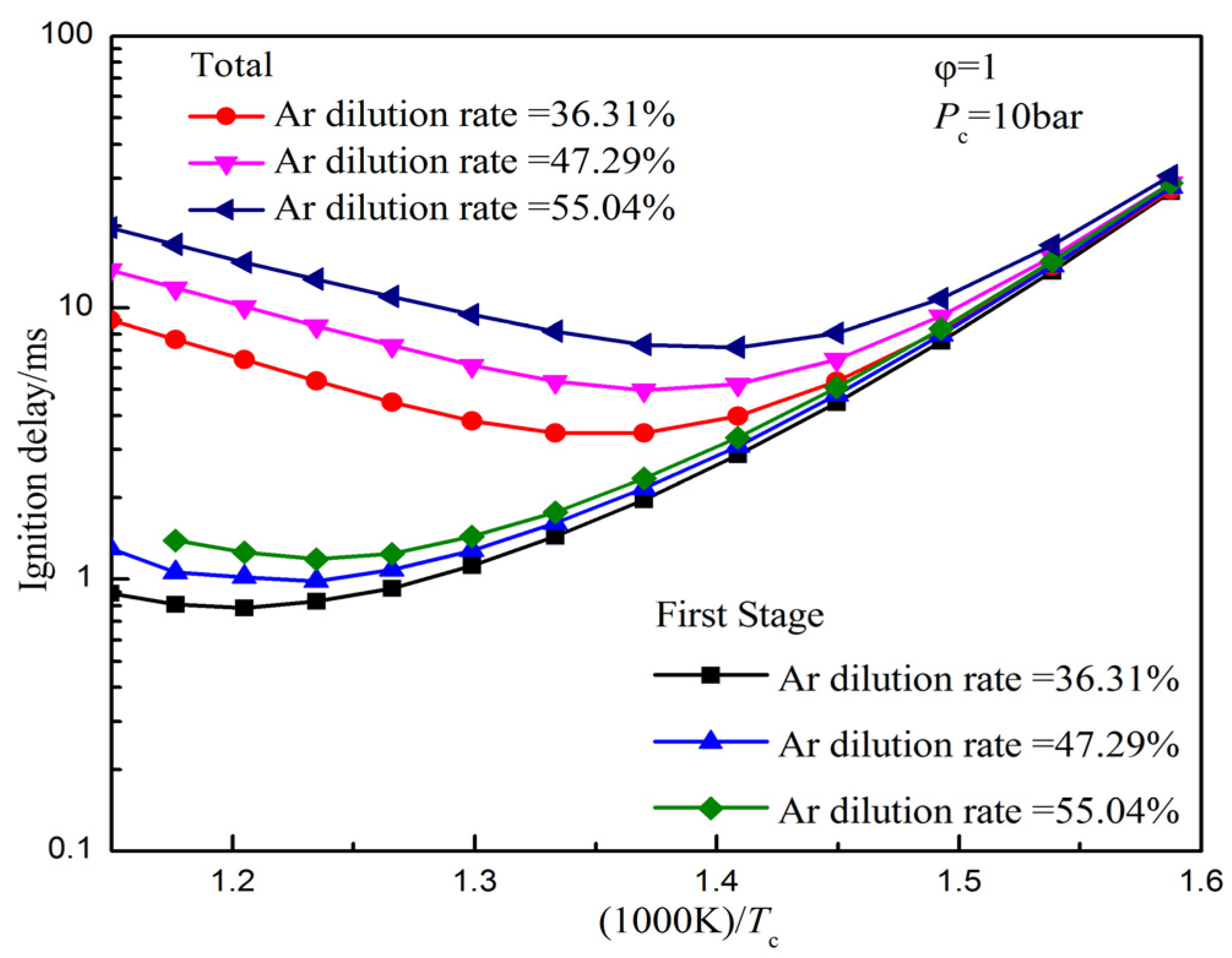
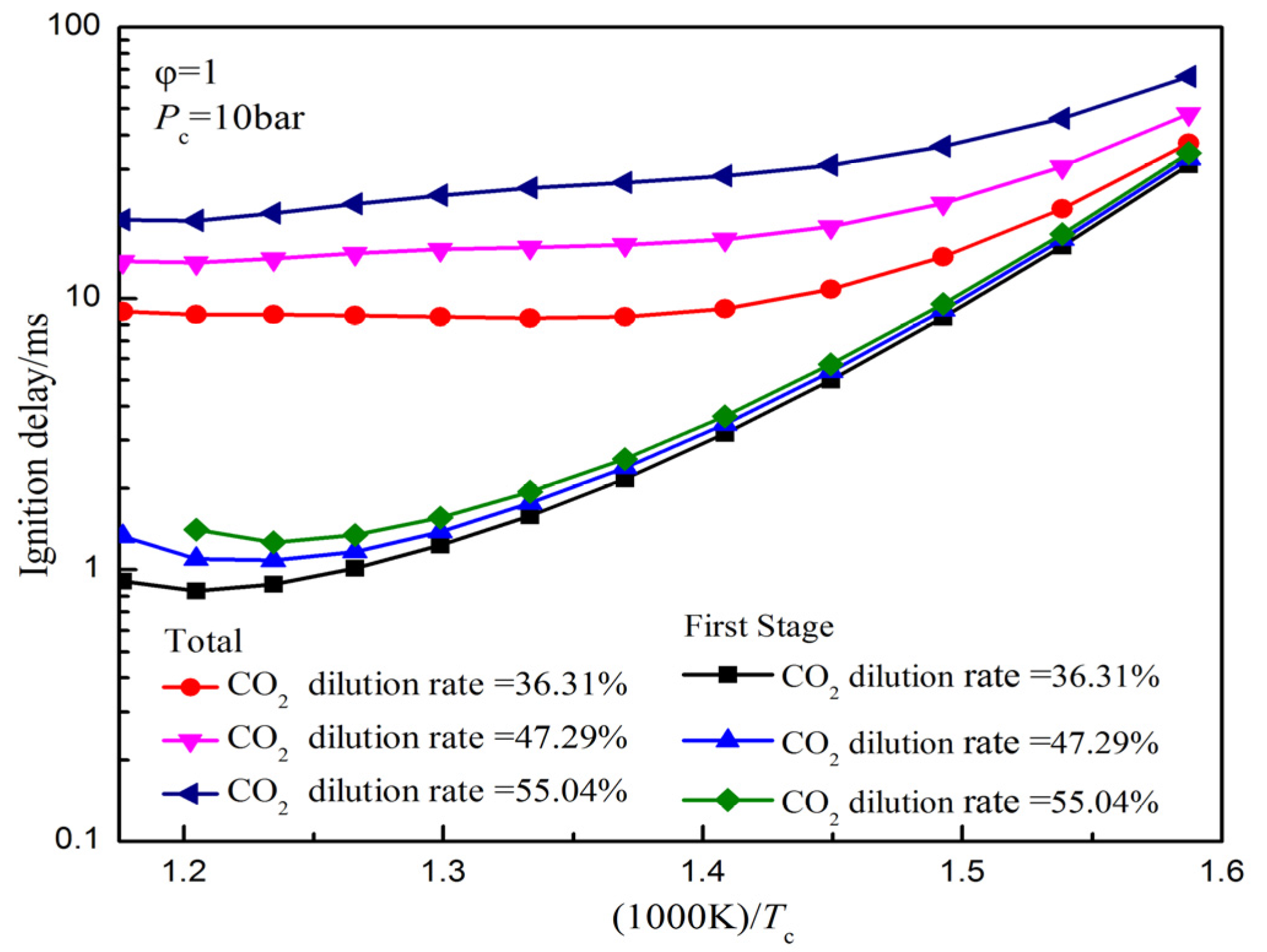
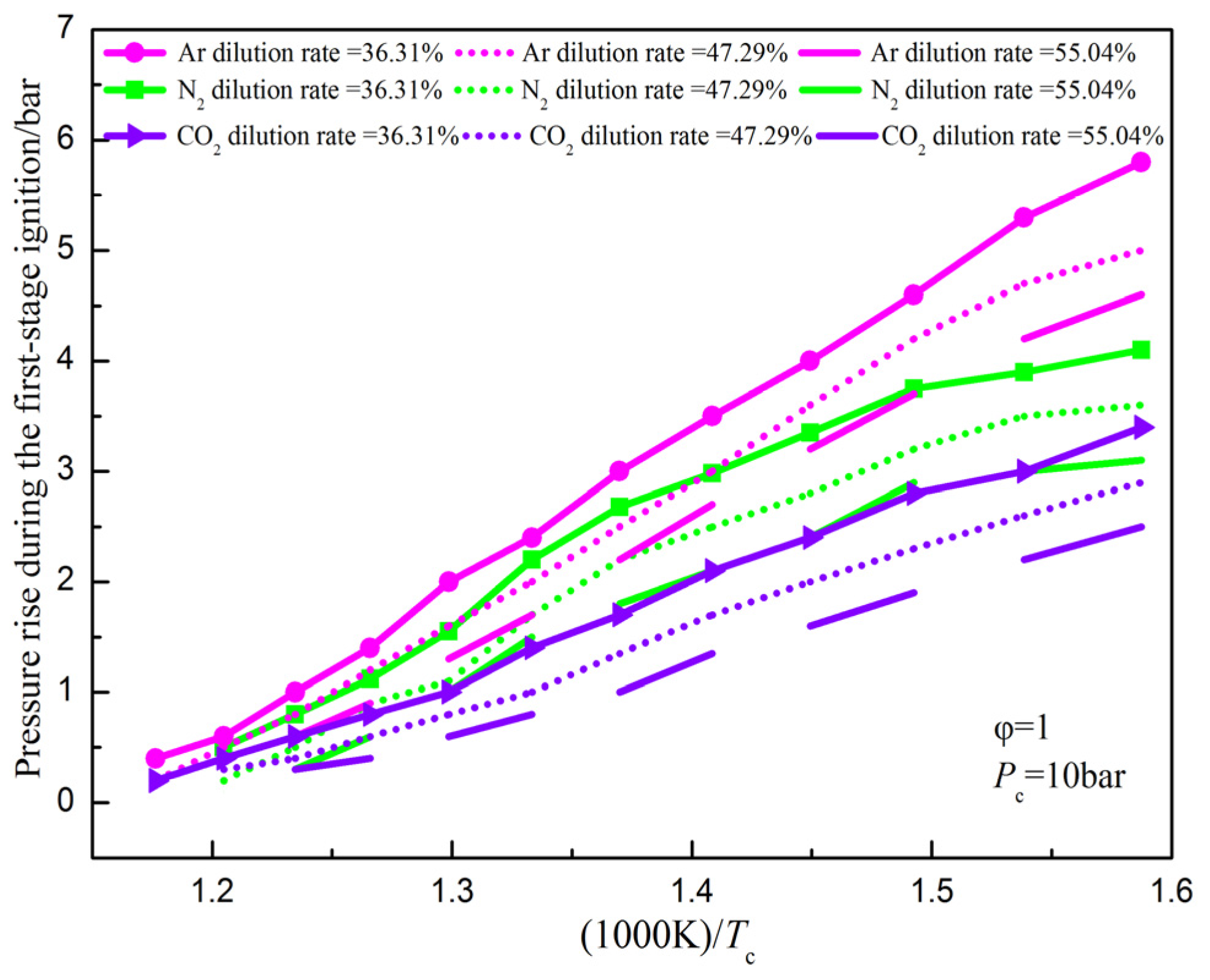
5. Conclusions
- (1)
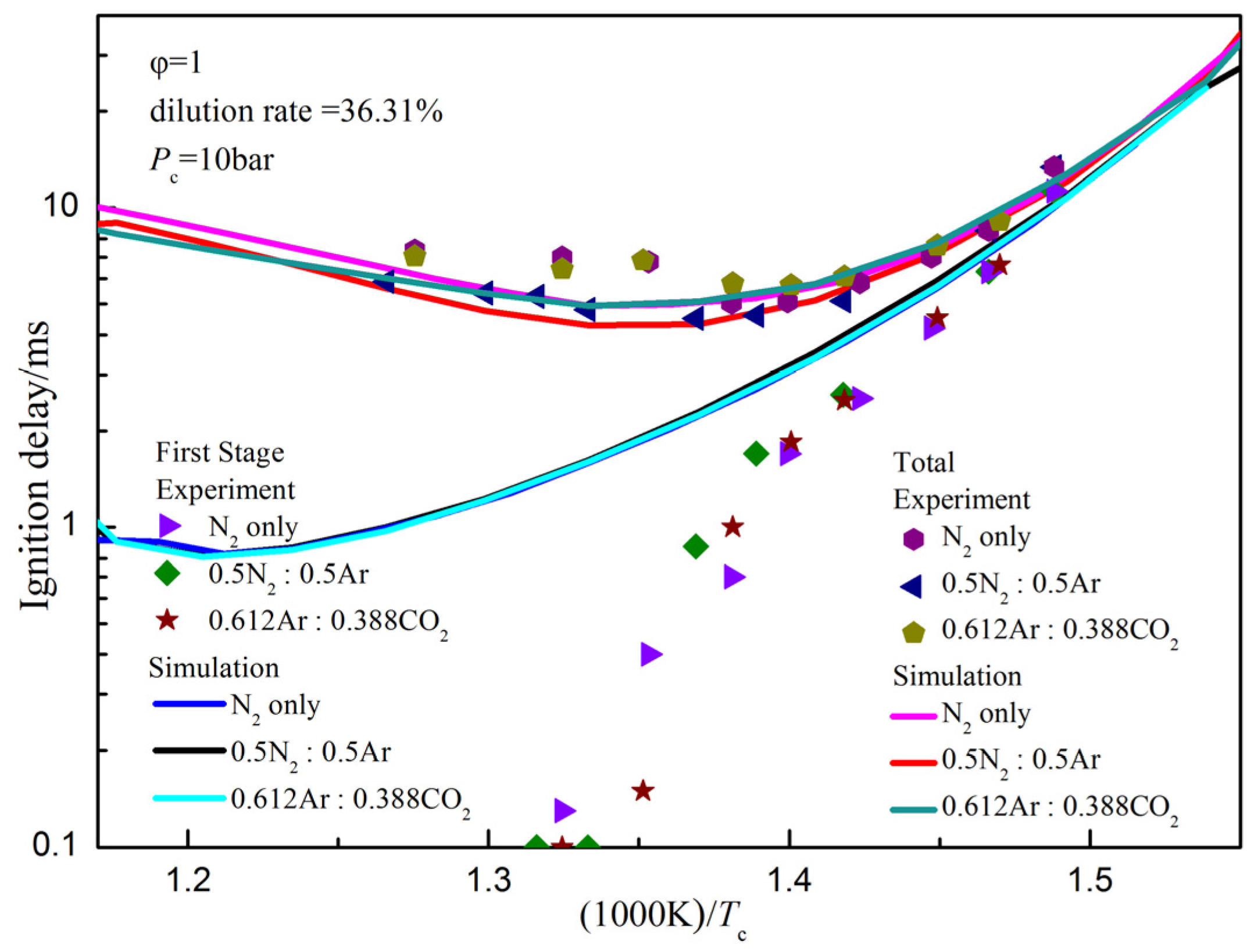
- Both experimental and simulation results show that the buffer gas composition has little impact on the first-stage ignition delay. In the low temperature region, the effects of buffer gas composition on the total ignition delay are also negligible. However, compared to N2, the N2/Ar (50%/50%) mixture reduces the total ignition delay by 31% and 14% in the NTC region for experimental and simulation data, respectively.
- (2)
- For ignition delays of N2 and the Ar/CO2 (61.2%/38.8%) mixture, experimental results show that the chemical effects have little impact on the first-stage and total ignition delays in the conditions studied, whereas the simulation results show that the chemical effects become pronounced at a compressed temperature higher than 770 K.
- (3)
- The simulation results using pure N2, Ar and CO2 as buffer gases show that the thermal effects are the dominant factor in a low temperature and NTC region. The chemical effects become pronounced in the NTC region, and the chemical effect of CO2 exceeds the thermal effect at a compressed temperature higher than 880 K.
- (4)
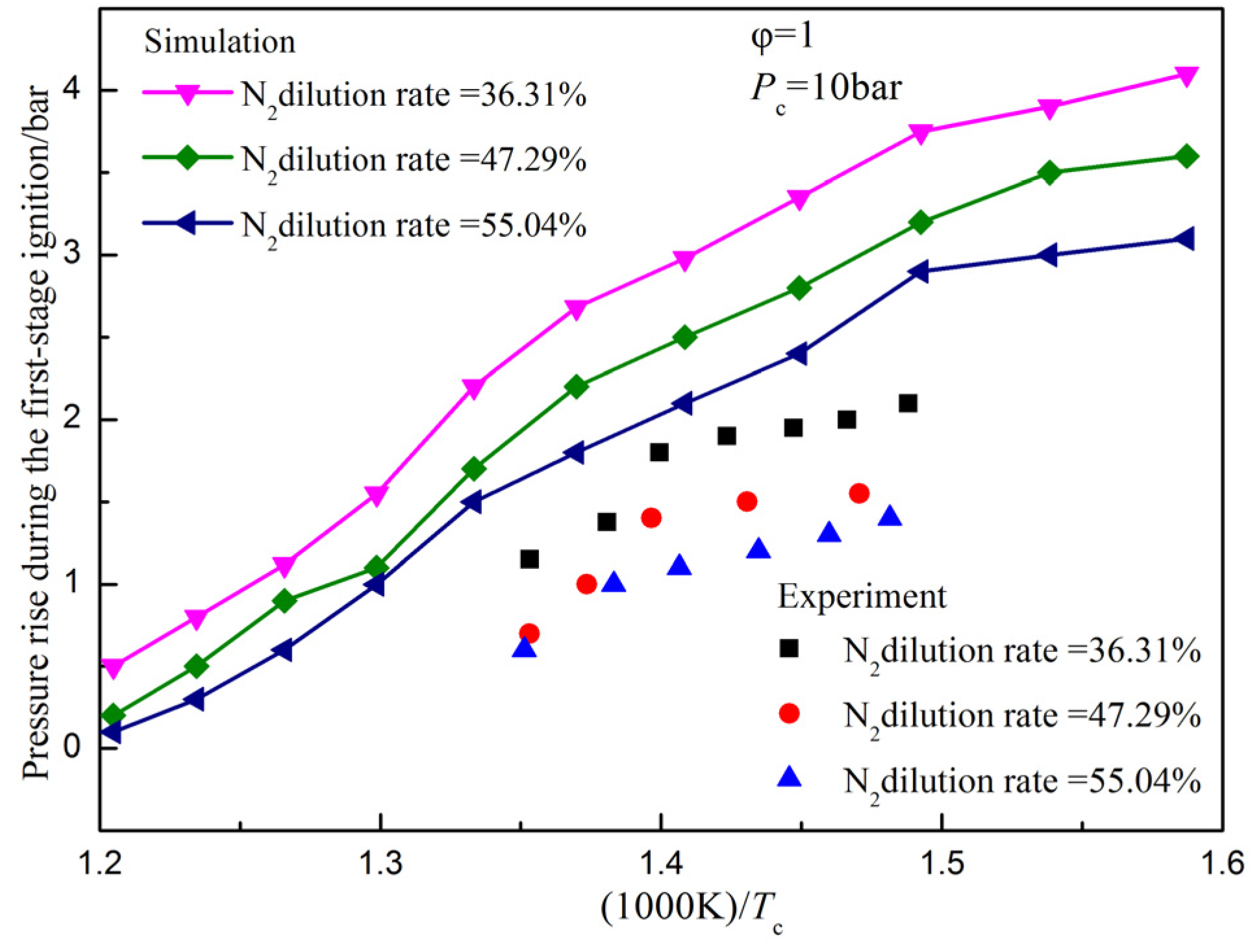
- With increasing buffer gas dilution ratio, the first-stage ignition delay slightly increases, but the total ignition delay has a significant increase due to the differences in heat release during first-stage ignition for different dilution ratios. The NTC behavior of total ignition delay becomes more pronounced at a high dilution ratio. The heat release during the first-stage ignition decreases with increasing buffer gas dilution ratio. Moreover, the heat release during first-stage ignition is sensitive to buffer gas composition.
Acknowledgments
Author Contributions
Conflicts of Interest
Nomenclature
| P0 | Initial pressure (bar) |
| T0 | Initial temperature (K) |
| Pc | Compressed pressure (bar) |
| Tc | Compressed temperature (K) |
| Δτt,Ar | Thermal effect index of Ar |
| Δτt,CO2 | Thermal effect index of CO2 |
| Δτc,Ar | Chemical effect index of Ar |
| Δτc,CO2 | Chemical effect index of CO2 |
Greek letters
| φ | Equivalence ratio |
| γ | Ratio of specific heat |
| ε | Compression ratio |
| τ1 | First-stage ignition delay |
| τ2 | Second-stage ignition delay |
| τ | Total ignition delay |
Acronyms
| DME | Dimethyl ether |
| RCM | Rapid compression machine |
| NTC | Negative temperature coefficient |
| EGR | Exhaust gas recirculation |
| ICE | Internal combustion engine |
| HCCI | Homogeneous charge compression ignition |
| PCCI | Premixed charge compression ignition |
| IMEP | Indicated mean effective pressure |
| TDC | Top dead center |
| ST | Shock tube |
References
- Ladommatos, N.; Abdelhalim, S.M.; Zhao, H.; Hu, Z. The effects of carbon dioxide in exhaust gas recirculation on diesel engine emissions. Proc. Inst. Mech. Eng. 1998, 212, 25–42. [Google Scholar] [CrossRef]
- Pierpont, D.A.; Montgomery, D.T.; Reitz, R.D. Reducing particulate and NOx using multiple injections and EGR in a DI diesel. SAE Tech. Pap. 1995. [Google Scholar] [CrossRef]
- Li, W.F.; Liu, Z.C.; Wang, Z.S.; Xu, Y. Experimental investigation of the thermal and diluent effects of EGR components on combustion and NOx emissions of a turbocharged natural gas SI engine. Energy Convers. Manag. 2014, 88, 1041–1050. [Google Scholar] [CrossRef]
- Sjöberg, M.; Dec, J.E. Effects of EGR and its constituents on HCCI autoignition of ethanol. Proc. Combust. Inst. 2011, 33, 3031–3038. [Google Scholar] [CrossRef]
- Al-Qurashi, K.; Lueking, A.D.; Boehman, A.L. The deconvolution of the thermal, dilution, and chemical effects of exhaust gas recirculation (EGR) on the reactivity of engine and flame soot. Combust. Flame 2011, 158, 1696–1704. [Google Scholar] [CrossRef]
- Cairns, A.; Blaxill, H.; Irlam, G. Exhaust gas recirculation for improved part and full load fuel economy in a turbocharged gasoline engine. SAE Tech. Pap. 2006. [Google Scholar] [CrossRef]
- Kiplimo, R.; Tomita, E.; Kawahara, N.; Zhou, S.Y.; Yokobe, S. Effects of injection pressure, timing and EGR on combustion and emissions characteristics of diesel PCCI engine. SAE Tech. Pap. 2011. [Google Scholar] [CrossRef]
- Ladommatos, N.; Abdelhalim, S.M.; Zhao, H.; Hu, Z. The dilution, chemical, and thermal effects of exhaust gas recirculation on diesel engine emissions–Part 2: Effects of carbon dioxide. SAE Tech. Pap. 1996. [Google Scholar] [CrossRef]
- Shen, H.-P.S.; Vanderover, J.; Oehlschlaeger, M.A. A shock tube study of iso-octane ignition at elevated pressures: The influence of diluent gases. Combust. Flame 2008, 155, 739–755. [Google Scholar] [CrossRef]
- Würmel, J.; Silke, E.J.; Curran, H.J.; Ó Conaire, M.S.; Simmie, J.M. The effect of diluent gases on ignition delay times in the shock tube and in the rapid compression machine. Combust. Flame 2007, 151, 289–302. [Google Scholar] [CrossRef]
- Yu, Y.; Vanhove, G.; Griffiths, J.F.; Ferrières, S.D.; Pauwels, J.-F. Influence of EGR and syngas components on the autoignition of natural gas in a rapid compression machine: A detailed experimental study. Energy Fuels 2013, 27, 3988–3996. [Google Scholar] [CrossRef]
- Davidson, D.F.; Hanson, R.K. Interpreting shock tube ignition data. Int. J. Chem. Kinet. 2004, 36, 510–523. [Google Scholar] [CrossRef]
- Wagnon, S.W.; Wooldridge, M.S. Effects of buffer gas composition on autoignition. Combust. Flame 2014, 161, 898–907. [Google Scholar] [CrossRef]
- Arcoumanis, C.; Bae, C.; Crookes, R.; Kinoshita, E. The potential of di-methyl ether (DME) as an alternative fuel for compression-ignition engines: A review. Fuel 2008, 87, 1014–1030. [Google Scholar] [CrossRef]
- Chen, Z.Y.; Tang, C.L.; Fu, J.; Jiang, X.; Li, Q.Q.; Wei, L.J.; Huang, Z.H. Experimental and numerical investigation on diluted DME flames: Thermal and chemical kinetic effects on laminar flame speeds. Fuel 2012, 102, 567–573. [Google Scholar] [CrossRef]
- Zhang, B.; Shen, X.B.; Pang, L. Effects of argon/nitrogen dilution on explosion and combustion characteristics of dimethyl ether-air mixtures. Fuel 2015, 159, 646–652. [Google Scholar] [CrossRef]
- Jamsran, N.; Lim, O.; Iida, N. A computational study of the effects of EGR and intake-pressure boost on DME autoignition characteristics over wide ranges of engine speed. SAE Int. J. Fuels Lubr. 2014, 7, 207–223. [Google Scholar] [CrossRef]
- Zhao, Y.W.; Wang, Y.; Li, D.C.; Lei, X.; Liu, S.H. Combustion and emission characteristics of a DME (dimethyl ether)-diesel dual fuel premixed charge compression ignition engine with EGR (exhaust gas recirculation). Energy 2014, 72, 608–617. [Google Scholar] [CrossRef]
- Pedersen, T.D.; Schramm, J.; Yanai, T.; Sato, Y. Controlling the heat release in HCCI combustion of DME with methanol and EGR. SAE Tech. Pap. 2010. [Google Scholar] [CrossRef]
- Liu, D.; Santner, J.; Togbé, C.; Felsmann, D.; Koppmann, J.; Lackner, A.; Yang, X.L.; Shen, X.B.; Ju, Y.G.; Kohse-Höinghaus, K. Flame structure and kinetic studies of carbon dioxide-diluted dimethyl ether flames at reduced and elevated pressures. Combust. Flame 2013, 160, 2654–2668. [Google Scholar] [CrossRef]
- Li, Z.H.; Wang, W.J.; Huang, Z.; Oehlschlaeger, M.A. Dimethyl ether autoignition at engine-relevant conditions. Energy Fuels 2013, 27, 2811–2817. [Google Scholar] [CrossRef]
- Liu, H.; Zhang, H.G.; Shi, Z.C.; Lu, H.T.; Zhao, G.Y.; Yao, B.F. Performance characterization and auto-ignition performance of a rapid compression machine. Energies 2014, 7, 6083–6104. [Google Scholar] [CrossRef]
- Werler, M.; Cancino, L.R.; Schiessl, R.; Maas, U.; Schulz, C.; Fikri, M. Ignition delay times of diethyl ether measured in a high-pressure shock tube and a rapid compression machine. Proc. Combust. Inst. 2015, 35, 259–266. [Google Scholar] [CrossRef]
- Lee, D.; Hochgreb, S. Rapid compression machines: Heat transfer and suppression of corner vortex. Combust. Flame 1998, 114, 531–545. [Google Scholar] [CrossRef]
- Affleck, W.S.; Thomas, A. An opposed piston rapid compression machine for preflame reaction studies. Proc. Inst. Mech. Eng. 1968, 183, 365–387. [Google Scholar] [CrossRef]
- Gupta, S.B.; Bihari, B.; Sekar, R.; Klett, G.M.; Ghaffarpour, M. Ignition characteristics of methane-air mixtures at elevated temperatures and pressures. SAE Tech. Pap. 2005. [Google Scholar] [CrossRef]
- Allen, C.; Mittal, G.; Sung, C.-J.; Toulson, E.; Lee, T. An aerosol rapid compression machine for studying energetic-nanoparticle-enhanced combustion of liquid fuels. Proc. Combust. Inst. 2011, 33, 3367–3374. [Google Scholar] [CrossRef]
- Sung, C.-J.; Curran, H.J. Using rapid compression machines for chemical kinetic studies. Prog. Energy Combust. Sci. 2014, 44, 1–18. [Google Scholar] [CrossRef]
- Di Sante, R. Measurements of the auto-ignition of n-heptane/toluene mixture using a rapid compression machine. Combust. Flame 2012, 159, 55–63. [Google Scholar] [CrossRef]
- Mittal, G.; Sung, C.-J. A rapid compression machine for chemical kinetics studies at elevated pressures and temperatures. Combust. Sci. Tech. 2007, 179, 497–530. [Google Scholar] [CrossRef]
- Zhao, Z.W.; Chaos, M.; Kazakov, A.; Dryer, F.L. Thermal decomposition reaction and a comprehensive kinetic model of dimethyl ether. Int. J. Chem. Kinet. 2008, 40, 1–18. [Google Scholar] [CrossRef]
- Dagaut, P.; Boettner, J.-C.; Cathonnet, M. Chemical kinetic study of dimethylether oxidation in a jet stirred reactor from 1 to 10 ATM: Experiments and kinetic modeling. Symp. Int. Combust. 1996, 26, 627–632. [Google Scholar] [CrossRef]
- Pan, L.; Hu, E.J.; Tian, Z.M.; Yang, F.Y.; Huang, Z.H. Experimental and kinetic study on ignition delay times of dimethyl ether at high temperatures. Energy Fuels 2015, 29, 3495–3506. [Google Scholar] [CrossRef]
- Daly, C.A.; Simmie, J.M.; Würmel, J.; Djebaïli, N.; Paillard, C. Burning velocities of dimethyl ether and air. Combust. Flame 2001, 125, 1329–1340. [Google Scholar] [CrossRef]
- Mittal, G.; Chaos, M.; Sung, C.-J.; Dryer, F.L. Dimethyl ether autoignition in a rapid compression machine: Experiments and chemical kinetic modeling. Fuel Process. Technol. 2008, 89, 1244–1254. [Google Scholar] [CrossRef]
- Di, H.S.; He, X.; Zhang, P.; Wang, Z.; Wooldridge, M.S.; Law, C.K.; Wang, C.P.; Shuai, S.J.; Wang, J.X. Effects of buffer gas composition on low temperature ignition of iso-octane and n-heptane. Combust. Flame 2014, 161, 2531–2538. [Google Scholar] [CrossRef]
- Wang, Y.; Yang, Z.; Yang, X.; Han, D.; Huang, Z.; Lu, X.C. Experimental and modeling studies on ignition delay times of methyl hexanoate/n-butanol blend fuels at elevated pressures. Energy Fuels 2014, 28, 5515–5522. [Google Scholar] [CrossRef]
- Guang, H.Y.; Yang, Z.; Huang, Z.; Lu, X.C. Experimental study of n-heptane ignition delay with carbon dioxide addition in a rapid compression machine under low-temperature conditions. Chin. Sci. Bull. 2012, 57, 3953–3960. [Google Scholar] [CrossRef]
© 2015 by the authors; licensee MDPI, Basel, Switzerland. This article is an open access article distributed under the terms and conditions of the Creative Commons Attribution license (http://creativecommons.org/licenses/by/4.0/).
Share and Cite
Shi, Z.; Zhang, H.; Liu, H.; Lu, H.; Li, J.; Gao, X. Effects of Buffer Gas Composition on Autoignition of Dimethyl Ether. Energies 2015, 8, 10198-10218. https://doi.org/10.3390/en80910198
Shi Z, Zhang H, Liu H, Lu H, Li J, Gao X. Effects of Buffer Gas Composition on Autoignition of Dimethyl Ether. Energies. 2015; 8(9):10198-10218. https://doi.org/10.3390/en80910198
Chicago/Turabian StyleShi, Zhicheng, Hongguang Zhang, Hao Liu, Haitao Lu, Jiazheng Li, and Xiang Gao. 2015. "Effects of Buffer Gas Composition on Autoignition of Dimethyl Ether" Energies 8, no. 9: 10198-10218. https://doi.org/10.3390/en80910198
APA StyleShi, Z., Zhang, H., Liu, H., Lu, H., Li, J., & Gao, X. (2015). Effects of Buffer Gas Composition on Autoignition of Dimethyl Ether. Energies, 8(9), 10198-10218. https://doi.org/10.3390/en80910198