Article

Impact of Short-Circuit Capacity on Frequency Regulating Reserve: A Case Study on Implications for Market Design Considering Regional System Strength


by
Gipyo Kweon
1,
Minseok Kim
1,
Daebeom Lee
1,
Chaea Kim
1,
Dongwon Lee
1,
Beomju Kim
1 and
Jeonghoo Park
2,*
1
School of Electrical Engineering, Korea University, Seoul 02841, Republic of Korea
2
Power System Analysis Team [FACTS & HVDC], Power Systems PU, Hyosung Heavy Industries, 67, Toegye-ro, Jung-gu, Seoul 04538, Republic of Korea
*
Author to whom correspondence should be addressed.
Energies 2026, 19(9), 2189; https://doi.org/10.3390/en19092189
Submission received: 22 February 2026 / Revised: 14 April 2026 / Accepted: 28 April 2026 / Published: 30 April 2026

Abstract

The large-scale integration of renewable energy into modern power grids has led to a critical reduction in both system-wide rotational inertia and localized system strength. While previous studies have often analyzed these two factors in isolation, this paper observes their interdependent relationship. Specifically, this paper demonstrates the impact of short-circuit capacity (SCC) on system reserve requirements by quantifying the Frequency Regulating Reserve (FRR) volume necessary to satisfy frequency nadir criteria under the most severe contingency. This quantification is based on a comparative analysis of regional renewable energy deployment in the Korean power system. The simulation results reveal that the required FRR increases significantly when renewables are deployed in areas with low SCC. These findings highlight the potential hidden costs of interconnecting renewables in a weak grid area, particularly from the perspective of system inertia, underscoring the necessity of considering location-aware markets in future power systems.

1. Introduction

Driven by diverse carbon neutrality policies, power systems worldwide are undergoing a rapid transformation with the large-scale integration of renewable energy resources (RES) [1,2]. Conventional synchronous generators (SGs) are increasingly displaced by non-synchronous generators (NSGs), often referred to as inverter-based resources (IBRs) [3,4]. The dynamic characteristics of the IBRs are electromechanically decoupled from the power grid [5], resulting in a significant reduction in system inertia. As a result, the system requires an increased amount of frequency regulating reserve (FRR) to arrest post-disturbance frequency decreases. In parallel, system strength decreases due to the limited fault current contribution of IBRs. Consequently, both frequency stability and voltage stability in IBR-dominant systems face growing challenges [6,7,8,9].

1.1. Review of System Inertia and Strength

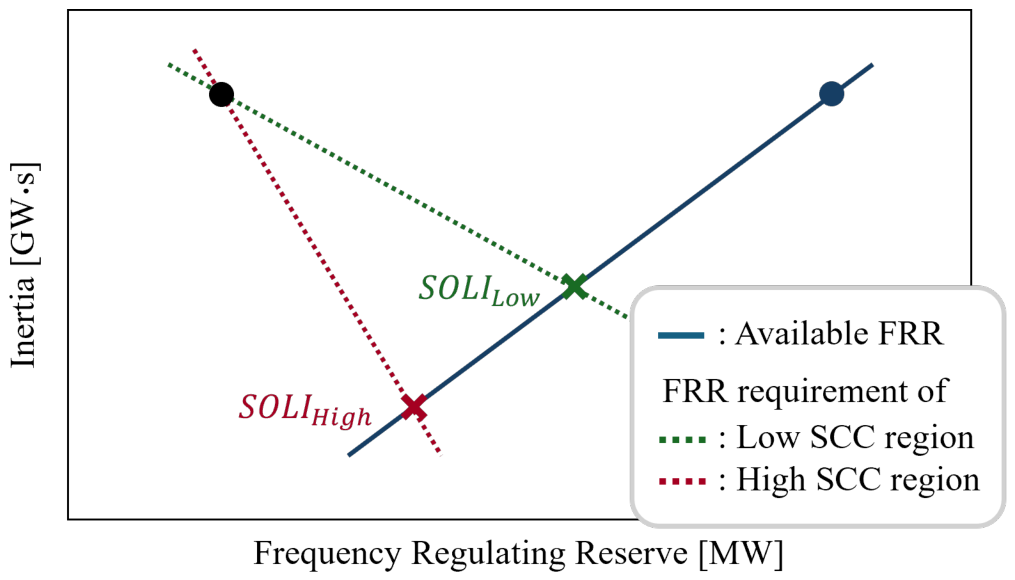
System inertia plays a pivotal role in maintaining frequency stability, which is commonly assessed using three key indicators: frequency nadir, rate of change of frequency (RoCoF), and settling frequency [10]. Among these indicators, frequency stability is often ensured by requiring the frequency nadir to remain above the under-frequency load shedding (UFLS) threshold [11]. Under low-inertia conditions, frequency excursions become faster and deeper, thereby increasing the risk of violating the UFLS thresholds [12]. In response to this challenge, the Electric Reliability Council of Texas (ERCOT) defined a critical inertia level to prevent the system frequency from falling below 59.3 Hz following severe contingencies [11]. Similarly, the Australian Energy Market Operator (AEMO) introduced the secure operating level of inertia (SOLI) as the intersection between the available FRR of the system and the required FRR to satisfy the frequency stability requirements [13,14].
System strength is a critical factor in determining voltage stability, which refers to the capability of a power system to maintain acceptable bus voltages under normal and post-disturbance conditions [15]. To quantify this stability margin, the short-circuit capacity (SCC), also referred to as short-circuit apparent power (SCMVA), is widely used as a metric of system strength at a point, representing the maximum apparent power that a bus can deliver during a three-phase fault [16]. Since SCC can be expressed with Thevenin reactance at a specific bus, which serves as a localized indicator. In contrast, the frequency is a global parameter that is observed uniformly across the system.
Despite this distinction, system inertia and strength are fundamentally co-provided by synchronous machines [17]. Specifically, their rotational energy provides system inertia, while their fault current contribution serves as a primary source of system strength, supporting voltage stability. Furthermore, because the location of the RES interconnection affects the flow of both active and reactive power, system inertia and system strength must be considered jointly as RES penetration increases. Building on this insight, ref. [18] proposed an SCC–SOLI framework for the Korea Electric Power Corporation (KEPCO) regional transmission system and revealed a clear relationship between the local system strength, quantified by SCC and SOLI. However, the study primarily focused on identifying the shifting minimum inertia requirements under different levels of system strength and did not investigate how differences in system strength influence the required level of the FRR.

1.2. Review of Electric Power Markets

As summarized in Table 1, current market mechanisms largely decouple the local system strength from reserve procurement. For instance, the UK’s National Energy System Operator (NESO) treats the Short-Circuit Level (SCL) as a separate product, overlooking how low SCL conditions amplify reserve needs [19]. Similarly, the Nordic FFR market relies on system-wide assessments [7] that neglect local constraints in weak grids [20]. In Australia, the AEMO employs a compliance-based “Do No Harm” framework for system strength, which is operated independently from the Frequency Control Ancillary Services (FCAS) market [21]. Consequently, this approach fails to provide price signals that reflect the marginal value of reserves under varying SCC.
This economic disconnect is also pronounced in the Korean power system. Historically, reserves have been procured through rigid mandatory grid codes [22], a framework that persisted despite modernization efforts such as the Frequency Regulation Energy Storage System Project. Although a Locational Marginal Price (LMP) scheme was implemented in 2025 [23], this reform differentiates prices solely based on power self-sufficiency, failing to internalize the critical dependence of reserve requirements on regional system strength.

1.3. Research Focus: Regional System Strength and Reserve

In practice, system operators are increasingly hesitant to integrate additional RES into regions with low system strength. This reluctance stems from the concern that regional system strength may be intrinsically linked to global system frequency stability and FRR. From a theoretical perspective, there is a growing hypothesis that a decrease in SCC could necessitate significantly larger reserve requirements to maintain the same safety margin [18]. However, the specific correlation between regional system strength and FRR have not been sufficiently verified.
While rigorous quantification is ultimately essential for market implementation, identifying the distinct trends and directional impact of regional system strength on FRR is a critical prerequisite. To address this issue, this study investigates the relationship between regional system strength and the required FRR in the Korean power system. We performed comparative simulations by integrating RES into two different SCC regional areas to observe how the required FRR volume diverged across the system. By demonstrating that the FRR requirement increases significantly in low-SCC regions, this study reveals the hidden cost of interconnecting renewables in a weak grid area. Consequently, these findings are able to serve as a foundational reference for future research.
  • Designing Future Regionally Differentiated Electric Power Markets: Providing evidence to support regionally differentiated market mechanisms based on system strength, thereby internalizing the hidden integration costs of RES in weak grids.
  • Establishing Strategic RES Siting Plans: Offering a basis for optimizing the economic efficiency of system RES integration through location-aware planning.
The remainder of this paper is organized as follows. Section 2 establishes the theoretical framework, extending the conventional SOLI methodology to focus on the sensitivity of FRR requirements to regional system strength. Section 3 presents a case study on the Korean power system, revealing the sensitivity of reserve requirements to regional SCC through comparative simulation. Section 4 discusses the implications of the findings for future grid planning and location-aware market design, while also addressing the modeling assumptions and limitations. Finally, Section 5 concludes the paper with key contributions.

2. Revisiting Required Frequency Regulating Reserve Along with Varying Short-Circuit Capacity

This study adopts the SOLI assessment framework, which consists of the following sequential steps [13].
(1)
For a given operating snapshot, the total system inertia and the maximum available FRR are evaluated and defined as the reference operating point.
(2)
System inertia is progressively reduced by sequentially replacing SGs following the reverse merit order. These generators are substituted with negative constant active power loads to preserve the active power balance while eliminating both inertia and governor-based frequency response.
(3)
For each inertia level, the required FRR is determined through dynamic frequency simulations under the most critical contingency. The minimum required FRR is defined as the last operating point that satisfies the frequency nadir criterion.
(4)
The available and required FRR are approximated using linear regression, and their intersection is defined as the SOLI, representing the minimum inertia required to maintain frequency security with the available reserves.
Building on a system-wide perspective, the proposed framework is extended to examine how inertia and FRR vary across regions with different network characteristics. By progressively reducing synchronous generation in the same order but displacing RES in different regions, the SOLI-based framework enables a systematic evaluation of how the minimum inertia and FRR requirements differ from the system strength.
A previous study primarily interpreted regional strength differences through the position of the SOLI, which shifts depending on the SCC and network characteristics [18]. As conceptually illustrated in Figure 1, regions with higher SCC generally exhibit a lower SOLI, whereas weaker regions require higher inertia to reach a credible operating point. However, the variation in the SOLI level across regions is not the fundamental indicator of system strength; rather, it reflects the underlying differences in how FRR requirements respond as inertia decreases.
In this regard, the sensitivity of the FRR requirement to inertia reduction provides a more direct measure of the frequency stability. Lower sensitivity indicates that a given decrease in inertia necessitates only a modest increase in required FRR to satisfy the frequency nadir criterion. Conversely, higher sensitivity implies that FRR requirements increase significantly as synchronous generators are displaced. Accordingly, this study does not interpret SOLI as a single operating threshold but instead focuses on the sensitivity of the FRR requirement to the location of RES deployment. Rather than inferring regional strength solely from the magnitude of the SOLI, the proposed approach evaluates reserve adequacy directly by quantifying the divergence in required FRR under identical inertia reduction scenarios. This perspective enables a clear comparison of the impact of regional selection on FRR requirements, and is subsequently applied to the Korean power system to quantify the divergence in necessary FRR depending on the RES deployment location.

3. Analysis of Regional Renewable Energy Deployment Strategy

This section validates the relationship between the system strength and required FRR using the Korean power system.

3.1. Simulation Settings: Target Area Selection and Iterative Assessment Framework

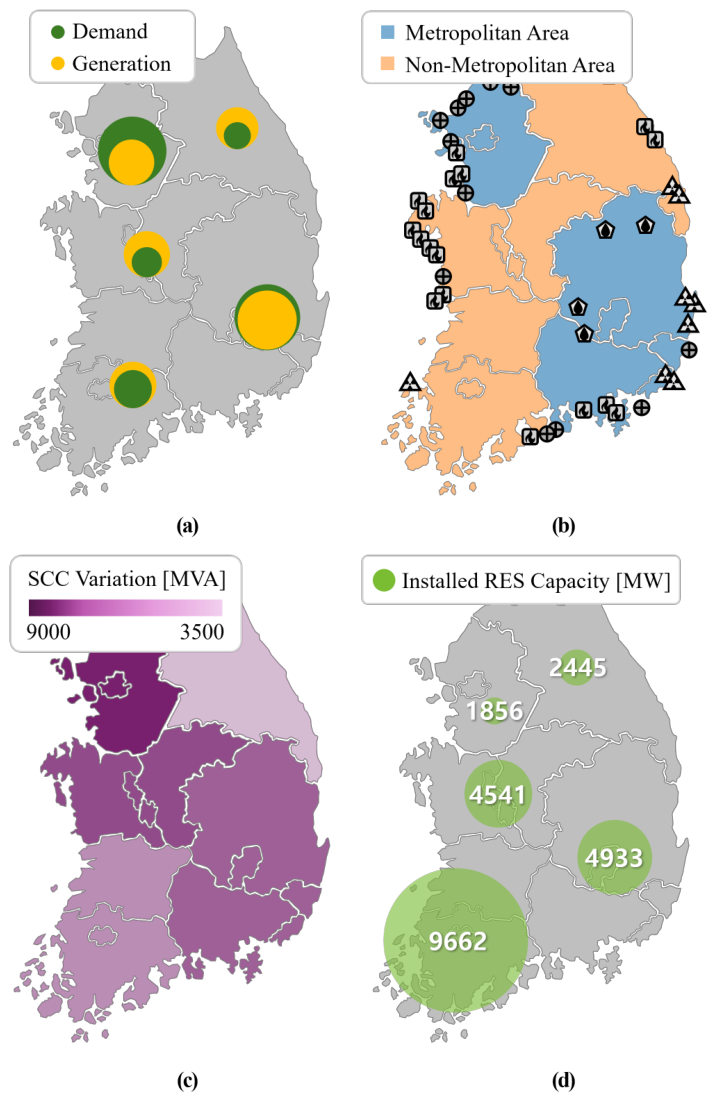
To examine how regional system strength influences the total system reserve, the grid is classified into two distinct groups: the Metropolitan area and the Non-Metropolitan area. This classification is based on the resulting SCC and a comprehensive analysis of regional demand and generation derived from [24].
As shown in Figure 2, the Metropolitan area serves as the primary load center and industrial hub of Korea [25], hosting a dense concentration of baseload SGs, including nuclear and thermal power plants. Consequently, owing to the dense aggregation of synchronous machines, this area exhibits the highest SCC within the grid. In contrast, the Non-Metropolitan area features a relatively low load density and a high penetration of RES, most notably in the southwestern region [26,27]. Consequently, this region is characterized by a significantly lower SCC, indicating a comparatively weaker region.
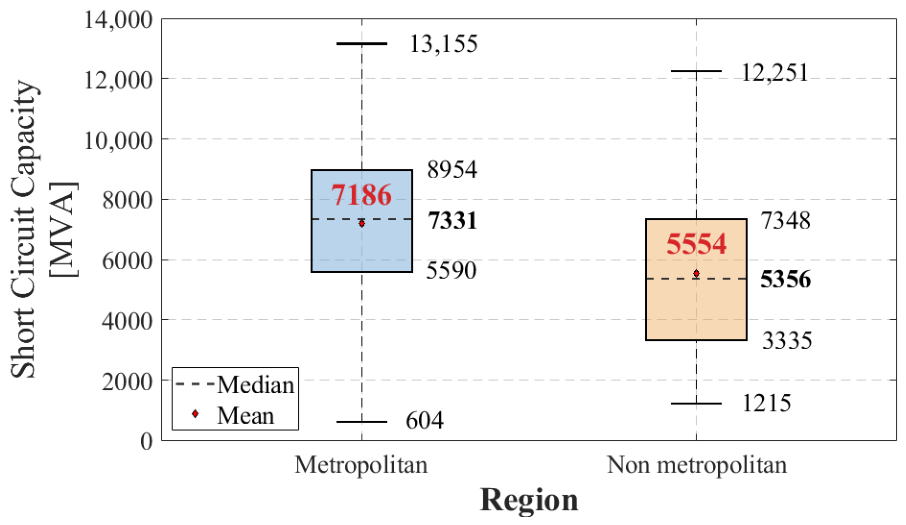
Figure 3 compares the SCC distributions at 154 kV buses for both regional groups. The Metropolitan area maintains significantly higher SCC values driven by large-scale synchronous inertia, where as the Non-Metropolitan area exhibits a lower median SCC, reflecting the impact of high renewable penetration and sparse network topology. Based on these characteristics, we evaluated the FRR requirements for the Metropolitan and Non-Metropolitan areas.
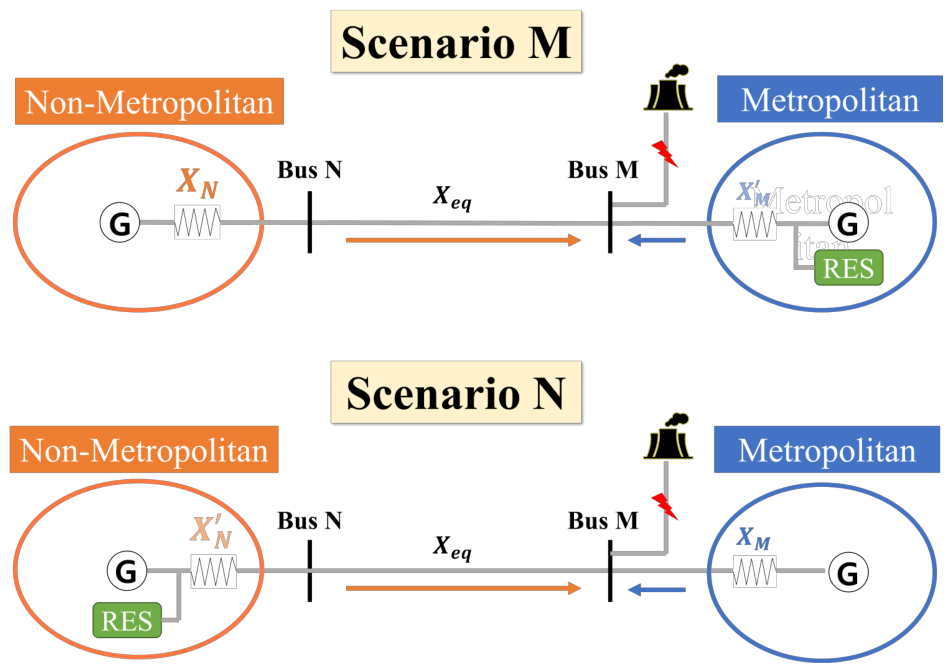
To conceptually illustrate how this structural disparity translates into the two simulation scenarios, Figure 4 presents the equivalent circuit schematics for each case. In Scenario M, RES is integrated into the Metropolitan region, reducing its effective Thevenin reactance from X M to X M through parallel coupling. In Scenario N, RES is instead deployed in the Non-Metropolitan region, reducing its reactance from X N to X N . In both cases, the two regions remain interconnected via the tie-line reactance X e q , and the contingency is applied at Bus M, representing the point of disturbance in the Metropolitan area.
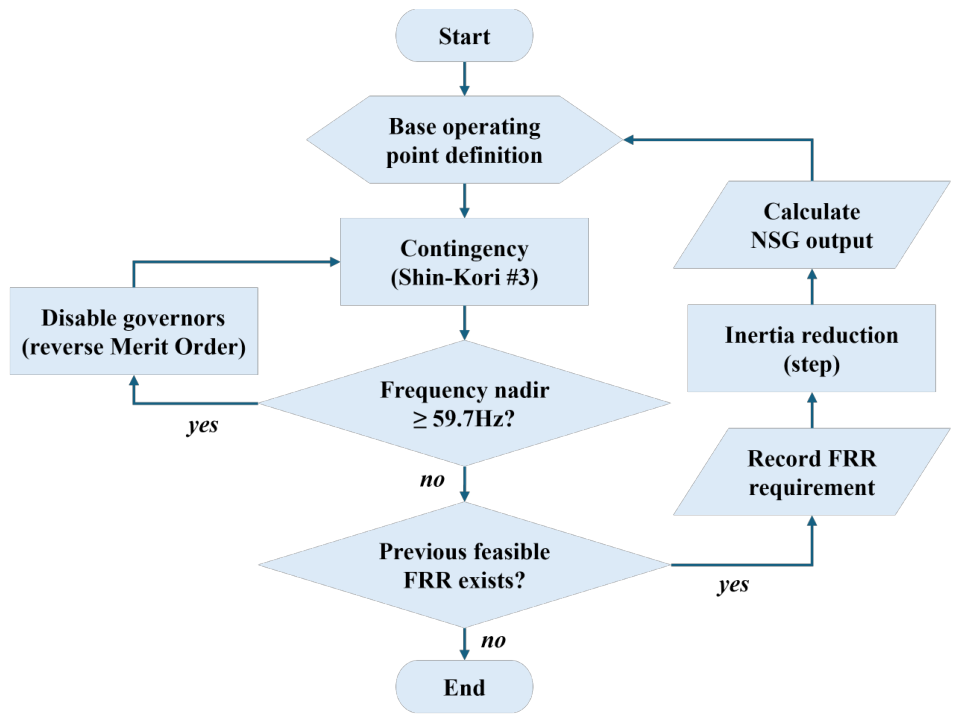
All simulations were performed using Siemens PTI PSS®E. The Korean power system was modeled based on a transmission-level model developed in-house and confirmed by KEPCO. To accurately capture dynamic behavior of the system during transient conditions, the dynamic parameters of the grid components, including synchronous machines, turbine-governors, and excitation systems, were incorporated utilizing a dynamic data file (.dyr). To systematically identify the minimum FRR requirement satisfying the frequency nadir criterion ( f nadir 59.7 Hz ) at each inertia level, the iterative contingency simulation procedure was automated via a Python-based scripting interface (version 3.11) with PSS®E, ensuring consistent and reproducible execution across all simulation scenarios.
For all simulation scenarios, the contingency considered is the sudden outage of the Shin-Kori Nuclear Power Plant Unit 3 (≈1400 MW), which represents the most severe credible contingency in the Korean grid.
The overall simulation procedure used to determine the FRR requirement at each inertia level is summarized in Figure 5. The analysis was performed independently for each region using an identical procedure. First, the base operating point was established. Subsequently, to generate a sequence of reduced-inertia operating points for comparative analysis, online synchronous generators are sequentially disconnected in reverse merit order. To maintain the power balance at each inertia level, the active power output of the disconnected SGs is replaced by equivalent NSGs, which are modeled as constant active-power negative loads and are equally distributed across the buses within the target area.
For each resulting inertia scenario, time-domain simulations were conducted to identify the minimum FRR requirement that satisfies the 59.7 Hz reliability criterion. Specifically, the analysis determines the minimum level of reserve that allows the frequency nadir to meet the reliability standard under the selected contingency. Finally, by tracking the number of SGs displaced at each inertia level, which is equivalent to the active power of the newly added NSGs, the analysis enables a direct comparison between additional NSG integration and the corresponding FRR requirement. This relationship reveals the specific amount of FRR required per unit of NSG integration in each region, highlighting regional differences in system strength from the reserve adequacy perspective.

3.2. Observations on Frequency Regulating Reserve Requirements Considering Regional Short-Circuit Capacity

3.2.1. Assessment with Respect to System Inertia Reduction

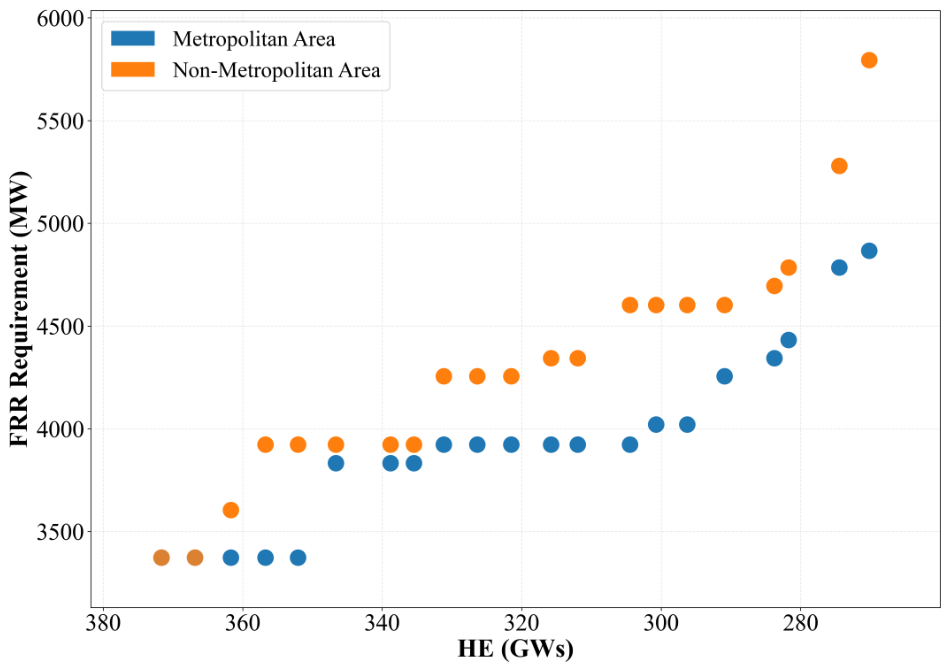
The simulation results were used to construct the relationship between the system inertia energy (HE) and FRR requirement, as shown in Figure 6, with the corresponding numerical outcomes summarized in Table 2. The simulation results reveal that the Non-Metropolitan area, characterized by weaker system strength (based on SCC), consistently demands a higher FRR than the stronger Metropolitan area.

3.2.2. Assessment with Respect to Replaced Active Power Output

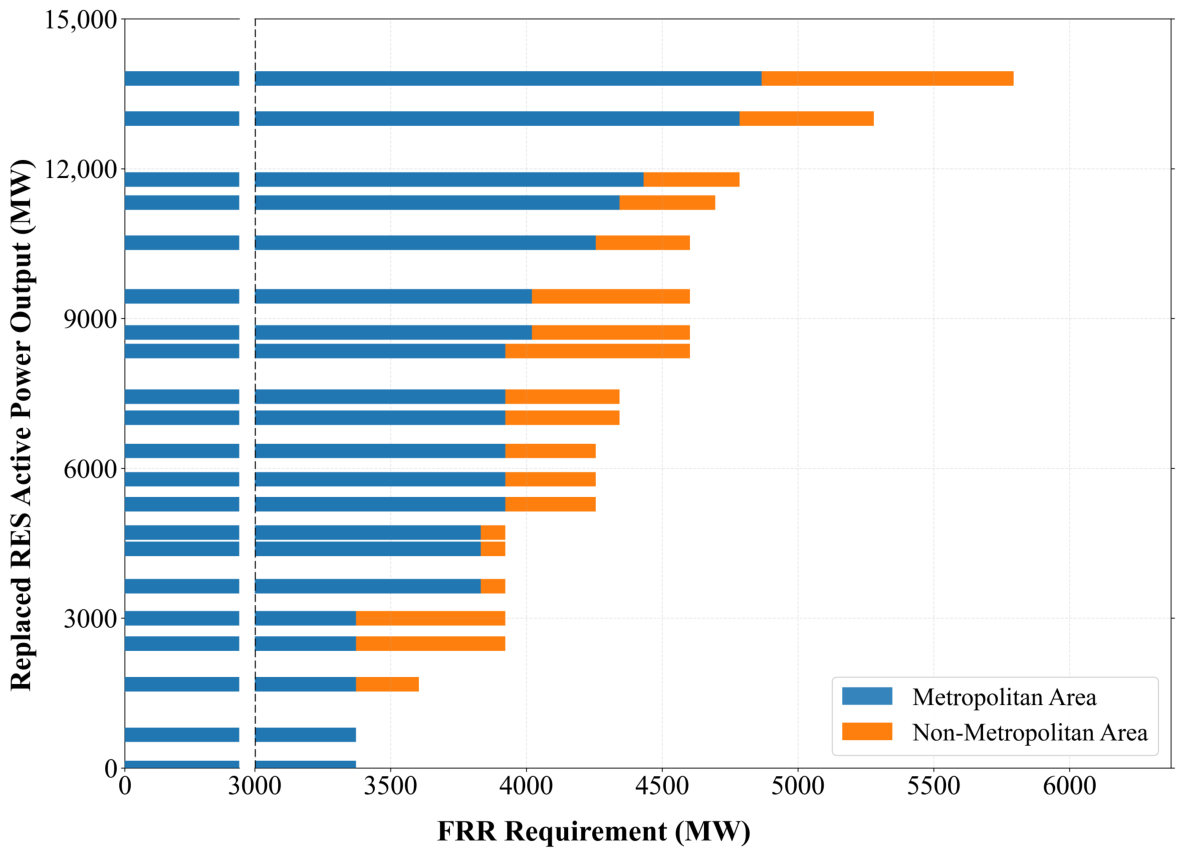
Inertia reduction can be interpreted as the displacement of SGs by the RES. Based on this perspective, the HE–FRR relationship is expressed in terms of the replaced RES active power output, as shown in Figure 7 and Table 3. For the same level of substituted active power output, the FRR requirement is consistently higher when displacement occurs in the Non-Metropolitan (lower system strength) region. Depending on the regional renewable energy deployment strategy, the FRR requirement differed by a maximum of 928 MW, highlighting the significant impact of RES siting decisions on system-wide reserve adequacy.

3.2.3. Assessment with Respect to RES Penetration Levels

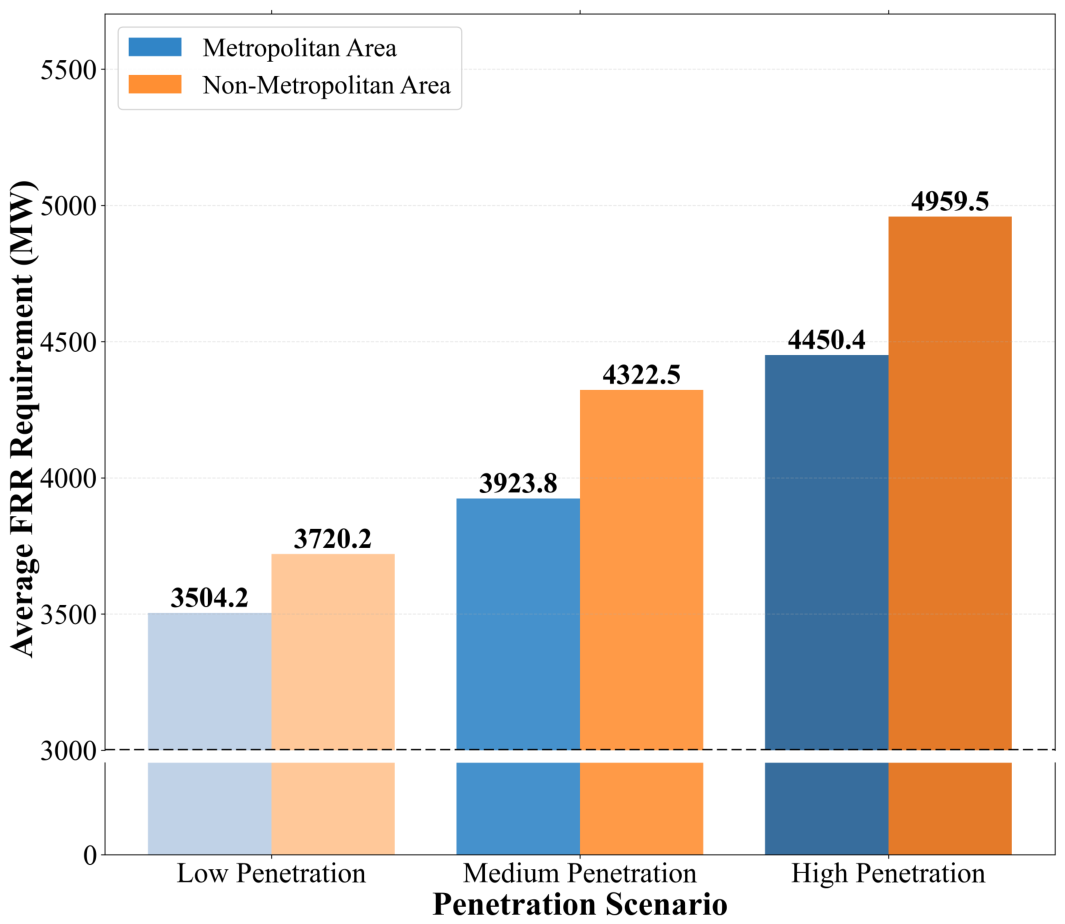
The simulation cases were categorized into three penetration scenarios based on the RES output range, as shown in Figure 8 and Table 4. Across all three scenarios (Low, Medium, and High), the Non-Metropolitan area, characterized by a lower SCC, consistently necessitated a higher average FRR requirement than the Metropolitan area. Furthermore, both regions showed a marked increase in reserve requirements as the level of RES penetration increased.

4. Discussion

This section discusses the implications of the study in the context of the Korean national energy policy and addresses the modeling assumptions and limitations inherent in the simulation framework.

4.1. Implications for Future Grid Planning and Market Design

According to [26], South Korea aims to significantly expand its renewable energy capacity, with the rated capacity projected to reach 121.9 GW by 2038, accompanied by a gradual reduction in traditional synchronous generation. In this context, the simulation results of this study provide a critical framework for predicting future FRR requirements by correlating projected renewable penetration levels with the observed sensitivity of FRR to regional system strength. This allows system planners to anticipate the magnitude of the additional reserves needed to maintain frequency stability in the impending low-inertia grid of 2038.
Furthermore, this study provides an empirical basis for developing location-aware markets. The consistent relationship observed between regional SCC and FRR requirements across all simulation scenarios suggests that reserve pricing and procurement mechanisms should account for regional grid characteristics. Specifically, our results indicate that future markets could consider adjusting reserve prices based on regional system strength or establishing localized FRR procurement zones. By reflecting the hidden costs of RES deployment in weak grid areas, such location-aware market structures can encourage strategic siting decisions and improve overall system efficiency. The formulation of concrete pricing mechanisms, such as SCC-based nodal adjustments, is identified as an important direction for future research.

4.2. Modeling Assumptions and Limitations

While this study identifies clear trends in the relationship between the requirements, the following modeling assumptions and resolution constraints must be considered.

4.2.1. Simplification of RES Models

In this study, RES were modeled as constant negative active-power loads with zero inertial contribution. While modern IBRs have the potential to provide virtual inertia or grid-forming (GFM) capabilities through advanced control logic, this study intentionally adopted a conservative modeling approach for the following reasons:
  • Uncertainty in Technological Maturity: Predicting the precise market penetration and standardized performance of GFM inverters remains highly uncertain. Unlike synchronous machines, the inertial support from IBRs depends on specific manufacturer algorithms and the available energy headroom. Thus, a zero-inertia baseline provides a reliable worst-case scenario for the study.
  • Establishment of a Reliability Floor: From a system operator’s perspective, planning for a scenario with minimal physical support allows for the definition of a guaranteed reliability floor. This ensures grid stability, even when advanced control support is limited or unavailable.
  • Focus on Macroscopic Sensitivity: The primary scope of this research is to establish the empirical relationship between regional system strength and reserve requirements. By using a conservative baseline, we effectively isolated the macroscopic impact resulting solely from the interaction between RES deployment locations and grid topology. This simulation-based evidence serves as a critical prerequisite for future market designs that must account for regional disparities.
While this approach may lead to a conservative estimation of FRR requirements in the presence of advanced controls, it provides a robust reference point for coordinating and calibrating system requirements as the grid transitions toward IBR-dominant architectures.

4.2.2. Discrete Characteristic of FRR Requirements

The FRR requirements derived in this study exhibited discrete characteristics. This is because the simulation was conducted by sequentially replacing SGs with NSGs in discrete and single-unit increments. To establish a continuous metric or index, fine-grained simulations involving minute adjustments to the governor output percentages are necessary. However, the scope of this study was focused on identifying the overall trends in FRR requirements resulting from different regional RES deployment strategies, rather than deriving an exact quantitative index.

4.2.3. Scope of Sensitivity Analysis

Building upon the discrete operational characteristics discussed above, this study evaluates the sensitivity of FRR requirements to system strength qualitatively and macroscopically. A formal mathematical sensitivity analysis was not performed because the stepwise, nonlinear changes induced by the discrete unit-commitment approach precluded the accurate calculation of continuous partial derivatives. While deriving exact mathematical sensitivity indices, such as ( FRR Requirement ) ( H E ) , would be highly valuable, it necessitates the complex, continuous governor modeling discussed previously. Therefore, formulating such an analytical framework to quantify exact sensitivity remains a targeted direction for future theoretical research.

4.2.4. Simulation-Based Evidence and Future Work

While this study identifies a consistent trend between regional SCC and FRR requirements through simulation-based case studies, a formal mathematical derivation of the underlying physical mechanism remains outside the scope of the current work. This inductive approach is consistent with prior studies [14,18], which similarly established operational relationships through systematic simulation campaigns across multiple scenarios. To further consolidate the observed trend, developing a formal mathematical framework that explicitly defines the sensitivity of system-wide frequency dynamics to regional SCC variations is identified as a critical objective for follow-up research. In addition, isolating the individual contributing factors, including the potential influence of transmission network characteristics, will be analytically addressed within the same study to provide a more rigorous theoretical foundation for the observed spatial dependency in FRR requirements.

5. Conclusions

This study investigated the interdependent relationship between FRR requirements and regional system strength within the Korean power system. Utilizing an iterative snapshot and dynamic simulation framework inspired by the SOLI methodology, we investigated how the necessary volume of FRR changes depending on the regional deployment of RES.
The comparative analysis demonstrates that the Non-Metropolitan area, characterized by a low SCC, consistently requires a higher FRR than the Metropolitan area to maintain the same level of frequency security. Specifically, under identical SG displacement levels, the system-wide FRR requirement diverged by up to 928 MW depending on the regional deployment strategy. This discrepancy intensified across all penetration scenarios, confirming that the marginal requirement for FRR increases more steeply in weaker grid systems.
The key contributions and findings of this study can be summarized as follows:
  • Observing the Sensitivity of Reserves to Regional System Strength: We demonstrate that FRR requirements are inherently sensitive to regional system strength. Our simulation results confirm that the marginal requirement for FRR increases sharply in regions with a low SCC.
  • Revealing the Hidden Cost of Weak Regions: We uncover the implicit cost of RES deployment in weak grid areas by showing that the system-wide FRR burden varies significantly depending solely on the RES regional siting strategy.
  • Advocating for Location-Aware Market Reforms: We advocate for the necessity of location-aware power system markets. We show that neglecting the economic link between system strength and FRR leads to system-wide inefficiency, and we call for market structures that reflect the local grid conditions.
Ultimately, bridging the gap between physical grid realities and economic market mechanisms will be essential for ensuring a secure, efficient, and cost-effective transition toward a sustainable energy future.

Author Contributions

G.K. performed the research, conducted the simulations, and wrote the manuscript; M.K. assisted with the methodology and investigation, and performed the visualization; D.L. (Daebeom Lee) and C.K. contributed to the investigation and resources; D.L. (Dongwon Lee) contributed to the reviewing and editing of the manuscript; B.K. and J.P. provided overall guidance and supervision for the research. All authors have read and agreed to the published version of the manuscript.

Funding

This research was supported by the National Research Foundation of Korea (NRF) grant funded by Korean Government [Ministry of Science and ICT (MSIT)] under Grant RS-2024-00355622.

Institutional Review Board Statement

Not applicable.

Informed Consent Statement

Not applicable.

Data Availability Statement

The raw data supporting the conclusions of this article will be made available by the authors on request.

Acknowledgments

This paper is the result of a design project from the graduate course ECE707, instructed by Byongjun Lee at the School of Electrical Engineering, Korea University, in 2025.

Conflicts of Interest

The authors declare no conflicts of interest. The research was conducted while the corresponding author was affiliated with Korea University.

References

  1. IRENA. World Energy Transitions Outlook 2024: 1.5 °C Pathway; International Renewable Energy Agency: Abu Dhabi, United Arab Emirates, 2024. [Google Scholar]
  2. IEA. Net Zero Roadmap: A Global Pathway to Keep the 1.5 °C Goal in Reach; International Energy Agency: Paris, France, 2023. [Google Scholar]
  3. Hatziargyriou, N.; Milanovic, J.; Rahmann, C.; Ajjarapu, V.; Canizares, C.; Erlich, I.; Hill, D.; Hiskens, I.; Kamwa, I.; Pal, B.; et al. Definition and Classification of Power System Stability—Revisited & Extended. IEEE Trans. Power Syst. 2021, 36, 3271–3281. [Google Scholar] [CrossRef]
  4. Ratnam, K.S.; Palanisamy, K.; Yang, G. Future Low-Inertia Power Systems: Requirements, Issues, and Solutions—A Review. Renew. Sustain. Energy Rev. 2020, 124, 109773. [Google Scholar] [CrossRef]
  5. Adrees, A.; Milanović, J.V.; Mancarella, P. Effect of Inertia Heterogeneity on Frequency Dynamics of Low-Inertia Power Systems. IET Gener. Transm. Distrib. 2019, 13, 2951–2958. [Google Scholar] [CrossRef]
  6. NERC. Short-Circuit Modeling and System Strength White Paper; North American Electric Reliability Corporation: Princeton, NJ, USA, 2018. [Google Scholar]
  7. ENTSO-E. The Inertia Challenge in Europe—Present and Long-Term Perspective; European Network of Transmission System Operators for Electricity: Brussels, Belgium, 2021. [Google Scholar]
  8. Wu, D.; Aldaoudeyeh, A.M.; Javadi, M.; Ma, F.; Tan, J.; Jiang, J.N. A Method to Identify Weak Points of Interconnection of Renewable Energy Resources. Electr. Power Energy Syst. 2019, 110, 72–82. [Google Scholar] [CrossRef]
  9. Hasheminasab, S.; Alzayed, M.; Chaoui, H. A Review of Control Techniques for Inverter-Based Distributed Energy Resources Applications. Energies 2024, 17, 2940. [Google Scholar] [CrossRef]
  10. Lim, S.; Seo, K.; Park, J.W.; Lee, K.Y. New Frequency Stability Assessment Based on Contribution Rates of Wind Power Plants. Int. J. Electr. Power Energy Syst. 2025, 164, 110388. [Google Scholar] [CrossRef]
  11. Denholm, P.; Mai, T.; Kenyon, R.W.; Kroposki, B.; O’Malley, M. Inertia and the Power Grid: A Guide Without the Spin; Technical Report NREL/TP-6A20-73856; National Renewable Energy Laboratory: Golden, CO, USA, 2020.
  12. NERC. Fast Frequency Response Concepts and Bulk Power System Reliability Needs; North American Electric Reliability Corporation: Atlanta, GA, USA, 2020. [Google Scholar]
  13. AEMO. Inertia Requirements Methodology: Inertia Requirements & Shortfalls; Australian Energy Market Operator: Melbourne, Australia, 2018.
  14. Lee, K.; Im, S.; Lee, B. Consistency Verification of Frequency Maintenance Criteria Based on Minimum Level of Inertia in South Korea. IEEE Trans. Power Syst. 2024, 39, 4674–4683. [Google Scholar] [CrossRef]
  15. Wu, D.; Li, G.; Javadi, M.; Malyscheff, A.M.; Hong, M.; Jiang, J.N. Assessing Impact of Renewable Energy Integration on System Strength Using Site-Dependent Short Circuit Ratio. IEEE Trans. Sustain. Energy 2018, 9, 1072–1080. [Google Scholar] [CrossRef]
  16. NERC. Reliability Guideline: Integrating Inverter-Based Resources into Low Short Circuit Strength Systems; North American Electric Reliability Corporation: Atlanta, GA, USA, 2017. [Google Scholar]
  17. AEMO. System Strength in the NEM Explained; Australian Energy Market Operator: Melbourne, Australia, 2020.
  18. Park, J.; Kim, B.; Lee, K.; Lee, B. Determining the Relationship Between Required Frequency Response Reserves and Short-Circuit Capacity of Renewable Energy Sources Location via KEPCO Power System. IEEE Access 2025, 13, 211505–211516. [Google Scholar] [CrossRef]
  19. National Grid ESO. National Grid ESO Stability Market Design: Final Outcomes; National Grid Electricity System Operator: Coventry, UK, 2023. [Google Scholar]
  20. Nordic Analysis Group (NAG). Requirement for Minimum Inertia in the Nordic Power System; Technical Report; ENTSO-E: Brussels, Belgium, 2021. [Google Scholar]
  21. Mountain, B.; Percy, S. Inertia and System Strength in the National Energy Market; Technical Report; Victoria Energy Policy Centre, Victoria University: Melbourne, Australia, 2021. [Google Scholar]
  22. EPSIS. 2023 Electricity Market Trends & Analysis. 2024. Available online: https://epsis.kpx.or.kr/epsisnew/selectEkifBoardList.do?menuId=080100&boardId=010000 (accessed on 28 January 2026).
  23. MOTIE. The 10th Basic Plan for Long-Term Electricity Supply and Demand. 2023. Available online: https://www.motir.go.kr/kor/article/ATCLc01b2801b/68162/view (accessed on 8 January 2026).
  24. KEPCO. Statistics of Electric Power in Korea (No. 94). 2025. Available online: https://www.kepco.co.kr/home/customer/library/electricity-statistics/kepco-stats/boardList.do (accessed on 28 January 2026).
  25. KEPCO. KEPCO Energy Map: National Power Facility Distribution. 2024. Available online: https://en-ter.co.kr/energymap/ (accessed on 25 December 2025).
  26. MOTIE. The 11th Basic Plan for Long-Term Electricity Supply and Demand (2024–2038). 2025. Available online: https://www.motir.go.kr/kor/article/ATCLc01b2801b/70152/view (accessed on 26 December 2025).
  27. KNREC. 2022 Cumulative Renewable Energy Supply Capacity by Region (Korea). 2022. Available online: https://www.knrec.or.kr/biz/statistics/supply/supply03_02_list.do (accessed on 26 December 2025).
Figure 1. Relationship between SCC and SOLI.
Energies 19 02189 g001
Figure 2. Characteristics of the Korean Power System. (a) Regional distribution of demand and generation. (b) Geographical classification into the Metropolitan and Non-Metropolitan areas. (c) Representative SCC value across the regions. (d) Renewable energy installed capacity across the regions.
Energies 19 02189 g002
Figure 3. Comparison of SCC between Metropolitan and Non-Metropolitan areas by a box-whisker graph.
Energies 19 02189 g003
Figure 4. Equivalent circuit schematics of the two simulation scenarios. Scenario M: RES is integrated into the Metropolitan region (high-SCC), reducing the local Thevenin reactance to X M . Scenario N: RES is integrated into the Non-Metropolitan region (low-SCC), reducing the local Thevenin reactance to X N . The two regions are interconnected via a tie-line reactance X e q . The arrows indicate the direction of active power supplied from each equivalent generator to the faulted bus (Bus M) under contingency conditions.
Energies 19 02189 g004
Figure 5. Flow chart of the proposed simulation to acquire FRR requirements.
Energies 19 02189 g005
Figure 6. FRR Requirements under decreasing system inertia.
Energies 19 02189 g006
Figure 7. FRR Requirements under increasing replaced active power output of RES.
Energies 19 02189 g007
Figure 8. Average FRR Requirement according to RES Penetration Scenario.
Energies 19 02189 g008
Table 1. Summary of System Strength and Frequency Reserve Procurement Mechanisms in Electric Power Markets.
RegionSystem Strength Procurement MechanismFrequency Reserve Procurement MechanismKey Limitations
UK (NESO)SCL is procured as a separate product through the Stability Market.Frequency reserves are procured via mandatory bids and market-based services.SCL is decoupled from reserve sizing and pricing.
NordicNo market or operational mechanism explicitly accounts for system strength.FFR is sized based on the system-wide frequency nadir at the synchronous-area level.System strength is not captured in reserve sizing or pricing.
Australia (AEMO)System strength is managed through a compliance-based “Do No Harm” framework.Frequency reserves are procured through FCAS markets.System strength is decoupled from reserve sizing and pricing.
Korea
(Conventional)
No market or operational mechanism explicitly accounts for system strength.Frequency reserves are mandated under grid codes with cost-based compensation.System strength is not captured in reserve sizing or pricing.
Korea
(LMP, 2025-)
System strength is implicitly procured via regional energy prices.Frequency reserves are priced uniformly, independent of regional SCC.System strength remains decoupled from reserve sizing and pricing.
Table 2. FRR requirements by system inertia reduction in Metropolitan and Non-Metropolitan areas.
HEFRR Requirement [MW]HEFRR Requirement [MW]
[GW·s] Metro (a) Non-Metro (b) (b)–(a) [GW·s] Metro (a) Non-Metro (b) (b)–(a)
371.633372.903372.900315.783922.854343.33420.48
366.833372.903372.900311.963922.854343.33420.48
361.683372.903604.44231.54304.473922.854602.18679.33
356.733372.903922.85549.95300.724020.654602.18581.53
352.063372.903922.85549.95296.264020.654602.18581.53
346.633832.553922.8590.30290.914255.414602.18346.77
338.803832.553922.8590.30283.764343.334695.05351.72
335.443832.553922.8590.30281.734432.004784.60352.60
331.163922.854255.41332.56274.454784.605279.17494.57
326.363922.854255.41332.56270.164866.285793.90927.62
321.493922.854255.41332.56----
Table 3. FRR requirements by replaced active power output in Metropolitan and Non-Metropolitan areas.
Replaced Active
Power [MW]
FRR Req. [MW]Replaced Active
Power [MW]
FRR Req. [MW]
Metro
(a)
Non-Metro
(b)
Diff.
(b)–(a)
Metro
(a)
Non-Metro
(b)
Diff.
(b)–(a)
03372.903372.9006348.293922.854255.41332.56
664.703372.903372.9007011.683922.854343.33420.48
1676.493372.903604.44231.547436.253922.854343.33420.48
2490.293372.903922.85549.958347.723922.854602.18679.33
2995.343372.903922.85549.958718.904020.654602.18581.53
3640.823832.553922.8590.309441.134020.654602.18581.53
4386.603832.553922.8590.3010,517.374255.414602.18346.77
4713.353832.553922.8590.3011,320.724343.334695.05351.72
5280.843922.854255.41332.5611,783.414432.004784.60352.60
5780.703922.854255.41332.5613,002.924784.605279.17494.57
----13,803.814866.285793.90927.62
Table 4. Average FRR requirements by penetration scenarios in Metropolitan and Non-Metropolitan areas.
PenetrationReplacedAvg. FRR Requirement [MW]
Scenario Active Power [MW] Metro Non-Metro
Low0–4386.603504.233720.23
Medium4713.35–8718.903923.784322.51
High9441.13–13,803.814450.384959.51
Note: The range indicates the minimum and maximum values of replaced RES active power output for each scenario.
Disclaimer/Publisher’s Note: The statements, opinions and data contained in all publications are solely those of the individual author(s) and contributor(s) and not of MDPI and/or the editor(s). MDPI and/or the editor(s) disclaim responsibility for any injury to people or property resulting from any ideas, methods, instructions or products referred to in the content.