1. Introduction
The building sector is responsible for about 34% of the final energy demand and contributes to 37% of global CO
2 emissions [
1]. According to the Paris Agreement, non-residential buildings must improve their performance by 16% by 2030 and by 26% by 2033 [
2] to pursue this goal. Climate change and natural resource depletion are at the base of the European environmental policy. The European Green Deal targets the mentioned net-zero GHG emissions in Europe by 2050 [
3], and building environmental energy efficiency has become a vital strategy in the low-carbon economy.
In this framework, the food-retail sector is highly energy-intensive and contributes significantly to GHG emissions, particularly in large-scale retail buildings [
4], which play a crucial role in the energy transition. These stores are the most energy-intensive building types (i.e., energy consumption per unit of floor area) [
5]. They have high energy consumption due to different refrigeration uses (i.e., different thermodynamic levels) of the cold chain, which account for approximately 30–60% of total energy use. This is followed by lighting (around 30%), Heating, Ventilation, and Air Conditioning (HVAC), food preparation, and transportation [
6]. Moreover, the operational phase is the most significant factor for environmental impacts, particularly due to heating, cooling, lighting, and refrigeration. The operative energy use accounts for around 90% of the total embodied energy and Global Warming Potential (GWP) in these buildings [
7]. Prior literature highlights that implementing energy-efficient technologies, renewable energy systems, and optimized building design solutions can significantly reduce the environmental footprint by up to 80% [
8]. Tomporowski et al. [
9] have assessed the environmental impact of LCA implementation. They reported, for instance, that natural lighting systems should be designed precisely since the electricity used for lighting covers a large percentage of the building total energy consumption (about 30%). Existing literature—including both simulation-based analyses and field measurements across various building types—demonstrates the impact of daylighting and lighting control strategies on lighting energy consumption [
10,
11,
12,
13].
The energy end-use demand of food-retail buildings is usually met by a combination of electricity and natural gas. However, typically, natural gas accounts for less than 20% of the total energy demand [
14]. Most of these buildings have begun the energy transition towards using only electricity. To analyze the environmental impact, the energy mix used by the building is of outmost importance. This is because the various sources of energy supply have a different impact on the environment. Specifically, the Italian energy mix satisfies about 59% of its energy demand from fossil fuels and the remaining 41% from renewables [
15].
Energy-efficient strategies are gaining importance in reducing both CO
2 emissions and energy use. However, few studies address the integration of daylighting, and those that do often do not use real energy use data for their assessment, calibration, or validation models. Furthermore, existing studies rarely propose alternative design strategies for daylighting and energy retrofitting. In the prior literature, several modeling-based studies have reached consistent conclusions regarding the energy saving, while relying primarily on simulated rather than measured energy-use data; in fact, Heschong et al. [
16] and De Luca et al. [
17] investigated daylighting and energy performance of a single-story commercial building, combining and comparing different skylight and window solutions. In these studies, the result reported lighting energy savings, with stores integrating daylight consuming approximately 20–30% less electricity. However, no further analysis of the drivers of energy consumption or environmental impacts was performed. Galvez-Martos et al. [
5] found that optimizing lamp operation through advanced control systems and daylight integration can reduce lighting energy consumption by up to 40%. Frate et al. [
18] and Chen et al. [
19] have studied an automatic energy management system and demonstrated a reduction in lighting energy use of about 30%. Ibrahim et al. [
20] studied trapezoid louver shading systems to balance energy savings, daylight autonomy, and glare control. Results showed about 42% of lighting energy savings for south-facing façades, compared to about 34% for flat louvers. Ibrahim et al. in [
20] also reported that the optimal glass area must be evaluated by balancing lighting and HVAC energy use. Shading systems can support the reduction of cooling loads and let daylight into the building when needed [
21,
22].
While several studies have investigated daylighting retrofit strategies and the impact of advanced lighting systems on building energy performance, these approaches are often limited to single-domain analyses, focusing primarily on lighting energy savings without fully integrating broader building performance aspects. Many studies assess energy efficiency by examining alternative lighting retrofit solutions, often within simulation-based frameworks that do not explicitly incorporate measured energy-use data, feasibility considerations, or context-specific urban-planning and building-services constraints. Analyses grounded in existing building information and measured energy data can support the practical applicability of retrofit strategies.
Compared to previous studies on daylighting retrofit, the proposed approach extends the analysis beyond lighting performance by integrating energy and environmental indicators within a unified parametric framework. This allows for a more comprehensive evaluation of retrofit strategies and highlights trade-offs that are not captured in single-metric analyses. Based on these observations, in the existing literature, there is a gap in integrated, data-driven methodologies capable of simultaneously evaluating daylighting strategies, energy performance, and environmental impact within a unified framework, particularly for real-world commercial buildings.
From this perspective, the present study investigates improvements in the energy and environmental performance of food-retail buildings through architectural retrofitting strategies that promote daylighting, high-efficiency artificial lighting, control systems, and renewable energy systems using measured energy data for model calibration. The investigated strategies include variations in skylight geometry and orientation, glazing types, photovoltaic integration, and advanced lighting controls. Furthermore, compared to existing studies on daylighting retrofit, which typically rely on simplified assumptions or reference buildings, this work is grounded in real case studies and measured data, enhancing the reliability and practical applicability of the results. This integrated and data-driven approach represents an advancement over methodologies focused on isolated performance aspects. It proposes a multi-parameter assessment integrating three Key Performance Indicators (KPIs) accounting for energy efficiency, lighting control, and environmental impact. The proposed retrofit scenarios focus on the improvement of the roof system, which represents the most effective building component for introducing daylight in this building typology. In addition, the roof is the primary surface for the integration of renewable energy technologies, such as photovoltaic (PV) panels. Given the specific focus on lighting-related energy consumption, the analysis also evaluates the interaction between natural daylight availability and high-efficiency artificial lighting systems equipped with smart control strategies.
The principal novelties introduced in this study can be articulated as follows:
The investigation is grounded in measured energy and environmental performance data, ensuring that the findings reflect actual operational conditions. These data are used to calibrate the energy simulation models, thereby enhancing the reliability and robustness of the analytical outcomes.
A parametric design approach was adopted to systematically model and evaluate variations in skylight configurations, allowing for a comprehensive assessment of their influence on daylight performance. Parametric design is not commonly applied in the existing literature, which typically considers only a single skylight configuration. In particular, parametric Building Information Modeling (BIM) models are applied to evaluate the impact of roof retrofit solutions on overall electricity use and environmental performance, to identify retrofit scenarios that maximize the selected KPIs.
This research is focused on food retail trade buildings because this typology exhibits highly variable and intensive operational patterns, including extended opening hours, a considerable number of occupants, high lighting energy use, and substantial plug loads associated with display equipment and refrigeration systems. These characteristics often result in high energy consumption and complex load profiles that make retail facilities an important case study for evaluating advanced energy management approaches. Three case studies located in different urban and climatic contexts, each characterized by distinct boundary conditions, are analyzed using the proposed methodology.
2. Materials and Methods
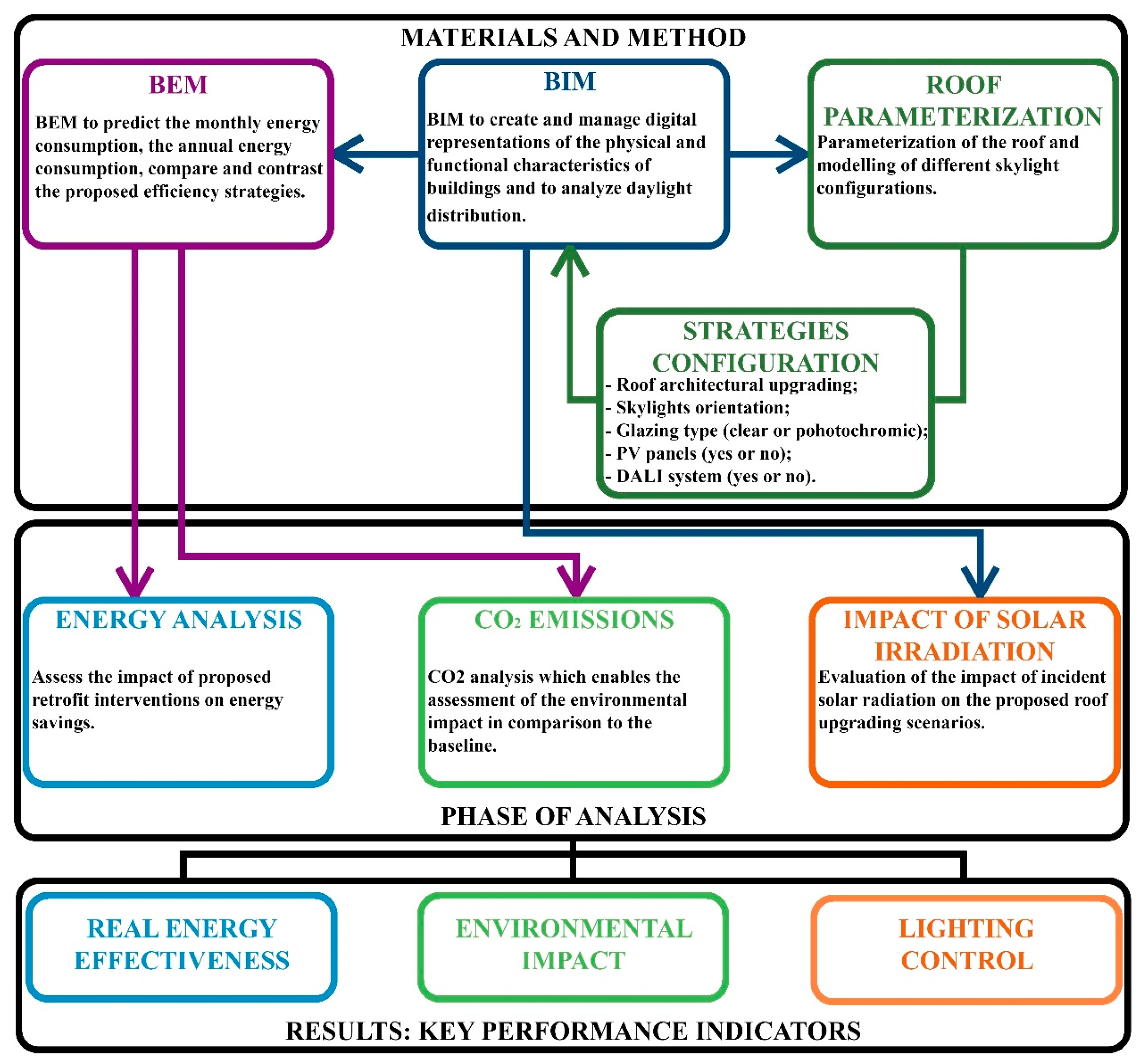
A parametric approach is proposed to evaluate energy effectiveness, lighting control, and environmental impact in large-scale food-retail trade buildings. The workflow process used in the analysis is visualized in
Figure 1, and the steps are described in detail in the following subsections.
The proposed method introduces a calibrated BIM–BEM-based parametric framework that integrates multiple performance dimensions, moving beyond conventional daylighting retrofit analyses focused on single indicators. It begins with a building energy diagnosis and employs a BIM-based approach using Autodesk Revit 2022 to document the building characteristics. This process results in an accurate virtual model that serves as a comprehensive database for multiple analyses, including the development of retrofit scenarios.
After developing the BIM model, its interoperability with RevitToRhino enables the building roof to be integrated and parameterized within Grasshopper, allowing the exploration of various proposed configuration scenarios. The energy balances and simulations are developed by the BEM through the interoperability between Revit and DesignBuilder v.6, and the lighting analysis is developed via Revit.
2.1. Data Compilation
All inputs required for the building energy model are to be compiled, including monthly energy-use records (HVAC, refrigeration, lighting, ventilation, and food-preparation loads), architectural geometry, construction and envelope characteristics, HVAC and lighting system specifications, occupancy schedules, local climate data, and relevant information on the building’s surrounding context.
While the total electricity consumption is based on measured data, some input data and information—such as occupancy schedules, internal gains, and system schedules—are deduced from standards and technical documentation. These data are tested and changed during the calibration process to ensure consistency with real energy use.
2.2. Key Performance Indicators
To evaluate the performance of the tested variations of skylight geometry and orientation, glazing types, photovoltaic integration, and advanced lighting controls, three KPIs are defined and computed:
The first two KPIs are derived from simulated annual electricity consumption, while environmental impact is computed using emission factors and life-cycle assessment for all the investigated scenarios.
The value of 1 represents the maximum achievable value for all KPIs, indicating the optimal performance for the considered parameter. The meaning of each considered KPI is explained in detail in the following subsections.
2.2.1. Real Energy Effectiveness
The real energy effectiveness performance indicator is defined as the ratio between the actual electricity savings achieved and the maximum achievable savings, corresponding to the baseline electricity consumption in the existing condition. It provides a quantitative measure of how effectively energy performance improvement strategies perform relative to their theoretical potential. It also quantifies the ability of a retrofit scenario to reduce total electricity consumption compared to the baseline condition. It represents the actual energy savings achieved, accounting for interactions among all end uses (lighting, HVAC, refrigeration).
The KPI is calculated by dividing the realized energy savings by the maximum possible savings. Using this metric, the effectiveness of architectural upgrades and technological interventions in reducing energy demand can be assessed. It is defined as:
where Energy Saved is the annual baseline electricity use minus electricity use after retrofit, and maximum possible electricity saving is the baseline electricity use, because this represents the maximum energy that could be saved if the building did not consume electricity from the grid.
This dimensionless parameter enables consistent comparison of energy savings and helps identify and manage the main drivers of energy consumption. A value equal to 1 is the theoretical maximum energy saving, and 0 equals no improvement.
2.2.2. Lighting Control
This KPI is calculated as the ratio between the lighting energy use after implementing the retrofit solution and the baseline lighting energy use. It measures the effectiveness of lighting control strategies, including natural lighting use, effective integration with artificial lighting (i.e., Light Emitting Diode (LED) with Digital Addressable Lighting Interface (DALI) systems, and IoT integration). A higher ratio indicates a more efficient lighting system, reflecting improved energy performance while still maintaining adequate illumination levels for different visual tasks. Appropriate levels of illumination are assessed by internal solar radiation level analysis. In addition, the design of retrofit solutions with indoor solar irradiation analysis is evaluated as not reaching levels of discomfort or harmful levels for food products. It is defined as:
where lighting scenario energy use is the annual electricity consumption only for lighting after retrofit, and baseline lighting energy use is the electricity use for lighting before the retrofit. A value equal to 1 is the theoretical maximum energy saving and 0 equals no improvement.
2.2.3. Environmental Impact
Environmental benefits refer to the impact reduction quantified with CO
2 emissions linked to energy consumption or life cycle assessment (LCA) metrics. These benefits are directly connected to energy saving and the adoption of more efficient technologies. This KPI quantifies the emissions, resource use, and environmental and health impacts of each scenario. It accounts for all the exchanges with the environment (materials, land use, water, energy, and emissions) and is expressed as the ratio of CO
2 saved to the global warming potential (GWP) of the baseline scenario, calculated using Eco-Indicator 99 [
23].
The environmental impact assessment is based on simulation outputs obtained using DesignBuilder, which provides annual electricity consumption for each scenario through EnergyPlus-based calculations. The GWP, calculated with proper emission factors, allows the estimation of annual CO2 emissions associated with building operation, considering the emissions produced during both the construction and use and disposal phases of the building materials. The analysis primarily focuses on the use phase (B6) of the building life cycle, which represents the dominant contribution to environmental impact in energy-intensive commercial buildings.
This is a sustainability indicator that can be applied to compare the efficacy of CO
2 emission reduction of different daylighting and energy performance strategies. It is defined as:
where CO
2saved is equal to the CO
2 emission in the baseline condition minus the CO
2 emission after implementing the retrofit scenario, and GWP effect indicates the potential of its contribution to greenhouse gas emissions during its whole life cycle. A value equal to 1 indicates greater environmental benefits, while 0 indicates the worst conditions.
2.3. BIM and BEM
A building energy diagnosis is proposed, employing a BIM-based [
24] workflow to document the existing building characteristics and generate a virtual model that serves as the central dataset for retrofit scenario development. It includes the urban context, construction components, energy systems, technologies, and energy data. The BIM shall integrate different interior zones with different end-use, i.e., selling areas for specific products (fruits and vegetables, meat and fish, refrigerated products, bakery, general products, and payment area), warehouse, and office spaces, as well as the need for the regulation of circulation and accessibility (e.g., employees vs. customers). Also, the interaction of different systems, such as building and structural components, lighting systems, the HVAC system, refrigerated display cabinets, and management and regulation systems, has to be considered.
Thanks to the interoperability of BIM with energy modeling software such as the widely used EnergyPlus 8.9 with DesignBuilder v.6 graphical interface [
25], a Building Energy Model (BEM) of the building systems is developed. This allows for detailed simulations of lighting, HVAC performance, and environmental impact. Dynamic energy simulation is used to accurately represent the building baseline performance and assess the impact of proposed retrofit interventions on energy savings and environmental impact. The built-in tool of DesignBuilder for CO
2 emissions analysis is used for comparison with the baseline. Therefore, the energy and environmental performance of each scenario can be assessed using the BEM. In this method, the environmental performance is computed as CO
2 saved, enabling a comparative assessment of the sustainability of alternative design and retrofit scenarios.
2.4. Parametric Design Workflow
The BIM model is interoperable between Revit and Rhino [
26], enabling the building roof—including its architectural geometry and thermo-physical properties—to be transferred to Grasshopper [
27] for parametric modeling. Within this environment, constraint-based relationships allow the rapid generation of alternative retrofit configurations and the dynamic reconfiguration of roof components.
The roof geometry is parametrized to explore different skylight configurations by varying geometry, orientation, glazing type, and control strategies. This approach automates the generation of design scenarios and enables their evaluation of indoor thermal comfort, energy performance, and environmental impact under different climatic conditions and usage profiles, using Grasshopper within the Rhinoceros v.8 3D environment [
28].
The parametric approach used refers to a modeling and simulation framework in which a set of key design variables is explicitly defined and systematically varied, while all other parameters are kept constant to isolate their influence on building performance. In particular, parametric modeling enables the exploration of multiple design configurations by controlling a limited number of independent variables (e.g., skylight geometry, lighting system characteristics, and control strategies) while maintaining consistency in boundary conditions, operational schedules, and building characteristics.
Therefore, the parametric framework is implemented using Grasshopper, which is employed to generate and manage variations in the skylight geometry. The parametric model controls geometric variables such as skylight dimensions, spacing, distribution, and orientation. The generated configurations are then transferred to the BEM developed in DesignBuilder, where dynamic simulations are performed. Each parametric iteration corresponds to a distinct simulation scenario, allowing a consistent comparison of performance indicators across the explored design space.
By maintaining a controlled set of fixed parameters and systematically varying selected variables, the proposed approach ensures that the observed differences in performance can be attributed to the parametric modifications introduced, improving the interpretability and robustness of the analysis.
3. Case Studies
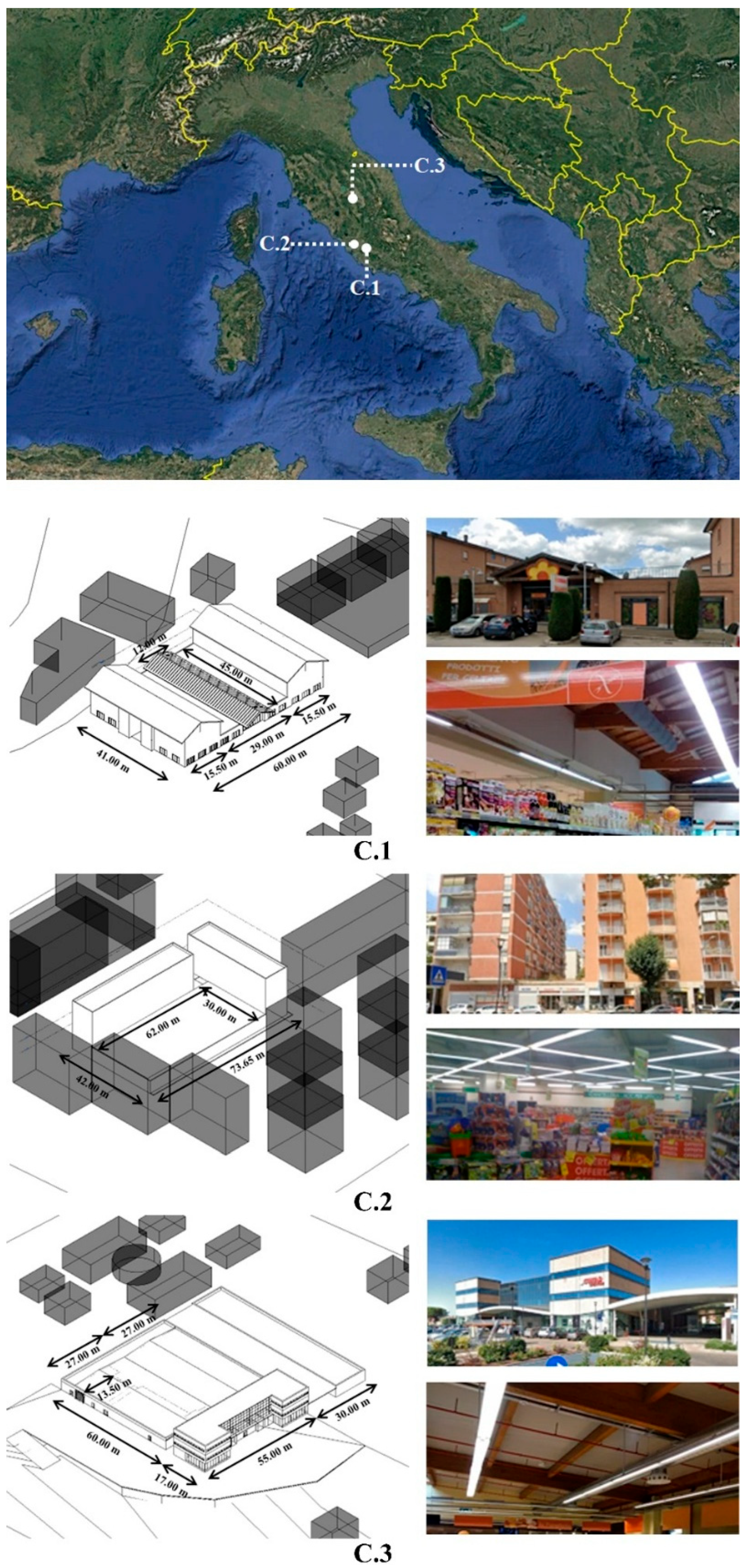
This section presents three case studies selected for the application of the proposed methodology. They are all located in central Italy but have different boundary conditions, structure, urban context, and climatic context. Anyway, a few similar characteristics can be identified, as clarified in
Section 3.2. The characteristics and the data collected concerning the three case studies are summarized in
Table 1 and
Figure 2.
3.1. Energy Model Calibration
To ensure a realistic analysis, the dynamic simulation model was calibrated following the procedure proposed in ASHRAE Guideline 14-2014 [
33], which relies on a manual approach informed by the modeler’s professional experience. Input parameters were iteratively adjusted using measured operational data and energy consumption records, with simulated results continuously compared against collected real data to ensure the reliability of the BEM. This process, aimed to minimize error intensity, calculates two calibration indexes: Normalized Mean Bias Error (NMBE) [%] and Coefficient of Variation of the Root Mean Square Error (CV(RMSE)) [%]. The calibration procedure is applied considering the monthly electricity consumption from the bills data. The calibration is carried out by an iterative approach expressed in the methodology outlined in ASHRAE Guideline 14-2014 [
33]. In particular, if Mᵢ represents the monitored data point, Sᵢ denotes the corresponding simulation result, N is the total number of data points, m is the mean of measured values, and p is equal to 1 according to the M&V methodology, the NMBE index can be defined by Equation (4).
The NMBE quantifies the cumulative deviation between measured and simulated data across the entire measurement range. It serves as a strong indicator of the overall bias within the model, capturing the average discrepancy between measured and simulated data points. Since positive and negative biases can offset each other, an additional error metric is calculated to provide a more comprehensive assessment of model accuracy, by Equation (5).
According to [
33], the tolerance thresholds for energy use calibration are CV(RMSE) < 15% and −5% < NMBE < 5%.
The BEMs are calibrated using monthly electricity consumption data from 2022 energy bills—including HVAC, refrigeration, general lighting, specific lighting, food preparation, ventilation, and secondary processes—to ensure realistic predictions. Real weather data from the local weather station for the same year served as boundary conditions for the calibration process. The measurements refer to buildings located in Anagni, Rome, and Assisi, in central Italy, as described in
Section 3. The selected year (2022) was chosen as a representative operational period with complete data. To ensure data reliability, anomalous values and inconsistencies in the energy bill data records were checked and filtered. The use of monthly data implies that the calibration focuses on reproducing seasonal and annual energy trends, rather than short-term dynamic behavior.
To achieve an accurate BEM, various modifications to the initial model are required, leading to an iterative calibration process. Specifically, the input data for energy systems were dynamically adjusted, including machinery power and system operation schedules.
The calculated NMBE and CV(RMSE) indices are shown in
Table 2. According to [
33], the models can be considered calibrated for monthly values since CV(RMSE) is below 15% and NMBE falls within the range −5% ÷ 5%. The good agreement between simulated and measured data, as demonstrated by the low values of NMBE and CV(RMSE), confirms that the models are able to reliably reproduce the real energy behavior of the buildings. Therefore, the calibrated models can be considered sufficiently valid and reliable to be used for the following analyses.
3.2. Group Classification
A group classification is developed to identify similar characteristics between the case studies. This step supports the generalizability and replicability of the results. The case studies are grouped based on key parameters that affect daylighting integration and the overall building performance.
Table 3 presents their classification based on four parameters that influence energy performance and daylighting potential, namely climate zone, urban density, gross floor area, and lighting system. For each parameter, two cases with the same characteristics are grouped. This allows the identification of the most suitable retrofit opportunities across different supermarket typologies and contexts with similar characteristics.
3.3. Retrofit Scenarios
This section provides the architectural and technological retrofit scenarios designed to enhance daylighting use and minimize electricity use and environmental impact. The proposed retrofit scenarios focus on the improvement of the roof system, where daylight can be most effectively introduced in this building typology using skylights. Different glazing types for the skylights were investigated. The roof was considered the primary location for the integration of renewable energy systems, such as photovoltaic (PV) panels. A combination of high efficiency and smart systems for the control of artificial lighting is also evaluated. The proposed retrofit scenarios involve the variation of skylight (integration, geometry, orientation, glazing type) and the integration of advanced lighting controls and PV panels. The analysis is carried out using a one-parameter-at-a-time approach, meaning each scenario is developed by varying only a single element while keeping all other factors constant. Initially, scenarios are created that include only skylights with different configurations. This allows us to assess the impact of various skylight designs independently. Regarding the skylight glazing, the study proposes two different glass configurations. The clear glass is characterized by a visible light transmittance (τᵥ) of 80%, a solar heat gain coefficient (SHGC) of 0.70, and a U-value of 2.8 W·m−2·K−1. In contrast, the photochromic glass exhibits a lower visible light transmittance (τᵥ) of 50% and a reduced SHGC of 0.20, while maintaining the same U-value of 2.8 W·m−2·K−1. Once these base scenarios are established, PV panels with a peak power of 440 W facing south and an inclination of 30° are added to the roof in each case, enabling the evaluation of the combined effect of skylights and on-site solar energy generation. All the existing lighting fixtures are replaced with LED lighting and DALI systems in each scenario. This step-by-step approach ensures that the influence of each intervention—skylights, glass type, PV panels, and lighting upgrades (integrated daylight–energy roof retrofit strategy)—can be clearly understood and compared.
Table 4 shows the different retrofit scenario configurations. The scenarios are developed considering feasible interventions that balance energy efficiency with practicality, considering the existing structural conditions of a typical building. A total of 27 retrofit configurations are generated using parametric modeling, for the rapid exploration of design alternatives under different boundary conditions.
Retrofit scenarios are defined in a three-by-three sequential manner. For instance, S.2 contains the strategies of S.1, and S.3 contains the strategies of S.1 and S.2. S.5 contains the strategies of S.4, and S.6 contains the strategies of S.4 and S.5, and so on.
4. Results
The comparative analysis of the 27 retrofit scenarios across the three case studies offers valuable insights into the effectiveness and limitations of skylights for daylight integration, glass type, PV panels, and lighting upgrade strategies. The results show how retrofit strategies can be customized based on building typology, climatic context, and operational characteristics, providing a replicable framework for energy-efficient design.
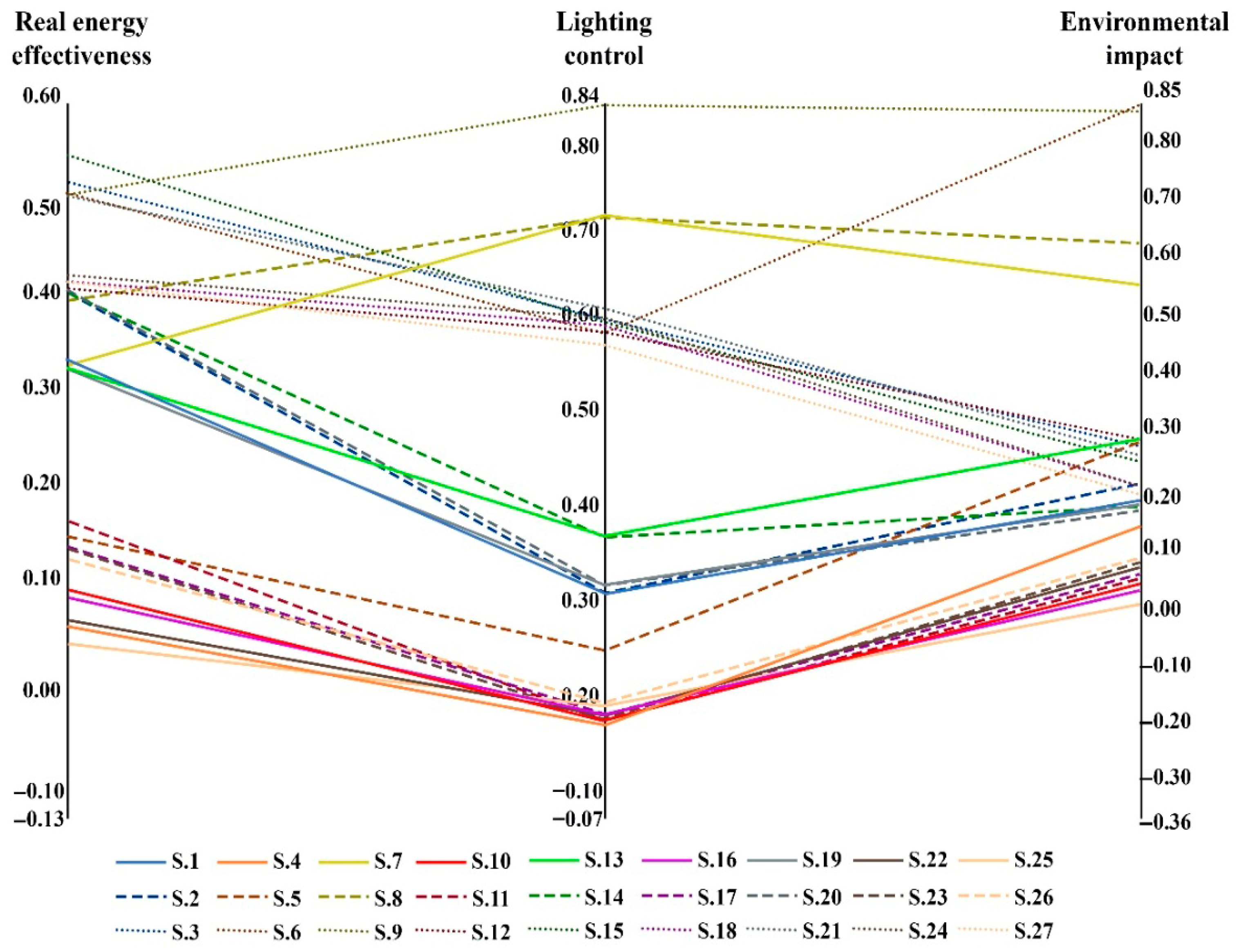
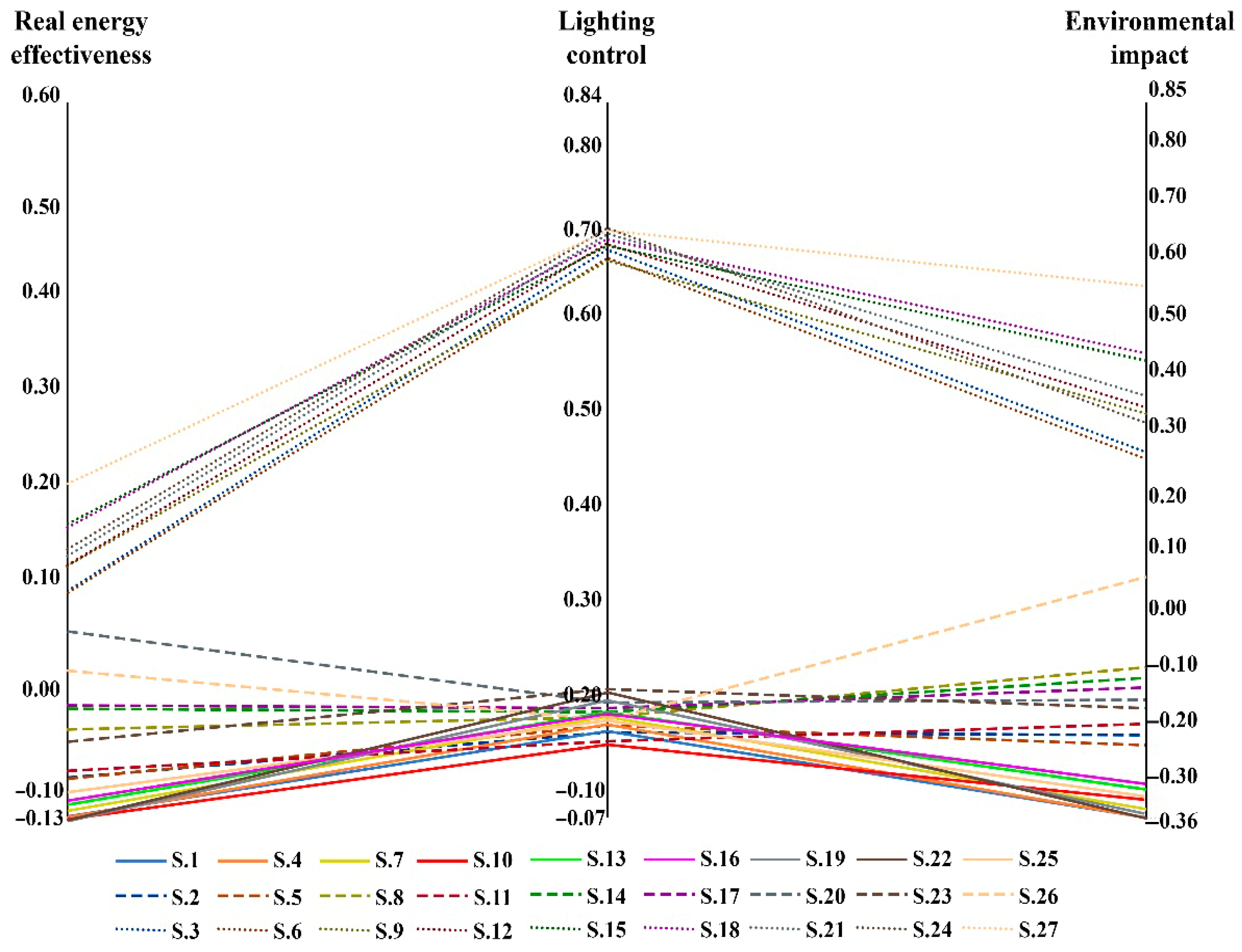
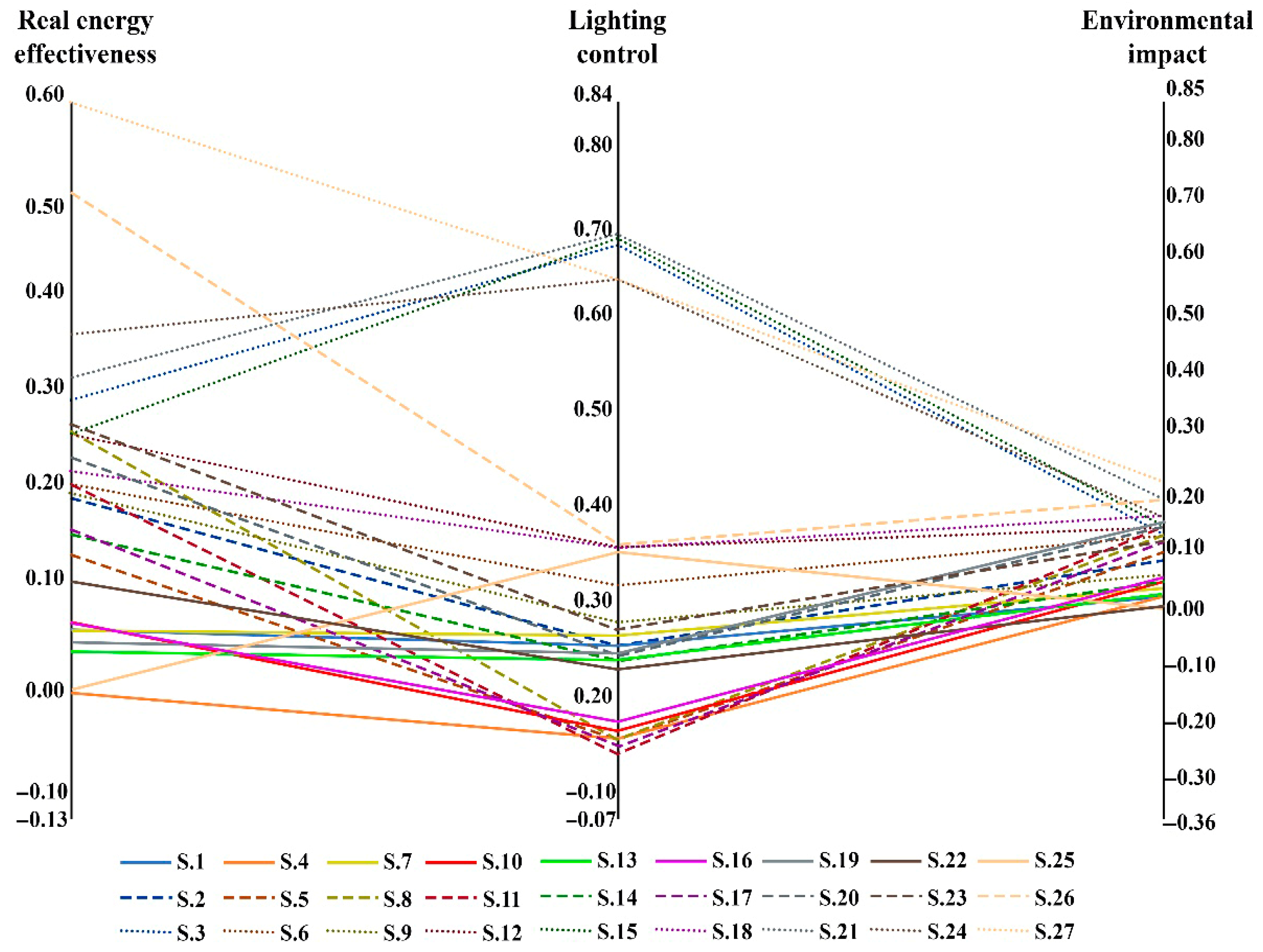
Figure 3,
Figure 4 and
Figure 5 report the results of the different proposed scenarios applied to case studies C.1, C.2, and C.3, respectively. The plots in
Figure 3 and
Figure 5 show that the same scenarios applied to case studies C.1 and C.3 provide suitable and useful comparable results. The three vertical axes in
Figure 3,
Figure 4 and
Figure 5 represent the KPIs, respectively, the real energy effectiveness, the lighting control, and the environmental impact.
In C.1, the most favorable scenarios are S.9, i.e., glass skylights east–west oriented and polycarbonate ceiling inside with PV panels and LED and DALI system, and S.6, i.e., photochromic glass skylights southwest–northeast oriented with PV panels and LED and DALI system. S.9 has the same values for the real energy effectiveness and the environmental impact, but the value for lighting control is further improved (0.84). This is due to the orientation of skylights in S.9, namely, east–west orientation. This orientation allows the entrance of natural light during all hours of the day, greatly reducing energy consumption for artificial lighting. S.6 shows a high value of the environmental impact indicator (0.85) along with favorable performance in lighting control (0.58) and real energy effectiveness (0.53).
Most scenarios applied to C.2 have low energy performance values and negative environmental impact values. Indeed, the interventions to be carried out for the improvement of operational energy performance may entail a greater environmental impact at the stage of production or disposal of the materials and components. S.27, i.e., replacement of the existing roof with a shed roof with PV panels and LED and DALI system, and S.21, i.e., photochromic glass skylights southeast–northwest orientation with PV panels and LED and DALI system, are the configurations that allow the best result when applied to C.2, considering the three KPIs. These scenarios involve a lighting control value equal to 0.67 in S.27 and in S.21, a real energy effectiveness value equal to 0.20 in S.27 and 0.11 in S.21, and an environmental impact value equal to 0.55 in S.27 and 0.31 in S.21.
In case C.3, S.21 and S.27 show the most favorable performance. When applied to C.3, they show a high value of lighting control (0.67 in S.21 and 0.64 in S.21), while the real energy effectiveness (0.32 in S.21 and 0.60 in S.27) is effective only in S.27, while the environmental impact shows worse results (0.20 in S.21 and 0.23 in S.27).
Comparing lighting control performance, it is expected that the same scenarios applied to the different case studies give similar results. However, the results in terms of the overall real energy effectiveness are different. Indeed, in many scenarios, the lighting control values are the same, but the real energy effectiveness and environmental impact are different. In fact, the real energy effectiveness of a building is influenced by the interaction of all end-use energy demands. While increased daylight availability can reduce electric lighting loads, it can simultaneously lead to higher solar heat gains, which may increase cooling energy demand. In some buildings, the additional cooling load induced by greater daylight penetration can outweigh the lighting energy savings, leading to a net increase in total energy consumption. The environmental impact is not only influenced by energy consumption but also by the type of construction of the building: the construction of skylights on the roof may have a greater environmental impact than others.
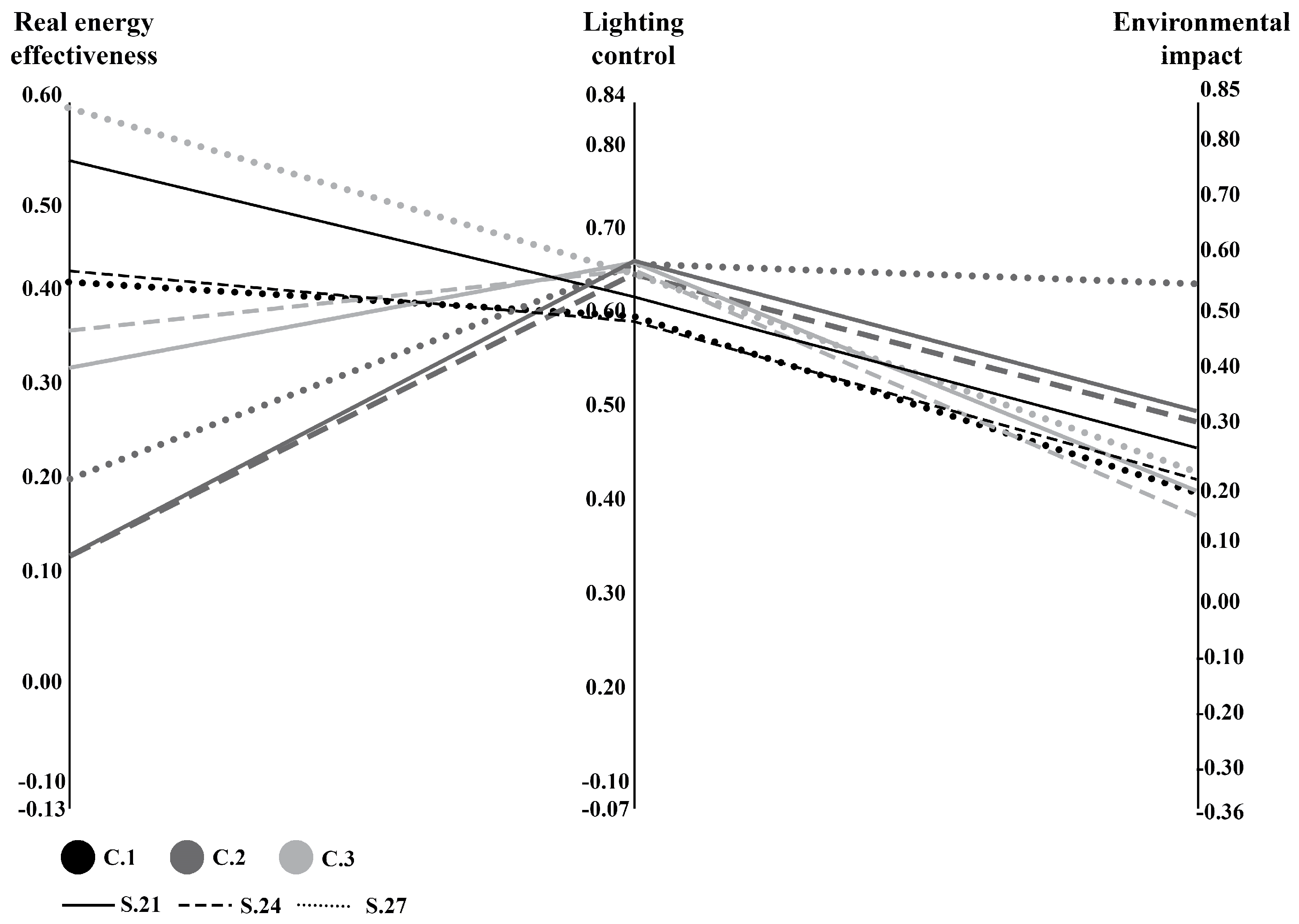
Figure 6 compares some key scenarios with the most significant results for the three case studies. S.21, S.24, and S.27 show similar results for lighting control in all three case studies. This confirms the effective use of natural light for reducing lighting energy consumption by 60%. In these three scenarios, the environmental impact is reduced by around 20%.
Finally,
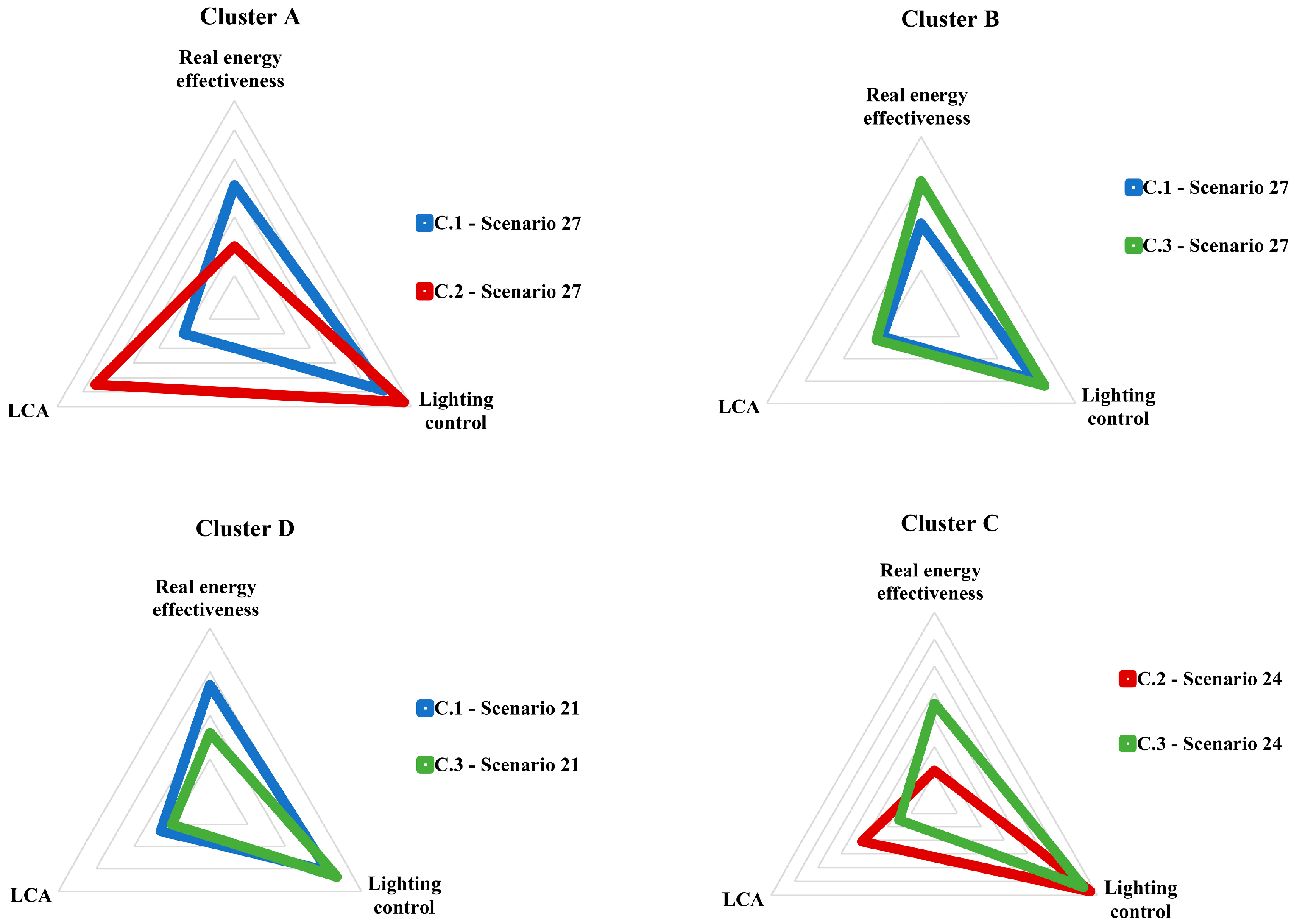
Figure 7 presents the comparison of the scenarios with the most significant results for the different case studies divided into groups. This analysis allows us to identify potential correlations between the most suitable strategies and the identified similar boundary conditions, to possibly generalize the results.
In all the proposed scenarios, daylighting strategies through roof-based solutions may lead to increased solar heat gains, which can result in higher cooling loads under certain conditions. Simulation results indicate that, while lighting energy demand is significantly reduced, an increase in cooling energy may occur, depending on building orientation, glazing properties, and control strategies. However, the overall energy balance remains favorable, as the reduction in lighting consumption outweighs the potential increase in cooling demand. These results highlight the importance of adopting an integrated design approach, where daylighting strategies are optimized not only for artificial lighting reduction, but also considering their impact on thermal loads and consequent consumption of the air conditioning system. The combined use of efficient glazing systems and appropriate control strategies can ensure the reduction of synergistic effects by finding the best overall solution.
In group A, case study with same climate zone (C.1 and C.2), S.27 and S.24 achieve similar lighting control results in C.1 and C.2 (about 0.59 for C.1 and 0.67 for C.2 for S.27 and 0.67 for C.1 and 0.58 for C.2 for S.24). However, in C.1 the value of real energy effectiveness is higher (0.41 in S.27 and 0.42 in S.24) than in C.2 (0.20 in S.27 and 0.11 in S.24), while the opposite is noted for the environmental impact value, higher in C.2 (0.55 in S.27 and 0.31 in S.24) than in C.1 (0.20 in S.27 and 0.22 in S.24). This is because the roof construction typology of C.2 achieves a greater environmental impact than C.1 during the construction phase of the scenario.
Both group B, the case study with same urban density, and group D, the case study with same lighting system, involve case studies C.1 and C.3. For group B the two case studies are compared when implementing S.27. In this case, the results show values of similar lighting control and environmental impact indicators, while the value of real energy effectiveness of C.1 (0.41) is lower than the value of C.3 (0.60). On the other hand, for group D, the two case studies, which have the same lamps, are compared in S.21. In this case, the application of the same scenario shows again similar results in terms of lighting control (0.62 for C.1 and 0.67 for C.3) and environmental impact (0.26 for C.1 and 0.20 for C.3), while C.1 shows a slightly higher value of real energy effectiveness (0.54) compared to C.3 (0.32). Stores located in similar urban settings, in terms of urban density and building shading, can achieve similar results of lighting energy use due to the exploitation of daylight and environmental impact reduction. Moreover, the presence of the same technology for lamps in the baseline scenario further supports these results. On the contrary, different sizes and associated total energy consumption affect overall energy performance, which is not only dependent on similar characteristics.
The results of group C, involving case studies C.2 and C.3 (namely, scenarios with similar size and energy consumption), are analyzed for S.24, i.e., photochromic glass skylights southeast–northwest orientation with PV panels, LED lighting, and DALI system. The results show the same lighting control values (about 0.67 for C.2 and 0.64 for C.3), but different results in terms of real energy effectiveness and environmental impact. The value of real energy effectiveness for C.2 is 0.11 and for C.3 is 0.36, while the environmental impact value is 0.31 for C.2 and 0.15 for C.3. This is because the scenario construction phase has a greater environmental impact in C.2 than in C.3. The roof typology construction of C.2 is less adaptable to the implementation of the proposed scenarios because the disposal of the existing roof has a higher environmental impact compared to the other case studies.
By recognizing that the greatest environmental impact in supermarkets is due to energy consumption during the operational phase [
7], a non-negligible improvement of the environmental impact can be achieved thanks to the improved energy performance. In fact, by reducing energy consumption for lighting, CO
2 emissions generated during the operational phase of a three-case study can be significantly decreased. This is particularly evident in scenarios where high-efficiency LED technologies and DALI systems are adopted. These solutions lower the building’s electrical demand and consequently the emissions associated with electricity production.
The obtained results are strongly influenced by several contextual and design factors. These include the overall size and geometry of the building, which determine the lighting demand, the baseline electricity consumption, which affects the relative impact of efficiency improvements, and the characteristics of the lighting systems themselves, as well as control strategies. In addition, external variables—such as a specific type of neighborhood (urban, suburban, commercial, or mixed-use)—play a key role, since they influence available daylight, shading patterns, and typical occupancy profiles. These factors shape the potential energy savings and emissions reductions achievable through optimized daylight design.
Comparative Analysis of Daylighting
This section shows a comparative analysis of daylight distribution in the three case studies under different scenarios. All simulations refer to 21 June at 11:30 a.m., representing one of the periods of maximum solar radiation. The daylighting analysis is performed for 21 June at 11:30 a.m., corresponding to the summer solstice and near-peak solar elevation conditions. This time is selected as a reference condition representing maximum daylight availability, allowing the evaluation of the potential effectiveness of roof-based daylighting strategies under optimal solar exposure. The choice of this reference scenario enables a consistent comparison between different design configurations, particularly in terms of daylight penetration and lighting energy reduction potential. The daylighting analysis on 21 June at 11:30 a.m. represents the worst condition for discomfort glare. This day corresponds to the summer solstice, characterized by the maximum solar altitude and longest daylight duration of the year.
In particular, the solar altitude angle at 11:30 a.m. is close to its maximum, exceeding 65–70°, in all the case studies. This condition ensures high daylight penetration through roof openings and maximum potential for daylight utilization. In addition, this period is characterized by high global horizontal irradiance values, linked to optimal daylight availability conditions. For these conditions, the chosen day is an effective and representative reference for different daylighting strategies assessment, allowing a consistent comparison between different parametric configurations, also taking into account the connected energy performance.
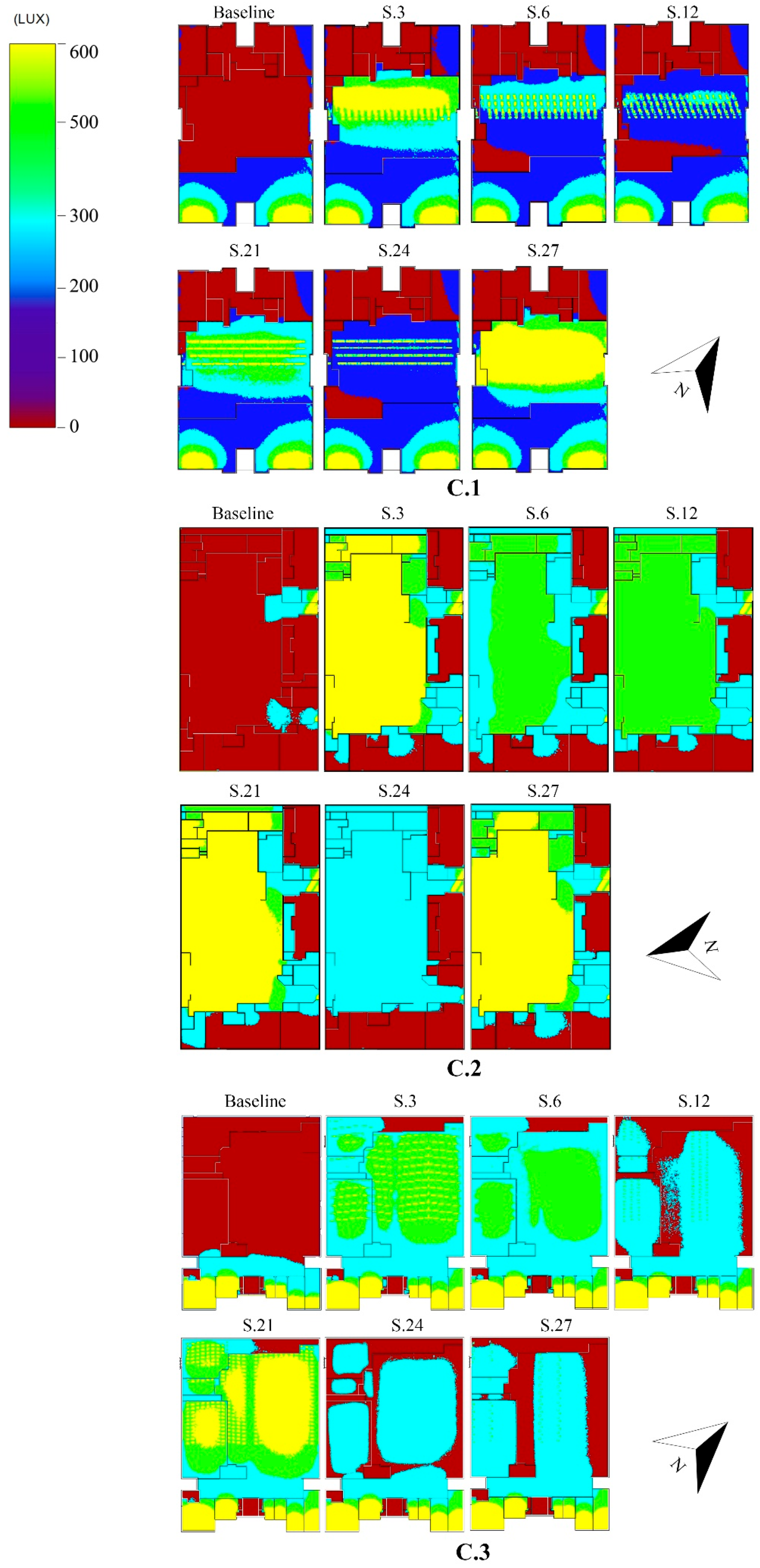
Figure 8 provides daylight distribution by the simulation of illuminance levels (lux). The values of illuminance range from 0 to 600 lux, with the color gradient from dark red (low illuminance) to bright yellow (high illuminance).
In the baseline condition, all case studies exhibit very limited daylight penetration, with illuminance levels remaining mostly below 100 lux throughout the sales area, except for a small portion near the southern openings reaching approximately 200–250 lux. This indicates a clear dependence on the combination with artificial lighting for a good visual comfort strictly connected to visual tasks.
In S.3, for all the cases studied, there are lighting levels above 300 lux and up to 600 lux in large portions of the area, especially in C.2, S.6 and S.12 in C.2 and C.3 show a more balanced distribution, with most of the interior areas between 200 and 400 lux, suggesting a more controlled daylight penetration and uniformity of distribution that can mitigate discomfort and disability glare risk. However, in C.1, some concentrated areas where natural lighting reaches lighting levels of 600 lux can be identified, even if the average level of illumination is below 200 lux.
In S.21, for C.2 and C.3, the overall daylight availability significantly increases, with extensive areas exceeding 500 lux and the rear areas still reaching 300 lux. In C.1, this configuration provides a more uniform daylighting distributed across the main retail area, maintaining central zones above 300 lux and reducing the extent of underlit areas.
S.24 shows lighting levels for C.2 and C.3 below 300 lux. Therefore, it allows artificial lighting use reduction while maintaining lighting levels suitable for the sales area. For C.1, this configuration provides very low lighting levels, around 100 lux.
S.27 for C.1 and C.2 achieves the highest overall illuminance, with nearly the entire central area exceeding 500 lux. In C.3, illumination levels are mainly around 300 lux, with high energy saving potential, ensuring good visual comfort.
The comparative analysis highlights the effectiveness of daylighting strategies in enhancing the luminous environment of retail spaces, ensuring the quality of vision for the required visual tasks and the control of glare phenomena, improving energy consumption. The analysis of the baseline scenario confirms the necessity of daylighting interventions to reduce dependency on artificial lighting, achieving lighting design improvement and energy efficiency solutions, through the effective and controlled combination of natural and artificial light. This also highlights the need to also assess visual comfort conditions in parallel to energy performance to identify the most effective solution for the energy and environmental performance of the building. An efficient daylighting design strategy should aim for a distributed illuminance range of 300–500 lux in sales areas [
34], ensuring both energy efficiency and user’s comfort.
5. Discussion
The proposed methodological framework introduces several innovative aspects compared to conventional approaches to integrated daylight–energy roof retrofit strategy assessment in food-retail buildings. First, the integration of BIM-based parametric modeling with calibrated dynamic energy simulations enables a multi-scalar and data-driven evaluation of retrofit configurations, allowing the geometric and thermo-physical properties of the integrated daylight–energy roof retrofit strategy to be varied parametrically and tested in a controlled and comparable manner. Unlike other studies, with simplified lighting calculations or static data energy assumptions, this methodology accounts for the real data energy consumption, the urban context, and material factors, linking daylight incidence to energy consumption and environmental impact over the building’s life cycle. The use of three complementary KPIs—real energy effectiveness, lighting control, and environmental impact—represents an additional advancement, as it allows the identification of solutions that are not only visually efficient but also energy-effective and environmentally sustainable. The simulation models are calibrated and validated using experimental data and/or experimental evidence from literature, ensuring reliability, accuracy, and therefore consistency with real physical phenomena.
The findings demonstrate that this methodological structure ensures a comprehensive and reliable evaluation of retrofit strategies under different boundary conditions. Its effectiveness lies in the ability to simulate realistic operational profiles, to incorporate real energy consumption into calibration procedures, and to quantify the trade-offs between operational savings and embodied emissions.
Our method can be easily used to compare buildings characterized by different layouts, energy equipment, and climatic exposure, revealing that the transferability of retrofit solutions depends on a combination of architectural, technological, and urban context. Results for scenarios S.3, S.6, S.12, S.21, and S.27 across multiple case studies confirm a good methodological approach to identify retrofit strategies with a consistent balance between lighting performance, energy efficiency, and environmental benefit.
The group classification analysis (that identifies similar and comparable features between different case studies) shows that different retrofit scenarios (e.g., S.21 (roof architectural upgrading with glass skylight orientation southeast–northwest and polycarbonate ceiling inside with PV and DALI) and S.27 (replacement of existing roof with a shed roof with PV and DALI)) applied to food-retail trade buildings with similar climatic or urban contexts produce comparable results. Results concerning lighting control systems vary in real energy effectiveness and environmental impact outcomes. Therefore, e.g., S.21 and S.27, can be considered as reference solutions for similar supermarket typologies, offering replicable retrofit strategies adaptable to diverse boundary conditions.
Certain skylight orientations and glazing configurations—notably those used in S.3 (skylight orientation southwest–northeast and polycarbonate ceiling inside), S.6 (photochromatic glass skylight with orientation southwest–northeast), S.12 (photochromatic glass skylight with orientation east–west), S.21 (skylight orientation southeast–northwest and polycarbonate ceiling inside), S.24 (photochromatic glass skylight with orientation southeast–northwest), and S.27 (replacement of existing roof with a shed roof)—produce illuminance levels in the recommended range of 300–500 lux over large portions of the sales area. This enables important reductions in artificial lighting use, guaranteeing energy saving without compromising visual comfort.
However, the study also presents several limitations that should be acknowledged. The analysis is conducted on three case studies located in the same geographical region. In addition, while the lighting mapping allowed a qualitative interpretation of spatial usability, further work is required to establish quantitative correlations between daylight distribution and occupant perception, product degradation risk, and merchandising strategies.
Future developments should aim to expand the number of case studies, test the methodology across different climatic zones, and integrate additional life-cycle indicators and comfort metrics. Including economic and maintenance-related variables would further strengthen the decision-making capability of the tool. Nevertheless, the proposed framework represents a replicable methodology for predicting the performance of an integrated daylight–energy roof retrofit strategy and for guiding energy-conscious design decisions, also at a large scale.
6. Conclusions
A BIM-BEM integrated methodology is presented to evaluate the energy and environmental performance of architectural retrofit strategies in supermarkets. The approach is applied to three real supermarkets located in central Italy, representing different architectural typologies, technical characteristics, boundary conditions, and operational profiles. Using calibrated dynamic energy models and a KPI-based evaluation framework—including real energy effectiveness, lighting control, and environmental impact—the analysis identifies effective retrofit solutions and highlights key performance trade-offs. This highlights the importance of evaluating retrofit measures within an integrated framework, as building systems are highly interdependent and individual interventions may produce interacting or counteracting effects. Therefore, assessing measures in isolation may lead to misleading conclusions.
The novelty of our study is the provision of a tool that allows for the identification of easily determinable indicators. Therefore, although it is not a deterministic tool, it allows for a homogeneous scale of easily and directly comparable parameters. Moreover, it provides an easily implementable practical method—from the point of view of a digital twin construction—that is fundamental to a network circular energy management.
This approach allows the identification of robust performance trends and supports more reliable decision-making. Daylighting retrofits combined with high-efficiency LED fixtures, DALI-based control systems, and on-site photovoltaic installations provide a lighting control value by up to 60% while improving overall environmental impact performance by approximately 20%.
The results highlight the complexity and interdependence of building parameters in determining the success of daylighting retrofits. In this study, the real energy effectiveness quantifies how effectively energy performance improvement strategies perform in comparison to their theoretical potential; the lighting control measures the effectiveness of lighting control strategies, including natural lighting use, effective integration with artificial lighting; and the environmental impact quantifies the CO2 emissions associated with materials and construction processes across the building’s life cycle. While lighting control performance was relatively consistent across different case studies and scenarios, both real energy effectiveness and environmental impact showed significant variation depending on urban context, building size, energy use, and construction features. In particular, case study C.2 (supermarket in Rome, located in the urban context) demonstrated high energy performance in several scenarios. However, it involved higher environmental impacts due to embodied carbon and material choices.
Findings of daylight analysis further strengthen these conclusions by demonstrating how the quality, distribution, and intensity of natural light significantly influence both energy performance and visual comfort outcomes. The comparative daylight distribution maps also showed that similar retrofit scenarios can yield markedly different results depending on building layout, surrounding obstructions, and the baseline availability of natural light, reinforcing the importance of case-specific analyses before implementation.
The proposed approach enables a multi-criteria and data-driven assessment of retrofit solutions, improving upon conventional single-indicator analyses. However, another limit of the method is due to the simplified daylighting representation and environmental assessment. Future work will focus on extending temporal analysis and enhancing life cycle modeling. Nevertheless, the integration of parametric design, BIM-based modeling, and calibrated energy simulations proves to be a powerful framework for decision-making in building retrofit strategies. The study emphasizes the importance of a context-aware, multi-criteria approach in achieving energy efficiency and environmental sustainability in the food-retail sector, where operational demands are high and environmental stakes are significant. It can be a useful tool for identifying strategic choices aimed at controlling/designing the architectural form for the control of the energy aspects of a building, which are strongly connected to the correct lighting of the rooms, especially in the case of retail buildings, the visual comfort of the occupants and workers, and environmental impact reduction.




 ,
,