1. Introduction
Natural gas demand reached a record high in 2024, driven mainly by emerging markets and developing economies, and currently represents over 20% of global primary energy supply [
1] (pp. 16–18), [
2], [
3] (p. 12). In line with the Paris Agreement and the European Green Deal, the European Union has committed to reducing greenhouse gas emissions by at least 55% by 2030 and achieving climate neutrality by 2050. This transition requires a systemic shift from fossil fuels toward renewable energy sources [
4], consistent with the objectives of REPowerEU, a strategy to reduce dependence on Russian fossil fuels and accelerate the deployment of renewable gases [
5]. As part of this strategy, Europe aims to scale up biomethane production to 35 bcme by 2030 [
6].
Biomethane (or Renewable Natural Gas) is one of the renewable gases capable of substituting natural gas in existing infrastructure and end-use applications, as it possesses an equivalent gas quality. Several pathways exist for producing biomethane, with biogas upgrading being the most widely applied route. Biogas is produced through the anaerobic digestion of organic matter such as sewage sludge, manure, agricultural residues, and other biodegradable waste streams. Typical biogas compositions include 50–75% CH
4 and 25–50% CO
2, with a lower heating value (LHV) of 16–28 MJ/m
3 [
7]. Removing CO
2 and other contaminants upgrades biogas to biomethane with a CH
4 content of 85–99.9%, depending on natural gas quality standards, and a characteristic LHV of approximately 36 MJ/m
3 [
8] (p. 92), [
9,
10].
A second pathway for producing biomethane is methanation, in which CO
2 from the upgrading process (or directly captured air or flue gases) reacts with hydrogen (H
2) obtained through electrolysis powered by renewable electricity [
11]. A third possible pathway is the gasification of biomass or waste streams [
12].
In addition to contributing to decarbonization and reducing greenhouse gas (GHG) emissions, biomethane offers additional benefits over fossil natural gas:
- -
Enhanced energy security [
13,
14,
15];
- -
Flexible dispatchable electricity generation to balance for intermittent renewable electricity [
16,
17,
18];
- -
Circular-economy advantages [
19,
20];
- -
Waste reduction coupled with high-quality digestate production [
21].
Despite these benefits, biogases (biogas and biomethane) currently account for only 1% of global natural gas demand. However, the International Energy Agency (IEA) estimates that up to 1000 billion cubic meters of natural gas equivalent (bcme) of biogases could be produced each year sustainably, representing up to 25% of today’s global natural gas consumption [
3] (pp. 164–171), [
22] (p. 34). Biogases are utilized across multiple sectors, including electricity generation, industry, buildings (for heating and cooking), and as transport fuels (bio-CNG and bio-LNG) [
19,
21,
23,
24,
25]. The IEA expects more than 60% of biogas production to be upgraded to biomethane by 2050 [
22] (pp. 92–93). Approximately one-third of global biomethane production potential lies within 20 km of an existing gas network, and in Europe, this share exceeds 50%. Injecting biomethane into existing gas transportation networks can yield GHG-emissions reductions of 51–70% for gas use [
26]. Given these advantages for biomethane and the ability to leverage existing gas infrastructure, many countries have implemented policy instruments to stimulate biomethane production and injection [
7]. In addition to the expected long-term cost reduction, GHG pricing will lead to competitiveness at carbon prices around USD 200 per ton CO
2-eq [
22] (p. 62). All these factors have accelerated the transition from biogas to biomethane production and injection into the gas network, or will accelerate it further.
A rapid increase in biomethane injection in existing gas networks introduces significant integration challenges. The lack of seasonal storage capacity, limited interconnection between local distribution networks, and the traditionally one-directional nature of the gas system can lead to imbalances between demand and supply [
19]. While biomethane production is essentially continuous, gas demand in Northern Europe peaks in winter due to heating requirements [
27]. At times of surplus production, pressure accumulation may occur in the gas network, causing material fatigue and threatening pipeline integrity. Therefore, operators enforce strict upper-pressure limits [
28]. When these limits are reached, biomethane producers may be forced to interrupt injection—an undesirable outcome, especially for anaerobic digesters, as biological processes are sensitive to interruptions [
29] and restarting a digester is critical and complex [
30]. Surplus challenges are particularly pronounced in rural, lower-pressure distribution networks with limited local demand and limited distribution capacity [
31], and are expected to intensify as electrification reduces local gas consumption [
32] (pp. 31–36), [
33] (p. 12).
Multiple infrastructure-based solutions exist. Meshing lower-pressure distribution networks creates interconnected networks that are capable of absorbing greater injection volumes, but require new pipelines and extensive network planning [
33] (p. 13). Linepack can provide short-term storage in the gas network itself, as the network pressure is intentionally allowed to rise within operational limits. The effectiveness of linepack is strongly network-dependent and significantly greater in higher-pressure networks than in lower-pressure distribution networks [
33] (p. 13), [
34]. Surplus biomethane can also be compressed and transported from lower-pressure distribution networks to higher-pressure transmission networks (reverse-flow) for storage in existing underground gas storage (UGS) facilities or export, but these approaches require compression, quality upgrading, and significant infrastructure investment, estimated at ~€2.5 billion per year toward 2040 in the EU [
17], [
33] (p. 11–19), [
35,
36,
37], [
38] (p. 7), [
39,
40].
Electricity grids face parallel challenges. Increasing electrification and growth in renewable generation have led to widespread grid congestion, limiting new grid connections and delaying upgrades [
41,
42]. As a result, transmission and distribution system operators (TSOs and DSOs) need to build substantial additional transport capacity in the coming years, with multi-year lead times [
43]. Since reverse-flow compression requires large amounts of electricity, gas-sector flexibility is directly affected by electricity-sector bottlenecks.
Beyond single-commodity measures, multi-commodity solutions can offer additional system flexibility. This study investigates such a solution by coupling the gas and electricity networks through decentralized generators that convert surplus biomethane into electricity. This approach supports continuous biomethane injection in the gas network for renewable electricity generation.
Multi-commodity measures have been widely studied predominantly on Power-to-Gas (P2G) systems, where surplus renewable electricity is converted into hydrogen and injected into the gas grid to mitigate curtailment and support electricity-system flexibility [
44]. Other studies have investigated dynamic interactions between hydrogen-blended gas networks and electricity systems, demonstrating cross-sector dependencies but focusing exclusively on hydrogen blends rather than (continuous) biomethane production and injection [
45]. Energy-hub studies have examined biomethane injection derived from hydrogen-based methanation as part of an energy hub, yet these studies are primarily cost-driven and do not analyze surplus biomethane management or continuous biomethane injection at the DSO level [
46]. Gas-balancing studies emphasize linepack balancing and intra-day balancing, but treat the gas network as a single-commodity system [
47,
48]. Finally, Gas-to-Power (G2P) research involving biogas or biomethane for electricity generation using engines, microturbines, or other movers is available. The focus of this research is mainly on technological performance rather than cross-sector system-level interactions between gas and electricity networks [
49]. Broader assessments, such as the IEA outlook on biogases, confirm biomethane can replace natural gas in gas-fired power generation and is expected to play a growing role in the power sector, yet these analyses do not consider the operational use of biomethane for balancing distribution networks or mitigating injection constraints [
22] (pp. 59–60).
As a result, the existing literature provides no assessment of how surplus biomethane can be converted into electricity as a strategy to simultaneously (i) maximize continuous biomethane injection without overloading the gas network, and (ii) support electricity-network operation by reducing congestion at the transmission level.
The novelty of this study lies in analyzing the opposite direction of coupling. Instead of converting electricity into gas, we convert surplus biomethane into electricity to balance both the gas and electricity networks while maximizing continuous biomethane injection without exacerbating electrical congestion. This study illustrates the potential of a multi-commodity biomethane-to-power approach to enhance biomethane injection rates, lower natural gas usage, and reduce electricity grid congestion.
2. Materials and Methods
This chapter describes the framework of the simulation model, the input data, the calculation setup, and the case study. The aim of this study is to explore the potential impact of the proposed multi-commodity approach on biomethane injection capacity and the associated system-level synergies between the gas and electricity networks.
The simulation model is based on energy balance calculations of both a gas and electricity network of a DSO and does not incorporate full hydraulic or transient gas network dynamics. Although including such dynamics would increase the accuracy of the results, previous studies on gas distribution networks have shown that hydraulic behavior—including linepack utilization, pressure evolution, and flow patterns—is highly network-specific and strongly dependent on local topology, pipe characteristics, and regional demand profiles [
50]. To maintain generality and ensure methodological transferability across DSOs, an energy balance approach was therefore adopted. As a result, the reported outcomes should be interpreted as upper-bound estimates.
Using gas and electricity data from two Dutch DSOs, the study demonstrates that decentralized biomethane-to-power conversion can increase biomethane injection while simultaneously contributing to renewable electricity production. Although the numerical outcomes are case-specific, the underlying insights and methodology framework are transferable to DSOs facing similar integration challenges.
2.1. Situation Description
An overview of the simulated configuration is presented in
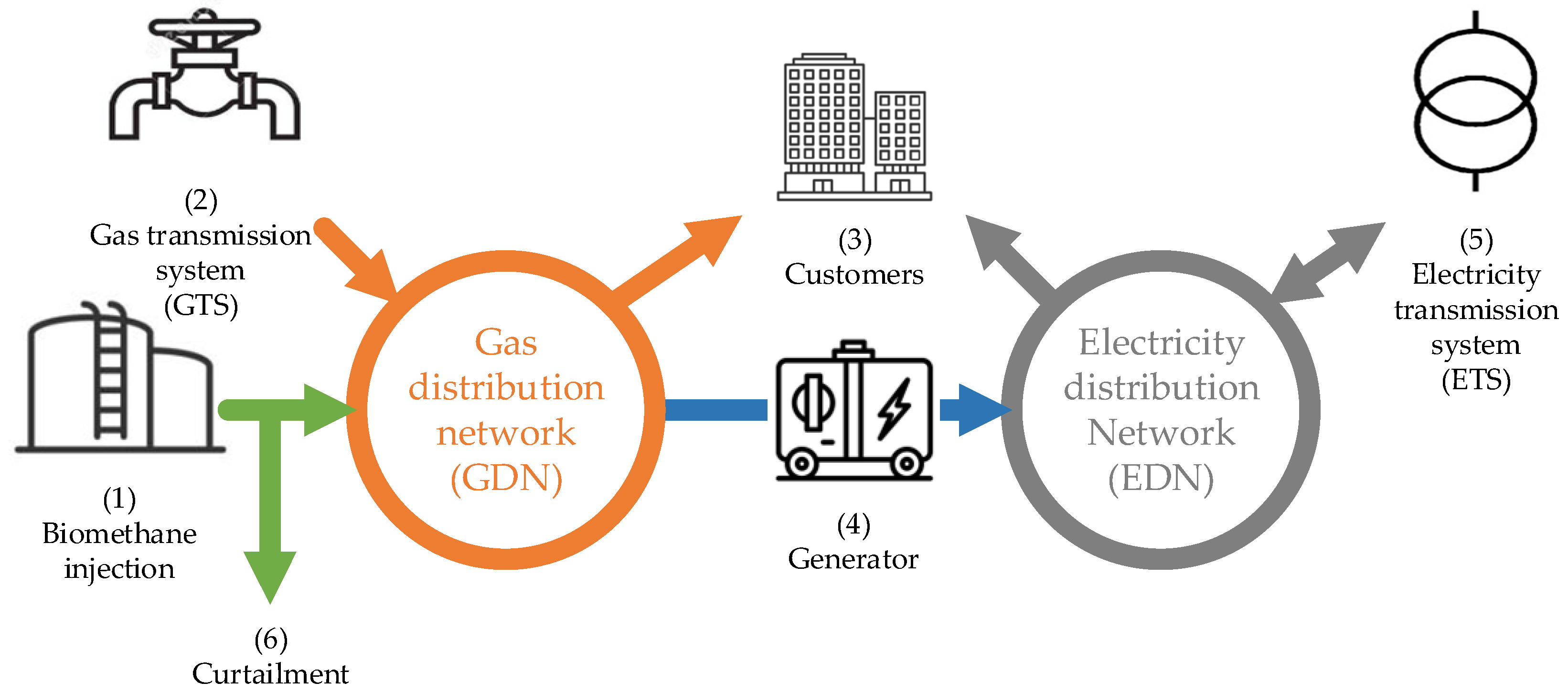
Figure 1. Biomethane is injected into the gas distribution network (GDN) of the DSO at point (1). If needed, additional natural gas is supplied from the gas transmission system (GTS) at point (2) to meet customer gas demand at point (3). These customers represent a mixture of consumer categories, primarily smaller industrial users and the built environment. A surplus of biomethane occurs when production and injection at point (1) exceed customer demand at point (3). In such situations, no gas is supplied from the GTS at point (2). When a biomethane surplus arises, this excess volume can be converted into renewable electricity via the generator and injected into the electricity distribution network (EDN) at point (4). However, this conversion should only occur when there is a local need for electricity in the EDN and no electricity is flowing from the EDN to the electricity transmission system (ETS) at point (5). Electricity flows from the EDN to the ETS when local generation in the EDN exceeds customer electricity demand at point (3). Supplying additional electricity produced by the generator at point (4) under such conditions would exacerbate existing challenges in the electricity system. Therefore, when a biomethane surplus exists
and electricity is flowing from the EDN toward the ETS, biomethane injection must be curtailed at point (6).
2.2. Framework Simulation Model
One of the basic principles of the simulation model is that energy flows in the gas network are balanced. This means that all gas entering the GDN must also leave the network within the same timeframe. As shown in
Figure 1, gas enters the network via biomethane injection at point (1) and via supply from the GTS at point (2). Gas leaves the network through customer gas demand at point (3) and through use by the generator at point (4). If biomethane production exceeds consumption, the resulting surplus leads to curtailment at point (6).
On the electricity side, electricity flows into the EDN from the generator at point (4) and from the ETS at point (5). Electricity leaves the EDN through customer demand at point (3) and, when local generation exceeds demand, via export to the ETS at point (5), as the electricity infrastructure operates bidirectionally.
Maximizing biomethane injection uptime is a core design principle, as high utilization is typically required for producers to maintain a viable business case. Biomethane injection at point (1) is treated as an input assumption that remains constant throughout the year and is prioritized over gas supply from GTS at point (2). The simulation model operates with an hourly time step and determines several output indicators, including the annual uptime hours of injected biomethane without curtailment being activated in the same hour.
Two scenarios are evaluated: (i) a reference case without a generator and (ii) a case with a generator. By assigning each scenario its own biomethane injection capacity to achieve the same biomethane injection uptime, the difference in results between these scenarios quantifies the impact of generator operation.
2.3. Input Data
The simulation model uses three datasets: (a) the actual metered gas supply from the GTS, (b) the actual metered biomethane injection from all connected producers to the GDN, and (c) the actual metered electricity imports and exports at the interface with the ETS. All datasets contain hourly values for the entire year 2023 and are integrated into the simulation model.
- (a)
The actual gas supply from the GTS to the GDN enters via Gas Receiving Stations (GRSs) and is metered there. By aggregating the hourly measurements from all GRSs connected to the modeled GDN, the model derives the actual total gas supply from the GTS to the GDN.
- (b)
The actual metered biomethane injection per producer is obtained via the online portals of the producers to which the DSO has access. Aggregating these hourly producer records yields the actual total biomethane injection into the GDN. Combining this actual total biomethane injection with the actual gas supply of the GTS to the GDN determines the total gas consumption at point (3) in
Figure 1.
- (c)
Electricity typically flows from the ETS to the EDN through transformer stations, where high voltage is stepped down to medium voltage. Because distributed generation at medium and low voltage can exceed local demand at times, electricity may also flow from the EDN to the ETS. The net electricity flow is metered at each ETS–EDN transfer point, and the aggregated hourly measurements from all such points in the modeled area are used as input to the simulation. In contrast to datasets (a) and (b), this dataset also contains negative values. Positive values represent electricity imports from the ETS to the EDN, whereas negative values indicate local overproduction within the EDN that is transported towards the ETS.
2.4. Description of Simulation Model Calculations
The simulation model is based on the assumption that the volume of gas added to the GDN at each time step equals the volume of gas withdrawn from the network. No gas volume accumulates in the GDN. This principle is formulated mathematically as shown in Equation (1):
where
is the produced normalized volume of biomethane at timestep t;
is the normalized volume of gas injected from the GTS at timestep t;
is the normalized volume of gas used by the consumers connected to the grid at timestep t;
is the normalized volume of gas being used in the generator to produce and inject electricity into the electricity network at timestep t;
is the normalized volume of biomethane gas being curtailed at the production plant at timestep t.
2.4.1.
As mentioned in
Section 2.3, aggregating datasets (a) and (b) yields total gas consumption at point (3) in
Figure 1.
2.4.2. and
The generator’s electrical efficiency is parameterized in the simulation model. It determines the conversion of biomethane energy to electricity done by the generator. Heat recovery is not modeled, as it lies outside the scope of this study. The generator dispatch follows two operational conditions:
Surplus-only operation: only surplus biomethane is eligible for conversion to electricity.
No net export to ETS: the generator does not produce more electricity than would be supplied at that time from the ETS at point (5). Equivalently, the generator operates only when the EDN is importing and, at most, offsets that import; it never induces net export from EDN to ETS.
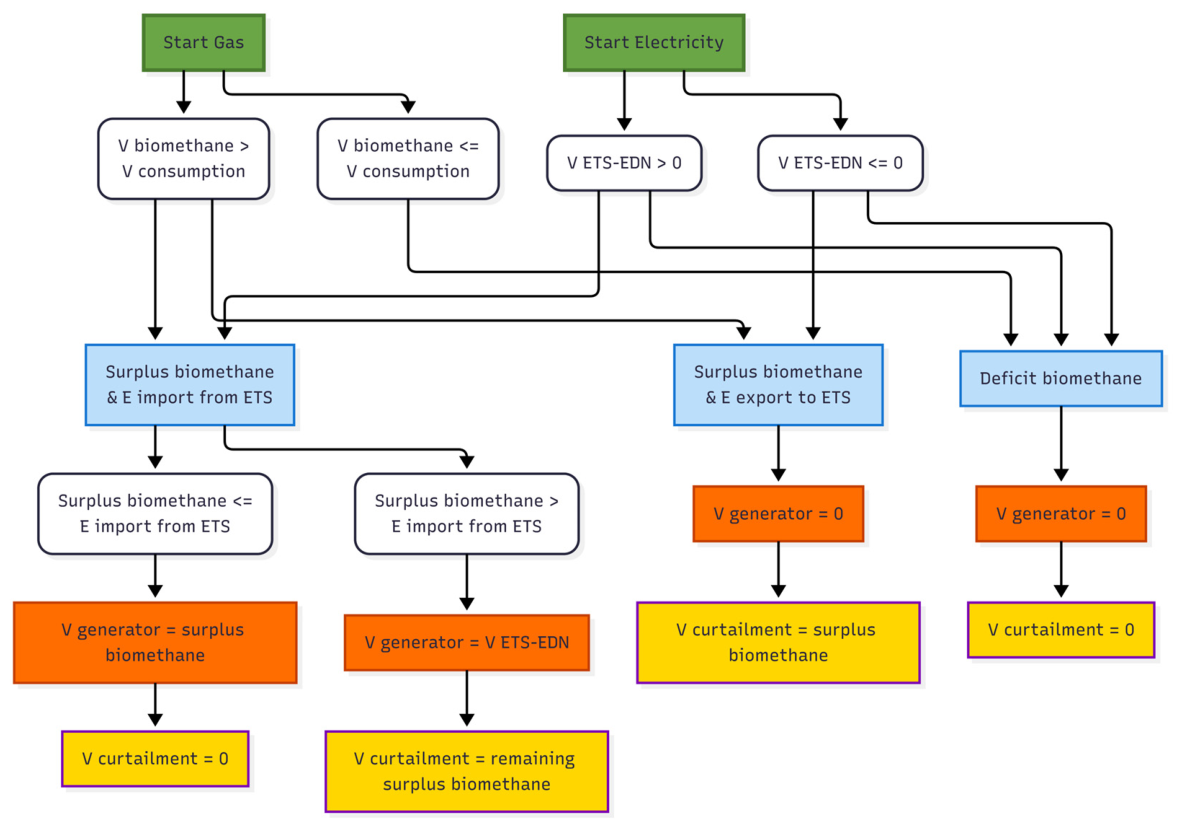
These two conditions are implemented in the simulation model for the generator’s deployment. This is depicted in a decision tree shown in
Figure 2.
This decision routine runs at each time step.
Start Gas: the total gas consumption in the GDN (
Section 2.4.1) and the total biomethane volume (
Section 2.4.3) determine whether a surplus or deficit of biomethane exists.
Start Electricity: dataset (c) indicates whether the EDN is importing electricity (positive values) from or exporting electricity (negative values) to the ETS. For consistency, the (net) electricity quantity is converted from kWh to Nm3 using the generator efficiency and the lower heating value (LHV) of biomethane, as shown in Equation (2). This conversion represents the generator’s potential gas demand corresponding to the EDN’s instantaneous electricity need:
is the normalized gas volume of the generator at timestep t, expressed in Nm3;
is the net electricity exchange at timestep t in kWh;
Positive values represent electricity imported from the ETS to the EDN;
Negative values represent electricity exported from the EDN to the ETS;
is the electrical efficiency of the generator;
is the lower heating value of biomethane in kWh/Nm3.
Based on these checks, three scenarios arise:
Surplus biomethane and EDN import from ETS:
The model compares the surplus of biomethane (Nm3) with the Nm3-equivalent of the ETS import. The generator either (i) converts the entire biomethane surplus (if it is smaller), or (ii) converts only the amount needed to reduce ETS import to zero (if the biomethane surplus is larger). Any residual surplus will be curtailed.
- 2.
Surplus biomethane and EDN export to ETS:
The generator does not convert any biomethane, and the entire surplus is curtailed.
- 3.
Biomethane deficit (either EDN import or export):
The generator remains off as no biomethane is allocated to power generation. Also, no biomethane will be curtailed.
This results in three possible generator and curtailment states (orange and red blocks in
Figure 2):
Full-surplus dispatch: the generator converts the entire surplus biomethane, and no biomethane is curtailed;
Import-matching dispatch: the generator converts only the amount needed to eliminate ETS imports, and any remaining surplus is curtailed;
No dispatch: the generator does not convert any biomethane, and any remaining biomethane surplus is curtailed.
2.4.3.
The biomethane injection capacity is specified manually as a constant feed-in capacity (Nm
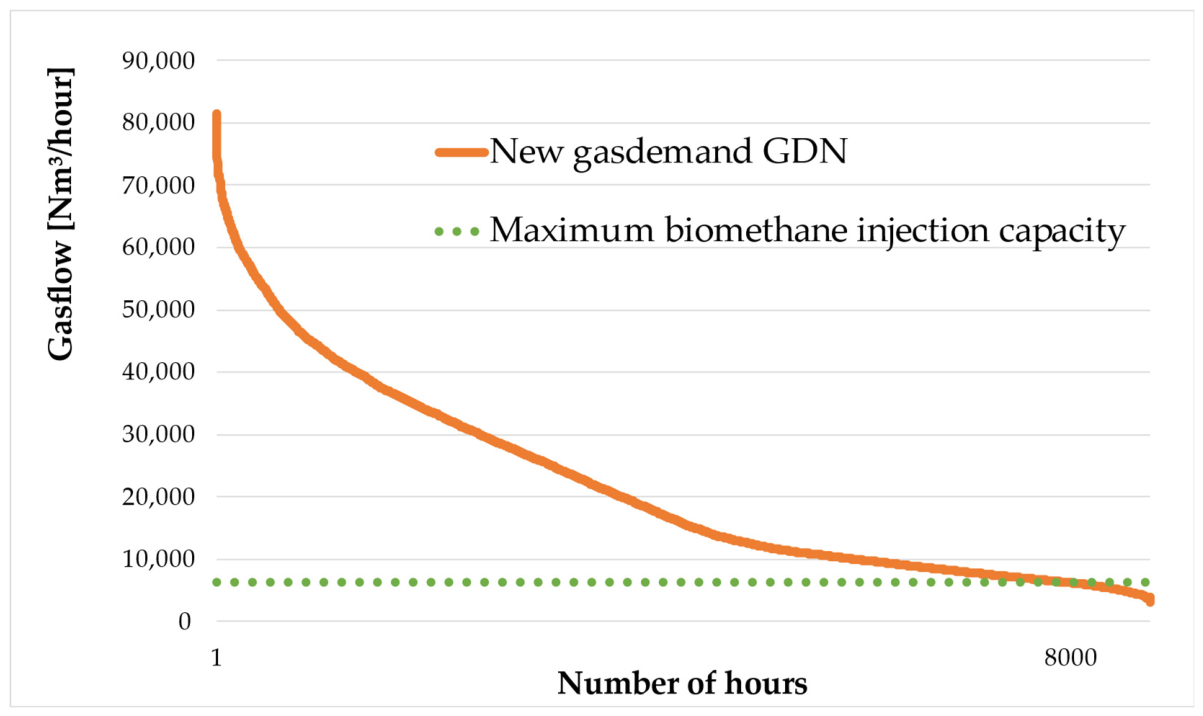
3/h), which does not vary throughout the year. The simulation uses hourly time steps and covers a full year (8760 h). By adding up the number of time steps during which curtailment occurs throughout the year and then subtracting these hours from 8760 h, the model yields the number of hours that biomethane can be injected without restrictions. Validation is performed using an annual load duration curve of the new gas demand (
+
) for the entire year. All hourly values (8760 points) are sorted from largest to smallest. An example of a load duration curve is shown in
Figure 3, where the uptime was set to 8000 h. The green dotted line indicates the maximum biomethane injection capacity in the GDN. When it intersects with the orange line (the new gas demand of the GDN) at the desired uptime hour, the maximum biomethane injection equals the manually specified biomethane injection capacity.
2.4.4.
The required gas flow from the GTS is computed using a balance equation. GTS supply is required whenever hourly gas consumption exceeds the available biomethane injection. The logical test is given in Equation (3). If the condition is true, GTS supply equals the deficit. Otherwise, GTS is set to 0 Nm
3/h. This is shown in Equation (4):
2.4.5. Calculating Annual Biomethane Injection Volume
The model computes the annual injected biomethane as the sum of hourly net injection (production minus curtailment), as shown in Equation (5):
To reflect the generator’s effect on gas demand, the biomethane share is calculated against total annual consumption (customer demand plus generator consumption), as shown in Equation (6). This share represents the proportion of biomethane blended with natural gas that was transported through the gas network:
2.4.6. Calculating Annual Effective Biomethane Share
Extracting the generator’s gas consumption from the annual biomethane injection volume yields the effective volume of natural gas that is replaced by biomethane delivered to end-users via the GDN, as shown in Equation (7). This share represents the effective biomethane share in the gas mix based on the end-users consumption:
2.4.7. Calculating Generator Operating Hours
To quantify generator utilization, the model computes the annual operating hours as the count of hours with generator status = 1, independent of the converted volume.
2.4.8. Calculating Annual Electricity Production of Generator
The annual electricity production by the generator is calculated as shown in Equation (8):
2.5. Case Study Description
The case study focuses on two relatively small DSOs in the Netherlands, Coteq Netbeheer and RENDO Netbeheer. The key figures for both DSOs regarding their GDN and EDN are shown in
Table 1. The service areas of both DSOs are partly urban but predominantly rural, implying there is a relatively large number of potential biomethane producers in their service area. The two DSOs operate both a GDN and an EDN, although the gas service area is larger than the electricity service area. This implies that in some parts of the GDN’s service area, a different DSO is responsible for the EDN. The electricity data from this other DSO are not used in this simulation.
The simulations are performed for both DSOs individually with data for the year 2023, for both gas and electricity. The electrical efficiency of the generator is set to 35% [
51,
52] and the LHV of biomethane is set to 9.77 kWh/Nm
3 [
53]. In the Netherlands, when there is a new initiative to produce and inject biomethane, the DSO investigates options to make sure production and injection achieve at least 8000 h a year. This is important because it is a requirement for the subsidy for the production and injection of biomethane and is often decisive for the economic viability of the project. Therefore, the biomethane injection uptime for both the reference scenario and the generator scenario is set to 8000 h.
Table 1.
Key figures of DSOs RENDO N.V. and Coteq Netbeheer B.V. in 2023 [
54] (p. 9), [
55] (p. 9).
Table 1.
Key figures of DSOs RENDO N.V. and Coteq Netbeheer B.V. in 2023 [
54] (p. 9), [
55] (p. 9).
| 2023 | Unit | RENDO N.V. | Coteq Netbeheer B.V. |
|---|
| Number of gas connections | # | 103,986 | 141,226 |
| Length GDN | km | 3502 | 4446 |
| Annual transported volume GTS + biomethane | 106 Nm3 | 192 | 243 |
| Total biomethane injection | 106 Nm3 | 19.8 | 18 |
| Number of electricity connections | # | 34,134 | 56,375 |
| Length of electricity network | km | 930 | 1411 |
| Annual transported electricity | GWh | 276 | 439 |
| Exported energy to ETS | GWh | 14.3 | 2.5 |
3. Results
3.1. Overall Results
The results of using a generator to convert surplus biomethane were compared with a reference scenario in which the maximum biomethane injection rate was simulated without a generator. The outcomes for both DSOs are reported in
Table 2. The results indicated that, in both cases, substantial increases in biomethane injection were achievable when surplus biomethane was converted into electricity by the generator.
The impact of the generator on the biomethane share in the gas mix was evaluated using two approaches: (i) the biomethane share blended in the actual gas mix transported through the GDN (Equation (6)), and (ii) the effective biomethane share that truly replaced natural gas in the GDN (Equation (7)).
The first approach corresponds to the reporting practice used by RENDO and Coteq, as it relates the total biomethane production to the total gas consumption within the gas network. Using this approach, the maximum biomethane injection volume increased by 60.7% for RENDO and 142.4% for Coteq, raising the biomethane share of the transported gas mix through the GDN from 29.0% to 45.0% for RENDO and from 22.3% to 50.1% for Coteq relative to the reference scenario. These values represented the proportion of biomethane blended with natural gas and transported through the GDN. However, because part of the (surplus) biomethane was used for electricity generation, these shares did not fully capture the extent to which biomethane replaced natural gas within the GDN.
The second approach, therefore, subtracted the biomethane consumed by the generator from the total injected biomethane and excluded this consumption from the total gas consumption. Using this method, the effective biomethane share increased from 29.0% to 43.1% for RENDO and from 22.3% to 46.1% for Coteq, with corresponding increases in maximum biomethane injection volume of 49.0% and 106.8%, respectively. These effective shares primarily reflected the replacement of natural gas within the GDN. As substituted by biomethane, the annual volume of natural gas delivered by GTS in the GDN was reduced by 20.0% for RENDO and 30.6% for Coteq, as reported in
Table 2.
Notably, the increase in biomethane injection for Coteq was more pronounced than for RENDO. One possible explanation was that approximately 1.5 times more electricity was transported through the Coteq electricity network, creating greater potential to convert surplus biomethane into decentralized electricity generation. Another explanation was that RENDO exhibited higher levels of decentralized electricity generation, as indicated by higher electricity exports to the ETS. As described in the methodology, the generator was programmed not to convert surplus biomethane when electricity was being exported to the ETS. This was consistent with the observed generator operating hours, which were roughly 1.5 times higher in the Coteq network than in the RENDO network.
As shown in
Table 2, generator operation increased gas consumption. Curtailment volume also increased because the biomethane injection volume was higher and, during curtailment hours, the curtailed volume per hour was larger. However, these increases in gas demand and curtailment volume were modest compared with the gain in biomethane injection volume. In addition, as a result of the electricity generated with surplus biomethane, electricity imports from the ETS were −9.2% and −16.2% lower for RENDO and Coteq, respectively, compared to the reference scenario.
3.2. Annual Patterns/Overview
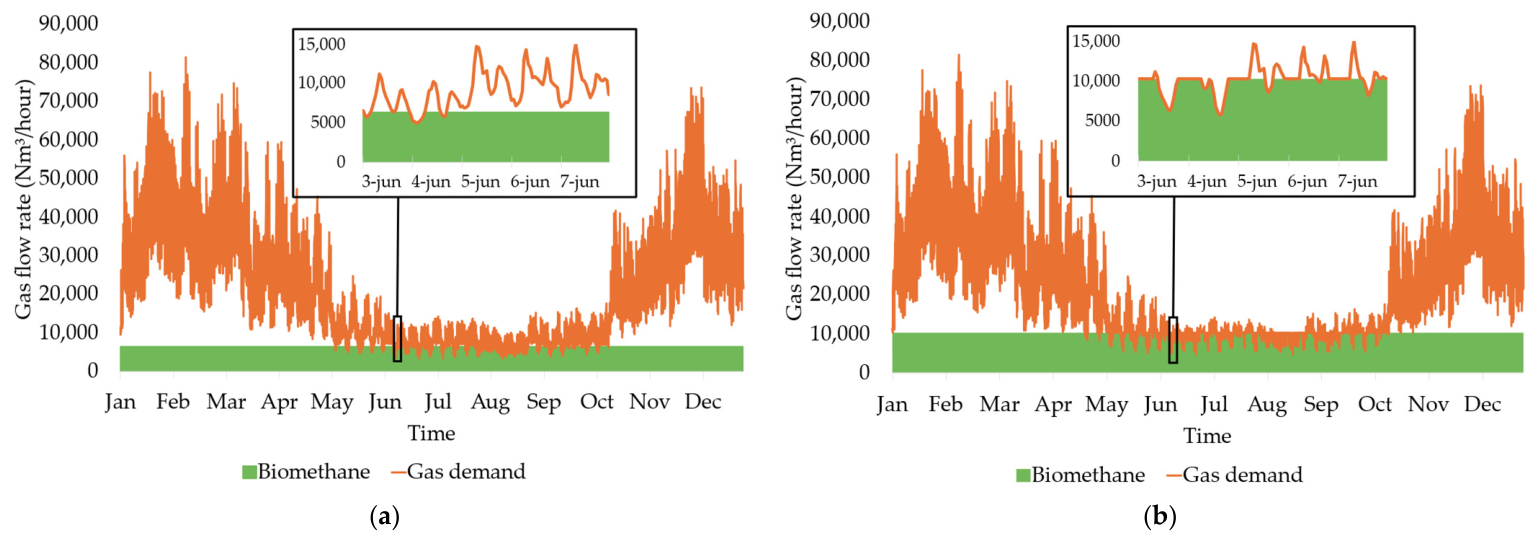
By creating a higher gas demand in the summer by utilizing the generator, more biomethane could be injected year-round. This enabled biomethane producers in the region to increase production or upscale biodigesters’ capacity. This is shown in
Figure 4, which shows the reference scenario with maximum biomethane injection and the scenario in which the generator was used. The orange line represents the total gas, which was the same for both situations during the winter period. Between May and early October, there was a difference in this curve, with the orange line in the generator scenario lying higher than the gas demand in the reference scenario, due to the gas being used by the generator. The green area represented the biomethane injection volume, which resembled a horizontal block in winter. During these months, there were moments (760 h) when full capacity could not be utilized, and the supply was curtailed. Although the number of curtailment events was the same for both scenarios, the volume that needed to be curtailed was larger in the generator scenario, as shown in
Table 2. This was explained by the higher biomethane injection in that scenario, creating a larger surplus. This resulted in a higher curtailment volume, especially during the day, when the generator often could not convert this surplus due to the electricity grid constraints. The white area between the orange line and the green area represents the amount of natural gas supplied from the GTS to complement biomethane injection. In the generator scenario, this white area decreased, indicating that less natural gas was required from the GTS because part of the demand was covered by biomethane-to-power conversion.
3.3. Hourly Patterns
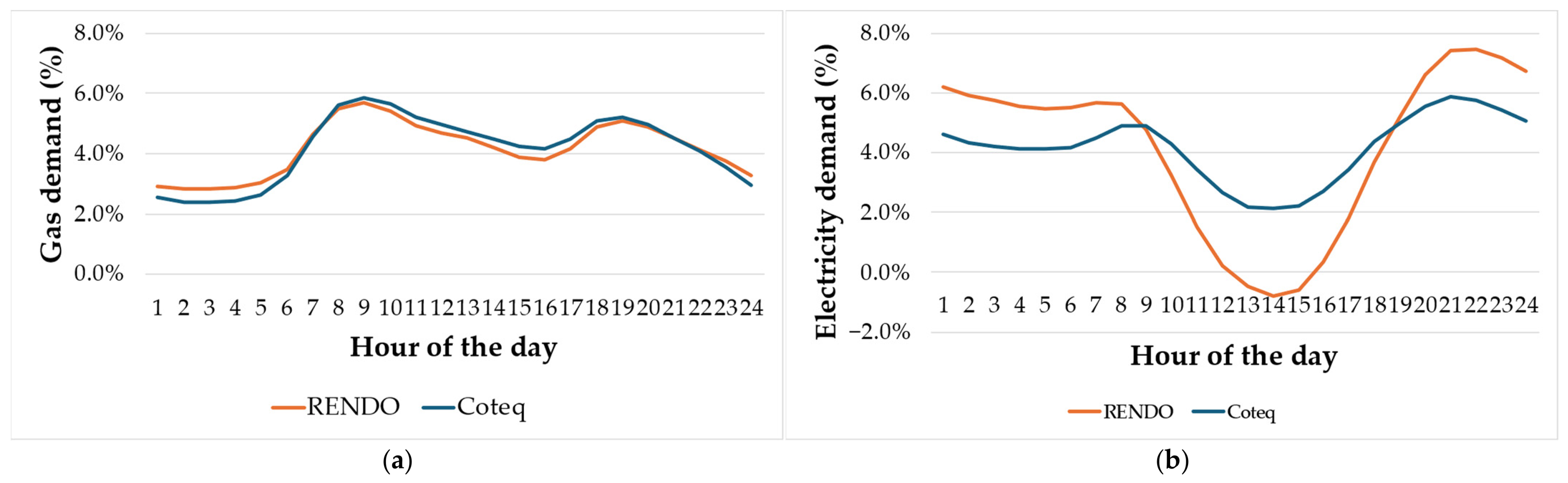
Zooming in at the hourly level reveals consistent patterns in the original gas demand (without generator) for both RENDO and Coteq. The proportional gas demand and the proportional electricity demand represent the fraction of the total gas demand that occurs in a given hour, calculated as the hourly gas demand volume relative to the total gas demand volume over the analyzed period. In other words, they indicate how much of the total gas or electricity demand is consumed during each specific hour, making the patterns comparable across days and between DSOs, regardless of absolute demand levels.
Section 3.4 explains that the generator was primarily operational during the period from May to October. Focused on this period,
Figure 5a shows that proportional gas demand generally peaks in the morning around 09:00 a.m. and again in the early evening around 07:00 p.m. The proportional electricity demand (without the generator) follows a typical daily profile, as shown in
Figure 5b. This also confirms that decentralized electricity generation from PV was higher at RENDO than at Coteq, which is reflected in the lower proportional electricity demand during daylight hours for RENDO.
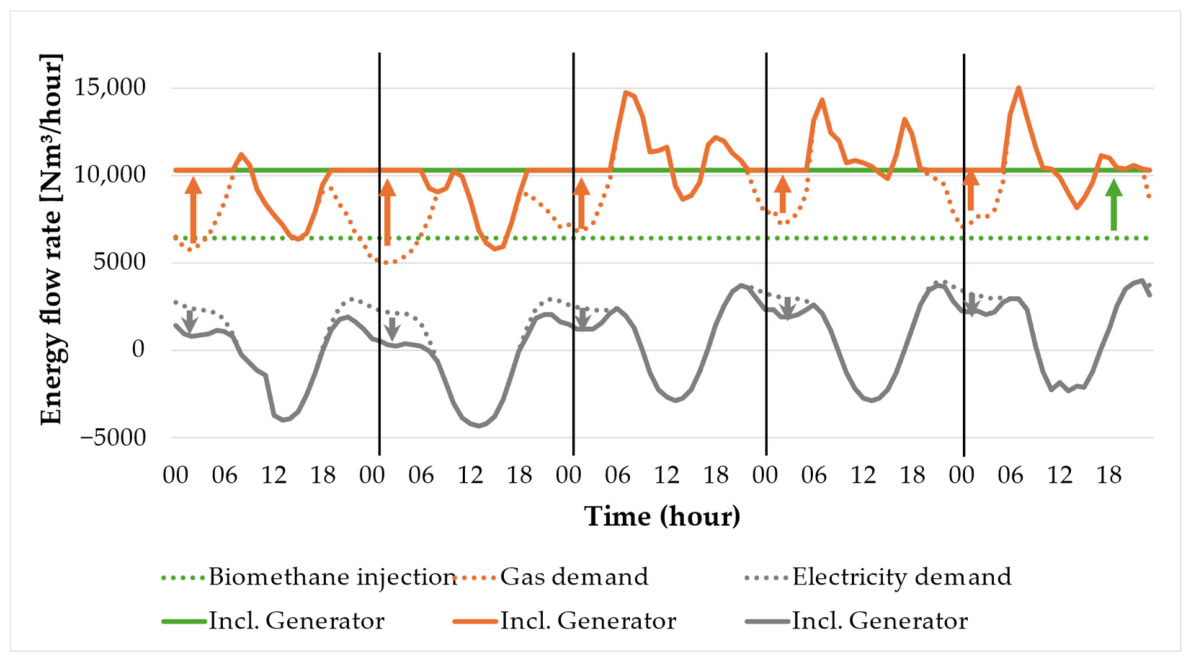
Figure 6 compares the reference scenario with the scenario including the generator based on the absolute energy flow rate, expressed in Nm
3 per hour, to ensure that gas and electricity flows are shown in the same unit and can therefore be directly compared. It shows the continuous biomethane injection (green), the gas demand of the GDN (orange), and the electricity demand of the EDN that was imported from ETS (gray). Dotted lines represent the original patterns from the reference scenario, while solid lines indicate the values when the generator is active. The Figure displays five days, from Saturday, June 3rd, through to Wednesday, June 7th. Gas consumption is lower during the weekend than on weekdays, although the daily patterns remain similar, with comparable peak times. Off-peak hours occur mainly at night and around 1:00 p.m.
Whenever the electricity demand became negative, electricity was exported to the ETS. The biomethane injection level was constant throughout the year. Whenever the biomethane exceeded gas demand, a surplus of biomethane was created. If, at that time step, the electricity value was positive (imports), the surplus was converted into electricity. This increased gas demand (orange arrows) and reduced imported electricity (gray arrows), and this mostly occurred in the evening and at night. The maximum amount of conversion was limited to the available biomethane volume, even if there was still a net import of electricity after conversion. When no biomethane surplus was present (green line at or below the orange straight line), no conversion occurred. Likewise, during electricity exports (negative), the generator could not produce electricity. In such cases, any surplus (e.g., often around 12:00 a.m. in this example) was curtailed.
The surplus biomethane that occurred during the evening and night hours was used by the generator to meet part of the nighttime electricity demand. This effectively resulted in higher gas demand during the evening and night hours, which better aligned with the constant injection pattern of the biomethane producers. This increased feasible injection capacity, shifting the green curve upward.
3.4. Generator Operating Pattern
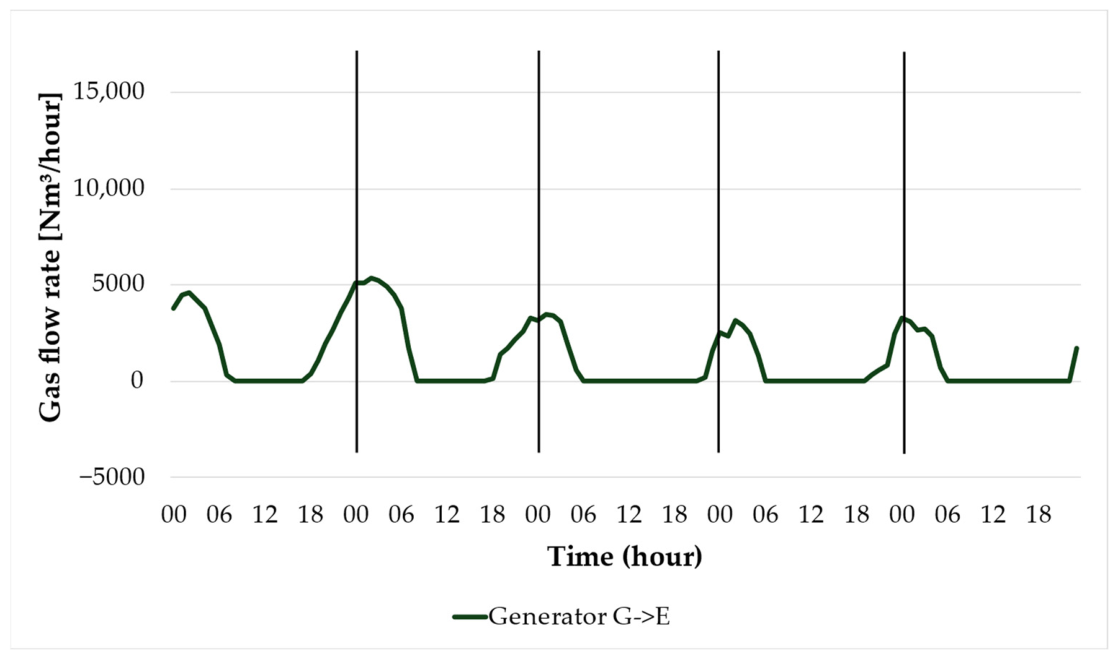
Table 2 showed that the generator’s operating hours were 2300 and 3618 for RENDO and Coteq, respectively, corresponding to an annual utilization of 26% and 41%. Generator utilization was mostly limited to nighttime hours. The generator pattern for the period from June 3 to June 7 is shown in
Figure 7, where the black line represents generator utilization expressed in Nm
3 per hour.
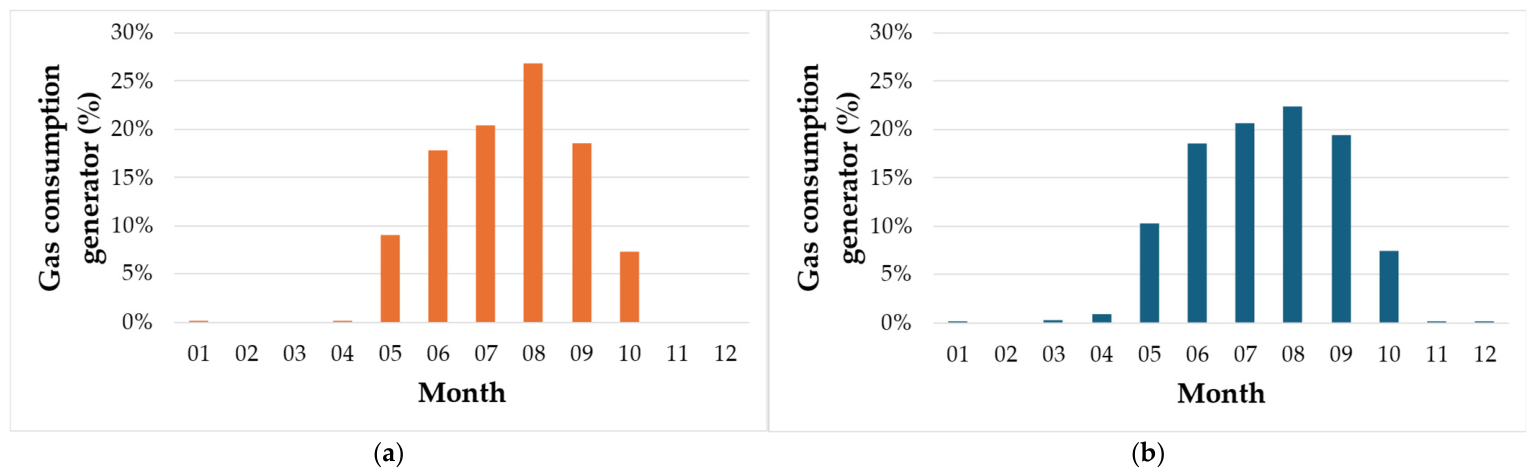
Figure 8 shows the proportional gas consumption of the generator throughout the year. The proportional gas consumption of the generator is the fraction of the total yearly gas consumption that occurs in a given month.
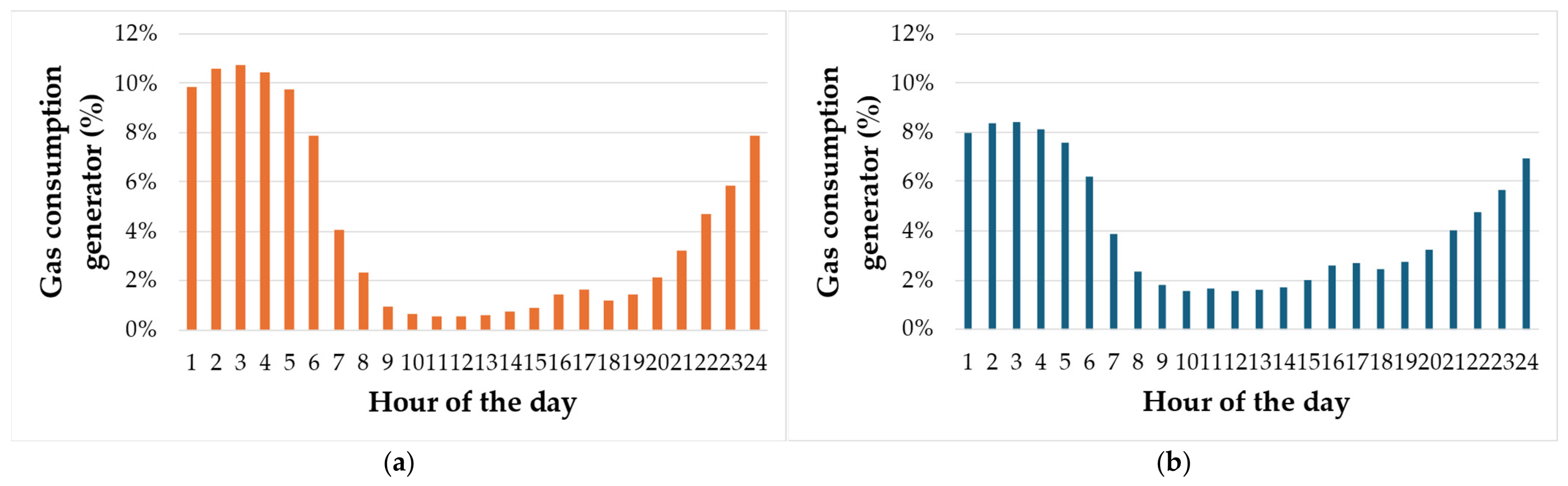
Figure 9 presents the proportional gas consumption of the generator per hour of the day. The proportional gas consumption of the generator represents the fraction of the generator’s total gas use that occurs in a given hour, calculated as the hourly converted gas volume relative to its total converted gas volume over the entire year.
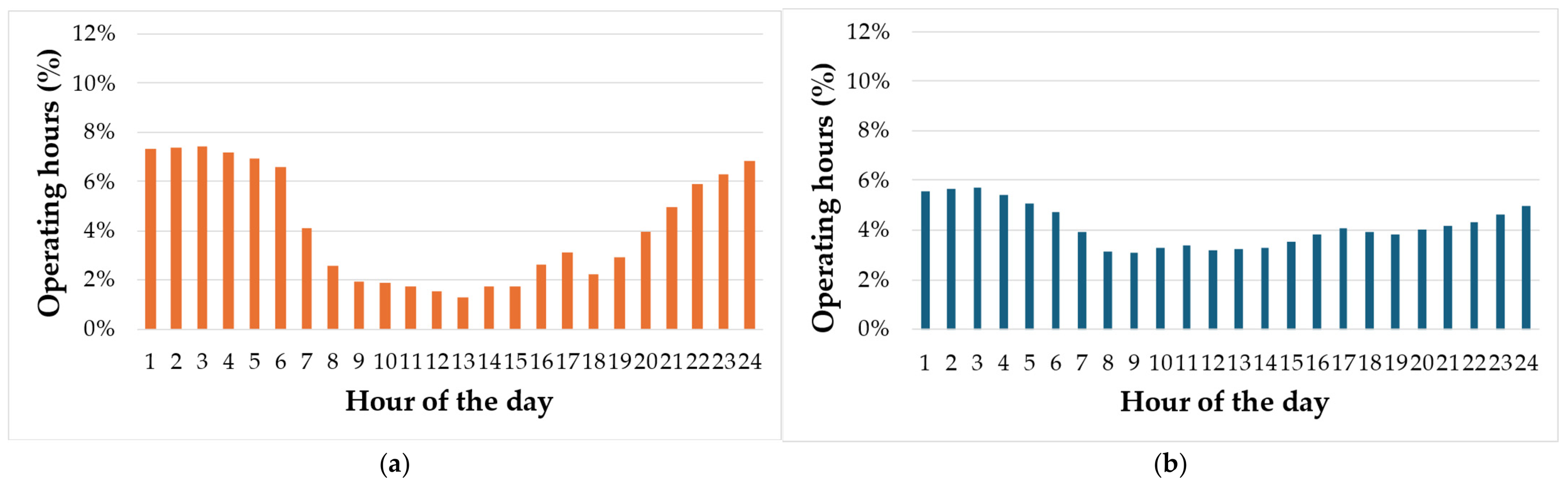
Figure 10 illustrates the operating frequency of the generator per hour of the day, indicating when the generator was active rather than how much it produced. The proportional operating hours of the generator represent the fraction of the total generator operating hours that occur in a given hour.
The patterns for RENDO and Coteq show strong similarities. For both DSOs, the generator was used predominantly between May and October, and generator gas consumption increased during nighttime hours, resulting in higher electricity production at night. However, the difference between daytime and nighttime operating hours was smaller than the difference in gas consumption. This means that during daytime the generator produced less electricity, but it still operated more often than the proportional gas-consumption pattern alone would suggest. Part of the smaller proportion in the afternoon and beginning of the evening is caused by the peak in gas demand, as less surplus biomethane is available during these hours. The largest distinction between the DSOs occurs in daytime operating hours: RENDO shows substantially lower daytime generator activity, which aligns with the earlier observation that the RENDO area has higher levels of decentralized electricity generation in the EDN. Coteq utilized the generator during the day more frequently.
3.5. Reduction in Energy Supply by GTS and ETS
More biomethane was injected into the GDN throughout the year, and gas supply from the GTS was reduced (as shown in
Table 2). In 2023, approximately 56.5 billion m
3 of gas was transported via the GTS, and a total of 280 million m
3 of biomethane was injected into the entire Dutch gas system (GDN + GTS) [
56] (p. 9), [
57]. Therefore, the share of biomethane originating from the GTS did not exceed about 0.5%, and this reduction in GTS supply could be interpreted as a near one-to-one reduction in natural gas supply to the GDN.
Table 2 shows that both RENDO and Coteq required less electricity from the ETS as a result of using generators. Based on ENTSO-e data [
58], the production mix during generator operating hours was determined for 2023. This timeframe was approximated to be 4:00 p.m.–8:00 a.m. during May–October and indicated that approximately 45% of electricity production came from fossil gas and hard coal. This indicated that using the generator led to a reduction in the use of fossil fuels by lowering fossil-based electricity imports in EDN during those hours.
3.6. Sensitivity Analysis on Generator Efficiency
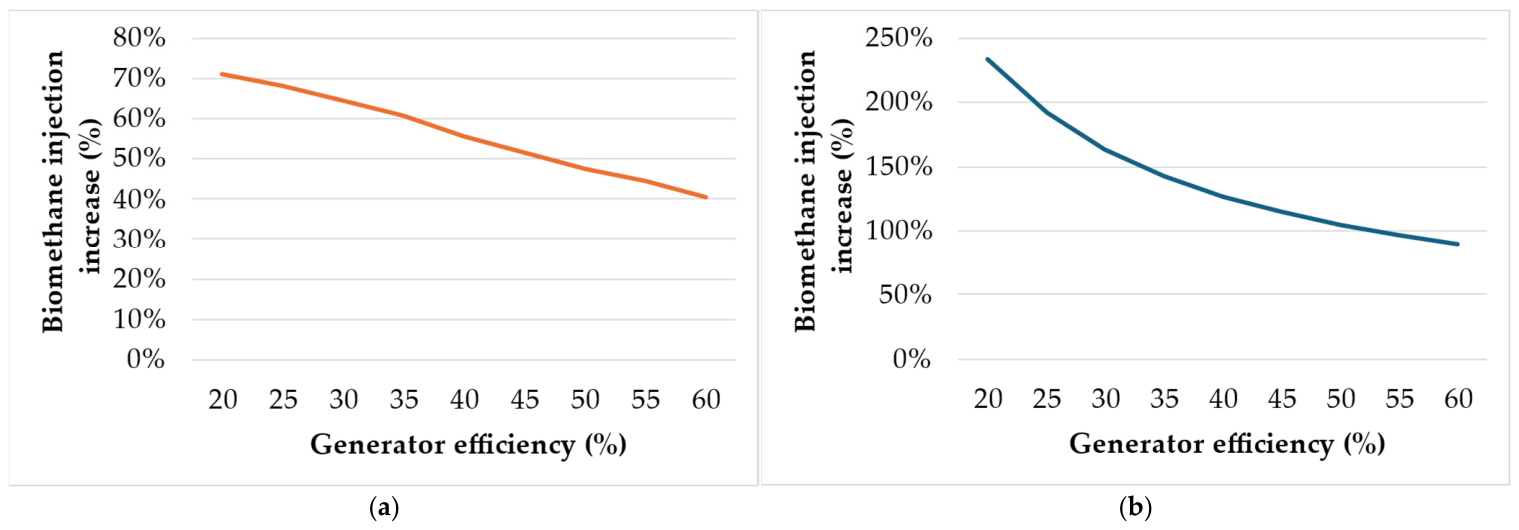
The impact of varying the generator efficiency is shown in
Figure 11, where the percentage increase in biomethane injection was compared to the reference scenario. To maintain 8000 annual biomethane injection hours, both the generator efficiency and the biomethane injection capacity were adjusted accordingly. These modifications ensured internal consistency within the model following each efficiency change. Although the patterns differ, the results show that higher generator efficiencies led to lower annual biomethane injection capacity. Despite this decrease, the multi-commodity approach remained impactful, yielding annual biomethane injection increases of 41% (RENDO) and 90% (Coteq) at 60% generator efficiency compared with their respective reference configurations.
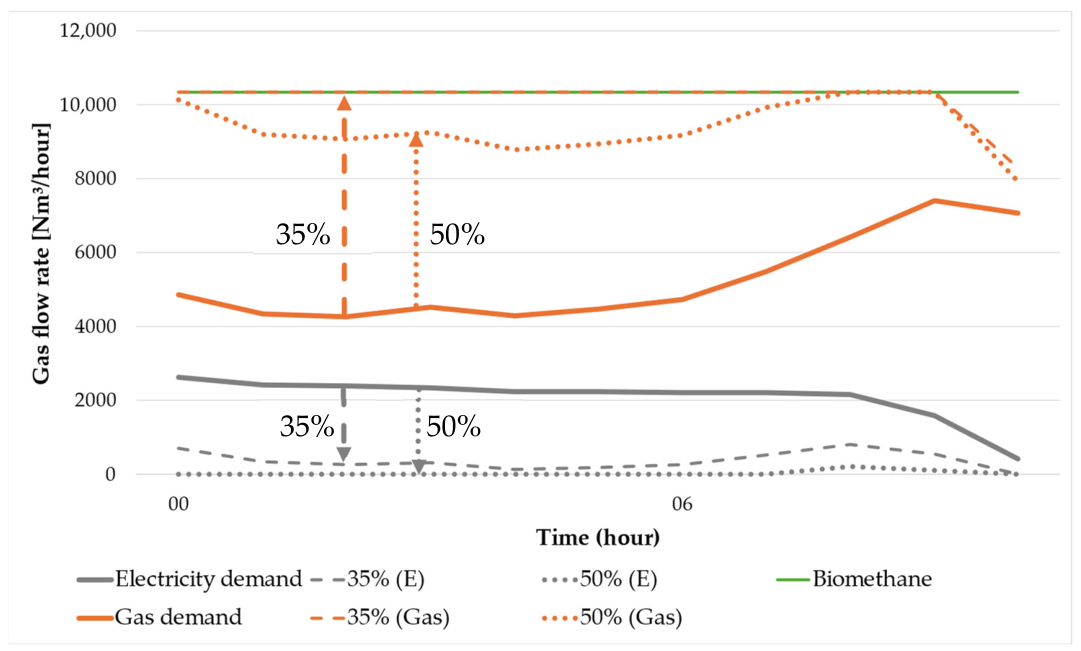
Under the full-surplus dispatch rule (explained in
Section 2.4.2), the generator converted 92% (RENDO) and 85% (Coteq) of the available surplus biomethane at a generator efficiency of 35% (
Table 3). When the generator efficiency was increased from 35% to 50% without adjusting the biomethane injection capacity, the annual biomethane injection uptime decreased from 8000 to 7685 h for RENDO and from 8000 to 7266 h for Coteq. In parallel, the share of full-surplus dispatch hours dropped from 92% to 78% for RENDO and from 85% to 64% for Coteq.
This uptime and full-dispatch reduction occurred because a more efficient generator produced more electricity per unit of biomethane, meeting the local electricity demand faster compared to the 35% efficiency configuration. A closer examination of the hourly patterns (
Figure 12) shows that at an efficiency of 35%, the generator can operate under full-surplus dispatch while local electricity is still not fully met. This resulted in no curtailment. When the efficiency increased to 50%, total local electricity demand was fully satisfied while surplus biomethane remained available. In this situation, the dispatch mode transitions to import-matching dispatch, with the remaining surplus biomethane (the difference between the orange dotted 50% gas line and the green biomethane injection line) being curtailed.
At higher generator efficiencies, the model switched more frequently to import-matching dispatch of the generator, leading to an increase in curtailment occurrences. Consequently, fewer hours remain in which the generator can operate under full-dispatch conditions without curtailment, leading to lower biomethane injection uptime. Consequently, the biomethane injection capacity must be reduced to maintain the 8000 generator operating hours per year.
4. Discussion
This study evaluated whether surplus biomethane can be converted into electricity as an operational mechanism to simultaneously increase biomethane injection in gas distribution networks (GDNs) and support electricity-grid operation. The results offer several insights into the cross-sector interactions between gas and electricity distribution networks and demonstrate that biomethane-to-power conversion can serve as a multi-commodity alternative to traditional single-commodity approaches.
4.1. Interpretation of Key Findings
Two approaches were used to investigate the effect of the generator on the biomethane injection. Although the first approach is commonly used by RENDO and Coteq, the second approach might be more appropriate, as it focuses directly on the reduction in natural gas within the GDN and excludes the gas consumption of the generator from both the biomethane injection and the gas consumption accounting.
Either way, the impact of the proposed solution was substantial for both DSOs. The effective biomethane injection increased by 49.0% for RENDO and 106.8% for Coteq, resulting in lower natural gas deliveries from the GTS (−20.0% for RENDO and −30.6% for Coteq) as well as lower electricity deliveries from the ETS (−9.2% for RENDO and −16.2% for Coteq). These reductions in natural gas and electricity deliveries by the TSO reflect a meaningful decrease in fossil-fuel use within both the GDN and the EDN, given that the gas mix delivered by the GTS contained at least 99.5% natural gas and that, during the generator’s operating hours, approximately 45% of the electricity supplied by the ETS was generated by fossil gas and hard coal.
This study used energy balance calculations and did not incorporate transport dynamics of gas and electricity networks, congestion-related constraints, or pressure losses. Previously mentioned linepack-focused and multi-commodity studies included parts of those gas network-related dynamics and found that the resulting gas network behavior was highly network-specific, making results difficult to generalize across GDNs [
34,
48,
50]. Excluding these constraints is therefore appropriate for identifying conceptual system-level synergies, but this also means that the absolute biomethane injection results presented here are likely lower in reality.
However, the exact impact varied per DSO, influenced by differences in consumption patterns, PV penetration in the EDN, and the size and composition of the customer base. Because RENDO and Coteq operate in DUO service areas, only partial electricity-network information was available. Incorporating complete EDN data could improve accuracy and reveal additional synergies.
4.2. Comparison with Existing Literature
Most sector-coupling studies focus on P2G or energy-hub optimization and do not aim to maximize the biomethane injection in GDNs [
44,
45,
46,
49]. Although previous single-commodity studies indicate that the impact of linepack is largely limited to short-term buffering and its effect is decreasing at lower pressure levels, the present study shows a larger increase in biomethane injection than those studies [
34,
48]. Because the modeling approaches, methodology, and underlying assumptions differ, a direct quantitative comparison is not possible. However, the contrast in outcomes suggests that multi-commodity interactions represented in this study may enable a more substantial effect than linepack alone.
Studies on hydrogen blending and electricity–gas sector coupling emphasize that sector-coupling effects must be assessed case-by-case due to network-specific bottlenecks and the strong influence of injection-node location and load patterns [
50]. The results of this study confirm this insight: the effectiveness of biomethane-to-power conversion differed between RENDO and Coteq due to regional differences in consumption profiles and local electricity generation (PV).
Overall, generator-based sector coupling appears to provide flexibility benefits that exceed those reported for linepack alone, and complements existing P2G-oriented literature by addressing challenges unique to continuous biomethane production.
4.3. Operational Limitations
One of the challenges in an electricity grid with rising solar penetration is maintaining the stability and flexibility of the electricity system [
59]. In the Netherlands, the central government and DSOs have increasingly communicated the need to reduce electricity consumption between 4:00 p.m. and 9:00 p.m. [
60,
61]. Furthermore, warnings have been issued regarding increasing outage frequency, potential electricity shortages by 2030, and the need for additional controllable capacity at connection points [
62,
63].
Although the generator in this study produced most electricity at night, the results suggest that daytime operation could help mitigate evening peak demand if surplus biomethane were stored between 8:00 a.m. and 4:00 p.m. This would create a win–win situation: biomethane curtailment would decrease while controllable generation helps reduce electricity-grid stress. Adding linepack storage or other storage facilities in the gas network would increase the operating of the generator on surplus biomethane stored during off-peak hours.
4.4. Economic Limitations
The economic feasibility of biomethane-to-power conversion was not evaluated in this study. While the operational benefits for gas- and electricity-network balancing are evident, the financial viability depends on several factors that were not modeled, such as generator CAPEX, fuel-conversion and maintenance OPEX, electricity market revenues, and avoided curtailment penalties.
For DSOs, an additional constraint is the regulatory framework: DSOs are generally not permitted to own or operate generation assets. Alternative ownership models—such as third-party operators—may be needed, similar to planned pilot deployments designed to support electricity-grid balancing [
64]. This introduces additional transaction costs and may affect the economic attractiveness of the solution. Moreover, the absence of heat valorization reduces the overall efficiency of the system and weakens the business case compared with combined heat-and-power (CHP) installations. On the other hand, existing CHP installations that historically generated electricity from biogas but became economically unviable could potentially be repurposed for biomethane-to-power conversion [
65].
A techno-economic assessment would therefore be necessary to determine the cost-effectiveness of the proposed approach under different market conditions. Such an assessment would also improve comparability with reverse-flow solutions combined with UGS, as these alternatives require significant infrastructure investments estimated at approximately €2.5 billion per year toward 2040 in the EU [
38].
4.5. Future Work
Integration of short-term gas storage, such as linepack storage or local storage facilities, could store a surplus of biomethane at off-peak hours during mid-day and be discharged at peak hours when the electricity grid is facing difficulties, as described before. Additional research on this topic could be promising.
Another interesting topic for future work is to combine demand response with this study, which could shift consumption to off-peak periods and further enhance biomethane injection capacity and renewable electricity use.
Adding the economic component to this study would enhance the results and possibly optimize the generator scheduling to be cost-optimal.
Substituting the generator with a fuel cell could further reduce exhaust emissions and provide higher electrical efficiencies. In addition, if the fuel cell is capable of operating on multiple gaseous fuels, it may enable integration across several energy networks transporting different gas compositions, thereby expanding the potential scope of multi-energy coupling.
4.6. Synthesis
Overall, the results demonstrate that generator-based multi-commodity coupling can substantially increase biomethane injection capacity while simultaneously enhancing electricity system flexibility. This positions biomethane-to-power as a promising operational strategy for DSOs dealing with rising biomethane production, declining gas demand, and increasing electricity-grid congestion.
5. Conclusions
This study examined whether surplus biomethane can be converted into electricity as an operational strategy to simultaneously enhance biomethane injection capacity in gas distribution networks (GDNs) and support electricity network operation. Using an energy balance simulation with real gas and electricity demand data from two Dutch DSOs, the results demonstrate that multi-commodity coupling offers significant system-level benefits.
Results showed that using the generator increased the effective biomethane injection capacity by 49.0% (RENDO) and 106.8% (Coteq) compared to the reference scenario. This reduced natural gas deliveries from the GTS by 20.0% for RENDO and 30.6% for Coteq, resulting in a direct reduction in fossil-fuel use. Furthermore, electricity imports from the ETS decreased by 9.2% for RENDO and 16.2% for Coteq when using the generator. This resulted in likely lower fossil-based electricity use, given that approximately 45% of electricity production came from fossil gas and hard coal during the hours the generator operated. Although most electricity production occurred at night, the results suggest that incorporating short-term gas storage (e.g., linepack or local storage units) could enhance daytime operation and reduce the 4:00–9:00 p.m. peak, thereby improving electricity-system flexibility. This could be performed in future work, as well as the integration of demand response.
The generator operated mainly in the evenings and at night, but its operating hours were limited throughout the year (2300 and 3618 h per year, respectively). This was partly due to the limited generator operation from May to October. The generator operated at an efficiency of 35%, and higher efficiencies led to lower annual biomethane injection capacity. Nevertheless, the impact of the multi-commodity approach remained significant even at a generator efficiency of 60%.
Several limitations should be acknowledged. The model does not include hydraulic or transient gas-network dynamics, which means that absolute injection limits represent upper-bound estimates. In addition, the economic feasibility and regulatory constraints associated with generator ownership were not evaluated. A techno-economic assessment is therefore required to determine under which market and policy conditions the proposed solution becomes financially viable and how it compares to alternatives such as reverse-flow and UGS-based options.
Overall, the results indicate that biomethane-to-power conversion is a promising operational strategy for DSOs facing rising biomethane production, declining gas demand, and increasing electricity-grid congestion. By unlocking additional flexibility in both networks, generator-based coupling offers a practical pathway to support the integration of renewable gas and enhance system reliability in multi-energy distribution systems.