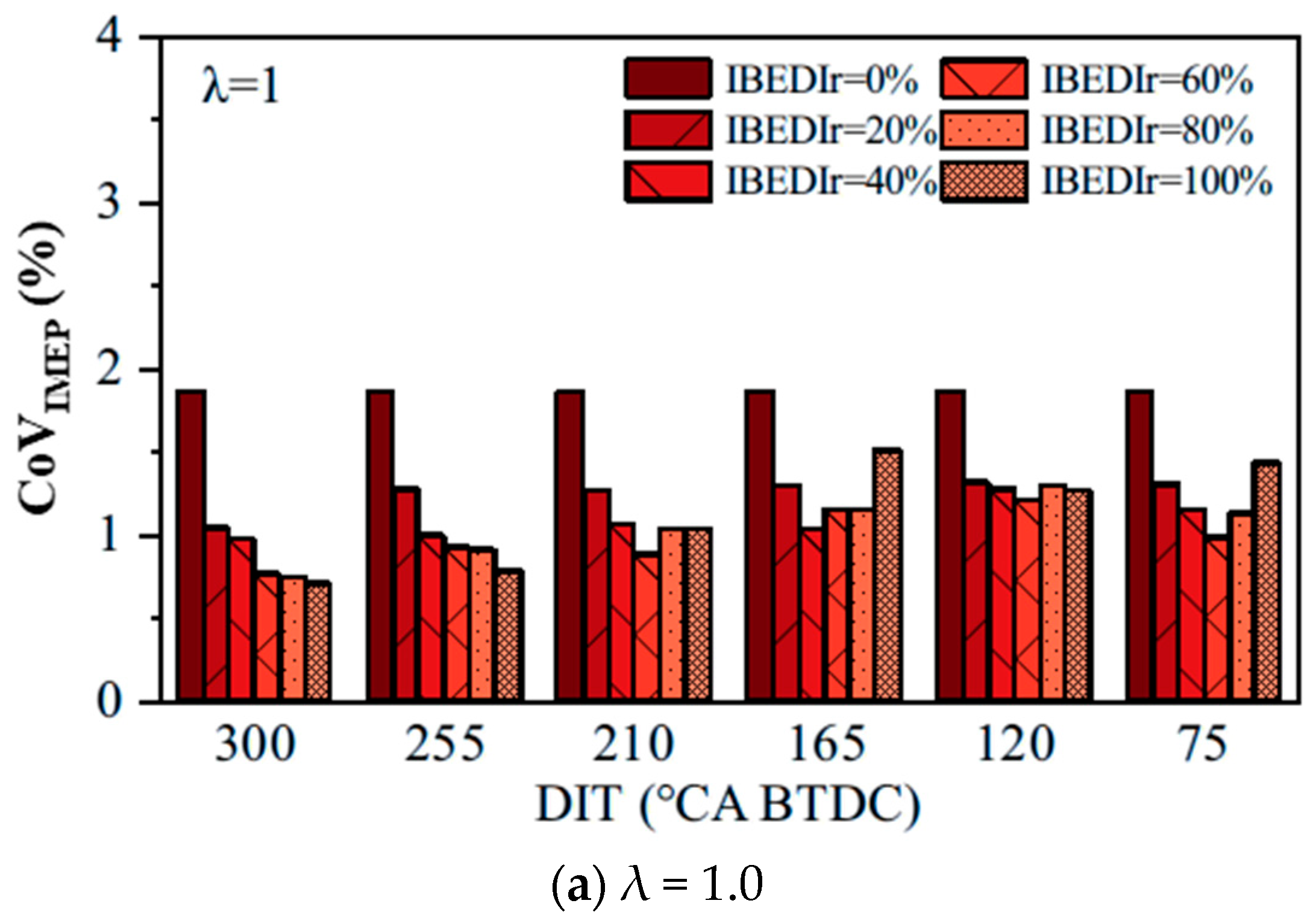
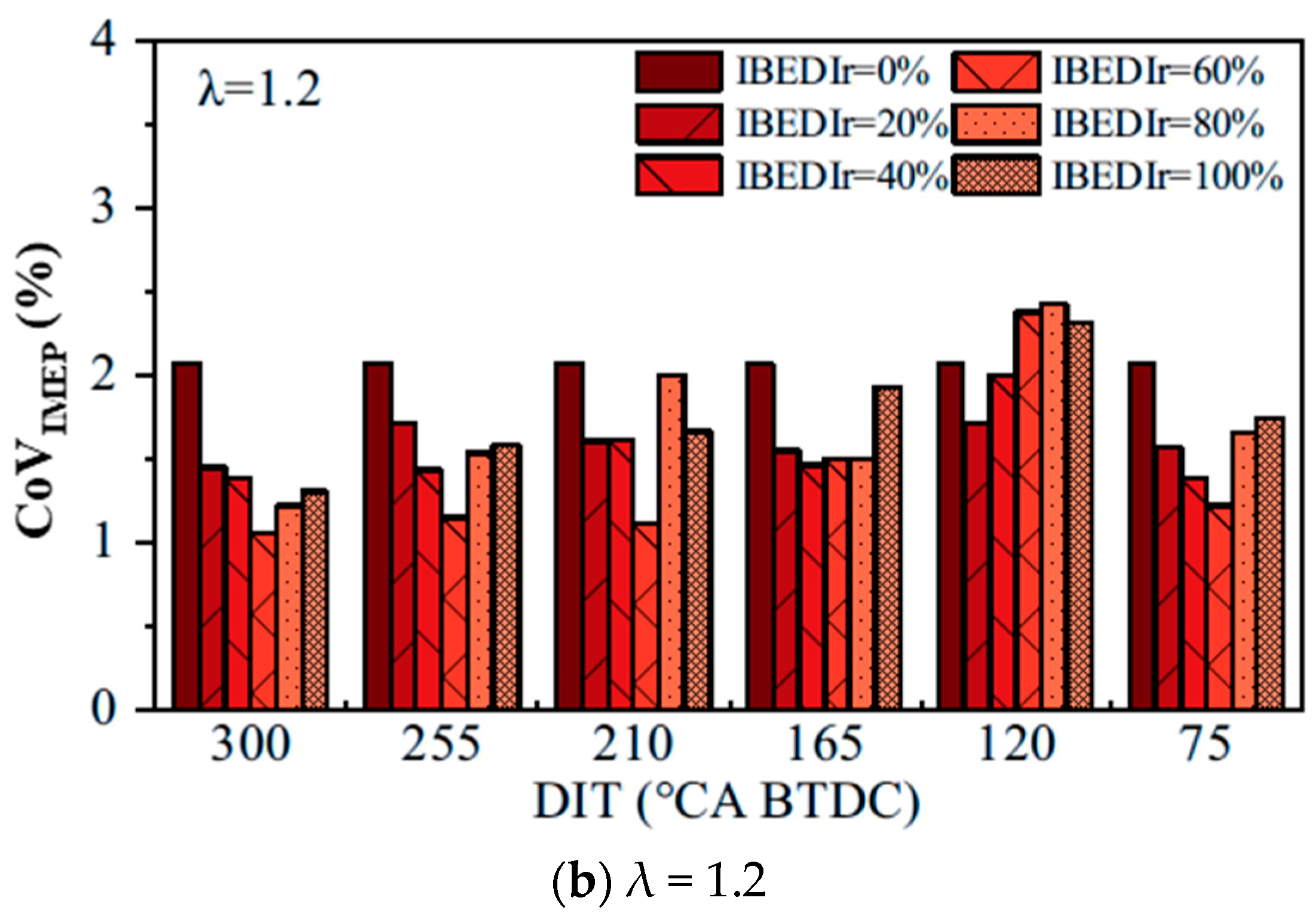
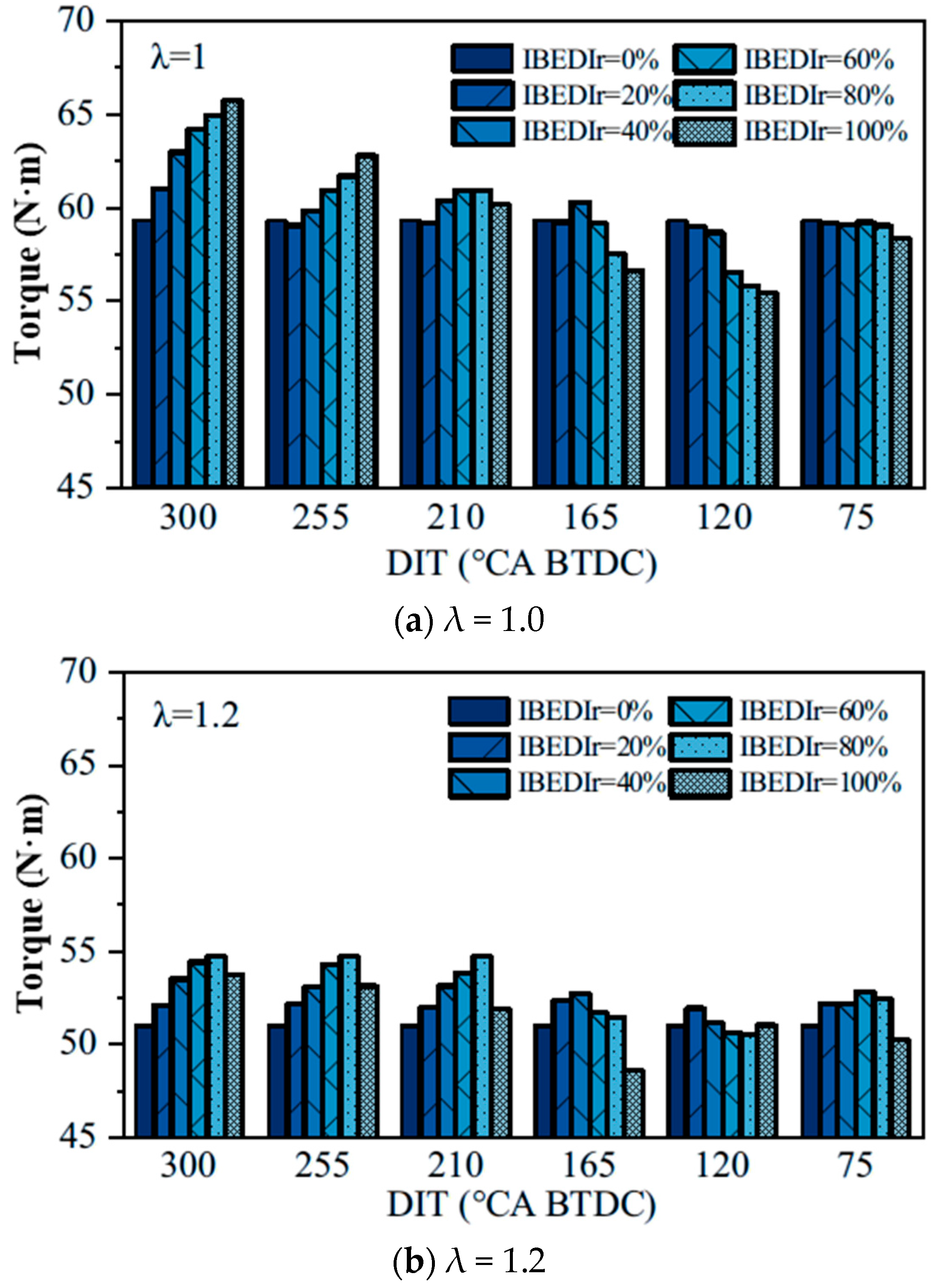
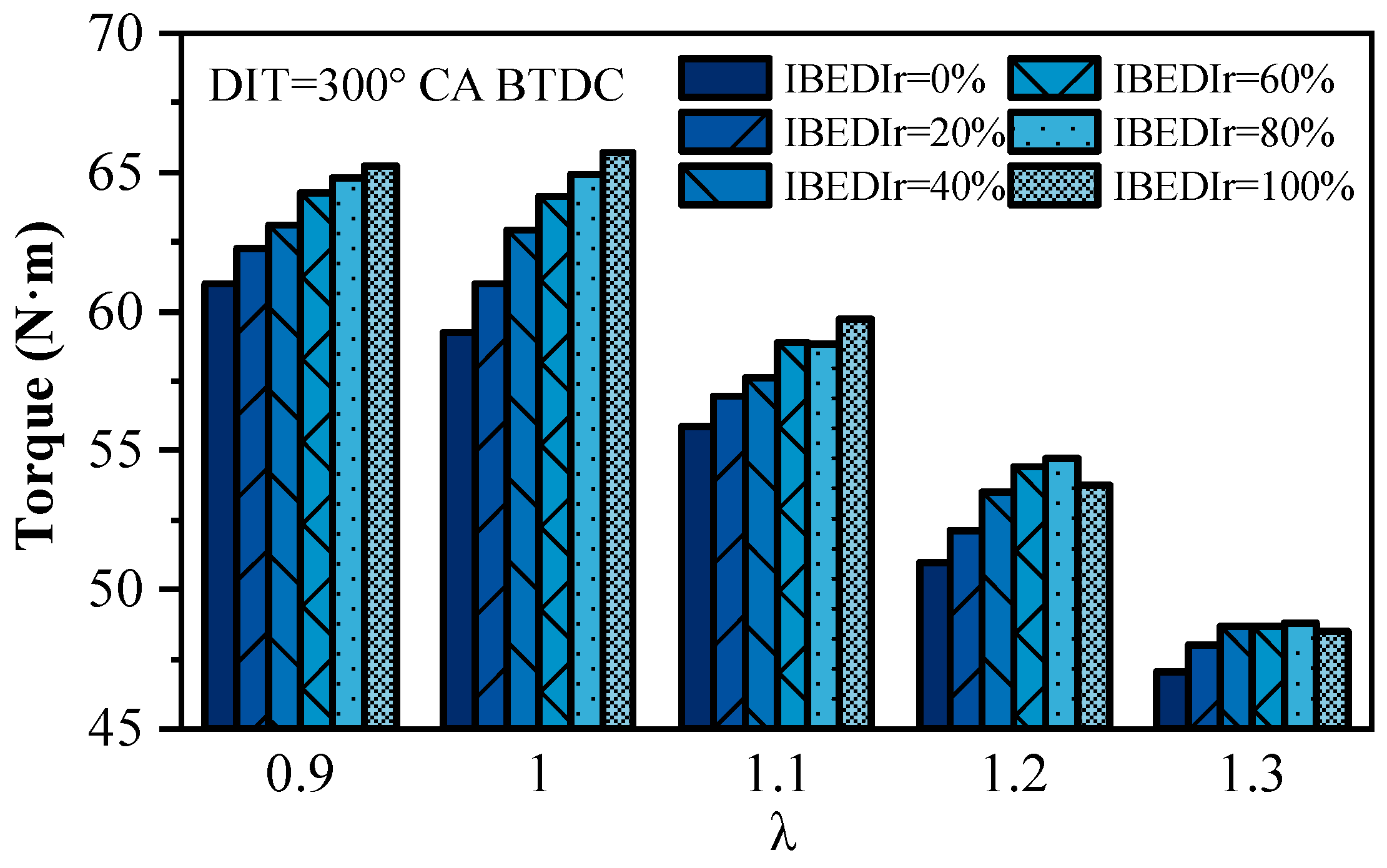
Effect of Isopropanol–Butanol–Ethanol (IBE) Direct Injection Strategy on Combustion and Emission Characteristics of a Gasoline Port Injection SI Dual-Fuel Engine


Abstract
Share and Cite
Dou, H.; Wang, Y.; Cao, Q.; Guo, Z.; Liu, G.; Xue, Z. Effect of Isopropanol–Butanol–Ethanol (IBE) Direct Injection Strategy on Combustion and Emission Characteristics of a Gasoline Port Injection SI Dual-Fuel Engine. Energies 2026, 19, 2081. https://doi.org/10.3390/en19092081
Dou H, Wang Y, Cao Q, Guo Z, Liu G, Xue Z. Effect of Isopropanol–Butanol–Ethanol (IBE) Direct Injection Strategy on Combustion and Emission Characteristics of a Gasoline Port Injection SI Dual-Fuel Engine. Energies. 2026; 19(9):2081. https://doi.org/10.3390/en19092081
Chicago/Turabian StyleDou, Huili, Yongjia Wang, Qingwei Cao, Zezhou Guo, Guiling Liu, and Zhengquan Xue. 2026. "Effect of Isopropanol–Butanol–Ethanol (IBE) Direct Injection Strategy on Combustion and Emission Characteristics of a Gasoline Port Injection SI Dual-Fuel Engine" Energies 19, no. 9: 2081. https://doi.org/10.3390/en19092081
APA StyleDou, H., Wang, Y., Cao, Q., Guo, Z., Liu, G., & Xue, Z. (2026). Effect of Isopropanol–Butanol–Ethanol (IBE) Direct Injection Strategy on Combustion and Emission Characteristics of a Gasoline Port Injection SI Dual-Fuel Engine. Energies, 19(9), 2081. https://doi.org/10.3390/en19092081