1. Introduction
Increased demand for power has invariably led to an increase in greenhouse gas emissions into the atmosphere [
1]. Technologies, such as renewables, nuclear, and geothermal, exist that can curtail some of the emissions [
2], but they have difficulty competing in a marketplace that has been controlled by fossil fuels for hundreds of years [
3]. Carbon capture and storage (CCS) is one technology that allows for fossil fuels to be burned while not releasing substantial carbon dioxide to the atmosphere. CCS entails capturing carbon dioxide from either a point-source operation, e.g., a power plant [
4], or from the atmosphere in direct air capture [
5]. In both cases, the carbon dioxide is compressed into a liquid or supercritical fluid and piped to a location where the geology is favorable for indefinite storage. Typically, favorable geology refers to a formation that is deep enough for the carbon dioxide to be in the supercritical state, and the reservoir is both porous and permeable. Additionally, a tight seal formation is necessary to prevent leaks from occurring [
6].
Literature on CCS techno-economic assessment (TEA) spans a broad range of technical scopes—from capture-focused analyses to full-chain and methodological reviews—highlighting both progress and persistent challenges in commercial deployment. Capture-centric studies [
7,
8,
9,
10,
11] emphasize the sensitivity of cost and efficiency to the capture process itself, particularly solvent regeneration energy and economies of scale. These works generally find that the levelized cost of electricity (LCOE) rises markedly when CCS is added, although process optimization and hybrid capture strategies may reduce the energy penalty, which we estimate for the Hunter Unit 3 plant to be equivalent to a roughly
$37,000,000 expense of more coal per year [
12]. Integrated TEAs, such as those by [
13], examine capture, transport, and storage together, showing that the coal price and pipeline distance dominate the total cost. Similarly, studies focused on specific contexts, such as the UK [
14] or grid reliability [
15], reveal that national infrastructure and dispatch constraints shape feasibility more than thermodynamic limits. Mishra et al. [
16] further examine the impact of federal tax credits on the sequestration of carbon dioxide in acid gas injection, i.e., the disposal of waste fluids from processing plants.
There are currently two commercial-scale CCS projects in North America. The Boundary Dam project in Saskatchewan, Canada, has a plant capacity of 110 MW. And the Petra Nova project, situated in Texas, USA, has a plant capacity of 240 MW. Both projects use the CO
2 for enhanced oil recovery after post-combustion, solvent-based capture [
17,
18]. Both projects have a budget of about one billion dollars, with substantial capital provided by the respective governments through grant awards [
19]. Both projects transport the captured CO
2 to a depleted oil field for enhanced oil recovery. The Boundary Dam project transports the CO
2 roughly 43 mi [
20], and the length of the Petra Nova project’s pipeline is roughly 81 mi [
21]. Among the scientific and engineering advances of the projects, perhaps the most salient finding is the importance of large-scale projects that can make use of the economies of scale [
22].
Complementing these targeted analyses, several review and methodological papers synthesize global experience and analytical frameworks [
23,
24,
25,
26,
27]. The literature collectively agrees that while the technical barriers to CCS are surmountable, the deployment remains limited by high capital costs, policy uncertainty, and incomplete accounting of lifecycle emissions. Prior work highlights clear opportunities to mitigate these challenges through cost reductions driven by learning effects, economies of scale, and improved project integration. Methodological advances emphasize the importance of explicitly quantifying uncertainty and accounting for learning effects as CCS deployment scales. Collectively, prior TEAs show strong sensitivity to assumptions about fuel price, transport distance, and capture efficiency, while also indicating that coordinated advances in capture technology, infrastructure planning, and regulatory design could substantially narrow the cost gap between CCS-enabled and conventional power generation.
In a study specific to Chinese policy and infrastructure, Fan et al. [
28] examined the possibility of a CCS retrofit and assessed that
$54,300,000,000 is necessary for a power plant retrofit between 431 and 499 GW. Likewise, for a smaller power plant (143 GW),
$13,390,000,000 is required. These values are markedly higher than what we observe, given our analysis of the Hunter Unit 3. This is likely due to differing regulatory practices and the stark difference in the size of the plant, where the Hunter Unit 3 is 350 MW. While this study does not refute Fan et al. [
28], our results will instead be more relevant to energy operations in the United States.
There are few studies that analyze the economics associated with retrofitting a coal-fired power plant in light of the 45Q tax credit [
16,
29,
30], which is the main government incentive for carbon sequestration in the United States. While all the studies indicate the economic viability of CCS, they also stress the impact of location and site-specific parameters on the economics. In the present study, we analyze the uncertainty associated with capture, transport, and storage, adding a valuable quantitative assessment of retrofitted coal-fired power plants for CCS in the United States. We aim to elucidate the costs and risks of a retrofit. This work is necessary because, at present, the economics of implementing a CCS system are highly uncertain, and thus, we present the costs of a CCS plant in Emery County, UT, to reduce the uncertainty in the industry. Previous work at the site indicates that amine-based post-combustion capture is feasible at the price of
$50/ton carbon dioxide when 90% of the flue-gas carbon dioxide is captured [
12]. Furthermore, a United States Department of Energy feasibility study [
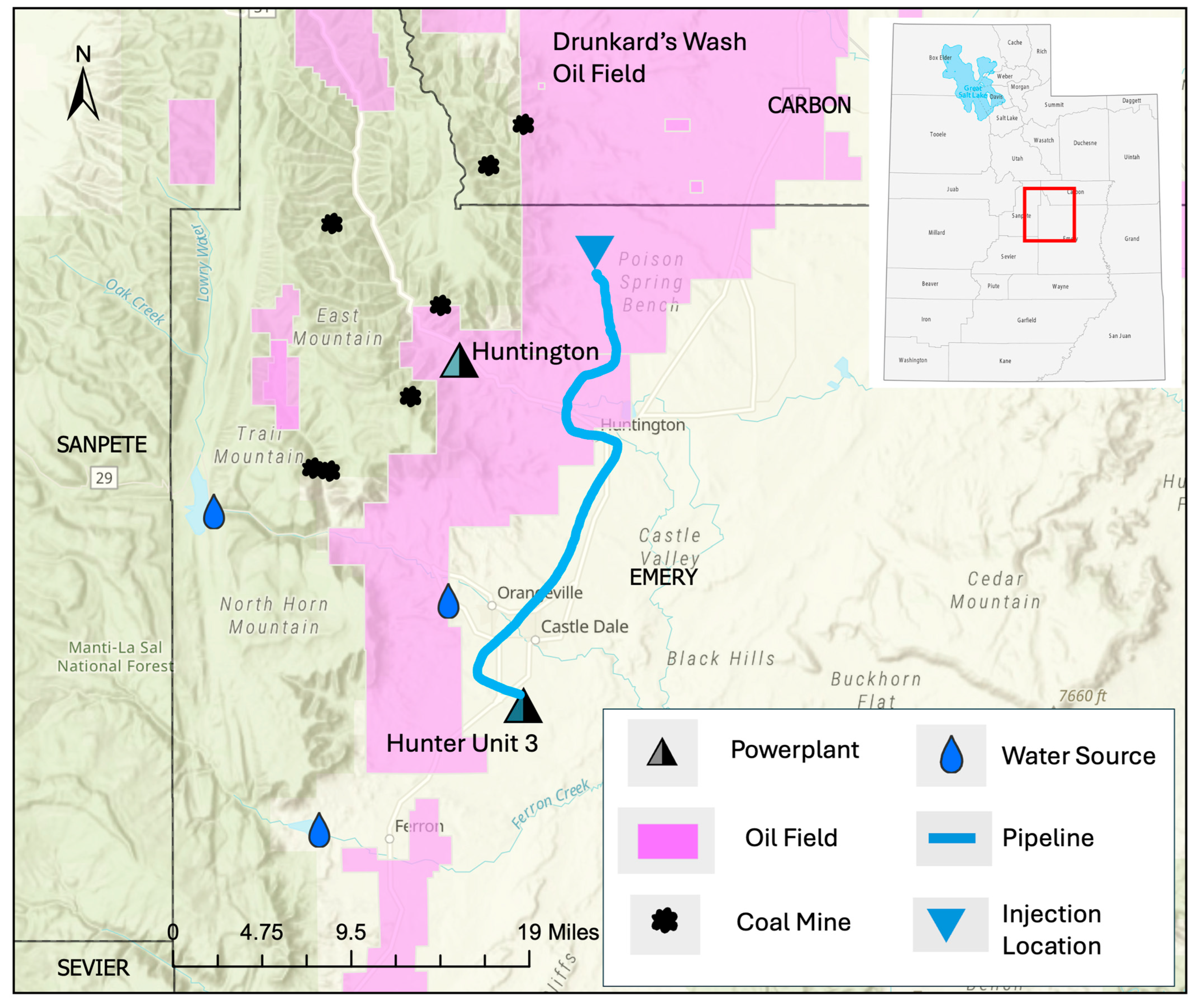
31] identified the potential for an integrated CCS system by piping carbon dioxide to the Drunkards Wash oil field to the north (
Figure 1).
The Hunter Unit 3 burns predominantly subbituminous coal sourced from the nearby mines (
Figure 1).
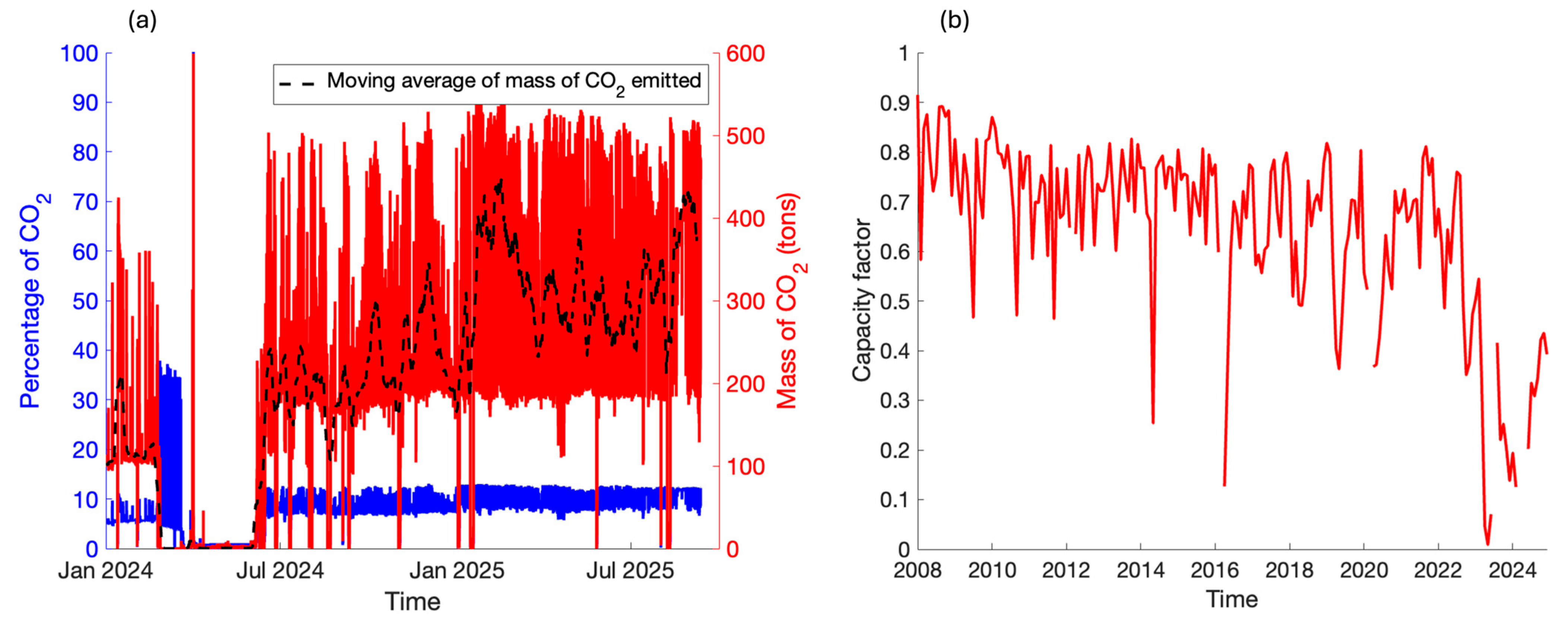
Figure 2 shows the time series data of plant operations as reported by the Public Utility Data Liberation Project. During normal operations, between 200 and 500 tons of carbon dioxide are produced as waste in an hour. Of the effluent gases, carbon dioxide makes up between five and ten percent by mass. The plant typically runs at a capacity factor greater than 0.8, although operations dipped below 0.5 in 2024. In addition, water is crucial for plant operations and is sourced from three reservoirs. Water usage has declined by roughly a factor of two in four years, which may be related to upgrades in hardware at the power plant or a reduced operating load (
Table 1). Water usage is anticipated to increase significantly as a result of the water–energy nexus of the CCS retrofit.
The primary impediment to initializing CCS projects is the economics. Currently, the United States government has implemented a tax credit of $85/ton of carbon dioxide sequestered. Projects that acquire the proper documentation to receive the credit have a twelve-year window in which to collect the credit. The credit is the same for both deep saline sequestration and enhanced oil recovery or enhanced gas recovery (EGR). A central focus of the present paper is the difference in economic feasibility between EGR and deep saline sequestration. In addition, this paper will outline the capital expenses (CAPEX) and operational expenses (OPEX) associated with capturing, transporting, and storing carbon dioxide, providing a preliminary economic model that may facilitate CCS at Hunter Unit 3.
2. Methods
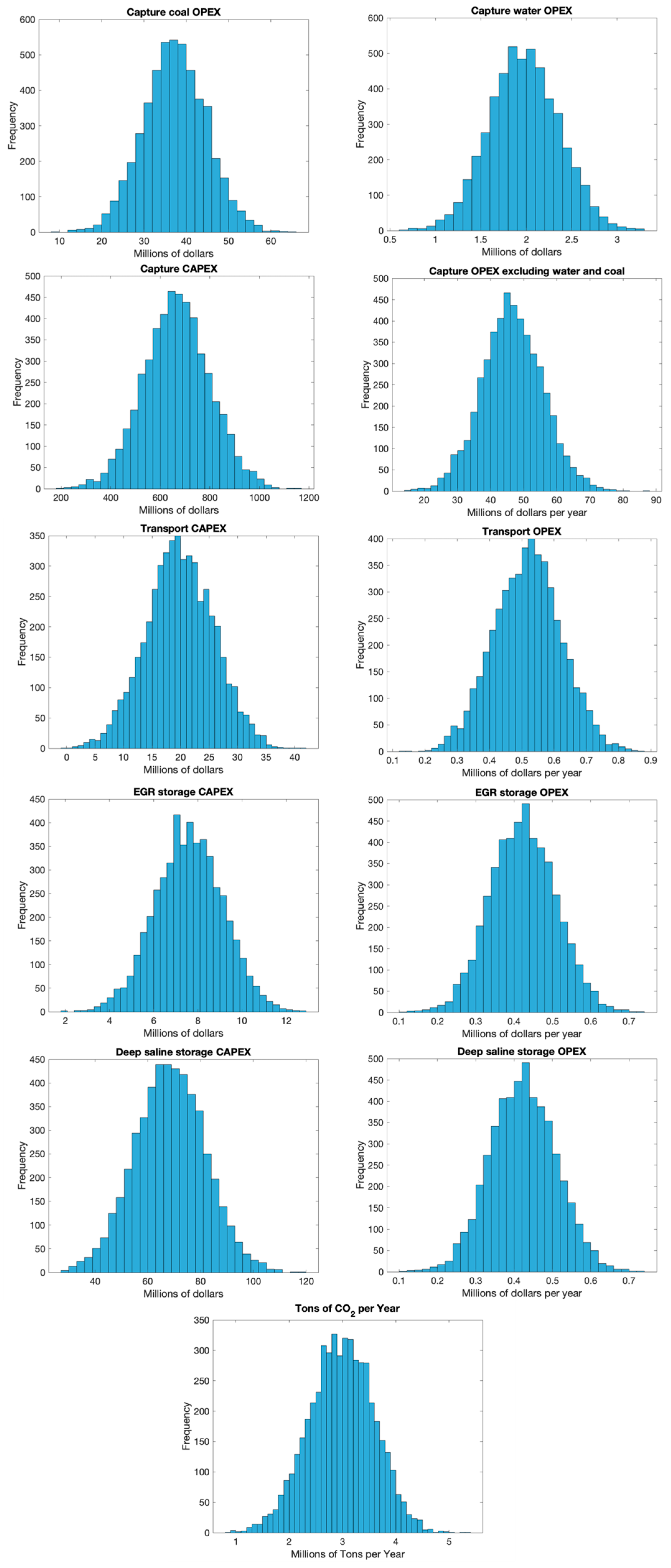
The input distributions are either approximated from our understanding of the CCS system or drawn from Panja et al. [
12] or Knoope et al. [
32] (
Figure 3).
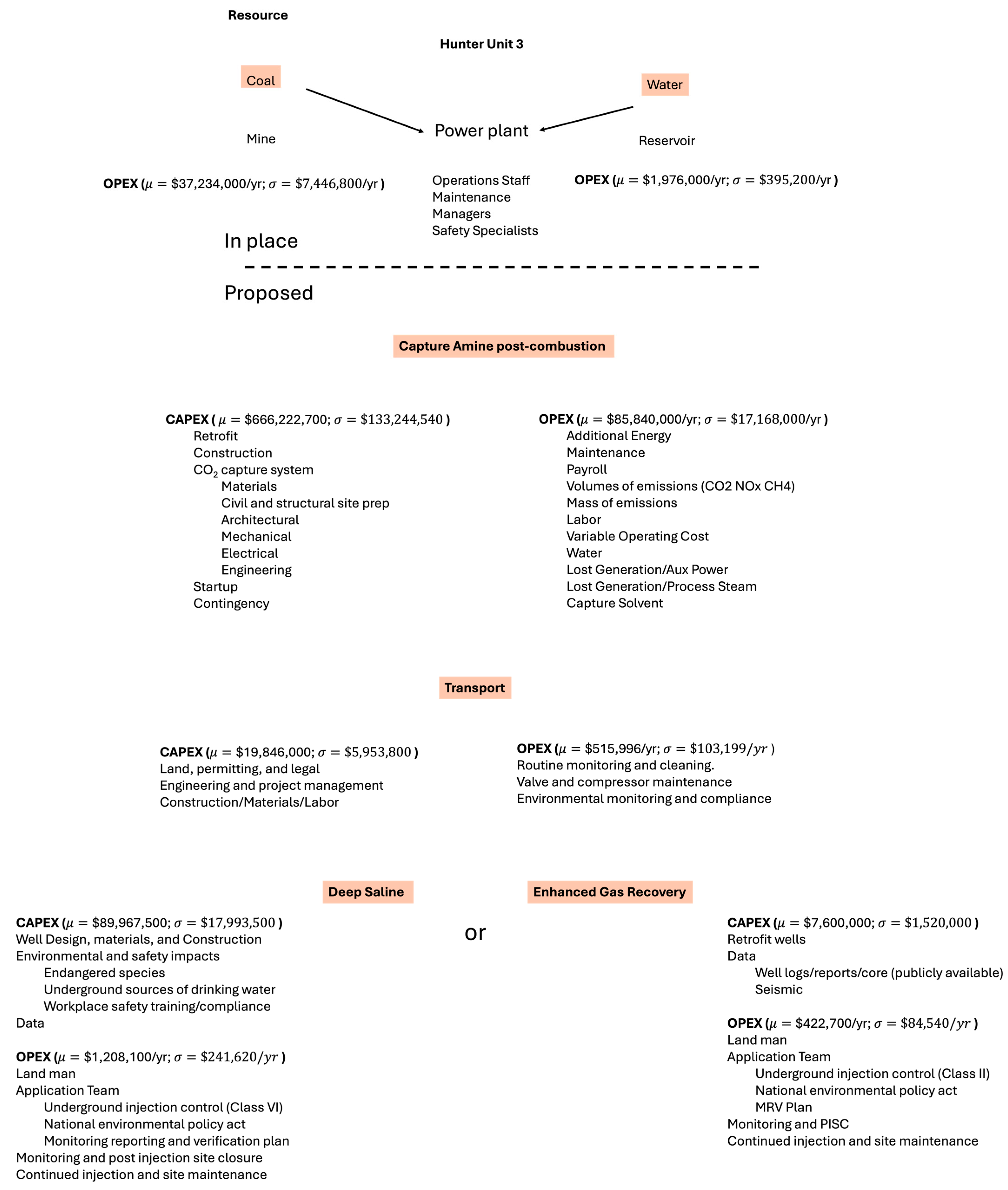
Table 2 shows the source and values of each input parameter. For each variable, we assume normal distributions as a simplifying representation of symmetric uncertainty in screening-level cost estimates. These distributions are not intended to reflect empirically derived probability distributions, but rather to enable sensitivity analysis across plausible parameter ranges. A standard deviation of 20% of the mean in each normal distribution is used, except for the transport CAPEX, which uses 30% of the mean as the standard deviation to account for regulatory and permitting challenges. These standard deviations are selected to represent reasonable sensitivity bounds for key cost parameters in a screening-level analysis, rather than statistically derived measures of uncertainty. A detailed account of the components of each variable is given in
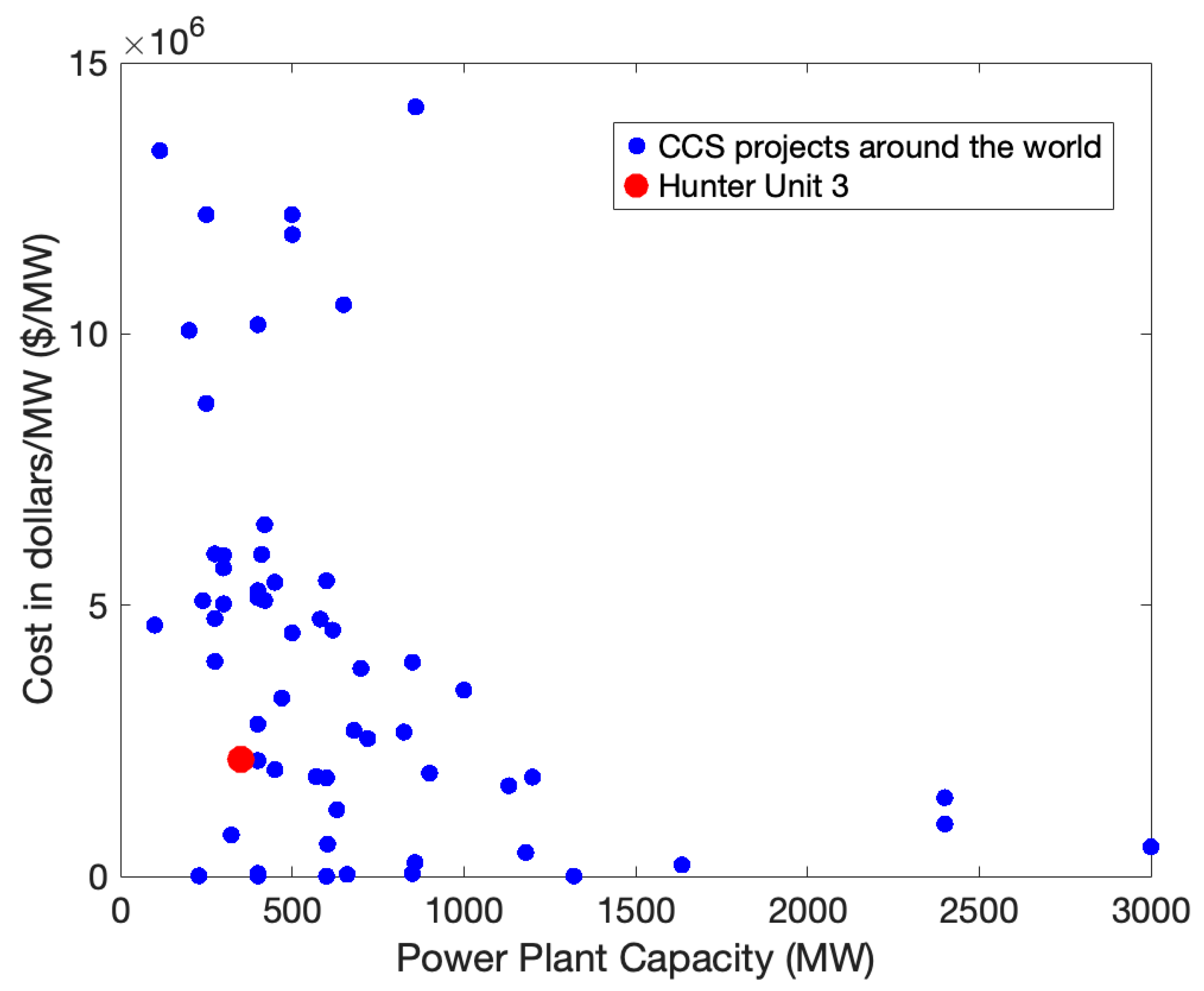
Figure 4. The overall CAPEX per megawatt of the Hunter Unit 3 project is compared with other CCS projects throughout the world [
33].
Figure 5 demonstrates that our CAPEX value is reasonable relative to the other projects.
The capture OPEX is split into three components: coal cost, water cost, and remaining expenses. The linear economic models are defined for deep saline and EGR as Equations (1a) and (1b).
where
is the tax credit in
$/ton (
$85/ton),
is tons of carbon dioxide per year, and
is time since project commencement in years. These linear models calculate nominal, unadjusted costs and revenues. Given the screening-level nature of the study, the time value of money (including discount rates and inflation) was excluded from the calculations. A Monte Carlo framework is employed to account for uncertainty in the input parameters. We sample from the CAPEX and the OPEX of the capture, transport, and storage, as well as the tons injected per year. Each of the 5000 realizations for deep saline and the 5000 realizations for the EGR sample from the normal distributions is given in
Figure 3. Although bootstrapping could be considered as an alternative resampling approach, the available observations are not complete enough to represent the underlying population. Thus, bootstrapping estimations would not yield statistically meaningful distributions of the input parameters.
Our estimation of the capture CAPEX and OPEX is drawn directly from Panja et al. [
12], which indicates a mean CAPEX value of
$666,222,700 and a mean OPEX value of
$85,840,000 per year, with the cost of water contributing
$1,976,000 and the cost of additional coal contributing
$37,234,000 to the OPEX value. These quantities include the compression of the CO
2 after capture. The estimation of the transport CAPEX comes from the linear estimation presented in [
32], given by:
where
C is a constant cost factor that we convert from 2010 euros to 2025 dollars [
32], resulting in a value of
$401.5/ft
2.
L is the length of the pipeline, which in our case is 22.7 mi.
FT,
FC, and
FR are the correction factors for terrain, right-of-way, and regions, respectively. Following van den Broek et. al. [
34], we use factors of 1.0, 1.1, and 1.0, respectively, to indicate that the terrain and region do not add substantially to the cost, and that following right of ways is mostly straightforward for our project.
The Darcy–Weisbach formula (Equation (3)) correlates the inner diameter of the pipe,
D, as a function of the mass flow rate (
Qm), design pressure drop between inlet and outlet (
p1–
p2), roughness of pipe (
ε), length of the pipe (
L), elevation change (
Z1–
Z2), fluid properties such as density (
ρ), and viscosity (
μ) under the specified transport temperature and pressure.
The Swamee–Jain equation [
35] is used to calculate the friction factor as shown in Equation (4):
The Reynolds number is expressed as Equation (5):
The mean fluid velocity,
v (ft/s), is calculated using Equation (6):
where
D is the inner diameter of pipeline,
f is the Darcy friction factor or the Darcy–Weisbach friction factor,
Qm is the mass flow rate,
L is the total length of pipeline
ρ is the density of the fluid at temperature and pressure,
Z1 is the elevation of the inlet of the pipeline,
Z2 is the elevation of the outlet of the pipeline,
p1 is the pressure at the inlet of the pipeline,
p2 is the pressure at the outlet of the pipeline,
g is the gravitational acceleration,
ε is the roughness factor, and
μ is the viscosity of the fluid.
It should be noted that the calculation of the pipe’s inner diameter does not require the absolute pressure value; rather, it depends on the pressure drop between the inlet and outlet. However, absolute pressure is critical for determining the required pipe wall thickness (and thus the outer diameter) to safely withstand the internal pressure. Although Equation (3) provides an explicit expression for the pipe inner diameter (
D), it cannot be solved directly and requires an iterative process. This is because the equation includes the friction factor (
f), which depends on the Reynolds number (
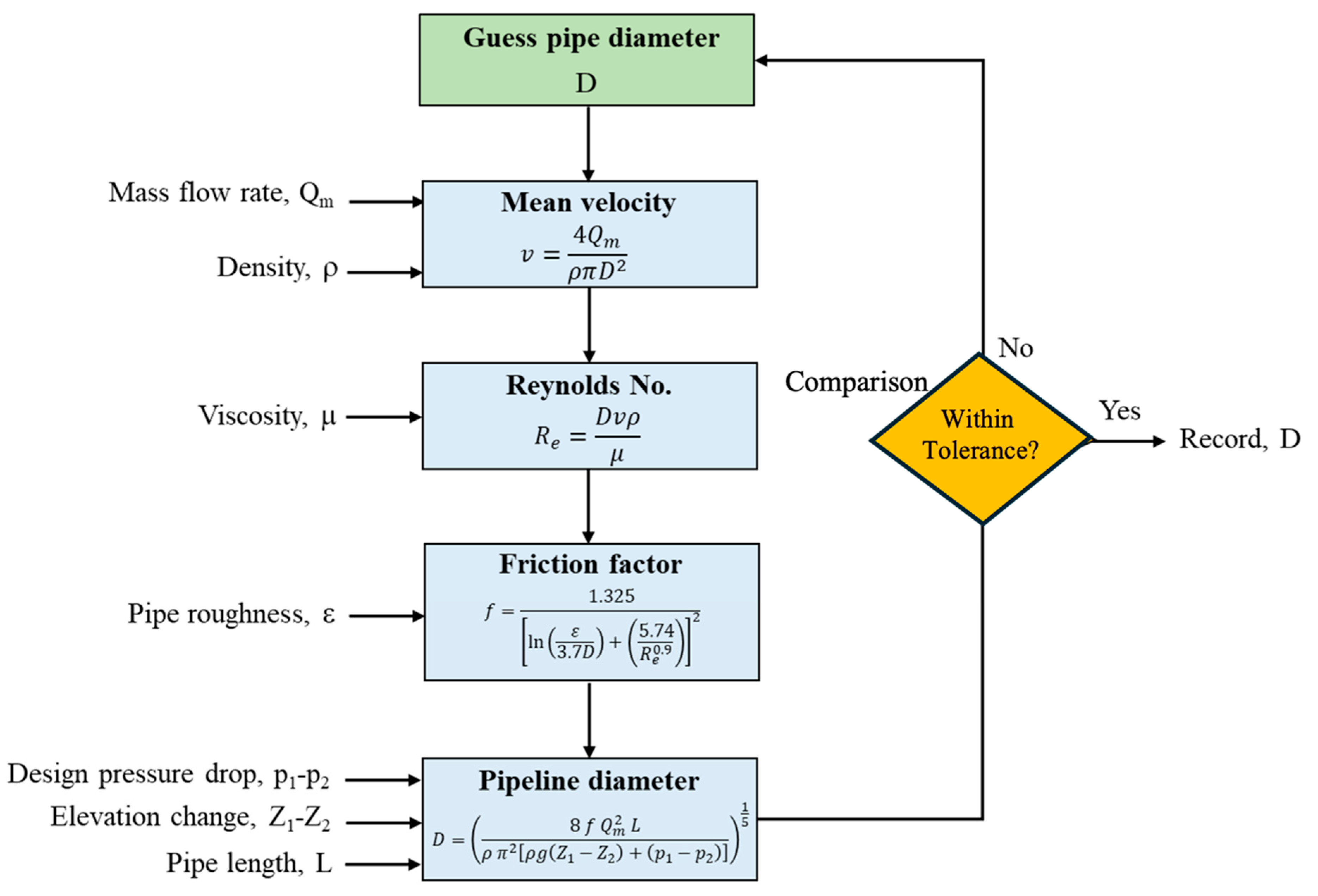
Re). In turn, the Reynolds number is a function of both the pipe inner diameter and the fluid velocity. Since the mass flow rate is specified in this study, calculating the velocity requires the flow area, which itself depends on the inner diameter. This interdependence creates a circular relationship that necessitates iterative solution methods. The workflow to solve for pipeline diameter in the iterative method is shown in
Figure 6.
The iterative process begins with an initial guess for the pipe inner diameter (D). Using this guess, along with the specified mass flow rate and fluid density, the mean fluid velocity is calculated according to Equation (6).
The Reynolds number is then determined using Equation (5), incorporating the fluid viscosity, density, computed velocity, and guessed diameter. Next, the friction factor (
f) is explicitly calculated using the Swamee–Jain approximation [
35] in Equation (4), based on the pipe roughness, Reynolds number, and guessed diameter.
This friction factor is substituted into the Darcy–Weisbach expression (Equation (3)), together with the design pressure drop, elevation change, and pipeline length, to obtain a new estimate of the pipe diameter.
The new diameter is then compared to the previous guess. If the difference falls within an acceptable tolerance, the iteration terminates, and the diameter is accepted. Otherwise, the new value replaces the previous guess, and the process repeats until convergence is reached.
Other design considerations include optimizing the pressure drop to maintain an appropriate average fluid velocity. Excessively low velocities, resulting from an overly large pipe diameter, should be avoided to prevent the risk of phase change. While a larger diameter reduces frictional losses and thereby lowers compressor power requirements (OPEX), it significantly increases capital expenditure (CAPEX) due to higher material and installation costs. Additionally, the inlet pressure must be sufficient to overcome the maximum hydrostatic head.
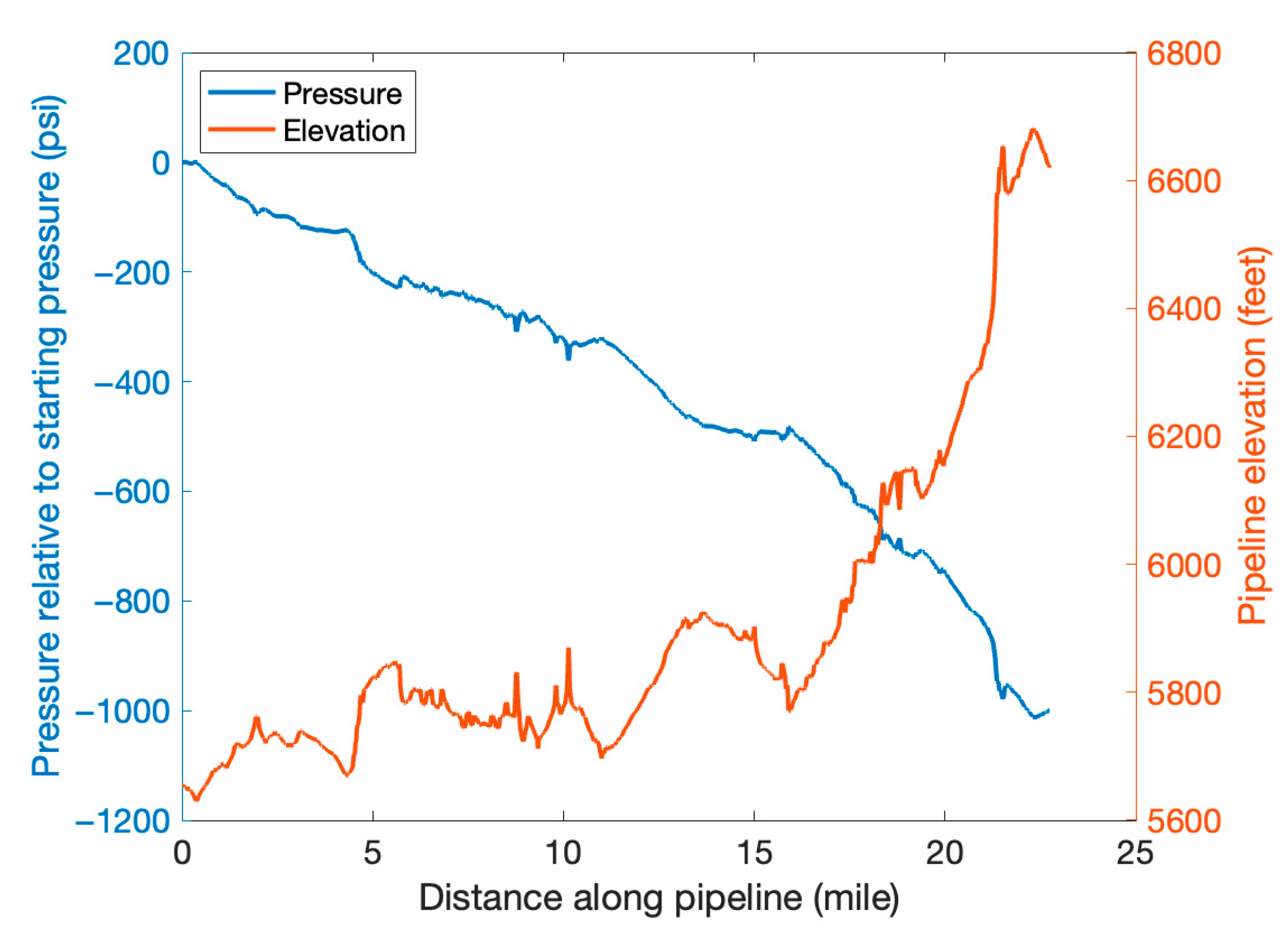
The elevation profile from Hunter Power Plant to Drunkards Wash Field was generated by placing a series of closely spaced points along the intended pipeline centerline in Google Earth Pro version 7.3, extracting the ground elevation at each point, and converting the cumulative distance into miles. This method provides a realistic representation of the topography, including the net uphill elevation gain of 961.3 ft. The parameters employed in the pipeline diameter calculation are summarized in
Table 3. The density and viscosity of CO
2 were evaluated at an average transport temperature of 59 °F and pressure of 1450 psi. The pipe roughness factor (ε) was adopted from literature values reported by Vandeginste and Piessens [
36].
The minimum required pressure increase to overcome the net uphill elevation gain of 961.3 ft. is approximately 372 psi, based on hydrostatic head calculations for CO
2. For this study, the CO
2 mass flow rate is estimated at 11,023,113 lbm per day. The iterative calculation yielded an optimal pipeline inner diameter of 0.755 ft. With this diameter and the specified design conditions, the anticipated total pressure drop along the 22.74-mile pipeline is approximately 1000 psi, as shown in
Figure 7.
In the proposed CO2 pipeline from Hunter Power Plant to Drunkards Wash Field, a booster station is not required. Although the route involves a significant net uphill elevation gain of 961.3 ft., requiring an additional hydrostatic head of approximately 372 psi, the total pressure drop remains around 1000 psi. This can be fully managed by the initial compressor at the capture facility, with an inlet pressure of approximately 1800 to 2500 psi, which falls within standard practical limits for high-density CO2 transport systems and high-pressure pipeline ratings.
Furthermore, the regional climate in central Utah, characterized by cold winters and moderate ground temperatures, supports maintaining relatively low pipeline temperatures (often 41–59 °F). These conditions help ensure that the CO2 remains in a high-density state throughout the route, even with the pressure decline.
To enhance the accuracy of the pipeline diameter calculation, which currently relies on average fluid properties, a more sophisticated approach involves segmenting the pipeline into discrete sections and iteratively modeling the variable pressure and temperature profiles along its length. This accounts for the dynamic nature of CO2, where density (ρ) and viscosity (μ) fluctuate due to pressure drops from friction and hydrostatic effects, as well as potential heat transfer influencing temperature. By employing numerical methods such as finite-difference or integration techniques in commercial software, each segment’s local conditions can be computed sequentially: starting from the inlet, calculate the pressure drop using the Darcy–Weisbach equation with initial properties, update ρ and μ via equations of state (e.g., Peng–Robinson or Span–Wagner for CO2), and propagate to the next segment. This iterative, multiphase flow simulation ensures the diameter optimization balances realistic velocity profiles, minimizes risks such as phase changes, and refines CAPEX/OPEX trade-offs by incorporating topography-driven variations, ultimately yielding a more robust design compared to the simplified average-property assumption. A full segmented numerical simulation using equations of state and finite-difference methods is planned as part of future, more detailed engineering work when higher-precision design is required.
Our estimation of storage-related capital and operating expenditures is informed by real-time field research conducted by the authors across multiple United States Department of Energy (DOE)-sponsored CarbonSAFE projects, the Southwest Partnership for Carbon Sequestration (SWP), and the Carbon Utilization and Storage Partnership (CUSP). For the enhanced gas recovery scenario, project budgets from CarbonSAFE and SWP indicate that approximately 15–25 existing wells would require retrofitting to accommodate carbon dioxide injection, at an estimated cost of approximately $400,000 per well. Retrofitting activities primarily include the installation of corrosion-resistant chromium casing to ensure compatibility with CO2 exposure, as well as additional work to verify and maintain well integrity.
Production data from the Drunkards Wash Field further indicate that the average annual mass of gas withdrawn exceeds the mass of carbon dioxide injected using fifteen wells, implying that the storage capacity of the field is sufficient to accommodate the CO2 volumes generated by the Hunter Unit 3 facility.
In an analogous manner, budgets from the DOE CarbonSAFE and SWP programs provide a basis for estimating the costs associated with deep saline storage under Underground Injection Control Class VI regulations. These wells are subject to substantially more stringent regulatory requirements than Class II EGR wells. Each Class VI injection well is estimated to cost approximately $9,000,000 to construct, with an anticipated requirement of two to eight injection wells for this project. Injection is assumed to target the Navajo Sandstone at a depth of approximately 2200 m. In addition, two to five dedicated monitoring wells are required to satisfy Class VI permitting and long-term monitoring requirements, at an estimated cost of approximately $5,000,000 per well.
Significant uncertainty exists regarding the number of wells requiring retrofit or construction for both the EGR and deep saline storage scenarios, reflecting variability in injectivity, pressure management, and regulatory requirements. To capture this uncertainty, the number of wells is treated as an integer-valued random variable with a uniform distribution within the specified ranges in the Monte Carlo analysis, allowing the storage-related CAPEX to span a suite of technically reasonable and decision-relevant outcomes. This approach implicitly accounts for injectivity limitations and pressure-management considerations through well-count variability, without requiring site-specific reservoir simulation at this screening stage.
At this stage, storage costs are treated at a screening level to bound economic feasibility and regulatory exposure. Detailed geologic, geomechanical, and injectivity modeling would be appropriately undertaken only after project-level economic viability is established.
3. Results
The results presented here reflect a screening-level life cycle economic evaluation of the Hunter Unit 3 carbon capture and storage system, intended to assess overall economic feasibility and key cost sensitivities rather than to optimize individual system components. Monte Carlo simulations propagate uncertainty across capture, transport, and storage cost elements, as well as annual sequestration rates, to evaluate break-even timing and dominant economic drivers under both enhanced gas recovery (EGR) and deep saline storage pathways. Accordingly, the results should be interpreted as bounding economically plausible outcomes for each storage option, with particular emphasis on identifying parameters that most strongly influence project viability.
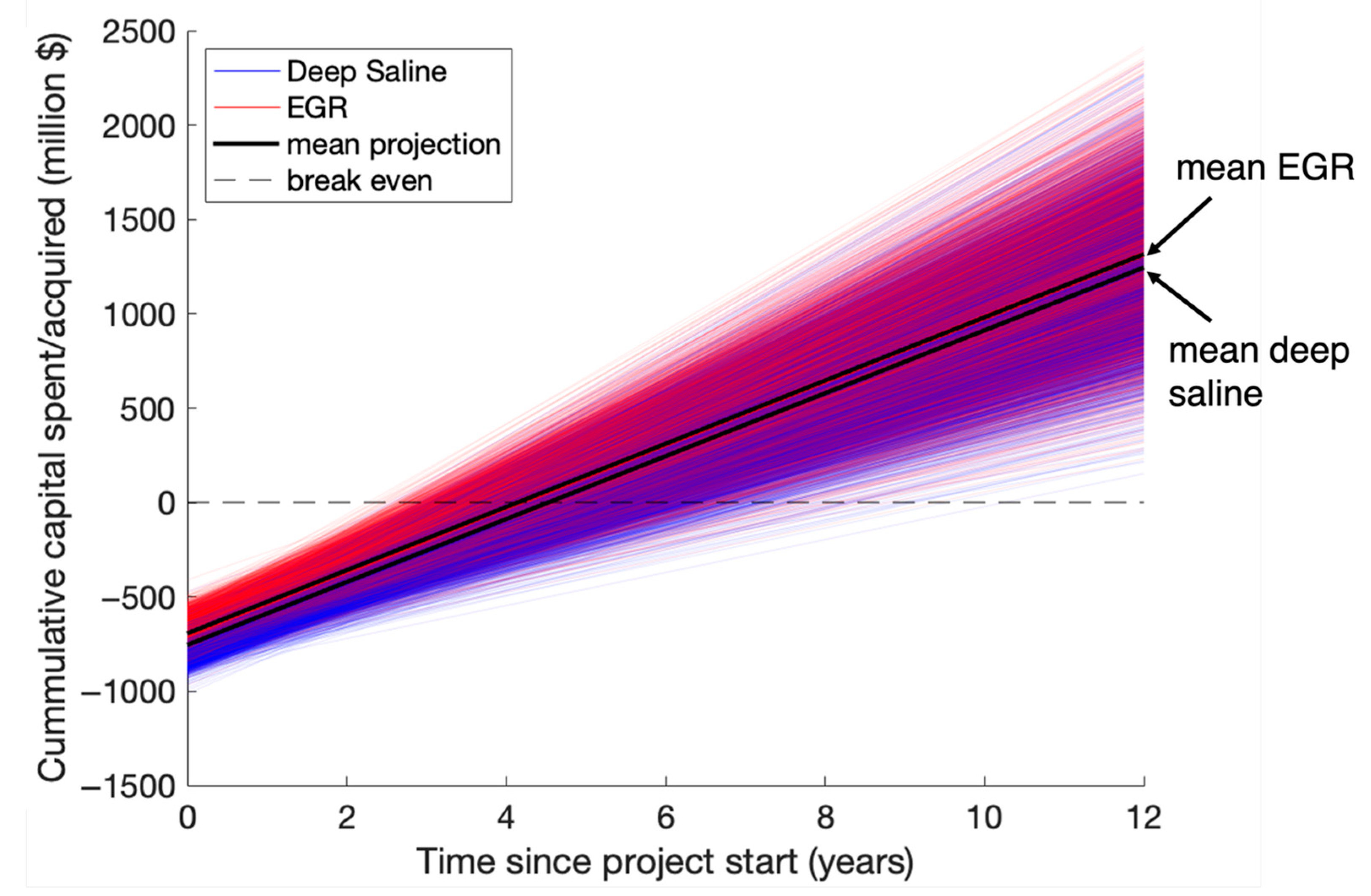
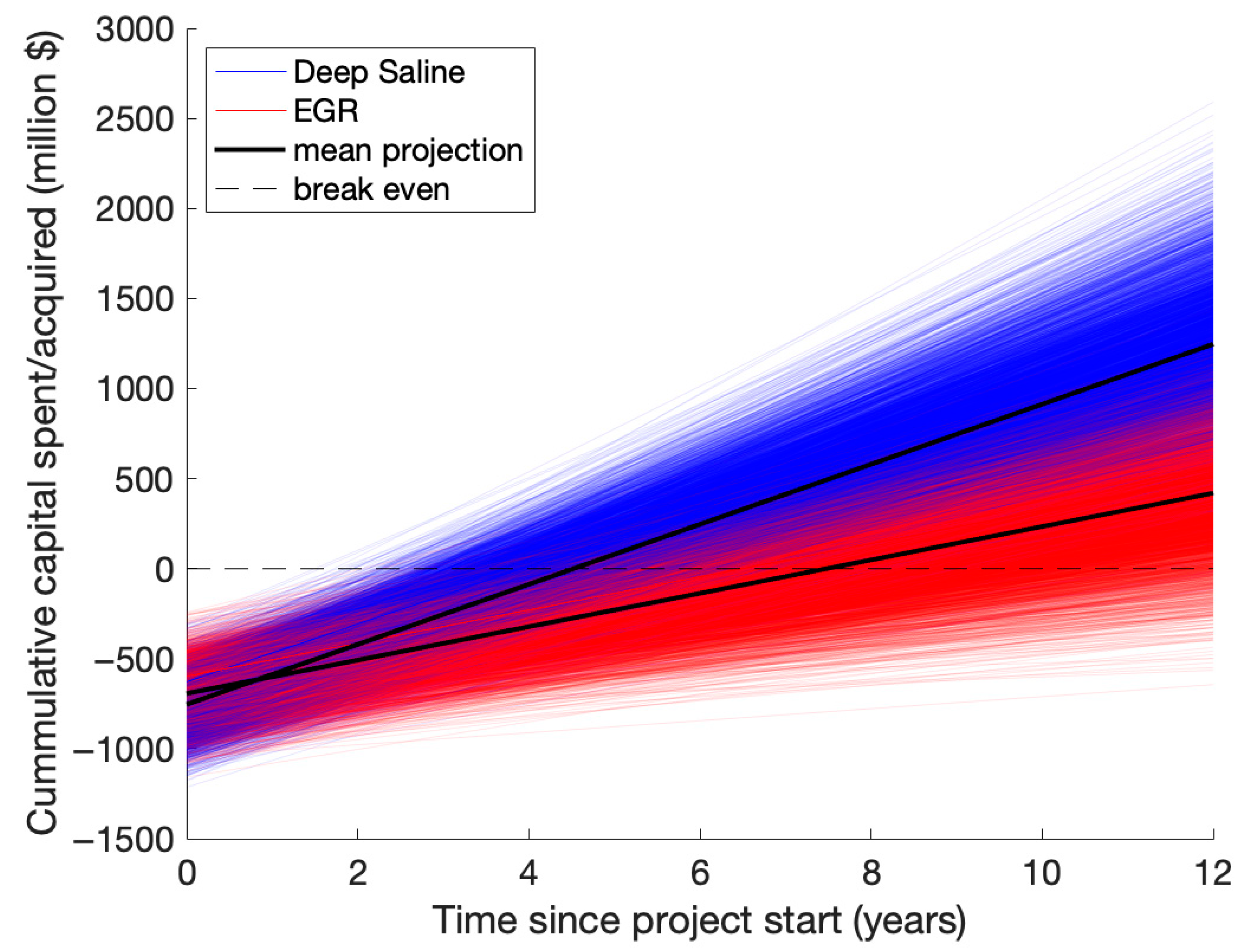
The 10,000 realizations of our model (5000 for deep saline and 5000 for EGR) are shown in
Figure 8. Each linear realization underscores the same economic reality: there is a high initial cost of constructing the CCS system, which is offset by revenue from the
$85/ton tax credit in a number of years. The mean of the CAPEX for deep saline is
$746,340,000, and
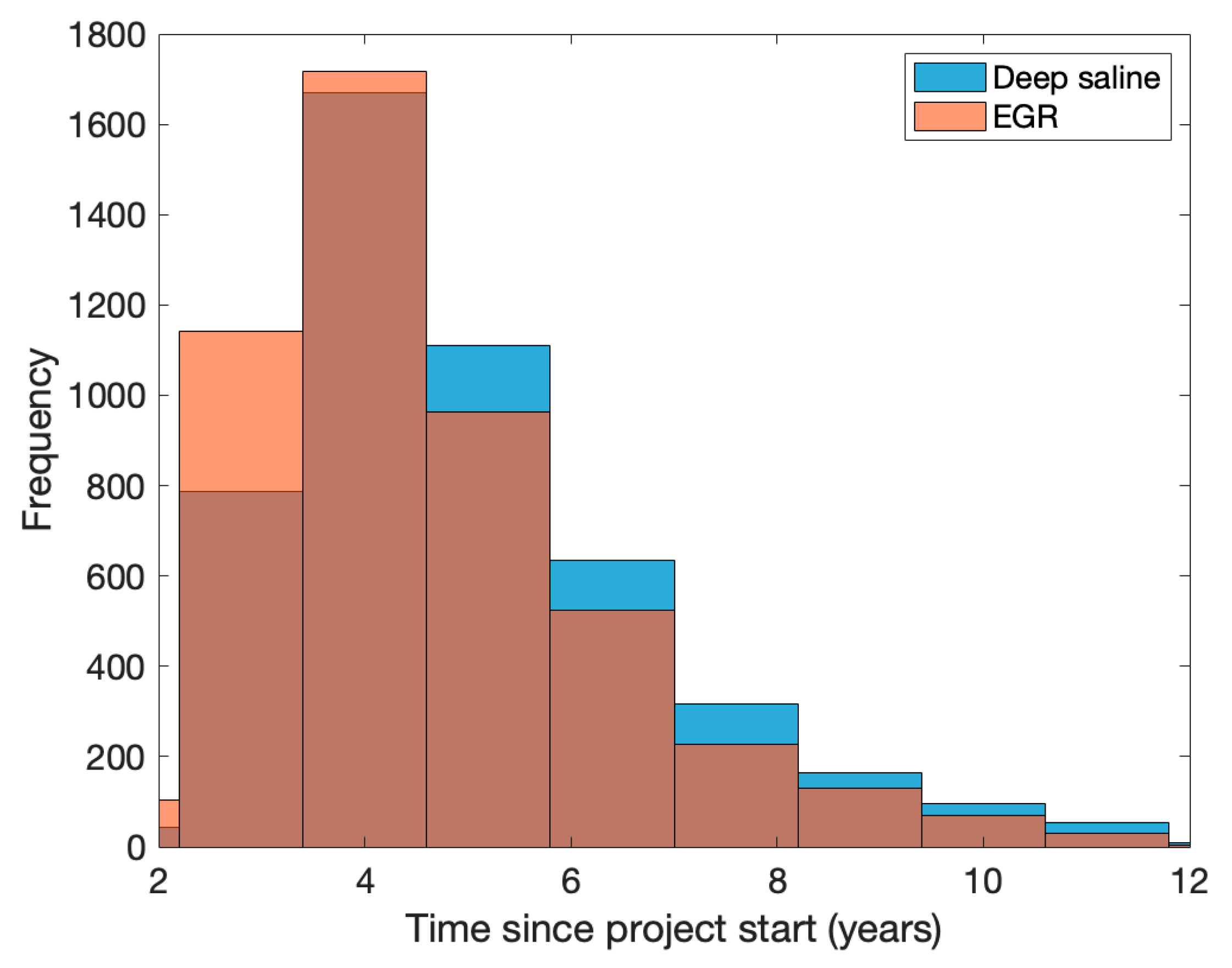
$692,780,000 for EGR. The average time until break-even is 59 months for deep saline and 55 months for EGR (
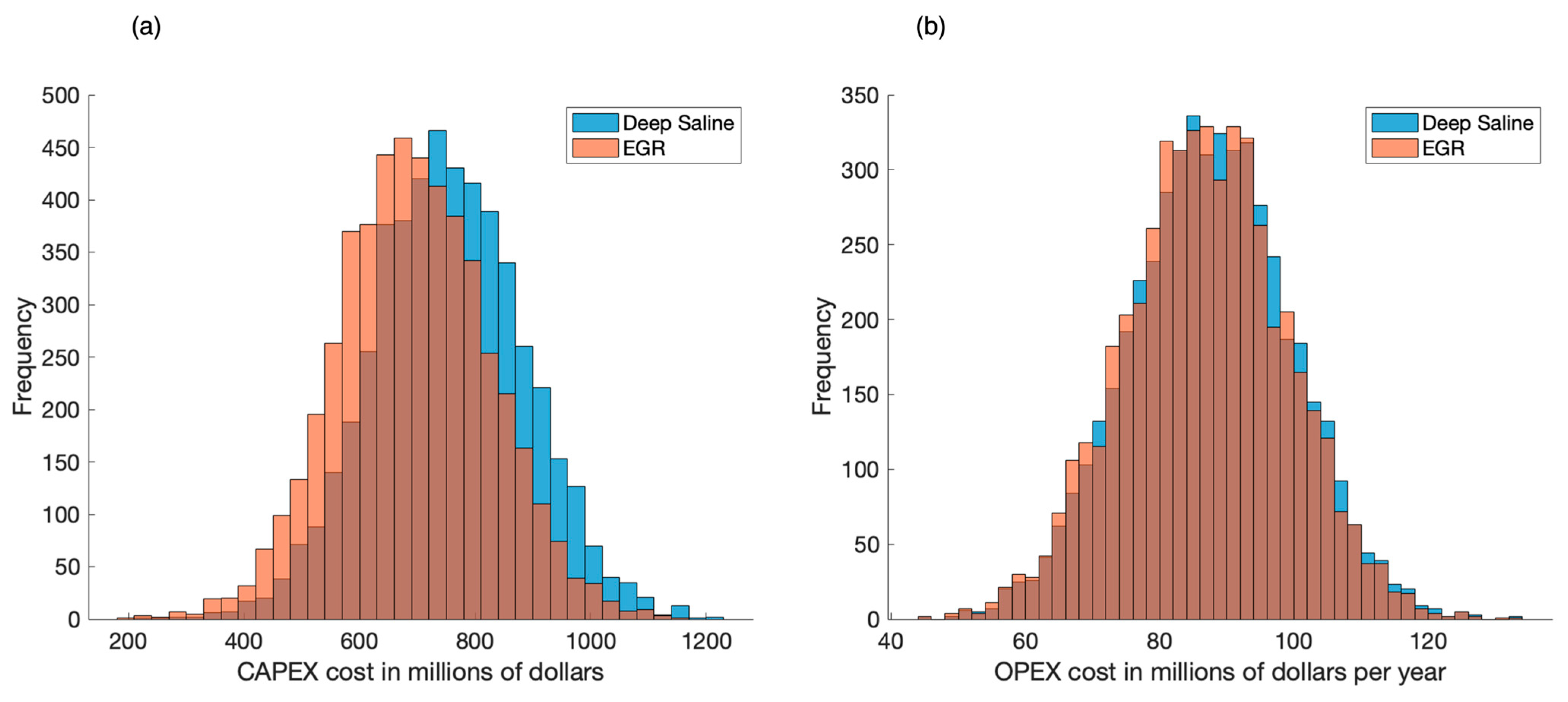
Figure 9). Thus, the economic potential of EGR appears to be slightly more favorable than that of deep saline. Another way of visualizing the two types of CCS systems is through a direct comparison of the CAPEX and OPEX distributions (
Figure 10). Again, the similarity between deep saline and EGR in OPEX and the difference between the two in CAPEX are evident.
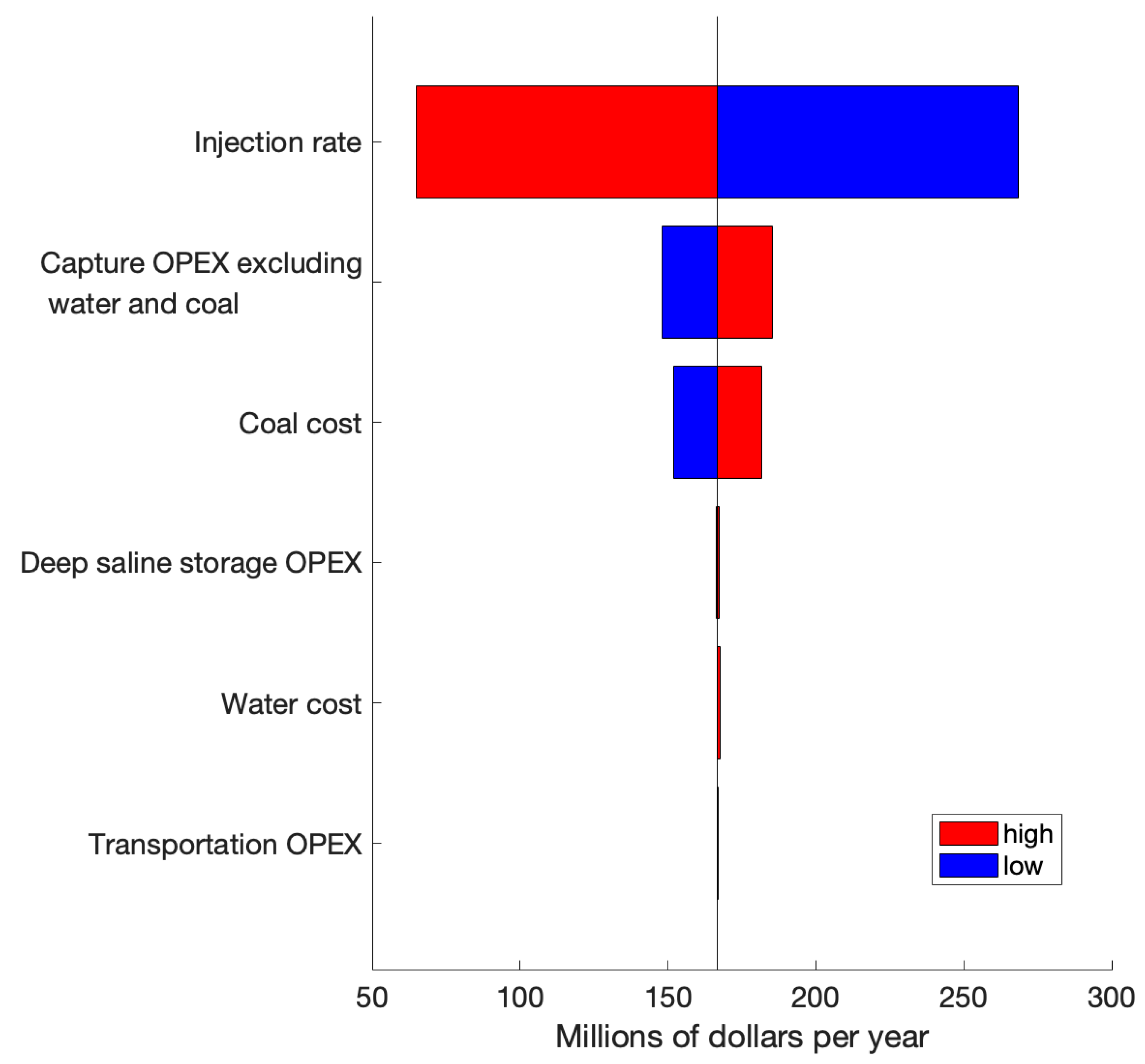
The Monte Carlo simulations aim to quantify the model’s sensitivity to various parameters. We plot the Monte Carlo samples of the OPEX in
Figure 11. The plot shows the change in model output resulting from input parameter values set two standard deviations above and below the mean. Sensitivities were not calculated for CAPEX parameters because they map directly to model outputs, effectively reproducing the input distributions. From the OPEX results, we observe that the model is highly sensitive to the injection rate, the coal cost, and the remaining capture costs. The baseline value for the sensitivity diagram incorporates the tax credit, which is why it differs from the mean of
Figure 10b. The sensitivity of the tons sequestered per year indicates the importance of the economies of scale. The other parameters do not substantially impact the model. We observe that increasing the tons per year and cutting costs in the capture will lead to the highest benefit for the overall CCS project.
A central risk to CCS deployment is uncertainty in government policy. Prior to July 2025, EGR/EOR tax credits were
$60/ton, resulting in substantially lower project revenues.
Figure 12 shows the Monte Carlo cost models for the case of a
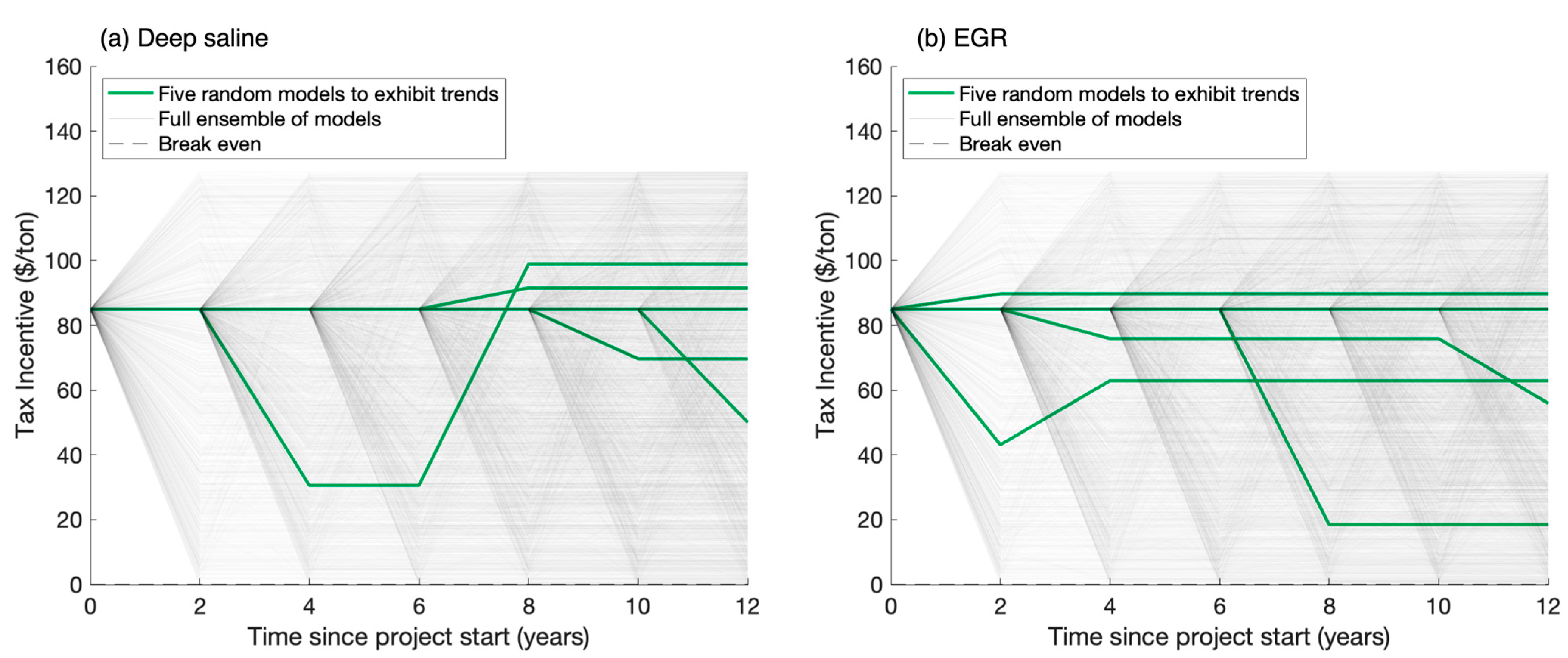
$60/ton tax credit for EGR. Although the tax credit increased in July 2025, future legislative action could modify or eliminate these incentives, posing a significant risk for a project with a twelve-year lifespan. To evaluate this risk, we model synthetic policy changes by randomly perturbing the tax credit drawn from a uniform distribution between
$0/ton and
$127.50/ton. The
$127.50/ton value is taken as 1.5 multiplied by
$85/ton, which is slightly more than the percentage increase from
$60/ton to
$85/ton. Policy changes are evaluated biennially to represent new legislative cycles, with a 25% probability of a policy change occurring and a 75% probability of no change. This ratio of policy change to absence of change is based on an assessment of frequency impact on policy [
37].
Figure 13 shows the incentives plotted over the lifetime of the project. We model the perturbation at each time step independently of the previous incentives to represent the self-contained nature of each congress.
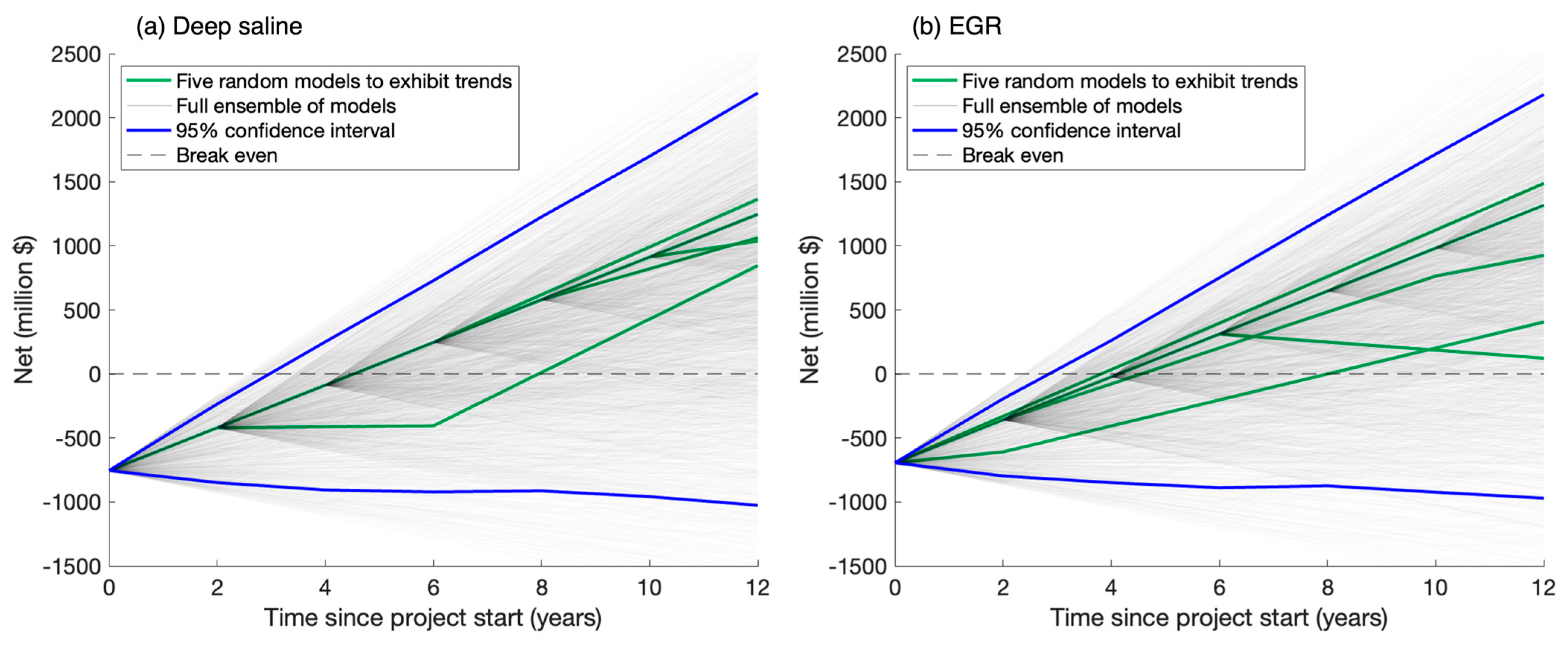
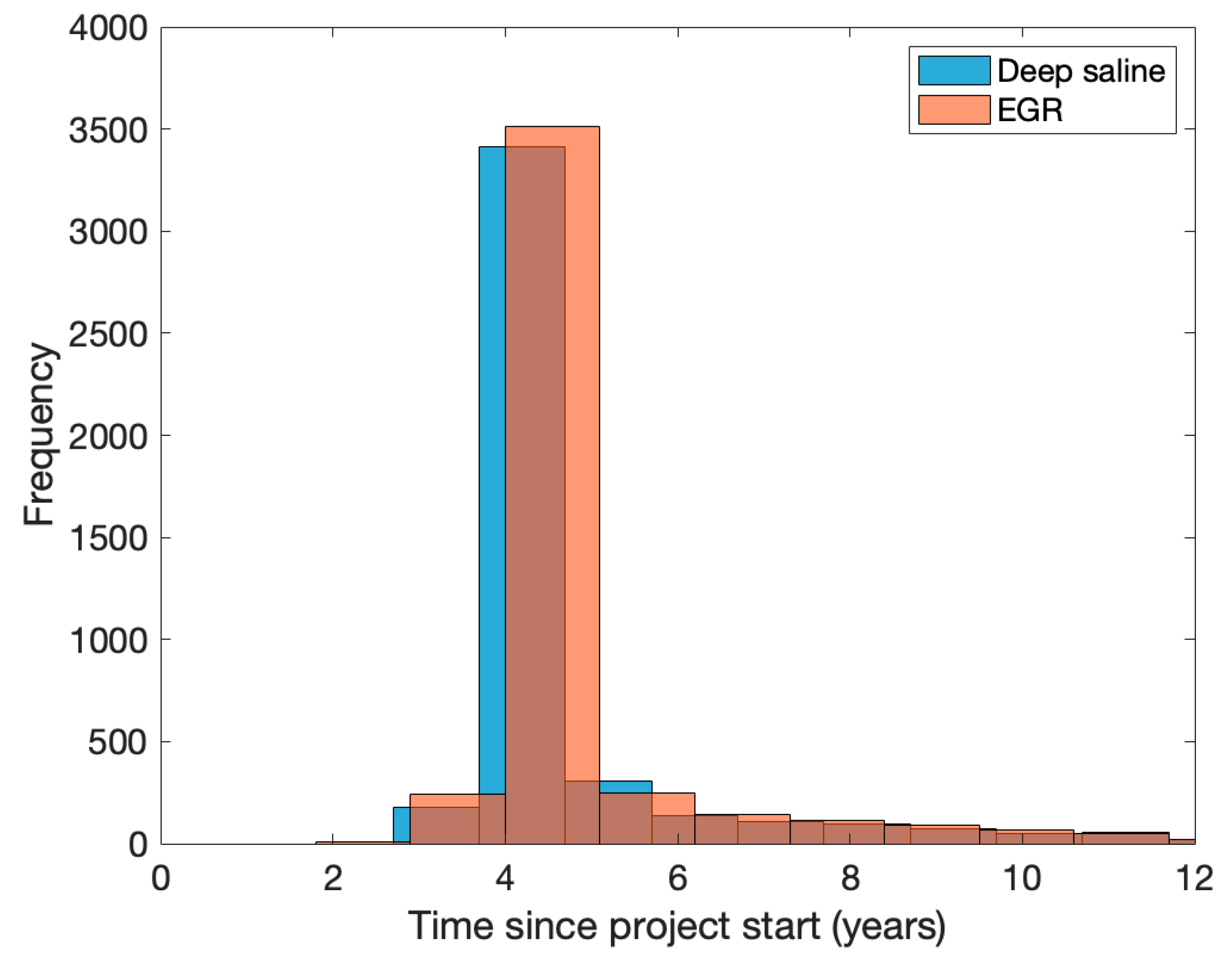
Figure 14 presents 5000 realizations of policy uncertainty for both deep saline storage and EGR. All simulations begin from a common initial condition corresponding to project CAPEX. The time required to reach break-even under policy perturbations is shown in
Figure 15, demonstrating that the relative similarity between the two storage options persists despite policy uncertainty. A total of 585 and 571 simulations fail to reach the break-even point within the twelve-year project lifespan for deep saline storage and EGR, respectively. Compared to the no-perturbation case (
Figure 9), the break-even time distributions exhibit a longer upper tail of break-even times, indicating increased financial uncertainty associated with policy volatility.
5. Conclusions
This study provides a screening-level life cycle economic evaluation of CCS deployment at the Hunter Unit 3 power plant. The analysis integrates capture, transport, and storage costs within a Monte Carlo framework to assess economic feasibility, cost sensitivities, and exposure to policy uncertainty for both deep saline storage and EGR. Future directions for this work could incorporate a more detailed analysis of the water–energy nexus, e.g., how scaling up a CCS project impacts the water usage of the surrounding communities. Furthermore, in this study we analyzed the impact of federal policy on the tax credit, but there exist numerous other regulatory and permitting challenges in a CCS project that could be incorporated into the models. Another consideration is the volatility in electricity markets given new technologies on the horizon such as small modular nuclear reactors. Nonetheless, our study provides a high-level initial assessment of the economics of the Hunter Unit 3 CCS project. The principal conclusions are summarized below.
The life cycle economic evaluation suggests that a CCS retrofit at the Hunter Unit 3 power plant may be economically favorable under current federal policy assumptions. These results are based on a screening-level analysis and are sensitive to underlying cost assumptions; they should not be interpreted as a discounted cash flow or investment-grade evaluation. For both deep saline storage and EGR, the mean model realization reaches break-even in approximately five years. Although total upfront capital investment is substantial—on the order of $700,000,000—project economics are strongly supported by revenue from the $85/ton CO2 sequestration tax credit over the twelve-year credit period.
- 2.
CO2 transport requirements:
Pipeline design calculations yield an optimal inner diameter of approximately 0.755 ft, demonstrating that CO2 transport to the Drunkards Wash injection site can be achieved without the need for an intermediate booster station. As such, transport costs represent a minor component of total project cost.
- 3.
Storage pathway comparison:
Overall project economics are slightly more favorable for EGR than for deep saline storage, primarily due to lower capital requirements. However, operating expenditures for the two storage pathways are comparable, and both exhibit similar economic behavior in the base-case analysis.
- 4.
Dominant cost sensitivities:
Sensitivity analyses show that project economics are dominated by capture-related capital and operating costs, with relatively low sensitivity to transport and storage costs.
- 5.
Importance of sequestration rate:
The annual mass of CO2 sequestered is a highly influential parameter, emphasizing the importance of sustained capture performance and reliable injection capacity in achieving favorable economic outcomes.
- 6.
Policy uncertainty effects:
Synthetic perturbations to the federal tax credit demonstrate that policy volatility substantially increases uncertainty in project outcomes. While deep saline storage and EGR respond similarly to policy changes, about 12% of scenarios fail to reach break-even within the twelve-year credit period, highlighting the importance of stable long-term policy support for CCS investment.




 ,
,