1. Introduction
Thermally activated building systems (TABS) have received increasing attention as a promising means of improving building energy flexibility, shifting thermal loads, and supporting the integration of variable renewable energy by leveraging structural thermal mass as distributed storage [
1]. Unlike fast-response HVAC systems, TABS operate through slow, persistent heat exchange within building elements, making them particularly suitable for anticipatory control, demand shifting, and comfort-oriented thermal management [
2]. Their ability to decouple energy input from immediate comfort delivery has made them increasingly relevant, not only for energy efficiency, but also for the broader transition toward flexible, low-carbon, and digitally coordinated buildings.
At the same time, rapid advances in sensing infrastructure, building analytics, machine learning, digital twins, and predictive control have expanded the technical possibilities for improving TABS operation. Recent studies have shown that data-driven and predictive approaches can improve forecasting, optimize supervisory control, reduce energy use, and better exploit the slow thermal dynamics of building mass under changing weather, occupancy, and load conditions [
3]. These developments have contributed to a growing body of research on advanced control for TABS and related thermal-mass-based building systems [
4]. However, much of this literature remains centered on model development, control performance, and optimization quality, most often under simulated or experimentally bounded conditions [
5].
Despite this progress, the practical deployment of data-driven TABS remains limited. Many studies demonstrate conceptual feasibility, simulation-based validation, or controlled pilot performance, while only a small number report practical or real-system implementation under operational conditions [
6]. This pattern suggests a persistent disconnect between technical promise and operational uptake. Progress in algorithmic sophistication has therefore outpaced progress in routine realization. Existing studies repeatedly indicate that data-driven TABS can perform well under favorable technical conditions, but they provide much less clarity on the broader requirements that determine whether such systems can be commissioned, integrated, trusted, and maintained in everyday building practice [
7].
This disconnection points to an important research gap. The current literature on TABS and advanced building control remains dominated by performance-oriented studies that focus on prediction accuracy, optimization quality, or energy savings [
4]. While these contributions are valuable, they often treat deployment as an implicit consequence of technical success rather than as an analytical object in its own right. As a result, issues such as observability, data usability, commissioning effort, interoperability with building automation systems, operational acceptability, and organizational handover remain fragmented across the literature [
8]. What is still missing is a structured synthesis of the conditions under which data-driven intelligence for TABS can be realized in practice. This gap matters because the main constraint in the field may no longer be the control design alone, but the broader socio-technical and operational conditions that determine whether technically promising approaches can move beyond demonstration.
This study addresses that gap through a scoping review focused explicitly on the realization of data-driven TABS, complemented by a case study that concretizes the deployment conditions identified in the literature. The study asks under what conditions data-driven intelligence becomes deployable, operable, and sustainable in real buildings. This framing shifts attention from isolated algorithmic success toward the broader realization pathway that connects concept development, simulation, pilot deployment, and occupied-building operation. A scoping review is particularly suitable for this purpose because the literature is heterogeneous in methodological approach, empirical setting, and analytical emphasis, spanning conceptual modeling, simulation, living-lab experimentation, and operational studies. Therefore, the purpose is not to compare effect sizes, but to map the structure of the field, identify recurring enablers and barriers, and synthesize the conditions that shape realization in practice.
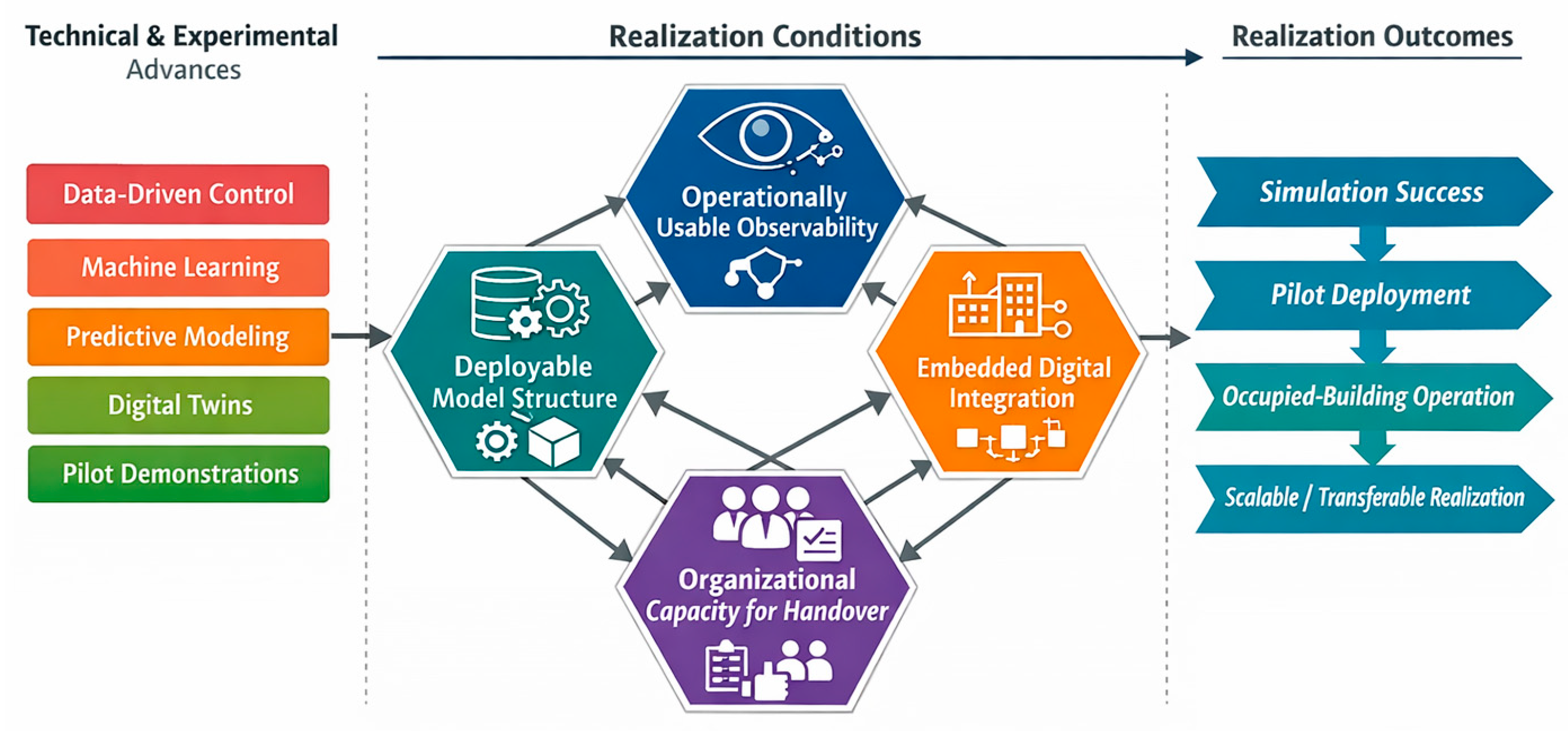
The novelty of the paper lies in reframing data-driven TABS as a realization challenge rather than only a control challenge. The five realization conditions proposed in this paper are intended as an interpretive synthesis of the reviewed literature rather than as a universally validated taxonomy. Existing reviews and methodological contributions have generated important insights into predictive control, machine learning, forecasting, and optimization for TABS [
5], yet they have not systematically examined how these technical advances interact with digital infrastructure, commissioning constraints, operational acceptability, and organizational context in the specific case of TABS. Accordingly, the present study goes beyond cataloging methods or comparing control strategies by developing a realization-oriented understanding of how data-driven TABS progress across different stages of maturity, move through different realization pathways, and encounter recurring enabling and constraining factors in deployment. The paper further uses the SDU BuildIQ Lab as an illustrative case to show how a realization-supportive smart-building environment can be assembled in practice.
This review addresses four questions: how the literature is distributed across realization stages; which realization pathways recur across the reviewed studies; which enablers and barriers shape movement toward practical deployment; and which higher-order realization conditions can be synthesized from these recurring patterns. The study makes four contributions. First, it provides a stage-based mapping of the literature that distinguishes conceptual feasibility, simulation-based validation, living-lab or pilot deployment, occupied-building operation, and scalable or transferable realization. Second, it identifies dominant realization pathways across the reviewed literature and shows where those pathways tend to stall. Third, it synthesizes the recurring enablers and barriers that shape deployment, with particular attention to observability, deployable technical and digital structures, system integration, operational acceptability, and organizational support. Fourth, it develops the concept of realization conditions as higher-order analytical synthesis that helps explain why technical success does not automatically translate into sustained adoption. These contributions provide a stronger basis for future research, a more realistic basis for practice, and a more precise analytical foundation for understanding the role of TABS in flexible and intelligent building systems.
The importance of this work extends beyond TABS alone. As buildings are increasingly expected to support decarbonization, flexibility, and digital coordination across energy systems, there is growing need to understand why advanced control technologies often remain trapped between demonstration and adoption. TABS provide a particularly revealing case because they combine strong theoretical flexibility potential with slow dynamics, comfort sensitivity, condensation risks, and integration challenges that make realization especially demanding [
2]. By clarifying the conditions under which data-driven TABS can move from technical possibility to sustained operation, this study contributes to the broader question of how advanced building intelligence can become operationally credible, transferable, and effective in real practice.
The remainder of the paper is structured as follows.
Section 2 presents the methodology, including the scoping review design and the illustrative case-study approach.
Section 3 presents the scoping review results, including realization stages, pathways, enablers, and barriers.
Section 4 presents the SDU BuildIQ Lab case as a worked illustration of a realization-supportive environment.
Section 5 discusses the findings and develops the conceptual synthesis of realization conditions for sustained deployment.
Section 6 concludes the paper by summarizing the central contribution and outlining priorities for future work.
2. Methodology
This study adopted a two-part qualitative design consisting of a scoping review and a case study. The scoping review served as the primary research component and was used to map and synthesize the literature on data-driven thermally activated building systems from a realization perspective. The case study served as a secondary component and was included to illustrate how the identified realization conditions from the review may appear in a real smart-building environment. Therefore, the review provides the main evidential basis of the paper, while the case study supports interpretation and concretization.
A scoping review was selected because the literature on data-driven TABS is heterogeneous in research design, empirical setting, analytical emphasis, and maturity level. The reviewed studies range from conceptual analyses and simulation-based investigations to pilot implementations and limited operational applications. Under these conditions, a scoping review is more appropriate than a meta-analysis because the purpose is to map the field, identify recurring patterns, and synthesize conditions relevant to realization rather than aggregate comparable performance effects. The review was reported in accordance with the PRISMA extension for scoping reviews [
9].
2.1. Scoping Review
The review focused on studies that address thermally activated building systems, building thermal mass, or closely related building-scale thermal storage concepts, in combination with data-driven or digitally enabled control. Studies were included when they examined at least one form of digital intelligence, such as data-driven control, machine learning, predictive control, digital twins, or related analytical approaches, and when they were substantively relevant to implementation, deployment, integration, commissioning, operational use, or sustained application in practice. Studies were excluded when they focused solely on generic thermal storage or material-scale storage without a building-realization context, or when they addressed algorithm development without meaningful relevance to practical implementation or operation.
Table 1 summarizes the inclusion and exclusion criteria.
The literature search was conducted in Scopus, Web of Science, and IEEE Xplore, which together provide broad coverage of energy, buildings, control systems, and digital technologies. Searches were performed in title, abstract, and keyword fields using combinations of three term groups: system-related terms, digital-intelligence terms, and realization-related terms. The search strategy combined terms such as “thermally activated building systems,” “TABS,” and “building thermal mass” with terms such as “data-driven,” “machine learning,” “predictive control,” and “digital twin,” and with realization-oriented terms such as “deployment,” “implementation,” “integration,” “commissioning,” “operation,” and “interoperability.” The full set of database-specific search strings is provided in the
Supplementary Materials.
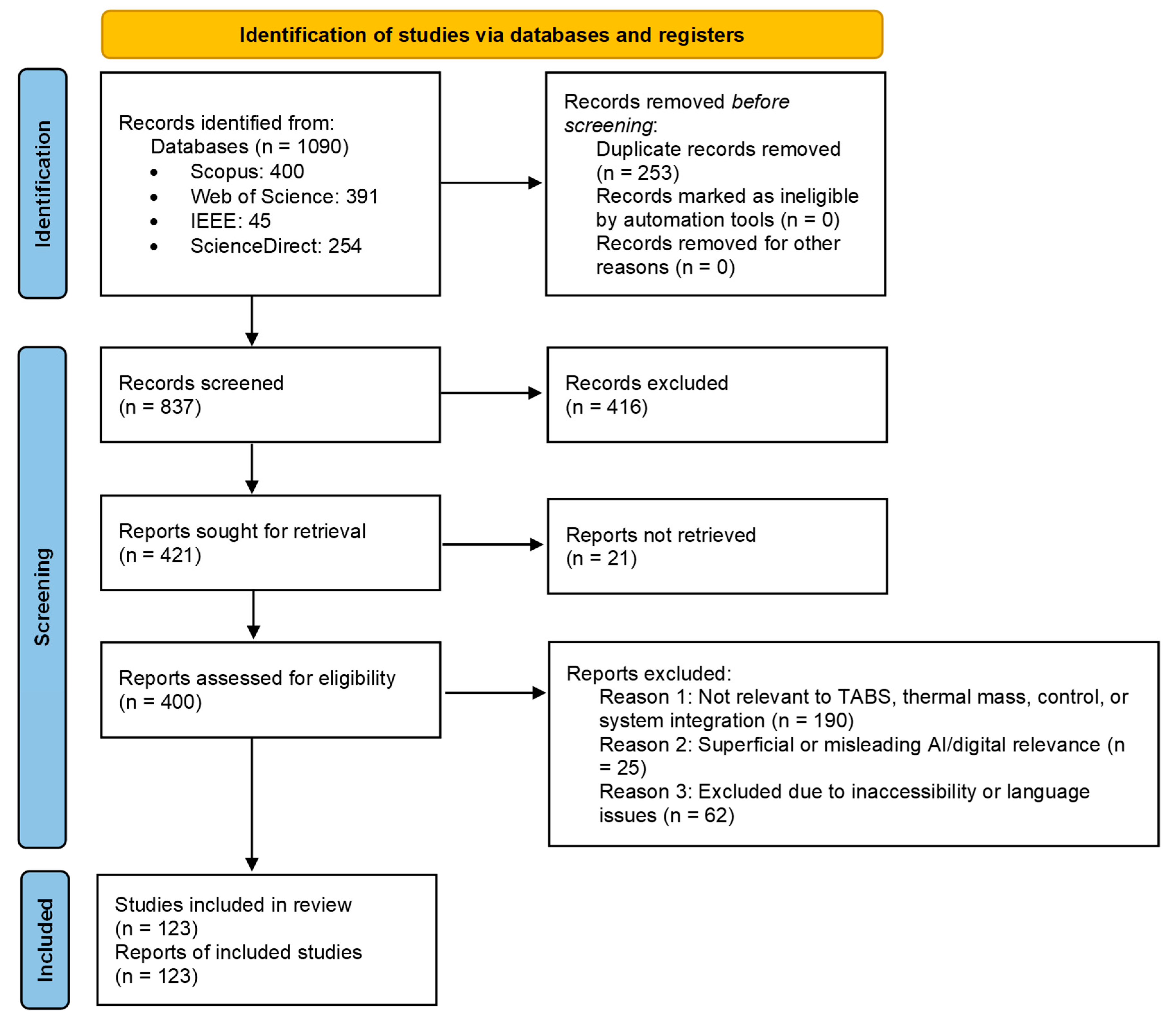
The study-selection process followed the sequence of identification, deduplication, title and abstract screening, full-text assessment, and final inclusion. The database search identified 330 records. After removal of 64 duplicates, 266 records remained for title and abstract screening. Following this stage, 36 reports were sought for full-text assessment. Of these, 8 reports could not be retrieved in full-text format. Therefore, the final review sample consisted of 28 studies.
Figure 1 presents the study-selection process in PRISMA format.
Each included study was read in full and charted for both descriptive and analytical information relevant to the review objective. The extracted information included the system focus, the type of digital or data-driven approach, the empirical setting, and the study’s relevance to practice. The analysis then examined the literature through five dimensions: realization stage, realization pathway, realization enablers, realization barriers, and realization conditions. These dimensions were used to structure the synthesis and support the development of the paper’s realization-oriented framework. Detailed charting items and coding definitions are provided in the
Supplementary Materials.
The synthesis was conducted as a qualitative interpretive synthesis. First, the included studies were mapped by their highest demonstrated realization stage to examine how the literature is distributed across different levels of maturity. Second, the studies were compared to identify dominant realization pathways and recurring enabling and constraining factors. Third, these patterns were synthesized into a higher-order framework of realization conditions for sustained deployment. No formal critical appraisal was conducted because the purpose of the review was to map and synthesize the structure of the literature rather than assess intervention effectiveness or exclude studies on the basis of methodological quality, which is consistent with scoping-review practice. In this review, scalable or transferable realization was reserved for studies that empirically demonstrated repeatable deployment across multiple buildings or organizational contexts with limited redesign. Accordingly, claims of scalability in method design or implementation framing were not treated as evidence of scalable realization unless cross-site deployment was empirically demonstrated within the scope of the reviewed study. The final review sample is modest, eight reports could not be retrieved in full-text format, and no formal critical appraisal was conducted. Therefore, the realization-conditions framework should be interpreted as an analytically grounded scoping-review synthesis rather than a validated classificatory system.
2.2. Case Study
The purpose of this case section is illustrative: it shows how the review-derived realization conditions can be recognized in a real institutional setting, but it does not generate the field-level conclusions of the paper. To complement the scoping review, this study included a case study of the SDU BuildIQ Lab, also referred to as the SDU Smart Campus Living Lab, located on the main campus of the University of Southern Denmark in Odense, Denmark. The case study was included to concretize the realization conditions identified through the literature review by examining how they become visible in an operational smart-building environment. Therefore, its role is illustrative and interpretive, and the study’s core evidential basis remains the scoping review.
The SDU BuildIQ Lab was selected purposively because it constitutes an information-rich living-lab environment that combines physical building infrastructure, sensing systems, digital platforms, and operational interaction under real use conditions. The living lab is embedded in an active university setting and centers on two interconnected buildings with different characteristics: Building OU44, a highly energy-efficient building completed in 2015, and Building OU33, a retrofitted office building. Together, these buildings provide a heterogeneous test environment spanning both new and existing building contexts, which is particularly relevant for examining, in practice, realization-oriented smart-building intelligence. The site is also explicitly described as an occupied environment, with OU44 regularly hosting up to 1350 people, making it suitable for studying the realization conditions beyond laboratory abstraction.
The case was bounded as a socio-technical smart-building environment rather than as a single control experiment, algorithm, or subsystem. Therefore, the unit of analysis was the realization-supportive environment of the SDU BuildIQ Lab, including its physical buildings, sensor infrastructure, data environment, digital representations, control-related capabilities, and organizational arrangements that support experimentation and operational interaction. This boundary was chosen because the paper is concerned with realization conditions for sustained deployment, which depend on the interaction of technical, digital, operational, and organizational elements rather than on algorithmic performance alone.
The case environment provides several characteristics that are analytically relevant to the review findings. According to the case description, the living lab includes a digital twin environment that mirrors the physical buildings in a virtual environment and supports scenario testing before real deployment. It also includes a substantial data ecosystem maintained by SDU Technical Services and the SDU Center for Energy Informatics, with more than 665 million records totaling 87 GB, including long-term building and utility consumption data, electricity-grid-related data, weather data, and smart-campus sensor datasets. The smart building environment further includes advanced building management and control capabilities for heating, cooling, ventilation, and lighting, with explicit reference to adaptive control, load shifting, demand response, and occupant comfort optimization. These characteristics make the case suitable for illustrating operational observability, deployable digital architecture, embedded integration, operational acceptability, and organizational support.
The case study drew on documentary and system-description materials associated with the SDU BuildIQ Lab, including descriptions of the physical testbed, digital twin environment, data ecosystem, control capabilities, and organizational setting. These materials were analyzed qualitatively using the realization conditions derived from the scoping review as an interpretive lens. More specifically, the analysis examined how the case environment supports visibility into operational states, how digital and physical infrastructures are aligned for deployment, how building systems and data environments are integrated, how occupant-centered considerations are incorporated, and how the living-lab setting enables sustained experimentation and handover-oriented use. The purpose was to illustrate how the realization conditions can be recognized in practice and why they matter for moving from technical potential to operational deployment. The case study is only used to illustrate how the review-derived realization conditions may appear in a real smart-building environment and does not serve as field-level validation of the framework.
3. Scoping Review Results
This section presents the scoping review findings through a progression from descriptive mapping to analytical synthesis. It first examines how the reviewed studies are distributed across realization stages, then interprets the dominant pathways through which data-driven TABS progress from conceptual formulation toward physical and operational implementation, and finally synthesizes the recurring enablers, barriers, and higher-order realization conditions that shape sustained deployment. Across the 28 included studies, the literature reveals a consistent maturity imbalance: technical and methodological development is well advanced, while evidence of stable operation in occupied buildings and broader deployment remains limited. This pattern indicates that the field has progressed substantially in demonstrating technical potential, yet much less in establishing the conditions required for routine, durable, and transferable use in practice.
3.1. Distribution of Realization Stages in the Literature
The reviewed literature shows a strongly uneven realization profile. Most studies remain concentrated in conceptual development, control-oriented model construction, and simulation-based validation, whereas only a limited subset reaches sustained operation in occupied buildings. No included study demonstrated repeatable cross-site deployment across multiple buildings or organizational contexts with limited redesign, which was the criterion used in this review for scalable or transferable realization. Although one included study explicitly framed its implementation strategy as scalable, it was not classified as scalable or transferable realization here because the review required empirical demonstration of cross-site deployment with limited redesign. Therefore, this maturity structure suggests that data-driven TABS have advanced substantially as a field of technical formulation and controlled demonstration, but only rarely as a field of routine operational deployment [
10,
11].
To clarify this maturity structure,
Table 2 summarizes the realization stages identified in the reviewed literature, their defining characteristics, and the studies assigned to each stage. As shown, the literature is strongest in conceptual and simulation-oriented work, selectively extends to pilot and living-lab implementation, and remains comparatively weak in occupied-building operation. Of the 28 included studies, 5 were classified as conceptual or methodological feasibility studies (17.9%), 12 as simulation-based validation studies (42.9%), 7 as living-lab or pilot deployments (25.0%), and 4 as occupied-building operation studies (14.3%), while no included study met the review’s criterion for scalable or transferable realization.
Two features of this stage distribution are analytically important. First, the literature remains predominantly upstream of routine building operation. A large share of the reviewed work focuses on conceptual framing, virtual testing, and control-oriented model development under analytically controllable conditions [
10,
13]. This includes both methodological work that defines the structure of data-driven TABS control and simulation-based studies that test predictive performance, flexibility potential, or control robustness without requiring long-term operational embedding [
17,
26]. These studies show strong technical progress, but they do not yet demonstrate widespread normalization within everyday building practice.
Second, even when the literature progresses beyond simulation, it does so mainly through living-lab and pilot environments rather than through conventional occupied-building deployment. The pilot studies indicate that data-driven TABS can be implemented physically under supportive conditions, whereas the smaller set of occupied-building studies shows that operational implementation is possible but remains exceptional [
11,
28]. This distinction matters because pilot realization should not be interpreted as equivalent to sustained adoption. Research-supported environments typically provide dense sensing, greater access to systems and data, fallback safety arrangements, and higher institutional tolerance for experimentation than ordinary buildings. Therefore, their prevalence in the literature suggests that the field has developed credible intermediate realization settings, but far fewer robust pathways into routine use [
29,
33].
The absence of scalable or transferable realization is especially revealing. The reviewed studies show that data-driven TABS can be conceptualized, modeled, simulated, and in some cases demonstrated physically in bounded environments. However, they do not demonstrate that these approaches can be applied across buildings, organizations, or operational contexts with minimal redesign. In this sense, the literature documents a field that has advanced from feasibility toward demonstration, but not yet from demonstration toward reproducible adoption [
11,
33]. This maturity structure provides the basis for the more detailed stage-specific analysis below.
At the earliest stage of realization, the literature primarily concerns itself with defining what data-driven TABS could become rather than demonstrating how such systems operate in practice. Studies in this category establish the conceptual and methodological architecture of the field by formalizing system logic, specifying optimization structures, and introducing analytical vocabularies that support later work [
12,
13]. These contributions play an important foundational role because they define the technical language and formal assumptions that make later simulation and deployment work possible [
14,
15].
The analytical importance of this stage lies in its preparatory function. Conceptual and methodological studies strengthen the field’s internal rigor, but they remain upstream of practical realization. They demonstrate conceptual preparedness rather than deployment readiness. As a result, they are necessary for field development, yet insufficient as evidence that data-driven TABS can be commissioned, integrated, and sustained in real building environments [
13,
16].
Simulation-based validation is the dominant approach in the reviewed literature and the principal environment in which data-driven TABS are tested. At this stage, control strategies are evaluated through numerical building models, co-simulation platforms, emulators, and control-oriented virtual representations that allow systematic comparison under repeatable conditions [
10,
17]. This category also includes more recent model development work, such as physics-informed neural networks for control-oriented thermal modeling, which further enhances the sophistication of virtual validation environments [
26].
This stage is analytically significant because it shows that the field has achieved substantial proof-of-concept maturity. Simulation and model-based testing enable examination of thermal flexibility, comfort implications, control robustness, and predictive performance without the cost and risk of early physical deployment [
20,
23]. At the same time, the dominance of this stage also reveals a structural limitation in the literature. Even highly sophisticated virtual models do not in themselves resolve the practical conditions required for commissioning, interoperability, and sustained operational use. Therefore, the literature at this stage demonstrates that data-driven TABS can be made to work in principle, but not yet embedded routinely in practice [
21,
25].
The third realization stage consists of living-lab and pilot deployments in which data-driven TABS are tested in real and instrumented physical settings under controlled or semi-controlled conditions. The reviewed studies at this stage include experimental office buildings, test environments, living labs, and pilot platforms in which advanced control approaches interact with actual building systems rather than only simulated representations [
27,
28].
The analytical role of this stage is transitional. Pilot and living-lab environments show that simulation-tested concepts can, under supportive conditions, be translated into physical implementation. However, they also reveal that this progression usually depends on dense sensing, extensive system access, dedicated research oversight, and institutional tolerance for experimentation [
30,
31]. As a result, this stage should not be interpreted as equivalent to routine adoption. It demonstrates a credible bridge between virtual validation and real-world use, but it remains an intermediate realization environment rather than evidence of stable everyday operation [
7,
32].
Only a limited number of reviewed studies reach the stage of occupied-building operation. In these cases, data-driven TABS are deployed in buildings with real occupants, established automation hierarchies, and ongoing operational responsibilities rather than under purely experimental conditions [
11,
33]. This stage is analytically important because it marks the point at which realization becomes genuinely operational rather than demonstrative.
At this stage, system performance is evaluated within the constraints of everyday building use, where technical functionality must be sustained under real operational conditions. Technical performance must align with interoperability requirements, comfort protection, risk management, and the practical realities of building operation. The small number of studies in this category indicates that the key challenge in the field extends beyond algorithm design to the ability to sustain operation within real building environments [
34,
35]. Therefore, the literature suggests that occupied-building deployment remains the exception rather than the norm, reinforcing the broader conclusion that the field has advanced further in demonstrating capability than in normalizing adoption.
The most striking result of the stage analysis is the complete absence of scalable or transferable realization in the reviewed articles. None of the 28 studies demonstrates that a data-driven TABS approach has progressed beyond site-specific realization into a repeatable framework that can be adopted across multiple buildings or organizational contexts with limited redesign. This absence is analytically more important than a simple zero count because it reveals the present boundary of the field’s maturity.
The literature shows that data-driven TABS can be conceptualized, modeled, simulated, and in some cases demonstrated physically in pilot or occupied settings. However, it does not yet show that these achievements can travel across contexts with reduced redesign and reduced dependence on research-intensive support conditions [
10,
11]. In this sense, the maturity structure of the literature points not to a field lacking technical imagination, but to one that has not yet converted localized success into a reproducible deployment logic.
3.2. Realization Pathways Across the Literature
The stage distribution presented in
Section 3.1 suggests that realization in the data-driven TABS literature does not unfold as a single linear progression from concept to routine adoption. Instead, the reviewed studies indicate a more fragmented and uneven pattern in which different parts of the realization process are advanced by different types of work. In this sense, realization pathways should be understood as interpretive patterns inferred from how the literature is structured across stages, rather than as directly observed longitudinal trajectories of the same systems over time. This distinction is important because the reviewed studies do not collectively trace complete end-to-end implementation histories. Rather, they reveal recurring ways in which the field tends to move from technical formulation toward bounded forms of deployment [
10,
11].
Table 3 summarizes the dominant pathways of realization suggested by the reviewed literature. As shown in the table, the literature supports three broad pathway types: a methodological pathway centered on conceptual and simulation-based development, a translational pathway extending from simulation into pilot or living-lab implementation, and a limited operational pathway in which selected systems reach occupied-building use but do not yet demonstrate broader transferability.
The first and most established pathway is a methodological development pathway in which the field advances primarily through conceptual formulation, control-logic development, and simulation-based evaluation. This pathway is strongly represented in the literature and accounts for much of the technical maturity currently visible in data-driven TABS research [
13,
17]. It includes work on control structures, predictive frameworks, model construction, and virtual testing environments, including more recent control-oriented modeling developments such as physics-informed neural networks [
10,
26]. The analytical significance of this pathway is that it has enabled the field methodologically. At the same time, it also reveals a structural concentration of evidence in settings where assumptions remain controllable and deployment constraints are only partially represented. As a result, this pathway supports technical advancement, but by itself does not establish operational realization.
A second pathway can be described as a translational pilot pathway, in which simulation-tested approaches are moved into living labs, test buildings, or other pilot settings. This pathway is important because it shows that at least some data-driven TABS concepts can progress beyond virtual validation and interact with real physical systems [
28,
30]. However, the literature also suggests that this transition typically depends on enabling conditions that are stronger than those found in ordinary practice, including dense sensing, extensive access to system variables, dedicated research oversight, and tolerance for experimentation [
32]. Therefore, the pathway is best interpreted as a bridge between technical feasibility and practical realization, rather than as evidence that routine adoption has already been achieved. In other words, it demonstrates physical translatability under supportive conditions, but not yet robust institutional normality.
A third and much less frequent pathway is a limited operational pathway, in which data-driven TABS are embedded in occupied buildings with real users, existing automation hierarchies, and ongoing operational responsibilities [
11,
33]. This pathway is analytically important because it marks the point at which realization becomes operational rather than merely demonstrative. Yet the literature suggests that such cases remain exceptional and strongly site-specific [
34,
35]. The reviewed studies do not indicate that operational success in one building readily translates into repeatable deployment across other buildings or organizational settings. As a result, the pathway remains limited in both frequency and scope. It demonstrates that operational realization is possible, but it does not yet demonstrate a reproducible route to broader adoption.
Overall, these pathways suggest that realization in the field is cumulative across the literature, but incomplete within most individual studies. Conceptual work, simulation studies, pilot deployments, and occupied-building applications each contribute important pieces of the realization puzzle, yet they rarely form a complete and transferable sequence within the same research trajectory. This helps explain why the field appears simultaneously mature and immature. It is mature in the sense that substantial knowledge has been developed across multiple realization stages, but immature in the sense that these contributions have not yet been consolidated into repeatable deployment logic.
This interpretation also helps clarify why the literature shows a persistent gap between technical promise and practical uptake. The problem is not that the field lacks methodological sophistication or physical experimentation. Rather, the literature suggests that movement across pathways becomes progressively more difficult as realization approaches ordinary building operation. Technical and analytical progress is comparatively well represented. Translational progress into pilot contexts is visible but more selective. Progress into stable, transferable, and routine deployment remains largely unresolved [
11,
28]. In this sense, the pathway structure reinforces the argument that the main challenge in data-driven TABS is not only the development of better control methods, but the alignment of the broader conditions required for sustained realization.
Therefore, the pathway analysis serves two purposes in the paper’s overall argument. First, it complements the stage distribution by showing that maturity is not simply uneven in static terms but also fragmented in how progress unfolds. Second, it provides the bridge to the next two subsections, which examine the recurring enablers and barriers that appear to shape whether movement along these pathways remains possible or stalls before broader adoption.
3.3. Realization Enablers in Data-Driven TABS Deployment
The reviewed literature suggests that the realization of data-driven TABS depends less on the selection of a single superior algorithm than on whether a broader set of enabling conditions is in place. Across the studies, progression toward deployment becomes more likely when building behavior can be observed with sufficient operational fidelity, model structures remain compatible with real-world commissioning constraints, digital infrastructure supports integration with existing building systems, and control behavior remains acceptable under everyday operational requirements [
28,
33]. When these enabling domains are aligned, a range of modeling and control approaches can move beyond purely virtual evaluation. When they are weak or only partially present, even technically promising methods tend to remain confined to simulation or heavily supervised pilot settings [
29,
34].
Table 4 synthesizes the main enabling domains identified across the reviewed literature, their practical roles in realization, and representative evidence from the sample. As shown in the table, the literature points not to isolated technical success factors, but to a small number of interdependent domains that repeatedly support more advanced forms of deployment.
A first enabling domain is observability and data readiness. Because TABS operate through slow thermal inertia and delayed system response, effective control depends on whether slab dynamics, room conditions, and external disturbances are sufficiently visible for operational use [
12,
29]. Therefore, the literature suggests that realization is not enabled by data abundance alone, but by the availability of data that are interpretable, reliable, and directly useful for identification, prediction, and supervisory decision-making. Studies that progress toward physical implementation repeatedly rely on relatively rich sensing environments and sufficiently stable preprocessing pipelines, which allow slow thermal behavior to be translated into actionable operational knowledge [
31,
32]. In this sense, observability functions as an enabling condition not merely because it improves model accuracy, but because it makes the system legible enough to support control under real conditions.
A second enabling domain is deployable model structure. The literature indicates that high predictive accuracy alone is not sufficient if the resulting model is difficult to commission, heavily data-dependent, or too complex to calibrate within practical time and resource constraints [
10,
14]. Therefore, more advanced progression is often associated with models that are simplified, interpretable, or otherwise compatible with short training windows and realistic deployment conditions. This is evident both in reduced-order RC (resistance–capacitance) approaches used to shorten commissioning effort and in more recent hybrid or physics-informed learning approaches that embed physical structure into data-driven models in order to improve robustness under limited data availability [
26,
30]. Therefore, the enabling role of model structure is not only computational. It is both organizational and operational, because it influences whether a method can be installed, adapted, and maintained without excessive expert intervention.
A third enabling domain is embedded digital integration. Even technically credible control strategies remain difficult to realize unless they can operate within the building’s digital and automation backbone [
11,
28]. Across the reviewed studies, more advanced forms of realization are repeatedly associated with supervisory architectures, interoperable communication routes, digital twin support, and other mechanisms that connect analytics with real building management infrastructure [
29,
33]. This suggests that deployment depends not only on the control method itself, but also on whether data acquisition, actuation, fallback safety, and continuous execution can be sustained through a reliable digital pathway. Therefore, integration acts as an enabler because it transforms technical capability into operational continuity.
A fourth enabling domain is operational acceptability and safety. The literature suggests that real deployment becomes more plausible when control strategies remain compatible with everyday operational priorities such as comfort protection, moisture-risk avoidance, transparency, and trustworthiness [
33,
34]. This issue is especially important for TABS because the same thermal inertia that enables flexibility also increases the consequences of poor or opaque decisions. As a result, methods that appear effective in simulation may still face realization barriers if they are difficult to interpret, too aggressive in their control actions, or insufficiently aligned with practical safety expectations [
11,
35]. Therefore, operational acceptability should be understood as an enabling condition in its own right rather than as a secondary benefit of technical performance.
Overall, these findings indicate that realization is enabled by aligning several domains that are often treated separately in technical research. Observability supports usable system knowledge. Deployable model structures reduce friction in commissioning and adaptation. Embedded digital integration supports continuous operational execution. Operational acceptability and safety make advanced control credible in real use. Therefore, the literature suggests that progress toward deployment is not best explained by isolated technical improvements, but by the degree to which these enabling domains come together in a practically viable configuration [
28,
34].
At the same time, the reviewed studies also show that the presence of individual enablers does not guarantee successful realization. Dense sensing may support excellent identification without ensuring operator trust. Strong digital infrastructure may enable continuous data exchange without reducing commissioning burden. Accurate models may still remain too building-specific or too opaque for routine operational handover. For this reason, enablers are best understood as factors that support movement along the realization pathway, but do not by themselves ensure sustained adoption. This point leads directly to the next subsection, which examines the recurring barriers and adoption constraints that continue to limit progression beyond pilot and demonstration settings.
3.4. Realization Barriers and Adoption Constraints
The reviewed literature also suggests that realization often stalls because one or more constraints remain unresolved. These barriers are not limited to technical shortcomings in control quality. Rather, they reflect the difficulty of translating technically promising approaches into environments characterized by building-specific dynamics, limited sensing, fragmented automation infrastructure, operational risk aversion, and constrained organizational capacity [
11,
28]. In this sense, the barriers identified across the literature help explain why progress in data-driven TABS has been stronger in conceptual, simulation, and pilot contexts than in routine operational settings [
33,
34].
Table 5 synthesizes the main barrier domains identified in the reviewed literature together with their practical implications for realization and representative evidence from the sample. As shown in the table, the literature points to a combination of technical, digital, operational, and organizational constraints that repeatedly limit movement toward sustained deployment.
A first recurring barrier is the commissioning and calibration burden. The literature suggests that even when advanced models perform well, their deployment may require data collection periods, parameter tuning, configuration work, and expert oversight that exceed what is practical in everyday building operation [
14,
30]. This issue is especially important for TABS because slow slab dynamics, delayed response, and coupled thermal interactions often make identification and controller tuning more demanding than in faster HVAC systems. As a result, methods that appear technically attractive in simulation may become difficult to deploy at scale if they rely on extensive setup effort or specialized expertise. Therefore, commissioning burden acts not merely as an implementation inconvenience but as a direct constraint on realizability.
A second barrier is building specificity and limited transferability. Across the reviewed studies, control performance and model validity are often closely tied to the thermal characteristics, sensing configuration, occupancy profile, and control architecture of the individual building under study [
10,
11]. This makes local success difficult to generalize. In practice, a data-driven TABS solution that performs well in one highly instrumented office or one experimental environment may still require substantial redesign in another building with different structural mass, boundary conditions, operational priorities, or automation systems [
23,
33]. Therefore, the literature suggests that transfer remains constrained not because methods lack sophistication, but because the system context remains deeply consequential to realization outcomes.
A third barrier concerns digital and interoperability gaps. The reviewed literature indicates that deployment is often limited not by the absence of predictive logic, but by the difficulty of embedding that logic within existing building-management and automation infrastructures [
28,
33]. Access to relevant variables may be incomplete, communication pathways may be unstable or nonstandardized, actuation routes may be restricted, and safety layers may not easily accommodate new supervisory logic. These issues are particularly important in existing buildings, where legacy systems and fragmented vendor environments can create significant friction between analytical capability and operational execution [
11,
29]. In this sense, weak interoperability functions as a structural barrier because it interrupts the pathway through which technically credible control must become operationally continuous.
A fourth barrier is operational trust and organizational readiness. While the technical literature does not always examine these issues directly, the reviewed studies suggest that real deployment becomes less likely when advanced control is difficult to interpret, perceived as risky, or poorly aligned with the routines and responsibilities of building operators [
33,
34]. This concern is amplified in TABS because thermal inertia increases the consequences of incorrect or poorly timed interventions, particularly when comfort dissatisfaction or moisture risk may emerge with delay. Under such conditions, operators and facility organizations may prefer conservative or familiar control modes over analytically superior but less transparent approaches [
11,
35]. Therefore, organizational readiness matters not only at the moment of installation, but throughout the longer process of supervision, troubleshooting, and handover.
Overall, these barriers help explain why realization frequently stalls between promising demonstration and broader adoption. Commissioning burden increases implementation costs. Building specificity limits reuse across sites. Digital fragmentation prevents stable execution. Weak trust and organizational readiness constrain long-term institutional uptake. Importantly, these barriers are often cumulative rather than isolated. A technically successful approach may still fail to progress if even one of these domains remains unresolved. This is why pilot success does not automatically translate into routine deployment and why the literature continues to show stronger evidence of bounded experimentation than of normalized use [
11,
28].
At the same time, the barrier analysis must be interpreted carefully. Some constraints are directly reported in the reviewed studies, such as commissioning burden, model-calibration effort, and interoperability limitations, while others, such as organizational handover challenges and long-term continuity, are more visible through the repeated absence of evidence on sustained operation, transfer, or handover. The literature is generally much more explicit about model design and performance evaluation than about institutional adaptation, maintenance responsibility, or operator learning. This means that certain organizational barriers may be underreported rather than unimportant. Therefore, the review suggests that the current field may still underestimate the non-technical constraints that shape realization in practice [
33,
35].
Overall, the barrier structure reinforces the paper’s central argument: the main challenge in data-driven TABS is not only the development of effective control intelligence but also the resolution of the conditions that enable such intelligence to be deployed, integrated, trusted, and sustained over time. This provides the basis for the next subsection, which synthesizes the recurring enablers and barriers into a higher-order concept of realization conditions.
3.5. From Realization Enablers to Realization Conditions
The preceding analysis shows that the reviewed literature does not point to a single decisive reason for the weak deployment of data-driven TABS in routine practice. Instead, it reveals a recurring pattern in which technically promising approaches advance under certain favorable conditions, but stall when the broader requirements for sustained implementation are not aligned. This suggests that the demonstration-to-adoption gap cannot be adequately explained by isolated enablers or barriers alone. A more useful interpretation is that realization depends on whether a set of higher-order conditions is jointly satisfied.
These five realization conditions are proposed as an interpretive synthesis derived from the reviewed literature and should not be read as a universally validated taxonomy. Accordingly, the reviewed literature is synthesized into five realization conditions that help explain why data-driven TABS rarely progress from technical feasibility to sustained deployment. These conditions are not treated here as pre-existing categories established in the field. Rather, they provide a structured synthesis of the recurring stage patterns, pathways, enablers, and barriers identified across the reviewed studies.
Table 6 summarizes the five realization conditions, their analytical meaning, the key enabling and constraining factors associated with each condition, and representative evidence from the reviewed literature.
The first condition is operational observability. The literature repeatedly suggests that realization is unlikely unless the slow thermal behavior of TABS can be made sufficiently visible for practical use. Because slab dynamics are delayed, distributed, and sensitive to weather, occupancy, and system interactions, advanced control depends on more than raw data availability. It depends on whether the relevant thermal states and disturbances can be observed in a way that supports identification, prediction, diagnosis, and control adjustment under operational conditions [
12,
29]. In this sense, observability is not simply a technical prerequisite for better modeling. It is a realization condition because it determines whether the building becomes legible enough for sustained supervisory intelligence in the first place.
The second condition is a deployable model architecture. Across the reviewed literature, strong performance in simulation does not necessarily translate into practical use if the model requires extensive calibration, highly specific tuning, or data conditions that are difficult to reproduce outside research environments [
10,
14]. More deployable approaches tend to rely on structures that remain sufficiently accurate while being robust to limited training data, manageable in commissioning effort, and adaptable to building-specific constraints. This includes simplified gray-box structures as well as newer hybrid and physics-informed approaches that seek to combine physical plausibility with data-driven flexibility [
26,
30]. Therefore, model architecture becomes a realization condition when its properties shape not only predictive quality, but also whether the method can actually be installed, adapted, and maintained under practical constraints.
The third condition is embedded digital integration. The literature indicates that control intelligence remains unrealized unless it can be linked reliably to the building’s digital and automation backbone [
11,
28]. Even when models are credible and data streams exist, continuous deployment requires stable communication pathways, access to relevant variables, workable actuation routes, fallback protection, and some form of sustained execution environment. In many cases, these requirements are difficult to satisfy because existing building systems are fragmented, legacy-based, or not designed for advanced supervisory logic [
29,
33]. Therefore, embedded integration is a realization condition because it connects analytical capability to operational continuity. Without it, intelligence remains detached from the infrastructure through which it must act.
The fourth condition is operational acceptability. The reviewed studies suggest that successful realization depends not only on whether a controller performs well technically, but also on whether its behavior remains credible and acceptable under everyday operational priorities [
33,
34]. For TABS, this issue is especially important because the same inertia that enables flexibility also amplifies the consequences of poor timing, opaque behavior, or insufficient safety margins. Therefore, real deployment becomes more plausible when control strategies protect comfort, avoid condensation risk, remain interpretable to operators, and do not require unrealistic tolerance for uncertainty [
11,
35]. Operational acceptability should therefore be understood as a distinct realization condition rather than as a secondary consequence of algorithmic performance.
The fifth condition is organizational handover capacity. The review suggests that realization remains fragile unless the organizational context can absorb the system beyond the research phase. Installation alone is insufficient. Sustained deployment requires that someone can supervise, troubleshoot, maintain, and adapt the solution over time [
11,
35]. This includes institutional ownership of the control logic, operational readiness to respond to faults or anomalies, and sufficient capacity to sustain the system after the initial research-led configuration has ended. Although the technical literature often underreports such issues, the repeated absence of evidence on long-term continuity and cross-site transfer suggests that handover capacity remains one of the least developed conditions in the field. Therefore, it is treated here as a realization condition because it shapes whether technically successful systems can persist once exceptional project support is removed.
These five conditions collectively suggest that realization is best understood as a problem of alignment rather than of isolated optimization. A TABS control approach may perform well in simulation and still fail in practice if observability is weak, digital integration is incomplete, operational trust is low, or organizational continuity is missing. Conversely, different modeling and control techniques may all become viable when these broader conditions are sufficiently present. Therefore, the literature suggests that sustained deployment depends less on selecting a universally superior algorithm than on assembling a configuration that jointly satisfies the technical, digital, operational, and organizational requirements of deployment [
28,
33].
This interpretation also helps explain why the literature appears more mature in demonstration than in adoption. Enablers and barriers are visible across the reviewed studies, but they are usually discussed in fragmented form and often within the boundary of a single technical contribution. The concept of realization conditions provides a higher-order synthesis that links these fragmented findings into a more coherent explanatory framework. It does not claim to offer an exhaustive or fully validated field taxonomy. Rather, it provides an analytically grounded lens for understanding why data-driven TABS remain difficult to stabilize in routine practice despite clear technical progress.
4. Case Study Results
4.1. Institutional and Physical Context of the SDU BuildIQ Lab
The SDU BuildIQ Lab, also referred to as the SDU Smart Campus Living Lab, is located on the main campus of the University of Southern Denmark in Odense, Denmark. The case environment is organized around two connected university buildings, OU44 and OU33. OU44 is described as a highly energy-efficient building completed in 2015, while OU33 is a retrofitted office building. These buildings provide a heterogeneous institutional setting that spans both newer and existing buildings, which is highly relevant for examining the conditions for realization in practice [
36].
The case is situated in an occupied university environment rather than a closed experimental testbed. The living-lab description reports that OU44 regularly accommodates up to 1350 occupants, which gives the case direct relevance to operational constraints, comfort requirements, and institutional use conditions. This occupied setting is important because the realization challenge addressed in this paper concerns the transition from technical capability to operation under everyday building conditions.
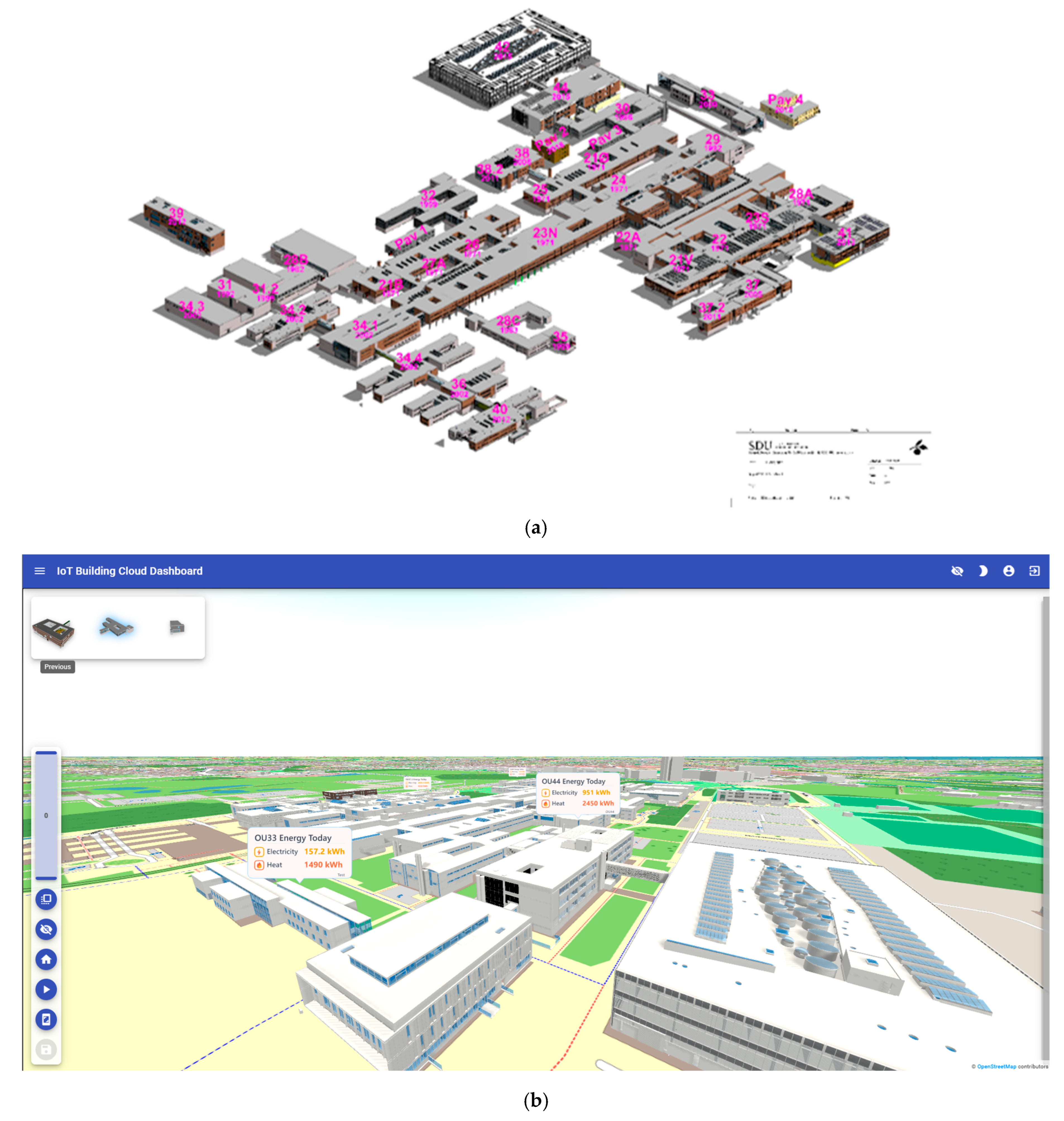
Figure 2 presents the physical context of the SDU BuildIQ Lab within the campus environment. Panel (a) shows the BIM-based spatial layout of the campus, while panel (b) provides a digital twin visualization of the case buildings, illustrating the operational perspective of the environment.
The case environment also includes a substantial data ecosystem. The living-lab documentation reports more than 665 million records totaling 87 GB across building, utility, grid, weather, and smart-campus sensor datasets. These records include long-term building and utility consumption data, electricity-related data, hyperlocal weather data, and sensor datasets associated with OU44 and OU33. This scale of data availability is analytically important because it supports longitudinal visibility into building conditions and operational behavior.
4.2. Digital and Operational Infrastructure
A defining feature of the SDU BuildIQ Lab is the presence of a layered digital infrastructure linking sensing, communication, storage, analytics, and operational services. Within the broader SDU smart-building ecosystem, this infrastructure includes gateway-based edge computing, Message Queuing Telemetry Transport (MQTT)-centered communication, device registration workflows, digital-twin-linked representation, and building-oriented visualization services. Collectively, these elements support the translation of building data into operationally usable intelligence.
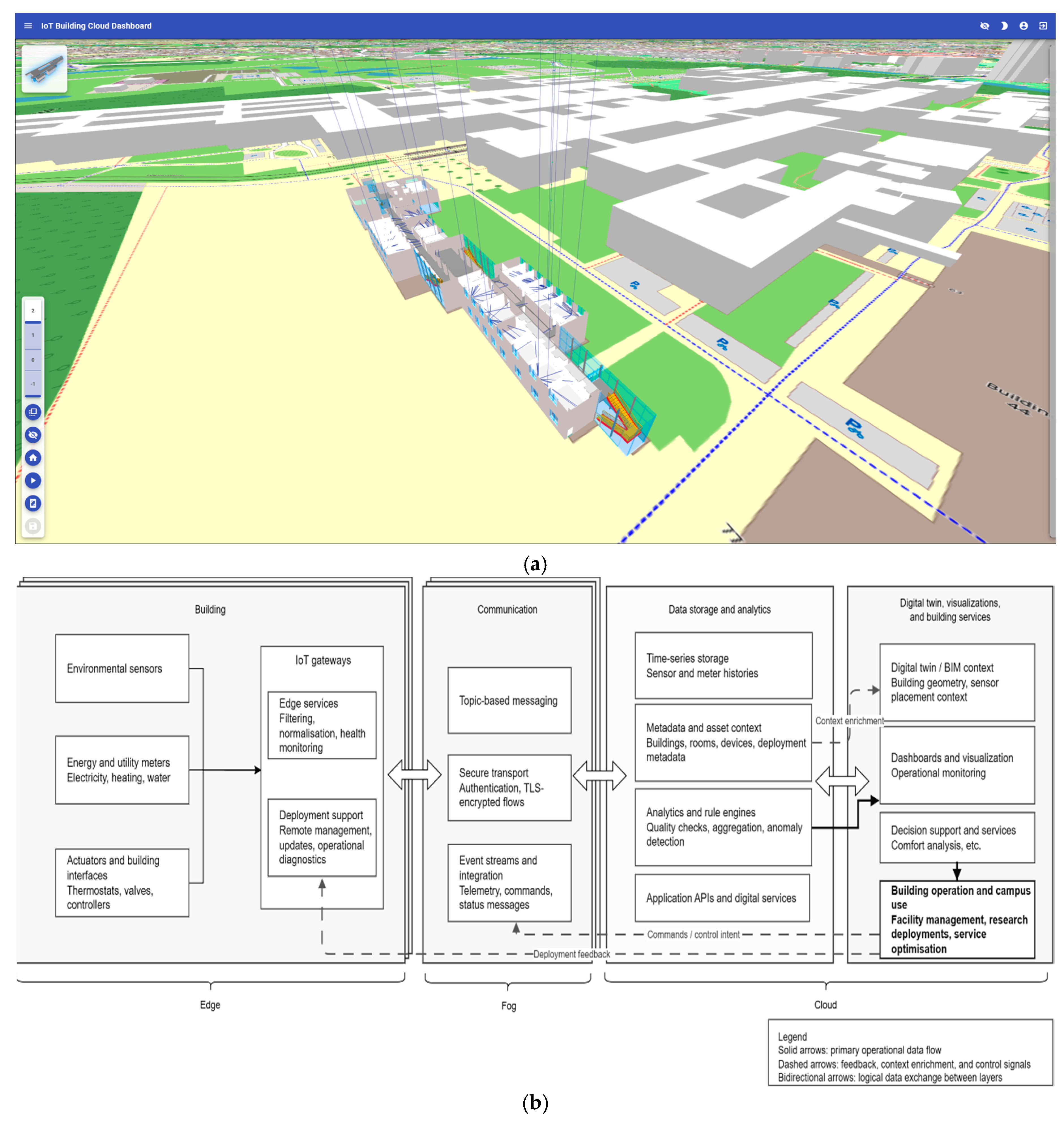
Figure 3 presents the sensing and digital infrastructure that supports deployment-oriented smart-building operation in the SDU BuildIQ Lab. Panel (a) shows the spatial distribution of the sensor network in Building OU44, illustrating how sensing is embedded within the physical building environment to support continuous monitoring of indoor conditions. Panel (b) shows the corresponding digital infrastructure, including gateway-based edge processing, MQTT-based communication, data storage, analytics, and digital services. Together, these layers establish the connection between physical sensing and operational building intelligence, which is central to sustained deployment.
The gateway architecture developed within this ecosystem provides an open-source and cost-effective edge-computing solution that bridges Zigbee devices and MQTT-based communication services [
37]. The architecture supports local buffering, message continuity, and low-latency processing across edge, fog, and cloud layers. These characteristics are important because sustained deployment depends on stable communication pathways and continuous data availability under operational conditions.
The same infrastructure lineage includes QR-code-based autoconfiguration for IoT sensor networks in buildings [
38]. This framework links physical sensors, gateways, and room-level contexts through QR-based registration and backend-managed pairing logic. In practical terms, this contributes to deployability by reducing installation effort and supporting repeatable configuration in medium- and large-scale building environments.
Additional support is provided through metadata-driven visualization and geometry-driven digital placement of IoT sensors in building digital twins [
39]. These capabilities strengthen the coherence between physical sensing, digital representation, and operational interpretation. The living-lab description also highlights a digital twin environment in which real-time data feeds parallel simulation models that support scenario exploration before live implementation. In combination, these elements show that the case environment includes the digital continuity required for deployment-oriented building intelligence.
4.3. Correspondence with the Realization Conditions
Table 7 summarizes how the principal features of the SDU BuildIQ Lab correspond to the realization conditions identified in
Section 3.5.
Table 7 shows particularly strong correspondence for operational observability and embedded digital integration. The scale of the data ecosystem, the structured sensing environment, and the availability of digital services support visibility into building operations. At the same time, the gateway architecture, communication stack, and analytics pipeline support continuity between sensing and operational use. The case also provides meaningful support for operational acceptability through its occupied-building setting, occupant-centered orientation, and privacy-aware access-control functions. Organizational handover capacity is indicated by the platform’s institutional embedding within SDU Technical Services and the SDU Center for Energy Informatics. Deployable model architecture is illustrated through the digital twin environment, modular computational support, and deployment-oriented sensor configuration logic.
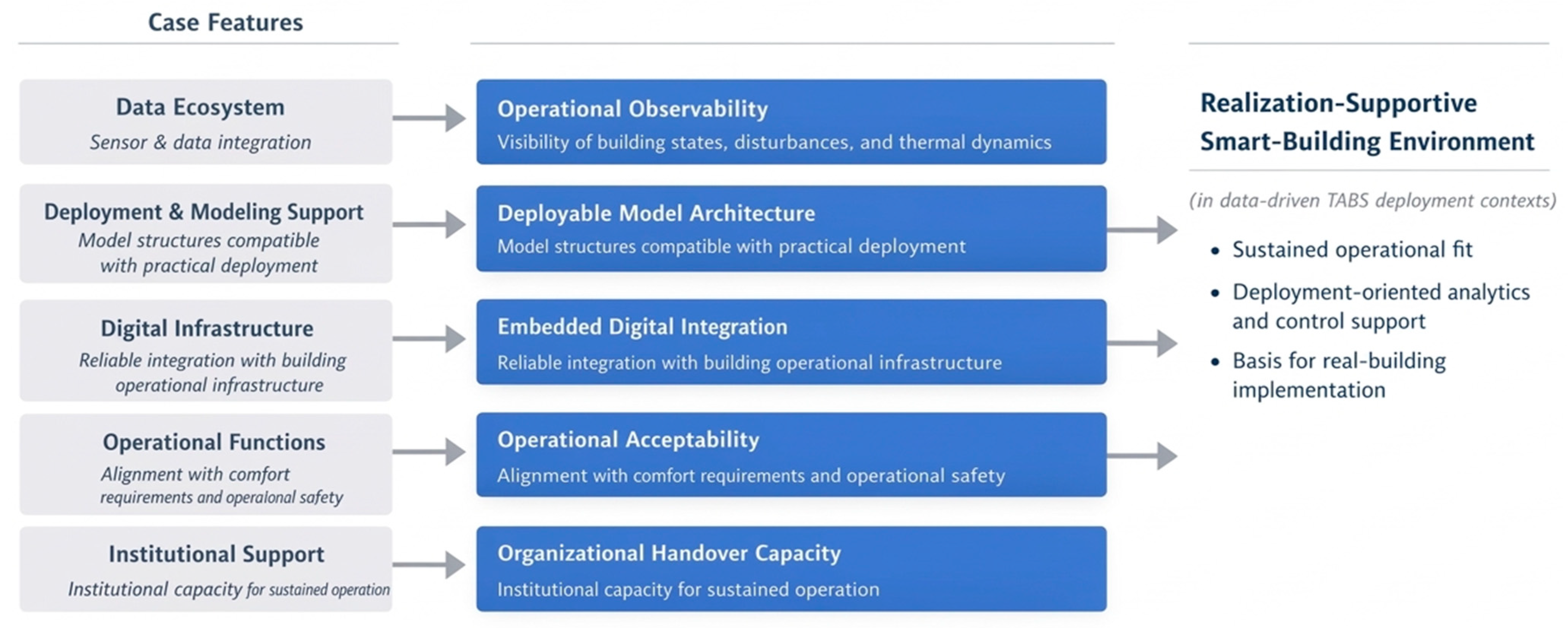
Figure 4 illustrates the correspondence between SDU BuildIQ Lab case features and the realization conditions.
The case illustrates a smart-building environment in which several layers that support realization are aligned within an institutional setting. The data ecosystem supports operational observability through long-term, multi-source visibility into building conditions and use patterns. The gateway and communication architecture support embedded digital integration by linking sensing, data exchange, and operational services across the infrastructure stack. The digital twin environment, modular computational support, and deployment-oriented configuration logic contribute to a deployable model architecture. The occupied-building setting, occupant-centered orientation, and privacy-aware access-control mechanisms support operational acceptability under everyday use conditions. Institutional support from SDU Technical Services and the SDU Center for Energy Informatics contributes continuity in infrastructure, data governance, and operational support. These features show how the identified realization conditions can be recognized in a real institutional smart-building environment and assembled into a coherent, deployment-supportive setting.
6. Conclusions
This review examined the literature on data-driven thermally activated building systems from the perspective of realization in practice. The analysis showed a clear maturity imbalance across the field. The literature is strongly concentrated in conceptual development, simulation-based validation, and pilot-oriented experimentation, while evidence of scalable or transferable realization in the reviewed TABS literature remains limited, and no included study met the review’s criterion of repeatable cross-site deployment with limited redesign. This pattern indicates that progress in data-driven TABS has been substantial in technical formulation and controlled demonstration, yet much less advanced in routine operational deployment.
On this basis, the paper reframed data-driven TABS as a realization challenge rather than only a control-design challenge. The main contribution of the review lies in synthesizing fragmented evidence on stages, pathways, enablers, and barriers into a realization-oriented analytical framework. Five realization conditions were identified as central to sustained deployment: operational observability, deployable model architecture, embedded digital integration, operational acceptability, and organizational handover capacity. These conditions collectively provide a structured analytical explanation of the requirements for sustained deployment in practice. The framework should be interpreted as a scoping-review synthesis intended to structure understanding of realization, rather than as a validated field taxonomy.
The case study of the SDU BuildIQ Lab strengthened this interpretation by showing how realization-supportive conditions can be assembled within a real institutional smart-building environment. The case illustrated the importance of a large-scale data ecosystem, layered digital infrastructure, deployment-oriented configuration logic, user-aware operational functions, and institutional continuity. In this way, the case helped clarify the practical meaning of the realization-conditions framework and showed how the review findings can be interpreted against a real smart-building context.
The findings of this review carry broader implications for energy informatics research and practice. Future progress in data-driven TABS depends not only on improved algorithms, prediction quality, or optimization performance, but also on stronger attention to commissioning effort, integration readiness, operational transparency, and long-term maintainability. Therefore, future research should expand beyond performance-centered evaluation and produce stronger evidence on long-duration operation, cross-site transfer, and the organizational conditions required for sustained use. In parallel, practical deployment efforts should focus on aligning sensing, modeling, digital infrastructure, operational safeguards, and institutional support within a coherent deployment environment.
This study has several limitations. The review is based on a relatively small body of literature and the final sample remains concentrated in technically oriented studies, which means that organizational and long-term operational issues are likely underreported in the available evidence. The SDU BuildIQ Lab case provided analytical concretization of the framework, yet it did not serve as confirmatory validation across multiple sites or contexts. The conclusions should be interpreted in light of the modest final sample, the unretrieved full texts, and the absence of formal critical appraisal.
Within these boundaries, the review makes a distinct contribution to the energy informatics field by providing a realization-oriented lens through which data-driven TABS can be assessed, designed, and discussed. The value of this contribution lies in providing a realization-oriented lens through which sustained operational fit can be assessed more explicitly. Therefore, the paper positions realization as a central question for future work on advanced building intelligence and for the practical advancement of data-driven TABS in real buildings.




 ,
,