


Abstract
Carbonate reservoirs exhibit complex combinations of pores, fractures, and vugs, and their strong heterogeneity makes pore-scale displacement mechanisms and recovery enhancement difficult to predict. In this study, six microfluidic glass-etched models representative of pore-type, vuggy, and fracture-pore carbonate reservoirs were designed from cast thin sections of the S oilfield. Experiments were conducted to investigate the effects of different factors on microscopic displacement behavior and residual-oil distribution. The results show that microscopic residual oil in carbonate reservoirs mainly occurs as film flow, droplet flow, columnar flow, multi-pore flow, and cluster flow, with cluster flow dominating the late stage of development in all model types. Under waterflooding, pore-type reservoirs exhibit the most uniform sweep and the highest recovery factor (44.26%), whereas vuggy reservoirs readily develop preferential flow channels and show the lowest recovery factor (41.58%). For fracture-pore reservoirs, injection perpendicular to the fracture provides the best performance, and wider or denser fractures improve displacement efficiency. Compared with gas flooding, waterflooding increases recovery by 10.48% in pore-type reservoirs and by 16.44% in fracture-type reservoirs. High-rate waterflooding and mid-stage flow diversion further improve recovery by 9.05–10.87% and 17.12–19.63%, respectively. These results provide pore-scale evidence for optimizing development strategies for carbonate reservoirs.
1. Introduction
Carbonate reservoirs are widely recognized as one of the most important hydrocarbon-bearing systems worldwide. Previous compilations indicate that they host roughly half of the world’s proven recoverable hydrocarbons and contribute a substantial share of global oil and gas production [1,2,3,4]. In hydrocarbon-rich regions such as the Middle East and Central Asia, carbonate oilfields constitute the main producing blocks. Although water injection is widely used in carbonate fields, development strategies cannot simply be transferred from sandstone reservoirs [5,6]. Sandstone reservoirs are commonly dominated by intergranular pore systems and typically show a more predictable porosity–permeability relationship, whereas carbonate reservoirs commonly contain pores, fractures, and vugs produced by deposition, diagenesis, and dissolution, resulting in stronger heterogeneity and poorer porosity–permeability correlation [7,8]. Consequently, reservoir interpretation and development optimization are generally more difficult for carbonates than for conventional sandstones. Owing to their complex pore-throat structures, injected water displaces fluids heterogeneously, causing large amounts of residual oil to remain trapped in complex patterns; consequently, development performance is difficult to predict and improvement of recovery is restricted [9,10,11,12,13]. At the field scale, the recovery factor is jointly controlled by volumetric sweep efficiency and microscopic displacement efficiency. Pore-scale capillary trapping, interfacial configuration, and connectivity directly affect the residual-oil saturation and relative permeability, and these microscopic effects propagate upward to influence macroscopic recovery performance. Therefore, in-depth investigation of fluid transport and residual-oil formation mechanisms in different pore structures at the microscopic scale is required to clarify the pore-scale displacement mechanisms of waterflooding and gas flooding in carbonate reservoirs and to guide the optimization of development strategies [14,15,16].
At present, conventional studies of microscopic oil displacement mainly rely on the following techniques: (1) Conventional core analysis, in which laboratory waterflooding or gas-flooding experiments are performed on field cores and the macroscopic recovery factor and oil saturation change are measured [17]. This method provides reliable results, but it cannot directly observe the dynamic flow behavior during displacement or the specific occurrence locations of residual oil. (2) Nuclear magnetic resonance (NMR), which characterizes oil and water contents in different pore-size ranges and thereby reveals pore-scale fluid distribution [18,19]. However, NMR still cannot track changes in fluid interfaces or the flow state of residual oil. (3) X-ray CT imaging, which can acquire high-resolution three-dimensional pore-structure information without destroying the core [20,21,22]. Nevertheless, X-ray CT is mainly used for static pore-structure characterization and is not well suited to capturing dynamic displacement processes. (4) Pore-network modeling (PNM), in which numerical flow simulations are conducted based on the geometric parameters of the pore structure [23,24,25,26,27]. This method is computationally efficient, but it involves many simplifying assumptions and may therefore overlook the true features of complex pore systems.
Visualized experiments using glass-etched models are an important laboratory method for studying microscopic seepage [28,29,30]. Over the past decade, microfluidic technology has been widely applied to oil-displacement studies in homogeneous sandstone reservoirs [31]. However, understanding remains insufficient for highly heterogeneous carbonate reservoirs, especially with respect to the microscopic oil-displacement mechanisms associated with different pore-structure types and fracture-parameter conditions, as well as the way in which these factors jointly affect the ultimate recovery factor.
Based on the real pore structures of the S oilfield, this study designed and fabricated six classes of microfluidic glass-etched models representative of different carbonate reservoirs. A total of 14 groups of waterflooding and gas-flooding experiments were performed to reveal the control mechanisms of reservoir type, fracture parameters, and injection strategy on microscopic displacement efficiency and residual-oil distribution, and to propose quantitative development-strategy optimization schemes supported by microscopic evidence.
2. Experimental Design
2.1. Microfluidic Chip Design
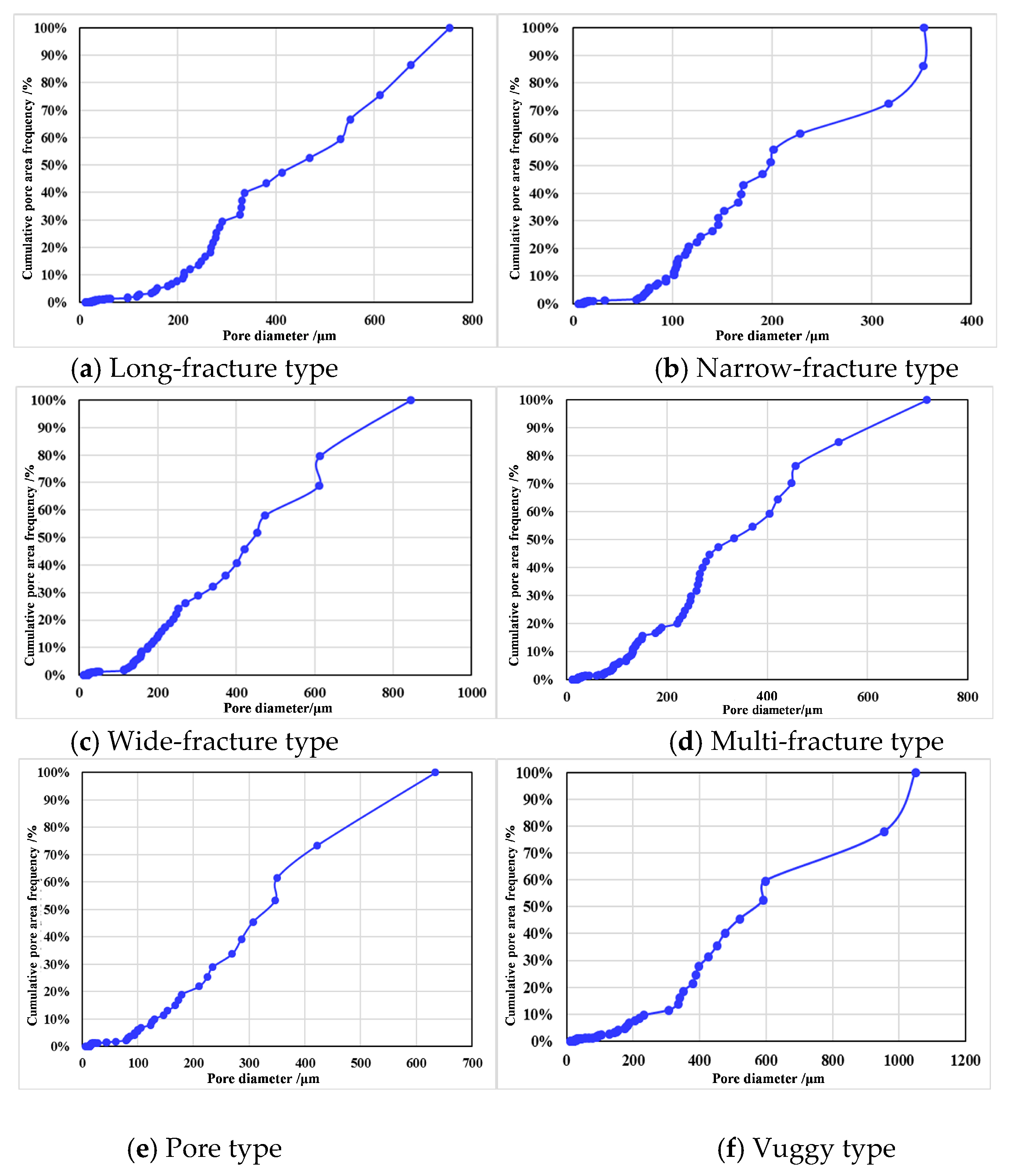
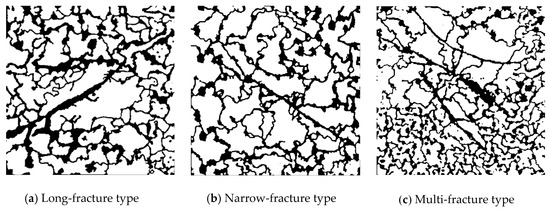
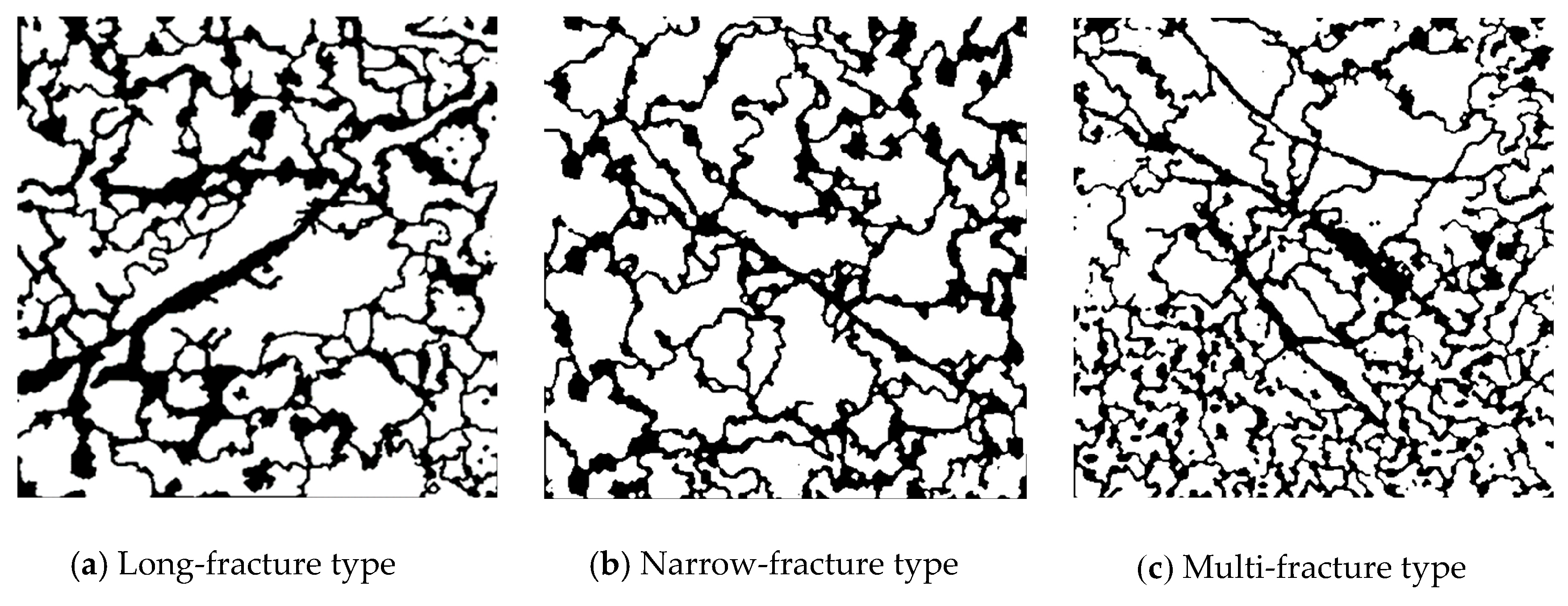
In this study, 20 representative cast thin sections from six wells in the B-I and B-II stratigraphic intervals were selected. By extracting pore-throat parameters and stitching images, six classes of glass-etched models were designed and fabricated, including a fracture-pore type (long-fracture, narrow-fracture, wide-fracture, and multi-fracture), a pore type, and a vuggy type. Representative microfluidic chip models are shown in Figure 1. Their pore-size distributions and fracture parameters were verified one-by-one so as to reproduce, to the greatest extent possible, the pore-structure characteristics of the S oilfield. The pore-throat parameters were then calculated (Table 1), and the pore-throat parameter distributions and cumulative area–frequency curves for different model types are presented in Appendix Figure A1 and Figure A2.
Figure 1.
Representative models of different types of microfluidic chips (long-fracture type, narrow-fracture type, and multi-fracture type).
Table 1.
Structural parameters of the microfluidic chips.
The design objective was to preserve the relative topology of pores, throats, fractures, and vugs observed in the thin sections rather than to build a one-to-one full-scale replica of the reservoir. The extracted pore-throat statistics were used as geometric constraints for the CAD layouts, and the fabricated channels were checked under microscopy to ensure that the final chips reproduced the target pore-size distribution and fracture geometry within acceptable deviation.
Each chip was fabricated by transferring the CAD pattern onto a glass substrate, patterning the flow network via a standard wet etching process, and bonding the etched plate to a cover plate to form a closed micromodel. After fabrication, the inlet/outlet ports and the internal network were inspected microscopically; chips with obvious defects, blocked channels, or dimensional distortion were discarded. Before each experiment, the chip was flushed with laboratory alcohol and deionized water to remove contaminants. No additional wettability-altering chemical treatment was applied to the internal surfaces; accordingly, the present experiments mainly represent geometry-controlled flow behavior under predominantly water-wet conditions.
It should therefore be emphasized that the glass micromodels reproduce the geometric heterogeneity of the reservoir but not the full mineralogical composition, surface roughness, surface reactivity, or mixed-wettability behavior of natural carbonate rocks. The results are interpreted as comparative pore-scale observations that are most suitable for screening mechanisms and strategy sensitivity, while quantitative field-scale extrapolation requires further validation with cores and reservoir simulation.
2.2. Experimental Design and Apparatus Flowchart
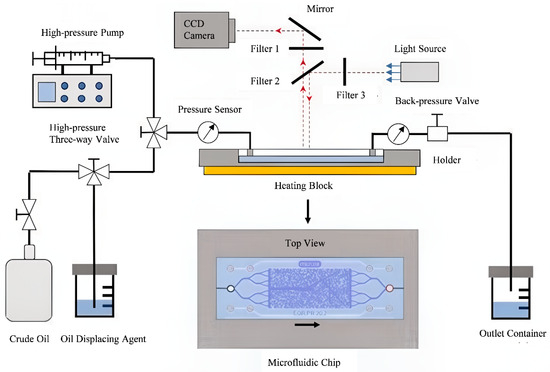
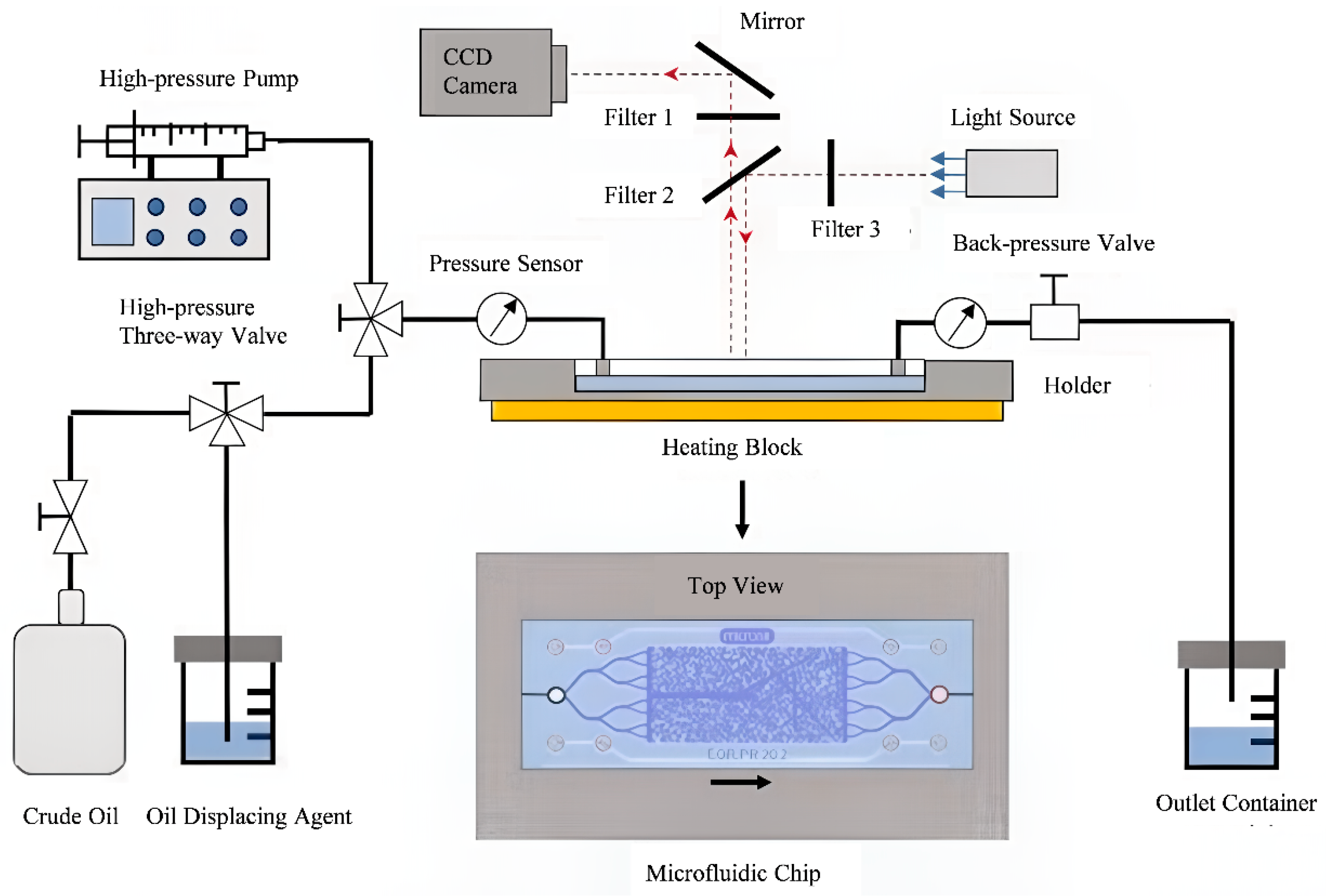
Materials used in the experiments included six groups of glass-etched microfluidic chips, deionized water, white mineral oil (Beijing Innochem Technology Co., Ltd., Beijing, China), methylene blue (Shanghai Macklin Biochemical Co., Ltd., Shanghai, China), Sudan IV (Shanghai Aladdin Biochemical Technology Co., Ltd., Shanghai, China), laboratory alcohol (Shanghai Macklin Biochemical Co., Ltd., Shanghai, China), and syringes (Shanghai Boli Ge Industry and Trade Co., Ltd., Shanghai, China). The experimental apparatus included a microscope (Leica M165 FC, Leica, Germany), a microscope-mounted camera (Leica DFC450, 100 fps, 2560 × 1920, Leica, Germany) for real-time visualization and image/video recording, a multi-port model holder (CorSolutions, Ithaca, NY, USA), a constant-flow pump device (Harvard, UK; minimum control increment 0.1 nL/min), a constant-pressure pump device (Fluigent MFCS-EZ, Fluigent, France; minimum control increment 0.1 mbar), and a laboratory pressure pump (LineUp Flow EZ LU-FEZ-7000, Fluigent, Le Kremlin-Bicêtre, France; maximum pressure 7000 mbar). The camera system shown in Figure 2 was used to continuously monitor fluid-interface evolution, breakthrough, and residual-oil redistribution, with the recorded images exported as time-stamped frames for post-processing, wherein representative frames were exported at an effective interval of 1 s for quantitative image analysis and additional key frames were extracted near breakthrough and late-stage remobilization.
Figure 2.
Schematic diagram of the microfluidic waterflooding/gas-flooding system.
Experimental procedure: This microfluidic study mainly focused on displacement experiments in different glass-etched models under various waterflooding conditions, supplemented by gas-flooding experiments. To preserve dynamic similarity, the injection rate was selected on the basis of the Rapoport–Leas number (NRL), which characterizes the competition between viscous and capillary forces during immiscible displacement. According to the model geometry and fluid properties, the reasonable experimental flow-rate range was estimated to be 16.7–167 nL/min [32], corresponding to capillary numbers on the order of 10−7. This range places the experiments within a capillary–viscous flow regime relevant to reservoir waterflooding, and more specifically within the capillary-dominated regime typical of carbonate waterflooding. It therefore helps avoid unrealistically high inertial effects while preserving the viscous–capillary force balance that governs pore-scale displacement. The displacement setup used in the experiments is shown in Figure 2.
where is the dimensionless number; is porosity; is the absolute permeability, m2; is the viscosity of phase-1 fluid, Pa·s; is the velocity, m/s; is the characteristic length, m; is the endpoint relative permeability of phase 1; is the interfacial tension between the two phases, N/m; and is the contact angle.
2.3. Experimental Scheme
A total of 14 experiments were performed to systematically compare the following factors: basic waterflooding performance (different reservoir types); water-injection orientation (parallel, 45 deg, and perpendicular to the fracture); fracture parameters (fracture width and fracture density); displacement mode (waterflooding vs. gas flooding); injection rate (low rate, Ca = 2 × 10⁻⁷, vs. high rate, Ca = 4 × 10⁻⁷); and development adjustment (flow diversion). In the micromodel experiments, flow diversion was implemented after a dominant seepage channel had formed by switching to an alternative injection-production pair so that the pressure gradient was redirected through previously unswept regions. The detailed experimental scheme is shown in Table 2.
Table 2.
Design of the microfluidic experiments.
3. Microscopic Seepage Mechanisms in Carbonate Reservoirs
3.1. Image Analysis and Residual-Oil Quantification
With the aid of the microfluidic experiments, this study systematically conducted quantitative characterization and classification of microscopic residual-oil occurrence types. For image analysis, all microscopic images were processed using the Microscopic Residual Oil Occurrence and Flow-State Quantitative Analysis System V1.0 (Registration No. 2021SR0002139), which enabled illumination correction, segmentation of oil/water/solid phases according to color thresholds and geometric masks, and labeling of individual oil clusters. Three parameters were used to quantify the morphology and connectivity of residual oil in microfluidic images: shape factor (G), Euler number (EN), and contact ratio (C) [33].
G reflects the irregularity of a residual-oil droplet. It is defined as
where A is the area of a single residual-oil aggregate (m2) and P is the perimeter of a single residual-oil aggregate (m).
EN characterizes the connectivity and internal pore structure of a residual-oil cluster:
where H is the number of internal holes.
C quantifies the fraction of a residual-oil droplet in contact with the pore walls:
where L is the contact length between the residual oil and pore space (m).
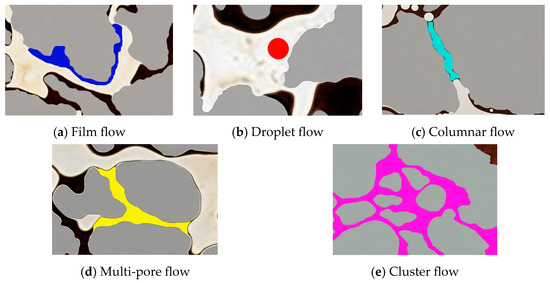
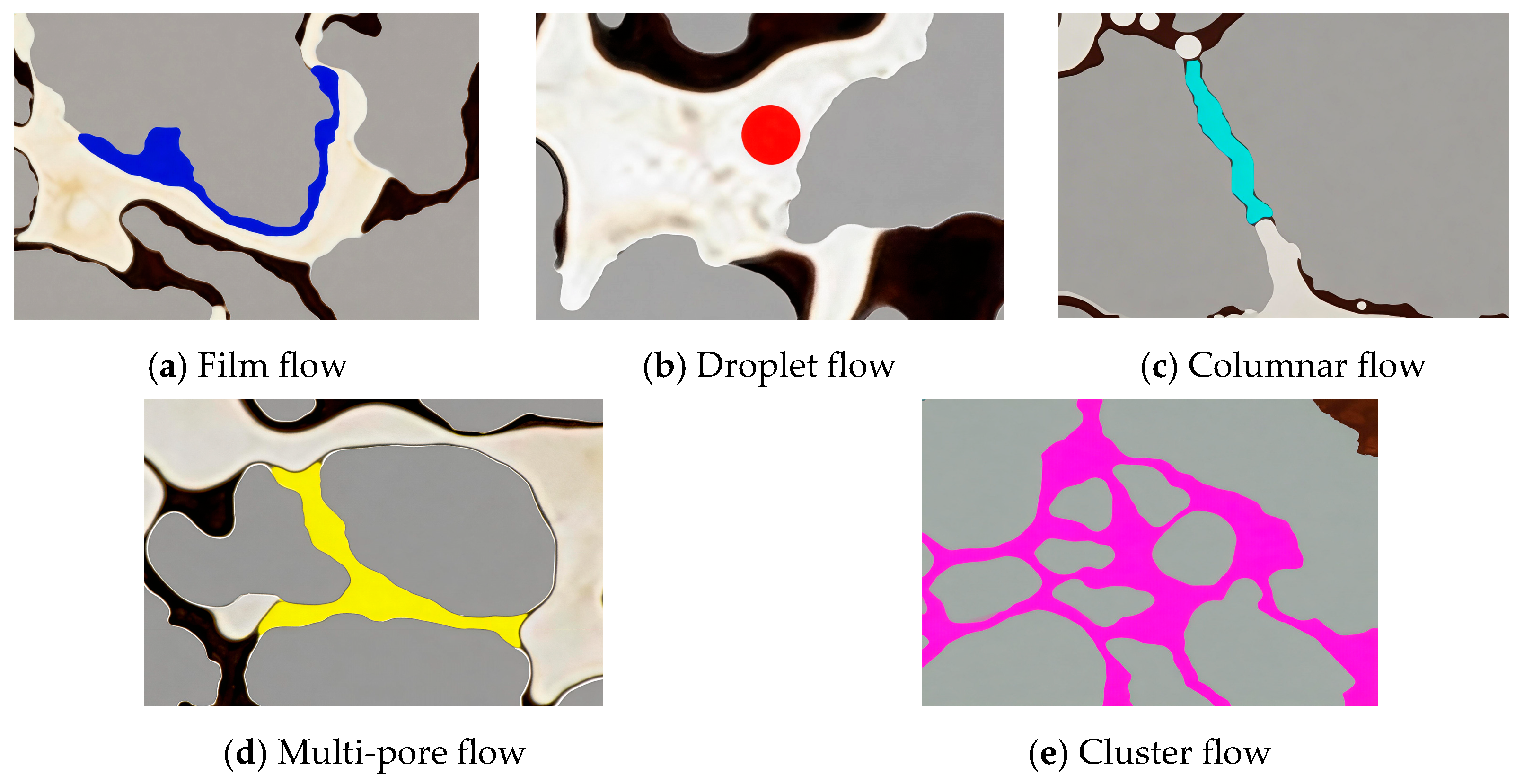
As shown in Figure 3, based on morphological criteria, the flow states of microscopic residual oil were classified into five categories: film flow, droplet flow, columnar flow, multi-pore flow, and cluster flow. Their mobilization difficulty decreases in the order film flow > droplet flow > columnar flow > multi-pore flow > cluster flow, and the mobilization difficulty is controlled by the mechanical environment in which the residual oil resides. Film flow is dominated by adhesion, and its mobilization relies mainly on shear, making it the most difficult type to displace. Droplet flow has a distinct oil–water interface, but the contribution of inertial force is relatively limited. Columnar flow has two oil–water interfaces, so the pressure-gradient force acts more directly. Multi-pore flow and cluster flow are distributed across multiple pores and throats and are dominated by pressure-gradient force, making them the easiest types to mobilize. Based on previous studies and the morphological characteristics observed in the present experiments, the above five residual-oil occurrence states were identified and summarized in Table 3 and Table 4 [34].
Figure 3.
Schematic diagrams of five types of microscopic residual oil [34].
Table 3.
Interpretation of five types of microscopic residual oil.
Table 4.
Classification criteria for the five microscopic residual-oil flow states [34].
3.2. Waterflood Oil-Displacement Performance in Different Reservoir Types
Waterflooding performance differs significantly among the three carbonate reservoir types (pore type, fracture-pore type, and vuggy type). The recovery factor follows the order pore type (44.26%) > fracture-pore type (42.95%) > vuggy type (41.58%).
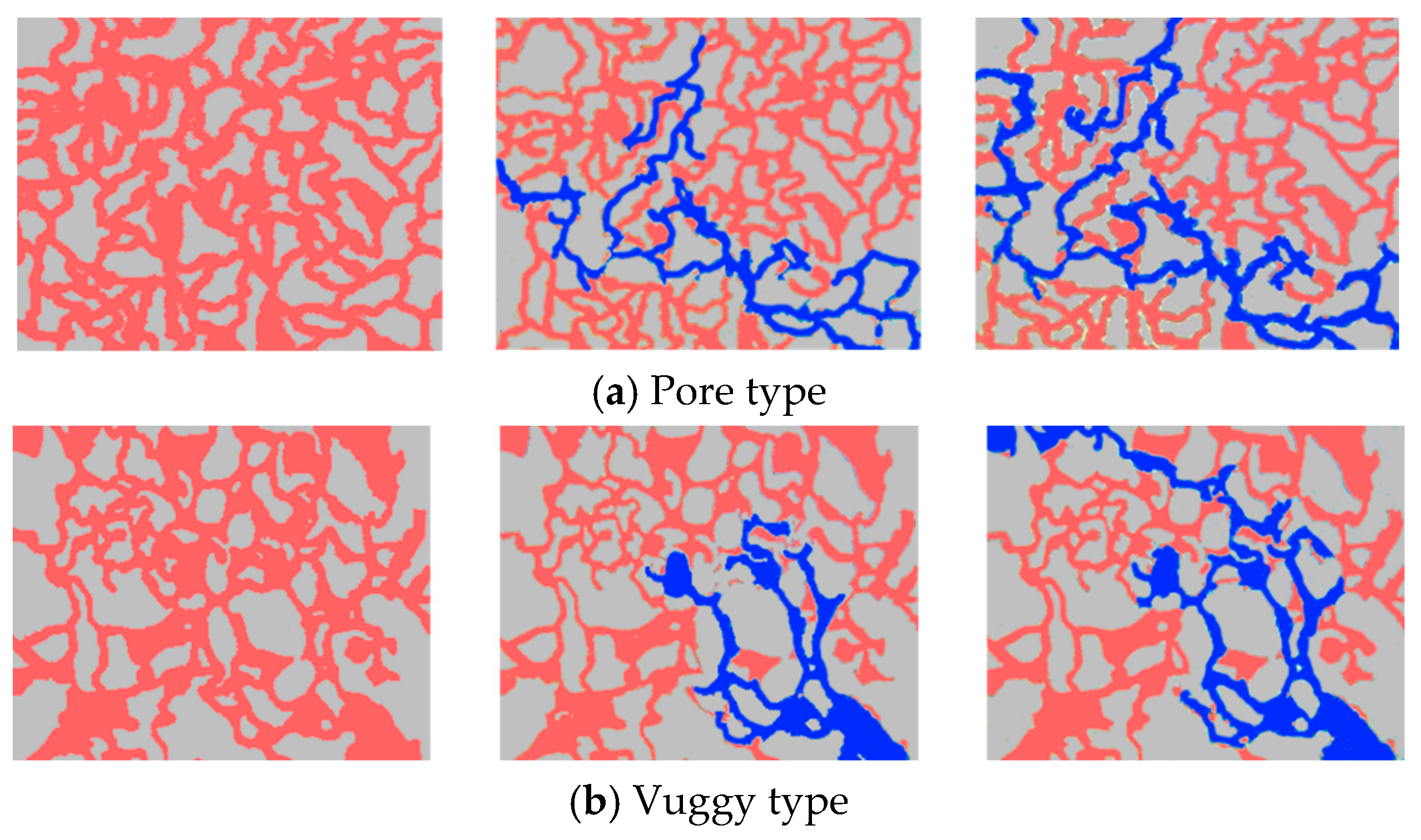
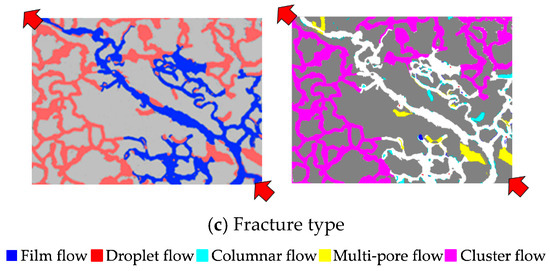
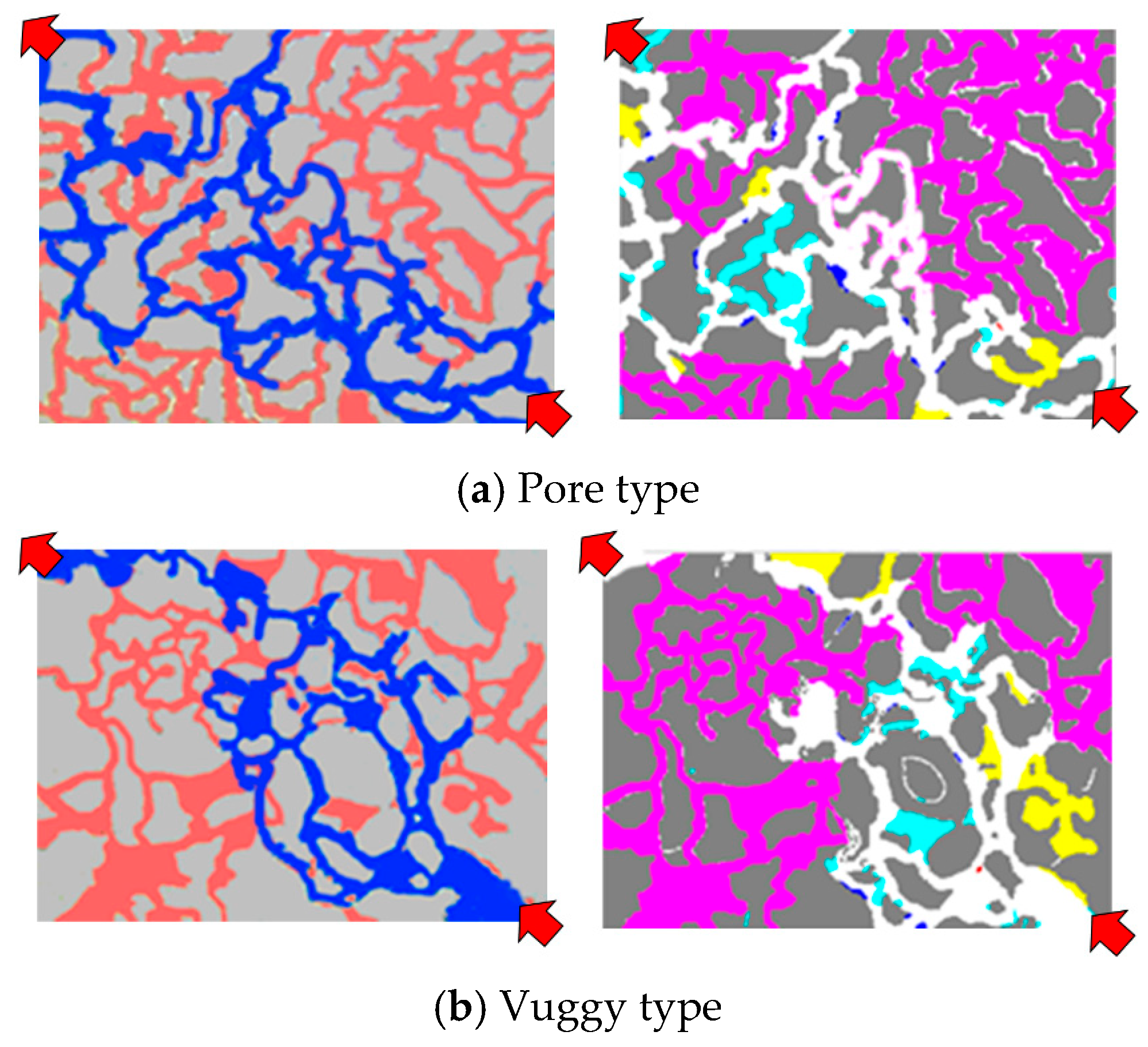
In vuggy reservoirs, the vugs mainly provide storage space. Injected water advances through the center of the vugs and expands seepage channels outward, continuously stripping the oil phase and converging at the outlet. Oil-displacement efficiency inside individual swept vugs can exceed 90%. However, this high local efficiency does not translate into high global recovery, because the macroscopic recovery factor depends on both local displacement efficiency and overall sweep volume. Once preferential seepage channels form between connected vugs, the incremental invaded area after breakthrough becomes small and large matrix regions between the vugs remain unswept. After water breakthrough, the injected water therefore channels along these dominant paths and does not continue to displace the matrix effectively, resulting in a limited overall sweep volume and the lowest overall recovery factor (41.58%), as shown in Figure 4b. Waterflooding in pore-type reservoirs exhibits different characteristics. The injected water mainly displaces oil along throats or along pore edges. Because the reservoir is less affected by heterogeneity, the overall sweep efficiency is better (see Figure 4a). In fracture-pore reservoirs, fracture development improves connectivity, but it also causes nonuniform sweep of the matrix, which constrains further improvement in development performance.
Figure 4.
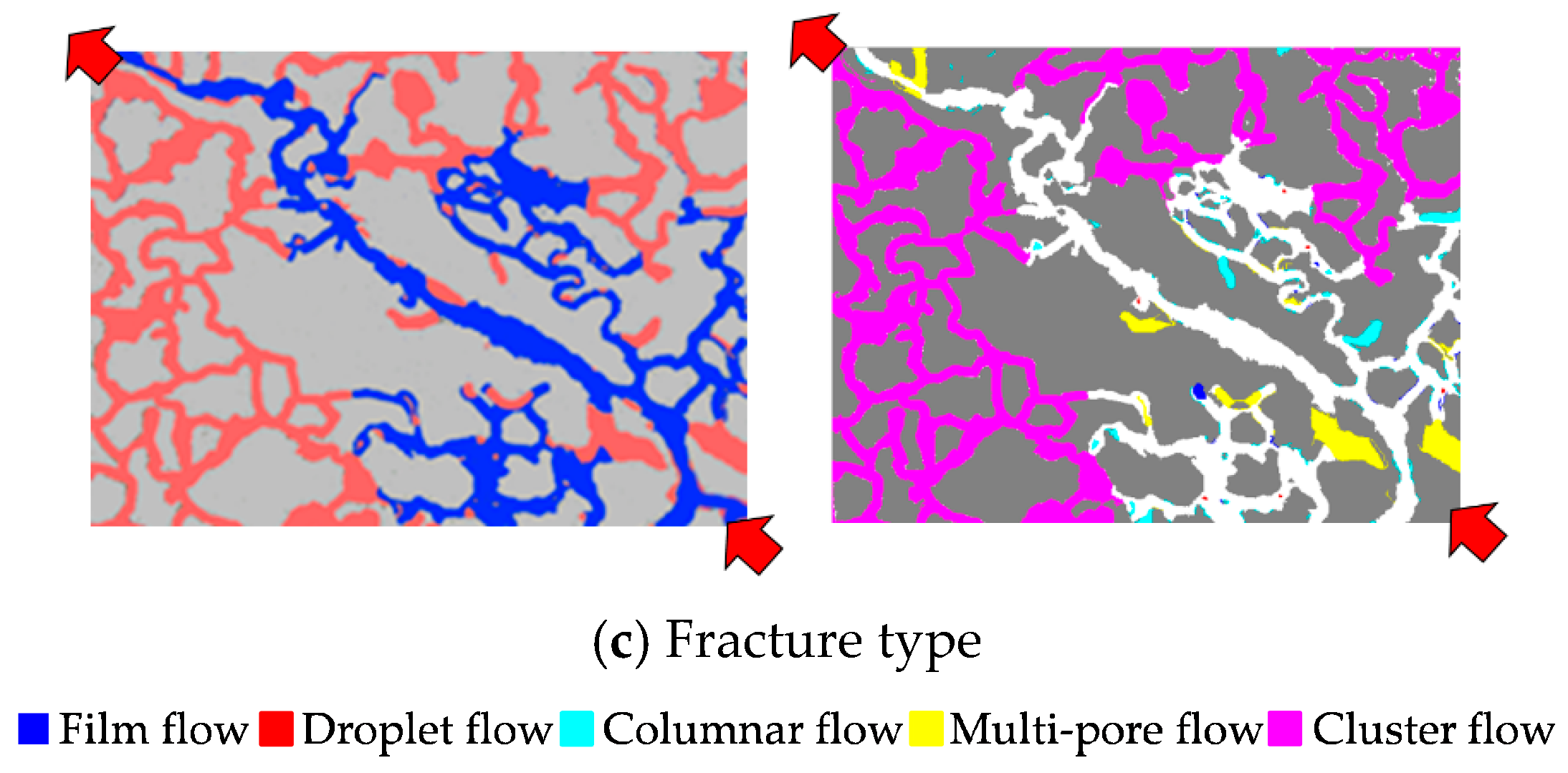
Schematics of the early (left), middle (center), and late (right) stages of water injection in different reservoir types (blue—water, red—oil).
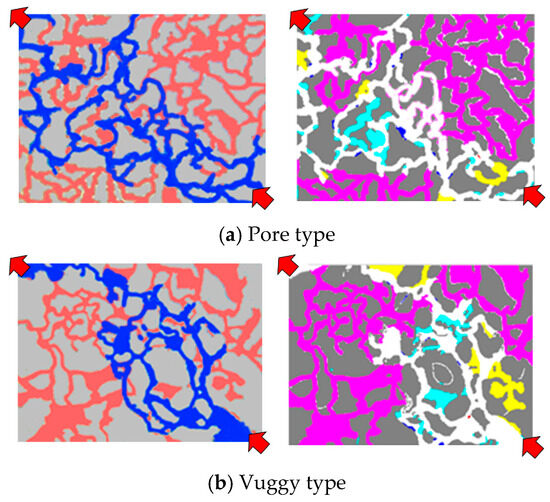
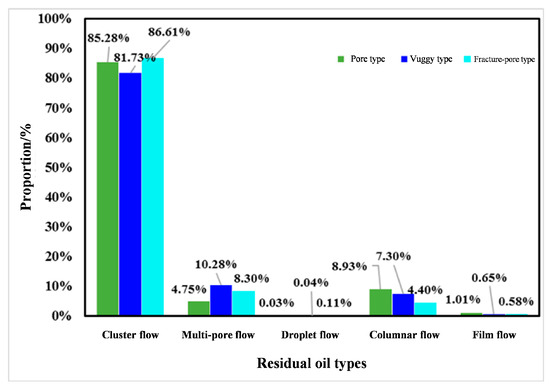
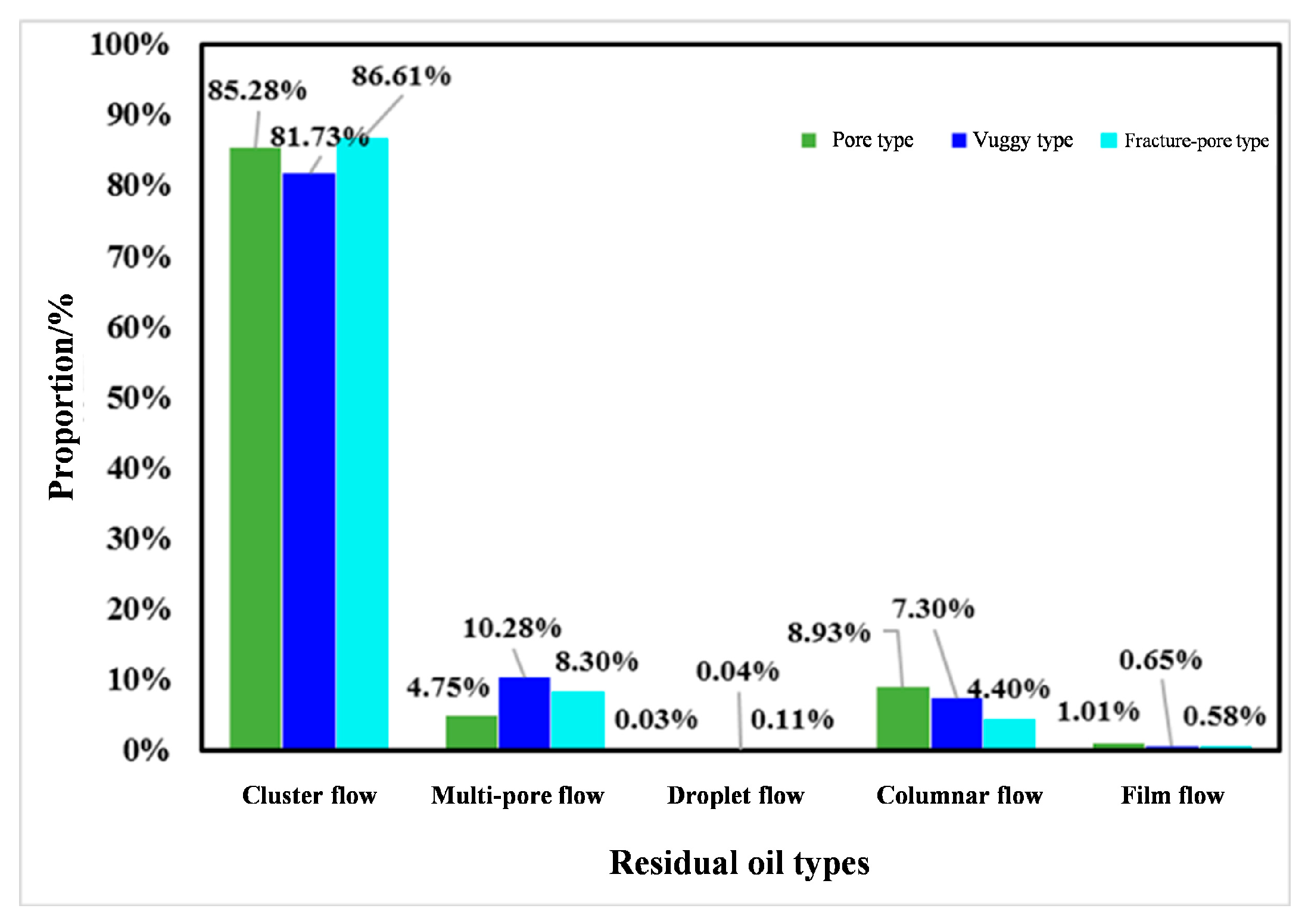
At the microscopic scale, after waterflooding, residual oil in all three reservoir types is dominated by cluster flow, accounting for more than 80%, followed by multi-pore flow and columnar flow, whereas droplet flow and film flow account for only very small proportions, as illustrated in Figure 5 and Figure 6. This indicates that most remaining oil after the base waterflood resides as large connected bodies; therefore, any strategy that decreases the cluster-flow share and increases the multi-pore/columnar share should improve the potential for subsequent mobilization. The differences in macroscopic development performance indicate that the production behavior of vuggy and pore-type reservoirs is mainly controlled by pore-throat connectivity, whereas the performance of fracture-pore reservoirs is regulated by fracture-development characteristics. Therefore, determining the optimal water-injection angle for specific fracture-development conditions is crucial for improving the development performance of this type of reservoir.
Figure 5.
Comparison of residual-oil types at the late stage of water injection in different carbonate reservoir types (blue—water, red—oil).
Figure 6.
Schematic comparison of residual-oil contents at the late stage of water injection in three types of carbonate reservoirs.
3.3. Development Performance of Fractured Reservoirs Under Different Fracture Parameters
3.3.1. Development Performance Under Different Injection Directions
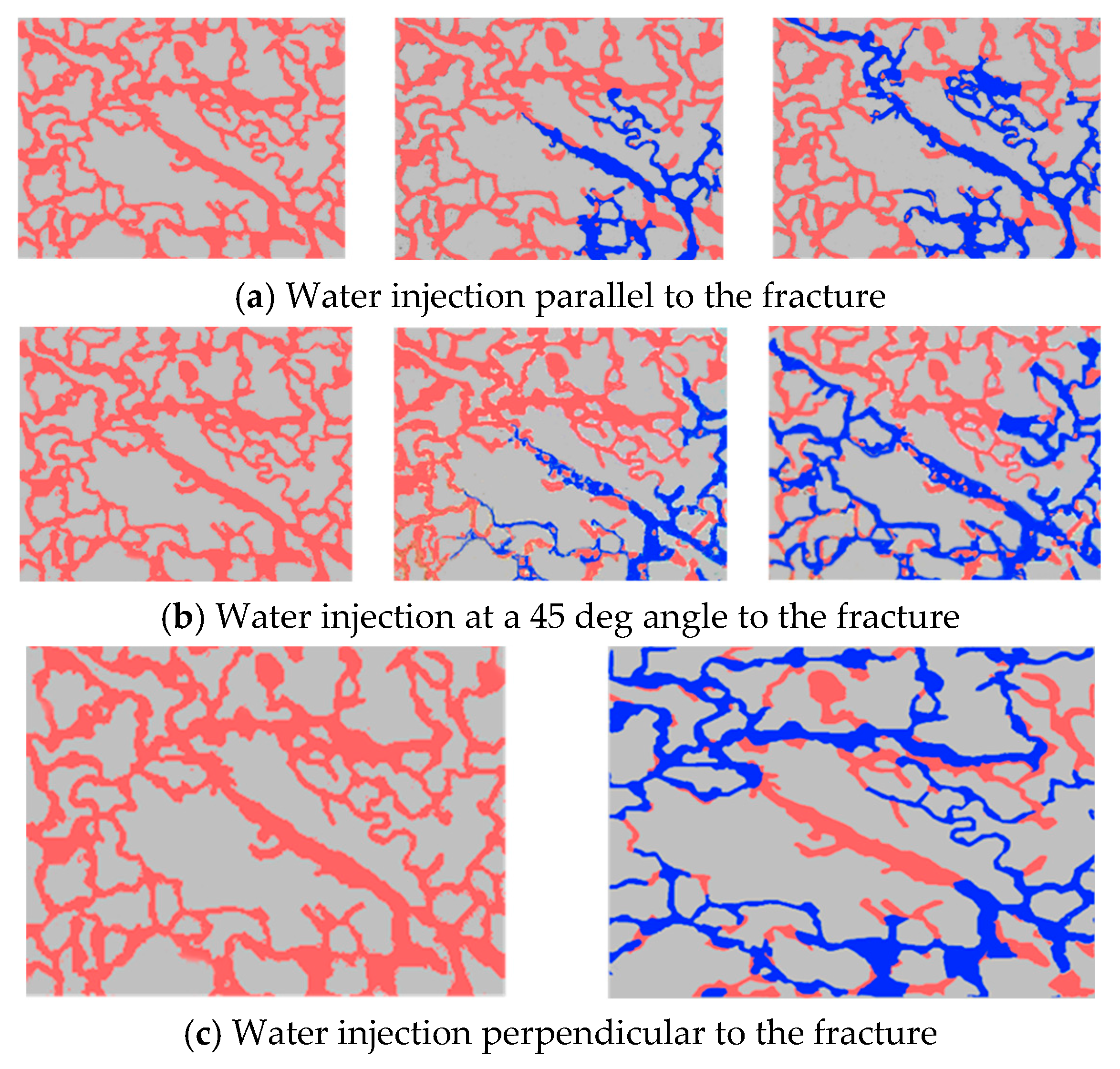
For the long-fracture reservoir with a fracture width of 0.55 mm, the differences in oil-displacement performance under three water-injection modes were systematically investigated: parallel to the fracture, at a 45 deg angle to the fracture, and perpendicular to the fracture. Because the analysis in this subsection is based on a single long-fracture geometry, the results should be interpreted as a geometrically specific but instructive case rather than a universal rule for all fracture systems.
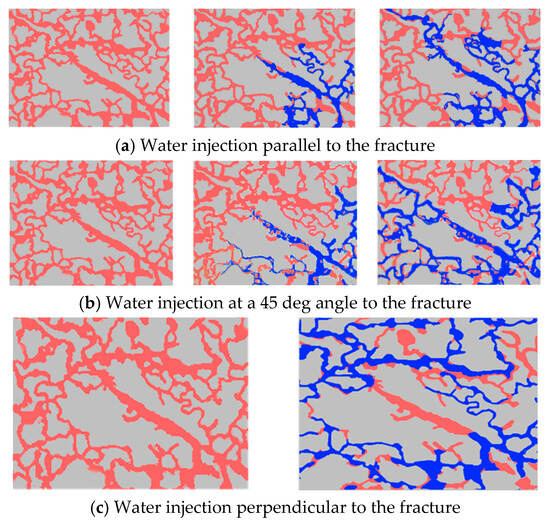
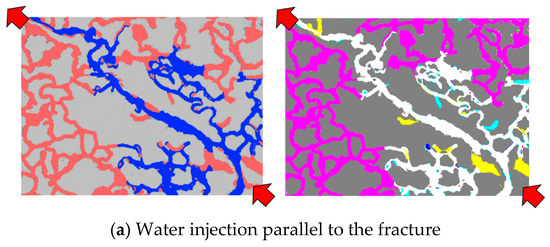
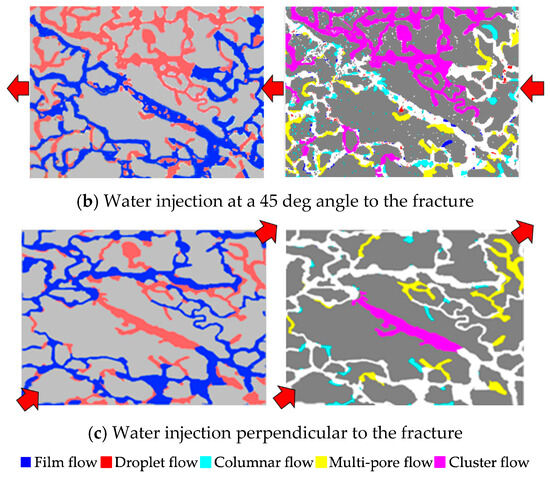
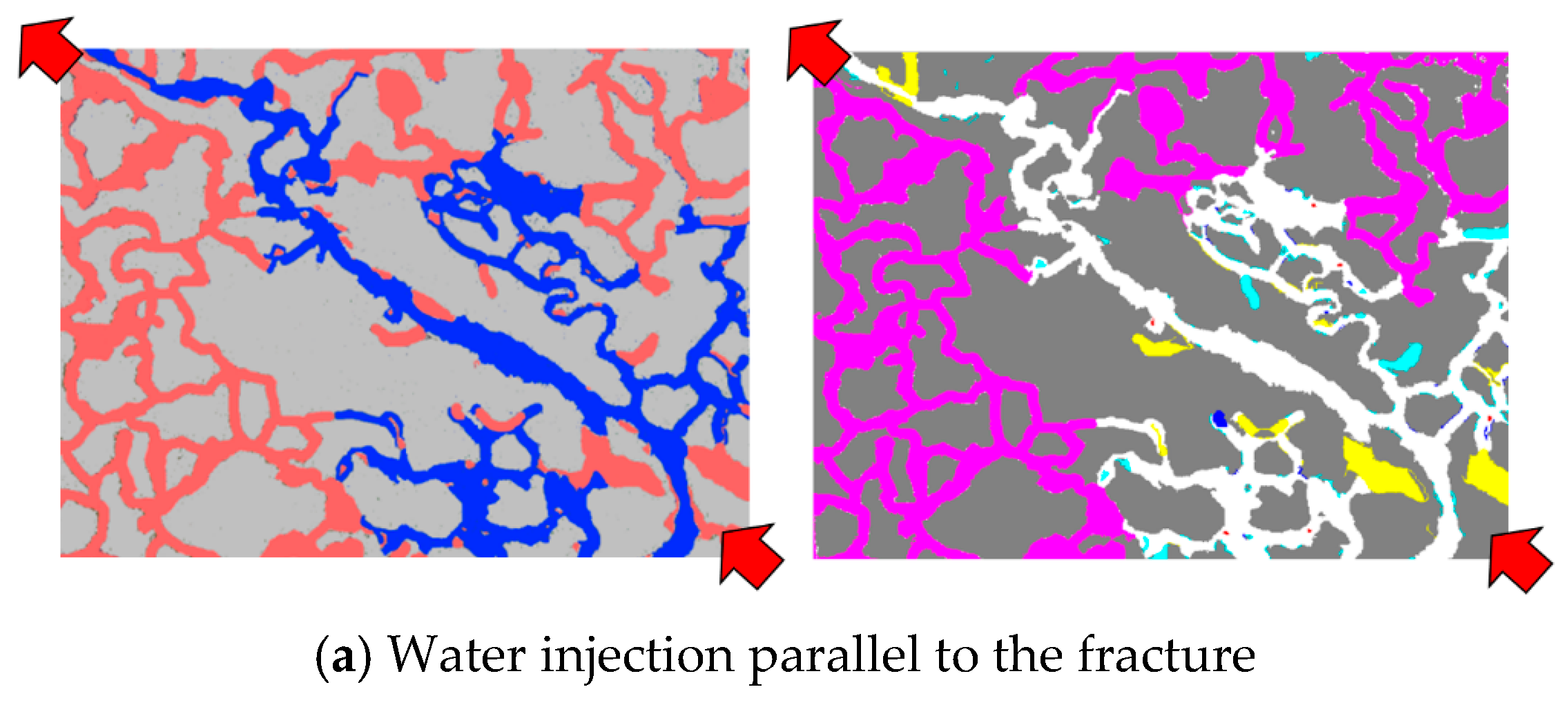
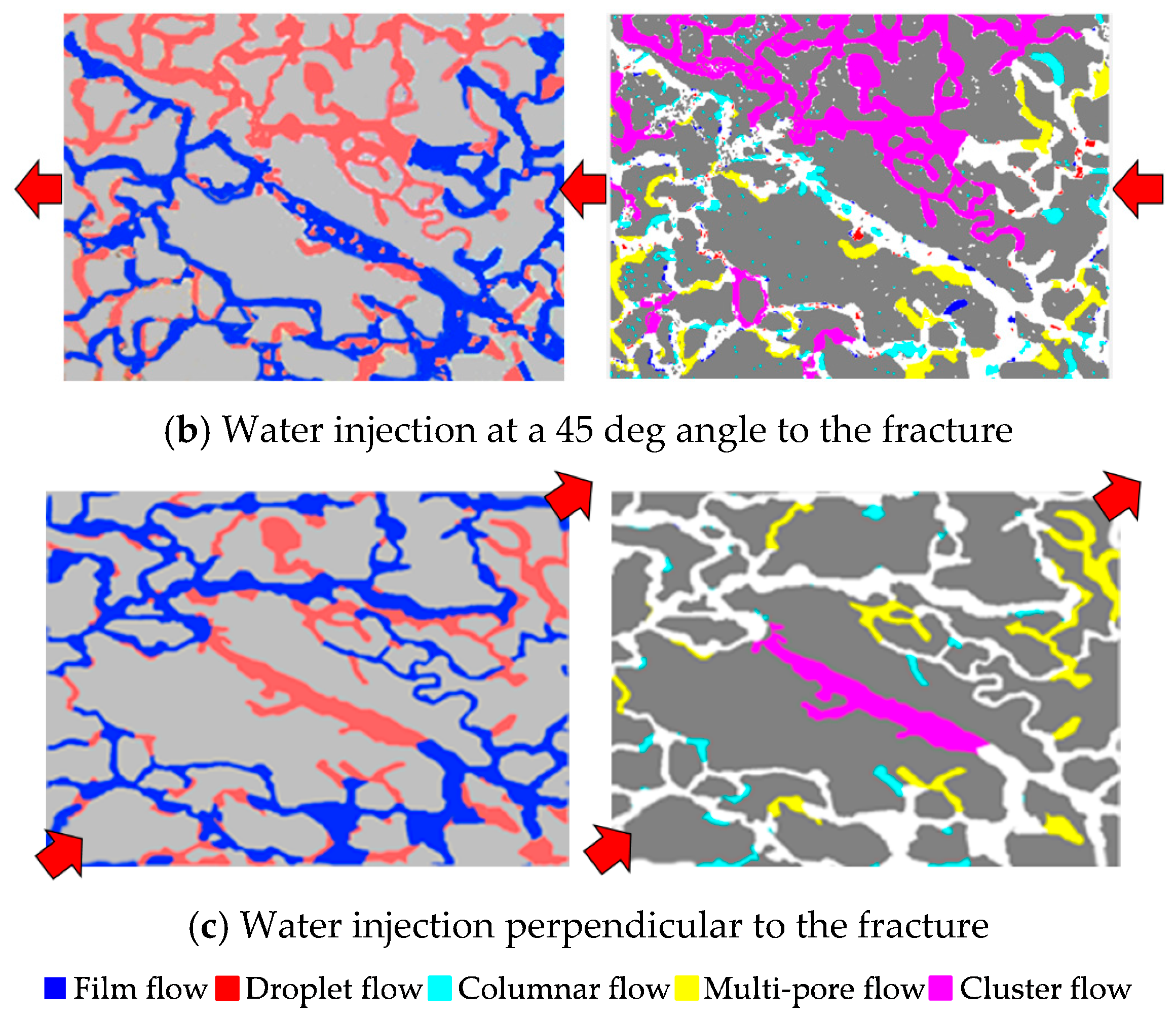
When water was injected parallel to the fracture, the injected water preferentially displaced the matrix near the fracture. After breaking through into the fracture, it rapidly channeled along the preferential pathway, and only a small amount of fluid sweep occurred in regions with throats developed near the fracture. After water breakthrough, the injected water no longer effectively displaced the reservoir matrix. At the late stage, displacement inside the fracture was sufficient, but matrix sweep was very poor, and the recovery factor was about 41.58%. When water was injected at a 45 deg angle to the fracture, the matrix sweep area at the early stage was significantly larger than that under parallel injection. After the injected water broke through into the fracture, efficient displacement of the surrounding matrix could still be maintained. Although displacement efficiency decreased after water breakthrough, the overall sweep extent was better, and local residual-oil accumulation remained in the middle of the fracture at the late stage. The recovery factor was about 51.18%. This injection mode can simultaneously improve matrix sweep efficiency and alleviate water channeling in the fracture. When water was injected perpendicular to the fracture, the injected water mainly displaced the matrix around the fracture, and its sweep capability within the fracture itself was relatively weak. Nevertheless, the final recovery factor reached 63.90%, which was the best among the three injection modes, as shown in Figure 7.
Figure 7.
Schematics of the early (left), middle (center), and late (right) stages of water injection in a fracture-type reservoir under different injection directions (blue—water, red—oil).
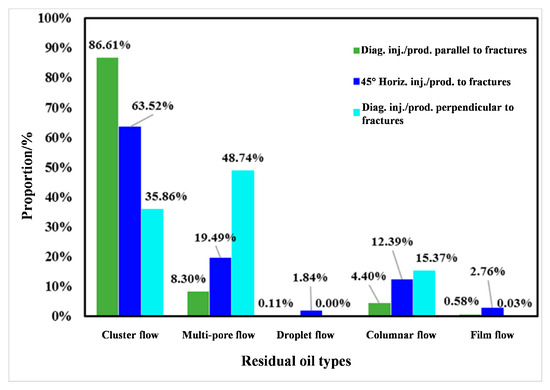
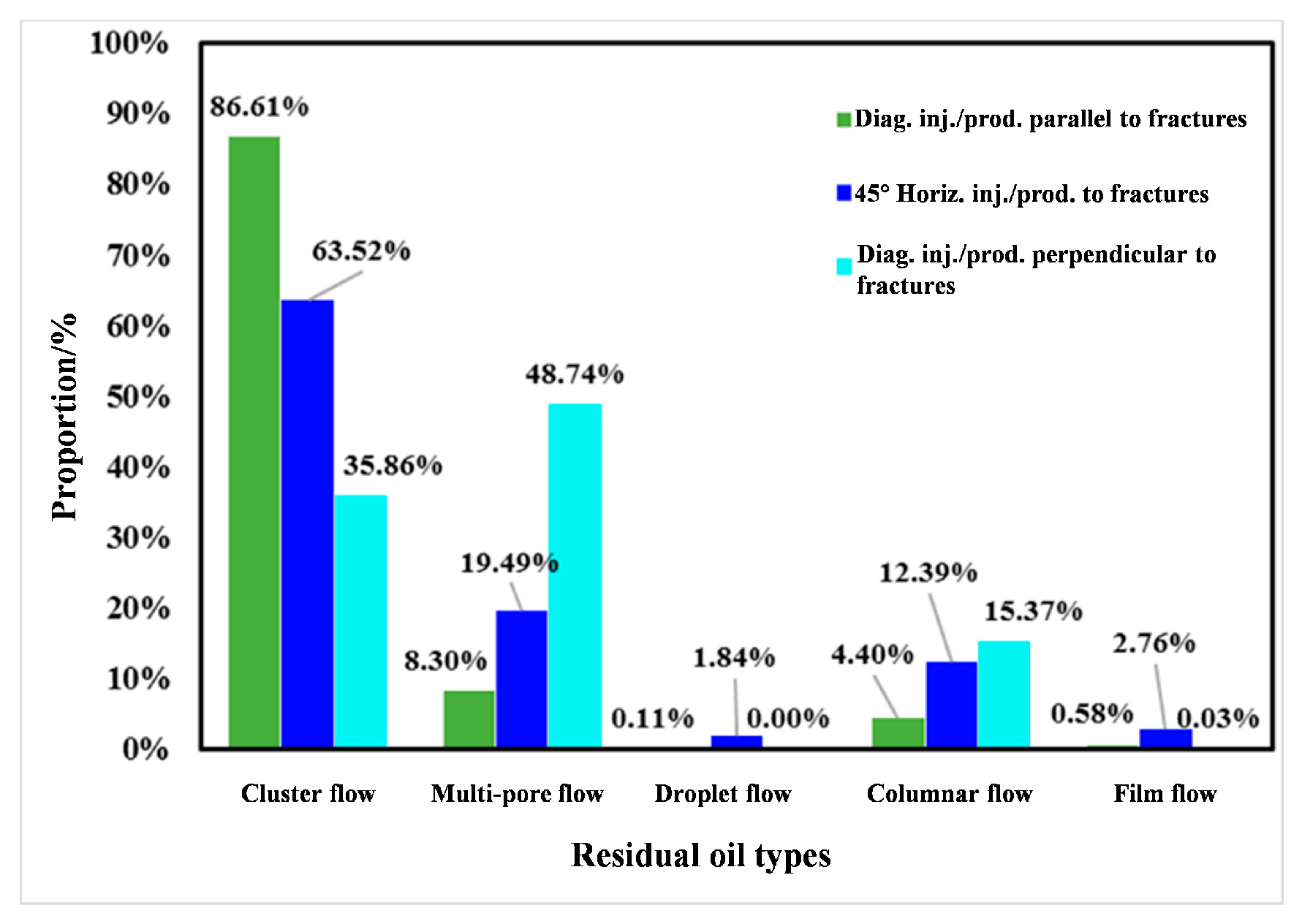
Water-injection direction not only affects the water-breakthrough time of the reservoir (water breakthrough is fastest for injection parallel to the fracture, whereas the difference between 45 deg and perpendicular injection is small) and sweep efficiency, but also controls the occurrence types of residual oil. Under both parallel injection and 45 deg injection, residual oil is dominated by cluster flow, although the proportion of cluster flow decreases to 64% at 45 deg. Under perpendicular injection, residual oil is dominated by multi-pore flow (48.74%), followed by cluster flow (35.80%) and columnar flow (15.37%) (see Figure 8 and Figure 9). These results confirm that, for the tested long-fracture geometry, water injection perpendicular to the dominant fracture provides the best development performance among the three injection modes considered here.
Figure 8.
Comparison of residual-oil types at the late stage for different water-injection modes in a fracture-type reservoir (blue—water, red—oil).
Figure 9.
Schematic comparison of residual-oil contents at the late stage for different water-injection modes in a fracture-type reservoir.
3.3.2. Development Performance Under Different Fracture Widths
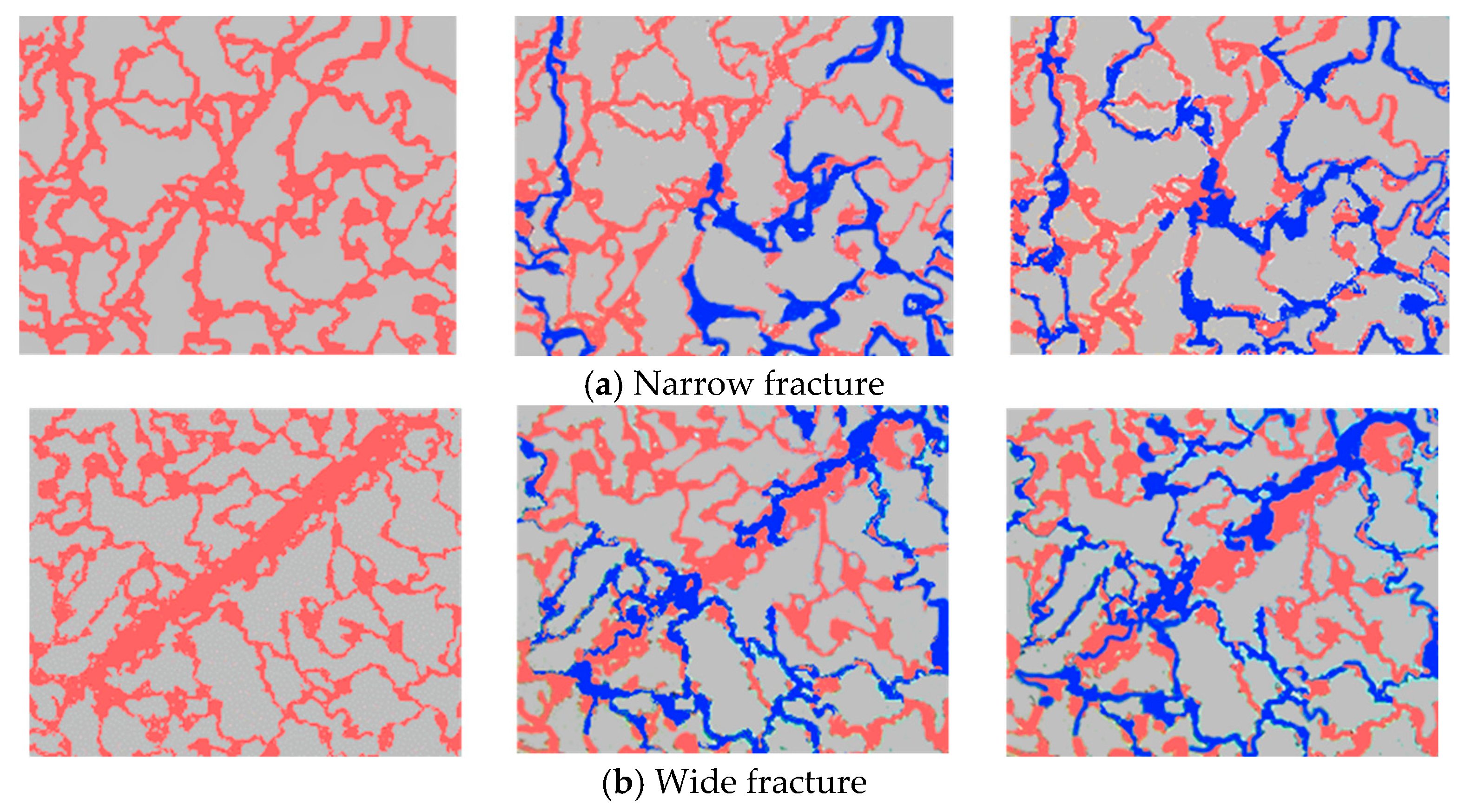
Comparative experiments were carried out under water injection perpendicular to the fracture for reservoirs with wide fractures (0.84 mm) and narrow fractures (0.25 mm; a fracture-width ratio of 3.4). The fracture lengths in the two reservoirs were basically the same, and the matrix pore distributions matched the characteristics of the actual cast thin sections well.
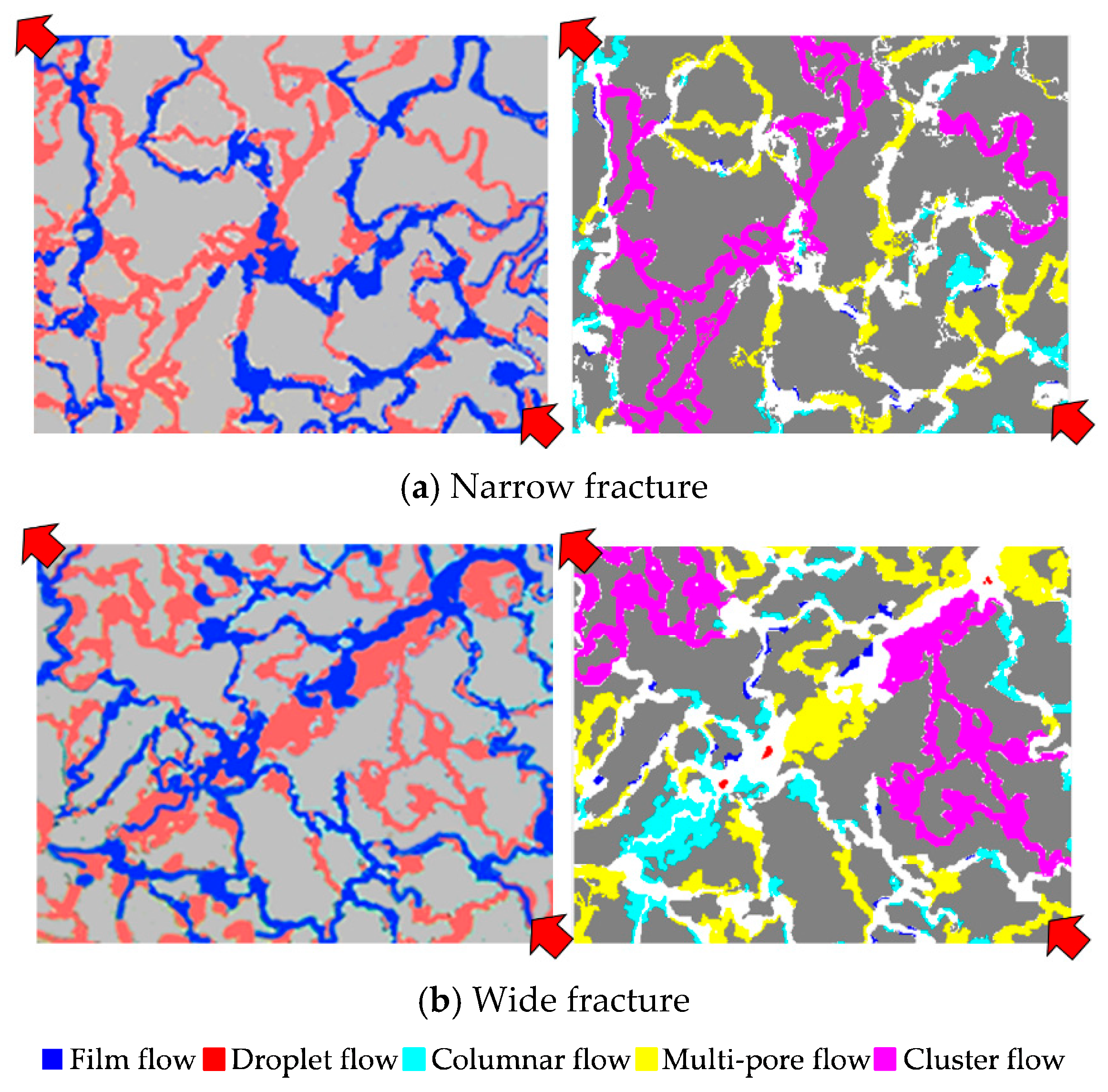
In the narrow-fracture reservoir, the fracture width is close to the dominant matrix pore size (below 250 μm). The injected water preferentially enters the matrix and can sweep a large matrix area from the inlet to the middle of the fracture. However, after breaking through into the fracture, it only channels through a very narrow path to the outlet. After water breakthrough, it can sweep only a small matrix area near the outlet together with a limited part of the fracture, leading to only moderate overall oil-displacement performance and extremely poor sweep within the fracture. The controlling mechanism is as follows: the capillary force in the narrow fracture is similar to that in the matrix, but fracture connectivity is weaker than matrix connectivity. As a result, displacement in the fracture is slightly inferior to that in the matrix. Meanwhile, the stronger capillary force leads to faster fluid advance but less uniform displacement, so the injected water tends to channel into matrix regions with better connectivity around the fracture, as illustrated in Figure 10a.
Figure 10.
Schematics of the early (left), middle (center), and late (right) stages of water injection in fracture-type reservoirs with different fracture widths (blue—water, red—oil).
In the wide-fracture reservoir, the injected water also enters the matrix first and sweeps about 50% of the matrix from the inlet to the middle of the fracture. After fracture breakthrough, although the water still channels rapidly along the flow path, the swept area inside the fracture is significantly larger than that in the narrow-fracture reservoir. After water breakthrough, part of the fracture and the outlet-side matrix can still be further swept, resulting in better overall oil-displacement performance. The displacement mechanism is that residual water in matrix pores exists in the form of a thin water film. Because the wide fracture corresponds to a smaller capillary force, the fluid driving force is weaker, causing the advance of the water phase to slow down but making the displacement process more uniform (see Figure 10b).
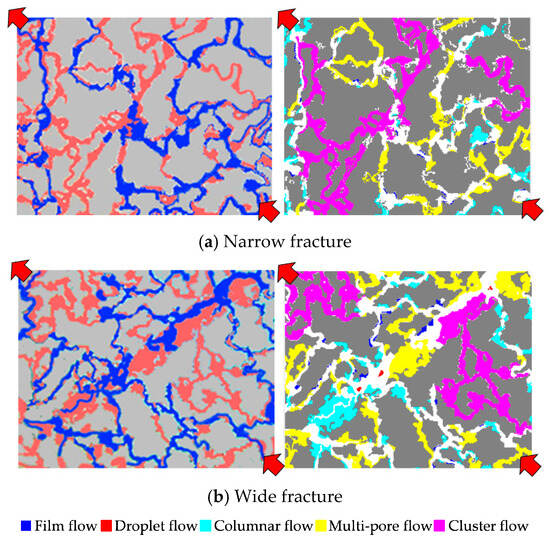
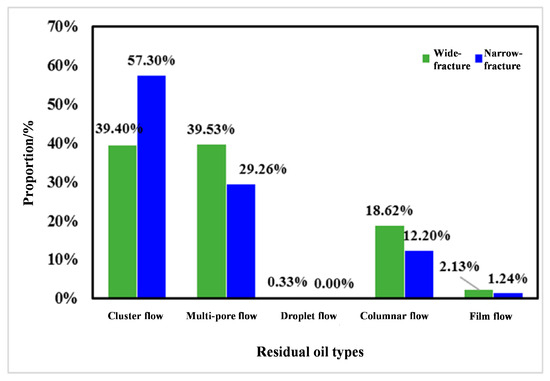
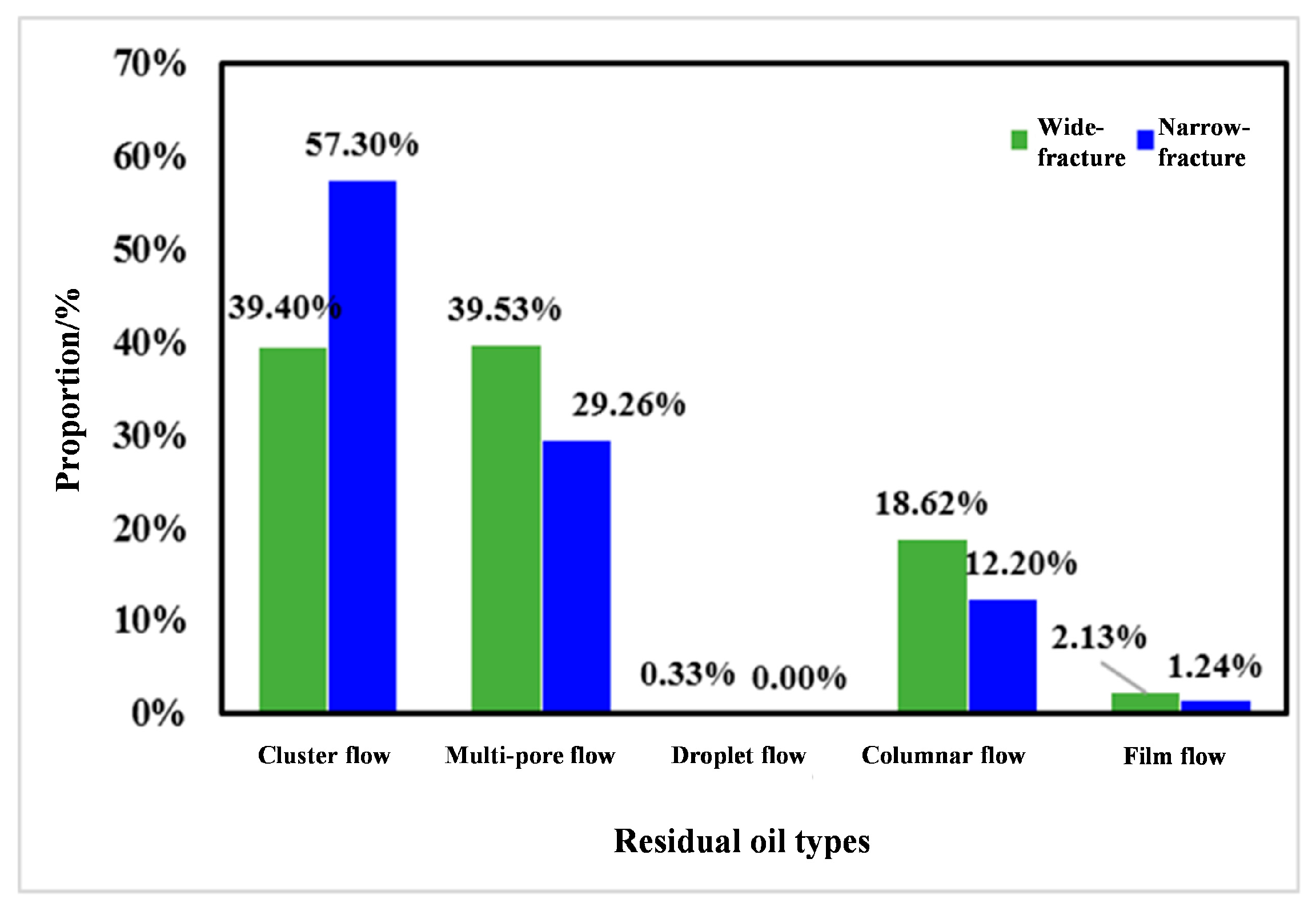
The influence of fracture width on development performance is mainly reflected in three aspects: (1) water-breakthrough time: breakthrough occurs earlier in the narrow-fracture reservoir and later in the wide-fracture reservoir; (2) sweep efficiency: the overall sweep degree of the wide-fracture reservoir is better because seepage resistance decreases after the fluid enters the wide fracture from matrix throats; and (3) recovery factor and residual-oil distribution: the recovery factor of the wide-fracture reservoir is about 9.36% higher than that of the narrow-fracture reservoir. Residual oil in the wide-fracture reservoir is mainly multi-pore flow and cluster flow (each accounting for about 40%), followed by columnar flow, whereas in the narrow-fracture reservoir cluster flow accounts for more than 50%, multi-pore flow accounts for about 30%, and only trace film flow is present, as depicted in Figure 11 and Figure 12. The results show that fracture width affects fluid advance velocity and displacement uniformity by regulating capillary force and seepage resistance. However, compared with injection direction, its control on waterflooding performance in fracture-type reservoirs is of secondary importance.
Figure 11.
Comparison of residual-oil types at the late stage of water injection in fracture-type reservoirs with different fracture widths (blue—water, red—oil).
Figure 12.
Schematic comparison of residual-oil contents at the late stage of water injection in fracture-type reservoirs with different fracture widths.
3.3.3. Development Performance Under Different Fracture Densities
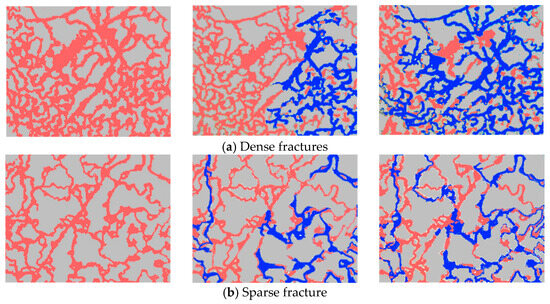
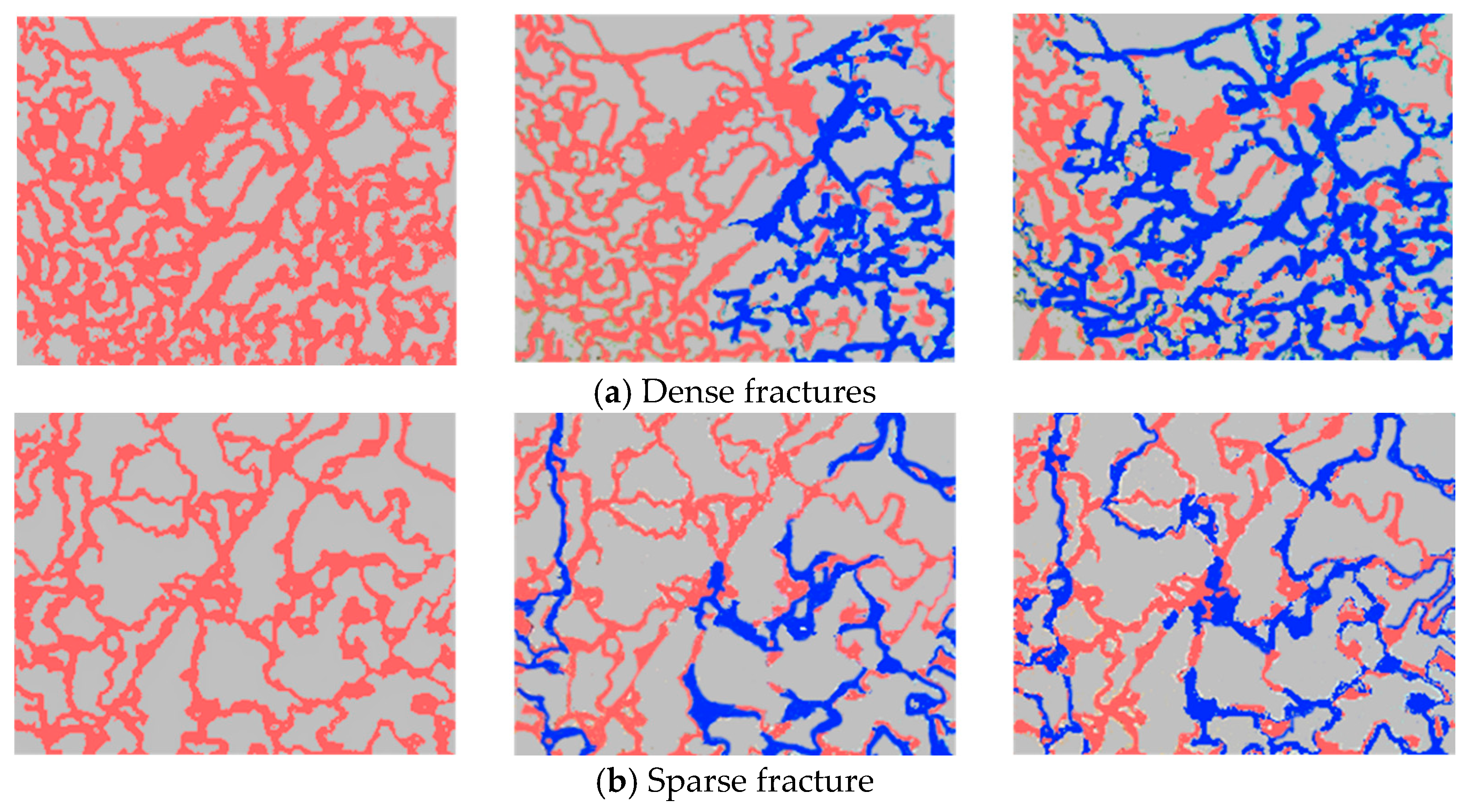
Comparative experiments were carried out under water injection perpendicular to the fracture for reservoirs with dense fractures (three fractures with widths of 0.72 mm, 0.39 mm, and 0.18 mm) and sparse fractures (one fracture with a width of 0.25 mm). The fracture lengths in the two reservoirs were basically the same, and the matrix pore distributions closely matched the characteristics of the actual cast thin sections.
The displacement characteristics of the dense-fracture reservoir are as follows: the injected water first enters the matrix uniformly and achieves sufficient sweep, and then gradually seeps into the fracture channels. The intermediate-width fracture shows the best sweep, whereas local regions of the widest fracture are hardly swept. After water breakthrough, the previously unswept parts of the reservoir can still be displaced, and efficient displacement of the entire reservoir is ultimately achieved. The controlling mechanism is that densely distributed fractures effectively connect the reservoir matrix, increase seepage channels, and enhance flow capacity, thereby making fluid displacement more uniform. Water breakthrough occurs only after the matrix has been swept almost uniformly. Local analysis shows that dense fractures provide a strong conductivity-enhancement effect: all three fractures with different widths achieve more than 80% sweep, and oil-displacement efficiency in the narrower fracture exceeds 95%, as demonstrated in Figure 13a.
Figure 13.
Schematics of the early (left), middle (center), and late (right) stages of water injection under different fracture densities (blue—water, red—oil).
In contrast, the displacement process in the sparse-fracture reservoir proceeds as follows: the injected water first enters the matrix and can sweep a large matrix area from the inlet to the middle of the fracture. After breaking through into the fracture, however, it rapidly channels along the preferential pathway to the outlet, passing through only a very small portion of the fracture. After water breakthrough, only a small matrix area near the outlet and a limited part of the fracture can be swept. The overall oil-displacement performance is only moderate, and the sweep inside the fracture is extremely poor. During the displacement process, two extreme phenomena are observed: more than 90% of the oil phase can be produced from pores or throats that are swept, whereas pores or throats not traversed by the injected fluid exhibit almost no production (see Figure 13b).
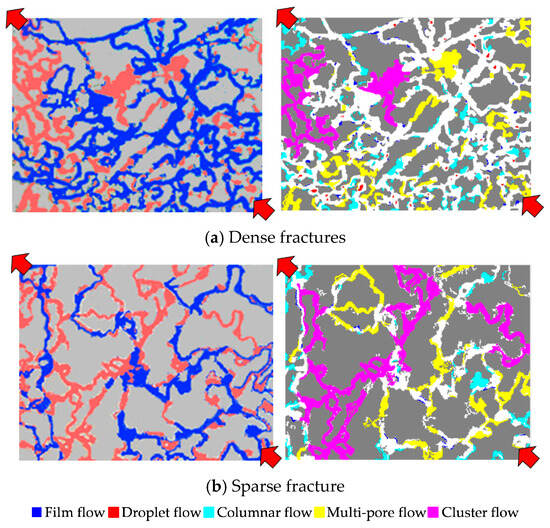
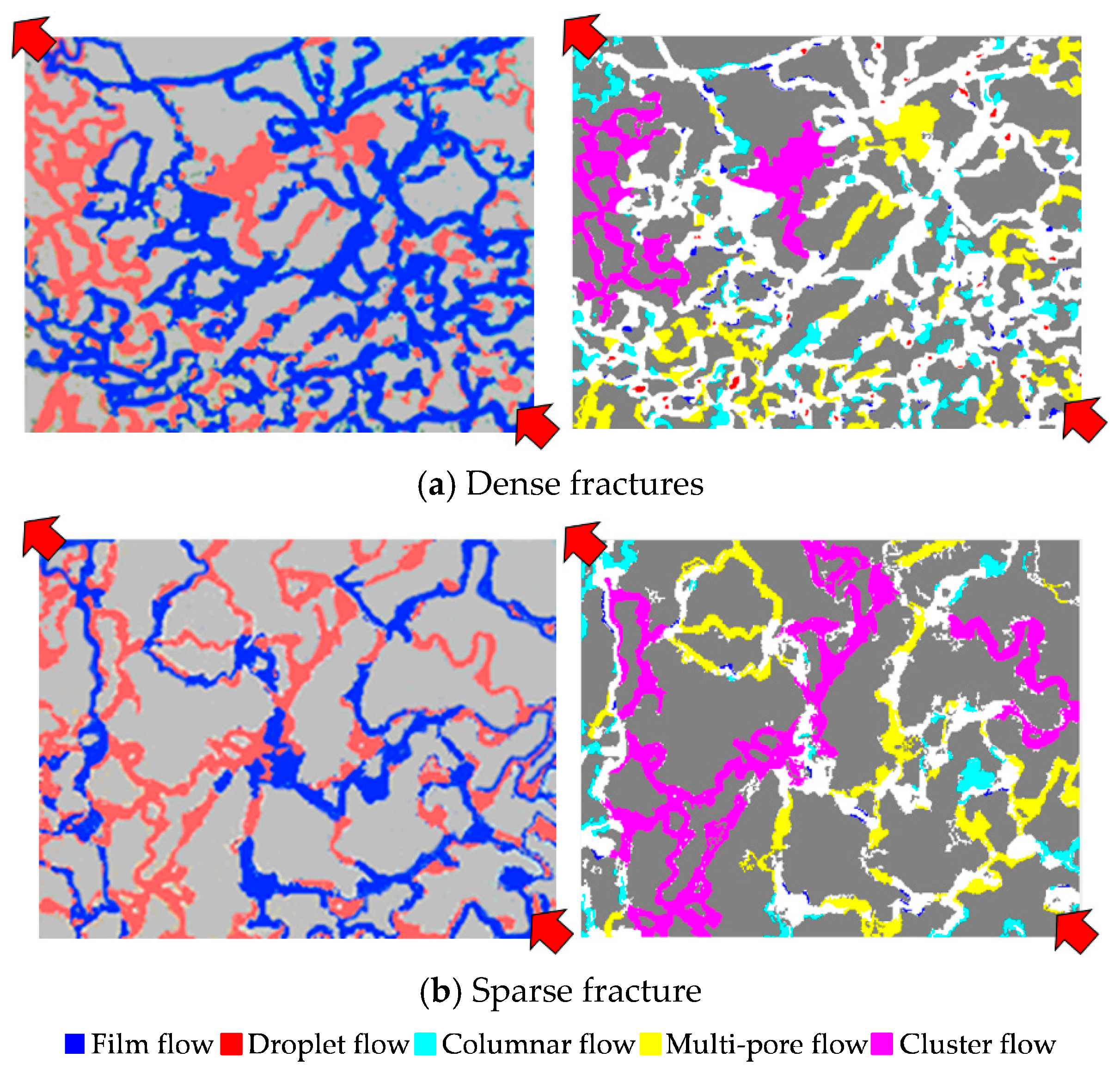
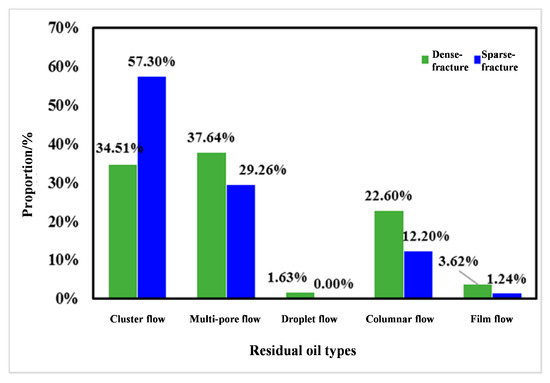
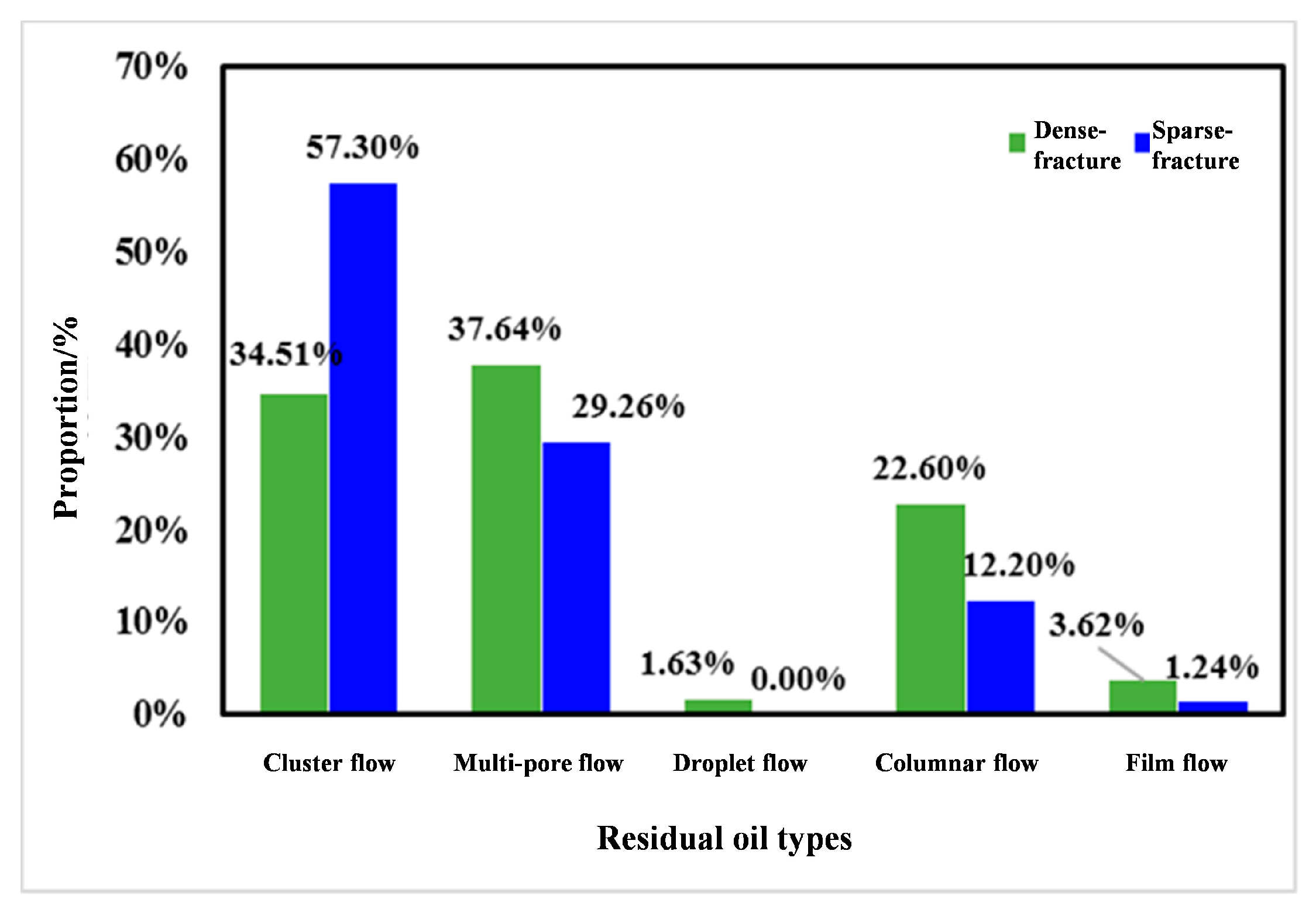
The effect of fracture density on development performance is significant: (1) water-breakthrough time: breakthrough occurs earlier in the sparse-fracture reservoir, whereas it is delayed in the dense-fracture reservoir, which still retains continuous displacement capability after breakthrough; (2) sweep efficiency: the overall sweep of the dense-fracture reservoir is much better than that of the sparse-fracture reservoir; and (3) recovery factor and residual-oil distribution: the recovery factor of the dense-fracture reservoir is about 19.23% higher than that of the sparse-fracture reservoir. Residual oil in the dense-fracture reservoir is mainly multi-pore flow and cluster flow (each accounting for about 36%), followed by columnar flow. In the sparse-fracture reservoir, cluster flow accounts for more than 50%, multi-pore flow about 30%, and only trace film flow is present, as presented in Figure 14 and Figure 15. These results confirm that fracture density mainly affects waterflooding performance by regulating reservoir connectivity: the better the connectivity, the more uniform the fluid sweep and the higher the final waterflood recovery factor.
Figure 14.
Comparison of residual-oil types at the late stage of water injection under different fracture densities (blue—water, red—oil).
Figure 15.
Schematic comparison of residual-oil contents at the late stage of water injection in fracture-type reservoirs with different fracture densities.
3.4. Development Performance Under Different Injected Fluids
On the basis of the waterflooding study, comparative experiments of water injection and gas injection were carried out for pore-type and fracture-type carbonate reservoirs under different injection modes (waterflooding by constant-rate pumping and gas flooding by constant-pressure injection) to identify the more favorable development mode under the tested experimental conditions. Because the gas phase is compressible, constant-pressure injection was used to maintain stable gas entry; this boundary-condition difference may accentuate early gas channeling relative to a fully rate-controlled comparison, and the water/gas contrast should therefore be interpreted in terms of relative displacement behavior under the present laboratory settings.
3.4.1. Differences Between Waterflooding and Gas Flooding in Pore-Type Reservoirs
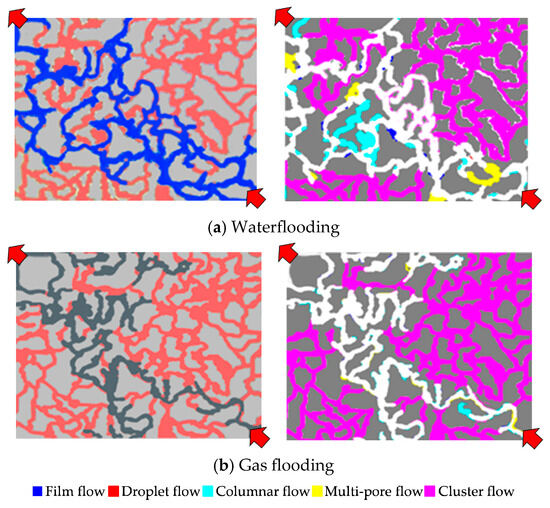
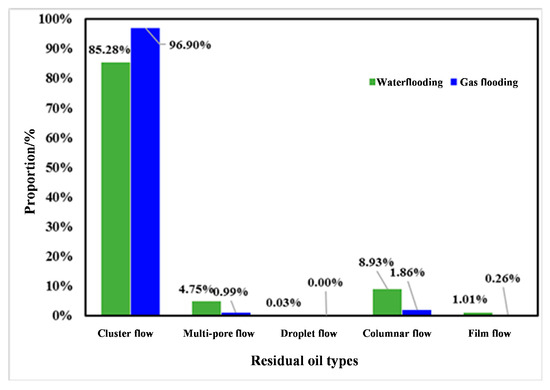
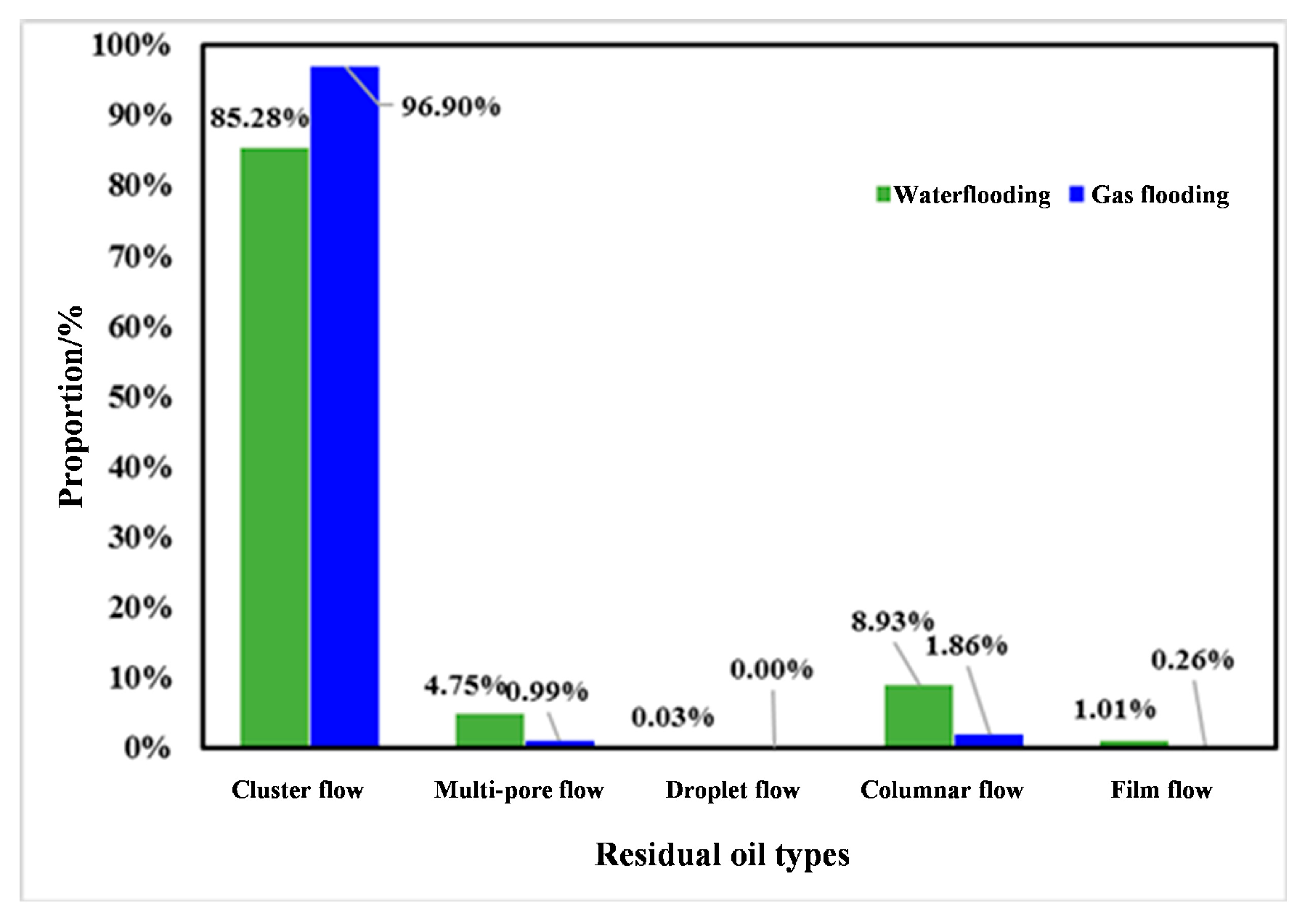
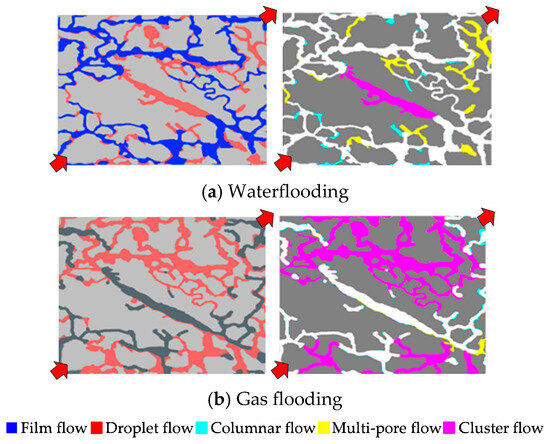
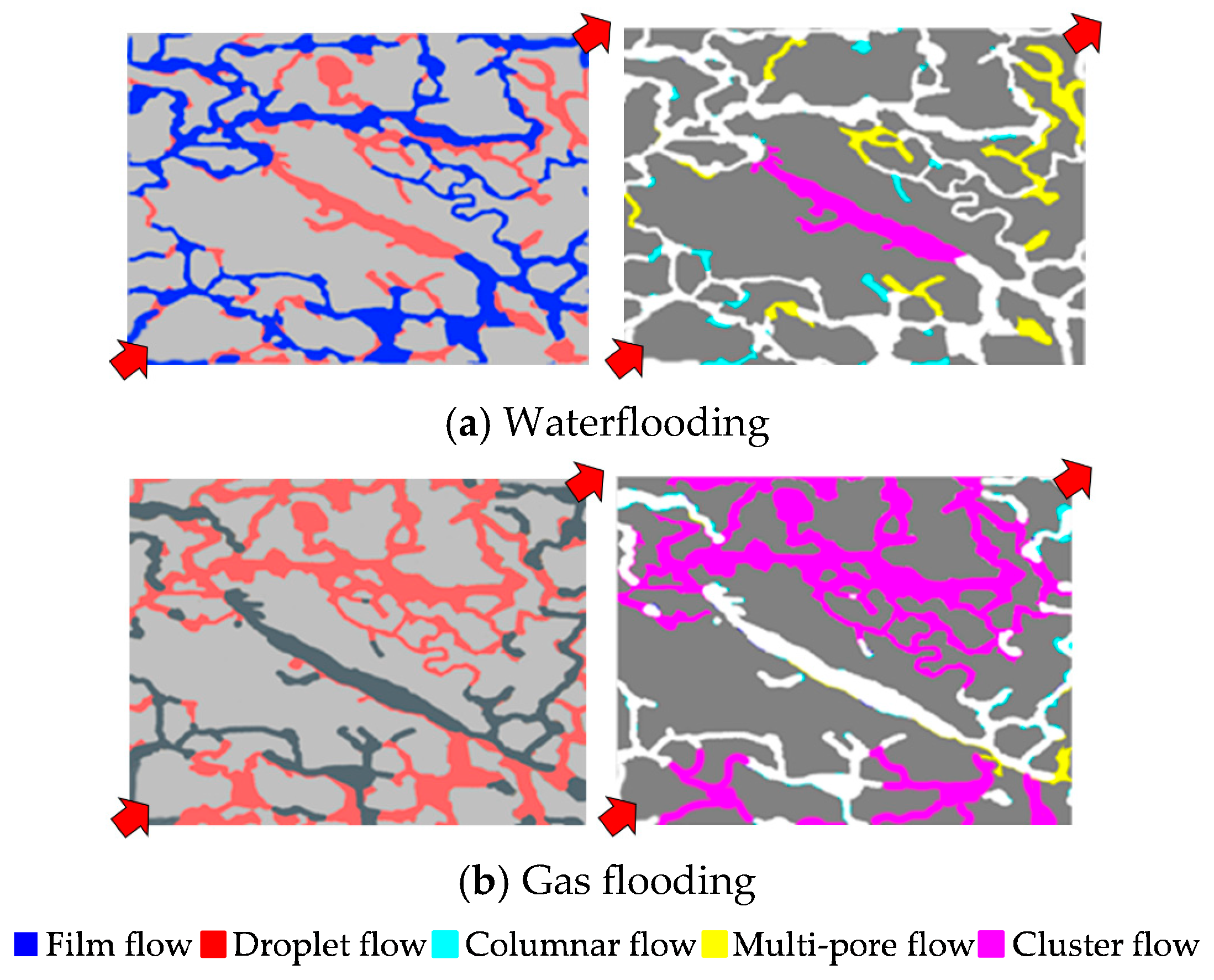
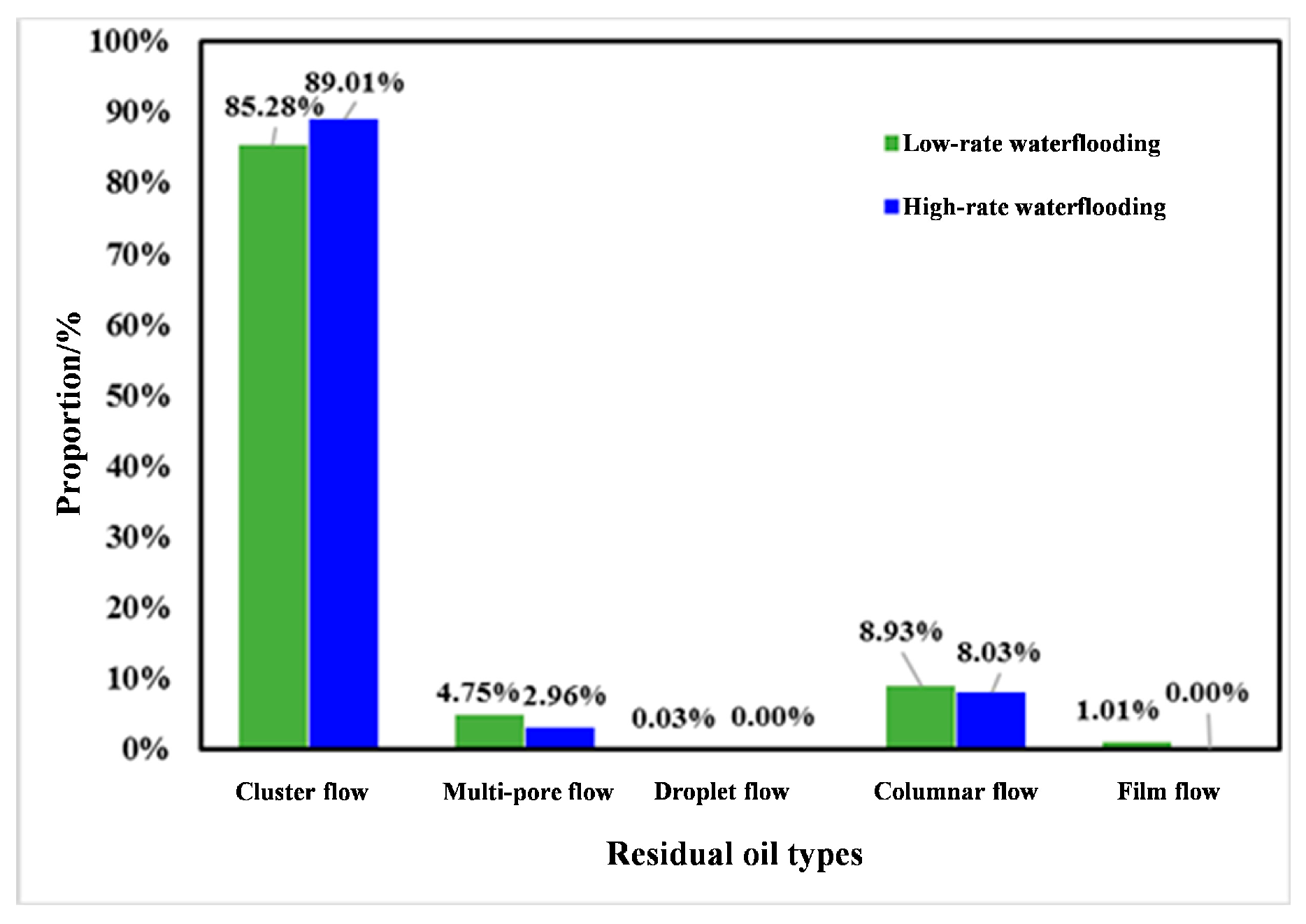
In pore-type reservoirs, residual oil after both waterflooding and gas flooding is dominated by cluster flow, but the occurrence characteristics differ significantly: the proportion of cluster flow is about 85.28% after waterflooding, whereas gas flooding yields a higher proportion of columnar flow (8.93%), as displayed in Figure 16 and Figure 17. The observed trend is consistent with previous micromodel studies showing that waterflooding in heterogeneous carbonate-like pore networks generally provides a more continuous displacement front, whereas gas flooding is more prone to preferential channeling and unswept pockets [35]. The difference in residual-oil types directly affects the difficulty of subsequent development adjustment—residual oil remaining after waterflooding is easier to mobilize, and the final recovery factor is about 10.48% higher than that after gas flooding. Gas channeling readily occurs during gas flooding, resulting in nonuniform sweep and consequently constraining development performance. These results demonstrate that the type of injected fluid significantly affects oil-displacement performance in pore-type reservoirs and that waterflooding is the preferred development mode under the tested conditions for this reservoir type.
Figure 16.
Comparison of residual-oil types at the late stage of waterflooding and gas flooding in a pore-type reservoir (blue—water, red—oil, gray—gas).
Figure 17.
Schematic comparison of residual-oil contents at the late stage of waterflooding and gas flooding in a pore-type reservoir.
3.4.2. Differences Between Waterflooding and Gas Flooding in Fracture-Type Reservoirs
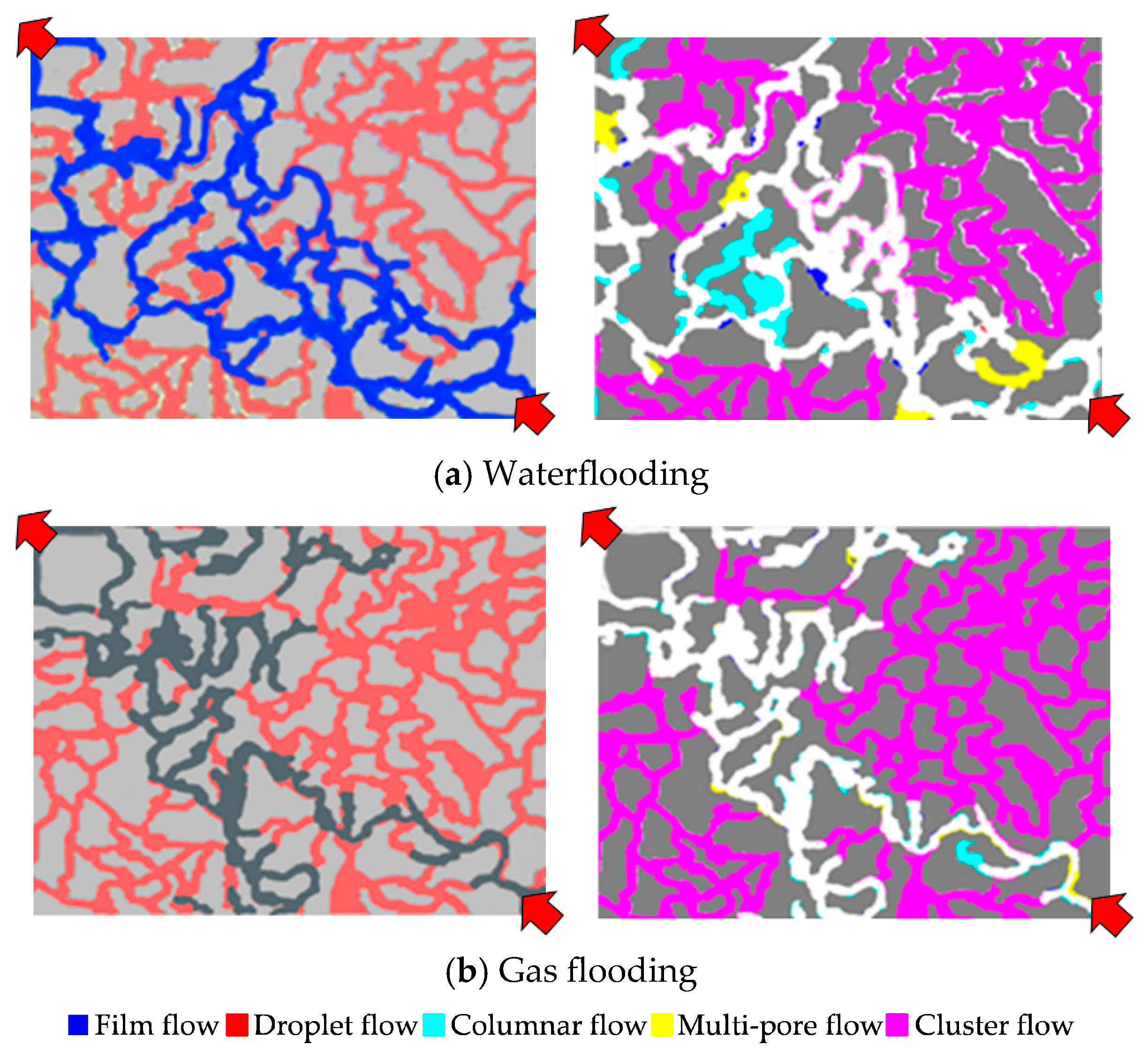
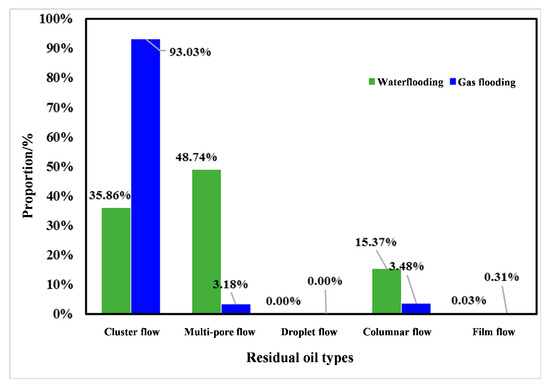
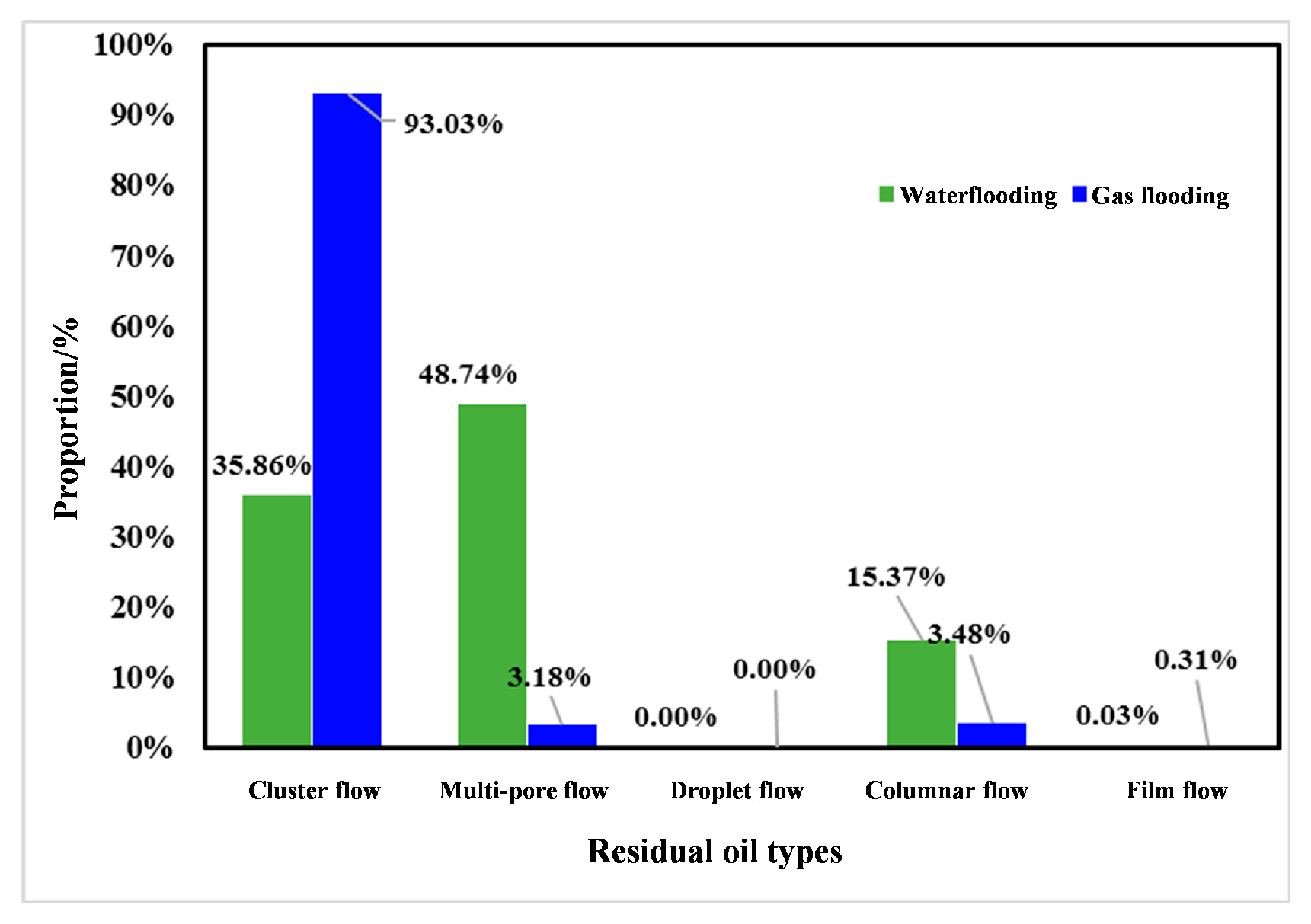
For fracture-type reservoirs, the displacement performance of waterflooding and gas flooding was compared under injection perpendicular to the fracture. During gas flooding, gas channeling causes the injected fluid to preferentially flow through the fracture pathway. Although high sweep efficiency is achieved inside the fracture, the sweep of the matrix surrounding the fracture is extremely low. Residual oil is therefore dominated by cluster flow, accounting for as much as 93.03%, whereas the other four types of microscopic residual oil occupy only very small proportions. In contrast, waterflooding exhibits excellent matrix sweep and displacement performance. Although the sweep degree inside the fracture is relatively limited, the residual oil is mainly multi-pore flow (48.74%) and cluster flow (35.86%), a distribution pattern more favorable for subsequent development adjustment. Moreover, the final recovery factor of waterflooding is about 16.44% higher than that of gas flooding, indicating a clear performance advantage, as exhibited in Figure 18 and Figure 19. This result is also consistent with pore-scale observations reported for fractured porous carbonate micromodels, where early gas channeling along the fracture strongly limits matrix access [35]. These results show that the injected-fluid type has an even stronger effect on oil-displacement performance in fracture-type reservoirs and that waterflooding is more suitable under the present experimental conditions for efficient production from this type of reservoir.
Figure 18.
Comparison of residual-oil types at the late stage of waterflooding and gas flooding in a fracture-type reservoir (blue—water, red—oil, gray—gas).
Figure 19.
Schematic comparison of residual-oil contents at the late stage of waterflooding and gas flooding in a fracture-type reservoir.
3.5. Optimization of Waterflooding Rate and Enhancement by Flow Diversion
3.5.1. Development Performance at Different Waterflooding Rates
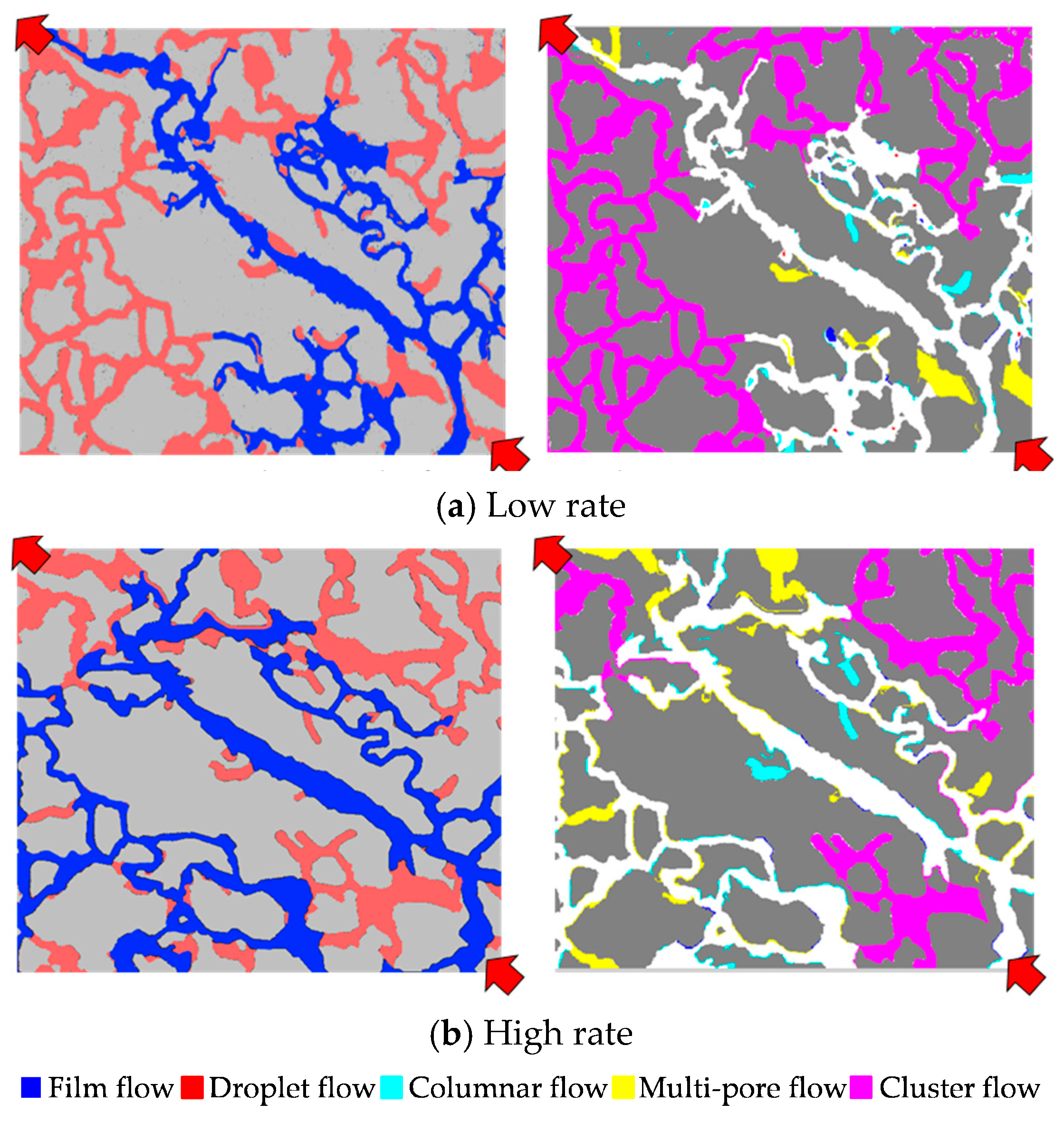
After establishing waterflooding as the preferred development mode for carbonate reservoirs, comparative experiments of low-rate and high-rate waterflooding were conducted to determine the optimal waterflooding rate for pore-type and fracture-type reservoirs.
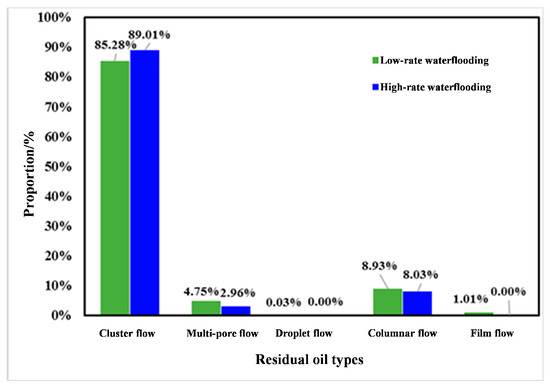
For pore-type reservoirs, the capillary number of high-rate waterflooding was Ca = 4 × 10⁻⁷, and that of low-rate waterflooding was Ca = 2 × 10⁻⁷. The experimental results show that an appropriate increase in the waterflooding rate can significantly improve development performance. Increasing Ca from 2 × 10⁻⁷ to 4 × 10⁻⁷ doubles the viscous-to-capillary force ratio, weakens meniscus pinning at narrow throats, and promotes breakup/remobilization of capillary-trapped cluster oil. As a result, part of the difficult-to-mobilize cluster residual oil is converted into smaller and more mobile multi-pore/columnar bodies, and the recovery factor of the pore-type reservoir increases by about 10.87% (Figure 20 and Figure 21). This confirms that a moderate increase in injection rate can positively improve oil-displacement performance in pore-type reservoirs.
Figure 20.
Comparison of residual-oil types at the late stage of development in a pore-type reservoir under different water-injection rates (blue—water, red—oil).
Figure 21.
Quantitative comparison of residual oil at the late stage of development in a pore-type reservoir under different water-injection rates.
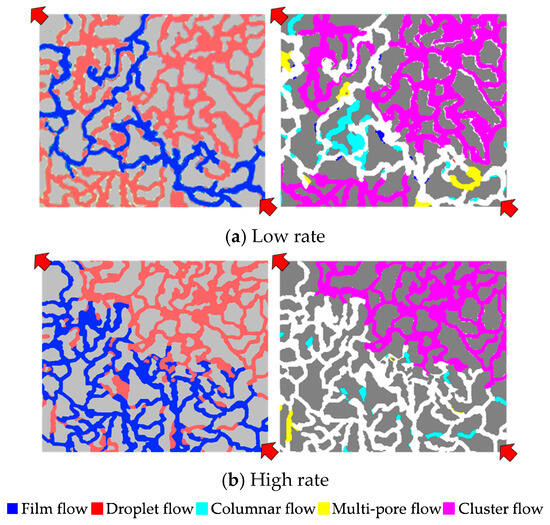
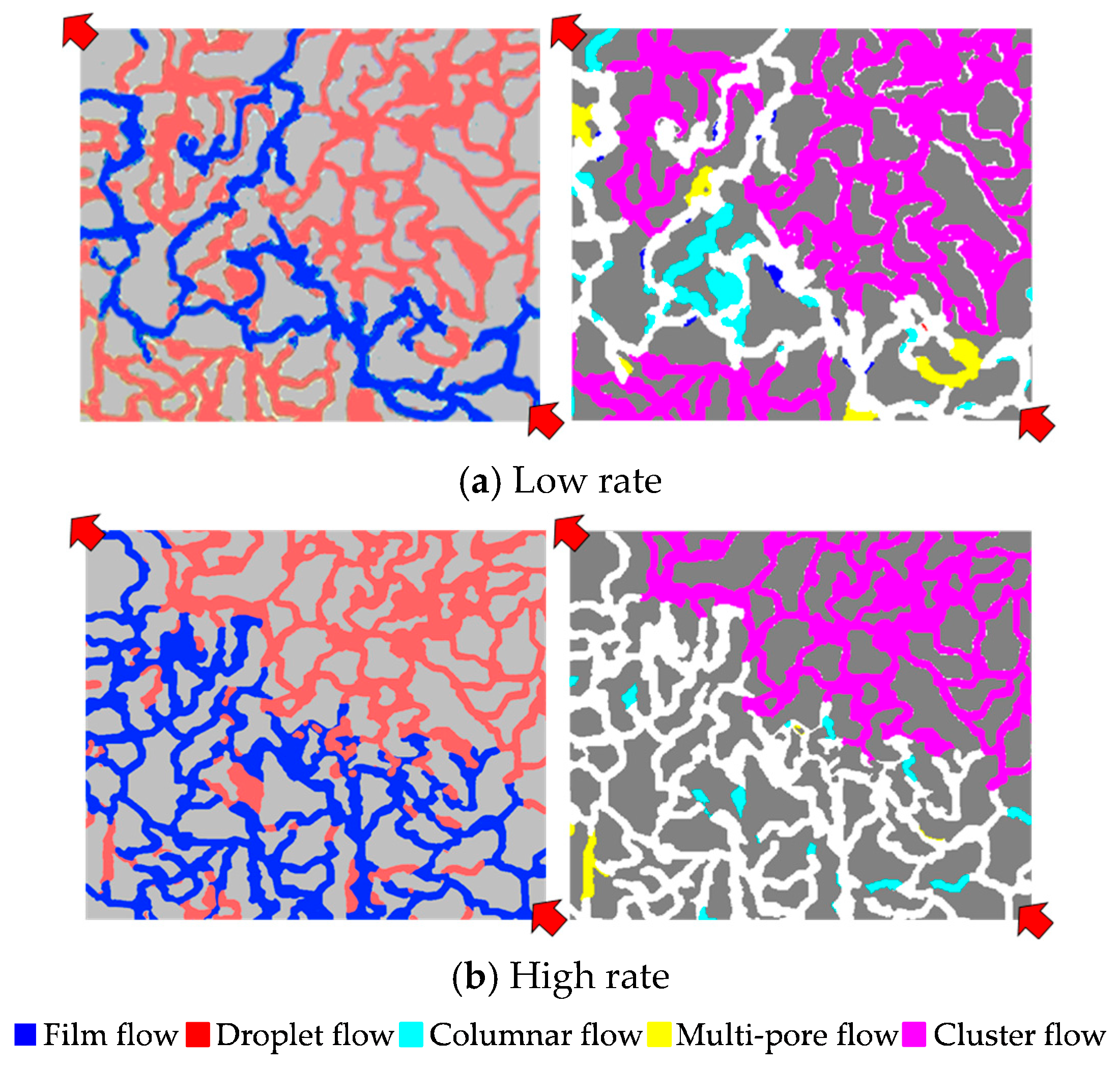
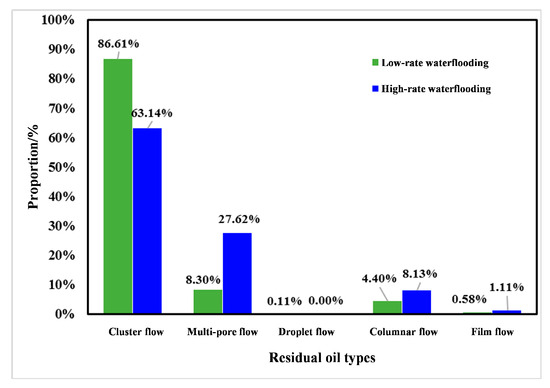
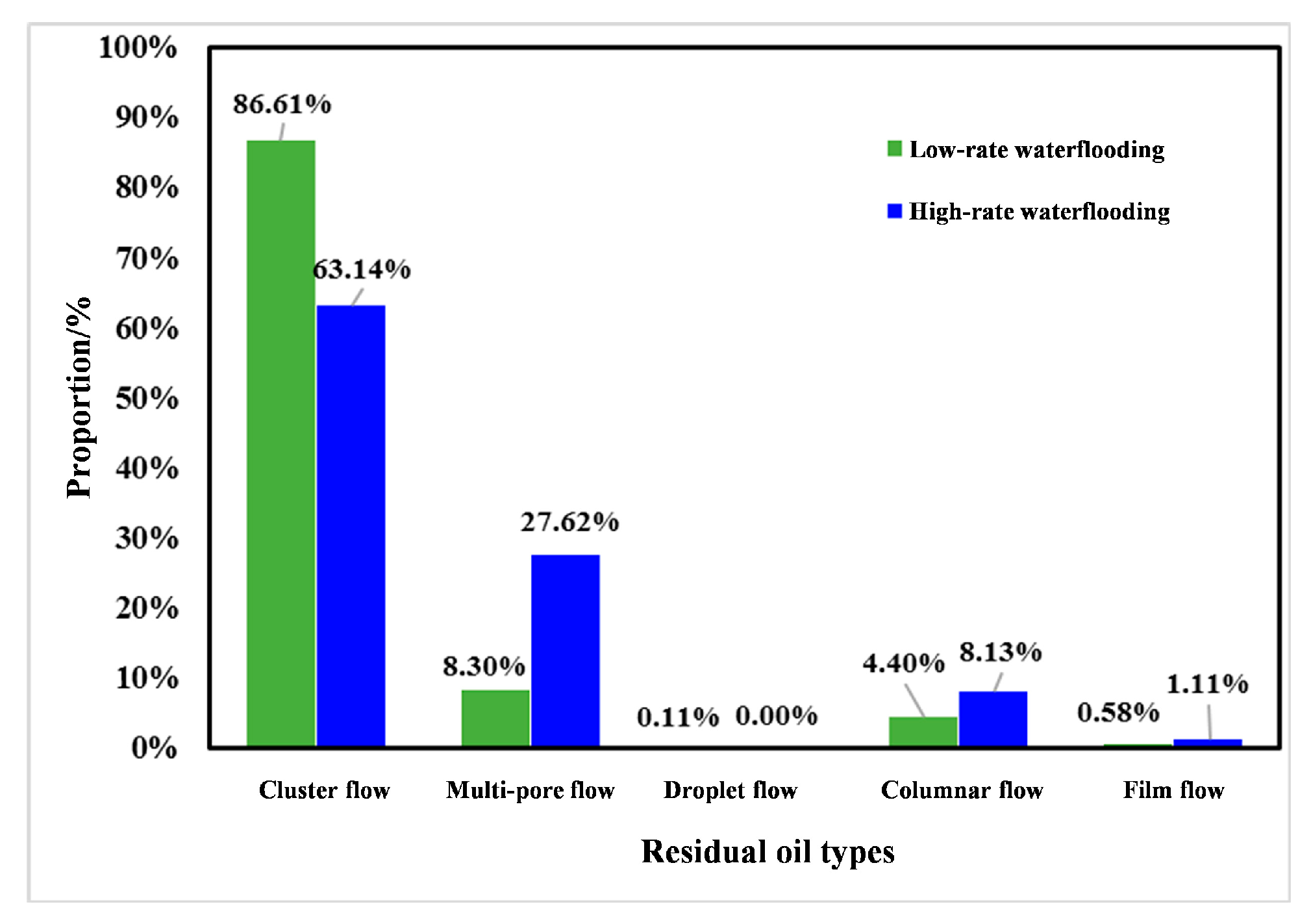
In the experiment of water injection parallel to the fracture for fracture-type reservoirs, the capillary number of high-rate waterflooding was Ca = 3 × 10⁻⁷, whereas that of low-rate waterflooding was Ca = 2 × 10⁻⁷. Comparison of the displacement results shows that increasing the waterflooding rate enhances the sweep of the matrix around the fracture. Mechanistically, the higher Ca increases the viscous pressure drop available to drive crossflow from the fracture-adjacent high-conductivity path into neighboring matrix pores, thereby mobilizing oil pinned at constricted throats. The original cluster residual oil is therefore partially broken up and converted into multi-pore flow (27.62%) and columnar flow (8.13%), thereby increasing the recovery factor of the fracture-type reservoir by about 9.05% (Figure 22 and Figure 23). This phenomenon indicates that an appropriate increase in injection rate can strengthen matrix sweep efficiency and thus improve oil-displacement performance under the injection mode parallel to the fracture.
Figure 22.
Comparison of residual-oil types at the late stage of development in a fracture-type reservoir under different water-injection rates (blue—water, red—oil).
Figure 23.
Schematic comparison of residual-oil contents at the late stage of development in a fracture-type reservoir under different water-injection rates.
3.5.2. Development Performance of Flow Diversion
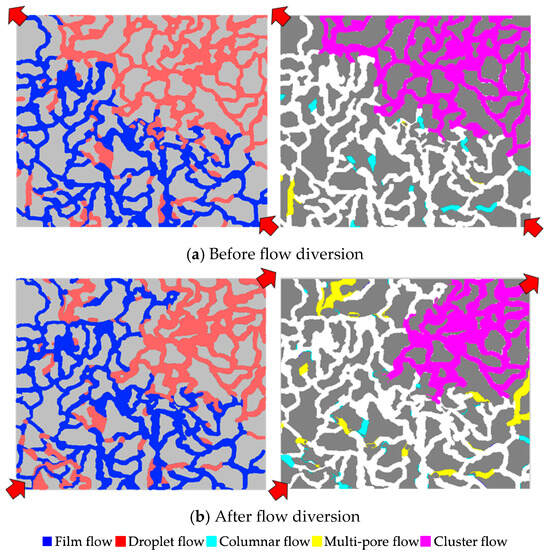
After determining the optimal waterflooding rate for carbonate reservoirs, microfluidic experiments of post-waterflood flow diversion were carried out to investigate the enhancement effect of flow diversion on the development performance of pore-type and fracture-type reservoirs. In the experiments, once a dominant seepage channel had formed after the base waterflooding stage, the injection-production configuration was switched to an alternative port pair so that the pressure gradient was reoriented toward previously unswept regions. This operation mimics field-scale profile control or flow-path reallocation and allows the effect of flow diversion on internal pressure redistribution and flow-path reconstruction to be directly visualized.
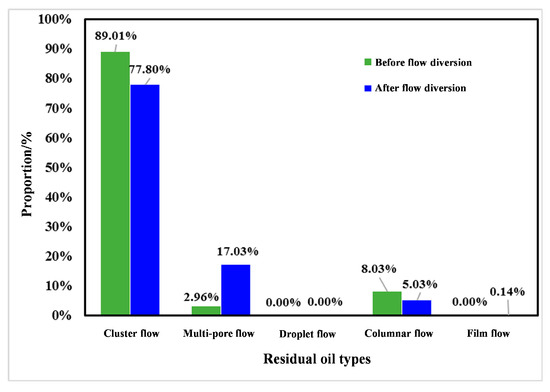
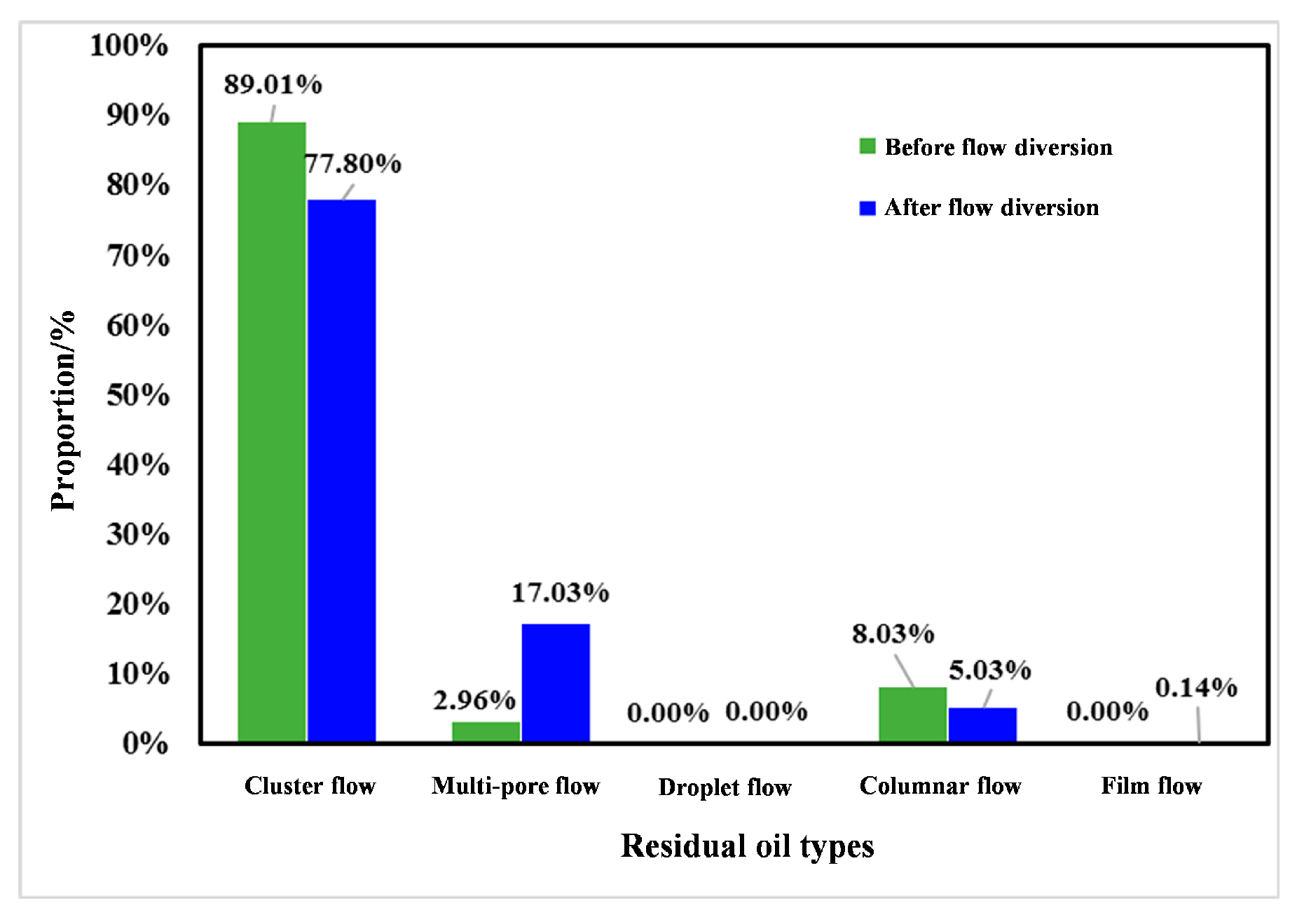
For pore-type reservoirs, flow diversion can effectively displace the oil phase in pore regions that were not swept during the early stage. The key mechanism is that the redirected pressure gradient forces the displacing phase to bypass the established dominant channel and enter adjacent unswept pores, so difficult-to-mobilize cluster residual oil is broken up and transformed into more easily displaced multi-pore flow (17.03%) and columnar flow (5.03%), as revealed in Figure 24 and Figure 25. After flow-diversion adjustment, the recovery factor of the pore-type reservoir increases by about 17.12%. This demonstrates that flow diversion can reconstruct the internal pressure distribution of the reservoir and thereby significantly improve the oil-displacement performance of pore-type reservoirs.
Figure 24.
Comparison of residual-oil types before and after flow diversion in a pore-type reservoir at the late stage (blue—water, red—oil).
Figure 25.
Quantitative comparison of residual oil before and after flow diversion in a pore-type reservoir.
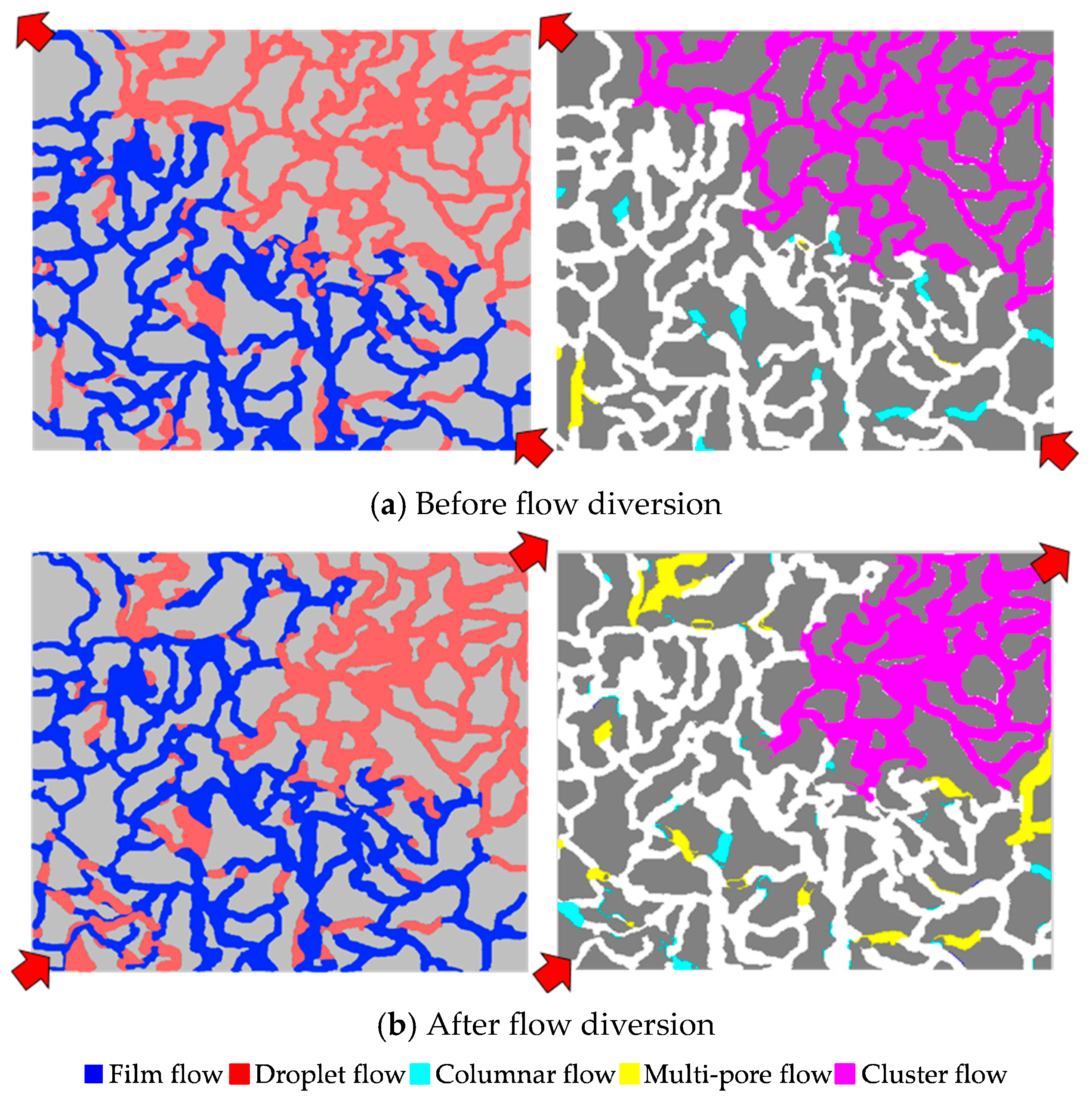
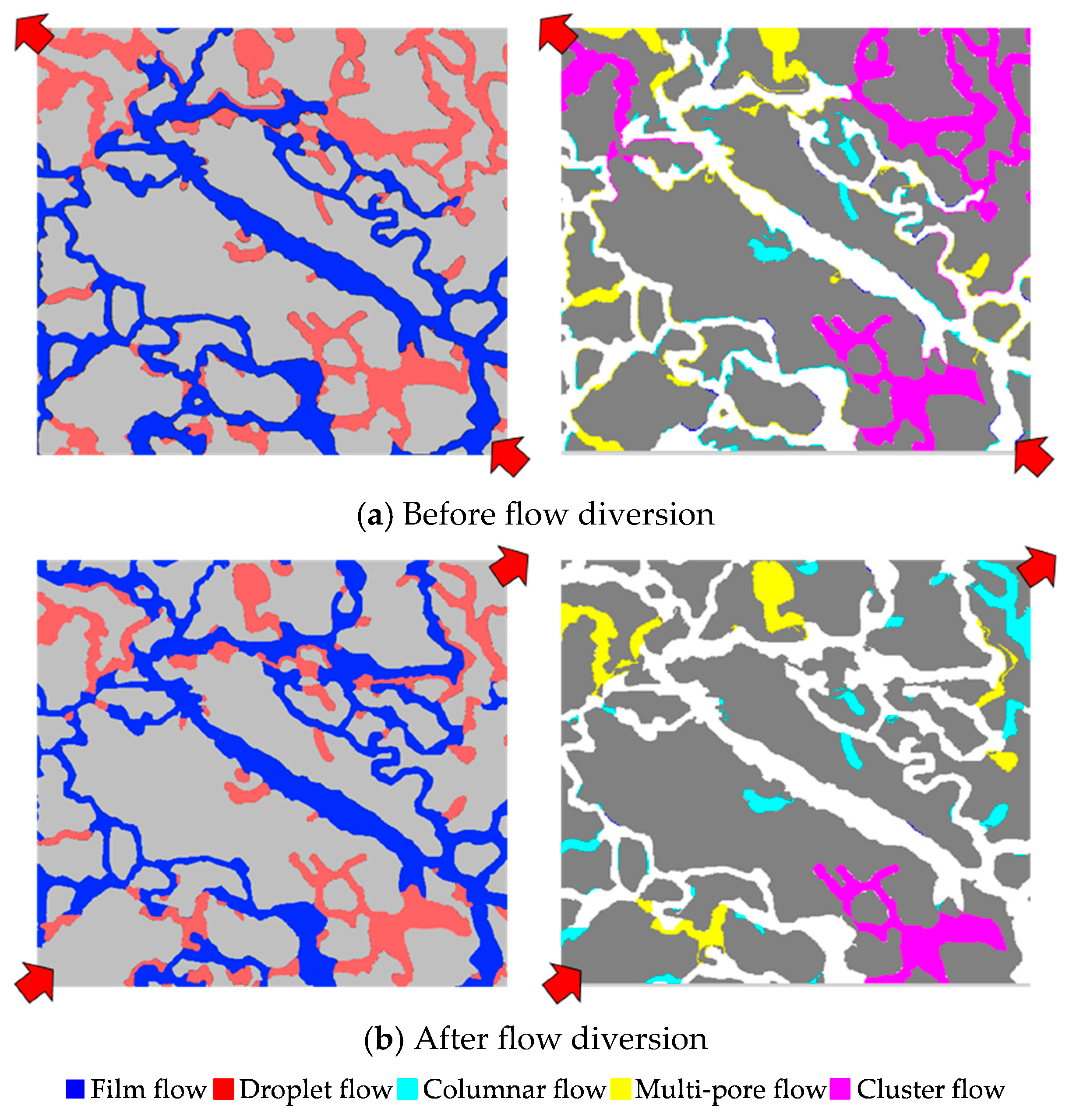
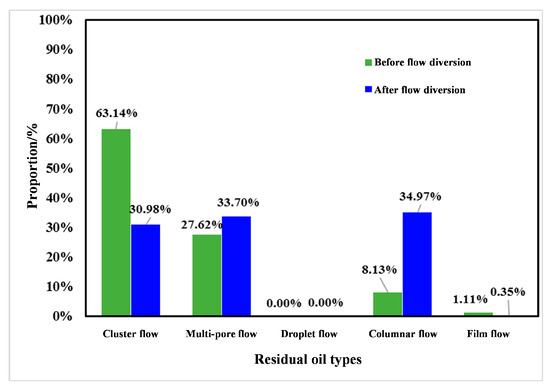
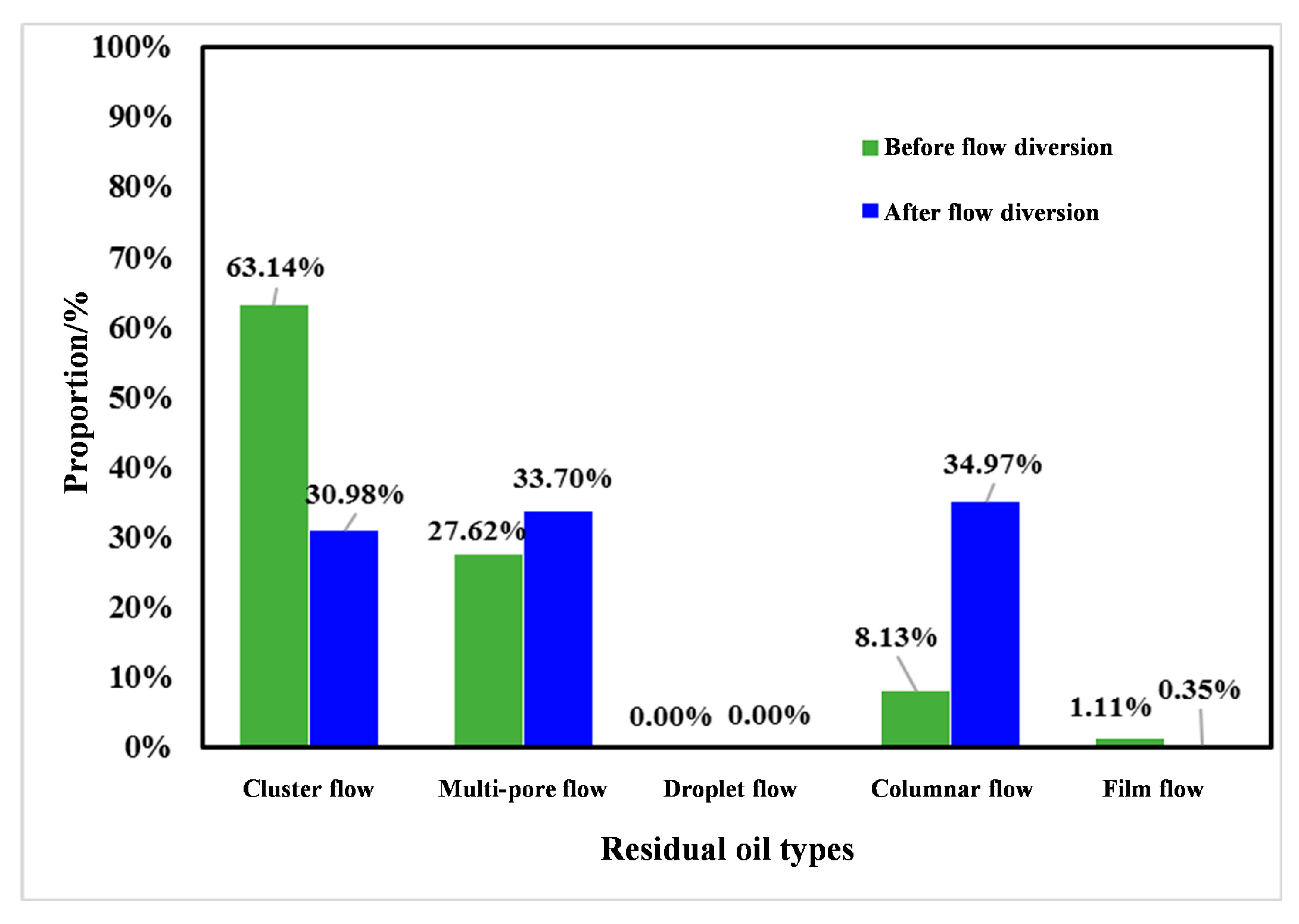
For fracture-type reservoirs, after flow diversion the injected fluid can effectively sweep and displace oil in matrix regions that were not mobilized in the earlier stage. Because the pressure field is redirected away from the dominant fracture channel, the displacing phase is forced to enter matrix blocks that were previously bypassed. Efficient mobilization is therefore achieved mainly by breaking up cluster residual oil into multi-pore flow (33.70%) and columnar flow (34.97%), as portrayed in Figure 26 and Figure 27. After flow-diversion adjustment, the recovery factor of the fracture-type reservoir increases by 19.63%. This indicates that flow diversion can substantially improve the overall oil-displacement performance of fracture-type reservoirs by optimizing the internal pressure distribution and strengthening sweep of the matrix region.
Figure 26.
Comparison of residual-oil types before and after flow diversion in a fracture-type reservoir at the late stage (blue—water, red—oil).
Figure 27.
Quantitative comparison of residual oil before and after flow diversion in a fracture-type reservoir.
4. Discussion
Under the tested chip geometries and operating conditions, waterflooding outperformed the basic gas-flooding scenarios for both pore-type and fracture-type models. This result aligns with previous micromodel and pore-scale studies showing that in heterogeneous carbonate systems, the higher mobility and compressibility of gas promote preferential channeling, whereas waterflooding maintains better matrix contact when capillary forces dominate [35]. For pore-type reservoirs, waterflooding produces a more uniform displacement front and effectively mobilizes cluster residual oil, avoiding enrichment of columnar oil and gas channeling. For fracture-type reservoirs, waterflooding efficiently sweeps the matrix and reduces residual-oil concentration, achieving a recovery factor 16.44% higher than gas flooding. However, this conclusion is limited to the basic gas-flooding scenario; optimized EOR strategies such as foam, WAG, miscible gas, or wettability alteration may alter the relative performance. For vuggy reservoirs, waterflooding preference should be interpreted under the tested geometry-dominated conditions, as gas-flooding experiments were not conducted.
4.1. Optimization Strategy for Injection Direction
For fracture-dominated reservoirs with a connected through-going fracture, injection perpendicular to the dominant fracture is recommended. In the tested long-fracture model, perpendicular injection minimized direct channeling, enhanced matrix sweep, and increased recovery by 22.32% relative to parallel injection. The effect is strongest for reservoirs with a single dominant fracture; more complex networks require additional validation. For wide, narrow, and multi-fracture systems, perpendicular injection remains effective for balancing mobilization between fractures and matrix.
4.2. Optimization Strategy for Injection Rate
Waterflooding rate should be optimized according to reservoir type and connectivity. Moderate rates suffice for relatively homogeneous pore-type reservoirs, while higher rates (e.g., increasing Ca from 2 × 10⁻⁷ to 4 × 10⁻⁷) help mobilize capillary-trapped oil in heterogeneous pore-type and fracture-type reservoirs, raising recovery by 10.87% and 9.05%, respectively. In vuggy reservoirs, rate increases improve matrix access around vugs but must be monitored to prevent premature channeling.
4.3. Optimization Strategy for Development-Adjustment Measures (Flow Diversion)
Flow diversion is recommended when stable preferential channels form but significant cluster oil remains in unswept regions. In the micromodels, this was implemented by switching inlet–outlet pairs after breakthrough. In pore-type models, recovery increased by 17.12% and in fracture-type models it increased by 19.63%. In vuggy reservoirs, diversion can alter flow paths, enhance matrix sweep, and reduce cluster oil retention. Field analogs include profile control, selective completion adjustments, or well-pattern rebalancing, guided by production data and residual-oil monitoring.
4.4. Scale Effect, Uncertainty, and Applicability
The glass micromodels replicate dominant 2D geometry and capillary–viscous dynamics, making them reliable for identifying mechanisms such as preferential channeling, fracture-controlled sweep, vug storage effects, and cluster oil remobilization. They do not reproduce full 3D connectivity, mineralogy, geochemical reactions, or mixed-wet surfaces; hence, absolute recovery factors should not be directly applied to the field. The main uncertainties include 2D simplification, water-wet glass bias, minor deviations in etched pore dimensions, and image-segmentation thresholds. Despite these limitations, trends observed across reservoir types and adjustment schemes are robust, providing comparative guidance for strategy screening.
5. Conclusions
- Waterflooding mechanisms and residual-oil distribution differ by reservoir type: pore-type reservoirs show uniform sweep (44.26% recovery), fracture-pore reservoirs show matrix-fracture mobilization differences, and vuggy reservoirs exhibit preferential channeling (41.58% recovery). Cluster flow dominates (>80%) in all reservoir types during base waterflooding.
- Fracture parameters significantly control performance: perpendicular injection is optimal in long-fracture models (+22.32% recovery), wide fractures outperform narrow fractures (+9.36%), and dense fractures outperform sparse fractures (+19.23%).
- Waterflooding outperforms basic gas flooding under tested conditions (pore-type +10.48%, fracture-type +16.44%), and high-rate waterflooding and flow diversion each further enhance recovery (pore-type +10.87%/+17.12%, fracture-type +9.05%/+19.63%).
- Micromodel results are most reliable for comparative screening of strategies; field-scale application requires validation with 3D connectivity, wettability, mineralogy, and engineering constraints.
Author Contributions
Conceptualization, L.Z. and W.Z.; Methodology, W.Z.; Software, J.L.; Validation, Y.G., Q.W. and W.Z.; Formal analysis, Y.G.; Investigation, Y.G. and Q.W.; Resources, L.Z.; Data curation, Y.G. and J.L.; Writing—original draft, Y.G.; Writing—review and editing, Q.W.; Visualization, J.L.; Supervision, W.Z.; Project administration, W.Z.; Funding acquisition, L.Z. All authors have read and agreed to the published version of the manuscript.
Funding
This research was funded by the National Science and Technology Major Project of CNPC under Grant 2025ZD1406405.
Data Availability Statement
The data presented in this study are available on request from the corresponding author. The experimental datasets used in this work were provided by the S oilfield and are not publicly accessible due to confidentiality restrictions.
Conflicts of Interest
Authors Y.G., Q.W., L.Z. and W.Z. were employed by the company Research Institute of Petroleum Exploration and Development. The remaining author declares that the research was conducted in the absence of any commercial or financial relationships that could be construed as a potential conflict of interest.
Appendix A
Figure A1.
Distribution of pore-throat parameters for different model types.
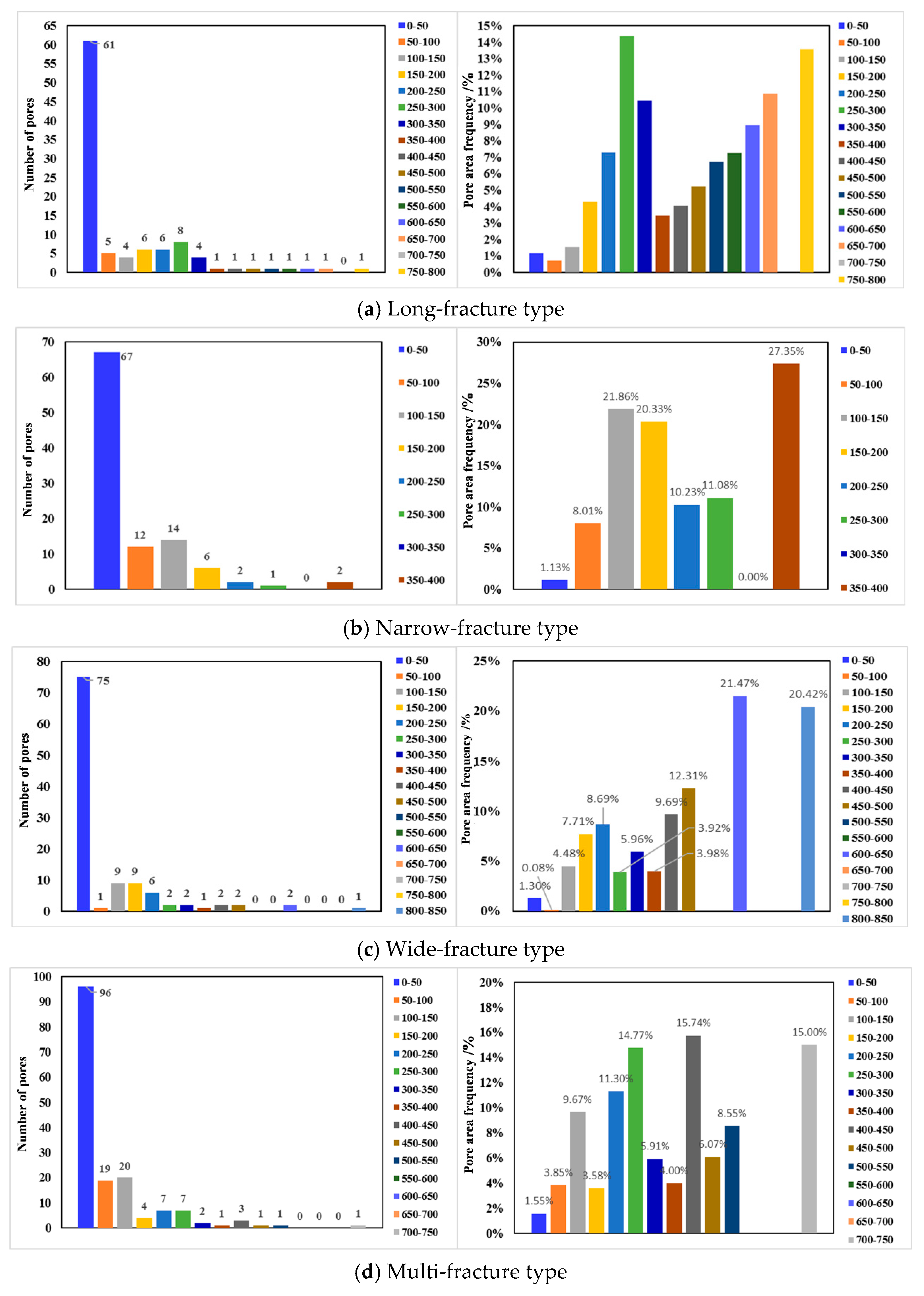
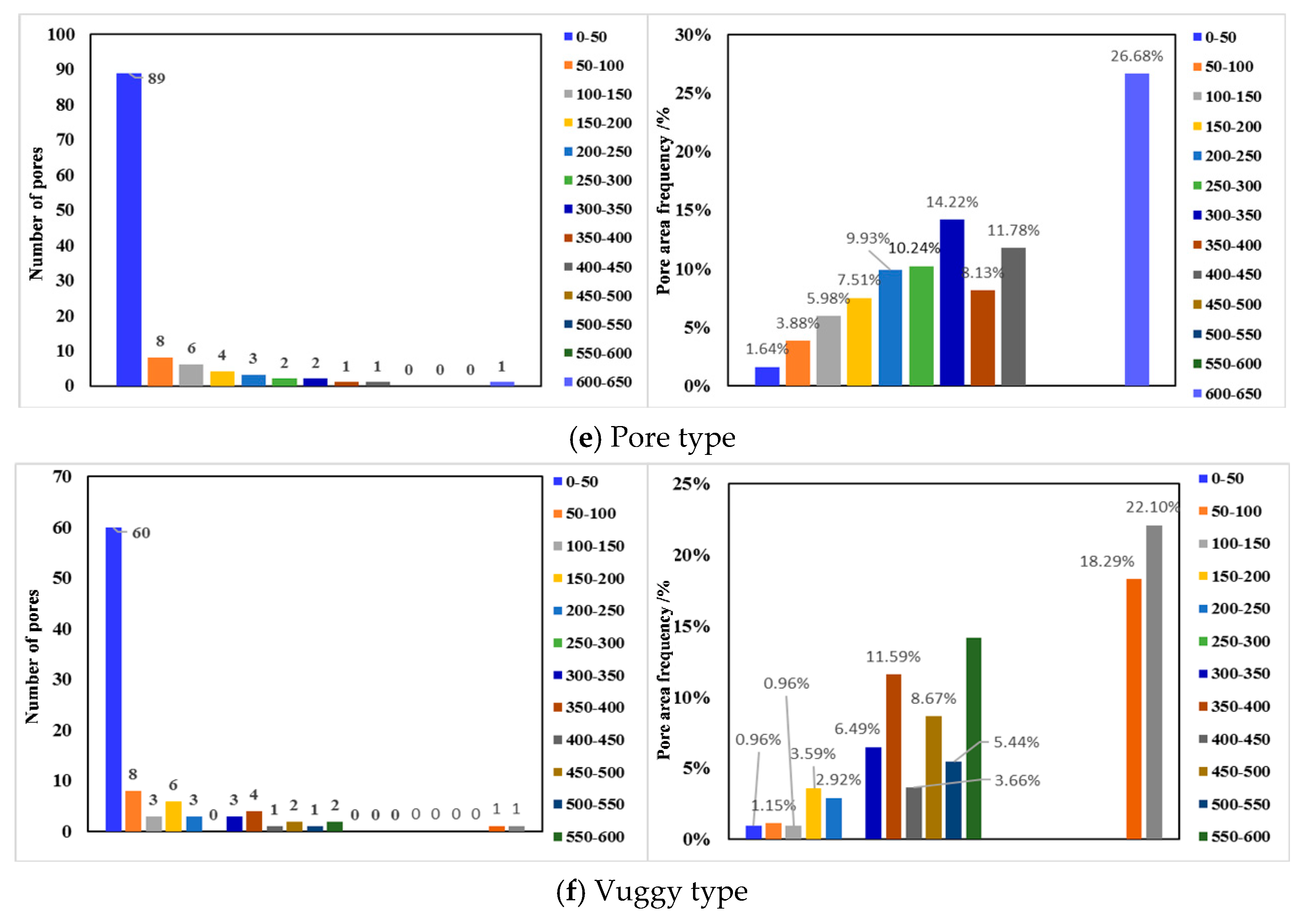
Figure A2.
Cumulative area–frequency curves of pore throats for different model types.
References
- Xiong, J.; He, D. Distribution characteristics and controlling factors of global giant carbonate stratigraphic-lithologic oil and gas fields. Lithol. Reserv. 2022, 34, 187. [Google Scholar] [CrossRef]
- Tong, X.; Zhang, G.; Wang, Z.; Wen, Z.; Tian, Z.; Wang, H.; Ma, F.; Wu, Y. Distribution and potential of global oil and gas resources. Pet. Explor. Dev. 2018, 45, 779–789. [Google Scholar] [CrossRef] [Scilit]
- Burchette, T.P. Carbonate Rocks and Petroleum Reservoirs: A Geological Perspective from the Industry. Spec. Publ. 2012, 370, 17–37. [Google Scholar] [CrossRef] [Scilit]
- Zhao, W.; Shen, A.; Qiao, Z.; Zhang, J.; Ni, X. Theoretical progress in carbonate reservoir and discovery of large marine oil and gas fields in China. China Pet. Explor. 2022, 27, 1–15. [Google Scholar]
- Sun, L.; Li, Y.; Li, B. Classified evaluation methods and waterflood development strategies for carbonate reservoirs in the Middle East. Acta Pet. Sin. 2022, 43, 270–280. [Google Scholar]
- Song, X.; Li, Y. Optimum development options and strategies for water injection development of carbonate reservoirs in the Middle East. Pet. Explor. Dev. 2018, 45, 723–734. [Google Scholar] [CrossRef] [Scilit]
- Li, S. Multi-Scale Research on Microscale Mechanism and Macroscale Performance of Water Flooding in Carbonate Reservoirs. Doctoral Dissertation, China University of Petroleum, Beijing, China, 2022. [Google Scholar]
- Ma, M.; Li, J.; Xu, F.; Yu, F.; Diwu, P.; Jiang, H. Profile control and displacement effect and mechanism of nanomaterials in carbonate reservoirs based on microfluidic experiments. Pet. Geol. Recovery Effic. 2025, 32, 155–169. [Google Scholar] [CrossRef]
- Al-Ibadi, H.; Stephen, K.; Mackay, E. Heterogeneity Effects on Low Salinity Water Flooding. In Proceedings of the SPE Europec, Virtual, 1 December 2020; SPE: Richardson, TX, USA, 2020; p. D011S003R003. [Google Scholar]
- Mosavat, N.; Torabi, F. Micro-Optical Analysis of Carbonated Water Injection in Irregular and Heterogeneous Pore Geometry. Fuel 2016, 175, 191–201. [Google Scholar] [CrossRef] [Scilit]
- Dernaika, M.; Mansour, B.; Al-Jallad, O.; Koronfol, S. Overview of Carbonate Rock Types in the Middle East. In Proceedings of the SPE Middle East Oil and Gas Show and Conference, Manama, Bahrain, 15 March 2019; SPE: Richardson, TX, USA, 2019; p. D042S098R002. [Google Scholar]
- He, J.; Jiang, S.; Guo, C.; Li, C.; Li, J. Study on microscopic residual variation characteristics in carbonate reservoirs based on the pore-scale research. China Offshore Oil Gas 2024, 36, 110–120. [Google Scholar]
- Liu, G.; Zhou, D.; Jiang, H.; Wang, T.; Li, J. Water-out Performance and Pattern of Horizontal Wells for Marine Sandstone Reservoirs in Tarim Basin, NW China. Pet. Explor. Dev. 2018, 45, 136–144. [Google Scholar] [CrossRef] [Scilit]
- Duan, H.; Zhou, C.; Zhang, Q.; Zhang, F. The plays character of the abundant hydrocarbon area in the Middle East and their exploration potential. Earth Sci. Front. 2014, 21, 118–126. [Google Scholar] [CrossRef]
- Liu, X.; Zhu, G.; Xiong, H.; Liu, B.; Dong, Z. Effect of injected water properties on oil displacement effect in Middle East carbonate reservoirs. Pet. Geol. Recovery Effic. 2017, 24, 116–120. [Google Scholar] [CrossRef]
- Hou, J.; Qiu, M.; Lu, N.; Qu, Y.; Li, F.; Meng, X.; Shi, X. Characterization of residual oil microdistribution at pore scale using computerized tomography. Acta Pet. Sin. 2014, 35, 319–325. [Google Scholar]
- Wang, Y.; Wen, G.; Li, J. Experimental Study on Long Core Displacement of Fractured Carbonate Reservoirs in the Gbeibe Oilfield, Syria. Drill. Prod. Technol. 2015, 38, 95–97. [Google Scholar]
- Liu, X.; Zhu, G.; Xiong, H.; Liu, B.; Dong, Z. Effect of pore structure on oil displacement efficiency in middle east carbonate reservoir. Sci. Technol. Eng. 2017, 17, 182–186. [Google Scholar]
- Elsayed, M.; Isah, A.; Hiba, M.; Hassan, A.; Al-Garadi, K.; Mahmoud, M.; El-Husseiny, A.; Radwan, A.E. A Review on the Applications of Nuclear Magnetic Resonance (NMR) in the Oil and Gas Industry: Laboratory and Field-Scale Measurements. J. Pet. Explor. Prod. Technol. 2022, 12, 2747–2784. [Google Scholar] [CrossRef] [Scilit]
- Iglauer, S.; Fernø, M.A.; Shearing, P.; Blunt, M.J. Comparison of Residual Oil Cluster Size Distribution, Morphology and Saturation in Oil-Wet and Water-Wet Sandstone. J. Colloid Interface Sci. 2012, 375, 187–192. [Google Scholar] [CrossRef] [Scilit]
- Zhang, S.; Chen, Y.; Hou, J.; Shi, X. Image processing for CT microscopic coreflooding experiments. Pet. Geol. Oilfield Dev. Daqing 2007, 26, 10–12. [Google Scholar]
- Iglauer, S.; Paluszny, A.; Blunt, M.J. Simultaneous Oil Recovery and Residual Gas Storage: A Pore-Level Analysis Using in Situ X-Ray Micro-Tomography. Fuel 2013, 103, 905–914. [Google Scholar] [CrossRef] [Scilit]
- Zhao, W.; Wu, K.; Jiang, L.; Li, X.; Jia, C.; He, M. Charging and microscopic gas-water occurrence characteristics of tight sandstone gas based on pore network model. Nat. Gas Ind. 2022, 42, 69. [Google Scholar] [CrossRef]
- Blunt, M.J. Flow in Porous Media—Pore-Network Models and Multiphase Flow. Curr. Opin. Colloid Interface Sci. 2001, 6, 197–207. [Google Scholar] [CrossRef] [Scilit]
- Zhao, X.; Shi, B.; Wang, X.; Zhao, J.; Jiang, F.; Qin, C.-Z. Modeling of Permeability and Formation Factor of Carbonate Digital Rocks: Dual-Pore-Network and Pore-Network-Continuum Models. Transp. Porous Media 2025, 152, 37. [Google Scholar] [CrossRef] [Scilit]
- Freire-Gormaly, M.; Ellis, J.S.; MacLean, H.L.; Bazylak, A. Pore Structure Characterization of Indiana Limestone and Pink Dolomite from Pore Network Reconstructions. Oil Gas Sci. Technol.–Rev. IFP Energ. Nouv. 2016, 71, 33. [Google Scholar] [CrossRef] [Scilit]
- Zhang, Y.; Lin, Q.; Raeini, A.Q.; Onaka, Y.; Iwama, H.; Takabayashi, K.; Blunt, M.J.; Bijeljic, B. Pore-Scale Imaging of Asphaltene Deposition with Permeability Reduction and Wettability Alteration. Fuel 2022, 316, 123202. [Google Scholar] [CrossRef] [Scilit]
- Wang, J.; Dong, M.; Asghari, K. Effect of Oil Viscosity on Heavy-Oil/Water Relative Permeability Curves. SPE J. 2006, 11, 479–487. [Google Scholar]
- Sayegh, S.G.; Fisher, D.B. Enhanced Oil Recovery by CO2 Flooding in Homogeneous and Heterogeneous 2D Micromodels. J. Can. Pet. Technol. 2009, 48, 30–36. [Google Scholar] [CrossRef] [Scilit]
- Wang, Z.; LI, X. Experiments on phase change of gas condensate in microcosmic porous model. J. Eng. Thermophys. 2006, 27, 251–254. [Google Scholar]
- Jamaloei, B.Y.; Kharrat, R.; Asghari, K. Pore-Scale Events in Drainage Process through Porous Media under High- and Low-Interfacial Tension Flow Conditions. J. Pet. Sci. Eng. 2010, 75, 223–233. [Google Scholar] [CrossRef] [Scilit]
- Li, Y.; Zhou, B.; Ren, D.; Peng, F.; Wang, G.; Li, W.; Chen, F.; Long, W. Multi-Scale Digital Rock-Based Sensitivity Evaluation and Optimization of Stimulation Strategies in Tight Sandstone Reservoirs. J. Pet. Explor. Prod. Technol. 2025, 15, 155. [Google Scholar] [CrossRef] [Scilit]
- Wang, C.; Jiang, H.; Mi, L.; Li, J.; Zhao, Y.; Liu, C. Researching Methods of The Flow Characteristics of The Dynamic Remained Oils by The Pore Sizes. Pet. Geol. Oilfield Dev. Daqing 2016, 35, 74–78. [Google Scholar] [CrossRef]
- Wang, C.; Jiang, H.; Xu, F.; Yu, F.; Zhao, Y.; Li, J. Study of the variation of pore-scale residual oil flow based on a micro fluidic model. Pet. Sci. Bull. 2020, 5, 376. [Google Scholar] [CrossRef]
- Jia, P.; Li, Y.; Guo, H.; Feng, H.; Cheng, L. Experimental Study of Pore-Scale Water Flooding with Phase Change Based on a Microfluidic Model in Volatile Carbonate Reservoirs. Appl. Sci. 2023, 13, 6642. [Google Scholar] [CrossRef] [Scilit]

Disclaimer/Publisher’s Note: The statements, opinions and data contained in all publications are solely those of the individual author(s) and contributor(s) and not of MDPI and/or the editor(s). MDPI and/or the editor(s) disclaim responsibility for any injury to people or property resulting from any ideas, methods, instructions or products referred to in the content. |
© 2026 by the authors. Licensee MDPI, Basel, Switzerland. This article is an open access article distributed under the terms and conditions of the Creative Commons Attribution (CC BY) license.