Graph Neural Networks and Bi-Level Optimization for Equitable Electric Vehicle Charging Infrastructure Planning

Abstract
1. Introduction and Literature Review
Literature Review and Positioning
2. Materials and Methods
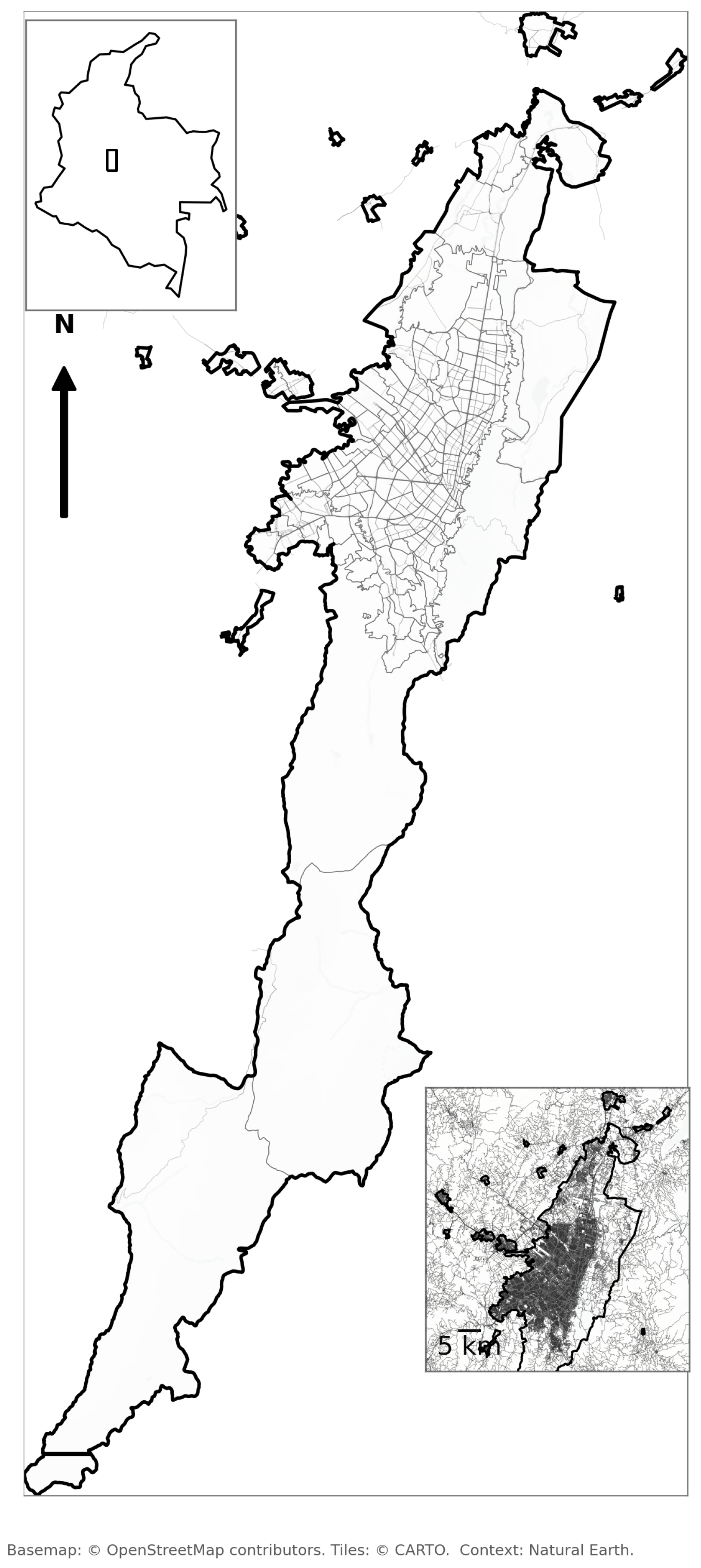
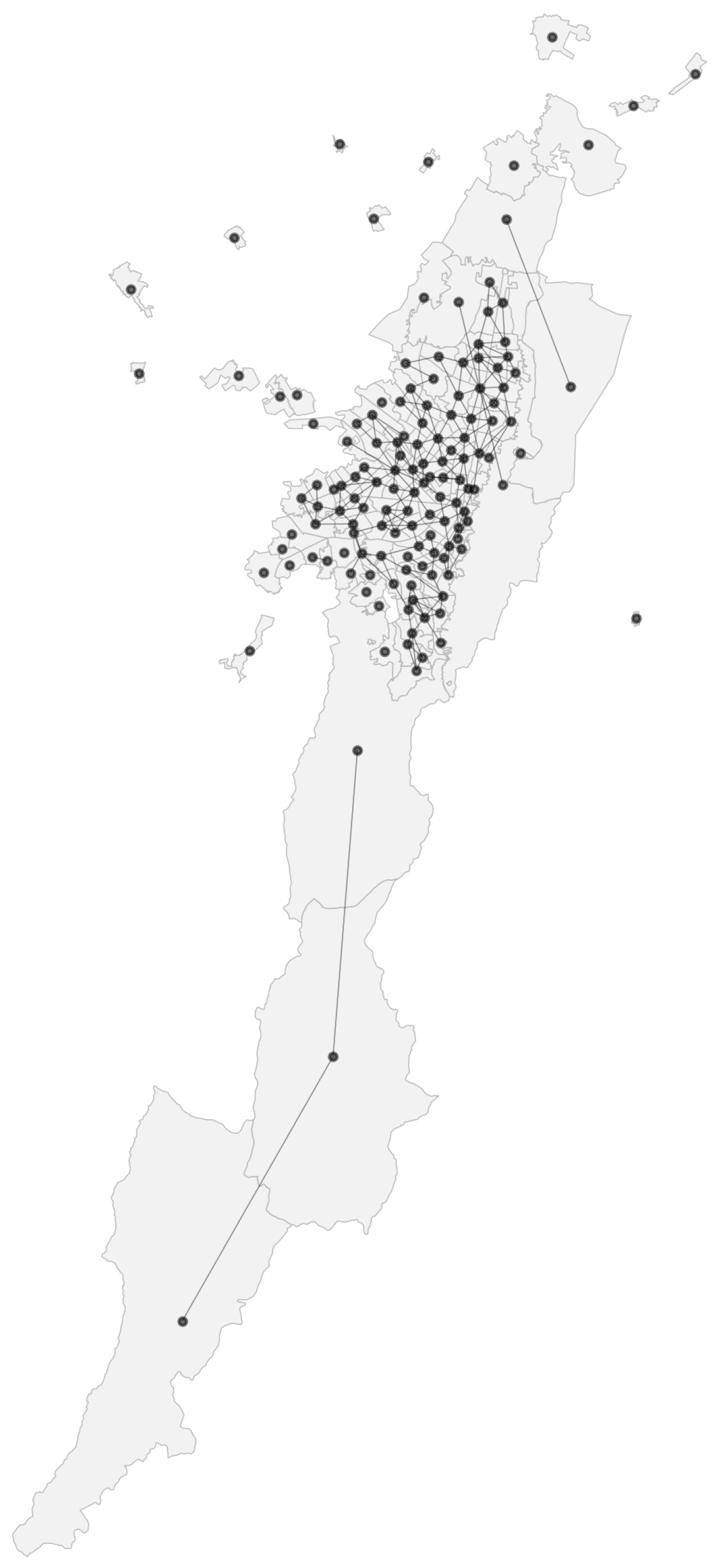
2.1. Study Area and Spatial Units
2.2. Data Sources
- Household Travel Survey EM-2023: Bogotá’s 2023 Mobility Survey (Spanish: Encuesta de Movilidad, EM-2023) provides detailed information on daily trips for approximately 12,500 households (around 45,000 individuals). Trips are geocoded to UTAMs and aggregated to obtain hourly origin and destination flows, which are subsequently normalized by population. EM-2023 also includes socioeconomic variables that are merged to the UTAM layer (population, income, employment, land-use indicators).
- ANDEMOS Vehicle Registry: Seven years of electric vehicle registration data from ANDEMOS (2017–2023) are used to characterize the temporal growth and spatial distribution of EV adoption in Bogotá. These data inform the EV fleet forecast and the calibration of EVI-Pro Lite (Section 2.3).
- GIS and Auxiliary Data: The UTAM 2023 shapefile (EM-2023 zonification, SDM observatory portal) provides the spatial boundaries and geometries required to build the urban graph, compute distances, and derive accessibility metrics [62]. Census, cadastral, and tax records are used to enrich UTAM attributes with demographic and socioeconomic variables.
| Source | Description | Years | Spatial Unit | Main Variables Used |
|---|---|---|---|---|
| EM-2023 Household Travel Survey | Daily trips, purposes and modes; socioeconomic variables | 2023 | UTAM | Origin/destination flows by hour, population, income, employment, land use |
| ANDEMOS EV Registry | New EV registrations (BEV, PHEV) by municipality | 2017–2023 | Municipality/ locality | Annual EV counts, technology share, spatial distribution |
| UTAM GIS Layer | Official UTAM 2023 polygons (Bogotá) | 2023 | UTAM | Zone geometry, area, centroid, adjacency, distances |
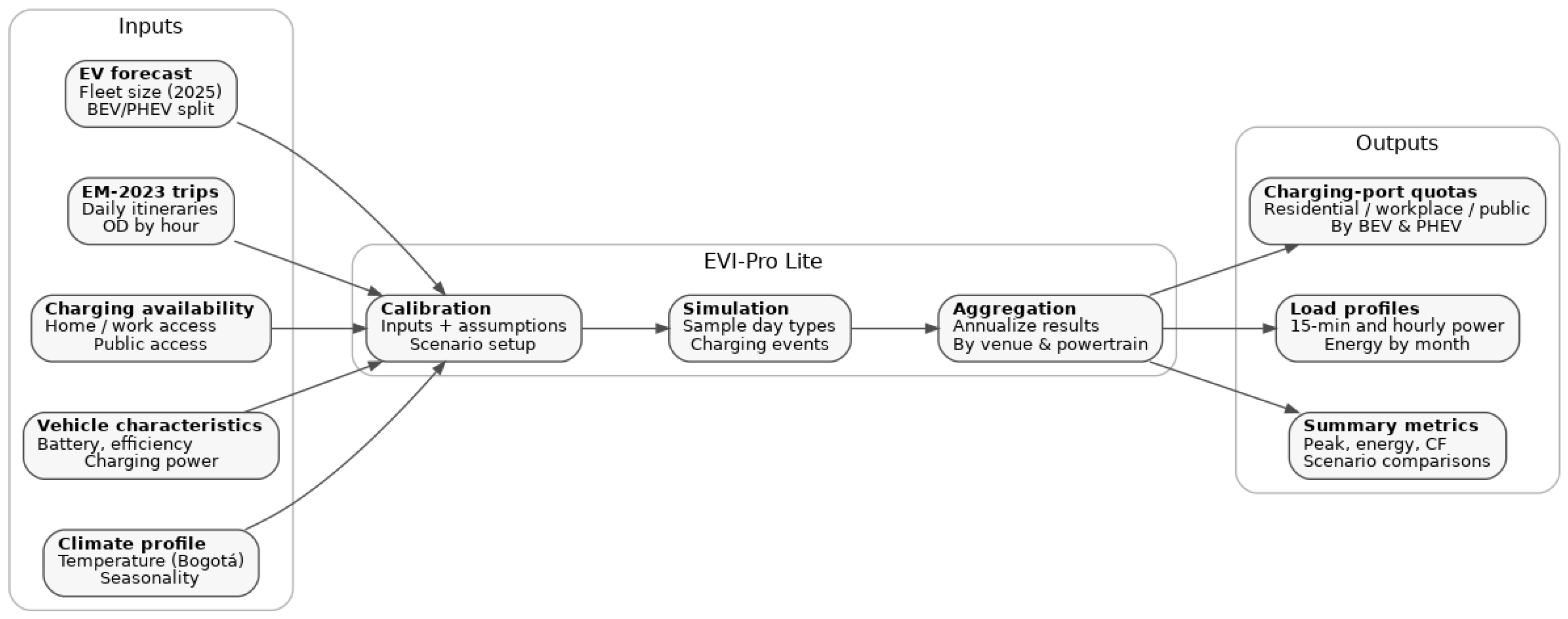
2.3. EV Infrastructure Demand Estimation with EVI-Pro Lite
- An EV fleet forecast of 5200 vehicles by 2025, with a 60% BEV and 40% PHEV split;
- Daily travel patterns from EM-2023, including trip start and end times, trip durations and distances, and origin–destination UTAMs;
- Charging availability assumptions: 70% of vehicles with residential charging access, 40% with workplace charging access, and universal behavioral access to public charging;
- Representative battery capacities, efficiencies, and state-of-charge management strategies for the fleet;
- Seasonal temperature profiles for Bogotá (8–20 °C) to reflect climate impacts on energy consumption.
Assumption Transparency and Sensitivity Protocol
- Fleet-Size Scenarios: around the baseline forecast of 5200 vehicles;
- Powertrain-Mix Scenarios: BEV share varied from 50% to 70% (with PHEV share adjusted complementarily);
- Access Scenarios: Residential access varied from 60% to 80%, and workplace access from 30% to 50%.
2.4. Graph Neural Network Model for Charging Priority
2.4.1. Graph Representation of Urban Structure
2.4.2. Feature Construction from Survey Flows
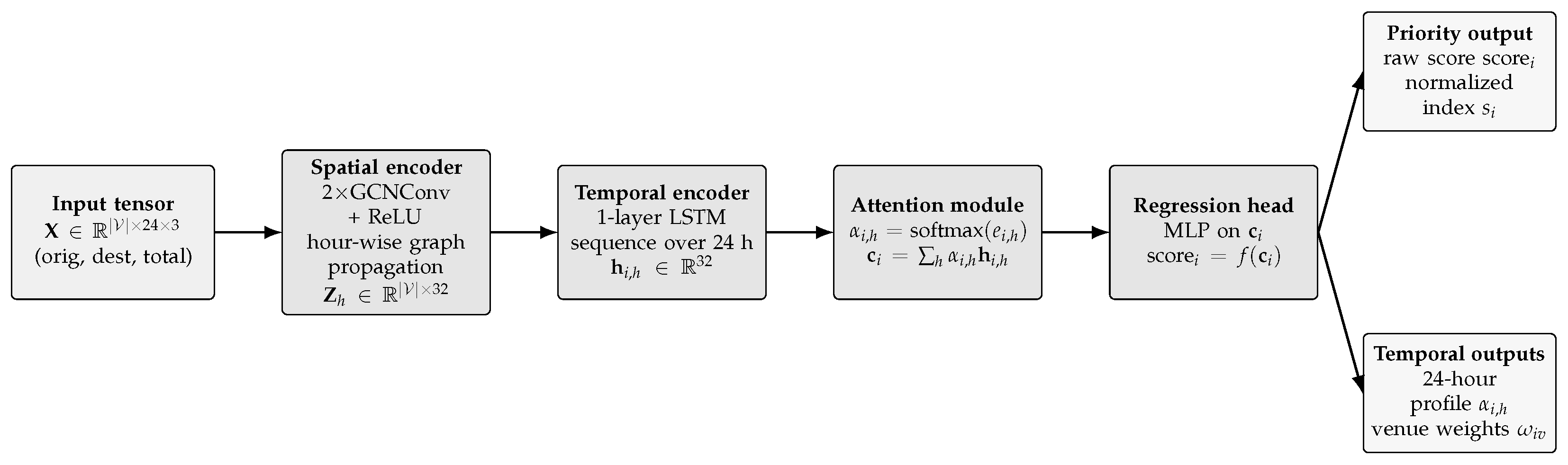
2.4.3. Spatiotemporal Graph Neural Network (ST-GNN) Architecture
- I.
- Spatial Feature Extraction (GCN)
- II.
- Temporal Sequence Modeling (LSTM)
- III.
- Temporal Attention and Scalar Regression
2.4.4. Priority and Venue-Weight Extraction
- I.
- Spatial Priority Normalization
- II.
- Temporal Aggregation into Venue Windows
- III.
- Venue-Weight Construction
2.4.5. Training Procedure
2.4.6. Notation Summary
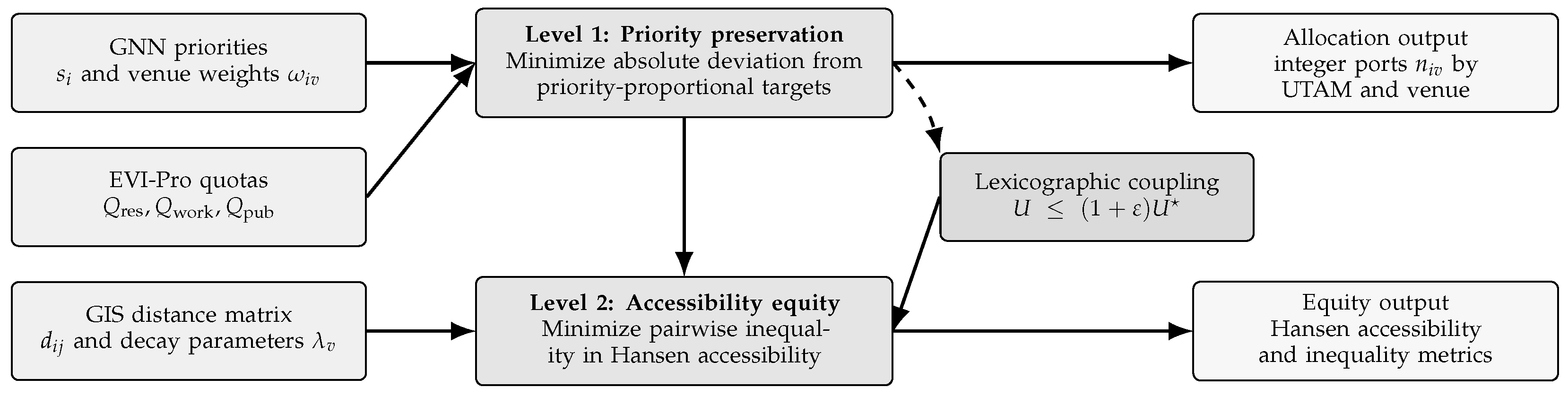
2.5. Bi-Level Lexicographic Optimization Model
- Hard Venue-Specific Quotas:
- Level 1: Priority-Preserving Allocation:
- Level 2: Equity Improvement through Hansen Accessibility:
- Lexicographic Coupling:
- Implementation:
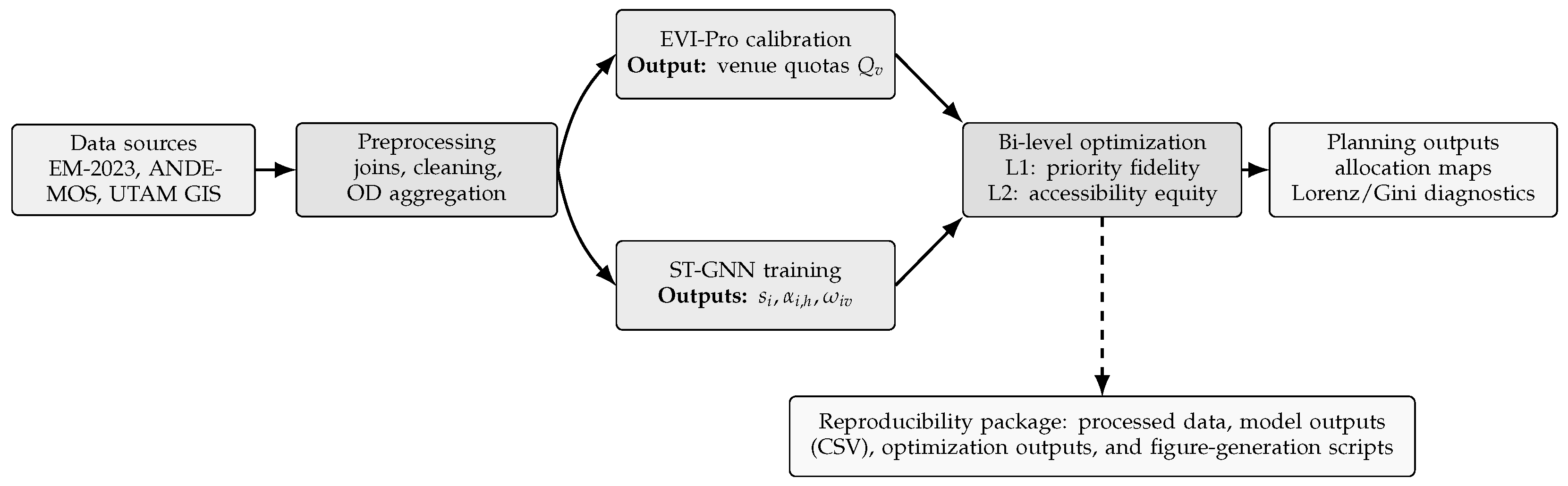
2.6. Implementation Workflow and Reproducibility
3. Results and Discussions
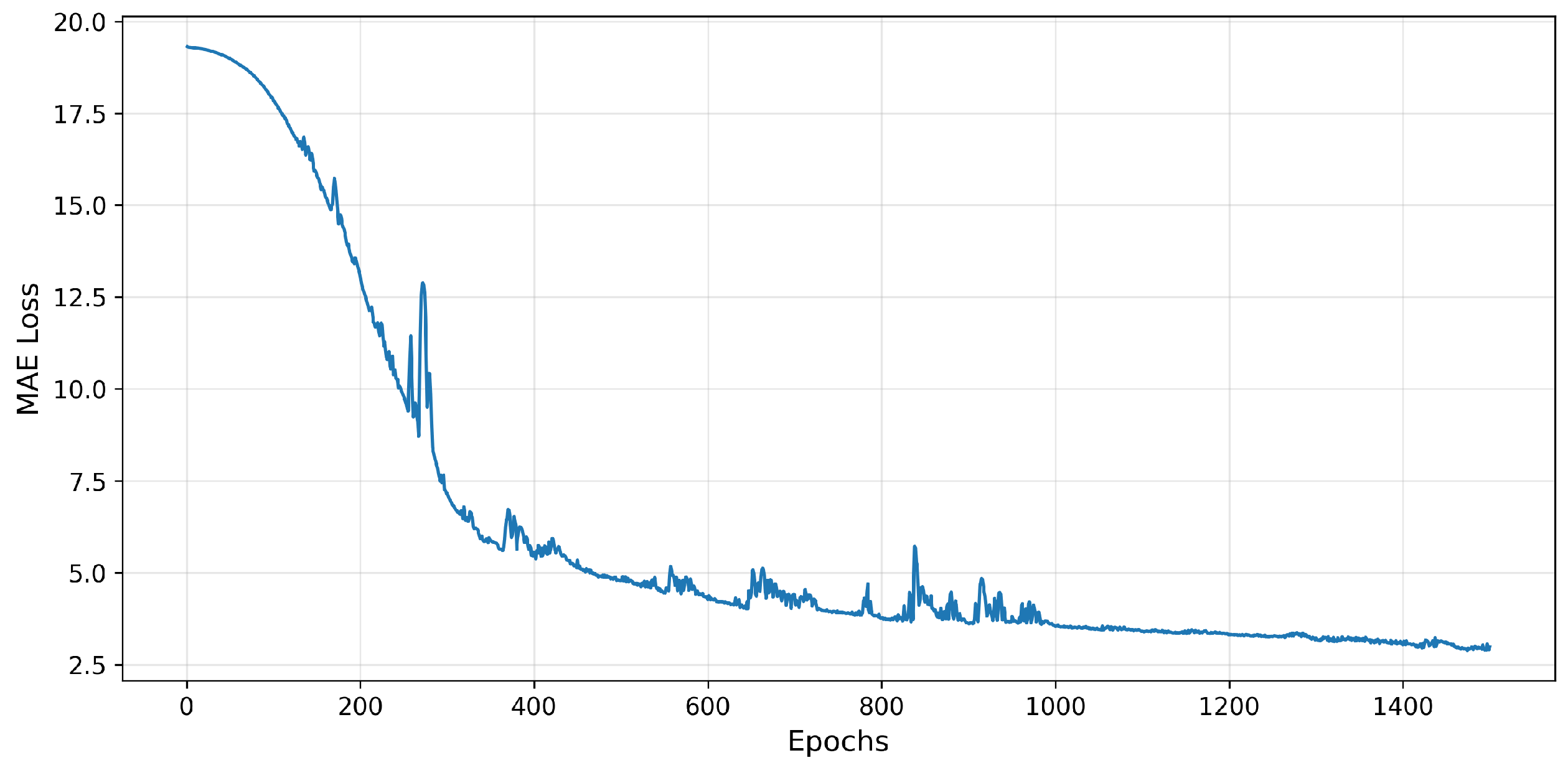
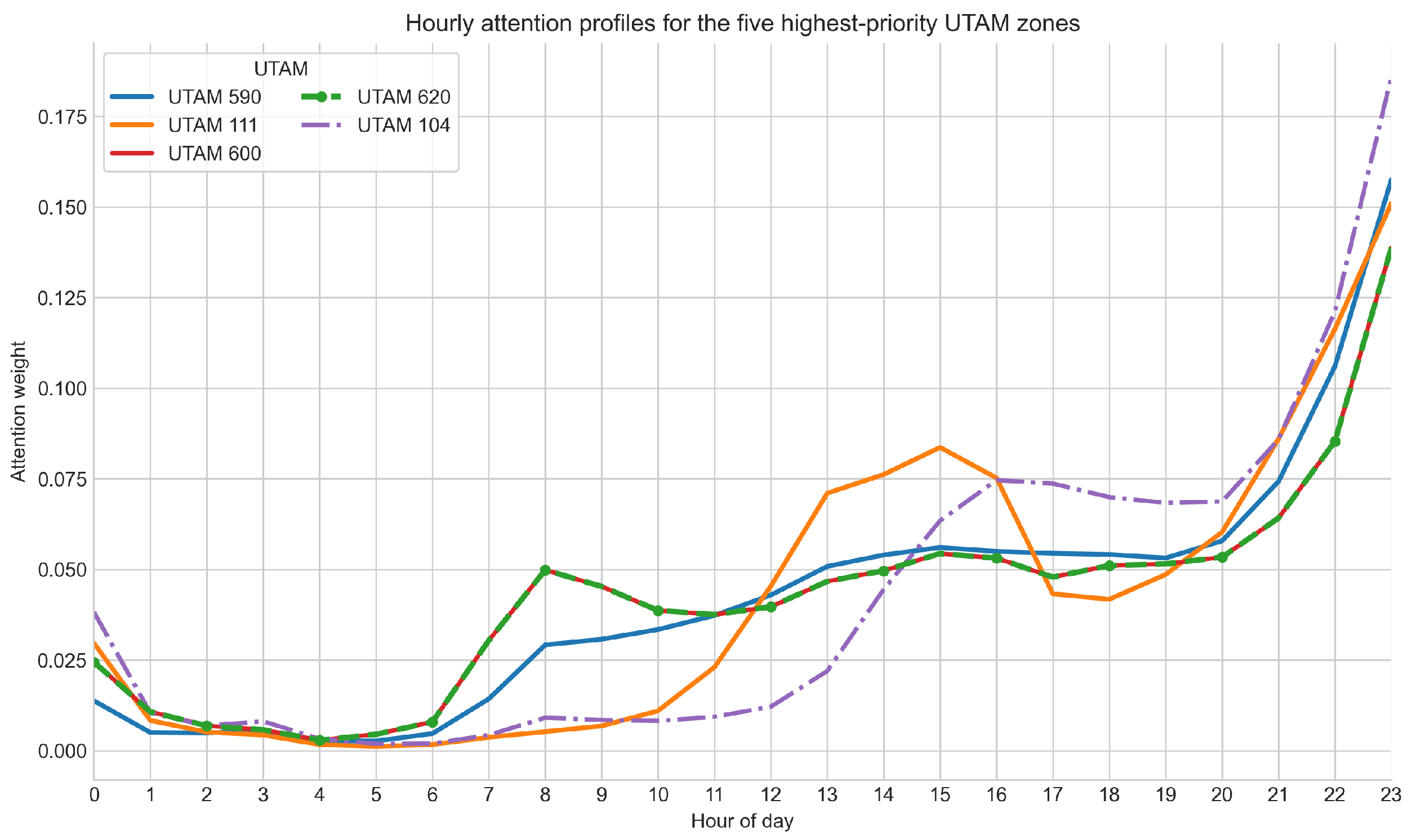
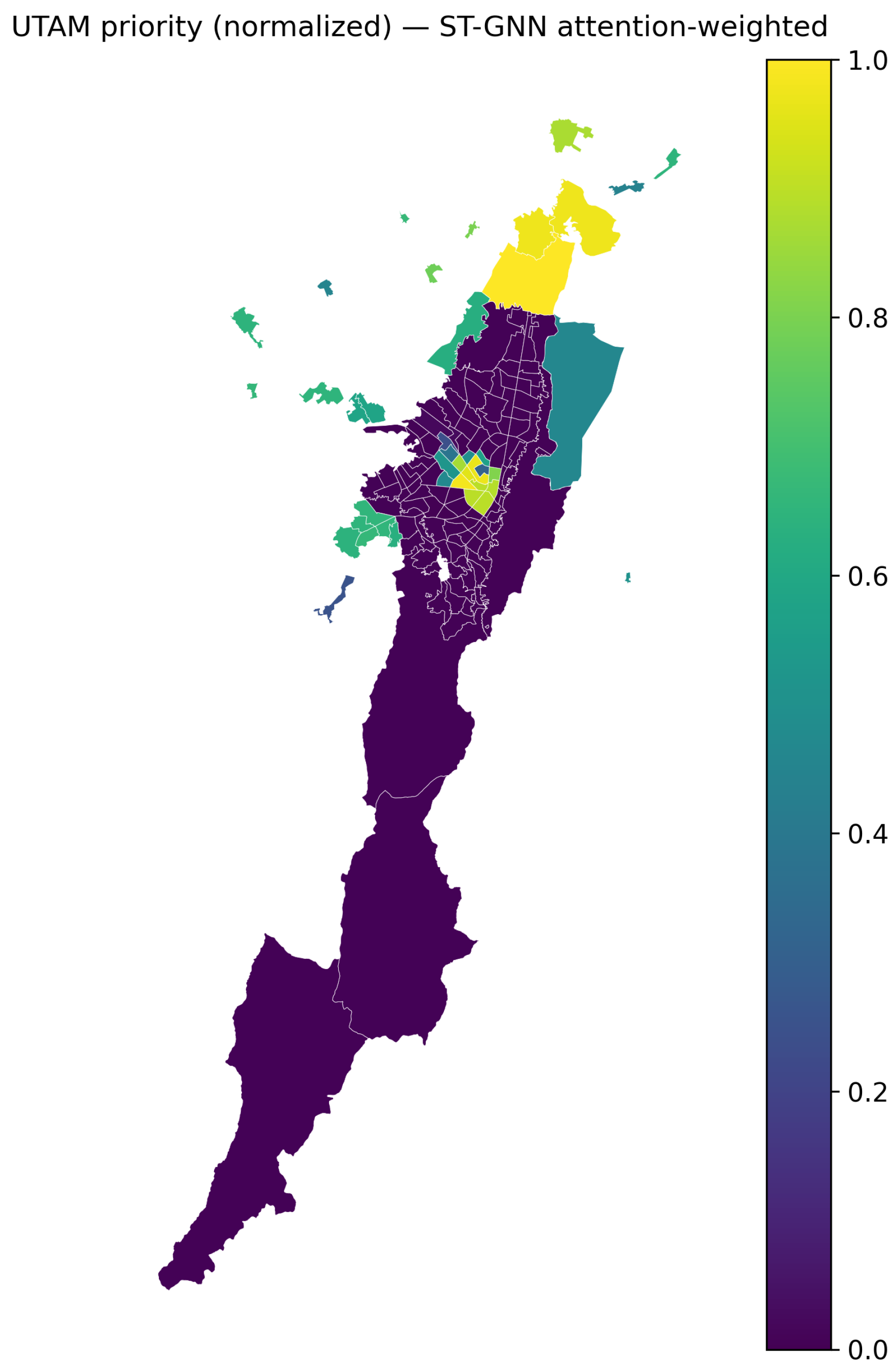
3.1. ST-GNN Training and Priority Extraction Results
3.2. Bi-Level Allocation and Equity Outcomes
3.3. Spatial Allocation Patterns
3.4. Integrated Discussion
3.5. Minimum Data Requirements and Transferability
4. Conclusions
Supplementary Materials
Author Contributions
Funding
Data Availability Statement
Acknowledgments
Conflicts of Interest
Abbreviations
| BEV | Battery Electric Vehicle |
| PHEV | Plug-in Hybrid Electric Vehicle |
| GNN | Graph Neural Network |
| GCN | Graph Convolutional Network |
| LSTM | Long Short-Term Memory |
| MILP | Mixed-Integer Linear Programming |
| UTAM | Transport and Mobility Analysis Unit |
| EM-2023 | Bogotá 2023 Mobility Survey (Encuesta de Movilidad 2023) |
| ANDEMOS | National Association for Sustainable Mobility |
| (Asociación Nacional de Movilidad Sostenible) | |
| EVI-Pro | Electric Vehicle Infrastructure Projection Tool |
References
- International Energy Agency (IEA). Global EV Outlook 2023; IEA: Paris, France, 2023; Available online: https://www.iea.org/reports/global-ev-outlook-2023 (accessed on 10 March 2026).
- International Energy Agency (IEA). Global EV Outlook 2024; IEA: Paris, France, 2024; Available online: https://www.iea.org/reports/global-ev-outlook-2024 (accessed on 10 March 2026).
- International Energy Agency (IEA). Global EV Outlook 2025; IEA: Paris, France, 2025; Available online: https://www.iea.org/reports/global-ev-outlook-2025 (accessed on 10 March 2026).
- Lucas, K.; Mattioli, G.; Verlinghieri, E.; Guzman, A. Transport poverty and its adverse social consequences. Proc. Inst. Civ. Eng. Transp. 2016, 169, 353–365. [Google Scholar] [CrossRef]
- Carlton, G.J.; Sultana, S. Electric vehicle charging equity and accessibility: A comprehensive United States policy analysis. Transp. Res. Part D Transp. Environ. 2024, 129, 104123. [Google Scholar] [CrossRef]
- Canepa, K.; Hardman, S.; Tal, G. An early look at plug-in electric vehicle adoption in disadvantaged communities in California. Transp. Policy 2019, 78, 19–30. [Google Scholar] [CrossRef]
- Yu, Q.; Que, T.; Cushing, L.J.; Pierce, G.; Shen, K.; Kejriwal, M.; Yao, Y.; Zhu, Y. Equity and reliability of public electric vehicle charging stations in the United States. Nat. Commun. 2025, 16, 5291. [Google Scholar] [CrossRef]
- Delmelle, E.C.; Casas, I. Evaluating the spatial equity of bus rapid transit-based accessibility patterns in a developing country: The case of Cali, Colombia. Transp. Policy 2012, 20, 36–46. [Google Scholar] [CrossRef]
- District Secretariat of Mobility (Secretaría Distrital de Movilidad, SDM). Sustainable and Safe Mobility Plan (Plan de Movilidad Sostenible y Segura); District Secretariat of Mobility: Bogotá, D.C., Colombia, 2025. Available online: https://www.movilidadbogota.gov.co/web/plan_de_movilidad_sostenible_y_segura (accessed on 10 March 2026).
- ReVelle, C.S.; Eiselt, H.A. Location analysis: A synthesis and survey. Eur. J. Oper. Res. 2005, 165, 1–19. [Google Scholar] [CrossRef]
- Zhang, B.; Zhao, M.; Hu, X. Location planning of electric vehicle charging station with users’ preferences and waiting time: Multi-objective bi-level programming model and HNSGA-II algorithm. Int. J. Prod. Res. 2023, 61, 1394–1423. [Google Scholar] [CrossRef]
- Qiao, D.; Wang, G.; Xu, M. Fast-charging station location problem: A two-phase approach with mathematical program with equilibrium constraints considering charging choice behaviour. Sustain. Cities Soc. 2023, 96, 104678. [Google Scholar] [CrossRef]
- Zhou, G.; Dong, Q.; Zhao, Y.; Wang, H.; Jian, L.; Jia, Y. Bilevel optimization approach to fast charging station planning in electrified transportation networks. Appl. Energy 2023, 350, 121718. [Google Scholar] [CrossRef]
- Li, H.; He, Y.; Fu, W.; Li, X. Bi-level planning of electric vehicle charging station in coupled distribution-transportation networks. Electr. Power Syst. Res. 2024, 232, 110442. [Google Scholar] [CrossRef]
- Gan, H.; Ruan, W.; Wang, M.; Pan, Y.; Miu, H.; Yuan, X. Bi-Level Planning of Electric Vehicle Charging Stations Considering Spatial–Temporal Distribution Characteristics of Charging Loads in Uncertain Environments. Energies 2024, 17, 3004. [Google Scholar] [CrossRef]
- Sun, Z.; He, Y.; Wu, H.; Wu, A.Y. Bi-level planning of electric vehicle charging stations considering charging demand: A Nash bargaining game approach. Energy 2025, 332, 137137. [Google Scholar] [CrossRef]
- Varghese, A.M.; Menon, N.; Ermagun, A. Equitable distribution of electric vehicle charging infrastructure: A systematic review. Renew. Sustain. Energy Rev. 2024, 206, 114825. [Google Scholar] [CrossRef]
- Hopkins, E.; Potoglou, D.; Orford, S.; Cipcigan, L. Can the equitable roll out of electric vehicle charging infrastructure be achieved? Renew. Sustain. Energy Rev. 2023, 182, 113398. [Google Scholar] [CrossRef]
- Jiao, J.; Choi, S.J.; Nguyen, C. Toward an equitable transportation electrification plan: Measuring public electric vehicle charging station access disparities in Austin, Texas. PLoS ONE 2024, 19, e0309302. [Google Scholar] [CrossRef]
- Lee, J.H.; Chakraborty, D.; Hardman, S.J.; Tal, G. Exploring electric vehicle charging patterns: Mixed usage of charging infrastructure. Transp. Res. Part D Transp. Environ. 2020, 79, 102249. [Google Scholar] [CrossRef]
- Wood, E. Evi-Pro Lite API. Dataset. United States. 2022. Available online: https://www.osti.gov/biblio/1855624 (accessed on 10 March 2026).
- Scarselli, F.; Gori, M.; Tsoi, A.C.; Hagenbuchner, M.; Monfardini, G. The graph neural network model. IEEE Trans. Neural Netw. 2009, 20, 61–80. [Google Scholar] [CrossRef]
- Kipf, T.N.; Welling, M. Semi-supervised classification with graph convolutional networks. arXiv 2016, arXiv:1609.02907. [Google Scholar] [CrossRef]
- Hochreiter, S.; Schmidhuber, J. Long short-term memory. Neural Comput. 1997, 9, 1735–1780. [Google Scholar] [CrossRef] [PubMed]
- Vaswani, A.; Shazeer, N.; Parmar, N.; Uszkoreit, J.; Jones, L.; Gomez, A.N.; Kaiser, Ł.; Polosukhin, I. Attention is all you need. arXiv 2017, arXiv:1706.03762. [Google Scholar] [CrossRef]
- Bahdanau, D.; Cho, K.; Bengio, Y. Neural machine translation by jointly learning to align and translate. arXiv 2014, arXiv:1409.0473. [Google Scholar] [CrossRef]
- Yilmaz, M.; Krein, P.T. Review of battery charger topologies, charging power levels, and infrastructure for plug-in electric and hybrid vehicles. IEEE Trans. Power Electron. 2013, 28, 2151–2169. [Google Scholar] [CrossRef]
- Mwasilu, F.; Justo, J.J.; Kim, E.-K.; Do, T.D.; Jung, J.-W. Electric vehicles and smart grid interaction: A review on vehicle-to-grid and renewable energy sources integration. Renew. Sustain. Energy Rev. 2014, 34, 501–516. [Google Scholar] [CrossRef]
- Hardman, S.; Jenn, A.; Tal, G.; Axsen, J.; Beard, G.; Daina, N.; Figenbaum, E.; Jakobsson, N.; Jochem, P.E.P.; Kinnear, N. A review of consumer preferences of and interactions with electric vehicle charging infrastructure. Transp. Res. Part D Transp. Environ. 2018, 62, 508–523. [Google Scholar] [CrossRef]
- Neaimeh, M.; Salisbury, S.D.; Hill, G.A.; Blythe, P.T.; Scoffield, D.R.; Francfort, J.E. Analysing the usage and evidencing the importance of fast chargers for the adoption of battery electric vehicles. Energy Policy 2017, 108, 474–486. [Google Scholar] [CrossRef]
- Noel, L.; Zarazua de Rubens, G.; Sovacool, B.K.; Kester, J. Fear and loathing of electric vehicles: The reactionary rhetoric of range anxiety. Energy Res. Soc. Sci. 2019, 48, 96–107. [Google Scholar] [CrossRef]
- Frade, I.; Ribeiro, A.; Gonçalves, G.; Antunes, A.P. Optimal location of charging stations for electric vehicles in a neighborhood in Lisbon, Portugal. Transp. Res. Rec. 2011, 2252, 91–98. [Google Scholar] [CrossRef]
- He, F.; Wu, D.; Yin, Y.; Guan, Y. Optimal deployment of public charging stations for plug-in hybrid electric vehicles. Transp. Res. Part B Methodol. 2013, 47, 87–101. [Google Scholar] [CrossRef]
- Dong, J.; Liu, C.; Lin, Z. Charging infrastructure planning for promoting battery electric vehicles: An activity-based approach using multiday travel data. Transp. Res. Part C Emerg. Technol. 2014, 38, 44–55. [Google Scholar] [CrossRef]
- Guerrero-Silva, J.A.; Romero-Gelvez, J.I.; Aristizábal, A.J.; Zapata, S. Optimization and trends in EV charging infrastructure: A PCA-based systematic review. World Electr. Veh. J. 2025, 16, 345. [Google Scholar] [CrossRef]
- Xylia, M.; Olsson, E.; Macura, B.; Nykvist, B. Estimating charging infrastructure demand for electric vehicles: A systematic review. Energy Strategy Rev. 2025, 59, 101753. [Google Scholar] [CrossRef]
- Wang, J.; Kaushik, H.D.; Jacob, R.A.; Zhang, J. Spatiotemporal planning of electric vehicle charging infrastructure: Demand estimation and grid-aware optimization under uncertainty. iScience 2025, 28, 113368. [Google Scholar] [CrossRef]
- Wang, X.; Jiang, J.; Zhou, Y.; Wang, X. Integrated infrastructure planning of charging and electricity generation. Transp. Res. Part Transp. Environ. 2023, 122, 103807. [Google Scholar] [CrossRef]
- Wang, S.; Zhuge, C.; Shao, C.; Wang, P.; Yang, X.; Wang, S. Short-term electric vehicle charging demand prediction: A deep learning approach. Appl. Energy 2023, 340, 121032. [Google Scholar] [CrossRef]
- Wang, S.; Chen, A.; Wang, P.; Zhuge, C. Predicting electric vehicle charging demand using a heterogeneous spatio-temporal graph convolutional network. Transp. Res. Part C Emerg. Technol. 2023, 153, 104205. [Google Scholar] [CrossRef]
- Çavuş, M.; Ayan, H.; Dissanayake, D.; Sharma, A.; Deb, S.; Bell, M. Forecasting electric vehicle charging demand in smart cities using hybrid deep learning of regional spatial behaviours. Energies 2025, 18, 3425. [Google Scholar] [CrossRef]
- Voinea, G.-D.; Gîrbacia, F.; Duguleană, M.; Postelnicu, C.-C. Planning future EV charging infrastructure by forecasting spatio-temporal adoption trends across heterogeneous user segments. Information 2025, 16, 933. [Google Scholar] [CrossRef]
- Alaraj, M.; Radi, M.; Alsisi, E.; Majdalawieh, M.; Darwish, M. Machine learning-based electric vehicle charging demand forecasting: A systematized literature review. Energies 2025, 18, 4779. [Google Scholar] [CrossRef]
- Hansen, W.G. How accessibility shapes land use. J. Am. Inst. Plann. 1959, 25, 73–76. [Google Scholar] [CrossRef]
- Geurs, K.T.; van Wee, B. Accessibility evaluation of land-use and transport strategies: Review and research directions. J. Transp. Geogr. 2004, 12, 127–140. [Google Scholar] [CrossRef]
- Chen, B.; Moore, A.; Jia, B.; Zhang, K.; Cao, M. Equity considerations in public electric vehicle charging: A review. World Electr. Veh. J. 2025, 16, 553. [Google Scholar] [CrossRef]
- Lezcano, C.M.S.; Harper, C.D.; Nock, D. Siting for demand and equity: Optimizing level 2 electric vehicle charger placement. J. Transp. Geogr. 2025, 128, 104369. [Google Scholar] [CrossRef]
- Soltani Mandolakani, F.; Singleton, P.A. Electric vehicle charging infrastructure deployment: A discussion of equity and justice theories and accessibility measurement. Transp. Res. Interdiscip. Perspect. 2024, 24, 101072. [Google Scholar] [CrossRef]
- Wu, Z.; Pan, S.; Chen, F.; Long, G.; Zhang, C.; Yu, P.S. A comprehensive survey on graph neural networks. IEEE Trans. Neural Netw. Learn. Syst. 2021, 32, 4–24. [Google Scholar] [CrossRef]
- van den Berg, R.; Kipf, T.N.; Welling, M. Graph convolutional matrix completion. arXiv 2017, arXiv:1706.02263. [Google Scholar] [CrossRef]
- Li, Y.; Yu, R.; Shahabi, C.; Liu, Y. Diffusion convolutional recurrent neural network: Data-driven traffic forecasting. In Proceedings of the International Conference on Learning Representations (ICLR), Vancouver, BC, Canada, 30 April–3 May 2018; Available online: https://openreview.net/forum?id=SJiHXGWAZ (accessed on 10 March 2026).
- Yu, B.; Yin, H.; Zhu, Z. Spatio-Temporal Graph Convolutional Networks: A Deep Learning Framework for Traffic Forecasting. In Proceedings of the Twenty-Seventh International Joint Conference on Artificial Intelligence, Stockholm, Sweden, 13–19 July 2018; pp. 3634–3640. [Google Scholar] [CrossRef]
- Wu, Z.; Pan, S.; Long, G.; Jiang, J.; Zhang, C. Graph WaveNet for Deep Spatial-Temporal Graph Modeling. In Proceedings of the Twenty-Eighth International Joint Conference on Artificial Intelligence, Macao, China, 10–16 August 2019; pp. 1907–1913. [Google Scholar] [CrossRef]
- Jiang, W.; Luo, J. Graph neural network for traffic forecasting: A survey. Expert Syst. Appl. 2022, 207, 117921. [Google Scholar] [CrossRef]
- Jiang, W.; Luo, J.; He, M.; Gu, W. Graph neural network for traffic forecasting: The research progress. ISPRS Int. J. Geo-Inf. 2023, 12, 100. [Google Scholar] [CrossRef]
- Rahmani, S.; Baghbani, A.; Bouguila, N.; Patterson, Z. Graph neural networks for intelligent transportation systems: A survey. IEEE Trans. Intell. Transp. Syst. 2023, 24, 8846–8885. [Google Scholar] [CrossRef]
- Xue, R.; Zhang, J.; Li, Y.; Wang, H. Dynamic spatio-temporal networks with graph neural architectures for traffic forecasting. Data Sci. Transp. 2025, 7, 10. [Google Scholar] [CrossRef]
- Narayanan, S.; Makarov, N.; Antoniou, C. Graph neural networks as strategic transport modelling alternative–A proof of concept for a surrogate. IET Intell. Transp. Syst. 2024, 18, 2059–2077. [Google Scholar] [CrossRef]
- Wang, S.; Li, Y.; Shao, C.; Wang, P.; Wang, A.; Zhuge, C. An adaptive spatio-temporal graph recurrent network for short-term electric vehicle charging demand prediction. Appl. Energy 2025, 383, 125320. [Google Scholar] [CrossRef]
- Chen, Y.; Tang, Z.; Cui, Y.; Rao, W.; Li, Y. Electric Vehicle Charging Demand Prediction Model Based on Spatiotemporal Attention Mechanism. Energies 2025, 18, 687. [Google Scholar] [CrossRef]
- Jiang, D.; Gong, X.; Wei, Y.; Peng, B.; Xu, Z. An electric vehicle charging demand prediction approach based on a Graph-based Spatio-temporal Attention Network. Sustain. Energy Grids Netw. 2025, 44, 101975. [Google Scholar] [CrossRef]
- District Secretariat of Mobility (Secretaría Distrital de Movilidad, SDM). Bogotá 2023 Mobility Survey: UTAM Zoning and Cartography Downloads (Encuesta de Movilidad 2023: Descargas de zonificación y cartografía UTAM); Mobility Observatory (Observatorio de Movilidad): Bogotá, D.C., Colombia, 2023. Available online: https://observatorio.movilidadbogota.gov.co/publicaciones/resultados/encuesta-de-movilidad-2023 (accessed on 26 March 2026).
- GeoPandas Development Team. GeoPandas: Python Tools for Geographic Data. Version 0.14.4. 2024. Available online: https://geopandas.org (accessed on 26 March 2026).
- Bynum, M.L.; Hackebeil, G.A.; Hart, W.E.; Laird, C.D.; Nicholson, B.L.; Siirola, J.D.; Watson, J.-P.; Woodruff, D.L. Pyomo—Optimization Modeling in Python, 3rd ed.; Springer: Cham, Switzerland, 2021. [Google Scholar] [CrossRef]


| Parameter | BEV/General | PHEV |
|---|---|---|
| Usable battery capacity | 50 kWh | 14 kWh |
| Energy consumption rate | 0.17 kWh/km | 0.20 kWh/km (electric mode) |
| Residential charging power | 7.2 kW (AC Level 2) | |
| Workplace charging power | 7.2 kW (AC Level 2) | |
| Public charging power | 50 kW (DC fast equivalent) | |
| Charging efficiency | 90% | |
| Charging trigger state-of-charge | 30% | |
| Target state-of-charge after session | 90% | |
| Minimum reserve state-of-charge | 15% | |
| Scenario | Total Ports | Residential | Workplace | Public |
|---|---|---|---|---|
| fleet (4160 EVs) | 8696 | 5882 | 2191 | 623 |
| Baseline (5200 EVs) | 10,870 | 7352 | 2739 | 779 |
| fleet (6240 EVs) | 13,044 | 8822 | 3287 | 935 |
| Block | Configuration | Output Shape (per Zone) |
|---|---|---|
| Input tensor | 24 hourly slices, 3 features/hour | |
| Spatial encoder | 2 × GCNConv + ReLU, hidden size | |
| Temporal encoder | 1-layer LSTM, hidden size | |
| Attention module | Additive attention over 24 states | 24 attention weights |
| Regression head | MLP on context vector | 1 priority score |
| Symbol | Definition |
|---|---|
| I | Set of UTAM zones () |
| V | Set of venue types |
| Integer number of ports allocated to zone i, venue v | |
| Exogenous quota of ports for venue v (from EVI-Pro Lite) | |
| Normalized ST-GNN priority score for zone i | |
| ST-GNN venue weight for zone i, venue v | |
| Priority-proportional allocation share | |
| Priority-proportional target ports () | |
| Euclidean centroid distance between zones i and j (km) | |
| Venue-specific distance-decay parameter (km) | |
| Priority amplification parameter in Level 1 | |
| Relaxation parameter in lexicographic coupling | |
| Optimal Level-1 deviation objective value |
| Metric | Value | Metric | Value |
|---|---|---|---|
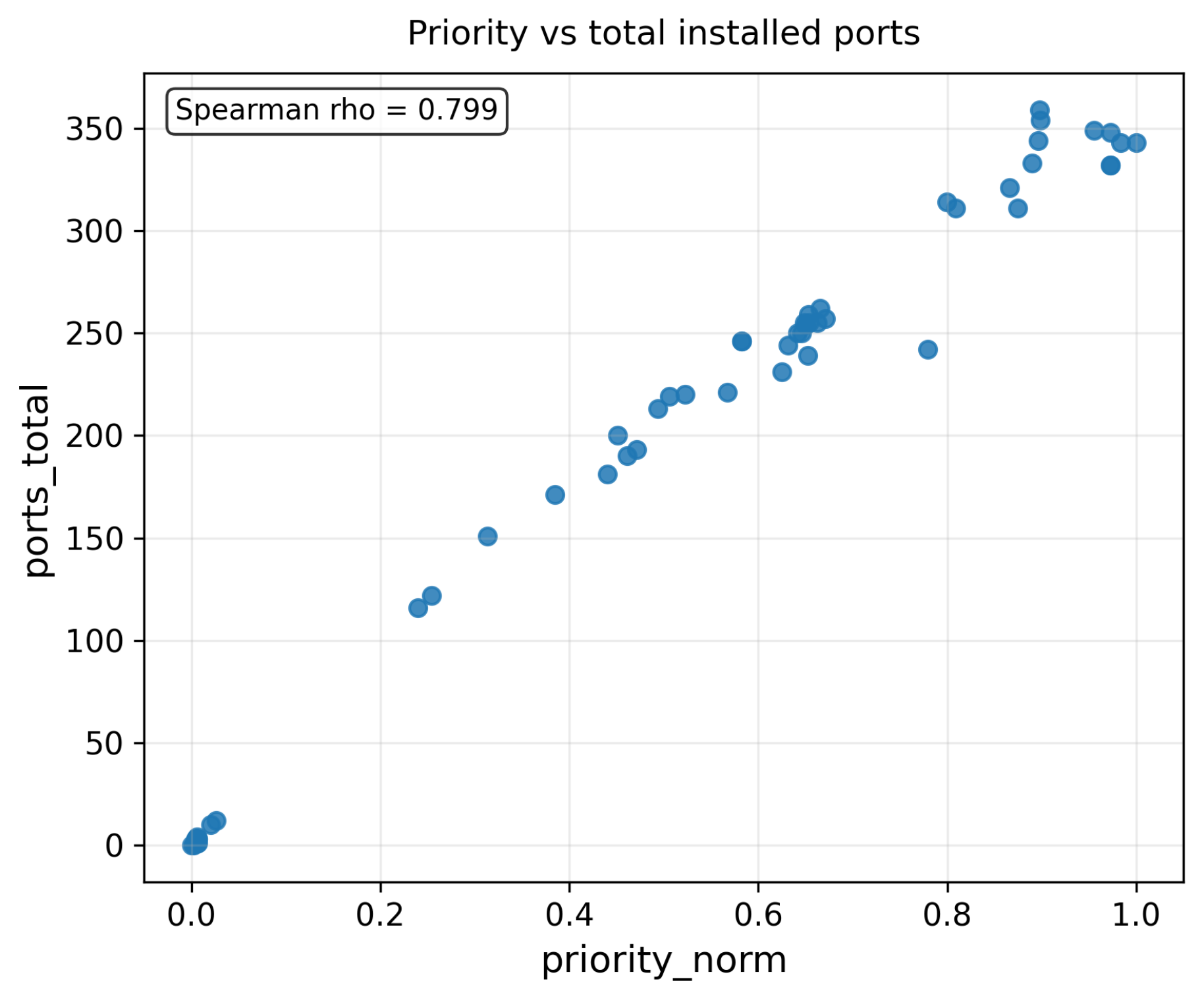
| Min Hansen accessibility | 1.126 | Spearman (, ports) | 0.799 |
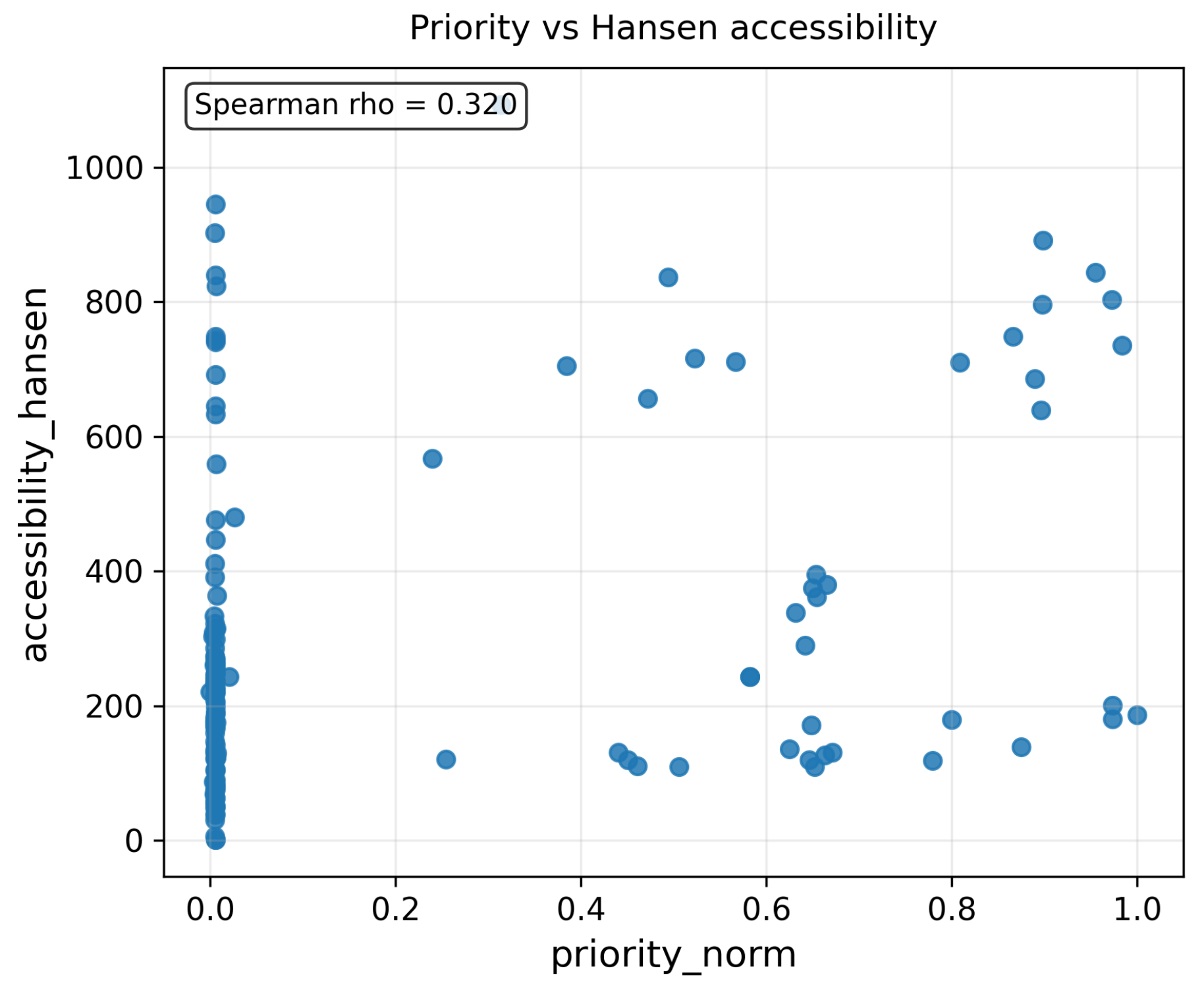
| Mean Hansen accessibility | 296.630 | Spearman (, Hansen access.) | 0.320 |
| SD Hansen accessibility | 248.099 | Gini (Hansen accessibility) | 0.433 |
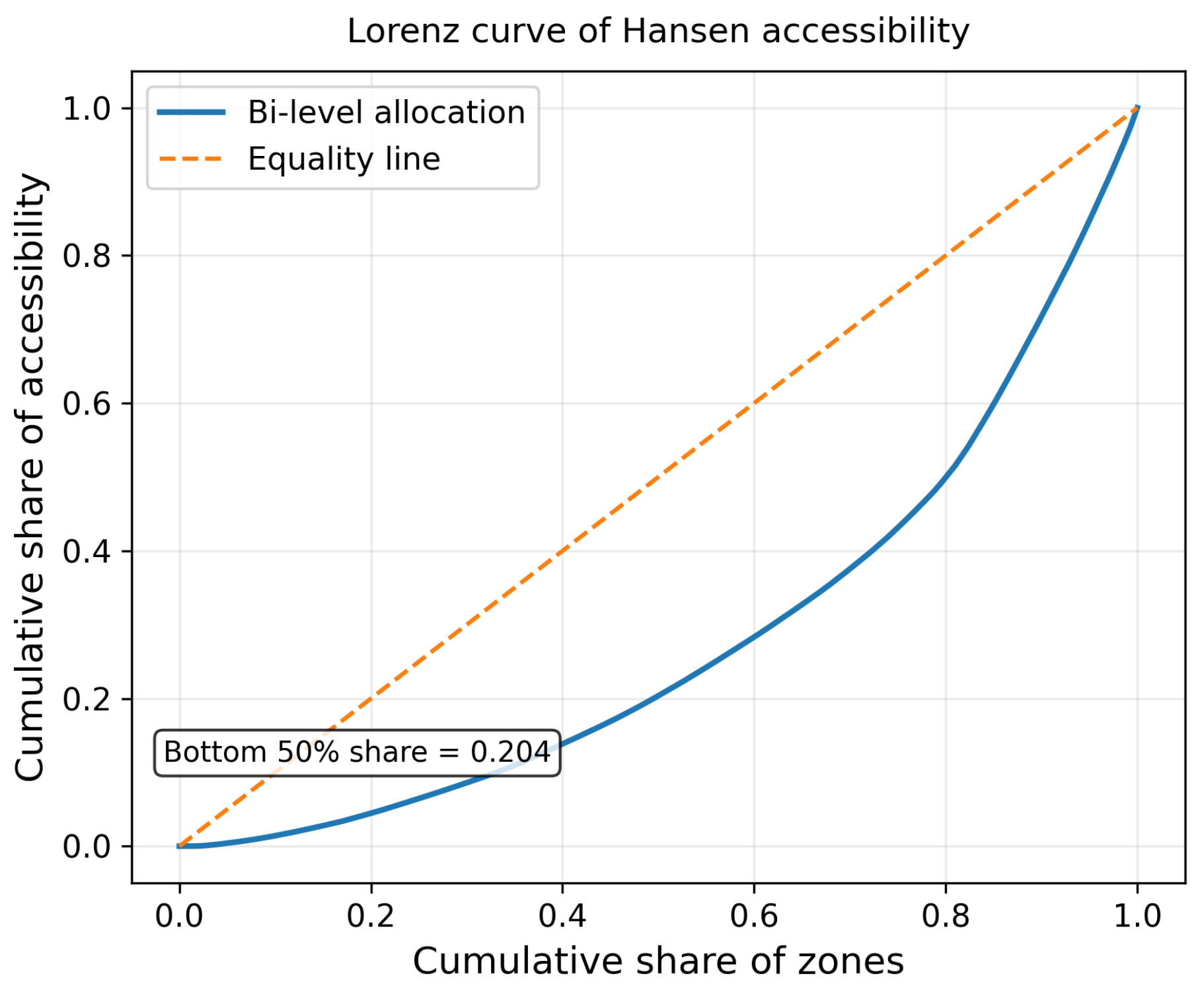
| CV (Hansen accessibility) | 0.836 | Bottom 50% Lorenz share (Hansen) | 0.204 |
| Gini (ports_total) | 0.733 | Number of UTAM zones | 142 |
| p-value (Spearman , ports) | p-value (Spearman , Hansen) |
Disclaimer/Publisher’s Note: The statements, opinions and data contained in all publications are solely those of the individual author(s) and contributor(s) and not of MDPI and/or the editor(s). MDPI and/or the editor(s) disclaim responsibility for any injury to people or property resulting from any ideas, methods, instructions or products referred to in the content. |
© 2026 by the authors. Licensee MDPI, Basel, Switzerland. This article is an open access article distributed under the terms and conditions of the Creative Commons Attribution (CC BY) license.
Share and Cite
Silva, J.A.G.; Gelvez, J.I.R.; Zapata, S. Graph Neural Networks and Bi-Level Optimization for Equitable Electric Vehicle Charging Infrastructure Planning. Energies 2026, 19, 1981. https://doi.org/10.3390/en19081981
Silva JAG, Gelvez JIR, Zapata S. Graph Neural Networks and Bi-Level Optimization for Equitable Electric Vehicle Charging Infrastructure Planning. Energies. 2026; 19(8):1981. https://doi.org/10.3390/en19081981
Chicago/Turabian StyleSilva, Javier Alexander Guerrero, Jorge Ivan Romero Gelvez, and Sebastian Zapata. 2026. "Graph Neural Networks and Bi-Level Optimization for Equitable Electric Vehicle Charging Infrastructure Planning" Energies 19, no. 8: 1981. https://doi.org/10.3390/en19081981
APA StyleSilva, J. A. G., Gelvez, J. I. R., & Zapata, S. (2026). Graph Neural Networks and Bi-Level Optimization for Equitable Electric Vehicle Charging Infrastructure Planning. Energies, 19(8), 1981. https://doi.org/10.3390/en19081981